Hours & Admission
Current July 1–August 30, 2026 summer schedule. Closed Mondays; recheck official channels after August 30.
Essential Rules
Suzhou Museum: A Pei Design Rooted in Suzhou

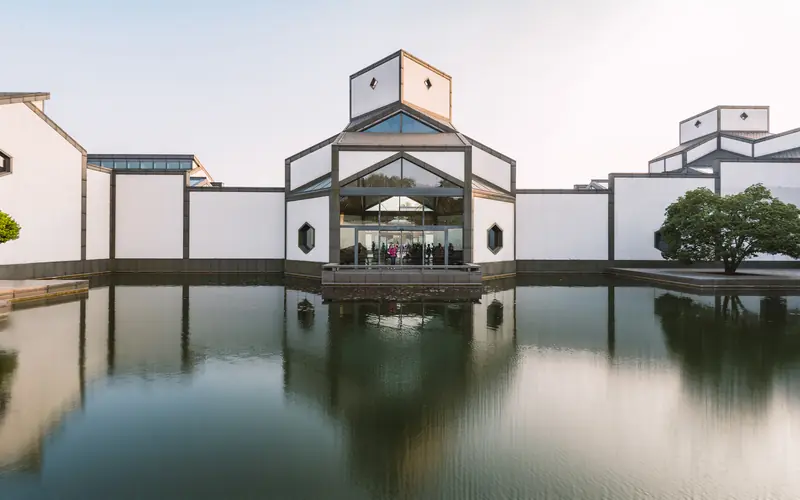
The main entrance on Dongbei Street — I.M. Pei's geometric take on Suzhou's whitewashed walls and grey tiles
Suzhou Museum is an I.M. Pei-designed museum that translates Suzhou garden language into modern geometry. Pei, also known for the Louvre Pyramid and the National Gallery of Art East Building, was born in Guangzhou, but his family came from Suzhou and he spent part of his childhood at Lion Grove Garden (狮子林). The building itself is a major part of the visit: free to enter, beside the Humble Administrator’s Garden (拙政园), and manageable in about two hours.
The Building Is the Exhibition
The 2006 new building sits beside the UNESCO-listed Humble Administrator’s Garden and the former Taiping Heavenly Kingdom Zhongwang Mansion (忠王府), a nationally protected heritage building. The museum gives the site area as about 10,700 m², the new-building floor area as more than 19,000 m², and the total with the restored mansion as 26,500 m². The spaces themselves are a central reason to visit.
Rock Garden and Reflecting Pool
Suzhou Museum (Google | Amap) is easiest to appreciate slowly: the courtyard, rooflines, and circulation routes reveal themselves as you move through the building.
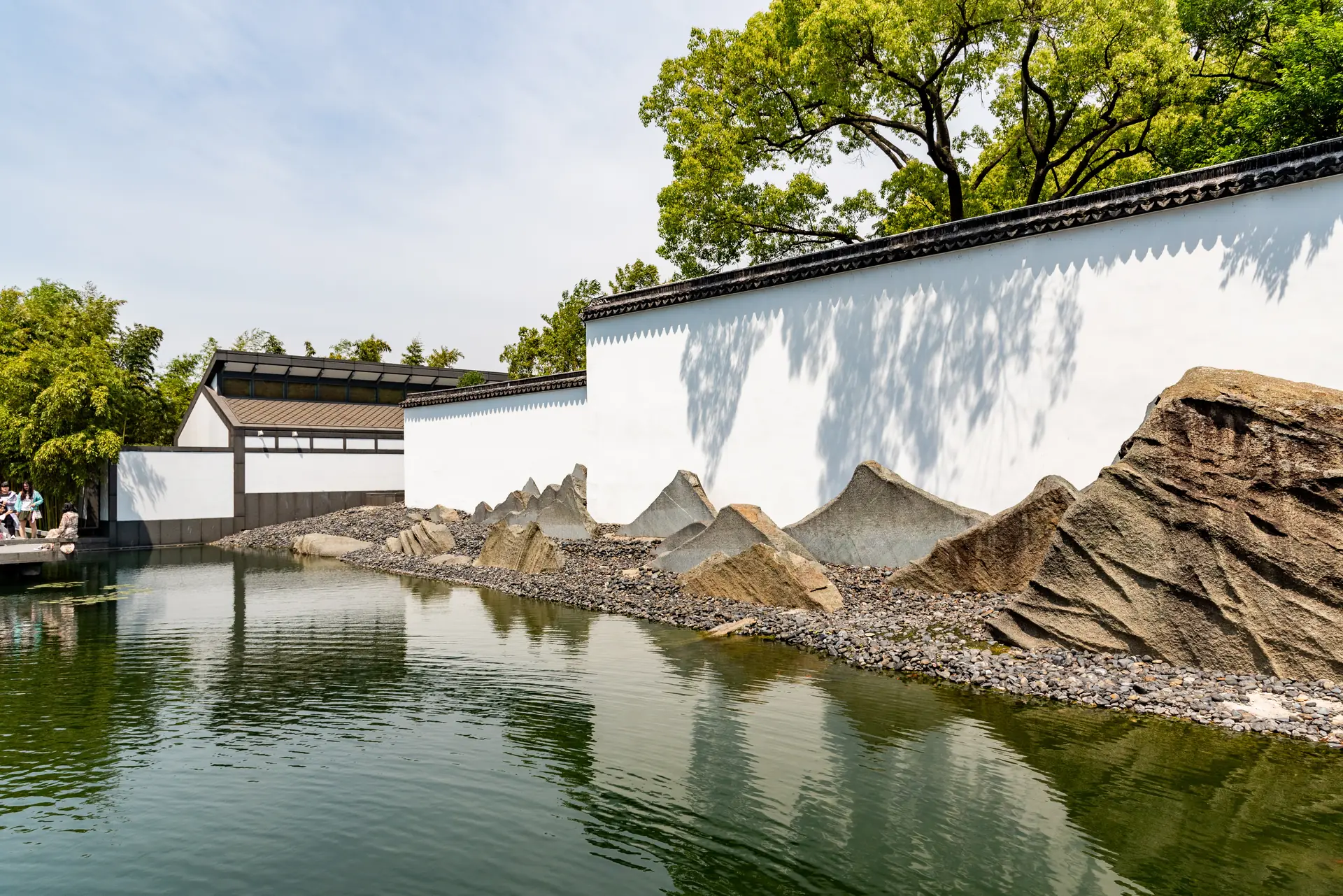
Pei's reinterpretation of classical rockery — sliced stone evoking an ink-wash landscape
Look out from the octagonal hall and you'll see vertical stone slabs arranged against a white wall — Pei's modern reinterpretation of Suzhou's traditional rockery. Instead of stacking Lake Tai stones into mountain shapes, he sliced stone into thin sheets and lined them up like a giant ink-wash landscape painting. A shallow reflecting pool in front mirrors the stones and sky. This rock garden has become the museum's most iconic image.
The Octagonal Hall
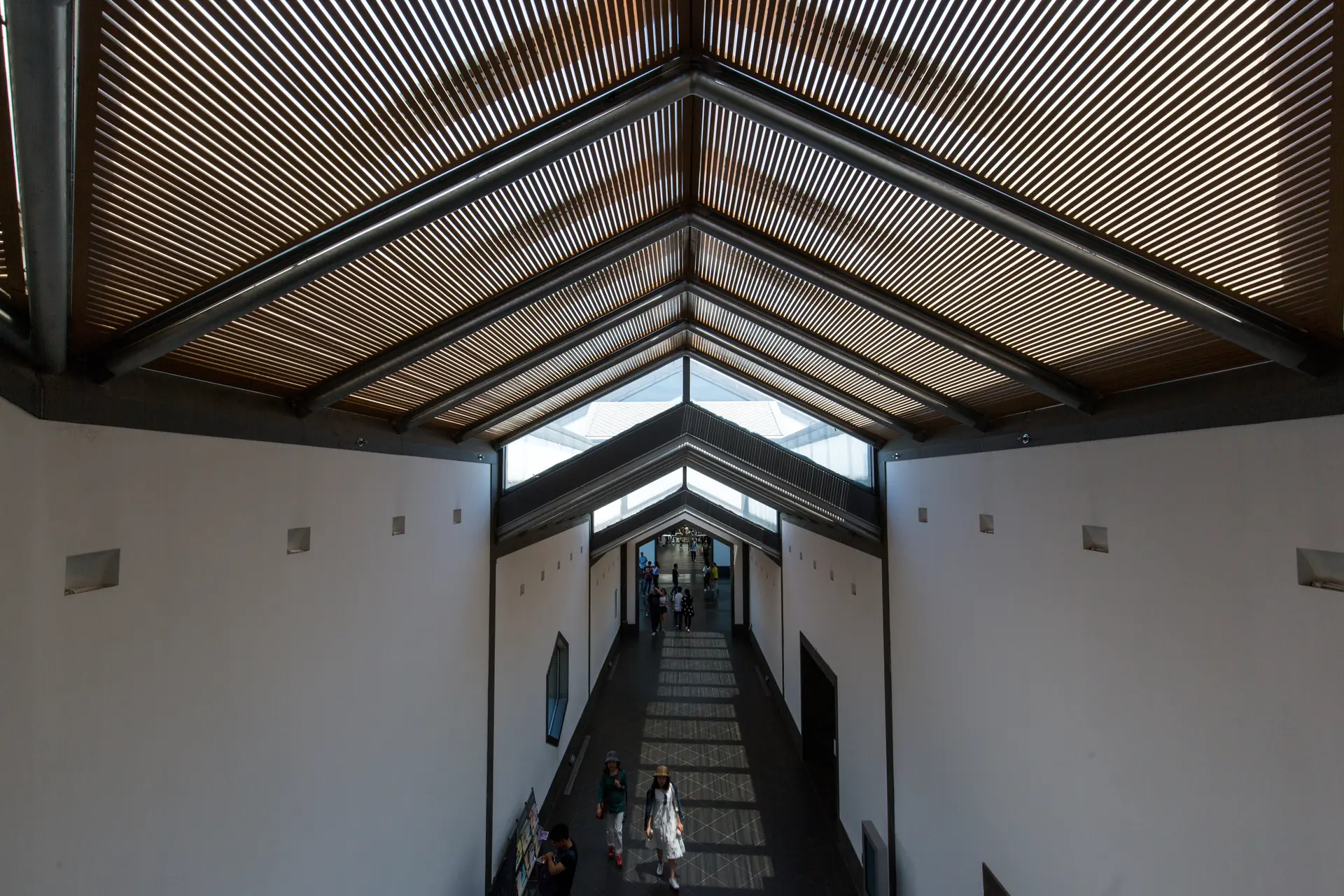
The building's heart — every corridor converges here, and the light is different every time
The museum's center is an octagonal hall that frames the main courtyard, the skylight above, and corridors leading to every gallery wing. Pei designed it as the building's "heart" — you keep returning to this space from different angles as you move through the museum, and the light is different every time.
Skylights and Natural Light
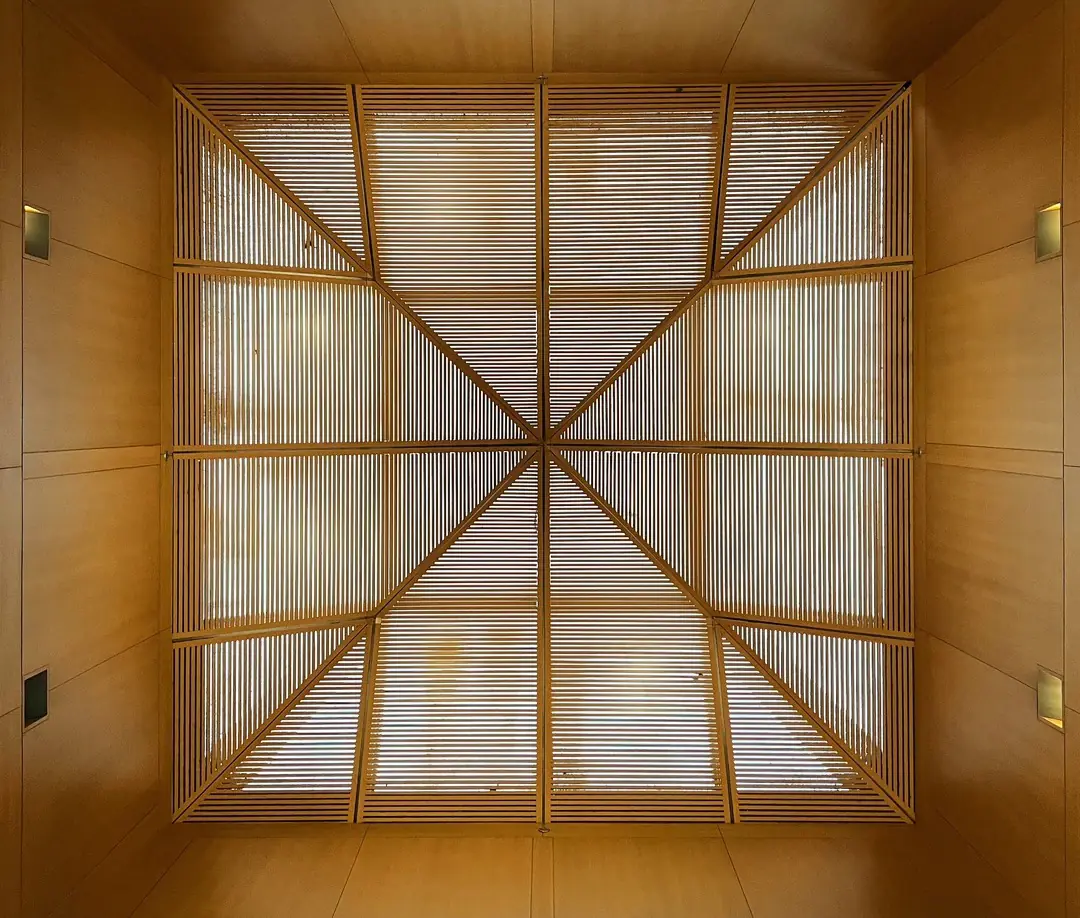
Geometric skylights bring changing patterns of daylight into the museum
Geometric roof skylights bring filtered daylight into the public spaces and galleries. The light passes through lattice-like shading elements, changing the character of the white walls and dark stone as you move through the corridors. Leave a few unhurried minutes to watch the shadows and views shift.
The Wisteria Garden
Wisteria is part of the museum’s garden language. The historic Zhongwang Mansion grounds preserve a wisteria attributed to the Ming painter Wen Zhengming (文徵明), while the new-building Wisteria Garden includes descendants grafted from that vine. If you visit in flowering season, treat bloom timing as seasonal rather than guaranteed.
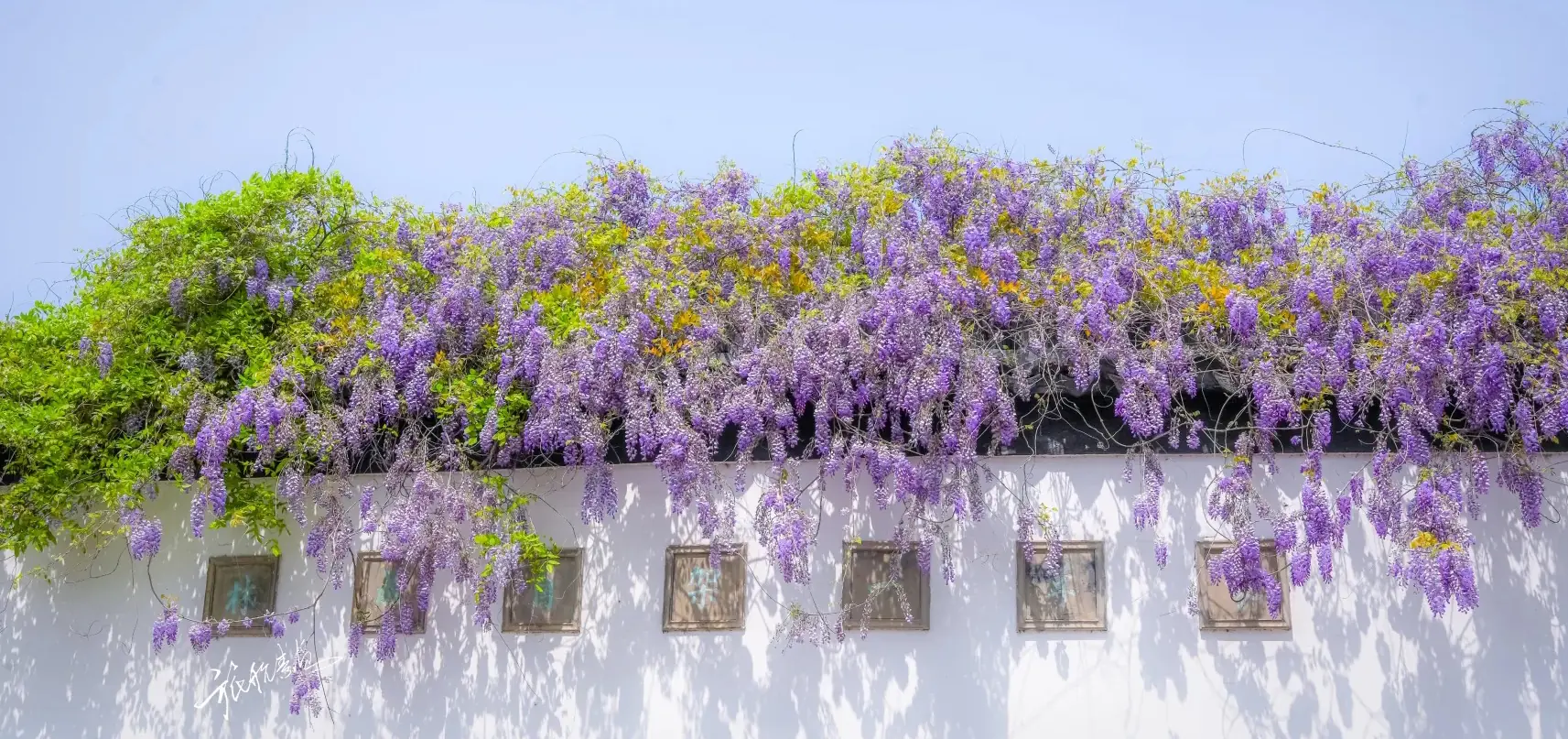
Wisteria adds a softer garden rhythm to the museum’s stone, water, and white walls
Water Features and Covered Walkways
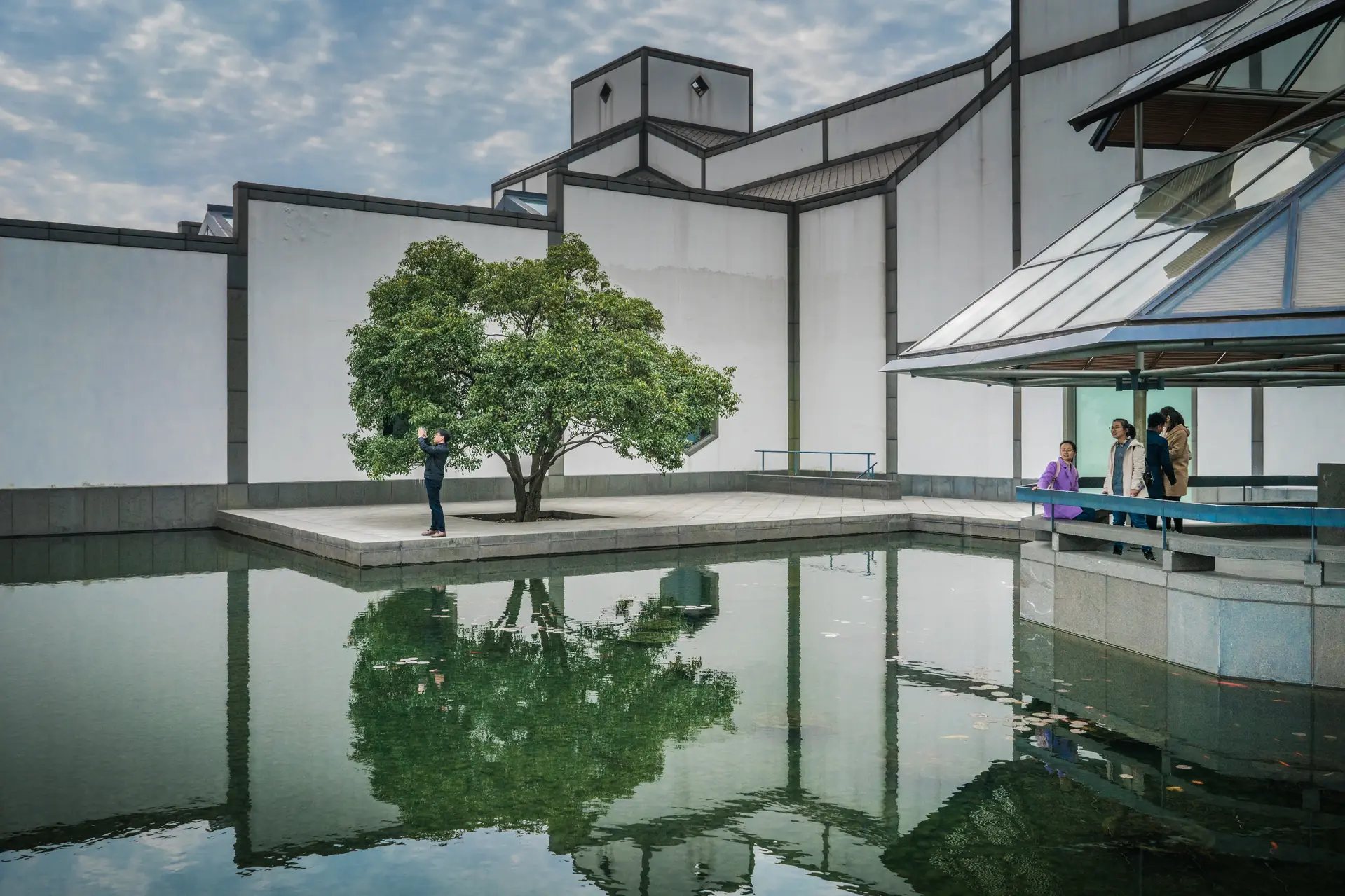
Water, bamboo, and white walls extend the museum’s garden vocabulary
Water, white walls, dark stone, and bamboo create changing views through the courtyards and covered walkways. The main garden meets the north wall beside the Humble Administrator’s Garden, creating a deliberate visual connection between old and new garden language. Rain can make the surfaces and reflections feel especially atmospheric, but that is a matter of taste rather than a promise of better photographs.
Collection and Classical Wing
Architecture aside, the collection gives the visit its historical depth. The main building and Zhongwang Mansion bring together Wu-culture material, pagoda discoveries, painting, calligraphy, and historic architecture.
Pagoda Treasures of Wu
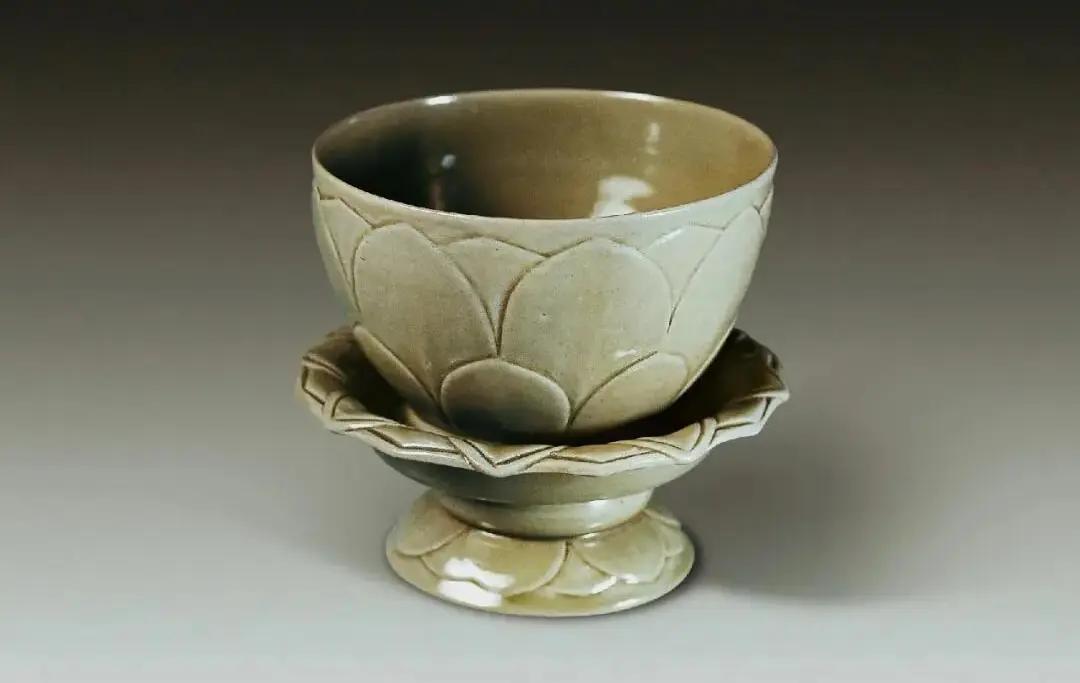
A historic pagoda discovery associated with Tiger Hill Pagoda
Start with the pagoda discoveries, then check the current gallery signage for what is on view that day. The two names below are useful collection anchors rather than a guarantee of current display.
- Secret-Color Celadon Lotus Bowl (秘色瓷莲花碗): a Five Dynasties celadon bowl discovered in 1956 at Tiger Hill’s Yunyan Temple Pagoda (云岩寺塔), shaped with lotus-like petals.
- Pearl Relic Pagoda (真珠舍利宝幢): discovered in 1978 in the Ruiguang Pagoda crypt; it stands 122.6 cm tall and uses pearls, crystal, and agate.
Elegance of Wu and Zhongwang Mansion
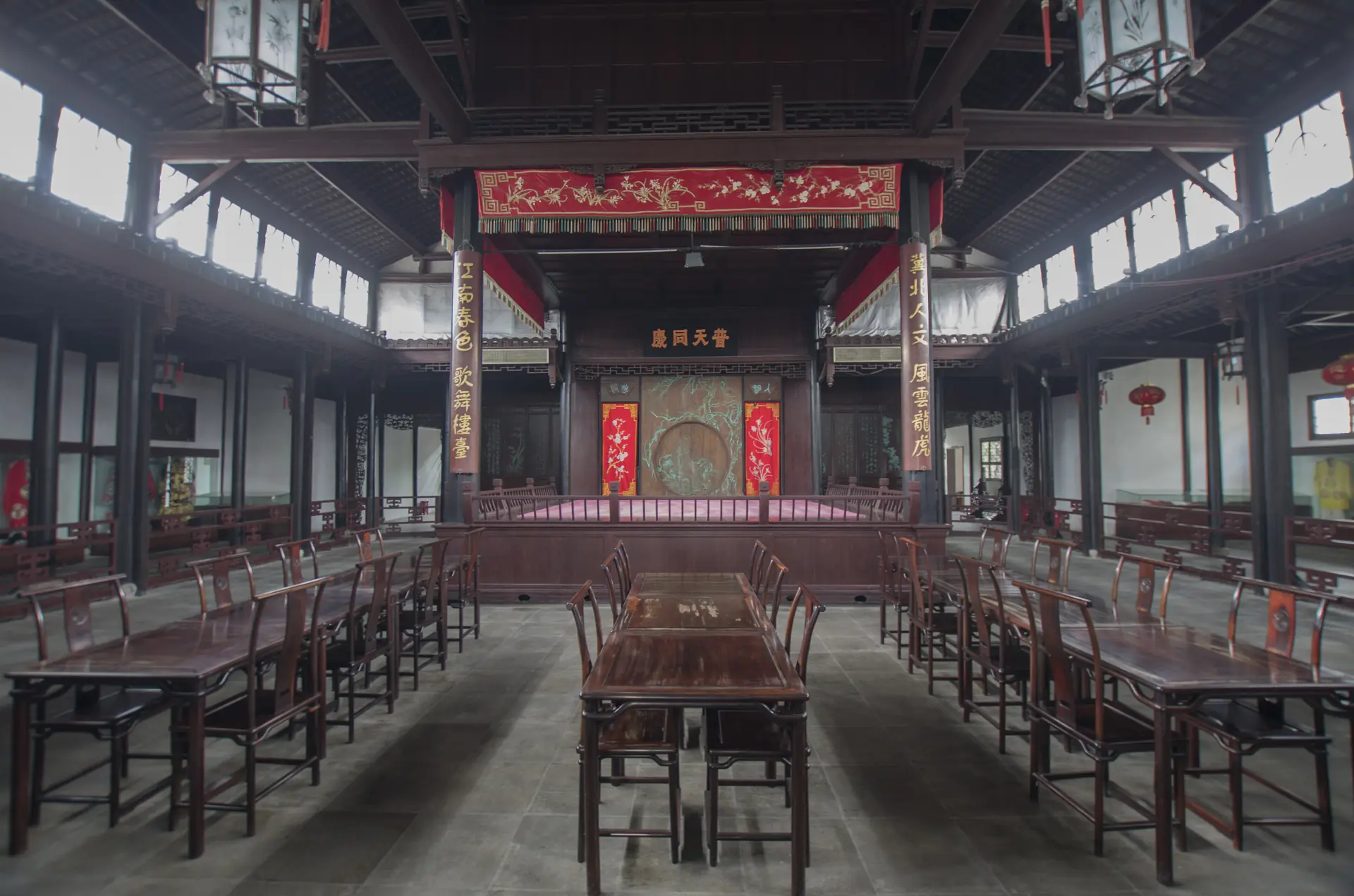
Nanmu Hall in the Zhongwang Mansion wing — Taiping-era beams and carvings that survived 160+ years
Calligraphy, painting, scholar’s objects, and handicrafts provide a counterpoint to the modern building. The adjacent Zhongwang Mansion (忠王府) forms the museum’s classical wing, including the Nanmu Hall and surviving Taiping-era wooden decoration.
Temporary Exhibitions
Suzhou Museum's rotating exhibitions are consistently strong, often featuring loans from other major museums or contemporary art installations. Follow the WeChat official account "苏州博物馆" for current exhibitions.
Main Building or West Branch
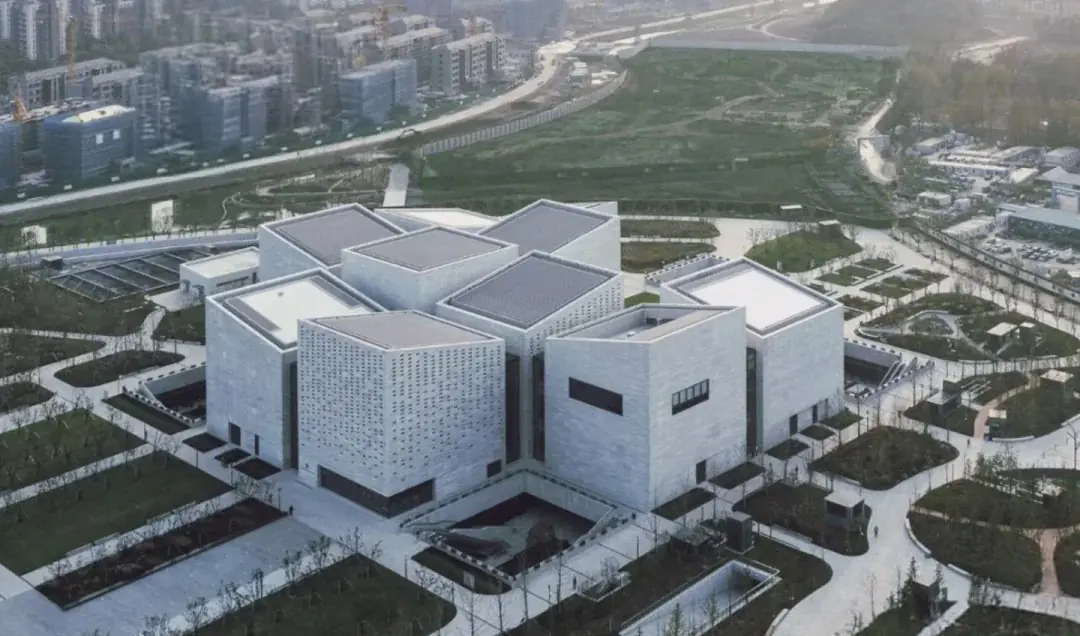
The West Branch opened in 2021 and expands the museum’s history, craft, and education offer
Suzhou Museum West Branch (苏州博物馆西馆) opened in 2021 at 399 Changjiang Road. It is a separate destination from the Pei-designed main building, with a broader presentation of Suzhou history, craftsmanship, education, and international exhibitions.
Suzhou Museum West Branch (Google | Amap) has a different visitor task from the main building.
🏺Suzhou History · 1F
The permanent exhibition Pure Jiangnan traces Suzhou history from the San Shan Island Palaeolithic period to the 1911 Revolution, with more than 1,200 objects and sets.
🧵Suzhou Craft · 2F
The permanent exhibition Remembering Suzhou presents about 900 objects and sets, including jade carving, bamboo carving, Suzhou embroidery, and woodblock prints.
🧒Exploration Experience Hall · B1
This interactive education space is designed around the development and curiosity of visitors aged 3–12.
Is it worth a separate visit? If you only have half a day, keep it for the main building — that's where Pei's architecture and the pagoda treasures live. If you're spending two or more days in Suzhou and care about craftsmanship or traveling with kids, the West Branch is worth a half day.
Tickets and Entry Rules
- Admission
- Free
- Summer hours
- Jul 1–Aug 30, 2026: 9:00–20:00 (last entry 19:00)
- Closed
- Mondays during the current summer schedule
- Reservation
- Required — the June 30 notice says booking opens seven days ahead through official channels
- After summer
- Check the official channel for the next schedule
- Admission
- Free
- Summer hours
- Jul 1–Aug 30, 2026: 9:00–20:00 (last entry 19:00)
- Closed
- Mondays during the current summer schedule
- Reservation
- Walk-in queue as of June 30; recheck before travel
- After summer
- Check the official channel for the next schedule

Use the current official reservation channel before building your day around a main-building visit
The main building uses timed reservations. Treat the official booking flow as the source of truth for available dates and passport-field requirements.
Foreign passport holders
An April 2026 official visitor notice required an original passport at entry. Check the live official reservation flow for the current passport rule before you make the trip to the main building.
Getting There and Arrival Strategy
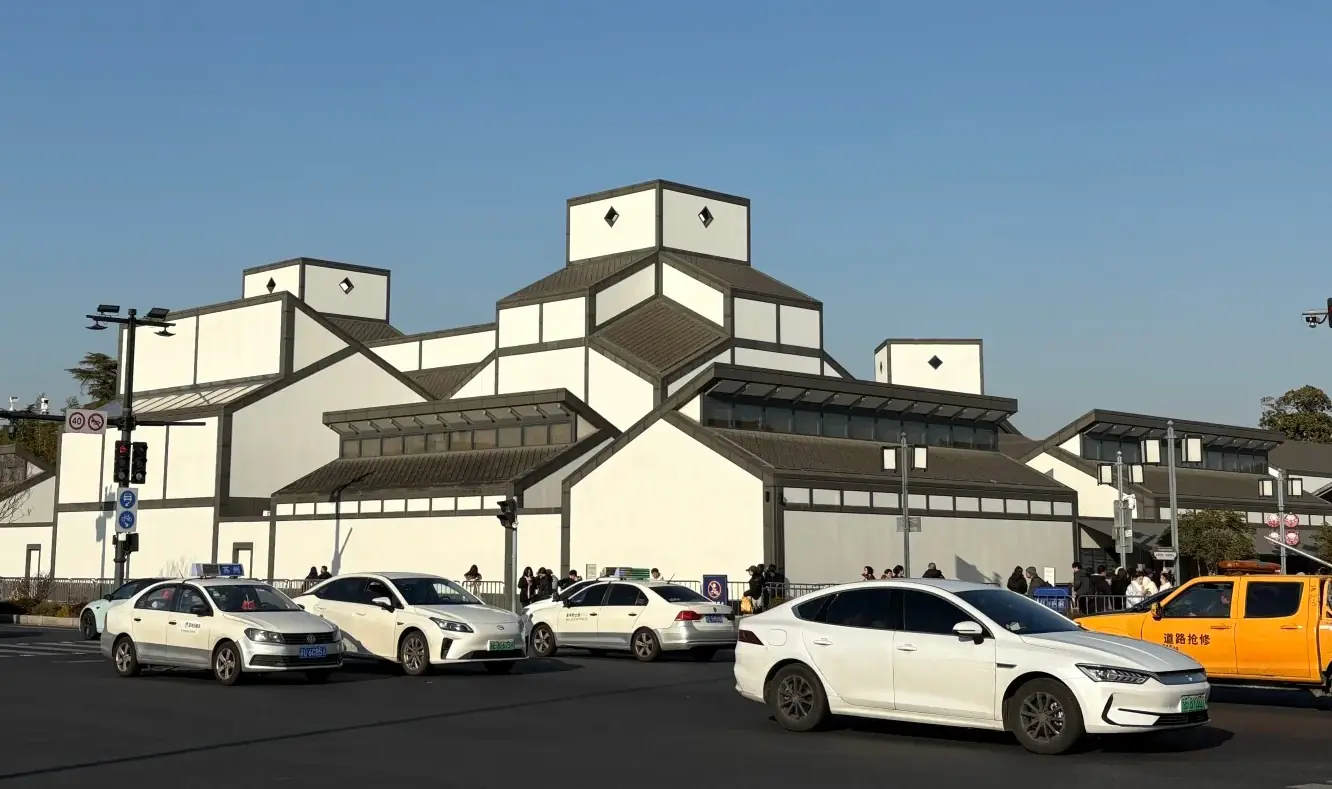
Dongbei Street — the Humble Administrator's Garden is right next door
The main building sits in Suzhou’s north old-town sightseeing cluster; the West Branch is a separate trip in the new district. Confirm the last leg in a live transit app on the day, especially around holidays.
Main Building (204 Dongbei Street)
- Metro: Line 4 to Beisita (北寺塔) Station, Exit 2 — roughly a 20–25 minute walk (the closest station, but not exactly close)
- Bus: Routes 游1, 游2, 游5, 202 stop at the Suzhou Museum (苏州博物馆) bus stop
- Taxi: A useful fallback from Suzhou Railway Station; allow extra time when traffic is heavy.
West Branch (399 Changjiang Road)
- Metro: Line 1 or Line 3 to Shizishanzhan (狮子山) Station
- Bus: Routes 2, 33, 38, 42, 64, 67 to Yuhuayuan (御花园) stop
Show this screen to your driver · 出示给司机看
请送我到苏州博物馆本馆,东北街204号。
Suzhou Museum main building, 204 Dongbei Street, please.
For the West Branch: 苏州博物馆西馆,长江路399号 (399 Changjiang Road).
A Practical Two-Hour Route
Recommended Route
- Architecture and gardens- 30–40 min — main courtyard, covered walkways, and geometric skylights
- Wu culture and historical galleries- 40–60 min — start with the pagoda discoveries, then follow the current display labels
- Temporary exhibition- 20–30 min — check the lobby notice or official account for the current show
- Wisteria Garden- 10–15 min — finish in the garden area if seasonal conditions suit
📸Photo pacing
Start with the courtyard and main hall before moving into the galleries, then pause in the covered walkways as the light changes. Weather changes the mood, not the quality of your visit.
👥Crowd management
Use the earliest main-building slot that fits your day, and reserve before weekends or public holidays rather than treating the museum as a walk-in backup.
Pair It With Suzhou’s North Old Town
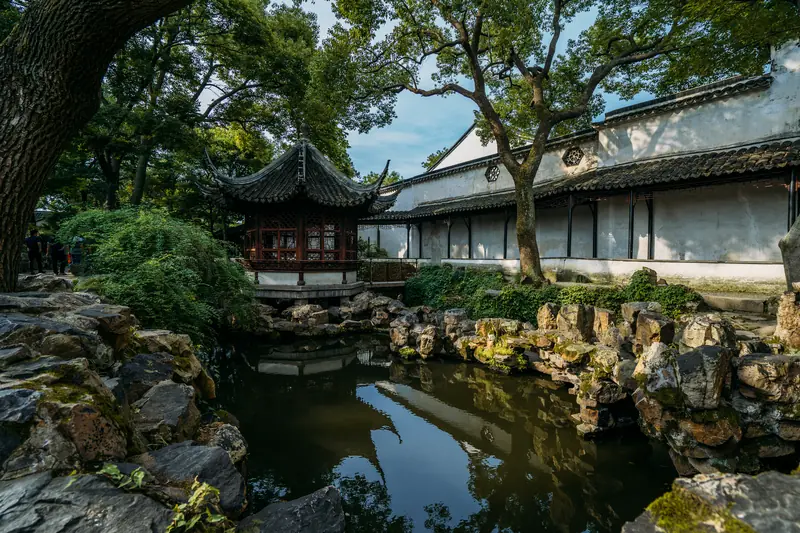
Suzhou Museum sits in Suzhou’s most concentrated historic quarter. The guide’s easiest pairing is museum first, then the Humble Administrator’s Garden (拙政园) (Google | Amap), followed by lunch and a slower walk. Budget around 4–5 hours if you want both major stops without rushing.
The Humble Administrator’s Garden (拙政园) (Google | Amap) is ticketed separately, so keep its own entry rules and reservation needs in mind rather than assuming the museum booking covers both.
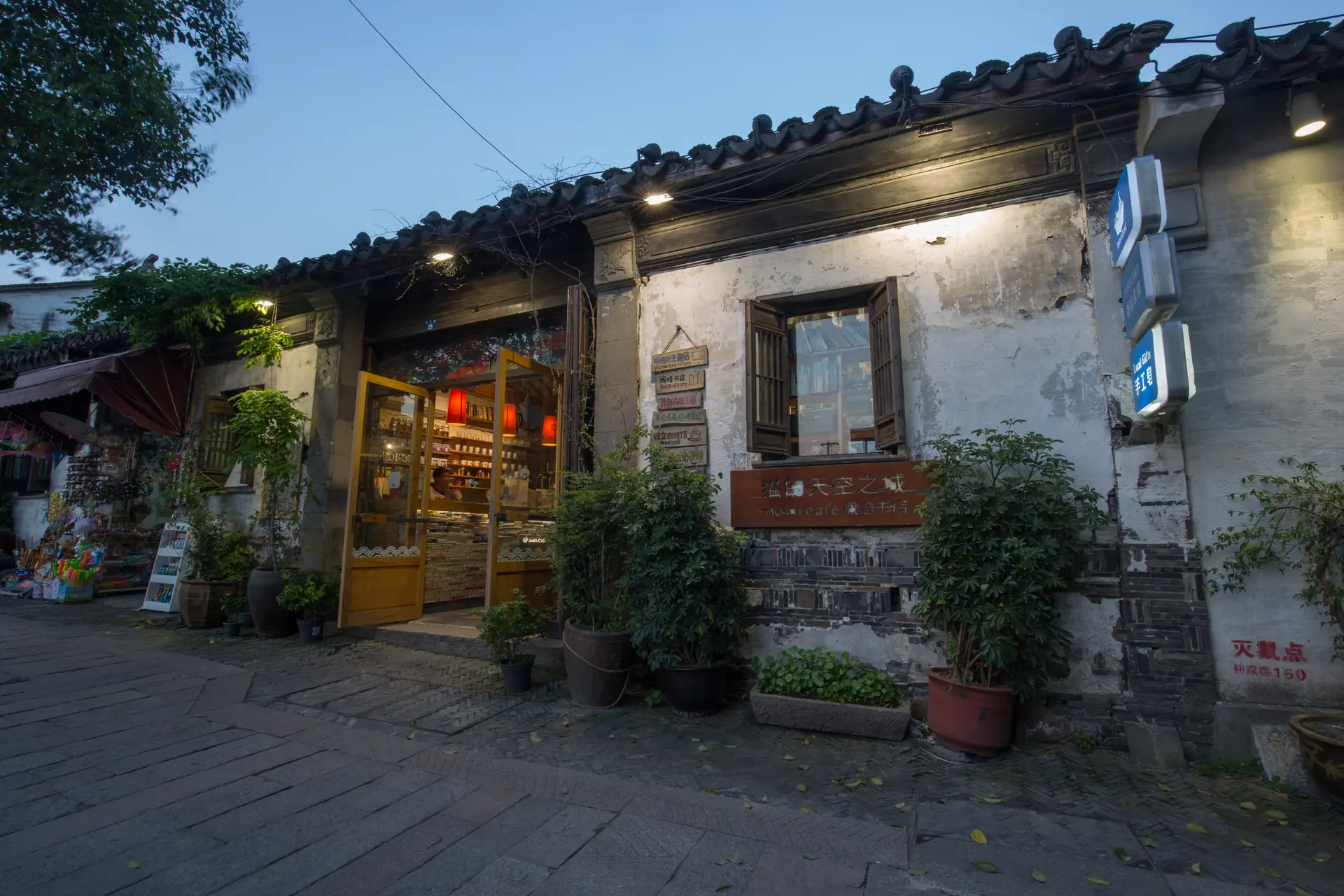
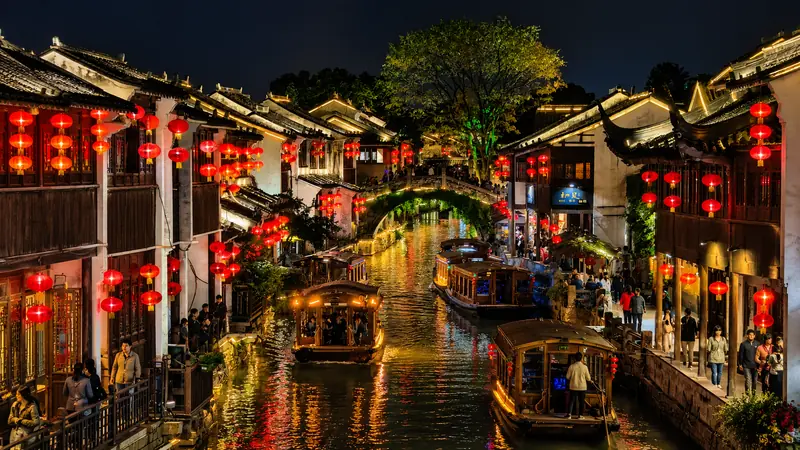
Pingjiang Road offers a canal-side change of pace after the museum
Museum shop before you leave
The museum's cultural and creative store sells Suzhou-themed stationery, tea sets, and souvenirs inspired by the collection — worth a quick browse on your way out.
A suggested sequence: museum reservation → Humble Administrator’s Garden → noodles and a stroll on Pingjiang Road. Adjust the timing to your actual entry slot and the garden’s current rules.
Frequently Asked Questions
Yes for the main building. The June 30, 2026 summer notice says official-channel booking opens seven days ahead. It also lists the West Branch as walk-in queuing; check again before travel because these arrangements can change.
Sources checked for this guide
- Suzhou Museum official architecture and Zhongwang Mansion background: museum architecture page
- Current summer 2026 hours, main reservation, and West Branch queue guidance: June 30 municipal notice
- April 2026 passport-entry guidance for the main building: April 24 municipal notice
- Suzhou Museum West Branch permanent exhibitions: official exhibition page
- Humble Administrator’s Garden World Heritage context: UNESCO World Heritage Centre
Beyond This Guide
Suzhou Museum is best planned as part of a wider Suzhou day, not as an isolated stop. Use these next steps to decide how the rest of your route should work.
- Humble Administrator’s Garden guide for its separate entry strategy and garden route.
- Suzhou Day Trip from Shanghai if you need to fit the museum into a same-day rail plan.
- China train tickets guide for the rail decision before you lock in a Shanghai–Suzhou day trip.
- Tongli Water Town guide for a separate water-town day rather than an overpacked museum day.
© gochinafreely.com — Original guide by Go China Freely.