Hours & Base Ticket
Essential Rules
Seven Li of Old Suzhou Canal Life
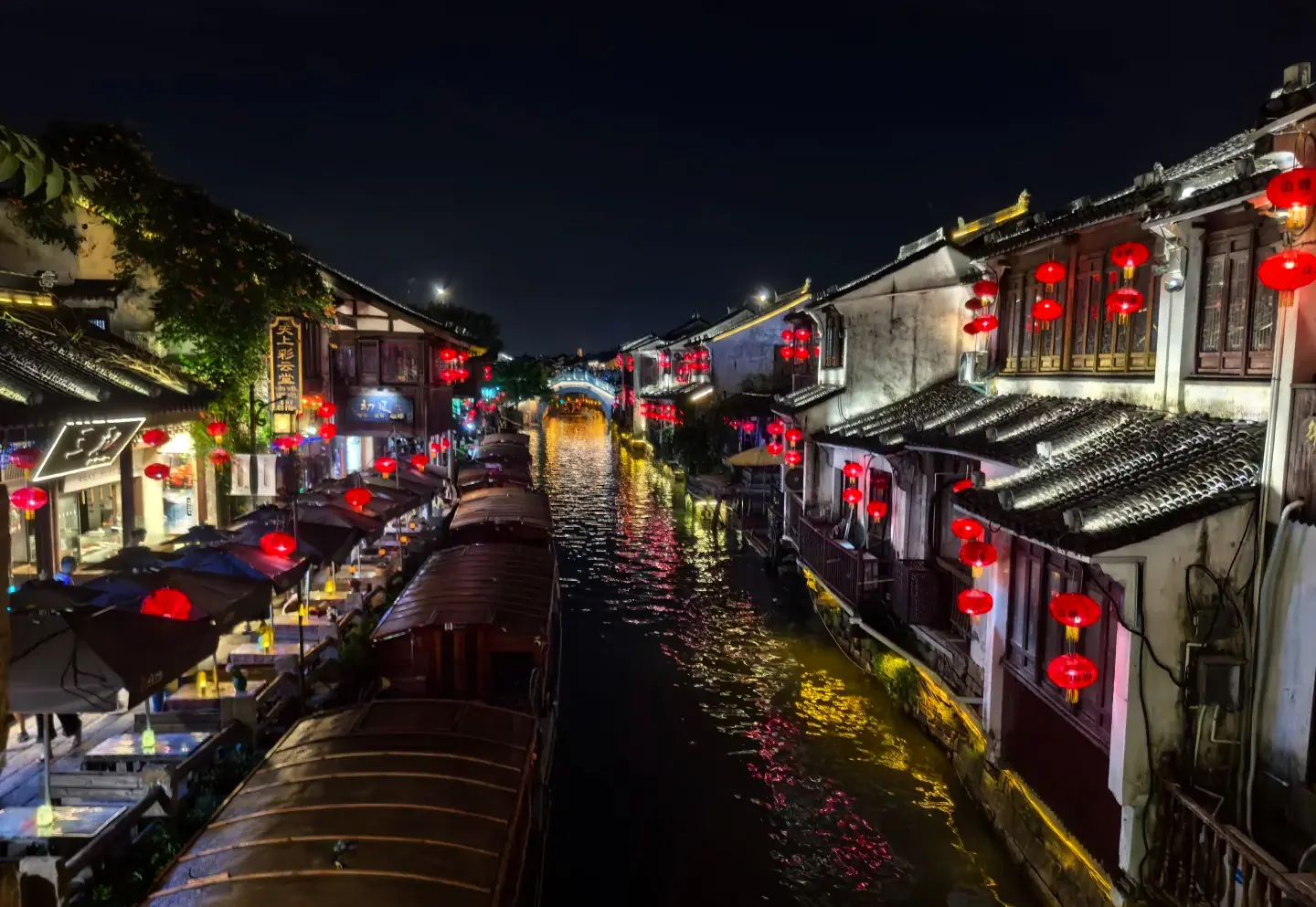
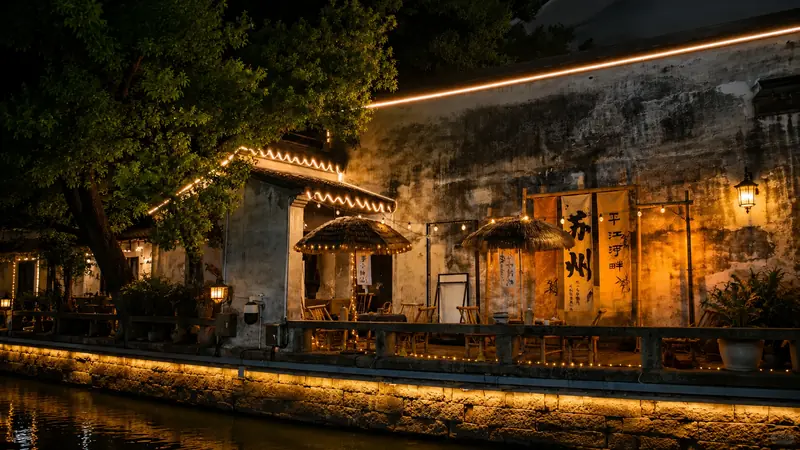
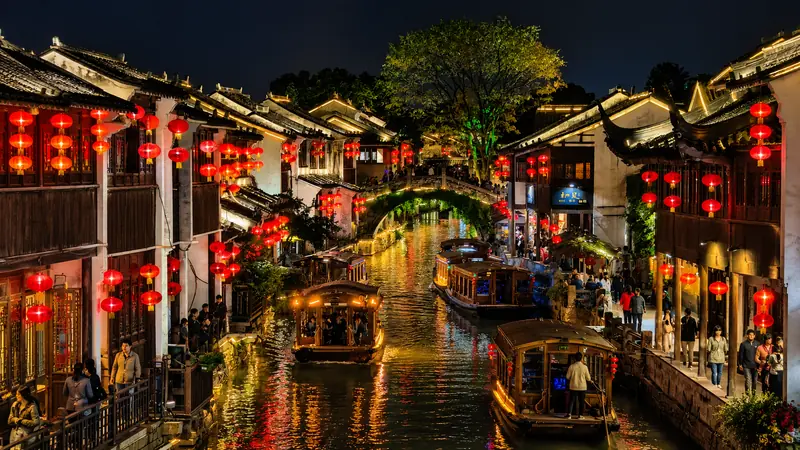
The lantern scene makes sense only when you can still read the canal, street and bridges beneath it.
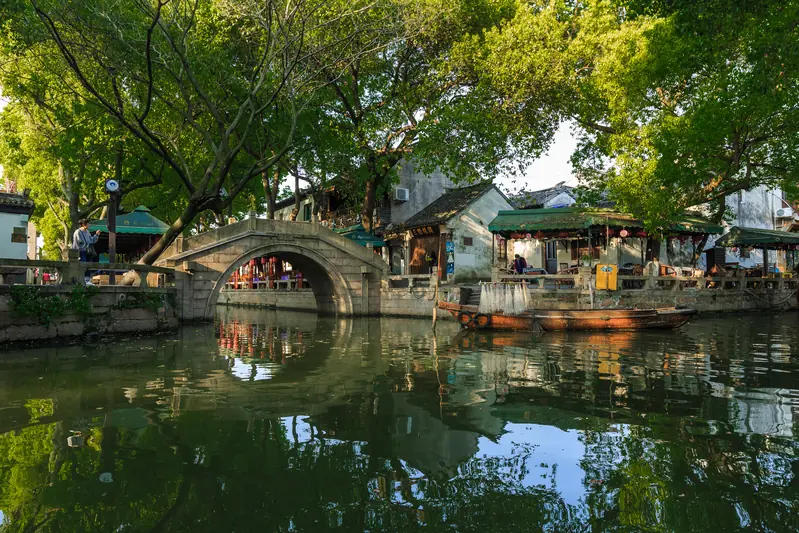
Shantang Street (山塘街) is Suzhou's most theatrical canal walk: arched bridges, white walls, black tiles, reflected lanterns and boats under low openings. It is also busy and commercial. Use the eastern block for the classic evening, but keep the older Seven-li Shantang story in view.
Suzhou's current city-construction chronology traces the canal-and-road origin to 825, when prefect Bai Juyi organized a channel between Tiger Hill and Changmen and used the excavated earth for the road beside it.
Canal and stone street run together, joined by short bridges, narrow lanes and small docks.
The corridor linked Changmen to Tiger Hill through shops, guilds, residences and everyday trade.
Modern tourism intensifies the scene, but the lights also reveal the water structure.
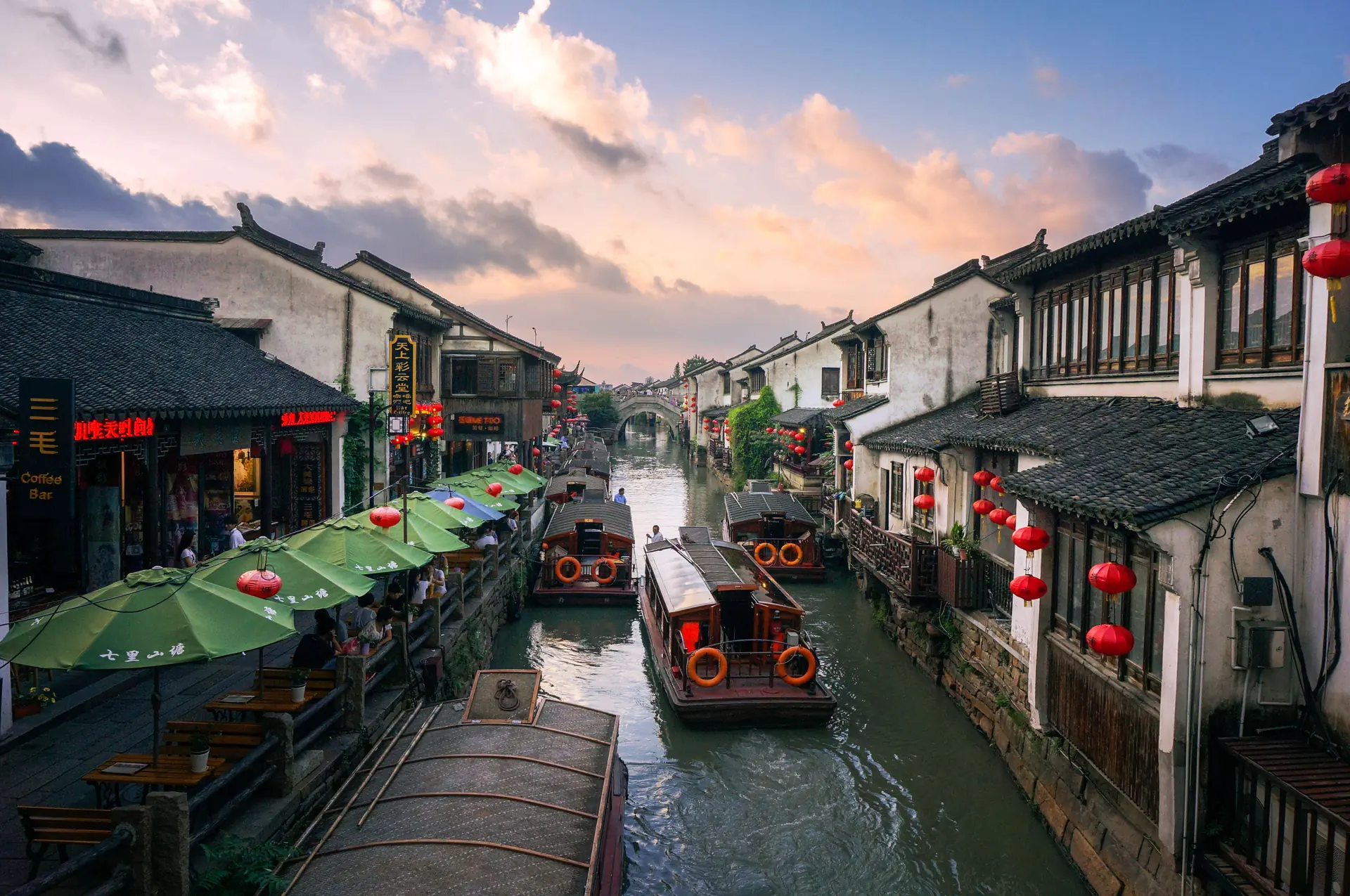
Seven-li Shantang is the historical line; the eastern 360 m is the useful first-visit concentration.
Traditional descriptions run about seven li—roughly 3.6–3.8 km—from Changmen toward Tiger Hill. The eastern historic block around Shilu and Tonggui Bridge concentrates the shops, halls, tea rooms and night boats most visitors want.
Shantang Street Walking Route in Two Hours
For a first visit, keep the route in the eastern historic core: enter by metro, read the street at Tonggui Bridge, choose one culture stop, then let blue hour decide between a boat and dinner.
- Shantang Jie Station(山塘街站)- Metro Line 2; easiest public-transport start
- East Historic Block(山塘街东段)- Start with the canal-street structure
- Tonggui Bridge(通贵桥)- Classic bridge-and-reflection photo point
- Yuhan Hall Area(玉涵堂一带)- Old hall, stage, and commercial-history texture
- Shantang Kunqu Opera House(山塘昆曲馆)- Optional performance or culture stop
- Side Lanes(山塘支巷)- Quieter white-wall-and-black-tile details
- Night Boat or Dinner(夜游船或临河晚餐)- Best after blue hour if crowds are manageable
Eastern core, bridge, two side lanes and one pause.
Add one culture stop, tea or boat, then dinner.
The eastern core is the clearer first-visit experience.
Use Shantang as a slow evening: come after a garden, museum or Pingjiang afternoon, watch the lamps switch on, then decide whether you still want a boat, tea or dinner.
From Changmen Gate to Tonggui Bridge
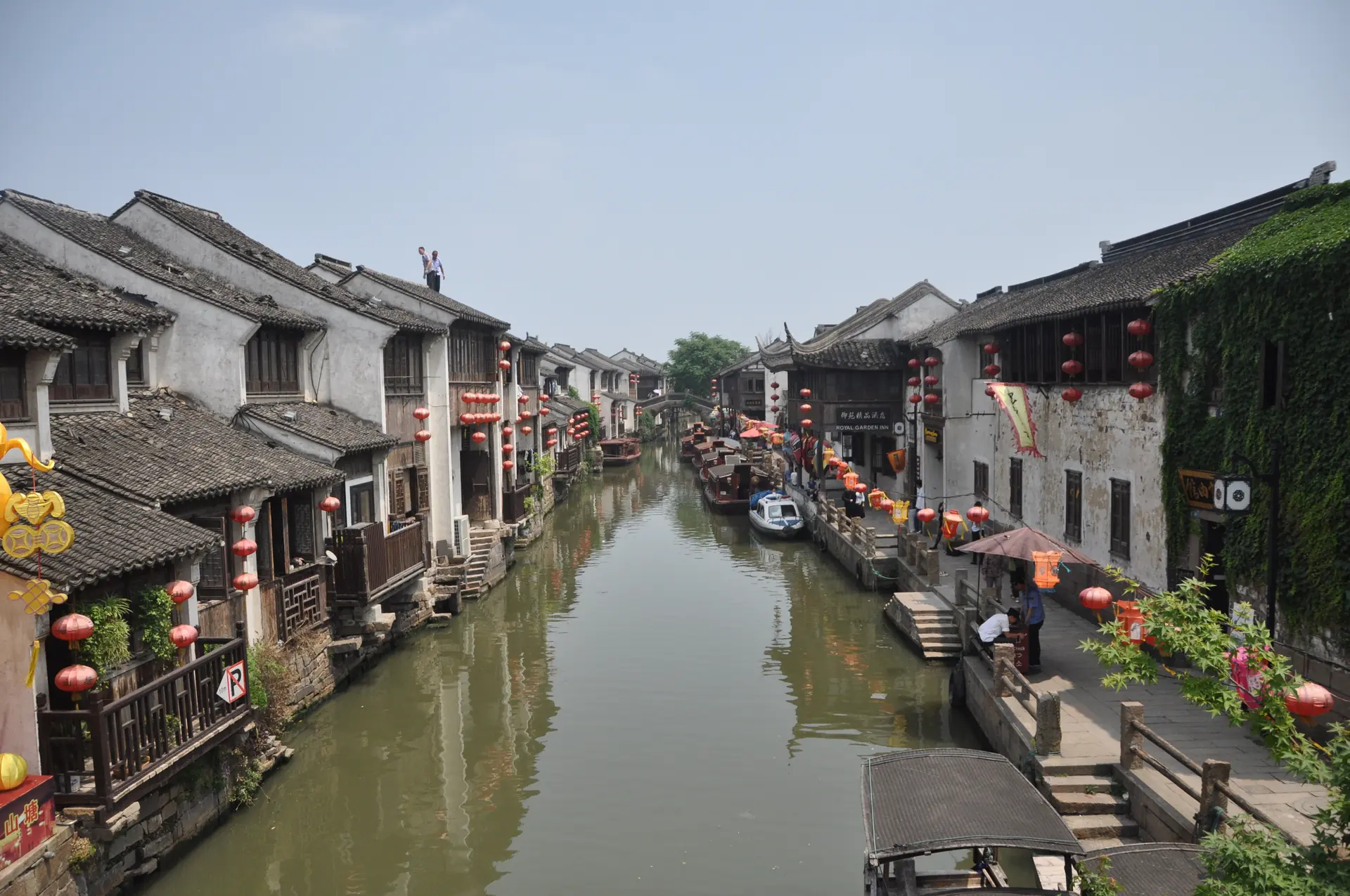
Morning shows the stone-and-water scale; dusk turns that same structure into the famous light scene.
Close to Shilu and the metro, this section is easy to enter and leave. More importantly, it explains Suzhou quickly: water on one side, street on the other, and small bridges and docks constantly stitching them together.
Choose morning for paving, doorways and calm scale. Choose dusk for lanterns, bridge shadows and boats becoming a ribbon of reflected light.
The simplest Line 2 start, close enough to begin with canal structure rather than spending energy on the full Seven-li distance.
Bridge centers are working crossings.
Read canal and street before shopping or snacking.
Side lanes change the mood quickly.
Yuhan Hall, Opera, and Old Guilds
Shantang Street is not only a lantern walk. Its old halls, stages, guild-style buildings, and small cultural venues make the commercial history more concrete.
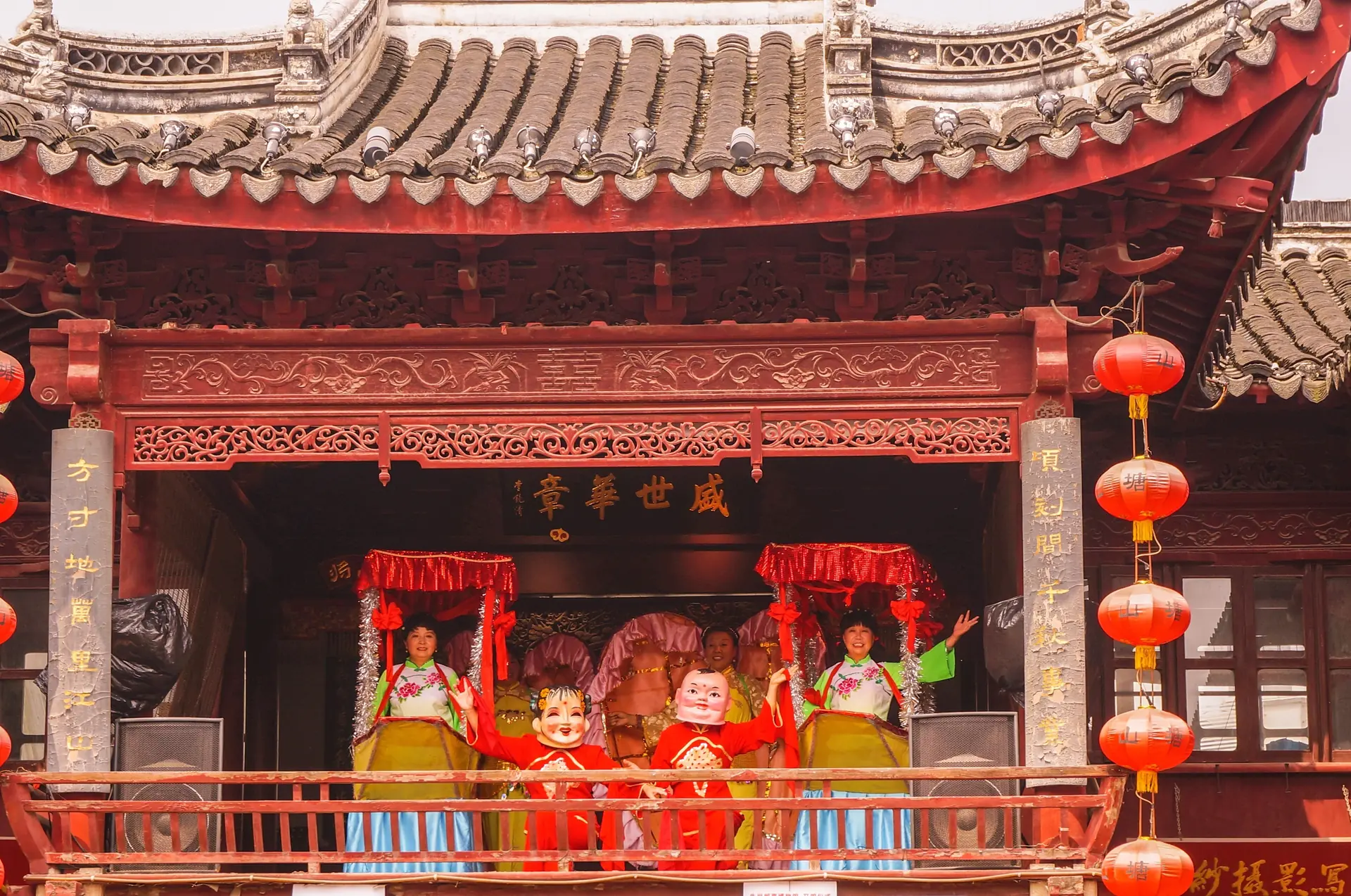
The current Suzhou Garden Bureau profile identifies the surviving main hall as Ming fabric within a large residence near Tonggui Bridge. In 2026, Suzhou also opened an appointment-based weekday marriage-registration point inside Yuhan Hall—evidence that its current use is more complex than an ordinary ticketed room.
The older official 4A page lists those figures and 0512-65314467. The current registry service runs by appointment on weekdays, 09:00–11:30 and 13:00–17:00; that schedule does not prove ordinary visitor access. Check same-day notices before planning an interior visit.
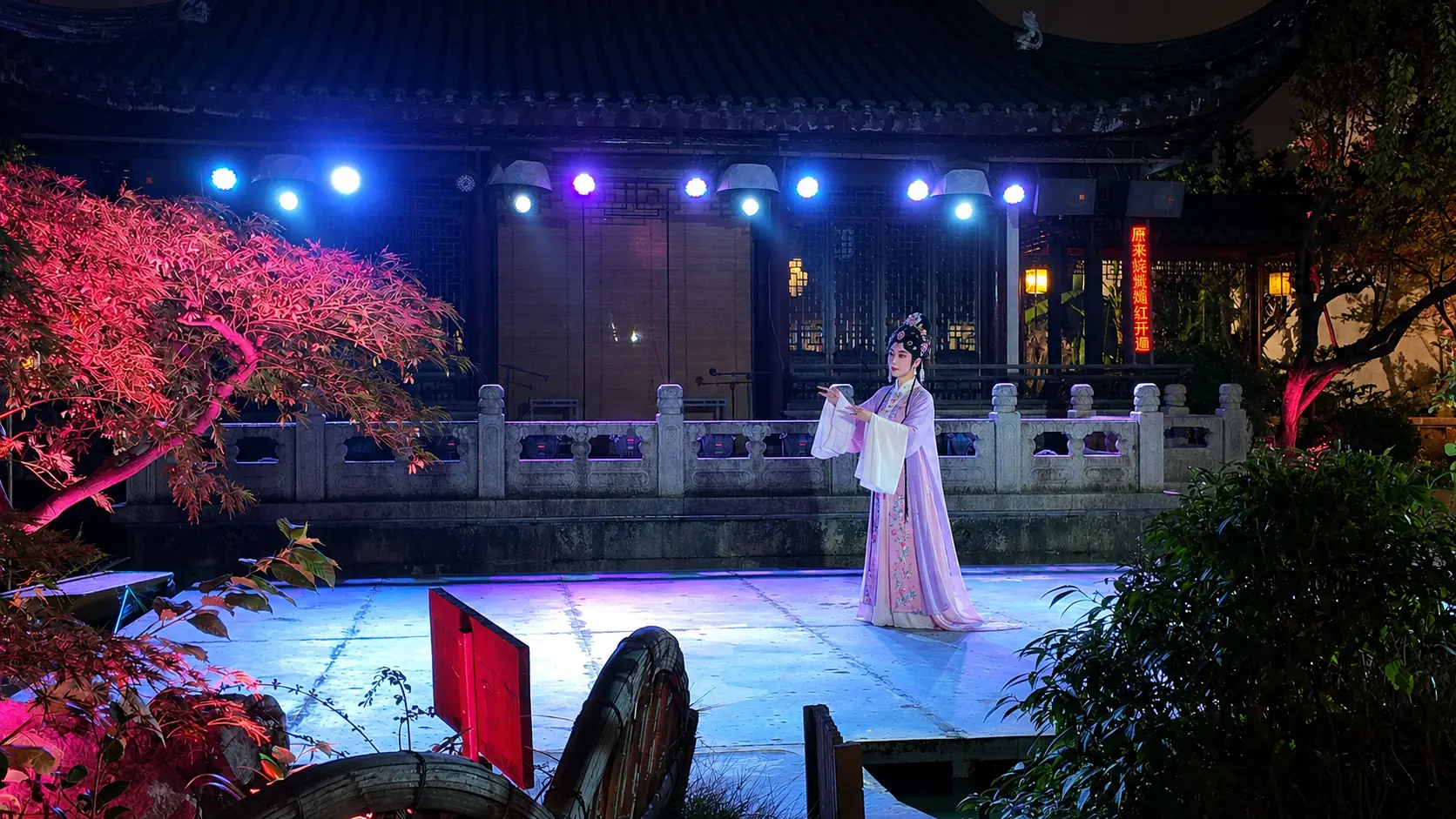
Choose this when you are curious about Kunqu Opera (昆曲), Pingtan-style storytelling or a small local stage. Do not expect a grand theatre. The value is intimate: the sound of Suzhou culture appearing beside the same water street you have been walking.
Treat it as one short cultural pause. Confirm the current programme, session, price and seating on the day.
Choose one indoor stop: Shantang's best rhythm is walk, bridge, water, tea, one short performance or hall, then back to the canal. Turning every interior into a checklist makes the visit thinner.
Side Lanes Beyond Shantang Street Lanterns
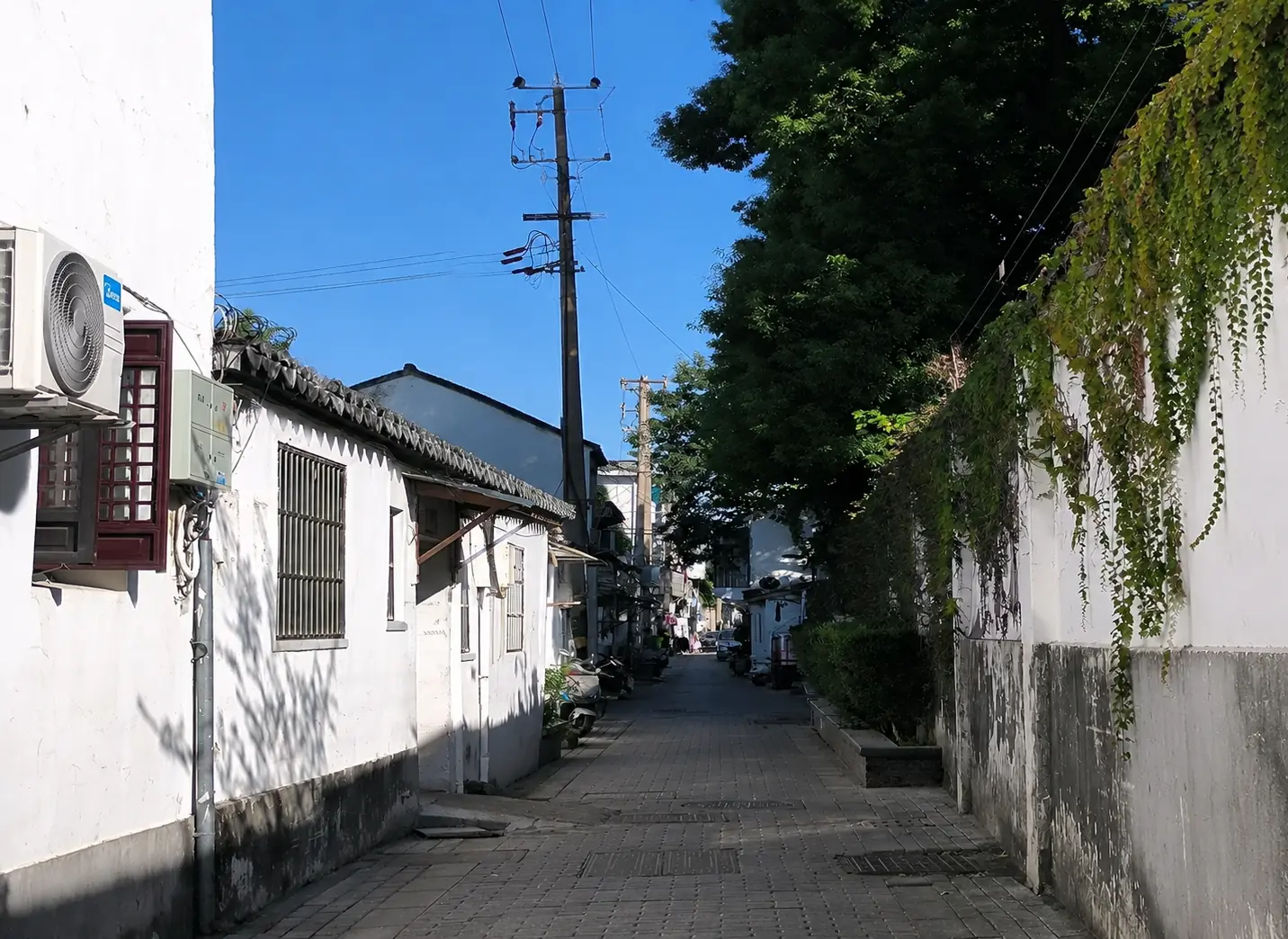
If Shantang feels like a night market, step sideways before judging the whole district.
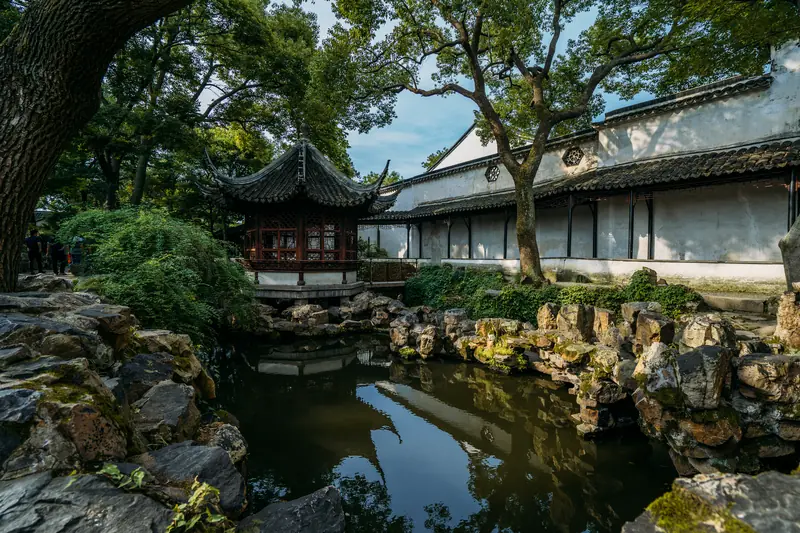
White walls, black tiles, horse-head walls, small doors, flowerpots, wells, narrow passages and old signs are quieter than the canal spectacle. Residents using the same lanes complete the picture: an old-city neighbourhood sharing space with tourism.
Enter lightly, walk a short distance, then return when a lane becomes clearly residential.
This is still a neighbourhood: photograph street scenes, bridges, wall lines and shopfronts. Do not point into private courtyards, block doorways or make close-up images of residents without consent.
Night Boats on the Shantang Canal

The boat is strongest when the walls still read and the lamps have just begun to own the canal.
Official Suzhou route material recommends returning to Shantang at night for a different water-level view. But a route listing is not a permanent schedule promise: season, weather, crowd levels and operating arrangements can change what runs.
- 1. Read the pier notice and current channel.
- 2. Confirm route, fare, wait and last departure.
- 3. Skip it when queues or weather weaken the evening.
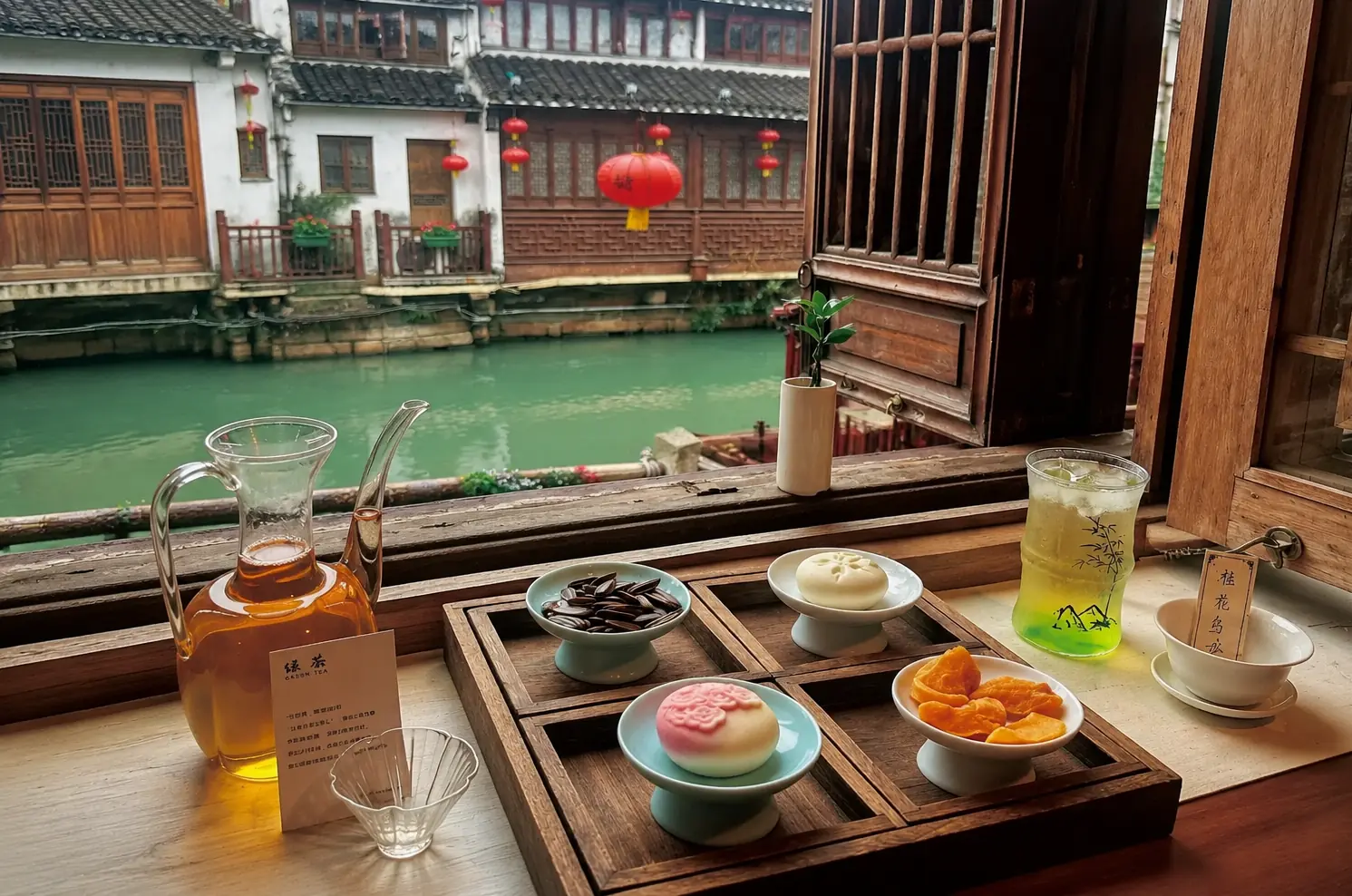
Trade the queue for a riverside tea seat.
You keep the canal, lanterns and Suzhou-style snacks without turning the evening into a schedule problem. A dinner-and-tea walk is a complete Shantang evening, not a failed boat plan.
Shantang Street vs Pingjiang Road Walks
Shantang Street and Pingjiang Road both show Suzhou's canal character, but they are not interchangeable.
← swipe to compare all options →
Choose Shantang Street
Night views, boats, and a lively first impression
- ✓More dramatic after dusk, especially around bridges and lanterns
- —More commercial and crowded, especially on weekends
- ✓Good for a flexible evening with tea, snacks, boat, or dinner
Best after gardens or museum time
Choose Pingjiang Road
Quieter daytime canal texture
- ✓Better for daytime side lanes, museums, gardens, and old-city structure
- —Less theatrical at night than Shantang
- ✓Good if you want a slower residential water-lane feel
Best with Suzhou Museum and gardens
If you only have half a day, choose based on timing: Pingjiang Road in daylight, Shantang Street at dusk. If you have a full Suzhou day, do not choose between them. Pair Pingjiang Road with the museum and gardens, then let Shantang carry the evening.
Getting to Shantang Street and Nearby Sights
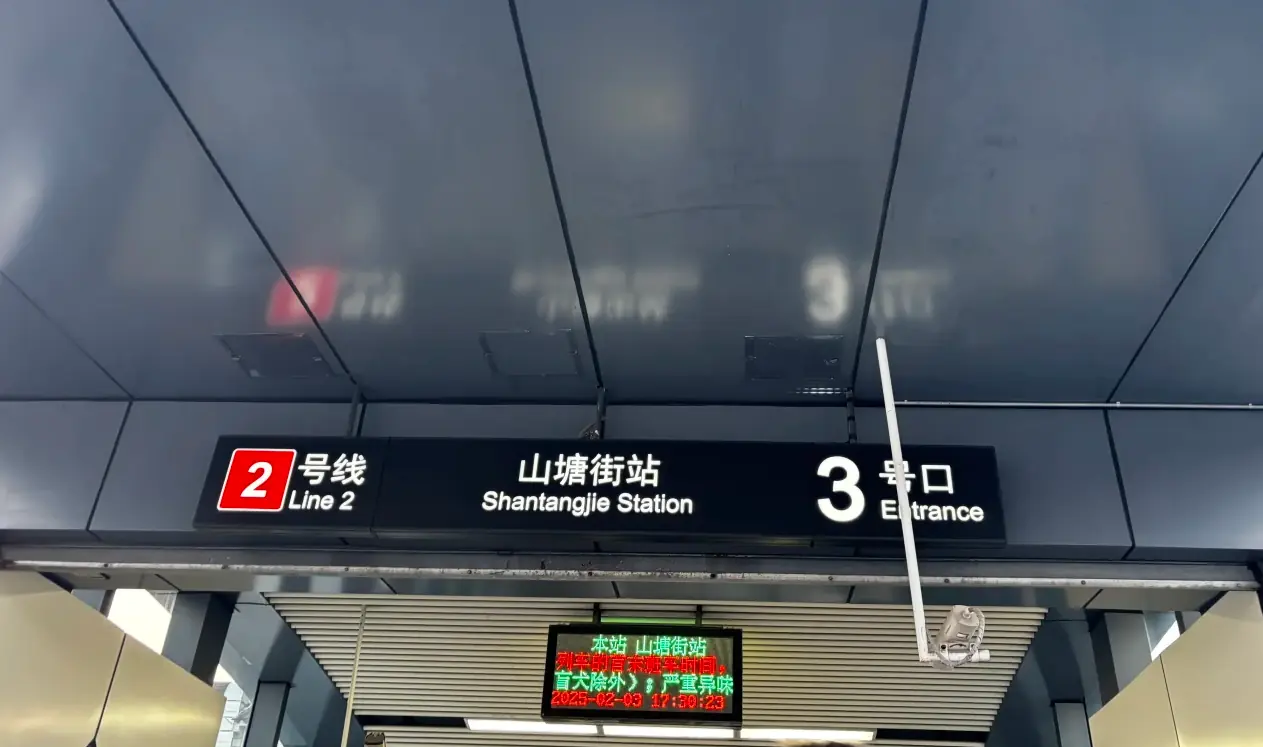
Use Line 2 to protect the evening from old-city traffic.
Shantang Jie Station is the easiest public-transport arrival. From Suzhou Railway Station, Line 2 is usually the cleanest no-taxi route. From Shanghai, arrive at Suzhou Railway Station or Suzhou North, then transfer by metro or taxi into the old city.
Do larger daytime sights while their hours and your energy are on your side. Let Shantang become the slower atmospheric finish.
Best Times for Shantang Street Crowds
Best for architecture, side lanes and daily-life scale.
Best for lamps, boats, reflections and the classic canal mood.
Wear real walking shoes. Stone paving and bridge steps can be slippery in rain.
Confirm the extras. Recheck paid halls, boats, shows and tea-house details that day.
Travel light. Avoid rolling luggage and do not make every snack window a task.
Holiday Crowd Reality
Weekend afternoons, public holidays, and good-weather evenings can be frustrating. Bridge centers, pier areas, popular snack windows, and narrow photo spots may all bottleneck. Official Suzhou 2025 Qingming data recorded very high visitor numbers at Pingjiang Road and Shantang Street, while a current 2026 police travel notice again identifies the old-city cluster—including Shantang—as a concentrated high-flow area.
Use that evidence as a planning warning, not a reason to skip the street: arrive earlier, keep the boat optional, and leave by metro before a bottleneck decides the evening for you.
2025 official visitor-data report · 2026 official high-flow travel warning
Frequently Asked Questions
Yes, especially for first-time visitors who want a classic canal-street evening. Go with the right expectation: it is a lively historic block with shops, lights, boats, side lanes, and real old-city structure, not a quiet untouched water town.
Sources checked for this guide
- 825 Shantang Canal and road origin under Suzhou prefect Bai Juyi: Suzhou 2026 city-construction chronology
- Parallel street-and-river pattern, bridges, white walls and black tiles: Suzhou Municipal Government street profile
- The historic eastern 360 m as the essence of Seven-li Shantang: China Daily government tourism page
- Yuhan Hall heritage identity, surviving Ming hall and compound layout: Suzhou Garden Bureau current profile
- Current 2026 appointment-based weekday marriage-registration role inside Yuhan Hall: Suzhou Municipal Government current-use notice
- Older scenic-area, Yuhan price/hour and telephone reference, retained only as background: Older official Seven-li Shantang visitor page
- Official night-boat recommendation and route context; same-day operations still control: Suzhou Grand Canal route page
- Historic 2025 holiday visitor pressure at Shantang and Pingjiang: Suzhou official Qingming report
- Current 2026 high-flow warning for old-city attractions including Shantang Street: Suzhou Police travel notice
Beyond This Guide
Shantang Street works best as the water-and-light piece of a Suzhou day, not the whole day by itself. See gardens, museums, or Pingjiang Road when the light is clear; slow down at Shantang Street when the boats and lanterns start to make sense.
For a fuller plan, pair this guide with Pingjiang Road, Suzhou Museum, Humble Administrator's Garden, Suzhou Pingtan and Kunqu, or a Suzhou day trip from Shanghai.
© gochinafreely.com — Original guide by Go China Freely.