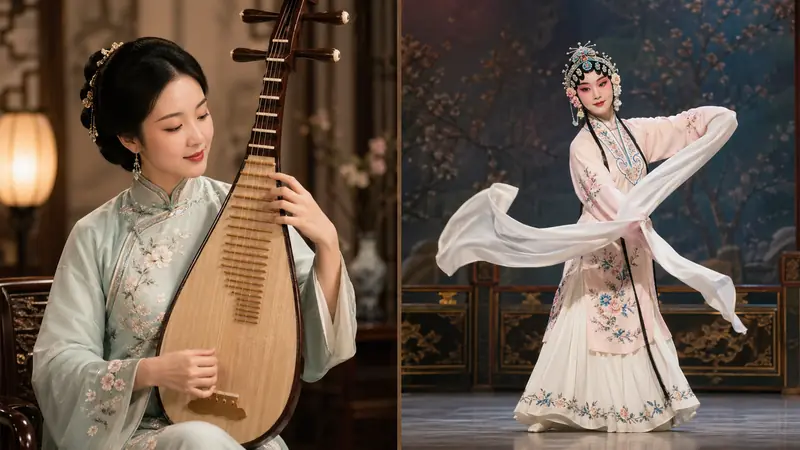
Programme picture
The figures below are either current dated notices or clearly labelled planning references. Recheck the selected date before paying.
Check before you go
Suzhou is one of the rare cities where Pingtan (苏州评弹) in a teahouse and Kunqu (昆曲) in a theatre or garden can sit naturally in the same trip. Kunqu was proclaimed by UNESCO in 2001 and added to the Representative List in 2008; Suzhou Pingtan is on China's national intangible-cultural-heritage list. You do not need to follow every word: pipa, sanxian, water sleeves, and the old-town settings carry much of the experience.
Two World-Class Art Forms, One City
Pingtan and Kunqu are completely different art forms. They share a page because Suzhou lets you encounter both as living performance traditions—in storytelling halls, teahouses, theatres, and, on selected dates, classical gardens.
🎭Kunqu (昆曲)
Kunqu developed around Kunshan (昆山) in the Suzhou region and has more than 600 years of history. Chinese cultural institutions often call it the "ancestor of a hundred operas" (百戏之祖) because of its influence on later stage traditions.
🍵Suzhou Pingtan (苏州评弹)
Pingtan combines Suzhou Pinghua (评话, spoken storytelling) and Suzhou Tanci (弹词, sung storytelling with instruments). It is performed in Wu dialect with pipa (琵琶), sanxian (三弦), wit, speech rhythm, and long-practiced vocal color.
Why Suzhou: Kunshan and Suzhou sit at the heart of Kunqu's development, while Suzhou's own storytelling tradition shaped Pingtan. Current programmes vary by venue and date, but both arts remain visible in the city's working cultural spaces rather than only behind museum glass.
What Suzhou Pingtan Sounds Like in Teahouses
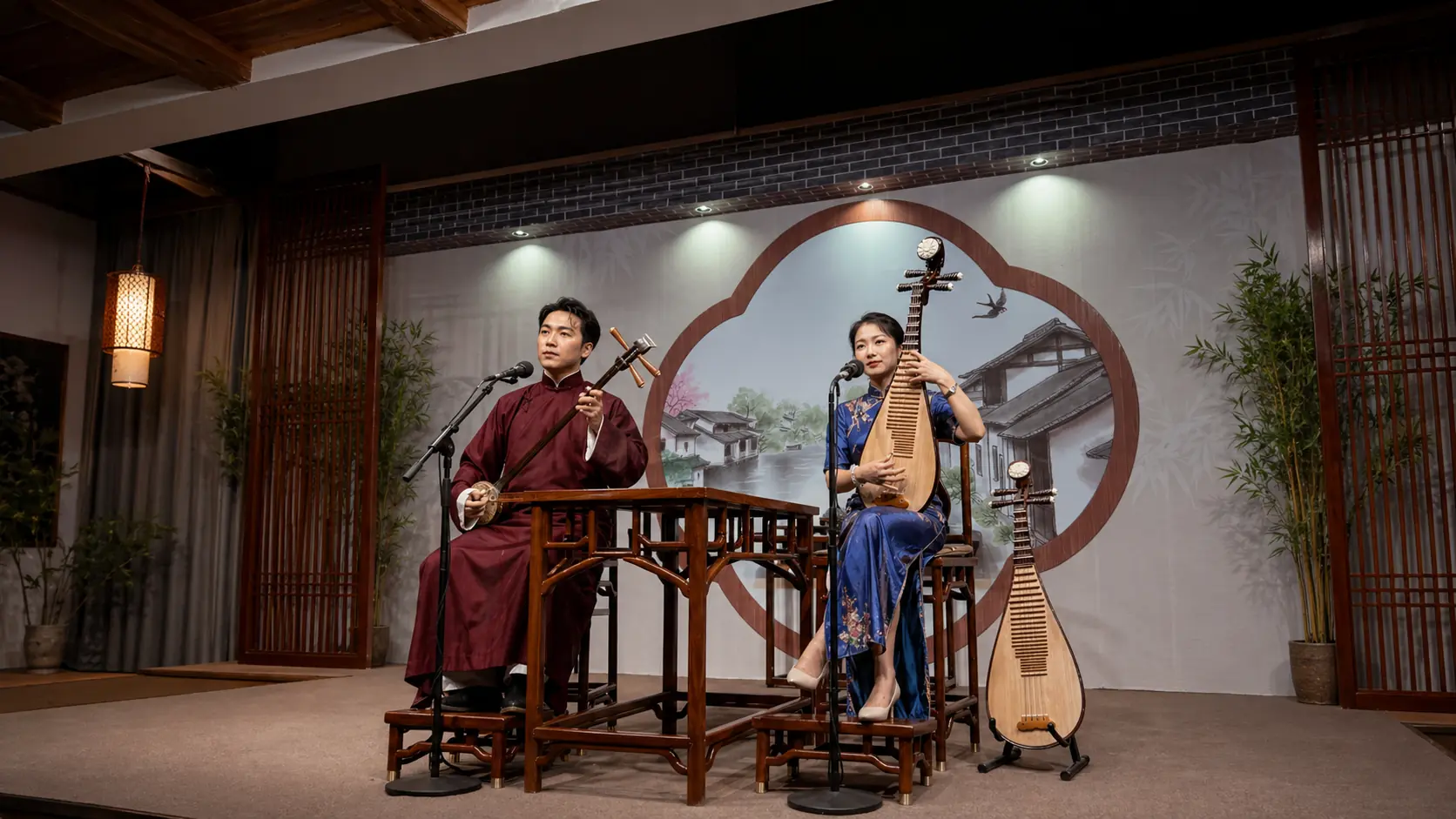
Walk into a Suzhou teahouse and a cup of Biluochun (碧螺春) tea may land on your table while a performer holds a sanxian (三弦) and another cradles a pipa (琵琶). There is no light show or big screen; the room tightens its focus when the first Wu-dialect phrase meets the strings.
Most short visitor formats lean toward the musical side of Pingtan: intimate, seated, and centred on sound. Even without understanding the dialect, you can follow the instrumental colour, the rise and fall of the voice, and the performers' small expressions.
📖Pinghua: Spoken Storytelling
Pinghua is the "big books" side: one storyteller, a folding fan, a wooden clapper, and long-form tales from classics such as Romance of the Three Kingdoms or Water Margin.
🎶Tanci: Singing with Strings
Tanci is the "small books" side most visitors encounter: a male-female duo trading sung lines between pipa and sanxian, often in stories of romance, humor, or heartbreak.
What you will see: often one or two performers, a pipa or sanxian, and sometimes a folding fan or wooden clapper. The visual restraint is part of the form: close listening replaces costume changes and heavy lighting.
What Suzhou Kunqu Looks Like Onstage
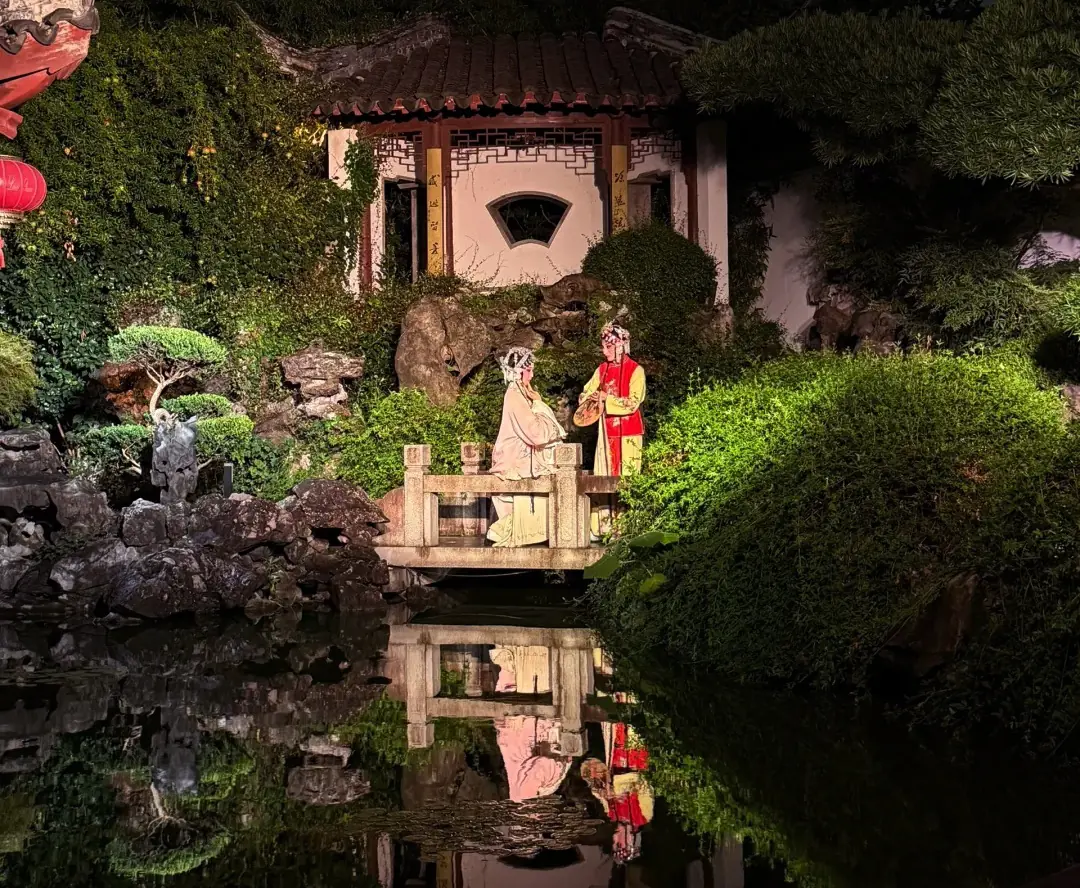
If Pingtan tells stories through sound, Kunqu tells them through the entire body. Hand gestures, measured steps, eye direction, and long water sleeves express emotion before a visitor understands the lyrics.
Small-theatre programmes often use short excerpt scenes (折子戏) from longer operas. A familiar example comes from The Peony Pavilion (牡丹亭), in which Du Liniang meets her dream lover in a garden.
Kunqu
Slow, literary, refined
Body movement and sleeve work carry much of the meaning. The mood is quiet, lingering, and chamber-like; bamboo flute, xiao, water sleeves, and garden scenes matter more than combat or acrobatics.
Peking Opera
Brighter, sharper, more direct
Singing, speech, acting, combat, gongs, drums, and jinghu create a more percussive rhythm. For many first-time visitors it feels closer to spectacle than chamber theatre.
In short: if Peking Opera feels like an action film, Kunqu feels closer to an art-house film.
Where to Watch Pingtan in Suzhou
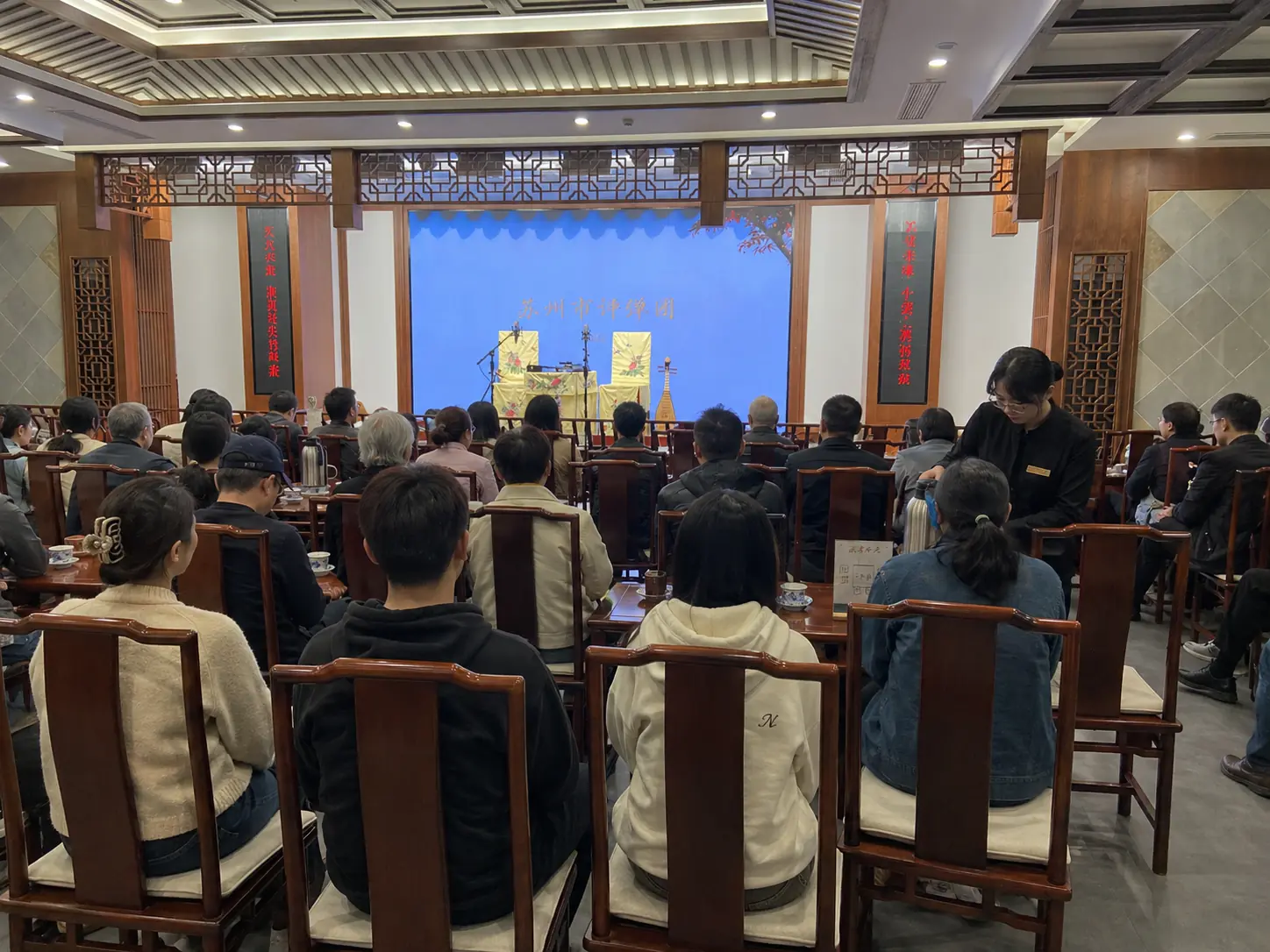
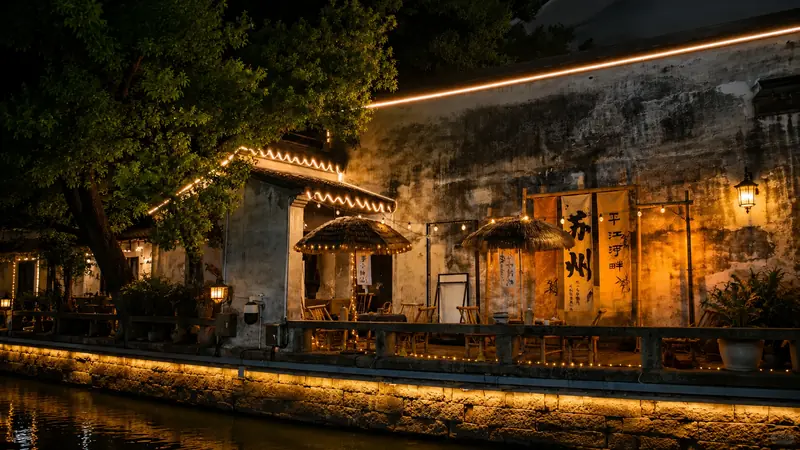
Suzhou's Pingtan venues range from historic storytelling halls to compact tea-house programmes. For a first encounter, choose by format and location rather than assuming the longest or most local session will be easiest to follow.
The four options below separate history, canal-lane convenience, lighter visitor formats, and a curated garden setting. Prices and running times remain date-specific.
Founded in 1776 and later associated with Guangyu Society, this is the strongest history-led choice. Official 2026 coverage confirms current activity, but older 13:30 and 19:30 schedules are planning references only; ask the current box office which afternoon or evening format is running.
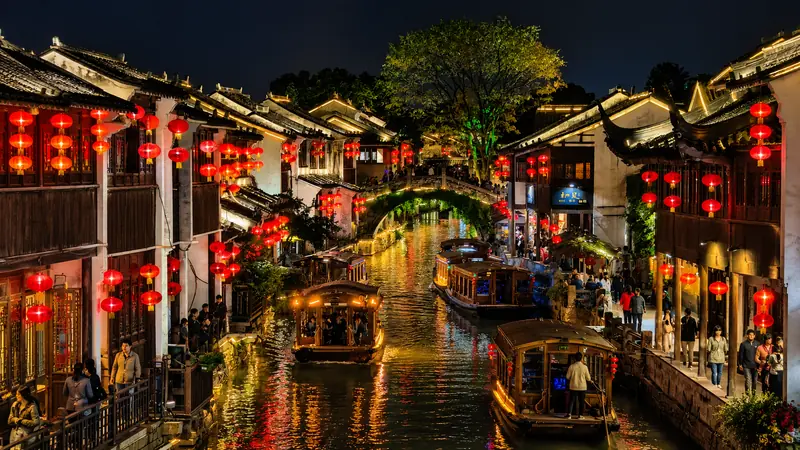
A convenient first encounter near the canal lanes, with carved wood, tea, and a small stage. Recent listings describe a compact format of about 40 minutes and multiple sessions, but the live listing controls the actual inclusion and time.
Pipa Yu Pingtan Teahouse
Pingjiang Road · legacy ¥68-88 with tea
A practical candidate for a short performance near the old canal lanes. Older listings described a lighter, more interactive programme with Wu-dialect folk songs; verify both that format and the current price before building it into the day.
Mokeyuan (墨客园)
Garden setting · legacy ¥88-128 planning band
Listings have marketed afternoon or evening combinations of Pingtan, Kunqu, guzheng, tea, and the Gusu Poets (姑苏诗人) programme in an old garden setting. Treat the combination as variable and choose it only after checking what the selected session actually includes.
Which one to pick: choose Guangyu for the strongest historical context, Han'er Garden or Pipa Yu for an easy Pingjiang Road stop, and Mokeyuan for a broader curated setting. Compare the live session length, tea inclusion, and language format before paying.
Where to Watch Kunqu in Suzhou
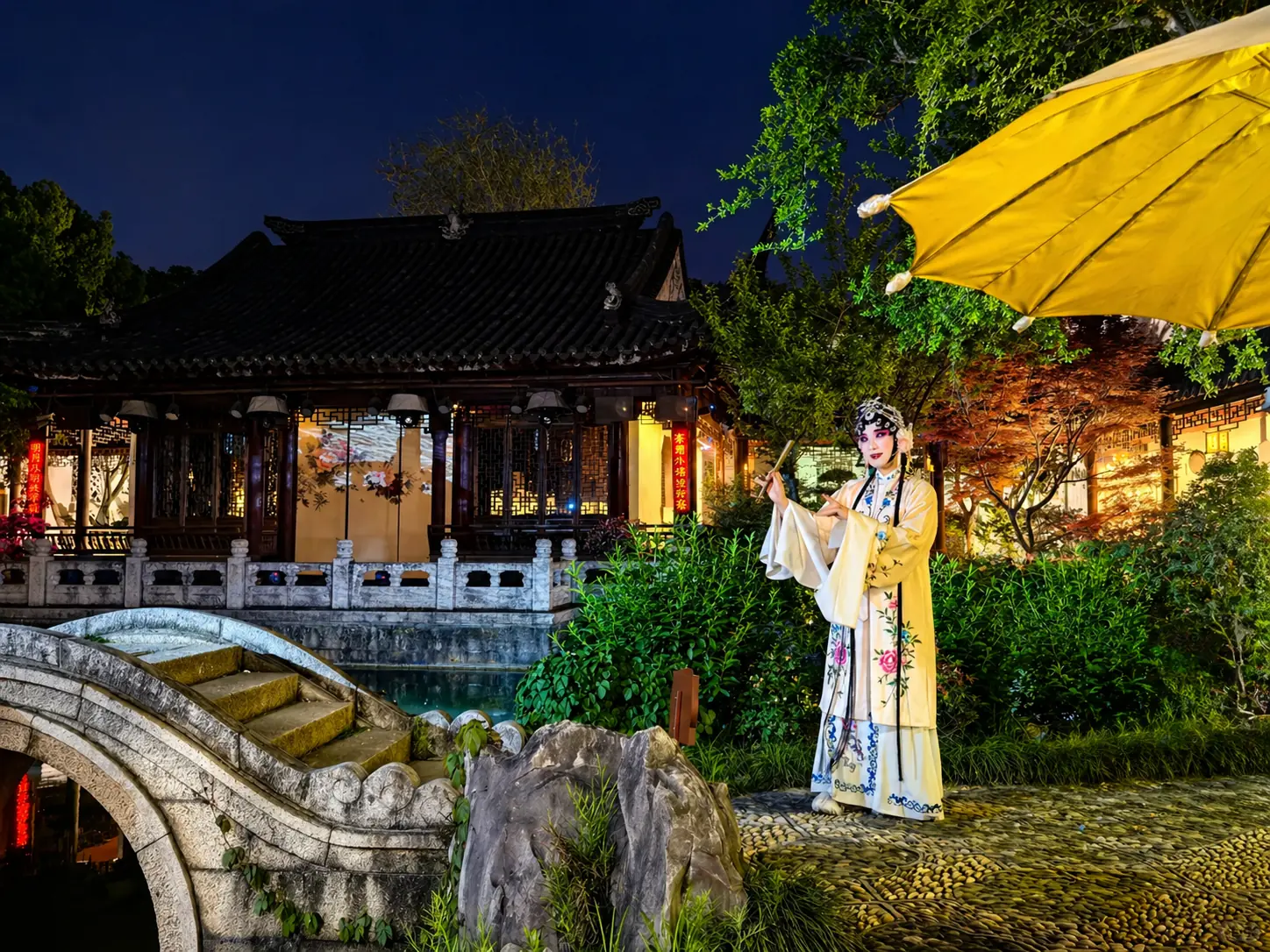
Kunqu options in Suzhou range from a small theatre excerpt to a premium immersive garden production. If this is your first encounter, a short programme is the lower-risk way to learn the stage language before committing to a full evening.
The useful question is not “which is best?” but which format is actually running on your date: easy Shantang access, an immersive Canglang route, a varied Master of Nets night, or museum context.
The lowest-barrier Kunqu candidate: a Ming-Qing-style venue on Shantang Street with short excerpts and a tea-house atmosphere. A current listing shows daily operation, but the older ¥48 and 19:30 details are not a standing promise; check the selected performance rather than the venue opening hours.
Six Records of a Floating Life is listed as an immersive production at Canglang Pavilion (沧浪亭), with the audience moving through pavilions, rockeries, and pools. The roughly ¥1,580 and May-October details are historical planning references, not confirmation that the full version runs this season.
The current official example uses a six-act garden route with Kunqu, Pingtan, instrumental music, and dance. Its dates and sessions were specifically announced; older ¥100-120, late-March-to-November, eight-station, and 19:30-22:00 descriptions are historical and must not replace the live notice.
China Kunqu Museum (中国昆曲博物馆)
Tue-Sun 09:00-16:30 · Monday closed
Housed inside Quanjin Guild Hall (全晋会馆), this is China's professional Kunqu art museum and the best context-first stop for costumes, scripts, and instruments. Check the current admission or reservation notice; any performance uses its own schedule and ticket rule.
Status check: Shantang and the museum are dependable venue anchors, while garden productions are programme-led. Confirm the exact production, date, entry window, and inclusions before choosing accommodation or a return train around it.
Suzhou Garden Shows: Night Opera Options
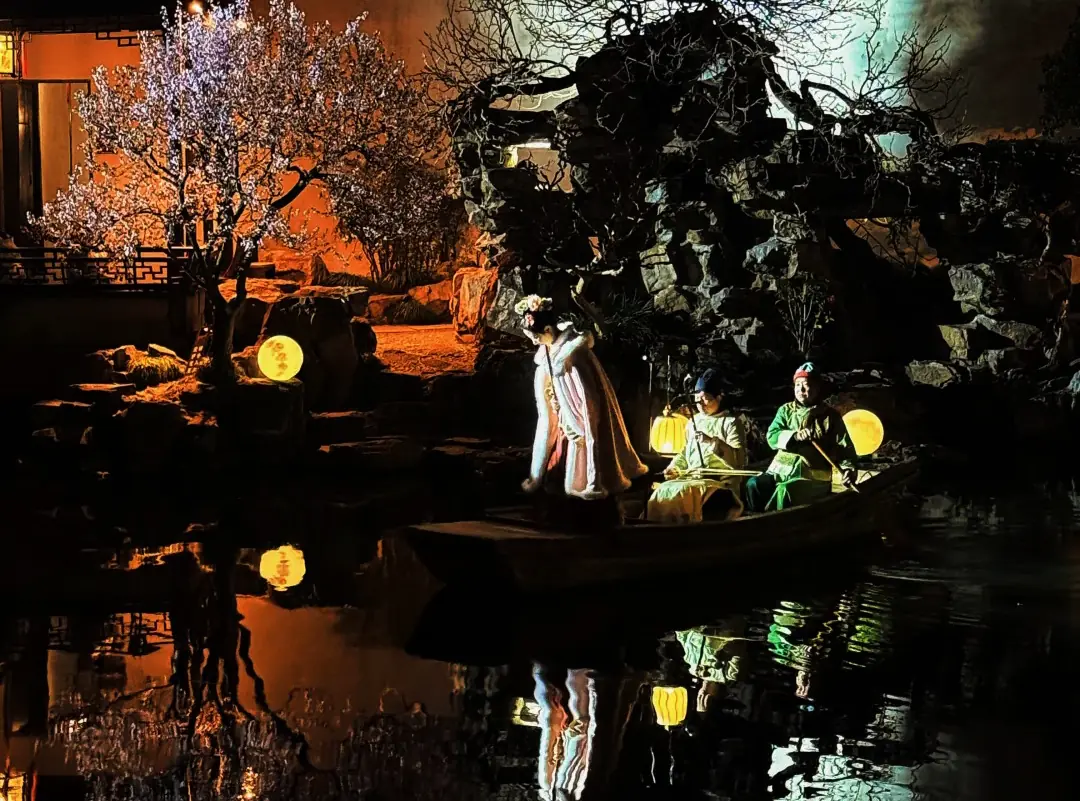
Watching Kunqu inside a Suzhou garden is a separate decision from choosing a small theatre. You are comparing how structured, costly, and immersive the evening will be—not simply buying a longer version of the same show.
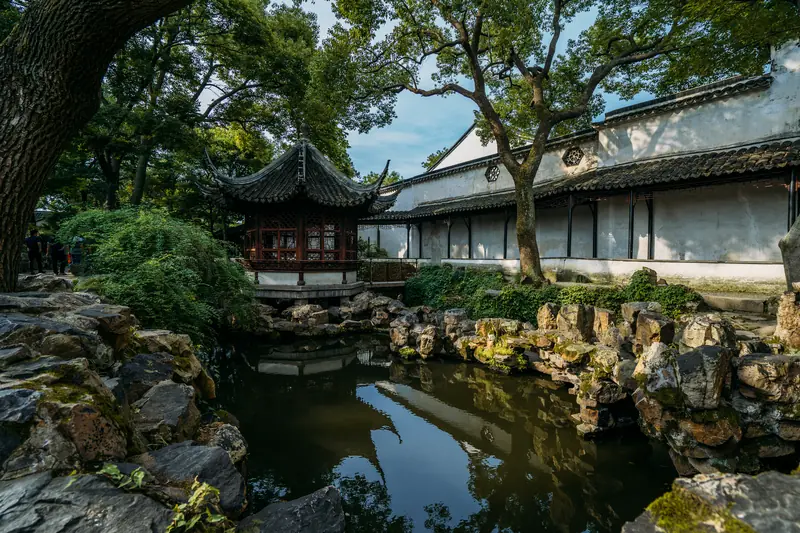
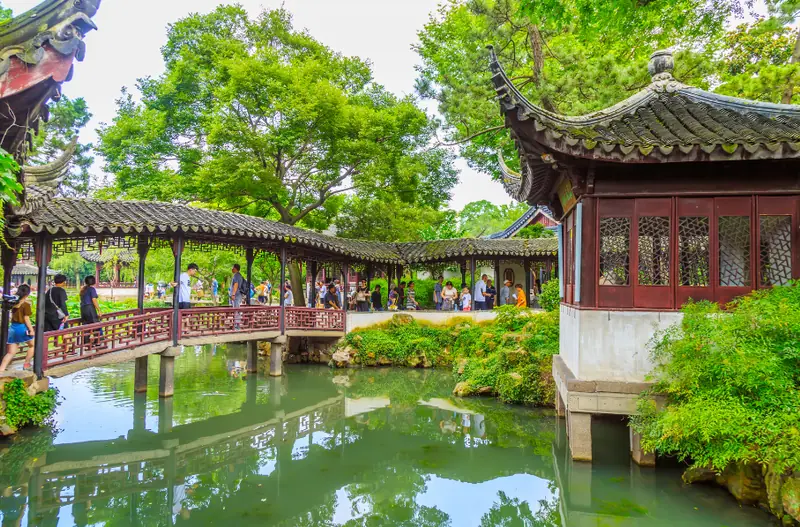
Suzhou has nine classical gardens on the UNESCO World Heritage list. When a dated night programme is running, rockeries, corridors, and reflecting pools become part of the stage; outside those dates, the daytime garden and indoor Kunqu options remain separate experiences.
Master of Nets Night
Current dated example · ¥120
The March 2026 official notice describes about 45 minutes and six acts, with timed entry from 18:25 and the garden closing at 22:20 on those dates. It is the clearest first garden sampler, but each new date needs a new official check.
Canglang · Six Records
Premium immersive route · historical ~¥1,580
The audience follows performers through a UNESCO garden in the full production. The May-October season and roughly ¥1,580 price are historical planning references; confirm that the immersive version is listed for your date before arranging the trip around it.
Humble Administrator's Garden Night
Conditional add-on · price varies
Consider this only when a dated official notice lists a night programme. It can fit an existing daytime garden plan, but it is not a standing substitute for Master of Nets or a guaranteed summer product.
Dates, sessions, route design, acts, and ticket channels can change. The current official notice—not an older seasonal description—controls.
Which one: start with Master of Nets when its dated programme is confirmed; choose Six Records only for the full immersive format at its current price; add Humble Administrator's Garden only when a live notice makes it a real option.
Tickets, Timing, and Practical Tips for Suzhou Shows
🎫Booking and Season
The March 2026 Master of Nets notice uses the official Suzhou Garden Tourism (苏州园林旅游) WeChat channels. Older Six Records guidance named the Forsome (浮生集 FORSOME) mini-program; verify the current channel. Shantang and teahouse listings also appear on major Chinese travel apps, but the live venue or official programme controls. Spring and autumn are comfortable; summer and winter formats vary rather than following one fixed season.
↔️Order and Transfer
Pingtan first, then Kunqu is the gentler learning curve. An afternoon Pingjiang Road session can pair with an evening at Shantang Street or Master of Nets when both programmes are confirmed. Keep transfer time between venues instead of assuming every old-town stop is an immediate walk or taxi hop.
👟Dress and Photography
Wear flat shoes for stone paths and dim garden corridors; in warm months, long sleeves or trousers also help with mosquitoes. Photography is venue-specific: keep phones silent, default to no flash, ask before recording, and follow the marked route after dark.
Fitting Shows into Your Suzhou Visit
Pingtan and Kunqu are afternoon and evening activities, leaving your daytime free for gardens, museums, canal lanes, or a water town. These sample routes show how the pieces fit together without turning the day into a checklist race.
Two-day framework · Pingtan + Kunqu
- Humble Administrator Garden(拙政园)- classic garden start
- Pingjiang Road Pingtan(平江路)- Haner Garden or Pipa Yu; recent compact formats are around 40 min
- Shantang Street + Kunqu(山塘街)- night market, then the confirmed live showtime
- Lingering Garden or Tiger Hill(留园 / 虎丘)- choose one main sight
- Suzhou Museum(苏州博物馆)- architecture and collections
- Master of Nets Garden Night(网师园夜花园)- use only when a dated evening programme is confirmed
Three-day framework · deeper Kunqu context
- Pingtan + Shantang Kunqu- same structure as the 2-day route
- Lingering Garden(留园)- slow garden morning
- China Kunqu Museum(中国昆曲博物馆)- learn the background before watching
- Canglang Pavilion Six Records(沧浪亭·浮生六记)- use only if the current immersive programme is confirmed
- Water Town or Tiger Hill + Hanshan Temple(虎丘 / 寒山寺)- choose a softer final day
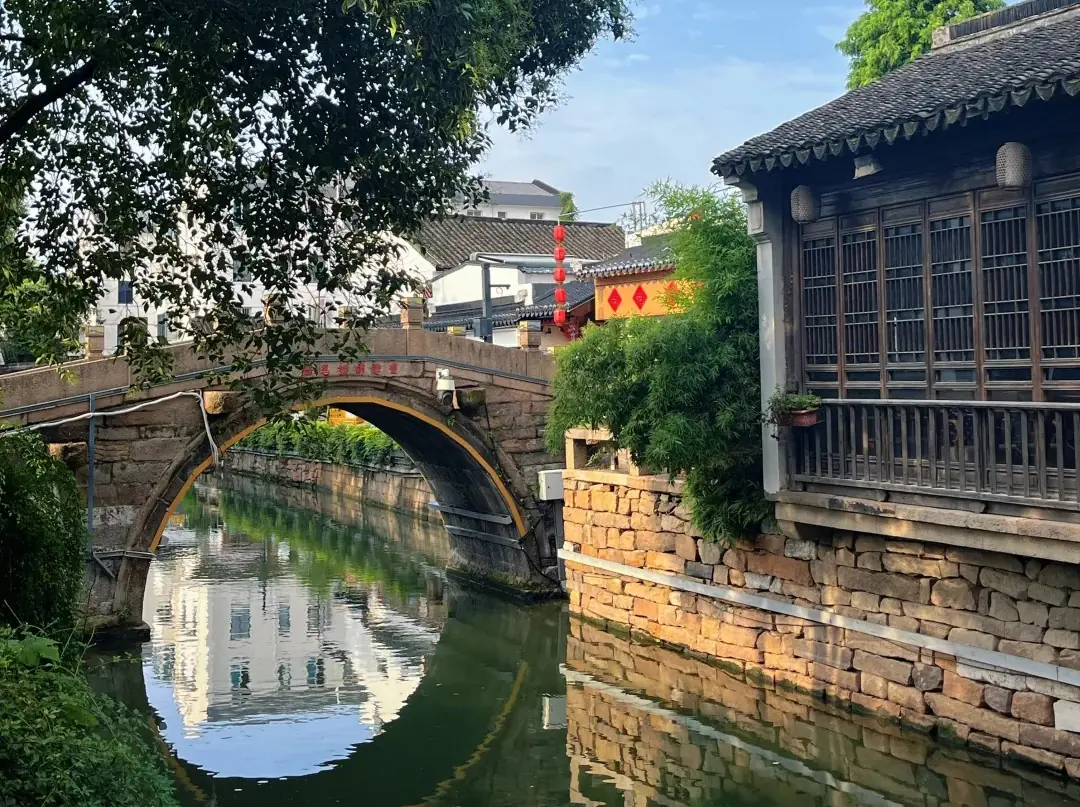
Day trip from Shanghai: some high-speed trains take roughly 25-30 minutes, but the usable journey depends on the station, date, and last return. Confirm both the live show finish and your exact train before committing to an evening performance.
A morning garden, afternoon Pingtan, and evening Kunqu can work when daytime sightseeing stays compact. Do not pair a far-flung water town with a late garden show unless you are comfortable with a long day and have a verified return plan.
What Most Visitors Get Wrong in Suzhou
🔀Distinguish the Forms
Pingtan is seated storytelling centred on sound; Kunqu is theatrical opera built around body movement, costume, and staging. Kunqu is also quieter than the gong-and-drum image many visitors bring from Peking Opera: bamboo flute, xiao, measured gesture, and sleeve work set its pace.
🌍Reset Language and Audience Expectations
You do not need fluent Chinese for a first encounter. Pingtan melody and Kunqu movement carry more than visitors expect, and some programmes add projected text or a short introduction. Nor is this one-age entertainment: teahouses, small theatres, and immersive productions serve different audiences without one format defining the tradition.
↔️Choose the Venue, Then Protect the Pace
Venue choice changes everything: one hall may serve regulars with a long dialect narrative while another curates short highlights with tea and visitor context. Two shows can work only with a simple transfer and breathing room for tea service, entry, garden walking, and the train or taxi afterward.
Suzhou Pingtan and Kunqu Travel FAQ
Yes. Pingtan works as a musical experience even if you do not follow Suzhou dialect, and Kunqu is highly visual: water sleeves, body movement, facial expression, and stage composition carry much of the story. Some programmes may add projected text or a short introduction, but confirm that feature with the selected venue.
Sources checked for this guide
- UNESCO Intangible Cultural Heritage · Kun Qu Opera: 2001 proclamation, 2008 Representative List inscription, history and representative works
- Suzhou Municipal Bureau of Culture, Radio, Television and Tourism · Kunqu heritage: Kunshan and Suzhou origins, 600-year history, and attributed cultural language
- Suzhou Municipal Government · national intangible-heritage list: Suzhou Pingtan and Kunqu on the first national representative list
- Suzhou Local Records · Suzhou Pingtan: Pinghua and Tanci identity, dialect setting, instruments, and Guangyu history
- Suzhou Municipal Government · Guangyu 2026 cultural programme: current operation, 80-minute special programmes, and afternoon/evening context
- China National Radio · garden Kunqu format: one-hour Garden Dream excerpt-format example; current programme still controls
- Suzhou Municipal Government · Master of Nets night notice: March 2026 ¥120 ticket, about 45 minutes, six acts, and dated entry window
- Suzhou Gardens and Landscaping Administration · Master of Nets 2022 programme: historical eight-station and seasonal context, not the current operating promise
- Suzhou Municipal Government · China Kunqu Museum: official location and Tue-Sun 09:00-16:30 opening hours
- Suzhou Municipal Government · 2026 museum notice: current holiday operation, one-hour Pingtan sessions, and separate performance-ticket reminder
- Trip.com train timetable · Shanghai to Suzhou: live timetable cross-check showing station-specific direct journeys around 25-30 minutes; exact train and station control
- Trip.com venue listing · Shantang Kunqu Opera House: current operating cross-check, venue hours, address, and recent starting-price context
- Trip.com venue listing · Haner Garden Pingtan Teahouse: current venue and address cross-check; exact live time and price still require confirmation
- Trip.com venue listing · Six Records of a Floating Life: current immersive-product and Canglang venue cross-check; no current price or season guarantee
Beyond This Suzhou Performing Arts Guide
Suzhou packs in far more than opera and teahouses: nine UNESCO gardens, the Suzhou Museum, Pingjiang Road's canal-side lanes, and water towns such as Zhouzhuang and Tongli.
Explore more shows and performances:
- Tianmen Fox Fairy: Zhangjiajie's Canyon Musical — a five-act musical in a real canyon with a 60m flying bridge
- Impression Lijiang: The Snow Mountain Show at 3,100 Meters — Zhang Yimou's open-air show with Jade Dragon Snow Mountain as the backdrop
- Princess Wencheng: Lhasa's Epic at 3,700 Meters — an 800-performer historical epic at the world's highest stage
- Enduring Memories of Hangzhou: West Lake's Water Stage Show — the G20 gala show on a UNESCO lake
© gochinafreely.com — Original guide by Go China Freely.