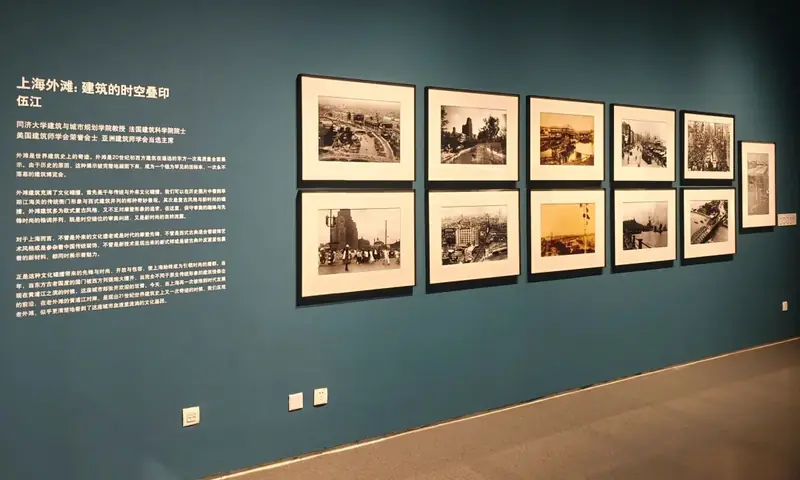
Hours & Admission
SmartShanghai lists daily opening and walk-up entry, while Shanghai's Culture and Tourism Bureau museum register lists Tuesday–Sunday (closed ordinary Mondays). Confirm before making a Monday trip. Check the current venue listing
Check Before You Go
Shanghai's Hidden Propaganda Poster Museum
The Propaganda Poster Art Centre (上海杨培明宣传画收藏艺术馆) sits on the 7th floor of the East Building at 726 Yan'an West Road, away from Shanghai's main museum clusters. Its modest office-tower setting keeps the focus on the posters rather than on monumental architecture.
The privately assembled collection follows the changing visual language of modern China, from early commercial calendar art through the Mao era, Cultural Revolution, and Reform period. Published accounts have described more than 6,000 works in the wider collection; the galleries show a changing selection of hundreds rather than every piece at once.

The compact galleries present a changing selection from a much larger privately assembled collection.
This is a small, focused museum rather than a vast survey institution. Allow time to compare image, slogan, typography, and date: the value of the visit lies in seeing how those elements change from one political and commercial moment to the next.
What You'll See Inside
Read the galleries as a visual timeline rather than a checklist of famous images. The collection's strength is the transition from commercial illustration to revolutionary messaging, mass political campaigns, and the consumer-facing imagery of the Reform period.
Commercial art, revolution, and reform
- 1
Calendar posters and commercial Shanghai
1910s-1940sCalendar posters paired dates with polished advertising images, including fashionable urban women and branded products. They establish the commercial visual language that later political poster makers could redirect.
- 2
Revolution and the new state
1940s-1960sWorkers, peasants, soldiers, industrial production, public health, and national construction become central subjects. Bold figures and direct slogans make the intended message readable at a glance.
- 3
Cultural Revolution intensity
1966-1976Red dominates many compositions, while Mao portraits, mass rallies, model figures, and the Little Red Book recur. Compare scale and gesture as carefully as the slogan.
- 4
Modernization and renewed commerce
Late 1970s-1990sReform-era works shift toward science, technology, family life, consumer aspiration, and more varied colour. Political communication and commercial design begin to overlap again.
Building New China
Workers, peasants, soldiers, and production
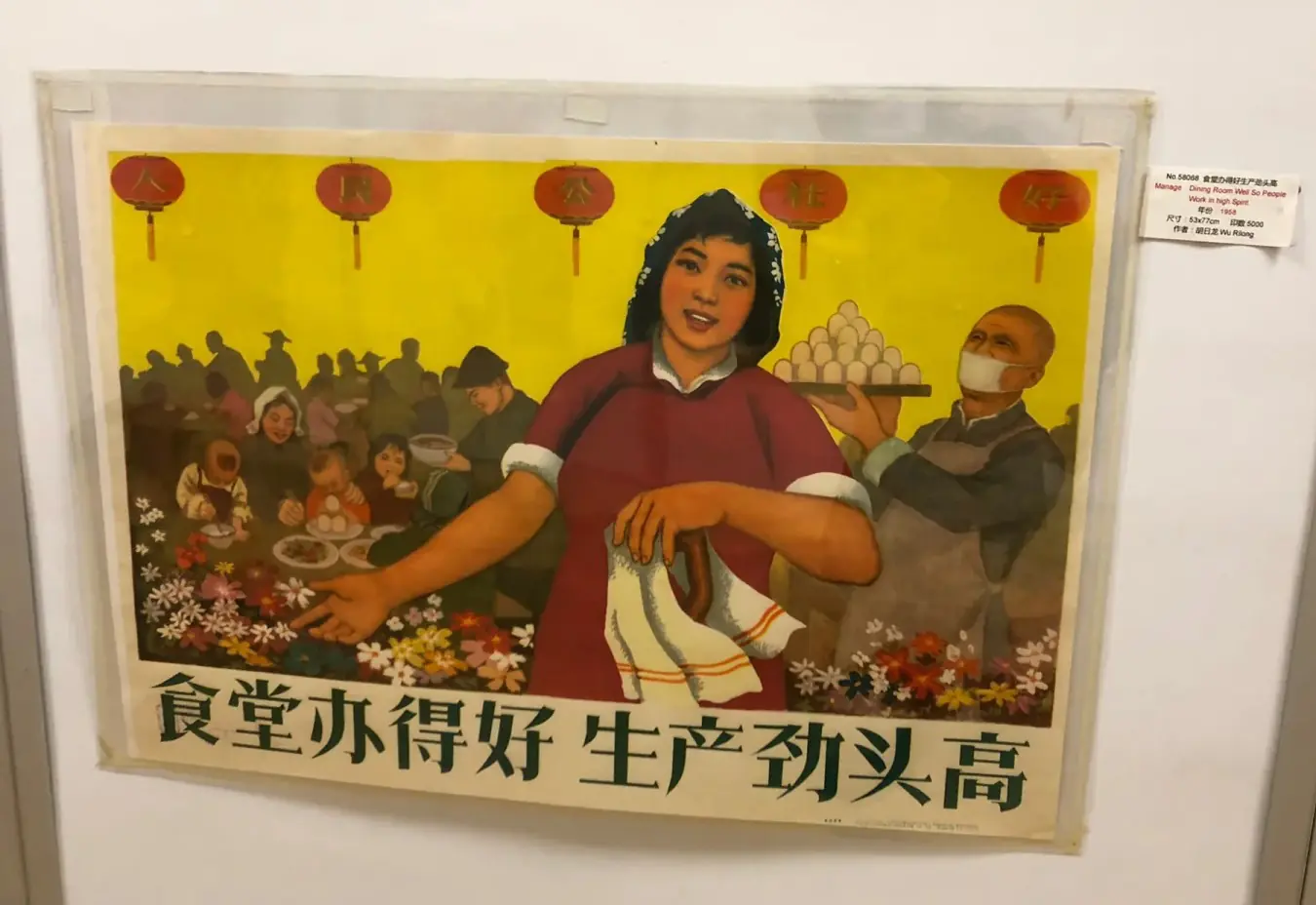
Look for idealized posture, direct eye lines, and tightly grouped figures. The design often turns collective labour or national construction into a scene of confidence and forward motion.
Cultural Revolution imagery
Scale, gesture, and saturated red
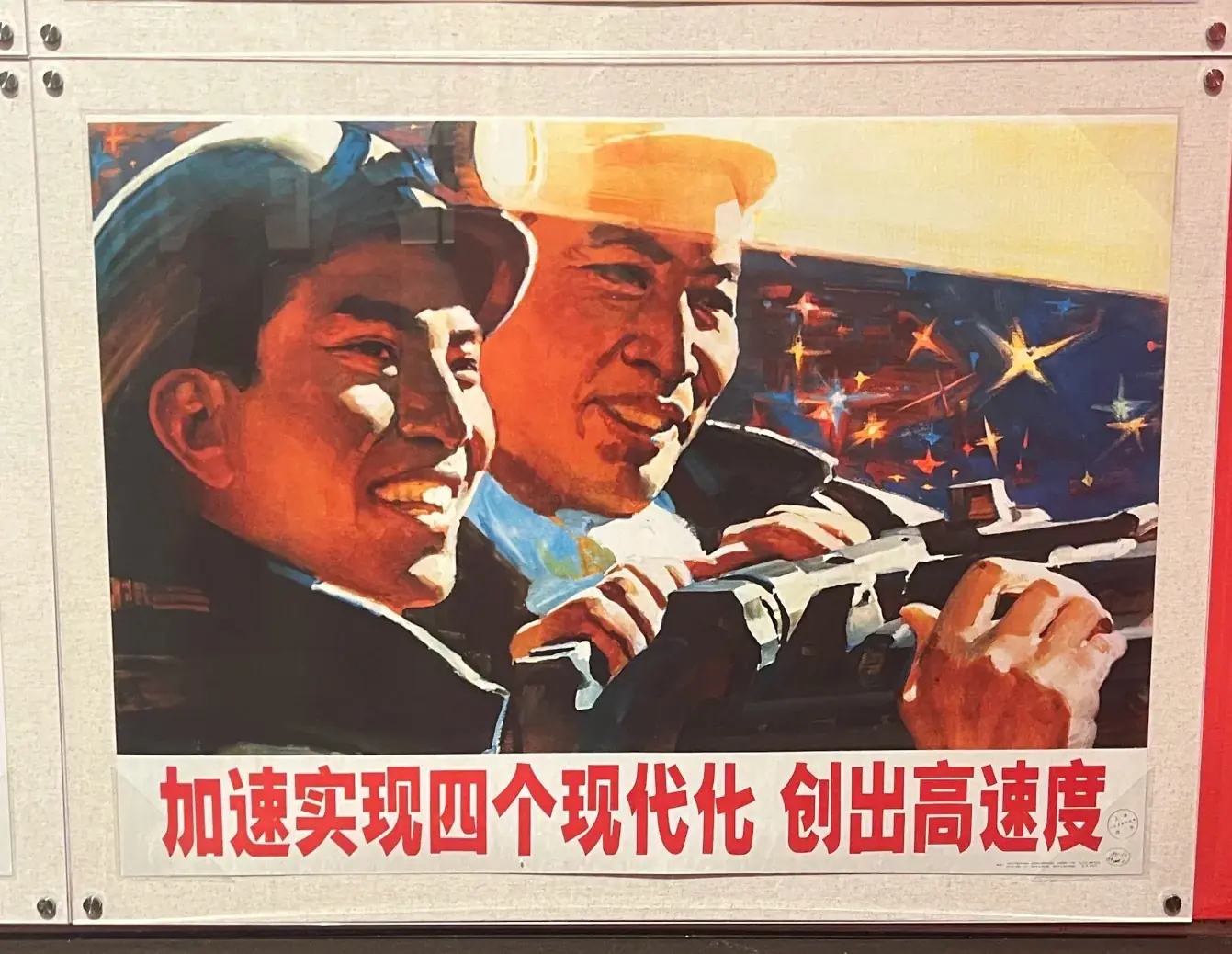
Large portraits, raised arms, books, flags, and massed figures amplify urgency. Read the date and caption before assuming that every red-dominant work belongs to the same campaign.
Reform-era transition
Modernization, daily life, and softer palettes
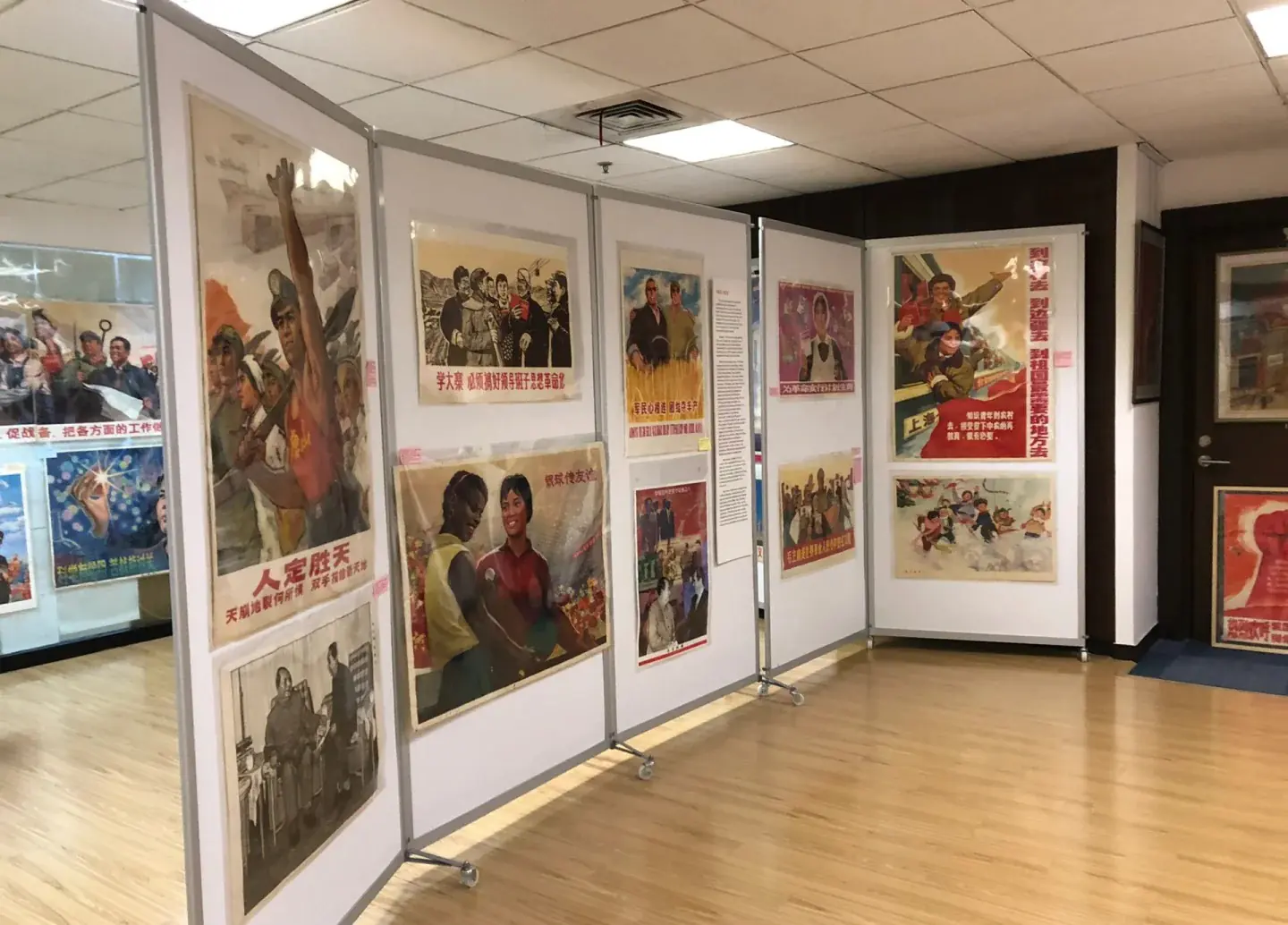
Science, technology, education, family life, and consumption become more visible. The changing palette helps show how state messaging and commercial visual culture moved closer together again.
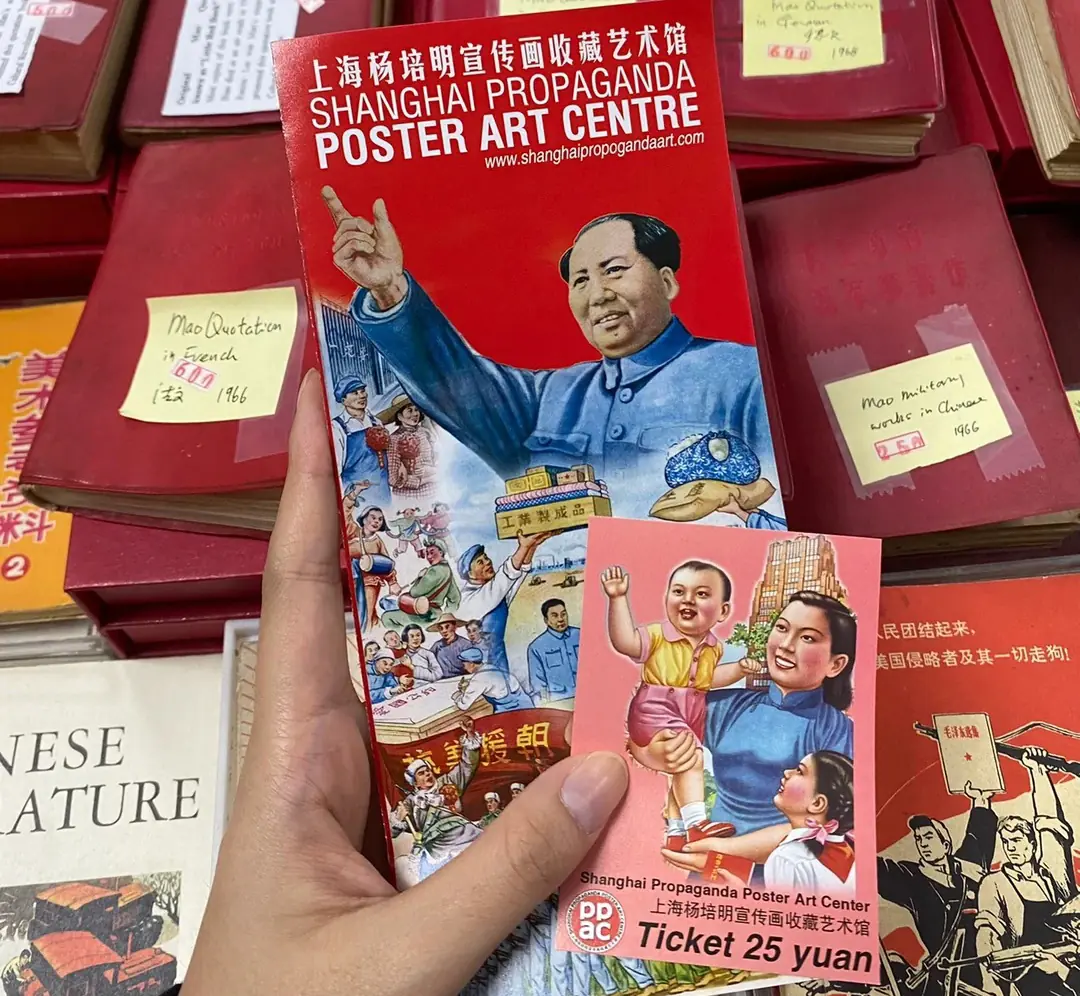
The small shop may offer reproductions, paper goods, and vintage posters; stock and prices vary.
Gift-shop exit. Current local information says the shop can carry reproductions, postcards, other paper goods, and both original and copied posters. Treat every item and price as live inventory: ask whether a piece is original or reproduced before buying, and do not plan around a particular poster being available.
Yang Peiming and His 30-Year Mission
The museum exists because Yang Peiming (杨培明) treated discarded or unfashionable posters as historical evidence worth preserving. His own account connects that collecting impulse to years of working with international visitors and seeing how differently they valued the material.
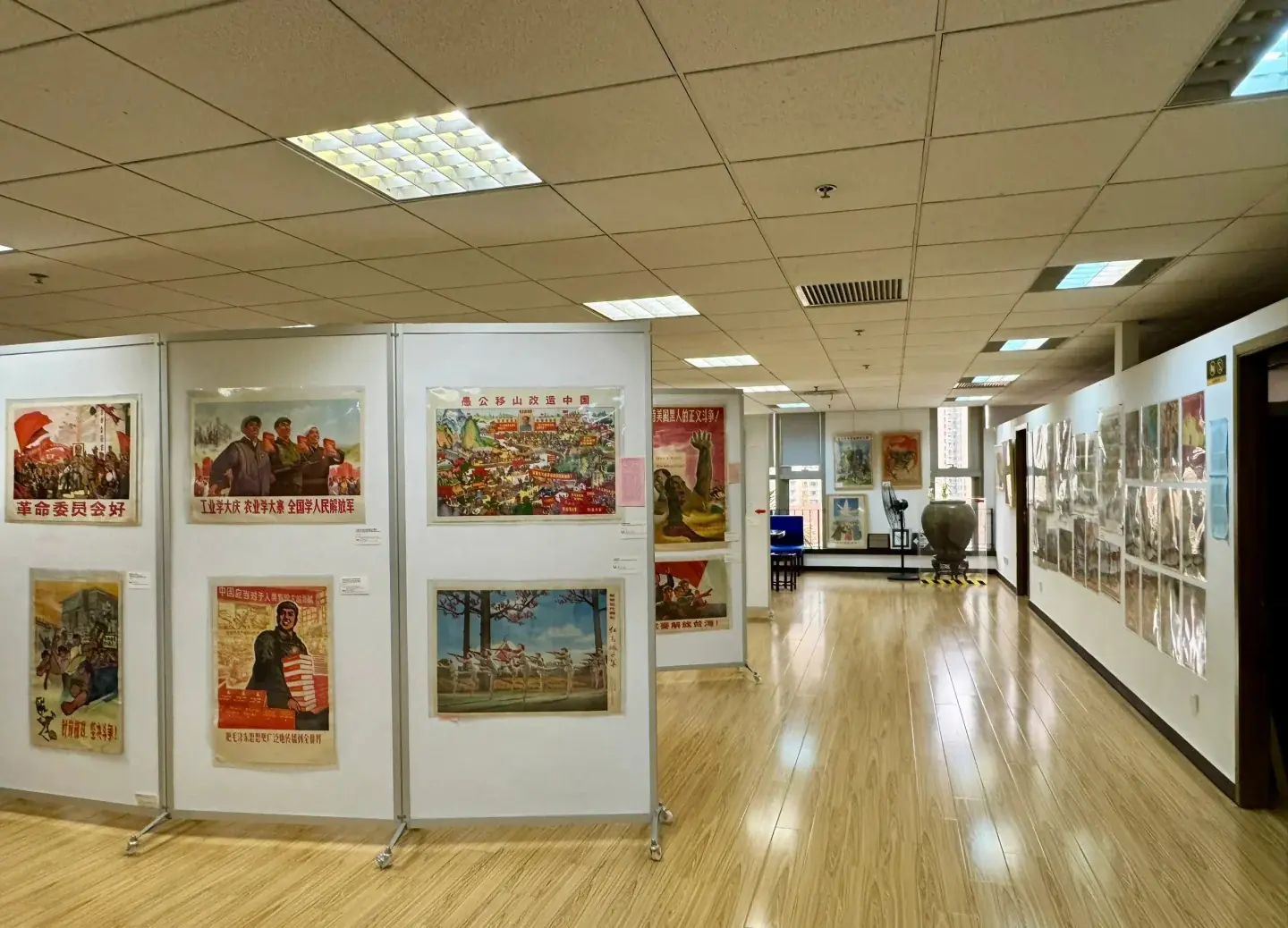
Yang Peiming began collecting systematically in the 1990s and built the collection across several Shanghai locations.
Born in Shanghai in 1945, Yang studied English and later worked in tourism. In a first-person interview, he described learning that material many local owners saw as obsolete could hold lasting artistic and historical value for other viewers.
One collection, several public chapters
- 1
Systematic collecting begins
1995Yang Peiming began actively assembling propaganda posters as a historical and visual collection.
- 2
First small museum opens
2002He opened an exhibition space and began presenting the posters to the public rather than keeping them as a private archive.
- 3
Licensed museum phase
2012The collection received a museum operating licence while it was based at the former Huashan Road location.
- 4
Move to the current venue
December 2019The museum relocated to the 7th floor of the East Building at 726 Yan'an West Road, where current listings place it today.
Do not plan around meeting the founder.
Older profiles describe Yang speaking with visitors, but they do not establish a current attendance schedule. Treat any conversation with him as an unplanned bonus, not a reason to choose a particular day or time.
Tickets, Hours, and Practical Details
Current visitor check.
- Hours: 10:00–17:00; last reported entry 16:30. Monday caution: SmartShanghai reports daily opening, whereas Shanghai's Culture and Tourism Bureau museum register lists Tuesday–Sunday (closed ordinary Mondays). Confirm directly before planning a Monday visit.
- Admission: ¥25 for adults and children in a recently verified local listing.
- Entry: Walk-up admission is commonly reported, but not guaranteed for every date.
- Photography: Current visitor information reports restrictions inside; follow posted signs and staff instructions.
- Language: English text is available, but do not expect every caption or interpretive detail to be fully bilingual.
- Time budget: Allow about 60-90 minutes for an unhurried first visit.
Hours, price, closures, and entry practice are mutable. Check the current venue listing shortly before departure, especially if this museum is the main reason for crossing Shanghai.
How to Find the Propaganda Poster Art Centre
Current address: 7/F, East Building, 726 Yan'an West Road (延安西路726号东楼), Changning District. The current Chinese venue name is Shanghai Yang Peiming Propaganda Poster Collection Art Museum (上海杨培明宣传画收藏艺术馆).
Ignore the old Huashan Road address
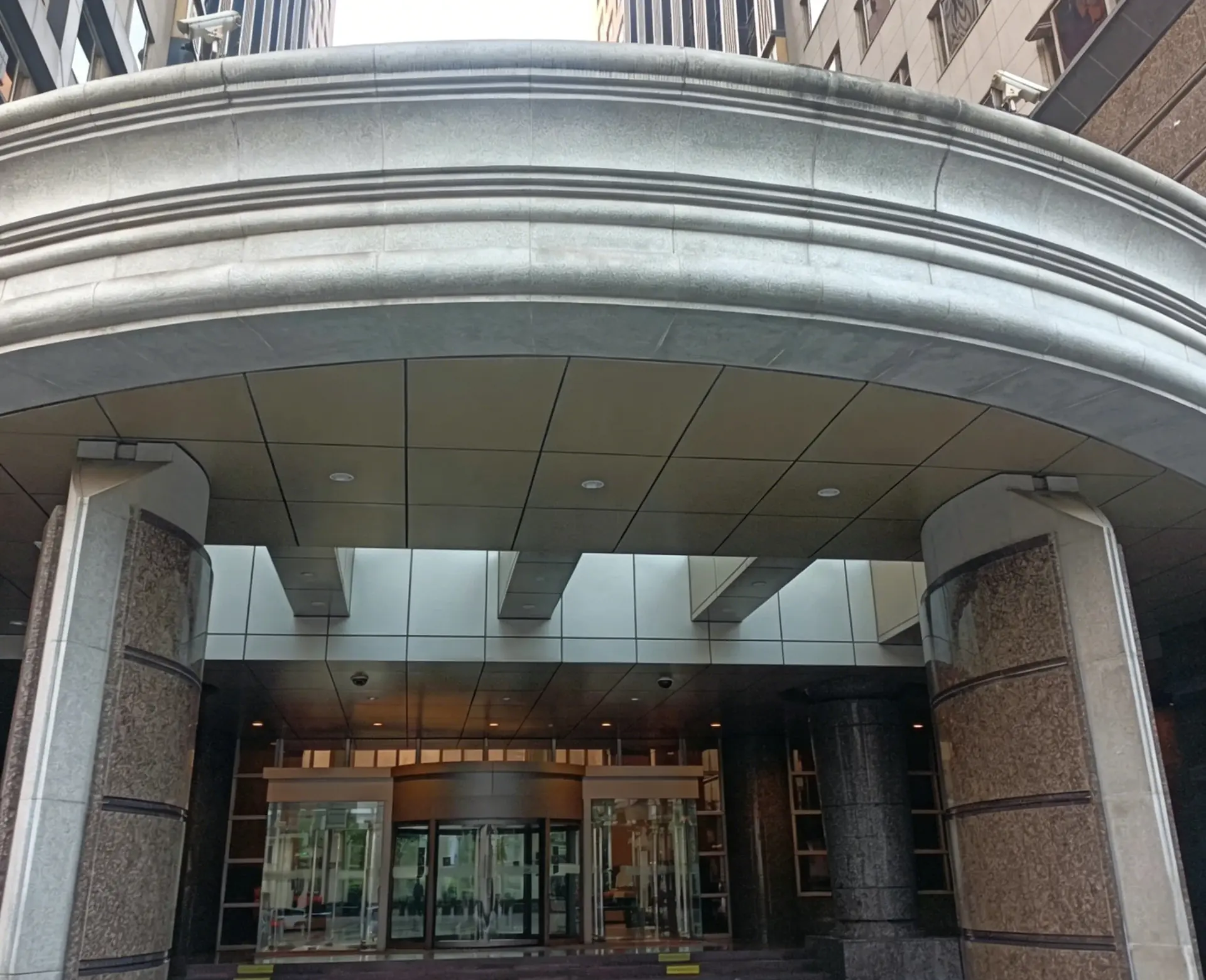
Match the building entrance to the written address, then take the lift to the 7th floor.
Metro + live map
Jiangsu Road · Lines 2 and 11
Current local information describes the museum as roughly a 15-minute walk from Jiangsu Road station. Let a live map choose the exit and final approach; construction, crossings, weather, and your pace can change the useful route.
Taxi or ride-hail
Show the full East Building address
Use the Chinese address below and check that the drop-off pin is on Yan'an West Road rather than at the former Huashan Road basement. Building staff can direct you to the correct lift bank.
Show this screen to your driver · 出示给司机看
请去延安西路726号东楼,上海杨培明宣传画收藏艺术馆。
East Building, 726 Yan'an West Road — Shanghai Yang Peiming Propaganda Poster Collection Art Museum, please.
The museum is on the 7th floor. Confirm the East Building and avoid the former 868 Huashan Road address.
What Most Tourists Get Wrong
Routing to the old address
Use 726 Yan'an West Road
The former 868 Huashan Road basement still appears in old articles and reviews. Match your live-map result to the East Building, 7/F address before you start the final leg.
Planning around the founder
No current attendance schedule
Historical interviews describe Yang Peiming meeting visitors, but they do not prove when he is present now. Choose your visit for the collection and treat a meeting as a bonus.
Expecting complete English interpretation
English text is available, not universal
The museum is workable for English readers, but coverage and depth vary. Translate selected captions when a date, slogan, or campaign needs more context.
Combine with the French Concession
Target pace: finish the museum first, then choose one former French Concession streetscape cluster and one practical exit. Treat this as a flexible sequence, not a fixed-duration walking itinerary.
- Propaganda Poster Art Centre(上海杨培明宣传画收藏艺术馆)- Complete the collection before choosing the next district stop; confirm current hours and entry practice.
- Transfer toward the Wukang Road cluster- Use a live map to choose walking, cycling, taxi, or transit according to weather, mobility, crossings, and your energy.
- Wukang Road and Wukang Building(武康路 · 武康大楼)- Make this the main former French Concession streetscape stop rather than trying to cover every nearby road.
- Choose one exit- Continue to Hengshan Road, stop for dinner, or take the most convenient metro; choose one ending instead of promising all three.
Plane-tree lanes
Let shade, weather, and live routing set the pace
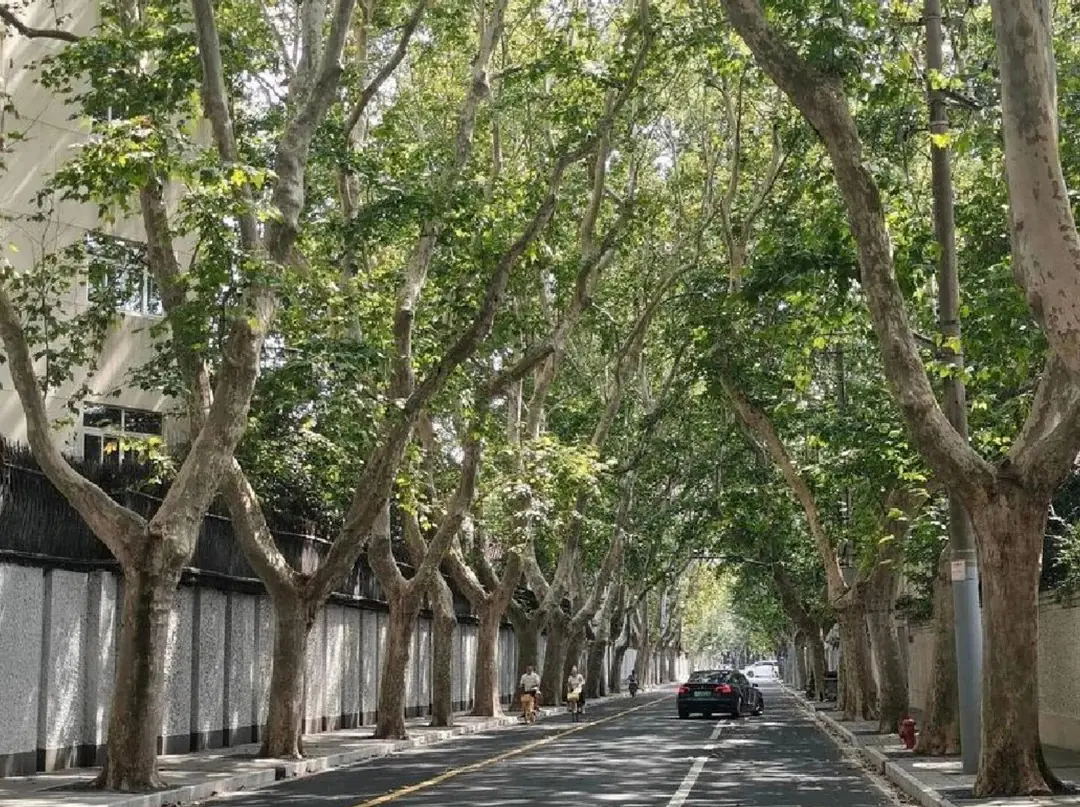
The district is best read slowly through building fronts, lane entrances, and changing street scale. Pick a compact cluster rather than turning the afternoon into a race across several neighbourhoods.
Wukang Building
武康大楼 · an anchor, not a promised five-minute transfer
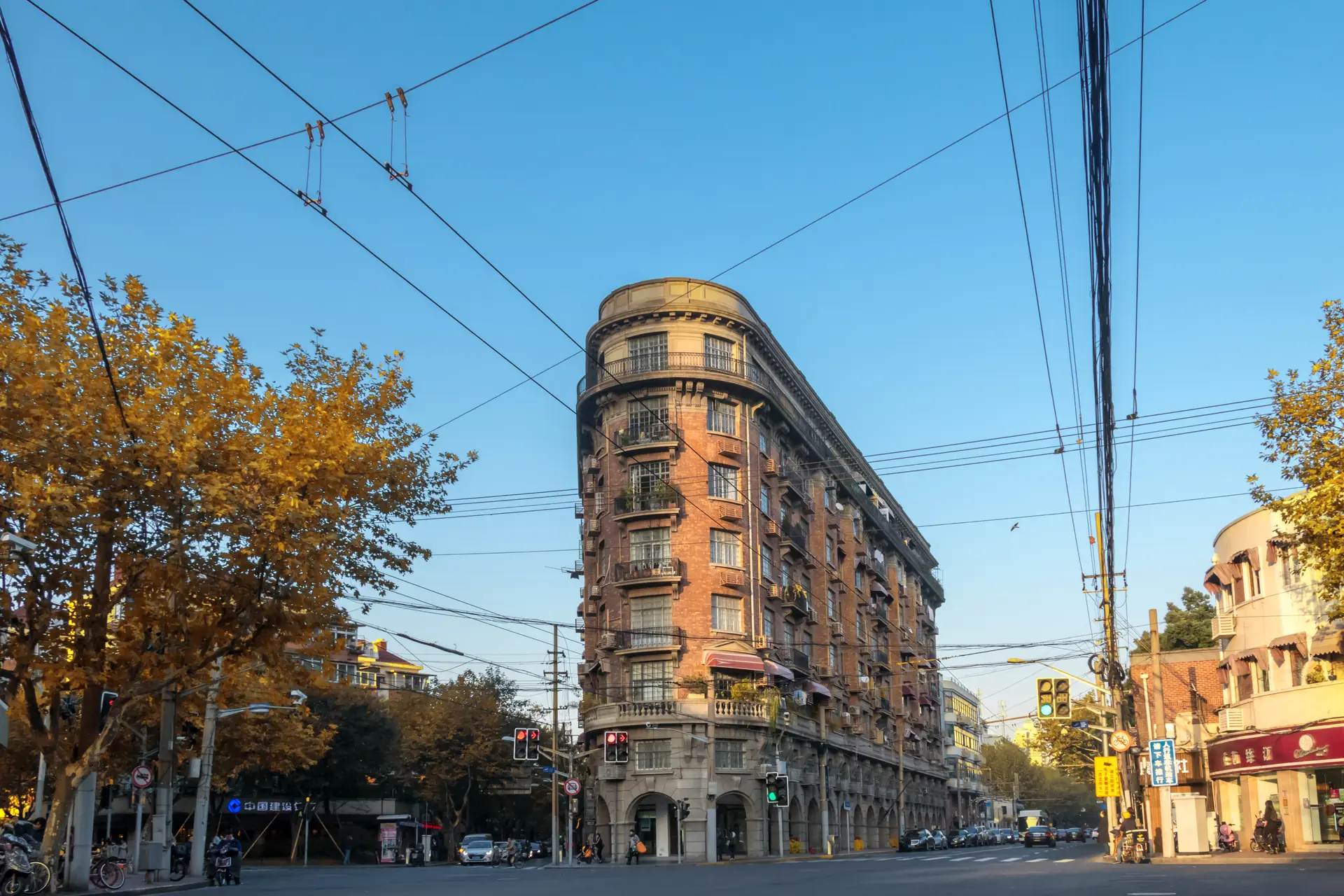
Use the building as a recognisable anchor for the Wukang Road cluster. The transfer from the museum depends on your chosen mode and live conditions, so check the route instead of relying on a fixed time or distance.
This sequence is not represented as one guaranteed step-free walk. If heat, rain, fatigue, or mobility makes the transfer awkward, switch modes and keep only the museum plus one streetscape stop.
Where to Stay Near the Propaganda Poster Art Centre
The museum sits on the western edge of central Puxi near Jiangsu Road Station (江苏路站, Lines 2 and 11), making either the Former French Concession or Jing'an Temple a natural home base.
Affiliate disclosure: the Trip.com hotel links below are affiliate links; we may earn a commission at no extra cost to you. Check exact metro exit distance, recent guest reviews, and cancellation rules before booking.
Stay in the Former French Concession
Best for cafes & plane-tree walks
Base yourself near Huaihai Road (淮海路) and Wukang Road (武康路) for boutique hotels, shaded historic lanes, and easy afternoon walks pairing the museum with neighborhood coffee shops and restaurants.
Booking tip: Prioritize licensed hotels near Lines 1, 10, or 11 metro exits rather than hidden walk-up lane apartments when traveling with heavy luggage.
Stay Near Jing'an Temple
1 stop east on Line 2
Jing'an Temple (静安寺) is just one stop east of Jiangsu Road on Metro Line 2, offering mainstream international chains, direct airport rail access via Line 2, and easy rides to the Bund.
Booking tip: Great fallback if boutique French Concession rooms are sold out or you prefer larger modern rooms with straightforward check-in.
Comparing Puxi and Pudong neighborhoods? See our Shanghai travel guide.
Beyond This Guide
No. It moved in December 2019. Current listings place it on 7/F of the East Building at 726 Yan'an West Road; compare your live-map result with that written address.
Sources checked for this guide
- Shanghai Municipal Administration of Culture and Tourism museum register (entry 46): official municipal listing showing Tuesday–Sunday opening (closed ordinary Mondays)
- SmartShanghai current venue listing: recently verified name, East Building address, reported daily hours, last entry, ¥25 admission, metro approach, photography note, English text, and shop context
- SmartShanghai interview with Yang Peiming: first-person collecting history, tourism background, early museum development, collection scale context, and limits on using older founder-presence details as current visitor promises
- University of Edinburgh collection overview: collection chronology, calendar-poster context, 1995 collecting milestone, 2002 museum opening, and 2012 licence milestone
- University of Edinburgh introduction to modern Chinese poster art: historical periodization from early commercial posters through revolution, Cultural Revolution, and Reform-era visual change
Continue planning with the part of Shanghai that best matches your interests:
- Best things to do in Shanghai for a wider first-trip shortlist.
- Shanghai French Concession walking tour for a deeper streetscape route.
- Shanghai food guide for a practical meal plan after the museum.
- The Bund architecture walk for another visual-history pairing on a separate half-day.
© gochinafreely.com — Original guide by Go China Freely.