Hours & Base Ticket
Essential Rules
Why the Bund Still Feels Cinematic
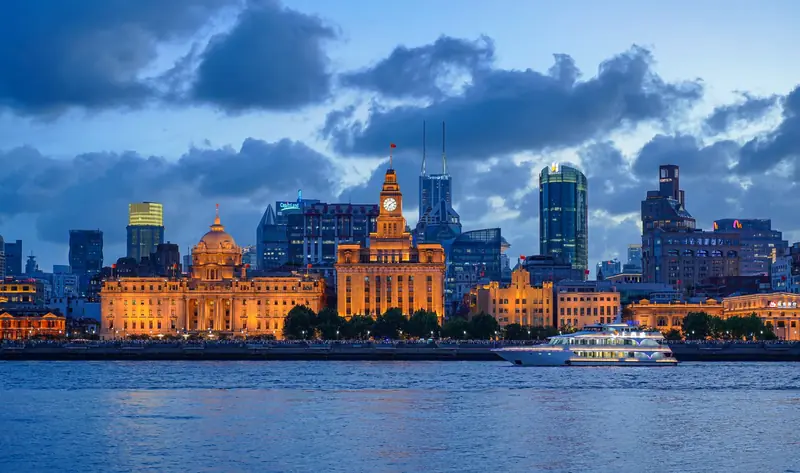
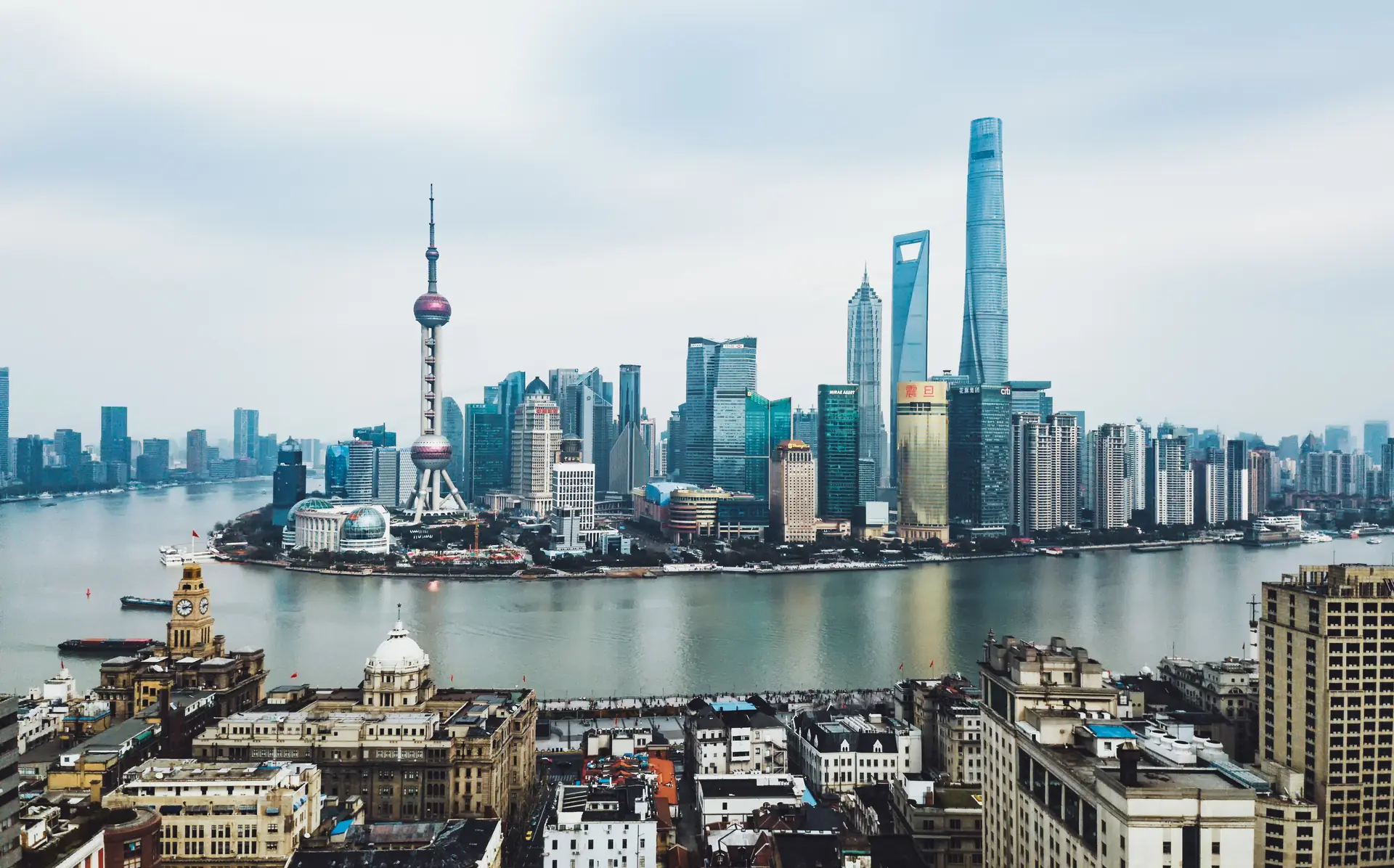
The Bund (外滩) is often treated as Shanghai's skyline viewpoint, but the real drama is behind you. Along the west bank of the Huangpu River, old bank halls, customs offices, hotel towers, bridge steel, and second-row finance streets still stage the city's 1920s confidence, contradiction, and polish. This walk shows you how to read the facades instead of simply using them as a background for Pudong photos.
1.5-3h
Walk Time
1.5-2.5 km
Route Length
Free
Public Streets
Dusk
Best Photo Window
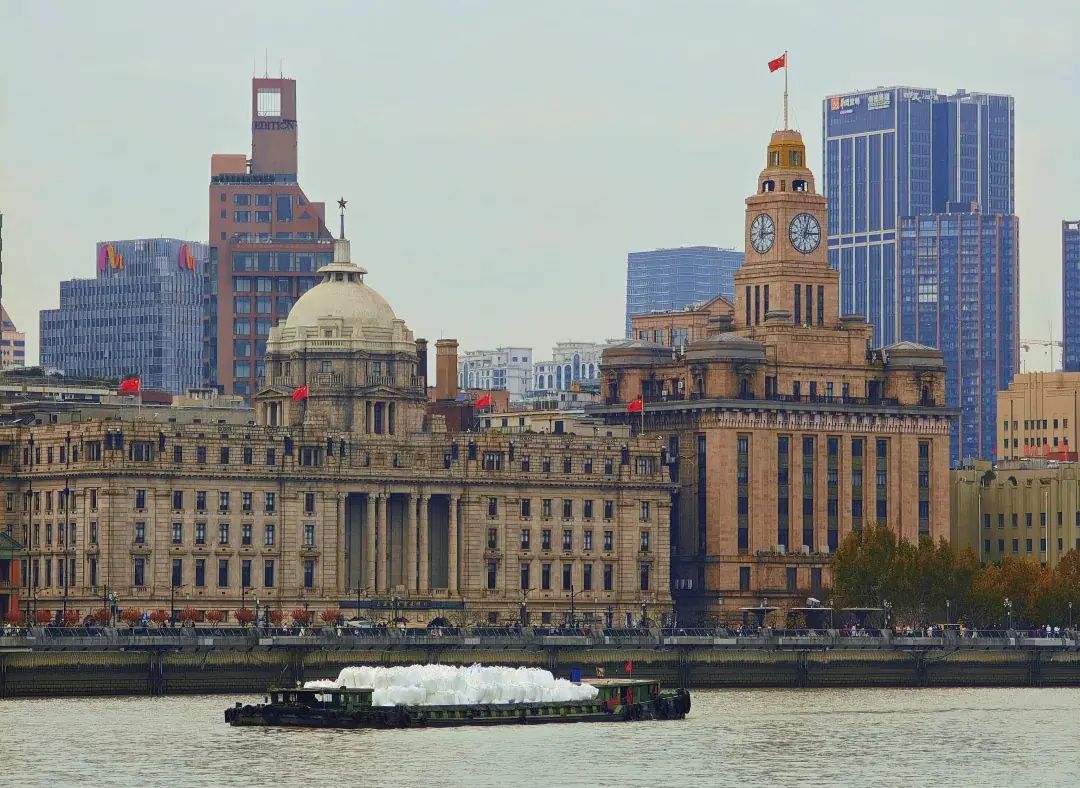
The Bund is a 1.5-kilometer waterfront area and protected historical district in central Shanghai. Official Shanghai tourism material describes 52 historic buildings west of the Huangpu River, once home to financial institutions and trading companies, and calls the area an outdoor museum of international architecture.
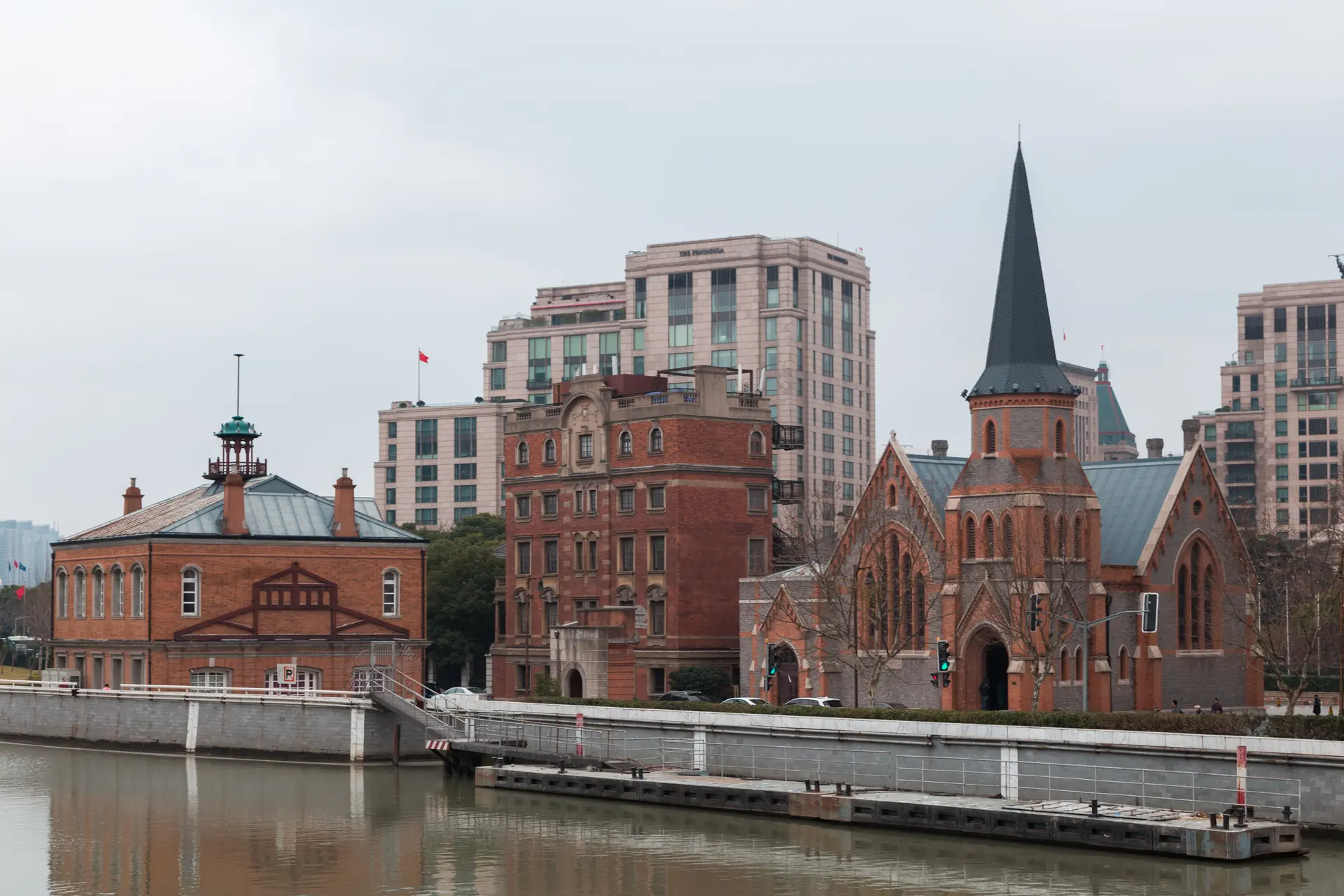
That phrase can sound like a brochure, but on the street it makes sense. The Bund feels like a lineup: neoclassical columns, Baroque gestures, Gothic traces, Art Deco verticals, clock towers, stone portals, bronze doors, and hotel glamour pressed into one riverfront.
1Riverfront Stage
The Huangpu River gives the buildings their theatrical setting, especially when Pudong rises across the water.
2Financial Power
Banks, insurers, trading houses, and customs offices shaped the street's formal, institutional look.
3City Memory
The same buildings now hold hotels, banks, offices, restaurants, exhibitions, and civic symbolism.
Walk North to South, Then Look Back
For a first architecture walk, go north to south. The seven markers keep the riverfront story coherent while leaving room for the quieter second-row streets:
- Waibaidu Bridge(外白渡桥)- Steel bridge, Suzhou Creek, and the northern gateway to the walk
- Bund Source(外滩源)- Yuanmingyuan Road and the quieter second layer of the Bund
- Peace Hotel North Building(和平饭店北楼)- Sassoon House, green roof, and Art Deco glamour
- Nanjing East Road Corner(南京东路口)- Old hotel, shopping street, and riverfront context in one intersection
- Former HSBC Building(汇丰银行大楼)- Neoclassical banking power at No 12 Zhongshan East 1st Road
- Customs House(江海关大楼)- 1927 landmark with the Bund clock tower
- Jinling East Road Ferry(金陵东路渡口)- Optional finish for river-crossing views
The riverfront line itself is about 1.5 km. With Bund Source (外滩源), Yuanmingyuan Road (圆明园路), Middle Jiangxi Road (江西中路), road crossings, and photo stops, plan 1.5 to 3 hours. The walk is free. The streets and riverside promenade are public, but individual building interiors are not automatically open to visitors.
The common mistake is to stay on the riverside railing for the whole walk. That gives you Pudong views, but it puts the Bund architecture behind your back. Use both sides: walk the west sidewalk to read the facades, then cross to the promenade when you want the full riverfront panorama.
Use the Two-Side Rule
On the west sidewalk, look at doors, columns, clocks, rooflines, and street corners. On the east promenade, step back and read the whole skyline as one composition.
Start at Waibaidu Bridge and Bund Source
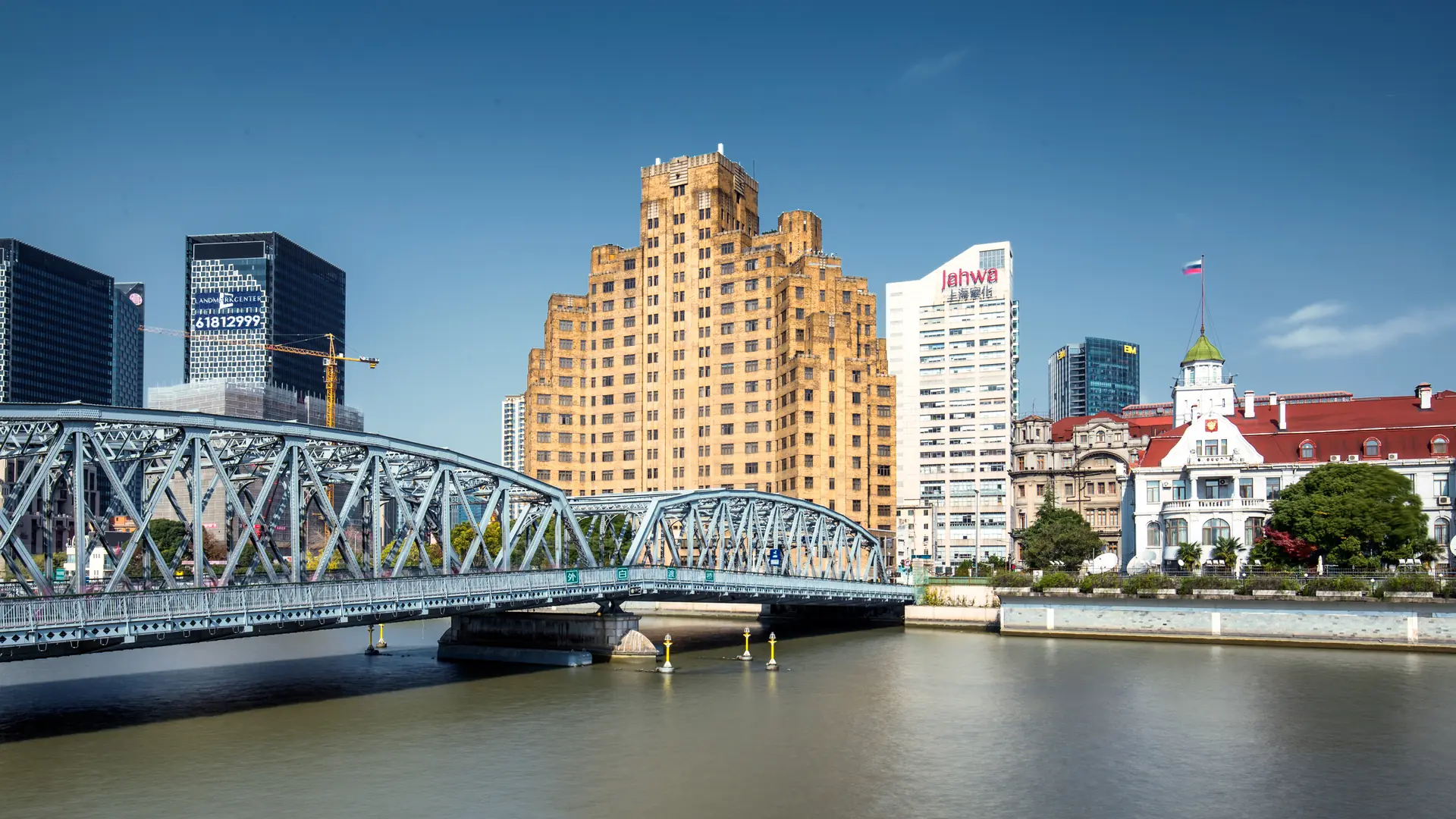
Waibaidu Bridge (外白渡桥) (Google | Amap)
Waibaidu Bridge is a better starting point than the busiest middle section of the Bund. It stands near the meeting of Suzhou Creek and the Huangpu River, and Shanghai government material describes it as the city's first all-steel bridge and the only surviving camel-back truss bridge in China.
The bridge gives the walk an industrial opening. Before the stone banks and hotel facades, you get steel, rivets, creek water, traffic, wedding photos, and the sense that Shanghai grew through crossings as much as through skylines. It also frames the northern edge of the Bund beautifully, especially in clear morning light.
Drift from the bridge into Bund Source and Yuanmingyuan Road (圆明园路). Official Shanghai citywalk material describes Waitanyuan, literally “the source of the Bund,” as the birthplace of the century-old Bund. These narrower streets are quieter than Zhongshan East 1st Road, with historic buildings, restored commercial spaces, and a less rushed rhythm.
The riverfront is the show face; Bund Source reveals how finance, offices, culture, and daily urban life spread west from the water.
Peace Hotel and the Art Deco Moment
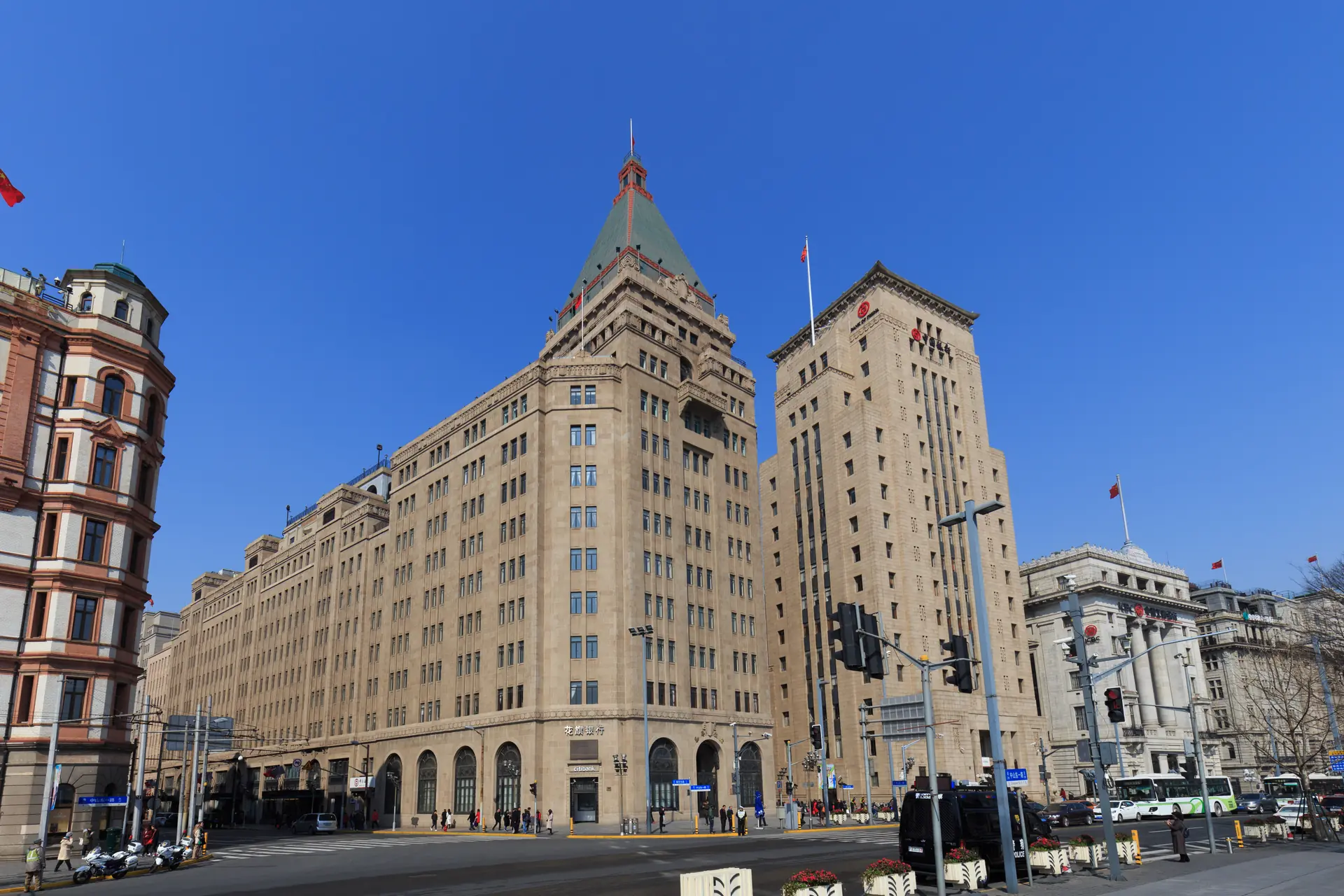
Peace Hotel North Building (和平饭店北楼) (Google | Amap)
At the Nanjing East Road corner, the Peace Hotel becomes the building most travelers recognize. The north building, originally Sassoon House and the Cathay Hotel, opened in 1929 and remains one of Shanghai's clearest Art Deco landmarks. Its green copper roof, vertical emphasis, and hotel mythology give the Bund its most immediate "Old Shanghai" image.
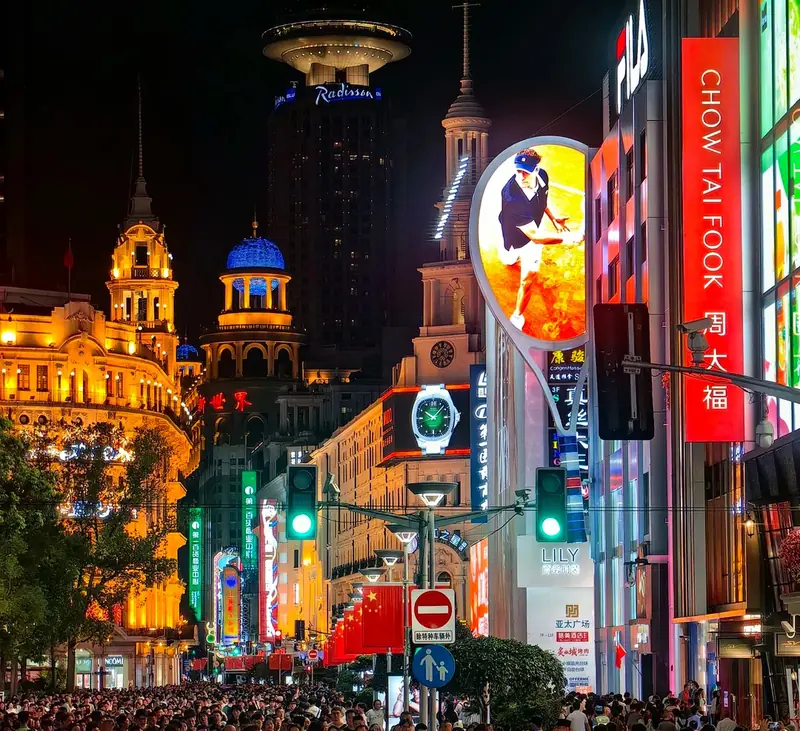
Stand near the corner and look in three directions. East is the river and Pudong skyline. South is the serious bank-and-customs sequence. West is Nanjing Road, the commercial spine that pulls crowds straight toward the Bund. One intersection gives you much of Shanghai's visitor imagination: hotel glamour, shopping street, river view, finance facade, and night lights.
Interior access is not part of the street walk. The current hotel site advertises a complimentary heritage tour for staying guests. Restaurants, bars, events, and security rules can create other access conditions, so check the hotel's current visitor-facing options rather than treating the lobby as a free public museum.
HSBC, Customs, and the Power Facades
Continue south to the Bund's strongest institutional pairing: the former HSBC Building (汇丰银行大楼) and the Shanghai Customs House (江海关大楼).
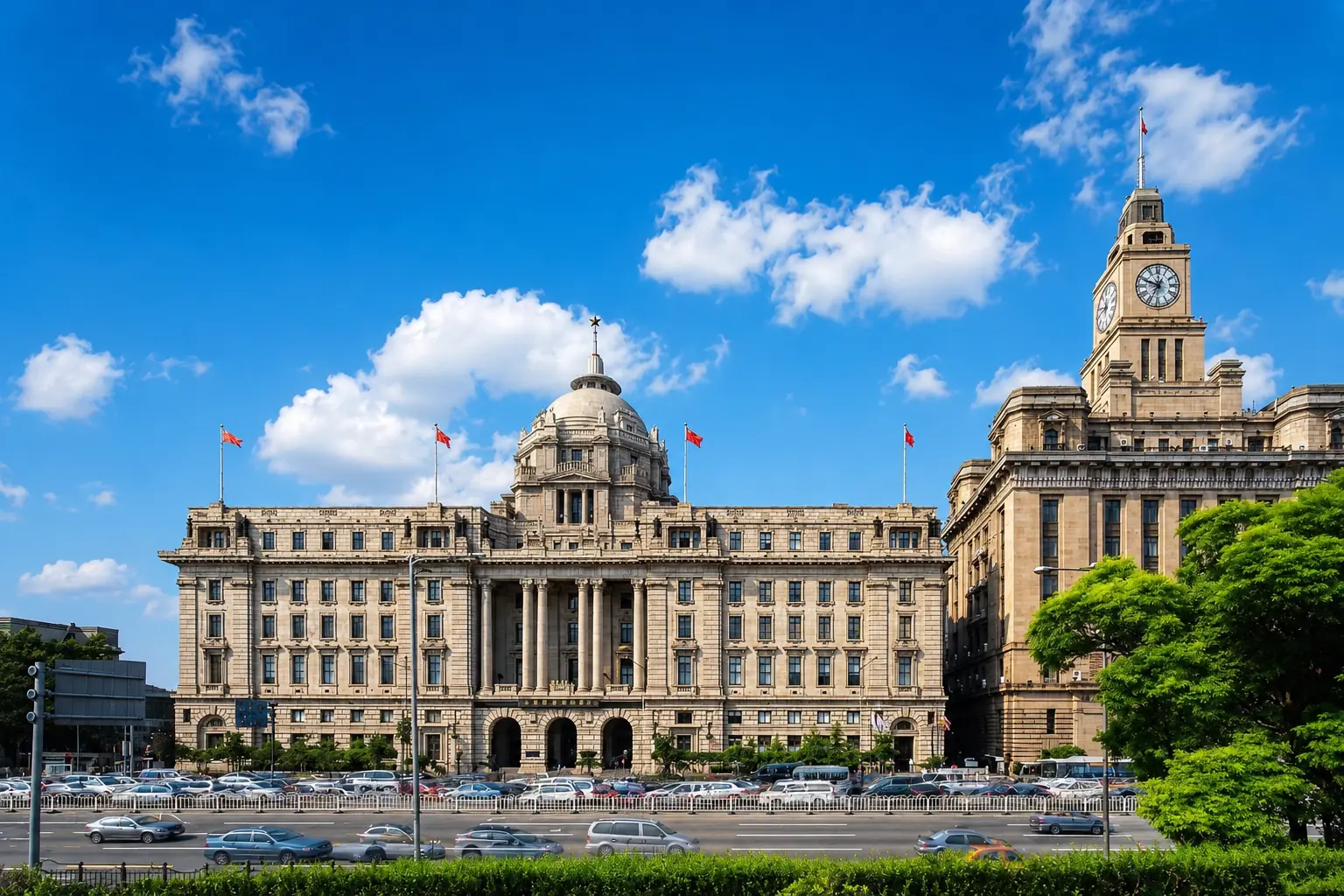
What the pairing says
The bank speaks in width, symmetry, columns, stone, and security; the customs tower speaks in time, trade, inspection, and order. One handled capital, while the other marked port authority.
How to read it
At street level, watch stairs, doors, columns, lions, and stone. In the middle, follow window repetition. At the top, step back for domes, clocks, roof edges, and skyline profiles.
Former HSBC Building
汇丰银行大楼 · No. 12
Built in 1923, this is the Bund's broadest banking statement. Read the wide facade, the heavy entrance, the lions, and the temple-like sense of authority.
Customs House
江海关大楼 · No. 13
Completed in 1927, it anchors the street with a clock tower and thick neoclassical entrance columns. It remains a working landmark, not a standard museum.
Peace Hotel North Building
和平饭店北楼 · No. 20
Opened in 1929 as the Cathay Hotel in Sassoon House, it supplies the Bund's most memorable Art Deco hotel image.
Bank of China Building
中国银行大楼 · No. 23
Later than the 1920s core, but important for the Chinese institutional presence in the Bund skyline and its hybrid architectural language.
The upper outline is what night lighting emphasizes; the lower level is where daytime walking rewards you.
Interior access varies. The Customs House is not a regular walk-in attraction. Check current signage, tenant rules, reservations, and event notices rather than planning around an old exhibition report.
Middle Jiangxi Road Shows the Second Facade
If the riverfront is crowded, move one block west toward Middle Jiangxi Road (江西中路). Shanghai government material describes this road as an important Bund section and a former leading financial street in East Asia. In the early 20th century, more than 30 banks and six insurance companies operated along both sides, giving it the nickname Bank Street.
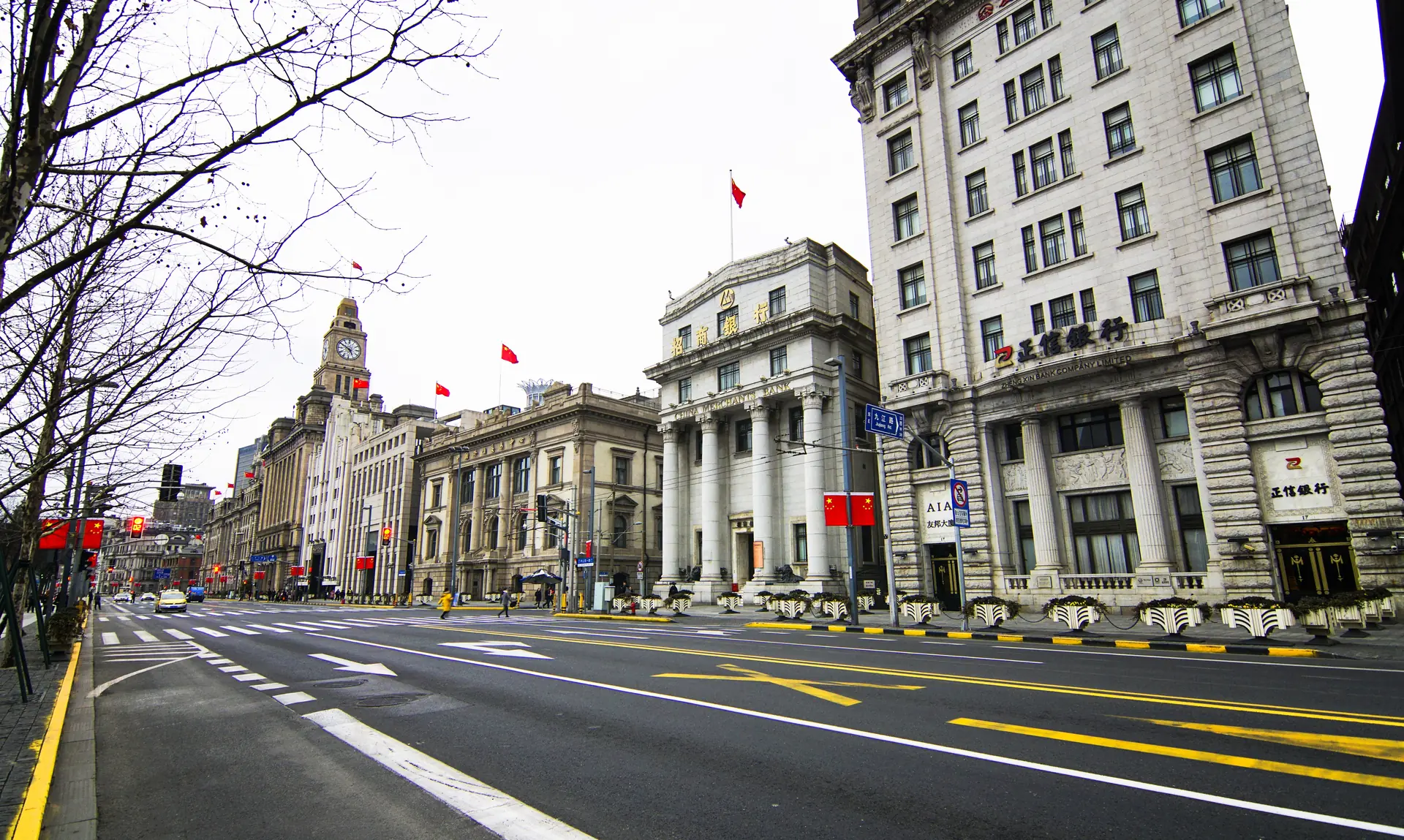
Why make the detour
The Bund's first facade faces the Huangpu River; this second facade shows finance and office life continuing into narrower streets. Look for arched windows, red-brick accents, stone entrances, old bank proportions, and restored corners.
What to photograph
Use the quieter street for doors, windows, perspective, and facade details. Stay on public streets and do not enter lobbies, staircases, or courtyards unless they are clearly open.
Daylight for Details, Dusk for Drama
The best time depends on what you want.

Lighting is variable
Season, weather, events, holidays, energy-saving measures, and city notices can change illumination. Treat fixed times in travel blogs as rough expectations; check locally or arrive before dusk.
Crowds are predictable
Weekend evenings, public holidays, New Year's Eve, and major events can bring controls and dense flow. For architecture rather than spectacle, choose a normal weekday morning or late afternoon.
← swipe to compare all options →
Best for Architecture
Morning or late afternoon
- ✓Use this window for columns, doors, rooflines, clock details, and quieter street-level looking.
- —Overcast weather can help by reducing glare on stone and glass.
Best for Mood
Sunset into blue hour
- ✓Arrive before dusk so you can watch the facades and Pudong skyline change together.
- —Treat lighting schedules as variable and check the scene on the day.
Who This Walk Is Best For
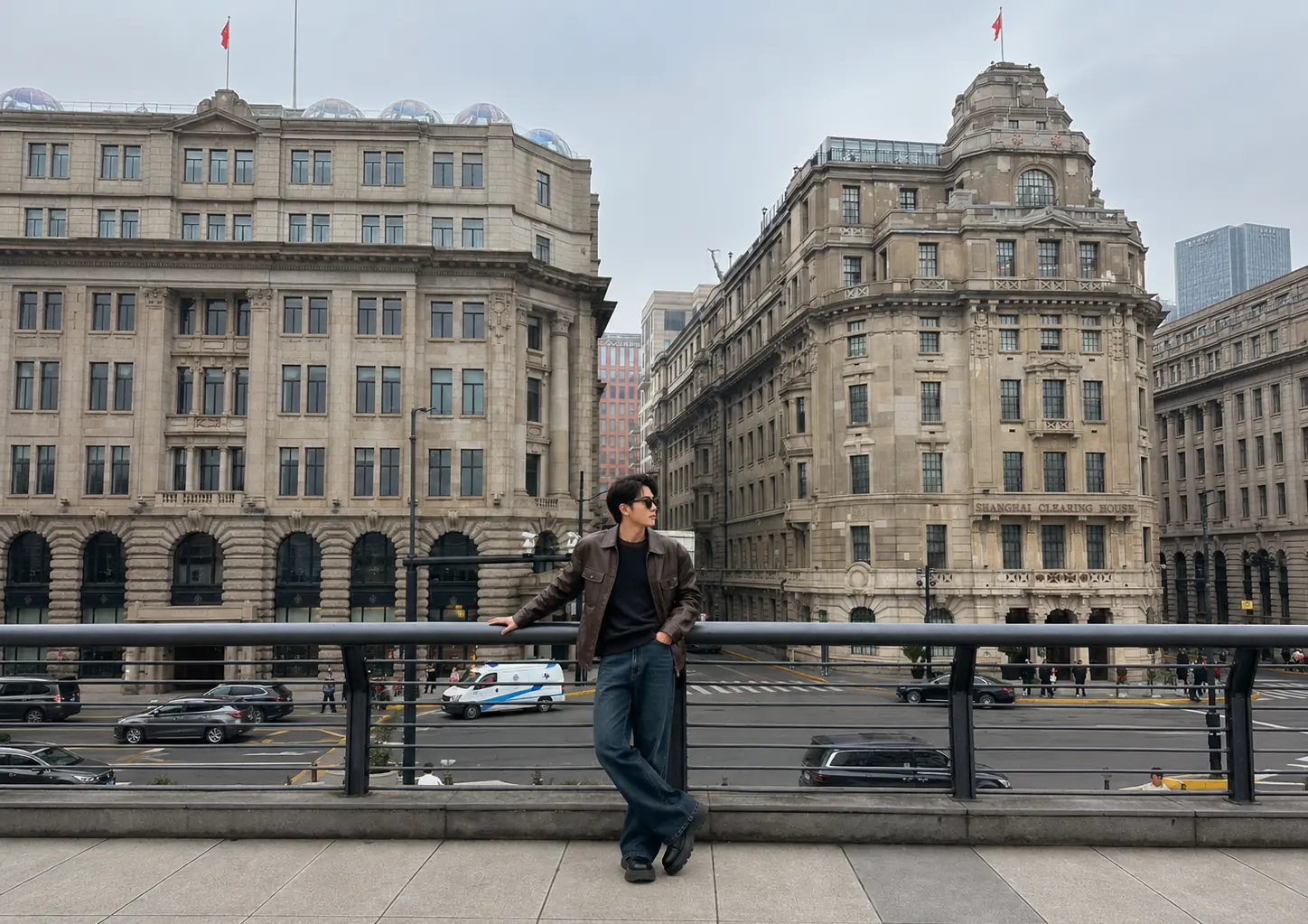
This walk is ideal for first-time Shanghai visitors who want more than skyline photos, and for travelers interested in architecture, Art Deco, street photography, old hotels, banks, and urban history. It is not a hidden-gem route. The Bund is famous for a reason. The difference is how you look at it.
Families and older travelers can do this route, but evening crowds can make the promenade tiring. The ground is generally flat, yet road crossings, metro exits, photo stops, and packed holiday sidewalks slow everything down. In summer, avoid harsh midday heat; in winter, the river wind can feel sharper than the temperature suggests.
45Core Walk
Walk from the Peace Hotel to the Customs House and use the two-side rule: west sidewalk for facades, east promenade for skyline.
90Better First Visit
Start at Waibaidu Bridge and continue south to the Customs House for a clearer beginning, middle, and finish.
3hFull Architecture Route
Add Bund Source, Middle Jiangxi Road, and the Jinling East Road Ferry area for the most complete walking-guide feel.
Pair the Bund with Nearby Shanghai
The Bund fits many Shanghai days, but the pairing changes the mood.
| Pairing | Best for | How it feels |
|---|---|---|
| Bund + Nanjing East Road | First-timers short on time | Easy, bright, commercial, crowded |
| Bund + Bund Source + Middle Jiangxi Road | Architecture lovers | Layered, quiet, rich in facade detail |
| Bund + Yu Garden | Classic first Shanghai day | Traditional scenery, river lights, heavy flow |
| Bund + Lujiazui | Two-bank contrast | Historic finance facing the modern skyline |
| Bund + Jinling East Road Ferry | Budget river view | A practical crossing with wider city context |
Jinling East Road Ferry (金陵东路渡口) (Google | Amap)
Try not to overpack the day. Laoximen, Yu Garden, Nanjing Road, the Bund, Lujiazui, a river cruise, and dinner can technically fit on a map, but the rhythm can become all transfers and no looking. The Bund architecture walk is short; what it needs is attention.
Frequently Asked Questions
Allow 45-60 minutes for the core riverfront, 90 minutes from Waibaidu Bridge to the Customs House, or 2.5-3 hours if you add Bund Source, Middle Jiangxi Road, and a ferry-area finish.
Sources checked for this guide
- Current 1.5 km protected-district description and 52-building context: Shanghai official Bund guide
- Bund heritage-zone financial-centre identity and architectural framing: Shanghai official heritage-zone guide
- Bund Source and Yuanmingyuan Road citywalk context: Shanghai official citywalk guide
- Waibaidu Bridge steel and camel-back truss identity: Shanghai official bridge feature
- Middle Jiangxi Road Bank Street and second-facade context: Shanghai official heritage feature
- Current Peace Hotel operation and guest-only complimentary heritage-tour wording: Fairmont Peace Hotel official site
Beyond This Guide
Use this walk as your architectural anchor, then build the rest of Shanghai around mood rather than distance.
- Shanghai Teahouses - for a quieter sit-down reset after the riverfront walk
- Shanghai Food Guide - for xiaolongbao, noodles, local restaurants, and what to eat after the walk
- Yu Garden & City God Temple - for a more traditional visitor-zone pairing near the old city
- Shanghai Museum Guide - pair the riverfront with People's Square or Pudong East galleries
- AP Plaza Shanghai Guide - cross into Pudong on Line 2 for underground bargain shopping
- Shanghai Travel Guide - for the city hub and other planning links
- Shanghai Jewish Refugees Museum Guide — continue north across Suzhou Creek into Hongkou's preserved wartime neighborhood
© gochinafreely.com — Original guide by Go China Freely.