Hours & Exhibition Tickets
The official visitor page lists exhibition-specific ticket sales and limited free-admission categories; it does not promise universal free entry. Check the current show before travel. Check official visitor information
Plan Before You Go
Three Lives of a Power Station
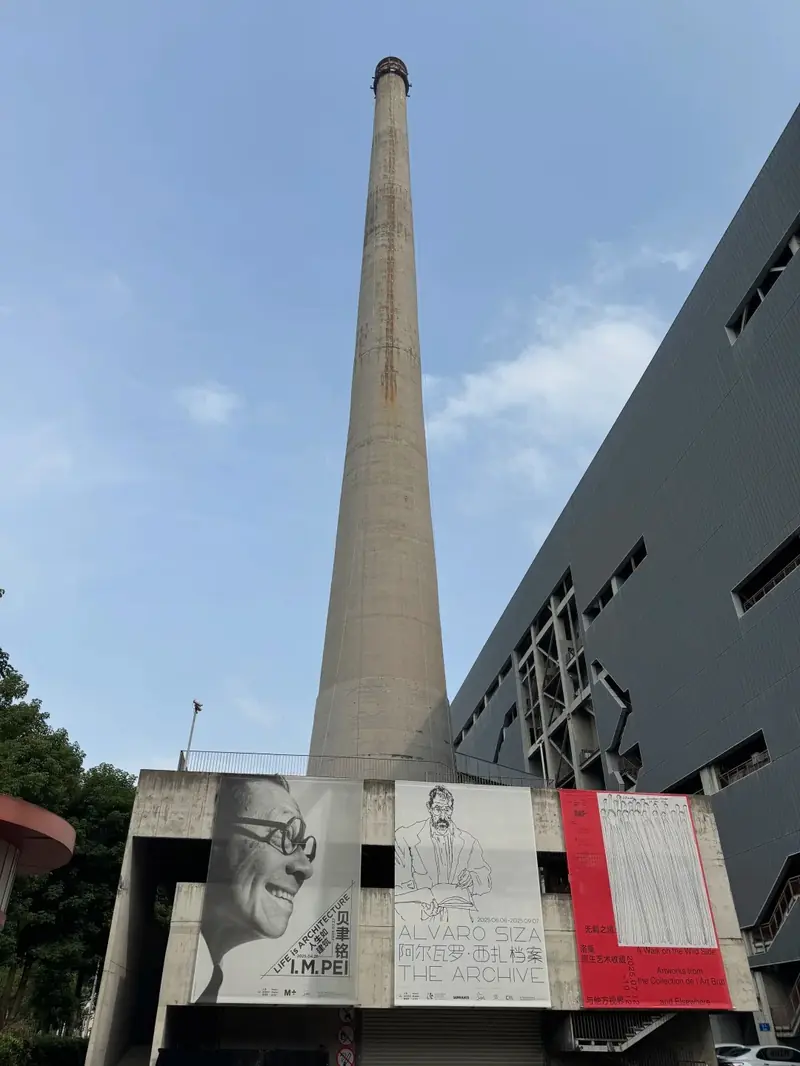
PSA is not a white-cube museum dropped onto the riverfront. Its building carries Shanghai from early municipal industry through the 2010 World Expo and into a state-owned contemporary-art institution.
Factory → Expo pavilion → art museum
Read the dates as three uses of one industrial landmark, not three unrelated buildings.
Three lives on the Huangpu
- 1
Nanshi Power Plant
From 1897The predecessor Nanshi Power Plant was founded in 1897. Its later industrial complex beside the Huangpu became part of Shanghai’s modern power history.
- 2
Urban Future Pavilion
2010 World ExpoThe former plant was converted into the Urban Future Pavilion while its industrial character and 165 m chimney remained legible.
- 3
Power Station of Art
From 1 October 2012PSA opened as mainland China’s first state-owned contemporary art museum and became the main venue of the Shanghai Biennale.

The landmark never became background scenery.
The preserved plant and chimney still determine how the museum feels: big spans, exposed structure, and art that can work at civic rather than domestic scale.
Industrial Heritage as Gallery: Reading the Building
PSA works because the conversion does not hide the old plant. The official museum record gives the scale; the galleries show what those numbers mean in practice.
41,000 m²
total building area
15,000 m²
exhibition area
27 m
maximum internal height
12
galleries
165 m
chimney landmark
The turbine-hall scale
Steel trusses, columns, pipe traces, and long white planes
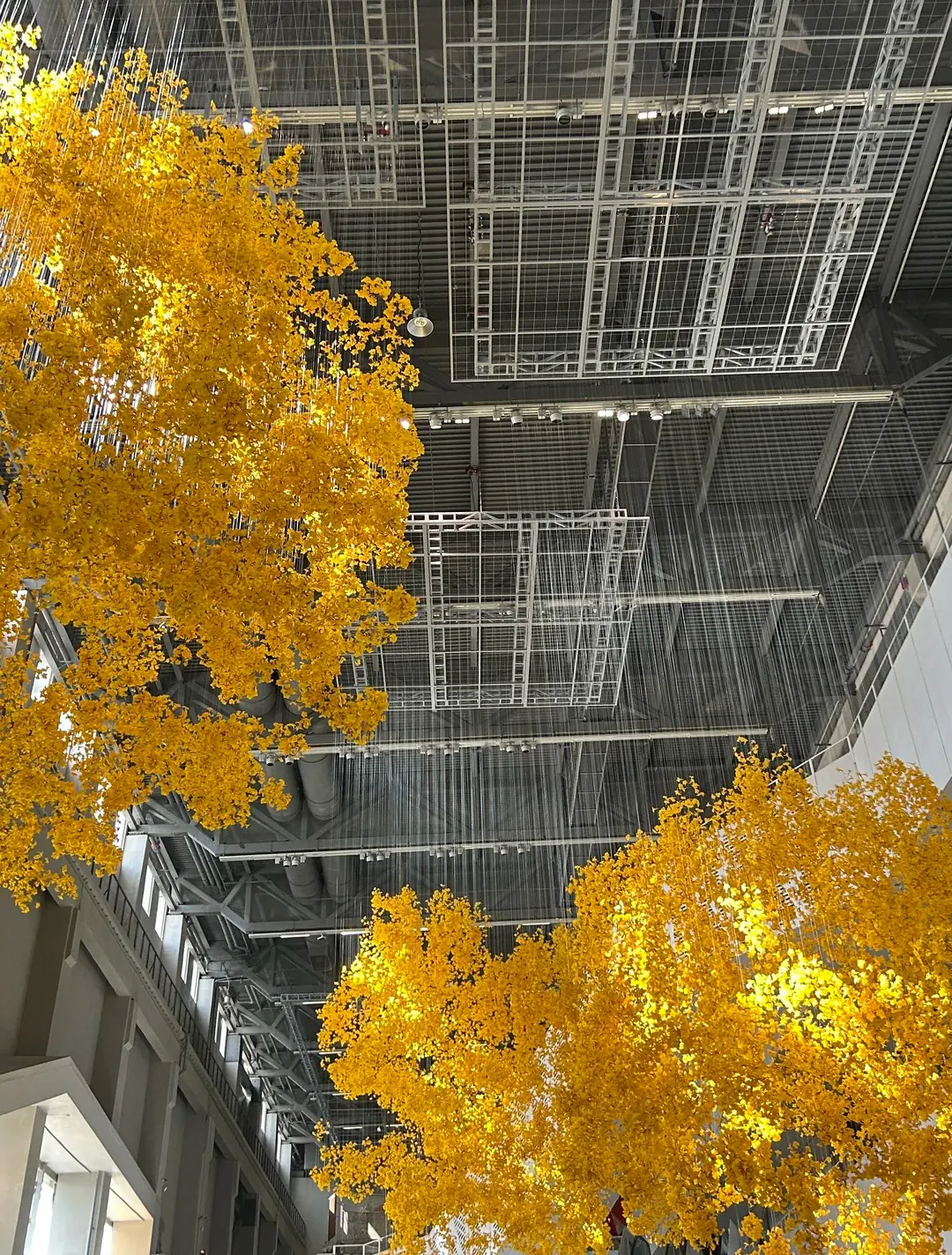
The highest spaces reach 27 meters, so large installations can hang, stack, or spread without the room disappearing. Look up as often as you look at the work: the inherited structure is part of the exhibition experience.
The chimney as programmed space
A landmark outside; an independent exhibition space only when scheduled
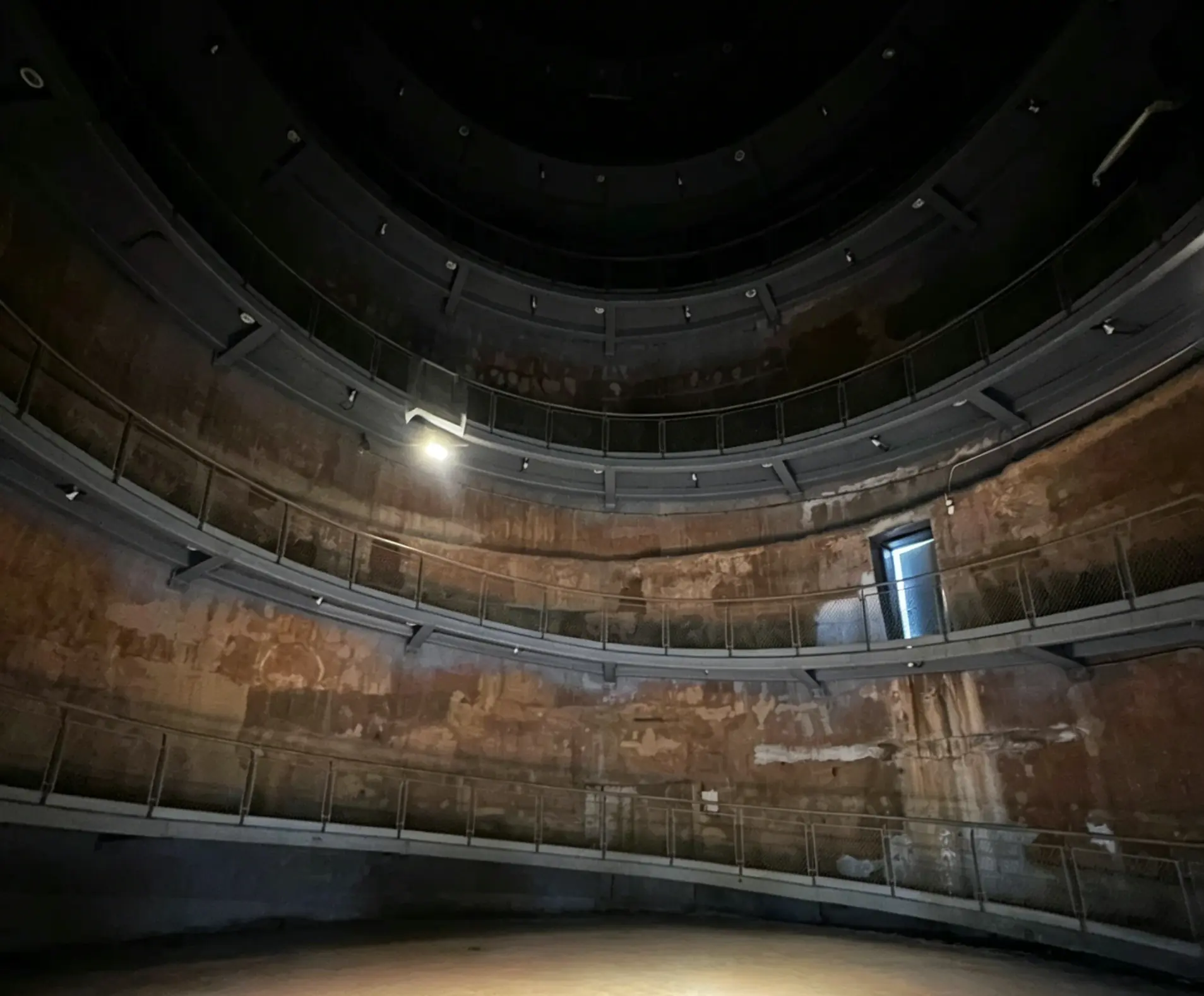
PSA describes the 165-meter chimney as an independent exhibition space, and past exhibitions have used its interior. That does not make it a permanently open walk-up attraction: confirm the current exhibition location before building your visit around it.
The Shanghai Biennale: PSA's Recurring Flagship Event
The Shanghai Biennale (上海双年展) is one of Asia's long-running international contemporary-art biennials, and PSA is its main venue. It returns by edition rather than operating as a permanent exhibition, so the museum's normal calendar and a Biennale visit are different planning situations.
Dated edition, now concluded
The 15th Shanghai Biennale: Does the Flower Hear the Bee?
The official run was 8 November 2025 to 31 March 2026. Treat that edition as historical context, not a current exhibition listing.
When a new edition is announced, allow more time than for a normal PSA visit and check its ticket, floor, programme, and city-project details separately.
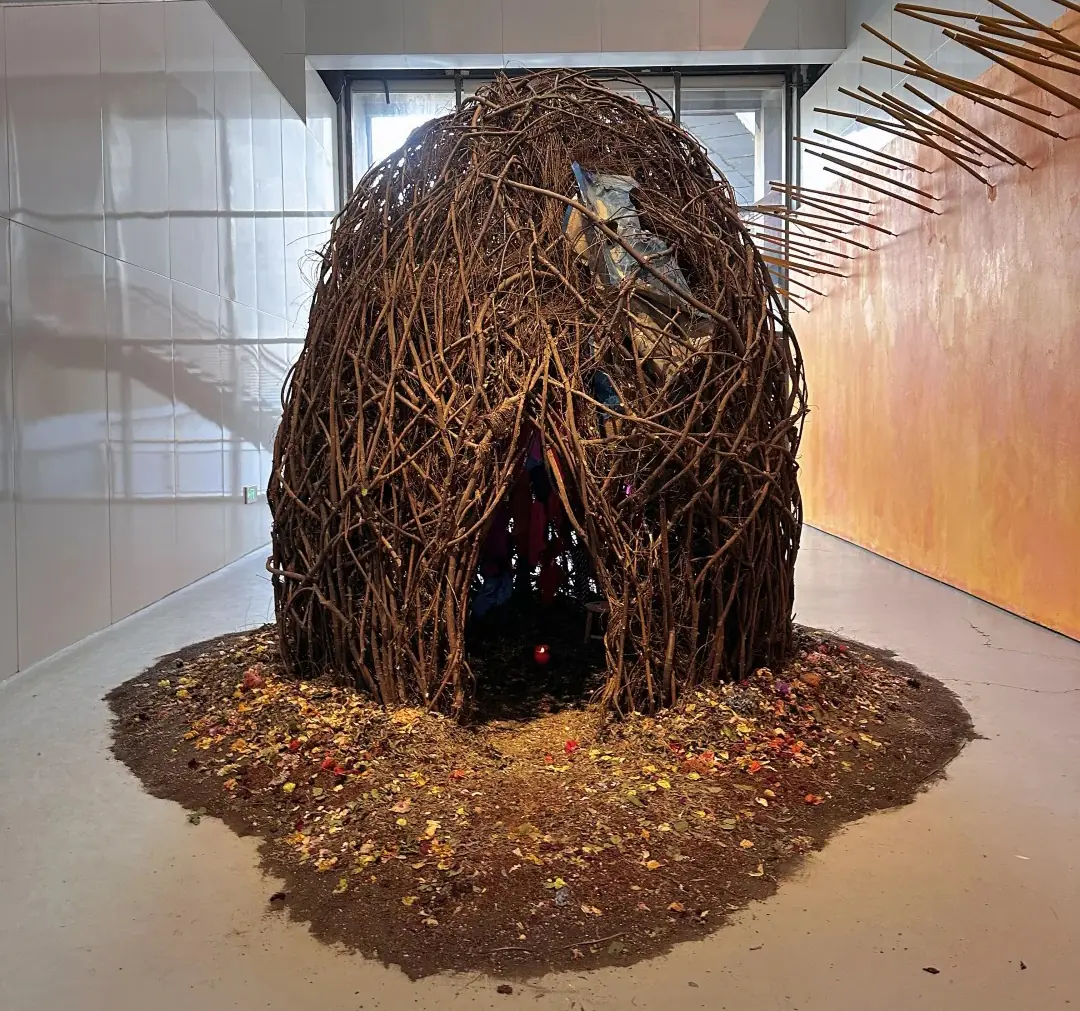
Beyond the Biennale: PSA's Exhibition Calendar
The Biennale is one programme, not the museum's entire identity. Use these four lanes to read the live calendar before deciding how much time PSA deserves on your dates.
Architecture and City Series
Buildings, design, and the changing city
PSA regularly uses its industrial scale for architecture and urban-culture exhibitions. Past programmes have focused on major architects and the relationship between design, public space, and city life.
International Collaborations
Museum partnerships and touring research
Collaborations can bring art, design, film, fashion, or archival projects into PSA. Read the individual exhibition page rather than assuming every partnership fills the whole building.
Emerging Curators Program (青策计划)
Annual platform founded in 2014
PSA's official 2025 programme describes this as an annual academic and exhibition platform for younger curators, with selected proposals developed into real exhibitions.
China Contemporary Art Collection Series
Collection, archives, and research
Collection-led and research-led displays can be quieter than a headline touring show, but they may give the clearest context for modern and contemporary Chinese art.
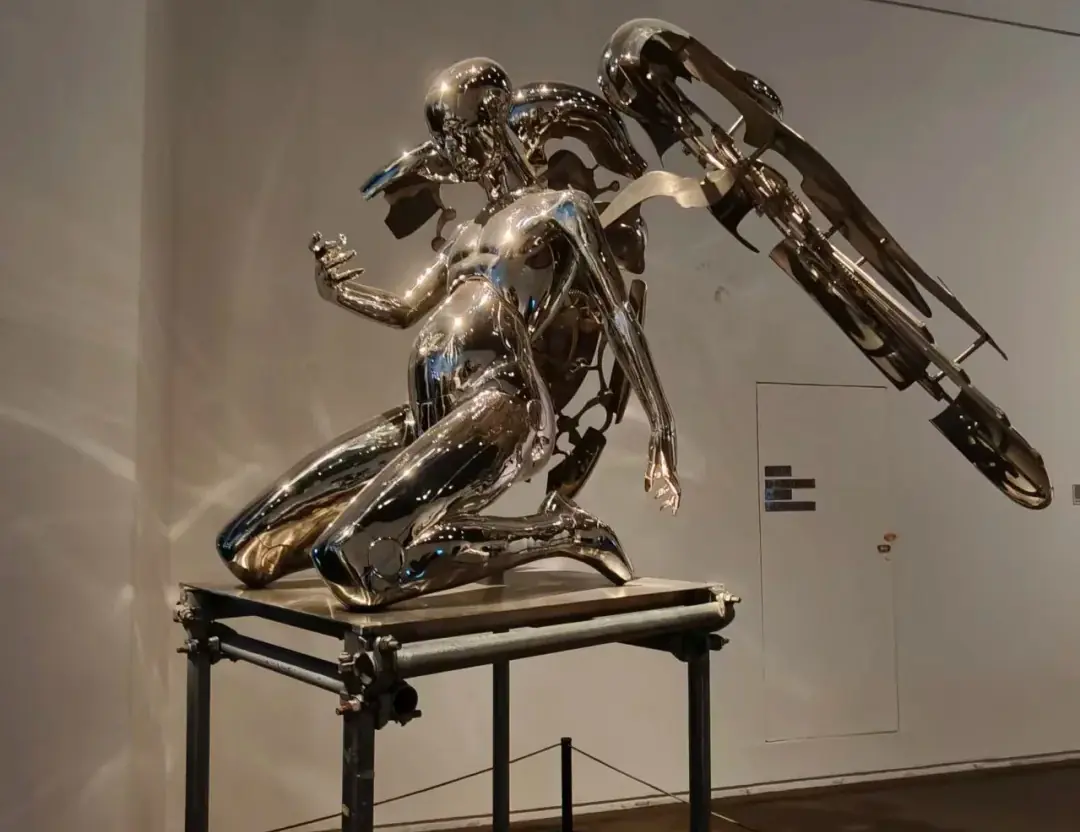
The current show matters more than the category label.
Check dates, floors, ticketing, language, photography, and any separate activity reservation before travel.
Photography Guide
PSA gives you three different photo problems: a riverfront landmark, huge indoor scale, and industrial details that can overwhelm the artwork if you do not choose a clear subject.
The Chimney from the Riverside
Best for landmark context
Use the nearby Huangpu riverfront to separate the full 165 m chimney from the museum mass. Dusk can give a cleaner silhouette, but weather and haze matter more than a fixed clock time.
Installations in the 27-Meter Halls
Best for scale
Step back and use a low, wide viewpoint only when it does not block circulation. Include trusses or columns so the photograph explains why the installation feels unusually large.
Inside the Chimney
Only when the current programme opens it
If an official exhibition uses the chimney, work with its circular industrial geometry and the installed art. Do not expect access on an ordinary museum day.
Riverside at Dusk
Chimney, river light, and skyline context
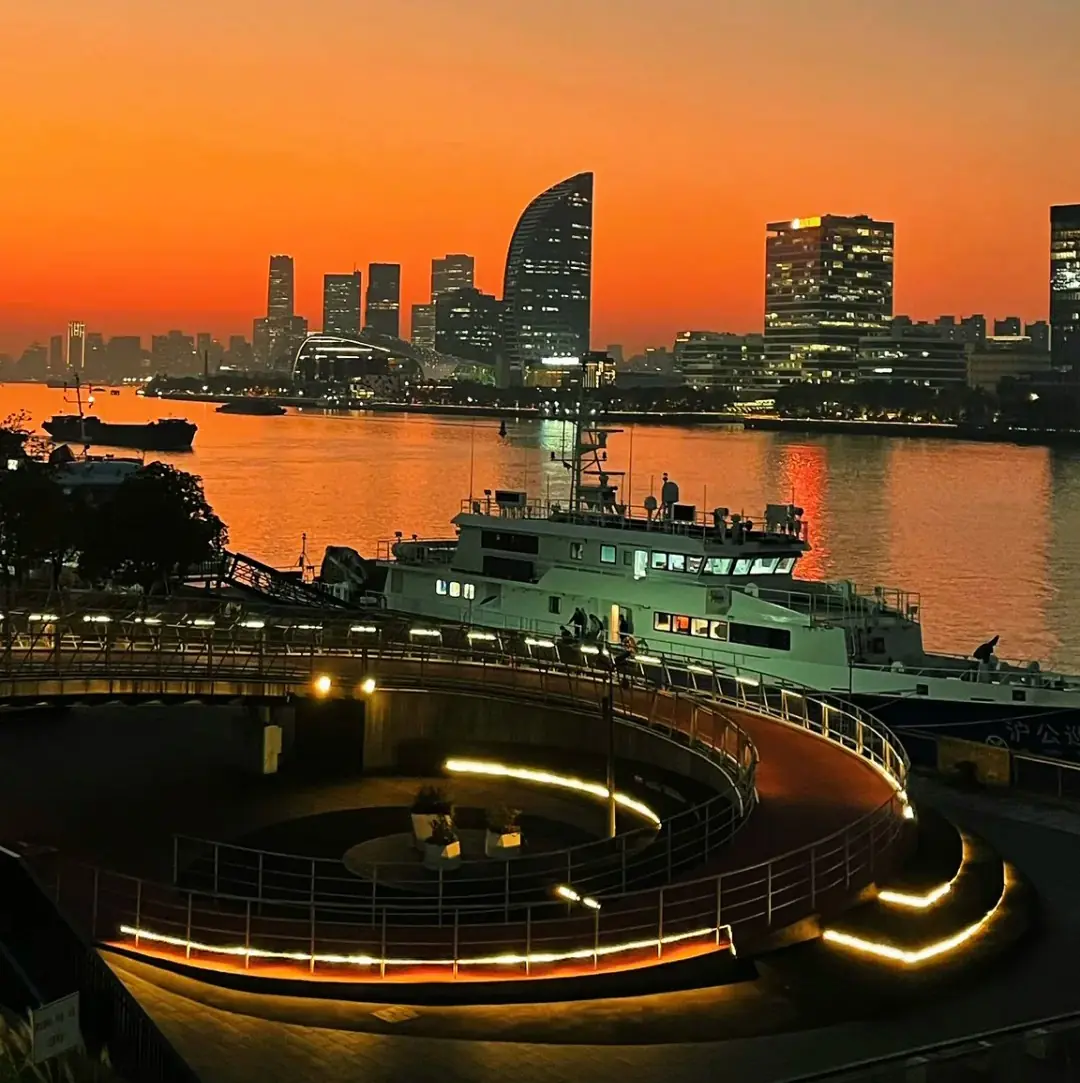
Use the river as negative space rather than trying to fit every skyline tower into the frame. The chimney is the anchor; reflections and moving boats are supporting elements.
Industrial Textures
Pipes, beams, columns, and portrait scale
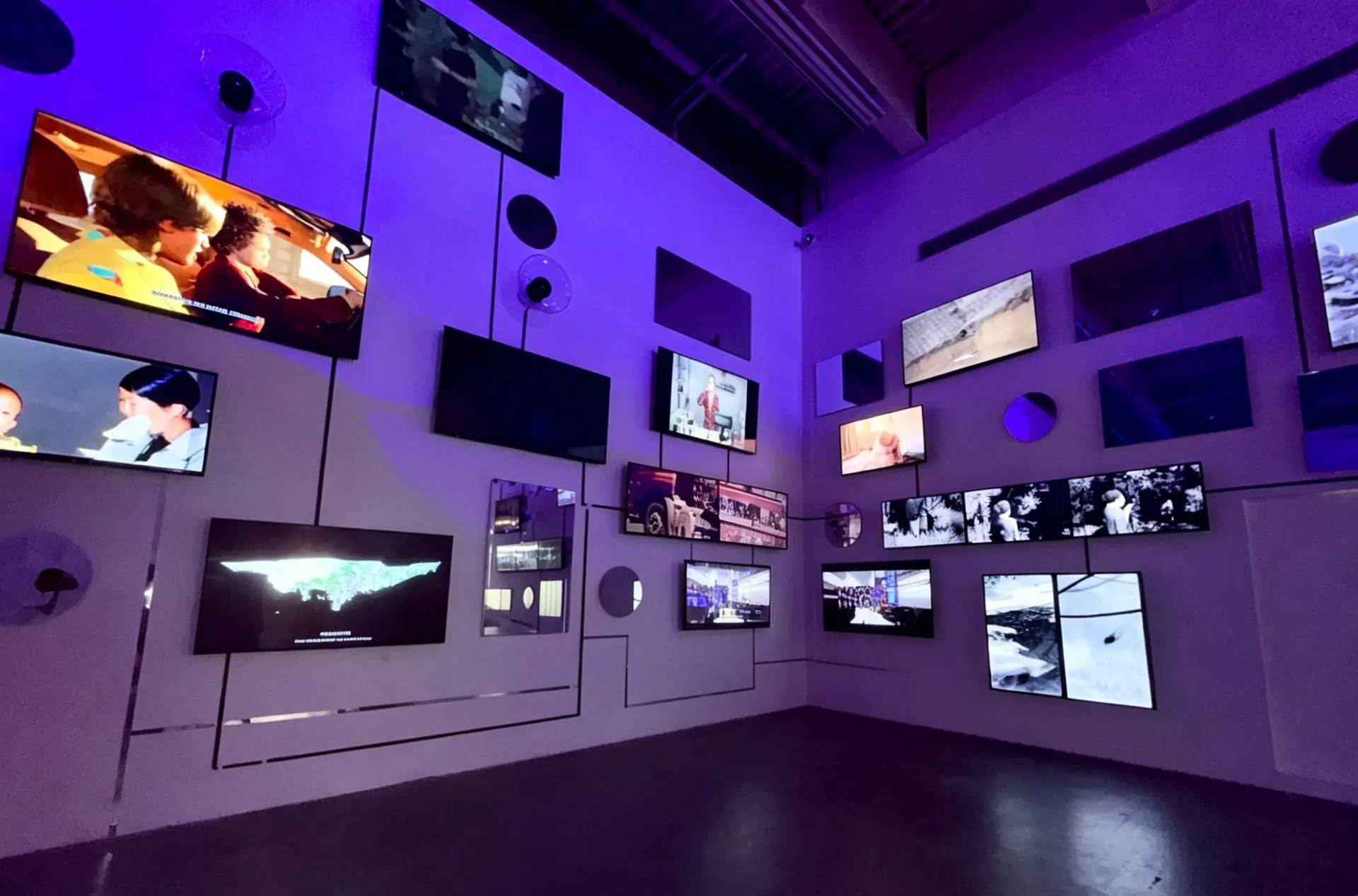
Exposed pipes, rust-stained structure, and concrete columns create strong contrast against gallery white. Choose one structural rhythm instead of stacking every detail into one portrait.
The exhibition signs decide the photo rule
PSA's official visitor page prohibits flash and notes that some galleries prohibit photography. Check the entrance and room signage before shooting; if portraits are allowed, dark clothing separates from white walls while lighter clothing is quieter against the industrial zones.
What Most Visitors Miss
The biggest mistakes here come from treating a past exhibition photo as a permanent facility. Use the live programme to separate what the building can do from what your ticket can access today.
Chimney and Architecture Programmes
Check the exhibition location first
The chimney has hosted exhibition work, and PSA's architecture programmes can be a reason to visit by themselves. Neither is guaranteed on an ordinary day: confirm the exhibition page, floors, and access before travel.
Upper-Level River Views
A possible programme benefit, not a promised terrace
Past visits and images show broad Huangpu views from upper outdoor areas, but the current official visitor page does not promise routine rooftop access. Use the public riverfront as your dependable view.
PSA Is Not MOCA Shanghai
Different institution, different location
PSA is at 678 Miaojiang Road beside the Huangpu. MOCA Shanghai (上海当代艺术馆) is a separate institution near People's Park. Check the English and Chinese names in your map app before leaving.
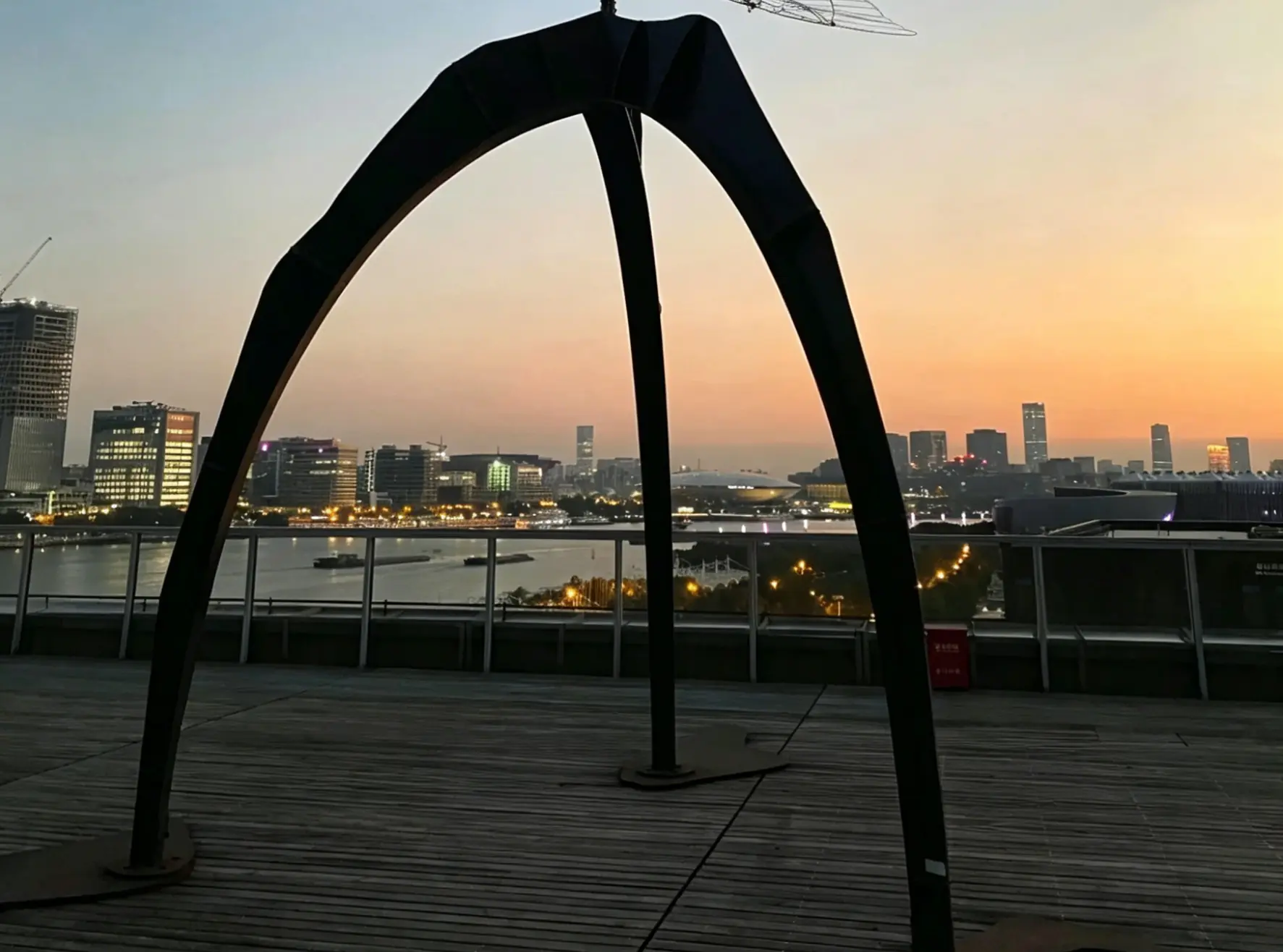
Treat the image as possibility, not access proof.
If the current route opens an upper platform, the river view is an excellent bonus. If not, the public waterfront still gives you the building, chimney, and Huangpu context.
For a half-day art extension, protect PSA as the first museum, take only a short same-area river pause, then use a live map for the transfer to West Bund. This is an editorial sequence, not a continuous walking route.
- Power Station of Art(上海当代艺术博物馆)- Start with the current PSA exhibition and the industrial building itself.
- Short Huangpu riverfront pause(黄浦江滨水)- Stay in the PSA cluster for the landmark view; do not treat this as the transfer to West Bund.
- Map-checked transfer to Long Museum (West Bund)(龙美术馆(西岸馆))- Use a live map or ride-hail estimate and visit only if the official calendar fits.
- Optional TANK Shanghai add-on(油罐艺术中心)- Add it only when the official programme and opening status suit your day.
Do not lock both add-ons before checking calendars. A strong exhibition at one venue is better than two closed or rushed stops.
Tickets and Hours
The exhibition page is the ticket page
PSA keeps stable museum hours, but price, floor access, photography, and separate activities belong to the current exhibition.
1 · Confirm the date
Tuesday-Sunday, 11:00-19:00; last entry 18:00. Monday is closed, while national holidays are listed as open.
2 · Open the show page
Do not assume a permanent free collection. Check the exhibition price, dates, floor, and any separate activity reservation.
3 · Use the official channel
Special-exhibition tickets are sold at the first-floor desk or through the official WeChat service account, subject to that exhibition's rules.
Getting There
Use the current visitor entrance
678 Miaojiang Road, Huangpu District
上海市黄浦区苗江路 678 号
🚇 Metro
Lines 4 or 8 to Xizang South Road (西藏南路), Exit 2; the official visitor page estimates about 15 minutes on foot.
🚌 Bus
The closest listed stop is Miaojiang Road–Wangda Road (Shanghai PSA) on Puxi Riverside Line 1. Several city routes also stop at Zhongshan South Road–South Station Road.
🚕 Taxi or ride-hail
Show the Chinese museum name and current Miaojiang Road address. Use the live app estimate; traffic makes fixed Bund or Nanjing Road fares unreliable.
| English | Chinese | Pinyin | Say It Like… |
|---|---|---|---|
| Power Station of Art | 上海当代艺术博物馆 | Shànghǎi Dāngdài Yìshù Bówùguǎn | shahng-hi dahng-die ee-shoo baw-woo-gwahn |
Nearby: Art Venues and Food
Art Corridor Along the Huangpu
PSA belongs to a larger Huangpu-river art day, but the choices sit in more than one riverfront cluster. Pick the extension that matches your subject and live exhibition calendar.
China Art Palace (中华艺术宫)
2010 Expo architecture and Chinese art
The former China Pavilion gives you another major adaptive-reuse story near the Expo grounds. Check its current exhibitions, hours, and entry policy separately from PSA.
Shanghai World Expo Museum (世博会博物馆)
Best for the Expo backstory
Choose this when PSA's Urban Future Pavilion chapter is the part you want to understand better. Use a live map for the current walking route from the museum entrance.
Long Museum (West Bund) (龙美术馆西岸馆)
Collection and temporary exhibitions
This is a separate West Bund stop, not the end of a promised PSA waterfront walk. Check the official calendar, then map the transfer from Miaojiang Road.
TANK Shanghai (油罐艺术中心)
Converted fuel tanks and contemporary programmes
TANK can pair with Long Museum when both calendars fit. Do not add it merely because the buildings are photogenic; confirm the current programme and opening status first.
Eating
The immediate museum zone is better for art than for a destination meal. Choose the food reset by where the day goes next.
- PSA café: the official visitor page lists a first-floor café; use it for coffee or a light break without leaving the museum.
- Riyueguang Center (日月光中心): a practical mall fallback when you want broad dining choice before returning toward central Shanghai; check the live transfer.
- West Bund: save the longer meal or specialty-coffee stop for after a confirmed Long Museum or TANK visit.
Practical Tips
Use the current exhibition, not the building size alone, to set your time budget.
- Allow 2-3 hours for a standard visit. A large exhibition or future Biennale edition can justify a half day; check the floor list before deciding.
- Use a weekday when your schedule allows. Weekends, holidays, major openings, and Biennale periods can add queues, but the live programme matters more than a blanket quiet-hour rule.
- Carry a light layer. PSA warns that exhibition rooms may be cool for artwork protection; the broad floors are generally easier in comfortable walking shoes.
- Read the photography sign in every room. No flash is the museum-wide rule, and some galleries prohibit photography entirely.
- Expect English support to vary. The official website offers English navigation, but labels, tours, and staff language depend on the exhibition; keep a translation app ready.
- Recheck the half-day route on the morning of travel. PSA, Long Museum, and TANK have separate calendars, and the West Bund transfer needs a live map.
Frequently Asked Questions
Do not assume every visit is free. PSA's official visitor page describes exhibition-ticket sales and limited free-entry categories, so check the current programme and ticket notice for your date.
Sources checked for this guide
- Power Station of Art — About PSA: museum identity, 2012 opening, conversion, building metrics, chimney, and Shanghai Biennale role
- Power Station of Art — Visit and Tickets: current address, hours, ticket boundary, transit, photography, bags, and gallery temperature
- Power Station of Art — 15th Shanghai Biennale curator announcement: 15th edition title, curator, and dates
- Power Station of Art — Shanghai Biennale programme: recurring programme and PSA main-venue context
- Power Station of Art — Emerging Curators Project 2025: young-curator programme context
- Shanghai Municipal Government — power plant conversion briefing: industrial-site conversion and architecture context
- Long Museum and TANK Shanghai official sites: Long Museum and TANK Shanghai
Beyond This Guide
Keep the next guide matched to the day you actually want:
- Start broad with the best things to do in Shanghai.
- Continue the adaptive-reuse and skyline theme on the Bund architecture walk.
- Shift from contemporary art to classical garden design with our Yu Garden guide.
- Build the meal around the neighbourhood you finish in using the Shanghai food guide.
PSA, Long Museum, TANK Shanghai, the Bund, and the former French Concession do not form one frictionless museum trail.
© gochinafreely.com — Original guide by Go China Freely.