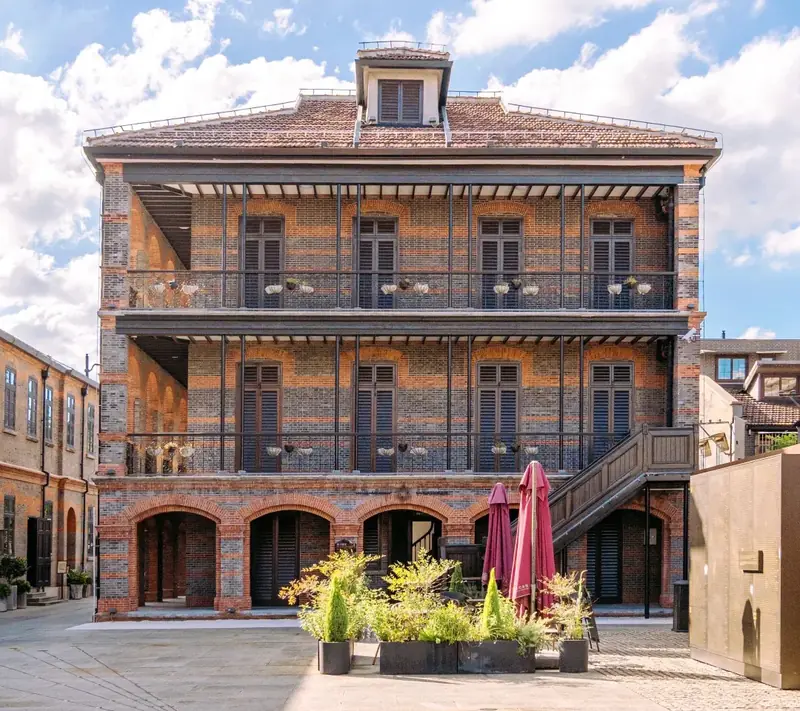
Hours & Tickets
Bring your passport or other valid ID. Children 1.3 m and under, visitors with disabilities, and eligible service personnel can collect free tickets with the required documentation.
Good to Know
Shanghai Jewish Refugees Museum: Why It Matters
The Shanghai Jewish Refugees Museum is set around Ohel Moshe Synagogue (摩西会堂), a 1927 building in Hongkou. It tells the story of European Jewish refugees who reached Shanghai in the 1930s and 1940s while fleeing Nazi persecution — a history that becomes far more immediate when you see it in the streets where many people lived.

The museum complex is centered on the restored Ohel Moshe Synagogue.
The museum’s permanent exhibition uses nearly 1,000 historical objects and documents, more than 160 personal stories, and more than 10 reconstructed scenes. Its emotional center is the Wall of Names: as of October 2025, it carries 19,672 names connected with Jewish refugees in Shanghai.
Inside the Museum
Ohel Moshe Synagogue (摩西会堂)
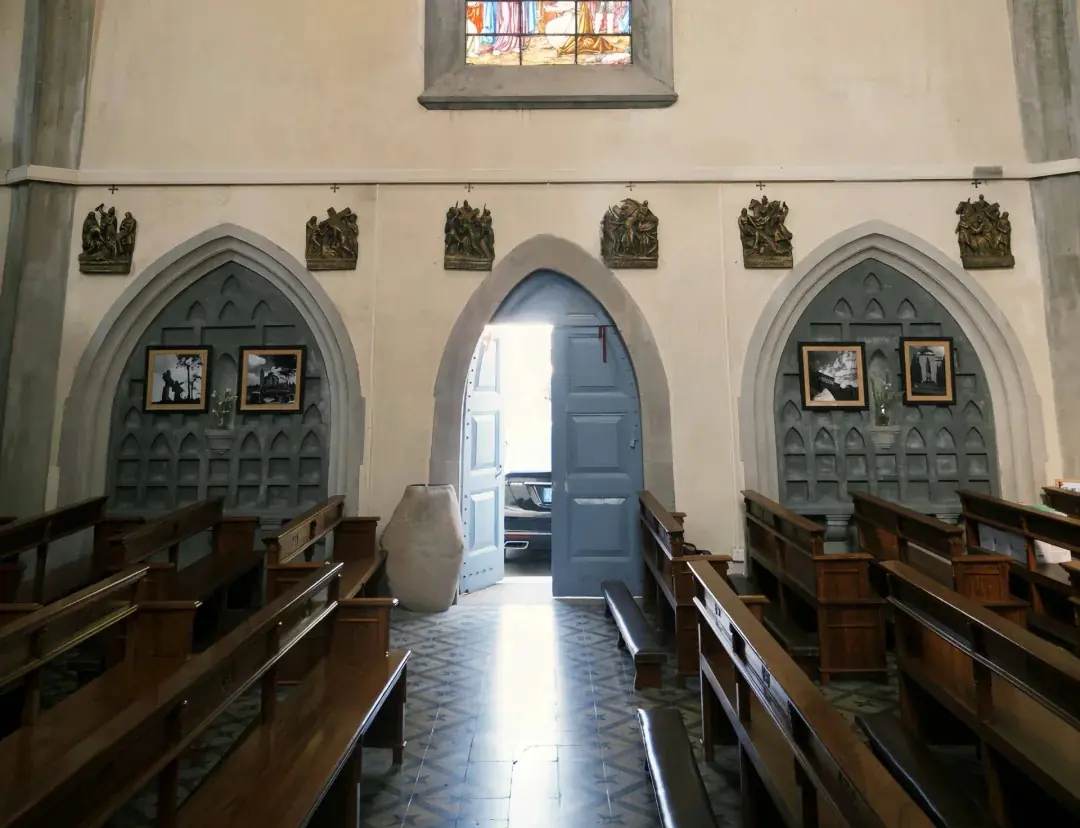
Ohel Moshe Synagogue was built in 1927 and was restored from historical photographs and architectural blueprints.
Russian Jews jointly raised funds to build the synagogue in 1927. During World War II it was a place for Jewish refugees in Shanghai to gather for religious ceremonies; it was comprehensively renovated in 2007 and became the museum’s core building.
Permanent Exhibition
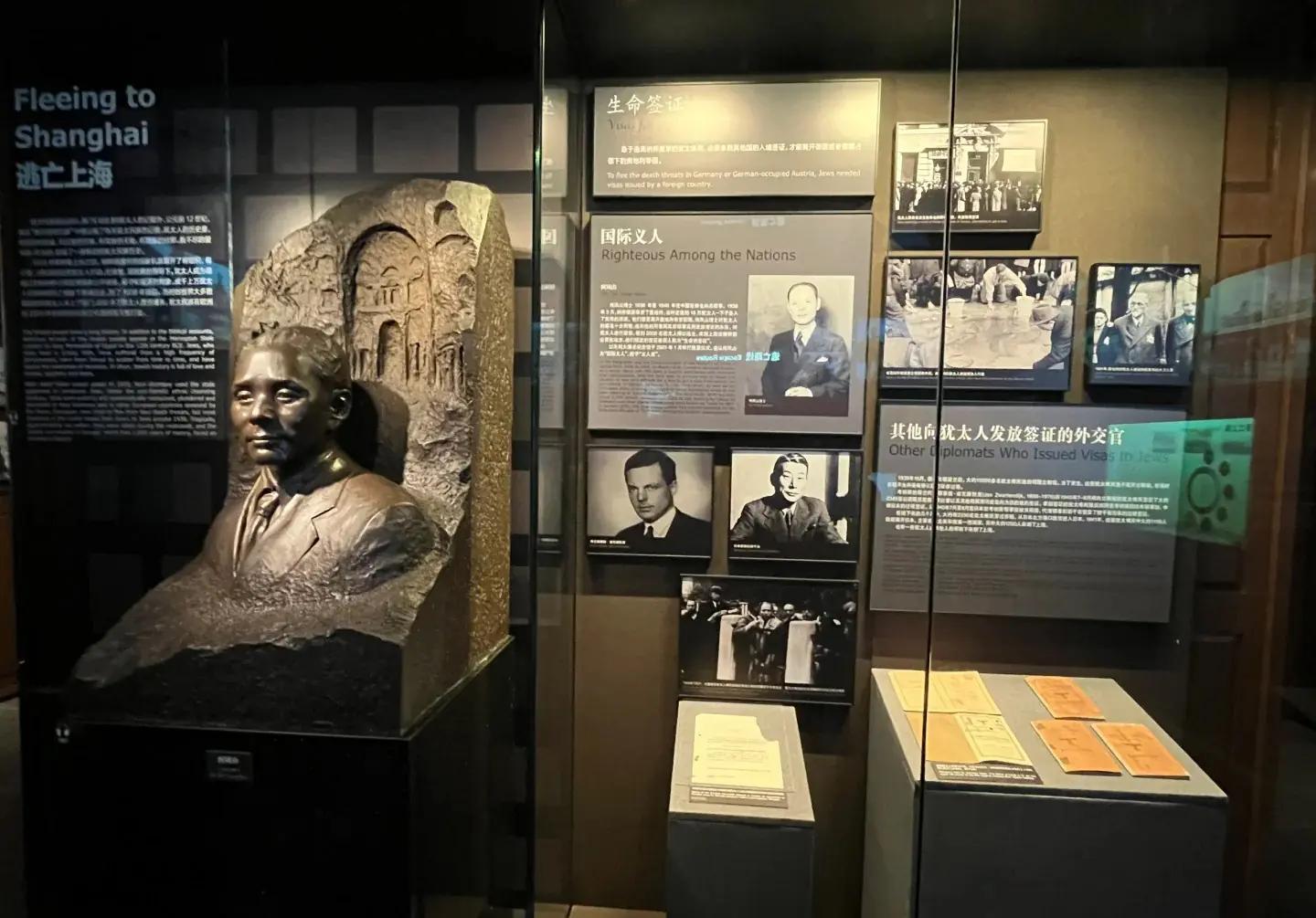
Personal documents and photographs make the permanent exhibition’s history tangible.
The permanent exhibition follows six stages, from fleeing to Shanghai and starting a new life to the wartime restricted area, the postwar departures, and the continuing relationship between former refugees and the city. Give yourself time for the documents, oral histories, and reconstructed everyday scenes rather than trying to rush every label.
The Wall of 19,672 Names
The Wall of Names is the museum’s most affecting stop. It began with 13,732 names in 2014, grew to 18,578 during the 2020 expansion, and was updated to 19,672 names in October 2025. It is both a memorial and an ongoing research record: families can search the museum’s website for names and contribute information.
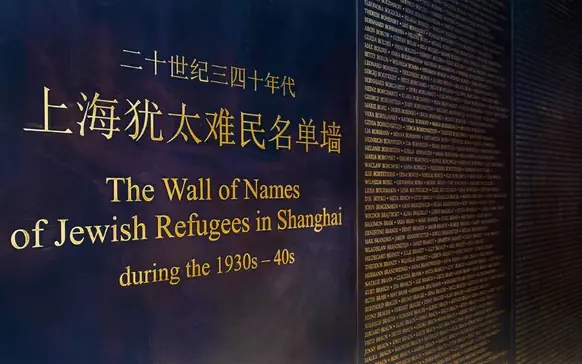
The Wall of Names records 19,672 names as of October 2025.
Ho Feng-Shan’s Visas
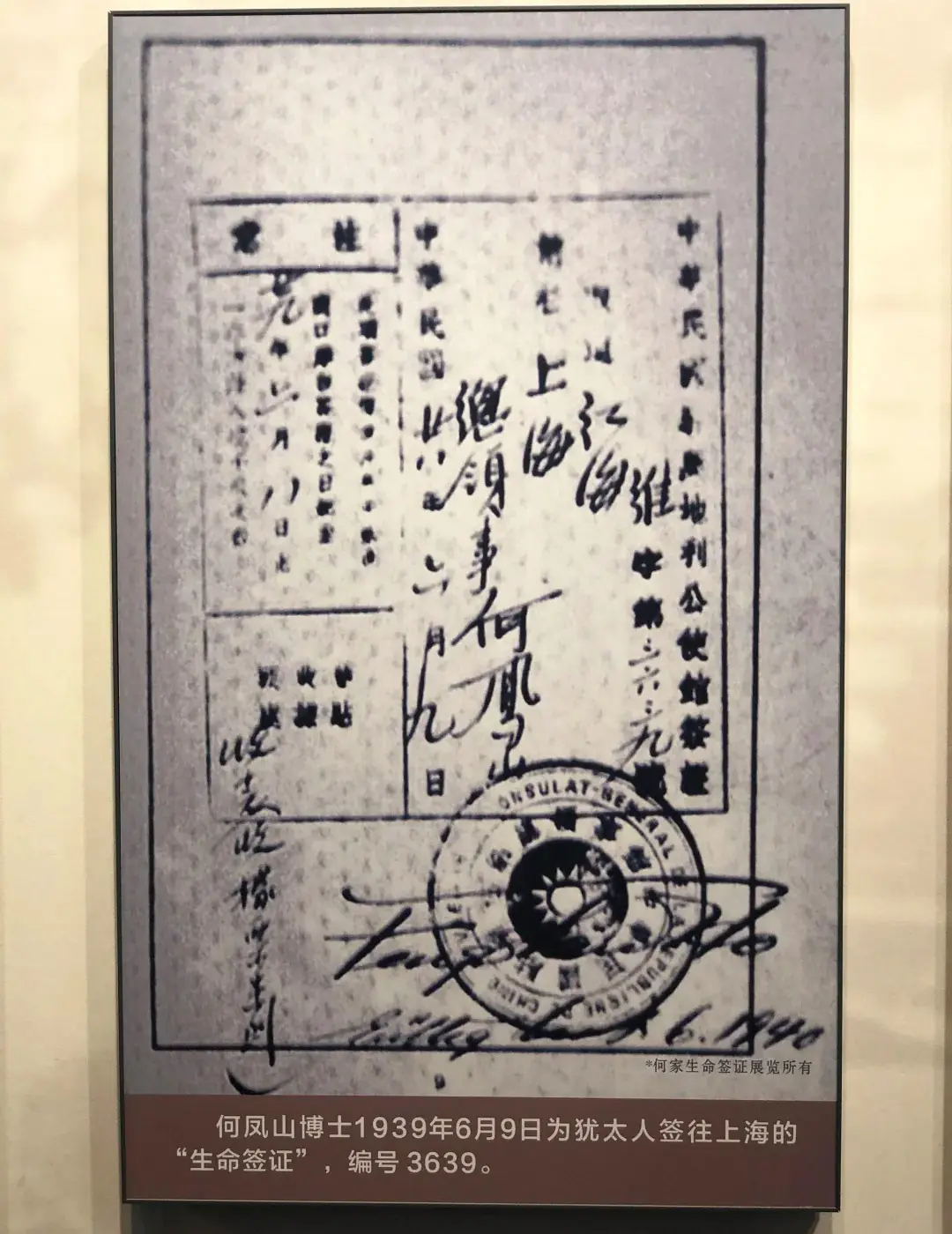
The museum’s permanent exhibition introduces the visas issued by Chinese diplomat Ho Feng-Shan in Vienna.
As Chinese Consul General in Vienna, Ho Feng-Shan issued visas to Shanghai to Jews seeking proof of emigration. Yad Vashem recognized him as Righteous Among the Nations in 2000. The museum’s first exhibition section places this story in the wider escape routes that brought about 20,000 people to Shanghai.
Shanghai’s Refugee Story
A short historical arc
- 1
1938–41
Escape and arrivalShanghai’s unusual port situation meant that many refugees could land without entry papers before Japan took control of the whole city at the end of 1941. Diplomatic visas, including those issued by Ho Feng-Shan, could also help people leave Nazi-controlled Europe.
- 2
1943
Restricted areaJapanese authorities established the "designated area for stateless refugees" in Hongkou, limiting the freedom of many Jewish refugees in an area of less than 3 square kilometers.
- 3
1945 onward
After the warMost refugees who had sheltered in Shanghai later left for Israel, the United States, Australia, and elsewhere. Their records, photographs, and family memories now shape the museum’s work.
The neighborhood was not only a wartime setting. Refugees built schools, cafés, bakeries, clinics, newspapers, and social networks in Hongkou. Read the museum first, then walk the surrounding streets with that context in mind.
Plan Your Visit
Admission and hours
- Current listed fare
- ¥20
- Current listed fare
- ¥10
- Current listed fare
- ¥15
- Current listed fare
- Free with an adult; up to two children per adult
- Current listed fare
- Free with valid documentation
- Hours
- 9:00–17:00
- Entry
- Ticketing and entry stop at 16:00
- Hours
- Closed
- Entry
- Statutory-holiday arrangements are announced separately
Bring a passport or valid ID
The museum uses real-name admission. Its visitor guide asks international visitors to register a valid passport or other valid identification when purchasing a ticket.
Tours, audio, and booking
The museum lists free Chinese-language timed tours at 10:00 and 14:00 during normal opening, but says arrangements can change with the day’s visitor flow. Audio-guide devices cost ¥10; ask at the counter which languages are available. Groups of 20 or more should call 021-55133186 three to five working days ahead to arrange a group guide.
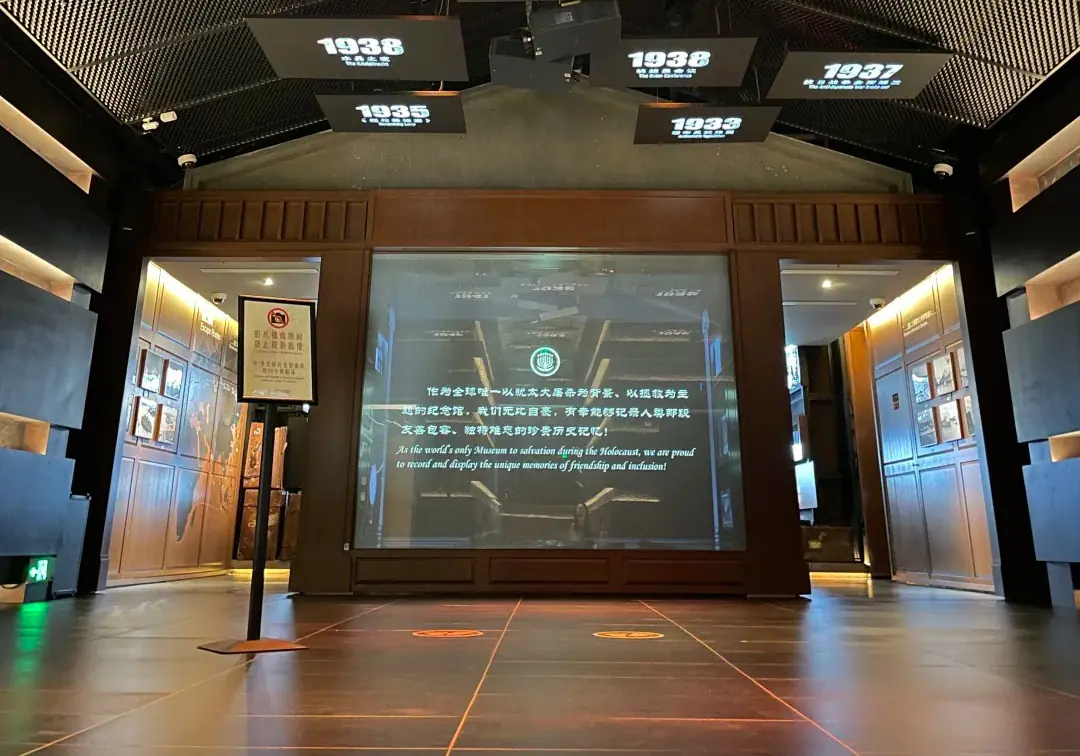
Use the ticket lobby to complete real-name admission and ask about the day’s audio-guide arrangements.
For an ordinary visit, the official guide describes ticket purchase at the museum. For public holidays, temporary closures, or peak visitor flow, check the museum’s latest notice before setting out; the museum may announce different arrangements or pause entry when capacity is reached.
Getting There
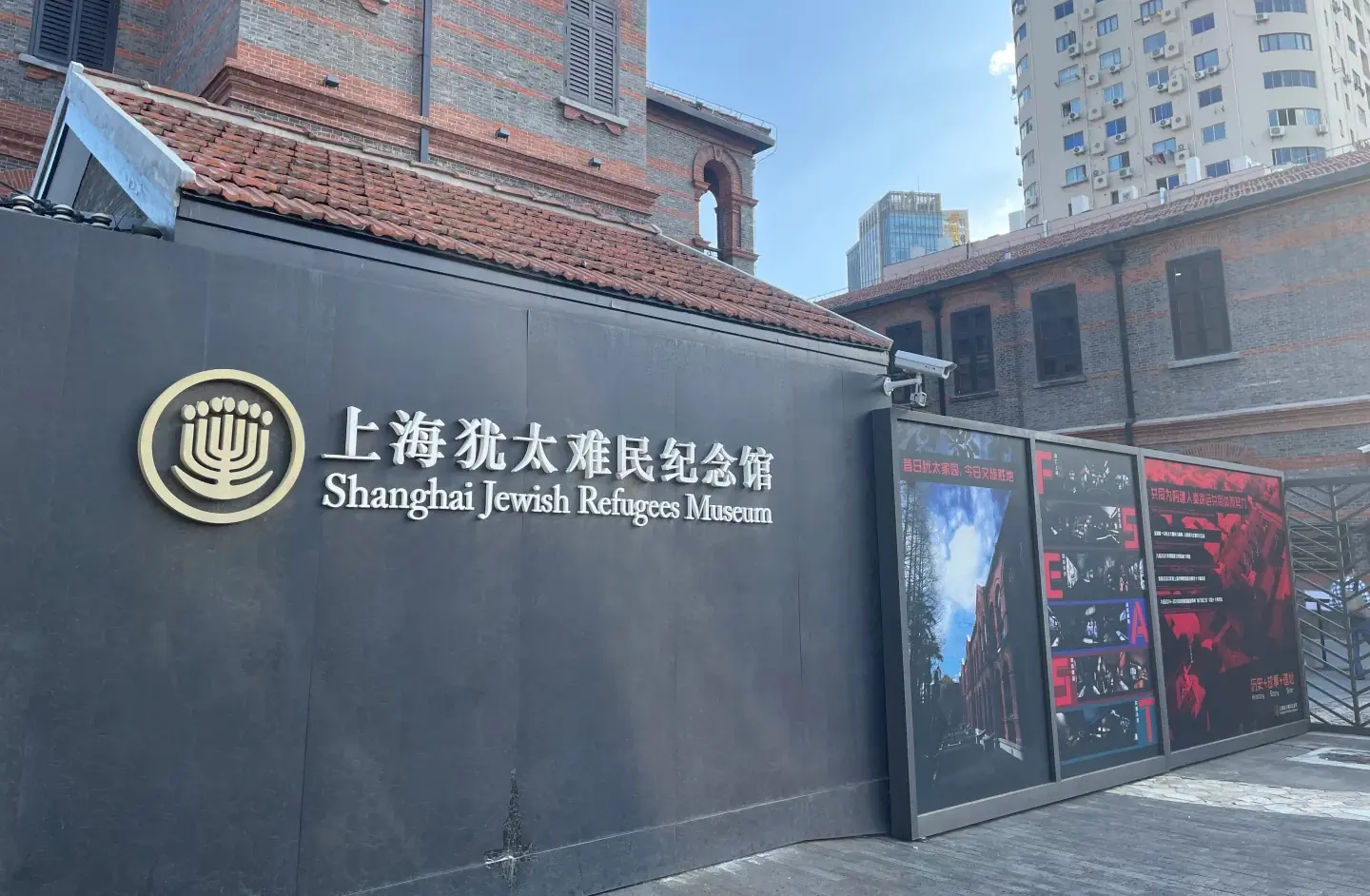
The museum entrance is near Tilanqiao Station on Metro Line 12.
From central Shanghai: From the Bund, Nanjing Road, or Lujiazui, a taxi can be simplest outside rush hour; by metro, use Line 2 to connect with Line 12. Check a live map before leaving, since traffic and transfer time vary widely.
Show this screen to your driver · 出示给司机看
您好,请送我到上海犹太难民纪念馆,谢谢。
Hello, please take me to the Shanghai Jewish Refugees Museum, thank you.
The museum is at 62 Changyang Road, Hongkou District, near Line 12 Tilanqiao Station.
Walk the Former Jewish Quarter
The museum is the starting point rather than the whole experience. The nearby streets and sites make more sense after the exhibition, so allow time for a slower walk through Hongkou.
Zhoushan Road
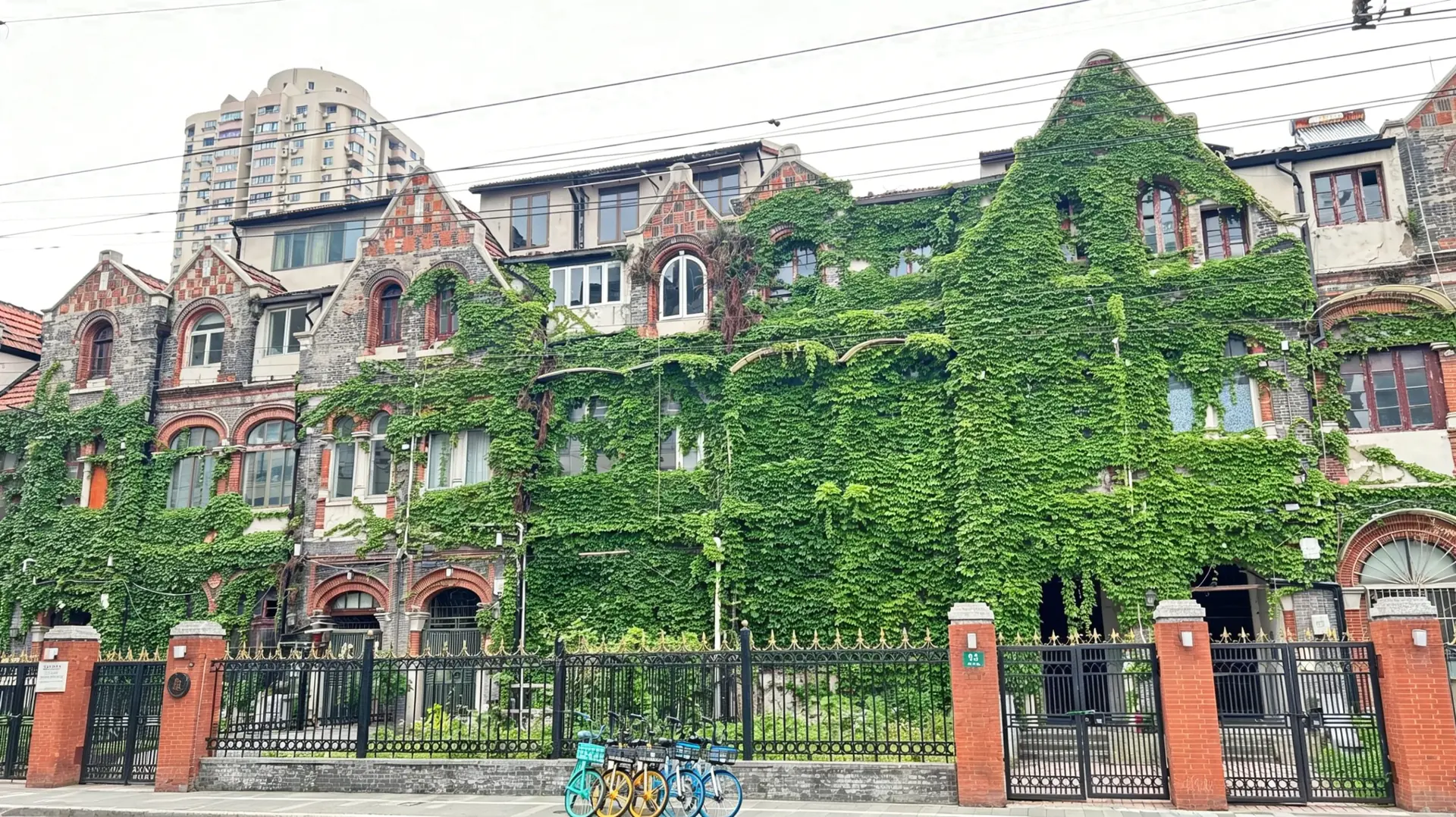
Zhoushan Road is one of several streets near the museum with buildings connected to the refugee community’s history.
Zhoushan Road and nearby Huoshan Road retain buildings associated with Jewish refugees, including former homes and relief sites. The museum identifies this area as part of its Shanghai Jewish heritage context; treat it as a lived-in neighborhood, not an open-air reconstruction.
Huoshan Park Memorial
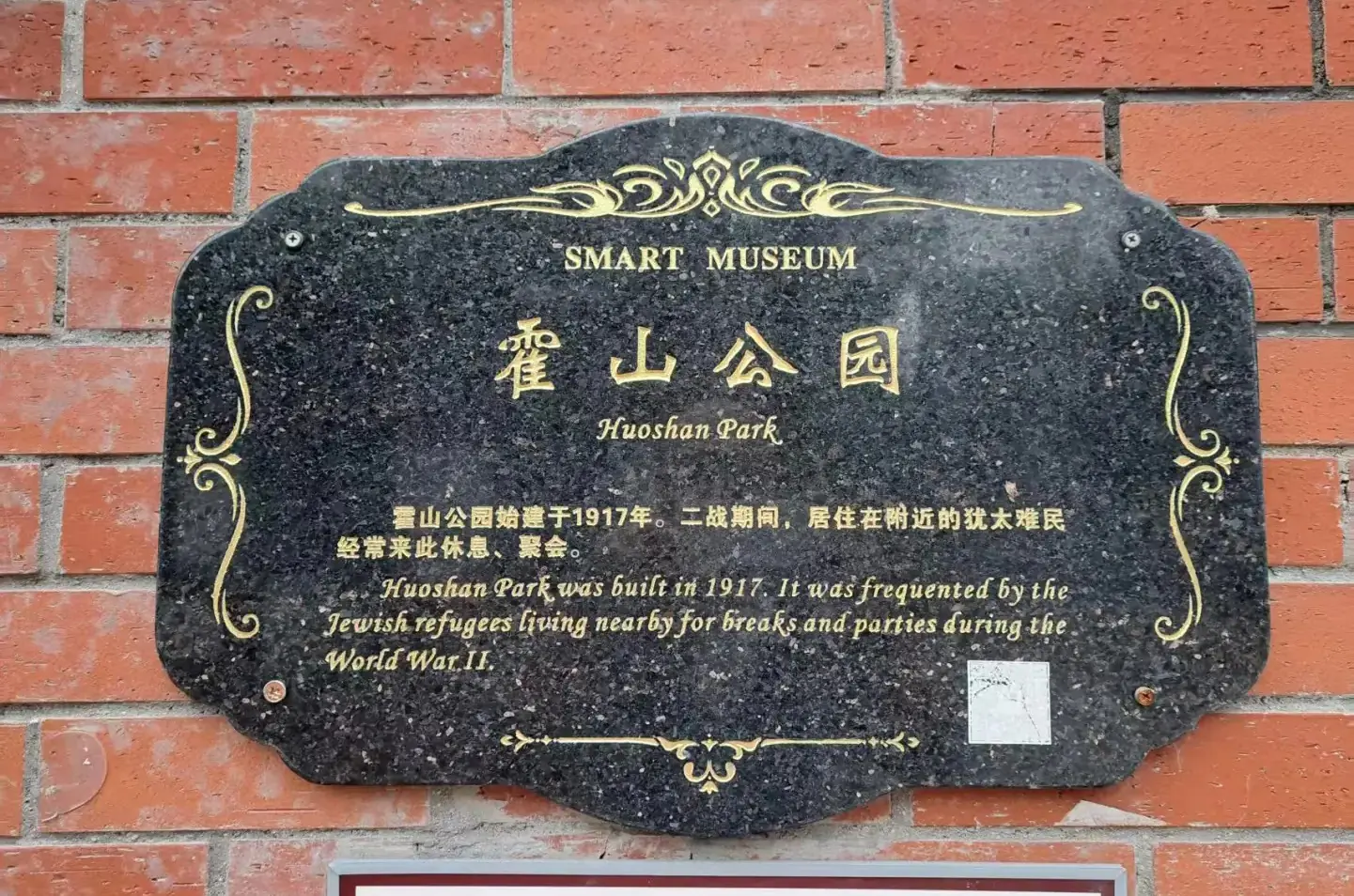
Huoshan Park contains a memorial to the designated area for stateless refugees.
Other historic traces
- American Jewish Joint Distribution Committee (JDC) site: JDC opened a Shanghai branch in 1938 at 119–121 Huoshan Road and provided relief support including refugee camps, soup kitchens, and hospitals.
- White Horse Inn: First opened in 1939 by Rudolf Mosberg and his wife, it became a gathering place for refugees. The original building was demolished in 2009; a 1:1 reconstruction opened at 67 Changyang Road in 2015.
Visit With Care
⏱️Allow 2.5–3 hours total
The museum itself usually takes about 1–1.5 hours. Add time for the former Jewish quarter if you want the exhibition’s stories to connect with the streets outside.
🚶Museum first, then walk
See the exhibition before the neighborhood. You will recognize names, institutions, and ordinary places more clearly once you have the historical context.
🎧Make language a first step
Timed tours are in Chinese. If you need English support, ask about audio-guide language at the ticket counter rather than assuming a scheduled English tour.
📷Photography has limits
Do not use flash, selfie sticks, or tripods, and do not film or livestream. Some exhibition spaces prohibit photography, so follow the signs in each gallery.
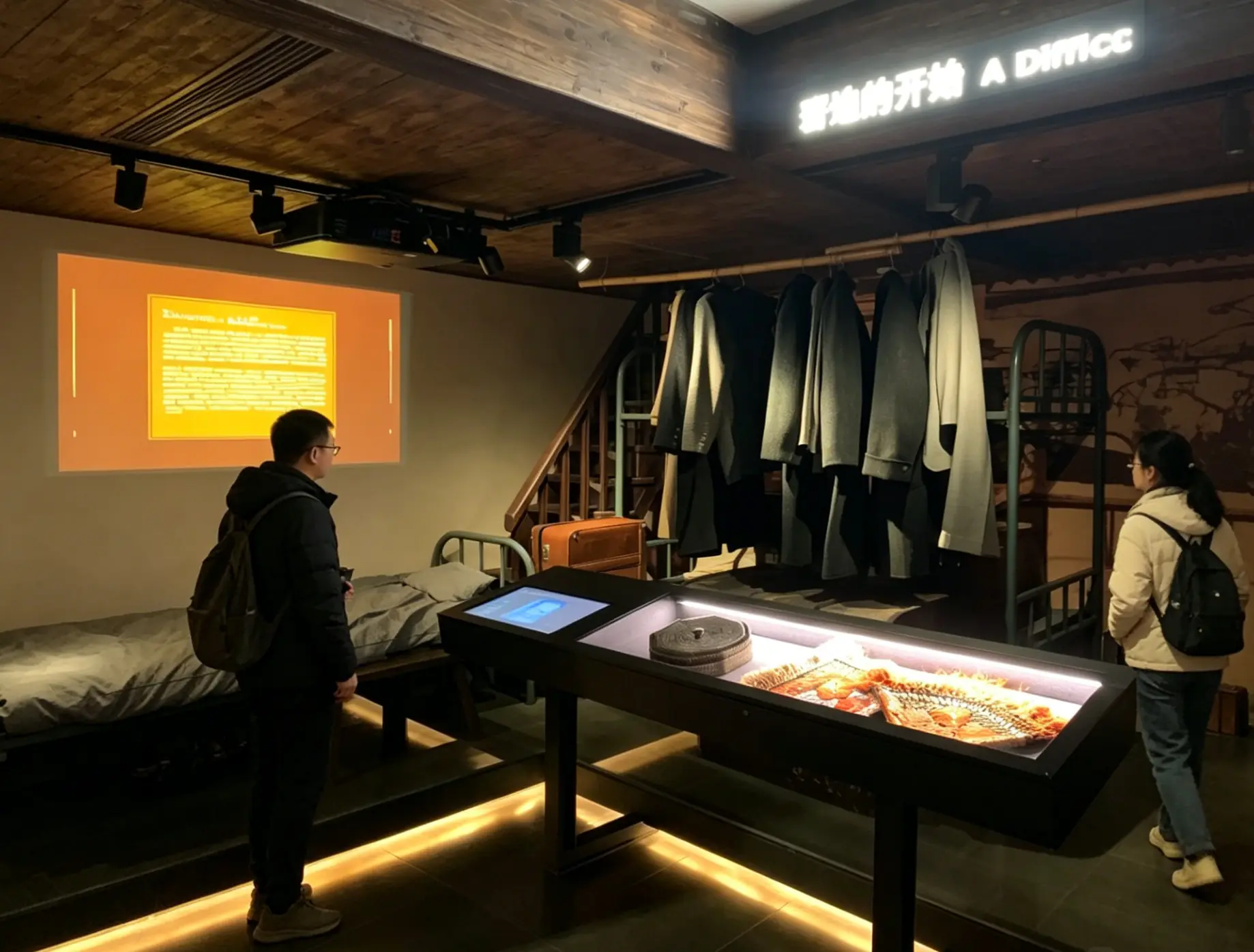
Give the exhibition time: personal records and reconstructed scenes are designed for a considered visit.
Emotional preparation: The stories of persecution, displacement, and survival can be heavy. Huoshan Park is a quiet place to pause after the museum if you would like a moment away from the exhibition.
Nearby Hongkou Add-Ons
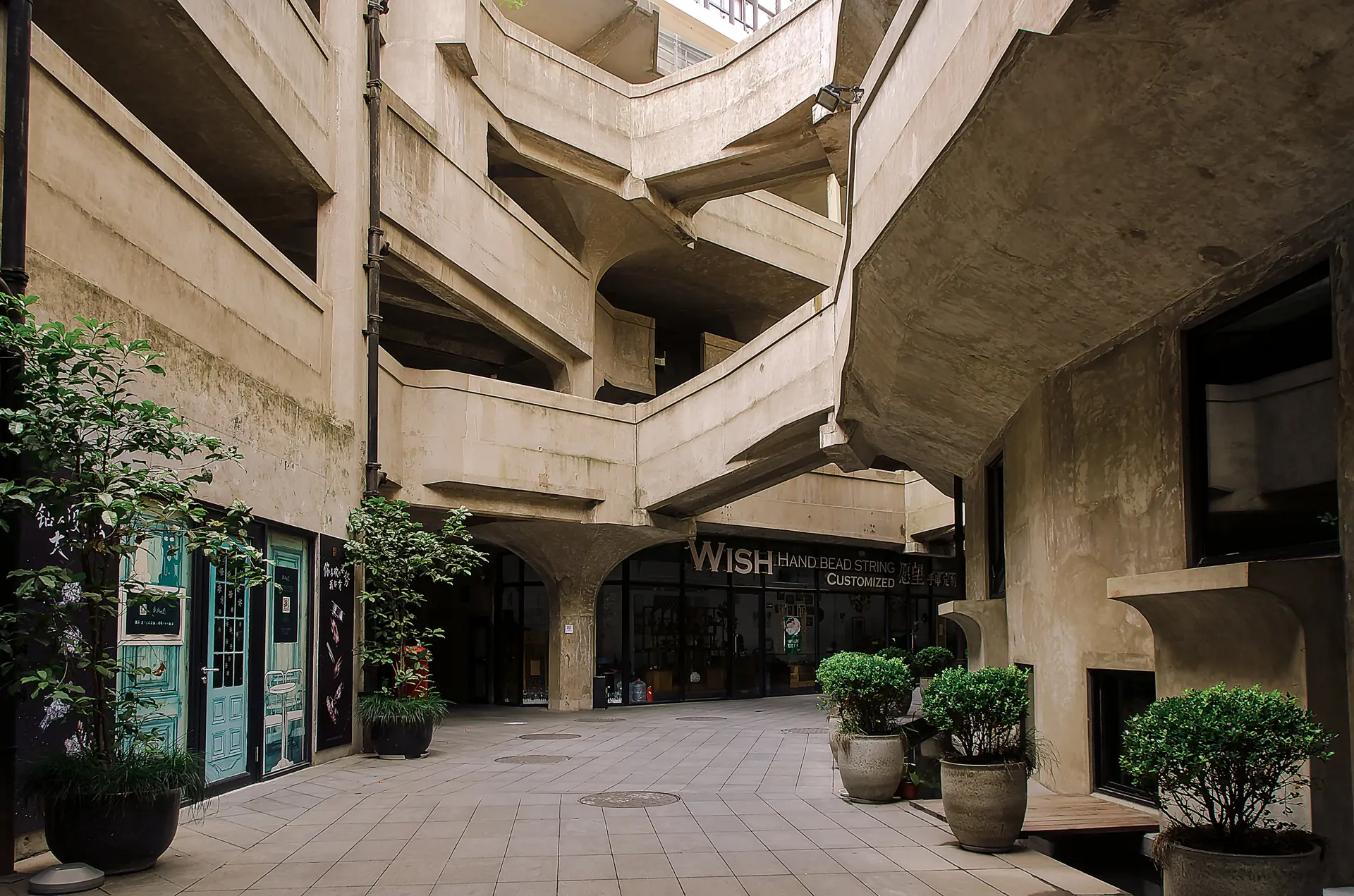
A former slaughterhouse transformed into a distinctive creative complex, with exposed concrete walkways and spiral ramps. It makes a sharply different architectural counterpoint to the museum.
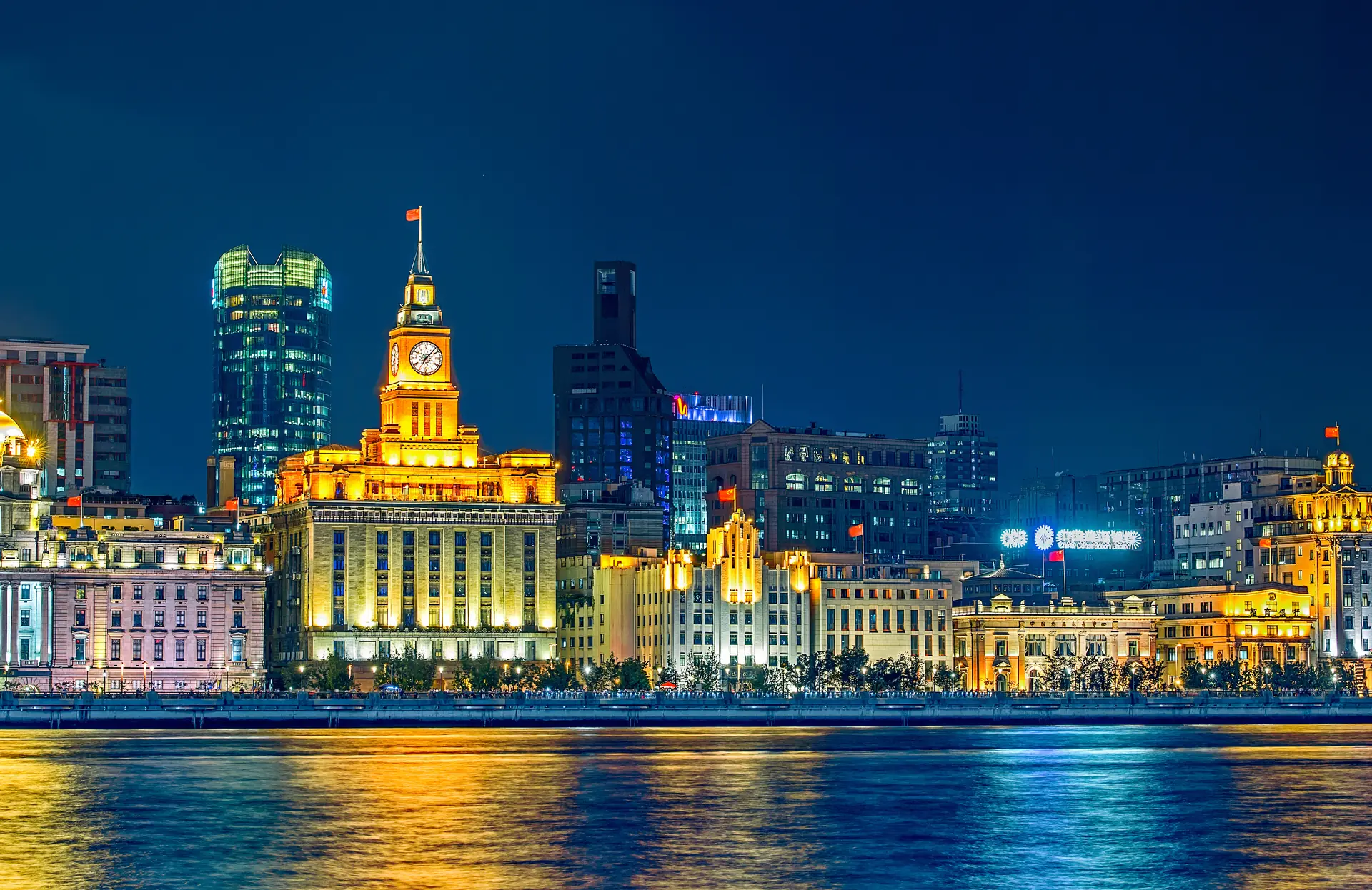
Pairing the museum with an evening Bund walk can give a wider sense of Shanghai’s layered 20th-century history. Use the metro or a live map to decide whether the timing works for your day.
Another Hongkou pairing
Lu Xun Park (鲁迅公园) and the former residence of Lu Xun offer another cultural stop in the district. Add them only if you want a longer Hongkou-focused day rather than rushing them after the museum.
It is generally best for children aged 10 and older. The exhibition deals with war, persecution, and displacement, and it is built around narratives and artifacts rather than a dedicated children’s area.
Sources checked for this guide
- Shanghai Jewish Refugees Museum visitor guide: hours, ticket prices, ID requirement, address, facilities, and visitor rules
- Shanghai Jewish Refugees Museum Chinese visitor guide: tour times, group-guide lead time, Line 12 Exit 1, audio-guide price, and photography rules
- Shanghai Jewish Refugees Museum overview and permanent exhibition: museum scale, Ohel Moshe, nearby heritage sites, JDC, White Horse Inn, and Huoshan Park
- Shanghai Jewish Refugees Museum Wall of Names: 19,672 names as of October 2025
- Yad Vashem and the US Holocaust Memorial Museum: Ho Feng-Shan record and 1943 restricted-zone proclamation
Beyond This Guide
Use these guides to shape the rest of your Shanghai plan:
- Build a wider city day with One Day in Shanghai: Yu Garden to Bund Skyline.
- Plan meals around the visit with the Shanghai Food Guide.
- Work out metro, taxi, and ride-hailing choices with China City Transport: Subway, Taxi, and Didi.
- Add a simple overnight extension with Suzhou Day Trip from Shanghai.
© gochinafreely.com — Original guide by Go China Freely.