Hours & Tickets
These 2026 extended hours apply to the Xiaozhai main museum. Holiday and exhibition schedules can change, so check the official guide before your date. sxhm.com guide
Essential Rules
Shaanxi History Museum: A Million-Year Timeline
Most visitors to Xi'an head straight for the Terracotta Warriors, but the Shaanxi History Museum (陕西历史博物馆) is where the region's full timeline comes into focus. Its collection holds more than 1.7 million items and sets, from prehistoric pottery and Zhou bronzes to Tang gold, silver, murals, and Silk Road objects.
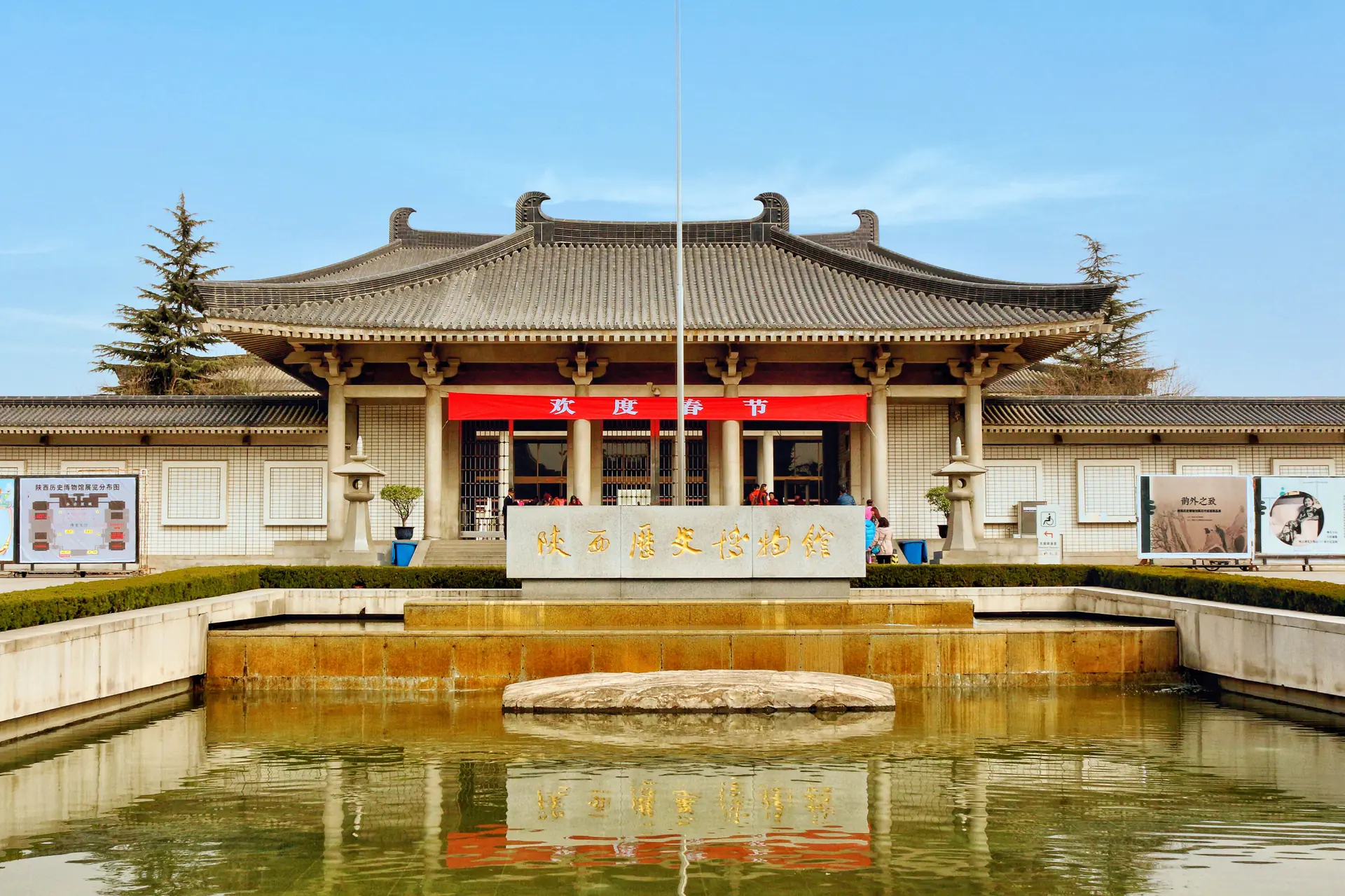
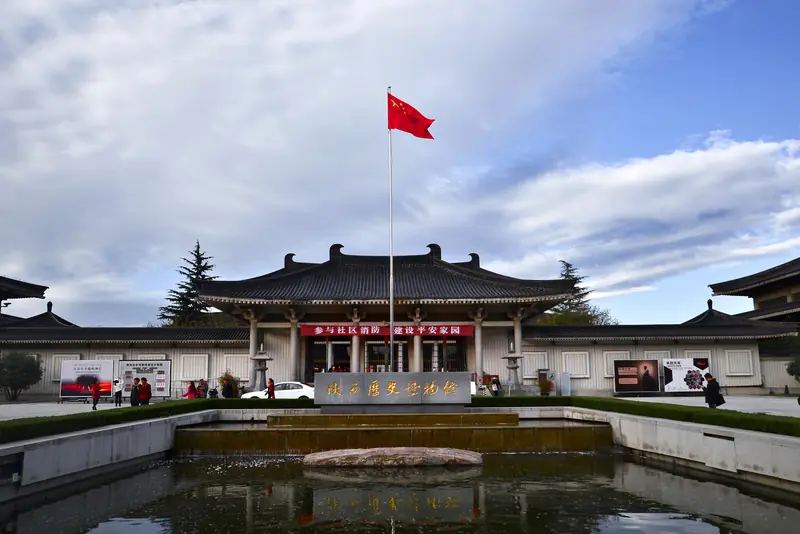
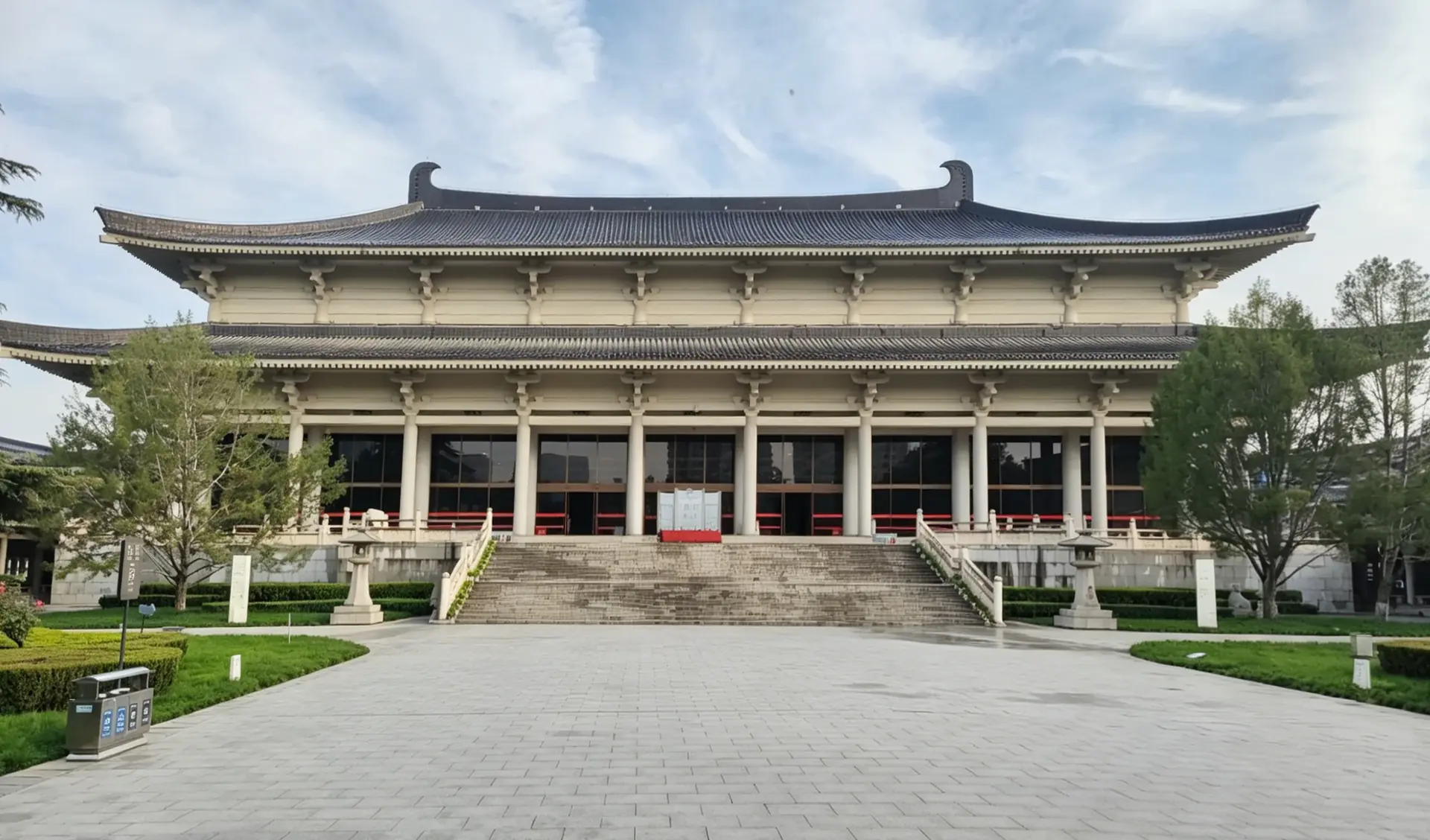
The museum opened in 1991 as China's first large-scale modern national-level museum. Its Tang-style building is part of the experience: gray tiles, white walls, a central hall, and corner watchtowers designed by architect Zhang Jinqiu (张锦秋), who trained under Liang Sicheng.
Xi'an is often called the capital of 13 dynasties, although official counts vary depending on which regimes and capital sites are included. The museum makes the larger idea tangible: the Terracotta Warriors tell the Qin story, while this collection places Qin within a sequence stretching from early humans and Zhou ritual power to Han empire, Silk Road exchange, Tang cosmopolitan wealth, and later Shaanxi.
Choose Your Visit Route
The main museum begins with a chronological walk through three basic-display halls. Hall 4 then houses the separate Hejia Village hoard exhibition, while the paid Tang Tomb Murals Gallery is on B1. Choose the add-ons before you start so the free halls do not consume all your time and energy.
← swipe to compare all options →
Quick Route
1.5-2 hours
- ✓Follow the three main halls in order
- ✓Prioritize the objects highlighted on the current museum map
- —Skip Hall 4 and paid galleries if time is tight
Standard Route
2.5-3 hours
- ✓Walk all three main halls in order
- ✓Add Hall 4 for the Hejia Village hoard
- —Save the murals for a longer visit
Deep Dive
4+ hours
- ✓Read the main displays slowly
- ✓Add Hall 4 and the paid mural gallery
- ✓Leave time for the museum shop
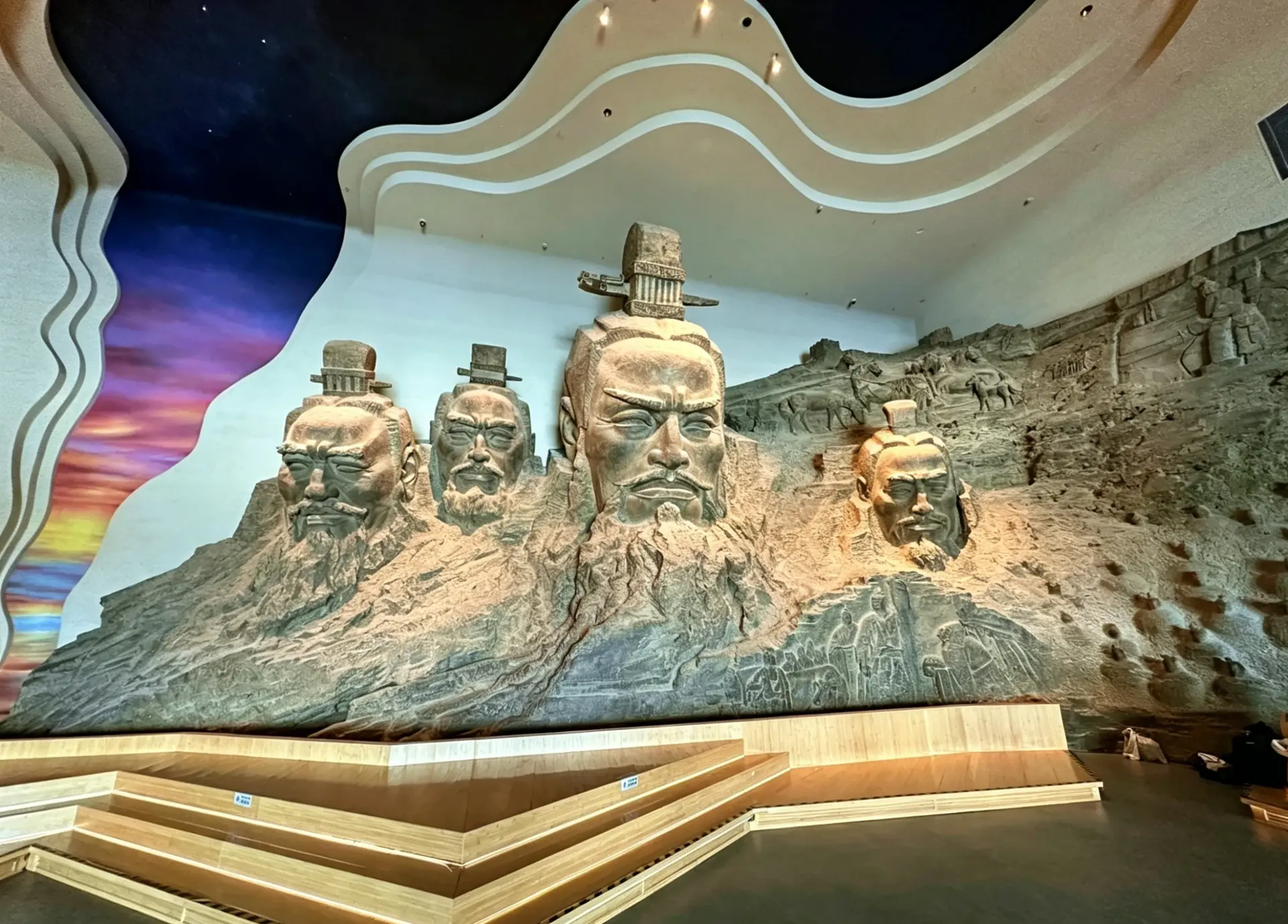
The Preface Hall sets the tone before the chronological route begins. Treat it as orientation, not the main event: the real payoff is the steady build from pottery and bronzes to Qin-Han statecraft and Tang luxury.
Three Main Halls
The museum's basic display uses three halls and seven chronological stages, from early humans to Shaanxi after the Tang. Read the rooms as one continuous story rather than three unrelated collections.
Hall 1: Prehistory and Zhou
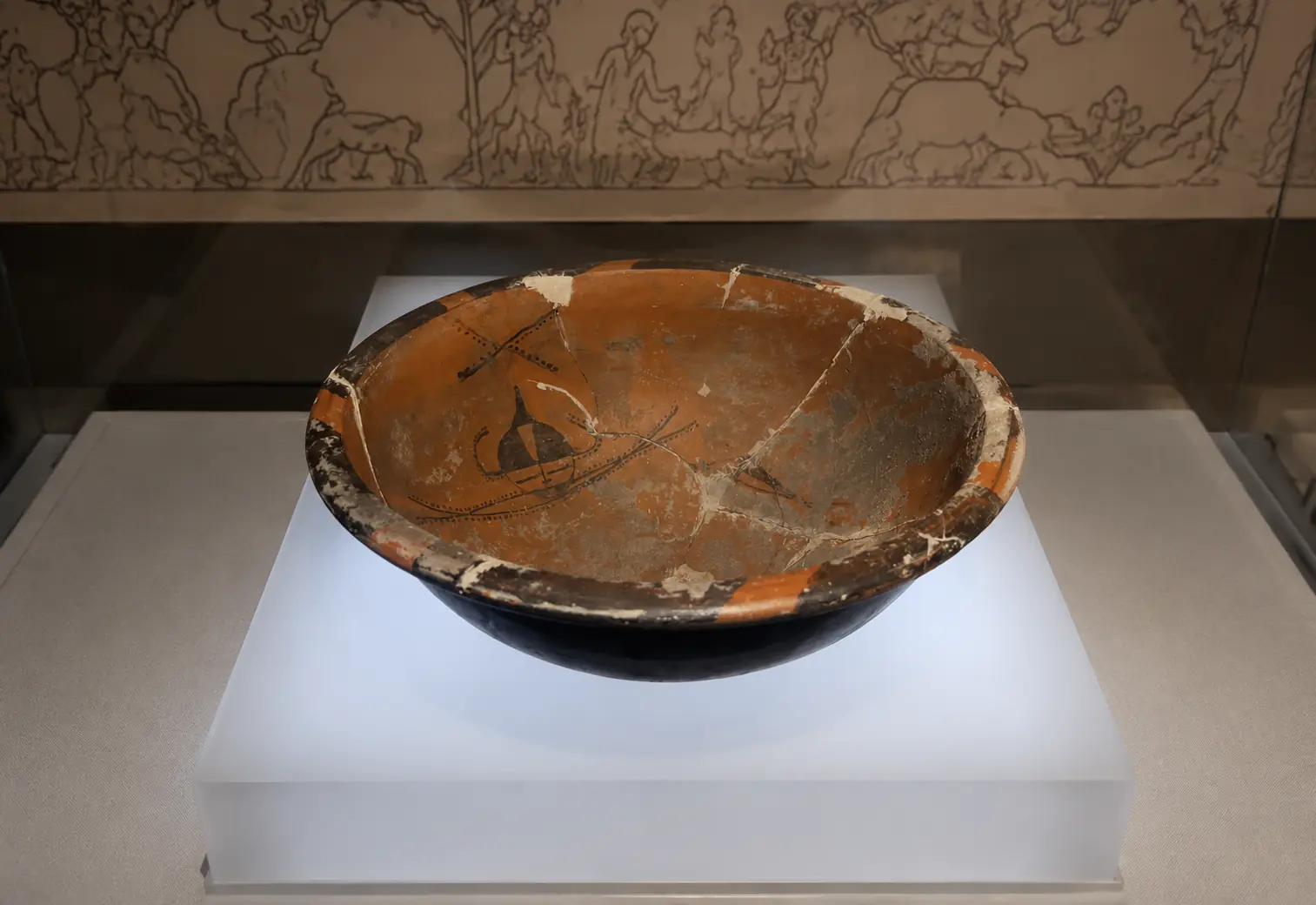
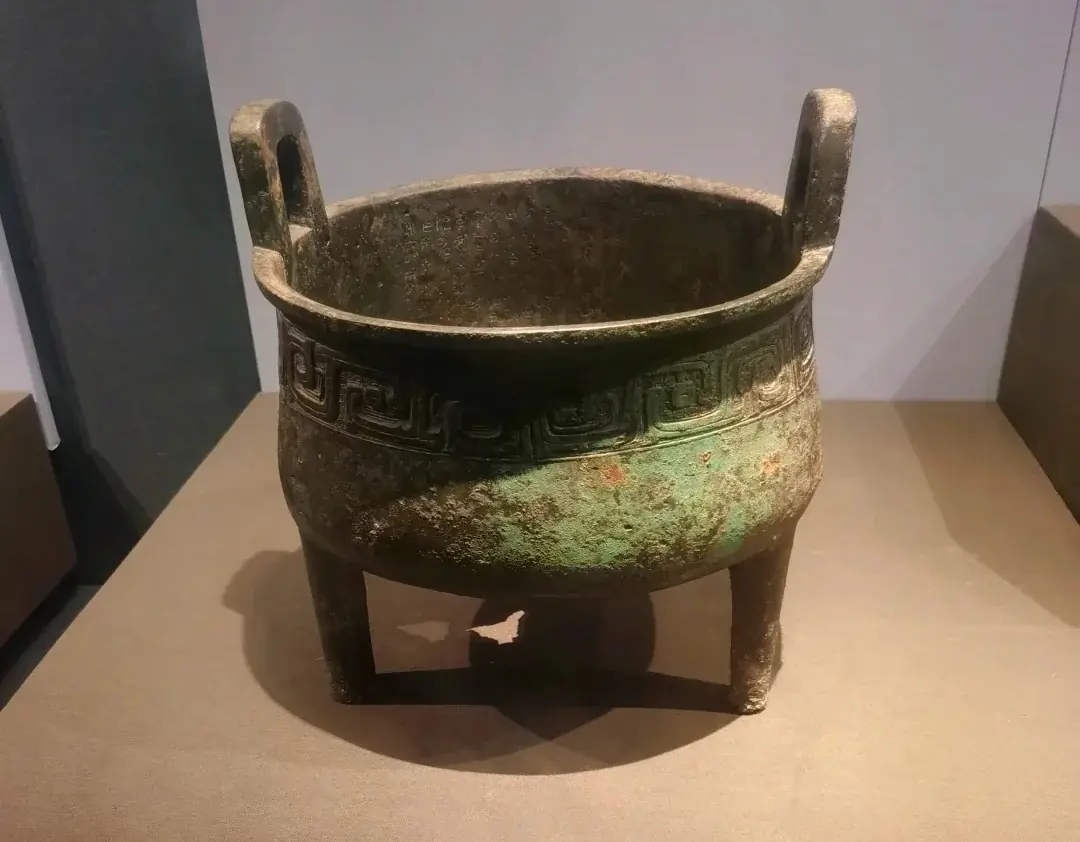
Hall 1 covers the prehistoric and Zhou stages. For first-time foreign visitors, the simplest reading is this: early-human remains and painted pottery show survival and daily life; Western Zhou bronzes show ritual power, warfare, and written memory.
What to Look For
- Lantian Man context (蓝田人): fossils discovered in Lantian County help open the exhibition's early-human story. Check the label to see whether skull material shown is original or a replica.
- Banpo painted pottery basin with human-face-fish motif (半坡人面鱼纹彩陶盆): a Yangshao culture object whose face-and-fish design remains one of China's most recognizable prehistoric images.
- Western Zhou bronze ritual vessels: dings, guis, and jues from a bronze culture connected to Fenghao near Xi'an.
The two images below show the categories most readers can understand fastest: painted pottery and Western Zhou ritual vessels.
Hall 2: Qin to Northern Dynasties
Hall 2 follows the Qin state through unification in 221 BCE and the empire, then the Han and the Northern and Southern Dynasties. It is the bridge between the Terracotta Warriors site and Tang Chang'an: military power, centralized government, silk, glass, Central Asian influence, and long-distance trade appear in one sequence.
What to Look For
- Qin-period terracotta figures and horses: useful for close-up details that are difficult to see from the walkways at the Terracotta Warriors pits.
- Han Dynasty silk and Silk Road objects: material evidence that Chang'an connected China with Central Asia and beyond long before the Tang peak.
The Empress's Jade Seal is at the Qin-Han Branch
The tiny Western Han white-jade Empress's Jade Seal (皇后之玺) is a museum collection highlight, but the current official record places it in the long-term Qin-Han civilization exhibition at the separate Qin-Han Branch. Do not build a Xiaozhai main-museum route around seeing it here.
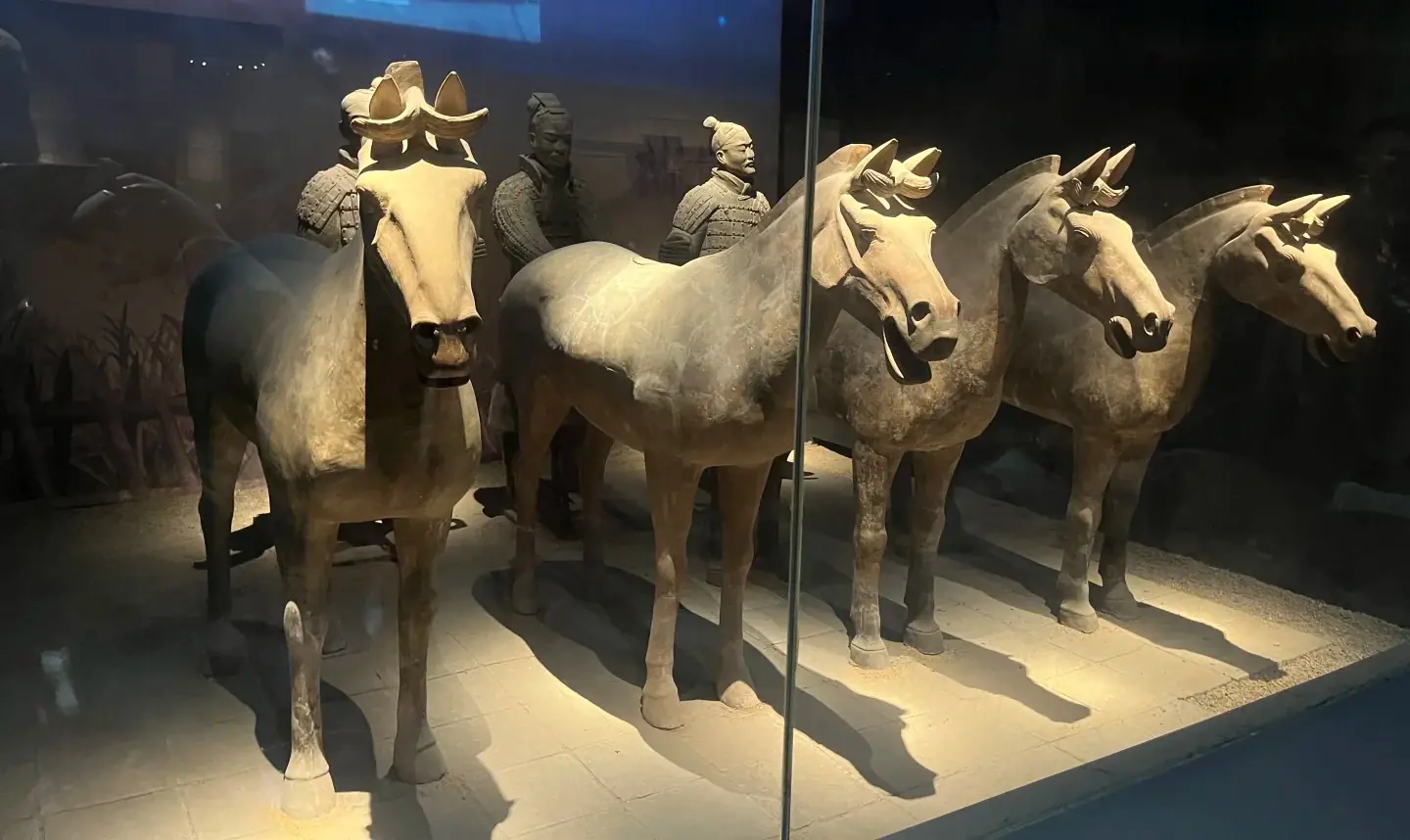
The Qin display is not a substitute for the Terracotta Warriors excavation site. Its advantage is viewing distance: you can study armor texture, hair, posture, and surface detail more closely than at the main pits.
Hall 3: Sui, Tang, and Beyond
Hall 3 continues through the Sui and Tang and into later Shaanxi. Its Tang section shows Chang'an at its most cosmopolitan: foreign musicians, steppe forms, Central Asian aesthetics, and technical confidence in glaze, metal, and stone.
What to Look For
- Tri-Color Glazed Camel with Musicians (三彩骆驼载乐俑): a Tang sancai camel carrying musicians and a dancer, often read as a miniature Silk Road performance.
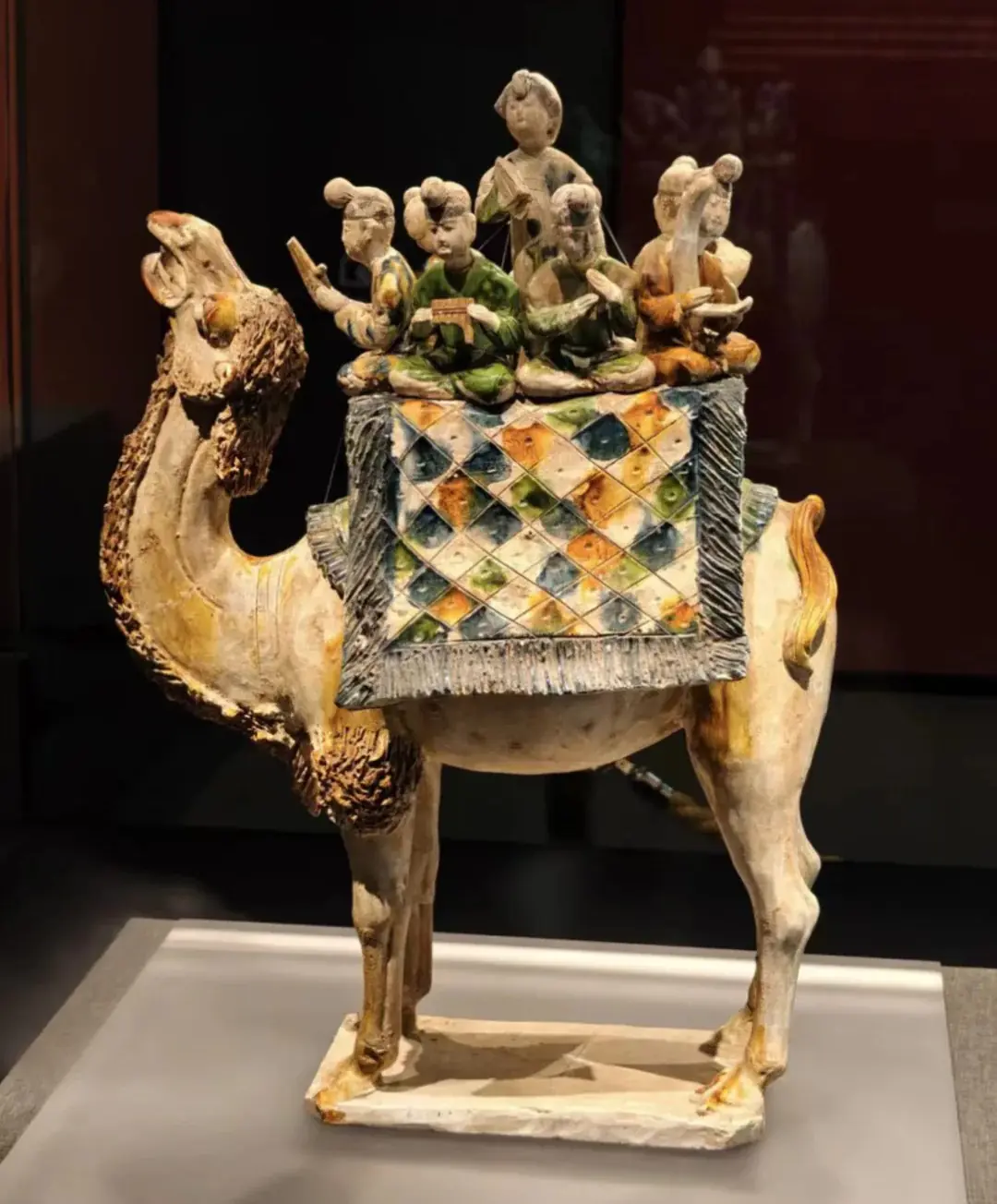
The camel is the verified Hall 3 anchor in this guide. After the Tang section, keep following the basic display into post-Tang Shaanxi rather than assuming the chronological story ends at the dynasty's collapse.
Hall 4: Hejia Village Hoard
In 1970, construction workers in Xi'an's Hejia Village unearthed nearly 1,000 Tang Dynasty objects, including gold, silver, jade, agate, and coins. It became one of the landmark twentieth-century discoveries in Sui-Tang archaeology. The museum's long-term Hejia Village exhibition is in Hall 4, separate from the Hall 3 basic display.
Objects to Look For
- Gold Bowls with Mandarin Ducks and Lotus Petals (鸳鸯莲瓣纹金碗): among the finest gold objects associated with the Hejia Village find.
- Gilt Silver Flask with Dancing Horse (鎏金舞马衔杯银壶): a silver flask showing a horse holding a cup, tied to Tang court entertainment and steppe-inspired vessel forms.
- Agate Rhyton with Animal Head (兽首玛瑙杯): a single-piece agate vessel with a Western-style form and animal-head spout.
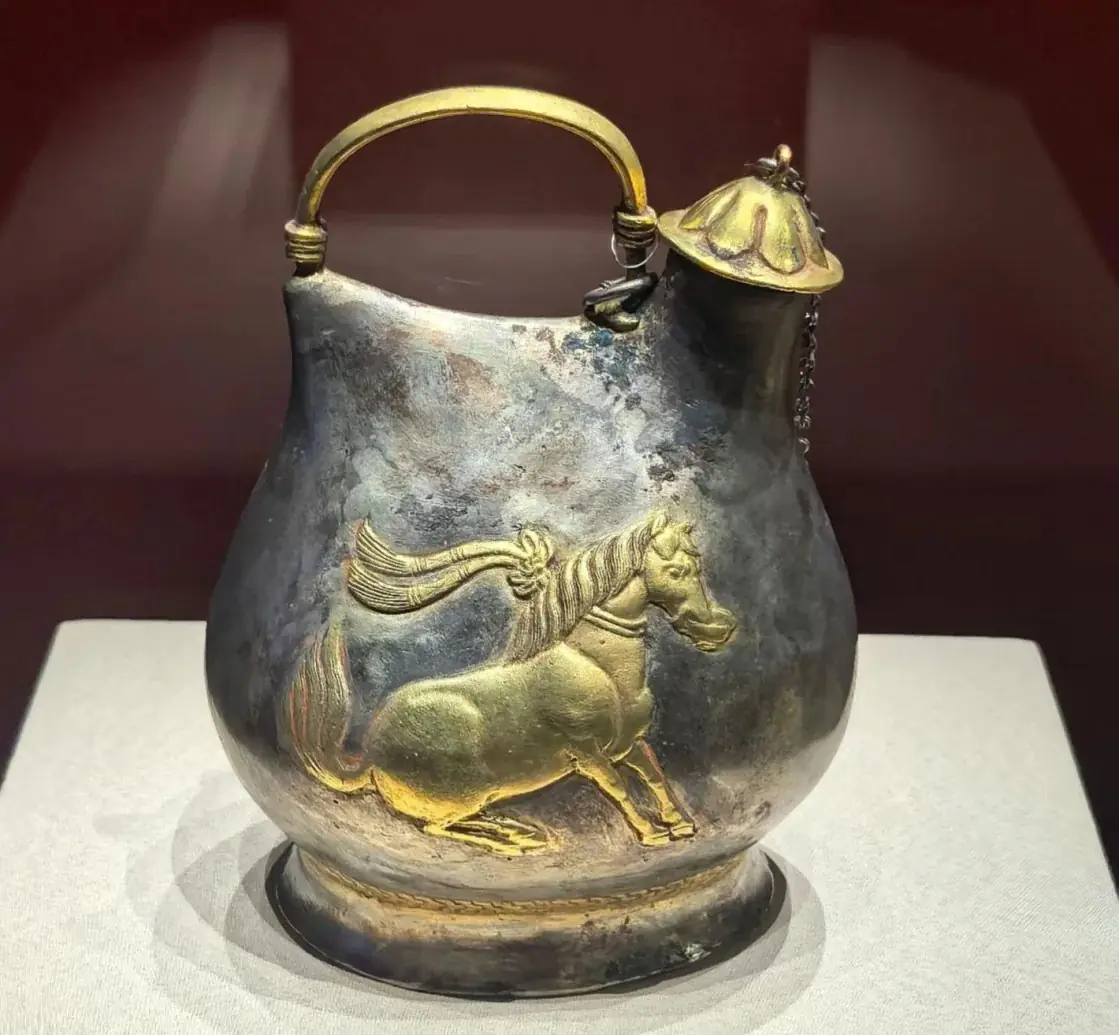
Slow down in Hall 4 if you only have energy for one detailed Tang section. Display status can change during conservation or loans, so use the current labels rather than treating every famous collection object as guaranteed on your date.
Tang Tomb Murals Gallery
The Tang Tomb Murals Gallery is a separate paid gallery on B1. The extra ticket can feel expensive beside the free main halls, but for travelers interested in Tang daily life, costume, court ceremony, and ancient painting, it can be the most memorable part of the visit.
Current official museum wording describes murals from more than 20 Tang tombs, nearly 600 murals in the collection, and over 1,000 square meters of mural material. An older opening report referred to 97 murals on display; treat that as historical context rather than a promise of the current display count.
Murals Highlighted by the Museum
- Polo Match (马球图): from Crown Prince Zhanghuai's tomb, showing aristocratic sport in motion.
- Envoys Received at Court (客使图): Tang officials receiving foreign envoys, a strong visual summary of Chang'an's international role.
- Court Ladies (仕女图): Tang court women in full figures, tall hairstyles, and vivid clothing.
Follow the gallery photo rules
Photography depends on the posted rules for each hall and exhibition. Follow staff instructions; do not use flash, tripods, selfie sticks, or commercial photography gear where they are prohibited.
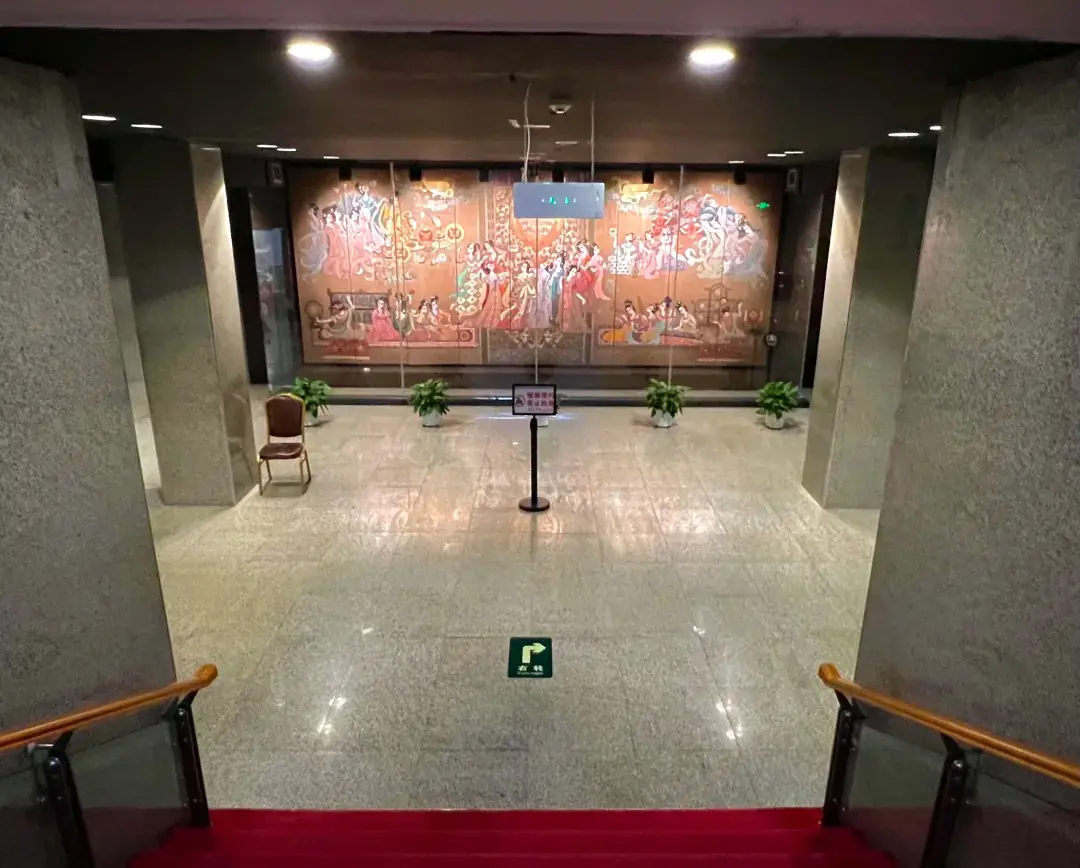
The B1 gallery is a separate decision, not an automatic add-on. If your main interest is artifacts, the free halls may be enough. If you care about Tang visual culture, court life, and painted tomb scenes, budget both time and ticket money for it.
Tickets, Hours, and Booking
The museum is free only in the narrow sense: the basic halls cost nothing, but you still need a real-name reservation. This is the point where many independent travelers lose the visit, especially during summer, weekends, and Chinese public holidays.
Booking Channels
For free main-museum entry, use the official WeChat account 陕西历史博物馆 and its ticket reservation menu. Tickets release five days ahead at 17:00 Beijing time, although the museum can adjust rules around holidays, special exhibitions, and crowd-control notices.
The museum's English visitor page still links to Trip.com, but the current Chinese guide says the WeChat account is the only official free-ticket reservation channel and disclaims third-party ticket sales or paid bundles. Treat any third-party listing as a separate commercial product, not as the museum's official free reservation.
Ticket Types
- Typical status
- Free
- Planning note
- Real-name advance reservation required
- Typical status
- Check current access
- Planning note
- Separate hall; confirm the current ticket screen and notice
- Typical status
- Paid
- Planning note
- Separate ticket; online paid-ticket holders may not need a duplicate free reservation
- Typical status
- Varies
- Planning note
- Check the current official ticket screen before relying on a price
- Typical status
- Paid
- Planning note
- Confirm language and device availability at the service desk
Free tickets can vanish fast
Peak dates can sell out quickly. Open the reservation page before 17:00, keep passport details ready, and avoid treating the museum as a casual rainy-day backup.
Paid-gallery fallback
If the free ticket page is impossible, check whether a paid gallery or current special exhibition is available for your date. Official rules state that some paid online tickets can include main-museum entry without repeating the free reservation, but always confirm the exact ticket wording before paying.
Entry Rules
- Bring the original passport used for the reservation.
- Arrive within the reserved time window; late arrivals can be refused.
- Children rules, quotas, paid exhibitions, and holiday schedules can change, so check the official page or WeChat notice close to the visit.
- Exhibition halls are not eating spaces; packaged drinks may be security-checked, and staff instructions override general advice.
- Photography rules depend on the hall and exhibition. Avoid flash, tripods, selfie sticks, and commercial equipment unless explicitly allowed.
Getting There and Entry
Shaanxi History Museum (陕西历史博物馆) (Google | Amap) sits at 91 East Xiaozhai Road (小寨东路), between Xiaozhai and the Giant Wild Goose Pagoda area. The official guidance points travelers to Xiaozhai Station or Giant Wild Goose Pagoda Station; avoid relying too heavily on a fixed exit letter because station access advice can change.
Metro and Bus
- Metro Line 2 / Line 3 to Xiaozhai (小寨), about 778 meters from the museum; walk east along East Xiaozhai Road.
- Metro Line 3 / Line 4 to Giant Wild Goose Pagoda (大雁塔), about 834 meters from the museum; walk west along East Xiaozhai Road.
- Buses stop around Cuihua Road / Shaanxi History Museum (翠华路·陕西历史博物馆); check live maps for the best route from your hotel.
Taxi
From the Bell Tower area, taxi or Didi time varies sharply with traffic, school dismissal, and holidays. Check a live map before leaving and build in extra time for the booked entry window.
Show this screen to your driver · 出示给司机看
请带我到陕西历史博物馆,谢谢。
Please take me to Shaanxi History Museum, thank you.
Show this for taxi or Didi pickup. The museum is near Xiaozhai and Giant Wild Goose Pagoda.
Stay inside your booked window
The museum says visitors who arrive before or after the reserved period cannot pass the ticket check.
Carry the original passport
Entry uses the original valid document submitted with the real-name reservation.
Travel light
Security and storage slow down large bags. Leave extra time if you need the service desk or a paid locker.
Services, Crowds, and Tips
This is a serious museum rather than a quick photo stop. If you do not know Chinese history well, an audio device, museum guide, volunteer explanation, or digital guide can turn the displays from "old objects in cases" into a readable story.
⭐Prioritize with the Current Map
Use the current museum map, posted recommendations, and gallery labels to choose highlights. Do not assume every famous collection object is displayed in its usual place.
🎧Audio and Guides
The museum lists audio devices, paid guide services, and volunteer explanations. Language, timing, price, and availability can change, so confirm at the service desk before committing your route.
🌅Best Crowd Window
Our practical preference is an off-peak weekday morning. Summer, weekends, and Chinese holidays are when both tickets and hall space are most likely to feel tight.
♿Accessibility and Family Help
The official service guide lists stroller and wheelchair loans at the service desk. The visitor center on the west side of the hall can help with visit and ticket questions.
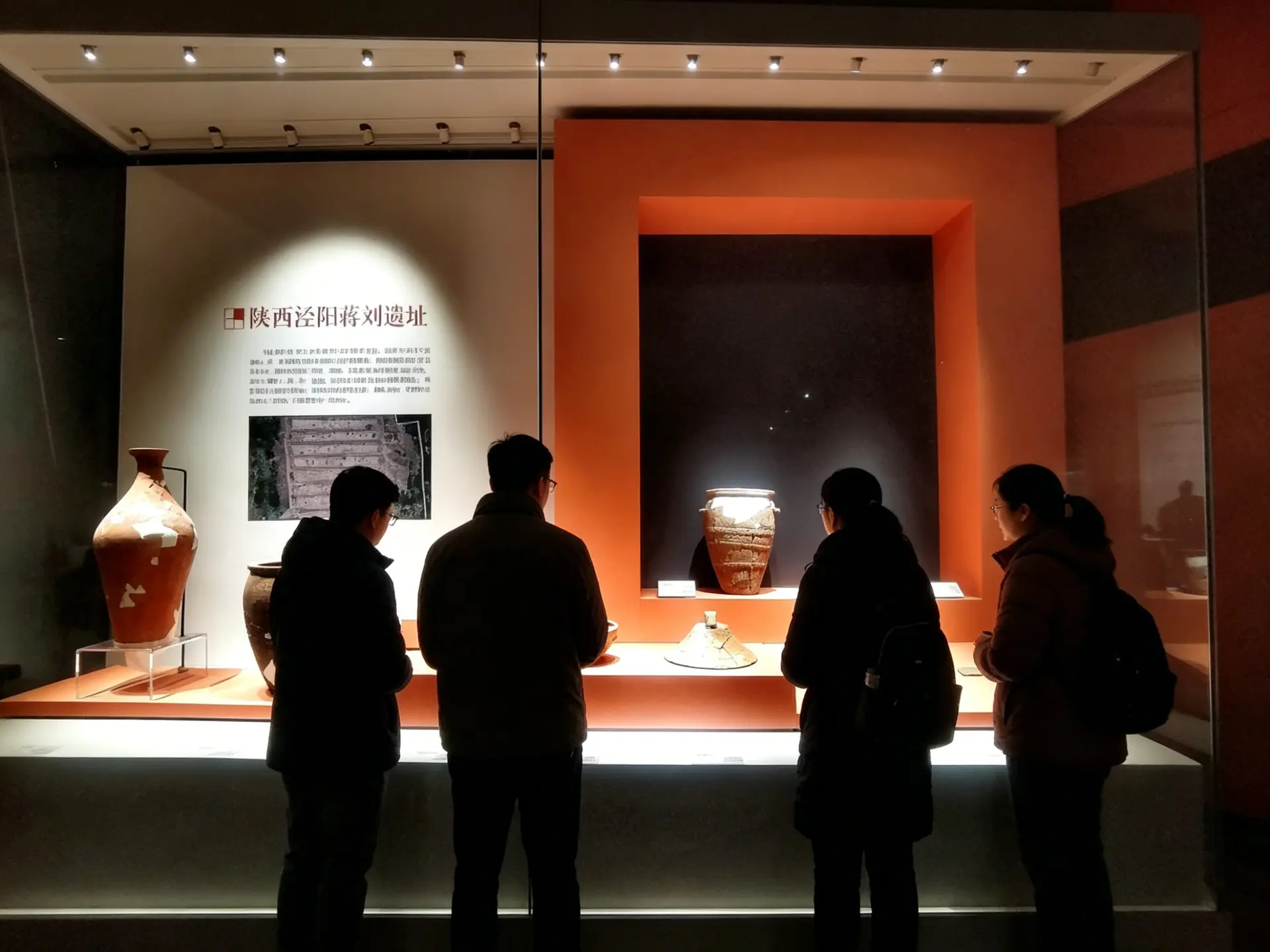
The chronological halls reward a steady pace. If you rush every label, the objects blur together; if you choose a route and pause at selected highlights, the museum becomes much easier to read.
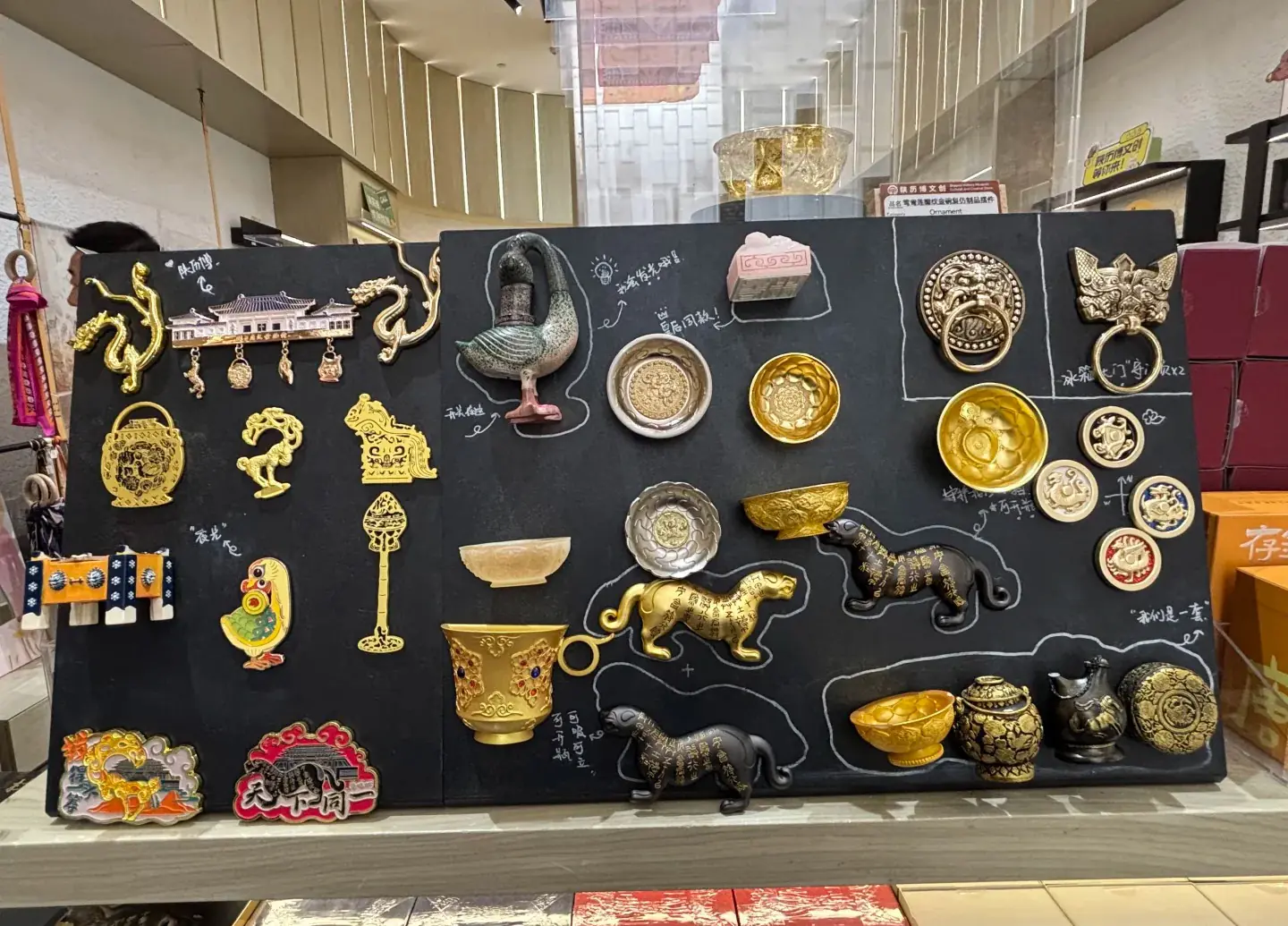
Budget about 10-15 minutes if you like design souvenirs. The shop is strongest when it echoes things you just saw: sancai pottery motifs, mural prints, Tang goldwork, and agate-rhyton designs are more tied to the visit than generic tourist trinkets. Keep it as an exit stop, not a reason to cut the main halls or Hall 4 short.
Nearby Xi'an Add-Ons
The museum sits between the Giant Wild Goose Pagoda area and Xiaozhai, so it pairs best with nearby Yanta District sights instead of a far cross-city transfer.
Where the Tang monk Xuanzang translated Buddhist scriptures. Climb the pagoda for city views, then use the north square and fountain area as an easy evening transition. Read our guide →
Quieter than its famous sibling, with Xi'an Museum next door. Use it for a gentler museum-and-pagoda pairing when Shaanxi History Museum feels too intense. Read our guide →
The pedestrian boulevard south of Giant Wild Goose Pagoda, best after dark for lights, shops, street scenes, and Tang-style spectacle without another daytime ticket.
Suggested day plan: Morning at Shaanxi History Museum → lunch near Xiaozhai or Giant Wild Goose Pagoda → afternoon pagoda visit → evening at Great Tang All Day Mall. Check the current north-square fountain schedule separately if that performance matters to you.
Frequently Asked Questions
The current Chinese guide names the museum WeChat account as the only official free-ticket channel. An English museum page still links to Trip.com, creating an unresolved official-site conflict; do not assume a third-party listing is the same as the free reservation. If the Chinese screen blocks you, ask hotel staff to help with the official system or contact the museum before your date.
Sources checked for this guide
- Shaanxi History Museum official visitor information: Chinese visitor guide and English visitor page
- Shaanxi History Museum official background pages: museum overview, basic exhibitions, Tang tomb murals and Zhang Jinqiu profile
- Official current display and gallery records: Empress Jade Seal location, tri-color camel location and dancing-horse flask location
- Official safety and prohibited-items notice: visitor rules
- Official / state media cross-checks for 2026 hours and Hejia Village hoard context: 2026 extended-hours notice and Xinhua Hejia Village feature
Beyond This Guide
Before you build the rest of your Xi'an plan:
- Terracotta Warriors: Complete Visitor's Guide — give Qin history its own half-day instead of squeezing it after the museum
- Xi'an City Wall: Walking & Cycling Guide — a strong afternoon or sunset contrast after a museum morning
- China navigation apps: Amap, Apple Maps & more — set up a live route before choosing between Xiaozhai, the pagoda area, and the old city
- Xi'an Food Guide: What to Eat & Where — plan the meal after Xiaozhai, Yanta, or the old city
- China mobile payments: Alipay & WeChat Pay — set up QR payments before tickets, taxis, meals, and deposits become stressful
Shaanxi History Museum is one anchor in a history-heavy city, but the right day depends on ticket release times, how much context you want, where you sleep, and whether you are pairing it with Warriors, pagodas, food streets, or the city wall. Our Xi'an planners can design the route around your dates, pace, and interests.
© gochinafreely.com — Original guide by Go China Freely.