Walk Basics
Good to Know
A Hui Neighborhood, Not One Food Street
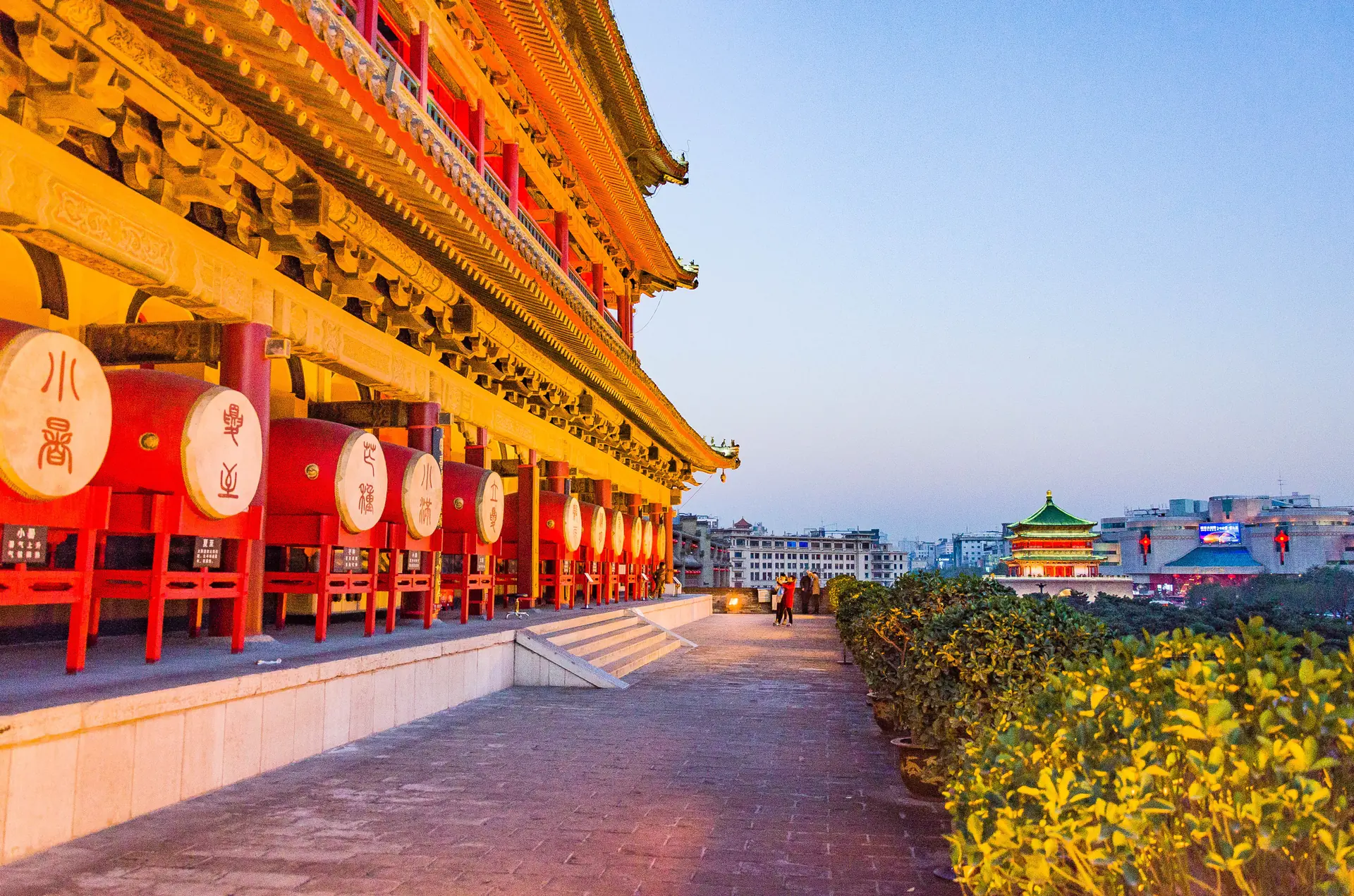
Muslim Quarter (回民街) (Google | Amap)
Xi'an Muslim Quarter is easy to misunderstand on a first visit. Walk through the Drum Tower entrance at night and it can look like one bright food street. This route instead treats it as a living Hui community with the Great Mosque, side lanes, old courtyards, halal dining rules, and Sajinqiao woven into one slow walk.
The official Shaanxi tourism page describes the quarter as the hub of Xi'an's Muslim community, north of West Street, across several blocks, with more than 20,000 Muslims and about ten mosques. Most visitors mean Beiyuanmen, but the broader neighborhood also includes Huajue Lane, Xiyangshi, Dapiyuan, North Guangji Street, learning-lane mosques, and Sajinqiao.
2.5-4h
Best Pace
3-5 km
Walking Loop
Free
Street Access
Start
Drum Tower
If you arrive only to eat, the main street can feel repetitive and commercial. If you arrive to walk a community, the turns behind the food stalls are the point: mosque walls, halal shop signs, residents slipping through narrow lanes, and old courtyards tucked behind plain gates.
1Main Strip
Beiyuanmen gives you the familiar first image: bright signs, snack counters, dense crowds, and the easiest Drum Tower entrance.
2Wider Quarter
The better walk adds mosque courtyards, side lanes, Hui daily life, and food streets that feel less like a single tourist strip.
Muslim Quarter Walking Route in Xi'an
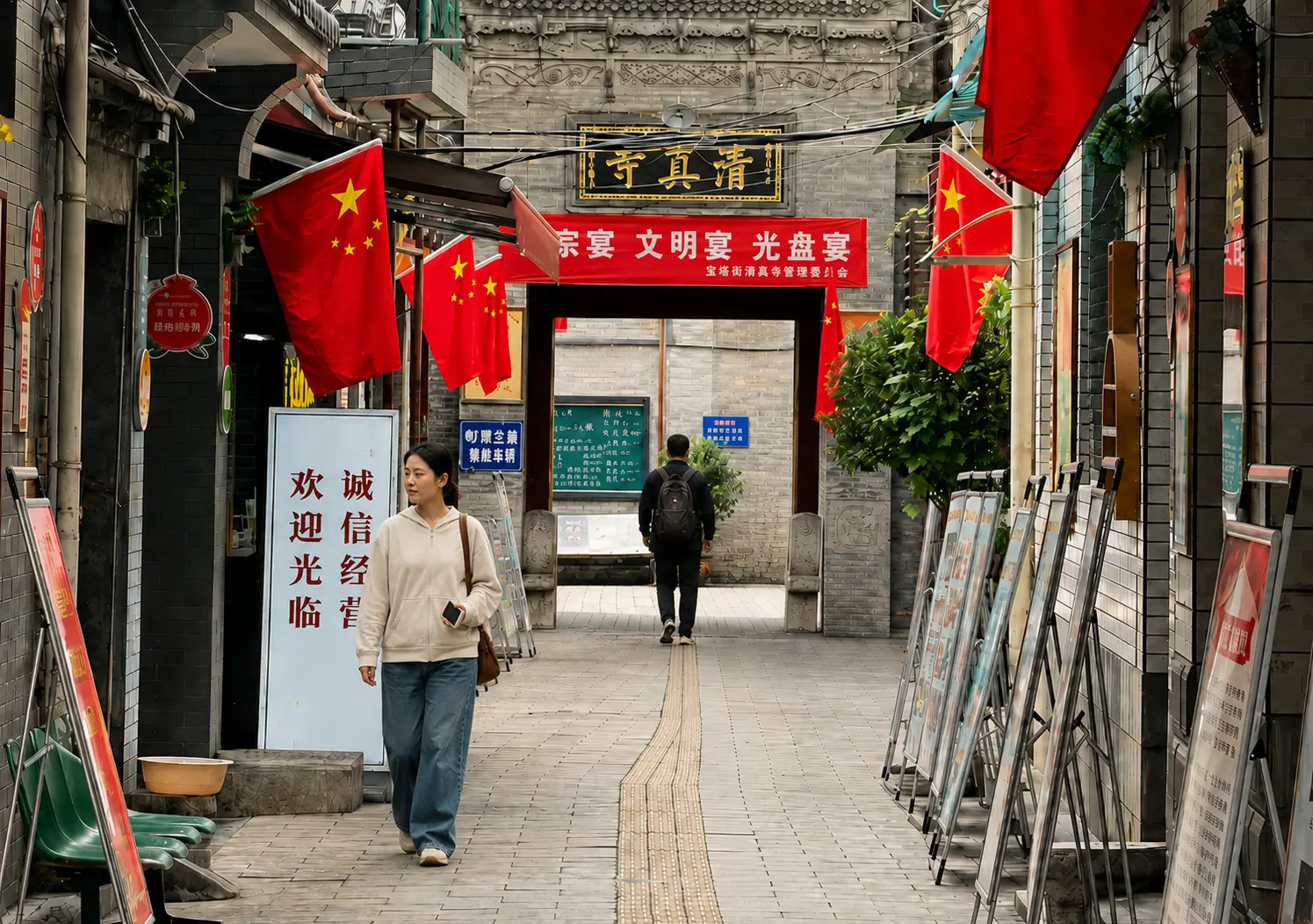
Start: Bell Tower or Drum Tower (Google | Amap) (Google | Amap)
Bell Tower Station on Metro Lines 2 and 6 is the easiest access point; walk west to Drum Tower and enter the quarter from the north side of the tower area.
Plan about 3-5 km and 2.5-4 hours if you enter the mosque grounds, sit down for food, and add Gao Family Courtyard (高家大院).
A shorter 90-minute version is possible, but it will feel more like a food-street pass than a neighborhood walk.
- Bell or Drum Tower(钟楼 / 鼓楼)- Use the towers as your orientation point
- Beiyuanmen(北院门)- Walk the main street briefly, then exit the crowd flow
- Huajue Lane and Great Mosque(化觉巷 / 化觉巷清真大寺)- The key quiet stop behind the food street
- Xiyangshi and Dapiyuan(西羊市 / 大皮院)- Side lanes, local restaurants, and neighborhood rhythm
- Gao Family Courtyard(高家大院)- Optional old-residence stop on Beiyuanmen
- Sajinqiao(洒金桥)- Local-feeling food finish west of the main strip
Beiyuanmen: Use the Main Drag Briefly
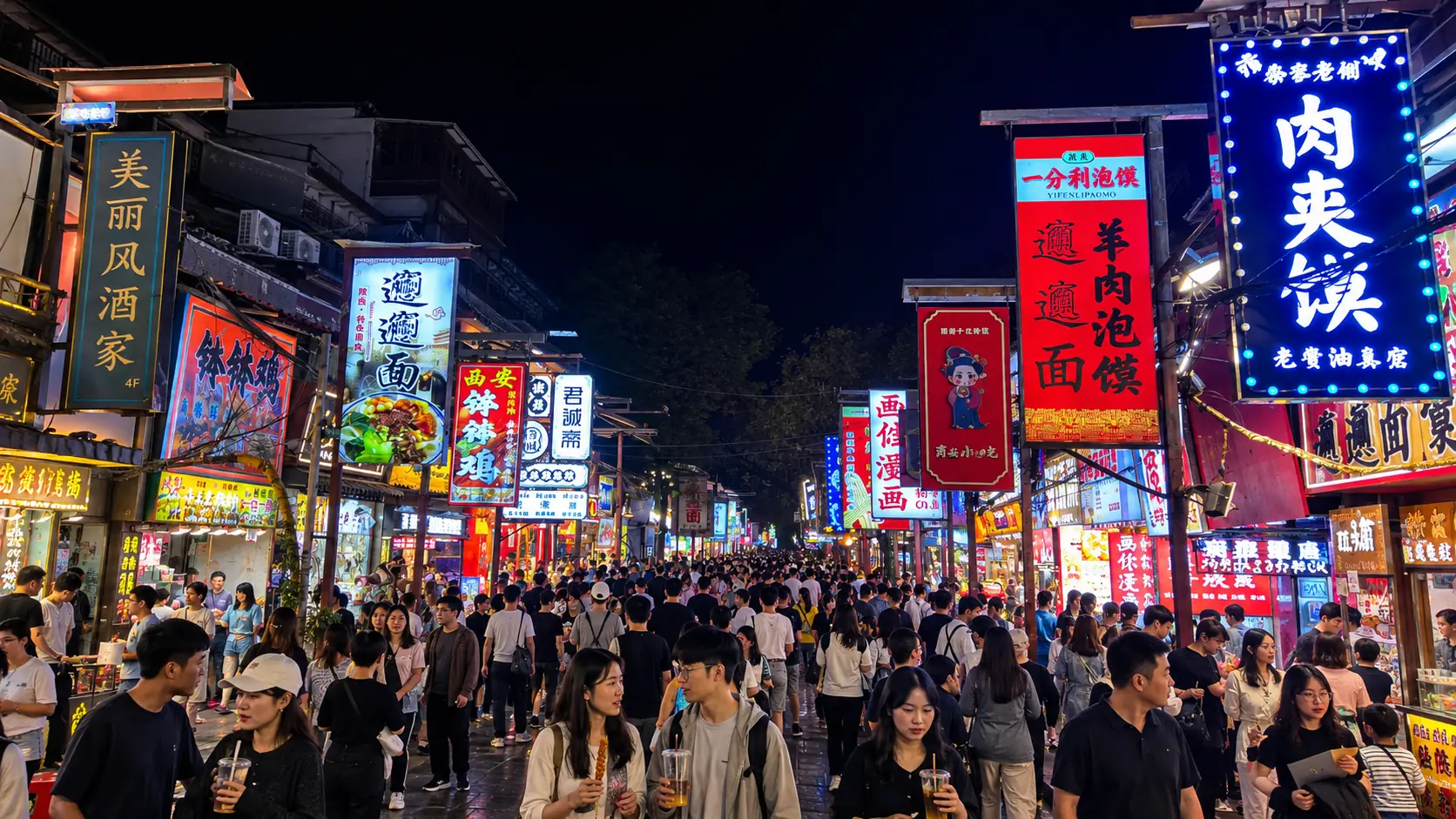
Beiyuanmen (北院门) is the easiest entrance and the easiest trap. Shaanxi's official tourism page gives the main street as about 500 meters from south to north, reached through the Drum Tower area. The distance is short; the density is what tires people out.
Orient: understand where the quarter sits behind Drum Tower.
Photograph: take the recognizable main-street frame without blocking the flow.
Exit early: turn toward Huajue Lane for the mosque, or Xiyangshi and Dapiyuan for side-lane food and daily life. On weekends, holidays, and summer evenings, making that turn early is the difference between curiosity and exhaustion.
Great Mosque: Quiet Behind Huajue Lane
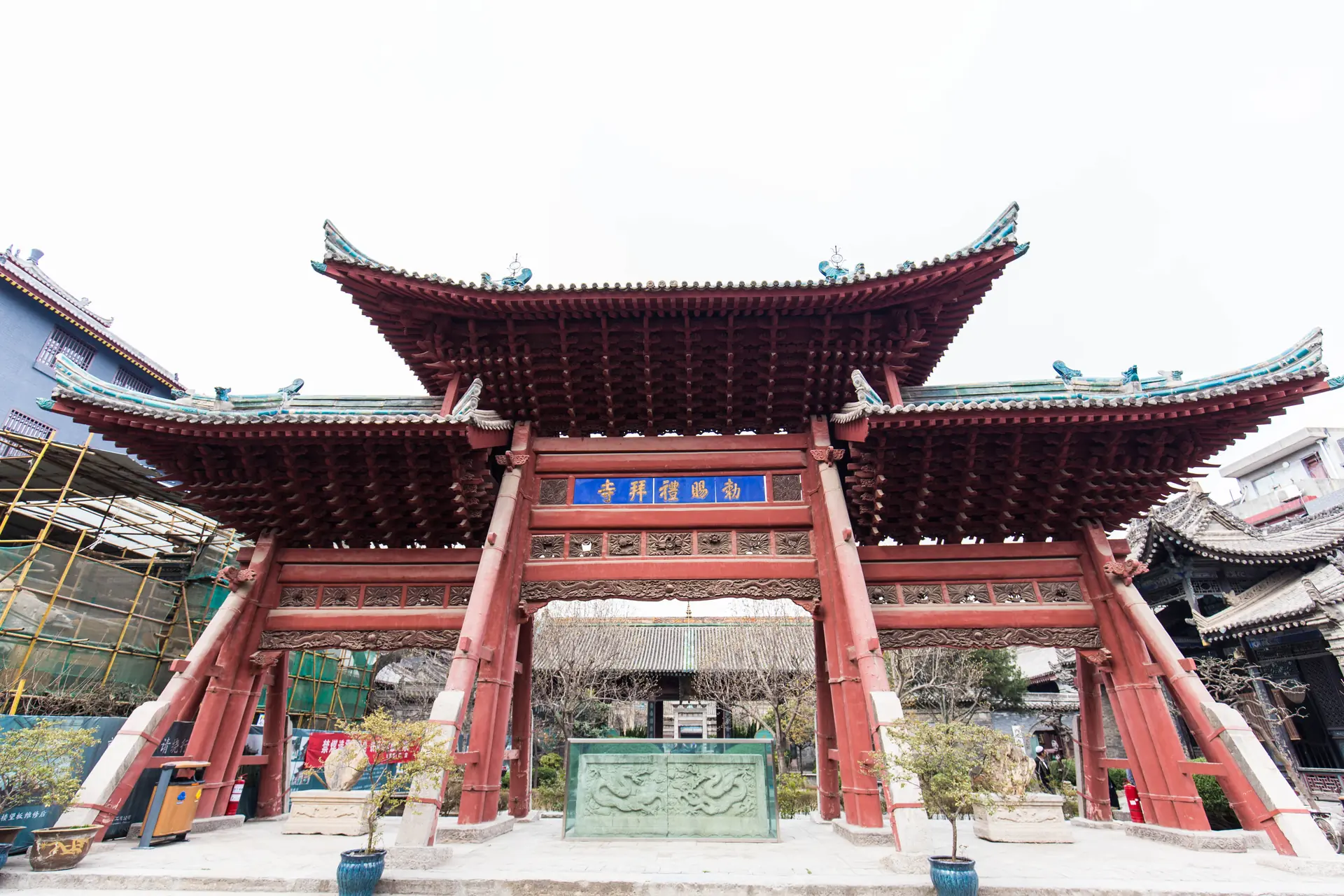
Great Mosque of Xi'an (化觉巷清真大寺) (Google | Amap)
The Great Mosque of Xi'an (化觉巷清真大寺) is the walk's most important reset. A few minutes from the food-stall noise, Huajue Lane narrows, the pace drops, and the neighborhood's religious center appears behind courtyard walls.
Shaanxi's official tourism page dates the mosque to 742 CE in the Tang dynasty, with present buildings mostly from the Ming and Qing periods. It does not look like many travelers expect a mosque to look: no large dome, no skyline minaret, but Chinese-style courtyards, timber archways, stone steles, and a west-facing prayer hall.
Prayer-hall boundary
Non-Muslim visitors can usually see the courtyards and exterior architecture, but the prayer hall is not open to visitors. Dress modestly, keep your voice low, and do not photograph worshippers during prayer. If you have only one cultural stop inside the quarter, make it this one.
For a deeper visit, use our full Great Mosque of Xi'an guide. This walking route keeps the mosque in context: it is not an isolated monument, but the spiritual anchor of the surrounding Hui lanes.
Xiyangshi and Dapiyuan Local Side Lanes
Shared neighborhood layer
Leave the main strip without leaving the quarter
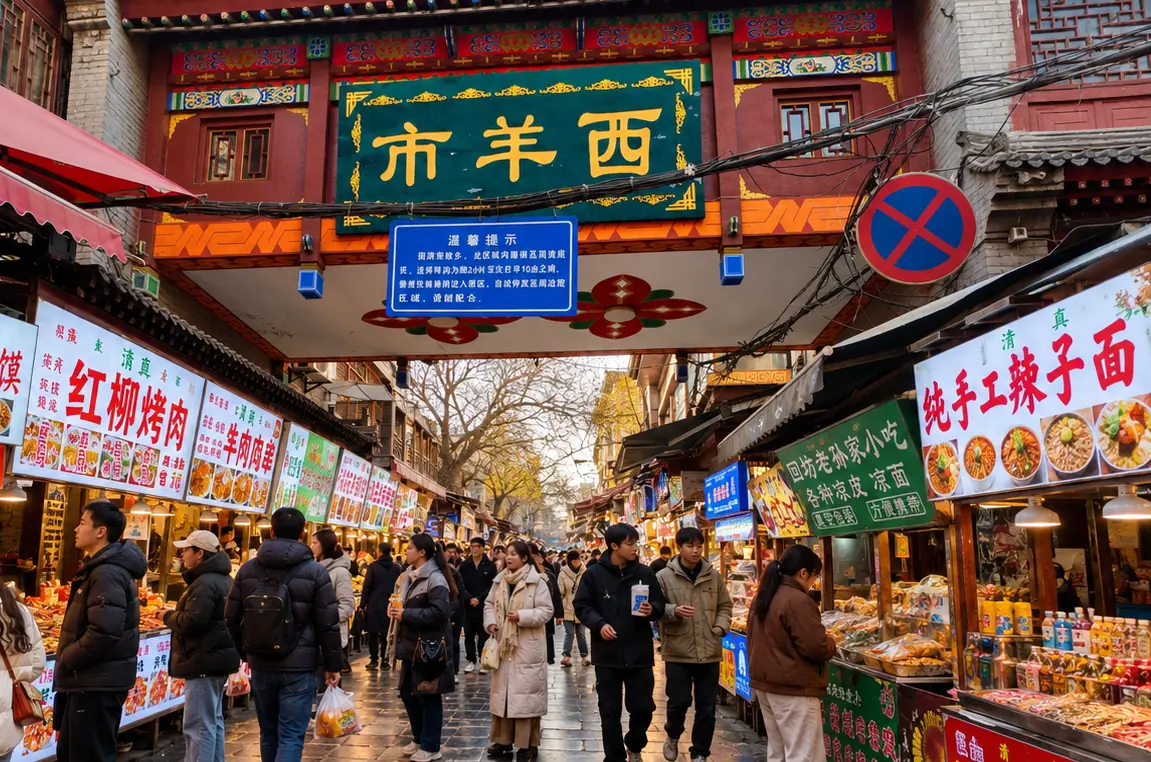
After Huajue Lane, resist the urge to return straight to the main strip. Xiyangshi (西羊市) and Dapiyuan (大皮院) show a more everyday Muslim Quarter: still busy, still full of food, but less theatrical than Beiyuanmen.
This is where the walk becomes observational. Watch how halal restaurants mark beef and mutton dishes, how people queue for sit-down meals rather than snack photos, how delivery riders, residents, families, and travelers negotiate the same narrow street space.
Best for a slower food-street feel without leaving the core quarter. Use it to move away from the loudest Beiyuanmen section while staying close to Drum Tower and the mosque.
Lane rule: do not block the lane. These are not stage sets. Photograph shopfronts and food prep gently, buy something if you want close-up cooking shots, and avoid pointing your camera into private doorways or directly at residents' faces.
Gao Family Courtyard and Shadow Puppets
Optional old-residence stop
Gao Family Courtyard (高家大院) (Google | Amap)
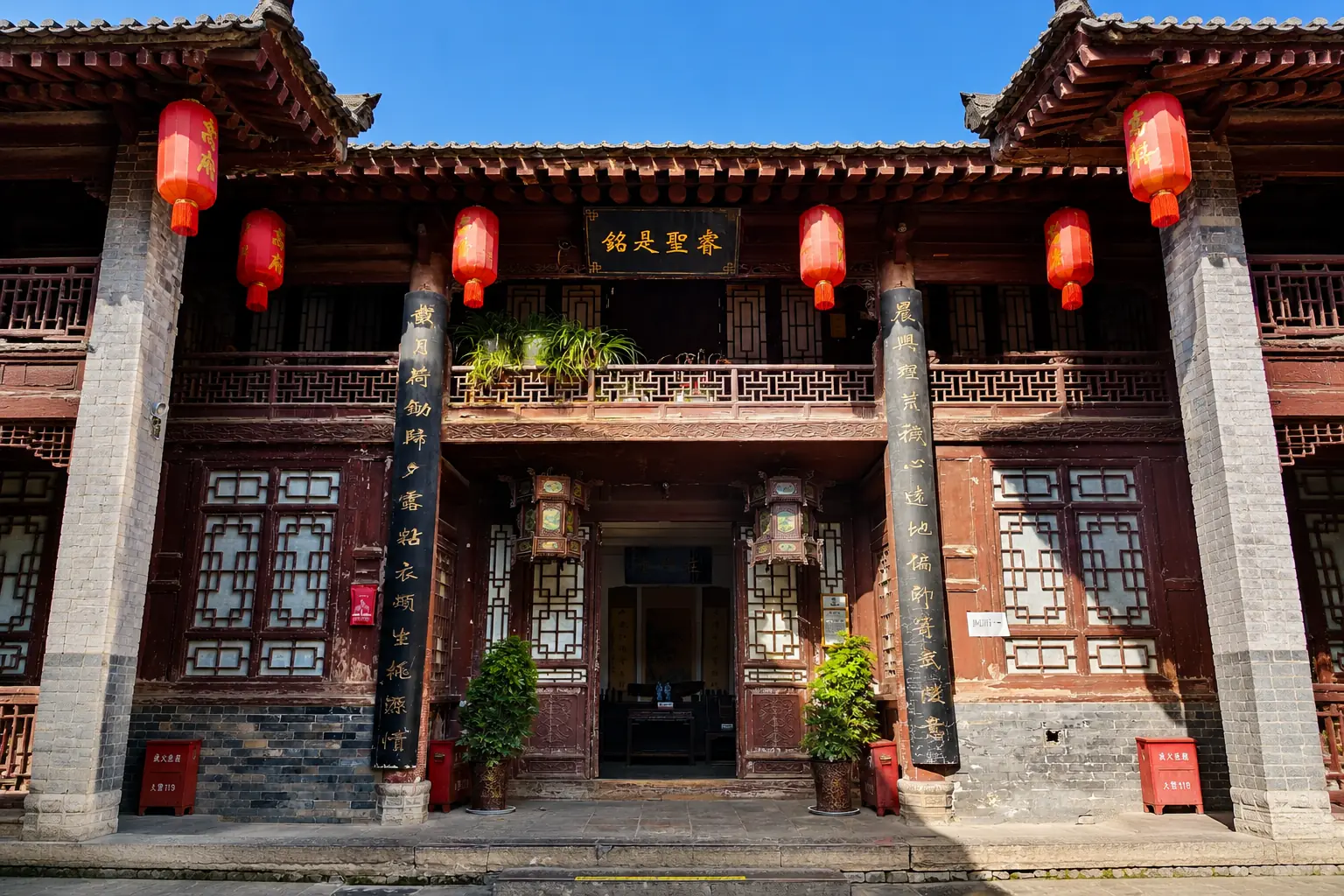
Gao Family Courtyard sits at No. 144 Beiyuanmen Street. Its gate is easy to miss because the surrounding quarter is so loud and bright; inside, the mood shifts toward old Xi'an family architecture.
Shaanxi's official page describes it as the former residence of Gao Yuesong, a Ming-dynasty official, with about 400 years of history. The complex has north and south courts, 86 rooms in total, and 56 rooms open to the public. For this walk, the value is not just another ticketed stop; it helps you imagine what domestic courtyard life looked like inside the old city.
Shadow-puppet timing: there is no fixed performance schedule; shows begin when there is enough audience. If your main goal is the mosque, prioritize it. If you enjoy old houses, folk performance, and quieter pockets inside busy neighborhoods, give the courtyard 30-60 minutes.
Sajinqiao: Local Food Beyond the Quarter
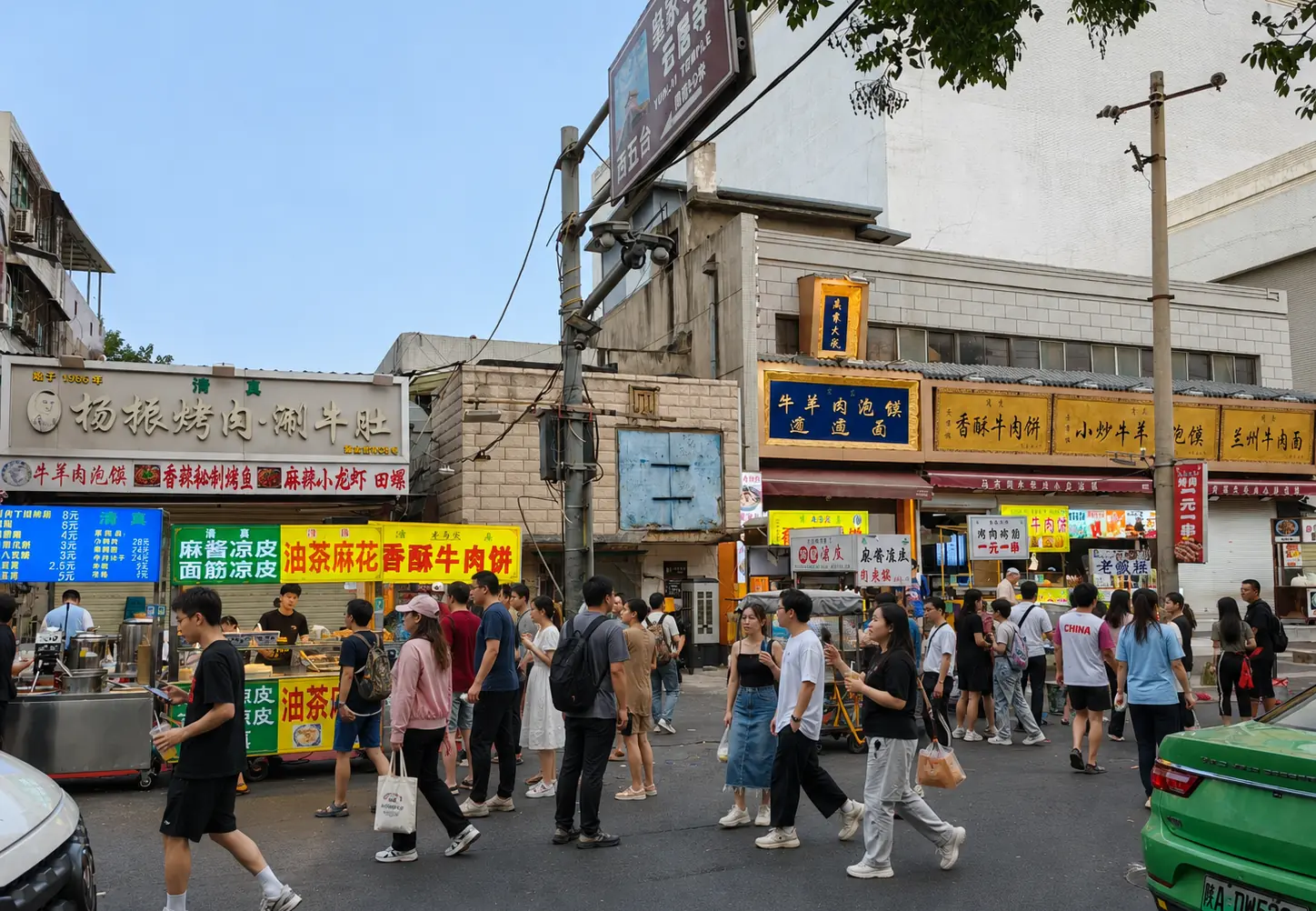
Working food-street finish
Sajinqiao (洒金桥) (Google | Amap)
Sajinqiao is often recommended by locals and repeat visitors because it feels less like the first tourist image of Muslim Quarter and more like a working food street. It is not a secret, and it can still get crowded, but it makes a better finish than circling Beiyuanmen until you are tired.
Allow roughly 15-25 minutes on foot from Dapiyuan or Xiyangshi, depending on where you are and how often you stop.
Plan by food category, not stall rankings: use our Xi'an food guide for specific dishes, then look for lamb or beef flatbread soup, beef and mutton sandwiches, meatball pepper soup, persimmon cakes, cold noodles, and grilled skewers. This is where food belongs in the route: after you have understood the mosque, the side lanes, and the neighborhood structure. Eating in the right rhythm matters more than collecting every famous bite in one pass.
When to Walk and What to Avoid
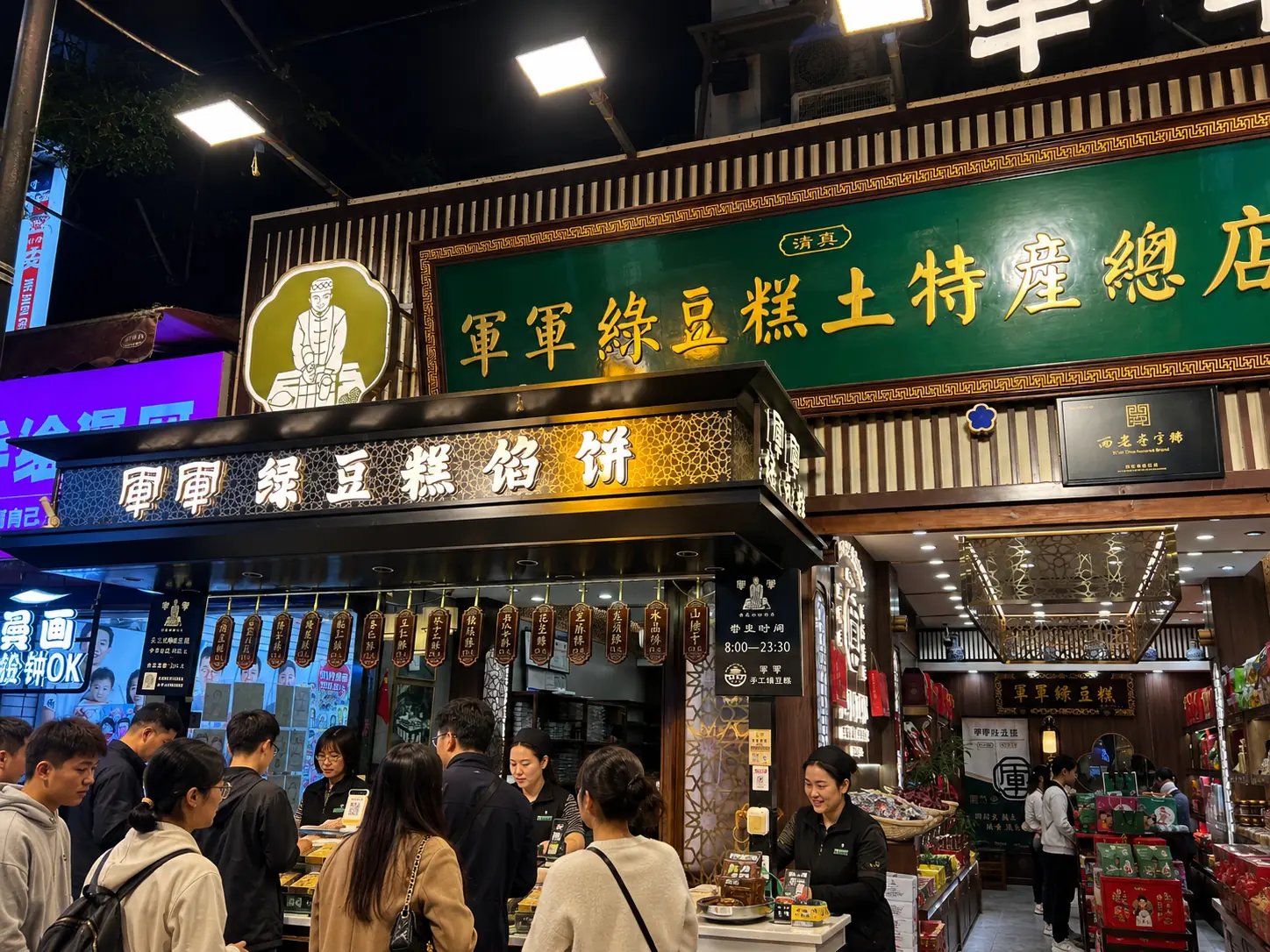
Choose calm or atmosphere
The best windows are morning from about 9:00 to 11:00, or late afternoon into the first part of the evening.
Morning · about 9:00-11:00
Best for calm lanes
Morning is calmer and better for mosque courtyards, side-lane details, and food photos without heavy crowds. Expect easier photos, lighter pedestrian flow, and more room to notice details, but less night-market atmosphere around Drum Tower and Beiyuanmen.
Late afternoon into evening
Best for atmosphere
Evening has stronger atmosphere around Drum Tower and Beiyuanmen: glowing signs, dinner timing, and the classic first impression. The trade-off is that the main drag can become tiring on weekends, holidays, and summer nights.
Do Not Make the Walk One Long Queue
If a stall line is huge, save your appetite and move sideways into Xiyangshi, Dapiyuan, or Sajinqiao. The better version is main street for orientation, Great Mosque for meaning, side lanes for texture, and Sajinqiao for a food finish.
Food Etiquette and Halal Dining Basics
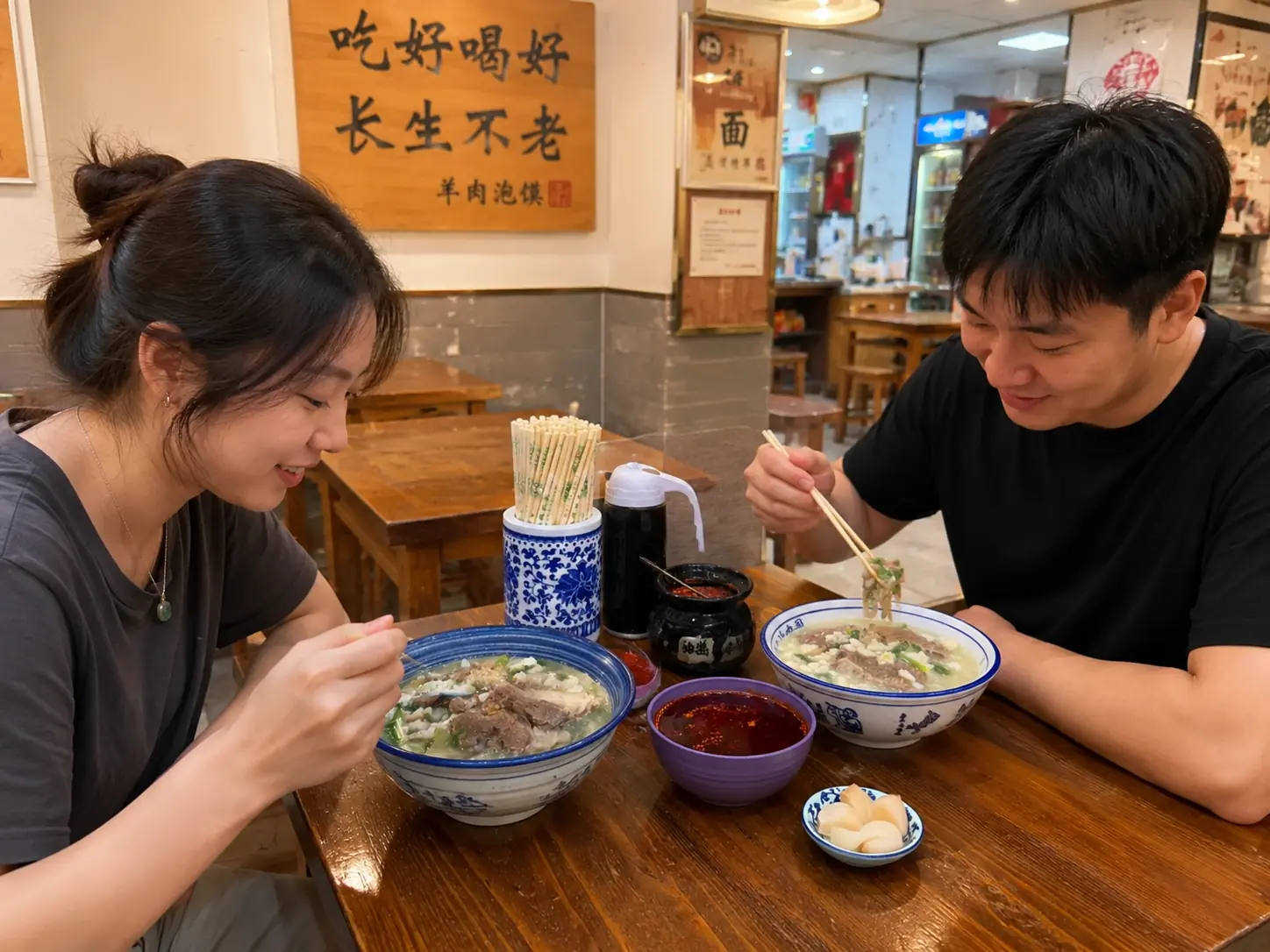
The Muslim Quarter is a halal dining area, not a generic night market. You do not need deep religious knowledge to eat respectfully, but you do need to recognize that these restaurants follow rules.
At busy shops, watch the local ordering rhythm before jumping in. Some places expect you to queue first and find seats later; others work the opposite way.
- Do not bring pork or alcohol into halal restaurants. Also avoid joking about forbidden ingredients.
- Watch the ordering rhythm first. Pointing, phone translation, and patience work better than raising your voice.
- Ask before close-up filming. Cooks, staff, and other diners are not props for a food video.
- Do not photograph prayer or private moments. Avoid people washing before prayer, people praying, and residents who clearly do not want to be part of your image.
How to Pair Nearby Xi'an Sights

Best-fit old-city sequence
City Wall or Shuncheng Alley → Bell and Drum Towers → Muslim Quarter → dinner
This walk pairs best with old-city sights, not with a rushed Terracotta Warriors half day. If your day already includes wall cycling, use our Xi'an City Wall guide and Shuncheng Alley walk to decide how much old-city walking your legs can handle. For a very tight schedule, see our Xi'an day trip itinerary.
Most balanced
Old-city sequence
City Wall South Gate or Shuncheng Alley first, then Bell Tower and Drum Tower exteriors, Muslim Quarter walking route, and dinner.
Best for history
Cultural version
Combine Great Mosque, Gao Family Courtyard, and Drum Tower so the quarter feels like an old-city neighborhood, not just a food stop.
Best for first-timers
Gentler evening
Start with Bell Tower photos, dip into Beiyuanmen, turn into Huajue Lane, walk Xiyangshi and Dapiyuan, then finish at Sajinqiao.
Show this screen to your driver · 出示给司机看
请带我去西安鼓楼,回民街入口附近。
Please take me to Xi'an Drum Tower, near the Muslim Quarter entrance.
Cars cannot enter many narrow lanes. Use Drum Tower or Bell Tower as the drop-off point.
Frequently Asked Questions
No. Beiyuanmen is the famous food street, but the wider quarter includes mosques, Hui community lanes, old residences, halal restaurants, and side streets such as Xiyangshi, Dapiyuan, and Sajinqiao.
Sources checked for this guide
- Neighborhood scope, Beiyuanmen location, street length, and Hui community context: Shaanxi official Muslim Quarter page
- The mosque’s 742 CE dating, architecture, prayer context, and visitor boundary at the prayer hall: Shaanxi official Great Mosque page
- Courtyard address, history, room count, and the shadow-puppetry schedule caveat: Shaanxi official Gao’s Grand Courtyard page
- The wider food-street network including Xiyangshi, Dapiyuan, Huajue Lane, and Sajinqiao: Shaanxi official Muslim Street food note
Beyond This Guide
The Muslim Quarter works best when you put it back into Xi'an's old-city map. Bell Tower, Drum Tower, the Great Mosque, Shuncheng Alley, City Wall, local food, and hotel return routes all shape how relaxed the evening feels.
Do not try to prove you found the most local stall. Turn off the main drag, give the mosque and side lanes real time, and let Sajinqiao be the food finish rather than the only goal. That is when the quarter stops being a snack list and starts feeling like a living Silk Road neighborhood.
© gochinafreely.com — Original guide by Go China Freely.