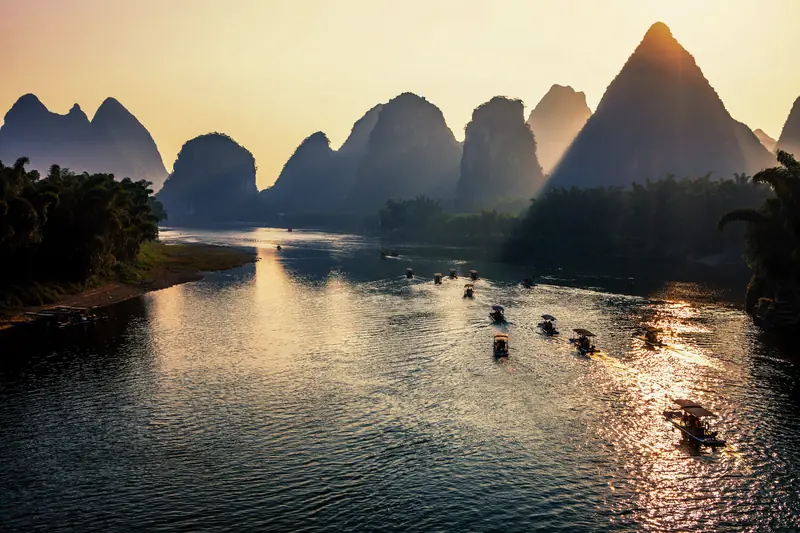
Hand-Poled Countryside, Not a Thrill Ride
Hours & Base Ticket
Essential Rules
Yulong River (遇龙河) bamboo rafting is the Yangshuo activity most travelers misunderstand before they pay. The Yulong raft is a slow, hand-poled countryside float; the Li River "bamboo raft" around Xingping is usually a motorized sightseeing product. This guide helps you choose the right river, route, timing, and return plan so the raft feels like an outdoor highlight, not a logistics surprise.
2 seats
Standard Raft
3-6 km
Main Routes
¥200+
Common Range
Morning
Best Start
What this river experience is—and is not
The feeling on the water
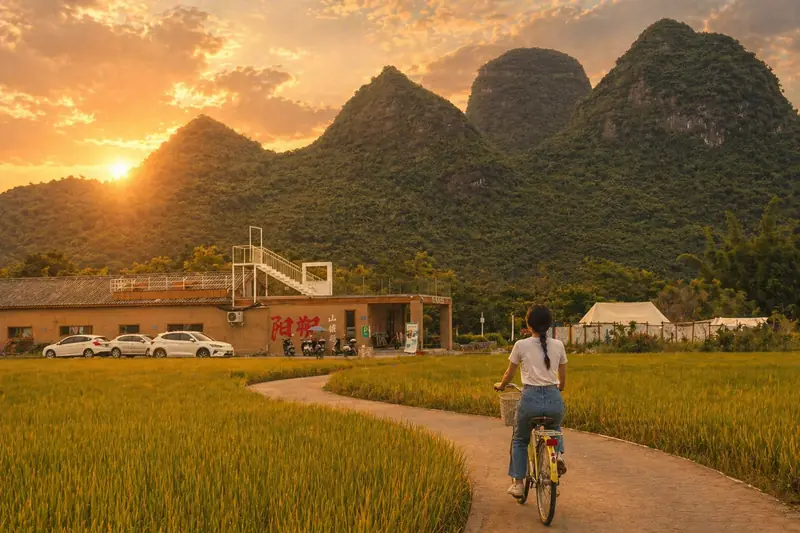
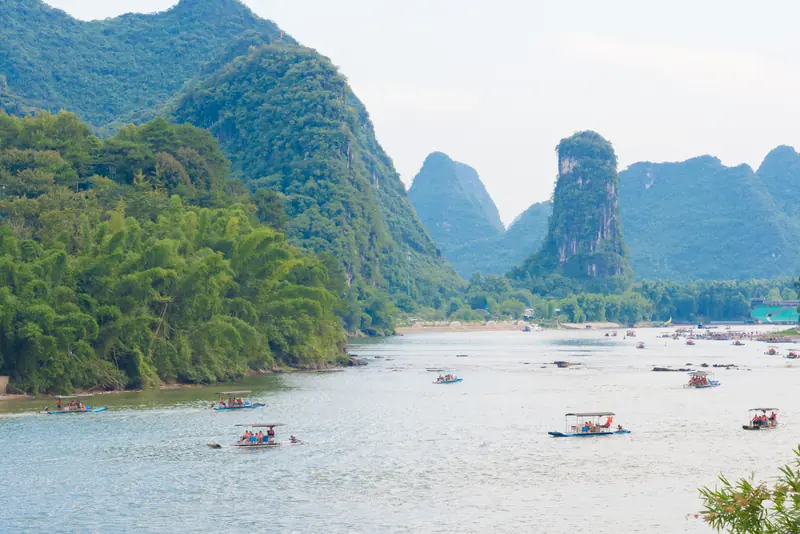
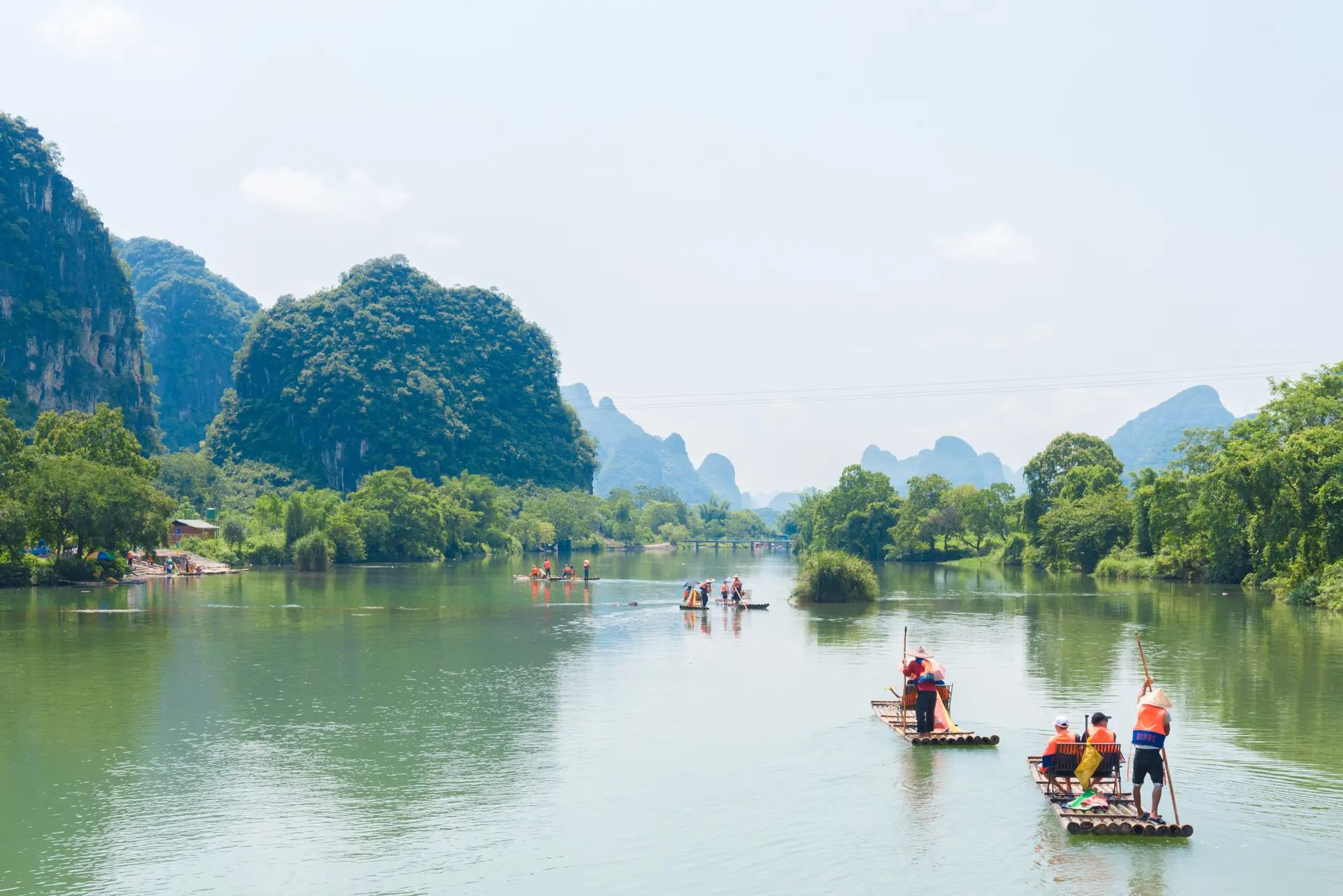
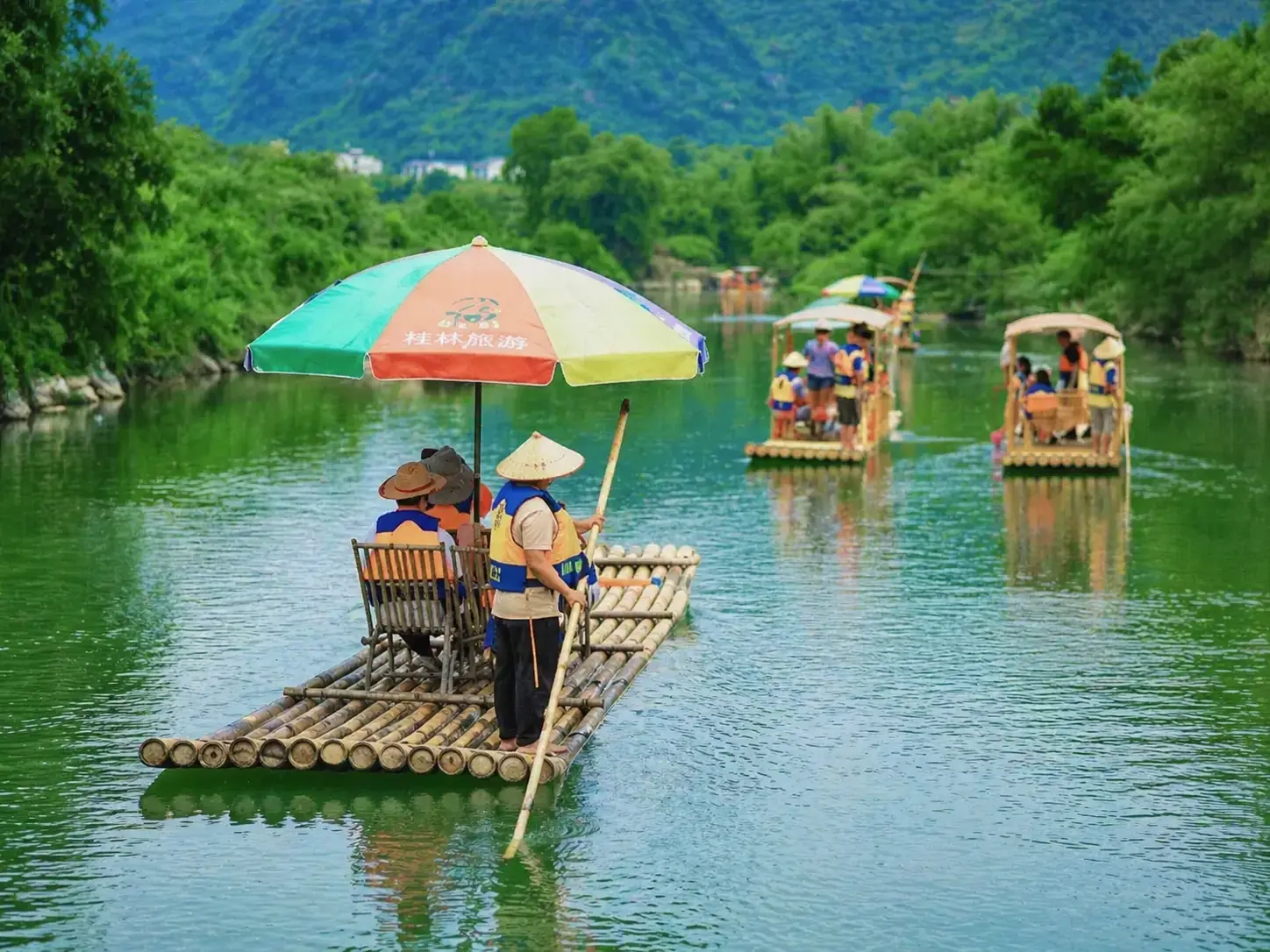
Yulong River rafting works because the pace is slow. You hear the bamboo pole touch the riverbed, the raft slide over shallow water, and the small weirs get louder before the raft drops over them. The scenery is close rather than panoramic: rice fields, village paths, old bridges, guesthouses, bikes on the bank, and limestone peaks standing almost at shoulder distance.
The planning reality
This is not white-water rafting, and it is no longer a completely casual hop-on river ride. The experience runs through fixed piers, fixed routes, ticket windows or official booking channels, and one-way logistics on many sections. If you arrive with the wrong assumption, the problem is rarely the river; it is the plan around the river.
Think Slow Outdoor Ride
Treat Yulong rafting like a gentle outdoor activity, not a thrill ride. The right route is the one that matches your heat tolerance, return transport, and what else you want to do that day.
Manual vs Motorized Rafts in Yangshuo
The simple rule: choose Yulong River for hand-poled quiet water; choose the Li River around Xingping or Yangdi for bigger karst scenery from a motorized raft or boat.
← swipe to compare all options →
Yulong Manual Raft
Quiet countryside
- ✓Closest to the water and village scenery
- ✓Best for slow photos and low-effort outdoor time
- —One-way logistics can be awkward
- ✗Not the classic 20-yuan Li River view
Often ¥200-320/raft
Hand-poled
2 seats
fixed pier routes
Li River Motorized Raft
Faster scenery
- ✓Better for Yellow Cloth Shoal and Nine Horse Hill scenery
- ✓Covers more open river views quickly
- —Less quiet, less traditional feeling
- ✗Not the same as hand-poled Yulong rafting
Varies by route
Usually 4 seats
engine-powered
Xingping/Yangdi context
Li River Cruise
Comfort first
- ✓Best for first-timers who want the full Li River route
- ✓More comfortable in rain, heat, or with seniors
- —More structured and less intimate
- ✗Too big if you want a quiet raft-level experience
Higher ticket range
Guilin to Yangshuo
large boat
half-day
Yulong prices below were checked against the official pier pages in August 2026. Li River products, route availability, and rules vary, so confirm the exact product before paying.
If you have two days in Yangshuo, do not make them compete. Let the Li River handle the grand landscape and Yulong River handle the slow countryside. If you only have one free half-day and want something gentle, photogenic, and close to Yangshuo town, Yulong usually gives better value.
Best Yulong River Rafting Routes to Choose
You do not need to memorize every pier on the Yulong River. Start with the experience you want: short and easy, classic middle section, quieter upstream scenery, or relaxed no-dam family time.
Choose the route by the day you want
The four route cards hold the experience choice; the table below is the faster distance, duration, and onward-plan check.
Best when you have limited time but still want real Yulong rafting. It has four small weirs and ends near Gongnong Bridge (工农桥), which makes it easy to continue into Ten-Mile Gallery (十里画廊).
Best all-round route for many first-timers. It includes nine weirs, feels more complete than Shuiedi, and still finishes in a useful place for cycling or onward transport.
Best for travelers who care about the upper Yulong River, Jiuxian Village (旧县村), and countryside biking. It also has nine weirs and is more rewarding if you plan transport carefully.
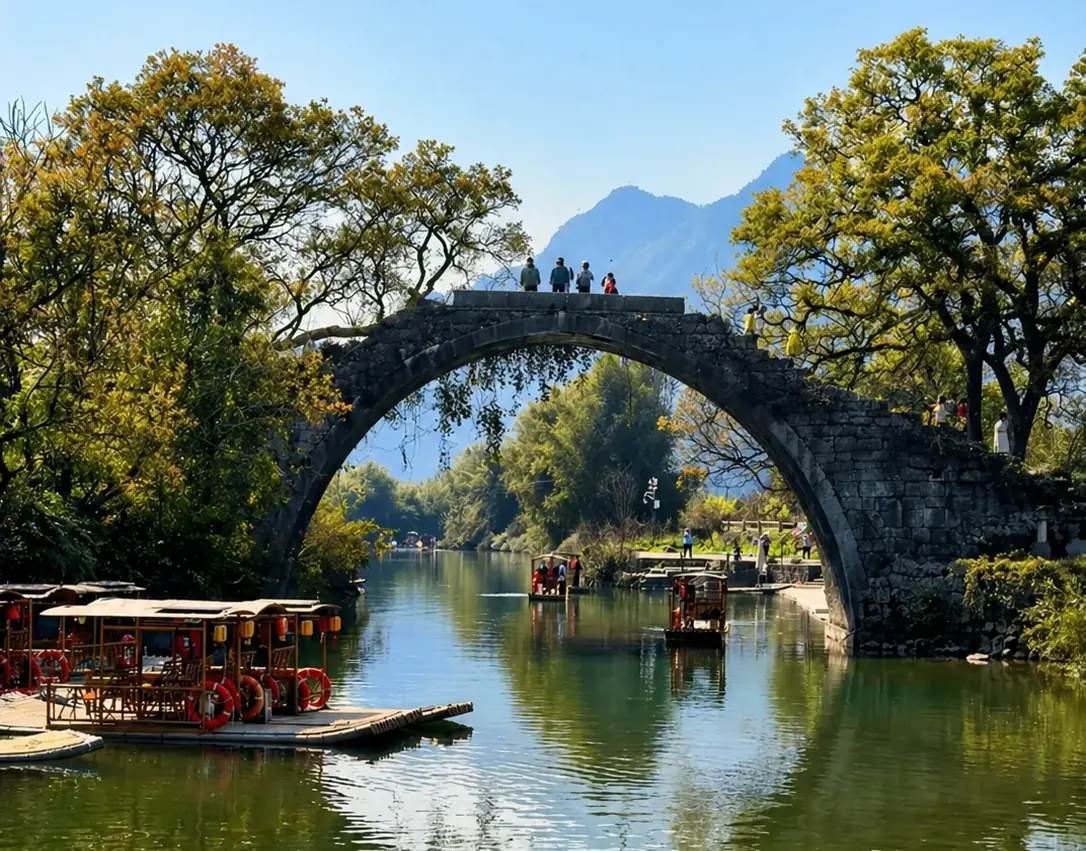
Best for an easier photo-focused float near Fuli Bridge (富里桥). Think of it as a relaxed bridge-and-reflection option, not the classic weir-dropping route.
| Route | Best For | Planning Note |
|---|---|---|
| Shuiedi (水厄底) to Gongnong Bridge | Time-limited first-timers | Roughly 40 minutes in normal conditions; popular and easy to combine with Ten-Mile Gallery |
| Jima (骥马) to Gongnong Bridge | Most complete middle-route experience | Roughly 80 minutes in normal conditions and more satisfying, but hotter and busier in peak periods |
| Jinlong Bridge (金龙桥) to Jiuxian | Quieter upstream scenery | Roughly 90 minutes in normal conditions; pairs well with Jiuxian lunch or cycling, but return logistics matter |
| Fuli Bridge (富里桥) loop | Photos, families, gentler pace | Leisure pricing and capacity rules differ; good if you value bridge scenery more than weir drops |
Key Finish Points and Side Stops
The lower and middle routes often finish near Gongnong Bridge. Taxis, Ten-Mile Gallery, Moon Hill exterior viewpoints, and hotel shuttles are easier to coordinate here than at quieter upstream endpoints.
Jiuxian works better when you want lunch, village lanes, and cycling after an upstream route. It is rewarding, but only if you already know how you will move on afterward.
Xiangui Bridge is a quieter add-on around the old-village section, better treated as a countryside stop than as a separate must-do for first-timers.
Yulong Raft Tickets, Rules, and Booking Basics
Read the ticket as a raft product, not a simple admission
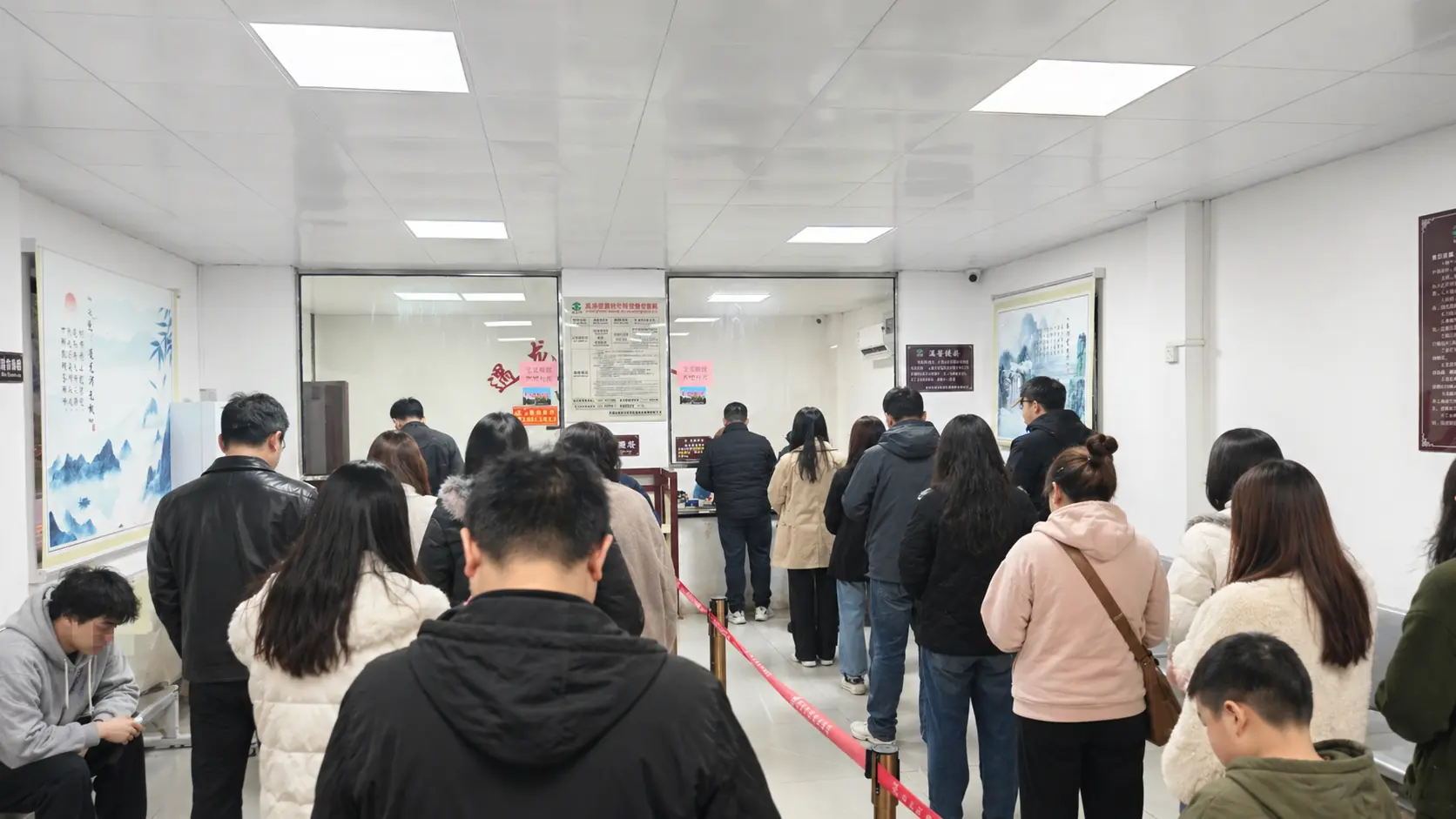
Yulong River tickets are not one simple per-person price. Many standard routes are priced per raft, usually with two seats. Solo travelers may need to share, wait, or pay for the full raft. Some leisure raft routes use per-person pricing with a minimum headcount and a maximum number of people per raft.
¥200
Shuiedi · per raft
¥320
Jima · per raft
¥320
Jinlong · per raft
¥70 pp
Fuli leisure · 3-person minimum
Current ticket references
As of this August 2026 review, the official pier pages listed Shuiedi at ¥200 per raft, Jima and Jinlong Bridge at ¥320 per raft, and Yulong Bridge at ¥180 per raft. Fuli Bridge listed ¥70 per person with a 3-person minimum and 4-person cap, or ¥200 for a 2-person raft option.
Route facts behind the choice
The official route pages describe Shuiedi to Gongnong Bridge as about 3 km with four weirs. Jima to Gongnong Bridge and Jinlong Bridge to Jiuxian are each about 6 km with nine weirs. Treat these as current references, then confirm the live route, quota, and price before you pay.
Original document, real-name details, and quota
Carry the original
Carry your original passport or another ID accepted by the selected pier, not just a phone photo, and confirm the foreign-document process before you set out. The operator's published notice for Chinese travelers requires an original ID card.
Real-name check and live quota
A dock may also need a document number, date of birth, and contact information. A hotel can guide you through the Chinese reservation screen, but you still present and control your own document and payment. During holidays, summer, and good-weather weekends, seat availability at the route you want can matter as much as price.
Check the Restrictions Before You Queue
The operator's current standard-route notice bars children under 1 m and travelers age 70 or older, including age 70. It also bars pregnant travelers, intoxicated travelers, people with heart disease, coronary disease or high blood pressure, and travelers with limited mobility. For that notice, a traveler over 100 kg rides alone, and two travelers over 160 kg combined must split between rafts. Confirm the selected pier's live rule before traveling because leisure-raft products can differ.
Before Boarding
Protect phones and cameras, wear the life jacket properly, and ask where the route ends. Do not stand, play around, or swim from the raft. The river looks gentle, but the low weirs and wet bamboo surface are exactly where small mistakes happen.
Best Timing for Yulong River Rafting

Think in experience windows, not guaranteed operating hours. Early morning and late afternoon are usually the most comfortable. A start before about 10:30 gives cooler air, softer light, and better odds before the largest crowds build. Late afternoon can be beautiful around Gongnong Bridge and the lower Yulong River, but you need a clear return plan before dark.
Before 10:30
Cooler planning choice
Midday
Hotter and brighter
Late afternoon
Soft light · plan return
These are comfort choices, not guaranteed operating hours. The selected pier's live quota, water conditions, and schedule still decide whether a route runs.
| Season | What It Feels Like | Planning Note |
|---|---|---|
| Spring | Rapeseed flowers, fresh fields, mist after rain | One of the easiest seasons; keep a rain backup |
| Summer | Lush, bright, hot, humid | Avoid midday and watch thunderstorm updates |
| Autumn | Drier, clearer, comfortable | Excellent for pairing rafting with biking |
| Winter | Quiet, softer field colour, cold mornings | Use a warmer layer and a later start if needed |
After heavy rain, stay flexible. Water color may turn brown, weir conditions can change, and operators may adjust or suspend routes. If the weather turns into steady rain or thunder, move the raft to another day or switch to a shorter walk, cafe stop, or countryside bike ride.
Getting There and Fitting the Day Together
The biggest Yulong mistake is planning only the start pier. Many routes are one-way, so your real plan needs four points: where you start, where the raft ends, how you retrieve a bike or driver, and where you go afterward.
Build the day from the finish point backward
- Choose the route- Start with time, heat, and your next stop
- Confirm ticket and ID rules- Use the official pier channel or ask your hotel to guide you through the screen
- Plan the ending- Know whether you finish near Gongnong Bridge, Jiuxian, or a loop pier
- Protect phone and shoes- Waterproof bag, sandals, and light daypack only
- Leave space afterward- Add cycling, Moon Hill, lunch, or rest, not all of them
Return logistics first, then the afternoon
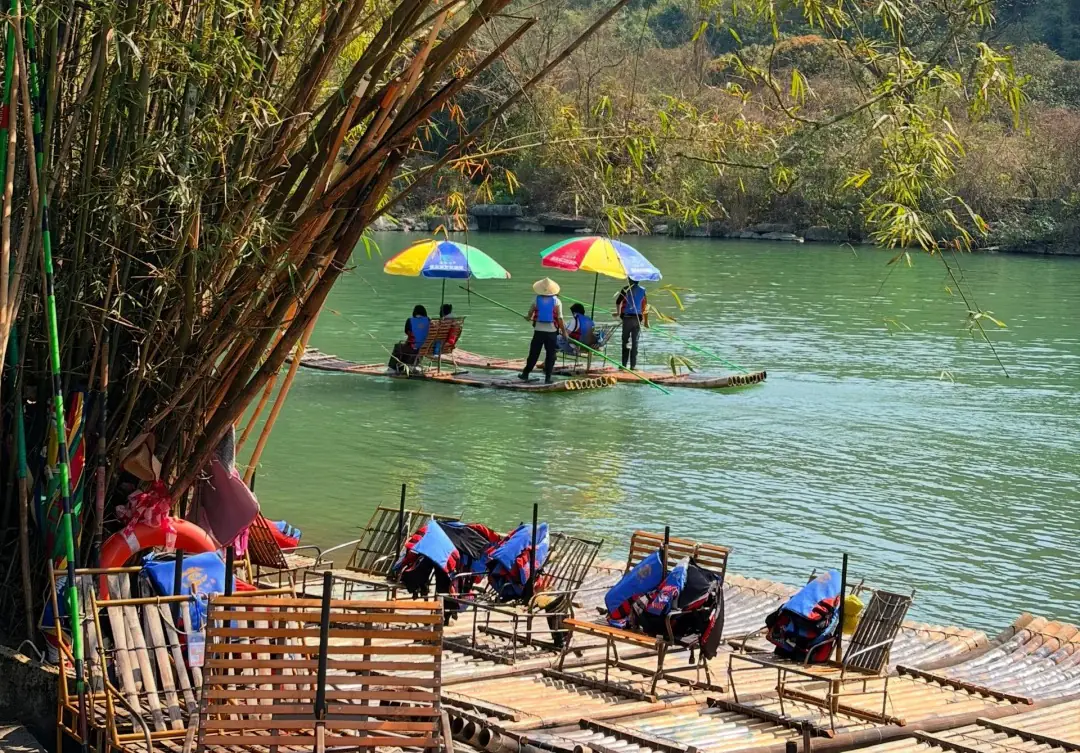
If you are staying near West Street (西街), a taxi or Didi to the starting pier is usually cleaner than biking all the way out and then wondering how to recover the bike. If you are staying near the Yulong River or Ten-Mile Gallery, choose the nearest sensible pier and build the day from your hotel outward.
Simple first-timer day
Raft in the morning from Shuiedi or Jima to Gongnong Bridge, eat or rest nearby, then ride or stroll the Ten-Mile Gallery and Moon Hill exterior viewpoints later.
Quieter upstream day
Use Jinlong Bridge to Jiuxian, have lunch around Jiuxian Village, then bike village roads in the afternoon.
One River Day Is Enough
Do not add a Li River raft, Silver Cave, Ruyi Peak, and Impression Liu Sanjie to the same day unless you enjoy collecting stress.
Common Yulong River Rafting Mistakes to Avoid
Four assumptions to remove before boarding
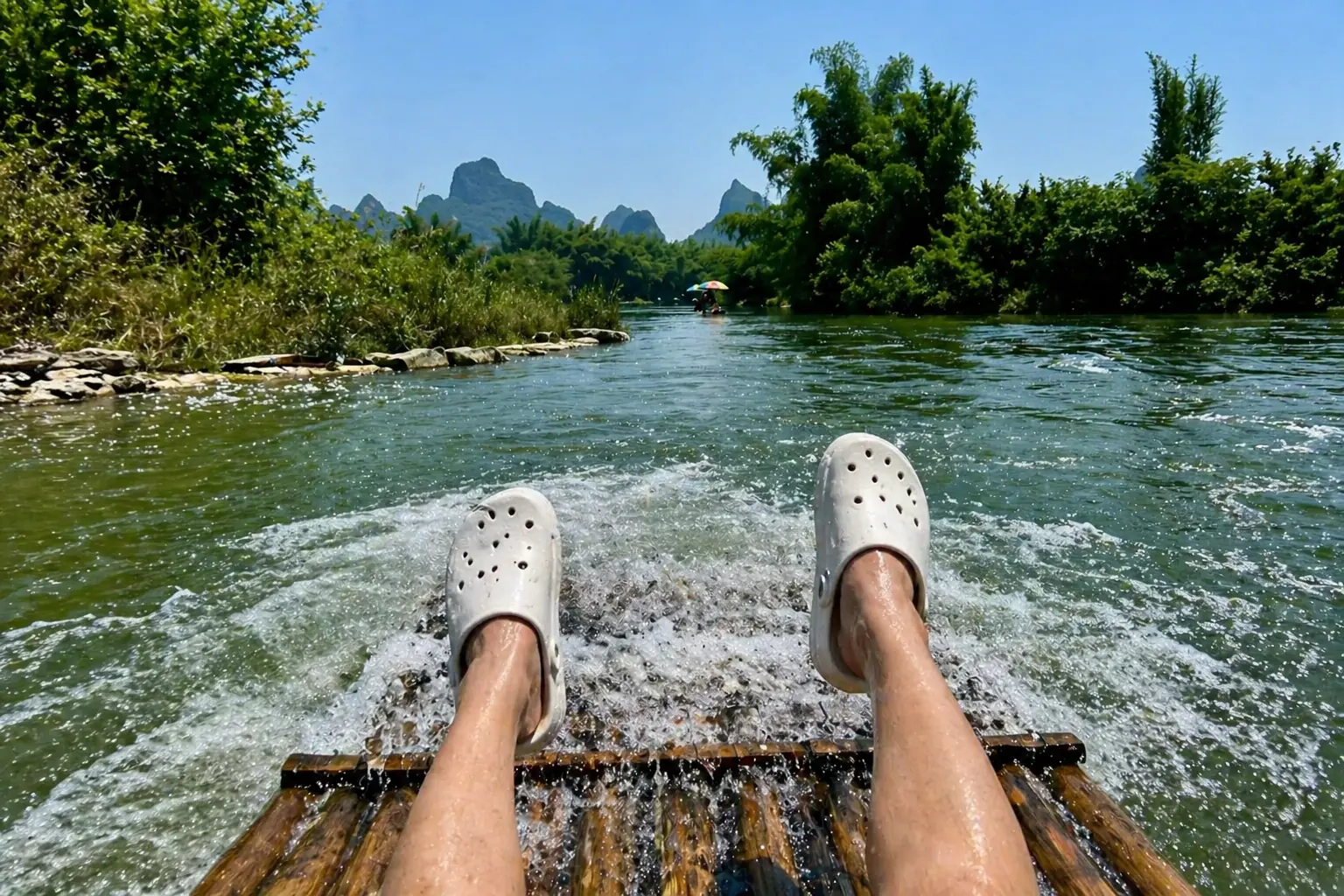
Most Yulong rafting mistakes are small assumptions made before boarding. The river looks gentle, but route type, ending point, heat, and low weirs all matter once you are already on the raft.
- Treating every "bamboo raft" as the same product. A hand-poled Yulong raft and a motorized Li River raft differ more than two Yulong piers do.
- Chasing the longest route because it feels better value. In hot weather, with children, or before an evening show, a shorter route can be the smarter choice.
- Ignoring the ending point. If your bike, driver, luggage, or dinner reservation is at the start pier, do not assume the raft will carry the bike; confirm the selected pier's rule before paying or a one-way float can turn into a transport puzzle.
- Underestimating water. Shoes and trouser cuffs can get wet at weirs, and phones fall most often when travelers lean out for the best photo. Use a waterproof bag, keep valuables minimal, and lift your feet when the raft drops over a weir.
Frequently Asked Questions
Standard Yulong River rafts are hand-poled by a raftsman. If you want a motorized bamboo raft experience, you are usually looking at the Li River around Xingping or Yangdi, not the Yulong River.
Sources checked for this guide
- Current pier products, prices, raft capacities, minimum headcounts and operator contact details: Yulong River official pier overview
- Shuiedi-to-Gongnong route, about 3 km and four weirs: Yulong River official Shuiedi route
- Jima-to-Gongnong route, about 6 km and nine weirs: Yulong River official Jima route
- Jinlong Bridge-to-Jiuxian route, about 6 km and nine weirs: Yulong River official Jinlong route
- Standard-route manual operation, original-ID rule, age, height, health and weight restrictions: Yulong River official purchase notice
Beyond This Guide
The best Yulong River plan depends on where you sleep, how hot the day is, and whether rafting, biking, Moon Hill, or Li River scenery matters most.
© gochinafreely.com — Original guide by Go China Freely.