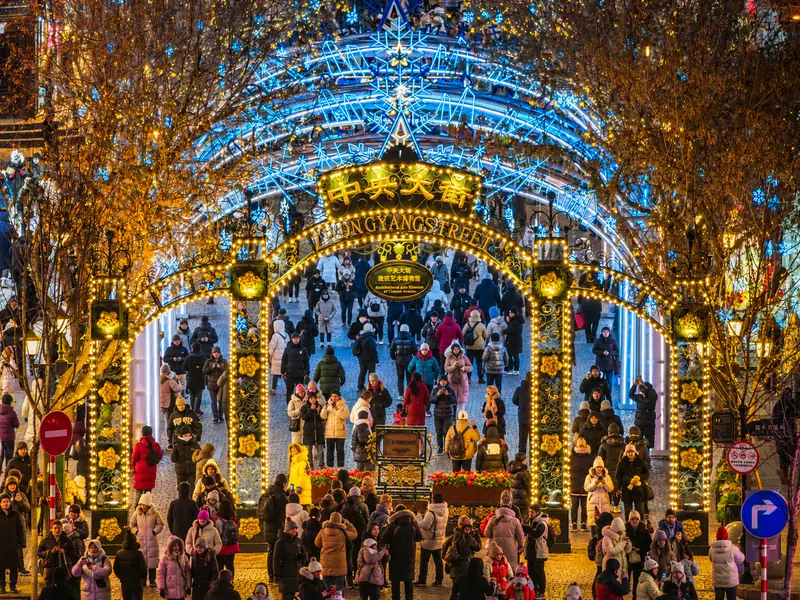
Hours & Base Ticket
Essential Rules
A Railway City in Brick and Stone
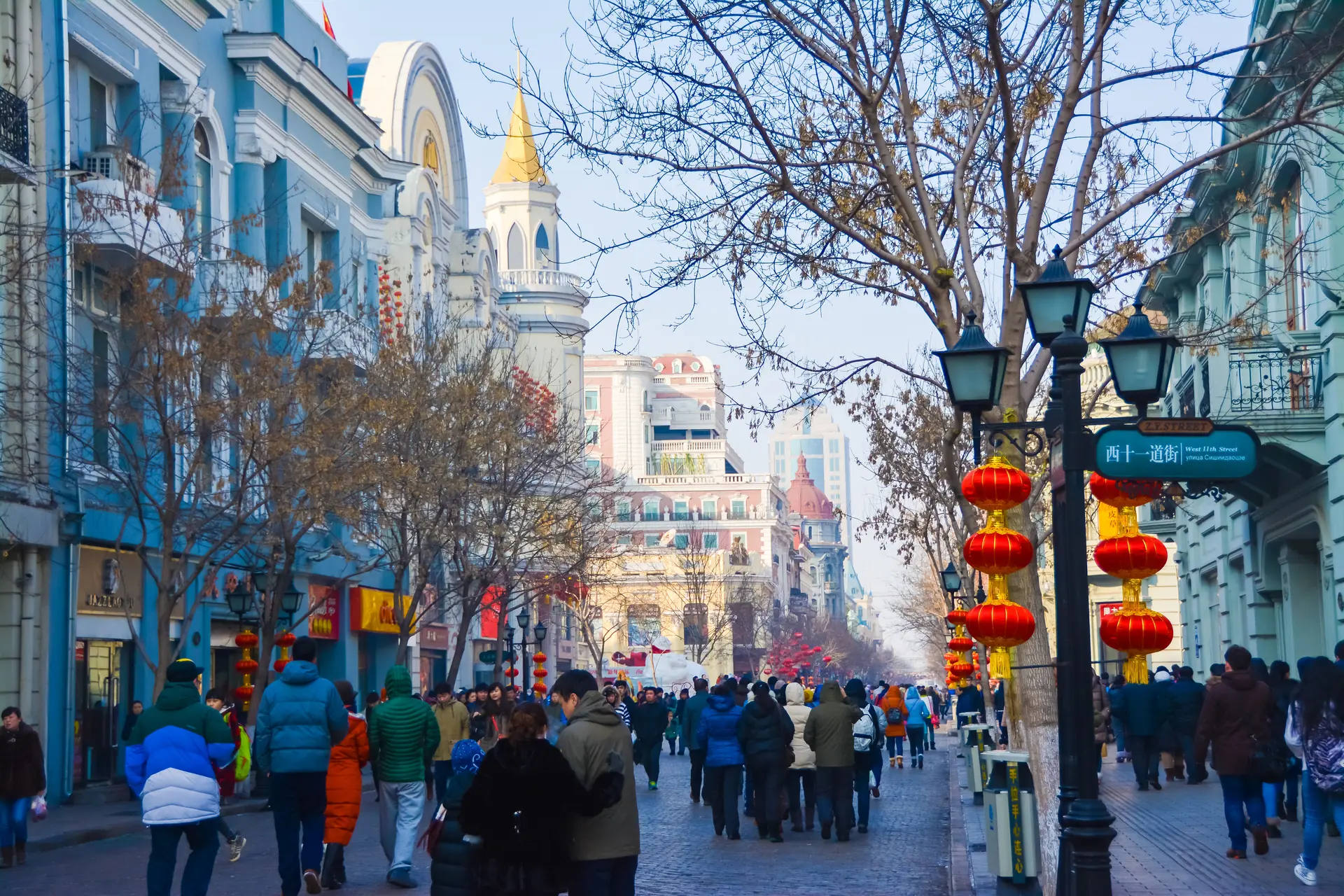
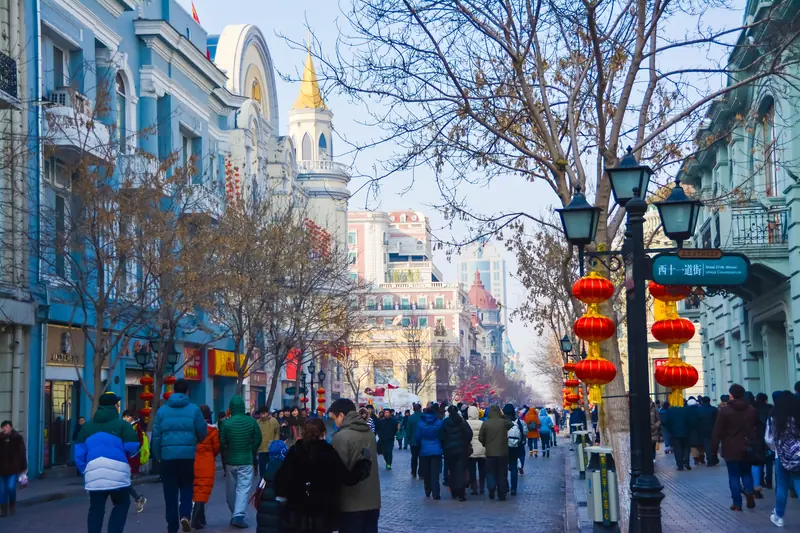
Central Street is Harbin's easiest first layer: cobbles, winter light, and railway-era storefronts.
The famous cobbled avenue is the opening chapter, not the whole Harbin story.
Harbin's ice fame can hide the better city walk: a 1.45 km avenue, a former Russian Orthodox church, a synagogue museum and a Chinese-Baroque merchant district in one loose half-day. Its modern identity accelerated with the Chinese Eastern Railway around the turn of the twentieth century, when Russian, Jewish, Polish, Lithuanian, Chinese and other communities turned a Songhua River settlement into a commercial railway city.
That is why the route can feel European, Northeast Chinese, Orthodox, Jewish and merchant-local in quick succession. Follow the layers in order and Harbin becomes more than a collection of “Russian-style” photo stops.
Stone paving, European-style facades, old hotels, snacks and winter lights form the easy north-south spine.
The recognizable green dome marks the pause between shopping-street energy and deeper heritage stops.
Former synagogues, residences and museum displays reveal a quieter early twentieth-century community layer.
Baroque facades, Chinese courtyard logic, old commercial lanes and a slower meal make the strongest finish.
Central Street: Harbin's Russian Shopfront Spine
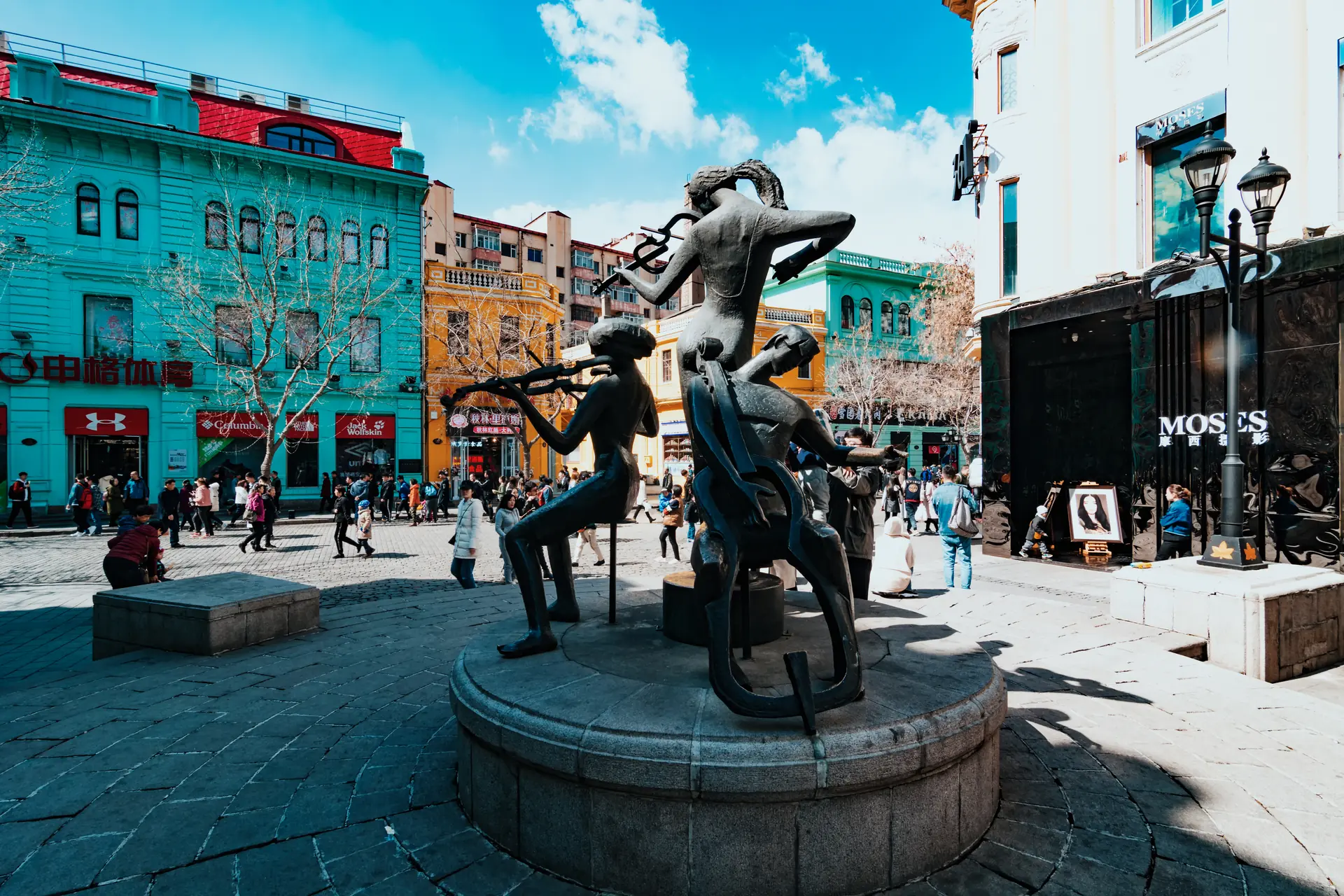
Central Street's stone paving is one of the details that makes the avenue feel different underfoot.
Central Street is where most travelers begin—and the paving, facade rhythm and river-to-city sequence deserve more attention than any one shop.
China Daily describes Central Avenue as built in 1898 and lined with Western architecture. Guinness World Records separates the two numbers that explain why guidebooks disagree.
Underfoot, notice the “bread stone” paving. At eye level, read the old banks and hotels through their windows, proportions and shopfront lines.
Start near the Flood Control Monument (防洪纪念塔) (Google | Amap) at the Songhua River edge, then walk south into Central Street (中央大街) (Google | Amap) so the avenue unfolds as one commercial spine.
Daylight keeps stonework and facade details clear. Blue hour adds winter lights and atmosphere, but fine details fade sooner.
Central Street is also where Harbin's food symbols become hard to avoid: Madier ice cream, red sausage, dalieba bread, kvass, and Russian-style Western restaurants. Use them as punctuation, not the whole plot. For a deeper eating plan, pair this route with our Harbin Food Guide.
Saint Sophia and Harbin's Jewish Memory
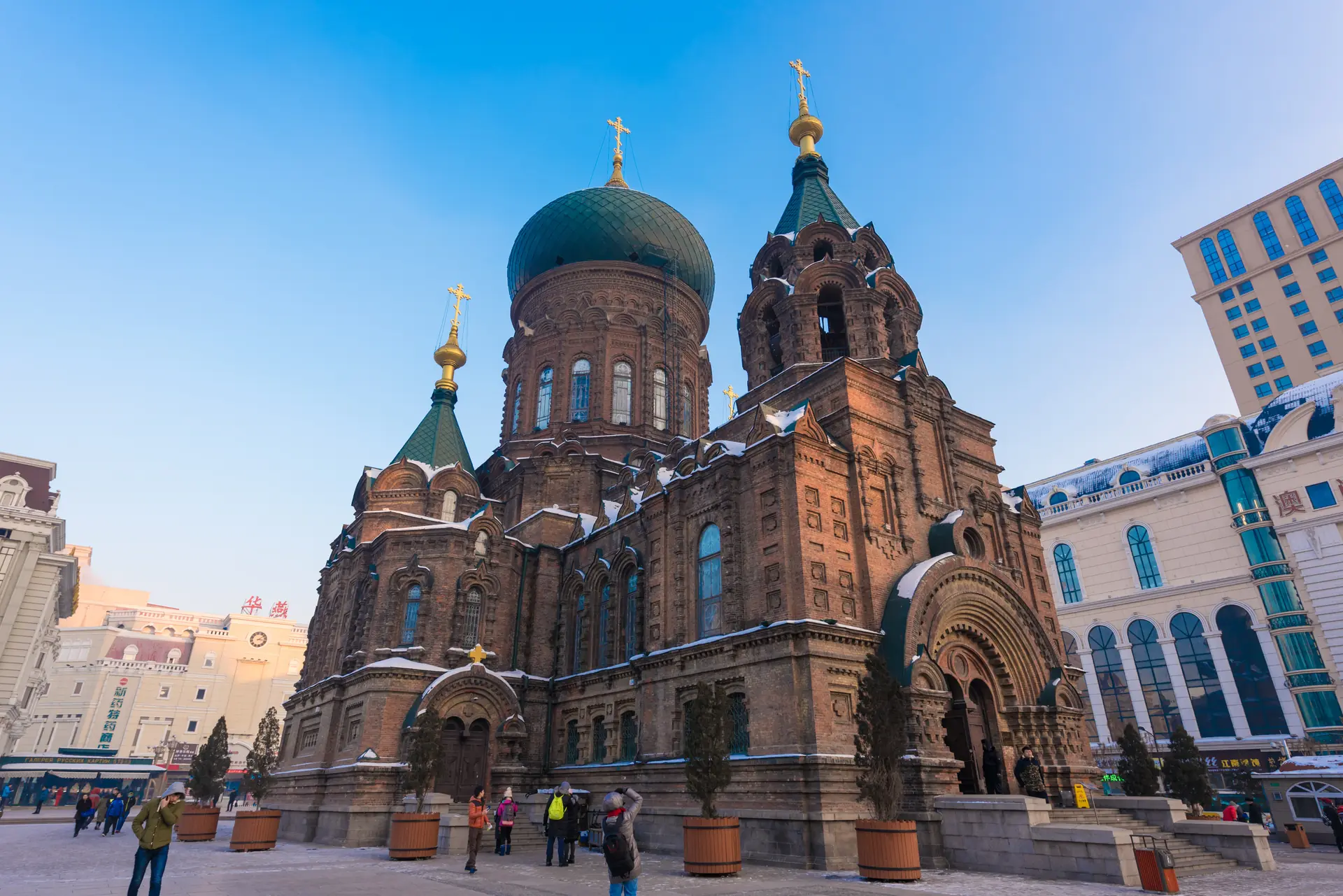
Saint Sophia turns Harbin's Russian Orthodox layer into the city's most recognizable skyline moment.
China Daily notes that the Russian Orthodox church began in 1907, rises about 53 m and was restored in 1997; the present brick Byzantine-style cathedral is usually tied to its later reconstruction, completed in 1932.
More recent CGTN/China Daily reporting describes it as a century-old Byzantine-style landmark now used as the Harbin Architectural Art Gallery. The green dome matters, but the plaza's real role is to make Harbin's Russian layer visible at city scale.
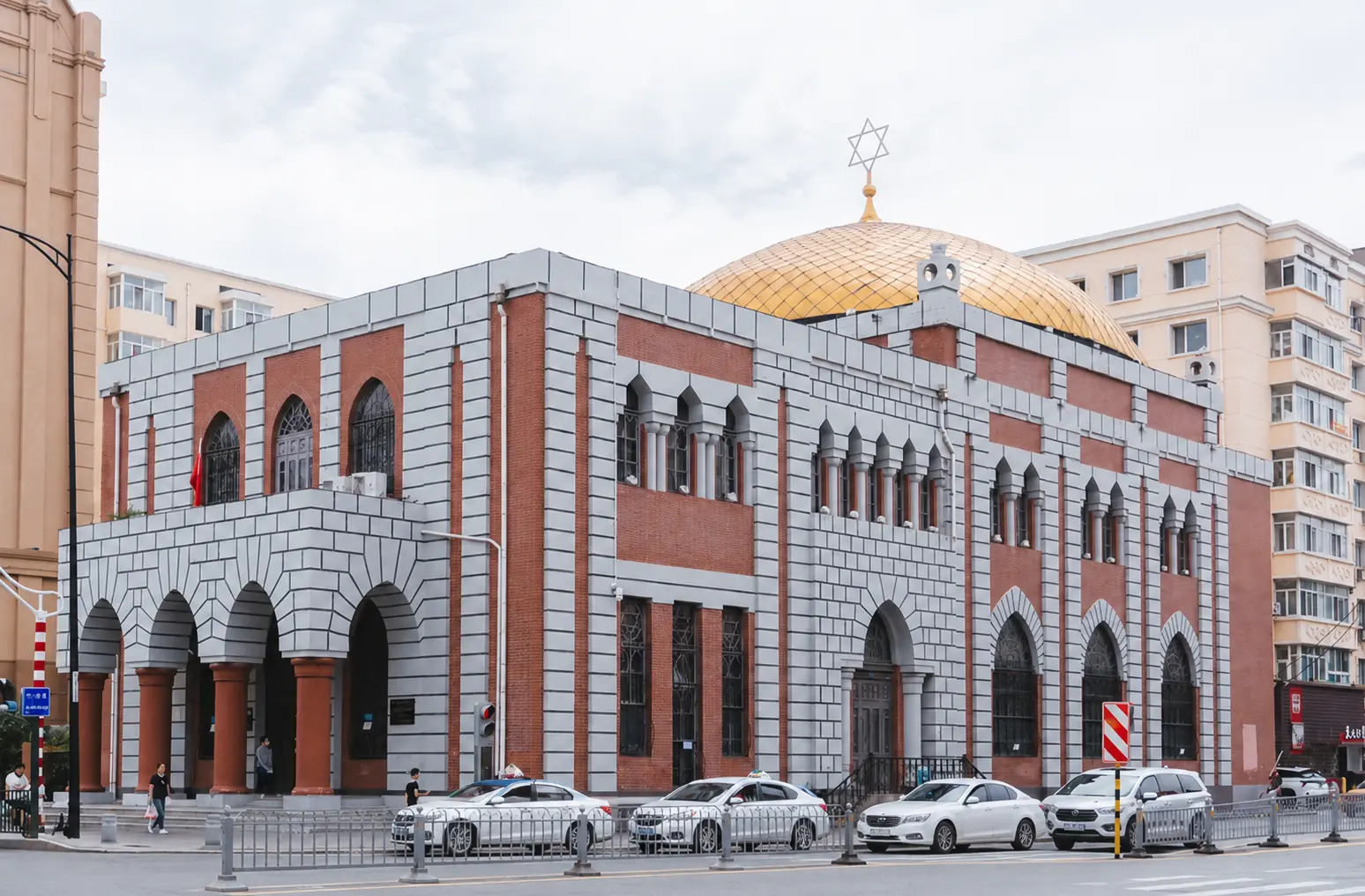
The Jewish New Synagogue gives the walk a quieter museum layer beyond Central Street's storefronts.
The building and museum context make this the most useful single Jewish heritage stop. World Jewish Travel describes documents, photographs, films and personal items tied to Harbin's diaspora from the early 1900s to the 1950s, when the community reached around 20,000 people at its peak.
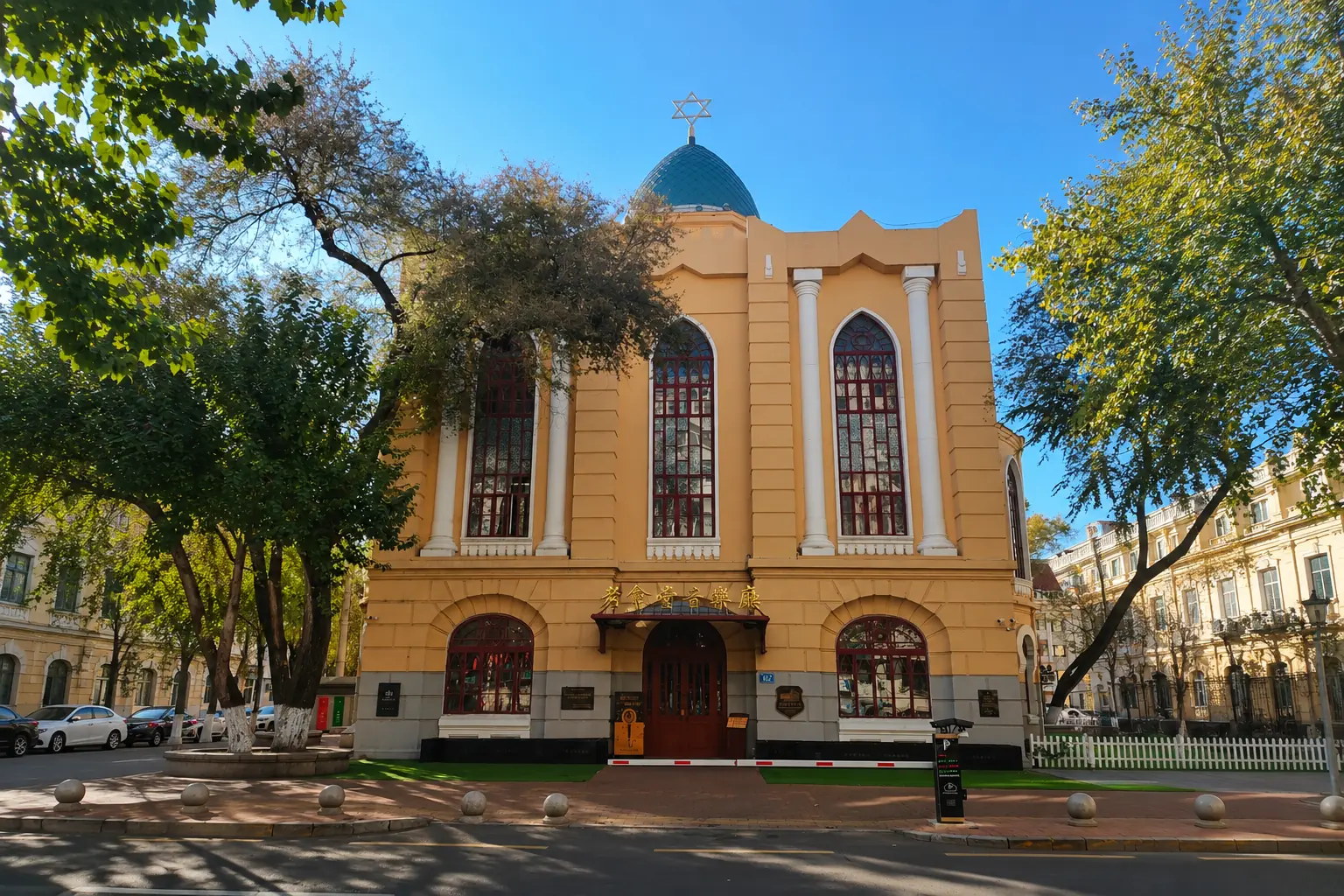
The Old Synagogue Concert Hall adds another point to Harbin's early twentieth-century Jewish heritage map.
The Heilongjiang culture and tourism department includes the New Synagogue and Soskin Residence among Harbin Museum's national-level protected cultural relic sites.
Plan the story, then confirm the door. This heritage should feel sober, not decorative. Open hours and exhibition access can change, so treat indoor entry as optional and confirm it on the day.
Daowai Baroque: Chinese Courtyards, European Facades
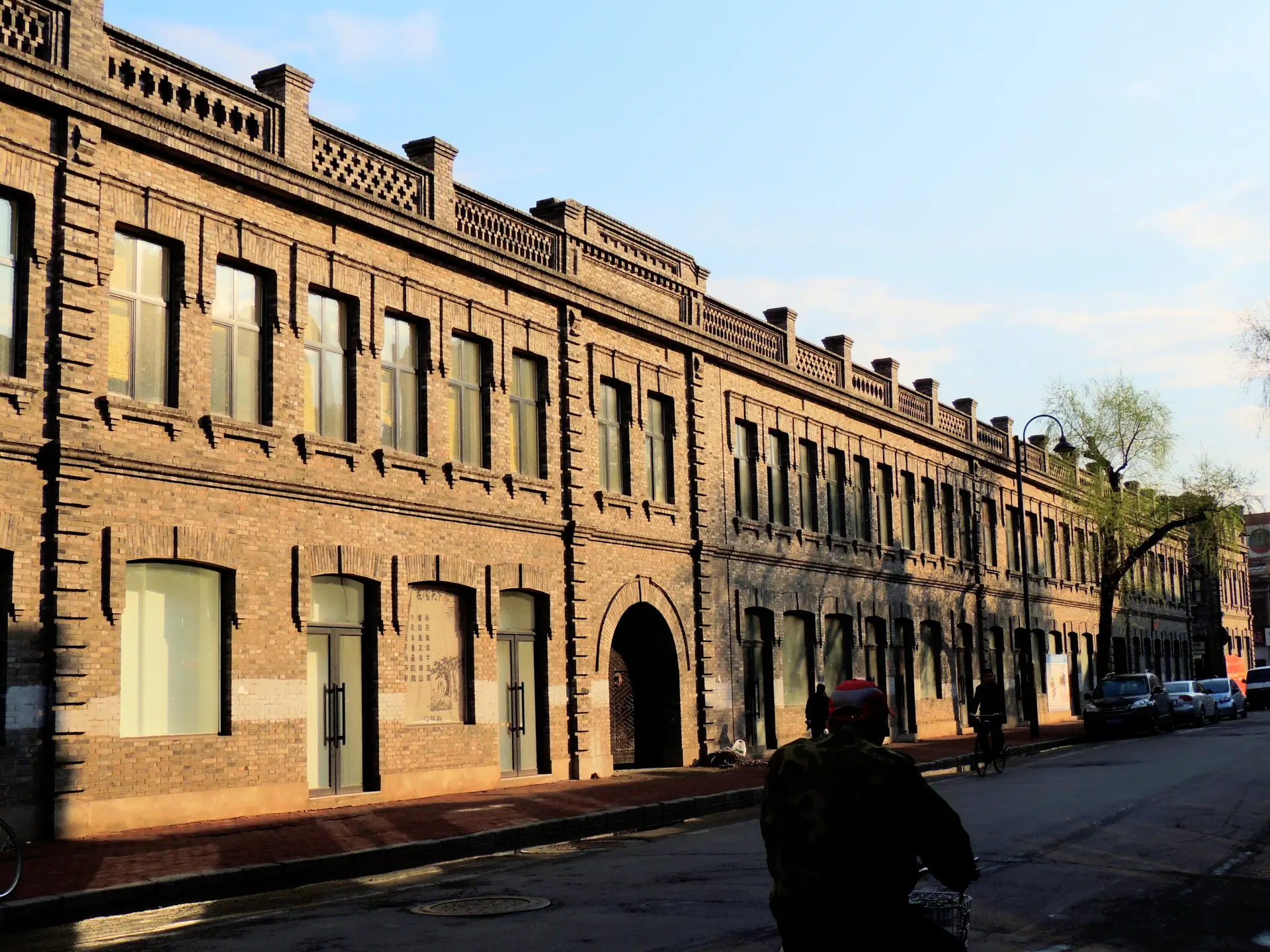
Old Daowai's Chinese Baroque facades make the best finish after Central Street and Saint Sophia.
Daowai is where the walk stops being a Central Street add-on.
In Old Daowai (老道外), Chinese merchants used imported ornament, symmetry and street presence while keeping courtyard-based life and business behind the frontage. The result is less polished and more locally complicated than Central Street.
The Heilongjiang culture and tourism department describes it as China's largest and best-preserved surviving Chinese Baroque ensemble.
Older 2013 and 2012 reports used 288,300 m² and 50-hectare descriptions. The current official district profile is the practical fact owner here so different project boundaries are not mixed.
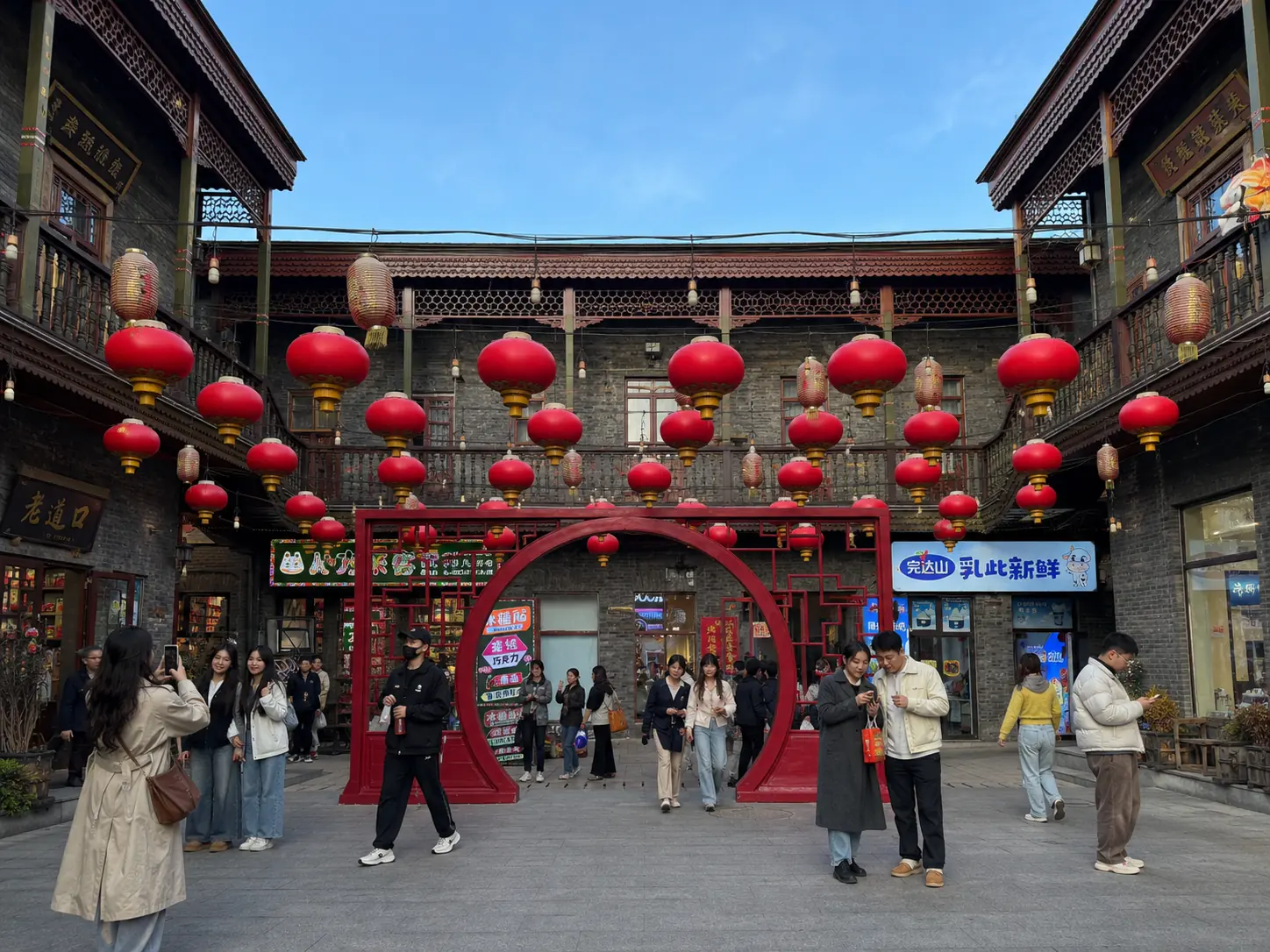
Old Daowai reads differently once you look beyond the facade line into lanes and courtyard edges.
Look up at scrollwork, windows, columns, pediments and carved details, then look sideways through gates and lanes. The important phrase is “Chinese Baroque”: foreign-looking street fronts do not simply mean foreign ownership or taste; the spaces behind them retain Chinese courtyard organization.
Some parts are restored and commercial, some retain a lived-in old-district rhythm, and some corners remain uneven. That mix is not a flaw to edit out. It is what keeps Daowai reading as a neighborhood rather than a stage set.
Walk Route: Central Street to Daowai
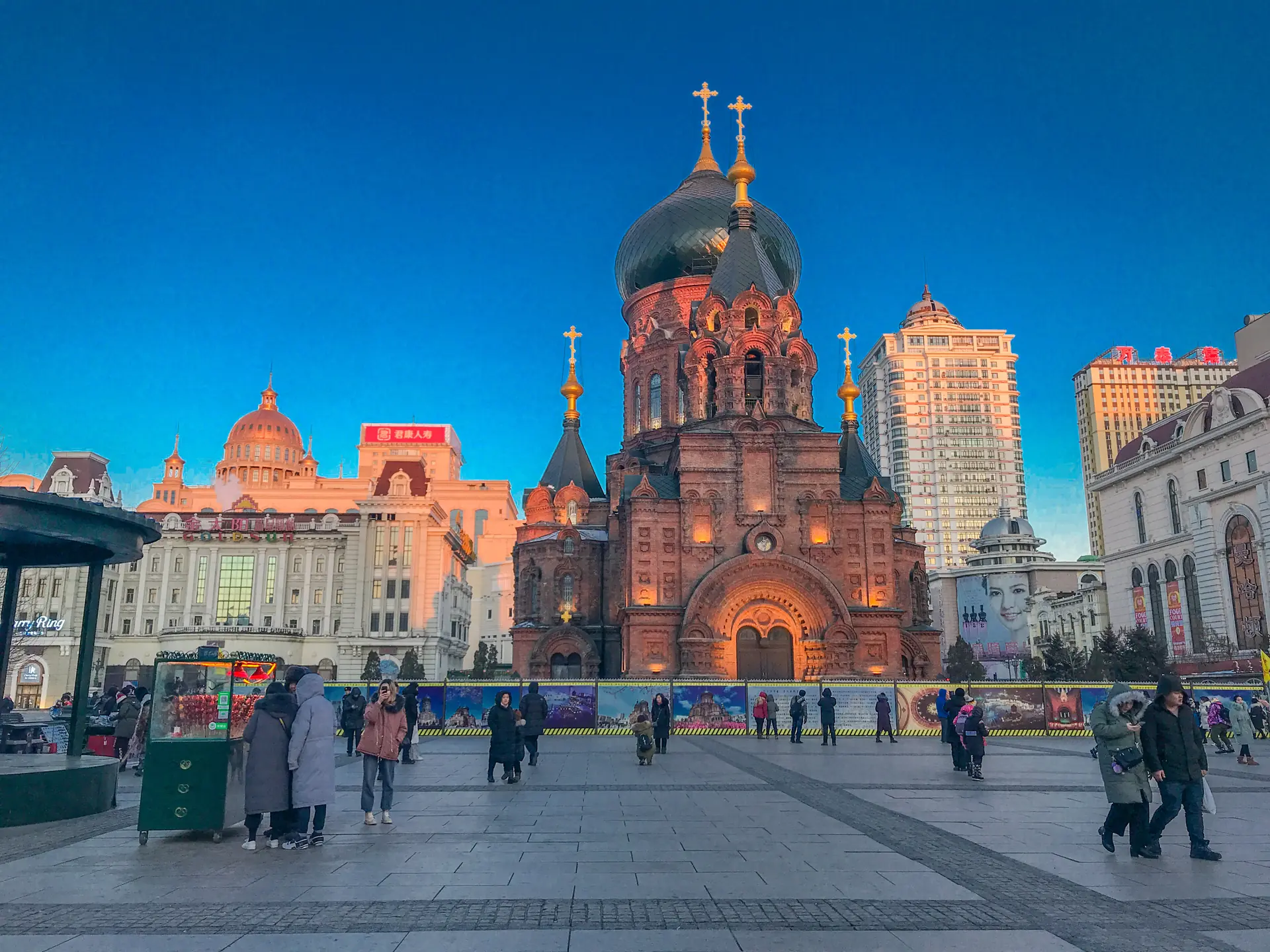
The route works best when you treat Saint Sophia as a short heritage detour, not a disconnected photo stop.
Treat Saint Sophia as a short heritage detour, then keep the Jewish layer in Daoli before moving east to Daowai.
This is a heritage walk, not a race. In mild weather you can walk more of it; in winter, combine walking with one short ride so the day stays enjoyable.
- Flood Control Monument(防洪纪念塔)- Start by the Songhua River if you want the clearest north-to-south entrance into Central Street.
- Central Street core walk(中央大街)- Walk the stone-paved spine slowly. Use snacks as pauses, but keep moving enough to read the architecture.
- Saint Sophia Cathedral(圣索菲亚教堂)- Detour to the plaza for the most recognizable Russian Orthodox landmark in Harbin.
- Jewish New Synagogue(哈尔滨犹太新会堂)- Add the museum stop if open, or at least view the exterior and understand the Jewish heritage layer.
- Old Synagogue Concert Hall(哈尔滨犹太老会堂音乐厅)- Optional, best if you like tracing heritage buildings rather than rushing to Daowai.
- Ride to Daowai- Use a short taxi, metro, or local transport hop in winter. Full walking is possible but not always worth the cold.
- Chinese Baroque Block(中华巴洛克历史文化街区)- Finish with facades, lanes, courtyard traces, and dinner or snacks in Old Daowai.
Central Street, Saint Sophia, Jewish New Synagogue, then a short ride to Daowai. About 3–4 hours without a long meal.
Add the Old Synagogue Concert Hall, more photo pauses and a Daowai dinner. Allow 5–6 hours.
Central Street plus Saint Sophia, then taxi to Daowai for a short look and warm meal. Skip extra museums when children tire.
Best Times, Winter Cold, and Crowds

Blue hour and winter lights give Central Street its strongest atmosphere, though details are easier by day.
Winter gives Harbin its strongest mood, but poor pacing hurts most when the cold is deepest.
Central Street and Saint Sophia look beautiful after dark, yet Jewish heritage displays and Daowai details are easier to read by day. For both, begin in the afternoon, reach Saint Sophia before dusk and finish in Daowai after the lights come on.
Summer and autumn make the complete walk easier: add the riverfront, linger over facades and turn Daowai into a longer food-and-neighborhood session. Spring can be windy and dusty, but it is still more forgiving than a deep-winter cold snap.
Central Street lights begin to matter, Saint Sophia keeps sky color and Daowai storefronts gain warmer street light.
Facades, stonework, plaques and courtyard entrances remain legible before night lighting flattens their detail.
Use cafes, galleries, restaurants and rides between districts. A beautiful walk becomes less charming when your feet go numb.
Central Street can feel dense on winter evenings and holidays. Daowai usually has more breathing room, though popular food shops still queue.
Food Stops Along the Heritage Walk
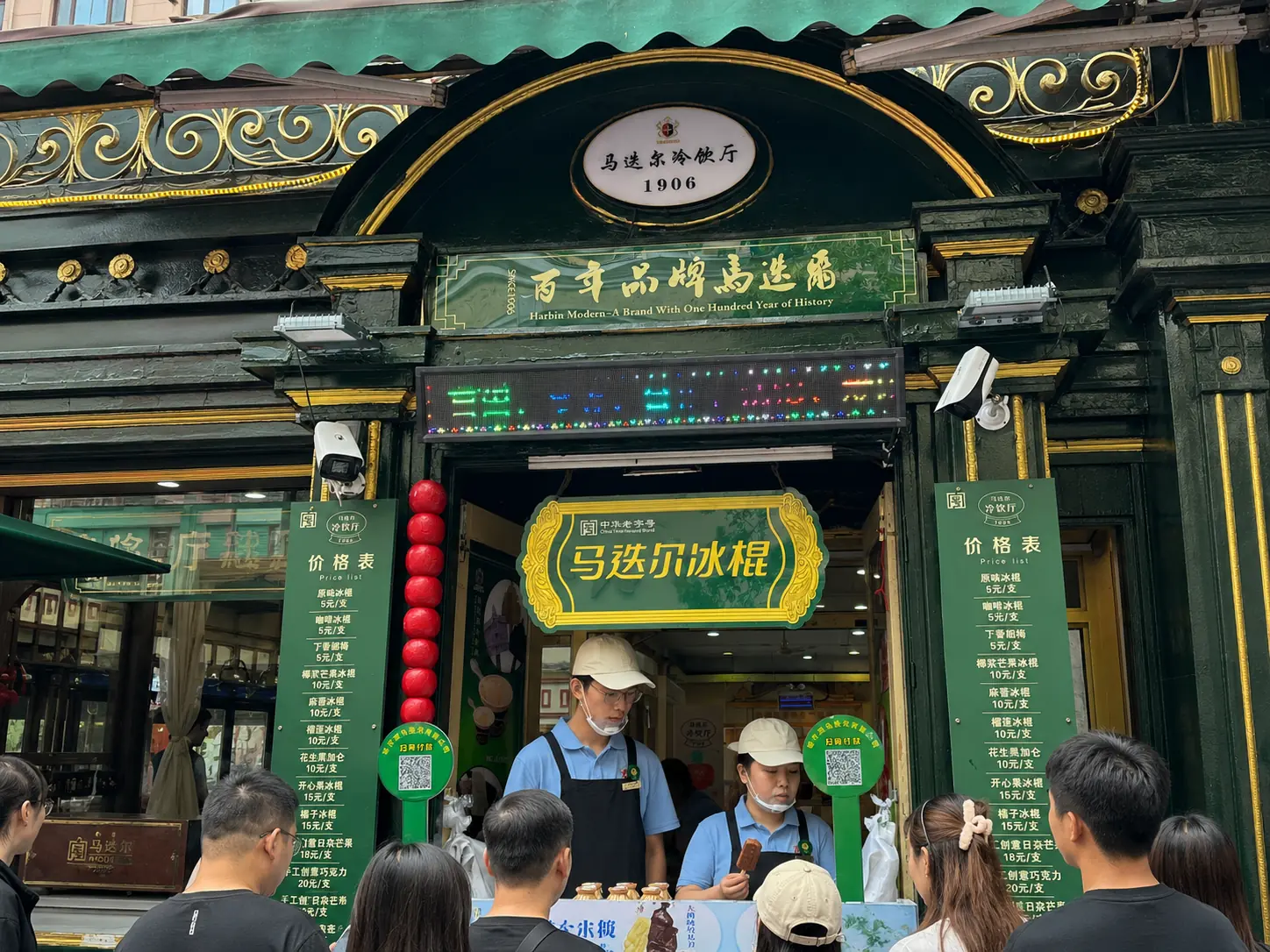
Central Street snacks work best as quick pauses, not as the whole reason for the walk.
Use snacks as quick historical signals: Madier ice cream, red sausage, dalieba bread, kvass and Russian-style Western food. They connect naturally to the same railway-era world as the buildings.
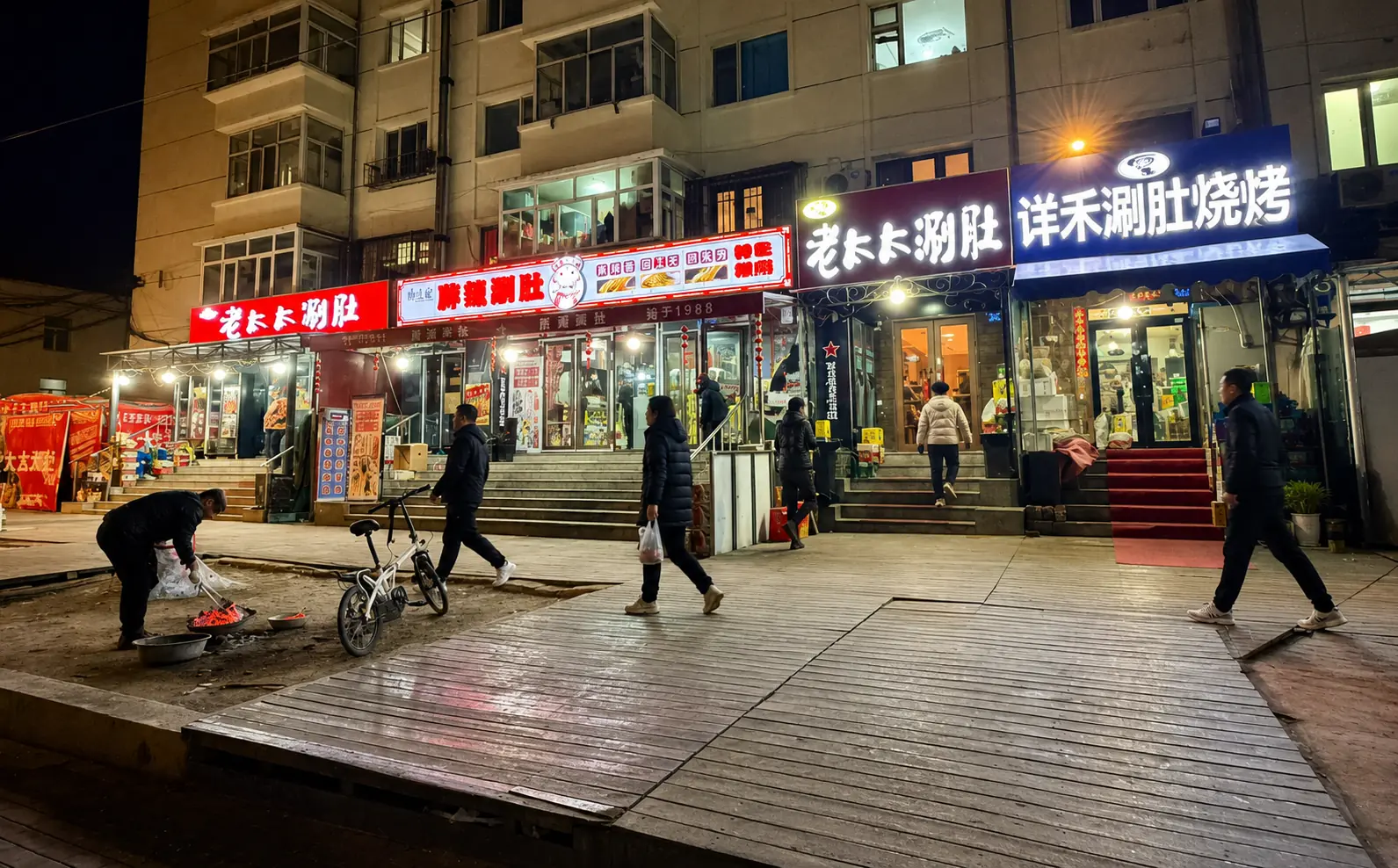
Daowai is a better slow-food finish than a rushed snack stop on Central Street.
Look for Northeast dishes, old snack shops, guobaorou, dumplings, barbecue or a simple hot meal after the architecture walk. In winter, do not arrive already cold, hungry and impatient.
Getting Around Harbin's Heritage Core Easily
Walk the Daoli cluster, preserve your energy for Daowai, and let current conditions decide the transfer.
Central Street, Saint Sophia and the Jewish heritage stops are close enough for many travelers to connect on foot, depending on hotel location and weather.
Energetic walkers can continue east in mild weather. In winter, check a short taxi, metro or bus option on your map app rather than proving you can walk every meter.
Staying near Central Street puts the first half on foot and keeps late-night returns simpler when this heritage walk is a priority.
Use official accounts or current map listings before you commit time to a museum, gallery, concert hall or exhibition.
Frequently Asked Questions
Yes. Central Street, Zhongyang Street, and Zhongyang Dajie all refer to Harbin's main pedestrian shopping street, Central Street (中央大街).
Sources checked for this guide
- Central Street construction date and Western-architecture context: China Daily Harbin overview
- 1,450 m full street length, 1,210 m pedestrian segment and 1997 pedestrianization: Guinness World Records
- Saint Sophia 1907 origin, height, Byzantine form and 1997 restoration: China Daily Saint Sophia history
- Current Architectural Art Gallery use and century-old Byzantine landmark context: China Daily / CGTN Saint Sophia report
- Jewish New Synagogue museum identity, collection scope and peak-community estimate: World Jewish Travel
- Current national-level protected-site status of the Jewish New Synagogue and Soskin Residence: Heilongjiang culture and tourism department
- Current 472,300 m² district scope, 105 courtyards, Chinese-courtyard morphology and ensemble status: Heilongjiang official Chinese Baroque profile
- Earlier 288,300 m² phase/scope description and Baroque-frontage / Chinese-courtyard interpretation: China Daily / Xinhua 2013 background
- Earlier 50-hectare wider-area description and ensemble superlative: China Daily 2012 background
Beyond This Harbin Heritage Walk
This walk gives you Harbin's best compact heritage sequence, but the right day depends on weather, hotel location, museum access, food priorities, and whether you also plan Ice and Snow World. Use it as the heritage spine, then adjust the cold-weather shortcuts and indoor stops around the day you actually have.
- Best Things to Do in Harbin — plan Ice and Snow World, Saint Sophia Cathedral, and winter river logistics
© gochinafreely.com — Original guide by Go China Freely.