Walk Basics
Good to Know
Macau's Quiet Portuguese-Style Quarter Below Guia
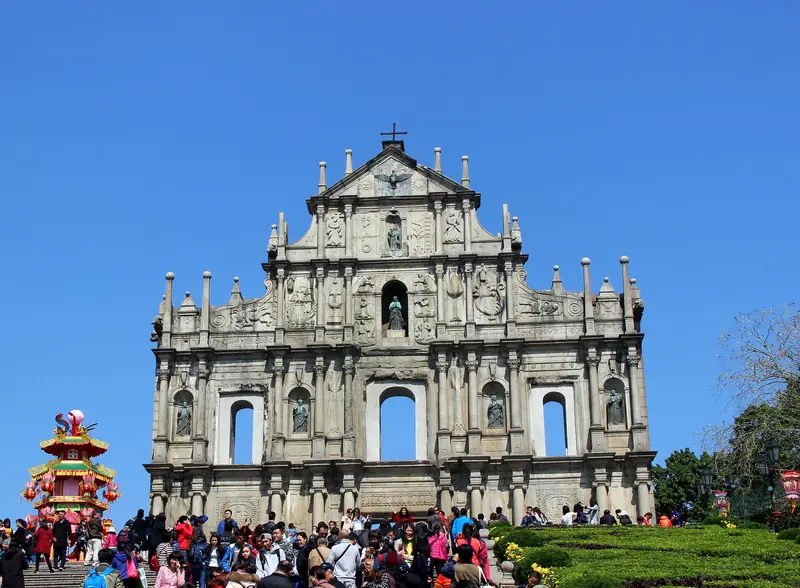
If Macau's main old-town route feels like a river of people pushing toward the Ruins of St. Paul's (大三巴牌坊), St. Lazarus Quarter (望德堂区) is the smaller side street where the city slows down. Within a few short blocks you get yellow Portuguese-style facades, stone slopes, a historic church, creative studios, quiet courtyards, and enough color to make a 1.5-2.5 hour walk feel like a completely different Macau.
A neighborhood, not a single doorway
Yellow lanes, protected streetscape, and a slower Macau rhythm
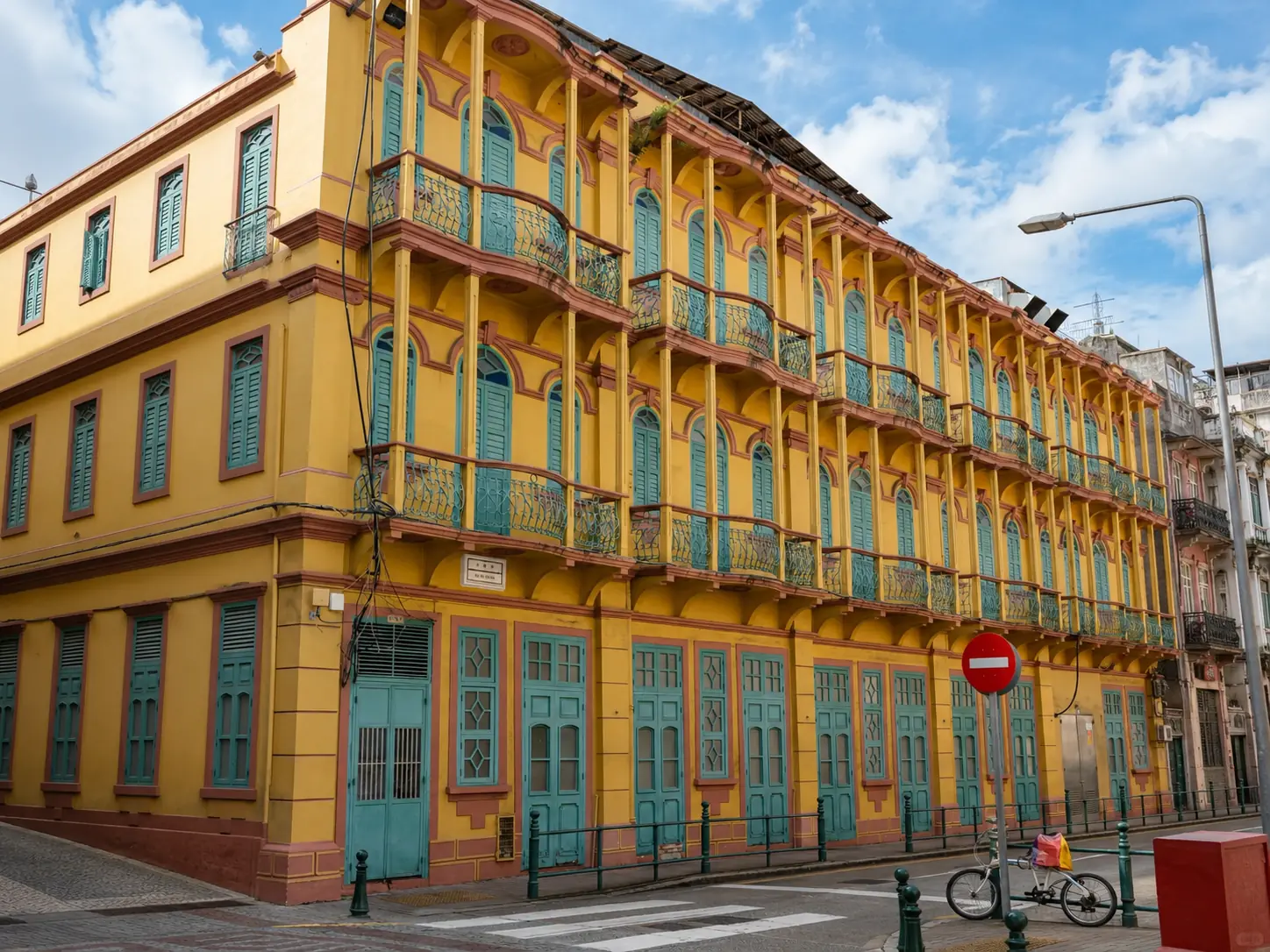
St. Lazarus Quarter is not a gated attraction with one correct entrance. It is a compact neighborhood below Guia Hill, around St. Lazarus Church (望德圣母堂) (Google | Amap), Tap Seac Square (塔石广场), and the lanes around Calçada da Igreja de São Lázaro (疯堂斜巷). The Macao Government Tourism Office describes St. Lazarus Parish as a creative district with criss-crossing streets, classical buildings, and cultural or creative arts groups.
The Cultural Affairs Bureau gives the area more formal weight: St. Lazarus' Quarter is treated as a classified architecture group, while St. Lazarus' Church and its forecourt are listed monuments. In plain traveler terms, the yellow walls, white trim, louvered windows, low-rise facades, stone steps, and church square form one protected streetscape rather than isolated photo props.
1.5-2.5h
Slow walk
1.2-1.8 km
Core loop
Free
Street route
AM / Late PM
Best light
The history beneath the bright paint
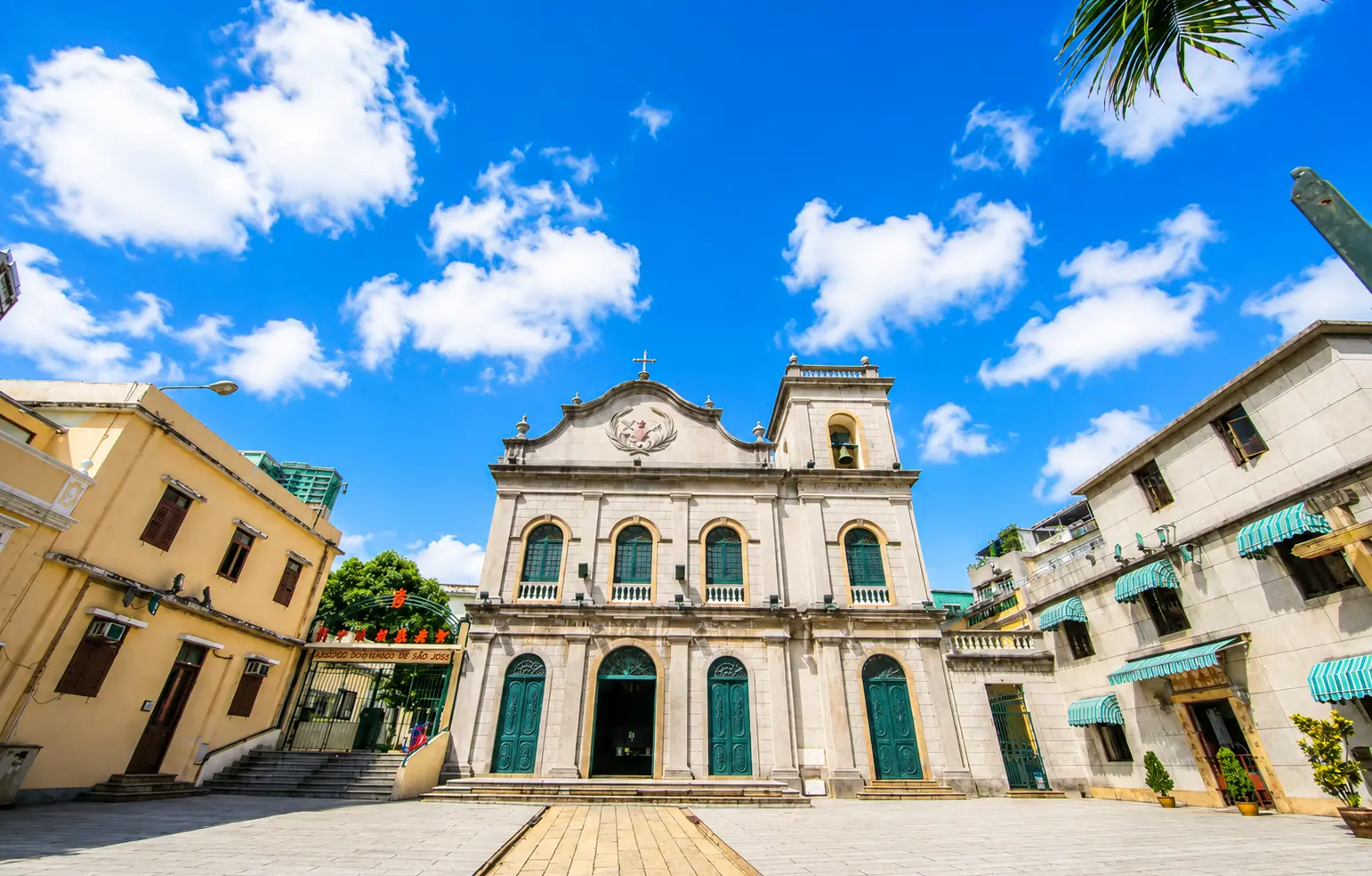
The history is older and less cheerful than the colors suggest. Macao's cultural heritage page states that St. Lazarus' Church was built between 1557 and 1560, making it one of Macau's three oldest churches. Dom Belchior Carneiro, the first Catholic Bishop of Macao, established a hospital here for lepers, named after the patron saint of lepers. The present church has remained largely the same since its 1886 renovation.
That past explains the neighborhood's mood. It was once just outside the old city wall, tied to religion, medicine, and marginal space; now it is one of Macau's best places for a slow cultural walk. Come for the layers: a church, art spaces, old yellow houses, small courtyards, and a quieter answer to Macau's "East meets West" story.
A Simple St. Lazarus Walking Route
Start at Tap Seac Square (塔石广场) (Google | Amap). It is open, easy to find, and much less confusing than starting inside the narrow lanes. From there, walk to Tap Seac Gallery, then turn toward St. Lazarus Church, 10 Fantasia, Albergue SCM, and the yellow side streets around the church. With photos and one indoor stop, this is a comfortable 1.5-2.5 hour route.
- Tap Seac Square(塔石广场)- Open start point and orientation
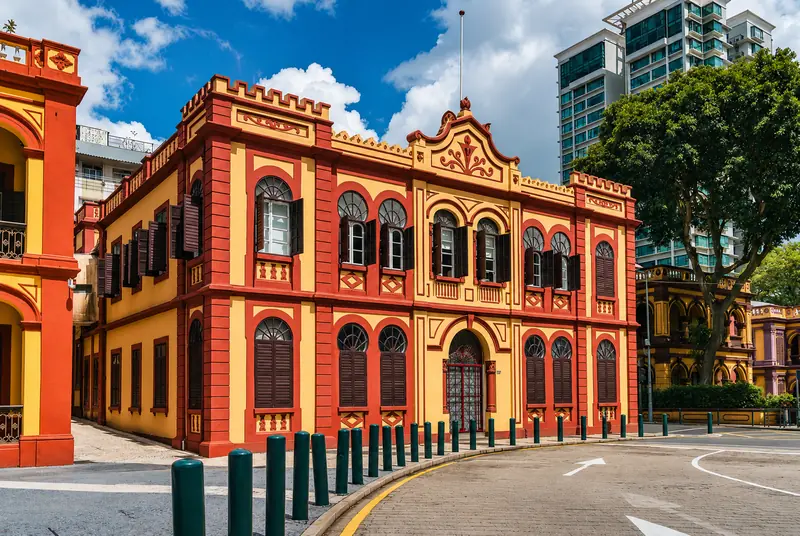
- Tap Seac Gallery(塔石艺文馆)- Yellow-red facade and current exhibitions
- St. Lazarus Church(望德圣母堂)- Historic anchor of the quarter
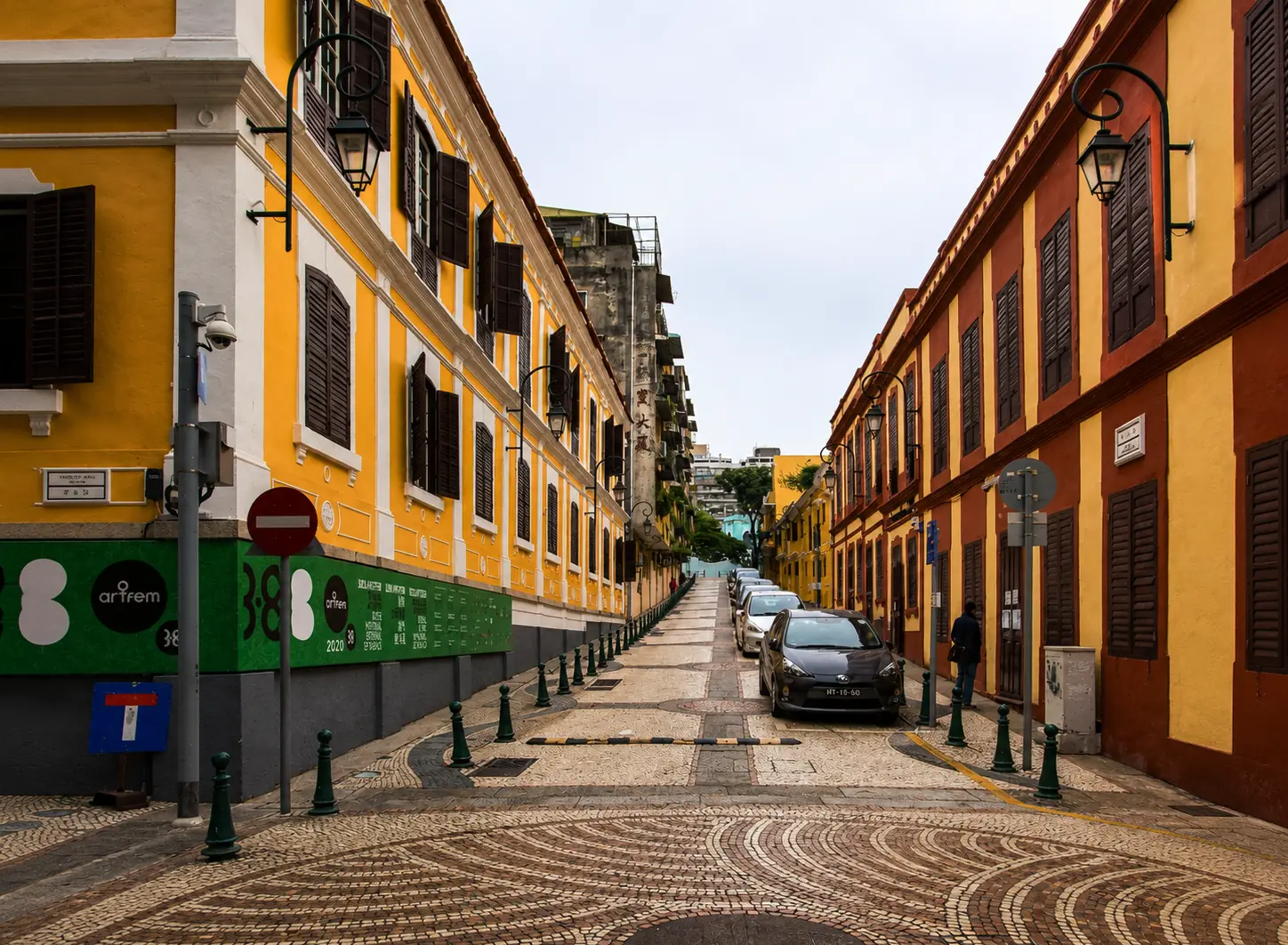
- Yellow Lanes(望德堂区街巷)- Windows, walls, slopes, and quiet corners
- 10 Fantasia(疯堂十号创意园)- Local creative space; closed Mondays
- Albergue SCM(仁慈堂婆仔屋)- Courtyard, camphor trees, Portuguese-style buildings
- Optional Link(大炮台廊道 / 大三巴)- Continue toward Monte Fort or Ruins
Walking it in reverse: if you are coming from the Ruins of St. Paul's or Monte Fort, see the crowded landmark first, then let St. Lazarus Quarter act as the cool-down. If you are starting fresh in the morning, begin with St. Lazarus, then decide later whether you still want the more famous old-town route.
Use the Area as a Mood Shift
Macau is small enough that maps make everything look like "just a few minutes." The mistake is treating every nearby spot with the same pace. Walk St. Lazarus slowly, then connect to St. Paul's, Guia, or Senado only after the neighborhood has done its job.
Start at Tap Seac Square and Gallery

Tap Seac Square is not the main reason to visit St. Lazarus Quarter, but it is the best place to begin. The space gives you wider pavement, easier navigation, and enough breathing room to look at facades before entering the lanes.
Tap Seac Gallery (塔石艺文馆) (Google | Amap) is the strongest first stop. It opened on December 5, 2003 for visual arts exhibitions and cultural events. The European facade, earthen-yellow and brick-red walls, wooden louvers, Moorish arched doors, and adapted 1920s domestic architecture matter as much as the shows.
Open 10:00–19:00 · Free admission. The gallery may close for exhibition installation, removal, or maintenance. If the doors are open, allow an editorial 15–25 minutes inside; if not, the exterior still earns the stop.
From here, move from broad square to narrow lane, formal gallery to residential-scale facades, and public institution to church neighborhood. That sequence is where the walk starts to feel different from Macau's busiest heritage corridor.
St. Lazarus Church and Yellow Lanes
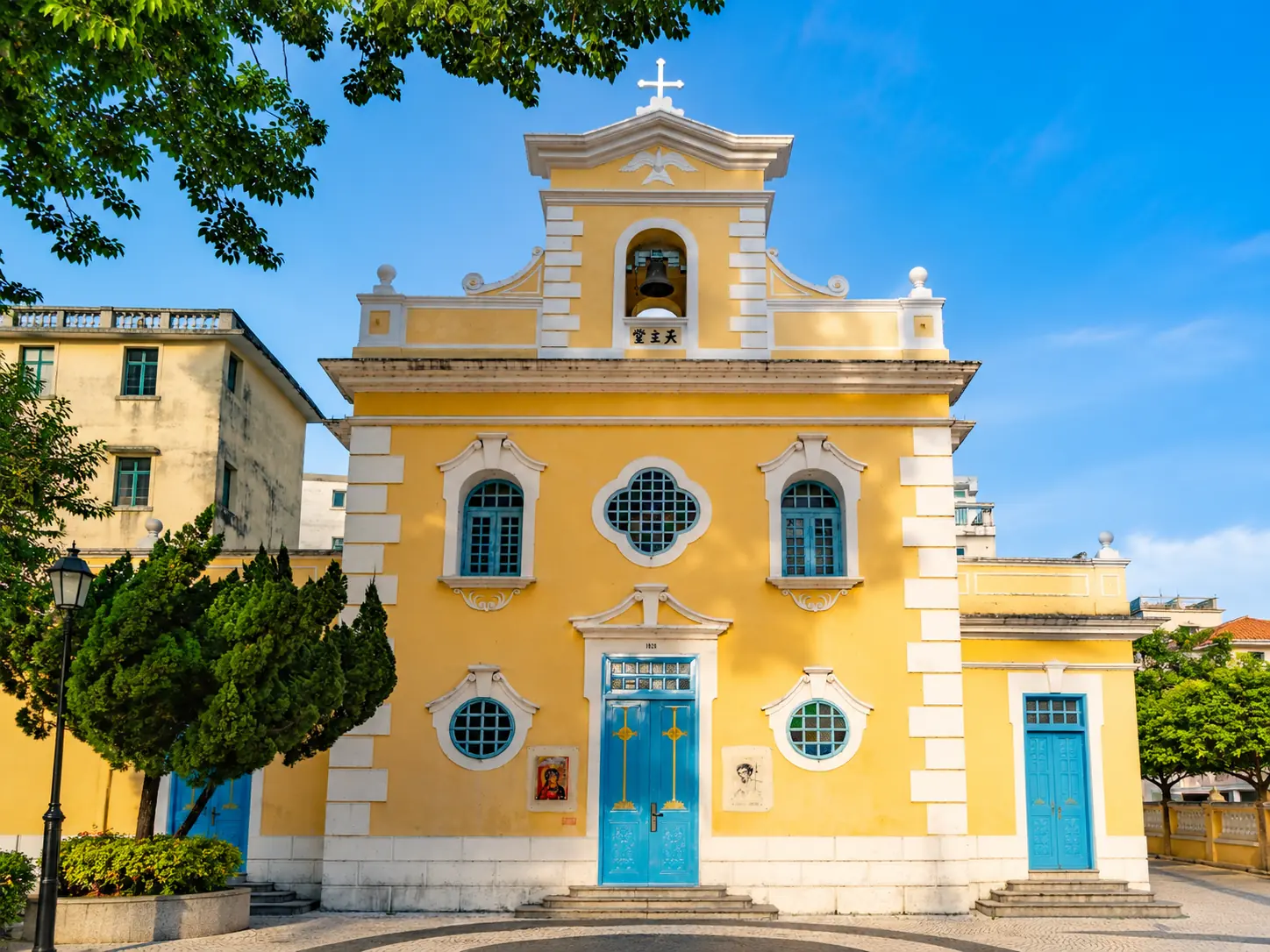
St. Lazarus Church is the historical anchor of the quarter, but the best experience is not only inside the church. Stand outside first and read the forecourt, low buildings, yellow walls, stone steps, and lanes that bend away from the entrance. The Cultural Heritage site notes the neoclassical facade, two-storey structure, pediment relief, and attached belfry.
If the church is open, enter quietly. If a service is taking place, stay back and keep cameras low. The surrounding shutters, wall texture, ironwork, street signs, courtyard gates, and warm paint colors are the main photographic sequence.
Walk the side lanes rather than waiting in one place for a perfect empty shot. A side wall catching afternoon light, a doorway under a balcony, or a street sign against yellow plaster often feels more personal than the obvious facade.
This Is Still a Residential Quarter
Keep entrances clear, avoid photographing through private windows, and do not use church steps or courtyard edges as a costume-shoot set. The neighborhood looks good because it still functions as a local place.
Albergue SCM and 10 Fantasia Creative Stops
The best cultural pair in St. Lazarus Quarter is 10 Fantasia and Albergue SCM. Together they show how the neighborhood moved from protected heritage into a small arts-and-creative district.
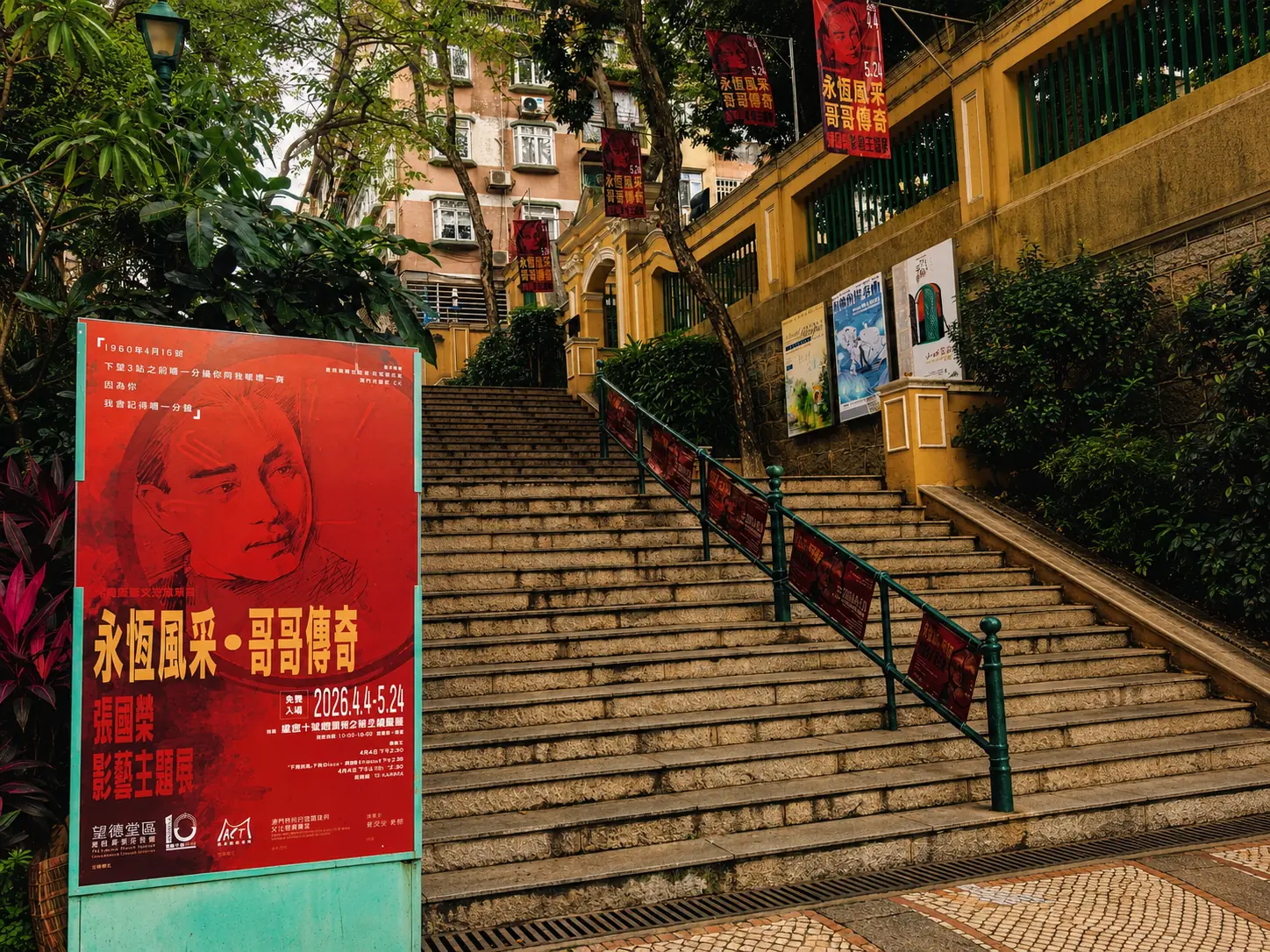
Creative-program stop
10 Fantasia (疯堂十号创意园) (Google | Amap)
10 Fantasia sits at No. 10 Calçada da Igreja de S. Lázaro. Its official site says it opened on September 19, 2008 in a 1919 Portuguese neoclassical building, formerly used by public offices, and now serves exhibitions, workshops, lectures, markets, music, and local art programs.
Usual hours: Tuesday to Sunday, 11:00-18:00; closed Mondays. Go in with modest expectations: this is a local creative pause for posters, small galleries, staircases, corridors, and whatever exhibition happens to be current.
Courtyard and meal stop
Albergue SCM (仁慈堂婆仔屋) (Google | Amap)
Albergue SCM is the slower stop. The official tourism route places it at the center of St. Lazarus' cultural-creative development, while Albergue 1601's own heritage notes describe the complex as part of the St. Lazarus Quarter, with Portuguese-style homes and alleyways around it.
Pace and meal times: the courtyard and yellow walls are the travel moment, and 10-20 minutes is enough for most visitors. Albergue 1601 lists lunch from 12:00-15:00 and dinner from 17:30-22:00, with last order 45 minutes before each session ends.
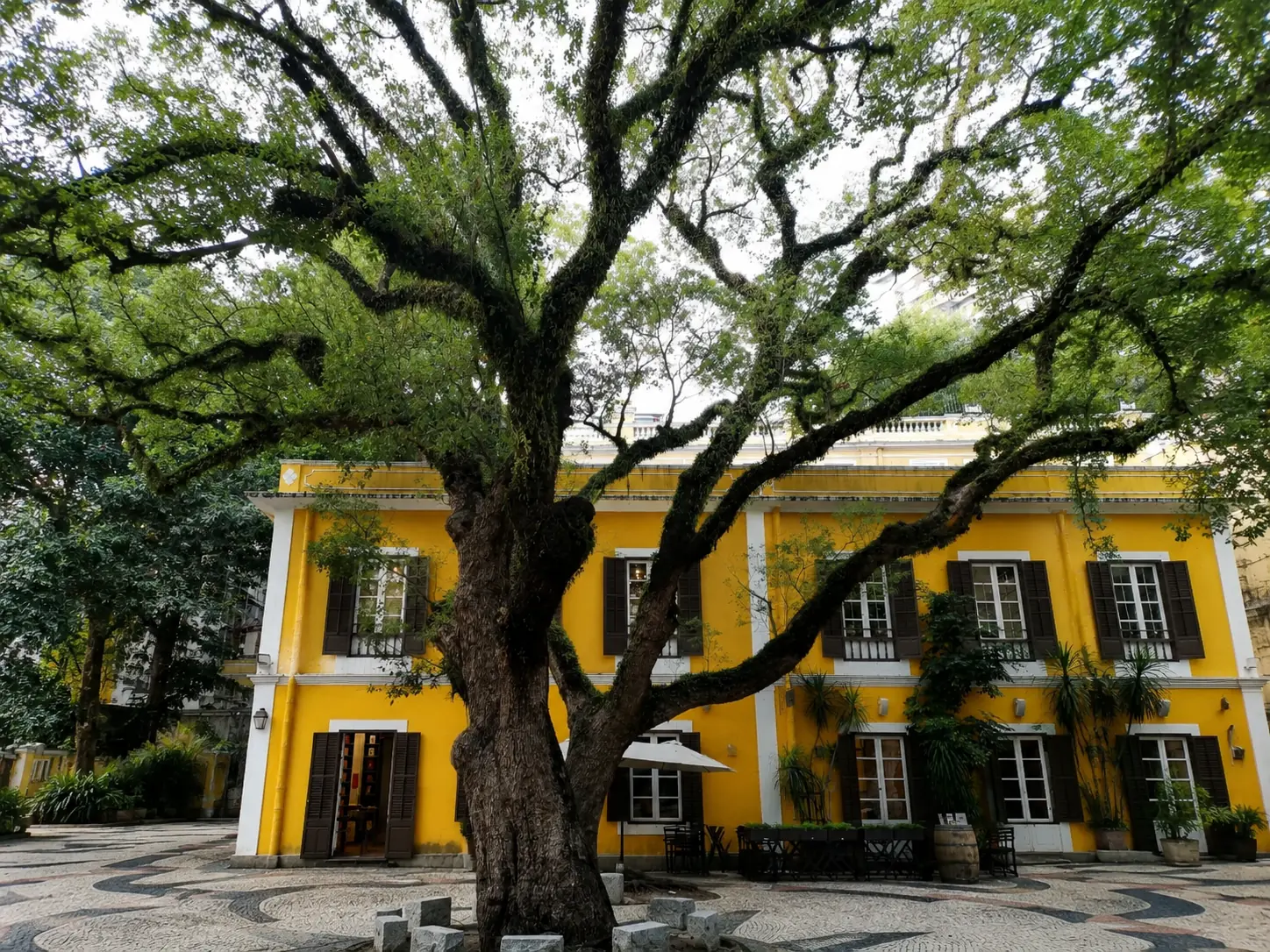
Photo Timing for Quiet Macau Corners
The best windows are weekday morning and late afternoon. Morning is calmer; late afternoon gives the yellow walls better side light. Midday still works for a quick walk, but the contrast can be harsh in narrow lanes, and bright yellow plaster can blow out in phone photos.
Use the neighborhood like a set of small frames rather than a single panorama. Tap Seac Gallery gives you the grand facade. St. Lazarus Church gives you steps and a forecourt. The yellow lanes give you doors, windows, corners, street signs, and shadows. Albergue SCM gives you a courtyard mood. 10 Fantasia gives you art-space texture.
Morning
Quieter streets, easier patient framing
Morning is better if you care more about low crowds than golden light.
Late afternoon
Warm walls and softer shadows
Late afternoon is the easiest time for warm walls, softer shadows, and cleaner lane photos.
Angle: Shoot diagonally along slopes, not flat against walls. The lanes look deeper when the camera catches steps, windows, and a bend in the street.
Rain: Wet stone can make the colors richer, but the slopes become slick. Keep the walk short and use Tap Seac Gallery or 10 Fantasia as weather pauses.
Courtesy: Photograph the street, not people's homes. If a doorway looks private, treat it as private even when the color is perfect.
How to Combine This Macau Walk
St. Lazarus Quarter is strongest as a calm half-day module. If you are already doing the old-town core, pair it with the Macau Historic Centre walk: Senado Square, St. Paul's, Monte Fort, then St. Lazarus and Tap Seac as the quieter finish.
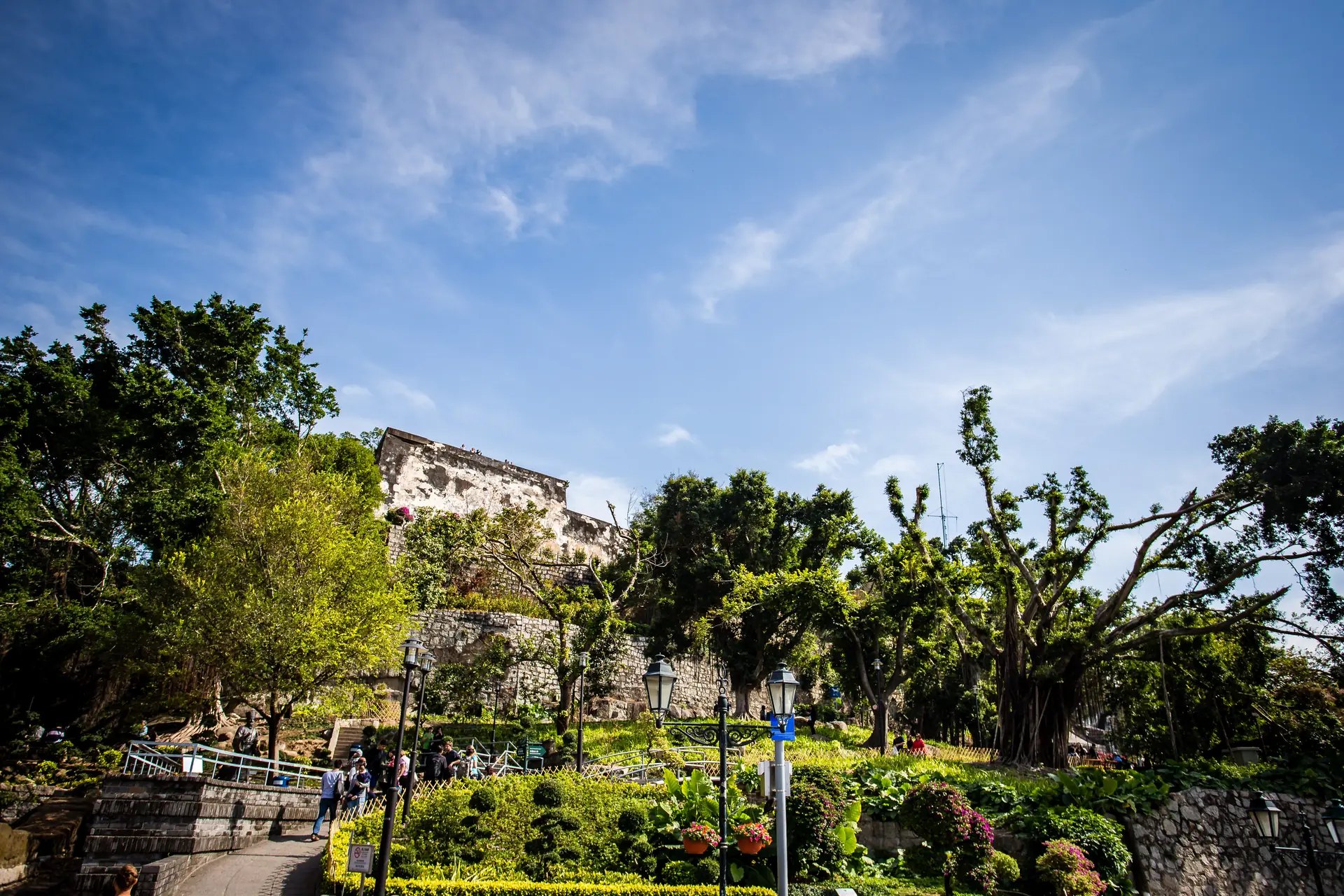
The connection that makes the pairing work
Mount Fortress Corridor (大炮台廊道) (Google | Amap)
The Cultural Affairs Bureau describes it as connecting Tap Seac Plaza, the old city centre of St. Lazarus Parish, and the sightseeing pedestrian path of the Historic Centre of Macao, while also giving access toward Monte Fort.
Open 07:00-19:00 · Free
Classic heritage finish
Walk Senado, St. Paul's and Monte Fort first, then use the corridor toward Tap Seac and St. Lazarus as the quieter final chapter.
Calm start
Walk St. Lazarus in the morning, then decide whether to add the Ruins, Guia Hill, lunch, or a softer evening elsewhere.
If you want the lightest version, do St. Lazarus first in the morning, then decide whether to continue to the Ruins of St. Paul's, Guia Hill, or a lunch break. If you want a softer evening, walk the quarter in late afternoon, then plan dinner nearby or move to Cotai for a show.
Common Mistakes on the St. Lazarus Walk
Treat these as quick pacing checks before you fold the walk into a wider Macau day.
Not one photo
If you only stand in front of one yellow building and leave, the quarter will feel tiny. Give it a sequence: Tap Seac, church, lanes, 10 Fantasia, Albergue SCM, then an optional link onward.
Not “Little Europe”
That phrase is easy, but it flattens the place. Use the Portuguese-style facades as an entry point, then notice the Macau-specific religious, social, and creative layers.
Not always open
Tap Seac Gallery, 10 Fantasia, Albergue SCM events, and restaurants depend on exhibition schedules, closures, private functions, or meal periods. Let the streets carry the walk; interiors are bonuses.
Frequently Asked Questions
Allow 1.5-2.5 hours for the core loop from Tap Seac Square through St. Lazarus Church, 10 Fantasia, and Albergue SCM. If you add a long gallery visit, lunch, or Monte Fort, plan closer to 3 hours.
Sources checked for this guide
- St. Lazarus Parish route and current cultural-creative context.: Macao Government Tourism Office
- Church history, architecture and monument status.: Macao Cultural Heritage
- Tap Seac Gallery history, 10:00-19:00 hours, free admission and closure conditions.: Cultural Affairs Bureau — Tap Seac Gallery
- Mount Fortress Corridor connection, 07:00-19:00 hours and free admission.: Cultural Affairs Bureau — Mount Fortress Corridor
- 10 Fantasia history and Tuesday-Sunday 11:00-18:00 visiting hours.: 10 Fantasia official site
- Albergue 1601 lunch, dinner and last-order times.: Albergue 1601 official site
Beyond This Guide
Use St. Lazarus Quarter as Macau's slow old-town layer. Pair it with the Macau Historic Centre walking route for the classic Senado-to-St. Paul's sequence, the Ruins of St. Paul's souvenir street guide if you want the snack-and-shopping corridor, or the Macau day trip from Hong Kong itinerary if you need this quiet walk to fit a full ferry-day plan.
© gochinafreely.com — Original guide by Go China Freely.