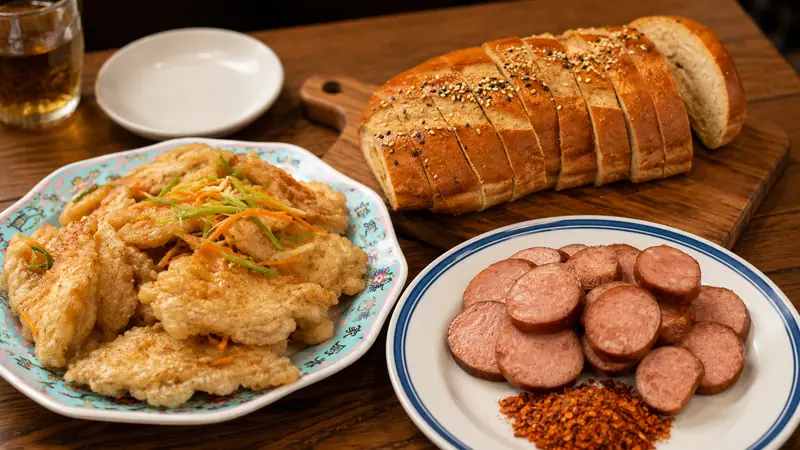
Harbin is not a one-dish food city. Its flavor comes from three overlapping stories: Russian-style bread, sausage, and cafes left by the railway-era city; big-hearted Northeast China cooking built on pork, sauerkraut, potatoes, and fire; and the very practical question of what to eat when you are walking through ice sculptures at -20°C. This guide helps you choose what to eat first, where Central Street fits, and how to plan meals around the Ice Festival without wasting body heat in food queues.
Executive Summary
What to expect
A cold-weather city where Russian-influenced bread and sausage sit beside Northeast China stews, crispy sweet-and-sour pork, barbecue, beer, and winter snacks. Spice is usually low; portions are large.
Best first meal
Start on Central Street with Madier ice cream, red sausage, dalieba bread, and one Russian-style meal. Then save a separate dinner for guobaorou, sauerkraut pork, or Dongbei barbecue.
Main traveler challenge
Not spice, but sequencing: Central Street is symbolic and convenient, while the best winter eating strategy depends on whether you are visiting Ice and Snow World that day.
Russian Bread, Sausage, and Border-City Flavor
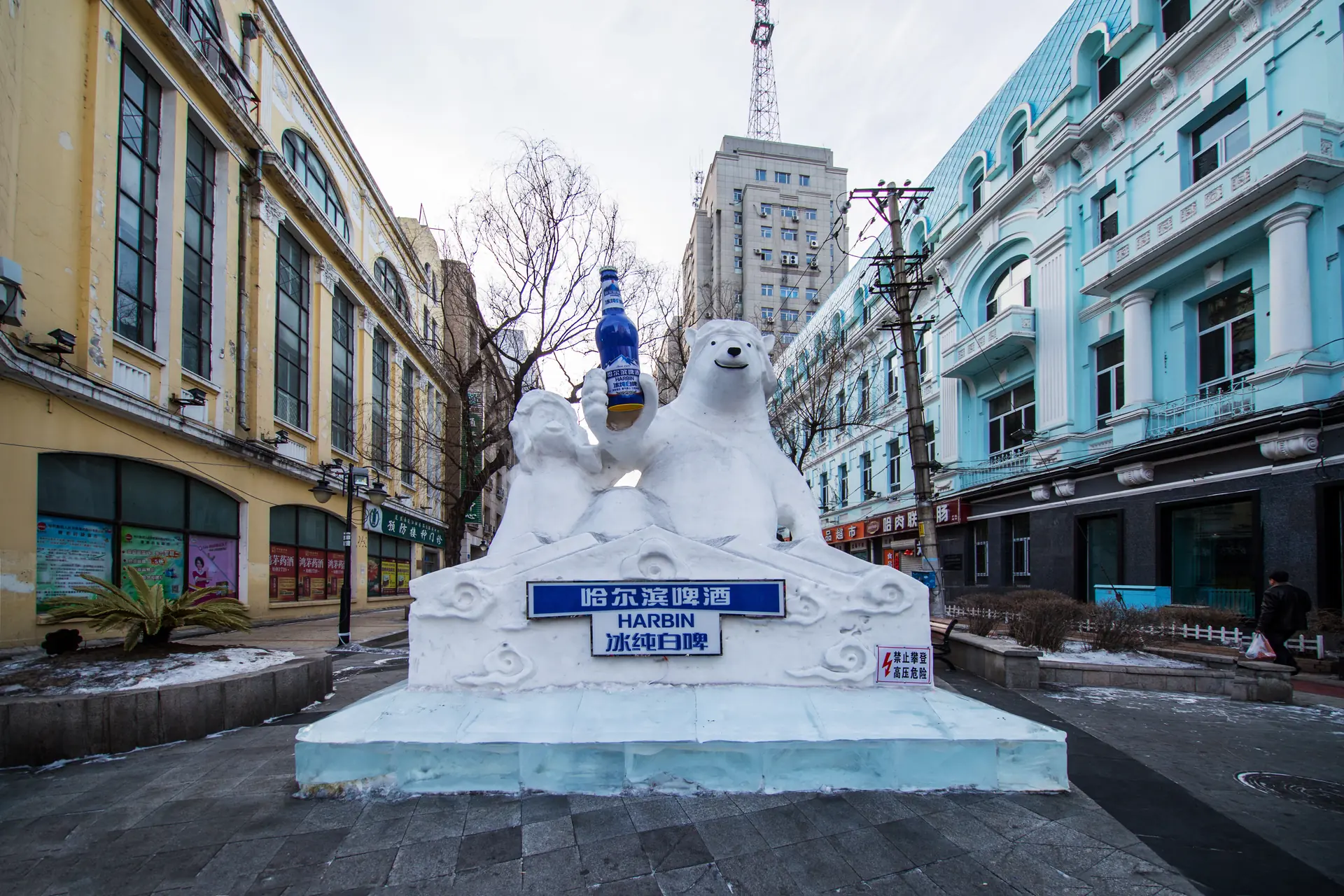
Harbin food is easiest to understand as border-city cooking rather than just "large portions from Northeast China." The Chinese Eastern Railway era turned a Songhua River settlement into a railway boomtown, and Russian, Jewish, Polish, Lithuanian, and Chinese communities shaped the city's table. Bread, sausage, kvass, Western restaurants, coffee rooms, and European-style storefronts became part of daily Harbin, not just museum history.
The city's iconic Zhongyang Pedestrian Street, better known as Central Street (中央大街) (Google | Amap), is the simplest place to see this in one walk. Chinese state media describes the street as about 1,450 meters long and lined with European-style buildings, and that matters for food because the architecture and the snacks tell the same story. Central Street is not where every best meal in Harbin happens; it is where a first-timer can build a quick flavor map.
Three ideas explain most Harbin menus:
Firm Bread
Dalieba (大列巴) is large, sour, and dense, closer to Russian-style bread than to the soft sweet buns many travelers expect in China.
Smoked Sausage
Harbin red sausage (哈尔滨红肠) is garlicky, smoky, and salty enough to need bread, tea, beer, or kvass beside it.
Cold-Weather Appetite
Crispy pork, sauerkraut stews, iron-pot dishes, barbecue, frozen fruit, and ice cream make more sense once your face has met a Harbin winter night.
For background, China Daily's feature on Qiulin lieba traces the bread to Harbin's Russian-influenced railway history, while a Chinese government/Xinhua article on Central Street gives the street's current cultural context.
Must-Try Harbin Dishes and Winter Snacks
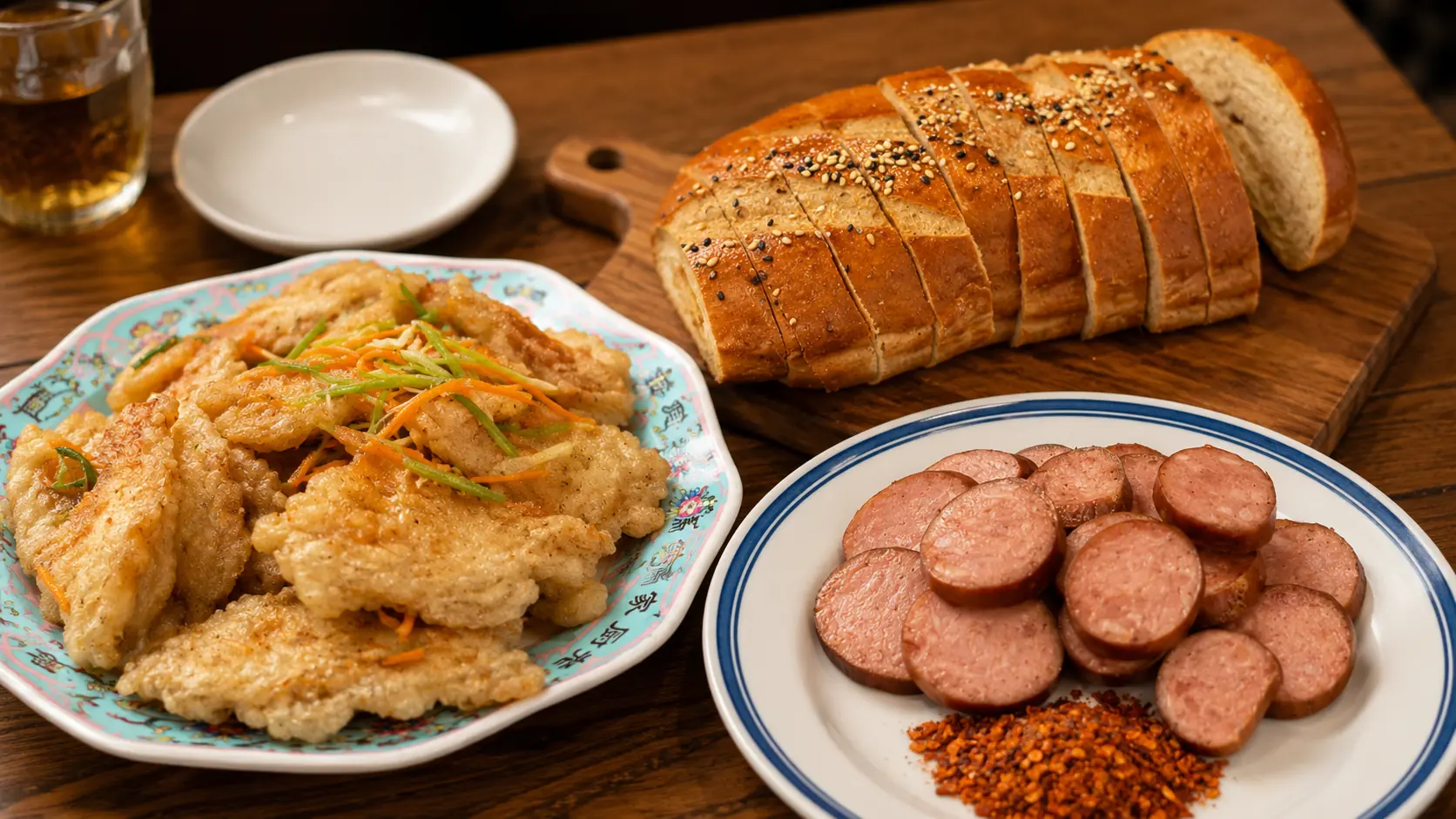
For a first food day, think in three lanes: Russian-influenced heritage foods, Northeast China comfort dishes, and winter street snacks. One good Harbin eating day should cover at least one item from each lane.
0-2 / 5
Typical spice level
¥10-40
Snacks & sausage
¥80-160
Casual meal per person
Winter
Best food atmosphere
| Food | Chinese | What It Tastes Like | Best Time |
|---|---|---|---|
| Dalieba bread | 大列巴 | Large Russian-style bread; firm, mildly sour, best sliced with butter, jam, or sausage | Breakfast, souvenir snack |
| Harbin red sausage | 哈尔滨红肠 | Smoked, garlicky sausage; salty and fragrant rather than juicy like a hot dog | Snack, beer food, souvenir |
| Madier ice cream bar | 马迭尔冰棍 | Milky, slightly salty-sweet frozen bar eaten year-round on Central Street | Central Street walk |
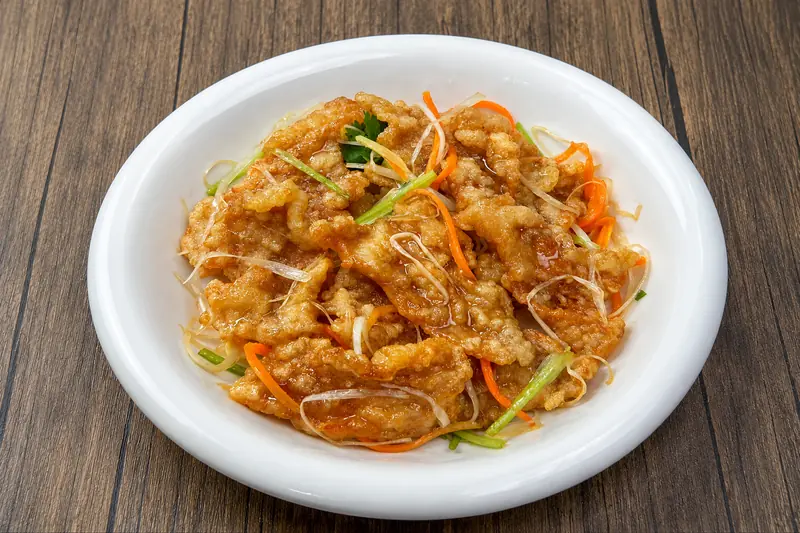
| Crispy sweet-and-sour pork | 锅包肉 | Thin pork slices fried crisp, then flashed in a bright sweet-sour glaze | Shared Northeast meal |
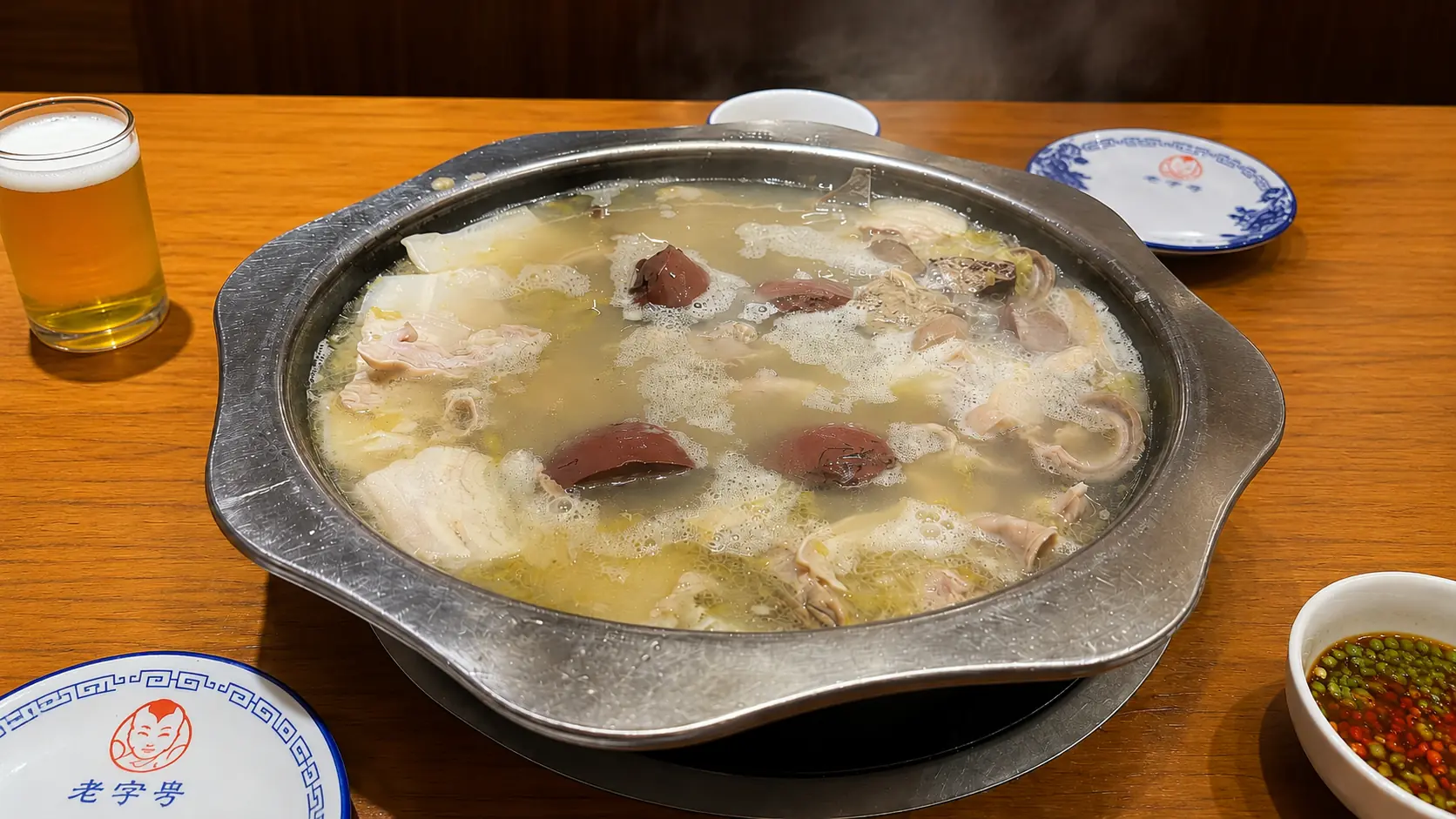
| Sauerkraut pork stew | 酸菜白肉 / 杀猪菜 | Pickled cabbage, sliced pork, and sometimes blood sausage in a hot, sour broth | Winter lunch or dinner |
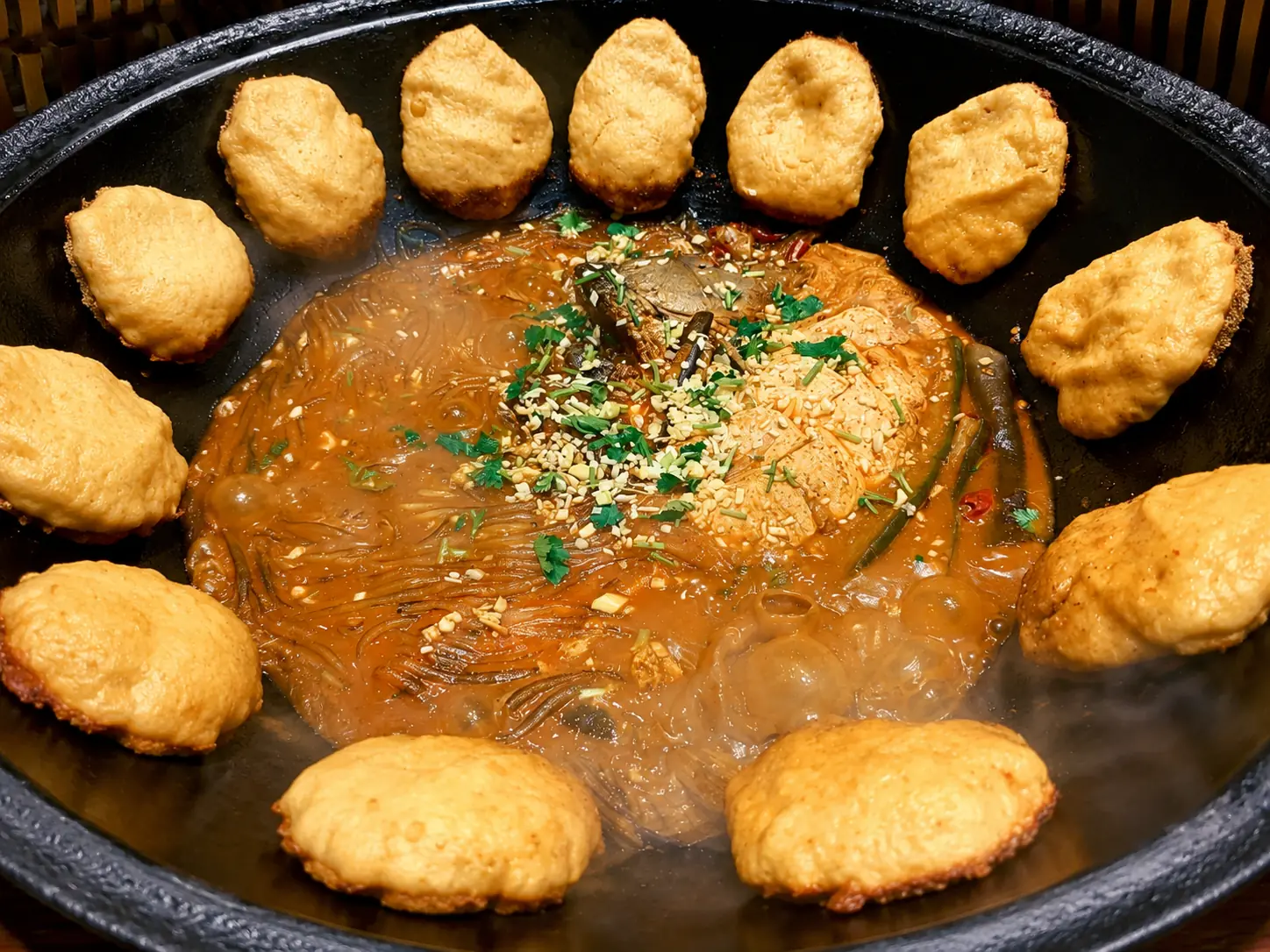
| Iron-pot stew | 铁锅炖 | Fish, chicken, ribs, or goose simmered in a big pot, often with cornmeal cakes around the rim | Group meal |
| Dongbei barbecue | 东北烧烤 | Skewers, grilled chicken rack, chewy cuts, vegetables, cumin, garlic, and beer | Late-night meal |
| Kvass | 格瓦斯 | Bread-fermented drink; sweet, malty, lightly fizzy, and useful with greasy food | With sausage or BBQ |
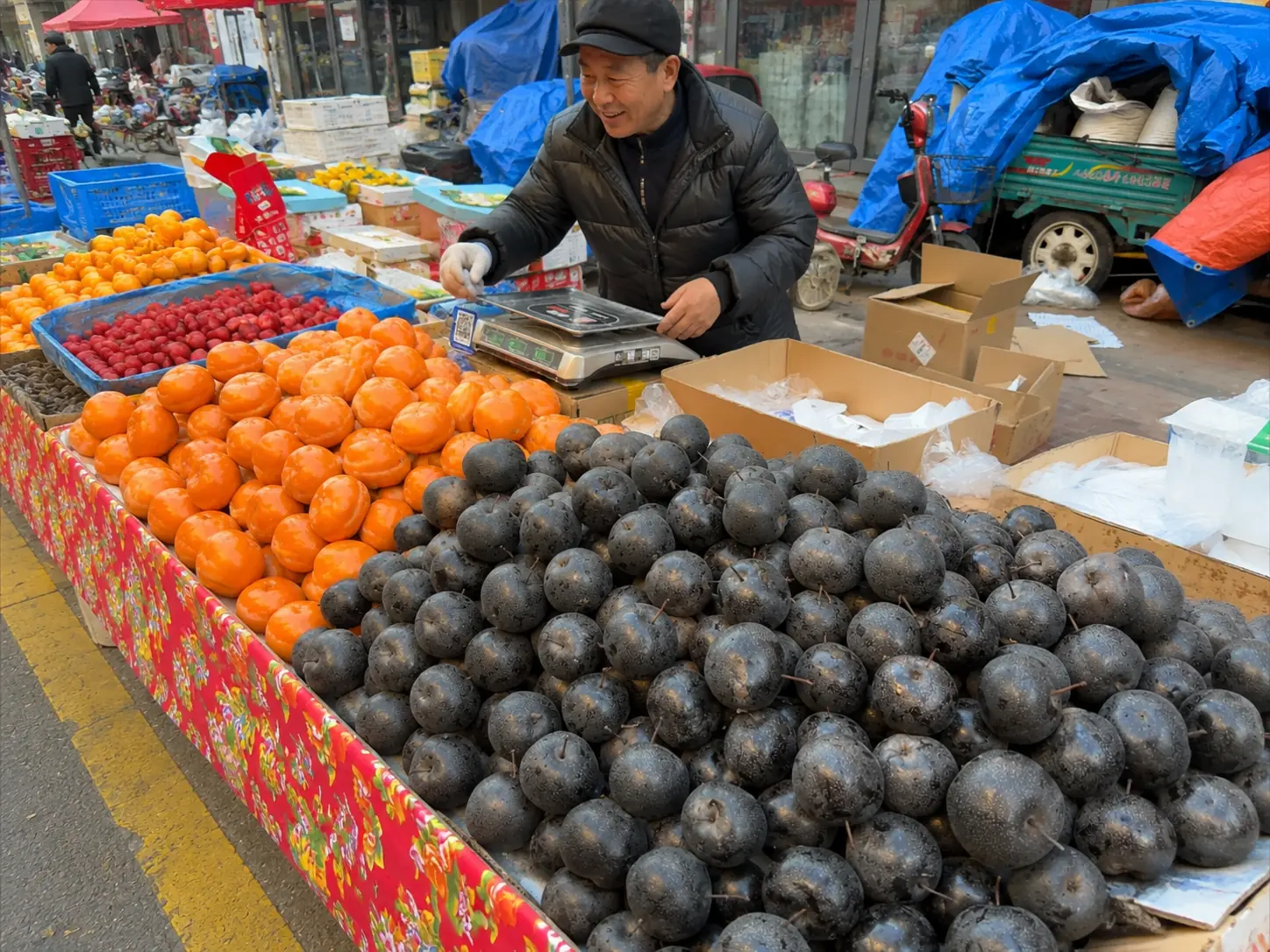
| Frozen pear or persimmon | 冻梨 / 冻柿子 | Winter fruit frozen solid, then thawed until icy, juicy, and slushy | Winter snack |
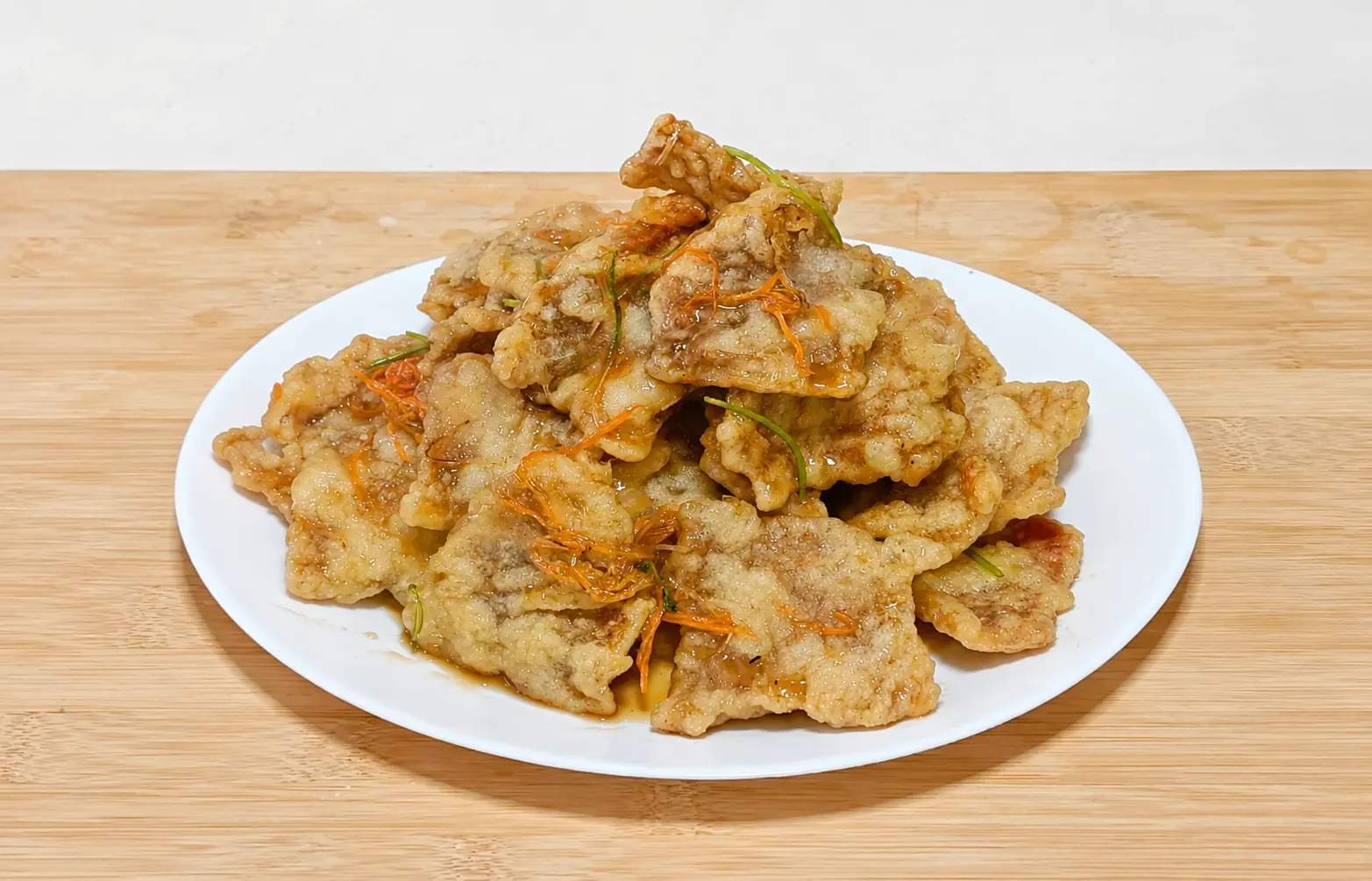
Crispy sweet-and-sour pork (锅包肉) deserves special attention. It is not the thick, ketchup-heavy sweet-and-sour pork many travelers know from overseas Chinese restaurants. The Harbin version should be crisp, thinly glazed, bright with vinegar, and still light enough that you want another piece. Common local histories connect the dish with chef Zheng Xingwen and early twentieth-century Harbin's official banquets for Russian guests; for travel purposes, the key is taste: if the coating turns soggy or the sauce feels like syrup, order it somewhere else next time.
Red sausage plus dalieba is Harbin's easiest edible souvenir combination. The bread can feel too dry if you bite into it like a soft bakery roll; slice it, add butter or jam if available, and eat it with sausage, tea, kvass, or beer. For international flights, do not assume meat products can enter your home country just because they are vacuum-packed.
Central Street Food Crawl in Harbin
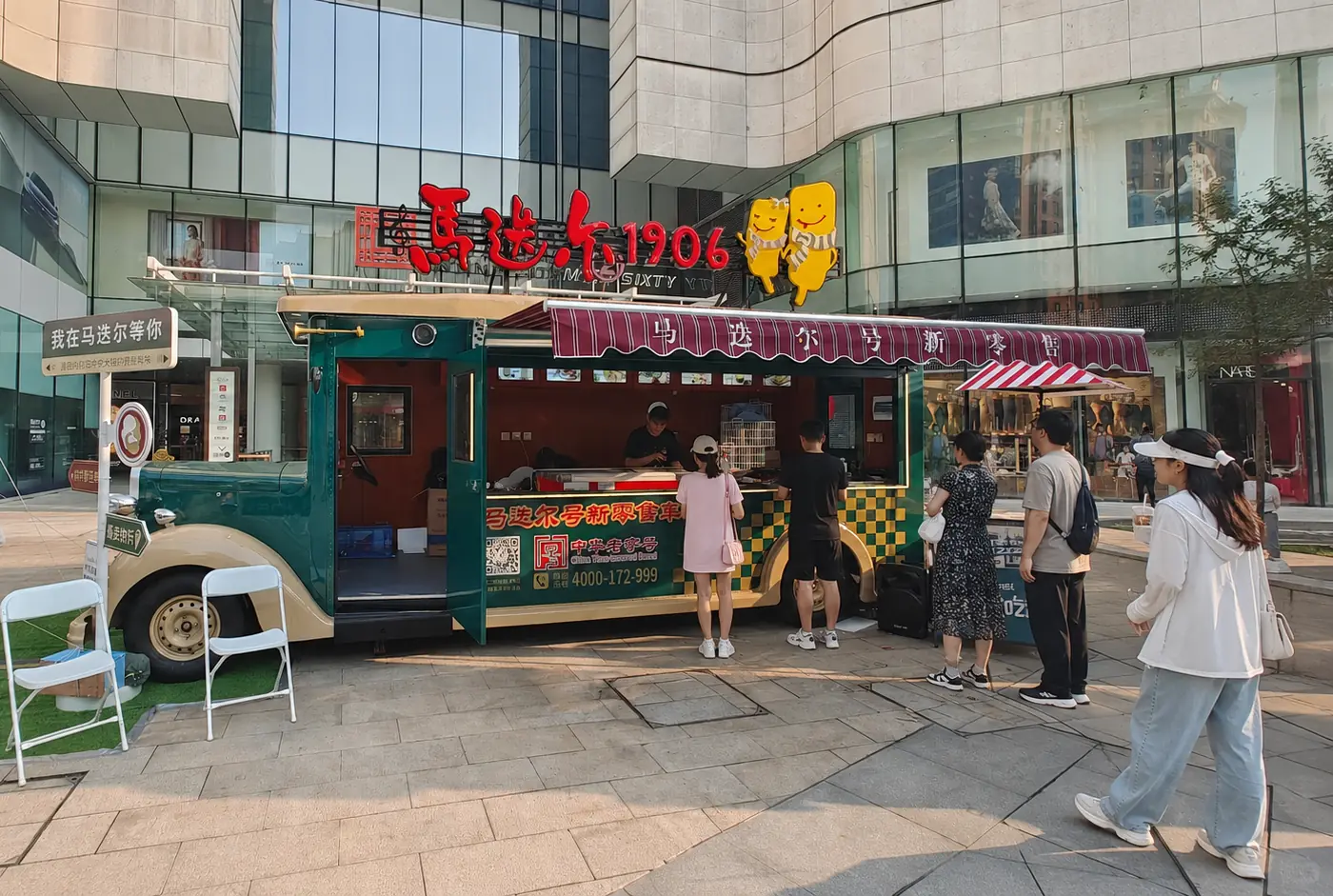
Central Street works best as a first-night food crawl plus one sit-down meal. If you try to eat every meal here, the route becomes tourist-heavy. If you use it as a symbolic introduction, it is excellent: architecture, ice cream, red sausage, Russian-style dining, souvenir snacks, and winter lights all sit within a walkable spine.
Madier Ice Cream: The First Bite (Google | Amap)
Madier (马迭尔) is the classic first bite on Central Street. The brand is associated with the historic Madier Hotel on Central Street, dating to the early twentieth century, and the ice cream bars are sold year-round from street-facing counters. Planetwurst describes the Central Street Madier as a Harbin institution founded in 1906, while China Discovery places the iconic stall at No. 89 Zhongyang Pedestrian Street.
One plain milk bar is enough for your first try. The point is not a complicated flavor tasting; it is the strange pleasure of eating ice cream in a city where winter can make your eyelashes frost. If the line is extreme, do not sacrifice dinner for it. Many nearby shops sell the bars, and the experience is not worth a 30-minute cold wait.
Red Sausage and Dalieba Shops (Google | Amap)
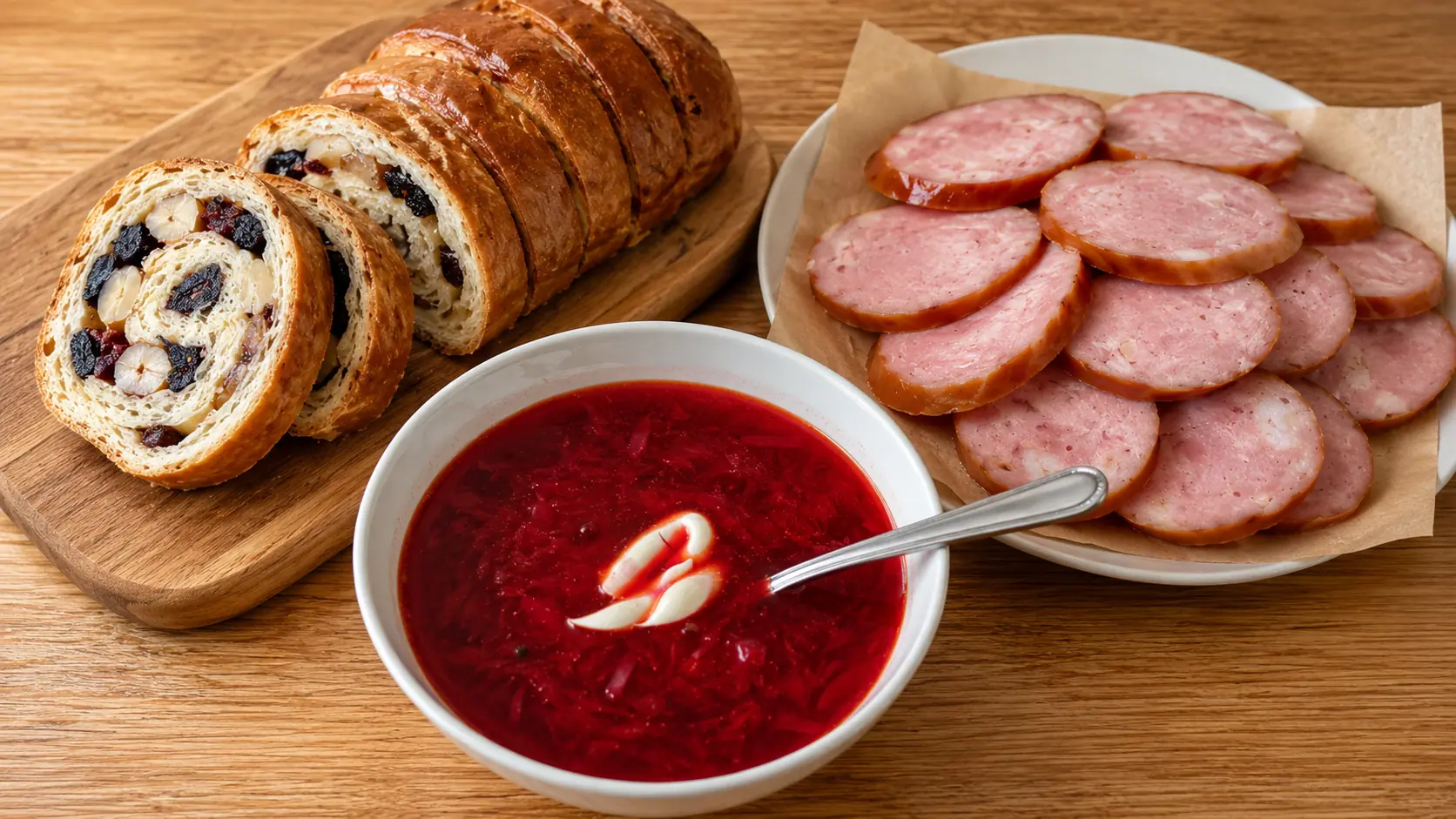
Qiulin Lidaosi (秋林里道斯), Harbin Meat Union, Shangwei, and other local brands all appear in red-sausage conversations. Buy a small piece or sliced portion before committing to a gift box. Harbin red sausage is smoky and salty; it is better with bread, beer, or tea than eaten in a large quantity by itself.
Dalieba is similar. It is a cultural taste as much as a flavor. Travelers who like sourdough, rye bread, or hard-crusted loaves usually understand it faster; travelers expecting soft Asian bakery bread may find it dry. For souvenirs, sausage and small packaged pastries are easier to carry than a large bread round.
Huamei and Russian-Style Western Food (Google | Amap)
Huamei Western Restaurant (华梅西餐厅) at No. 112 Central Street is the easiest Russian-style sit-down meal for first-timers. The World Tourism Cities Federation lists it as a time-honored Russian-style Western restaurant and notes classic dishes such as beet-root soup, stewed beef in casserole, kvass, bread, potato salad, and pickled cucumber.
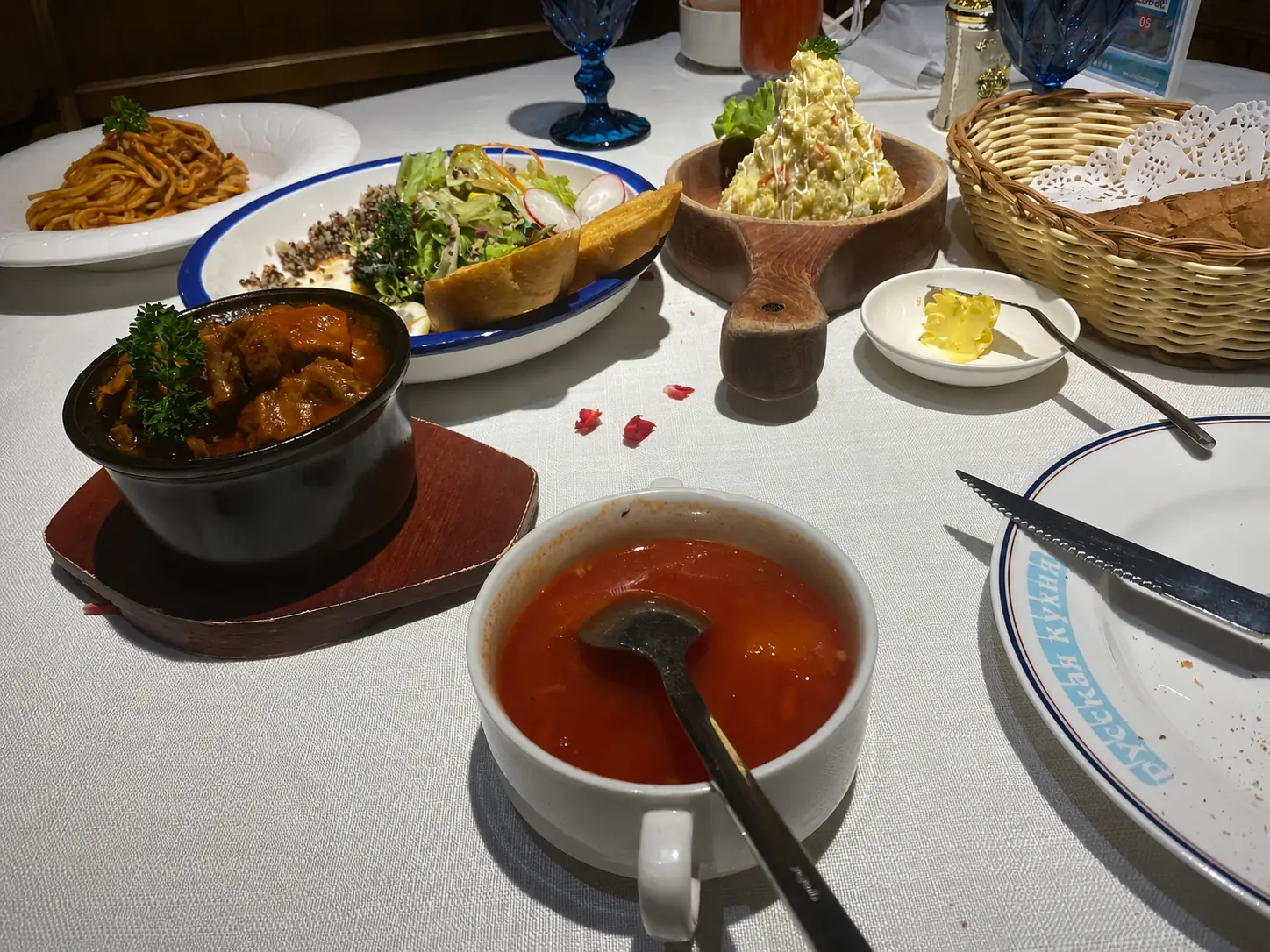
Do not judge it like a modern European fine-dining restaurant. Harbin's Russian-style Western food has been localized for a long time, and that is the point. Order red cabbage soup, bread, pickled cucumber or potato salad, one stewed meat dish, and kvass if you want the historical flavor without over-ordering. If you have eaten a lot of food in Russia or Eastern Europe, Huamei's value is the Harbin setting and old-room atmosphere more than culinary surprise.
Morning Markets, Dumplings, and Everyday Winter Staples
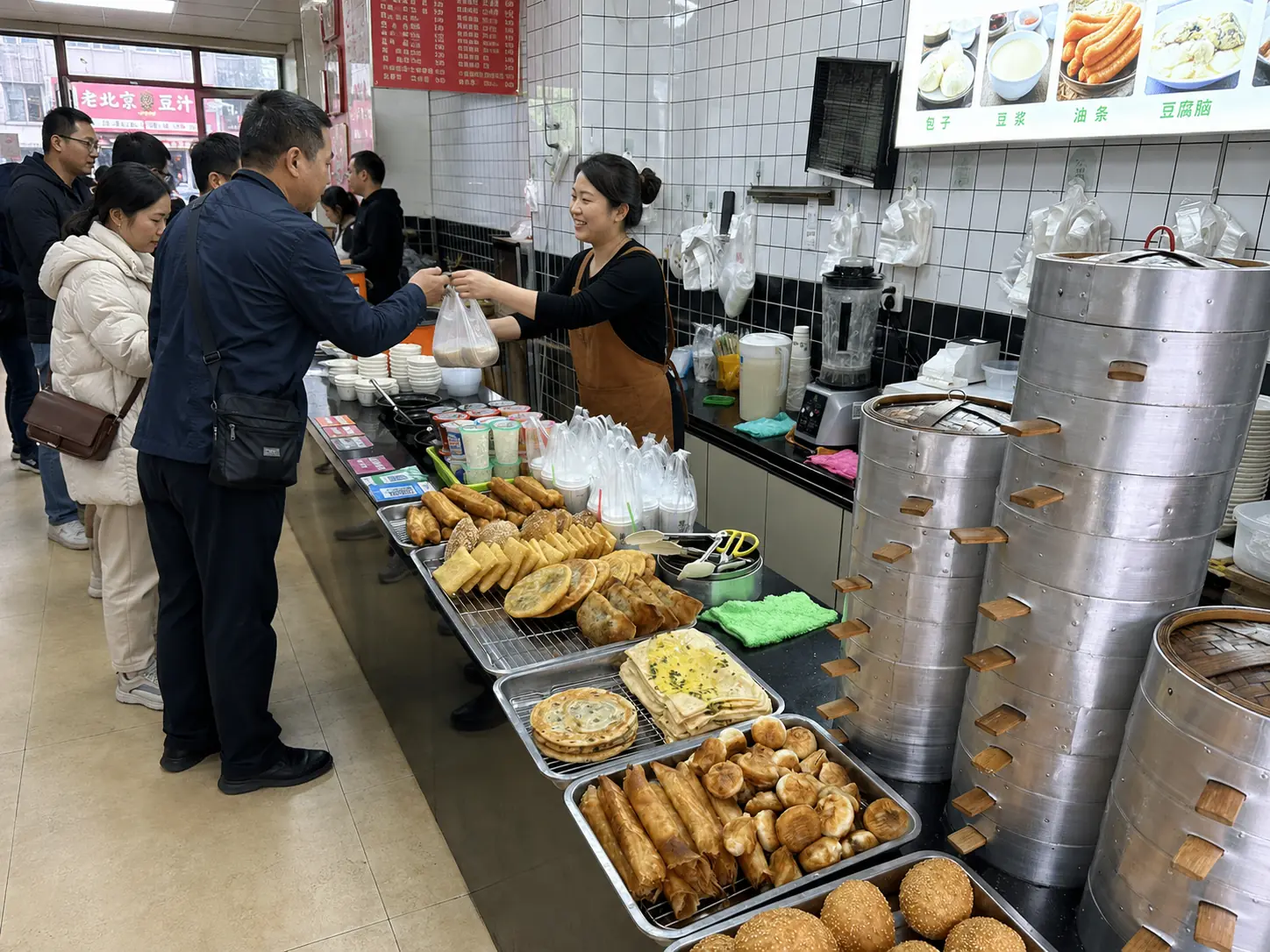
Harbin food is not only Central Street and big restaurant dinners. A good winter morning can start with a local breakfast shop or market stall: hot soy milk, steamed buns, fried dough, pancakes, porridge, eggs, and simple savory snacks eaten while the city is still waking up. The exact market scene changes with season and weather, so treat morning markets as flexible neighborhood eating rather than a fixed attraction you must chase.
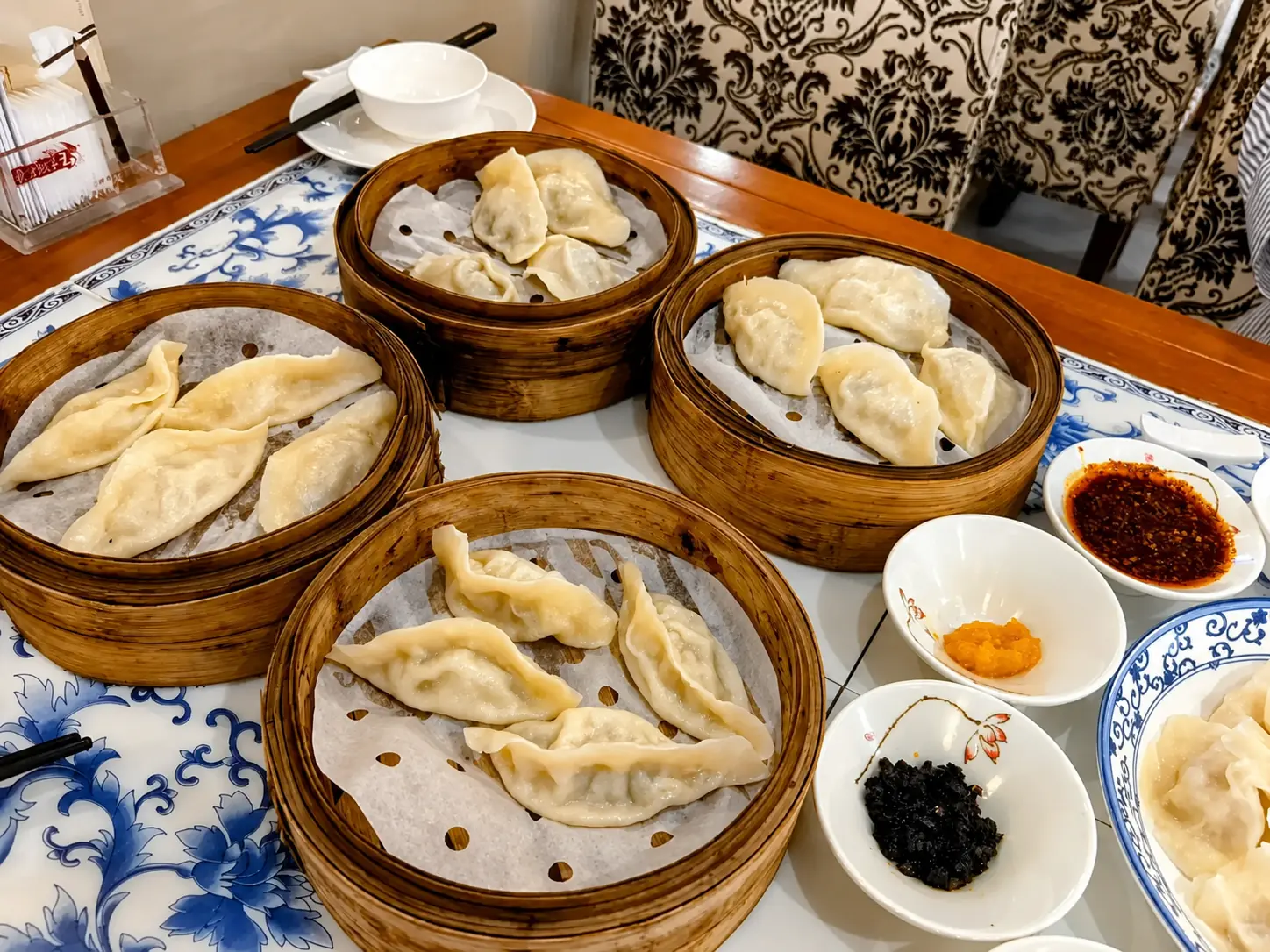
Dumplings are one of the safest cold-weather meals for foreign travelers. They are warm, filling, easy to share, and easier to order than many offal-heavy dishes. If you are traveling with children, vegetarians, or cautious eaters, a dumpling meal plus one vegetable dish can be a useful reset between heavier Northeast meals.
This everyday side of Harbin matters because it balances the famous foods. Red sausage, dalieba, and Madier ice cream give the city its symbols; breakfast stalls, dumpling shops, and simple hot dishes make the trip comfortable.
Dongbei BBQ and Harbin Night Markets
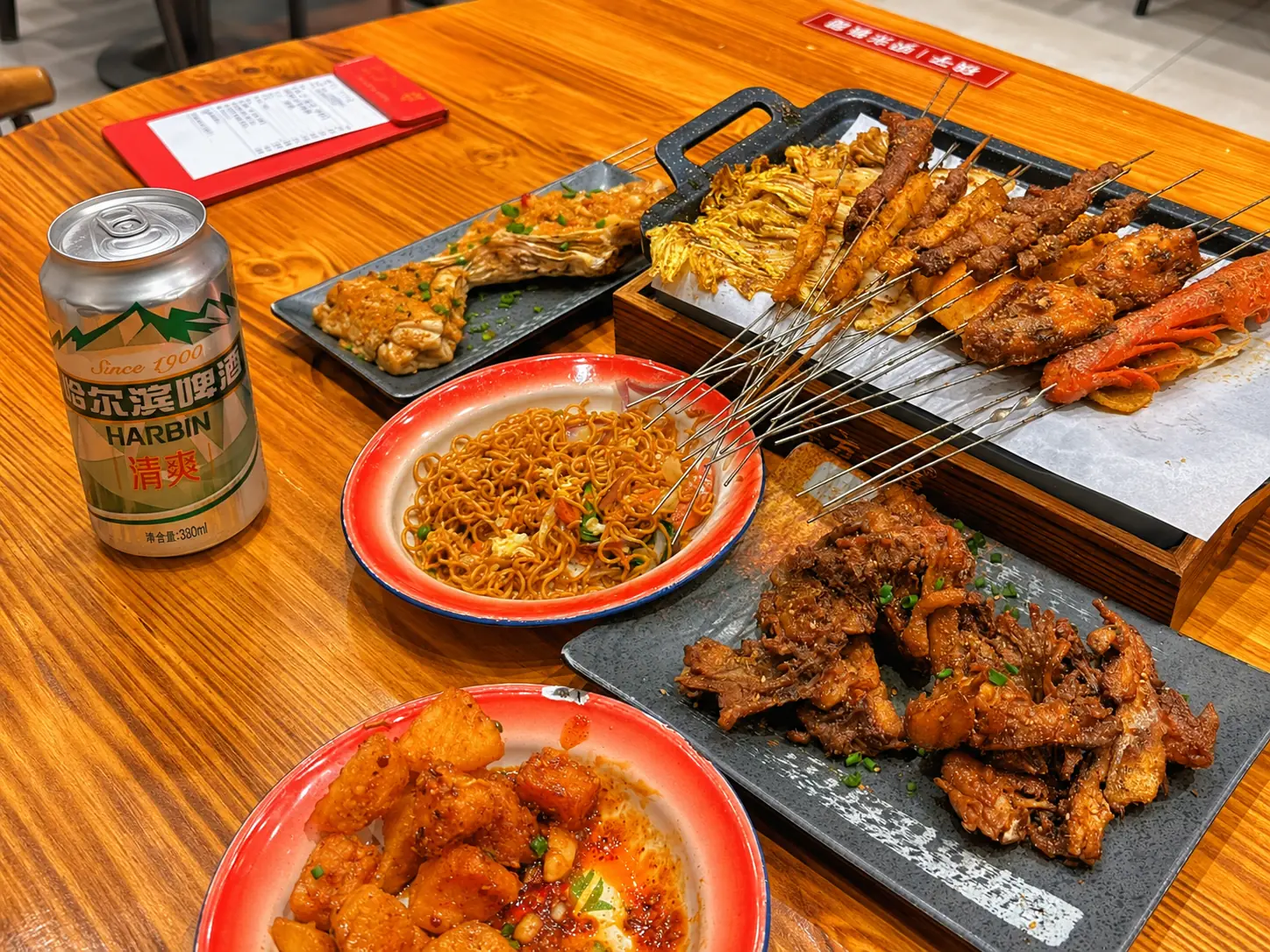
Harbin's late-night pleasure often sits at a barbecue table rather than in a formal restaurant. Dongbei barbecue is not just skewers; it is lamb, beef, chicken wings, grilled chicken rack, chewy tendon cuts, grilled cold noodles, garlic eggplant, potatoes, peanuts, edamame, beer, and a slow table rhythm.
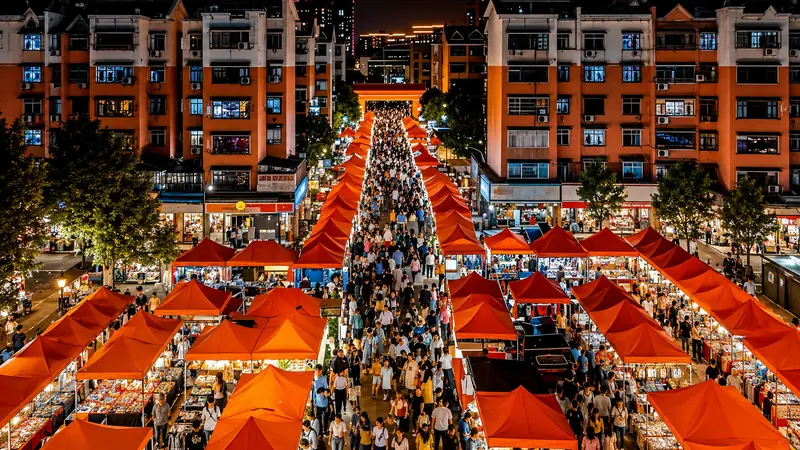
Shida Night Market (师大夜市) (Google | Amap) is useful when you want a student-neighborhood street-food mood. Weather, city management, and seasonal stall changes can affect the exact experience, so treat it as a flexible evening option rather than a guaranteed attraction. Summer and early autumn are more comfortable; winter is colder but more dramatic if you still have energy after sightseeing.
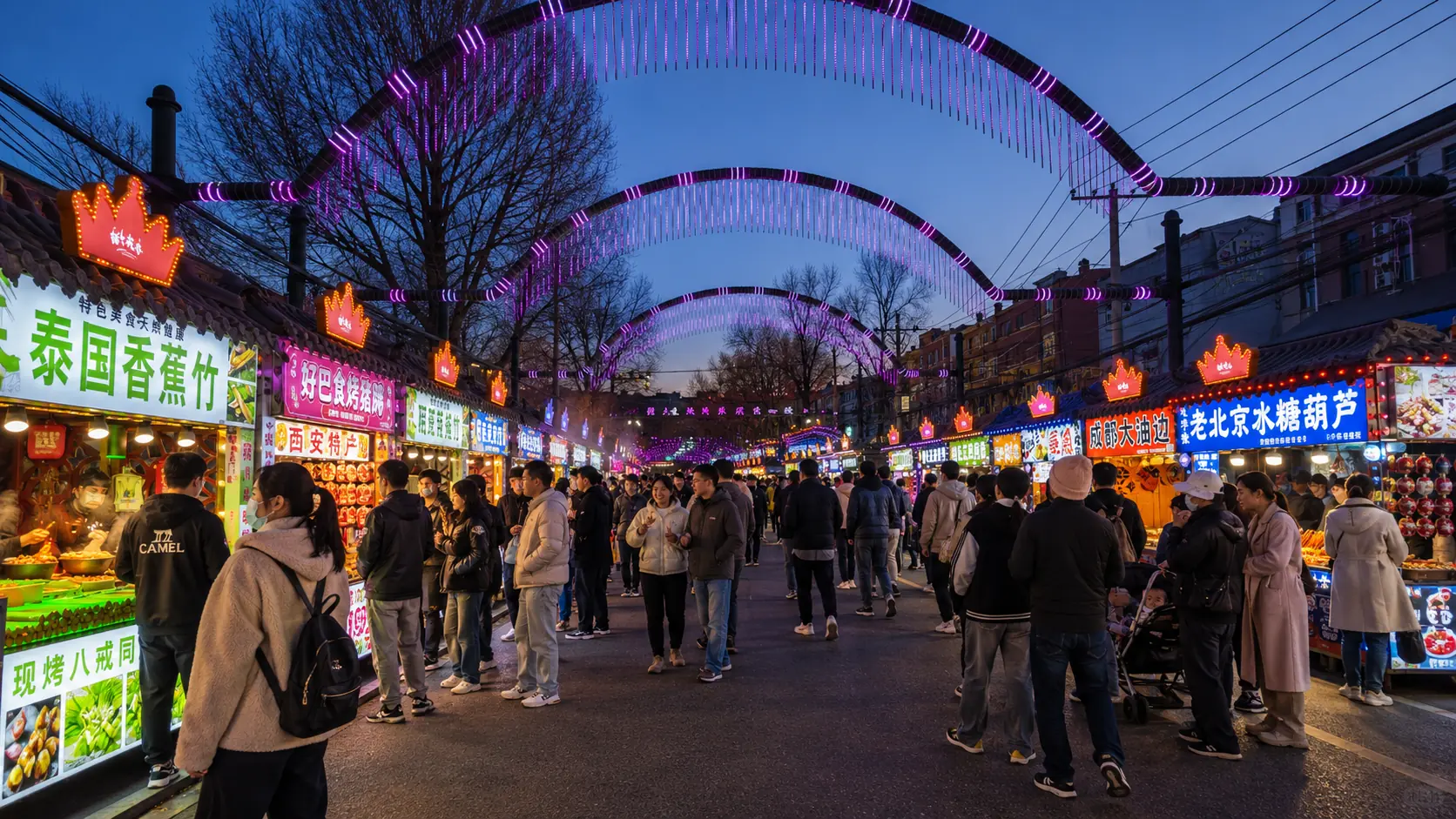
Start simple:
Safest Skewers
Lamb, beef, chicken wings
Start here if the menu is Chinese-only or you are ordering for a mixed group.
Very Northeast
Grilled chicken rack
Flavorful and local, but messy, bony, and better for confident eaters.
Street-Food Carb
烤冷面
Grilled cold noodles are filling, familiar, and easy to add beside skewers.
Adventurous Cuts
Tendon, tripe, chewy bits
Order these only if texture is part of the fun for you.
Meat Balance
Garlic eggplant and potatoes
Vegetables, mushrooms, and leeks keep a barbecue table from turning too heavy.
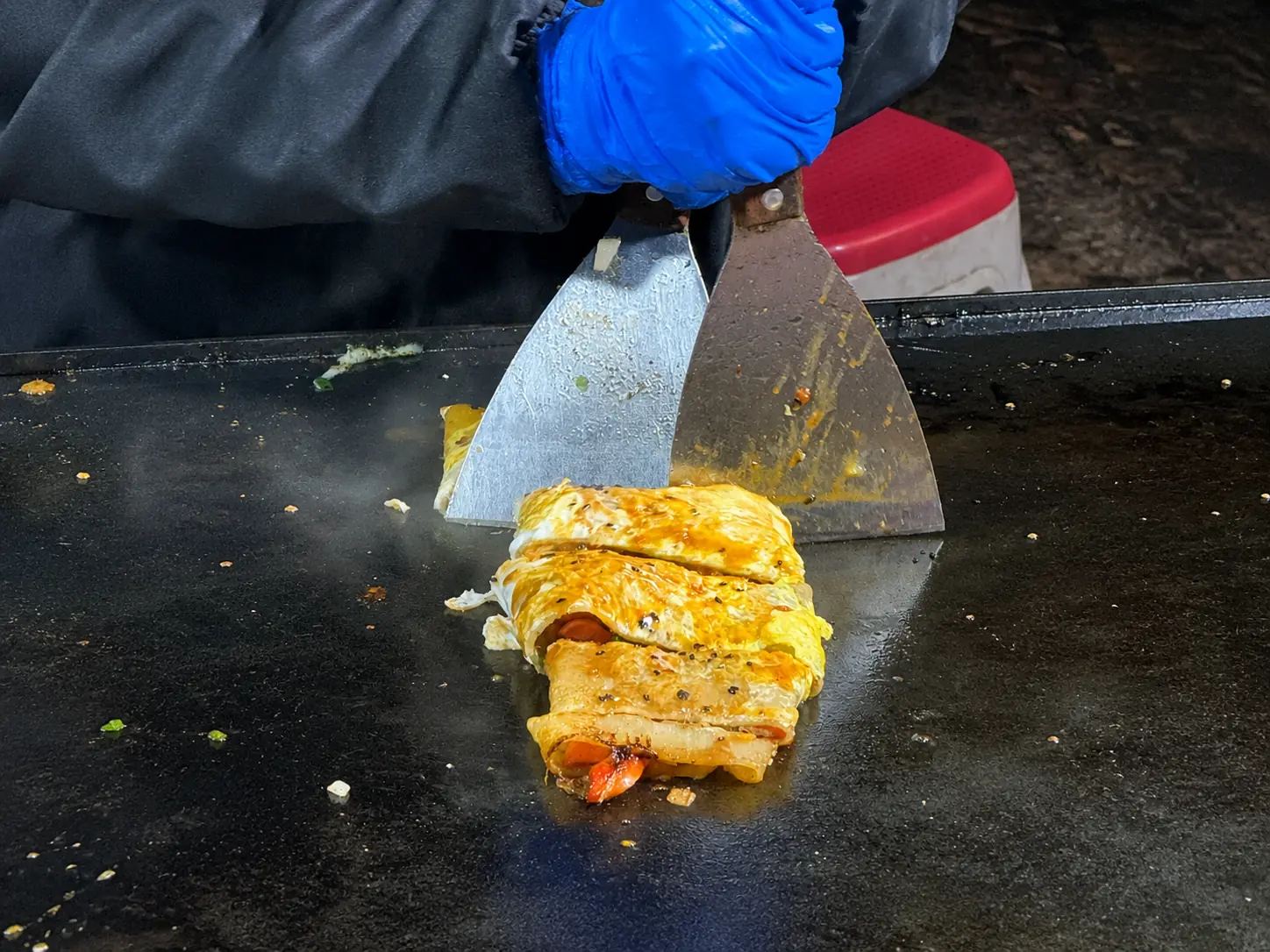
For foreign travelers, the challenge is usually not chili heat. It is menu decoding. Many barbecue menus are Chinese-only, and some cuts sound intimidating when translated literally. Order the basics first, look at nearby tables, then add one or two items. Harbin barbecue usually leans on garlic, cumin, smoke, salt, and light chili powder rather than the numbing spice of Sichuan.
Ice Festival Food Strategy in Harbin
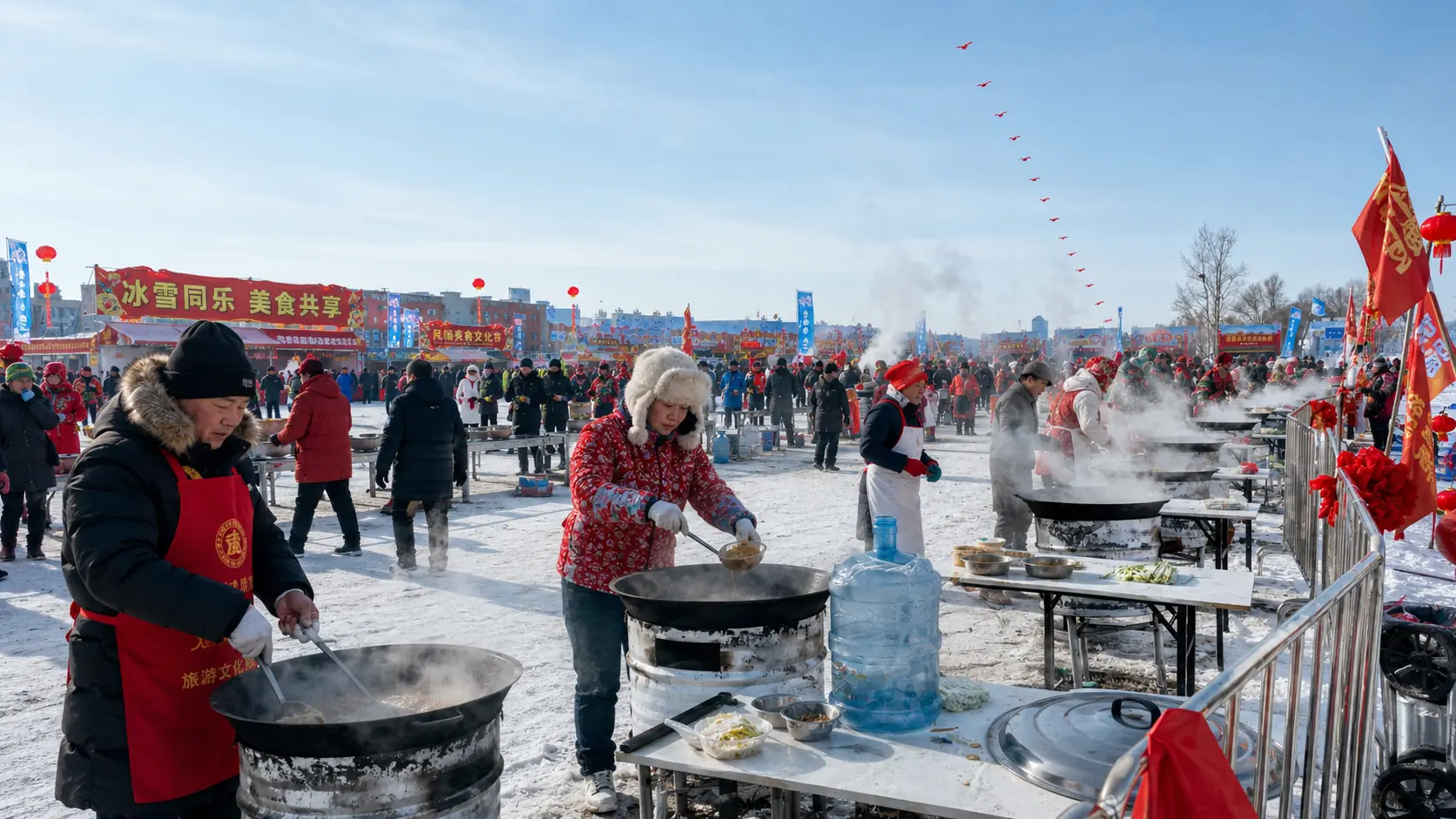
During Ice Festival season, food is part of cold management. Harbin Ice and Snow World (哈尔滨冰雪大世界) (Google | Amap) can keep you outdoors for hours, and People's Daily Online reported that the 2025-26 edition expanded from the previous 1 million square meters to 1.2 million square meters. The 42nd Harbin Ice and Snow Festival opened on January 5, 2026, according to People's Daily Online, but exact park operating dates and food options change each winter.
Use this strategy instead of trying to "find dinner inside":
- Eat a real meal 2-3 hours before entering- Choose iron-pot stew, dumplings, sauerkraut pork, Northeast dishes, or Russian-style Western food.
- Use the park for fuel, not dinner- Hot drinks, sausages, simple snacks, and sweet items are useful, but queues are not worth losing show or photo time.
- Plan a warm exit meal- After leaving, go for dumplings, noodles, barbecue, soup, or a simple indoor meal near your hotel.
- Eat normally before your sightseeing block- Do not save your appetite for the park if you are already spending the afternoon outdoors.
- Add one warm, filling meal- This is the key meal for staying comfortable once the temperature drops after dark.
- Buy hot drinks and simple snacks only- Use food stalls as warmth stops, not as a full dinner plan.
- Keep the final meal simple and close- Pick dumplings, noodles, soup, or barbecue near your hotel instead of crossing town tired.
Central Street and Ice and Snow World do not belong in the same dinner window. A smoother plan is: first night Central Street with Madier, red sausage, and Huamei or a Northeast restaurant; second night Ice and Snow World, with a heavy pre-park meal and a simple hot snack after. This keeps you from crossing the city at the coldest and most tired part of the day.
For park logistics beyond food, link this with our Harbin Ice and Snow World Shows Guide, which covers timing, shows, indoor warm-up points, and route planning.
Harbin Ordering, Allergies, and Cold-Weather Tips
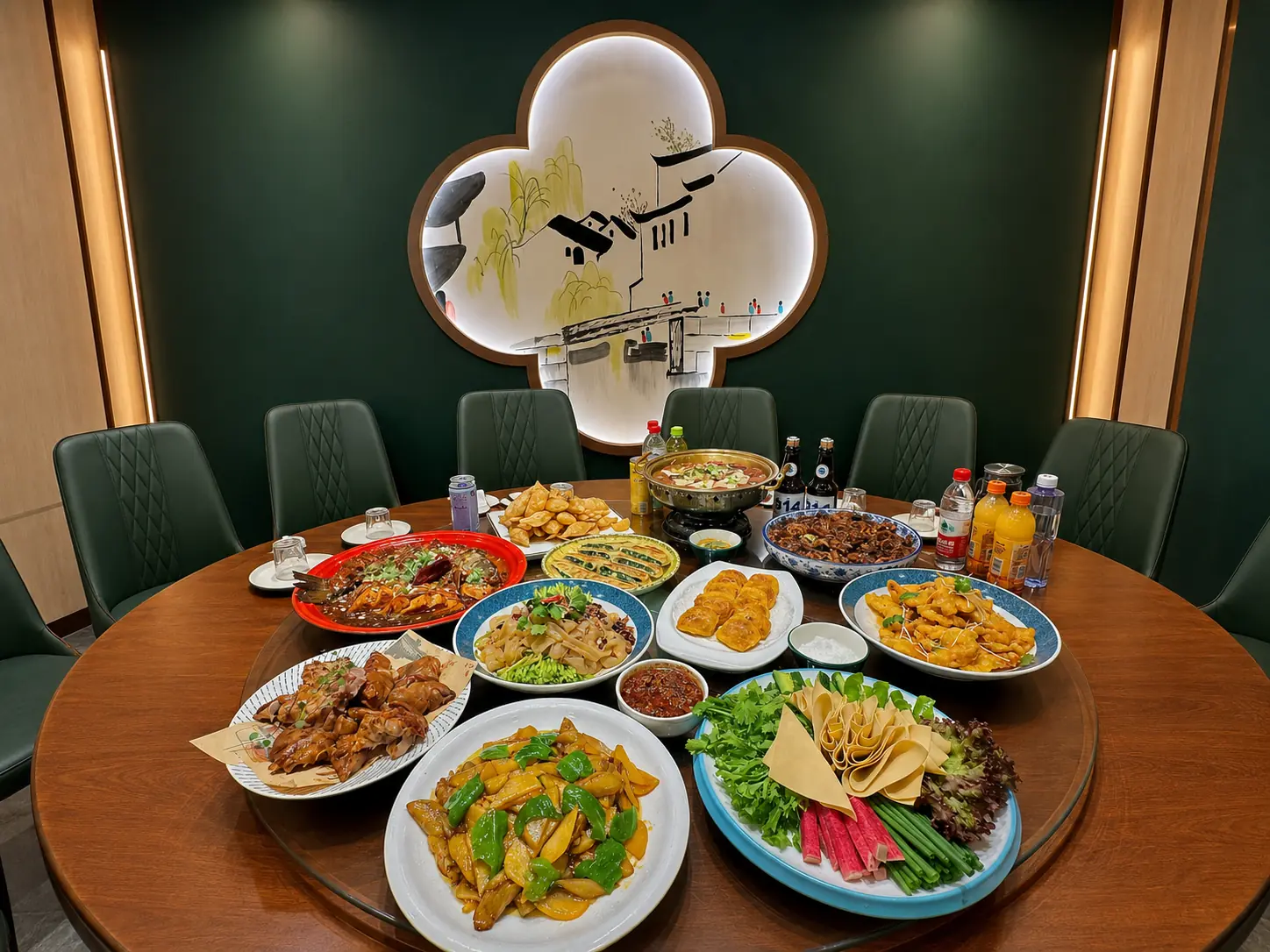
Harbin is relatively friendly for first-time China travelers because many dishes are not spicy, and meat, bread, potatoes, stews, and dumplings are familiar formats. The traps are portion size, offal, and assuming every winter snack can replace a real meal.
Portions Are Large
Northeast restaurants are built for sharing. For two people, start with one main dish, one hot soup or stew, and one carb or cold dish. Add more only after the first round lands.
Decide on Offal Early
Sauerkraut stews, barbecue, and night markets may involve blood sausage, liver, tendon, chicken rack, intestine, or chewy cuts. If that is not for you, say so before ordering.
Vegetarian Needs Caution
Three treasures of the earth (地三鲜), shredded potatoes, cucumber salad, mushrooms, tofu, sweet potatoes, and some vegetable dumplings can help. Pork fat, chicken stock, and shared woks are the risk.
Cold Snacks Are Not Dinner
Madier ice cream, frozen pears, and frozen persimmons are worth trying. They do not replace the hot soup, tea, rice, dumplings, and stews that keep you comfortable through a winter evening.
| English | Chinese | Pinyin | Say It Like… |
|---|---|---|---|
| Please recommend enough food for two people. | 请推荐两个人够吃的菜。 | Qǐng tuījiàn liǎng ge rén gòu chī de cài. | Ching tway-jyen lyahng guh ren goh chir duh tsai |
| No offal or blood sausage, please. | 不要内脏和血肠。 | Bú yào nèizàng hé xuècháng. | Boo yaow nay-dzahng huh shweh-chahng |
| Is this spicy? | 这个辣吗? | Zhège là ma? | Juh-guh lah mah |
| I am allergic to peanuts / seafood. | 我对花生/海鲜过敏。 | Wǒ duì huāshēng / hǎixiān guòmǐn. | Woh dway hwah-shung / high-shyen gwo-min |
| Can I take this away? | 可以打包吗? | Kěyǐ dǎbāo ma? | Kuh-yee dah-baow mah |
Harbin Food Questions for First-Time Travelers
Yes. Harbin is usually easier than spicy destinations such as Chengdu, Chongqing, or Changsha. The main issues are large portions, Chinese-only menus, and deciding whether you are comfortable with offal or blood sausage.
Sources checked for this guide
- China Daily government portal checked for Harbin smoked red sausage (hongchang) curing style and local heritage background: China Daily: Harbin Red Sausage (Hongchang)
- Global Times feature checked for Harbin citywide Dongbei and Russian-influenced culinary scene including guobaorou and dalieba: Global Times: Harbin winter culinary culture
Beyond This Harbin Winter Food Guide
Harbin food planning depends on your actual winter route: hotel location, Ice and Snow World timing, children, dietary limits, and cold tolerance all change the best meal order. For the broader regional table, use our Northeast Chinese cuisine guide before choosing stews, dumplings, barbecue, and cold-weather shared plates. Keep one main food focus per half-day so Central Street, Russian-style dining, Dongbei barbecue, and Ice Festival logistics do not compete with one another.
© gochinafreely.com — Original guide by Go China Freely.