Walk & Access
Good to Know
Why Shougang Park Feels Different in Beijing
Industrial Beijing, reused
A steel city, not a conventional park
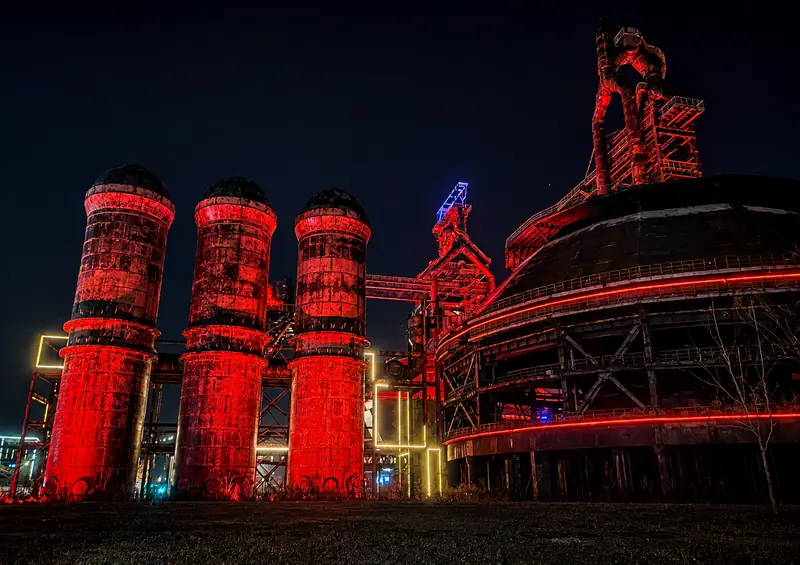
Shougang Park (首钢园) is hard to explain with the word “park.” It is not an imperial garden, and it is not a soft creative district like 798. It is a former steel city in western Beijing, where blast furnaces, pipe corridors, Qunming Lake (群明湖), Big Air Shougang (首钢滑雪大跳台), Winter Olympics legacy spaces, cafes, and exhibition halls share one huge industrial landscape.
The best visit does not chase every building. Give it 2.5-4 hours and follow one clear line from the subway or park entrance to the lake, Big Air, blast furnaces, Xiuchi Pool (秀池), and Liugonghui (六工汇). Then decide whether to stay for night photos or leave before the park's scale turns the walk into a trudge.
1919
Industrial origin
2022
Olympic venue
3-6 km
Core walk
Line 11
Subway access
Shougang Park sits in Shijingshan District (石景山区), far west of Beijing's classic visitor circuit. Three ideas make the place easier to read:
Century-old steel landscape
Official Beijing tourism material describes a century-old steel-factory landscape with a sci-fi edge, now mixing industrial heritage, technology, cultural creativity, sports, exhibitions, offices, and leisure.
Olympic reuse
The Forbidden City explains imperial Beijing; 798 Art District explains factory-to-art reuse. Shougang explains heavy industry, Olympic reuse, urban renewal, and commercial life sharing one oversized steel skeleton.
Scale you can feel
Beijing's official English page describes Shougang as one of China's best-preserved and largest steel-production relics. The useful point is the physical scale: furnaces, silos, pipes, wide roads, and water still feel huge.
Who Should Go
Shougang Park is best for photographers, architecture fans, urban-renewal nerds, Winter Olympics followers, and travelers who have already seen Beijing's classic imperial sights. If you only have one day in Beijing, keep it for the Forbidden City, hutongs, or the Great Wall.
Shougang Park Walking Route for First Visits
First-visit route
Follow one visual rhythm
For a first visit, do not try to "cover" Shougang Park. It is too large and too spread out. Use this as a half-day route with one strong visual rhythm: water, Olympic venue, industrial core, rest stop.
Editorial route: This six-stop sequence is an editorial planning route for a first visit, not an official park itinerary. Keep the order flexible when events or temporary controls change access.
- Xinshougang Station or park entrance(新首钢站 / 首钢园入口)- Confirm your return route before going deep into the park
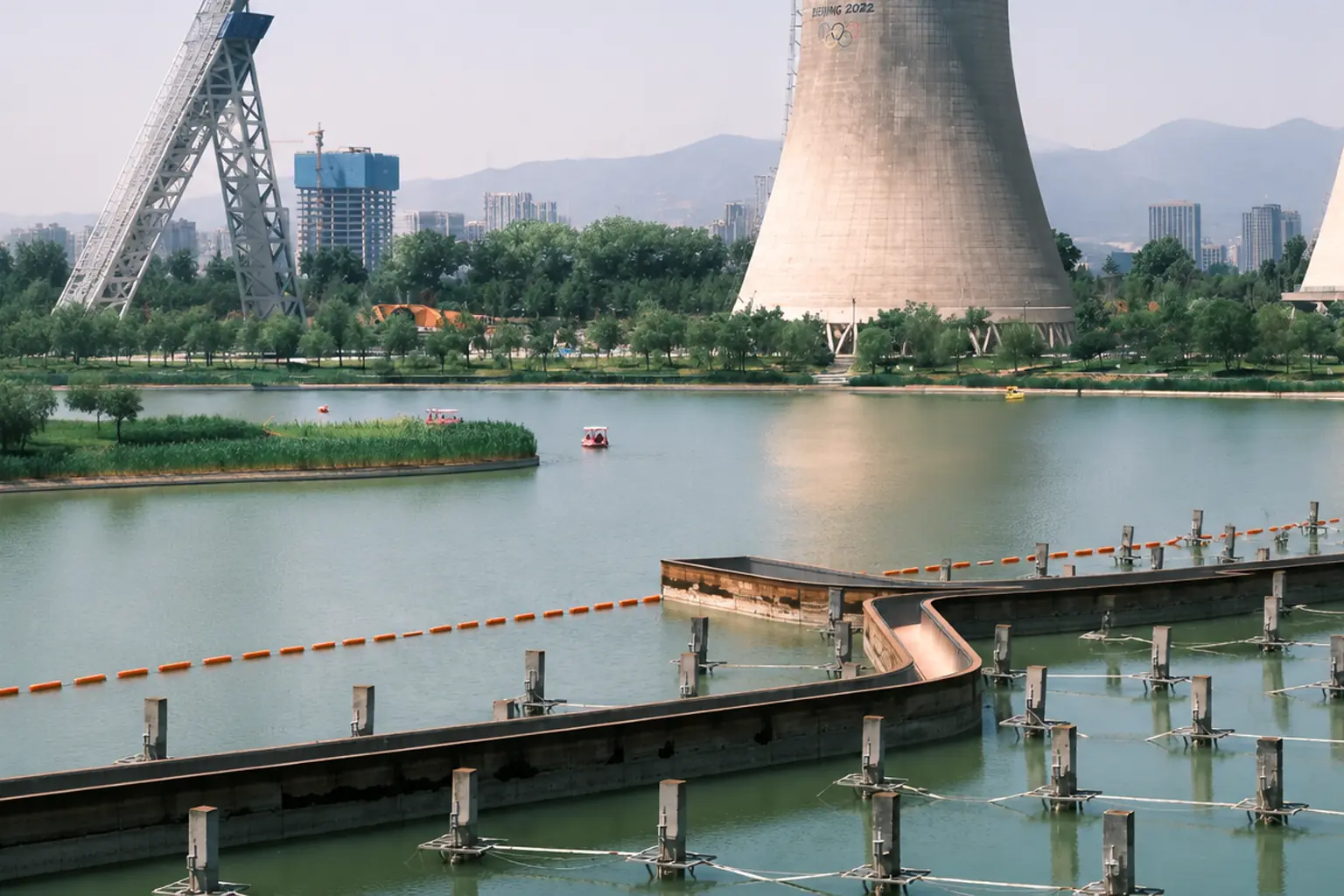
- Qunming Lake(群明湖)- Open the view with water, towers, and Big Air in one frame
- Big Air Shougang(首钢滑雪大跳台)- The Olympic icon and strongest first photo stop
- No.3 Blast Furnace area(首钢三高炉)- Blast furnaces, pipe corridors, and industrial scale
- Xiuchi Pool(秀池)- Quieter water-side pause and optional exhibition context
- Liugonghui or Chang’an Mills(六工汇 / 长安 Mills)- Food, coffee, toilets, and a clean exit point
Pace it to your visit: Allow roughly 3-6 km depending on your entrance, detours, exhibitions, and photo stops. A light visit can be 2 hours; a better walk with coffee, night light, or an exhibition needs 3-4 hours.
Big Air Shougang and Qunming Lake
Primary landmark
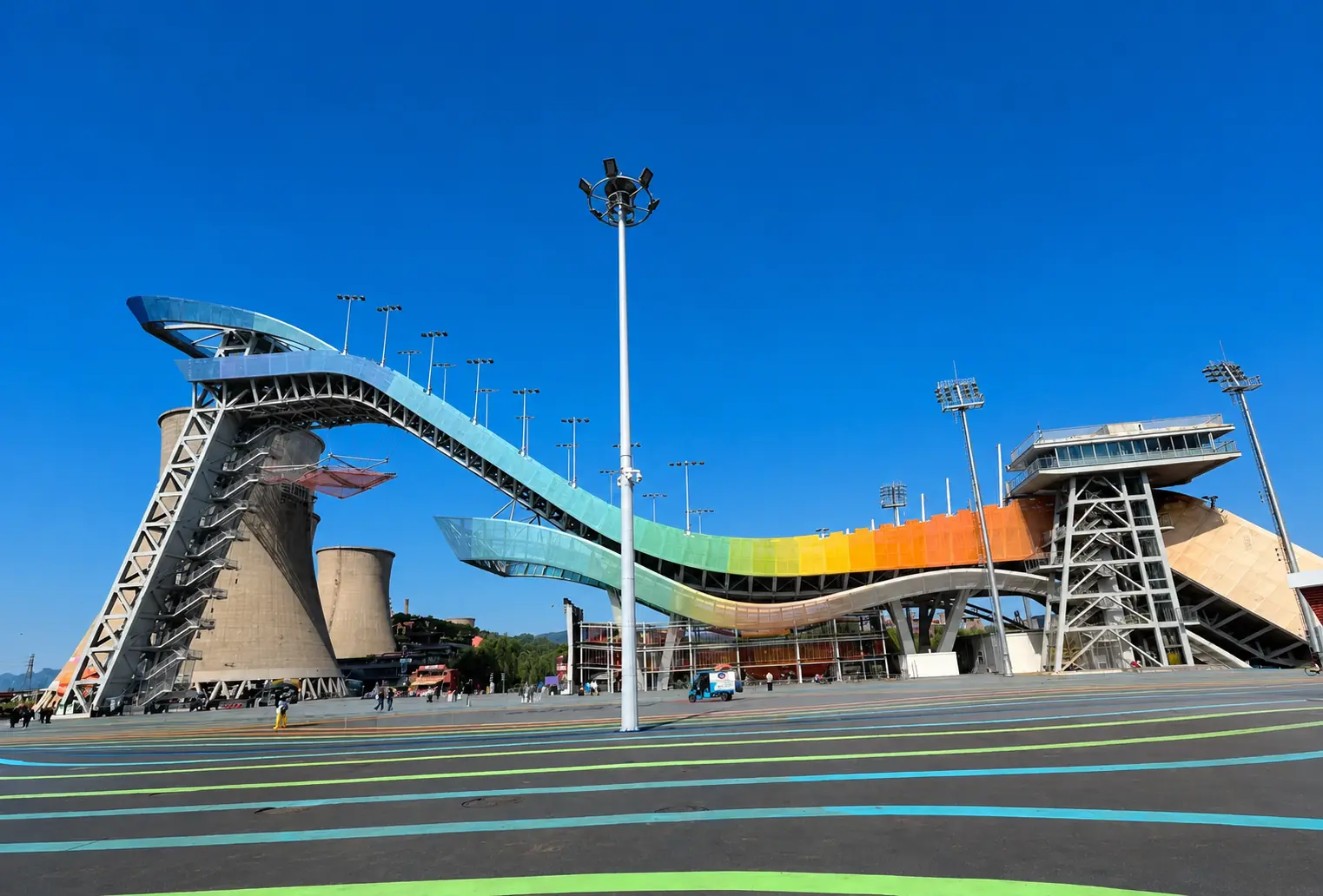
Big Air Shougang (首钢滑雪大跳台)
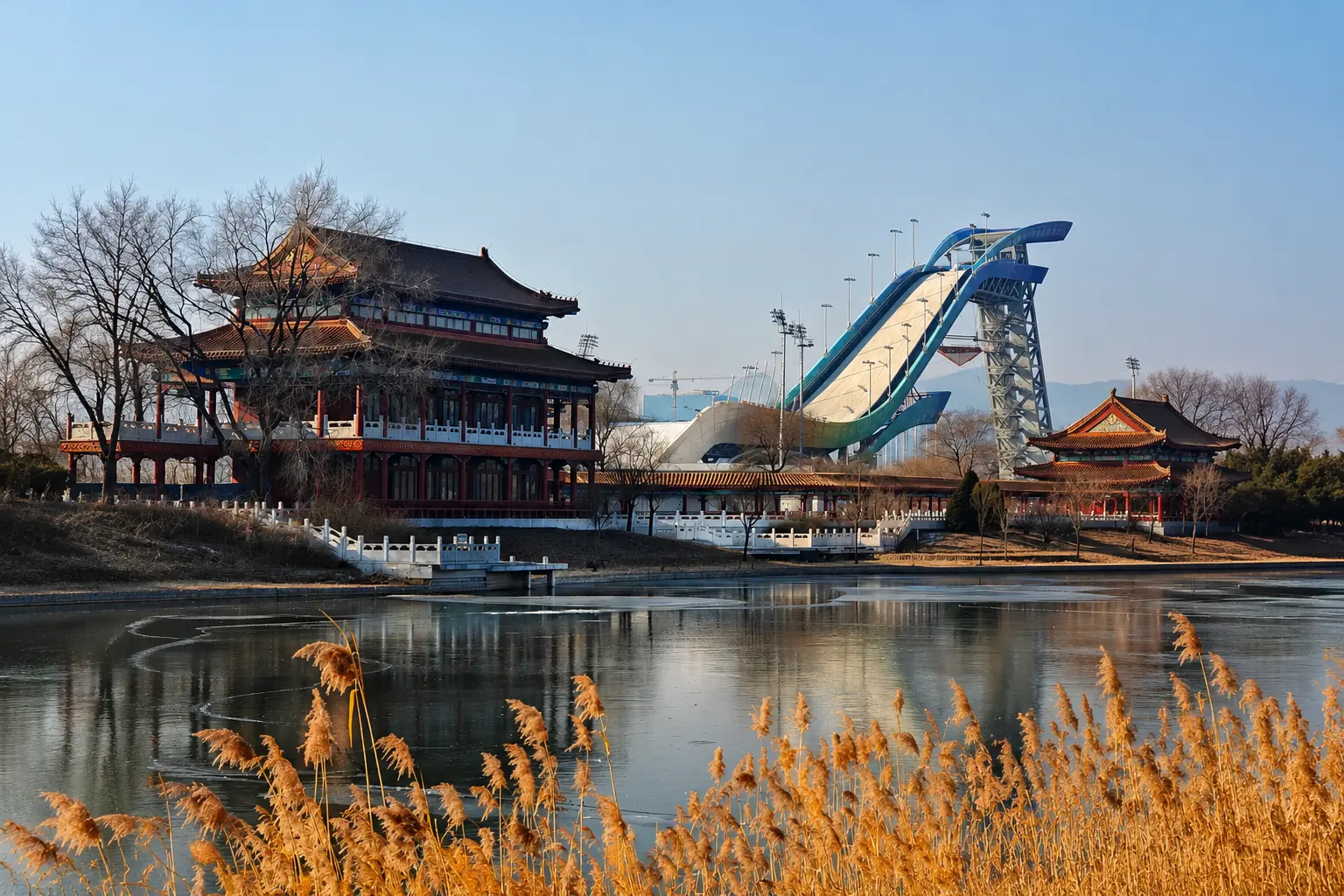
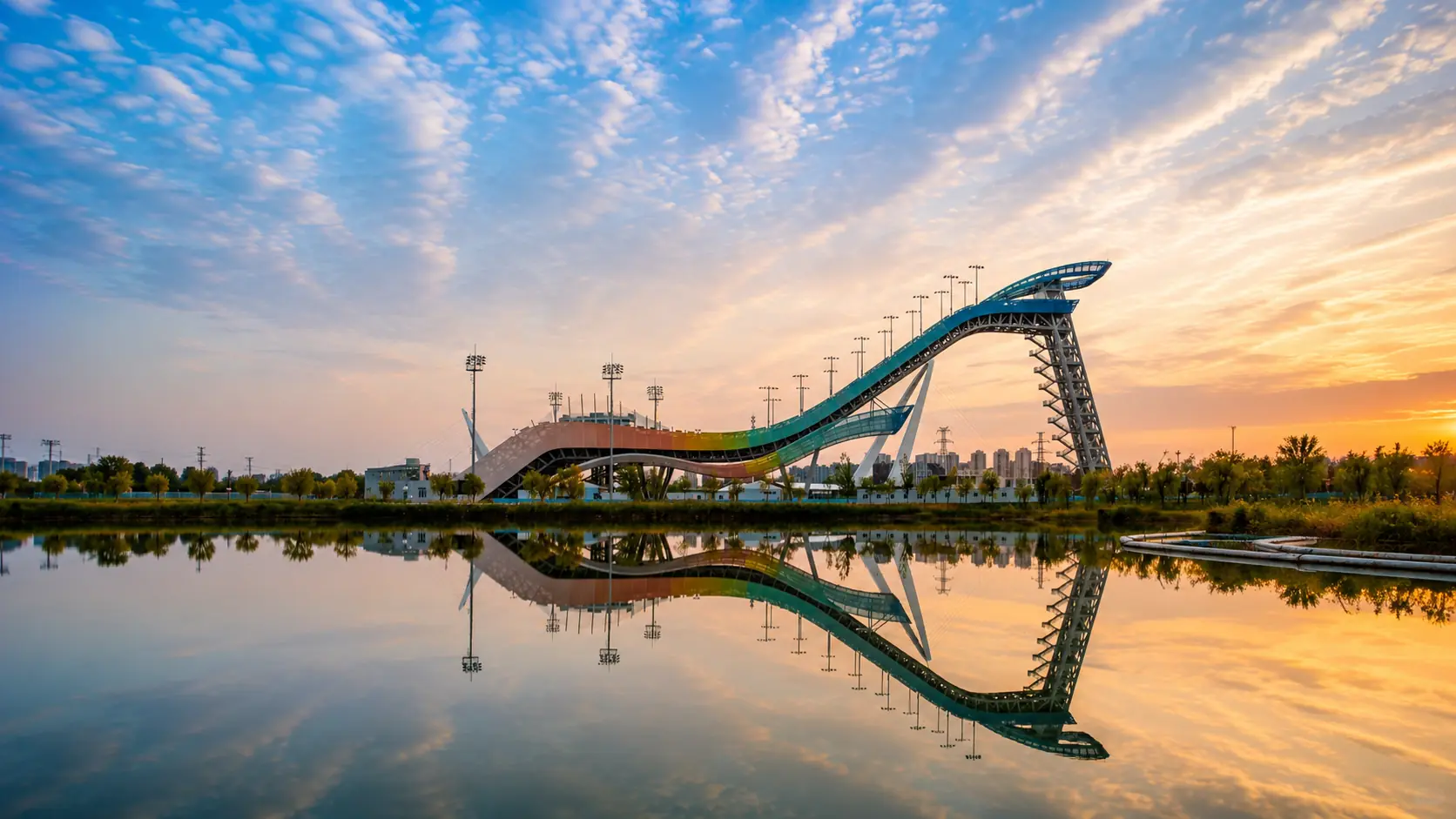
Big Air Shougang is the park's signature image. Beijing's official page says it hosted freestyle skiing and snowboarding competitions during the 2022 Winter Olympics, is the only snow-event stadium in downtown Beijing, and was designed with inspiration from Dunhuang's flying apsara murals.
Do not photograph it from only one point. From Qunming Lake, you can frame the jump with water, cooling towers, and industrial mass behind it. Closer to the structure, the scale changes: the runway, support frame, and surrounding steel scenery make the Winter Olympics reuse feel less like a stadium and more like a piece of the old factory.
Check access before planning a paid experience: Post-Olympics, the venue has been used for competitions, training, cultural and commercial events, light shows, and sports-consumption experiences. Some Big Air-related areas can require reservations through the "AI Shang Shougang Park" (AI尚首钢园) mini-program or on-site channels, so check current rules before planning around a specific paid experience.
Blast Furnaces, Silos and Steel Pipes
Industrial scale anchor
No.3 Blast Furnace (首钢三高炉)
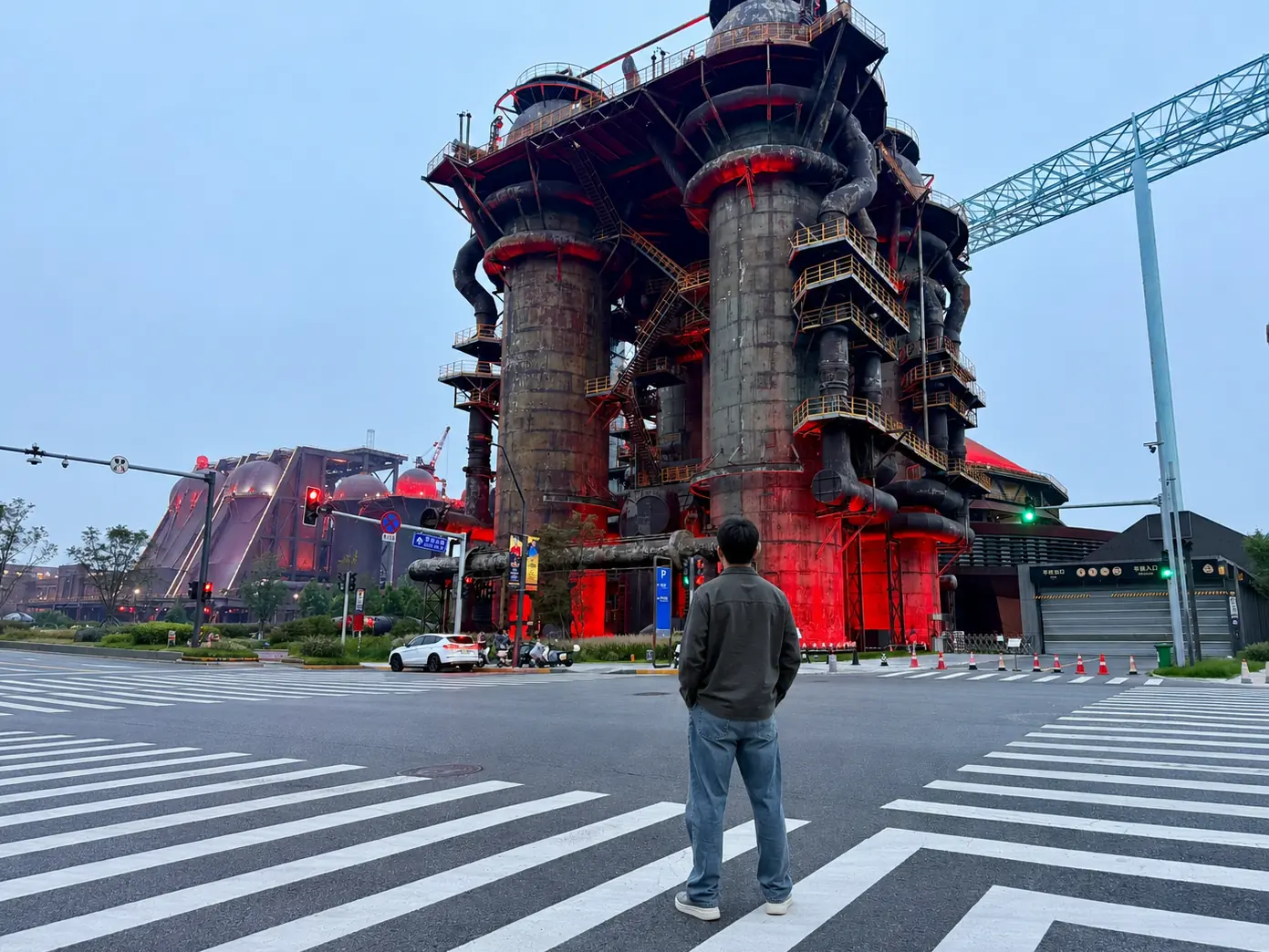
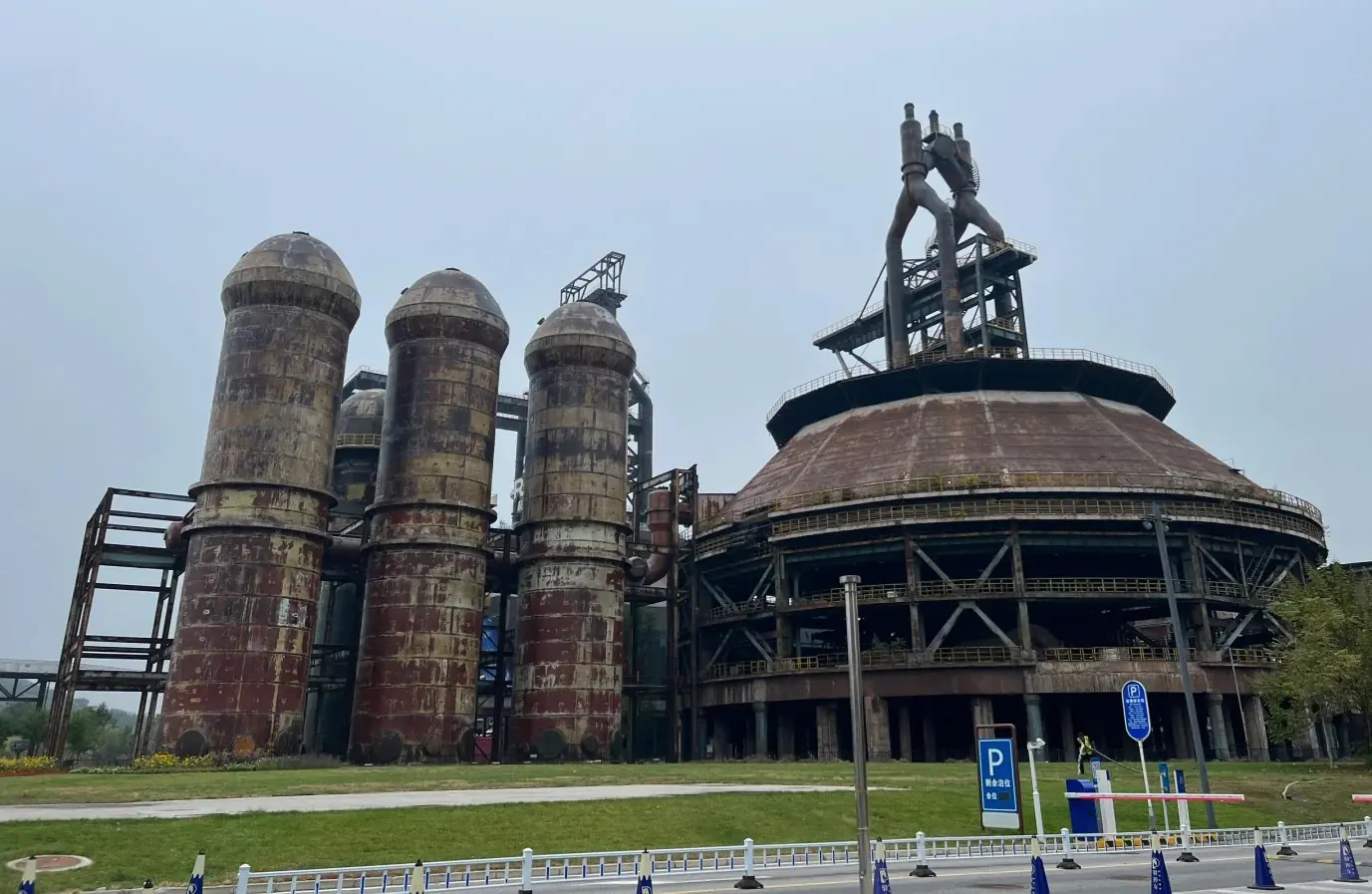
The most memorable part of Shougang Park is not a single attraction. It is the scale: blast furnaces, chimneys, silos, transfer structures, pipe corridors, broad factory roads, and hard industrial edges reused as public space.
The furnace is the easiest industrial landmark to build your walk around. Even from outside, the furnace works as a strong route anchor.
About 40 m
Viewing platform height
Ticket required
Access to the top
1.2 m minimum
Children below are not admitted
Current 2026 official guidance: Its viewing platform is about 40 meters high. Access to the top requires a ticket and children under 1.2 meters are not admitted to that experience.
For photos, include people, stairs, railings, pipes, lake edges, or the city skyline. A furnace alone can look abstract; a person walking below it reveals the scale.
Look for scale
Frame people against furnaces, pipes, and towers. The industrial parts are still physically huge.
Look for reuse
Pair old steel with cafes, exhibitions, bookshops, sports spaces, or event signage. The best images show both past and present.
Xiuchi Pool and Shougang Industrial Exhibitions
Slow-down point
Xiuchi Pool (秀池)
Xiuchi is the route's best slow-down point. Its water and reflections give the walk a quieter counterweight to Big Air and the furnace complex.
Treat exhibitions as a bonus, not the skeleton of your plan. Shougang Park hosts meetings, trade fairs, sports events, cultural activities, and commercial projects, so individual spaces can change access rules. If Xiuchi's exhibition is open and you care about industrial history, go in. If it is closed, the outdoor route still works.
Route role
This is also a good place to reset the pace before heading toward Liugonghui. The walk shifts from Big Air's spectacle and blast-furnace scale to water, reflections, and the quieter logic of the park's reuse.
Dated exhibition reference
A Beijing government report published in 2023 described the Xiuchi underwater exhibition hall and its “Hundred-year Development of Shougang” exhibition. It is useful historical context, not confirmation that the exhibition is operating on your visit date; check current park notices.
Where to Eat and Rest in Shougang Park
Rest, regroup, leave cleanly
Liugonghui (六工汇)
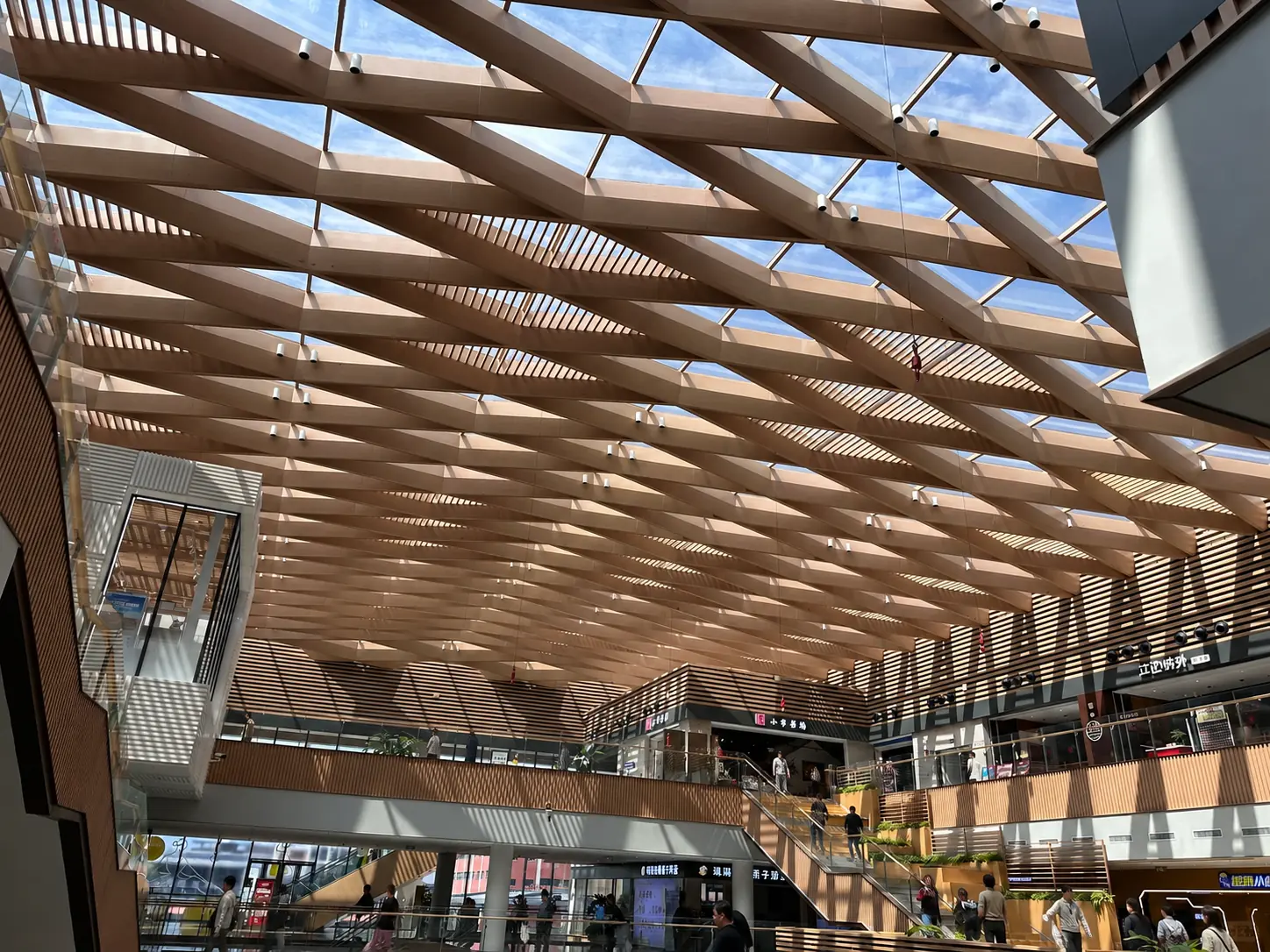
Liugonghui (六工汇) and the Chang'an Mills (长安 Mills) area are useful because Shougang Park is bigger than it looks on a phone map. You need a deliberate rest stop, not a vague plan to "find somewhere later."
Use this area for coffee, lunch, toilets, shade, regrouping, or ride-hailing.
Do not turn this guide into a restaurant hunt. The point of the area is route comfort: it gives the walk a middle or ending, so the industrial spaces do not blur into one long, tiring loop.
Morning visit
Use Liugonghui as the finish after Qunming Lake, Big Air, the blast furnaces, and Xiuchi.
Late-afternoon visit
Walk the outdoor industrial route first, then settle here as the park lights begin to switch on.
Best Time for Shougang Park Photos

Best daily window
Shougang Park is strongest from afternoon into blue hour. Morning is quieter and cleaner, but the steel structures can feel cold and flat. Afternoon side light gives pipes, furnaces, and the Big Air structure more depth; evening adds reflections, signage, and the cyberpunk mood that makes the park feel unlike central Beijing.
Season and comfort
Spring and autumn are the easiest seasons. Winter can look stark and powerful, but the wind in this open western Beijing site can be sharp. Summer midday is the weakest window: wide roads, hard paving, limited shade, and long distances make the walk feel hotter than the map suggests.
Big Air + Qunming Lake
Use the water to frame Big Air with cooling towers and industrial mass behind it.
Furnaces + human scale
Include people, stairs, or railings so the blast-furnace structures read as physically huge.
Old steel + new life
Pair pipe corridors with cafes, sports spaces, signs, or exhibition entrances so the park reads as a reused industrial city.
How to Get to Shougang Park
Primary subway target
Xinshougang Station (新首钢站)
The practical subway target is Xinshougang on Beijing Subway Line 11. Official Shougang material describes the west section as the Winter Olympics branch line. Many central-Beijing routes transfer at Jin'anqiao (金安桥), where Line 11 connects with Line 6 and S1.
South gate
Take Line 11 to Xinshougang, use Exit C, then walk about 800 meters.
North gate
From Line 6 at Jin'anqiao, use Exit K, then walk about 10 minutes.
Use live maps
From central Beijing, expect a transfer-heavy trip. Use Amap or Baidu Maps on the day rather than memorizing one route, because events and temporary gate controls can still affect the easiest entrance.
Name the drop-off
For taxi or ride-hailing, be precise. "Shougang" can be vague. Use Shougang Park (首钢园), Big Air Shougang (首钢滑雪大跳台), Liugonghui (六工汇), or Xinshougang Station (新首钢站) depending on where you want to enter or leave.
Show this screen to your driver · 出示给司机看
请带我去首钢园六工汇附近,方便下车和找入口。
Please take me near Liugonghui in Shougang Park, where it is easy to get dropped off and find the entrance.
For Big Air photos, you can also show 首钢滑雪大跳台.
Practical Shougang Park Tips and Pitfalls
Choose one priority
Shougang has long roads and spread-out landmarks. Choose Big Air and Qunming Lake, the industrial photography core, or Liugonghui and a lighter lifestyle walk before you arrive.
Separate outdoor and indoor access
The lakeside greenway is listed for 24-hour access and the elevated walkway for 07:00-19:00. Furnaces, silos, halls, exhibitions, and sports spaces may use tickets, reservations, events, or temporary controls. The No.3 Blast Furnace top needs a ticket and does not admit children under 1.2 m.
Plan for weather and distance
Wear proper shoes, bring water, and leave a return buffer. Shorten the route in summer heat; in winter wind, plan a warm indoor break at Liugonghui or another open venue.
Before you go
- Use live maps before leaving your hotel; Line 11 and gate choices matter.
- Keep Big Air, No.3 Blast Furnace, and Liugonghui as your three route anchors.
- Check current notices for paid experiences, viewing platforms, and exhibitions.
- Do not push into fenced, office, construction, or event-control areas for photos.
Shougang Park Visit Frequently Asked Questions
Yes if you like industrial heritage, photography, urban renewal, Winter Olympics legacy, or non-classic Beijing sights. If you only have one day in Beijing, prioritize the Forbidden City, hutongs, or Great Wall first.
Sources checked for this guide
- Current Shougang Park greenway sections, Xinshougang Exit C and Jin’anqiao Exit K approaches, lakeside and elevated-walkway hours, and No.3 Blast Furnace ticket and child-height rules: Beijing Municipal Government 2026 greenway guide
- Park scale, urban-renewal strategy, Line 11 opening, Winter Olympics role and post-industrial commercial context: Shougang Group official park overview
- 1919 industrial origin, preserved steel-production landscape, Big Air Olympic events and flying-apsara design inspiration: Beijing Municipal Government Big Air guide
- Permanent-use and downtown snow-event context for Big Air Shougang: Beijing Municipal Government Big Air route note
- Dated 2023 context for the Xiuchi underwater exhibition hall, the No.3 Blast Furnace viewing platform and the park’s cultural uses; not current operating confirmation: Beijing Municipal Government 2023 cultural-landmark report
Beyond This Shougang Park Walking Guide
Shougang Park belongs on Beijing's second layer. The first layer is the Forbidden City, Great Wall, Temple of Heaven, hutongs, and imperial parks. The second layer is where the city explains itself through reuse: 798 Art District, Shougang Park, old factory districts, new sports spaces, and west-side neighborhoods most first-time visitors never reach.
Pair Shougang with 798 Art District if you want a factory-reuse day, or keep it as a standalone west-Beijing half day. Either way, treat it as a reused steel city rather than a normal park, and the long walk starts to make sense.
© gochinafreely.com — Original guide by Go China Freely.