Season & Tickets
Rates and winter free-entry policies can change; confirm through your licensed Tibet agency before departure.
Decision Notes
Namtso Lake: Sacred High-Altitude Water

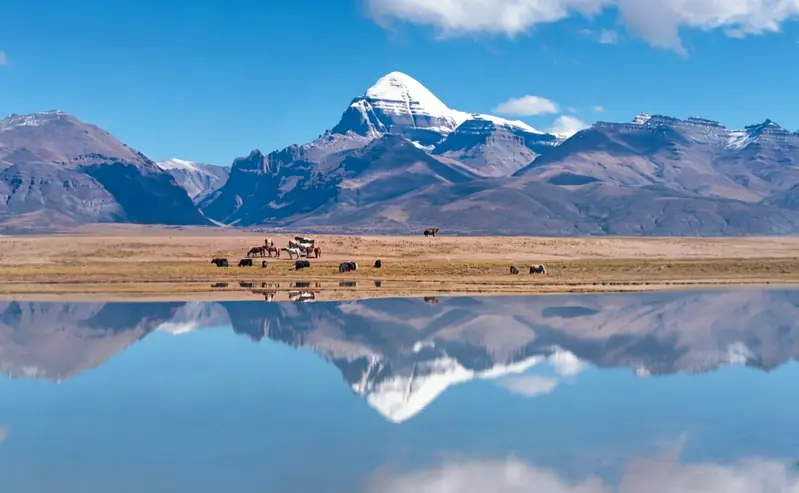
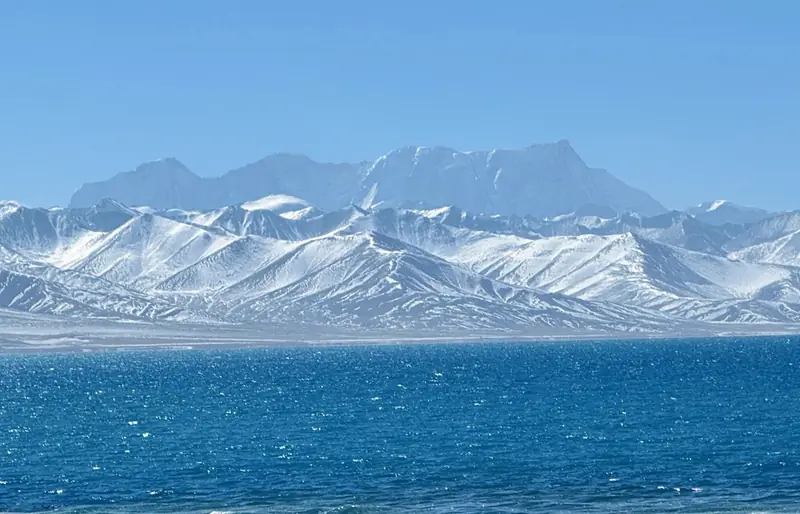
The Nyainqentanglha range mirrored in Namtso's turquoise surface — the single most iconic image of a Tibet trip
4,718 m
Lake altitude
1,920+ km²
Saltwater scale
Signature view
Nyainqentanglha (念青唐古拉山), 7,162 m peaks, turquoise water, and an open sky so clear you can see ridgelines 100 km away.
Altitude changes the view
For foreign travelers, what makes Namtso stand apart isn't just its religious significance but the sheer visual impact of this altitude. You stand at 4,700 m with an endless expanse of turquoise water in front of you, a wall of 7,000 m snow peaks behind, and a sky so deeply blue it's almost purple.
Stripped-down beauty
Unlike Jiuzhaigou or Lugu Lake at lower altitudes, Namtso's beauty is stripped-down — no autumn forests, no waterfalls, no polished boardwalks. Just water, mountain, sky, and cloud.
Why it feels sacred, not just scenic
A sacred-lake feeling before it becomes a sightseeing stop
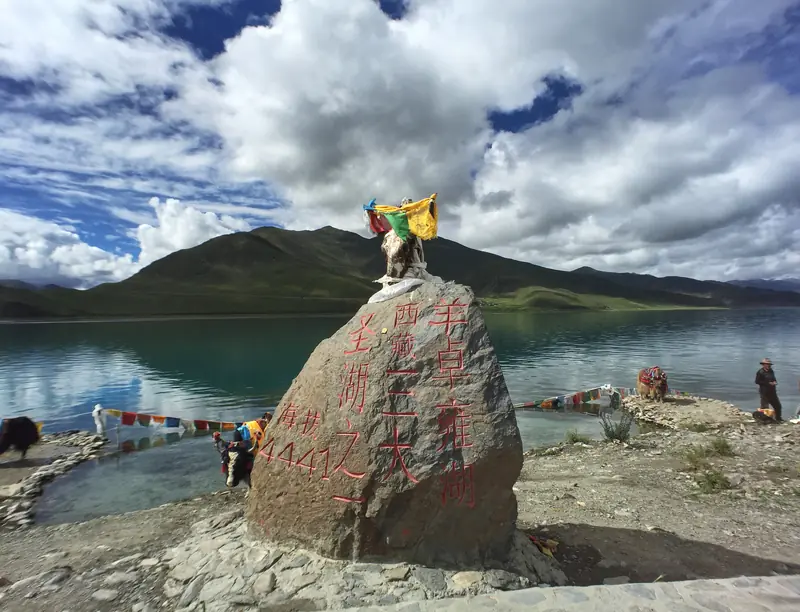
Namtso means "Heavenly Lake" in Tibetan. It's the holiest of Tibet's three great sacred lakes — the other two being Yamdrok Lake (羊卓雍措) and Lake Manasarovar (玛旁雍措).
Pilgrimage context
In Tibetan Buddhism, Namtso is the abode of Cakrasaṃvara. During every Year of the Sheep in the Tibetan calendar, roughly every 12 years, tens of thousands of Tibetan pilgrims walk the entire lakeshore — a kora of over 200 km that takes about a week on foot.
The traveler feeling
Standing alone between lake and sky, with nothing else in between, has no equivalent anywhere on Earth.
Tashi Dor: The Heart of Namtso
Tashi Dor Peninsula (扎西半岛) is a small finger of land poking into the lake from the south shore. It's where virtually every visitor arrives — and usually the only spot you'll spend time. The peninsula holds tent lodges, basic guesthouses, small shops, a viewing platform, and a circumambulation trail.
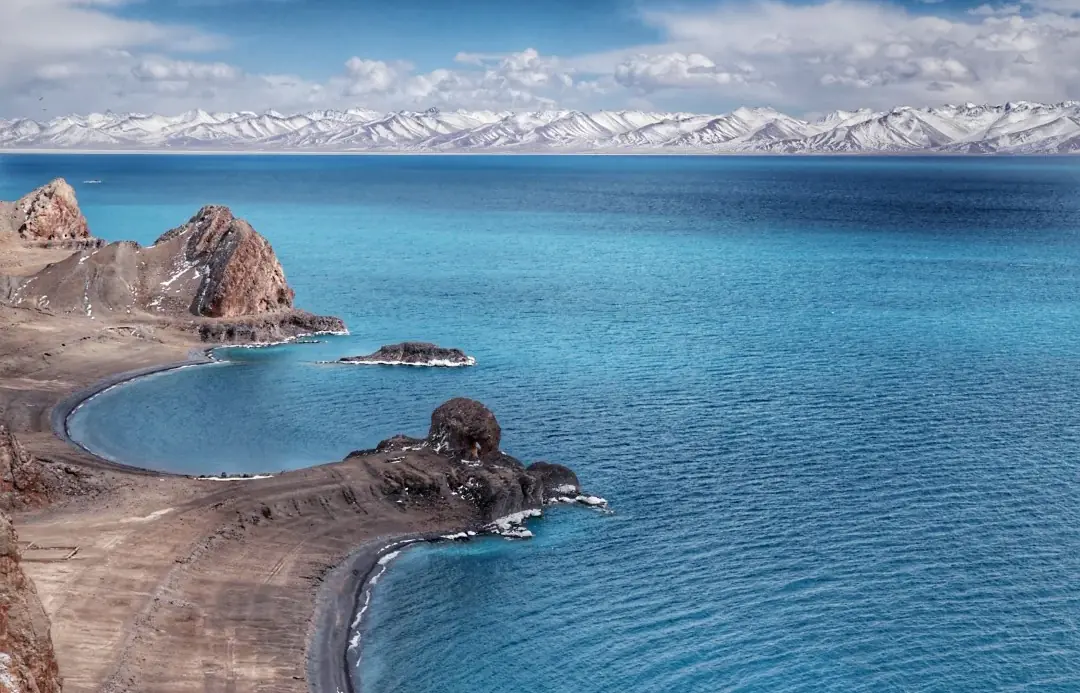
Limestone formations along the circumambulation trail
The Peninsula Kora Trail
Flat route, high-altitude effort
Walking the loop around Tashi Dor takes about 1.5-2 hours, roughly 4-5 km. The trail hugs the peninsula's edge — lake water on one side, wind-carved limestone formations on the other.
What you pass
The rocks have been eroded into shapes that look like elephants, castles, and mushrooms. Along the way, you'll pass small shrines and mani stone piles where Tibetan pilgrims prostrate themselves.
Pacing note
The trail isn't difficult, but remember this is 4,700 m — even flat ground will leave you breathless. Don't rush. Carry water and enjoy the process.
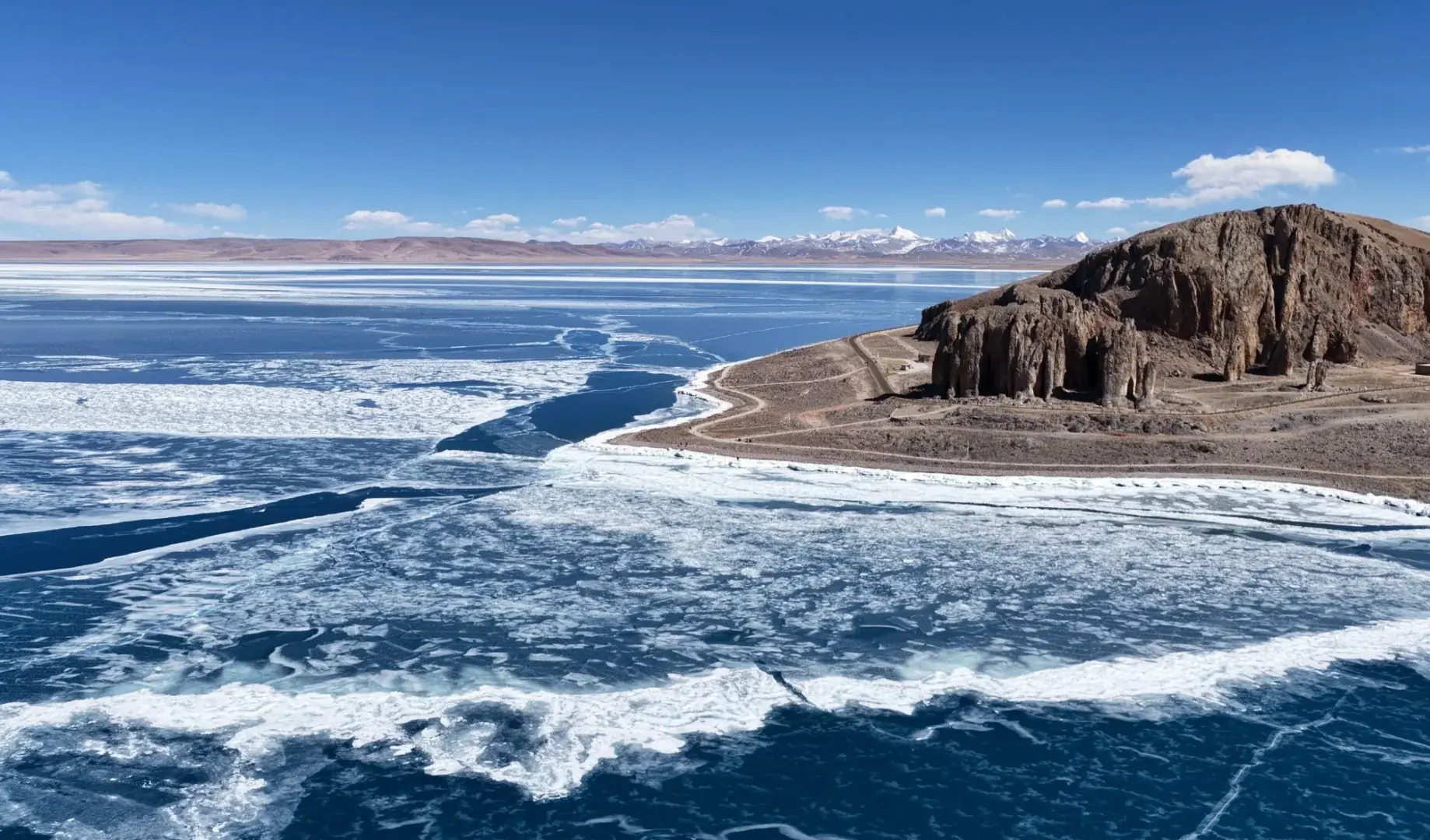
Tashi Dor Peninsula — tent lodges, trails, and the hilltop viewpoint
Hilltop Viewpoint
The widest panorama
The highest point on Tashi Dor has a viewing platform at roughly 5,000 m. From here you look out over the entire Namtso lake surface and the Nyainqentanglha range across the water — the widest panorama Namtso offers.
Climb reality
The climb takes 30-40 minutes; the final section is steep and the wind hits hard. If you're only visiting Namtso once, the sunset view is worth the climb and shivering in the wind.
Best payoff
At sunset, golden light floods the lake surface and the snow peaks shift from white to amber.
Sunrise, Sunset, and Stargazing
Namtso is one of China's finest natural photography locations — zero light pollution, crystal-clear air at 4,700 m, plus water reflections that amplify every color shift at dawn and dusk.
05:30-06:30
Typical sunrise window
17:00-20:00
Sunset varies by season
21:00-01:00
Best Milky Way window
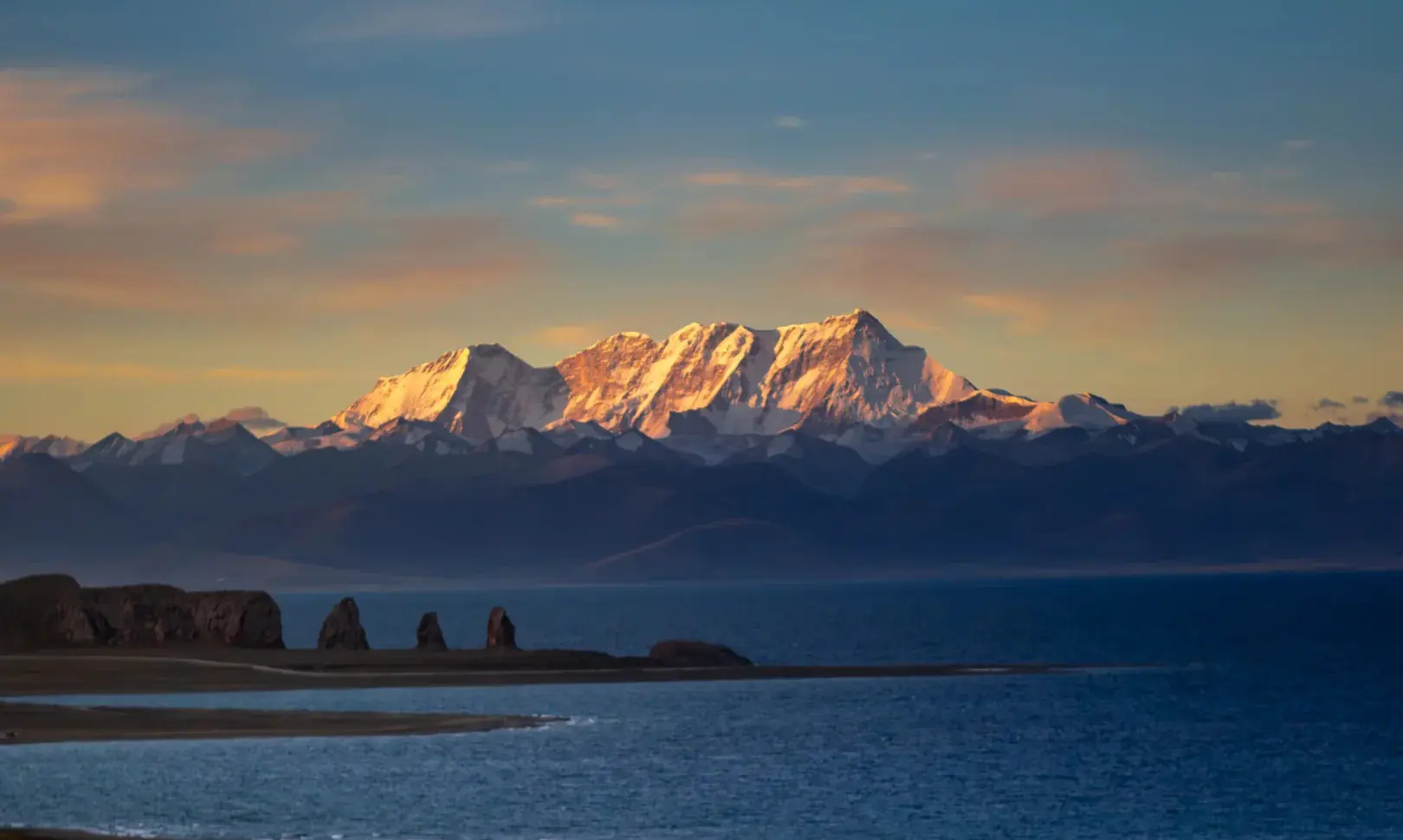
Sunrise
The reason to stay overnight
Sunrise is the crown jewel of a Namtso overnight — and the main reason to stay rather than do a day trip. Between roughly 5:30-6:30 AM, varying by season, the sun rises behind the Nyainqentanglha range, first painting the peaks pink, then sweeping gold across the lake surface.
Best spot
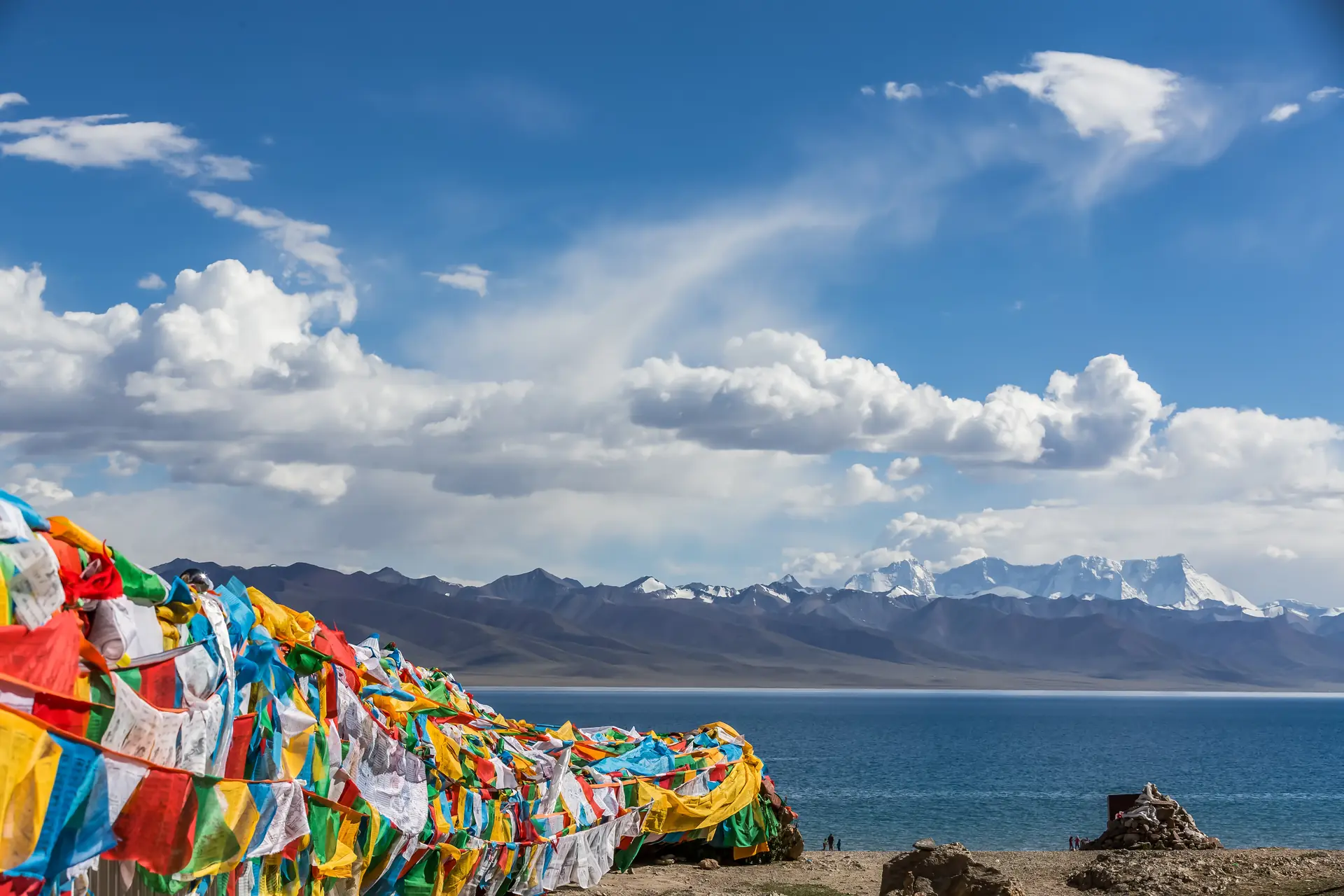
The lakeshore of Tashi Dor, facing east/southeast. No hilltop climb needed — the shore gives you the classic "snow peaks + lake + sunrise" triple composition. Find a position with prayer flags or yak-horn stone stacks as foreground for added depth.
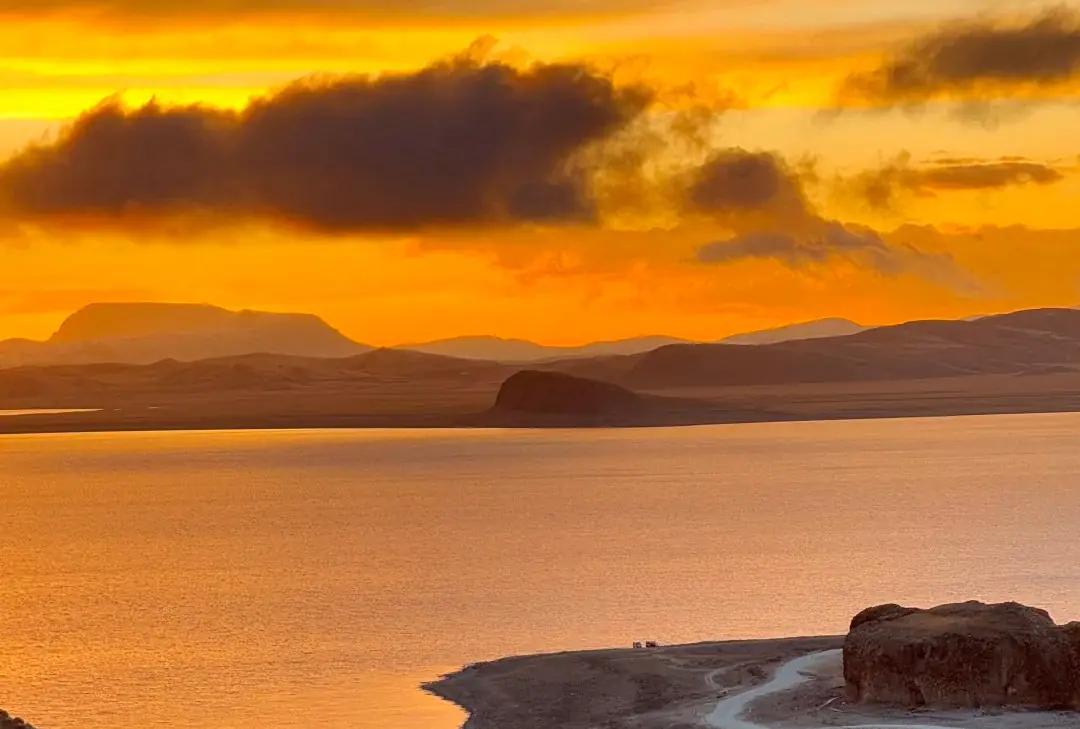
Sunset
Hilltop light, hard wind
Equally spectacular. As the sun drops toward the west, the lake surface transitions from blue to gold, then pink, then purple. Nyainqentanglha becomes a silhouette against the sky.
Best spot
The hilltop viewpoint on Tashi Dor, starting 30-40 minutes before sunset, or the western shore of the peninsula. The hilltop is windy and cold — bring your windproof jacket.
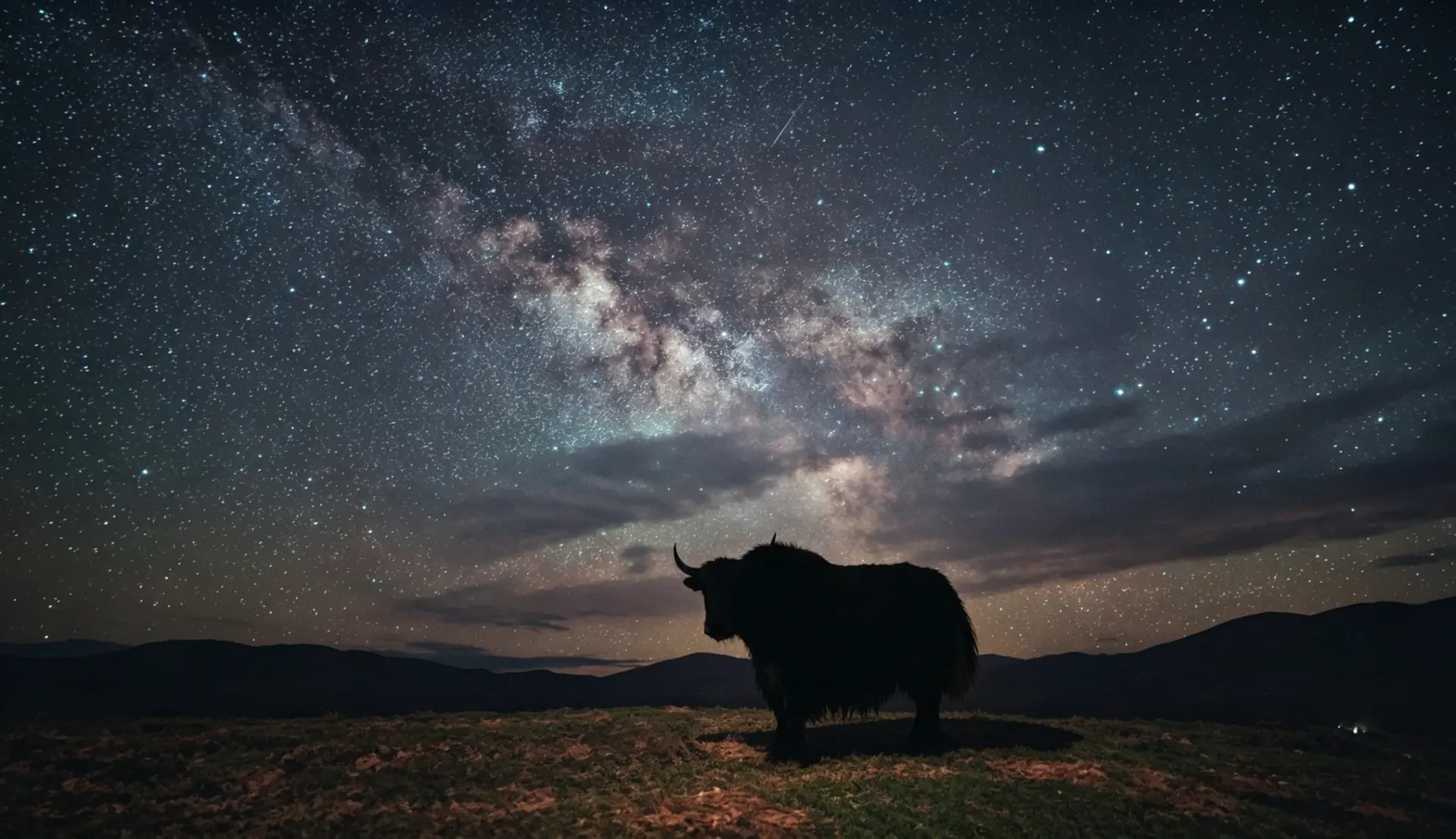
Stargazing
Zero light pollution, freezing nights
Namtso has virtually no artificial light sources. The Milky Way is clearly visible to the naked eye. Best shooting window is 9 PM to 1 AM.
Camera and clothing note
Camera settings similar to EBC: tripod, ISO 3200-6400, f/2.8, 15-25 second exposure. Nighttime temperatures drop below 0°C even in summer — prepare accordingly.
Best Time to Visit Namtso
Namtso isn't accessible year-round — the Naginla Pass gets snowed shut in winter and the park closes. Timing matters.
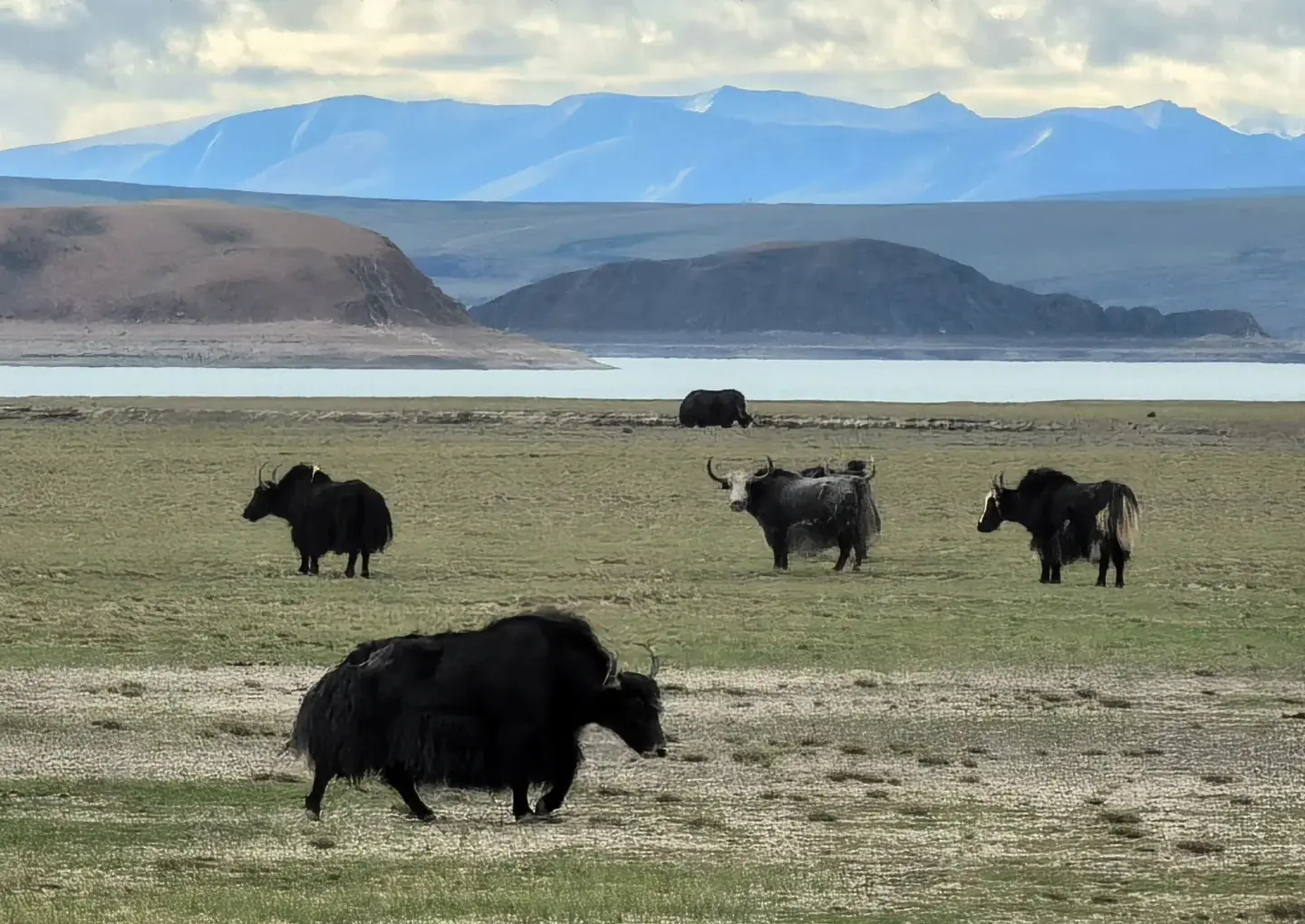
Best overall window
June–September, with June and September easiest
The warmest months offer the full Namtso experience: wildflowers carpeting the grasslands, yaks grazing lazily, and the lake at its most vivid turquoise.
June and September are sweet spots — fewer crowds, stable weather, and tent lodges open without the July-August crush.
10–20°C
Daytime
0–5°C
Nights
Jul–Aug
Busiest
Season decision
Peak: June–September
Lake fully thawed and at its purest blue. Grasslands bloom with wildflowers, with July–August as the flower peak and also the crowded tent-lodge peak.
Shoulder: Late May and Oct
Late May catches the lake just as it thaws — patches of leftover ice create a striking half-ice, half-water landscape. October brings crisp air and extreme clarity, but nights can drop below -10°C and tent lodges may have closed for the season.
Closed: Nov–Mid-May
Naginla Pass (5,190 m) accumulates snow and ice, usually closing from November onward. Namtso itself freezes completely in January–February. The frozen lake is spectacular, but reaching it safely is not possible for regular tourists.
Altitude at 4,718 Meters
Namtso sits over 1,000 m higher than Lhasa. And the route crosses Naginla Pass at 5,190 m, meaning you'll climb from 3,650 m to 5,190 m and back down to 4,718 m within a few hours. Altitude sickness is extremely common on this route.
Start
Lhasa
3,650 m
Highest point
Naginla Pass
5,190 m
Sleep / lake level
Namtso
4,718 m
Altitude Sickness Is a Real Risk
People with serious heart or lung conditions, hypertension, or a current cold should not attempt this trip. If severe symptoms appear at the lake or pass, the right move is to descend, not push through.
How to handle the altitude
Think of this as a sequence: prepare in Lhasa, move slowly at the pass, and descend fast if symptoms turn serious.
Before heading to Namtso
Rest at least 2 full days in Lhasa first. If you still have significant headaches after two days there, skip Namtso — another 1,000 m of elevation will make it worse.
At Naginla Pass
Most tour groups stop for 15-20 minutes. Walk slowly, take your shots, and get back in the car. If your headache worsens or breathing becomes difficult, return to the vehicle and use oxygen.
When to descend
Persistent severe headache, nonstop vomiting, or confusion means heading back to Damxung or Lhasa immediately.
What to bring
Sun and glare
- SPF 50+ sunscreen; UV is extreme at this altitude.
- UV400 sunglasses; lake surface glare is intense.
Cold and wind
- Down jacket or heavy windproof coat, even in summer.
- Hand warmers, essential for overnight stays.
Power, water, oxygen
- Power bank and spare batteries.
- Insulated water bottle; hot water matters.
- Portable oxygen cans, 2-3, bought in Lhasa.
Medication and oxygen
Ask your doctor about acetazolamide (Diamox) before departure; buy portable oxygen cans in Lhasa (¥15-30/can) and bring 2-3.
Getting to Namtso from Lhasa
Namtso Lake (纳木措) (Google | Amap) is roughly 240 km from Lhasa, a 5-6 hour drive. Foreign tourists cannot travel independently — you must arrange a vehicle and guide through a licensed agency.
- Lhasa(拉萨)- 3,650 m
- Damxung(当雄)- ~170 km, 3 hrs, 4,130 m
- Naginla Pass(那根拉山口)- 5,190 m — highest point
- Tashi Dor Peninsula(扎西半岛)- ~70 km, 2 hrs, 4,718 m
240 km
Total Distance
5–6 hrs
Driving Time
5,190 m
Highest Point
Drive rhythm
Naginla Pass
The beautiful stop you should keep short
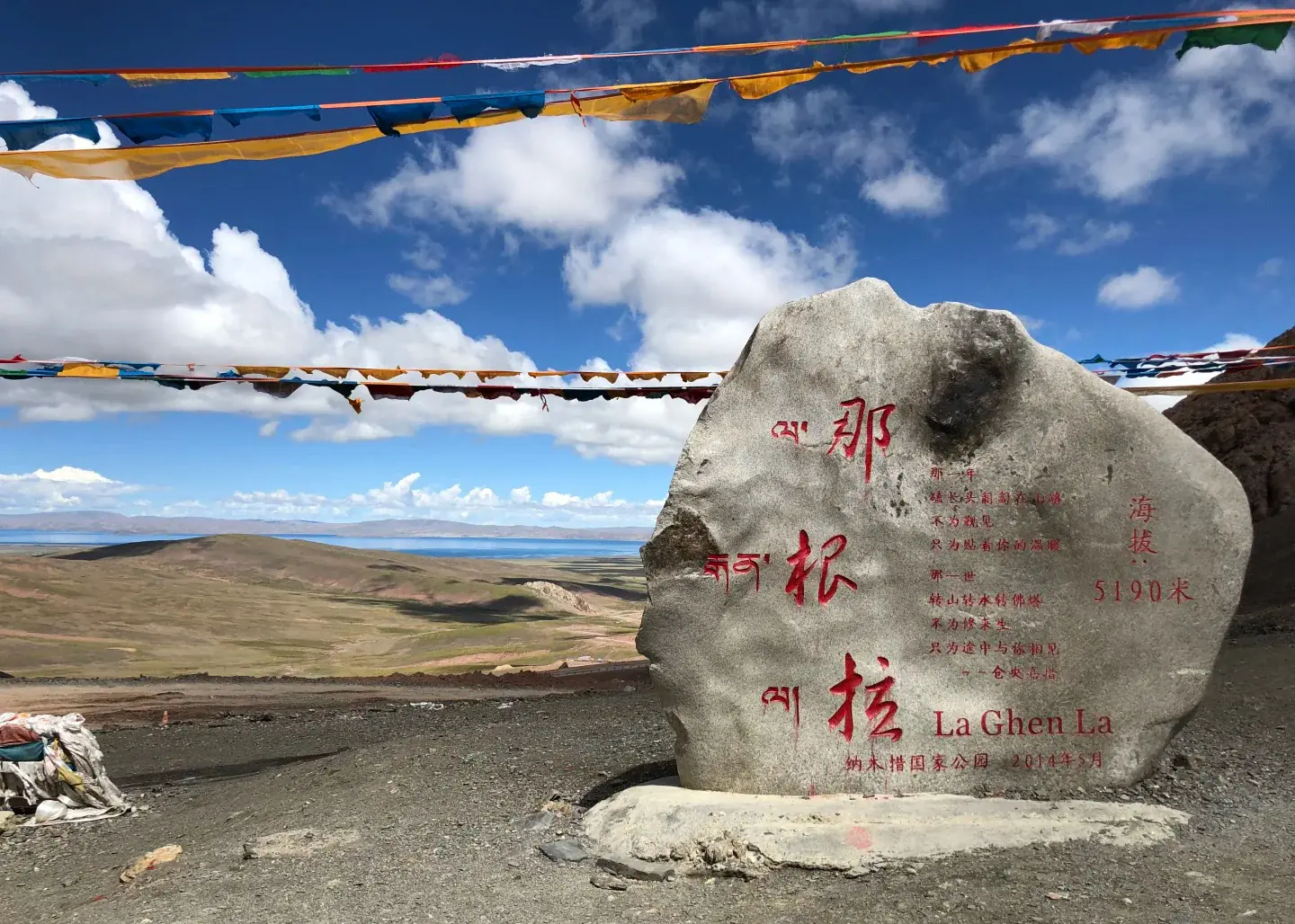
Naginla Pass (那根拉山口) at 5,190 m is the highest point on the Lhasa-Namtso route and a viewing spot in its own right. On a clear day, you can see Namtso's entire lake surface from the pass — a jewel-blue expanse stretching to the horizon.
Photo stop limit
The pass has prayer flags and an inscribed stone marker for photos. But at this altitude, with fierce wind and freezing temperatures, keep your stop to 15-20 minutes.
Road conditions
The G109 is paved and generally in good condition. Near Naginla Pass the road twists with sharp turns; in winter and early spring there may be snow and ice, and the park is usually closed during this period. During tourist season, road conditions aren't a concern.
Tickets and Tour Costs
Budget Namtso as a guided high-altitude excursion, not as a simple lake ticket. The park entry is only one part of the cost; vehicle, guide, oxygen, lodging, and the long driving day matter more for comfort.
Cost overview
Namtso park entry
~¥120 / person in peak season; reduced or free in winter — confirm current rates at the gate
Lhasa day trip, group tour
~¥300-500 / person
Lhasa 2-day trip, group with tent lodge
~¥500-800 / person
Private car with driver/guide, 2-4 people
~¥1,500-2,500 / car / day
Overnight Is Worth the Extra Cost
A day trip gets you to Namtso, but you'll only have about 2 hours at the lake and miss the sunrise, sunset, and stars. An overnight trip is strongly recommended — sleeping at Tashi Dor and watching the sunrise is a completely different experience.
Where to Stay at Namtso
Staying at the lake is basic, cold, and sometimes uncomfortable, but it changes the entire visit. Damxung gives you a real bed at lower altitude; Tashi Dor gives you dawn, dusk, and stars without another pre-sunrise drive.
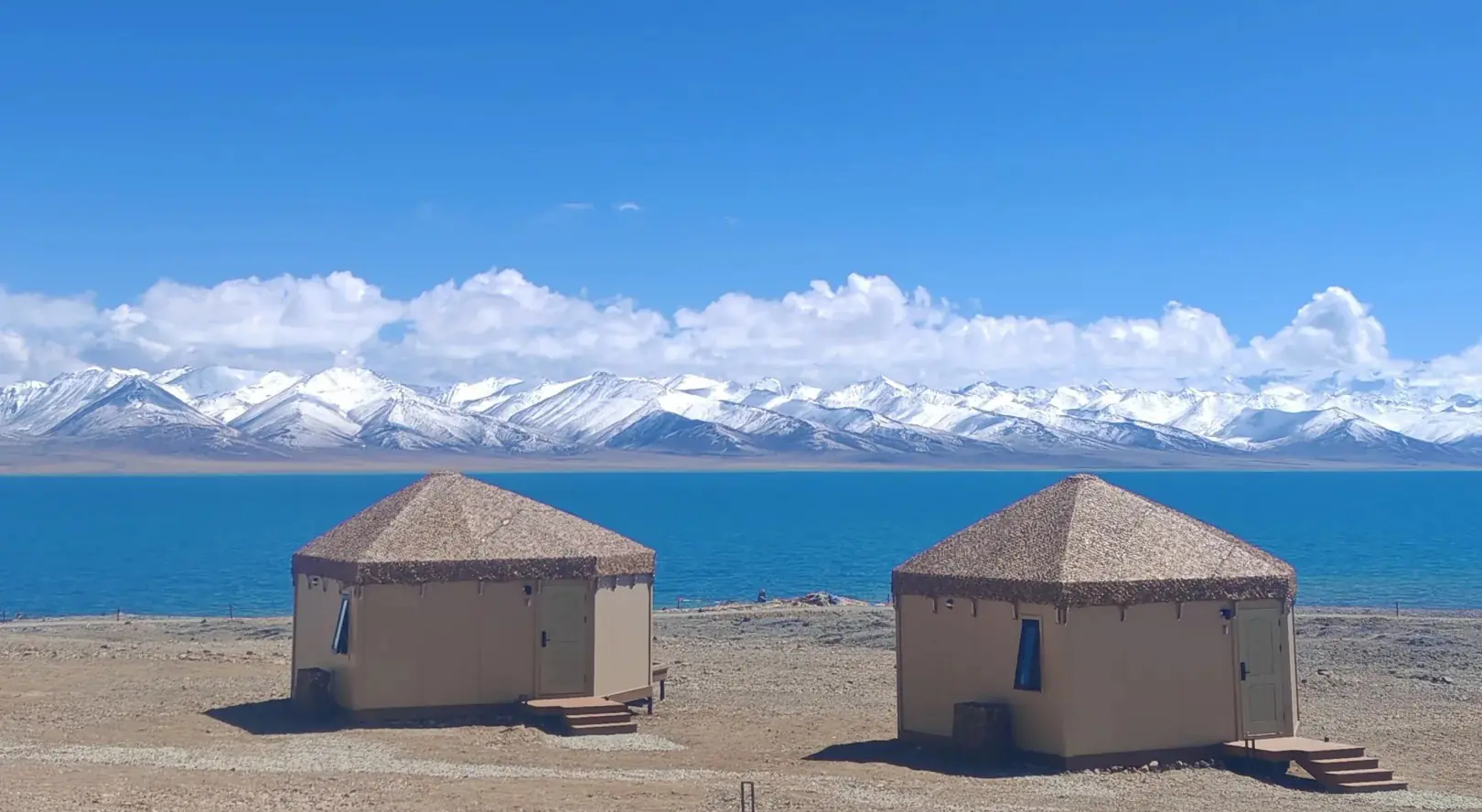
Tent lodges at Tashi Dor — basic but enough for an overnight stay to catch the sunrise
Choose comfort or the real Namtso light
Tashi Dor is the atmospheric choice, but it is not comfortable. Damxung is easier on the body, but it turns sunrise, sunset, and stargazing into logistics instead of moments outside your door.
Use the comparison below as a practical decision, not a hotel-style ranking.
At the lake
Tashi Dor Tent Lodges
Basic but magical
Room reality
Communal bunks or simple twin rooms with thick quilts. No heating; some have unreliable electric blankets. No showers — some guesthouses provide a hot water kettle. Basic pit toilets. Power available but unstable.
Price
Roughly ¥100–300 / bed depending on season and room type. Simple meals at 1.5–2x Lhasa prices.
Best for
Anyone who wants sunrise, sunset, and stargazing — the reason you came.
Confirm availability with your agency before departure.
60 km away
Damxung Town Hotels
Comfortable backup
Room reality
Real hotels with heating, hot water, and internet — modest by city standards but a massive upgrade from Tashi Dor. Located 60–70 km / about 1.5 hours from Namtso.
Price
¥150–300 / room.
Best for
Only if altitude symptoms are severe enough to need lower elevation.
You sacrifice the sunrise, sunset, and stargazing that make Namtso unforgettable.
Pack Your Own Supplies
Snacks, an insulated bottle of hot water, hand warmers, and a headlamp (useful during blackouts). Don't expect comfort at Tashi Dor — you're here for the sunrise, not for the bed.
One Day or Two? Planning Your Visit
This is the main planning decision. A day trip can technically work, but the overnight format is calmer, safer for pacing, and much stronger for photography.
Works only if time is tight
Day trip from Lhasa
Long drive, short lake window
Leave Lhasa at 6–7 AM, arrive around noon, spend roughly 2 hours at the lake, drive back, arriving 8–9 PM. Total driving: 10–12 hours.
Suits
Very limited time or unsure about sleeping at high altitude.
Drawbacks
Too little lake time, no sunrise/sunset/stars, exhausting drive, and the rapid altitude spike actually increases altitude sickness risk.
Recommended
Overnight trip
Day 1
Depart Lhasa morning, photo stop at Naginla Pass, arrive Tashi Dor midday, explore peninsula, kora trail and lakeshore, climb hilltop for sunset, sleep at tent lodge.
Day 2
Catch the sunrise, breakfast, drive back to Lhasa, arrive afternoon.
Why it is better
The full Namtso experience — dawn, dusk, stars — plus more time for your body to adapt to 4,700 m.
How Namtso fits into a bigger Tibet route
Namtso + Everest Base Camp
Often paired in an 8-10 day Tibet itinerary. Go to Namtso first, closer and slightly lower altitude, before heading to EBC.
Namtso + Yamdrok Lake
The two sacred lakes lie in opposite directions from Lhasa, with Namtso north and Yamdrok south. Allow at least 4 days to visit both comfortably.
Lhasa + Namtso only
A compact 3-4 day trip: 2 days acclimatizing in Lhasa + 1-2 days at Namtso.
Tips Most Visitors Overlook
Small choices at Namtso affect both comfort and cultural respect. These are the details that tend to matter on the actual day, after the big route decisions are already settled.
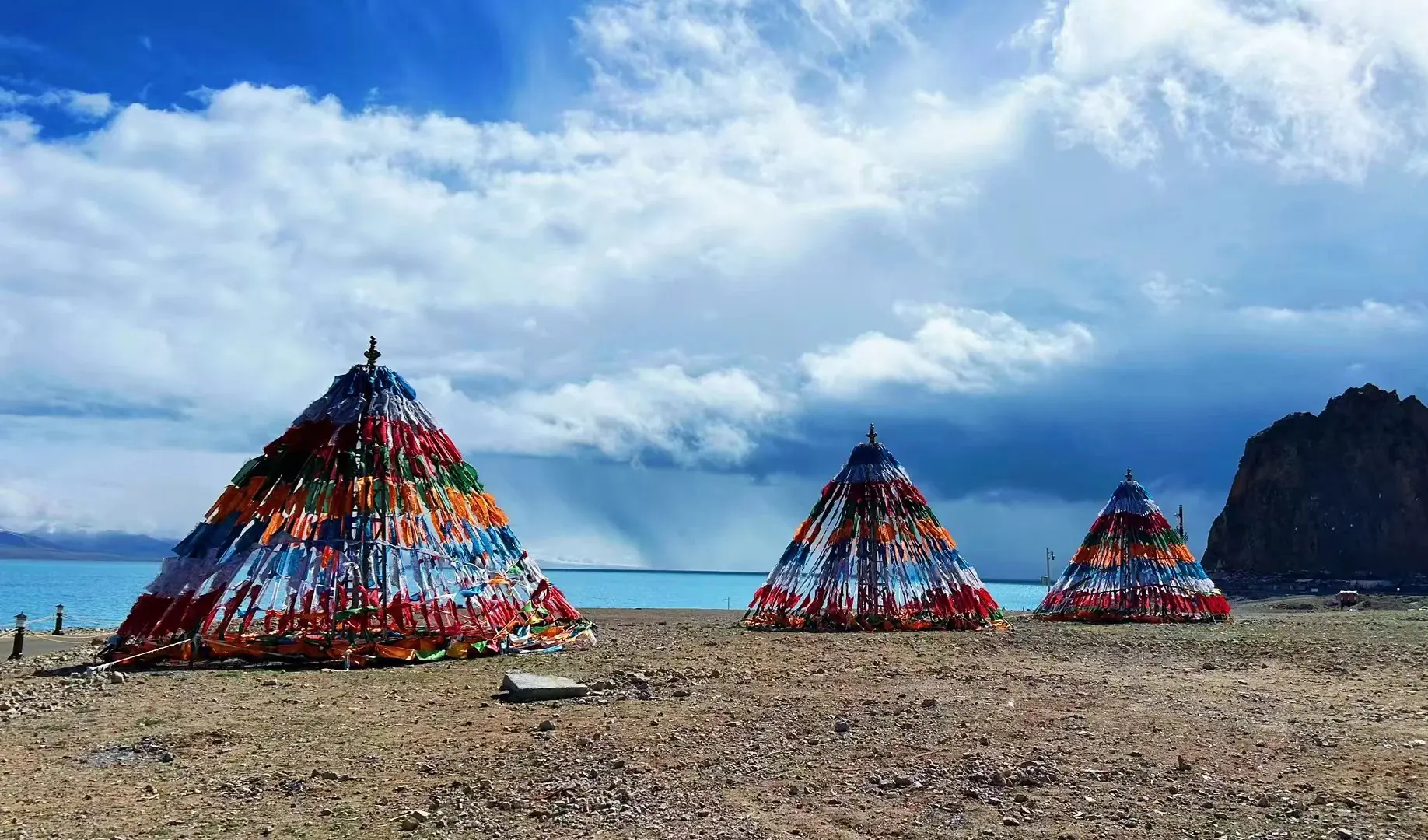
Prayer flags at Naginla Pass
Photograph them respectfully
The colorful prayer flags at Naginla Pass are among the most photographed scenes on the Namtso route. Be careful not to step on or pull the flags — they're religious objects for Tibetan people.
On a windy day, the flags billow dramatically; a slow shutter speed captures the silk-like motion beautifully.
Day-of details to keep in mind
Yak photo fees
At both Tashi Dor and Naginla Pass, herders offer decorated yaks for tourists to ride or pose with. The usual charge is ¥10–30 per photo — agree on the price before getting on. If you'd rather avoid the fee, just photograph yaks from a distance.
Lakeside wildlife
The Namtso area is an important habitat for high-altitude waterbirds. In June–August you may spot bar-headed geese (斑头雁) — among the highest-flying bird species in the world. Observe from a distance; don't feed or disturb them.
The wind warning
Wind at Namtso routinely exceeds expectations. Even in summer, lakeside gusts can drop the felt temperature by 10–15°C. A windproof jacket isn't for warmth — it's for blocking the wind. At the hilltop viewpoint during sunset, wind will be even stronger.
Environmental rules
Namtso is a national nature reserve. Don't leave any trash at the lakeshore — including food wrappers, cigarette butts, and bottles. Bring your own trash bag and pack everything out. Don't wash anything in the lake water.
Frequently Asked Questions
You can, but the overnight experience is far richer. A day trip means ~10 hours in the car for just 2 hours at the lake, plus a higher altitude sickness risk because your body gets no time to adjust. If time truly won't allow an overnight, at least depart Lhasa by 6 AM to maximize your lakeside window.
Sources checked for this guide
- Lhasa Municipal Government: 2026 Namtso scenic-area upgrade and winter free-entry notice
- Lhasa Administrative Service Bureau: 2025 Lhasa tourism support measures mentioning Namtso ticketed routes
- The China Guide: Namtso visitor listing cross-check for entry fee and visit duration
Beyond This Guide
Before you lock a Tibet route:
- Best things to do in Lhasa — decide whether your body and schedule are ready for a high lake extension
- Yamdrok Lake guide — compare Tibet's easier sacred lake before choosing Namtso
- Everest Base Camp Tibet guide — understand the bigger altitude route if you are extending west
- China mobile payments guide — set up payments before ticket windows, oxygen cans, snacks, and local transfers become a problem
Fitting Namtso into a Tibet itinerary alongside Lhasa, Yamdrok Lake, or Everest Base Camp requires some choreography — permit timelines, altitude staging, weather, and the right licensed agency all need to line up. If you'd like someone who knows the terrain to design the route and walk you through the decisions, we're here.
© gochinafreely.com — Original guide by Go China Freely.