Hours & Base Ticket
Essential Rules
A Living Kora Loop Around Jokhang
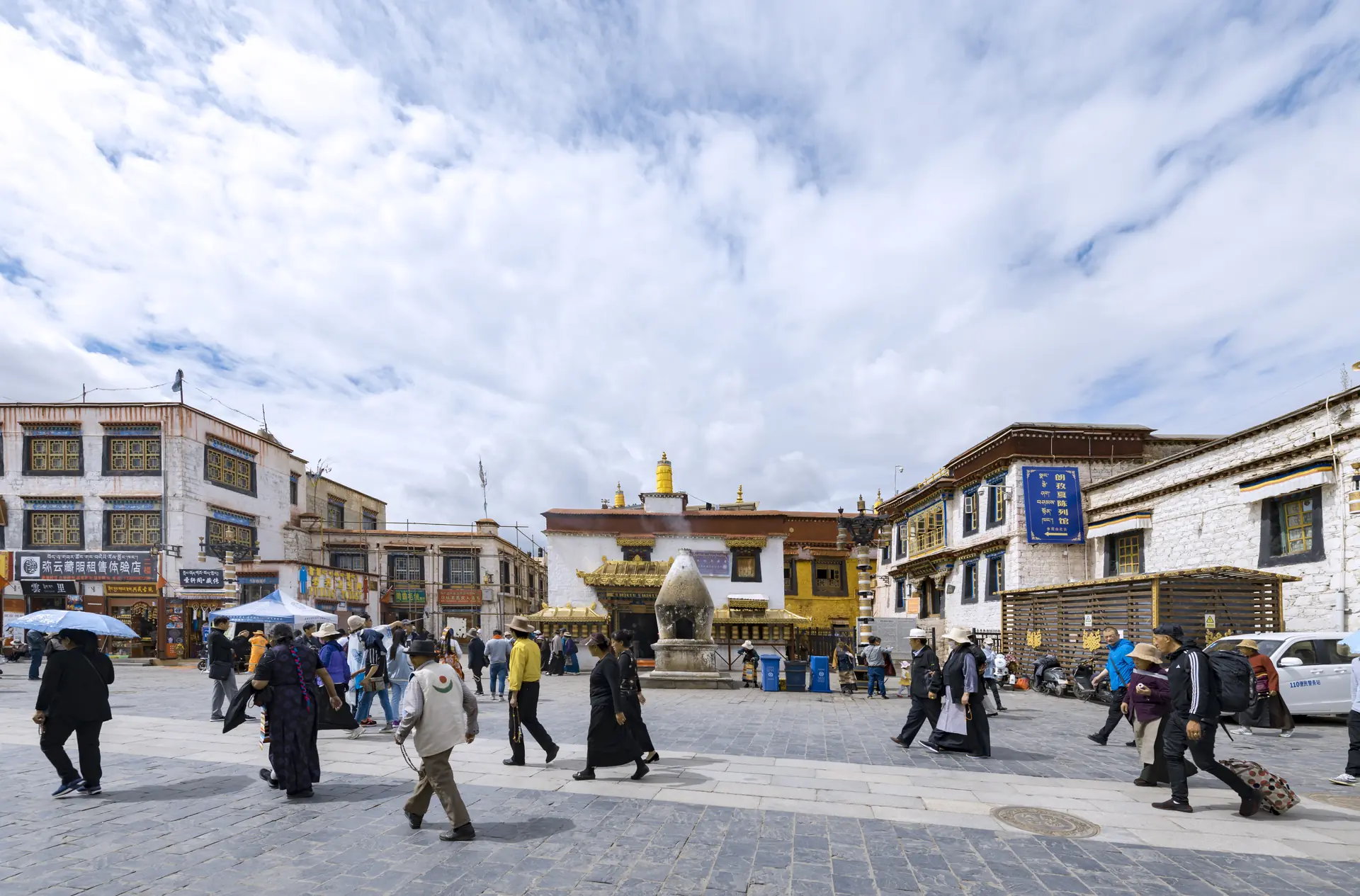
Sacred circuit before market street
Barkhor Street (八廓街) (Google | Amap)
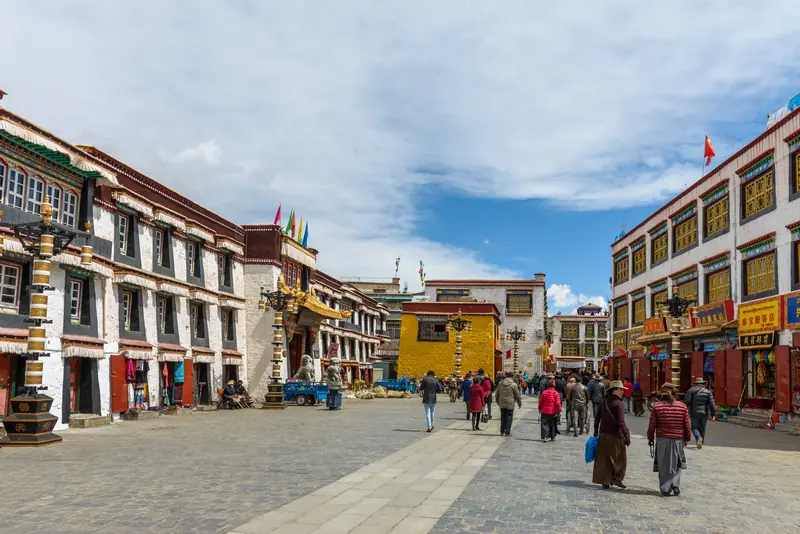
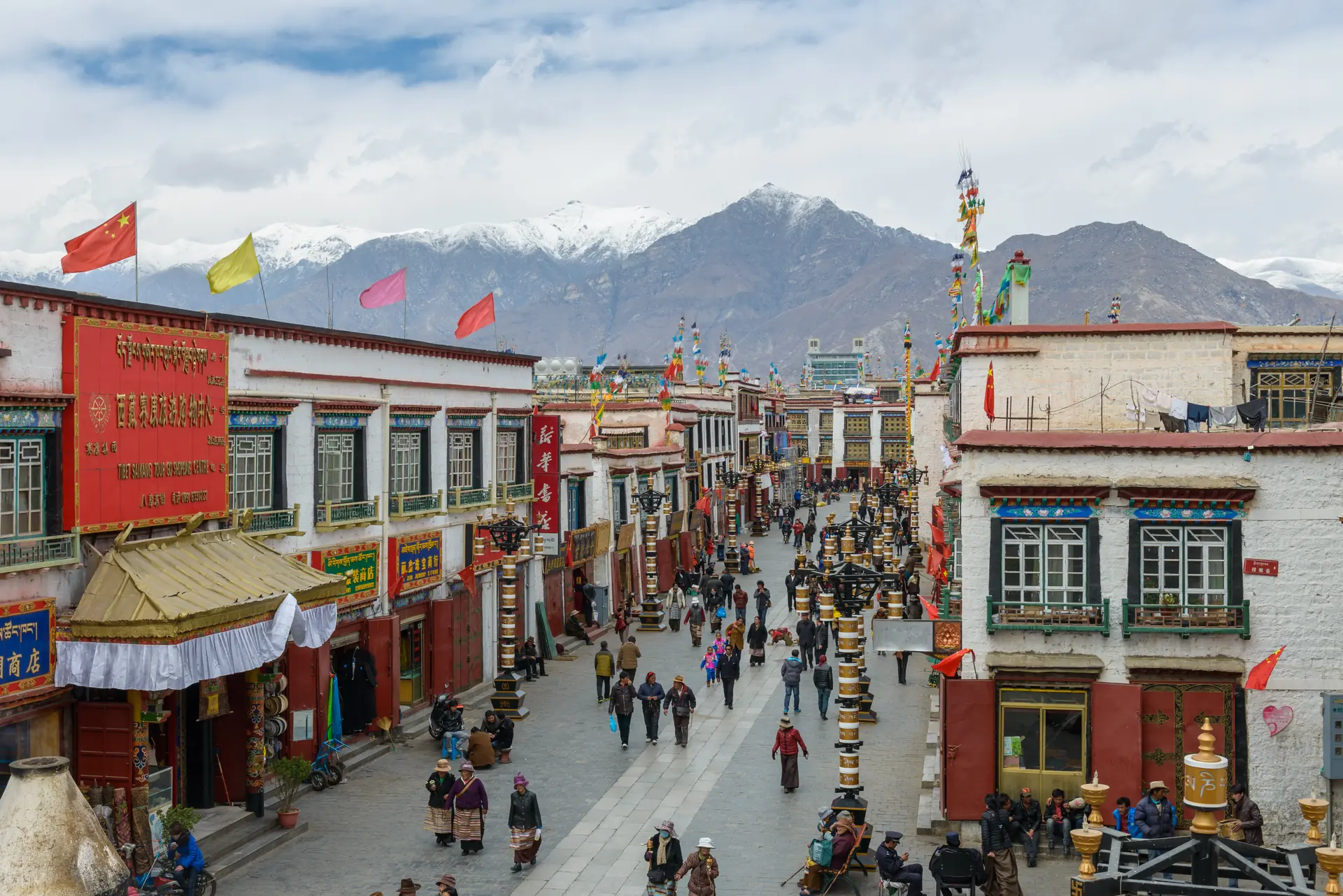
The heart of Barkhor is not the market. It is the loop: a clockwise kora around Jokhang Temple (大昭寺), shaped by pilgrims, prayer wheels, prostrations, tea houses, and the slow rhythm of a 3,650-meter city.
Barkhor grew around the outside of Jokhang Temple, the UNESCO-listed temple component of Lhasa's Historic Ensemble. It is a devotional circuit, a neighborhood for residents, and a dense old-town bazaar at the same time.
This guide is not a Jokhang ticket guide or a souvenir list. It shows you how to walk respectfully, notice what first-timers miss, and leave space for people who are here to pray, not perform.
That layered identity is what makes it worth slowing down. On the same stone road, you will see three kinds of order: pilgrims moving clockwise, shopkeepers opening shutters, and visitors drifting between tea houses, craft stalls, and the temple square. If you treat Barkhor as a place to shop, it can feel crowded and commercial. Treat it as a living pilgrimage route, and the street starts to make sense.
Sacred route
The clockwise flow is the street's spine. Join it gently, keep moving with the rhythm, and step aside when you need to stop.
Old-town life
Sweet tea, errands, alley conversations, and shop shutters are part of the scene. Barkhor is not preserved as a silent museum.
Traveler layer
You can browse, eat, and photograph here, but the best experience comes from watching first and acting second.
How to Walk the Clockwise Barkhor Kora

The basic rule is simple: walk clockwise. The easiest place to orient yourself is near Jokhang Square. Watch the direction of the flow, then join from the outer edge rather than cutting across the line of prostrating pilgrims.
A plain loop takes about 15-30 minutes; for a first visit, allow 1.5-2 hours so you can slow down, step out for tea, and return to the circuit without rushing.
- Jokhang Square edge(大昭寺广场边缘)- Check the clockwise flow before joining
- Outer walking line- Keep moving; do not block prostrators
- Prayer wheels and incense corners- Stop only from the side
- Tea or shop break- Leave the main flow before pausing
- Return to Jokhang(大昭寺)- Watch the square again before leaving
Do not make Barkhor your first hard push after landing in Tibet. A flat kilometer in Lhasa feels different from a flat kilometer at sea level, and the Jokhang Temple pin (Google | Amap) is only useful once your body is ready to walk.
Respectful Photography and Pilgrim Etiquette on Barkhor
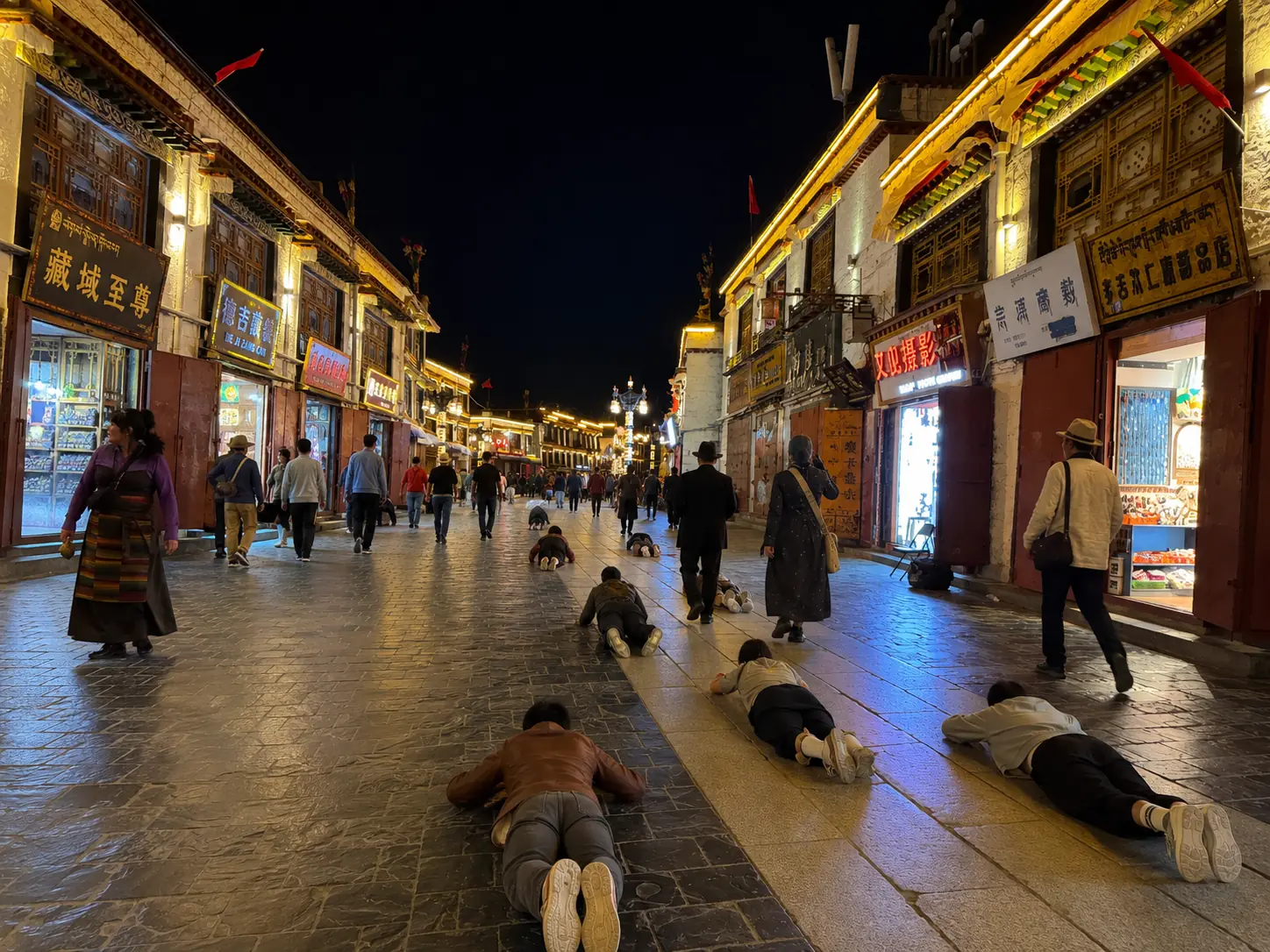
The most powerful scenes on Barkhor are also the easiest to mishandle. Full-body prostrations, prayer wheels, chanting, and offerings are not performances. You may witness them, but your camera should never take priority over someone's path.
Use this rule of thumb: wide street scenes are usually fine; close-up photos of individuals require consent. If someone turns away, gestures no, or avoids the camera, lower it immediately.
- Walk with the clockwise flow, not against it.
- Give prostrating pilgrims a clear path in front of them.
- Do not step over body boards, cushions, bags, or offerings.
- Do not touch prayer wheels or beads someone else is using.
- If you are unsure where to stand, move to the side and watch for one minute.
Barkhor does not ask travelers to pretend to be pilgrims. It asks you to behave like a guest.
Best Times to Walk Barkhor Street
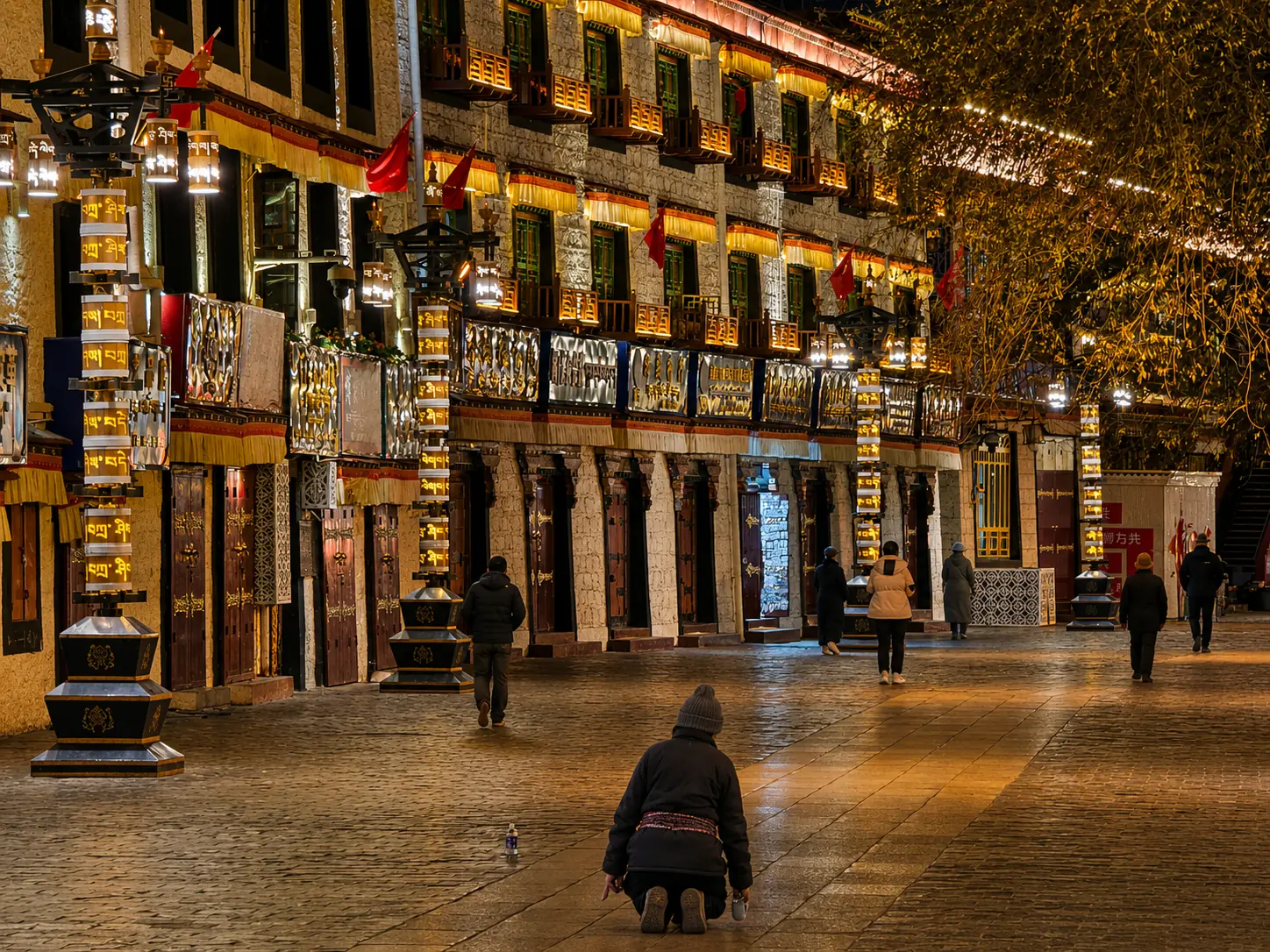
Early morning is the strongest time for the sacred side of Barkhor. Shops are still half-closed, tourist groups are thinner, and the soundscape is clearer: footsteps, prayer wheels, low chanting, brooms, shutters, and tea being poured.
Late afternoon is easier for a first arrival day. The light softens, food options open up, and the white walls and red windows photograph well. Evening has a beautiful hush in the side lanes, but keep the walk short if you have just arrived at altitude.
For photos, start with architecture, hands, prayer wheels, incense corners, street reflections, and distant human movement. Save portraits for last, and only when permission is clear.
What to Notice on the Barkhor Loop
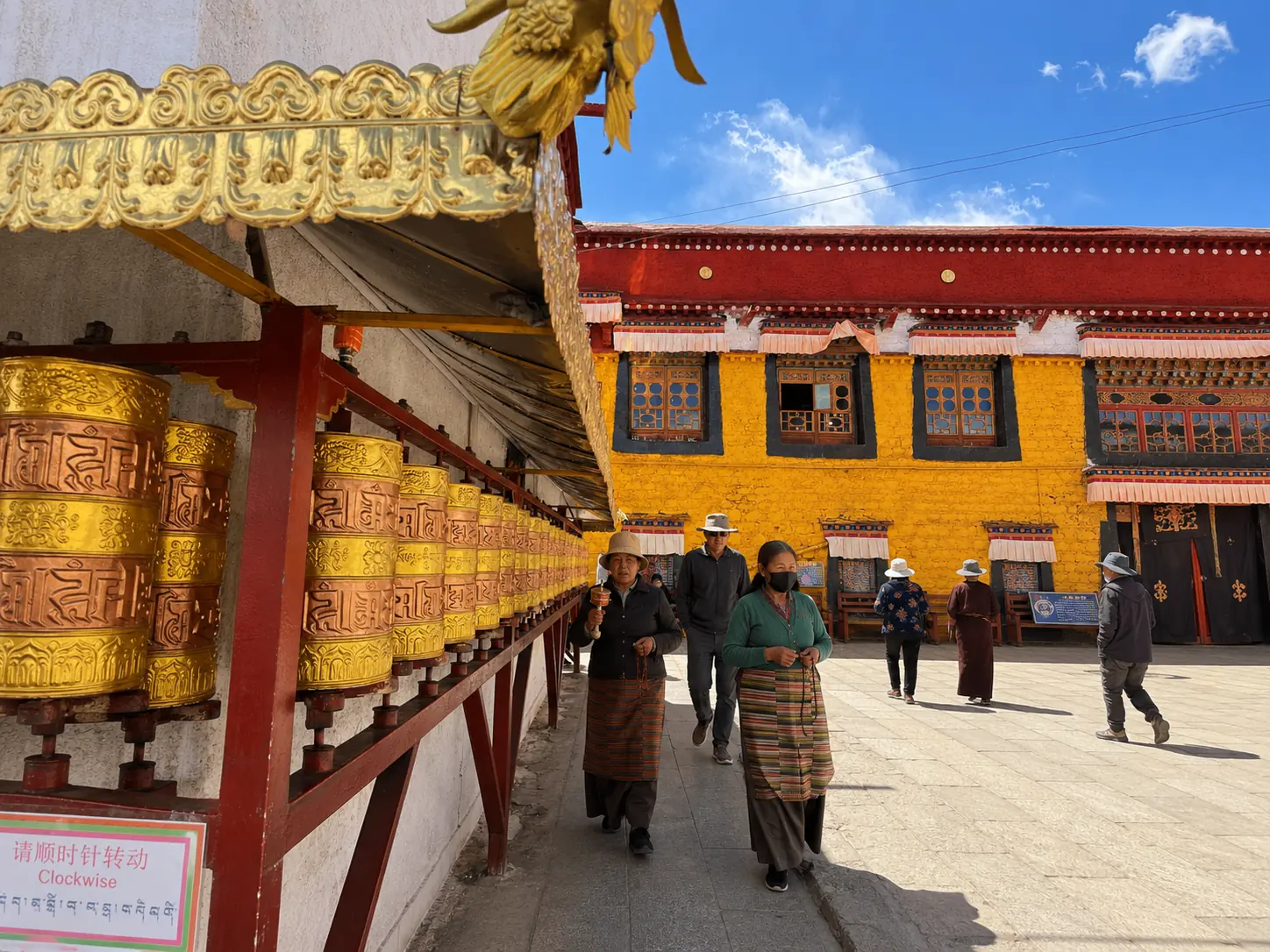
Barkhor is not carried by a single viewpoint. Its best details are small: polished stone slabs, painted door frames, incense burners, white walls, red windows, hanging prayer flags, and rows of prayer wheels inside tiny shops.
You will also notice the hidden discipline of the street. Crowds slow naturally where the road tightens. Prostrating pilgrims often follow a steadier line. Shops spill toward the street, but the kora path still stays legible.
Jokhang Temple deserves its own visit, but do not collapse the two experiences into one. Barkhor is the outside rhythm; Jokhang is the inner sacred space. If you plan to enter the temple, walk one Barkhor loop first so the building feels connected to the living street around it. For tickets, temple hours, and the Jowo Rinpoche, use the Jokhang Temple and Barkhor Street guide.
Tea Houses, Shops, and Barkhor Street Life
After one loop, do not rush away. The most natural pause is a sweet tea house, not a polished cafe.
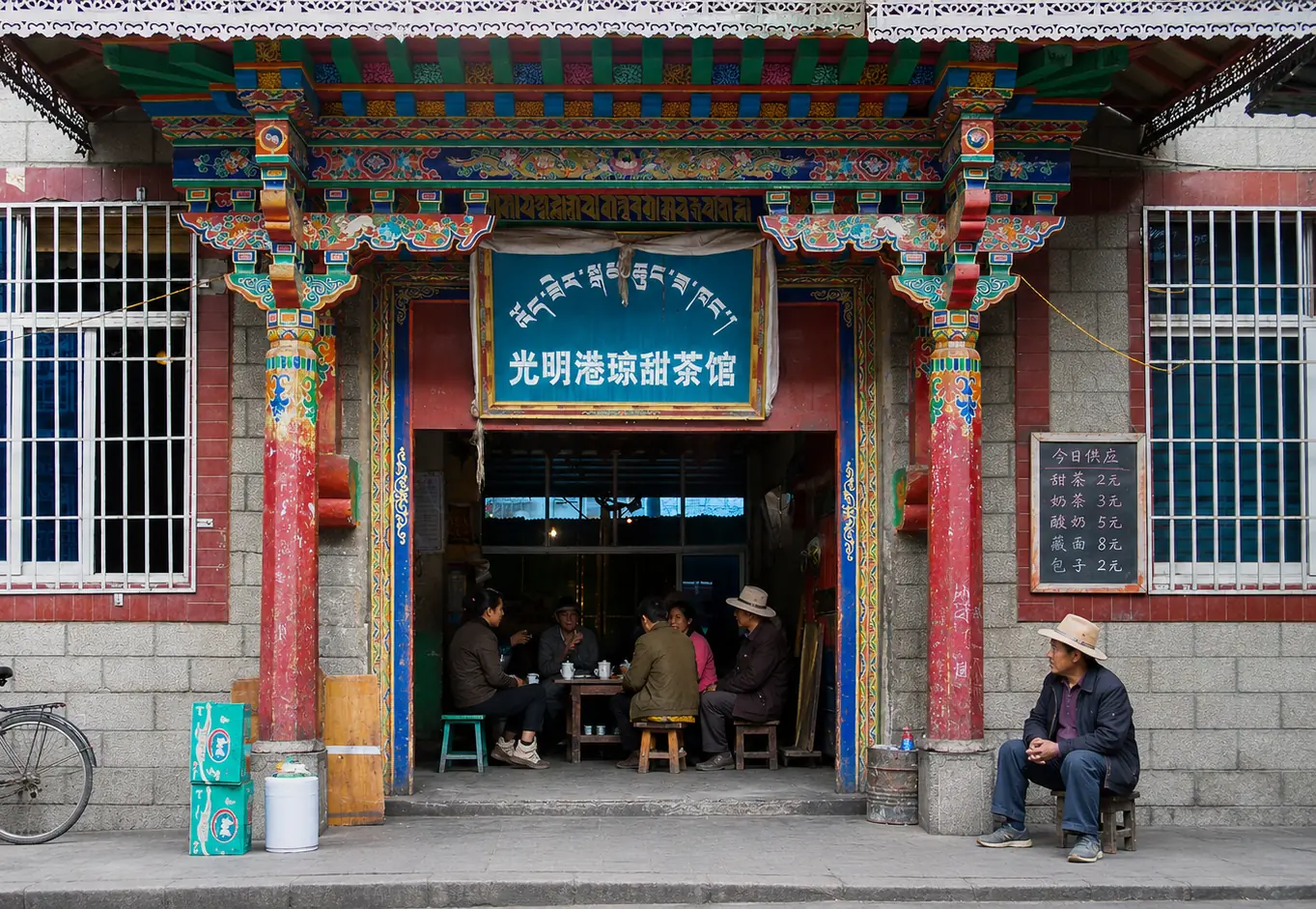
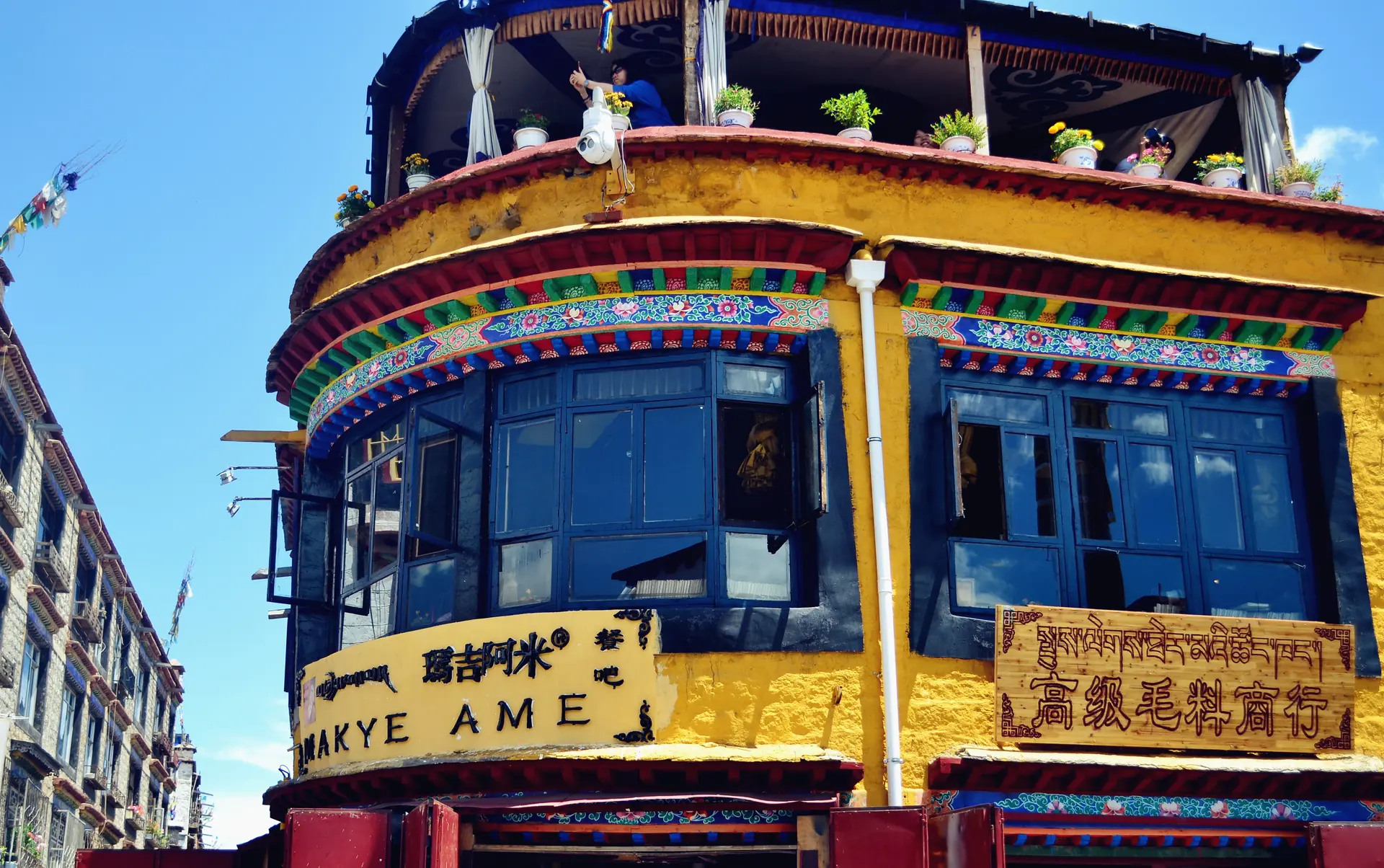
Browse after the kora
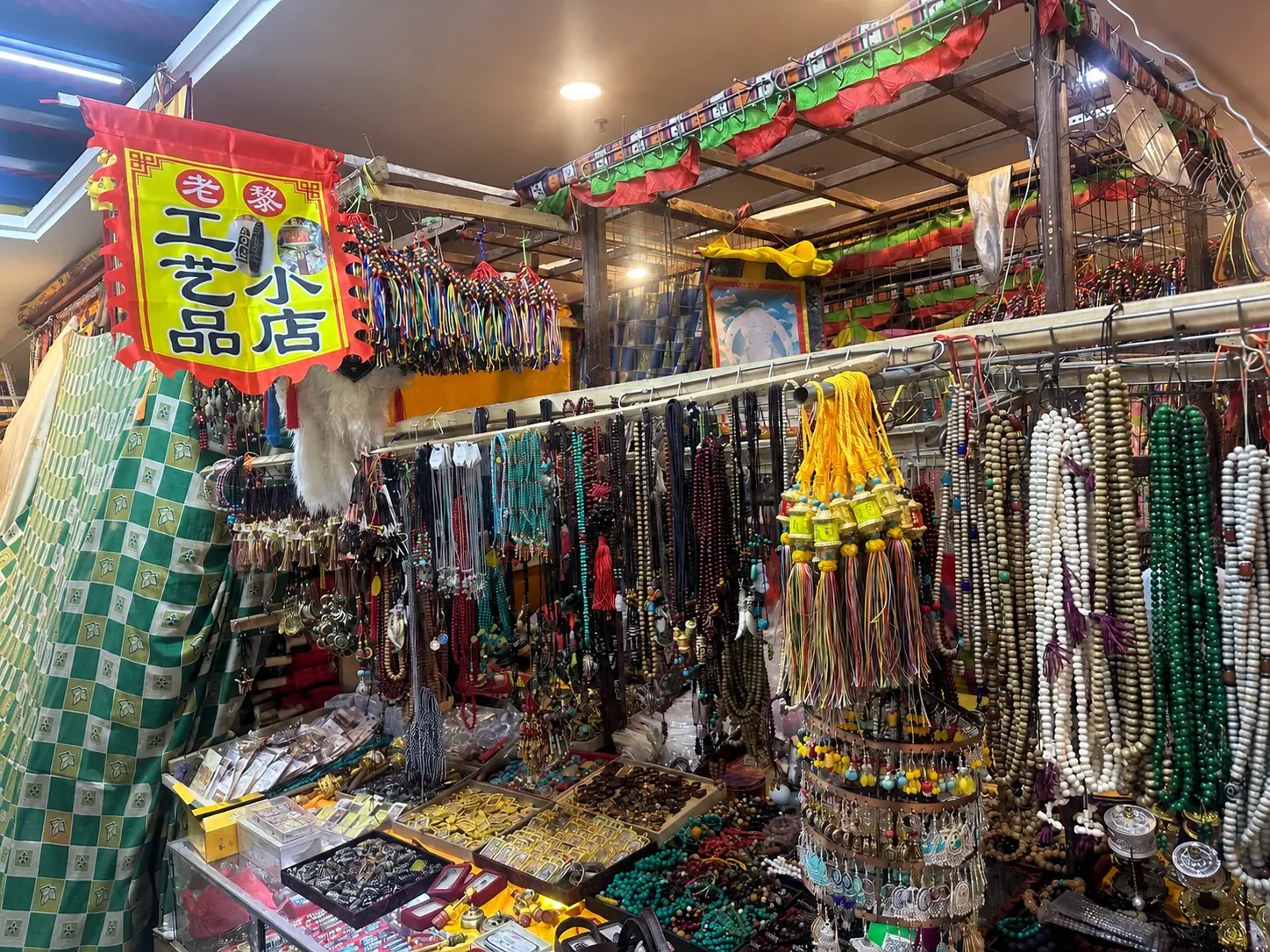
Barkhor shopping
Prayer beads, prayer wheels, incense, copperware, clothing, thangka-style art, and tourist souvenirs are everywhere. Browse after completing the kora so shopping does not take over the walk.
For high-value objects: if you are not confident about materials or provenance, treat expensive stones, antiques, religious objects, and paintings as souvenirs rather than investments.
Barkhor Permits, Altitude, and Street Controls
Foreign travelers generally need a Tibet Travel Permit to enter Tibet, including Lhasa. The permit is normally arranged through a qualified travel agency based on your route and identity, and foreign travelers must visit Barkhor within that agency-organized Tibet itinerary rather than treating arrival in Lhasa as permission to travel independently. Rules can change, so confirm your exact requirements before booking trains or flights.
Barkhor itself is usually a free street area, while Jokhang Temple entry is separate. Around the old town, however, security checks, passport checks, bag checks, or temporary crowd controls may occur. Carry your passport and leave buffer time around anything fixed.
Treat Altitude as a Schedule Constraint
Lhasa sits at about 3,650 meters. On your first day, keep the plan light: short walk, early sleep, no alcohol, and no long hot shower. Barkhor is flat, but thin air plus crowds plus excitement can still turn a simple stroll into a headache.
For official heritage context, see UNESCO's Historic Ensemble of the Potala Palace, Lhasa. For entry-policy background, check current guidance through your travel agency and official Chinese consular channels before you commit to transport.
Common Mistakes to Avoid on Barkhor Street
Walking against the flow
Even if the shop you want is behind you, step to the side and re-enter carefully. Do not push against the main clockwise stream.
Treating pilgrims as subjects
A moving portrait may feel meaningful to you, but the person in it may be praying. Ask, wait, and accept no.
Overloading day one
Potala Palace, Jokhang, Barkhor, and tea houses can be too much right after arrival. Save energy for altitude adjustment.
Only shopping the street
If you only browse storefronts, Barkhor becomes a souvenir strip. Walk the full loop before deciding what it is.
After dark: the lanes around Barkhor are compact and atmospheric, but they can feel confusing when you are tired. Save your hotel location and agree on a meeting point if you are with others.
Barkhor Street Kora Frequently Asked Questions
The street area is generally free to walk. Jokhang Temple entry is separate, with its own ticket, opening times, and security rules.
Sources checked for this guide
- Jokhang Temple’s World Heritage component status and the historic ensemble context: UNESCO World Heritage Centre
- Foreign-passport entry approval and organized-travel requirements for Tibet; confirm current application details with a qualified agency: Official Tibet entry-approval guidance
- Lhasa’s approximate 3,650 m elevation, first-day pacing, common altitude symptoms, and emergency warning signs: Tibet tourism department altitude advisory
Beyond This Barkhor Street Walking Guide
Barkhor makes more sense when it is not isolated. Pair it with the Jokhang Temple guide, the Potala Palace guide, and the Lhasa travel hub so your first days in Tibet balance faith, logistics, altitude, and rest.
- Tibetan Opera & Cham Dance in Lhasa — check festival dates and monastery courtyard etiquette for traditional performances
© gochinafreely.com — Original guide by Go China Freely.