Visit basics
Tickets and eco-bus are usually sold as a bundle at the park gate.
Decision notes
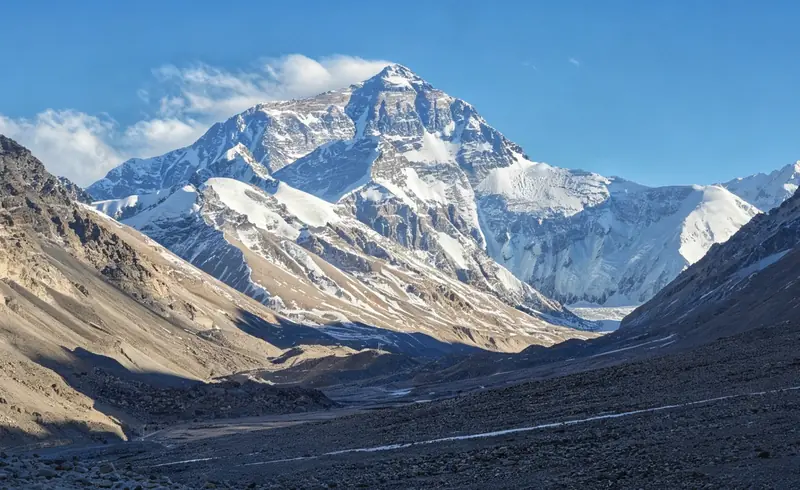
The World's Highest Basecamp at 5,200 Meters
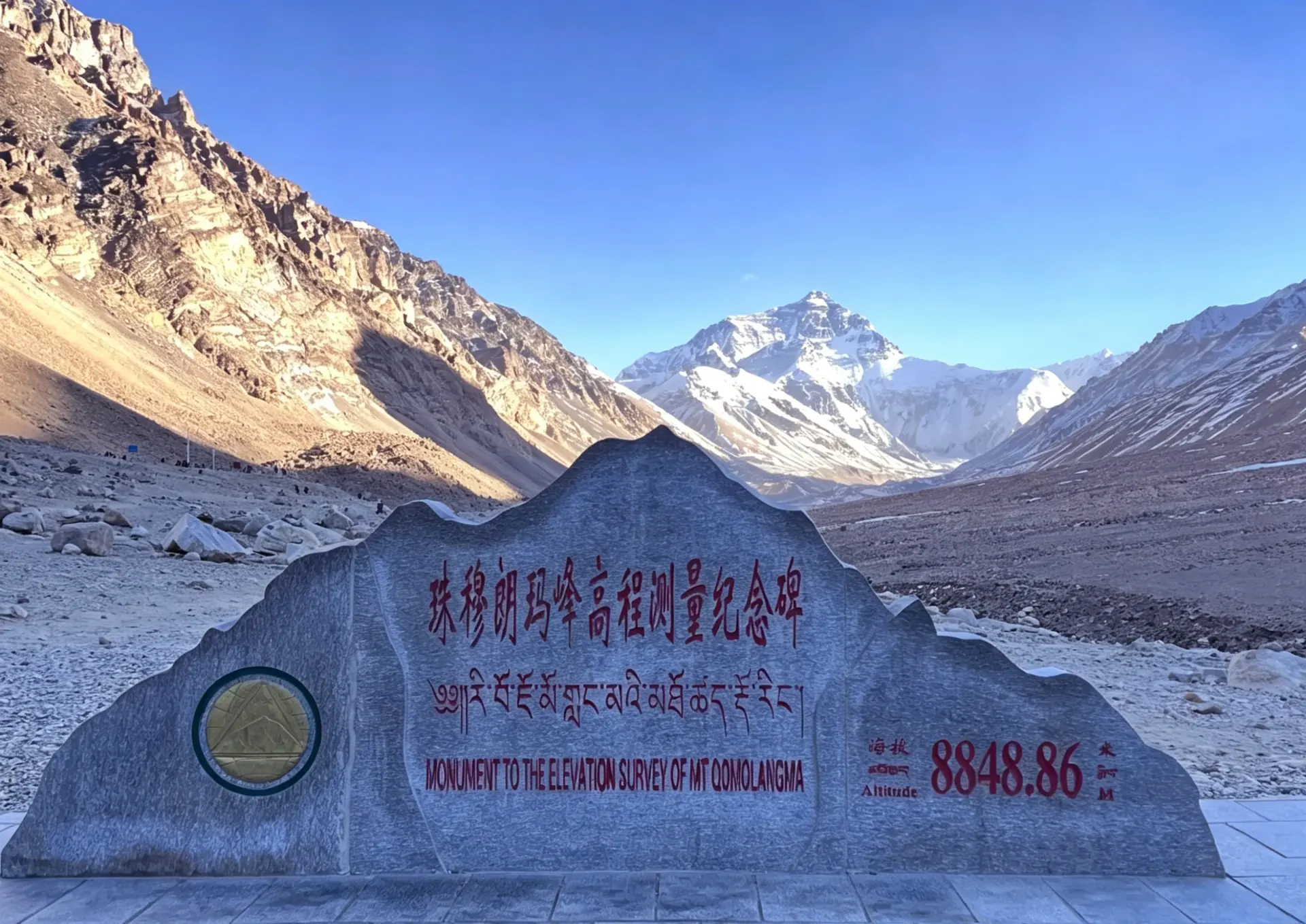
North-side base camp
Road-access Everest at 5,200 m
Everest Base Camp (珠峰大本营)
A north-side tourist camp directly below Everest's north face, where the road brings non-climbers within sight of the world's highest summit.
5,200 m
Marker stone
2 days
Lhasa to EBC
How close the road gets you
No two-week trek required: leave Lhasa on the G318, cross the 5,210 m Gawula Pass, and reach the foot of Everest by road. The upgraded tent camp sits near Rongbuk Monastery at roughly 5,000 m, with lodge windows facing the north wall.
What changed after 2019
Since 2019, the overnight tourist camp has been relocated closer to Rongbuk Monastery. After a full 2025 renovation, it now holds 54 accommodation tents for over 680 guests.
Reality check for non-climbers
This is a tourist-accessible high-altitude viewpoint, not a mountaineering camp you can wander through independently. Your agency controls the timing, eco-bus transfer, and return window; you only need a body that can handle high altitude, not heavy-load trekking gear.
Tibet-side angle
The north wall fills the horizon
What many foreign visitors don't realize is that the Tibet side gives Everest its most dramatic angle: the north wall, steep and unobstructed, rising straight beyond the glacial valley.

Why the Tibet view feels bigger
This is the mountain's steepest face, a pyramid of ice and rock with no foreground ridge to block your view. Nearby Rongbuk Monastery sits at 4,980 m, giving you an unobstructed front-row seat.
How it lands in person
The experience is less about hiking distance and more about the shock of scale: a paved-road approach, a thin-air final transfer, and then the world's tallest peak filling the whole horizon.
Tibet vs Nepal: a quick comparison
This is an entirely different experience from Nepal's south-side EBC trek. That route takes 12–14 days of trekking from Lukla to reach 5,364 m; Tibet's north side lets you ride a tour vehicle from Lhasa through Shigatse (日喀则) and Tingri (定日), arriving in two to three days by road.
Everest Views Along the Way
The roughly 350 km drive from Shigatse to EBC takes 7–8 hours, but this is anything but boring — this stretch of G318 is widely considered the most spectacular highway segment in China.
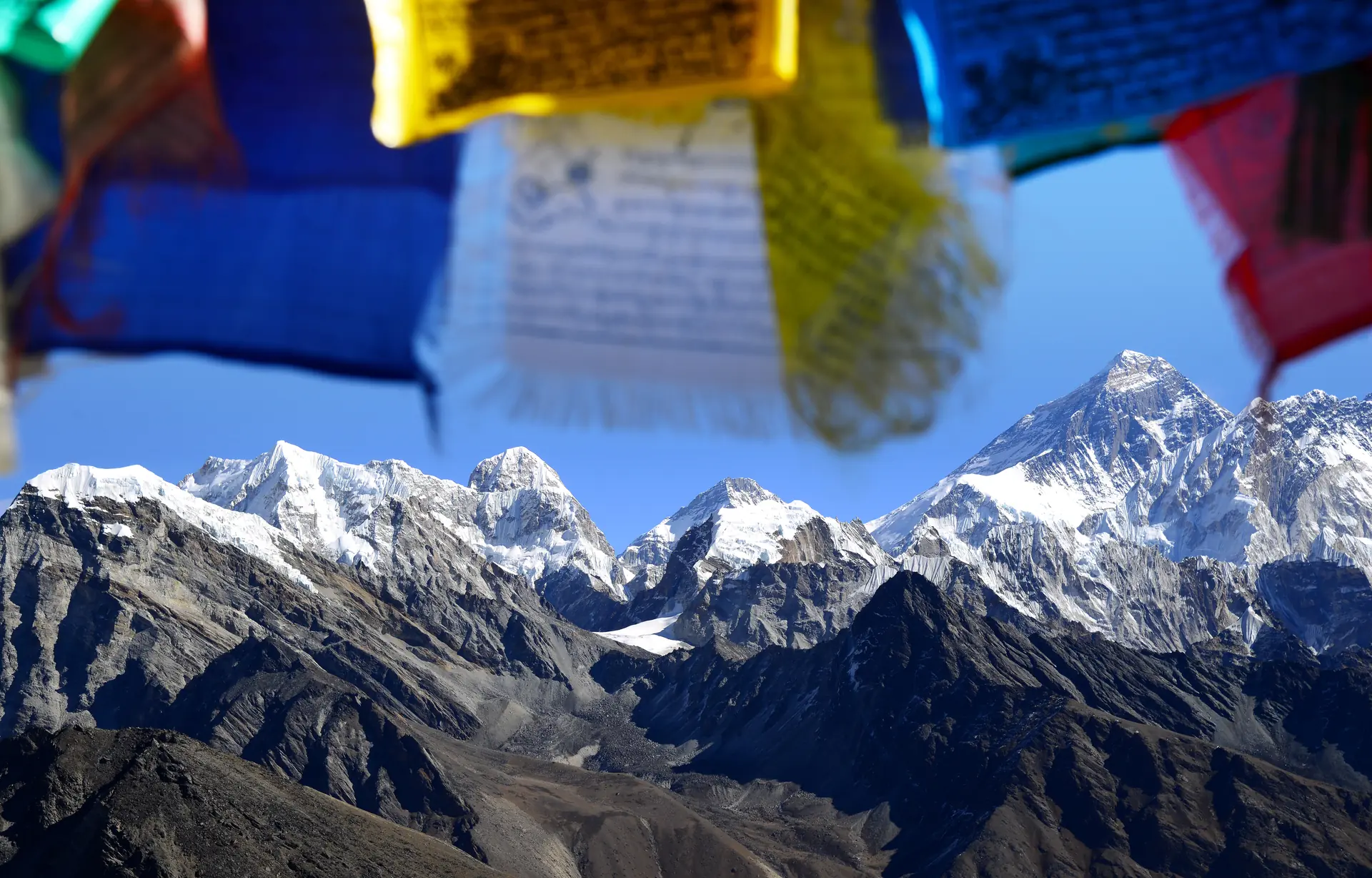
Route climax
Gawula Pass (5,210 m)
This is the climax of the entire route: the moment the Himalaya suddenly opens into a five-peak panorama above the Tibetan Plateau.
What you see
At Gawula Pass (加乌拉山口), five peaks above 8,000 m line up in one panorama: Mount Everest (8,848.86 m), Lhotse, Makalu, Cho Oyu, and Shishapangma.
Best light
Best shooting time is early morning around 6:30–8:00 (around sunrise), but most tour groups pass in the afternoon. If you can negotiate with your agency, push for a morning crossing — the light is completely different.
Wind and altitude
Wind at the pass is fierce, and wind chill drops the felt temperature 10°C or more below actual. Wear your down jacket even in summer. Stops here usually last 15–30 minutes; avoid heavy physical activity at this altitude.
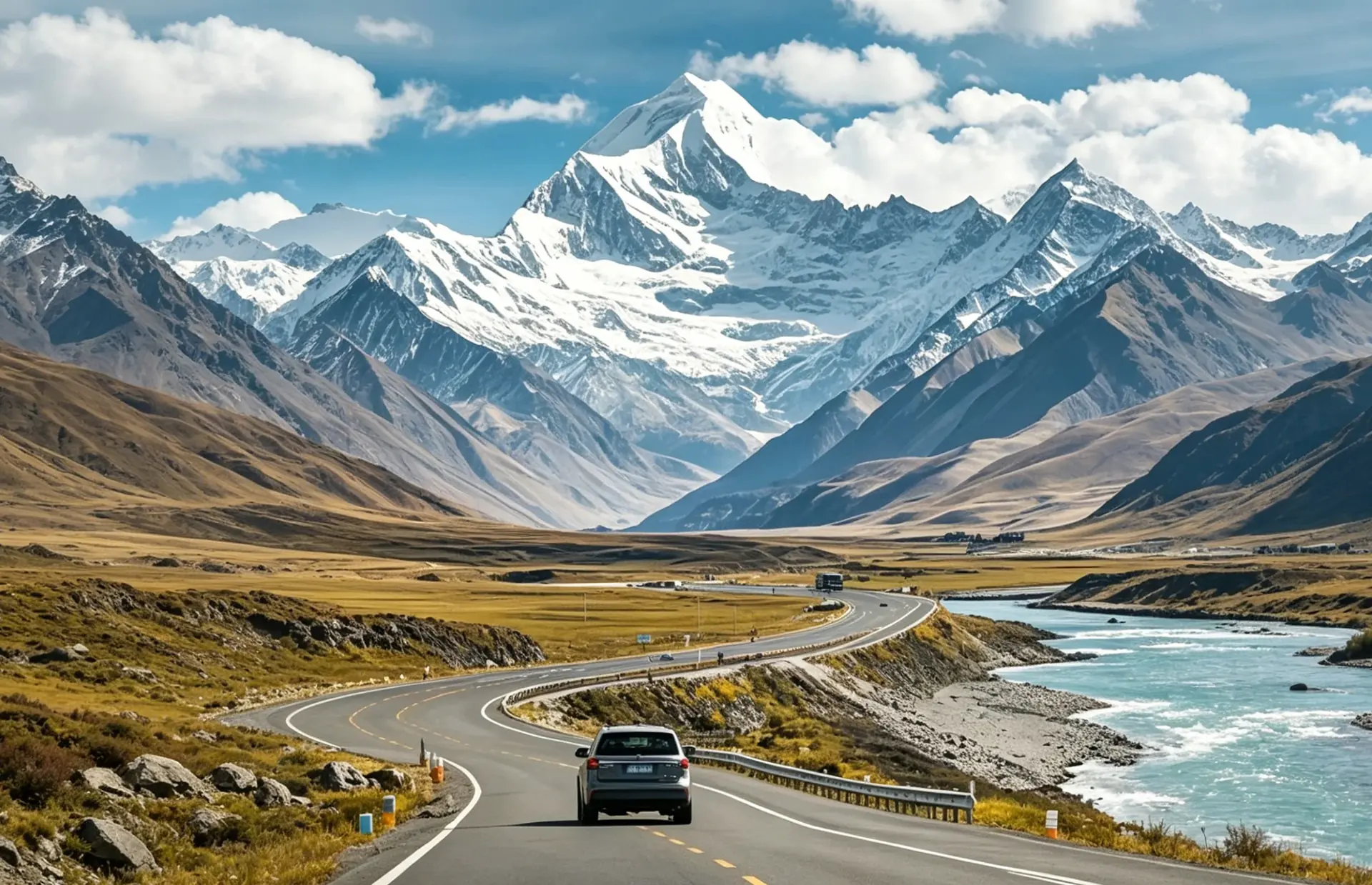
Final approach
The final 100 km from Tingri
From Tingri town, the 100 km drive takes 2–3 hours. The road is paved but twists constantly, staying above 4,800 m throughout.
How the view builds
Everest gradually emerges from the clouds — first just a tip of the summit, then half the mountain.
Final bend
As you round the last bend, the entire north wall suddenly fills your windshield. Most people involuntarily shout when it happens.
Rongbuk Monastery and the Final Walk
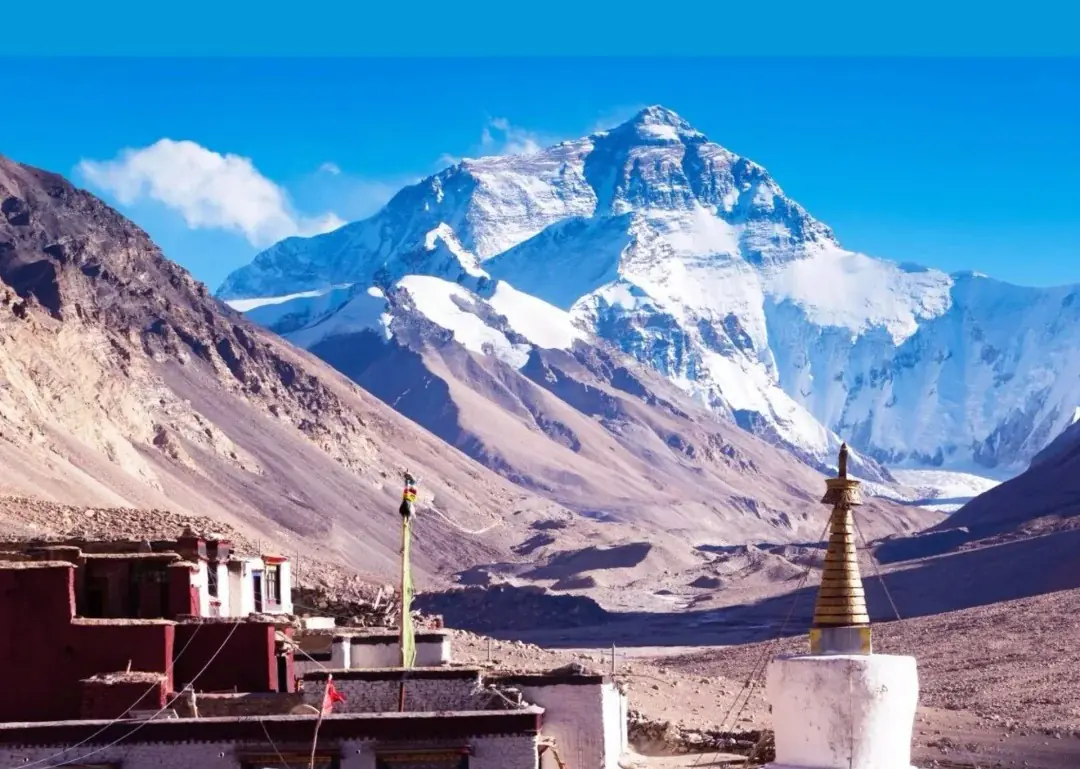
Highest monastery
Rongbuk Monastery and the final 1 km
Rongbuk Monastery (绒布寺), at 4,980 m, is the world's highest monastery and the natural handoff point between the tent-camp area and the 5,200 m marker stone.
Monastery visit
Built in 1899 as a Nyingma school of Tibetan Buddhism, the temple is small but perfectly placed — stand at its entrance and Everest's north wall looms just 8 km ahead. No optics needed to see the summit and its trailing banner cloud.
Camp to marker
The tourist camp sits near Rongbuk Monastery, relocated here since 2019. The marker stone is about 1 km ahead; the eco-bus takes 5–10 minutes and is included in your ticket bundle.
Walking at 5,000 m
The open path to the stone takes 15–20 minutes and has Rongbuk Glacier terminus views. Walking at this altitude feels like running at sea level; breathlessness after a few steps is normal. Just slow down.
Inside the monastery
The monastery is free to enter. A handful of monks live here year-round. Inside, the light is dim, butter lamps flicker, and murals tell Buddhist stories. At 5,000 m the stillness feels amplified — your heartbeat is louder than usual, your breath heavier, and all you hear outside is wind and the flap of prayer flags.
Sunrise, Stargazing, and Photography
The EBC area is one of China's premier natural photography locations, but timing and position matter far more than gear.
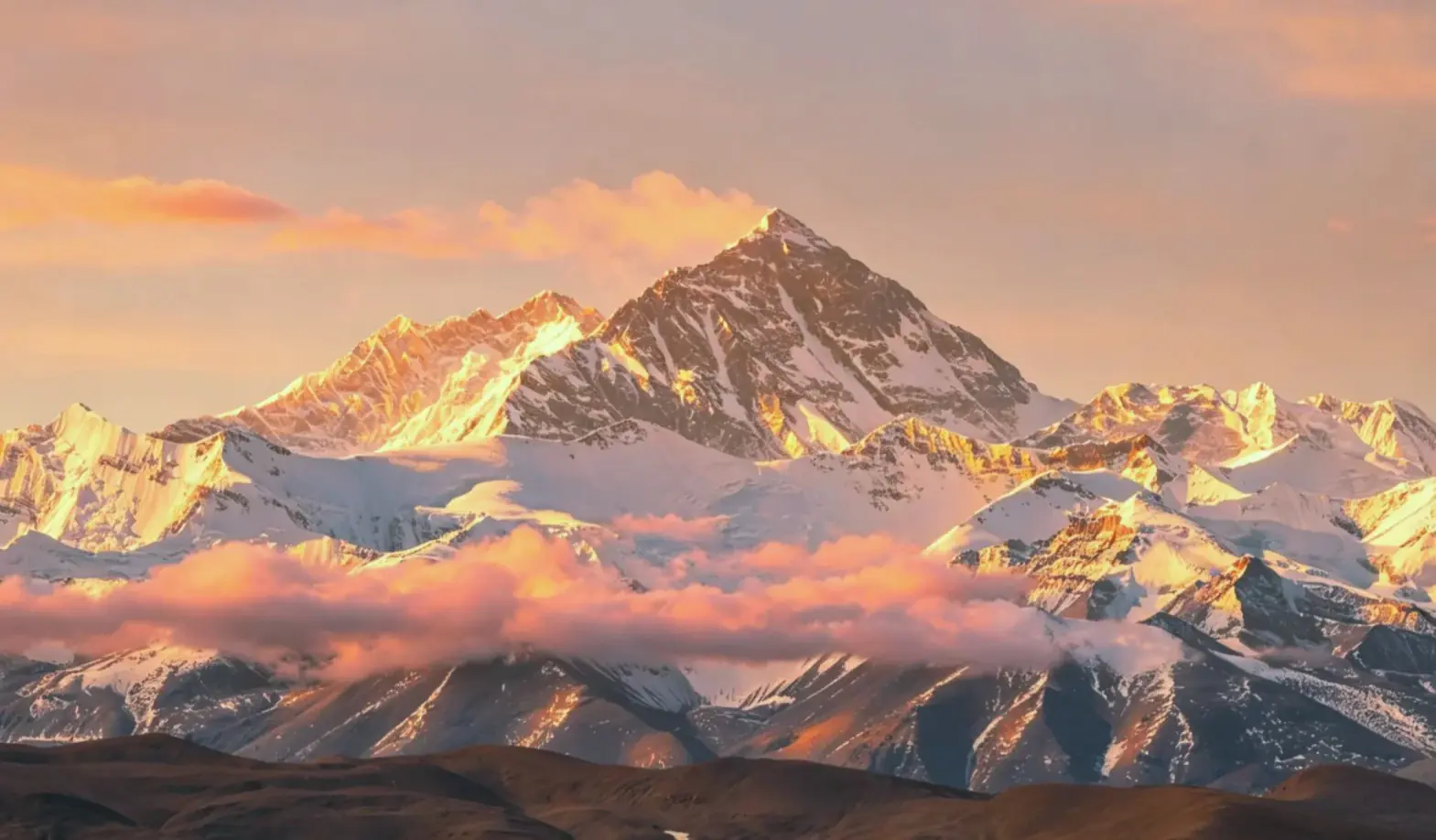
Dawn payoff
Golden Summit sunrise
When the first rays of dawn hit Everest's summit, the peak shifts from dark gray to blazing gold, then the light creeps downward — this is the famous "Golden Summit" (日照金山). It happens roughly 5–10 minutes after sunrise; exact timing varies by season (around 6:45 in April, 7:15 in October).
Best shooting spot
The open meadow in front of Rongbuk Monastery is the consensus top position. It's about 8 km from Everest with zero visual obstruction. A telephoto lens (200 mm+) captures summit detail; a wide angle fits both the monastery and the peak in one frame.
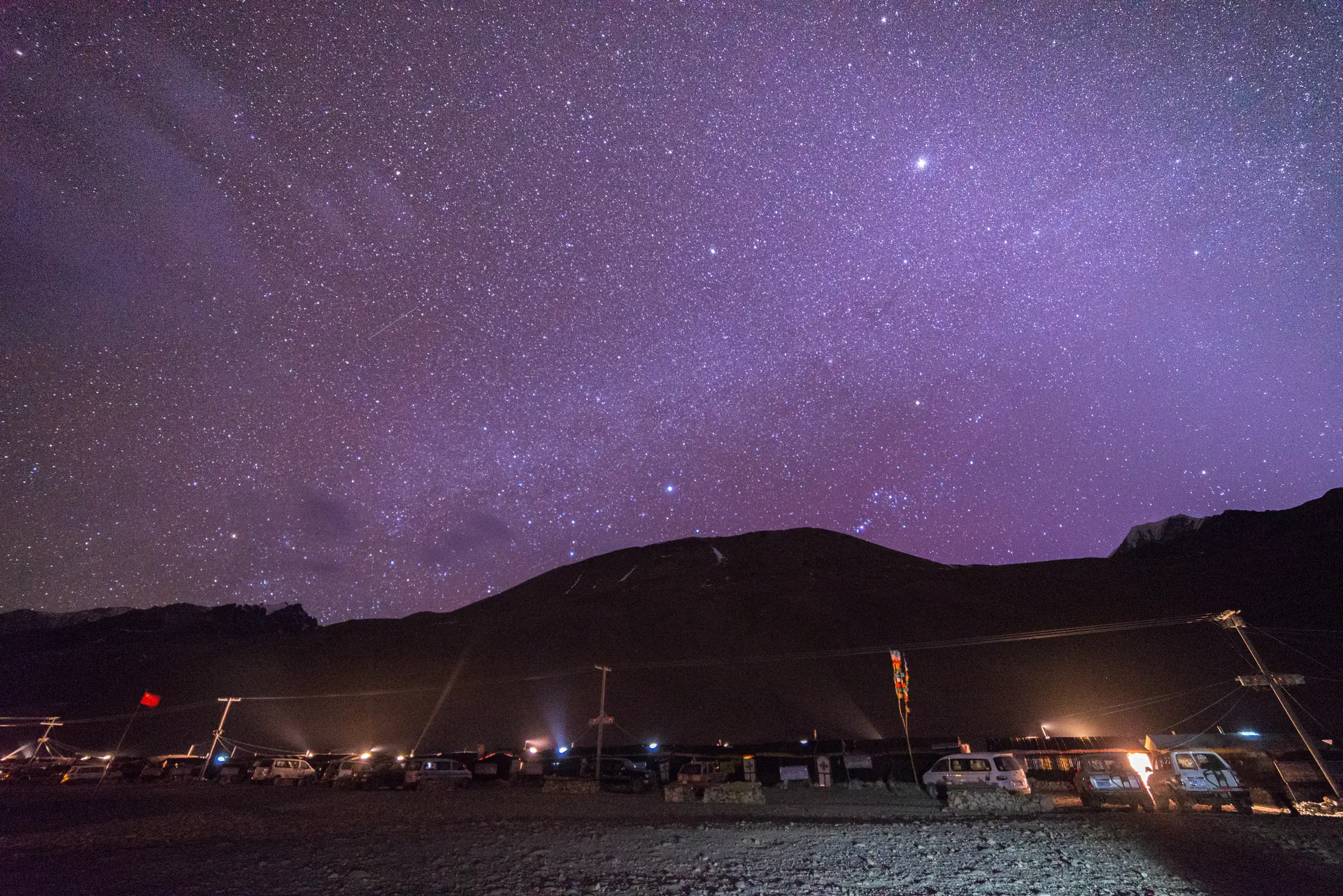
After dark
Milky Way and stargazing
EBC has virtually zero light pollution; on a clear night the Milky Way is visible to the naked eye. Best shooting window is 10 PM to 2 AM (summer Milky Way is brightest).
Camera settings
Use a tripod, ISO 3200–6400, aperture f/2.8 or wider, exposure 15–25 seconds. Recent smartphones (iPhone 15 Pro and comparable Android models) can also capture it in night/long-exposure mode.
Cold-night prep
Prepare mentally: nighttime temperatures can drop to -15°C. Batteries drain fast (bring two spares; keep them in your sleeping bag overnight). Fingers go numb quickly — wear thin liner gloves under thick outer gloves, and only remove the outer layer when shooting.
Best Time to Visit Everest Base Camp
EBC is open to tourists year-round, but weather varies dramatically. Only the right timing gives you a real chance of actually seeing Everest.
Visibility calendar
Peak: April–May & October
Highest clear-sky probability. April–May brackets the climbing season with stable weather, good visibility, daytime 0–10°C, nights -10 to -15°C. October brings crisp autumn air and the best transparency — the month Everest most likely reveals its full face.
Good: Early June & September
Early June catches the last clear window before monsoon arrives. September marks the monsoon's tail end, with decreasing rainfall but large day-night temperature swings.
Avoid: July–August
Peak monsoon. Everest hides behind clouds 70%+ of the time. Rain worsens road conditions (landslide and mudflow risk), and Gawula Pass may close temporarily.
Winter: possible but hardcore
Park stays open but nights plunge to -25°C or colder. Most tent lodges shut down. Upside: zero crowds, crystal-clear air, and high sunshine rates. Only for experienced high-altitude travelers with serious cold-weather gear.
Surviving 5,200 Meters: Altitude and Gear
Altitude reality
Plan for half the oxygen of sea level
At 5,000-5,200 m, every step requires more effort, a dull headache may settle in, sleep quality drops sharply, and appetite might vanish. These are normal altitude sickness symptoms that most people can adapt to, but only with a deliberate pace.
The safest rhythm
Acclimatize in Lhasa, step up gradually through Shigatse and Tingri, spend one night maximum near EBC, then descend after sunrise.
Step-by-Step Acclimatization
- Lhasa (3,650 m)- 2+ days - rest, hydrate, skip showers
- Shigatse (3,840 m)- 1 day - just 190 m higher, continue adjusting
- Tingri (~4,350 m)- 1 night - no severe headache here means you are adapting well
- EBC (~5,000-5,200 m)- 1 night max - watch sunrise, then head back
Medication and emergency response
Acetazolamide (Diamox)
Prescription drug. Start 1-2 days before departure; reduces altitude sickness symptoms. Side effects include tingling in hands and feet and frequent urination.
Rhodiola rosea (红景天)
A traditional Chinese herbal remedy. Limited scientific evidence but widely used. Start one week before departure.
Portable oxygen cans
Available at pharmacies in Lhasa or towns along the route, ¥15-30 per can. A few minutes of breathing provides temporary relief from headache and breathlessness.
Severe altitude sickness warning
Persistent severe headache, nonstop vomiting, confusion, blue lips: descend to lower elevation immediately. Do not hesitate. Altitude sickness can worsen rapidly; "pushing through" can be fatal.
Skip EBC if your body is already under stress
People with serious heart conditions, hypertension, asthma, or recent surgeries should avoid this trip. Never go to high altitude with a cold: at high elevation, a common cold can rapidly develop into pulmonary edema.
Essential packing list
Cold layers
Hard-shell jacket, -20°C-rated down jacket, fleece mid-layer, moisture-wicking base layer, warm hat, neck gaiter, wind-proof gloves (thin liner + thick outer), thick socks x2-3 pairs.
Sun protection
SPF 50+ sunscreen because UV is extreme, UV400 sunglasses or snow goggles, and lip balm.
Power and camera
Large-capacity power bank and 2 spare camera batteries. Keep batteries in your sleeping bag overnight so they do not drain in the cold.
Warmth and oxygen
Insulated water bottle, 10+ hand-warmer packs, and portable oxygen cans x2-3.
Food and waste
High-calorie snacks such as chocolate bars, beef jerky, and nuts, plus wet wipes and plastic bags for pack-it-out trash rules.
Getting to EBC from Lhasa
Foreign tourists cannot travel independently to Everest Base Camp — this is a hard rule. You must book through a licensed Tibet travel agency that arranges all permits, vehicles, and a guide. No exceptions.
The Classic Route
- Lhasa to Shigatse- ~270 km, 5 hrs - optional Yamdrok Lake detour
- Shigatse to Tingri- ~240 km, 5-6 hrs along G318
- Tingri to EBC- ~100 km, 2-3 hrs - cross Gawula Pass (5,210 m)
Route pins to recognize
Pre-EBC town
Tingri Town (定日县) (Google | Amap)
The last practical town before the Everest approach road; many itineraries use it as the pre-EBC night.
High pass
Gawula Pass (加乌拉山口) (Google | Amap)
The panoramic 5,210 m viewpoint where five 8,000 m peaks can appear in one frame.
Road Conditions
The G318 is paved asphalt and generally in good shape. However, speed limits on some sections (40–60 km/h) plus checkpoint stops mean actual driving time runs 30–50% longer than GPS estimates.
Monsoon season brings landslide and road-closure risks. Winter passes may have snow, but roads usually remain open (your agency will confirm conditions beforehand).
Pacing Your Journey
Don't try to drive from Lhasa to EBC in one day. Six hundred kilometers may not sound far, but driving at high altitude is exhausting, and you'd miss everything along the way. Recommended pacing:
- Lhasa to Shigatse- Yamdrok Lake detour if your itinerary allows; overnight in Shigatse
- Shigatse to EBC / Rongbuk- Cross Gawula Pass; overnight at the tent lodge or in Tingri
- Sunrise and return- Catch the morning light, then head back toward Shigatse or continue your route
Give yourself time
Fit EBC into an 8-day or longer Tibet itinerary rather than a 3-day dash. More acclimatization time means a far better experience.
Permits, Tickets, and Tour Costs
Foreigner access rule
Three access items, mostly handled by your agency
This is the most complicated part of visiting EBC as a foreigner: you need Tibet paperwork plus the park entry ticket. The good news is that once you have booked a licensed tour, the agency handles the permits and tells you what to carry.
What you actually do
Confirm your itinerary.
Submit passport and China visa scans.
Carry your passport for checkpoints and park entry.
Required permits and ticket
Permit 1
Tibet Travel Permit (TTP)
The basic entry document for Tibet. Your agency applies after you confirm your itinerary; processing takes 2-3 weeks.
Permit 2
Military Permit
Required for border regions including the Everest area. Your agency handles this; you do not need to apply separately.
Ticket
Everest National Park Entry Ticket
Purchased on arrival at the park gate: ¥180, usually bundled with the eco-bus.
ATP no longer required
Since June 2025, the Alien's Travel Permit (ATP) is no longer required for the Everest Base Camp region. Previously four permits were needed; now three will do.
Cost Breakdown
Item
Planning cost
Everest National Park ticket
¥180 / person
Eco-bus (camp ↔ marker stone)
¥90–120 / person (round-trip, bundled with ticket)
8-day Lhasa–EBC group tour
about $900–1,300 / person
Private small-group tour (2–4 people)
about $1,500–2,500 / person
China visa
about $60–185 (varies by nationality; check your embassy for current rates)
Tibet permit fees
Included in tour price
What tour prices usually cover
Tour prices typically cover: all permits, vehicle, guide, accommodation (3–4 star hotels + tent lodge), and some meals. Not included: flights or train tickets to Lhasa, personal expenses, tips.
Choosing a Tour Agency
Booking tips
Must be licensed by the Tibet Tourism Bureau (verifiable on the bureau's official website). Small groups (2–8 people) offer a far better experience than large-bus tours.
Book at least 1 month in advance; during peak season (April–May, October) book 2 months ahead. Confirm whether the tour fee includes the ¥180 park ticket and eco-bus — some budget tours exclude these.
Where to Sleep Near the Summit
Accommodation is the most "raw" part of the EBC experience. Managing expectations is key — this isn't a hotel, it's bare-bones survival at 5,000 m.
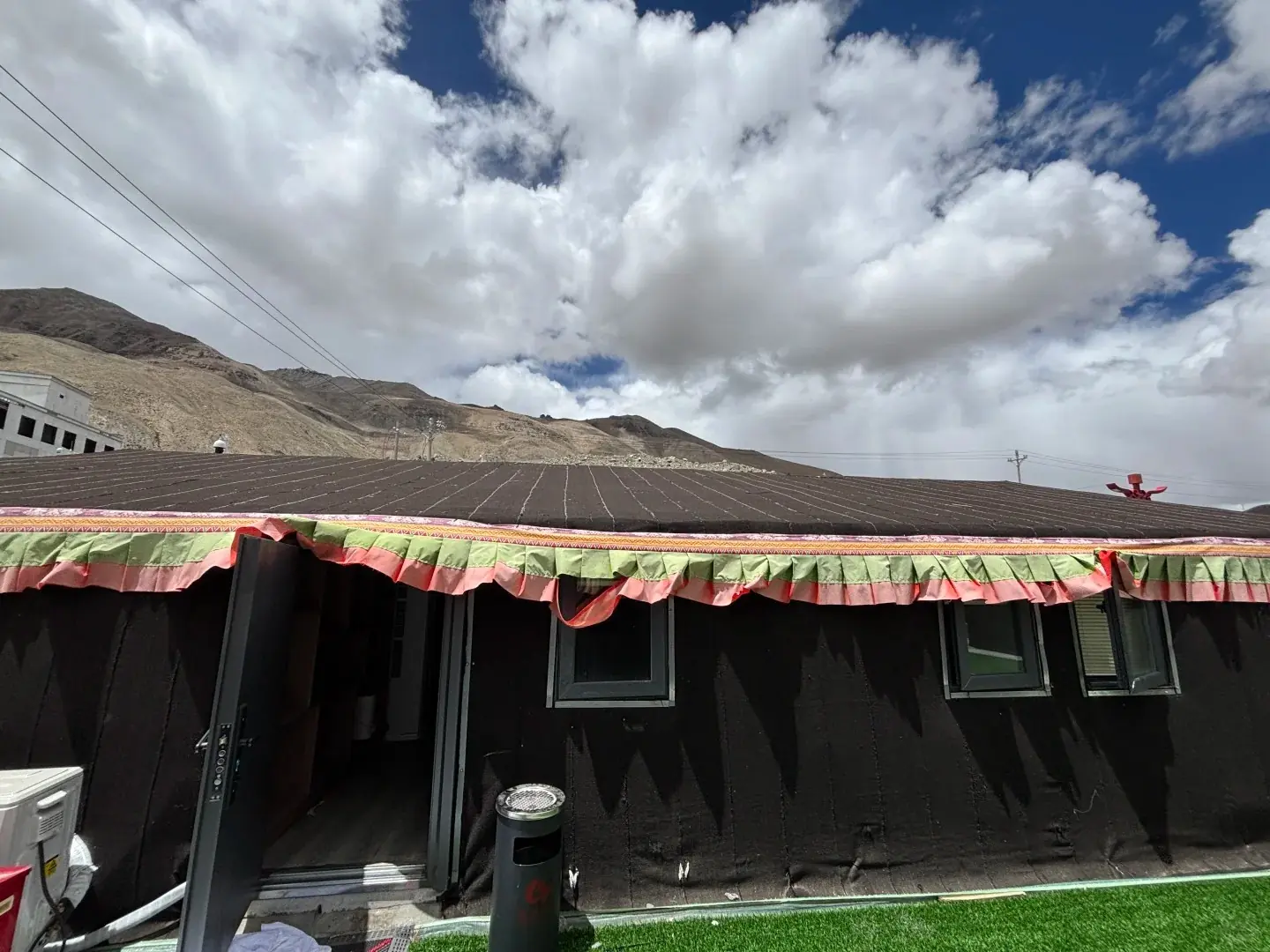
Main overnight choice
Rongbuk tent lodges
The tent lodges near Rongbuk Monastery are where most tourists overnight. After a full renovation in mid-2025, the camp now has 54 accommodation tents, but the experience is still basic high-altitude shelter rather than a hotel stay.
54
Accommodation tents
5,000 m
Bare-bones shelter
Sleeping setup
Inside you'll find basic bunks (usually communal or bunk-bed style) with thick quilts. There's no central heating, no hot showers, and no private bathrooms; yak-dung stoves are the main heat source, with limited effect.
Signal and charging
Cell signal is unreliable and there's no Wi-Fi. Charge everything fully before arriving.
Food at camp
Expect instant noodles, fried rice, butter tea (酥油茶), and sweet tea. Prices are 2-3x higher than lowland towns; instant noodles run ¥20-30.
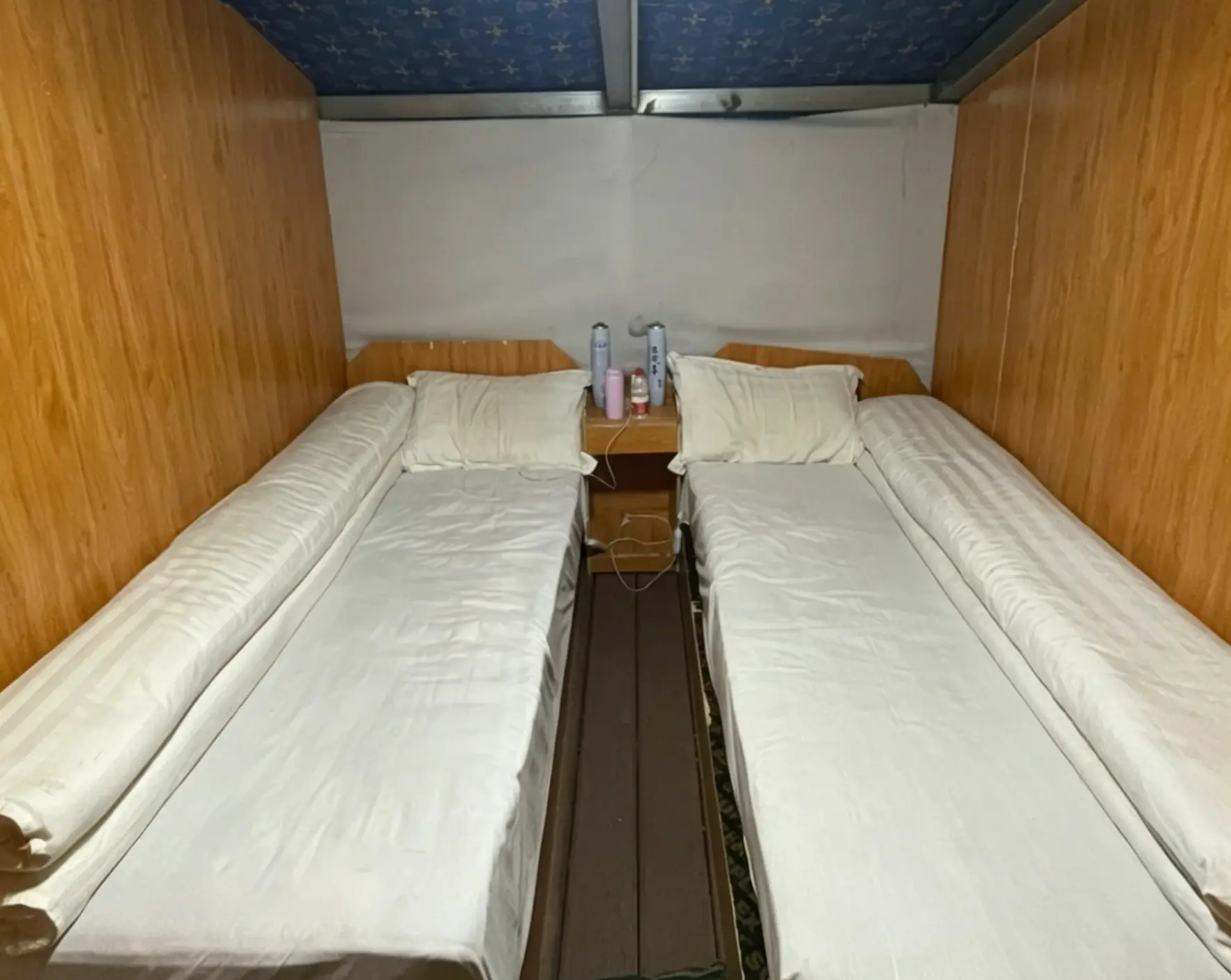
Grab a good spot
Most tour groups arrive between 3-4 PM. If your agency can get you there before 2 PM, you'll likely get a bunk near the window (Everest view) and close to the stove.
Backup comfort base
Tingri Town (定日县)
If tent lodge conditions are beyond your comfort threshold, you can stay in Tingri town instead — standard guesthouses and hotels here have heating, hot water, and internet. It's roughly equivalent to a budget hotel in a small Chinese city.
Trade-off: you'll miss the sunrise and stargazing, since Tingri is 100 km / 2-3 hours from EBC.
Ask your agency
Rongbuk-area upgrades
The Rongbuk area also now has a handful of slightly upgraded guesthouses, some with private rooms and electric blankets.
Availability depends on season and demand, so have your agency check in advance before you assume the basic tent lodge is your only option.
Tips Most Tourists Miss
Field notes for the Rongbuk area
Post Office & Postcards
EBC operates a seasonal post office (open during peak months), billed as "the world's highest post office." You can buy postcards and get them stamped with a special Everest postmark, then mail them anywhere in the world. International postage is around ¥4.5 per card, though delivery isn't guaranteed. The post office is near the tent camp area, roughly open 9:00–17:00.
Signal & Charging
China Mobile has a cell tower in the EBC area, but the signal is spotty. Text messages and basic WeChat work; video calls are effectively impossible. China Unicom and China Telecom have poor coverage. Download offline maps and translation apps before leaving Lhasa. Bring at least a 20,000 mAh power bank.
Food & Water
Hot meals near EBC are limited and expensive. Stock up in Lhasa or Shigatse: high-calorie snacks, instant noodles, self-heating rice meals, insulated bottle filled with hot water, and fruit. Don't drink unboiled water. The hot water at tent lodges is sometimes melted snow — safe but with a mineral taste.
Tibetan Herders
You may encounter Tibetan herders tending yaks near camp. They're friendly but language is a barrier. Smiles and simple gestures work best. Don't photograph them without permission — especially elders and children. If they invite you for butter tea, accept graciously — it's a kindness.
Marker Stone Photos
The "Elevation 5,200.00 m" stone is the must-visit photo spot. During peak season, expect a 15–30 minute queue. Skip the 10–11 AM rush (most tour groups schedule photos then). Go right after watching the sunrise, around 7:30–8:00 AM — fewest people, best light.
Environmental Rules
EBC has tightened environmental management in recent years. Pack out all trash, and single-use plastic bags are prohibited inside the park (bring a reusable bag or trash bags). Some years the number of operating tent lodges is capped to reduce pollution.
Frequently Asked Questions
No. Tibet Autonomous Region requires all foreign visitors to travel with a licensed agency that provides a guide and vehicle. This is a hard regulation with no gray area or workaround.
Sources checked for this guide
- Permit and licensed-agency requirements were cross-checked against Tibet travel permit guidance from established Tibet operators: Tibet Discovery permit guide and Explore Tibet tourist permit guide
- Everest tent camp accommodation details and 2025 capacity were cross-checked against current Rongbuk/EBC lodging updates: Great Tibet Tour tent camp update
- Ticket and eco-bus price ranges were checked against current Everest Base Camp Tibet travel listings: WindhorseTour EBC fees and Tibet Vista eco-bus policy note
Beyond This Guide
Planning a Tibet itinerary that includes Everest Base Camp takes some orchestration — permits, acclimatization schedule, agency selection, and route design all need to fit together. If you'd rather have someone who knows the terrain walk you through it, we're here to help.
Before you lock the route:
- China visa requirements — confirm your entry documents before your Tibet permit application starts
- Best time to visit China — match your Tibet dates to visibility, cold, and monsoon risk
- China packing list — adapt the highland layers and battery rules before leaving Lhasa
- Mobile payments in China — make sure payments work before you reach small towns and high-altitude lodges
© gochinafreely.com — Original guide by Go China Freely.