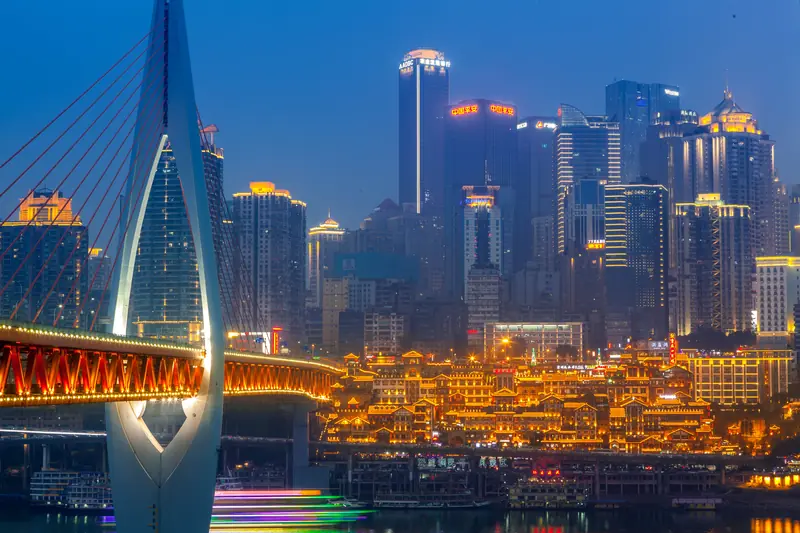
Chongqing is easiest to understand when you stop treating it like a flat city. Roads sit above rooftops, metro lines pierce buildings, stair streets drop through entire neighborhoods, and the Yangtze River (长江) forces the city into layers. This route follows that vertical logic: start with the Liziba monorail, move into Yuzhong's high platforms and old cliffside paths, cross the river by cableway, then return for Hongyadong (洪崖洞) lights and a hotpot finish.
11-13 hrs
Duration
7-9 km
Standard Walking
RMB 180-500
Budget / person
8 stops
Total Stops
Chongqing One-Day Route Logic
Most rushed Chongqing plans make one of two mistakes: they bolt Ciqikou Ancient Town (磁器口古镇) onto a downtown day, or they jump between viral photo spots without understanding the city's terrain. This route works because it keeps one shape: open with the monorail, decode the high platforms, descend through old mountain-city layers, cross the river once, then finish with lights and hotpot.
Ciqikou is not a bad place, but it costs too much time for a first-day downtown route. Mountain City Trail (山城步道), Kuixinglou (魁星楼), Eighteen Steps (十八梯), and Hongyadong are closer together and explain Chongqing better: stacked roads, cliffside paths, split-level entrances, and riverbank buildings that make "ground floor" meaningless.
13D First
Liziba and Kuixinglou show the vertical city before you start walking through it.
2Downhill Middle
Mountain City Trail and Eighteen Steps work because they move with the terrain instead of fighting it.
3Night Finish
Hongyadong and hotpot are strongest after dark, so the route saves the most dramatic visuals and food for last.
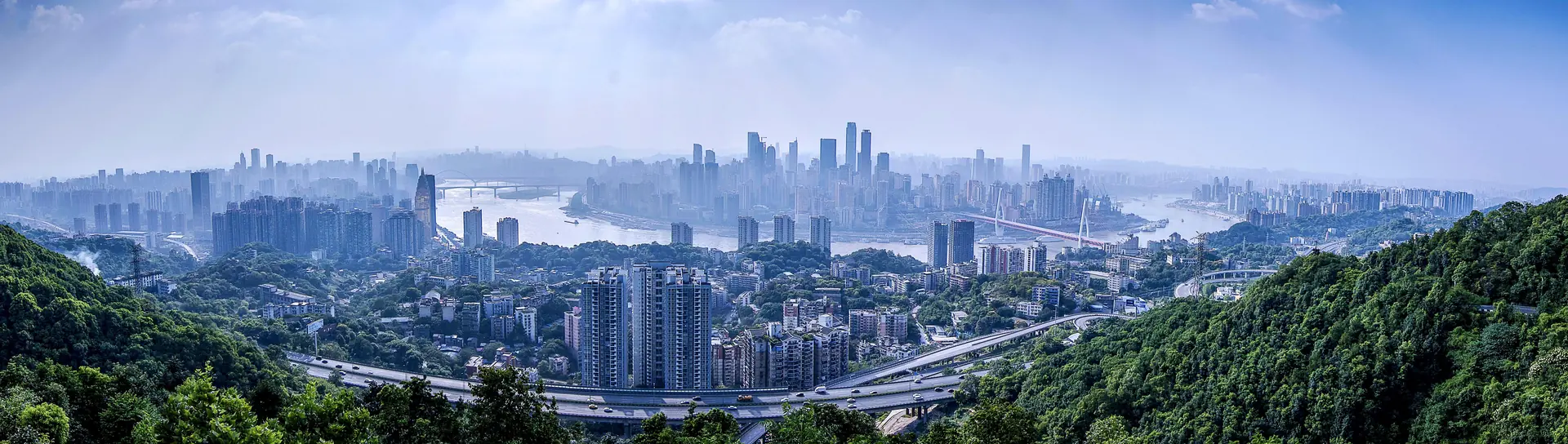
The route's big payoff is not one attraction. It is the feeling that the city keeps folding over itself: rail above road, road above river, buildings opening onto different floors, and night lights appearing from the cliff face.
Best for: first-time visitors, photographers, urban-design nerds, spice-friendly travelers, and anyone who wants Chongqing's "cyberpunk" look without turning the day into random taxi hops.
Not ideal for: travelers with serious knee or mobility issues, visitors who only want relaxed shopping, or anyone trying to combine central Chongqing with Wulong Karst, Dazu Rock Carvings, or a Three Gorges cruise departure.
Timeline At a Glance
Target pace: start early at Liziba, keep the cliffside walk before lunch, use the cableway as the river crossing, then protect the evening for Hongyadong and hotpot.
Assume short taxis for Liziba to Kuixinglou and, if needed, Kuixinglou to your chosen trail entrance. If you do every transfer by metro and walking, add 30-45 minutes and be ready to cut the cableway.
- Liziba Viewing Platform(李子坝观景台)- Line 2 monorail through the building
- Kuixinglou(魁星楼)- 22nd-floor ground-level illusion
- Mountain City Trail(山城步道)- controlled cliffside section
- Yangtze Cableway(长江索道)- one-way if queues are reasonable
- Xiaomian Lunch(重庆小面)- simple lunch before more stairs
- Jiefangbei and Eighteen Steps(解放碑 / 十八梯)- CBD, step street, old-new contrast
- Hongyadong Night View(洪崖洞夜景)- arrive before the likely 19:30 lights
- Hotpot Dinner(重庆火锅)- queue number or reservation early
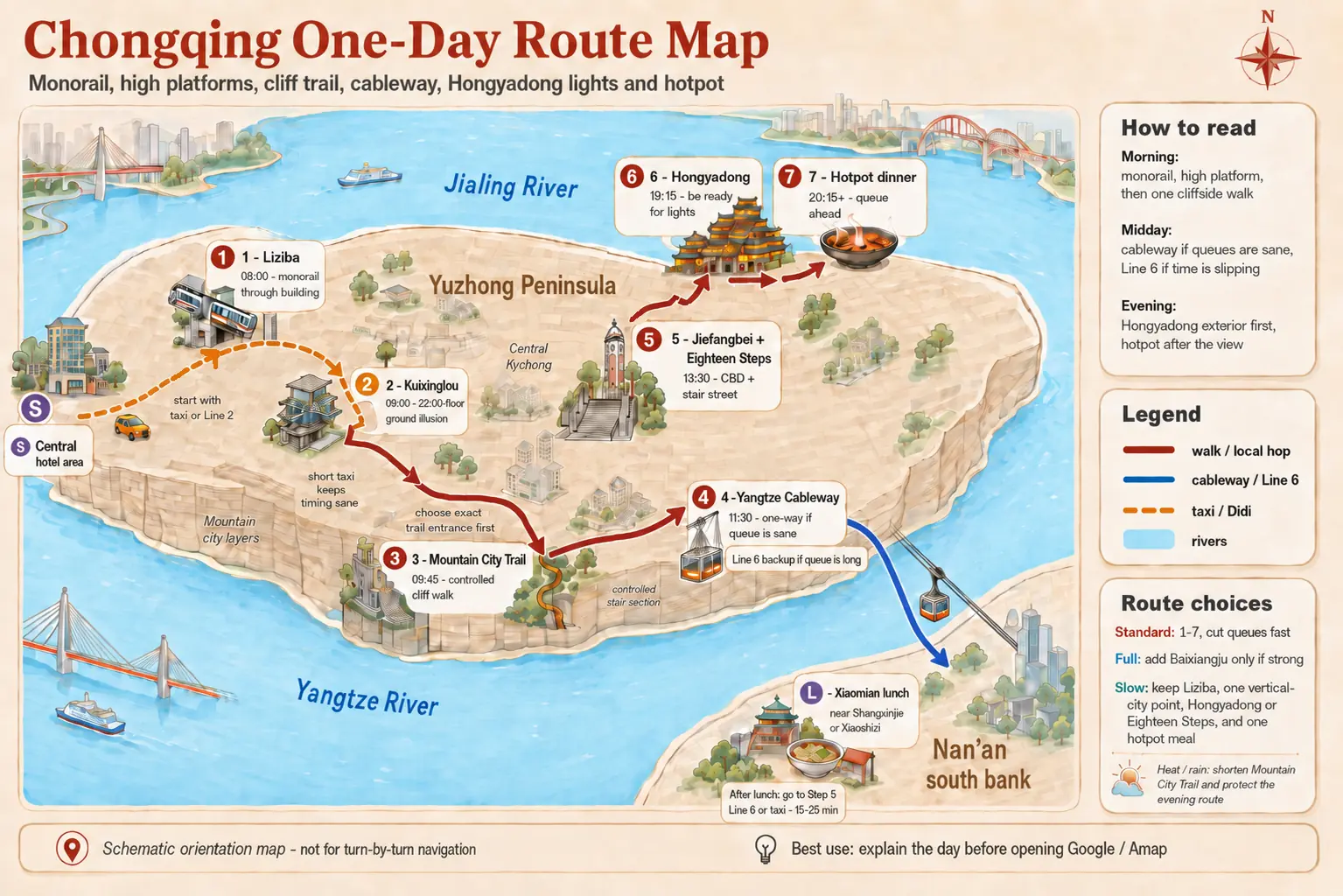
Read the day as monorail opening, short hop to the high platform, vertical-city walk, river crossing, CBD and stair street, night lights, hotpot. If the cableway queue is too long, do not let it break the afternoon; use Line 6, keep the old-town and night sections, and treat the cableway as optional.
See the monorail from below; the train-through-building effect is outside, not inside the carriage.
One door feels like street level; the balcony reveals you are high above another road.
Use the old cliffside path for the best physical sense of the city.
Ride the cableway if queues are reasonable; use metro if the line is eating the day.
End with one controlled night-view stop, then dinner nearby.
Recommended Version for Most First-Timers
Use the standard version as this article's default: Liziba viewing platform, Kuixinglou, a shortened Mountain City Trail, Yangtze Cableway if queues are sane, xiaomian lunch, Jiefangbei, Eighteen Steps, Hongyadong exterior view, and hotpot. Eling, Baixiangju, Ciqikou, Nanshan, and long bar time are upgrades, not baseline stops.
- Where you are
- Liziba
- What to do
- Watch several Line 2 trains pass through the building from the viewing platform
- Move on when
- You have the photo/video and crowds are building
- Where you are
- Kuixinglou
- What to do
- Use the high platform for the "ground floor is the 22nd floor" moment
- Move on when
- You understand the terrain and are ready to walk
- Where you are
- Mountain City Trail
- What to do
- Walk a controlled section from a pre-chosen entrance
- Move on when
- Heat, knees, or timing make the full trail unwise
- Where you are
- Yangtze Cableway
- What to do
- Take one-way cableway if the queue is under about 30 minutes
- Move on when
- The queue is long or the group needs lunch
- Where you are
- Lunch
- What to do
- Eat xiaomian, chaoshou, or a simple local lunch
- Move on when
- You are fed before the afternoon stairs
- Where you are
- Jiefangbei / Eighteen Steps
- What to do
- Use the CBD and stair street for old-new contrast
- Move on when
- You are ready for a rest, cafe, or night-view timing
- Where you are
- Rest / early dinner number
- What to do
- Cafe, mall, or hotpot queue number depending on light schedule
- Move on when
- Hongyadong lights are close
- Where you are
- Hongyadong
- What to do
- Be in position before the likely 19:30 lights; exterior view first
- Move on when
- You have the night view and dinner still works
- Where you are
- Hotpot
- What to do
- Eat near Jiefangbei / Hongyadong or wherever you queued
- Move on when
- The day can end without another transfer
Morning: Liziba and Chongqing's 3D City
Liziba Viewing Platform (08:00-08:45)
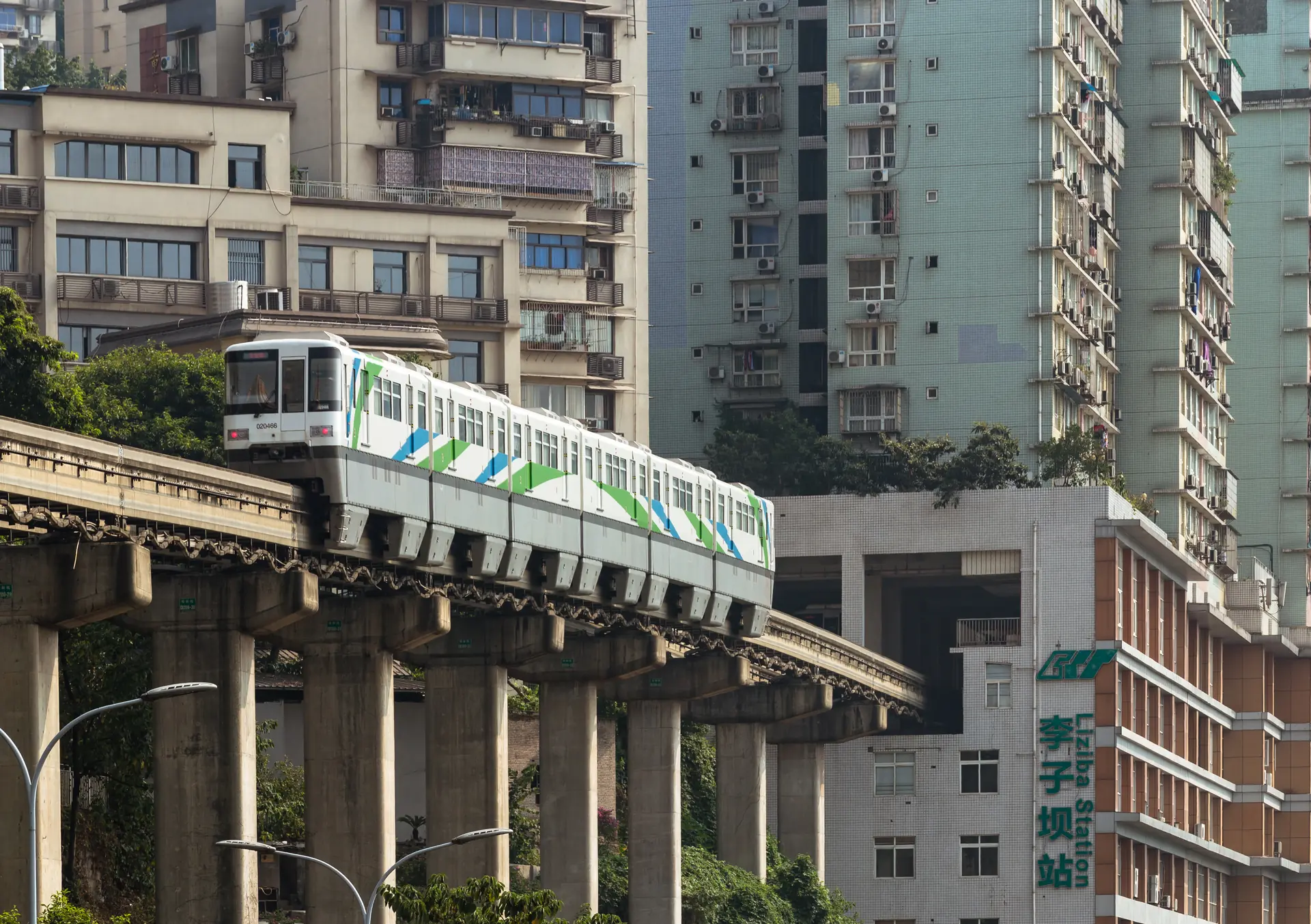
Liziba Viewing Platform (李子坝观景台) (Google | Amap) is the easiest opening move because it gives Chongqing's famous transport illusion immediately. Stand below the station and watch Line 2 trains slide through the building.
Do not ride through first if your goal is the visual. From inside the carriage, it feels like a short tunnel. The real effect is seeing the train emerge from the building's middle floors.
- Best for
- First-time efficiency
- Route note
- Easiest if your hotel is near Jiefangbei or Hongyadong, and keeps the 09:00 Kuixinglou stop realistic
- Best for
- Metro fans
- Route note
- Good if you also want the station experience, but stairs and exits can be awkward
- Best for
- Low-energy day
- Route note
- Replace with Kuixinglou and Eighteen Steps for less transport friction
Watch from below
Trains run frequently enough that you do not need to wait long. Shoot one vertical photo for the full building and one horizontal video for the train entering and exiting.
Kuixinglou (09:00-09:30)
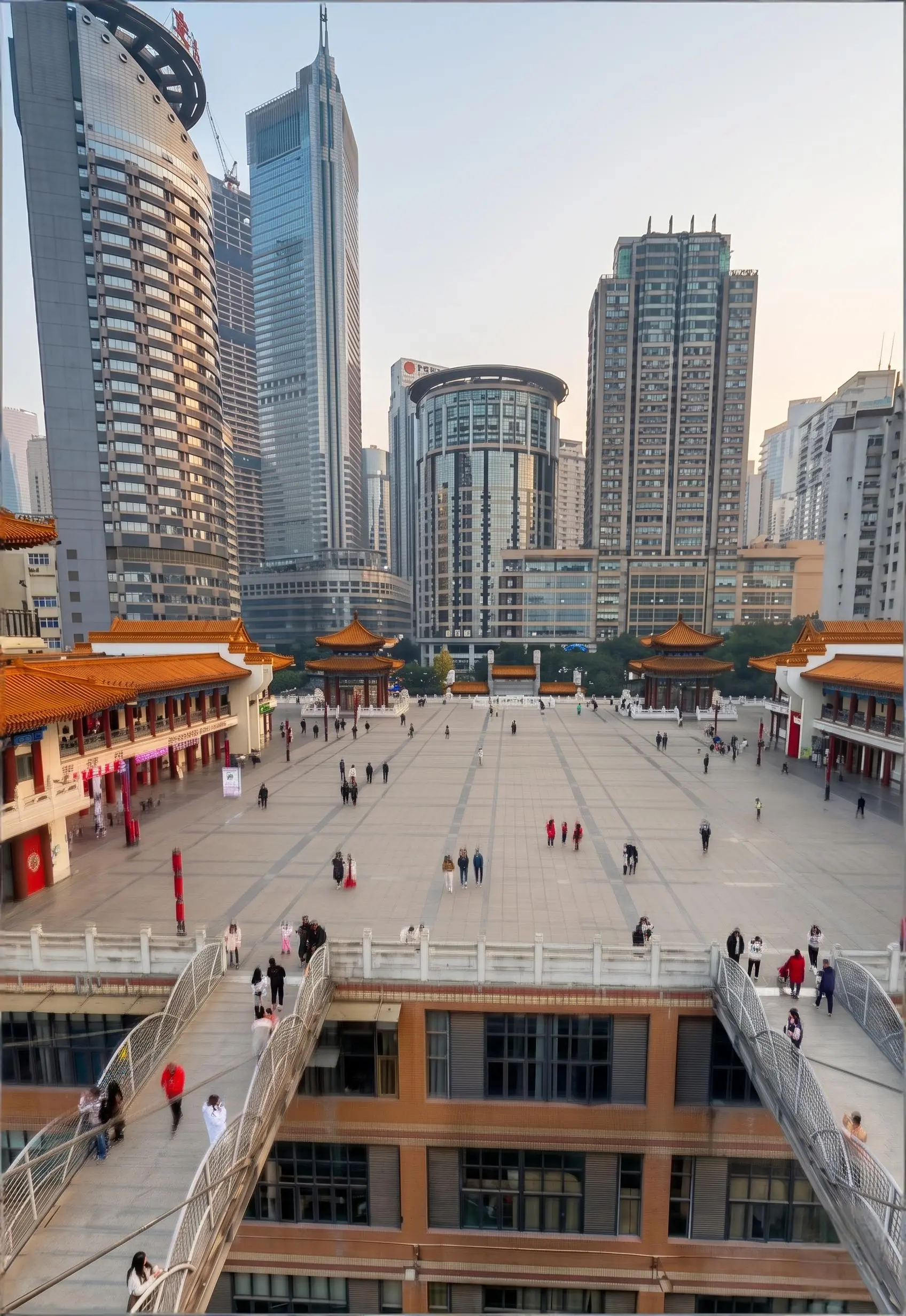
Kuixinglou Observation Platform (魁星楼观景平台) (Google | Amap) is the best quick way to feel Chongqing's layered ground levels. One entrance feels like normal street level; the platform reveals another city layer far below.
Keep this short. The stop is powerful because it explains the day, not because it needs a long visit. For the standard route, take a short taxi here from Liziba unless you deliberately want the Line 2 ride.
Why This Comes Before the Trail
Kuixinglou gives the city diagram first. Once you have seen roads and buildings stacked under your feet, the Mountain City Trail and Eighteen Steps make more sense.
Late Morning: Mountain City Trail and Cableway
Mountain City Trail (09:45-11:15)
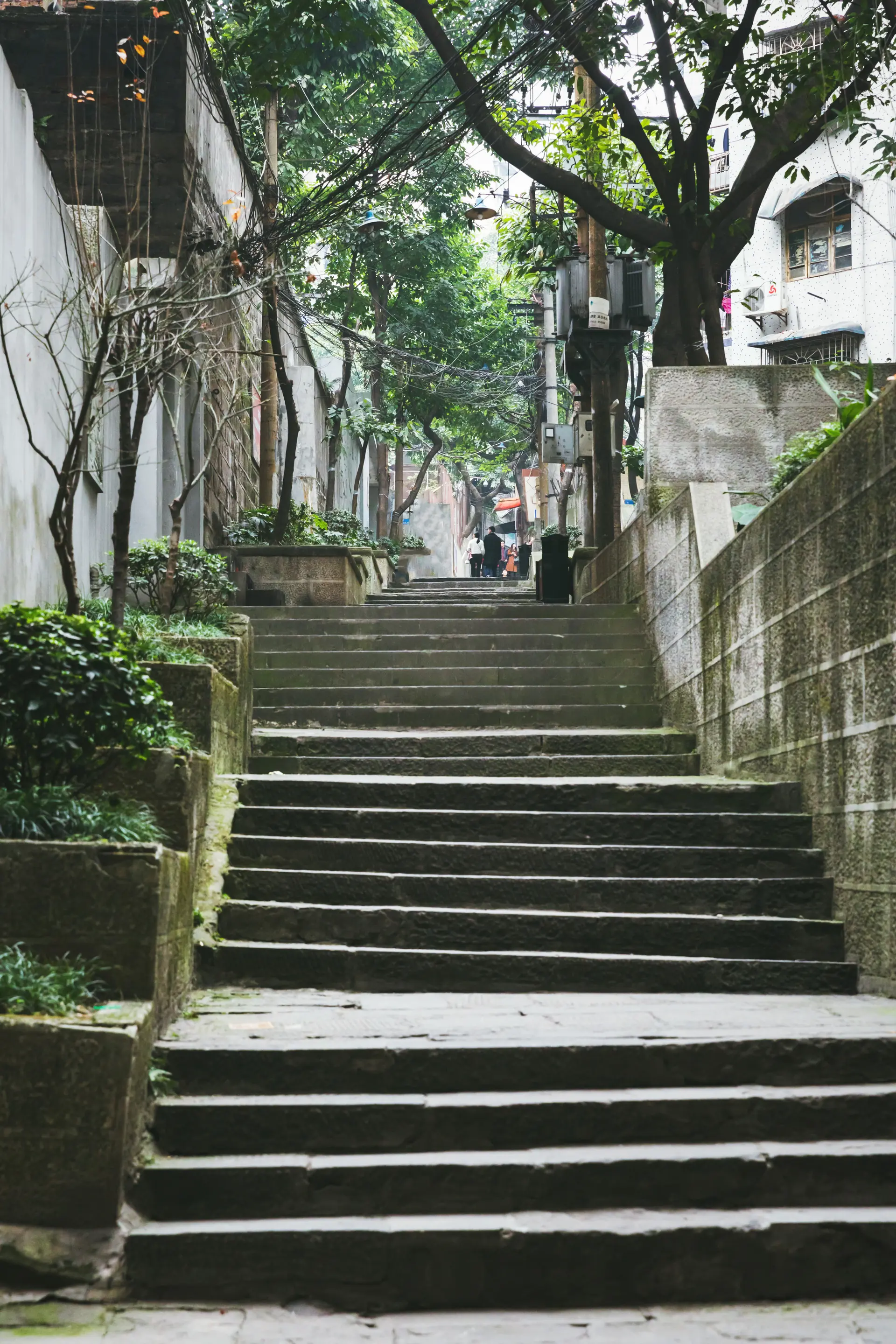
Mountain City Trail (山城步道) (Google | Amap) is the route's best replacement for Ciqikou on a one-day visit. Instead of a distant tourist old town, you get old stair lanes, cliff viewpoints, banyan roots, wartime-era buildings, and glimpses of everyday residential Chongqing near the city center.
Use a controlled section. The goal is to feel the cliffside city, not to exhaust your knees before lunch. Choose the entrance before leaving Kuixinglou; in Chongqing, a "nearby" entrance can still sit on the wrong vertical level.
Good trail priorities:
- Zhongxing Road Shancheng Alley Entrance (中兴路山城巷入口) (Google | Amap) if you want the simplest entry point.
- Houlu (厚庐) (Google | Amap) for old architecture along the route.
- Consulate Lane (领事巷) (Google | Amap) if you want the wartime and foreign-consulate layer.
- Cliff viewpoints for the Yangtze River and Nan'an skyline.
Do Not Overwalk the Trail
The standard version should use Shancheng Trail as a one-hour texture stop. If you are already tired, shorten it and save legs for Eighteen Steps and Hongyadong.
Yangtze River Cableway (11:30-12:15)
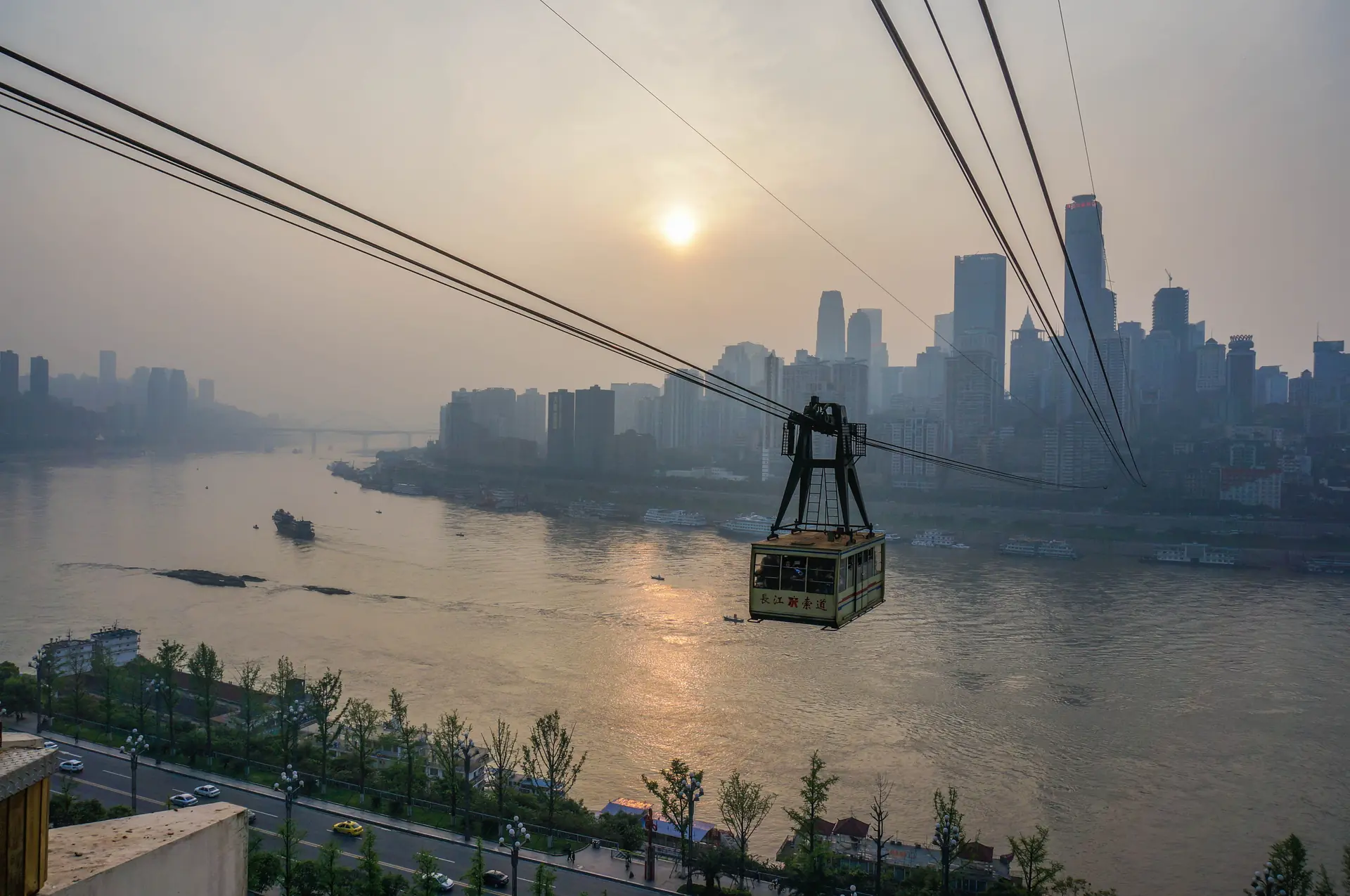
From the lower trail area, move toward Yangtze River Cableway Xinhualu Station (长江索道新华路站) (Google | Amap). If your trail section ends high, west, or farther from Xinhualu than expected, take a short ride-hail instead of forcing another stair-heavy walk. The cableway crosses from Yuzhong to the south bank in a few minutes, turning the river crossing into the day's most atmospheric transport experience.
Buy one-way if you are following the route. After reaching the south side, Line 6 can return you toward Xiaoshizi or Jiefangbei more efficiently than queuing for the cableway again.
- Best choice
- Ride one-way
- Why
- Worth it for the river crossing and skyline angle
- Best choice
- Use Line 6
- Why
- Protect lunch, Eighteen Steps, and the night route
- Best choice
- Use metro
- Why
- The cableway is less valuable without the view
Cableway Timing Rule
The official scenic-area schedule changes by season and holidays. Recent local information lists 08:00-22:00 in the warm season, 08:00-21:00 in winter, and longer holiday hours, but maintenance and crowd-control notices can override that. Check the current notice before building the day around a specific late-night ride.
Midday: Xiaomian, Jiefangbei, and Eighteen Steps
Lunch: Chongqing Xiaomian (12:30-13:15)
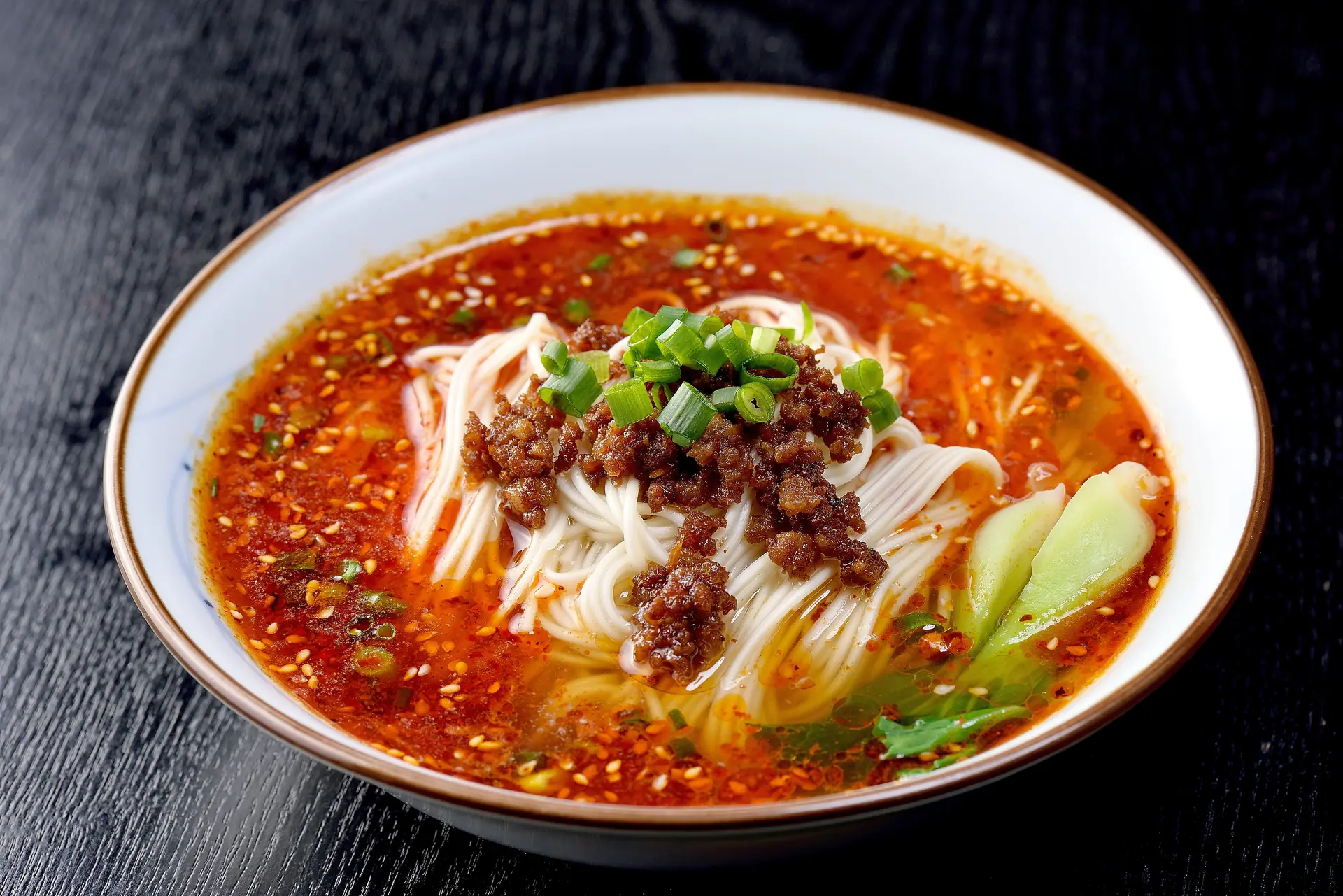
Chongqing xiaomian (重庆小面) is the practical lunch for this route: fast, local, cheap, and light enough before more steps. Eat near Shangxinjie after the cableway, or return by Line 6 toward Xiaoshizi and Jiefangbei for more options.
If you are spice-cautious, order mild. Chongqing's default heat can feel stronger than a visitor expects.
- Chinese
- 小面
- Route note
- The default red-oil noodle bowl
- Chinese
- 豌杂面
- Route note
- More filling and often easier for first-timers
- Chinese
- 酸辣粉
- Route note
- Tangy, slippery, and snack-like
- Chinese
- 抄手
- Route note
- Useful if you want soup or a lighter bowl
- Chinese
- 冰粉
- Route note
- Save for after hotpot or as afternoon heat relief
Keep Lunch Simple
This is not the meal to overplan. Save the big food decision for hotpot, and use lunch to reset energy before the afternoon.
Jiefangbei and Eighteen Steps (13:30-15:30)
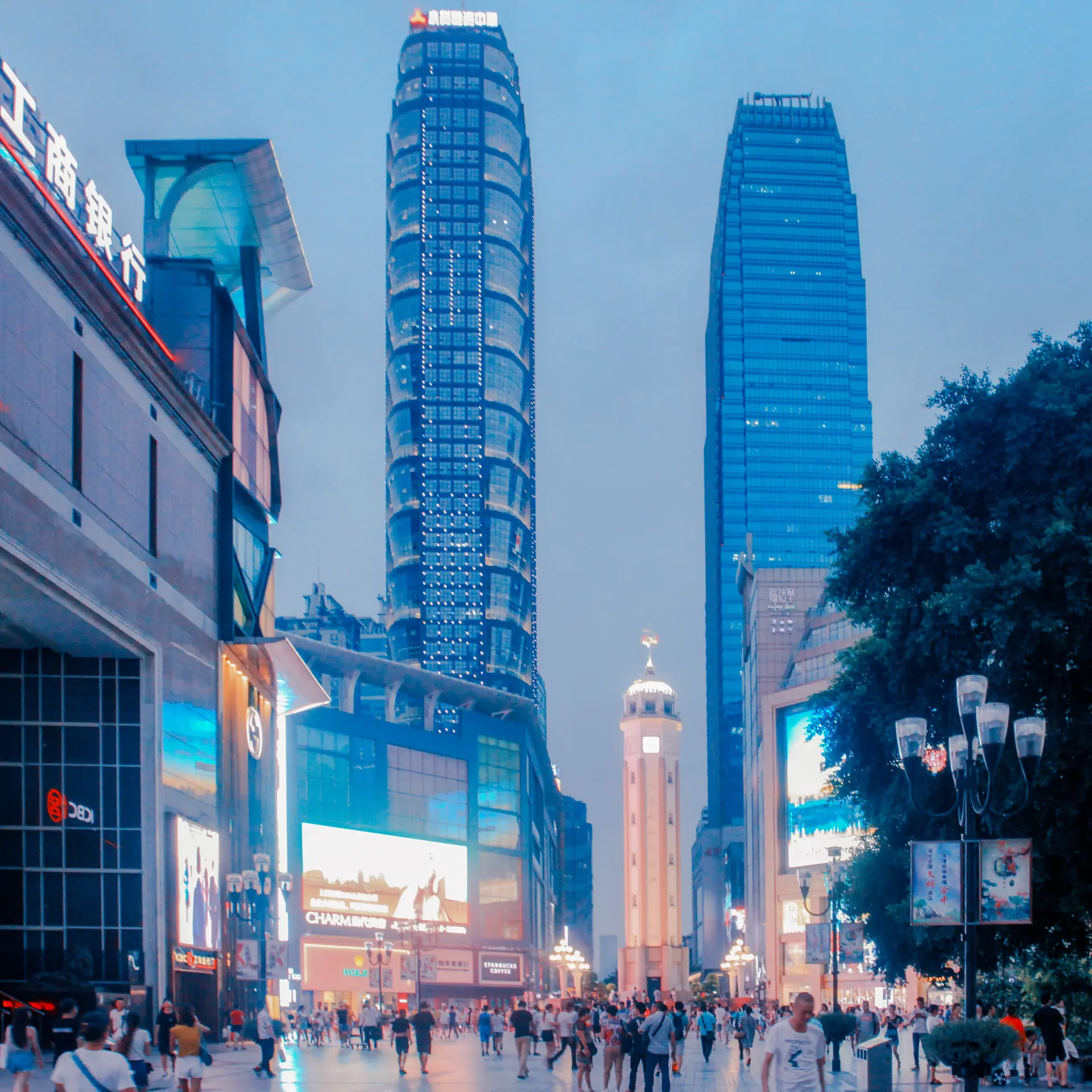
Jiefangbei Pedestrian Street (解放碑步行街) (Google | Amap) is not the deepest cultural stop, but it is the right city-center anchor. Use it for logistics, restrooms, snacks, and the strange feeling of a CBD built on uneven layers.
From there, walk toward Eighteen Steps (十八梯传统风貌区) (Google | Amap) for the old-new contrast: restored stair streets dropping away from the modern commercial core.
Useful for lunch, metro access, malls, and a short reset. Do not spend the whole afternoon shopping here.
Best for the vertical old-town feeling. Use the upper and middle sections if knees or heat are a concern.
Add only if you are doing the full version and want another famous stacked-building photo stop near the river.
Use the Afternoon Gap
If Hongyadong lights are late, do not stand around for hours. Take a cafe break, get a hotpot queue number, or shorten the evening by eating first and seeing Hongyadong afterward.
Evening: Hongyadong Night View and Hotpot
Hongyadong Exterior View (Time by Current Lights)

Hongyadong (洪崖洞民俗风貌区) (Google | Amap) is strongest from outside. The famous image is the cliffside facade glowing above the Jialing River, not the souvenir shops inside.
For this one-day route, choose one viewpoint, get the outside view, then leave while dinner still works. Qiansimen Bridge (千厮门大桥) (Google | Amap) is the classic side angle; the Grand Theatre side gives a wider opposite-bank view with more breathing room.
The Hongyadong night-walk guide helps you choose the viewpoint and avoid spending the evening inside the commercial floors.
Hongyadong Light Timing Changes
Recent Chongqing public notices have adjusted Hongyadong lighting hours by season and date; April 2026 local reporting listed 19:30-23:00 from April 15. Treat this as a day-of check, not a permanent rule. For this itinerary, arrive around 19:15 so you are not still fighting bridge or elevator crowds when the lights come on.
- Best for
- Classic side view
- Route note
- Most iconic, often crowded
- Best for
- Wider full facade
- Route note
- Use Line 6 or taxi if the bridge is packed
- Best for
- Quieter texture
- Route note
- Good if you want a smaller, local-feeling night walk
- Best for
- Food-stall curiosity
- Route note
- Lowest priority on a one-day route
Do Not Let Hongyadong Eat Dinner
If crowd control is heavy, take the exterior view and skip the interior. The day still needs a proper hotpot finish, and elevator queues can steal more time than the shops are worth.
Hotpot Dinner (20:15+)
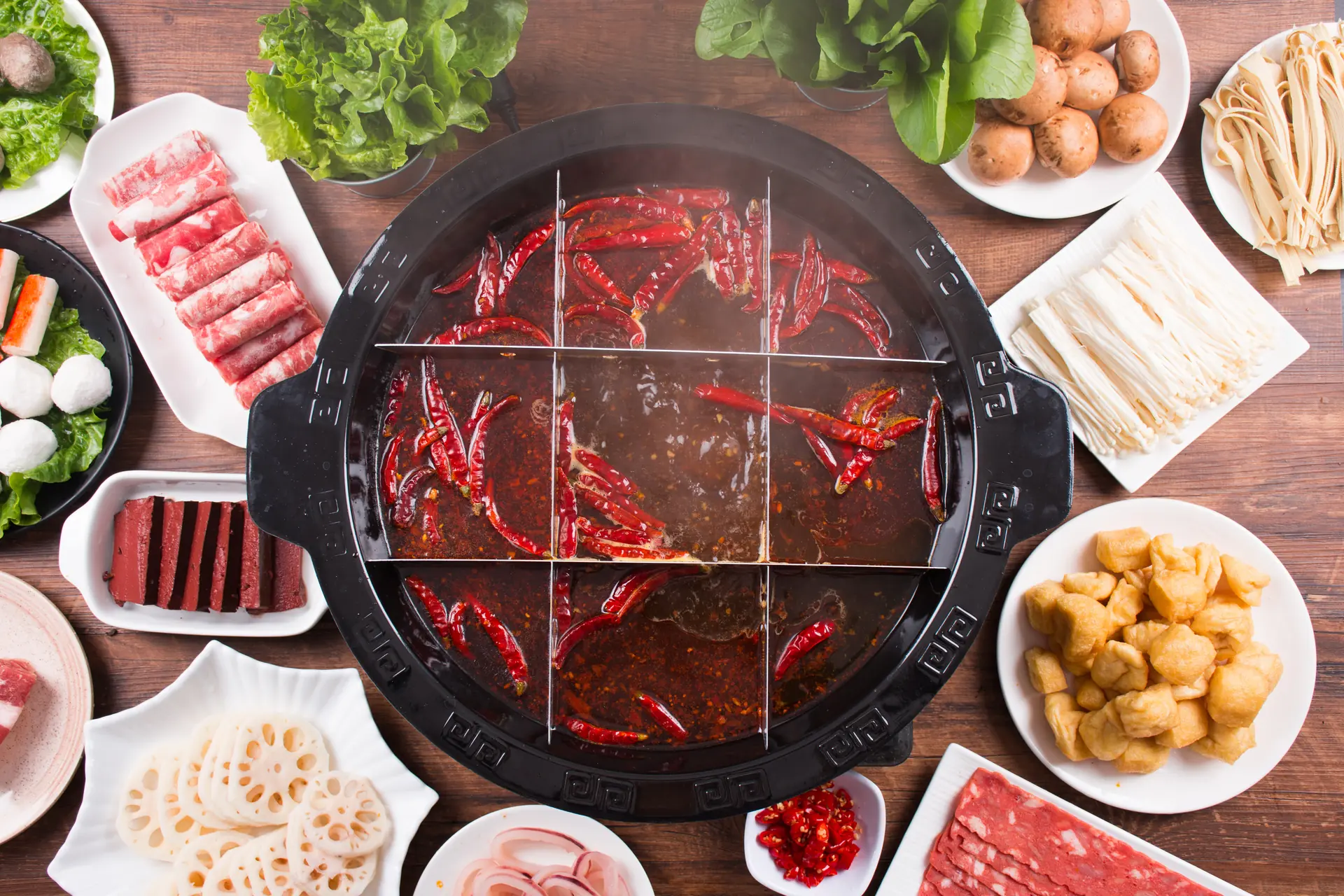
Chongqing hotpot is the right finale because it matches the city: loud, layered, spicy, and social. The local style leans heavy on beef tallow, red oil, quick-cooked offal, and sesame-oil dipping sauce.
If you want a famous brand, Peijie Old Hotpot (珮姐老火锅) (Google | Amap) is convenient near the central night route, but queues are normal. Get a number earlier if you can.
Before joining a queue, use the Chongqing food guide to compare hotpot areas, noodles, and lighter alternatives.
Good first-time order:
- Chinese
- 毛肚
- Why order it
- The classic quick-swish hotpot item
- Chinese
- 鸭肠
- Why order it
- Crisp texture, cooks fast
- Chinese
- 酥肉
- Why order it
- Easy, familiar, and good between spicy bites
- Chinese
- 肥牛 / 老肉片
- Why order it
- Safer meat choices for first-timers
- Chinese
- 藕片 / 土豆
- Why order it
- Good texture and lower-risk vegetables
- Chinese
- 冰粉
- Why order it
- Best post-hotpot spice relief
MMild Strategy
Order a half-and-half pot and use the clear side for vegetables, tofu, and anyone avoiding spice.
SSauce Strategy
Use sesame oil, garlic, and a little oyster sauce. The oil cools the bite and softens the chili heat.
Tickets and Budget
Most of the route is free. The main paid experience is the Yangtze Cableway, plus local transport and meals.
- Typical cost
- Free
- Booking or access
- Public viewing area
- Route note
- Taxi may be worth the convenience
- Typical cost
- Free
- Booking or access
- Public platform
- Route note
- Keep it short
- Typical cost
- Free
- Booking or access
- Public walking route
- Route note
- Stairs and heat are the cost
- Typical cost
- RMB 30 one-way / RMB 50 round-trip
- Booking or access
- Official channels or on site
- Route note
- One-way is enough for this route
- Typical cost
- Usually RMB 2-7 within the center
- Booking or access
- Transit app or ticket
- Route note
- Line 2, Line 6, and Line 1 are most useful here
- Typical cost
- RMB 40-120 total
- Booking or access
- App or taxi
- Route note
- The standard route assumes at least Liziba to Kuixinglou; add more if stairs or wrong-level navigation slow you down
- Typical cost
- RMB 15-35
- Booking or access
- Walk in
- Route note
- Add toppings if you need more food
- Typical cost
- RMB 120-220
- Booking or access
- Queue / reservation app
- Route note
- Famous central brands cost more
- Typical cost
- RMB 20-60
- Booking or access
- Pay as you go
- Route note
- Useful for heat and spice breaks
Full-day budget estimate:
- Total / person
- RMB 180-280
- What it assumes
- Mostly metro, no cableway if queue is bad, simple noodles, modest hotpot
- Total / person
- RMB 300-500
- What it assumes
- Cableway, a few taxis, better hotpot, snacks and drinks
- Total / person
- RMB 600+
- What it assumes
- More taxis, famous hotpot, bar/cafe stops, and flexible detours
Do Not Prepay Everything
The cableway and Hongyadong are both crowd-sensitive. Keep the day flexible enough to switch to Line 6, shorten the trail, or eat hotpot before the night view if queues get silly.
Walking Logistics
This is not a long-distance walking day, but it is a high-stair day. Expect roughly 7-9 km / 12,000-16,000 steps for the standard version and 9-11 km / 16,000-20,000 steps if you add Eling, Baixiangju, or more Hongyadong wandering.
Distance looks modest, but stairs, ramps, bridges, and station exits make it feel bigger.
Mountain City Trail and Eighteen Steps create most of the effort.
Line 6 helps with river crossings; taxis help when entrances sit on different elevation levels.
Navigation apps can put you on the right map point but the wrong vertical layer.
- Method
- Taxi or Line 2
- Distance / time
- Depends on hotel
- Notes
- Taxi directly to the viewing platform is simplest
- Method
- Taxi preferred; metro plus walk if unhurried
- Distance / time
- 10-25 min
- Notes
- Taxi saves confusing elevation changes and keeps the morning timetable realistic
- Method
- Walk or short taxi
- Distance / time
- 10-25 min
- Notes
- Choose the exact entrance before leaving; use a taxi if the app sends you around vertical levels
- Method
- Walk / taxi
- Distance / time
- 10-20 min
- Notes
- Use Xinhualu Station if riding north-to-south
- Method
- Line 6 or cableway return
- Distance / time
- 5-30+ min
- Notes
- Line 6 is often faster than queuing again
- Method
- Walk
- Distance / time
- 10-15 min
- Notes
- Mostly central and manageable
- Method
- Walk, metro, or taxi
- Distance / time
- 15-30 min
- Notes
- Use a taxi if knees are done
- Method
- Walk or taxi
- Distance / time
- Depends on restaurant
- Notes
- Queue strategy matters more than distance
Address Level Trick
For taxis and ride-hailing, use the exact entrance or platform name rather than only the attraction name. In Chongqing, one building can open onto several roads at different heights.
Backup and Lower-Effort Versions
Use these when cableway queues, heat, rain, or stairs change the day.
Choose Your Pace
Best if this is your first Chongqing day. Keep the route vertical, use short rides where the terrain is awkward, and avoid distant add-ons.
Skip: Ciqikou, Nanshan, Eling/TESTBED 2, and full Hongyadong interior.
Best in cool weather when you want more photo angles and can handle extra stairs.
Do not stack every viral stop if cableway or Hongyadong crowds run long.
Best when stairs, humidity, or fatigue matter more than completion.
Skip: full Mountain City Trail, cableway queues, and Hongyadong interior floors.
If the Main Route Breaks
ACableway Queue
Skip the cableway and use Line 6. The day is stronger with enough time for Eighteen Steps, Hongyadong, and hotpot.
BHeavy Rain
Keep Liziba, Kuixinglou, Jiefangbei, hotpot, and a short Hongyadong exterior view. Cut the full trail.
CSummer Heat
Start before 08:00, shorten Shancheng Trail, use malls after lunch, and save outdoor views for evening.
Lower-Effort Version
For families, older travelers, midsummer heat, or knee trouble, use this simpler line: Liziba viewing platform → taxi to Jiefangbei → upper Eighteen Steps → hotpot queue or cafe → Hongyadong exterior view. Expect roughly 4-6 km / 7,000-11,000 steps.
✓Keep
Keep Liziba, one vertical-city viewpoint, Eighteen Steps or Hongyadong, and one hotpot meal.
×Cut First
Cut the full Mountain City Trail, cableway queue, Baixiangju, Eling, and Hongyadong interior.
MUse Metro For
Use Line 6 for river crossings and Xiaoshizi / Jiefangbei access.
TUse Taxis For
Use taxis between vertical levels, especially Liziba, Kuixinglou, trail entrances, and dinner.
Best Season and Timing
Best months: October-November. Temperatures are comfortable, night views are strong, and the city haze can actually enhance the layered, neon feel.
Also good: December-February for cool walking and clearer hotpot weather. Bring a layer because river wind and damp interiors can feel colder than the temperature suggests.
Hardest period: June-September. Chongqing summer heat is intense, and a full stair-heavy outdoor route can become unpleasant or unsafe.
AAutumn
Best overall: easier walking, better night-view energy, and comfortable hotpot weather.
WWinter
Fog and cool air suit the city mood. Start slightly later if mornings are damp and cold.
SSummer
Use taxis, shorten stairs, carry water, and turn malls into practical cooling stops.
Frequently Asked Questions
One day is enough for the central 3D-city experience: Liziba, Kuixinglou, Mountain City Trail, Yangtze Cableway or Line 6 crossing, Jiefangbei, Eighteen Steps, Hongyadong, and hotpot. It is not enough for Wulong Karst, Dazu Rock Carvings, a Three Gorges cruise, and downtown sights all together.
Sources checked for this guide
- Yangtze River Cableway warm-season operating-hour adjustments and visitor flow context: Chongqing Municipal Government notice
- CRT Line 2 Liziba monorail, Line 1 and Line 6 river crossings, and transit network guidance: Chongqing Rail Transit official website
- Seasonal Hongyadong facade lighting-hour adjustments (including the April 2026 schedule notice): Chongqing Daily report
Beyond This Guide
This route gives you Chongqing's strongest first-day sequence, but the best version depends on your hotel, knees, weather, Hongyadong light timing, cableway queues, and hotpot tolerance.
Next steps for planning:
- Chongqing travel guide for base neighborhoods, stair-light hotel zones, and multi-day planning.
- Dazu Rock Carvings visitor guide for a separate full-day heritage trip.
- Yangtze Three Gorges Cruise guide if Chongqing is your cruise gateway.
© gochinafreely.com — Original guide by Go China Freely.