Walk & Access
Good to Know
Bayu Stilt Houses Make Hongyadong Work After Dark
Read the skyline from outside first
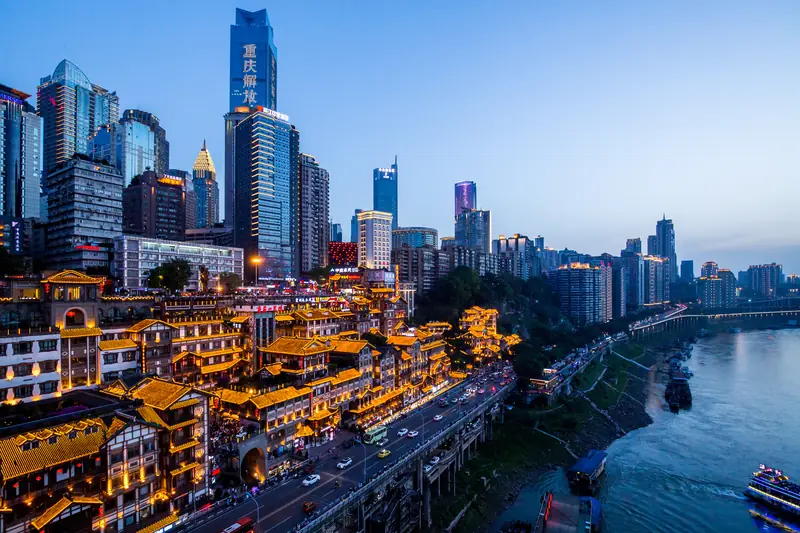
Treat Hongyadong as a 1.5-2.5 hour night walk, not a single photo stop: arrive before dusk, see the whole facade from Qiansimen Bridge (千厮门大桥) or the Grand Theatre riverbank, then decide whether the inside is worth entering.
Vertical levels
Cliff ↕ River
Architecture
Bayu Form
Layer reveal
After Dark
What it is
Hongyadong (洪崖洞) is one of Chongqing's most misunderstood night views. Short videos make it look like a secret lantern village rising from the river. In real life, it is also a busy multi-level commercial scenic area with restaurants, souvenir shops, elevators, queues, and crowd controls. Both versions are true. The difference is the order in which you visit.
Vertical terrain
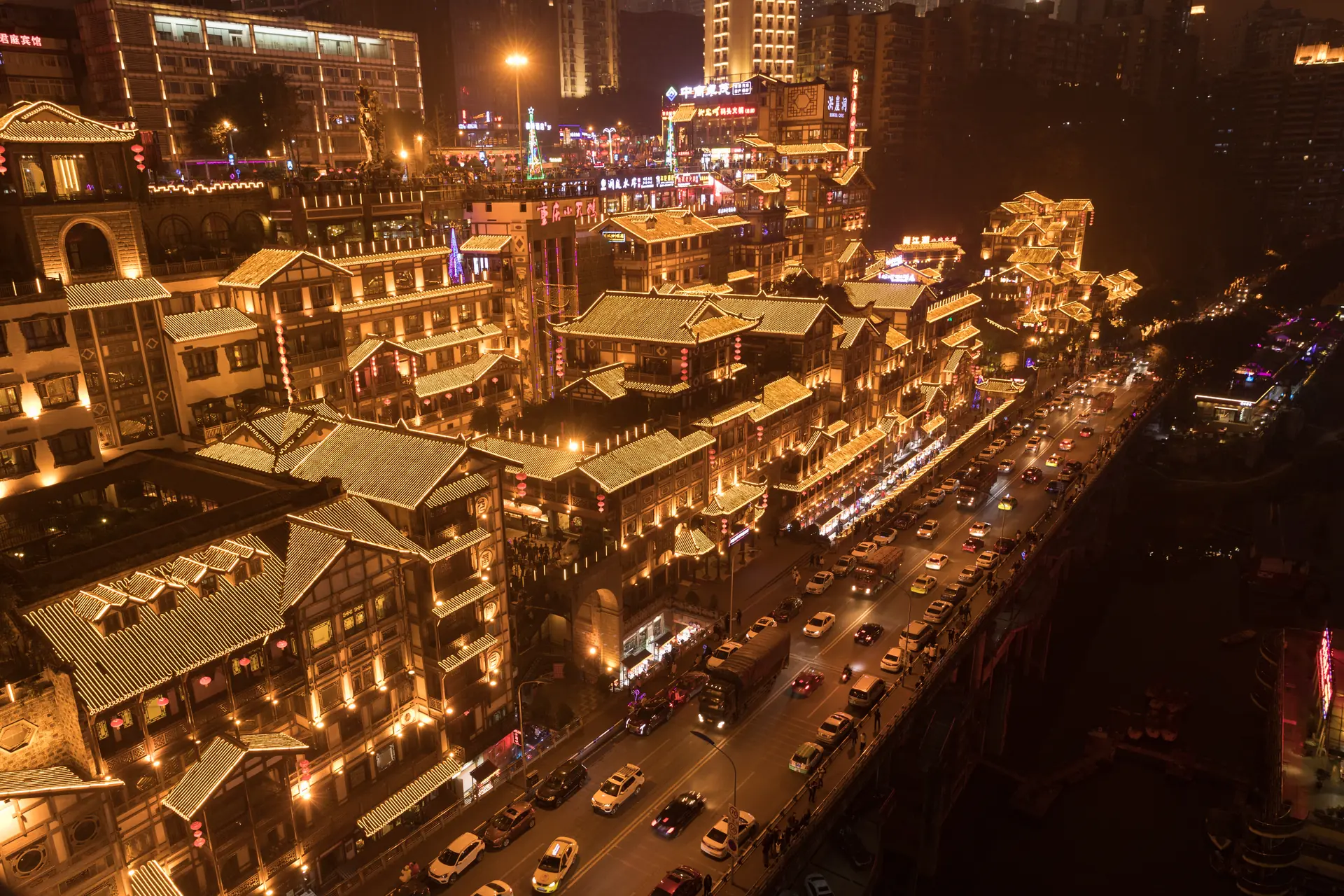
Upper streets, riverbank roads, bridges, and viewing platforms share one steep face.
Bayu outline
Rooflines and stacked corridors borrow the language of Chongqing's traditional river-facing stilt houses.
After dark
The night lighting separates those layers from the surrounding towers.
Use the order: Start outside, enter only after you understand the facade, then leave by metro or a quieter outer road. That way you see Chongqing's vertical nightscape instead of spending the whole evening in an elevator queue.
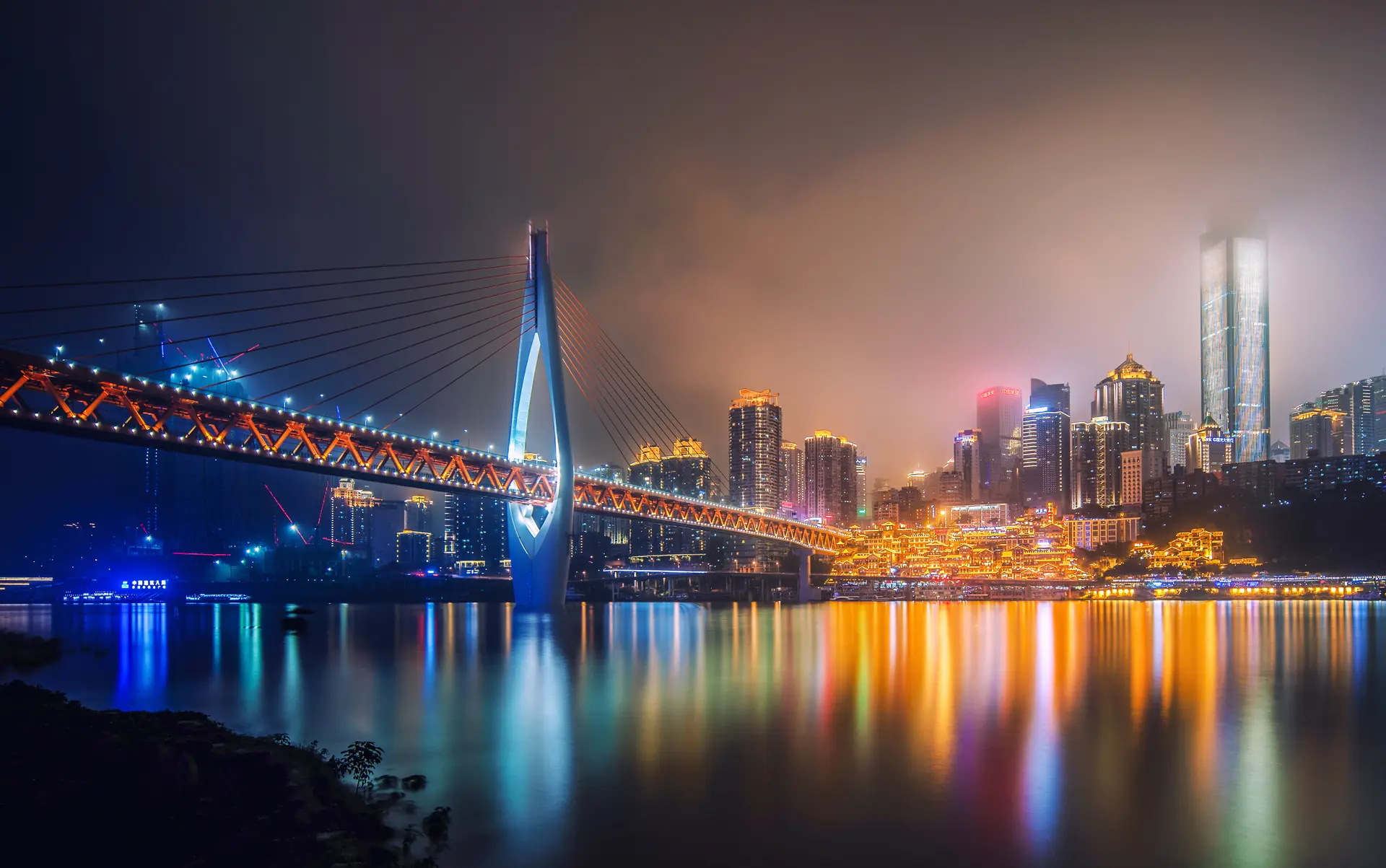
Facade, history and night effect. The exterior makes the old gate name, cliff setting and modern reconstruction easier to read as one layered place.
Origin
Hongyadong began as Hongya Gate (洪崖门), one of old Chongqing's city-gate names.
Setting
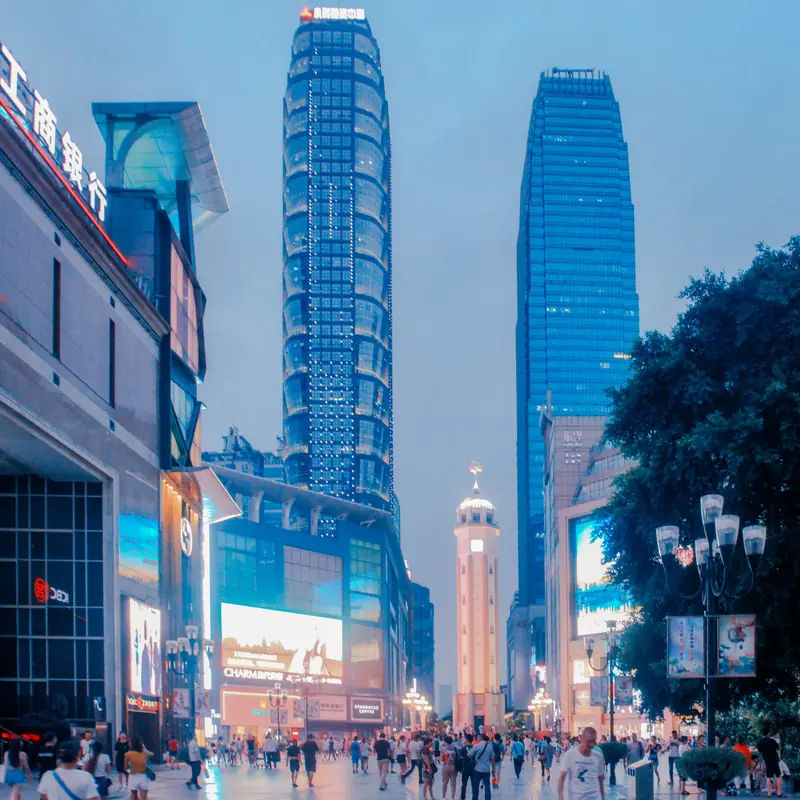
Today the official scenic area sits near Jiefangbei (解放碑), beside the Jialing River (嘉陵江), close to where Chongqing's two major rivers meet.
2003 rebuild
Chongqing's official local-history materials describe the current Hongyadong Folk Custom Area as a 2003 renovation project with RMB 385 million in investment.
Opening and status
It was completed and opened in 2006, later rated as a National AAAA tourist attraction, and built around the traditional stilt-house form of Bayu (巴渝) architecture.
Compressed city
The facade brings together cliffs, height differences, bridges, riverbank roads, stilt-house imagery, commercial streets, Jiefangbei towers, and tourist crowds.
Day to night
By day, it can feel like a large faux-ancient commercial complex. After dark, the lighting draws out the layers, platforms, rooflines, and river edge, which is why the place suddenly feels cinematic.
Myth check
The common "Spirited Away in the real world" comparison works as a mood hook, but it should not be treated as fact.
2001
Studio Ghibli's Spirited Away was released.
2006
The current Hongyadong scenic area opened.
Link
The night lights can remind visitors of the film's bathhouse atmosphere, but Hongyadong is not a filming location, not the source of the film, and not proof of any official connection.
Come for Chongqing's vertical riverside nightscape, not for a false movie pilgrimage.
Start Outside Before You Enter Hongyadong
First-time visitors should avoid walking straight into the busiest internal entrance. Hongyadong's best image is external: the lit facade stacked above the river, with Qiansimen Bridge and the Jialing River framing the scene.
- Jiefangbei or Xiaoshizi(解放碑 / 小什字)- walk toward the upper streets
- Daijiaxiang or upper approach(戴家巷)- optional cliffside add-on
- Qiansimen Bridge(千厮门大桥)- classic first view
- Grand Theatre riverbank(重庆大剧院)- wider opposite-bank view
- Hongyadong interior(洪崖洞)- short look if crowds allow
- Metro exit(小什字 / 临江门)- leave before the taxi crush
Route anchors
Choose by role, crowd pressure, and the view you want.
Role: Use Hongyadong itself as the center of the walk, but do not make it the first and only viewpoint.
Crowd: From Xiaoshizi Station (小什字站), follow signs and real-time guidance toward the upper street level rather than forcing a direct riverbank entry.
Best for: A natural downhill approach toward the lights after dinner from Jiefangbei Pedestrian Street (解放碑步行街).
Role: The classic side-on view, with Hongyadong, bridge lines, river, and city lights in one frame.
Crowd: This is the busiest option on weekends and holidays; keep moving instead of freezing at the first dense photo cluster.
Best for: The recognizable bridge-and-facade photograph.
Role: A wider, calmer opposite-bank view looking back across the river toward Hongyadong.
Crowd: It usually gives you more breathing room than the bridge, although same-day controls still apply.
Best for: Families and skyline-first visitors; take Line 6 to Grand Theatre Station and walk toward the river.
Choose the Right Hongyadong Night Viewpoint
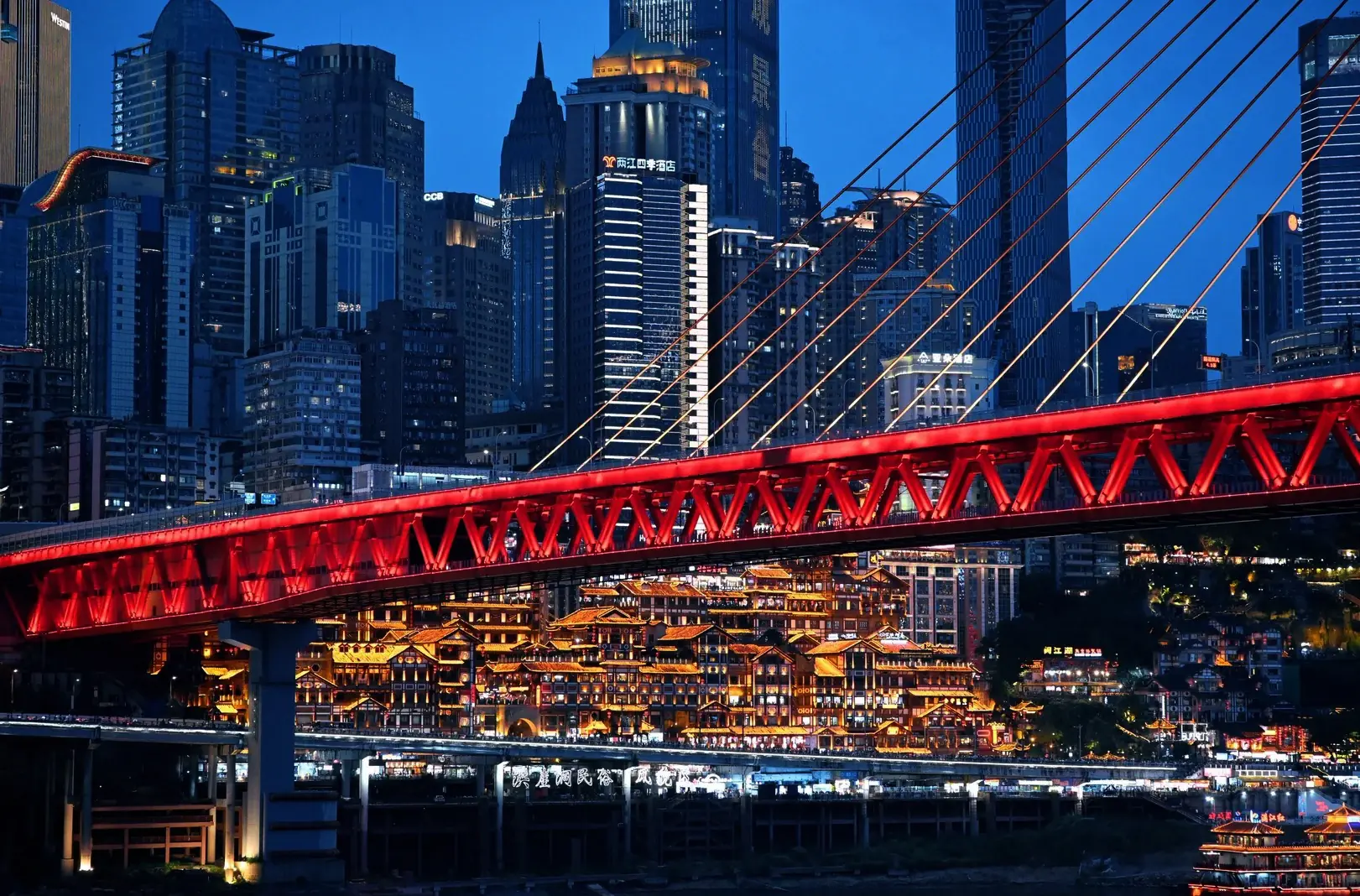
Hongyadong is not a one-spot photo. Your viewpoint decides whether you see the architecture, the river reflection, the bridge relationship, or the internal layers.
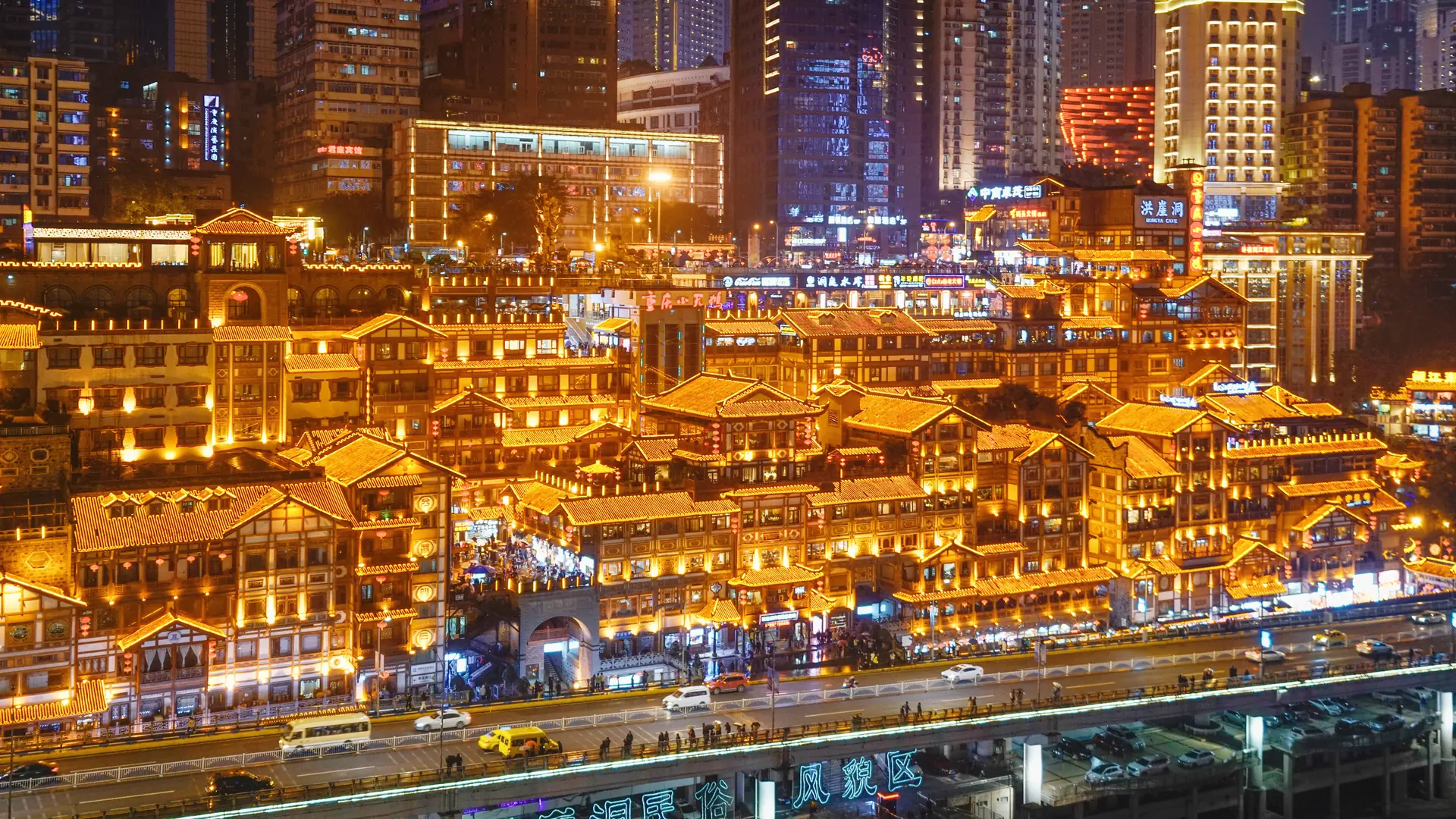
Primary viewpoint
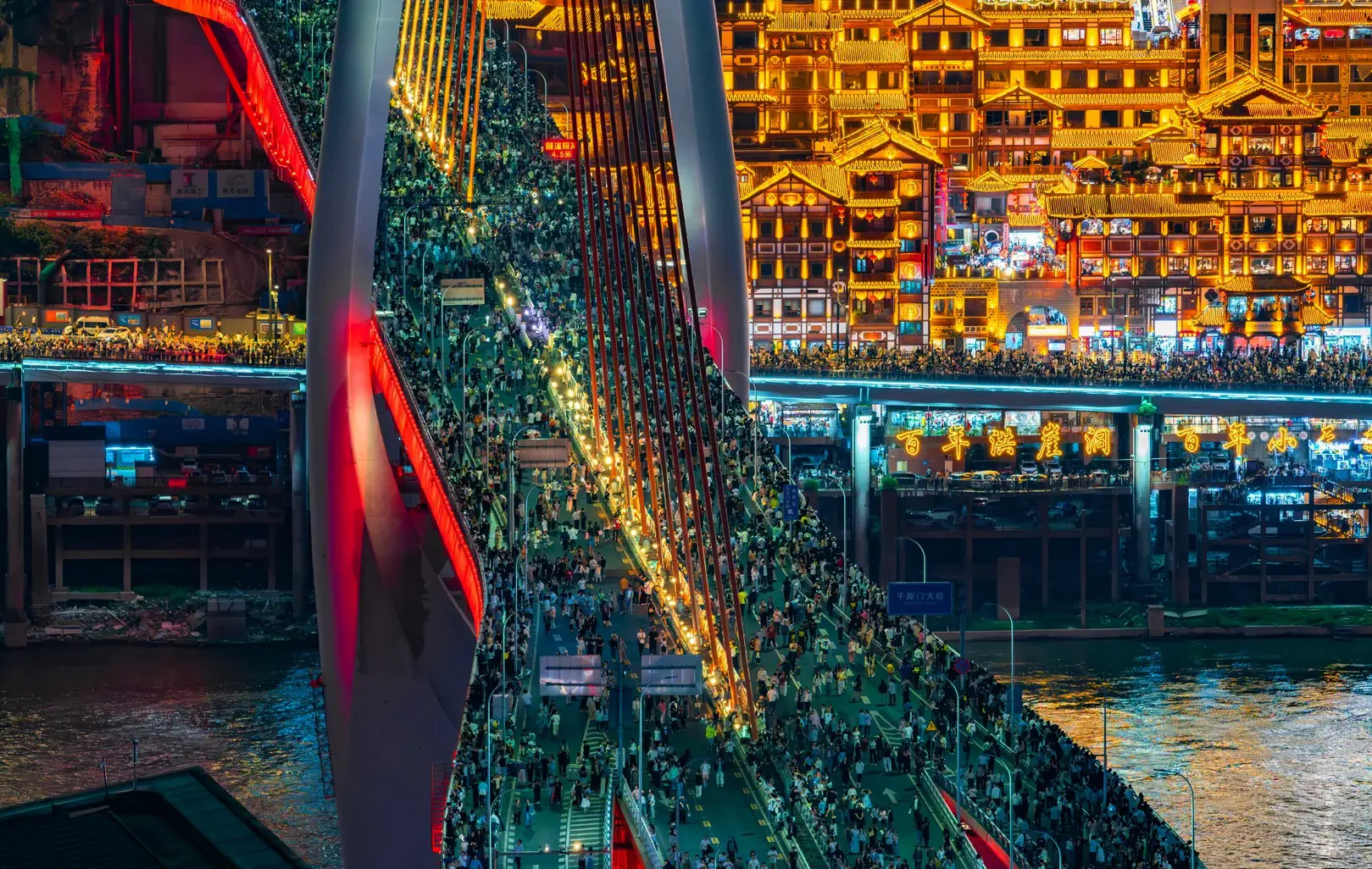
Qiansimen Bridge gives the classic postcard frame, with the biggest crowd pressure on weekends.
Use it to read the facade, bridge and river as one scene. The choice rows below help you decide whether that iconic angle is worth the crowd.
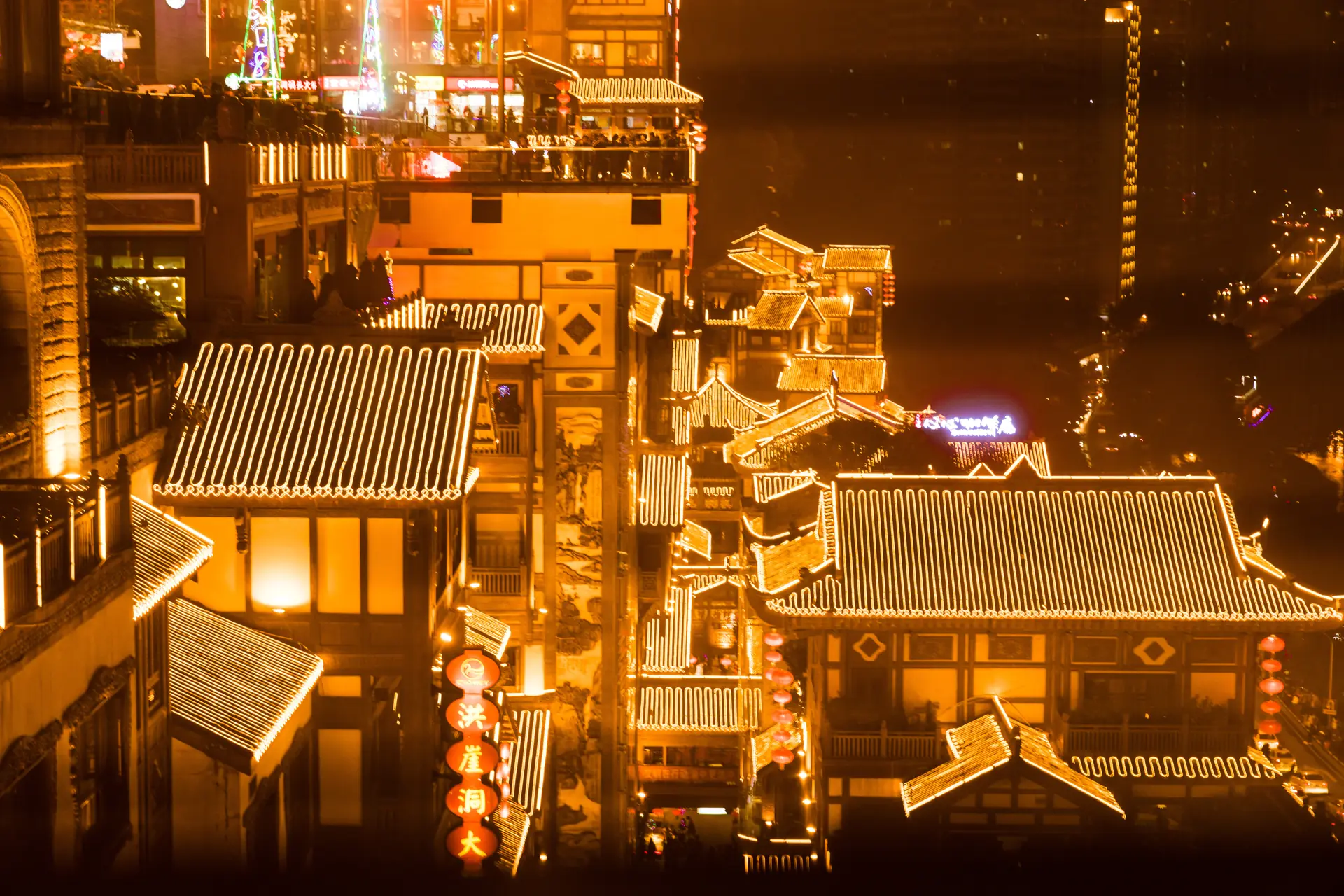
Supporting view Internal corridors — useful for reading the layers, but not the best full-facade photo.
Choose by view, trade-off, and best use
View: Hongyadong's lit facade and the bridge structure in the same recognizable Chongqing postcard.
Trade-off: The crowd pressure is highest here. On busy nights, keep walking until the density thins rather than fighting for the exact center of the bridge.
Best for: The iconic facade-and-bridge frame.
View: More space, river reflections, and a cleaner full-facade photo.
Trade-off: It feels less immersive than standing beside Hongyadong.
Best for: A view that is easier to enjoy and easier to leave.
Jiabin Road for Close-Up Height
View: Jiabin Road (嘉滨路) near the lower levels makes the cliffside building feel as if it is pressing down toward the river.
Trade-off: You are too close for the best full-facade photo.
Best for: Understanding the vertical drop.
Internal Corridors for Structure
View: Corridors, stairs, and shop levels reveal the building's internal layers.
Trade-off: They are not the best places to photograph the whole complex.
Best for: A short structural supplement, not the main event.
Arrive for Blue Hour, Not Midnight

The sky is part of the photograph
Arrive for the change from blue sky to warm facade light. That first transition gives the river, bridge and rooflines more detail than a fully black sky.
Published lighting windows have changed, so treat the time as a same-day check rather than a permanent promise.
2025 notice
Hongyadong's lighting schedule changes. A Chongqing municipal government notice in February 2025 relayed that the light display had changed to 18:30-23:00 from the evening of February 10.
2023 notice
A May Day notice used 19:00-23:00 before April 29 and 19:30-23:00 from April 29 to June 30.
Photo window
The most photogenic window is usually the first 30-60 minutes after the lights begin and before the sky turns fully black. With some blue still in the sky, the river, buildings, rooflines, and bridge keep more detail.
Recheck
Do not treat any single lighting time as permanent. Use it as a planning clue, then check same-day official or local tourism channels before you go.
After dark
Hongyadong is still impressive, but phone photos often become flatter: bright gold lights, black sky, and heavy crowds.
18:30-23:00
2025 official notice
First 30-60 min
Best photo window
Same day
Recheck times
Use this timing logic:
- Spring, autumn, and winter: arrive near the area before 18:00 and settle into a viewpoint.
- Summer: arrive later, but be realistic about heat and humidity; treat 19:30-21:00 as a rough busiest-period estimate, not a fixed official crowd window.
- Weekdays: much easier than weekends for both bridge space and internal movement.
- Holidays: make the outside view your goal, and treat interior entry as optional.
Weather close: After light rain, Hongyadong can look better because stone, railings, bridge surfaces, and river edges reflect the lights. In heavy rain, lightning, thick fog, or strong river wind, shorten the walk and avoid lingering at exposed railings just for reflection shots.
Lower Expectations Before You Go Inside Hongyadong
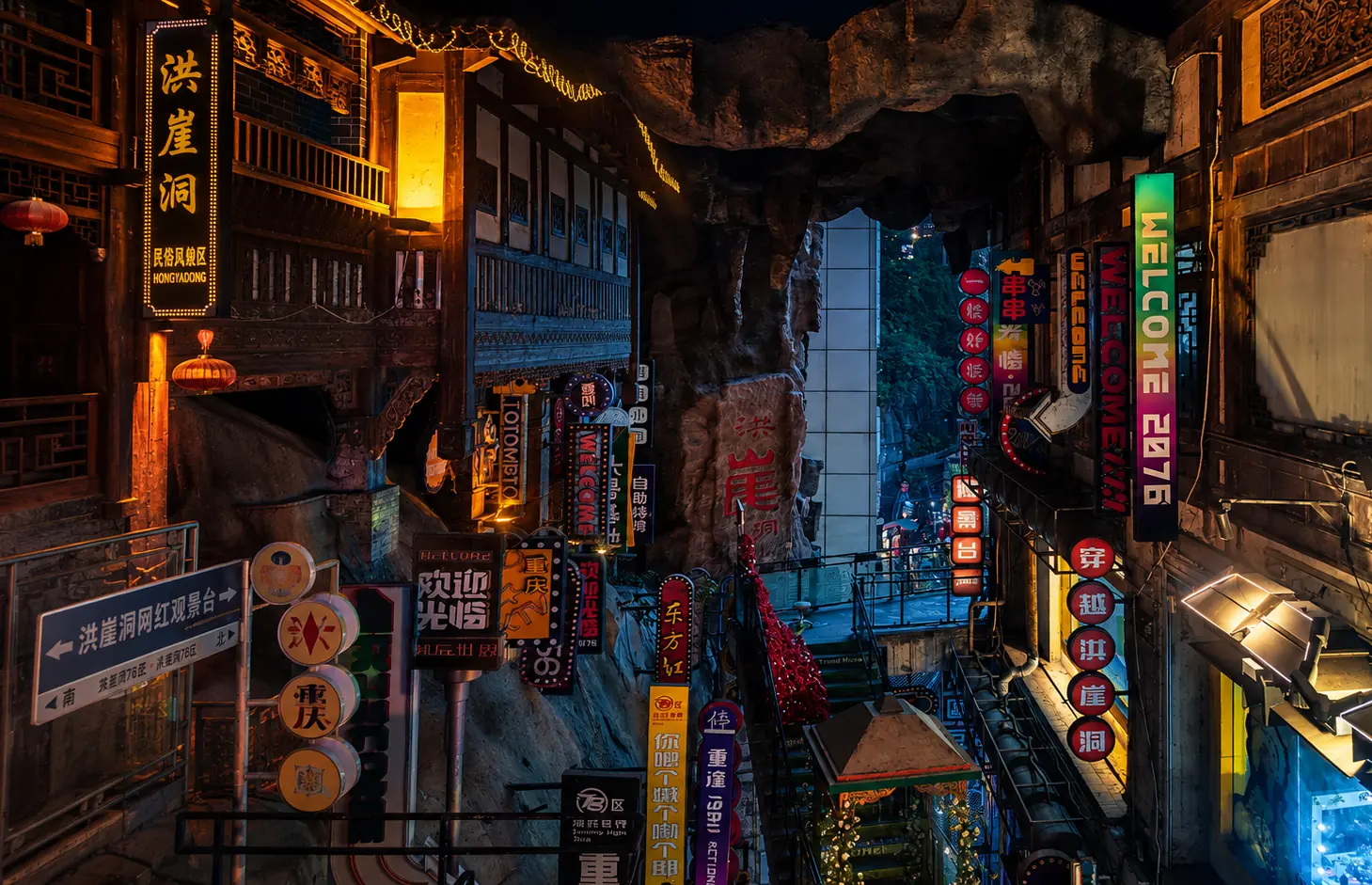
Hongyadong's interior is not a hidden old neighborhood. It is a bright, layered commercial scenic area with food stalls, restaurants, souvenirs, milk tea, hotpot base packages, staged photo corners, elevators, stairs, and many visitors.
That does not make it worthless. With the right expectations, the inside helps you understand why Hongyadong is not a normal shopping street. You may enter from what feels like street level, walk down several layers, find yourself beside a river road, then emerge near a completely different height. The spatial confusion is part of the Chongqing experience.
If the crowd is manageable, do only three things inside:
- Upper-Level Entry- Follow the flow through one or two layers.
- River or Bridge Opening- Pause where a corridor opens toward the water or bridge.
- Outside Exit- Leave before elevator and stair pressure builds.
Do not force dinner into Hongyadong unless convenience matters more than food quality. The scenic area is easy, bright, and busy, but the better Chongqing meal may be in Jiefangbei, Bayi Road Food Street (八一路好吃街), Jiaochangkou (较场口), or a local hotpot restaurant nearby.
Add Daijiaxiang for Real Chongqing Terrain
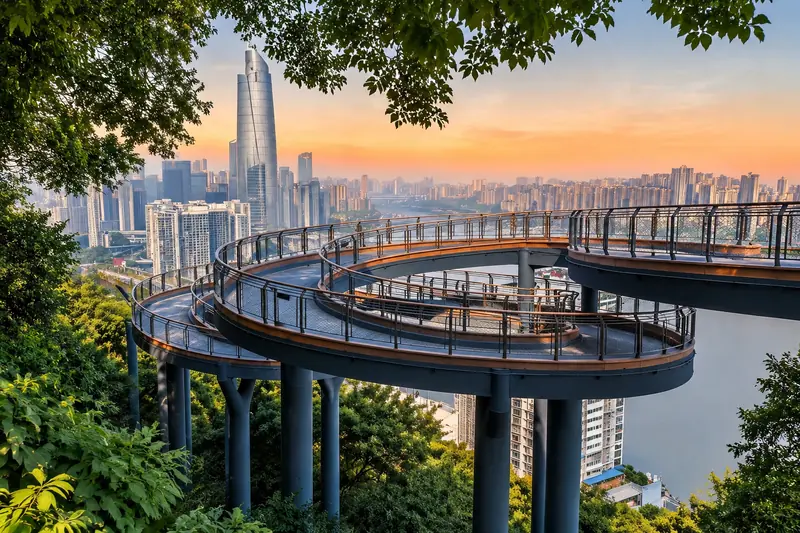
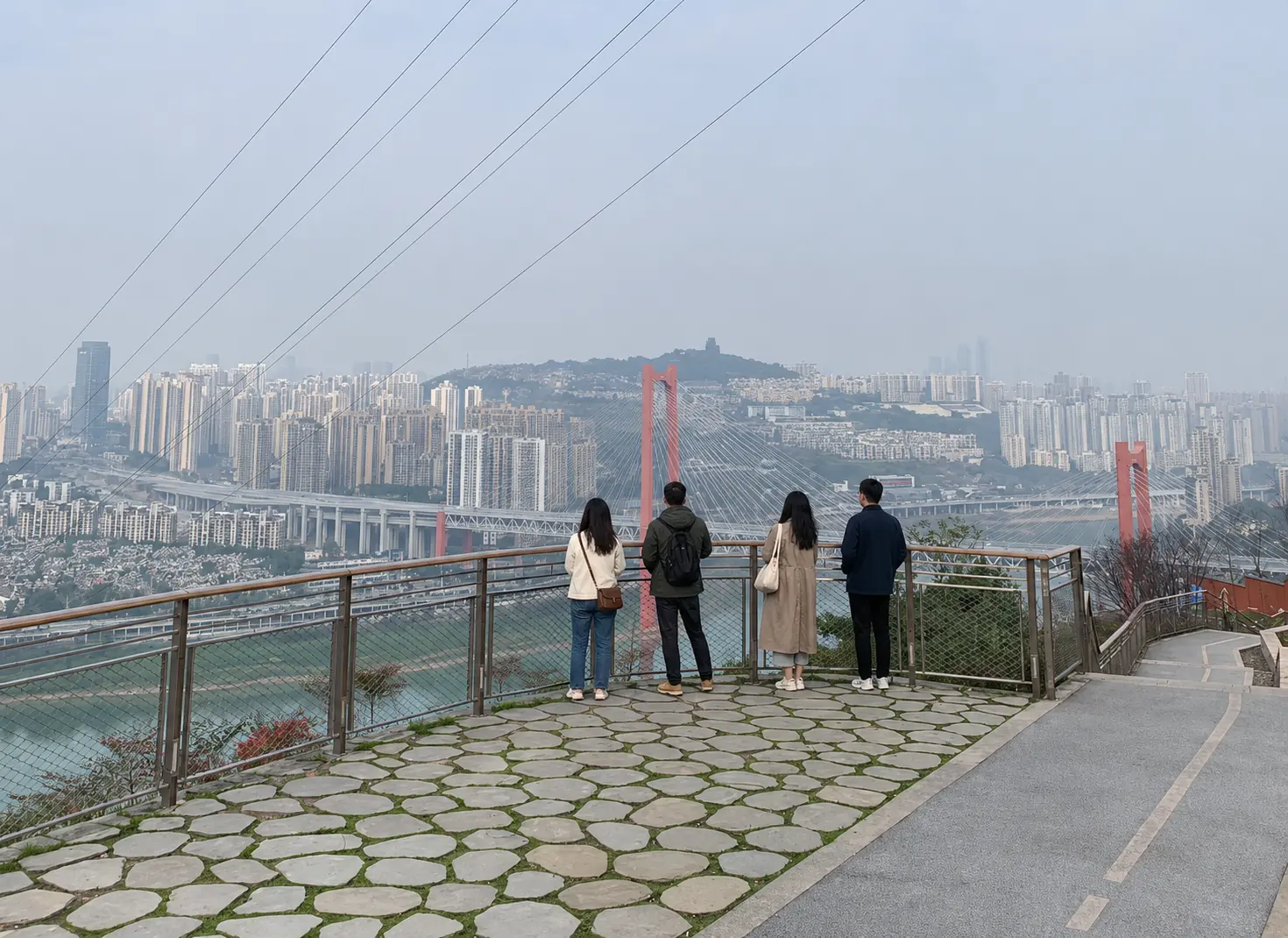
Daijiaxiang Cliff Walkway (戴家巷崖壁步道) sits beside Hongyadong and makes this article feel like a real neighborhood walk instead of a single scenic stop. Chongqing government and city-management sources describe the walkway as about 750 m long, with a suspended section of about 300 m, a height difference close to 60 m, and a role in dispersing Hongyadong's visitor flow.
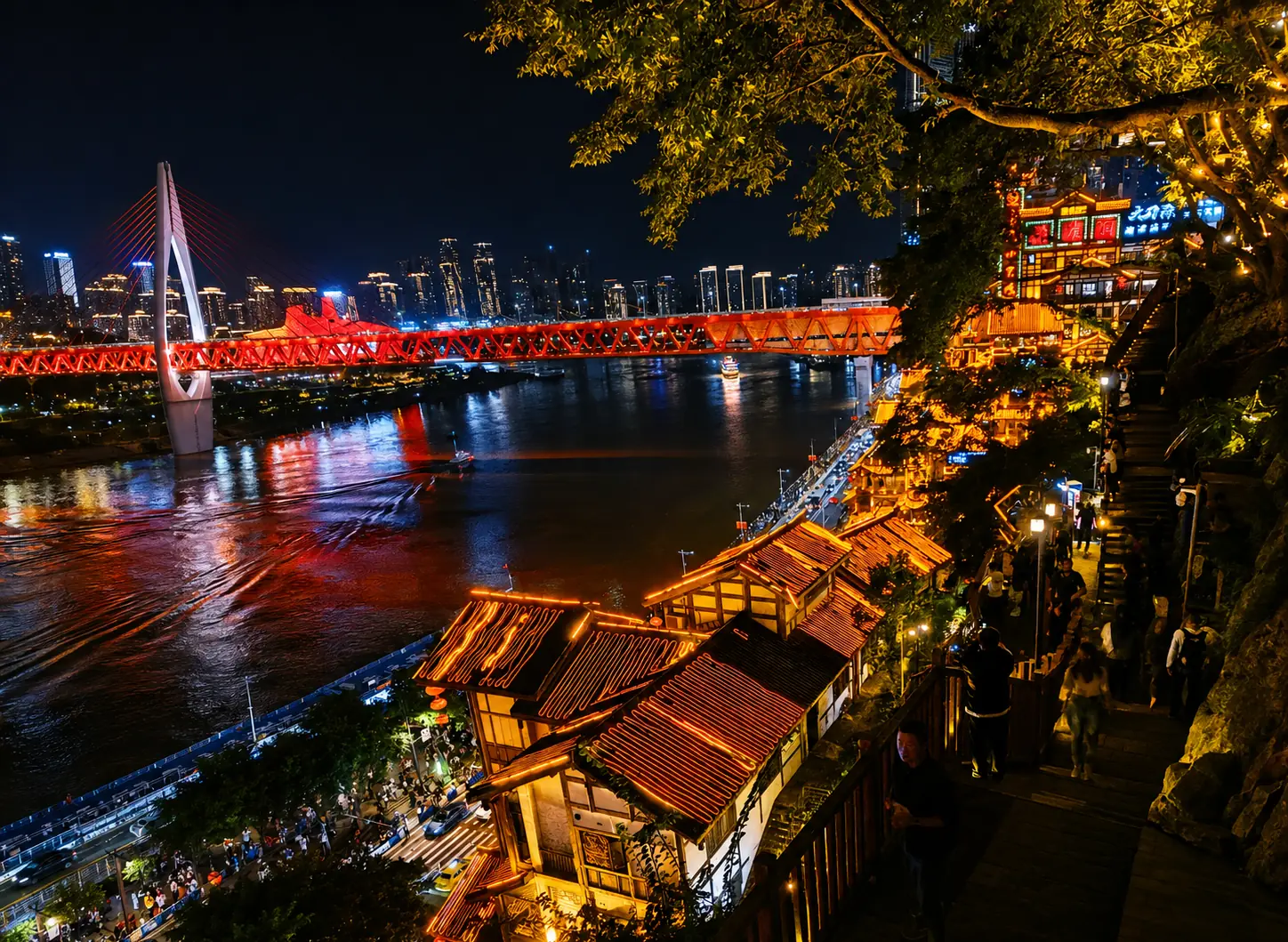
Daijiaxiang Cliff Walkway
Daijiaxiang is not "more famous" than Hongyadong. Its value is different. It shows the local logic behind the night view: upper and lower streets, cliff paths, old walls, river-facing platforms, bridges, and the Jiangbeizui skyline all appearing in one short vertical walk.
750 m
Total walkway
300 m
Suspended section
Nearly 60 m
Height difference
Access limit: Do not treat Daijiaxiang as an easy flat stroll. There are steps, slopes, narrow sections, and slippery patches after rain. Travelers with bad knees, elderly family members, or small children can sample a short upper section and skip the full descent to the river road.
This keeps the article firmly in the neighborhood-walking category: the point is not only to see Hongyadong, but to understand the terrain around it.
Manage Crowds, Controls, and Holiday Limits
Dated evidence, current response
Peak nights can turn Hongyadong from an open riverside walk into a managed crowd zone. Treat capacity figures as dated context and follow the current on-site control.
The practical response is simple: keep the outside view as the goal, use public transport, and be ready to shorten the interior visit.
2023 capacity
Hongyadong's crowd management changes by date. A Chongqing municipal government repost of a 2023 May Day scenic-area notice listed the daily maximum capacity as 122,000 visits and the instantaneous maximum as 16,000; beyond that, the area could use temporary flow controls or stop entry.
Spring Festival 2026
Official notices show that Qiansimen Bridge and nearby roads can still be restricted by time, direction, and crowd conditions.
July 2026
A Chongqing government update describes real-time crowd and traffic monitoring used to trigger dynamic controls.
Peak-night meaning
Hongyadong behaves less like an ordinary street and more like a managed event space.
122,000
2023 daily limit
16,000
2023 instant limit
Real-time
2026 dynamic controls
Avoid these mistakes:
- If you can avoid it, do not enter internal elevators during the rough 19:30-21:00 busiest period.
- Do not step backward into traffic or restricted areas for a bridge photo.
- Do not assume the bridge center is the only good angle.
- Do not bring rolling luggage into the main crowd.
- Do not set your ride-hailing pickup at the most congested riverbank entrance.
- Do not trust map distance alone. In Chongqing, height difference changes walking time.
If crowds are overwhelming, shrink the goal. View Hongyadong from the Grand Theatre riverbank, take a 20-minute river walk, then leave for dinner elsewhere. You have not "missed" Hongyadong; you have chosen the cleaner version.
Use the Metro First, Taxis Later
Arrival strategy
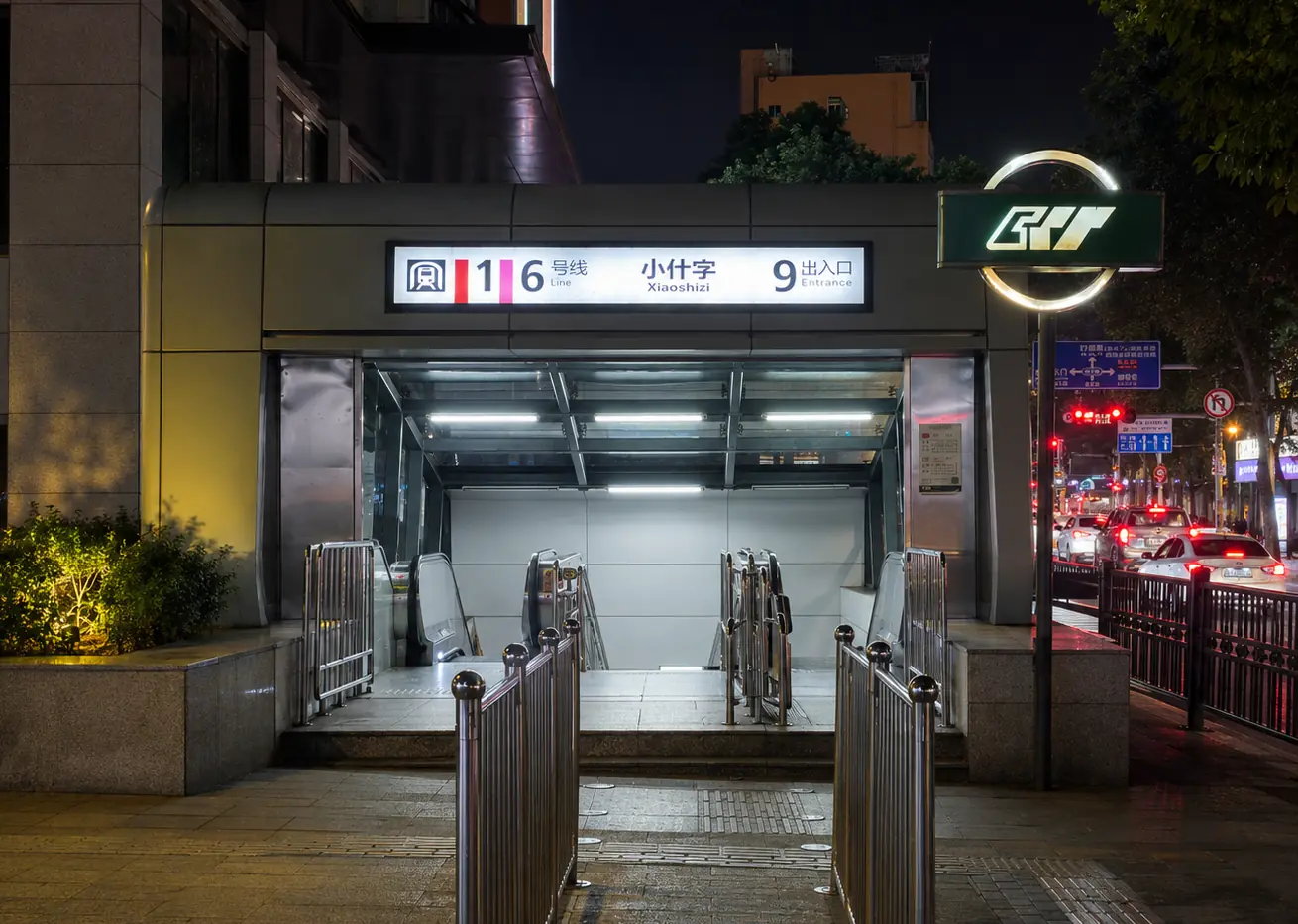
Chongqing police travel notices repeatedly advise public transit around Hongyadong. The most direct approach is Lines 1 or 6 to Xiaoshizi Station (小什字站). Linjiangmen Station (临江门站) on Line 2 works well when you approach through Jiefangbei, but the final walk can still feel busy on peak nights.
Use the metro for the first and last leg when roads around Hongyadong are restricted or too slow for ride-hailing.
Choose a station
Approach Lines 1 or 6 for the most direct arrival.
Best for Chaotianmen (朝天门), the lower riverfront, or the Grand Theatre side via Line 6.
Exit note It can be the easiest way to leave when roads around Hongyadong are restricted.
Approach Line 2 through Jiefangbei and the upper streets.
Best for Arriving from Jiefangbei or approaching through the upper streets.
Exit note The walk is short on a map, but can still feel busy and uneven on peak nights.
Leaving
Avoid calling a car at the front door or the tightest section of Jiabin Road. Better options are:
- Walk to Xiaoshizi or Linjiangmen and use metro.
- If you viewed from the Grand Theatre side, leave directly on Line 6.
- Walk 5-10 minutes to a less crowded outer road before calling a car.
If you need a taxi phrase for arrival, show this in Chinese:
Show this screen to your driver · 出示给司机看
师傅您好,请带我去洪崖洞民俗风貌区,靠近嘉陵江滨江路88号,谢谢。
Please take me to Hongyadong Folk Custom Area, near No. 88 Jialing River Binjiang Road.
For departure, walk to an easier stopping point before requesting pickup.
When leaving, adapt the destination:
"师傅您好,我在洪崖洞附近,想去解放碑,请您在方便停车的位置接我,谢谢。"
Pair the Walk with Dinner Nearby
Hongyadong is best as the visual peak of a Chongqing evening, not the whole evening. Pair it with one of these routes:
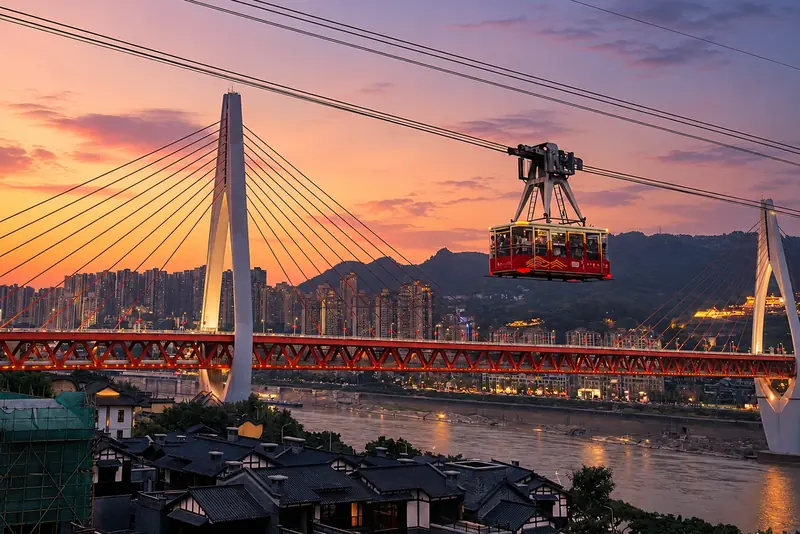
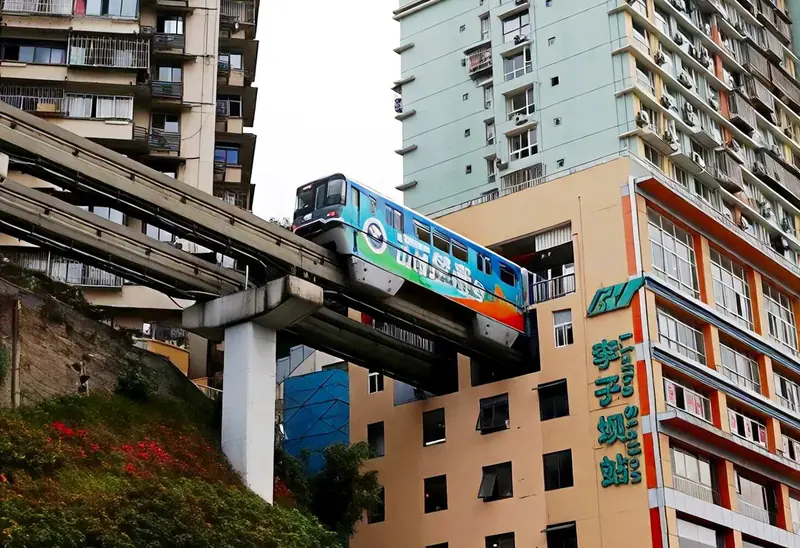
If you have already packed the day with Liziba, TESTBED 2, Mountain City Trail, the Yangtze River Cableway, and hotpot, do not force every Hongyadong level into the same night. Chongqing is tiring not because distances are huge, but because many "nearby" places sit at different heights.
Frequently Asked Questions About Hongyadong Night Walk
Yes, especially on a first Chongqing trip. The best part is the outside facade, river height, and bridge relationship, not the commercial interior alone.
Sources checked for this guide
- Latest located fixed lighting-time notice: 18:30-23:00 from February 10, 2025: Chongqing Municipal Government lighting notice
- Hongyadong project history, 2006 opening, Bayu stilt-house framing and AAAA status: Chongqing Local Chronicles Office
- Daijiaxiang total length, suspended section, height difference and visitor-flow role: Chongqing Municipal Urban Management Bureau
- Dated 2023 Hongyadong daily and instantaneous capacity figures: Chongqing Municipal Government May Day notice
- Hongyadong identity, address and Xiaoshizi/Linjiangmen metro access: Chongqing Municipal Government attraction guide
- Grand Theatre Line 6 station and opposite-bank riverfront access context: Chongqing Municipal Government transit guide
- Current 2026 holiday road, bridge and public-transport controls around Hongyadong: Chongqing Municipal Government Spring Festival notice
- Real-time crowd monitoring and dynamic-control context in 2026: Chongqing Municipal Government crowd-management update
- First-party 2001 release date for Spirited Away: Studio Ghibli
Beyond This Hongyadong Night Walk Guide
Hongyadong works best as the visual climax of a Chongqing evening. Pair it with Daijiaxiang, Jiefangbei, Mountain City Trail, the Yangtze River Cableway, or one carefully chosen hotpot dinner, and the night becomes more than a famous photo. It becomes a compact lesson in how Chongqing stacks streets, cliffs, bridges, rivers, crowds, and lights into one vertical city.
© gochinafreely.com — Original guide by Go China Freely.