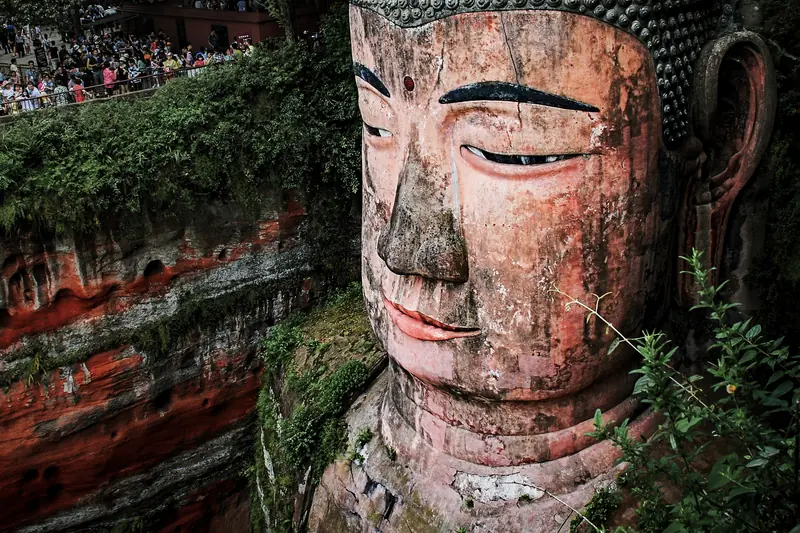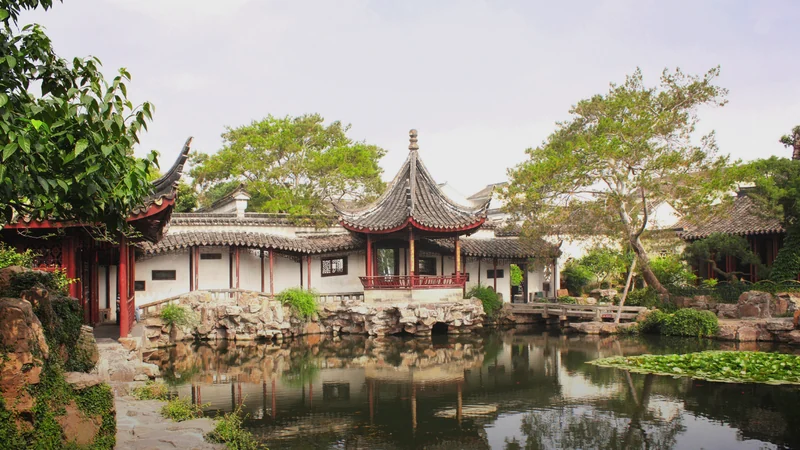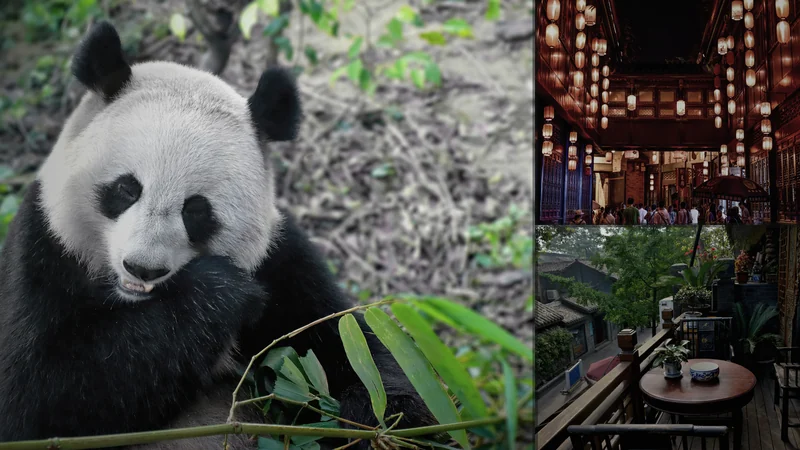
Chengdu is the only city in China where you can watch giant pandas chomp bamboo at breakfast, drink gaiwan tea at a century-old teahouse by lunch, and have your lips tingling from Sichuan peppercorns over hotpot by dinner. UNESCO named it Asia's first City of Gastronomy, but the food is only half of it — the pace is slower than Beijing or Shanghai, and the locals have elevated leisure into an art form. This route covers Chengdu's four essential keywords in one day: pandas, tea culture, old alleys, and Sichuan cuisine.
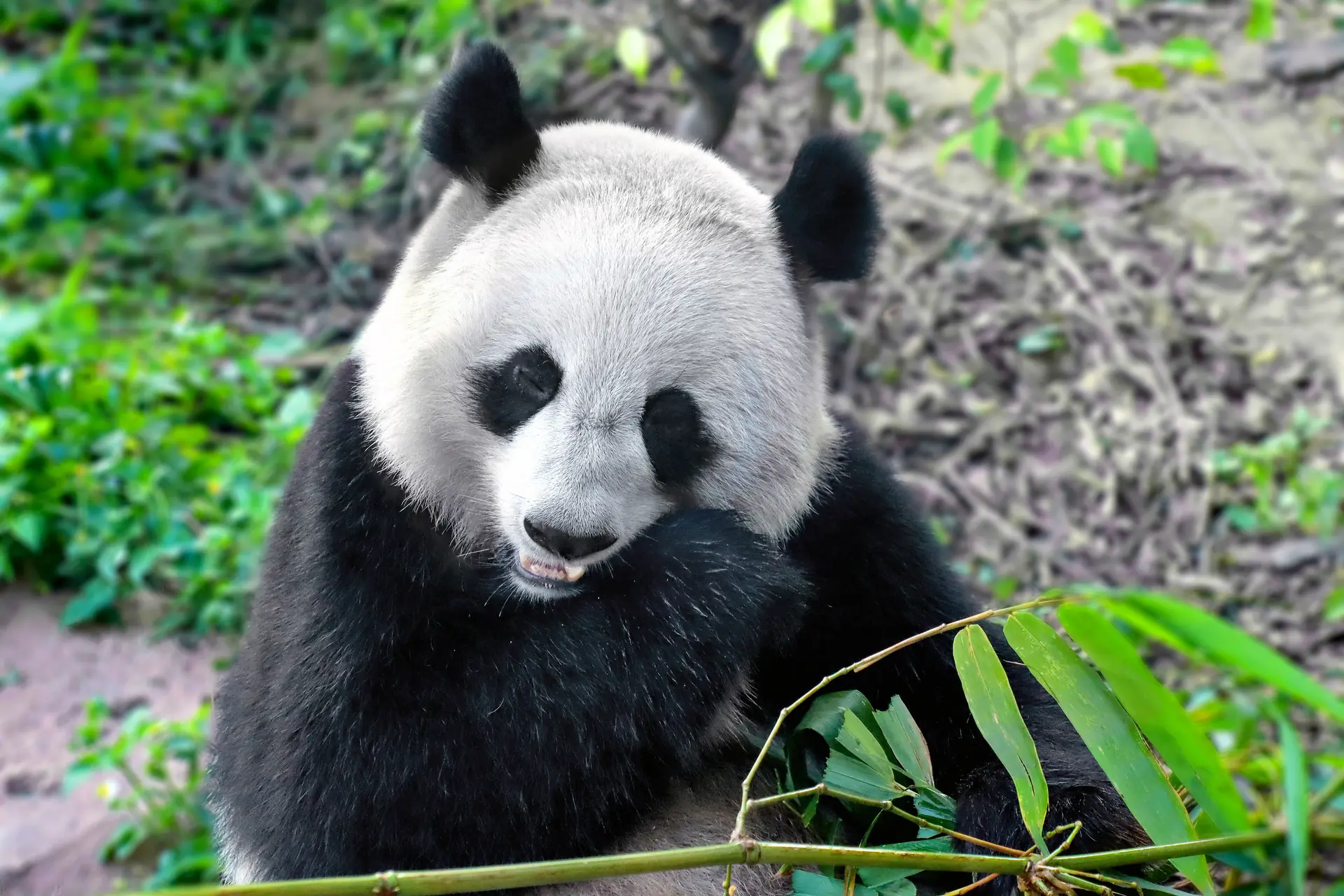
Morning feeding time at Chengdu's Panda Base — pandas are most active before 10 AM
~10 hrs
Standard Duration
6–8 km
Standard Walking
¥280–430
Budget / person
3 versions
Route Choice
Why This Route: Far First, Close Second
Most Chengdu one-day guides cram the Panda Base, Wuhou Shrine (武侯祠), Jinli (锦里), Kuanzhai Alley (宽窄巷子), and Chunxi Road into the same day — 40 minutes at each, barely enough to snap a selfie. This route gives you three versions instead: a Standard route for most first-timers, a Full route for strong walkers, and a Slow route for families, heat, or jet lag.
The logic is far first, close second — quiet first, lively last:
- Morning — north of the city: The Panda Base sits 15 km from downtown. Pandas are most active before 10 AM; tour buses flood in after 09:30, so leave by 07:00
- Midday — back downtown: People's Park is next to Tianfu Square — where locals drink tea, play cards, and get their ears cleaned. Not a tourist attraction, just daily Chengdu life
- Afternoon — old-town stroll: Kuanzhai Alley is 15 minutes on foot from the park. Three parallel Qing-dynasty lanes with the best-preserved gray-brick architecture in the city center
- Evening — history + night market + hotpot: Wuhou Shrine is China's only temple honoring both emperor and minister together. Jinli Ancient Street is right next door, prettiest after the lanterns light up. Hotpot to finish
Best for: First-timers with one day who want the Chengdu classics without long cross-city backtracking. Not ideal for: Leshan Giant Buddha (needs a full day), deep museum visits (Sichuan Museum alone takes 2–3 hours), or travelers who need a truly low-walking day unless they use the Slow version below.
Route Overview
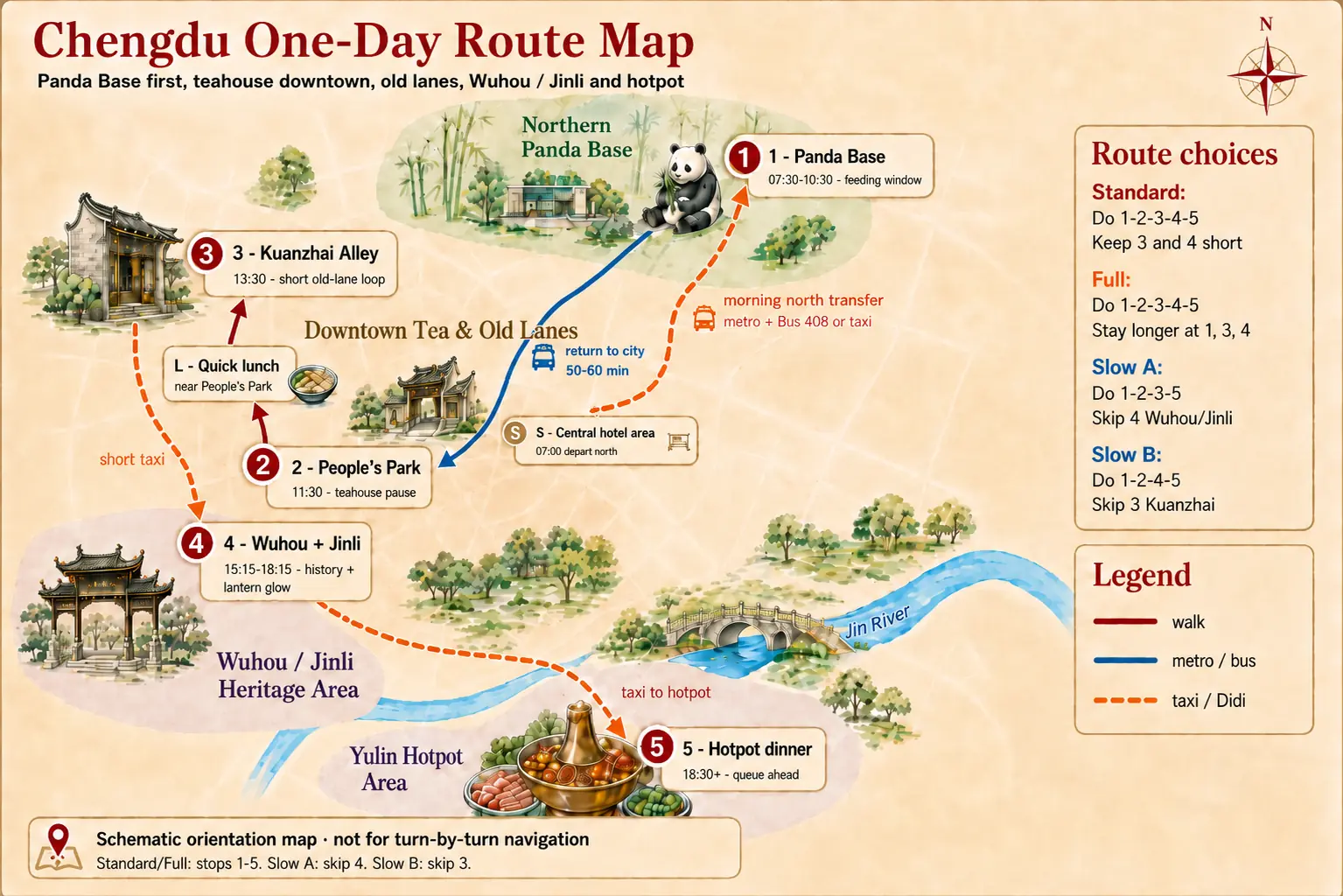
Choose Your Route Version
Best if this is your first Chengdu day. Keep the panda morning, one real tea break, one short old-lane walk, one heritage stop, and dinner.
Keep 3 Kuanzhai and 4 Wuhou/Jinli short. Skip long shopping, a full lunch, Chunxi Road, and Taikoo Li.
Best on a cool, dry day when the group still has energy after People's Park and wants more photos, history, and evening atmosphere.
Do not add a new district. Full means deeper stops on the same route, not Leshan, Dujiangyan, Chunxi Road, or Taikoo Li.
Best when humidity, rain, tired legs, or children matter more than checking off every stop.
Slow A: keep Kuanzhai, skip Wuhou + Jinli. Slow B: keep Wuhou + Jinli, skip Kuanzhai.
Recommended Version for Most First-Timers
Use the Standard version as the default. If you are already tired after People's Park, switch to Slow A for the easiest old-lane walk or Slow B for Three Kingdoms history and dusk lanterns. Do not cut the early Panda Base window — that is the reason the route starts at 07:00.
Quick Planning Facts
- Standard version: ~10 hours (07:00–18:30+), about 6–8 km of walking. Do stops 1-5, but keep Kuanzhai Alley and Jinli compact.
- Full version: ~11–12 hours, about 8–10 km of walking. Same stops 1-5 as Standard, just with longer visits; it does not add another district.
- Slow version: ~8–9 hours, about 4–6 km of walking. Do stops 1 and 2 first, then choose stop 3 or stop 4, not both; eat hotpot early.
- Budget estimate: ¥280–430 per person (tickets, transport, meals)
- Transport: Metro + shuttle bus + taxi + walking; use taxis for the afternoon if energy matters
Standard Timeline At a Glance
- Where you are
- Central Chengdu to Panda Base
- What to do
- Leave by metro Line 3 + Bus 408, or taxi to the South Gate
- Move on when
- You reach the Panda Base entrance
- Where you are
- Chengdu Panda Base
- What to do
- Focus on feeding time, nurseries, adult panda villas, and red pandas
- Move on when
- Pandas start sleeping or crowds build
- Where you are
- Panda Base to People's Park
- What to do
- Bus 408 back to Panda Avenue, Line 3 to Chunxi Road, then Line 2 to People's Park
- Move on when
- You arrive near Heming Teahouse
- Where you are
- People's Park + Heming Teahouse
- What to do
- Drink gaiwan tea, watch local park life, and add ear cleaning only if the wait is short
- Move on when
- The group is rested and ready for lunch
- Where you are
- Lunch near People's Park
- What to do
- Keep lunch quick: Zhong dumplings, Lai rice balls, Long wontons, or another nearby snack
- Move on when
- You can walk to Kuanzhai without rushing
- Where you are
- Kuanzhai Alley
- What to do
- Walk a compact Wide, Narrow, and Well Alley loop; do not turn this into a full meal stop
- Move on when
- You have enough energy for Wuhou
- Where you are
- Wuhou Shrine Museum
- What to do
- Use the red-wall path, main Three Kingdoms halls, and one slow museum pass
- Move on when
- The afternoon light starts fading
- Where you are
- Jinli Ancient Street
- What to do
- Treat Jinli as a short dusk snack and lantern stop
- Move on when
- Hotpot queues are starting
- Where you are
- Hotpot dinner
- What to do
- Take or confirm a queue number, then sit down for the final meal
- Move on when
- The day is done
Panda Base: Feeding Time & Nurseries (07:30–10:30)
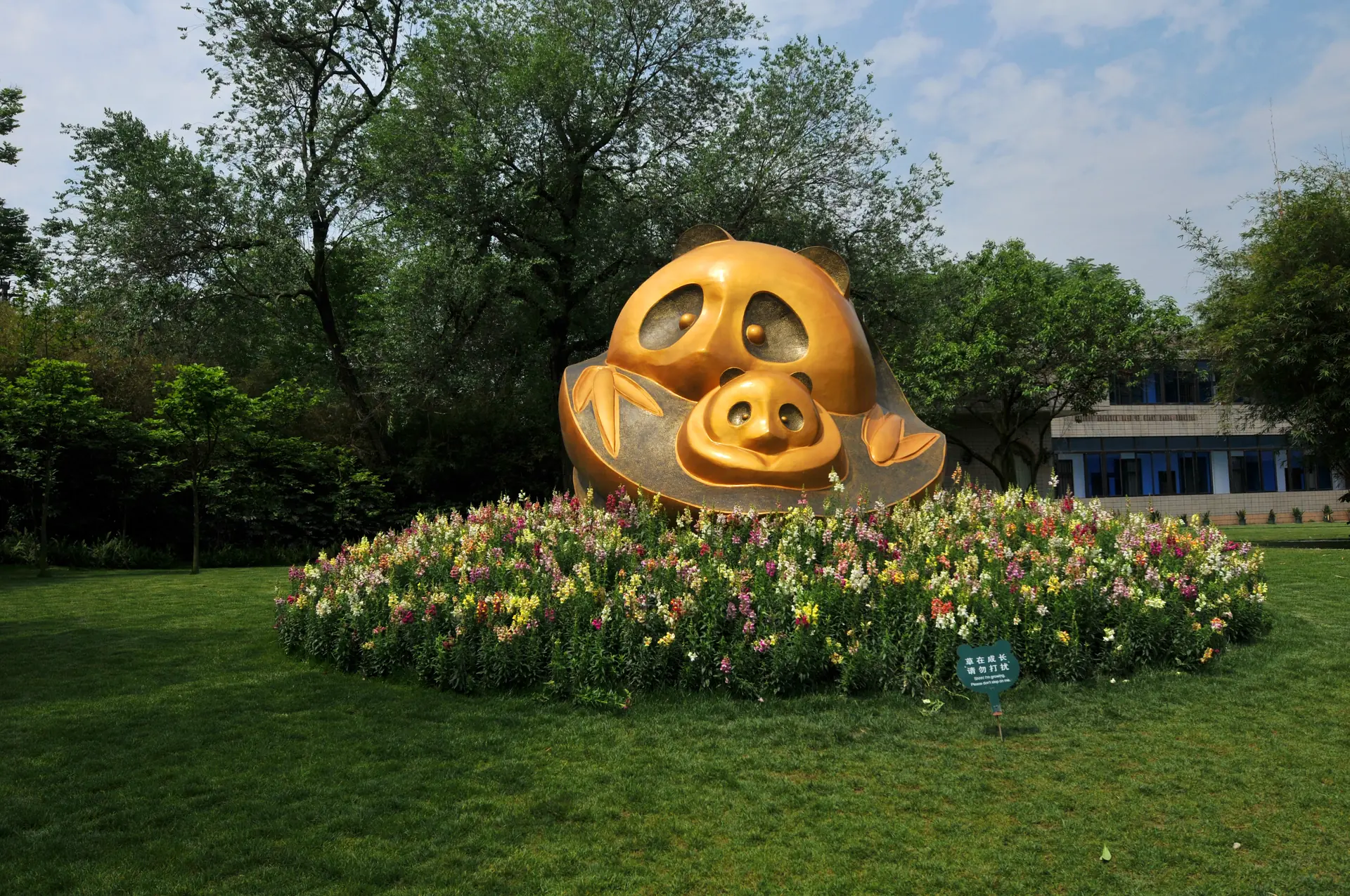
South Gate entrance — arrive by 07:30 to beat the tour-bus crowds
Why You Must Arrive Early
The Chengdu Research Base of Giant Panda Breeding (成都大熊猫繁育研究基地) opens at 07:30 during peak season. The golden window is 08:00–10:00 — keepers deliver fresh bamboo, and pandas are actively eating, rolling, and even wrestling over stalks. After 10:00, most pandas curl up in a corner and sleep until late afternoon, barely moving except for the occasional roll.
Crowds are the other reason: tour buses start flooding in around 09:30 on weekdays, 09:00 on weekends. Arrive at 07:30 and you'll have the Moon Nursery (月亮产房) and Sun Nursery (太阳产房) largely to yourself for 15–20 minutes — by 10:00, those areas are wall-to-wall visitors.
For enclosure priorities, gate strategy, and a deeper visit plan, use the complete Chengdu Panda Base guide.
Chengdu Panda Base (South Gate) (Google | Amap)Tickets & Entry
- Tickets: Adult ¥55, students (ages 6–18 or with valid student ID) ¥27, children under 6 or under 1.3 m free, seniors 60+ free (no reservation needed — just swipe ID at the gate)
- Sightseeing bus inside the base: ¥30 per person. Useful if you are crossing between the South and West gate zones, but walking is better for the 3-hour classic route because the paths pass closer to the panda enclosures
- Hours: Peak season (Mar – Oct) 07:30 entry, last entry 17:00, closes 18:00. Off-season (Nov – Feb) 08:00 entry, last entry 16:30, closes 17:30
- Reservation: All visitors must book online via the "成都大熊猫繁育研究基地" WeChat mini-program or an authorized platform such as Trip.com — no reliable walk-up plan. Tickets are released 14 days ahead; for Golden Week and summer weekends, book as soon as your date opens
- Gates: South Gate (main entrance) — Metro Line 3 Panda Avenue Station (熊猫大道站) Exit A, then Bus 408 shuttle directly to the gate. West Gate — Metro Line 3 Chengdu Junqu General Hospital Station (军区总医院站) Exit B, then Bus 409 shuttle. West Gate has fewer crowds
Recommended Walking Route (3 Hours)
Enter via the South Gate, then follow this order:
- Moon Nursery (15 min) — The youngest cubs: pink newborns or tiny ones just growing black-and-white fur. View through glass — no flash photography
- Sun Nursery (15 min) — Slightly older cubs (3–6 months) tumbling, climbing trees, and play-wrestling. Most popular spot in the entire base
- Adult Panda Villas (20 min) — Free-roaming enclosures where adults eat bamboo outdoors. Most active during morning feeding
- Red Panda Zone (10 min) — A different species entirely — reddish, raccoon-like, incredibly agile, constantly running through the treetops
- Swan Lake + Panda Tower (15 min) — Central area with a tower overlooking the park. Panda Tower is free but requires a separate online reservation, opens 09:00–17:00, and is normally closed on Tuesdays
- Panda Museum (20 min, optional) — Conservation history exhibits. Skip if tight on time
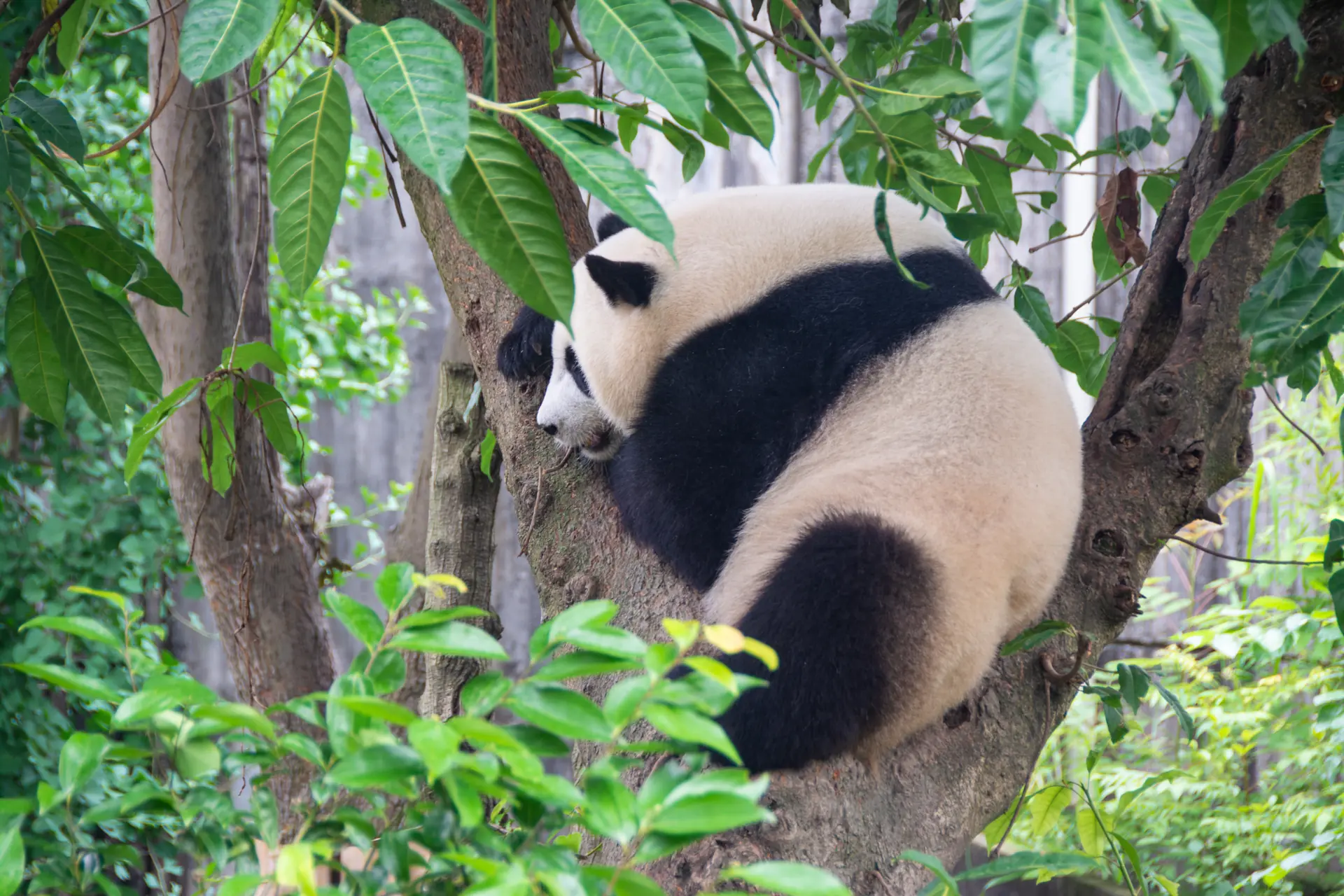
Panda cubs at the Sun Nursery — peak cuteness between June and September
Go right at the South Gate
Most visitors instinctively follow the main path to the left. The smaller trail to the right leads directly to the Moon Nursery with far fewer people.
Cub season: June–September
Giant pandas give birth between June and September. During this window, the Moon Nursery has the smallest newborns — but also the heaviest crowds.
People's Park & Heming Teahouse (11:30–12:45)
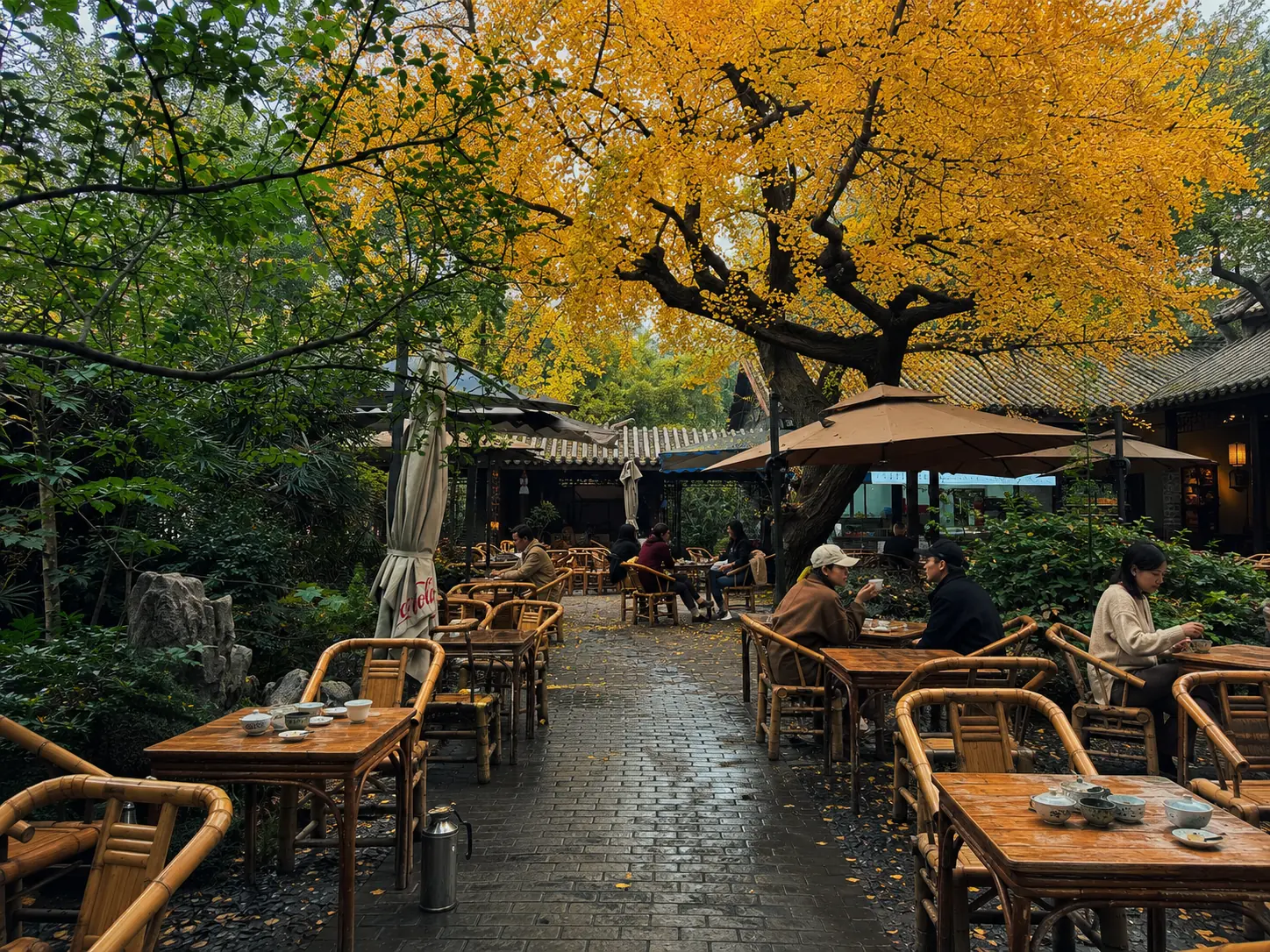
Heming Teahouse in People's Park - bamboo chairs, gaiwan tea, and the unhurried Chengdu pace
From the Panda Base, take Bus 408 back to Panda Avenue Station, then Metro Line 3 to Chunxi Road Station (春熙路站) and transfer to Metro Line 2 for People's Park Station (人民公园站). Allow 50–60 minutes including walking and waits. If the group is tired, a taxi from the South Gate to People's Park usually saves energy more than time.
Heming Teahouse: Gaiwan Tea and a Bamboo Chair
鹤鸣茶社 (Heming Tea House) was founded in 1923 and is one of Chengdu's oldest surviving teahouses. But it's not a polished tourist tea experience — this is where locals actually come to drink. Bamboo chairs and tables sit under the open canopy of old trees, elderly men play chess, women shuffle mahjong tiles, young people scroll their phones, and ear-cleaning hawkers wander through with their tool kits.
How to order: Walk to the counter, ask for tea, and choose an empty bamboo chair. Basic green or jasmine tea usually starts around ¥13–18; Bamboo Leaf Green tea (竹叶青) runs closer to ¥20–26. Early-morning specials can be as low as ¥3 before about 08:30, but this itinerary arrives later, so budget for normal teahouse prices. Refills are unlimited — sit as long as you like and nobody rushes you. This is what locals call 泡茶馆 — literally "soaking in the teahouse."
Ear cleaning (采耳): Freelance ear-cleaning specialists work the park, charging about ¥30–50 per session. They use tiny tools to clean the ear canal — mildly ASMR-inducing and surprisingly relaxing. A distinctly Sichuan experience; try it if you're curious but choose a practitioner with clean tools.
Heming Tea House (Google | Amap)Lunch Near the Park
Exit People's Park from the south gate and within 5 minutes you'll find these Chengdu heritage brands:
- 钟水饺 (Zhong Shuijiao) — pork dumplings in sweet-spicy chili oil, small portion ¥12
- 赖汤圆 (Lai Tangyuan) — black sesame glutinous rice balls in sweet soup, from ¥10
- 龙抄手 (Long Chaoshou) — Sichuan-style wontons in chili oil or clear broth, from ¥15
All three are time-honored Chengdu brands with locations near the park. Grab a quick lunch at any of them — or save your appetite for Kuanzhai Alley and hotpot later.
Kuanzhai Alley: Three Qing-Dynasty Lanes (13:30–14:45)
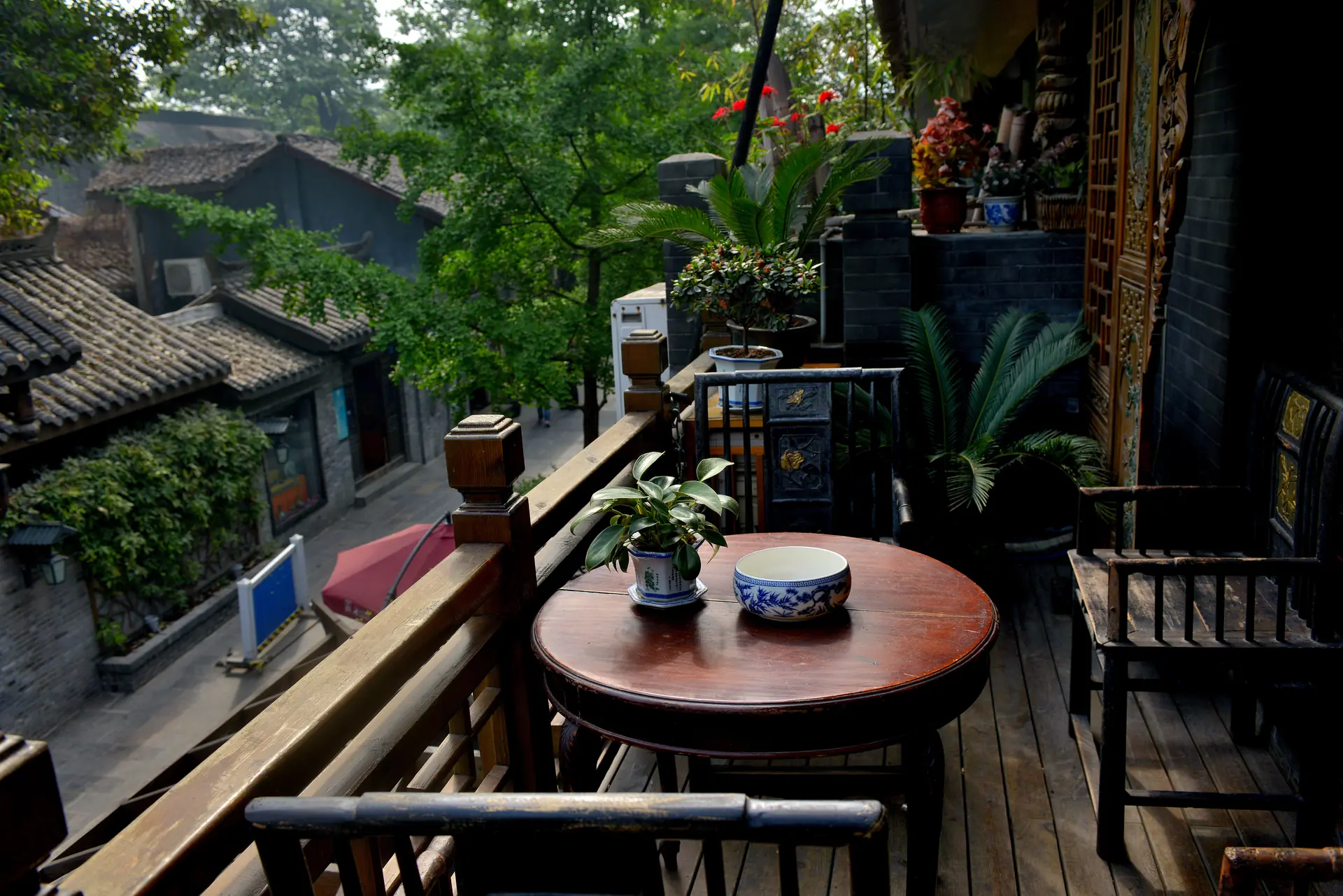
Wide Alley (宽巷子) — the most artistic of Kuanzhai's three parallel lanes
A 15-minute walk from People's Park (or Metro Line 4 to Kuanzhai Alley Station).
Kuanzhai Alley (宽窄巷子) is a trio of parallel streets — Wide Alley (宽巷子), Narrow Alley (窄巷子), and Well Alley (井巷子) — built during the Qing dynasty as part of the Manchu garrison quarter. The area reopened after renovation in 2008. Yes, it's touristy, but the architecture is genuine: gray-brick gatehouse entrances, carved wooden window lattices, and Chinese-Western hybrid courtyards — the best-preserved Qing-era residential block in Chengdu's city center.
How to Walk the Three Alleys
- Wide Alley: The most "artistic" lane — old courtyards converted into teahouses, restaurants, and small galleries. No. 32 Courtyard (former Liu family estate) is free to enter and worth seeing for its layout
- Narrow Alley: The most commercial — bubble tea shops and souvenir stores. But the building facades here are actually better preserved than Wide Alley. Best for photography
- Well Alley: The shortest and quietest. A 400-meter brick-relief wall on the south side tells Chengdu's history through old-brick carvings. Most visitors turn back at Narrow Alley, so Well Alley is the calmest
Enter from the west, walk against the flow
Most people enter from Changshun Street on the east end — the most packed direction. Instead, enter from Tongren Road (west end) into Narrow Alley, walk Narrow → Well → Wide, moving against the crowd.
Skip full meals here
Street snacks are fine — try Three Cannonballs (三大炮, about ¥10) or sugar-oil rice dumplings (糖油果子, about ¥8) — but sit-down restaurants are overpriced and mediocre. Save your appetite for hotpot.
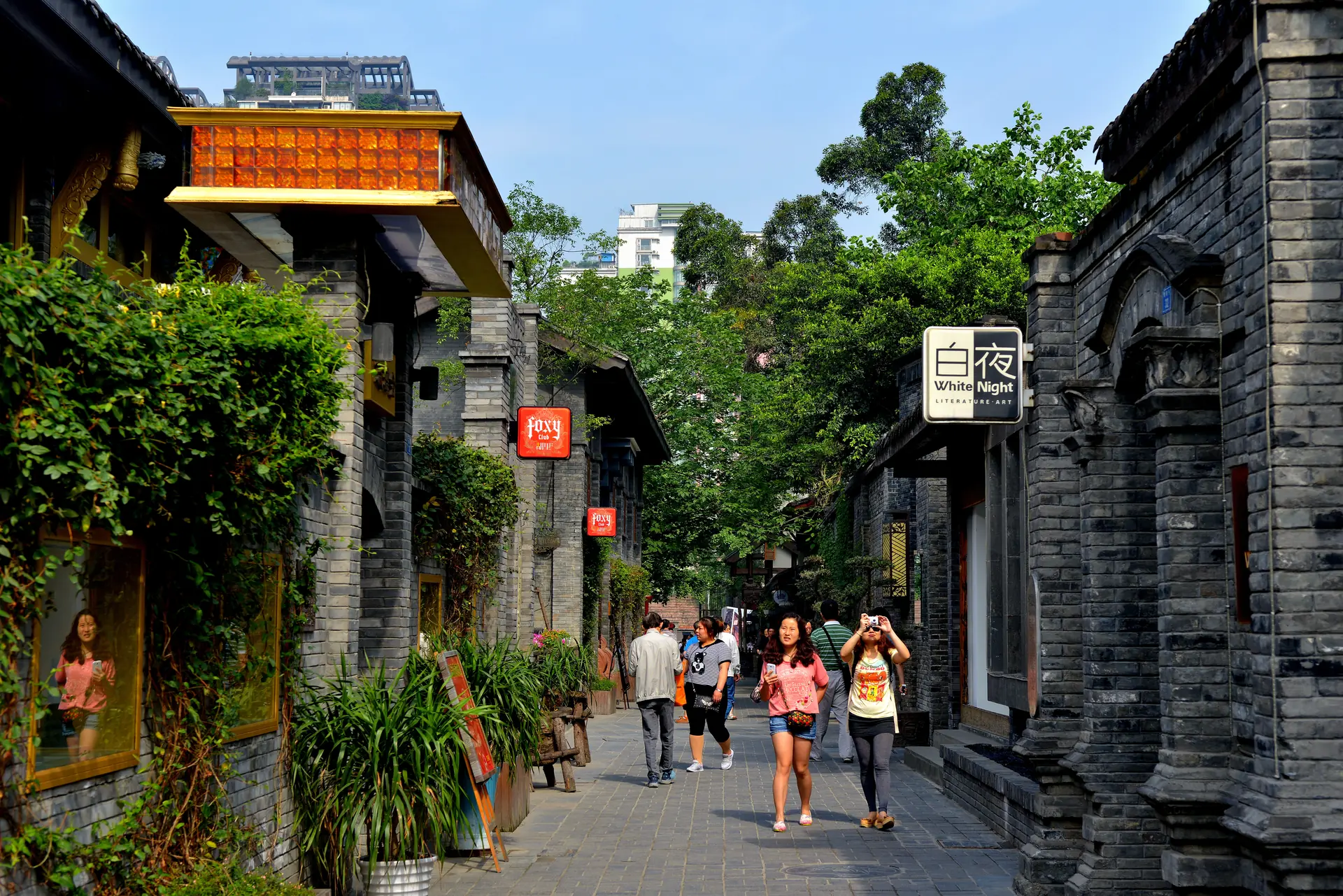
Qing-dynasty gatehouse details in Narrow Alley — the best-preserved building facades
Wuhou Shrine: China's Only Dual Temple (15:15–16:45)
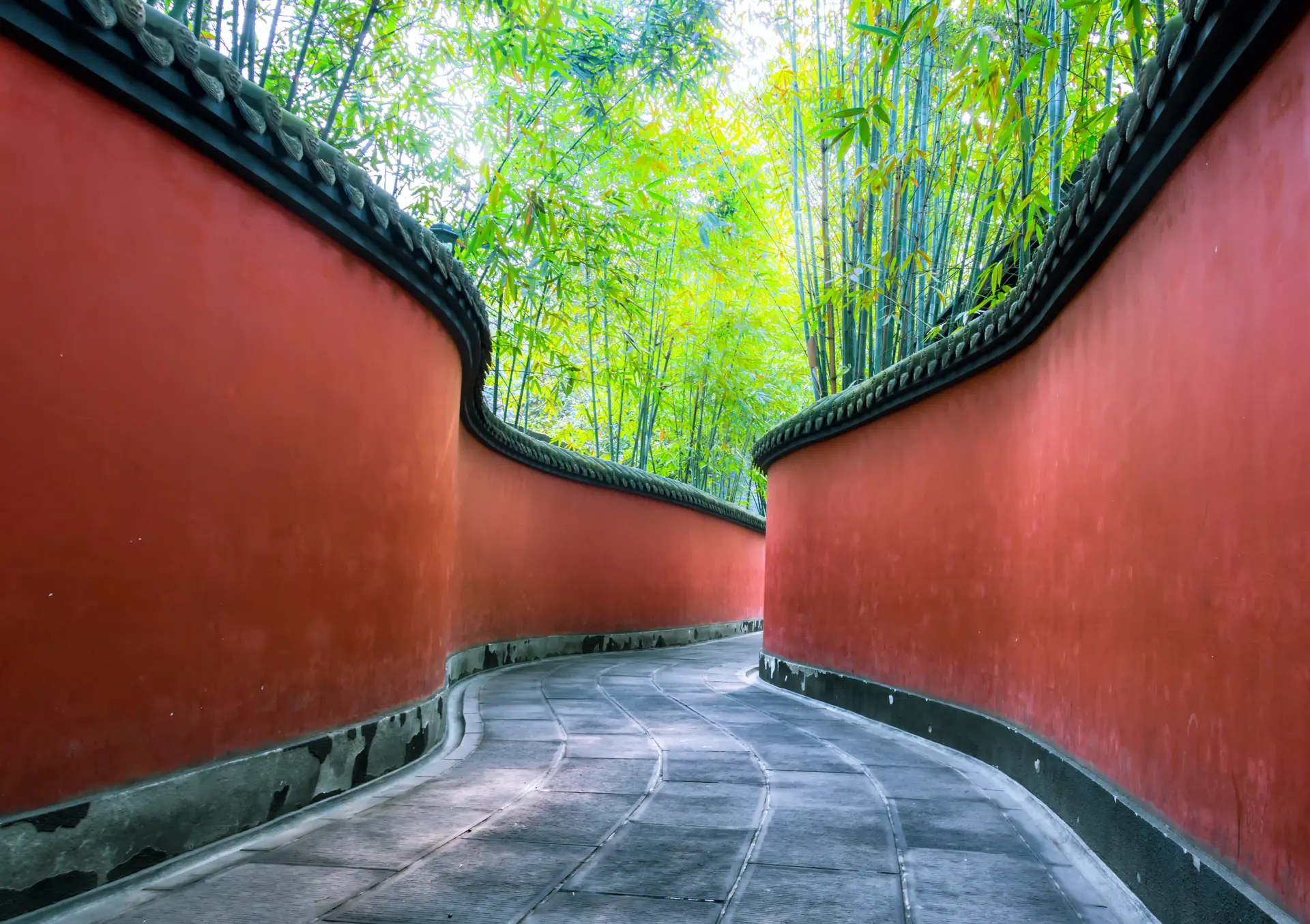
The iconic Red Wall & Bamboo Path (红墙竹影) — best light between 3 and 4 PM
From Kuanzhai Alley, taxi or Didi is simplest: 10–15 minutes in normal traffic. If you prefer metro, walk back toward People's Park Station and take Line 10 to Wuhou Shrine Station (武侯祠站); it avoids traffic but usually saves little time once the walking is included. Gaoshengqiao Station (高升桥站) is a workable fallback, but the walk is longer.
武侯祠 (Wuhou Shrine Museum), formally named the Temple of the Marquis (汉昭烈庙), was first built in 223 AD to honor Zhuge Liang (诸葛亮) and Liu Bei (刘备) — the strategist and the emperor of the Shu Han kingdom during the Three Kingdoms period. Across China, many cities have Wuhou shrines dedicated to Zhuge Liang, but Chengdu's is the only one where emperor and minister are enshrined side by side — a remarkable breach of Confucian hierarchy that shows how revered the strategist remains in Sichuan after 1,800 years.
- Tickets: ¥50 per person (year-round), half-price ¥25 for ages 6–18 and full-time students
- Hours: 09:00–18:00 (last entry 17:00). Summer hours may be extended — check the official WeChat account
- Suggested visit: 1–1.5 hours
Three Things Not to Miss
- Red Wall & Bamboo Path (红墙竹影) — A 50-meter corridor flanked by crimson walls and overhanging bamboo, one of Chengdu's most iconic photo spots. The light is best between 3:00–4:00 PM
- Liu Bei Hall & Zhuge Liang Hall — The front hall (Liu Bei) is grand and spacious; the rear hall (Zhuge Liang) is smaller and more refined. Look for the famous "Attack the Heart" couplet (攻心联) on Zhuge Liang's hall — written by Qing-dynasty scholar Zhao Fan: "Win hearts and dissenters cease; true generals since antiquity were never warmongers"
- Three Kingdoms Exhibition Hall — If you're unfamiliar with the Three Kingdoms narrative, this hall lays it out clearly with artifacts and models. English signage is decent
Jinli Ancient Street: Snacks & Lantern Glow (17:00–18:15)
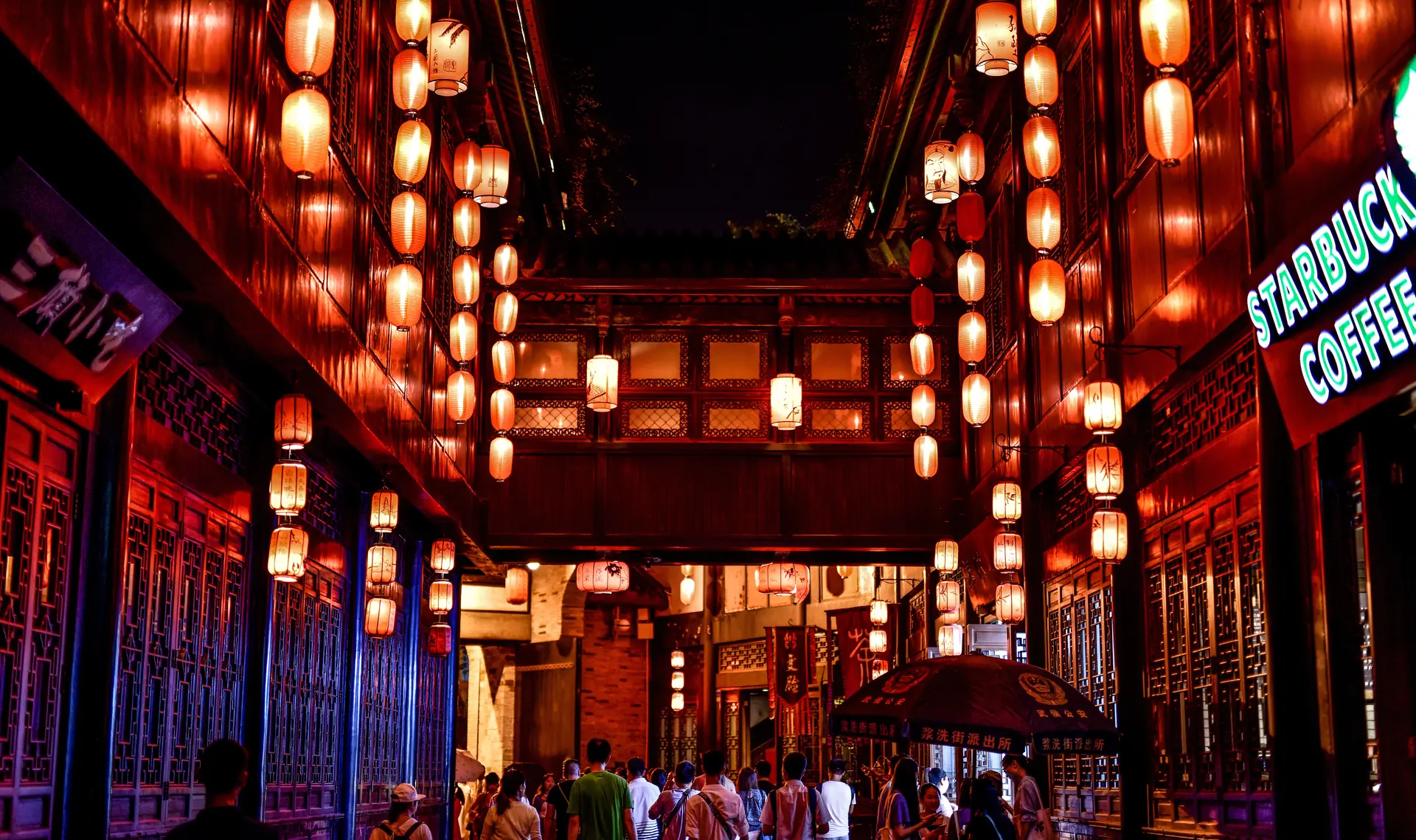
Jinli Ancient Street after dusk — red lanterns transform the restored old-style street
Walk from Wuhou Shrine straight into Jinli — no extra ticket needed. Jinli (锦里) is a "Ming-Qing style" commercial street — essentially Chengdu's version of a tourist-oriented old street, not genuine ancient architecture. But when the red lanterns light up at dusk, it genuinely looks beautiful, and the snack strip is the most convenient place to sample Sichuan street food in one go. In the Standard version, treat Jinli as a compact dusk stop; in the Full version, linger until full darkness.
Street Food Worth Trying
Jinli prices run 30–50% above normal, but the variety and convenience make up for it:
- 三大炮 — Glutinous rice balls in crushed peanut and brown sugar syrup — ¥10. Watch the vendor slam the dough balls against a bronze plate for three loud bangs — that's how it got the name "Three Cannonballs"
- 钵钵鸡 — Cold skewers of various ingredients soaked in chili oil or green peppercorn broth — ¥5/skewer, get 5–8 for a sampler
- 蛋烘糕 — Egg-batter pancakes filled with shredded pork, cream, or jam — ¥5–8
- 甜水面 — Thick chewy noodles in a sweet-spicy sauce with crushed peanuts and chili oil — ¥8–12
- 兔头 — Braised rabbit head in numbing-spicy or five-spice seasoning — ¥15–20. Locals treat this as a casual snack. The technique: snap the jaw apart from the chin, eat the cheek meat first
Walk the whole street first
Walk the full street once to see what's on offer, then circle back for what caught your eye. This keeps the Jinli stop compact instead of turning it into a slow snack crawl before hotpot.
Lantern timing
In winter, lanterns light up around 17:30; in summer, closer to 19:00. Jinli after dark is significantly prettier than during the day.
Chengdu Hotpot: Your First Numbing Experience
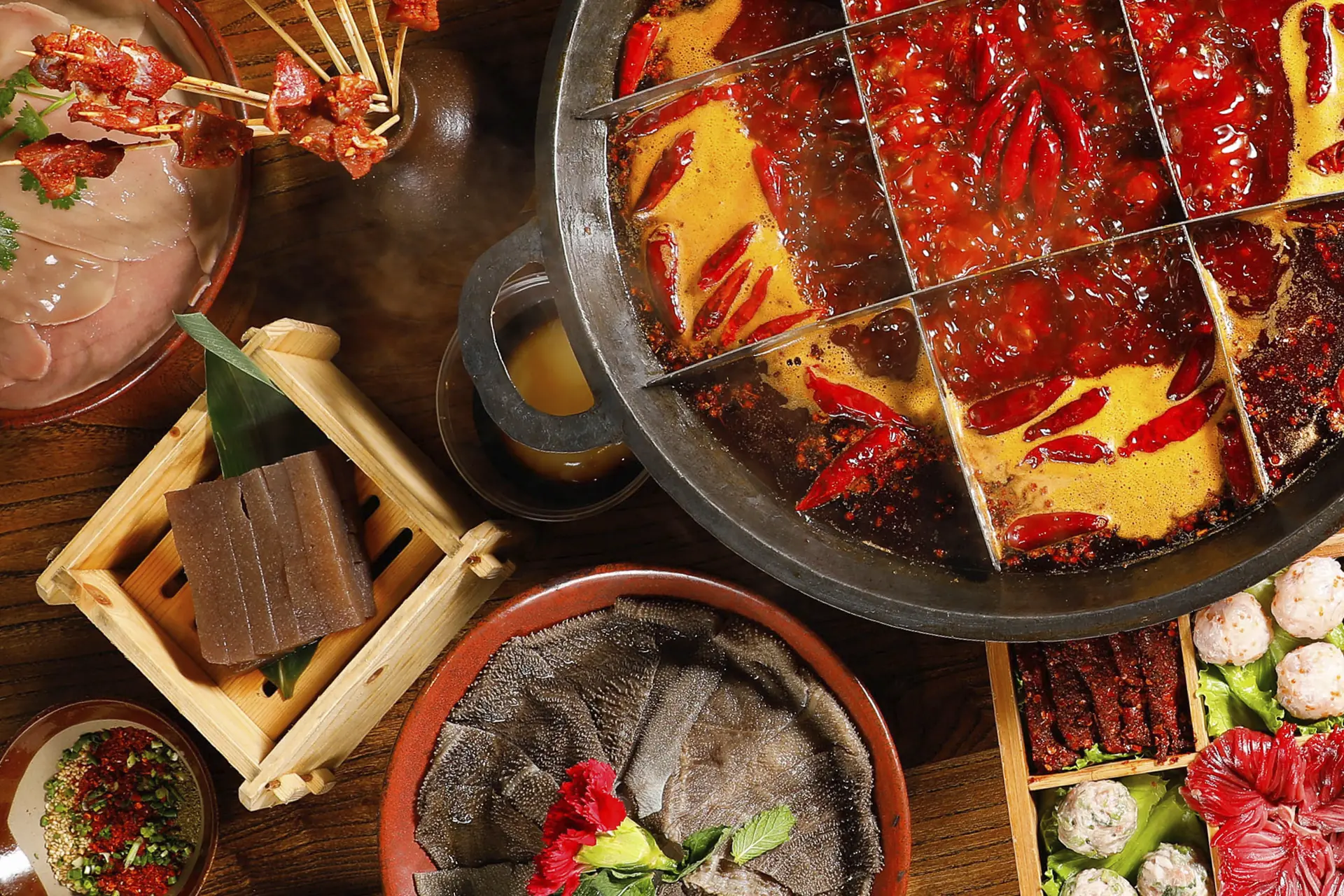
Chengdu-style jiugongge hotpot — nine compartments of bubbling beef-tallow broth
Chengdu hotpot versus Chongqing hotpot: Chengdu leans numbing (麻, from Sichuan peppercorns), Chongqing leans spicy (辣, from dried chilies). Chengdu's base is typically beef tallow broth — deep red, thick, glistening — and the numbness builds on your lips and tongue by the third round of dipping. Locals call it 麻到巴适 — "so numb it feels right."
Use the Chengdu food guide to choose a hotpot style and dinner area that fits the rest of the evening.
How to Order Hotpot for the First Time
- Choose your broth: If you're unsure about spice, order a 鸳鸯锅 ("mandarin duck pot") — half spicy red, half mild mushroom or tomato. Can't eat spicy at all? Mushroom broth is excellent on its own
- Must-order items:
- 毛肚 (beef tripe) — Dip 15 seconds. Crunchy, springy — the soul of Chengdu hotpot
- 鸭肠 (duck intestine) — Dip 8 seconds, swish 7–8 times. Just barely cooked
- 黄喉 (aorta) — Dip 10 seconds. Crunchy
- 嫩牛肉 (tender beef slices) — Dip 30 seconds
- 午餐肉 (luncheon meat) — Beginner-friendly, mild
- 藕片, 土豆片, 冬瓜 (lotus root, potato, winter melon) — Vegetables to cool the burn
- Dipping sauce: The classic Chengdu formula is sesame oil + raw garlic + oyster sauce (油碟). Almost everyone here eats it this way. The oil coats the food, cutting both heat and temperature — essential for beginners
Recommended Hotpot Restaurants
Skip hotpot near Jinli or Kuanzhai Alley (tourist pricing). These are local-approved chain brands:
- 小龙坎 (Xiaolongkan) — Yulin Road branch is convenient after Jinli by taxi, about 10–15 minutes. Rich beef-tallow base. ¥80–120 per person
- 蜀大侠 (Shu Da Xia) — Multiple branches near Wuhou. Bold peppercorn flavor, creative items like lobster. ¥100–140 per person
- 大龙燚 (Da Long Yi) — One of the most intensely numbing mainstream brands. The choice if you want full-throttle numbing-spicy broth. ¥90–130 per person
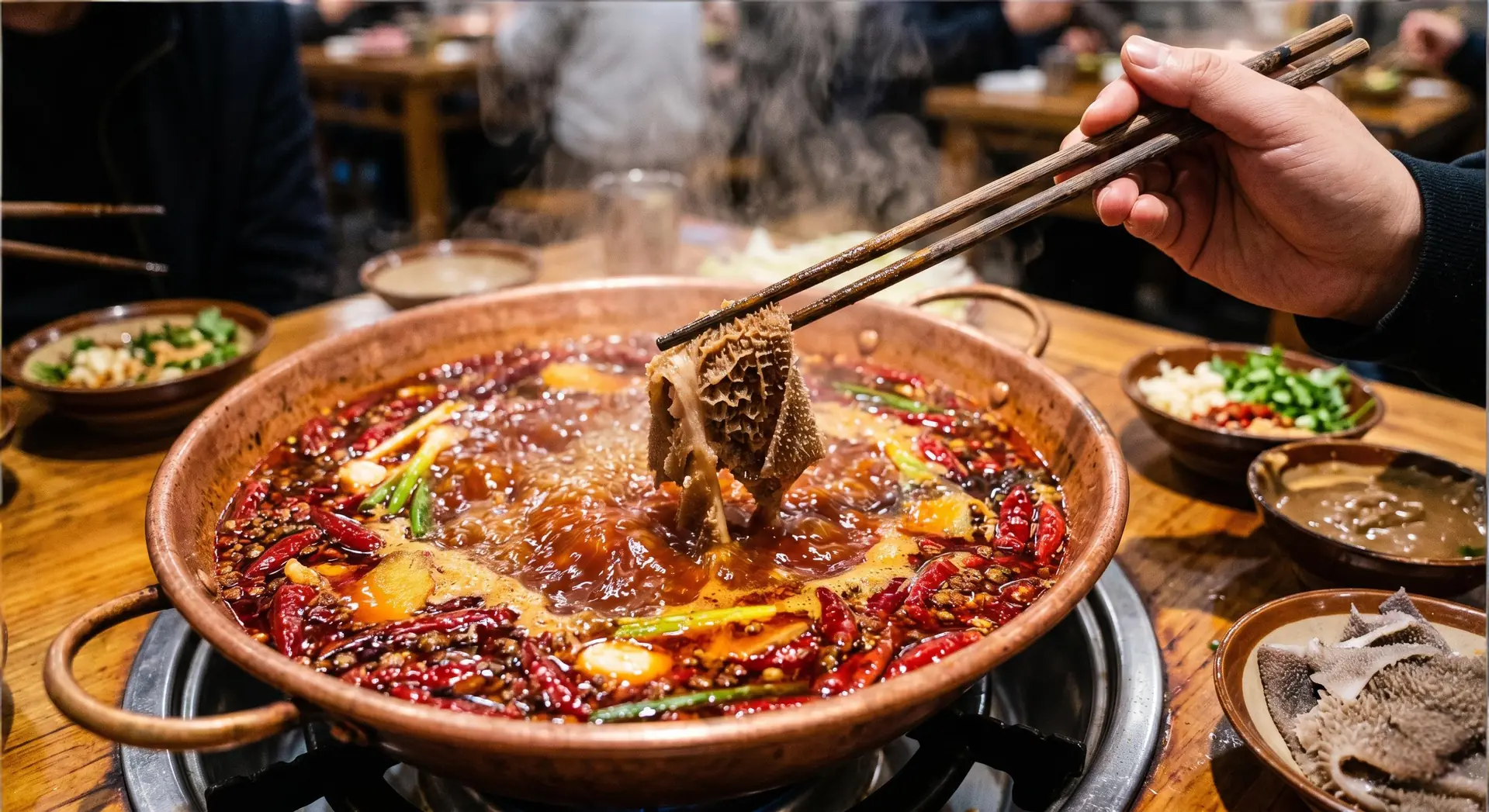
毛肚 — dip for 15 seconds for the perfect crunch
Queue before you arrive
Popular hotpot restaurants start queuing by 18:00. Most support WeChat or Meituan advance number-taking — grab your number while still at Jinli, then walk straight in after.
Full and Slow Versions
Use this section when the Standard route needs tuning. The Chengdu day has two pressure points: the Panda Base is far north, and the Wuhou Shrine / Jinli / hotpot sequence can stretch the evening if you linger too long.
- Route to follow
- 1 Panda Base -> 2 People's Park -> 3 Kuanzhai Alley -> 4 Wuhou + Jinli -> 5 Hotpot
- What changes
- Do all main stops, but keep lunch, Kuanzhai, and Jinli compact.
- Route to follow
- 1 Panda Base -> 2 People's Park -> 3 Kuanzhai Alley -> 4 Wuhou + Jinli -> 5 Hotpot
- What changes
- Same stops as Standard. Stay longer; do not add Chunxi Road, Taikoo Li, Leshan, or Dujiangyan.
- Route to follow
- 1 Panda Base -> 2 People's Park -> 3 Kuanzhai Alley -> 5 Hotpot
- What changes
- Skip 4 Wuhou + Jinli. Best if you want the easiest old-lane walk.
- Route to follow
- 1 Panda Base -> 2 People's Park -> 4 Wuhou + Jinli -> 5 Hotpot
- What changes
- Skip 3 Kuanzhai Alley. Best if you want history and lanterns.
+Full Version: Add Depth
Best for strong walkers and photographers. Keep the same five-stop route as Standard, then add depth: 3.5–4 hours at the Panda Base, Panda Tower or the museum if reservations and closures allow, a full ear-cleaning break at People's Park, all three Kuanzhai lanes, close to 2 hours at Wuhou Shrine, and Jinli after dark. Expect an 11–12 hour day and a later hotpot dinner.
−Slow Version: Cut One Area
Best for families, humid summer days, older travelers, or jet lag. Keep the Panda Base and People's Park, then make one clear choice: Slow A keeps Kuanzhai Alley and skips Wuhou + Jinli; Slow B keeps Wuhou + Jinli and skips Kuanzhai Alley. Use taxis after lunch, skip ear cleaning if the wait is long, and eat hotpot around 17:30–18:00 before restaurants peak.
Do Not Treat the Slow Version as Failure
Chengdu rewards sitting still. A slower day with pandas, one proper tea break, one old-city walk, and an early hotpot dinner feels more local than a checklist run where every stop becomes a 20-minute photo stop.
Getting Around Chengdu
Getting to the Panda Base
Option A: Metro + Shuttle (recommended) Metro Line 3 to Panda Avenue Station (熊猫大道站), Exit A, then Bus 408 shuttle directly to the South Gate (~5 min, ¥2). Total from city center (Chunxi Road / Tianfu Square): about 40–50 minutes, metro fare ¥4–5.
Option B: Taxi / ride-hailing From central Chengdu to the Panda Base South Gate: about ¥30–45 (depending on starting point and morning traffic), 30–40 minutes. Use Didi — search "大熊猫繁育研究基地南门."
Transport Between Stops
Chengdu's metro network covers all stops on this route or their vicinity, but the afternoon route is easier by taxi because the stops are short hops. A Tianfu Tong transit card can be bought at metro station machines (¥20 deposit), or use Alipay Transit QR code to scan directly at the gates.
- Method
- Metro L3 → Panda Ave + Bus 408 / taxi
- Time
- 40–50 min
- Cost
- ¥6–7 / ¥30–45
- Method
- Bus 408 + Metro L3 → Chunxi Road + Metro L2 → People's Park
- Time
- 50–60 min
- Cost
- ¥7–8
- Method
- Walk
- Time
- 10–15 min
- Cost
- Free
- Method
- Taxi / Line 10 via People's Park Station
- Time
- 10–20 min
- Cost
- ¥12–20 / ¥3–4
- Method
- Walk (side gate)
- Time
- 2 min
- Cost
- Free
- Method
- Taxi / walk depending on branch
- Time
- 10–20 min
- Cost
- ¥10–25
Best Season & Budget Breakdown
When to Go
- Spring (Mar–May): 15–25°C, the most comfortable season. April bamboo groves at the Panda Base are at their greenest
- Autumn (Sep–Nov): 15–22°C, stable weather, fewer crowds than summer
- Summer (Jun–Aug): Hot and humid, 35°C+, but this is cub season — the nurseries have the youngest newborns
- Winter (Dec–Feb): Cold and damp, 5–10°C, but the fewest tourists and shortest queues everywhere
Chengdu rarely sees blue skies year-round — there's even a Chinese idiom, 蜀犬吠日 ("Sichuan dogs bark at the sun"), meaning Sichuan dogs see the sun so rarely that they bark at it when it appears. Don't plan your photos around blue-sky expectations.
One-Day Budget
- Cost
- ¥55
- Cost
- ¥50
- Cost
- ¥25–45
- Cost
- ¥13–26
- Cost
- ¥20–40
- Cost
- ¥30–50
- Cost
- ¥80–140
- Cost
- ¥280–430
Add ¥80–120 if taking taxis instead of the metro for most legs.
Frequently Asked Questions
The Panda Base (north of the city) is the world's largest giant panda breeding center — many pandas, polished facilities, ideal for first-time visitors. Dujiangyan Panda Valley (~65 km from downtown) is a rewilding training center with fewer pandas but a more natural, less crowded environment. For a one-day trip, the Panda Base is the clear choice.
Sources checked for this guide
- Online real-name booking (up to 14 days ahead), 85,000 daily visitor cap, morning/afternoon entry sessions, and original passport admission: Chengdu Research Base of Giant Panda Breeding official ticket service
- Opening hours, admission rules, and Three Kingdoms shrine-garden layout: Chengdu Wuhou Shrine Museum official website
- Metro Line 3 Panda Avenue connections and central Chengdu rail transfers: Chengdu Rail Transit official website
- Overcast Sichuan Basin climate and summer heat patterns affecting outdoor panda activity: China Weather — Chengdu climate overview
Beyond This Guide
Chengdu rewards an extra day or two — there's the Sichuan Museum, Du Fu Thatched Cottage, Wenshu Monastery's vegetarian lunch, and late-night bar streets near Jiuyanqiao.
Next steps for planning:
- Chengdu travel guide — compare Chengdu hotel areas, night counts, and TFU vs CTU airport transfers.
- Leshan Giant Buddha day trip from Chengdu — the classic high-speed rail day trip if you add a second day.
- Sanxingdui Museum guide — Shu bronze masks 20 minutes north by high-speed rail.
© gochinafreely.com — Original guide by Go China Freely.