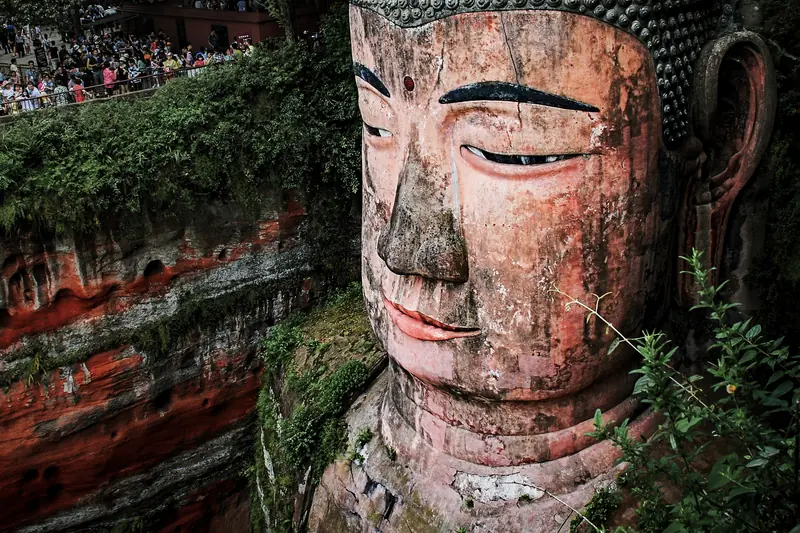
Leshan works best as a single-purpose Chengdu day trip: leave early by high-speed train, reach the Leshan Giant Buddha (乐山大佛) (Google | Amap) before the tour-bus wave, walk down the Nine Bends Plank Path, then make the boat decision while you are still near Wuyou Temple and the riverside piers. If you want the river view, take the boat before leaving for lunch; if not, go straight to a proper Leshan meal. The route is not complicated, but the order matters.
~9-11 hrs
Door to Door
6-8 km
Walking Route
RMB 250-500
Budget / person
7-8 stops
Total Stops
Leshan Day-Trip Route Logic
Most rushed Leshan plans fail for one reason: they treat the Buddha, the boat, the food street, and Mount Emei as if they all have equal claim on the day. They do not. For a first-time visitor from Chengdu, the route has one anchor: arrive early enough to protect the walking route.
The best sequence is train first, scenic area second, boat decision at Wuyou third, lunch fourth. Do the mountain route while queues are lighter and temperatures are lower. When you climb out near Wuyou Temple, decide there: boat now, or skip the boat and go to lunch. Do not leave for Zhanggongqiao, then double back to the pier unless you deliberately accept the extra transfer.
1Early Crowd Advantage
Chengdu tour buses usually arrive later than the first independent train travelers, so the 08:30-09:30 window is the day-trip sweet spot.
2Two Different Buddhas
Walking gives close-up scale from head to feet; the boat gives the full front view. They complement each other, but walking is the core.
3Clean Escape Points
If queues, rain, or tired legs interfere, you can switch to a head-level visit plus river boat, then lunch and return without breaking the whole day.
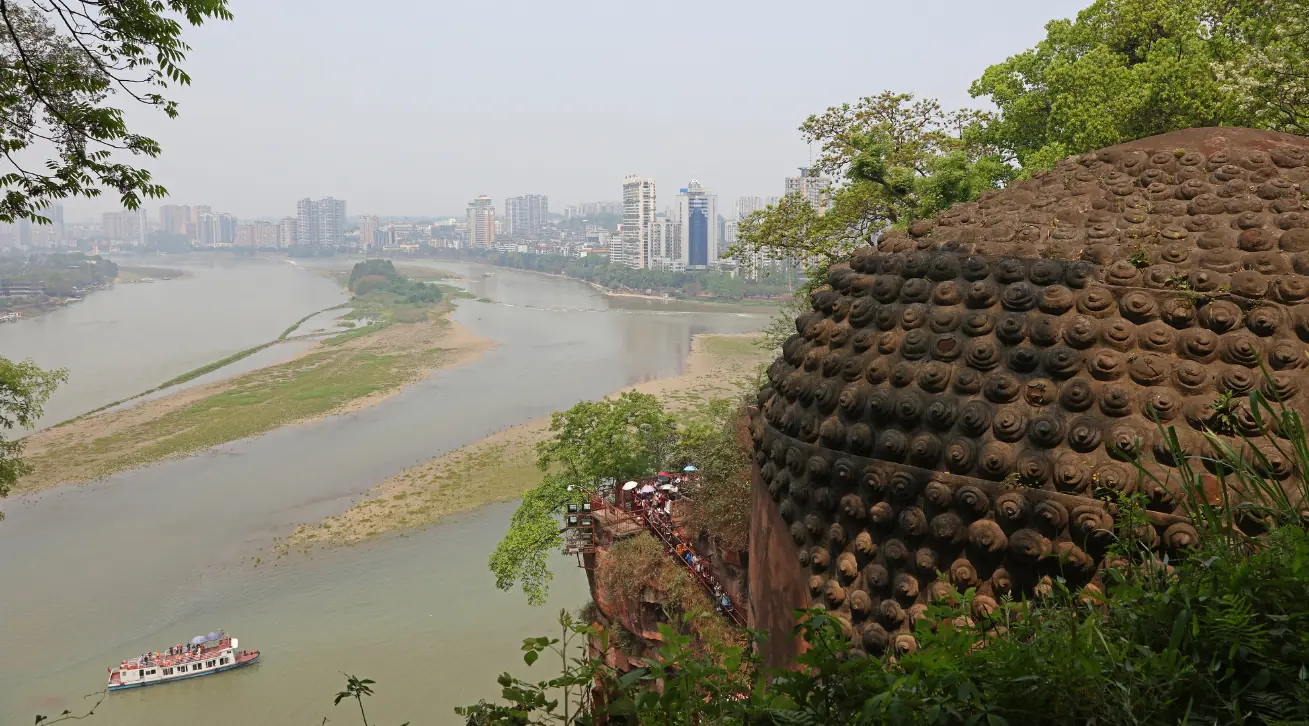
The Buddha sits where the Min River (岷江), Dadu River (大渡河), and Qingyi River (青衣江) meet. From the mountain, you understand its carved details and cliff setting; from the water, you understand why the whole body became a landmark for boatmen on the river.
Best for: first-time Sichuan visitors, independent travelers based in Chengdu, UNESCO-site collectors, photographers who want both close-up and full-body Buddha views, and food-focused travelers who want a real Leshan lunch.
Not ideal for: travelers with serious mobility limits, visitors who dislike early starts, or anyone trying to combine this with Mount Emei, Dujiangyan, or the Chengdu Panda Base in the same day.
Timeline At a Glance
Target pace: leave Chengdu early, protect the plank path before lunch, decide on the boat while still near Wuyou, then eat and return before the evening train crush.
- Depart Chengdu(成都东站 / 成都南站)- high-speed train to Leshan Station
- Leshan Station(乐山站)- taxi or Bus K1 toward the scenic area
- North Gate(乐山大佛景区北门)- enter early and walk toward Lingyun Temple
- Nine Bends Plank Path(九曲栈道)- descend from head level to the foot platform
- Wuyou Temple(乌尤寺)- climb out, then use this area as the decision point
- Boat Decision(乌尤寺码头 / 乌尤坝码头)- boat now if conditions are good; otherwise go to lunch
- Leshan Lunch(张公桥美食街 / 嘉定坊)- sweet-skin duck, cold skewers, beef soup
- Back to Chengdu(成都)- return via Leshan Station with a buffer
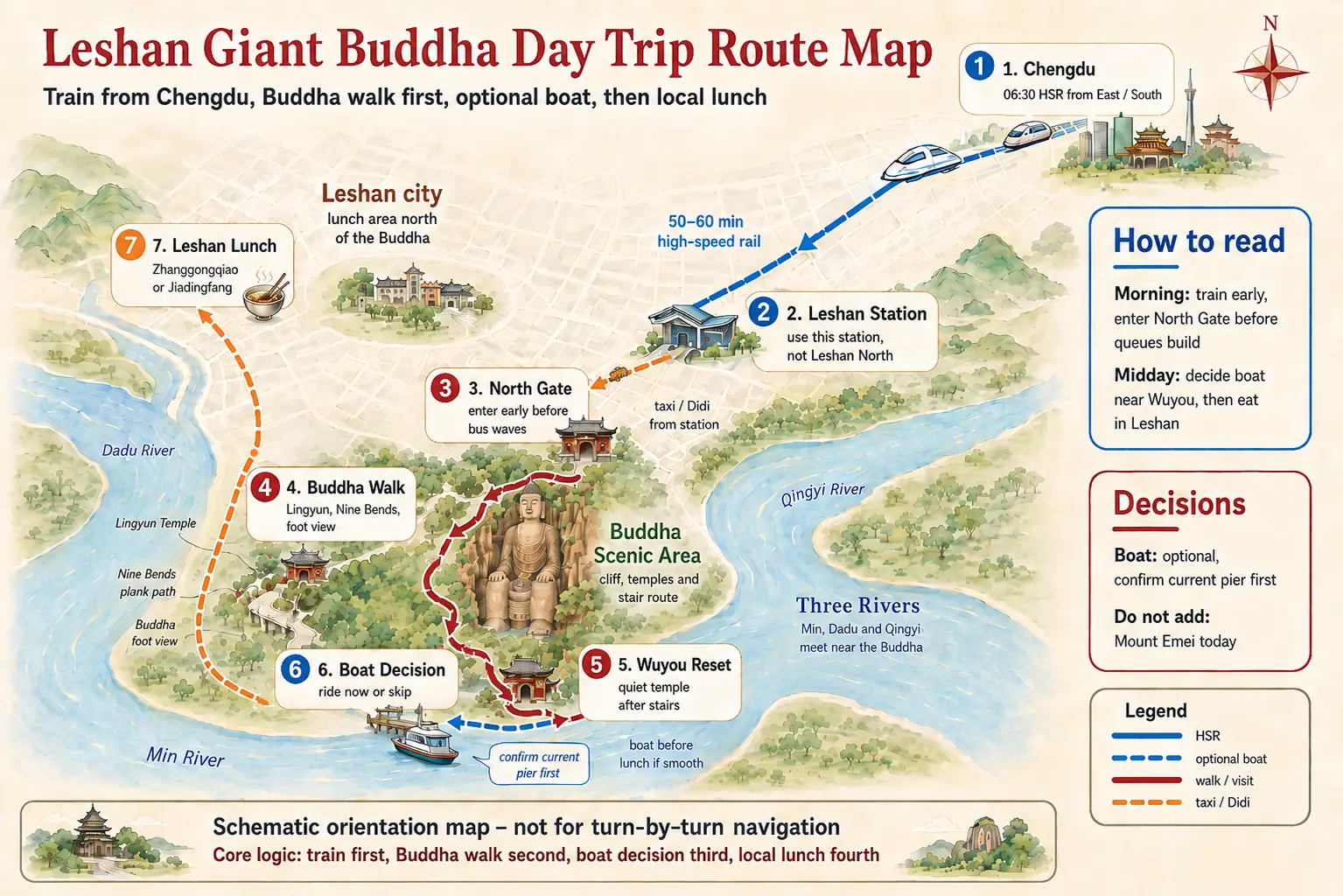
Read the day as train first, Buddha walk second, decide boat at Wuyou third, Leshan food fourth. The moment you leave Chengdu late, the route changes: protect the Buddha and lunch, then cut the boat before you cut your return buffer.
Arrive before buses and before the plank path heats up.
Head level, cliff stairs, Buddha feet, then Wuyou Temple.
If you want the boat, do it before leaving the Wuyou riverside area.
Use Zhanggongqiao or Jiadingfang after the walk or after the boat.
Reach Leshan Station before the last practical train window.
Recommended Version for Most First-Timers
Use the standard version as this article's default: early train, North Gate entry, Lingyun Temple, Nine Bends Plank Path, Buddha foot platform, Wuyou Temple, then decide. If you want the boat, take it before leaving the riverside area for lunch; if not, go straight to lunch. Mount Emei is a separate trip.
The schedule assumes you can catch a morning high-speed train and reach the scenic area around 08:30-09:00. If your first realistic arrival is after 10:30, do not pretend it is the same day. Expect more queue time, shorten the temple loop, and treat the boat as a backup instead of an add-on.
Best if this is your first Leshan visit. Most travelers skip the boat here and keep the day clean; if you add it, do it before lunch.
Skip: Mount Emei, Oriental Buddha Capital, night tour.
Best when queues are light and you are comfortable with stairs, pier logistics, taxis, and a later return train.
Do not stack late return, night cruise, and extra temples unless you are staying in Leshan.
Best when the plank path queue is too long or stairs are a bad idea. The boat becomes the lower-walking substitute for the full-body view.
Skip: full descent to the feet, Mahao Cliff Tombs, long food-street wandering.
Morning: Chengdu to the Buddha
High-Speed Train to Leshan (06:30-08:00)
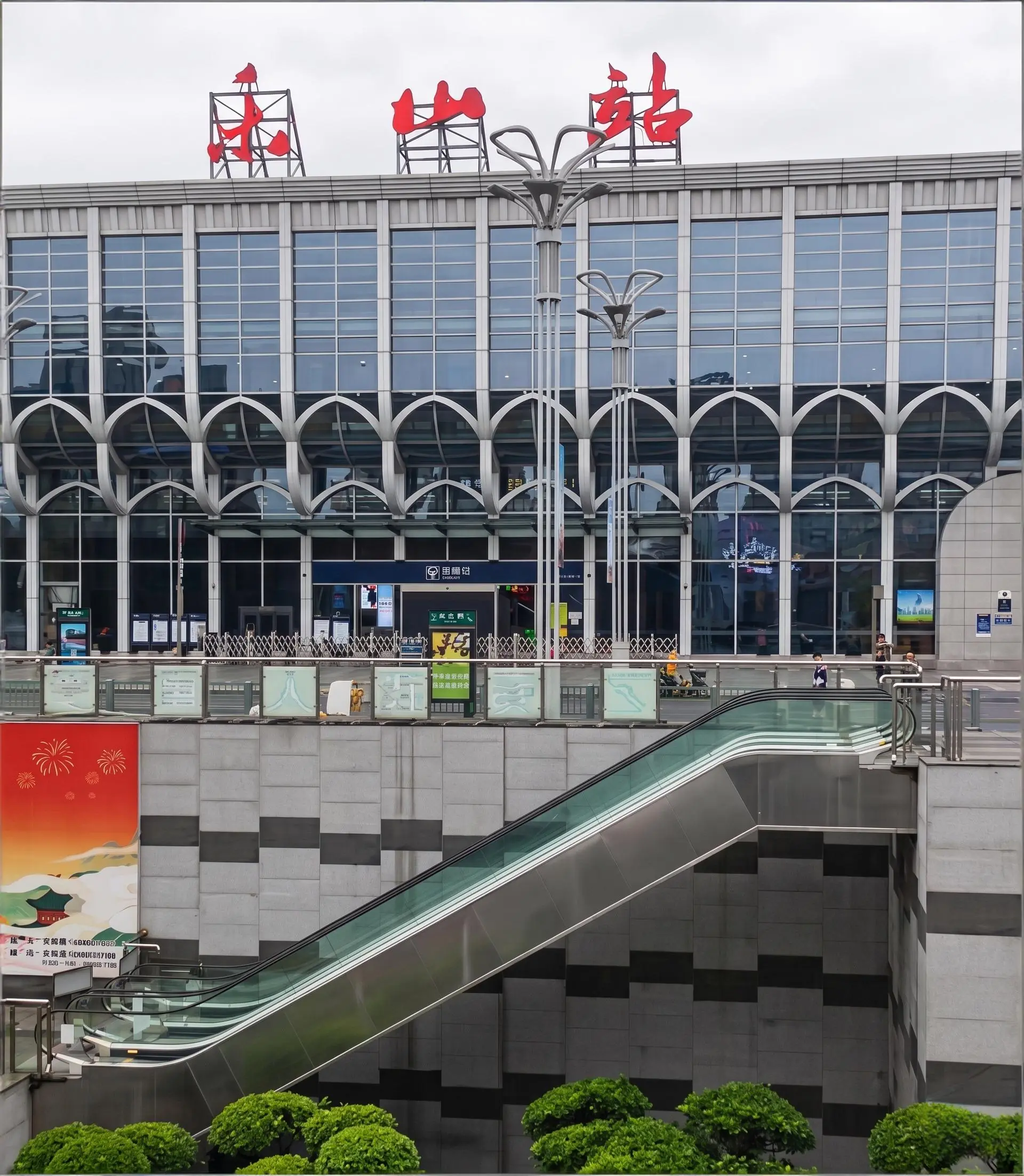
Start from Chengdu East Station (成都东站) or Chengdu South Station (成都南站) and buy a high-speed train to Leshan Station (乐山站) (Google | Amap). Most rides take about 50-60 minutes. Do not buy to Leshan North Station (乐山北站); it is the wrong station for the Giant Buddha.
After arrival, the easiest move is a taxi or Didi to the North Gate (乐山大佛景区北门) (Google | Amap). Buses are cheaper, but the taxi saves the most valuable minutes of the day.
- Best method
- High-speed train
- Time
- ~50-60 min
- Notes
- Book Chengdu East or Chengdu South to Leshan Station
- Best method
- Taxi / Didi
- Time
- ~20 min
- Notes
- Usually the best value for an early-start day trip
- Best method
- Bus K1 or Bus 13
- Time
- ~35-45 min
- Notes
- Cheap, but less predictable if you are chasing the early queue window
Station Name Rule
Choose Leshan Station (乐山站), not Leshan North Station (乐山北站). The North Station is useful for a different rail pattern and can quietly waste the morning if chosen by mistake.
North Gate, Lingyun Temple, and Buddha Head (08:30-09:15)
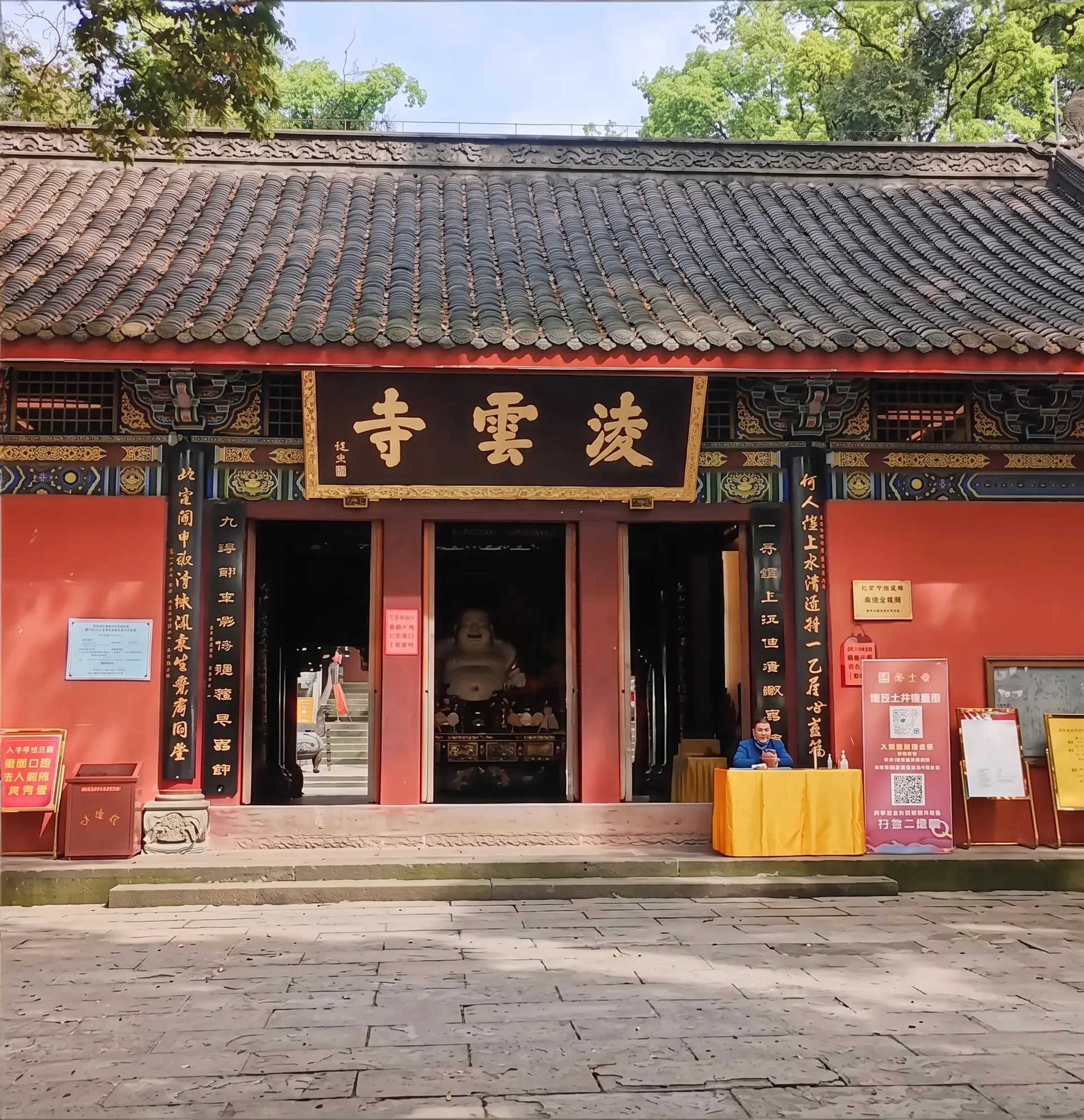
Enter through the North Gate and walk toward Lingyun Temple (凌云寺) (Google | Amap). The temple sits near the Buddha's head and gives the morning a useful pause: you see the Tang-dynasty religious setting before stepping into the queue system for the plank path.
Keep this stop short. Ten to fifteen minutes is enough for the main hall, the story of monk Haitong (海通), and the first look at the Buddha's head area. The main work is still ahead.
ADo First
Get through the gate, check the plank-path queue, and keep the group together before splitting attention across smaller sights.
BDo Not Linger
Lingyun Temple is meaningful, but this is not the place to spend an hour if you still want the foot platform and lunch.
CWatch the Signs
Staff may adjust one-way routes, entry lines, or temporary closures during rain, holidays, and maintenance.
Core Experience: Nine Bends Plank Path
Leshan Giant Buddha: Scale and Story
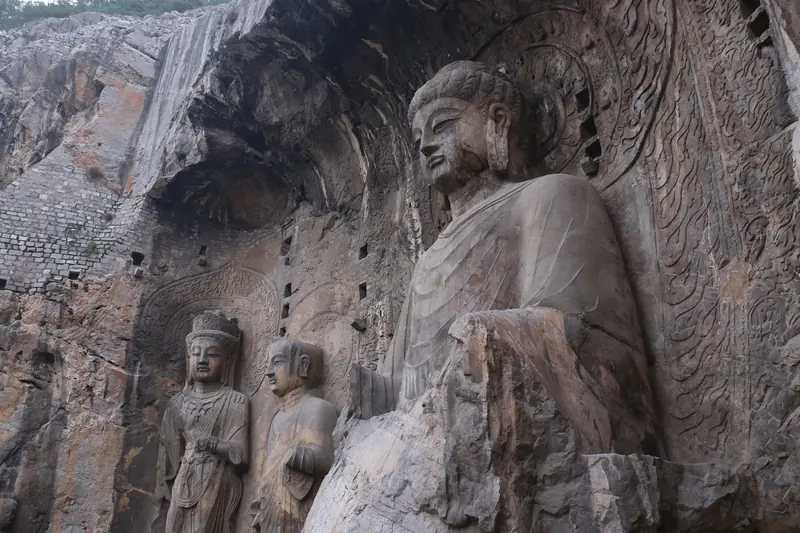
The Leshan Giant Buddha (乐山大佛) is officially named the Maitreya Stone Statue of Jiazhou Lingyun Temple. It was started in 713 AD by the monk Haitong (海通), who wanted a great Maitreya Buddha to calm the dangerous currents where the three rivers met. Construction continued after his death and was completed in 803 AD, about 90 years after it began. For deeper attraction context beyond this day-trip route, see our Leshan Giant Buddha visitor guide.
The scale is easiest to feel in pieces before you see the whole body. The statue is 71 meters tall; the head is level with the mountaintop and the feet sit near the riverbank. Traditional descriptions count 1,021 spiral hair buns, ears about 7 meters long, a nose about 5.6 meters long, and feet broad enough that a crowd can stand across them. The cliff statue also contains drainage channels hidden around the hair buns, ears, and robe folds, one reason the sandstone carving has survived Sichuan rain for more than 1,200 years.
UNESCO Context
UNESCO lists Mount Emei Scenic Area, including Leshan Giant Buddha Scenic Area, as a World Heritage Site inscribed in 1996. For this one-day route, the practical lesson is simple: treat Leshan as a major heritage site, not a quick roadside photo stop.
Down to the Buddha's Feet (09:15-10:45)
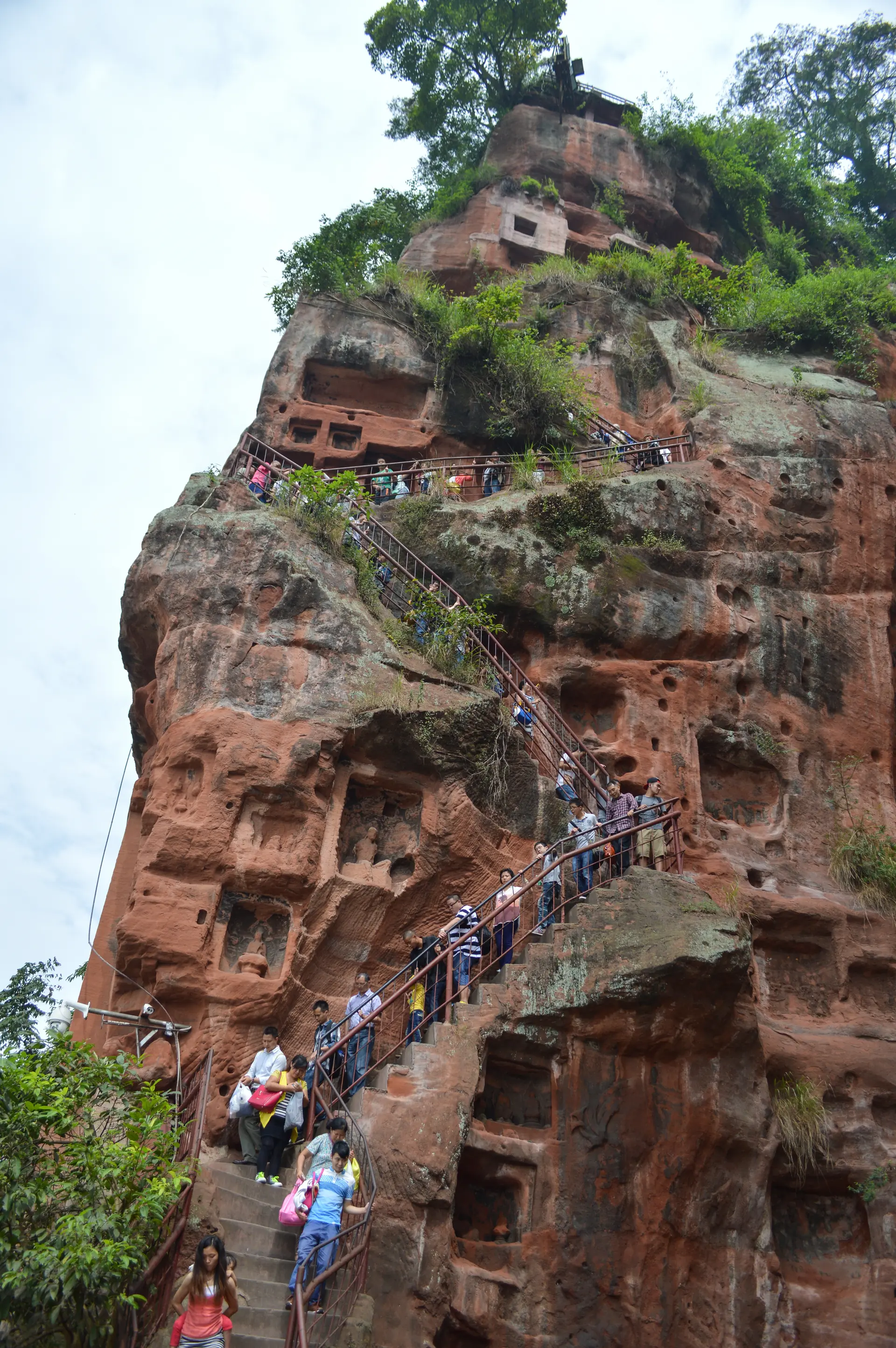
The Nine Bends Plank Path (九曲栈道) is the reason to walk instead of doing a boat-only visit. It descends beside the Buddha from head level to the foot platform, with narrow stone steps, cliff walls, and sudden views across the river.
On a quiet weekday, the descent itself may take 20-30 minutes. On a busy weekend or holiday, the queue can turn this into the longest part of the day. If the posted or visible wait is already crushing, switch to the head-level visit and boat-view version instead of losing your lunch and return buffer.
Recommended walking sequence:
- Enter from the North Gate and check the route signs before committing to the plank path.
- Visit Lingyun Temple briefly, then move to the Buddha head area.
- Descend the Nine Bends Plank Path slowly; let faster groups pass where staff allow it.
- Pause at the foot platform for the upward view, the strongest scale moment of the day.
- Climb out toward Wuyou Temple (乌尤寺) (Google | Amap) and decide whether to keep the temple loop.
Plank Path Queue Rule
If you arrive before 09:30, the plank path is usually worth trying first. If you arrive after 10:30 on a weekend, holiday, or summer day, check the queue before committing; a boat-first or boat-only version may become the smarter day.
What Else Is Inside the Scenic Area
The walking ticket covers more than the statue, but the extra sights should support the route rather than swallow it. Think of them as decision points after the plank path, not obligations.
Best as a short context stop before the plank path. It connects the Buddha to the Tang-dynasty monastery and the Haitong story.
Worth keeping if you have the legs after the foot platform. It is quieter than the Buddha queue and gives the route a softer finish.
Mahao Cliff Tombs
麻浩崖墓 / optional archaeology
Add this only on a full version. The Han-dynasty cliff tombs are included in the ticket, but they are easy to cut if lunch or the boat matters more.
Shoes Beat Speed
The plank path is often damp even when the weather is dry. Wear flat shoes with grip, hold the rail when the route narrows, and avoid carrying bulky bags down the stairs.
Midday: Lunch in Leshan
Many visitors rush back to Chengdu after the Buddha, which is a shame. Leshan is one of Sichuan's strongest food cities, and lunch is also the route's most practical rest after the stairs.
Standard Lunch Choice
For most travelers, leave the scenic area after Wuyou Temple and taxi to Zhanggongqiao Food Street or Jiadingfang. If you truly want the boat, take it before this lunch move while you are still near the riverside pier area; once you are at Zhanggongqiao, do not double back unless the boat is the day's priority.
Sweet-Skin Duck
甜皮鸭 / glossy and crisp
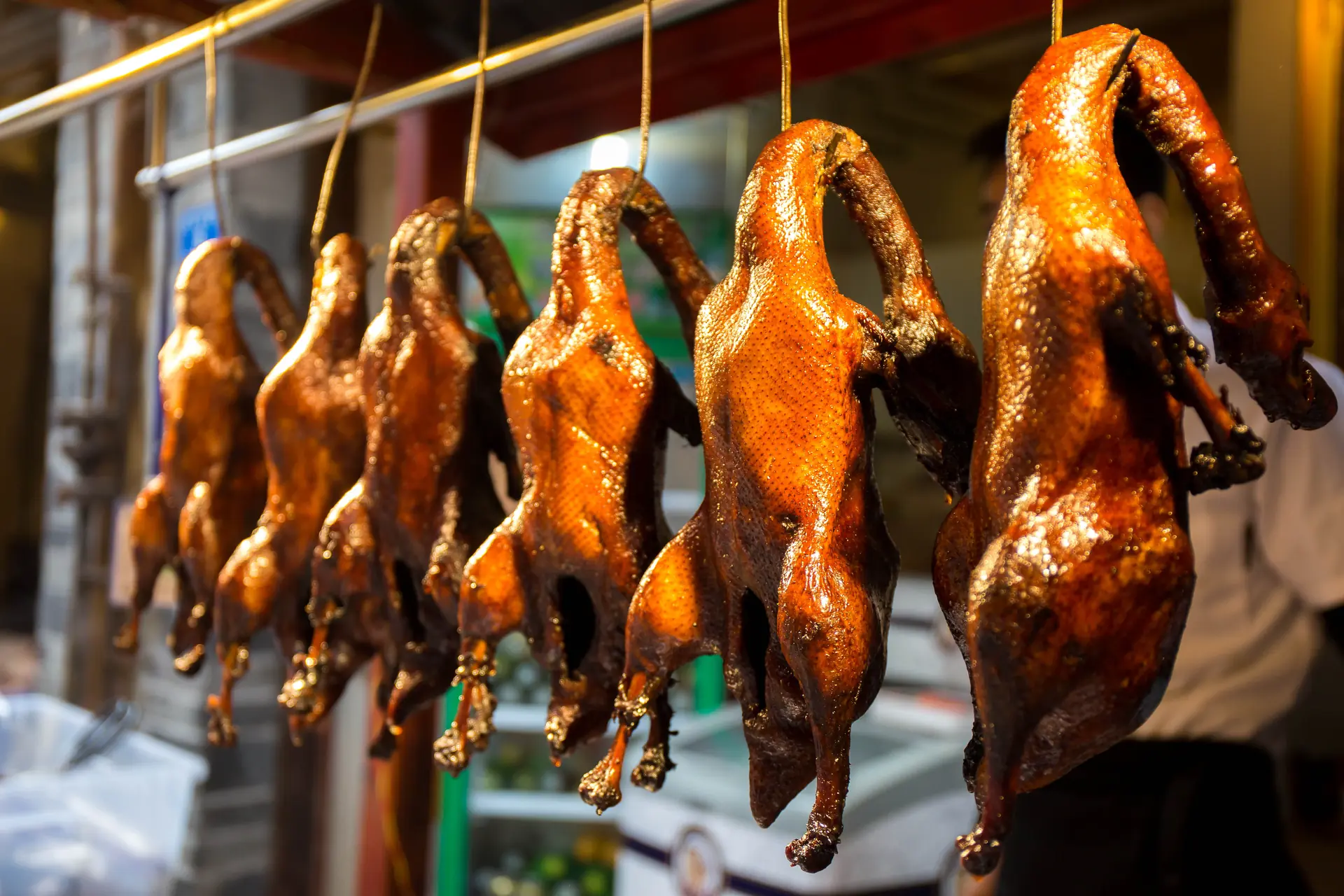
Leshan's signature duck is braised, fried, and brushed with malt sugar. Buy a small portion or half duck to share rather than making it your only meal.
Cold Skewers
钵钵鸡 / red oil or green pepper oil

Choose bamboo skewers of chicken, tripe, lotus root, potato, tofu skin, and vegetables, then pay by the stick. Order mixed spice levels if your group is new to Sichuan heat.
Crossed-Leg Beef Soup
跷脚牛肉 / clean savory broth
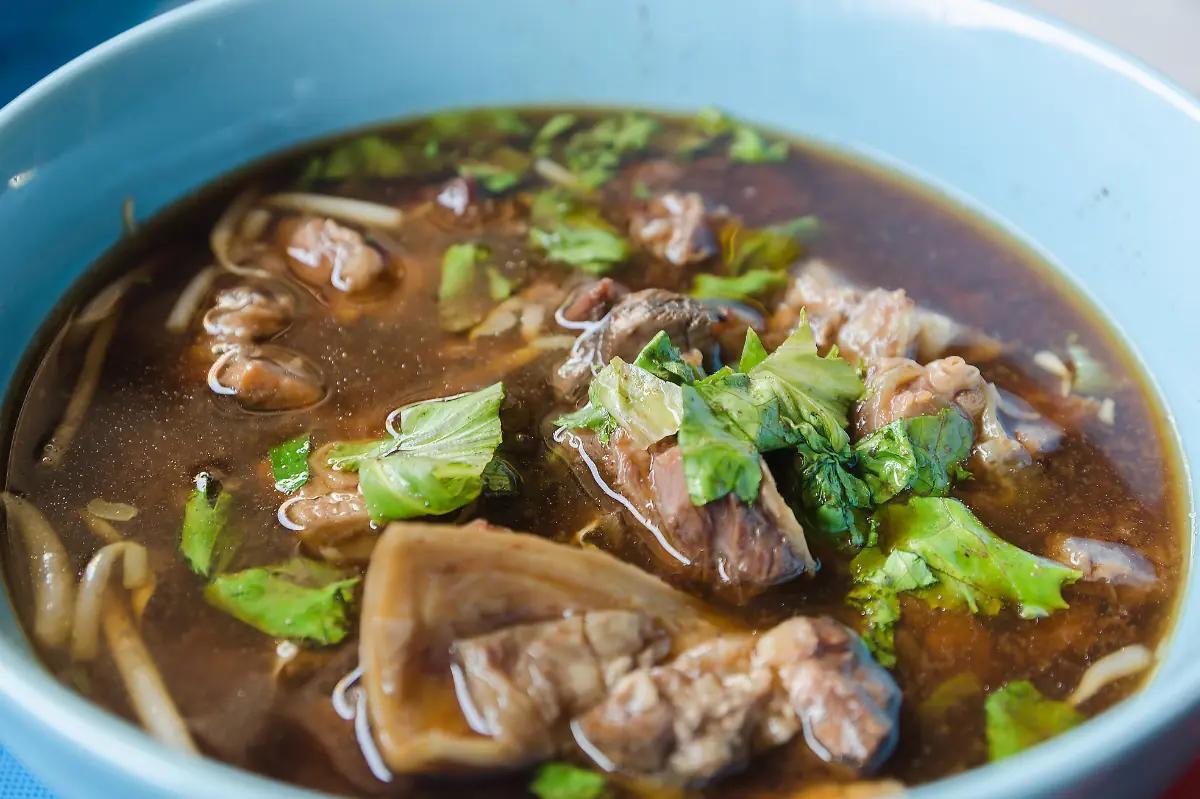
A gentler counterpoint to chili oil: beef slices, offal options, herbs, and rice. It works well before a train ride back to Chengdu.
Where to Eat
Zhanggongqiao Food Street (张公桥美食街) (Google | Amap) is the most convenient one-stop food area for day-trippers. It is touristy, but the density is useful: sweet-skin duck, cold skewers, beef soup, tofu pudding, and snacks all sit within a short walk.
Jiadingfang (嘉定坊) (Google | Amap) is closer to the scenic area and easier if the group is tired. Choose it when you want a softer lunch and less taxi movement.
- Budget / person
- RMB 25-45
- Best for
- Returning early after the walk or after a quick boat
- Budget / person
- RMB 50-90
- Best for
- Most visitors; good range of Leshan specialties
- Budget / person
- RMB 100-180
- Best for
- Groups who are finished sightseeing and want a slower afternoon
Afternoon: Boat View or Early Return
Walk or Boat: Two Different Views
The walking route and the boat are not substitutes. Walking gives the bodily scale of the carving; the boat gives the full frontal composition across the river. If you have time and clear weather, doing both makes sense, but the clean moment to add the boat is before lunch, while you are still near Wuyou Temple and the riverside pier area. If the morning ran long, the walking route has already delivered the core experience.
← swipe to compare all options →
Walking route
步行游山
- ✓Best close-up experience: head, shoulders, cliff path, and foot platform
- —Requires stairs and queue patience; not suitable for serious mobility limits
- ✓Most important choice for a first-time Leshan day trip
RMB 80
Scenic area entry; includes Lingyun Temple, Wuyou Temple, Mahao Cliff Tombs, and the plank path when open
River boat
白天游船
- ✓Best full-body photo angle from the river
- —Service can change with water level, weather, and pier operations
- ✓Good backup for tired legs, rain, or an impossible plank-path queue
RMB 70
Separate boat ticket; pier, timing, and route can change with current official notices
Prices and pier arrangements can change; confirm on the official scenic-area channel before committing on the day.
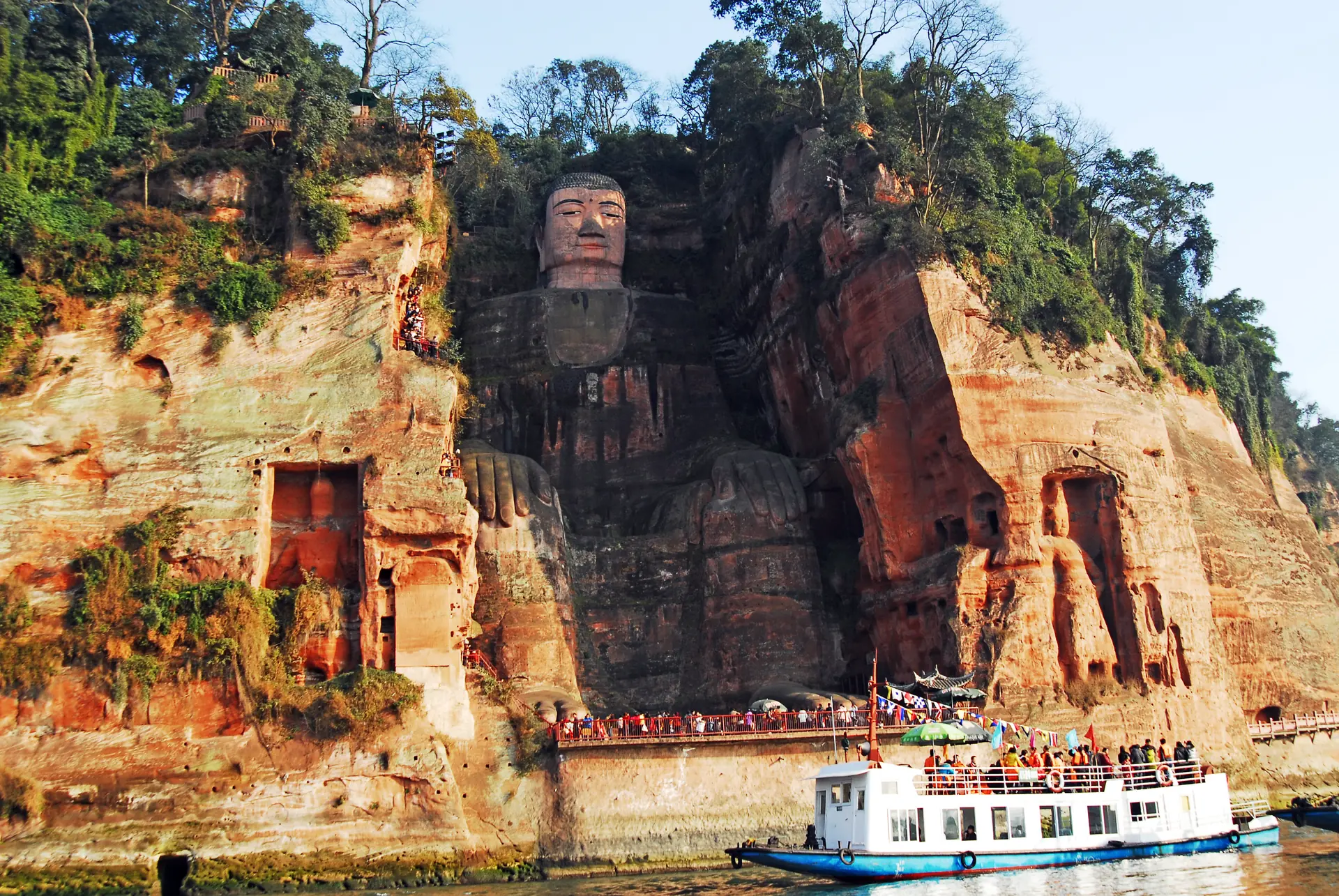
The boat view is strongest after you have already stood near the statue. From the water, the Buddha's body finally fits into one frame, and the three-river setting becomes easier to understand.
Official ticket information lists daytime boat service at RMB 70, with departures either rolling when full or roughly every 30 minutes. The official ticket page names Wuyou Temple Pier (乌尤寺码头) for the daytime route, while the latest pier notice available during this update says Jiazhoudu Pier (嘉州渡码头) and the river-crossing project are suspended until further notice, with daytime boats using Wuyouba Pier (乌尤坝码头) and an 08:00-17:00 rolling window. Treat this as the Wuyou-side riverside pier area and confirm the current boarding point before you leave the scenic area. Passport holders using some online channels may need to exchange for a paper ticket at the window before boarding, so keep extra time if you are not using a Chinese ID.
Boat Window Rule
Add the boat only if you can still reach lunch and Leshan Station comfortably afterward. If you have already left for Zhanggongqiao, rain is heavy, or the pier process looks unclear, skip the boat and finish the day cleanly.
Returning to Chengdu
Aim for an afternoon train rather than testing the last-train window. A 15:30-17:30 departure from Leshan Station usually keeps the day comfortable; later trains are useful when you deliberately choose the full food-and-boat version.
- Use it when
- Standard day, no boat or quick boat
- Route note
- Least stressful for most Chengdu-based travelers
- Use it when
- Full route with boat before lunch
- Route note
- Keep taxi time to the station in mind
- Use it when
- Staying for dinner in Leshan
- Route note
- Works, but turns the day into a long food-focused outing
Tickets and Budget
The route has one fixed paid sight, one optional boat ticket, and a flexible food budget. Train prices vary by route, time, and seat type, so treat the transport line below as a planning estimate and check your date on 12306 or Trip.com.
Official daytime opening windows:
Best fit for the early-train version; heat and holiday queues are the main issue.
Shorter day and more fog risk; keep the boat flexible.
Check the Boat Pier Before You Go
Seasonal ticket windows are useful for planning, but boat routes are sensitive to water level and pier operations. The latest official notice available during this update routes daytime boats through Wuyouba Pier (乌尤坝码头) while Jiazhoudu Pier (嘉州渡码头) is suspended, so confirm the current boarding point before leaving the scenic area for lunch.
Useful ticket notes for foreign visitors:
- Bring your passport for train travel, scenic-area ticket checks, and any window verification.
- Official ticket information lists the daytime walking ticket at RMB 80 and half-price ticket at RMB 40 for eligible visitors.
- The official boat notice lists RMB 70 per person, with no general discount policy except stated free categories.
- Passport holders who buy some boat tickets online may need to exchange for a paper ticket at the relevant window before boarding.
- For busy weekends and holidays, buy the Chengdu-Leshan train first, then secure the scenic-area ticket for a morning arrival.
Full-day budget estimate:
- Total / person
- RMB 220-320
- What it assumes
- Round-trip train, bus or shared taxi, walking ticket, simple lunch, no boat
- Total / person
- RMB 350-500
- What it assumes
- Round-trip train, taxis, walking ticket, proper lunch, optional boat
- Total / person
- RMB 550-800
- What it assumes
- Later return, more taxis, boat before lunch, full food stop, cafe breaks, extra buffer
Ticket Scope Rule
The daytime walking ticket covers the main scenic area route, but the river boat is separate. The Oriental Buddha Capital (东方佛都) is also separate and should not be added to this one-day route unless it is your specific interest.
Transport Logistics
The transport is simple if you protect three names: Chengdu East or Chengdu South for departure, Leshan Station for arrival, and Leshan Giant Buddha North Gate for the scenic area. Most mistakes happen when travelers choose the wrong Leshan station or spend too long comparing bus options after arrival.
The distance is manageable, but stairs and queues make it feel heavier than a flat city walk.
Most steps come from the mountain route, plank path, climb-out, and food-street wandering.
Use taxis for station-to-gate and food-to-station moves; save your legs for the scenic area.
A long plank-path wait can quietly consume the boat, lunch, or return buffer.
- Method
- High-speed train
- Distance / time
- ~50-60 min
- Notes
- Chengdu East and Chengdu South are the usual departure stations
- Method
- Taxi / Didi
- Distance / time
- ~20 min
- Notes
- Most efficient for the early queue window
- Method
- Walk
- Distance / time
- ~15-25 min
- Notes
- Follow scenic-area signs and staff routing
- Method
- Plank path
- Distance / time
- 20-30 min plus queue
- Notes
- Queue time is the real variable
- Method
- Stairs / scenic path
- Distance / time
- ~20-40 min
- Notes
- Slow down after the descent
- Method
- Walk / pier transfer
- Distance / time
- variable
- Notes
- Do this before lunch if you want the boat
- Method
- Taxi / Didi
- Distance / time
- ~15-25 min
- Notes
- Best lunch transfer if you want the full food stop
- Method
- Taxi / Didi
- Distance / time
- ~20-30 min
- Notes
- Build in extra time on weekends
Avoid the Wrong Shuttle
At Leshan Station, be cautious with "scenic area direct shuttle" or package-style signs if they route you through Oriental Buddha Capital (东方佛都), a separate paid attraction. For this itinerary, a regular taxi, Didi, Bus K1, or Bus 13 is cleaner.
Show one of these to a taxi or Didi driver if needed:
Scenic area start / show driver
请带我去乐山大佛景区北门。
Please take me to the North Gate of the Leshan Giant Buddha Scenic Area.
Use this from Leshan Station in the morning.
Food stop / show driver
请带我去张公桥美食街。
Please take me to Zhanggongqiao Food Street.
Useful after the scenic area if you want the classic Leshan lunch stop.
Buy Return Flexibility
If your ticket platform allows easy changes, choose a return train with a little slack instead of a knife-edge departure. Leshan days often run late because of the plank path, lunch queues, or boat operations.
Backup and Lower-Walking Versions
Use this section when the day changes shape. The goal is still a satisfying Leshan day, not proving you can force the original plan after the conditions have changed.
If Queues, Rain, or Mobility Change the Plan
ALong Plank-Path Queue
Visit the Buddha head area and Lingyun Temple, then switch to the river boat if it is operating, followed by lunch and return.
BHeavy Rain
Avoid rushing down wet steps. Keep the head-level route, take the boat only if service is operating safely, then use a longer lunch.
CTired Legs
Cut Mahao Cliff Tombs first, then Wuyou Temple, then the plank path if needed. Keep the Buddha context and food stop.
Lower-Walking Version
For families, older travelers, or anyone with knee concerns, the lower-walking version keeps the idea of Leshan without forcing the steepest part of the mountain route. Expect roughly 3-5 km / 6,000-10,000 steps, depending on gate routing and food choices.
✓Keep
Keep the train from Chengdu, Buddha head area, Lingyun Temple, the river boat if operating, and a proper Leshan lunch afterward.
×Cut First
Cut Mahao Cliff Tombs, the full Wuyou Temple loop, and any extra shopping or snack wandering around lunch.
BUse Boat For
Use the boat as the full-body Buddha view when the plank path is not a good physical match; do it before the lunch transfer if possible.
TUse Taxis For
Use taxis between station, gate, Wuyou-side pier, lunch, and return train instead of saving a few RMB on bus transfers.
Best Season and Timing
Best months: March-May and October-November. These periods usually give more comfortable walking temperatures, better light, and less exhausting humidity than midsummer.
Hardest periods: Labor Day holiday, National Day Golden Week (October 1-7), summer school holidays, rainy spells from June through September, and any weekend with a clear weather forecast after several wet days.
SSpring
Comfortable temperatures and greener river scenery. Avoid Qingming and Labor Day holiday surges.
HSummer
Start early, bring sun protection, and expect both heat and sudden rain. The plank path can feel much slower.
AAutumn
The best overall season for a Chengdu-based day trip, with easier walking and clearer photos when weather cooperates.
Winter can still work, especially for travelers who dislike crowds. The trade-off is damp cold, fog, shorter daylight, and less reliable river visibility.
What to Wear and Carry
- Flat non-slip shoes: the plank path is narrow, damp, and stair-heavy.
- Compact rain layer: Leshan weather can turn quickly, especially in warm months.
- Small bag only: large bags make the descent awkward and tiring.
- Passport: needed for trains, ticket verification, and any ticket-window issue.
- Water and a small snack: useful if the plank-path queue stalls before lunch.
Frequently Asked Questions
Yes. The walking route is the core experience because it shows the statue from head level, beside the cliff, and from the foot platform. The boat is best as an add-on for the full-body view from the river.
Sources checked for this guide
- Jiazhoudu Pier suspension, current Wuyouba Pier daytime boat boarding, RMB 70 boat fare, and official mini-program booking channels: Leshan Giant Buddha Scenic Area official pier & boat notice
- Standard RMB 80 daytime scenic-area walking admission benchmark: China National Radio report on Leshan Giant Buddha ticket pricing
- World Heritage inscription context and 71-meter cliff-carved Maitreya Buddha dimensions: UNESCO World Heritage Centre — Mount Emei and Leshan Giant Buddha
- Date-specific high-speed rail schedules and passport ticketing between Chengdu East/South and Leshan Station: China Railway 12306
Beyond This Guide
This route gives you the strongest independent Leshan day from Chengdu, but the best version depends on your train time, walking comfort, weather, plank-path queue, and food priorities.
Next steps for planning:
- Chengdu 1-Day: Pandas, Teahouses & Sichuan Food for a city day before or after Leshan.
- Chengdu travel guide for more Sichuan planning context.
- China high-speed rail guide for train booking, station timing, and boarding basics.
- Shunan Bamboo Sea (Yibin) Guide — plan an overnight southern Sichuan detour (about 1 hour by high-speed rail to Yibin plus a 1.5–2 hour road transfer each way)
- Zigong Dinosaur Museum Guide — detour to southern Sichuan's world-famous Jurassic fossil quarry site
© gochinafreely.com — Original guide by Go China Freely.