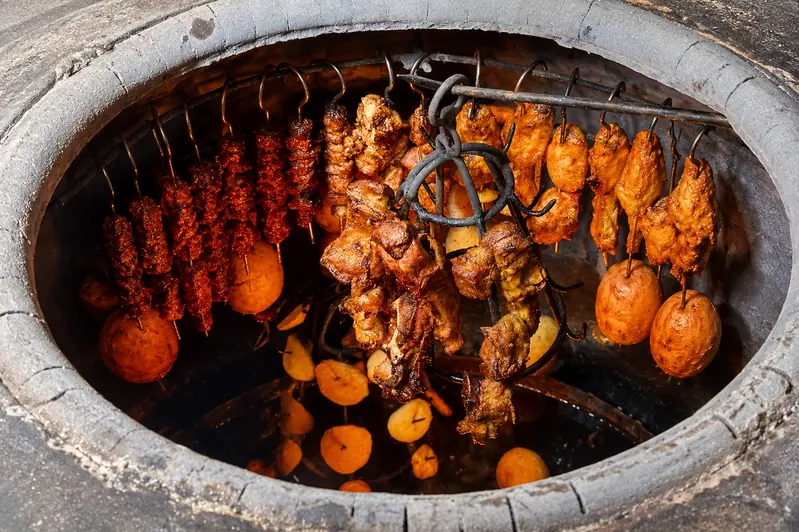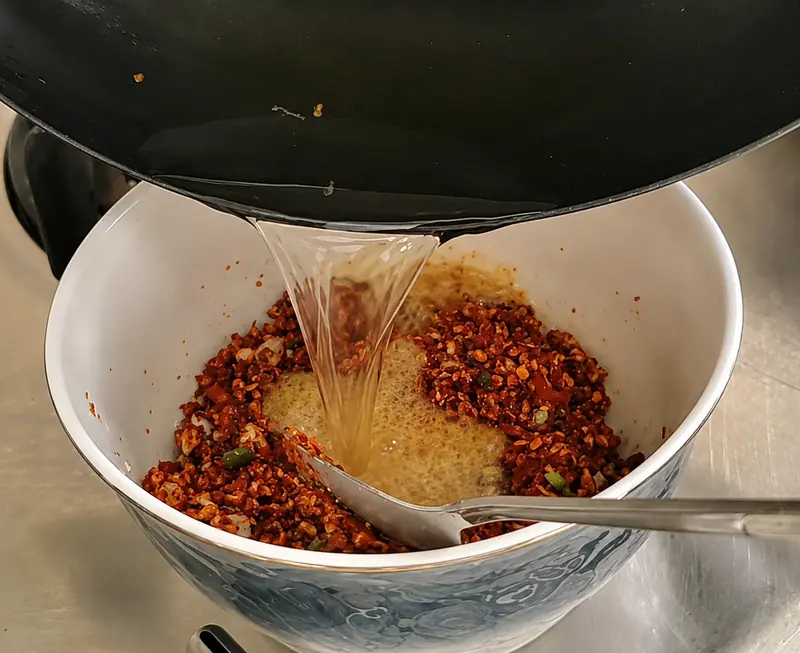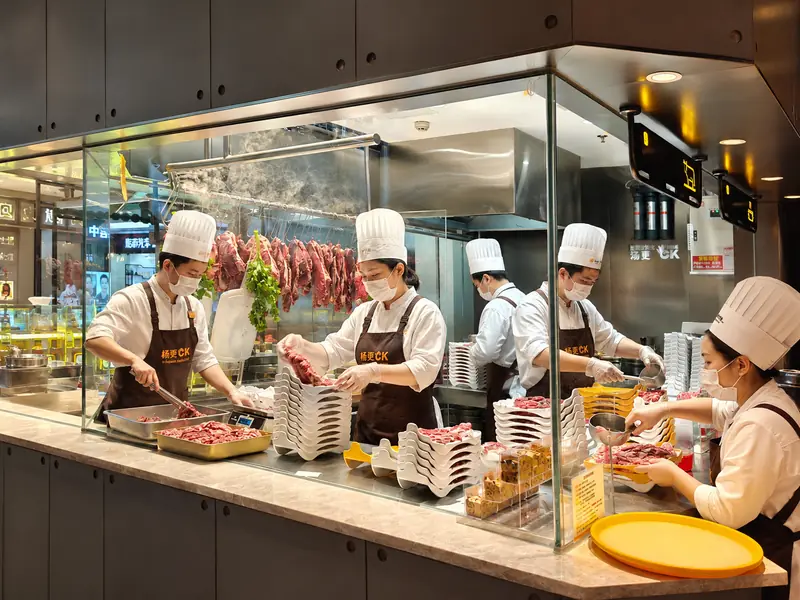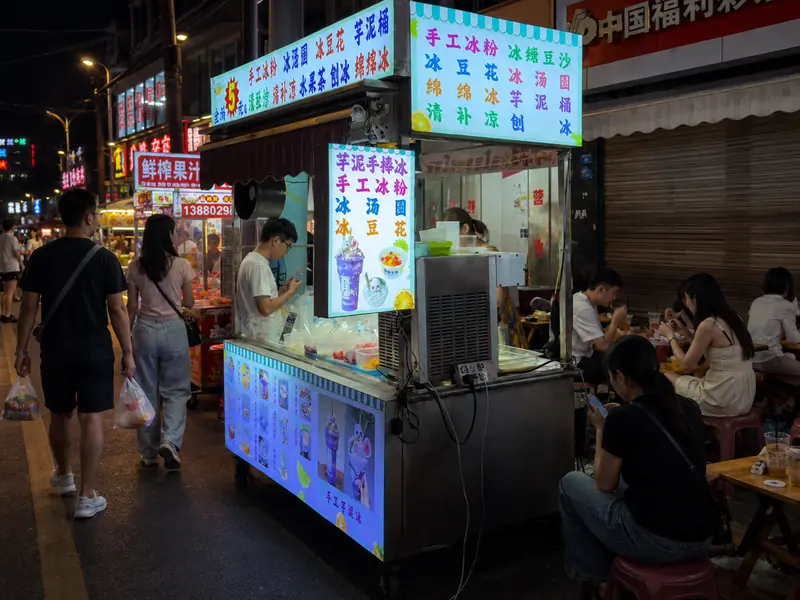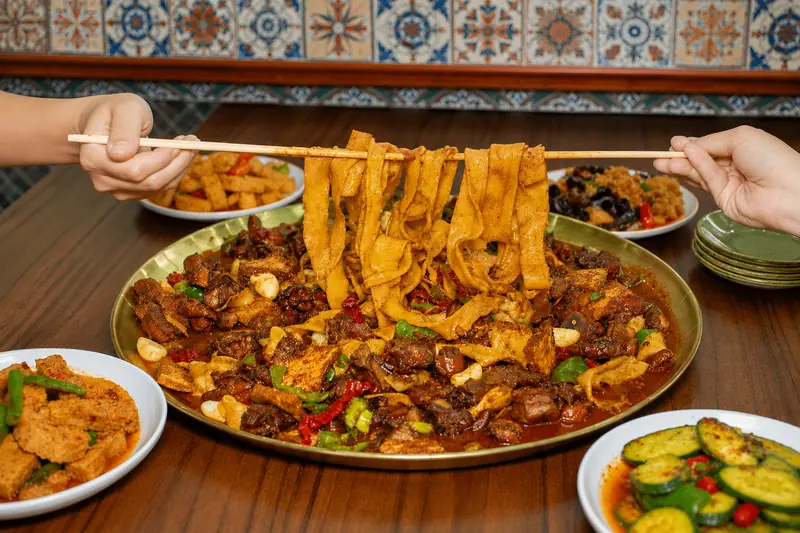
Xinjiang Dapanji (大盘鸡), or big plate chicken, is not a delicate small dish. It is a table-filling plate of chicken, potatoes, peppers, and sauce, finished with wide wheat noodles that soak up everything left behind. For travelers, the point is not just flavor; it is the Silk Road road-meal feeling of sitting down after a long ride and letting one huge plate feed the whole group.
Shawan Roadside Origins of Big Plate Chicken
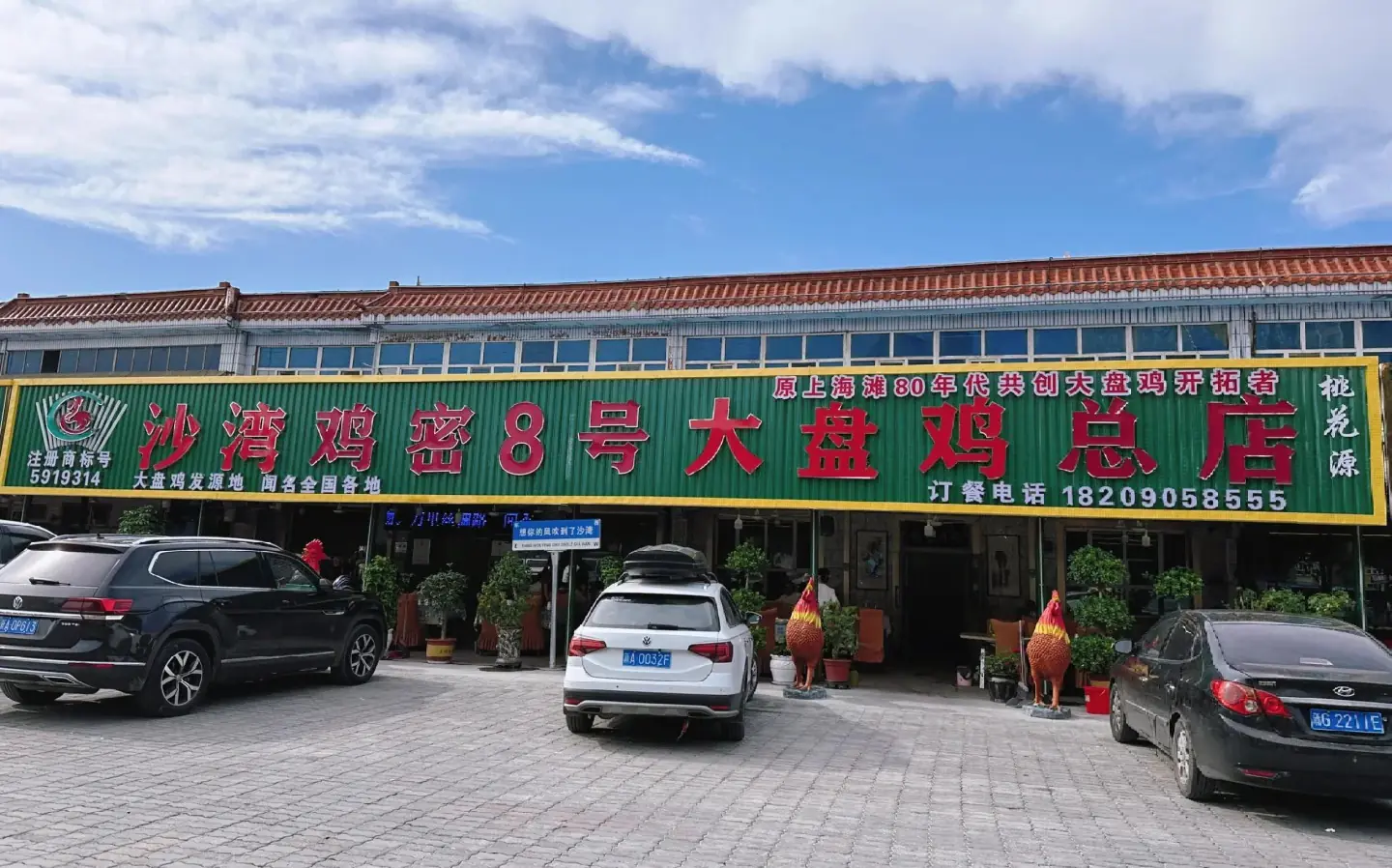
The best-known Dapanji story begins in Shawan (沙湾), a city in northern Xinjiang along the old highway corridor between Urumqi and the Ili / northern Xinjiang routes. A Tianshannet / Xinjiang Daily feature calls Shawan China's "home of big-plate cuisine," while a 2025 Xinhua / Banyuetan report republished by Sina gives the story a more personal edge.
The Shawan story
- 1
Roadside birth story
1980sShawan sources describe chili-fried chicken served in large enamel plates along the highway corridor.
- 2
Driver food on G312
1980s onwardLater reporting connects first-generation cooks such as Li Shilin (李士林) with long-distance drivers stopping on National Highway 312.
- 3
Dapanji street
TodayThe Shawan route-stop identity survives in a dedicated big plate chicken street and local restaurants.
- 4
Heritage status
2024Reporting says Shawan big plate chicken cooking was listed as a Xinjiang regional intangible cultural heritage representative item.
Treat this as the strongest local origin story, not the only story ever told. Some accounts point to Chaiwopu Lake near Urumqi or other early Xinjiang restaurants. The safe traveler version is simple: Dapanji is a modern Xinjiang roadside classic, widely traced to Shawan, that spread through highway restaurants before becoming a national Xinjiang-restaurant staple.
What Big Plate Chicken Tastes Like
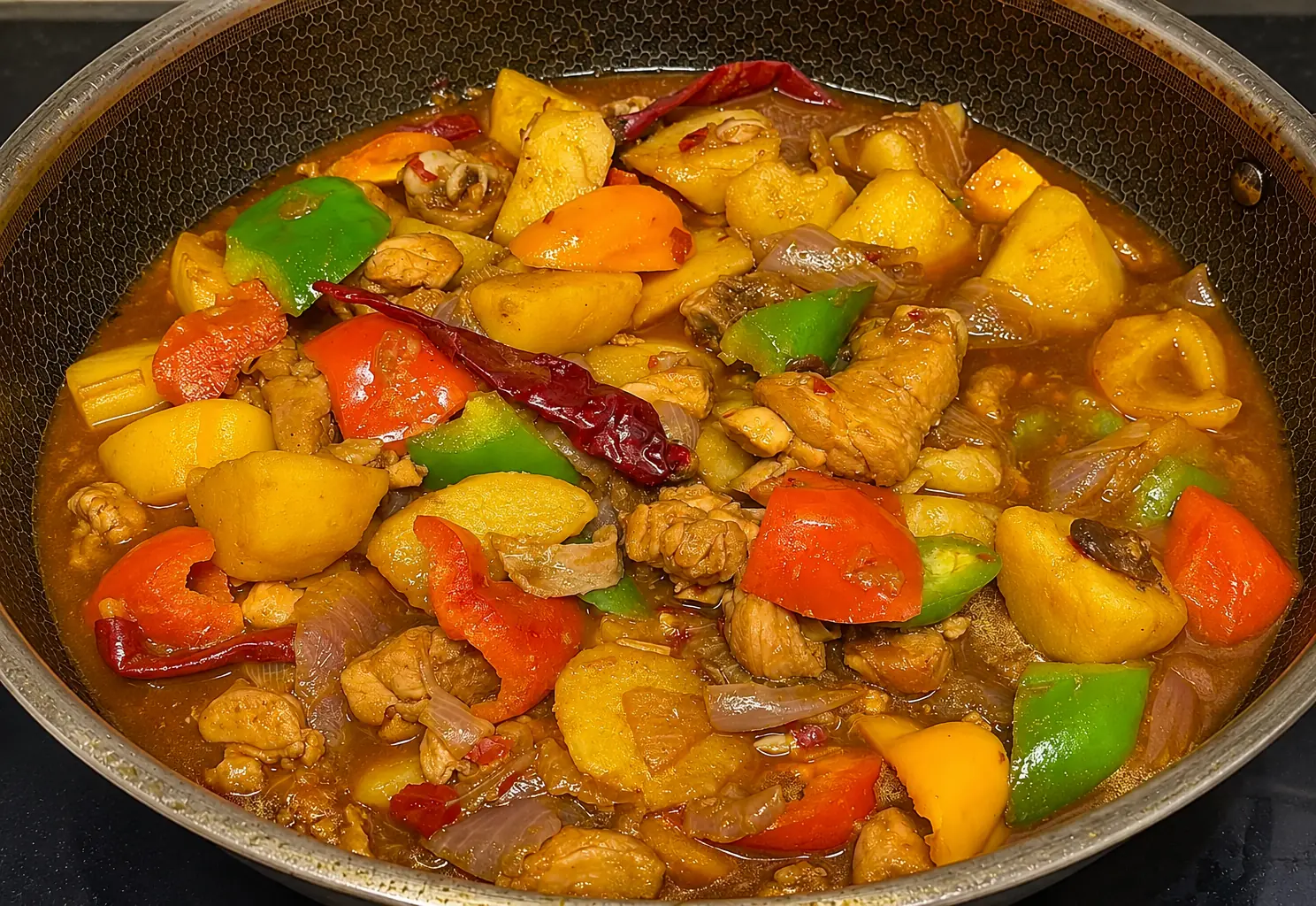
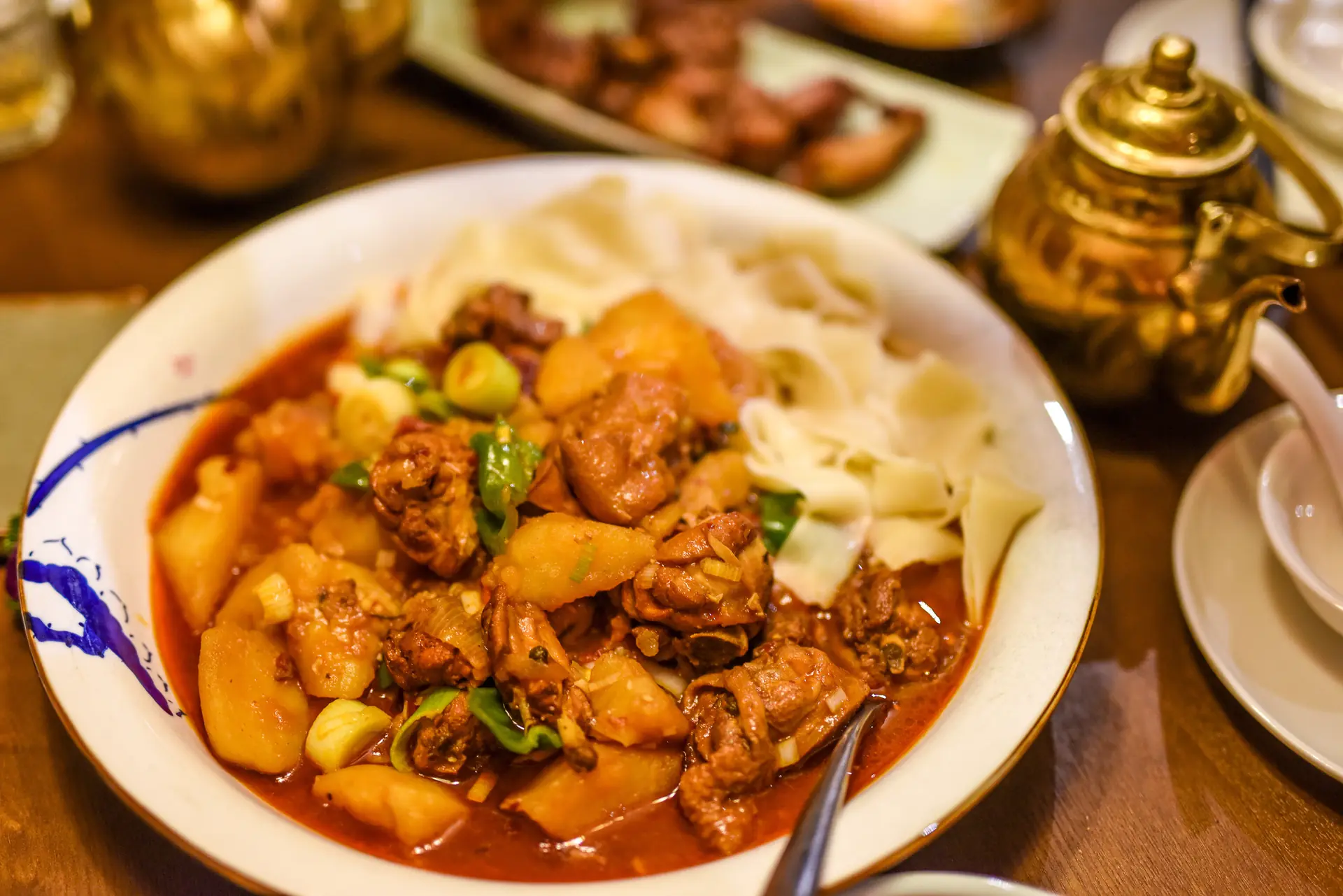
Good Dapanji is built around four things: bone-in or chopped chicken, soft potatoes, peppers, and a glossy red-brown sauce. It should taste savory, warm, slightly spicy, and deeply saucy rather than dry-fried.
The potatoes matter almost as much as the chicken because they thicken the sauce and carry the spice.
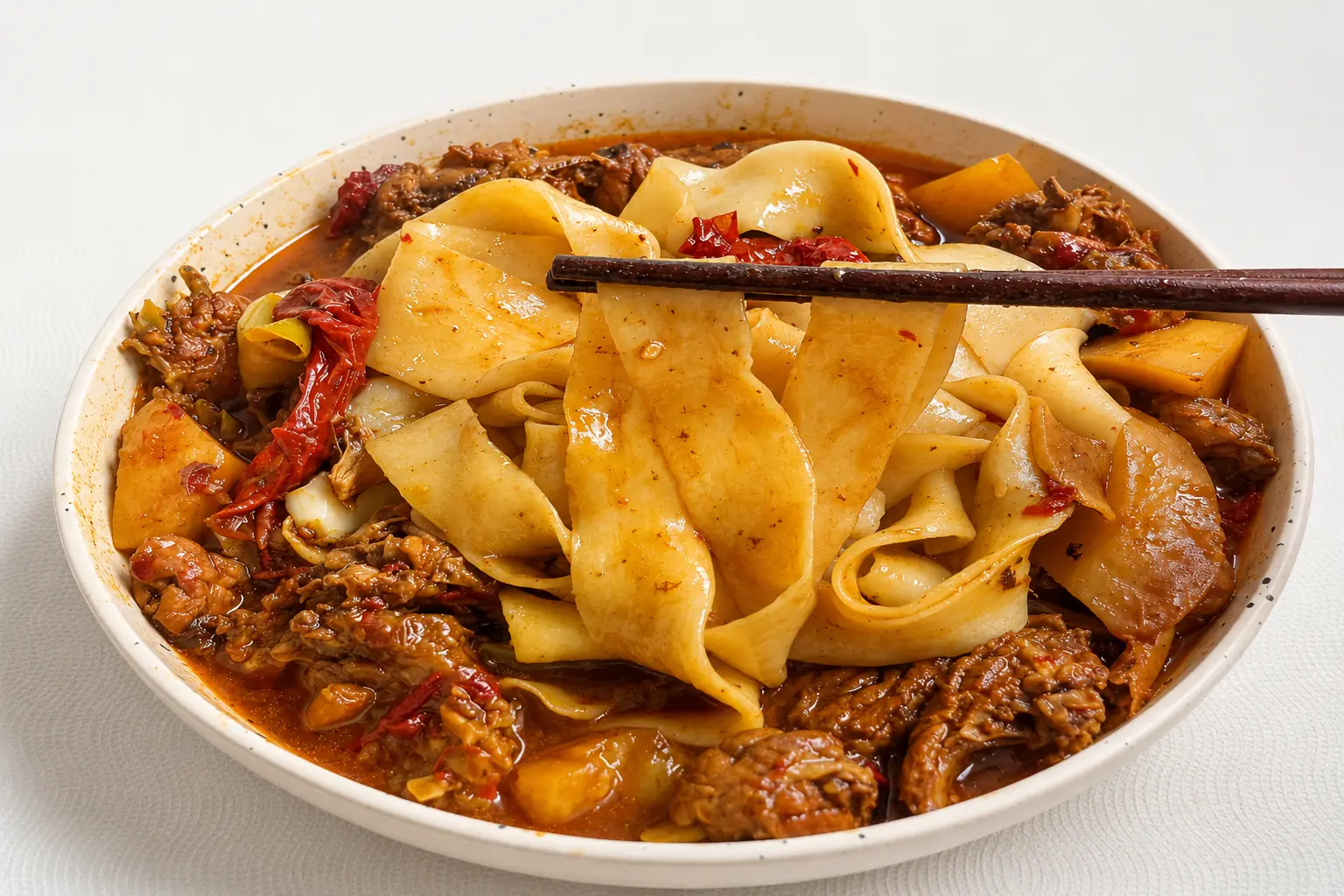
Then come the noodles. Wide hand-pulled wheat noodles, often described as belt noodles (皮带面), are added near the end or served on the side.
When they hit the sauce, the meal changes from stew into full Xinjiang comfort food.
- Chicken pieces: usually chopped, often bone-in, cooked in the sauce.
- Soft potatoes: not garnish; they absorb chili oil and gravy.
- Pepper aroma: chili warmth should lift the dish, not erase the chicken.
- Belt noodles: the best finish is noodles dragged through the remaining sauce.
- Large portion: a full plate is group food, not a solo bowl.
Dapanji Is Not Just Uyghur Food
Use a careful label: This is where many English menus and travel posts get too simple. A China Daily Xinjiang dining page notes that Xinjiang Dapanji is often considered a Uyghur dish, but says it is better understood within Hui cuisine.
Modern, mixed, and roadside: Other food writers also describe it as a modern, cross-regional Xinjiang halal-restaurant dish shaped by Han, Hui, and local Xinjiang food habits. Uyghur kebabs, pilaf, naan, and hand-pulled noodles have deeper traditional roots; Dapanji feels newer: a highway dish, a sharing plate, and a halal-friendly restaurant hit.
Traveler takeaway: The safest label is modern Xinjiang roadside classic. It is part of the Xinjiang food experience now, but calling it an ancient traditional Uyghur dish flattens the story.
Use the right label
Describe Dapanji as a modern Xinjiang roadside classic or halal-restaurant favorite. Avoid calling it an ancient traditional Uyghur dish unless a specific restaurant or source frames its own version that way.
How to Order Xinjiang Big Plate Chicken
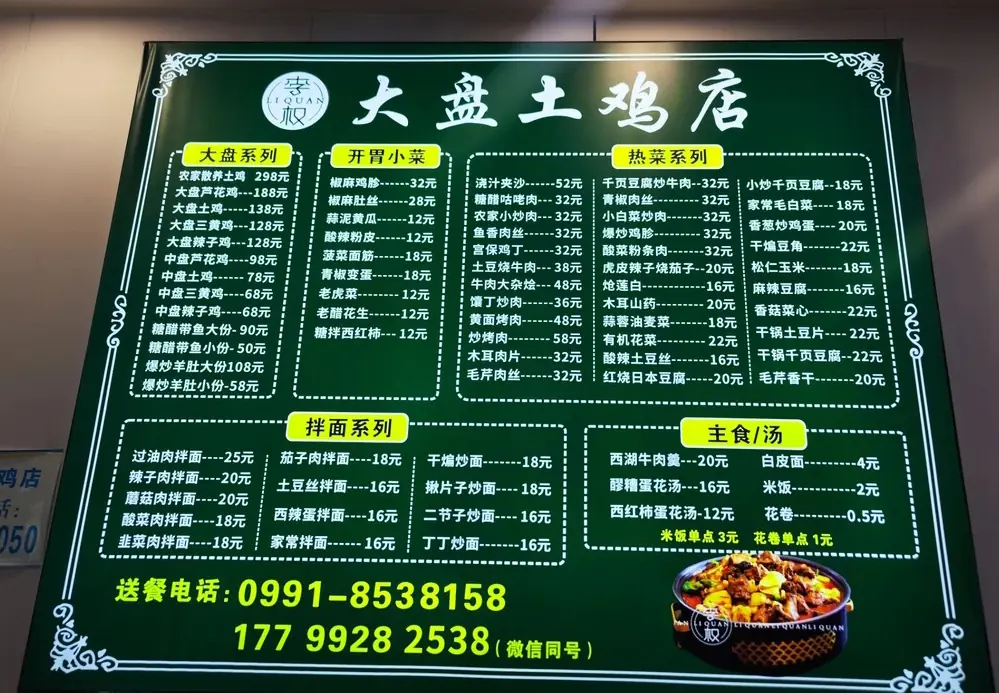
The first question is size. The China Daily Xinjiang page says Dapanji can often be ordered as a half plate or full plate, and that an average full plate feeds three to four people. In real travel terms, two people should ask for a half plate or small plate first.
The second question is heat. Dapanji is usually spicier than pilaf or naan, but it should not feel like Sichuan hotpot. If you are spice-sensitive, ask for less chili before the order goes in.
| English | Chinese | Pinyin | Say It Like… |
|---|---|---|---|
| Big plate chicken / Dapanji | 大盘鸡 | dà pán jī | dah pahn jee |
| Can we have a half portion? | 要半份,可以吗? | yào bàn fèn, kě yǐ ma? | yaow bahn fun, kuh-yee mah |
| Less spicy, please. | 少辣。 | shǎo là | shaow lah |
| Add one portion of belt noodles. | 加一份皮带面。 | jiā yí fèn pí dài miàn | jyah ee fun pee-dye myen |
| No chicken head or chicken feet, please. | 不要鸡头和鸡爪。 | bù yào jī tóu hé jī zhuǎ | boo yaow jee toe huh jee jwah |
| Is this restaurant halal? | 这里是清真的吗? | zhè lǐ shì qīng zhēn de ma? | juh lee shir ching-juhn duh mah |
Do not forget the noodles
If the server does not bring noodles automatically, ask for belt noodles near the end. The last third of the sauce is where Dapanji becomes memorable.
Where to Eat Xinjiang Big Plate Chicken
Shawan Route Stop
If your route passes through Shawan between Urumqi, Kuytun, Ili, Sayram Lake, or northern Xinjiang, that is the most story-rich place to eat Dapanji. Go around lunch or dinner, choose a busy local shop, and do not over-order. Shawan is worth a food stop when it fits the route; it is rarely worth a long detour for one dish alone.
Xinjiang International Grand Bazaar Area (Google | Amap)
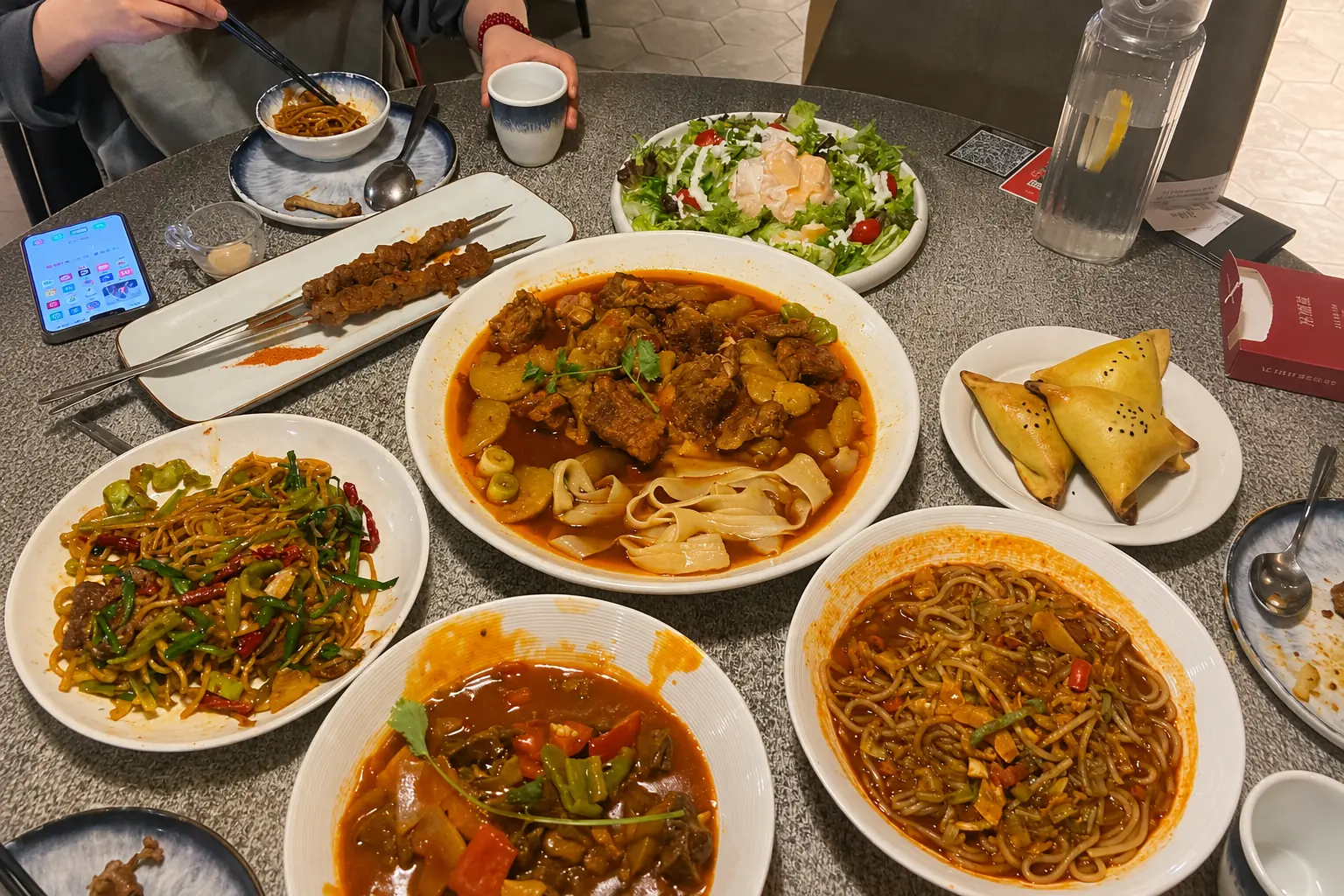
In Urumqi, the easiest first-timer base is a clear Xinjiang or halal restaurant rather than a random tourist menu. The Xinjiang International Grand Bazaar (新疆国际大巴扎) area is useful for orientation, but the best Dapanji may be in ordinary city restaurants where locals are eating full meals.
Outside Xinjiang
Outside Xinjiang, you can find Dapanji in Xinjiang restaurants across China. Expect changes: some versions are sweeter, some are more Sichuan-like, some use softer noodles, and some skip the final noodle rhythm that makes the dish work.
What to Pair With Big Plate Chicken
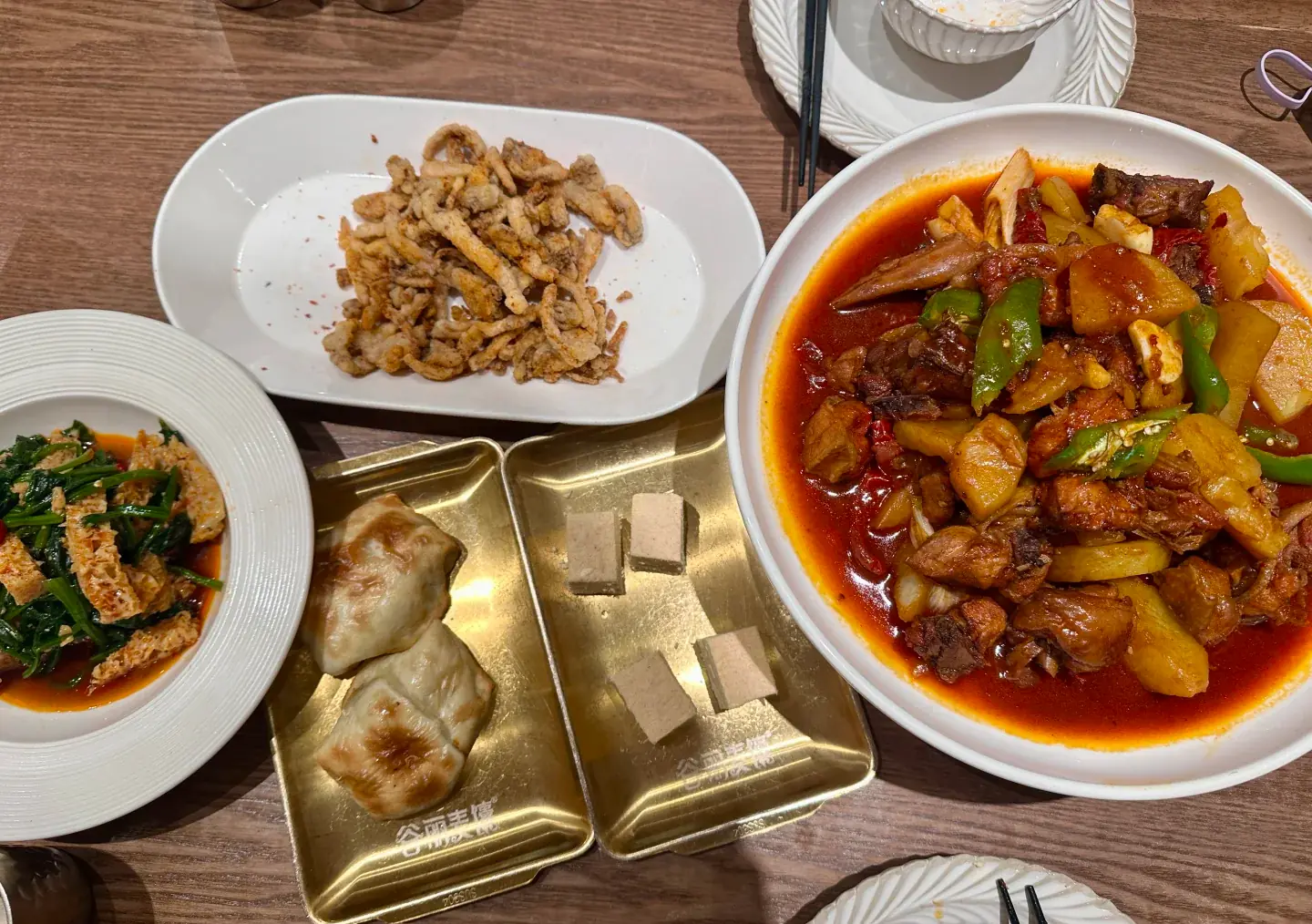
Dapanji is the main event. For two people, order half a plate, belt noodles, and one cooling side such as cucumber salad, yogurt, or a simple vegetable. For three or four people, add naan, kebabs, or another side only after you know the plate size.
The best eating sequence is practical: start with chicken and potatoes while they are hot, keep enough sauce in the plate, then add noodles. If the noodles arrive too early, they soften; if they arrive too late, the sauce may be gone.
Do not build the whole meal out of heavy dishes. Dapanji plus pilaf plus noodles plus kebabs plus naan can sound exciting on paper and feel like a mistake after 20 minutes.
Halal, Gluten, and Allergy Notes for Dapanji
- Halal in Xinjiang: in clearly marked halal (清真) restaurants, Dapanji is usually made with halal chicken and no pork.
- Do not assume outside halal restaurants: in other Chinese cities or mixed-menu restaurants, check the sign, menu, and staff answer before sitting down.
- Gluten risk: belt noodles are wheat, and the sauce may include soy sauce or other wheat-containing seasonings.
- Not vegetarian or vegan: the standard dish is chicken, and it is not suitable for travelers avoiding poultry.
- Allergy variables: watch for chili, peppers, tomato or tomato paste, onion, garlic, scallion, spices, shared cookware, and possible cross-contact with nuts or other dishes in the same kitchen.
Gluten-free travelers should not rely on skipping noodles
Even if you skip the belt noodles, the sauce may include soy sauce or wheat-based seasonings, and the wok may be shared. Ask directly before ordering.
Dapanji Mistakes Xinjiang Travelers Should Avoid

Dapanji is group food. It works best when you can sit, share, and eat in stages instead of treating it like a rushed pre-train meal.
- Ordering a full plate alone: if you are solo, ask whether there is a true small portion; otherwise choose pilaf, pulled noodles, or kebabs instead.
- Forgetting the noodles: chicken and potatoes are only half the story. Belt noodles are how the sauce gets finished.
- Treating it as a 30-minute meal: Dapanji is better when you can sit and share. If time is tight, order noodles or pilaf.
- Judging it by one outside-Xinjiang version: a plate with no belt noodles, no potato depth, and a sweet generic sauce is not the Shawan-style experience travelers usually want.
Dapanji Questions Travelers Ask Before Ordering
Usually medium spicy, but restaurants vary. It is more chili-warm and saucy than numbing like Sichuan food. Ask for less spicy if you are sensitive.
Beyond This Guide
Dapanji makes most sense when it fits your Xinjiang route: Shawan on a road day, Urumqi for an easy first meal, or a local Xinjiang restaurant when you have enough people to share. Build it around appetite, halal needs, and timing, not just the dish name.
Explore more Xinjiang food planning:
- Xinjiang Food Guide
- Grand Bazaar Dinner Show in Urumqi
- Xinjiang Museum Urumqi Guide
- Essential Chinese Phrases for Travelers
© gochinafreely.com — Original guide by Go China Freely.