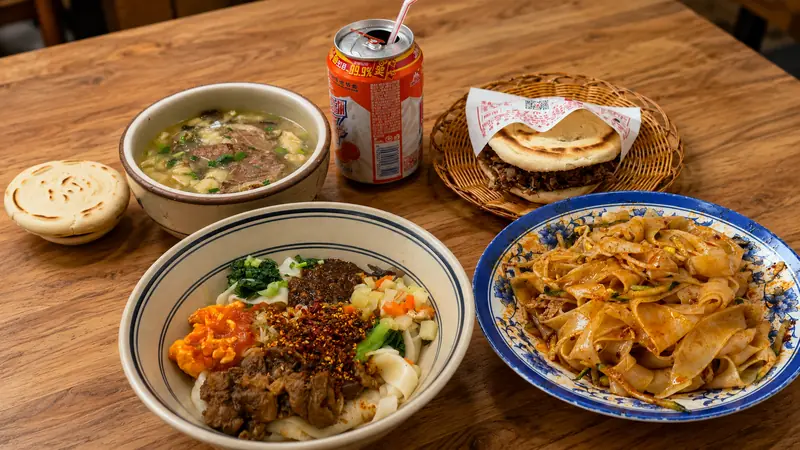
Biangbiang noodles (𰻝𰻝面 / 油泼扯面) first catch many travelers with the character: a dense little maze that looks impossible to write. But the real reason this dish belongs to Xi'an is simpler and louder: one belt-wide hand-pulled noodle, chili, garlic, vinegar, and smoking-hot oil. You do not need to memorize the character; you need to know what to order, where to go, and how to judge the chew.
A Belt-Wide Noodle from Xi'an's Wheat Belt
Biangbiang noodles are not delicate southern dumplings or fine soup noodles. They come from Shaanxi's wheat country: rested dough is stretched, slapped, pulled wide, and dropped into boiling water as one or several broad ribbons. The dish is often nicknamed belt noodles (裤带面), because the strips can be as wide as a belt, and it often appears as oil-splashed pulled noodles (油泼扯面), because the finishing oil is where the aroma erupts.
Xi'an has many noodle styles, but this one gives foreign travelers the clearest first hit of the city's table: wheat fragrance, serious chew, chili aroma, raw garlic, vinegar, and a heavy, satisfying bowl. It is not a dish built around broth. It is built around texture and the moment hot oil wakes up the toppings.
That is why it works so well as your first Xi'an noodle. You may see the cook pull the dough, hear it slap the counter, and smell the chili oil before you even mix the bowl. It leaves a stronger memory than a menu translation ever could.
The Complex Character Is a Sign, Not the Whole Story
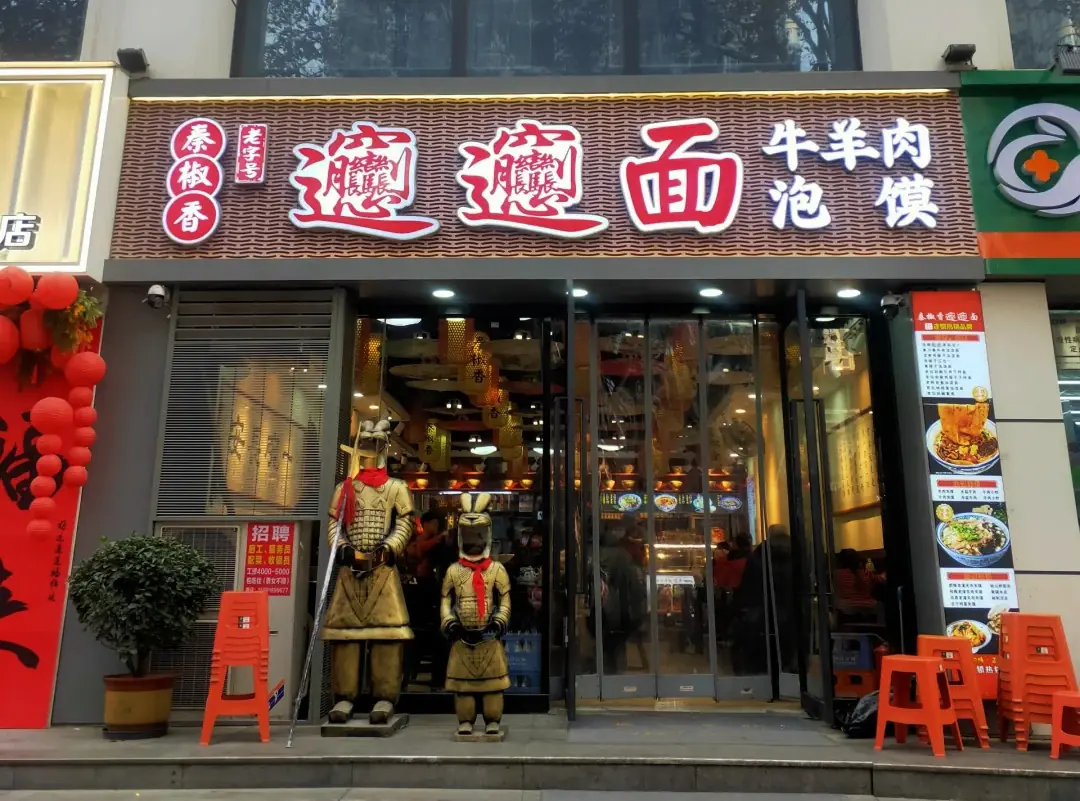
Many travelers discover the dish through the famous biang character. The character has multiple folk versions, and sources often describe the traditional form as having more than 50 strokes, while simplified forms are shorter. The practical caveat is more useful than the stroke count: 𰻝 and 𰻞 are now encoded in Unicode, but many fonts, menus, receipts, and phone systems still fail to display them cleanly. So in Xi'an you may see 𰻝𰻝面, biangbiang 面, oil-splashed pulled noodles (油泼扯面), belt noodles (裤带面), or simply a photo of a wide noodle.
China Daily describes the name as an onomatopoeic reference to dough being pulled and banged against the table. Unicode references such as Codepoints U+30EDD and U+30EDE also show why the character is a display problem as much as a writing challenge.
For travelers, recognizing the alternate names is more useful than writing the character by hand. The character is a brilliant local sign; the noodle in the bowl is what you came to eat.
Do not chase the character more than the noodle
A beautiful biang sign does not prove the bowl is good. Watch for steady local traffic, quick noodle turnover, and noodles that look pulled or cooked to order.
What a Good Bowl Tastes Like
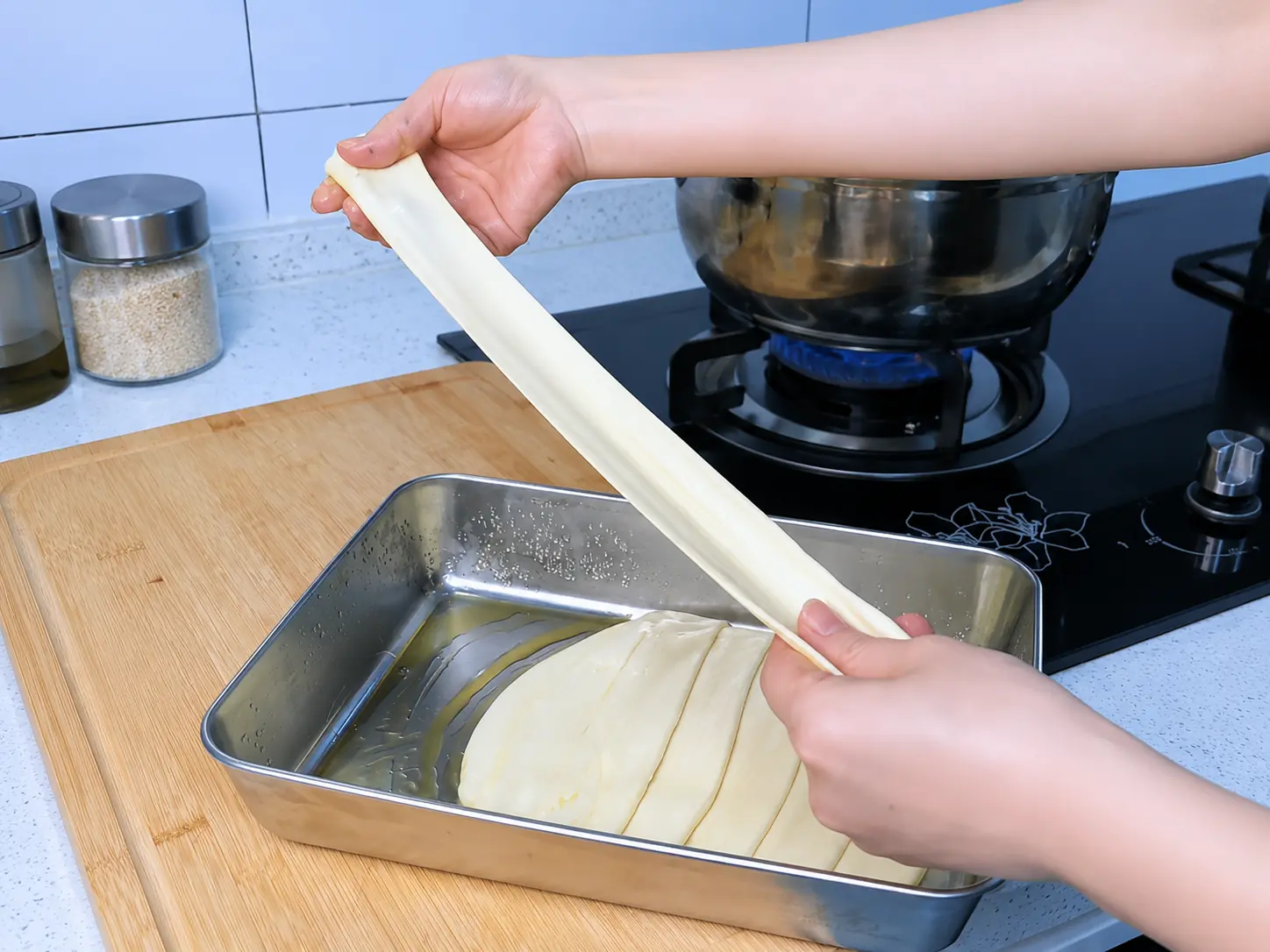
A good bowl starts with chew. The noodle should not collapse like overcooked pasta, and it should not feel undercooked in the center. It should pull back slightly when you bite, then release wheat fragrance as you chew.
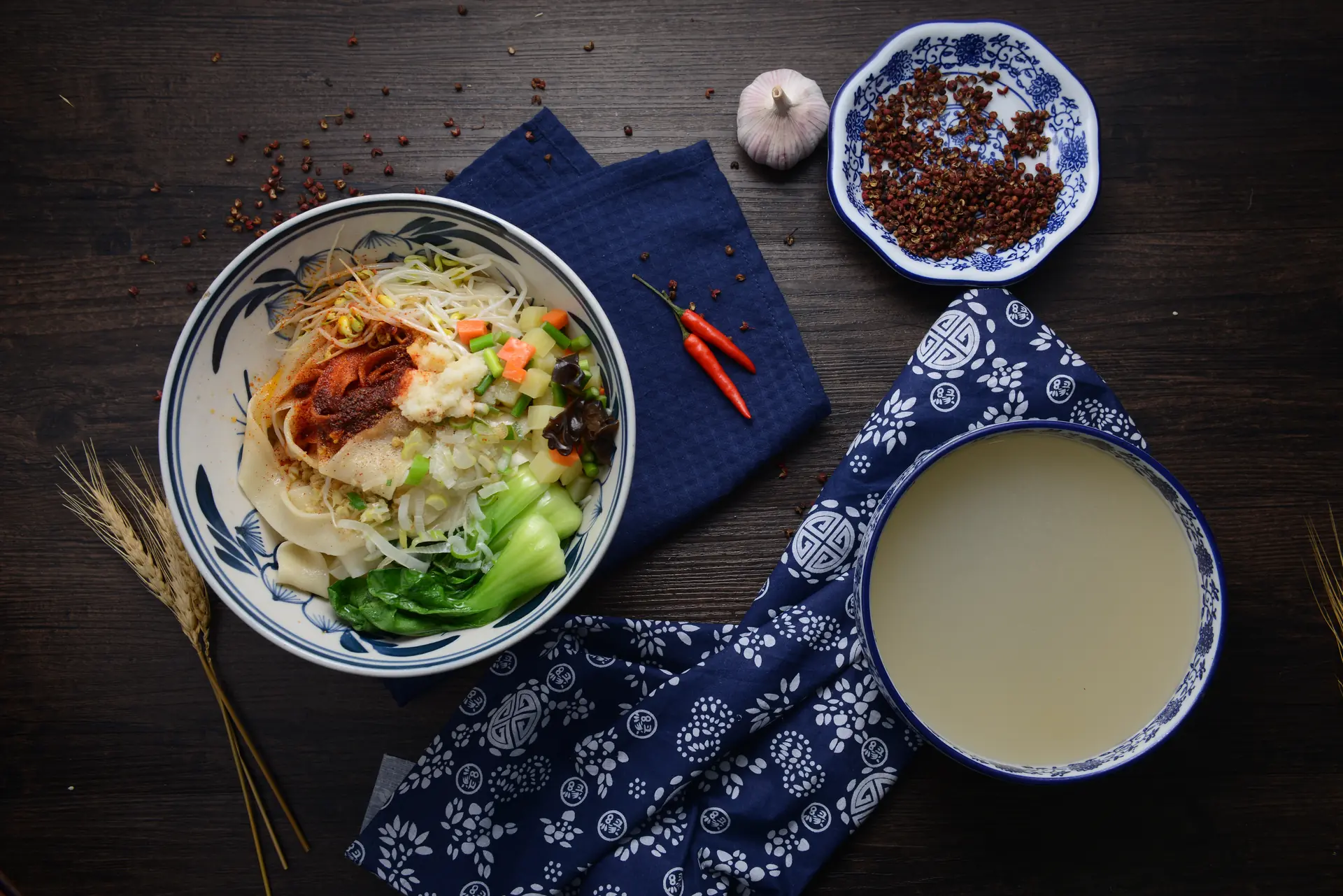
Toppings vary by shop. Some bowls stay close to oil, chili, garlic, and vinegar. Others add tomato and egg, minced-meat sauce, fried bean sauce, vegetables, or a "three-in-one" mixture. Three-in-one is fun for a first-timer who wants maximum flavor, but it can become salty and heavy. If you want to understand the noodle itself, start with the simpler oil-splashed version.

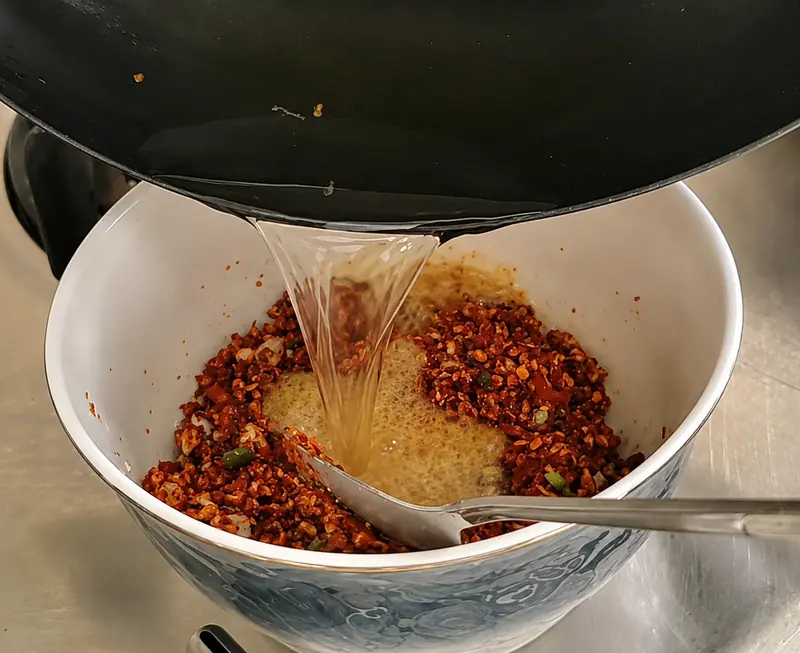
The classic oil-splashed version piles chili flakes, minced garlic, scallion or greens, soy sauce, vinegar, and seasoning over the noodles, then hits them with hot oil. The first few seconds matter: the chili smells toasted, the garlic sharpens, and the oil spreads across the wide noodle surface. Mix while it is hot.
The hot-oil moment is the flavor test. If the bowl smells flat, the oil may not have been hot enough or the chili may have been sitting too long.
Swipe to compare common menu names
Oil-Splashed
油泼扯面
- ✓Chili aroma, garlic, vinegar, and hot oil are the focus.
- ✓Best if you want a clear read on noodle texture.
- —Ask for less chili if heat worries you.
Best first bowl
Belt Noodles
裤带面
- ✓Use this name when the shop emphasizes noodle width.
- —May overlap with oil-splashed pulled noodles on menus.
- ✓Easy to recognize from wall photos.
Width-forward name
Three-in-One
三合一
- ✓Often combines tomato-egg and meat sauces.
- —Good for appetite and variety.
- ✗Less clean if you want to judge the noodle itself.
Heavier mixed bowl
How to Order in Xi'an
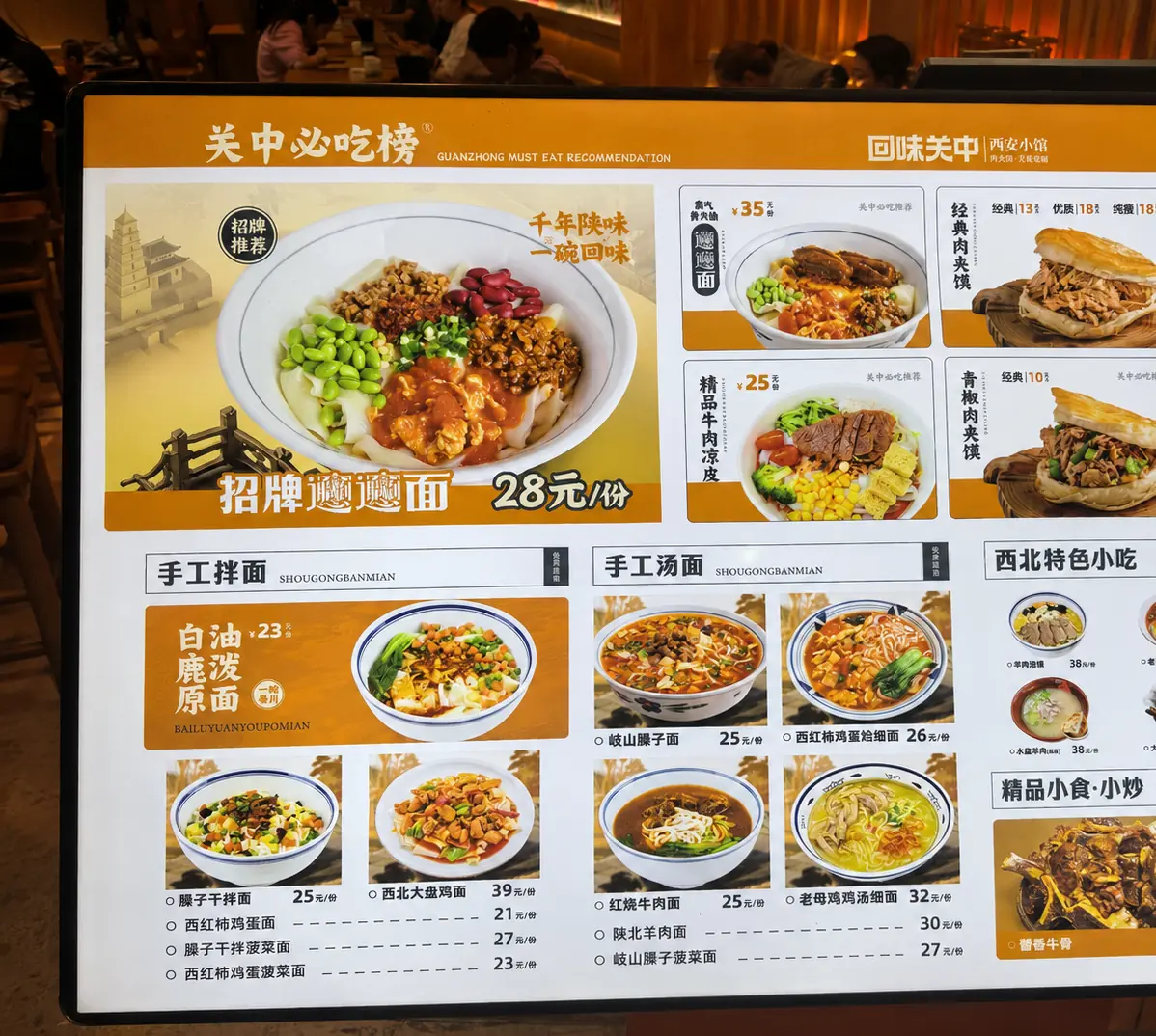
The simplest order is to point at oil-splashed pulled noodles (油泼扯面) or belt noodles (裤带面). If you see three-in-one (三合一) or five-in-one (五合一), treat it as a mixed-topping version rather than a separate noodle category.
If you cannot handle chili, ask for less chili or no chili before the bowl is finished. Less chili is usually better than no chili for a first try, because the roasted chili aroma is part of the dish. No chili is possible in many shops, but the bowl will feel flatter.
Halal travelers should not assume biangbiang noodles are automatically safe. Many ordinary Han-style noodle shops use pork mince, meat sauce, or shared prep surfaces. Vegetarians should also ask about minced meat, animal fat, and meat stock. If your diet is strict, choose a clearly halal or vegetarian-friendly restaurant and confirm the topping before ordering.
| English | Chinese | Pinyin | Say It Like… |
|---|---|---|---|
| Biangbiang noodles | 𰻝𰻝面 / biangbiang 面 | biáng biáng miàn | byahng byahng myen |
| Oil-splashed pulled noodles | 油泼扯面 | yóu pō chě miàn | yoh paw chuh myen |
| Belt noodles | 裤带面 | kù dài miàn | koo dye myen |
| Three-in-one mixed topping | 三合一 | sān hé yī | sahn huh ee |
| Less chili | 少辣 | shǎo là | shaow lah |
| No chili | 不要辣 | bù yào là | boo yow lah |
| No minced meat topping | 不要肉臊 | bù yào ròu sào | boo yow roh sow |
| Do you have a halal option? | 有清真的吗? | yǒu qīng zhēn de ma? | yo ching-juhn duh mah |
Point at the photo, then set your limits
Many Xi'an noodle shops have wall photos even when they do not have English menus. Point first, then say less chili, no minced meat, or halal as needed.
Where to Eat Biangbiang Noodles in Xi'an
Chejiaxiang is not a polished tourist food street. It is more useful as a local noodle zone, with small shops selling oil-splashed noodles, belt noodles, saozi noodles, and other Xi'an wheat staples. For a first visit, choose a busy shop with quick turnover rather than crossing the city for one viral bowl.
Yongxingfang is more organized, more commercial, and easier for first-timers. It gathers Shaanxi snacks in one walkable area, so it works well if you have one day and want biangbiang noodles alongside other regional bites.
Fenxiang and the Nanyuan Gate area sit close to the Bell Tower, Beilin Museum, and Shuyuanmen Cultural Street, so they fit naturally into an old-city walking day. Search for Aihua Belt Noodles (爱骅裤带面), biangbiang noodles, oil-splashed pulled noodles (油泼扯面), or belt noodles (裤带面).
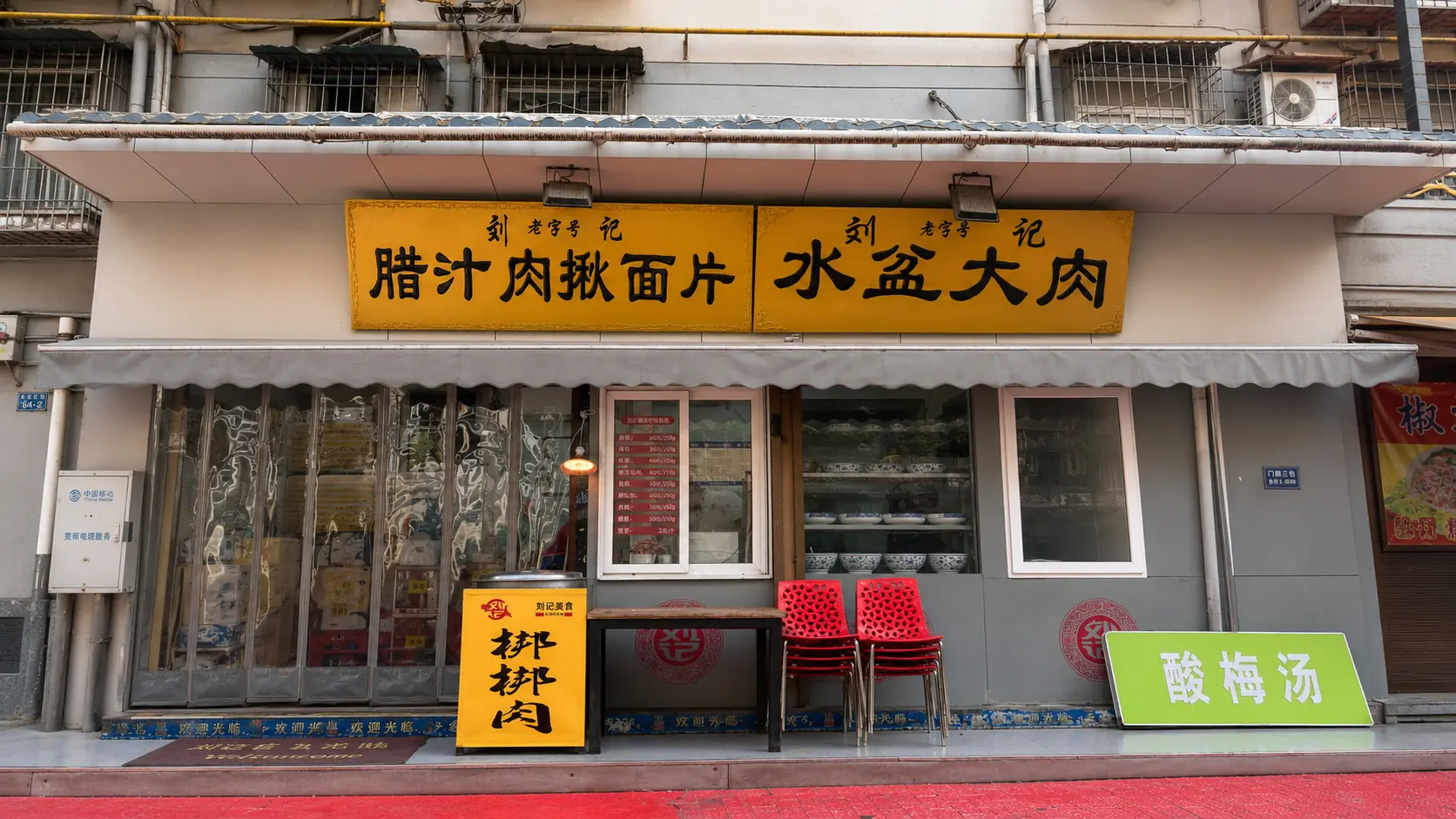
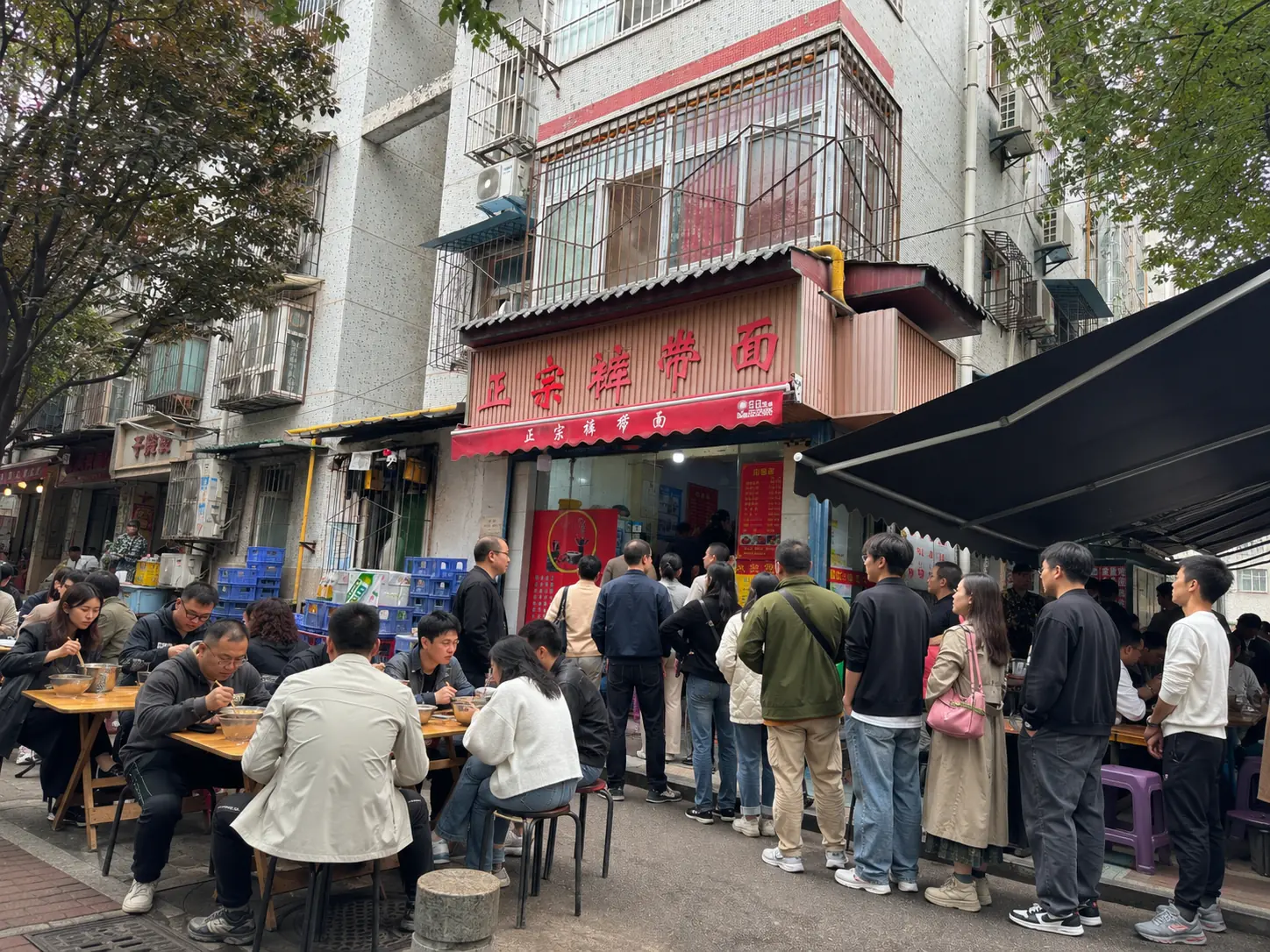
Branches, hours, and queues change, so checking your map app on the day is more reliable than memorizing one permanent "best" shop. Use the areas above as route anchors, then choose a nearby, currently open shop with steady local turnover.
How to Eat It Without Wrecking the Bowl
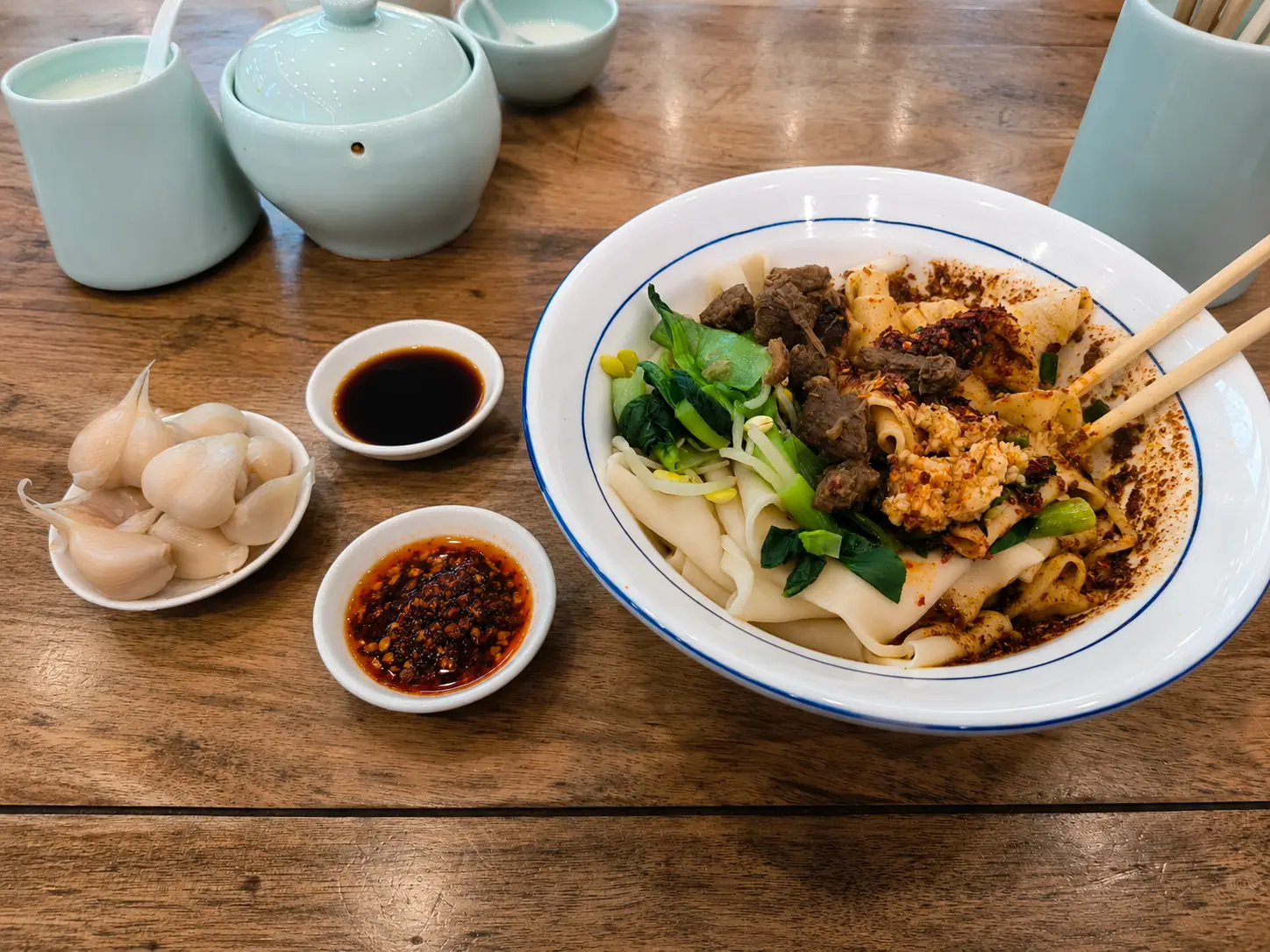
Mix first. The oil, chili, garlic, vinegar, and soy sauce often sit on top or at the bottom. If you do not turn the noodles over, the first bites can taste plain and the final bites can become too salty and sharp.
Eat while it is hot. The noodle keeps its chew for a while, but it absorbs sauce quickly and becomes heavier as it sits. Take your photo, then stir from the bottom so every strip gets coated.
One bowl can be a full meal. If you want to sample several Xi'an snacks, share one bowl between two people and add roujiamo (肉夹馍), cold skin noodles (凉皮), or a bottle of Bingfeng soda (冰峰汽水). This is a better strategy than ordering three full bowls and fading halfway through.
Spice, Halal, and Vegetarian Notes
Spice: Bold, Not Always Brutal
Biangbiang noodles are usually bold, but not always brutally spicy. Xi'an chili is often more fragrant and rounded than Sichuan hotpot heat. Less chili keeps some aroma without turning the bowl into a challenge.
Halal: Choose the Shop First
Halal needs deserve extra care. Xi'an has a major Hui Muslim food tradition, but biangbiang noodles in ordinary shops are not automatically halal. Pork mince, meat sauce, animal fat, or shared prep areas may appear.
Vegetarian: Confirm the Base
Vegetarians should look for tomato-egg, mushroom, greens, or plain oil-splashed versions, then still confirm there is no minced meat, lard, or meat stock. Wheat-free travelers should skip this dish; the noodle is wheat-based.
Dietary bottom line
Biangbiang noodles are easy to order casually, but not easy to modify strictly. If halal, vegetarian, wheat-free, or low-sodium needs matter, decide the restaurant first and the noodle second.
Common Biangbiang Noodle Mistakes to Avoid
- Do not treat the biang character as the only story. Use it as a signpost, then judge the bowl by texture, aroma, and whether the noodles taste freshly cooked.
- Do not assume wider always means better. A very wide noodle with no bounce can feel like a heavy sheet. The best bowls balance width, thickness, and cooking time.
- Do not make your first bowl too complicated. Three-in-one and five-in-one bowls are generous and photogenic, but they can hide the noodle under sauce. Start with oil-splashed if you care about the noodle itself.
- Do not assume it fits halal or vegetarian diets. Many versions use meat sauce or animal fat. Ask before ordering.
- Do not chase one permanent "best" restaurant near the Bell Tower. Xi'an noodle shops change, branch, and move quickly. Use dish names as map keywords, then choose a nearby, busy, currently open shop.
Frequently Asked Questions
They often overlap. Belt noodles describes the wide shape, while biangbiang noodles adds the local name, sound, and character. Oil-splashed pulled noodles is another common menu name for the classic hot-oil version.
Beyond This Guide
Biangbiang noodles are only one doorway into Xi'an's wheat-heavy food culture. Use this as your first bowl, then compare it with saozi noodles (臊子面), roujiamo (肉夹馍), cold skin noodles (凉皮), and Hui Muslim Quarter snacks. For broader planning, pair this guide with Xi'an Food Guide, Terracotta Warriors Guide, and China City Transport Guide.
© gochinafreely.com — Original guide by Go China Freely.