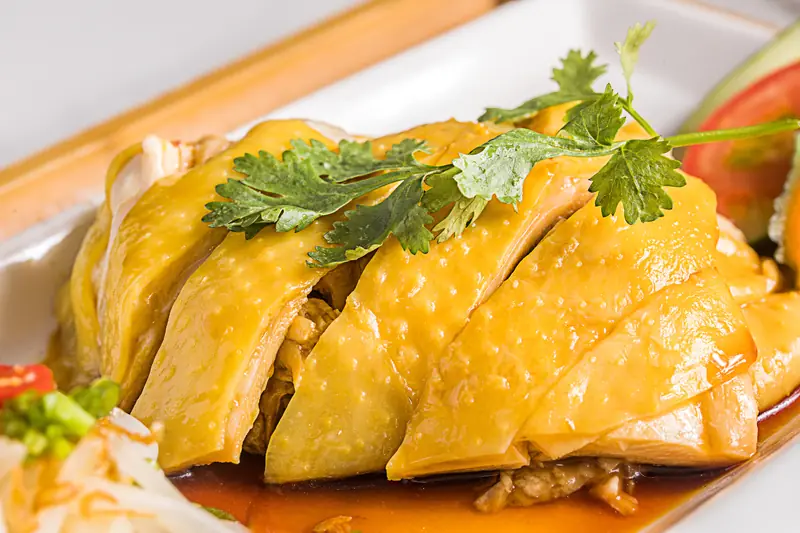
White Cut Chicken (白切鸡 / 白切雞) is the Cantonese chicken dish that looks almost too plain until you taste it: pale yellow skin, cool silky meat, a thin layer of gelatin under the skin, ginger-scallion dip, and almost nowhere for poor technique to hide. It is not about smoke, spice, or heavy sauce. It is about whether a kitchen can make chicken taste clean, tender, and complete.
Executive Summary
What to expect
A gently poached or steeped whole chicken, cooled, chopped through the bone, and served cool or at room temperature with ginger-scallion sauce and sometimes soy dip.
Best first order
Two to four people can share a half chicken with rice, greens, and one light Cantonese dish. Solo travelers should look for white cut chicken rice or a small portion.
Main traveler challenge
The dish is simple, but the details matter: bone-in pieces, cool serving temperature, subtle flavor, ginger-scallion dip, and comfort level around just-done poultry.
0-1 / 5
Typical spice level
Cool
Serving style
Bone-in
Standard cut
Ginger-scallion
Signature dip
Why White Cut Chicken Feels Cantonese
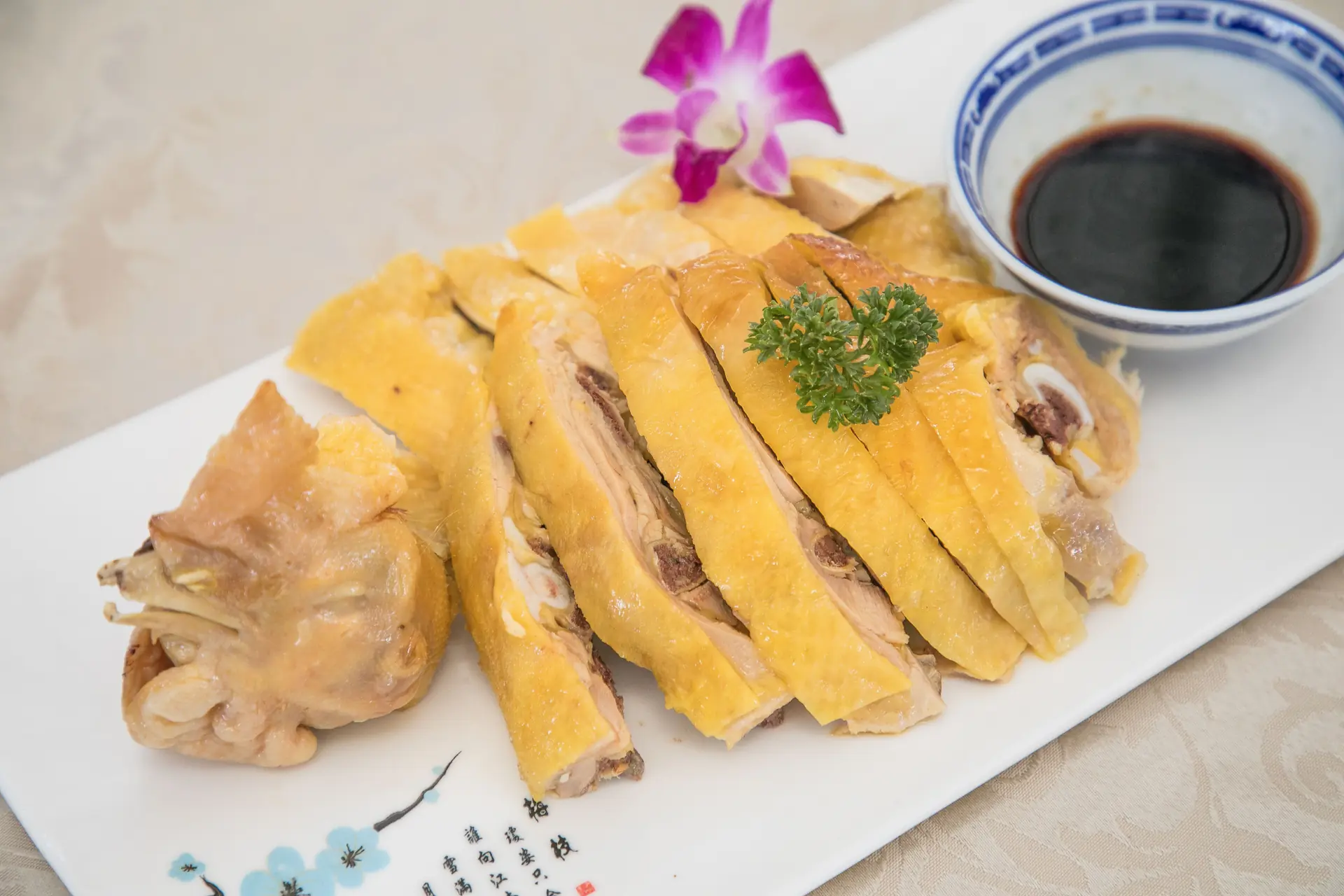
Cantonese cooking often rewards restraint: clear broth, precise steaming, quick wok timing, and ingredients that taste like themselves. White Cut Chicken is one of the clearest examples. A whole chicken is cooked gently, cooled, chopped, and served with a dip that lifts rather than covers the meat.
That restraint is why the dish can feel startlingly quiet to first-time visitors. There is no crispy skin, no dark glaze, no chili oil, and no thick gravy. The pleasure is in the skin's smoothness, the light chicken aroma, the cold-to-room-temperature bite, and the way ginger and scallion wake up each piece.
China Daily describes White Cut Chicken as representative of local Cantonese flavor and explains the residual-heat cooking and cold-water cooling that help protect smooth skin. Treat that as the useful flavor clue: better chicken matters because the dish gives it nowhere to hide.
It is plain only if you miss the point
White Cut Chicken is the Cantonese opposite of over-seasoning. If the chicken tastes clean, the skin feels silky, and the dip makes the meat brighter without drowning it, the kitchen did its job.
Good White Cut Chicken Taste Markers
The ideal plate is cool, gentle, and more textured than it first appears. The skin should be smooth and slightly springy. The meat should be tender, not watery or fibrous. The under-skin layer may have a light gelatin feel. The dip should smell of fresh ginger and scallion, often rounded by hot oil, salt, or soy.
1Silky Skin
The skin should feel smooth and elastic, with a clean yellow tone rather than a dry or wrinkled surface.
2Tender Meat
Breast meat should stay moist; leg meat should taste deeper without becoming chewy.
3Bright Dip
Ginger-scallion sauce should sharpen the chicken flavor instead of turning the dish salty or greasy.
White Cut Chicken is usually a shared plate, not a solo power move. It works best with rice, a green vegetable, a soup, and one stronger Cantonese dish such as roast goose, char siu, or steamed fish. The quiet chicken becomes more meaningful when the table has contrast.
How White Cut Chicken Stays Silky
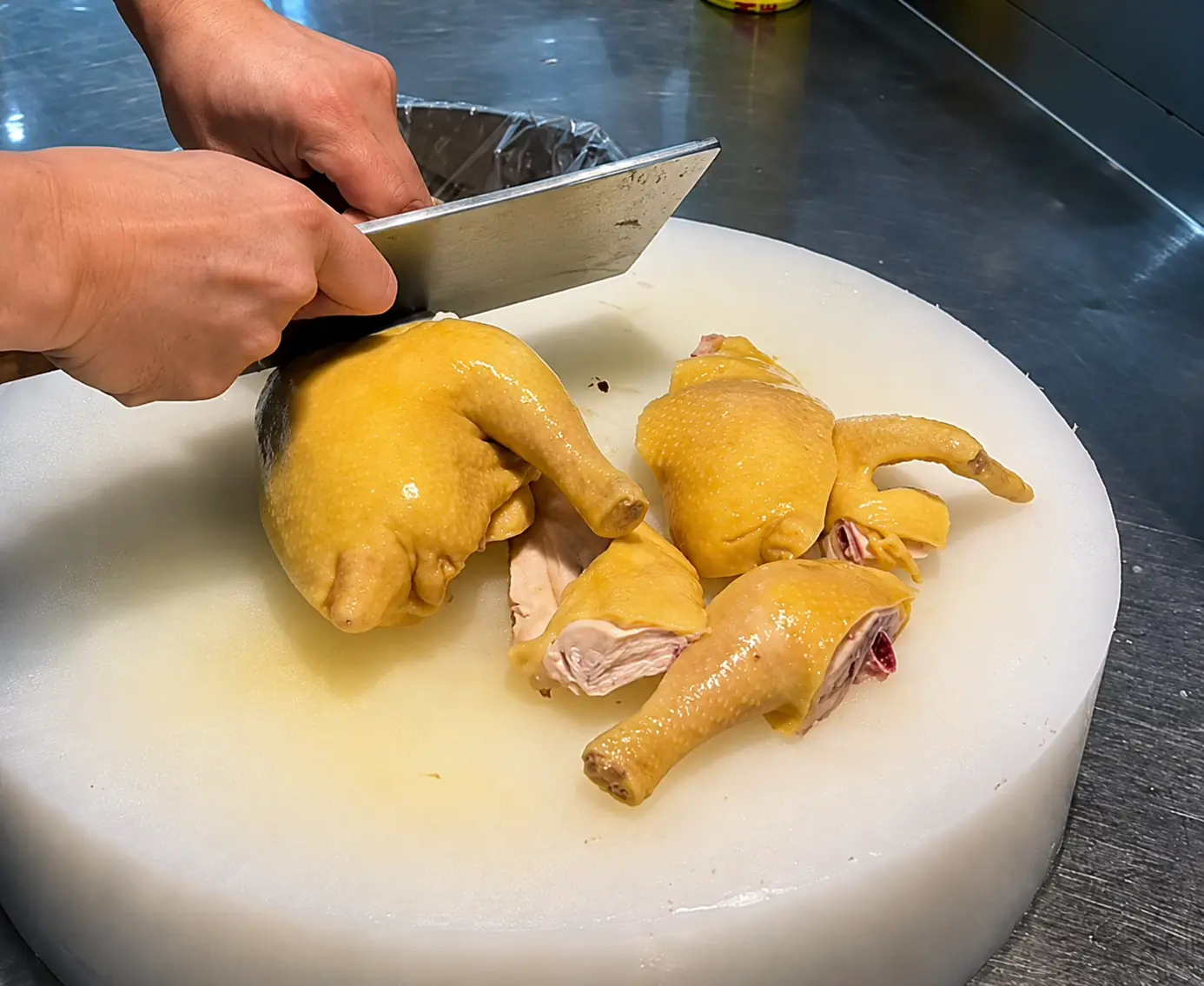
Recipes vary by restaurant and family, but the broad method is consistent enough for travelers to understand. A whole chicken is gently cooked in hot water or light stock, often with heat carefully controlled so the meat does not toughen. It is then cooled before being chopped through the bone and served with dip.
Some cooks use a near-simmer; some bring the liquid up, turn off the heat, and let the chicken steep; some cool the bird in liquid, ice water, or a controlled resting process. You do not need to memorize the technique. You only need to know what the method is trying to protect: tender meat, smooth skin, and a clean chicken flavor.
| Stage | What It Does | Traveler Takeaway |
|---|---|---|
| Gentle cooking | Cooks the whole bird without making the meat tight or dry. | The dish should feel soft, not stringy. |
| Cooling | Sets the skin and keeps the plate refreshing. | Cool or room-temperature chicken is normal. |
| Cleaver chopping | Cuts the chicken into bone-in pieces for sharing. | Eat carefully and expect bones. |
| Ginger-scallion dip | Adds heat, aroma, salt, and brightness. | Use the dip lightly first, then add more. |
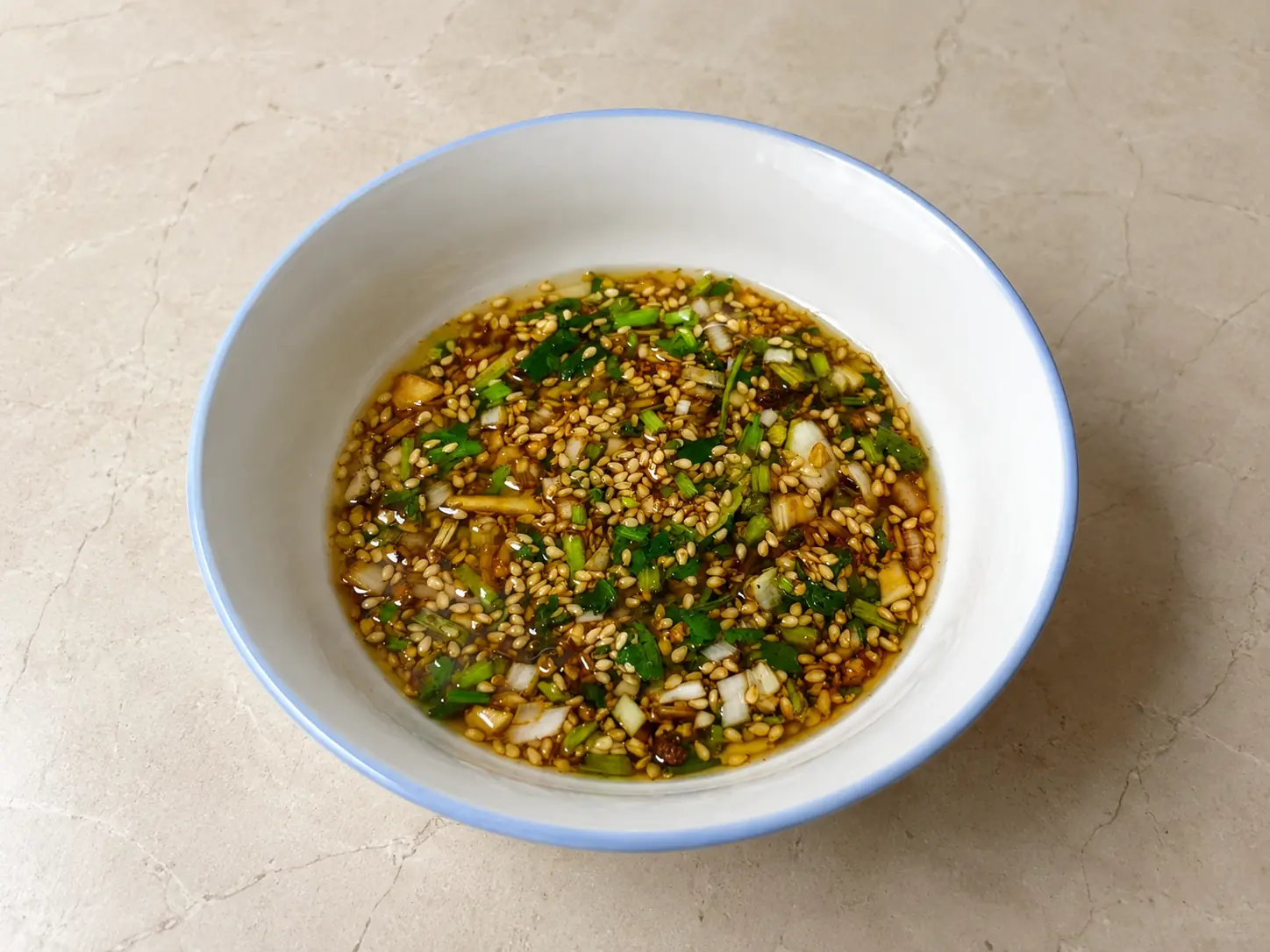
The dip deserves its own attention because it is the one loud note on the plate. Start with a small amount: ginger and scallion should make the chicken taste brighter, not turn every bite salty, oily, or sharp.
White Cut, Qingping, Hainan, Soy Chicken
White Cut Chicken sits near several famous chicken dishes, which is where travelers often get confused. The names are not interchangeable.
← swipe to compare all options →
White Cut Chicken
白切鸡 / 白切雞
- ✓Pale, gently cooked, chopped bone-in.
- ✓Usually served cool with ginger-scallion dip.
- —Subtle flavor; not a saucy or spicy order.
Classic Cantonese chicken plate
Qingping Chicken
清平鸡
- ✓Linked to Qingping Restaurant history.
- —Useful as a Guangzhou clue, not a universal name.
- ✗Do not assume every white cut chicken is Qingping Chicken.
Guangzhou heritage reference
Hainanese Chicken Rice
海南鸡饭 / 海南雞飯
- ✓Chicken, fragrant rice, soup, and several sauces.
- —Shares gentle chicken-cooking ideas.
- ✗Do not expect the same Cantonese table rhythm.
Different meal format
Soy Sauce Chicken
豉油鸡 / 豉油雞
- ✓Dark soy-braised or soy-steeped chicken.
- ✓Warmer, deeper, sweet-savory flavor.
- —Better if pale cool chicken makes you nervous.
Stronger seasoned backup
Names and sauces vary by city and shop. Use the Chinese characters, color, and serving format to confirm what you are ordering.
The Qingping story is worth knowing because it gives Guangzhou travelers a real food-history thread. The Liwan District government page on Qingping Restaurant says the restaurant was established in 1964 as Xiongxin Restaurant (雄心饭店) on Qingping Road, created Qingping Chicken in 1981, rose in reputation through the 1990s, closed in 2002, and reopened in early 2024 at Zhongshan Seventh Road. Its "Guangzhou's First Chicken" framing is best read as local reputation and marketing shorthand, not as a formal category for every plate of White Cut Chicken.
Qingping Chicken is a clue, not a synonym
Use Qingping Chicken as a Guangzhou heritage reference. Do not assume every White Cut Chicken plate is Qingping Chicken, and do not assume the original Qingping Restaurant still operates in its old form.
Where to Try White Cut Chicken
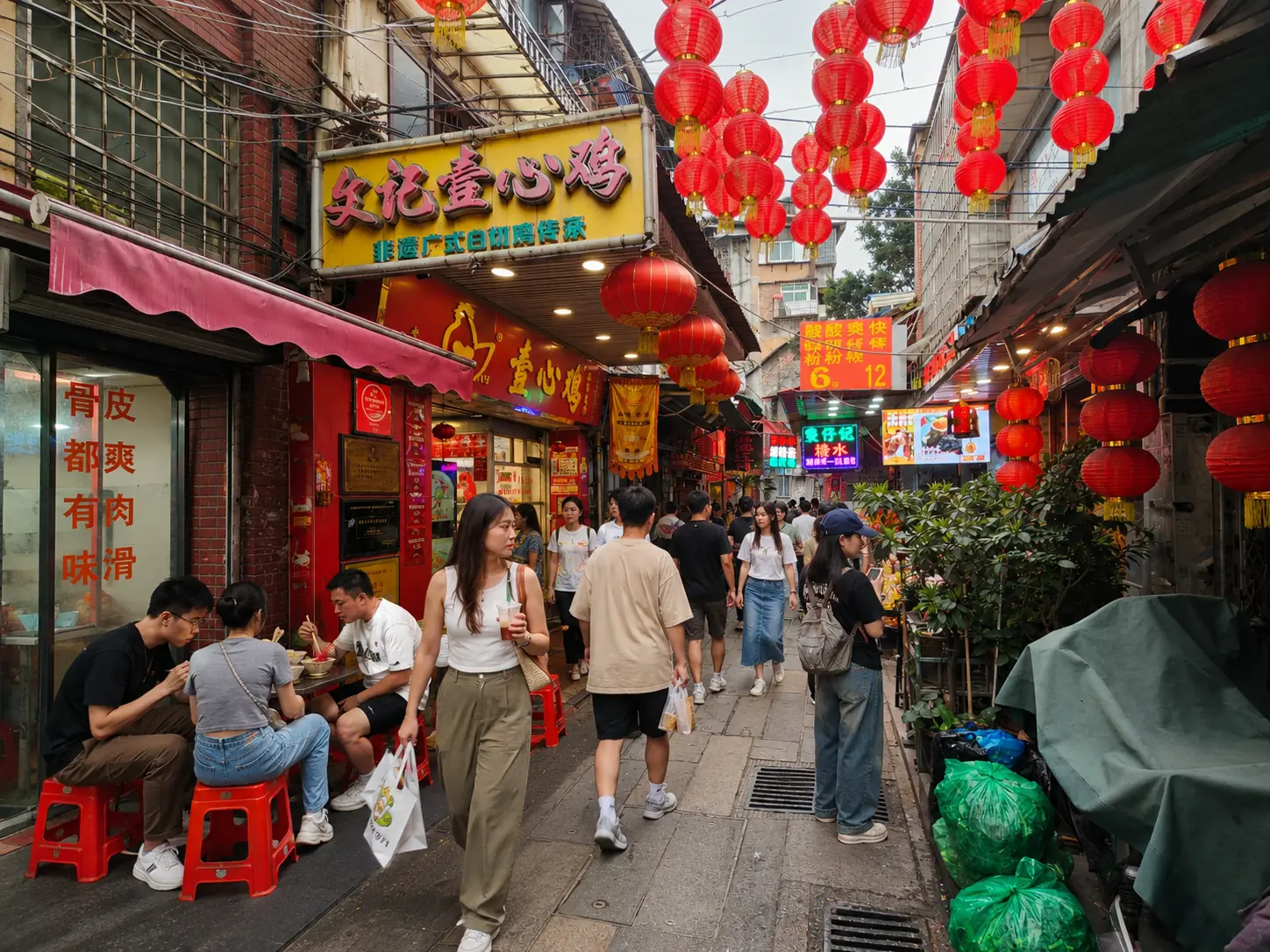
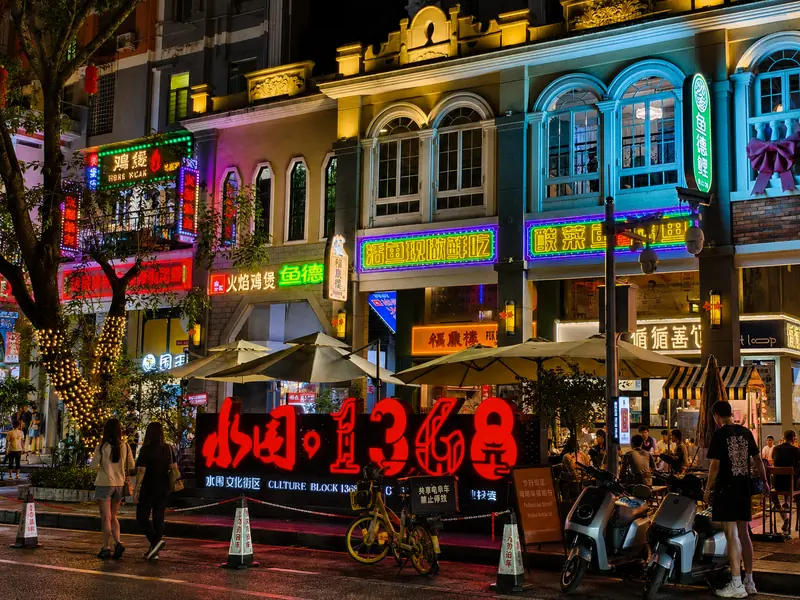
Guangzhou is the natural first city if you want White Cut Chicken inside a broader Cantonese food day: morning yum cha, an old-city walk, a chicken plate at lunch, and a lighter dinner.
Hong Kong is easier if you want Cantonese chicken in a compact city with strong public transport and plenty of roast-meat or Cantonese-restaurant options.
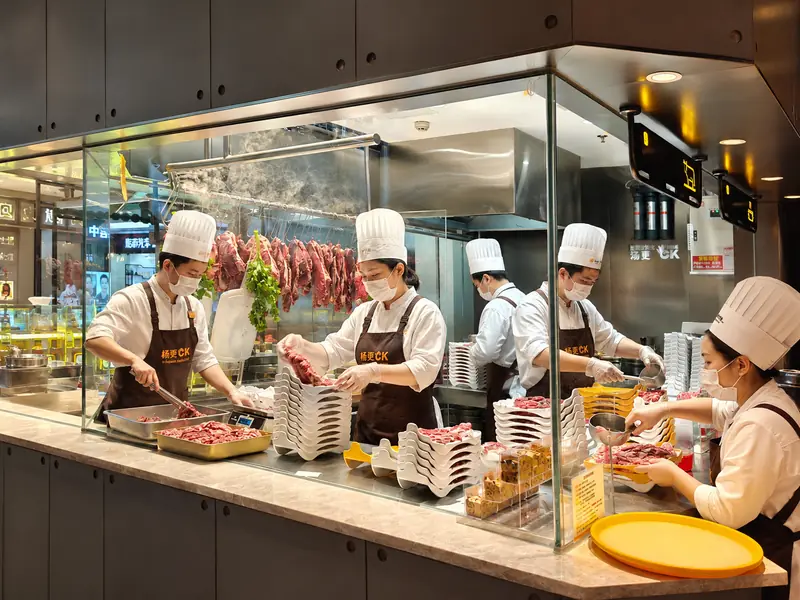
Use this as the Guangzhou White Cut Chicken reference point, especially if you care about the Qingping Restaurant story. Confirm current hours and exact location before going.
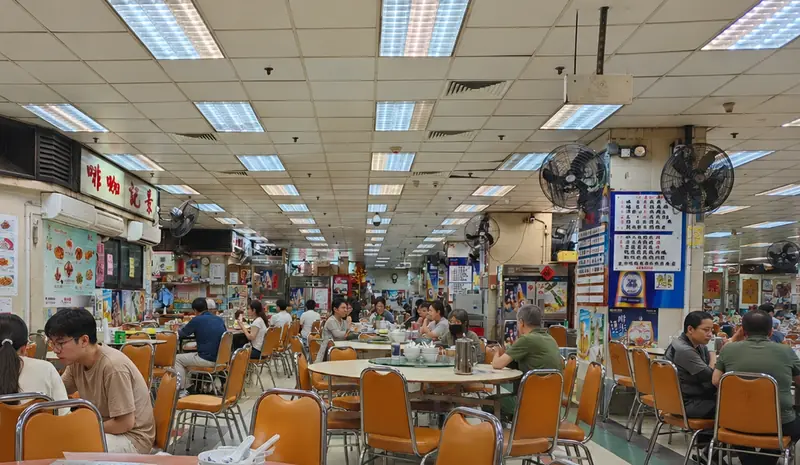
A traditional Cantonese-restaurant setting helps travelers understand White Cut Chicken as part of a full meal, not just a single famous plate.
Hong Kong works well when you want Cantonese chicken, roast meats, and neighborhood walking in one compact area. Menus may use traditional characters.
Do not plan the whole day around one chicken plate unless the restaurant itself is important to you. White Cut Chicken is best as a smart meal anchor: something quiet, shared, and balanced by rice, vegetables, soup, or another Cantonese dish.
How to Order and Share It
For two people, half a chicken is usually the easiest shared order if you are having a real meal. For one person, look for white cut chicken rice, cut chicken rice, or a small plate at a roast-meat counter. For four people, order half a chicken plus rice, greens, soup, and one stronger dish.
Menus may show simplified or traditional characters. Learn the core order words first, then use the table below to adjust portion size, sauce, bones, and allergy checks.
| English | Chinese | Pinyin | Say It Like… |
|---|---|---|---|
| White Cut Chicken | 白切鸡 / 白切雞 | bái qiē jī / baak cit gai | bye chye jee / baak chit gai |
| Half chicken | 半只 / 半隻 | bàn zhī / bun zek | bahn jir / boon zek |
| Whole chicken | 一只 / 一隻 | yì zhī / yat zek | ee jir / yaht zek |
| Regular portion | 例份 / 例 | lì fèn / lai | lee fun / lie |
| Ginger-scallion sauce | 姜葱酱 / 薑蔥醬 | jiāng cōng jiàng / goeng cung zoeng | jyahng tsong jyahng / goeng tsoong jeung |
| Does it have bones? | 有骨头吗? / 有骨嗎? | yǒu gǔtou ma? / yau gwat maa? | yo goo-toh mah / yow gwaht mah |
| Please confirm it is fully cooked | 请确认熟透 / 請確認熟透 | qǐng quèrèn shú tòu / cing kok jing suk tau | ching chweh-ren shoo toh / ching kok ying sook tow |
| I am allergic to sesame | 我对芝麻过敏 / 我對芝麻過敏 | wǒ duì zhīma guòmǐn / ngo deoi zi maa gwo man | woh dway jir-mah gwaw-min / ngoh doy jee mah gwo mun |
| Group | Smart Order | Why It Works |
|---|---|---|
| Solo | White cut chicken rice or a small plate | You get the flavor without over-ordering a cold shared dish. |
| Two people | Half chicken, rice, and one vegetable | The cleanest first experience, with enough variety to balance the cool chicken. |
| Four people | Half chicken, soup, greens, rice, and another Cantonese dish | A Cantonese table works best when the chicken is one rhythm among several. |
| Food-focused group | White cut chicken plus roast goose or char siu | The contrast teaches Cantonese restraint and Cantonese barbecue in one meal. |

Pink Bones, Allergies, and Safety Notes
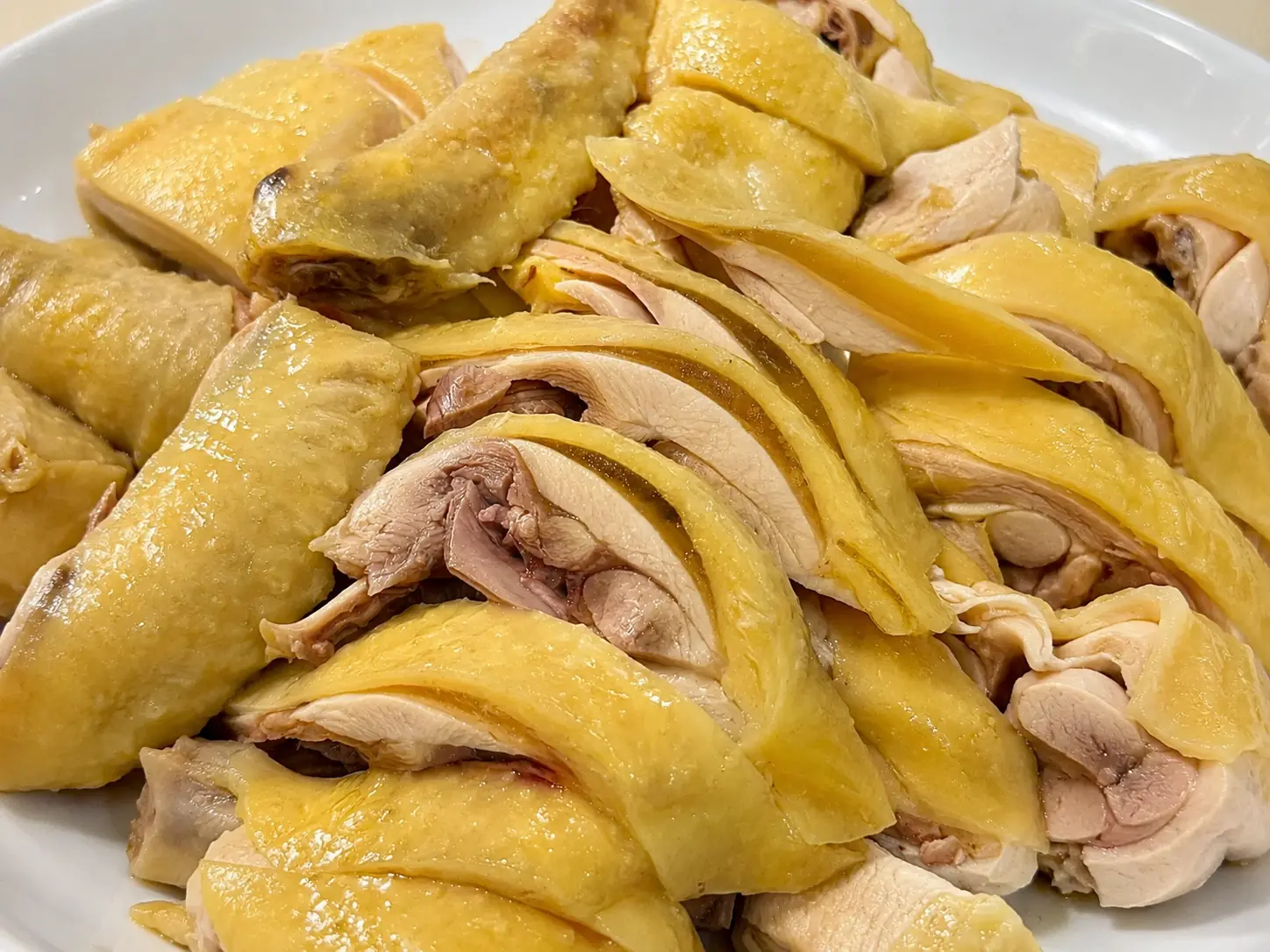
Traditional Cantonese cooks often prize a just-done texture, and diners may notice a faint pink tinge or redness near the bone or marrow. That does not mean travelers should ignore their own comfort level.
Modern restaurants generally cook with food-safety expectations in mind, but if any piece looks undercooked to you, ask staff to confirm it is fully cooked or choose a different dish.
Do not treat pink chicken as a safety guarantee
White Cut Chicken can be served tender and cool, but visible redness is not something travelers should automatically read as safe. If you are uncomfortable with the color, ask, send the piece back, or order soy sauce chicken, roast chicken, or roast goose instead.
White Cut Chicken is normally chopped through the bone. Eat slowly, especially with children, and watch for small bone fragments. The skin and under-skin layer are part of the dish's texture; if you dislike chicken skin or gelatin, this may not be your favorite Cantonese order.
Allergy travelers should pay attention to the dip and chopping environment. The chicken itself may be plain, but ginger-scallion sauce can involve sesame oil, soy sauce, salt, hot oil, scallion, ginger, garlic, or peanut oil depending on the shop. Shared cleavers and boards may also touch roast meats, soy sauce chicken, pork, seafood, or sesame-containing sauces.
- Bones: expect chopped bone-in pieces and possible fragments.
- Temperature: cool or room-temperature serving is normal.
- Sauces: ask about soy, wheat, sesame, peanut oil, garlic, scallion, and chili if relevant.
- Cross-contact: Cantonese kitchens and roast-meat counters may share tools across poultry, pork, seafood, and sauces.
- Comfort level: if pink near the bone worries you, ask for confirmation or order a more fully cooked-looking dish.
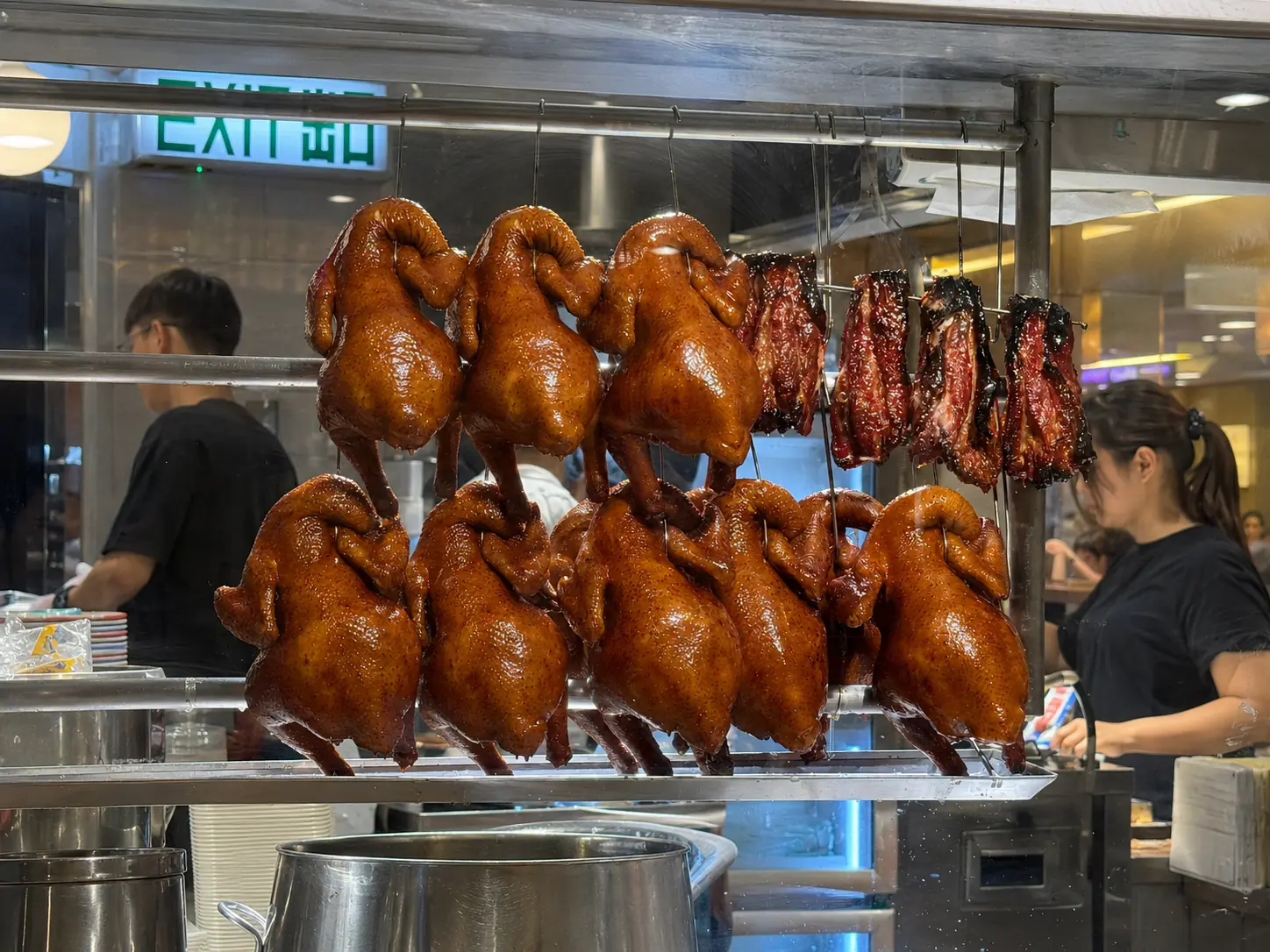
If the texture, bone color, or sauce risk does not suit your table, the same Cantonese roast-meat window usually gives you easier backups: soy sauce chicken, roast chicken, roast goose, or char siu over rice.
Frequently Asked Questions
Usually no. It is commonly served cool or at room temperature after cooking and cooling. That texture is part of the dish, not a sign that the restaurant forgot to heat it.
Beyond This Guide
White Cut Chicken is one doorway into Cantonese food. Pair it with yum cha, roast goose, char siu, steamed fish, congee, or a Guangzhou old-city walk, and it starts to make more sense than it does on a menu by itself.
Useful next reads:
- Guangzhou Food Guide
- Hong Kong Food Guide
- Cantonese Roast Goose: Shao'e Guide
- Char Siu: Chinese BBQ Pork Guide
- Cantonese Dim Sum and Yum Cha Guide
© gochinafreely.com — Original guide by Go China Freely.