Kung Pao Chicken (宫保鸡丁) is so famous overseas that many travelers meet the copy before the original. The Sichuan version is not a thick, sweet takeout sauce with big chicken chunks and mixed vegetables; it is a fast wok dish of small diced chicken, fried peanuts, dried chilies, scallions, and a bright sweet-sour finish. In Chengdu, the best versions taste fragrant, lightly numbing, and balanced: a dish about timing, not brute heat.
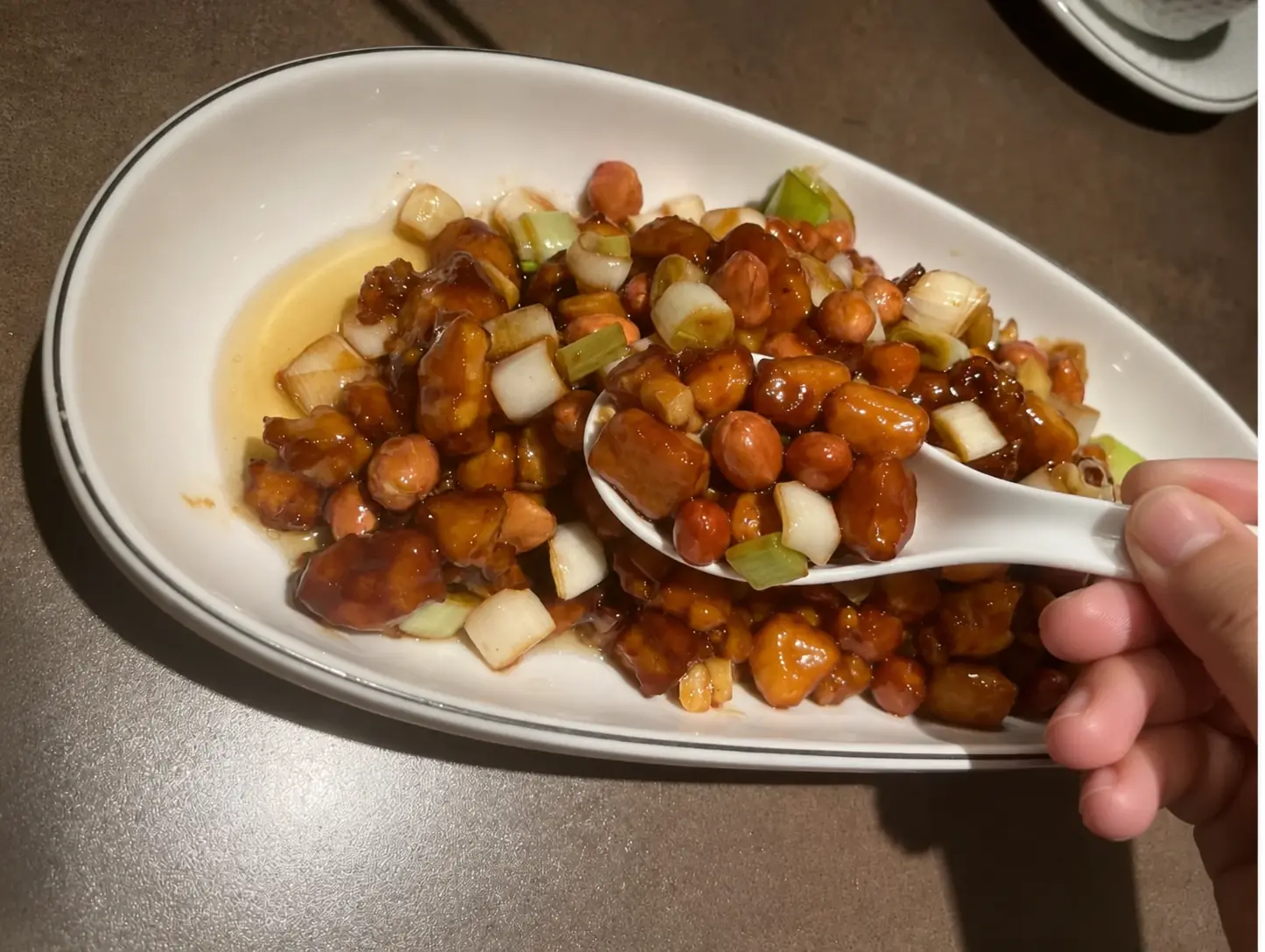
Ding Gongbao and Kung Pao Origins
Kung Pao Chicken is not just a restaurant-menu name. Its story runs through Qing official culture, regional cooking, and the way Sichuan cooks turned a traveling chicken dish into a global shorthand for Chinese food.
Ding Baozhen
Ding Baozhen (丁宝桢) was a late Qing official from Guizhou who served in Shandong and later Sichuan. His honorary title, Taizi Shaobao (太子少保), gave rise to the nickname Ding Gongbao (丁宫保), which is where "Kung Pao" comes from.
A Contested Origin
The exact origin story is contested. Some versions point to Guizhou, some to Shandong, and the best-known modern version belongs to Sichuan cuisine.
Sichuan Refinement
A safe way to understand it: a chicken dish associated with Ding Baozhen traveled through his official life, then Sichuan cooks shaped it with fried peanuts, dried chili sections, and sweet-sour "lychee flavor."
Sichuan government food-history material describes Gong Bao chicken as a long-celebrated Sichuan dish, traditionally linked to Ding Baozhen, then refined by Sichuan cooks with fried peanuts, dried chili sections, and a sweet-sour "lychee flavor" profile. That last phrase does not mean the dish contains lychee fruit; it means a bright balance of sugar and vinegar.
The Real Sichuan Kung Pao Flavor
The Sichuan keyword is not "very spicy." It is a combination of scorched-chili fragrance and lychee-flavor balance. The dried chilies and Sichuan peppercorn should perfume the oil without turning bitter; the sauce should be lightly sweet and tangy, not syrupy.
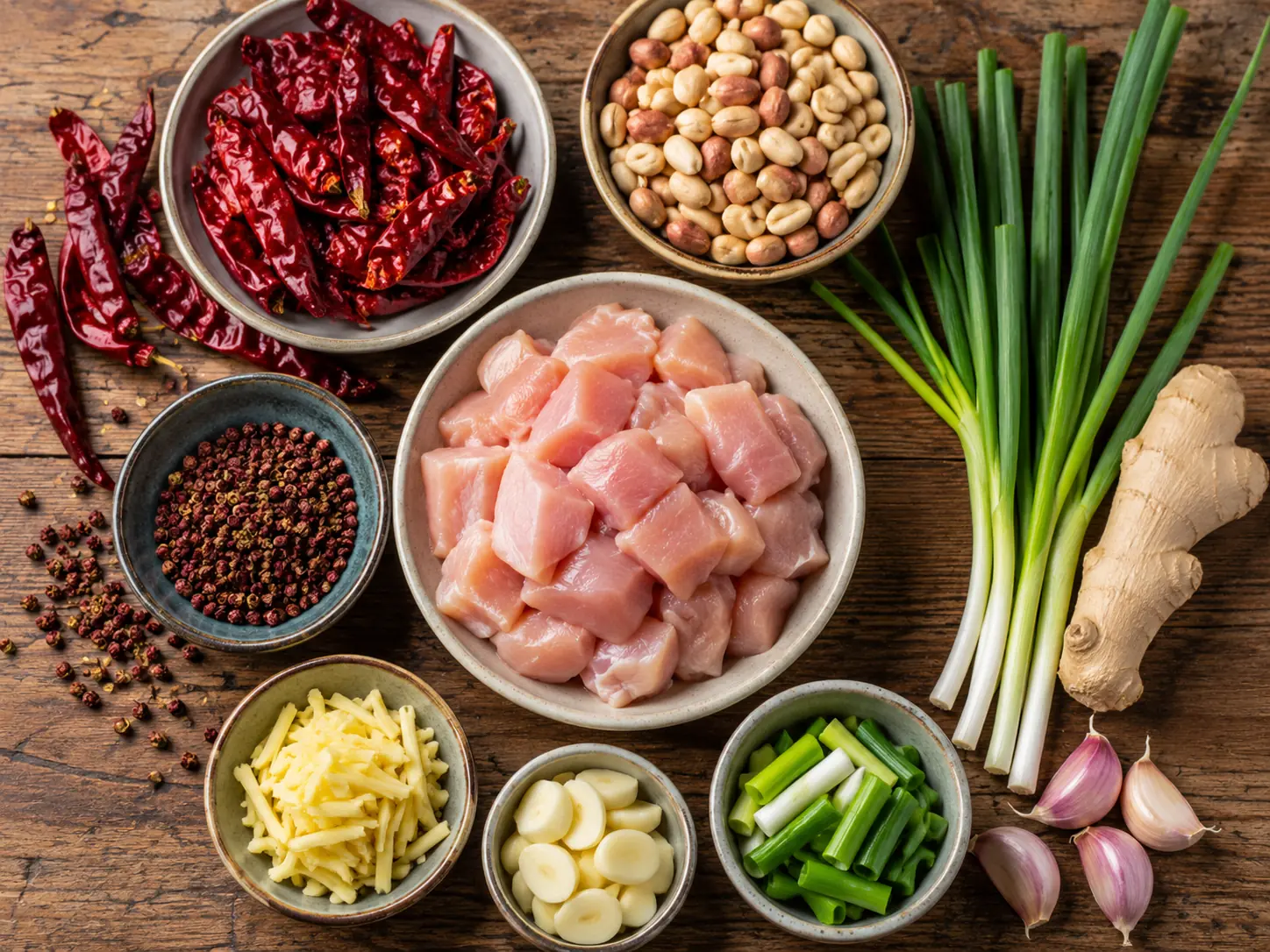
The key aroma comes before the chicken ever looks finished. Dried chilies, peppercorns, scallions, ginger, garlic, and peanuts build a dry-fragrant frame; the sauce should brighten the dish, not bury it.
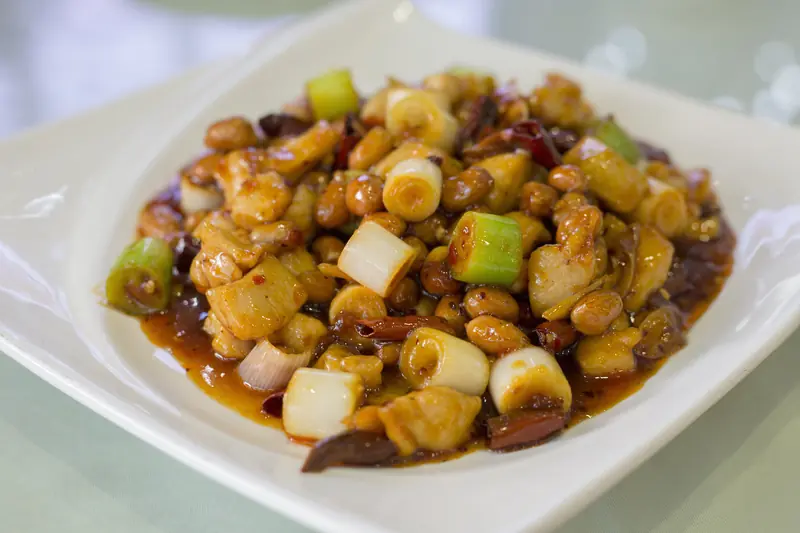
A good plate should look brown-red and glossy, with loose oil rather than a thick pool of sauce. The chicken cubes should be small and tender. Peanuts should stay crisp. Scallions, ginger, garlic, dried chilies, and peppercorns create the aromatic frame, but the dish should not read like vegetable stir-fry with chicken added.
Look for small cubes, crisp peanuts, and a sauce that clings instead of pooling. If the plate looks like chicken in thick syrup, it has drifted away from the Chengdu-style balance.
- Small chicken cubes: tender, bite-size pieces, not large takeout chunks.
- Crisp peanuts: fried peanuts are part of the structure, not a garnish.
- Dried chili aroma: fragrant heat, not raw chili burn.
- Light peppercorn buzz: Sichuan peppercorn should tingle gently, not dominate.
- Glossy sauce: the sauce clings to the chicken; it should not sit like syrup at the bottom.
- Sweet-sour finish: "lychee flavor" means sugar-vinegar brightness, not actual lychee.
The Authentic Sichuan Kung Pao Recipe Logic
The official Sichuan description of the dish gives a useful cook's-eye view: tender chicken is cut into small cubes, marinated with soy sauce and starch, then stir-fried quickly with dried chili sections, Sichuan peppercorn, ginger, garlic, scallion, a prepared sauce, vinegar, and fried peanuts.
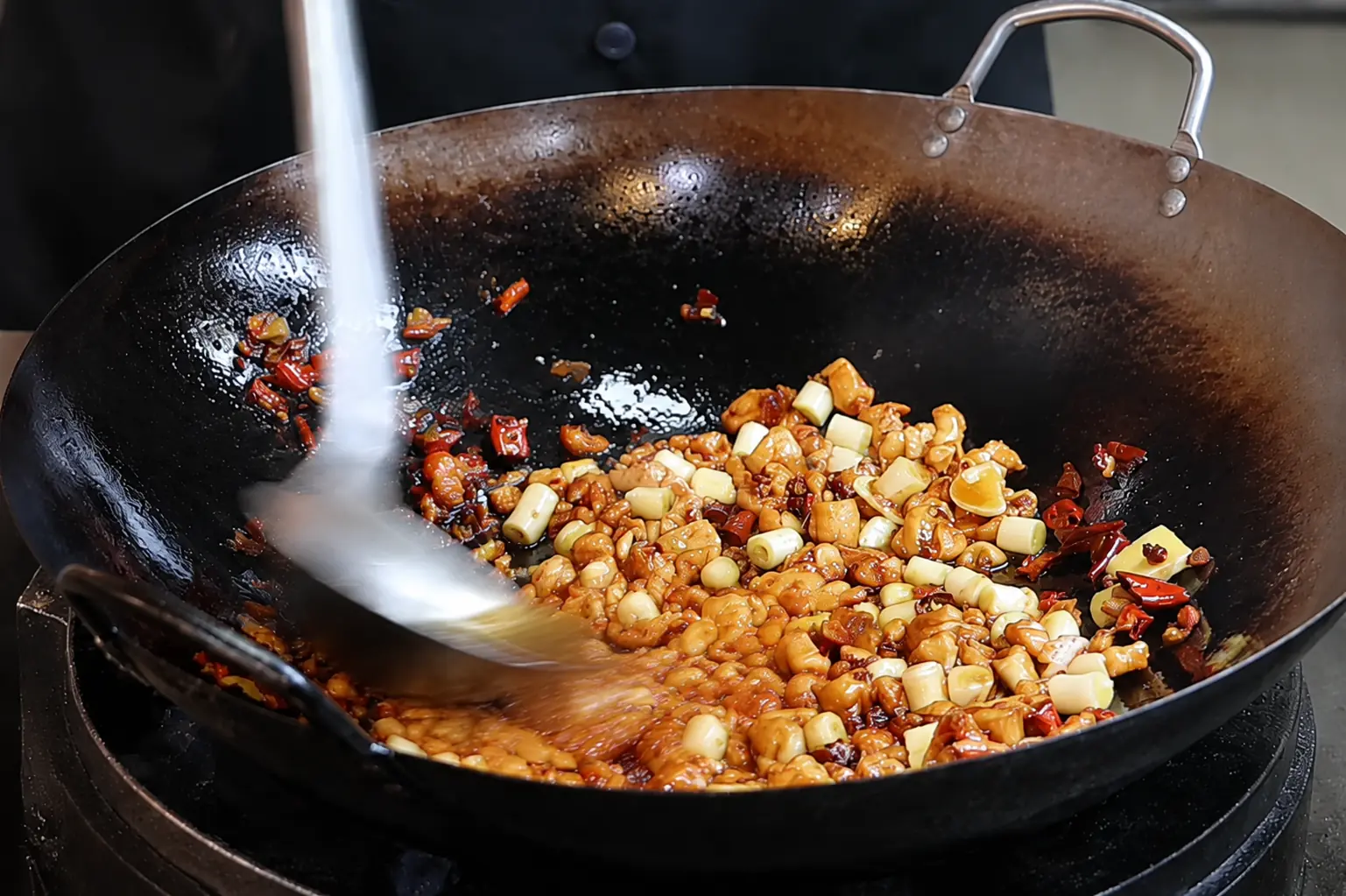
That order matters. Kung Pao Chicken is not "cook chicken, pour on sweet chili sauce." The fragrance comes from hot oil meeting dried chilies and peppercorns. The tenderness comes from small cubes and quick heat. The final sauce has to flash through the wok, cling, and stop before it becomes heavy.
If a Chengdu cooking class includes Kung Pao Chicken, it is one of the most useful dishes to learn. It teaches dried chilies, Sichuan peppercorn, peanuts, fast stir-frying, sugar-vinegar balance, and the moment when a sauce turns glossy instead of thick. Class menus vary, so check the dish list before you go.
Sichuan Kung Pao vs Takeout Versions
Overseas versions are often sweeter, thicker, and bulkier. They may include bell peppers, celery, carrots, onions, zucchini, or cashews. Those versions can taste good, but they shift the dish toward sweet-spicy chicken rather than Sichuan Gong Bao flavor.
Swipe to compare styles
Sichuan-Style Kung Pao
- ✓Chicken is diced small and cooked tender.
- ✓Fried peanuts are the central nut.
- ✓Scallions are the main aromatic vegetable.
- ✓Heat comes from dried chili fragrance and a gentle peppercorn buzz.
Small cubes
Fried peanuts
Light glossy sauce
Common Takeout-Style Version
- —Chicken may be large chunks, battered pieces, or coated pieces.
- —Peanuts may be joined or replaced by cashews or mixed nuts.
- —Bell peppers, celery, onions, carrots, or zucchini may become the main bulk.
- ✗Thick sweet sauce often replaces the dry-fragrant Sichuan profile.
Larger chunks
Mixed vegetables
Sweeter sauce
In China, choose a proper Sichuan restaurant if you want the real version. A restaurant serving every Chinese cuisine at once may still cook an acceptable dish, but it is less likely to show the clean, dry-fragrant Sichuan profile.
How to Order Kung Pao Chicken
In most Chinese restaurants, simply show the characters 宫保鸡丁. English menus usually say Kung Pao Chicken. You may also see 宫爆鸡丁 in casual menus, but the standard Sichuan writing is 宫保鸡丁.
Menus may show English, older romanization, or only Chinese characters. The safest visual anchor is 宫保鸡丁. If the menu says 宫爆鸡丁, it is usually the same casual-menu target, but 宫保鸡丁 is the standard Sichuan writing.
If you cannot eat peanuts, treat this dish as peanut-based by default. The allergy section below explains why asking for a modified version is not enough for severe allergies.
| English | Chinese | Pinyin | Say It Like… |
|---|---|---|---|
| Kung Pao Chicken | 宫保鸡丁 | gōngbǎo jīdīng | goong-baow jee-ding |
| Mild spice | 微辣 | wēi là | way lah |
| Less Sichuan peppercorn | 少花椒 | shǎo huājiāo | shaow hwah-jyow |
| Not too sweet | 不要太甜 | bù yào tài tián | boo yow tie tyen |
| I am allergic to peanuts | 我对花生过敏 | wǒ duì huāshēng guòmǐn | woh dway hwah-shung gwoh-min |
| Add one bowl of rice | 加一碗米饭 | jiā yī wǎn mǐfàn | jyah ee wahn mee-fan |
Peanut allergy travelers should skip it
If you have a severe peanut allergy, do not rely on asking for "no peanuts." Peanuts are a core ingredient, and shared wok oil, utensils, and prep surfaces make cross-contact hard to control.
Where to Eat or Cook It in Chengdu
Kung Pao Chicken is not a one-restaurant pilgrimage dish. It is more like a Sichuan kitchen test: if a restaurant makes it fragrant, balanced, and not too sweet, the wok station probably knows what it is doing.
Sichuan Cuisine Museum (川菜博物馆) (Google | Amap)
If you want to understand the dish rather than only eat it, the Sichuan Cuisine Museum (川菜博物馆) in Chengdu's Pidu District offers Sichuan food exhibits, tastings, and hands-on cooking experiences. Some Chengdu cooking programs may include Kung Pao Chicken, but menus vary. Watching dried chilies, peppercorns, peanuts, and sauce come together in a hot wok explains more than a menu description can.
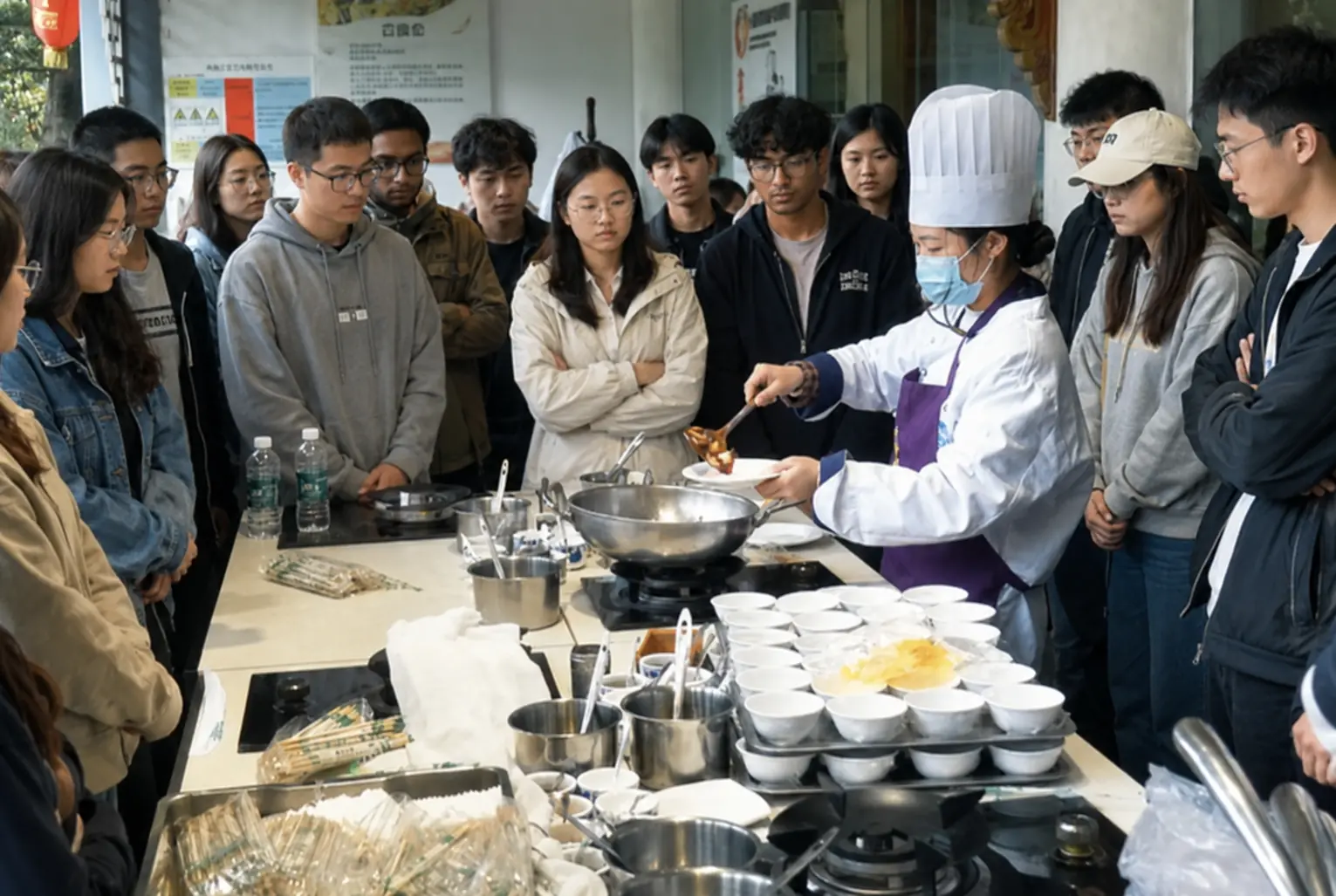
A cooking class makes the abstract parts visible: how quickly dried chilies darken, when peanuts go in, and how the sauce turns glossy without becoming heavy. It is especially useful if you want to recognize a good plate later in a restaurant.
For a restaurant meal, choose a stable local Sichuan restaurant rather than chasing a single viral name. A practical order is Kung Pao Chicken, mapo tofu, a simple green vegetable, and rice. That gives you sweet-sour, numbing-spicy, and clean vegetable flavors in one table without overloading the meal.
What to Pair With Kung Pao Chicken
Kung Pao Chicken works best with plain rice and one or two calmer dishes. The sauce is built to coat rice, and the peanuts make the dish feel richer than it looks.
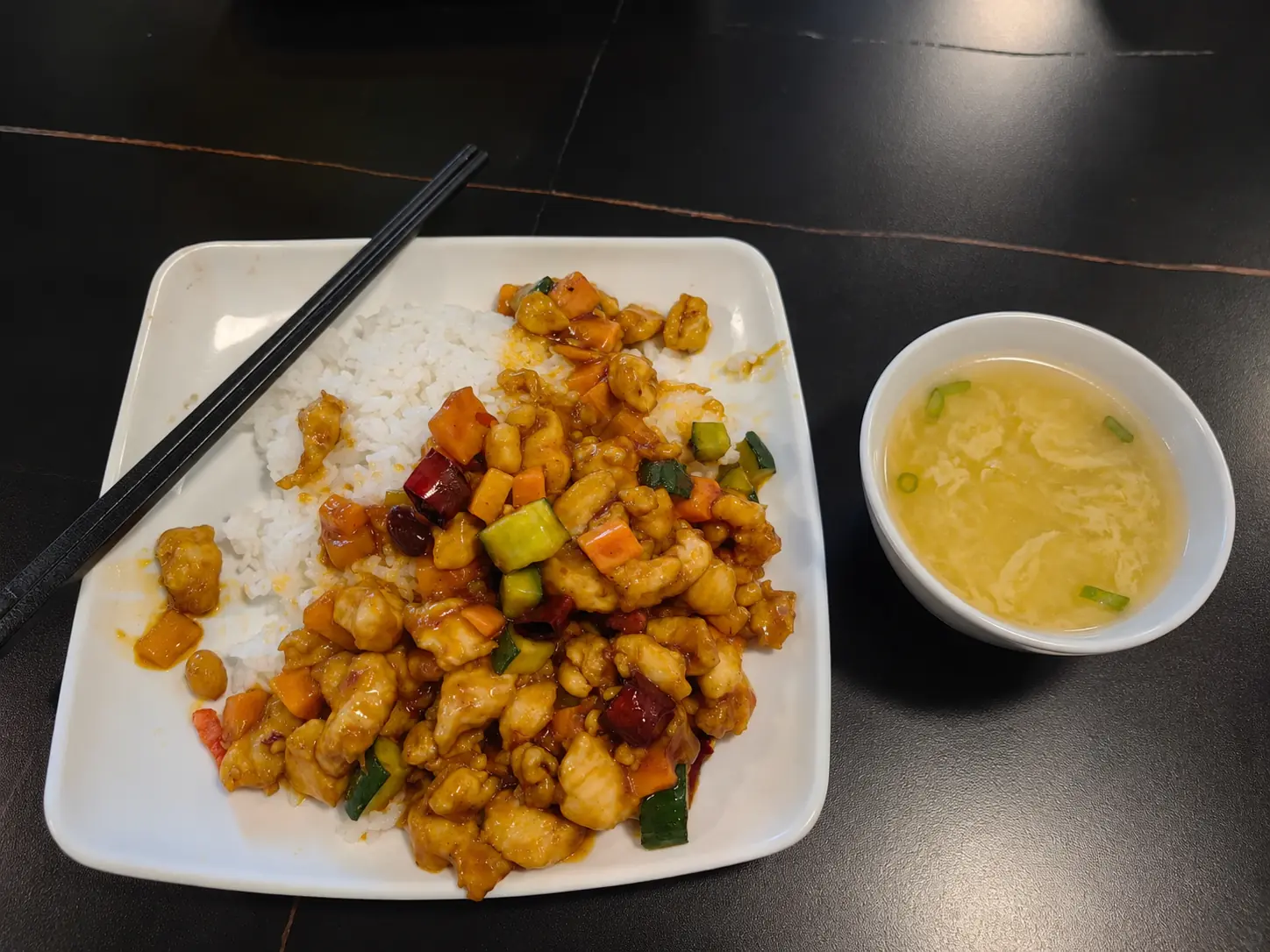
Plain rice is not filler here. It catches the sweet-sour sauce, softens the chili aroma, and makes one plate of Kung Pao Chicken feel like a proper meal instead of a tasting bite.
Best Base
A comfortable order is Kung Pao Chicken, rice, stir-fried greens, and a soup or tofu dish.
For Two People
One plate is enough. Add a vegetable or soup if you want the table to feel balanced without over-ordering.
For Four People
Treat it as the safe but still representative Sichuan dish beside stronger choices like mapo tofu or red-oil plates.
If you want the meal to feel more Sichuan, add mapo tofu. If you want a gentler table, add tomato egg soup, stir-fried cabbage, cucumber salad, or another non-spicy dish. Avoid building your first Chengdu meal entirely from red-oil dishes unless you already know your spice tolerance.
Peanut Allergies and Spice Notes for Travelers
The key allergy issue is peanuts. Traditional Sichuan Kung Pao Chicken uses fried peanuts, and many restaurants treat them as inseparable from the dish. For severe peanut allergies, choose a different dish rather than asking for a modified version.
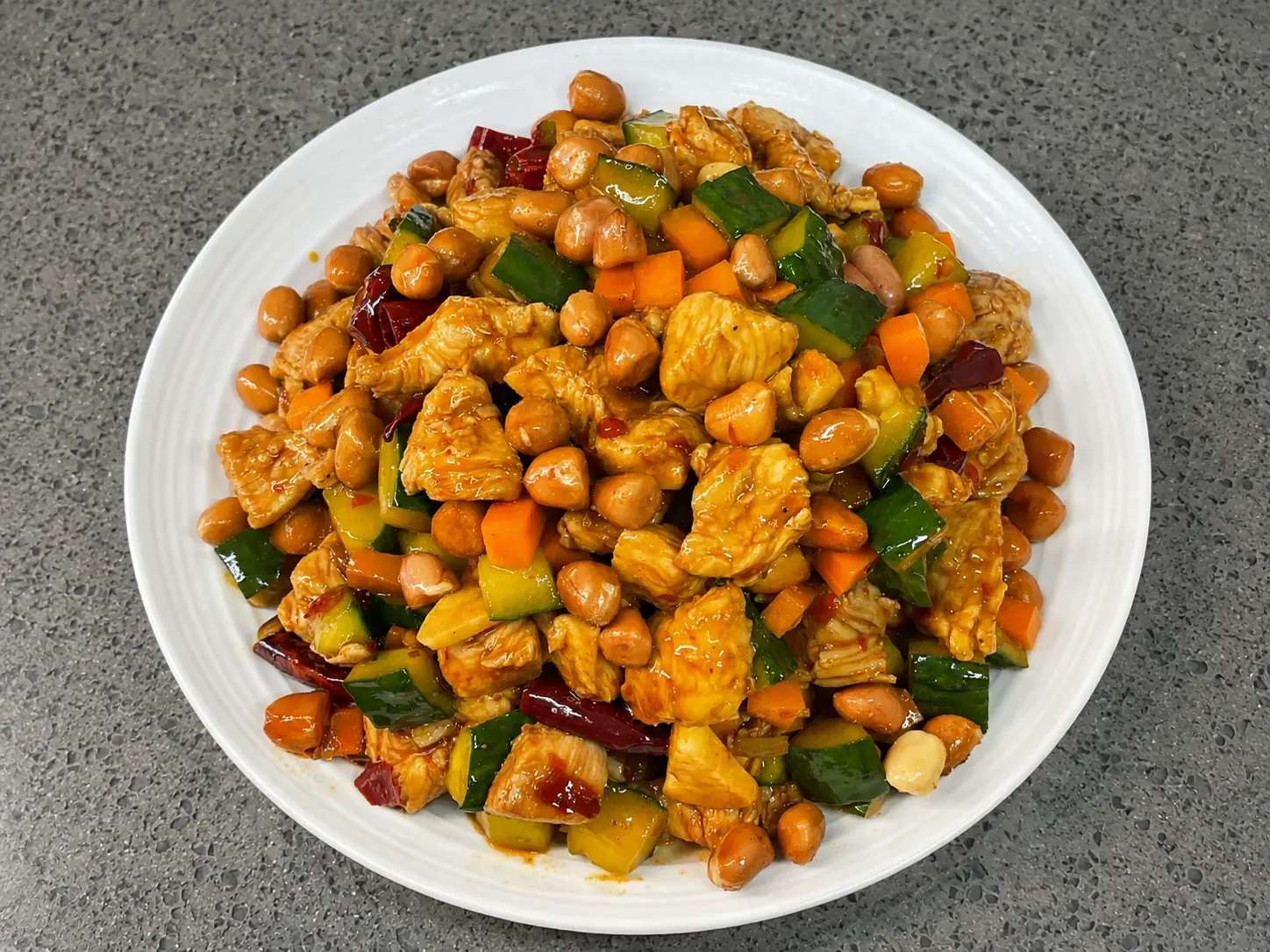
Peanuts are visible for a reason: they are part of the texture, not a topping. Asking a busy wok kitchen to remove them does not solve cross-contact from prep surfaces, utensils, or oil.
Severe peanut allergy: choose another dish
If you have a severe peanut allergy, do not rely on "no peanuts" for Kung Pao Chicken. Choose a peanut-free dish and tell the restaurant clearly about the allergy before ordering.
The dish also commonly contains chicken, soy sauce, wheat, sugar, vinegar, scallions, ginger, garlic, dried chilies, Sichuan peppercorns, and sometimes cooking wine or chicken seasoning. Travelers avoiding gluten, peanuts, alliums, sugar, or strict animal products should not assume this is a flexible order.
Spice-wise, Kung Pao Chicken is usually moderate by Sichuan standards. It should not feel like laziji (辣子鸡), where chicken hides among dried chilies, or like boiled beef in chili oil. First-timers can ask for mild spice and less Sichuan peppercorn.
Kung Pao Mistakes Travelers Should Avoid
Before you order, keep four traps in mind. Most come from assuming the overseas version, the origin story, the allergy risk, and the full Sichuan table all work the same way in Chengdu.
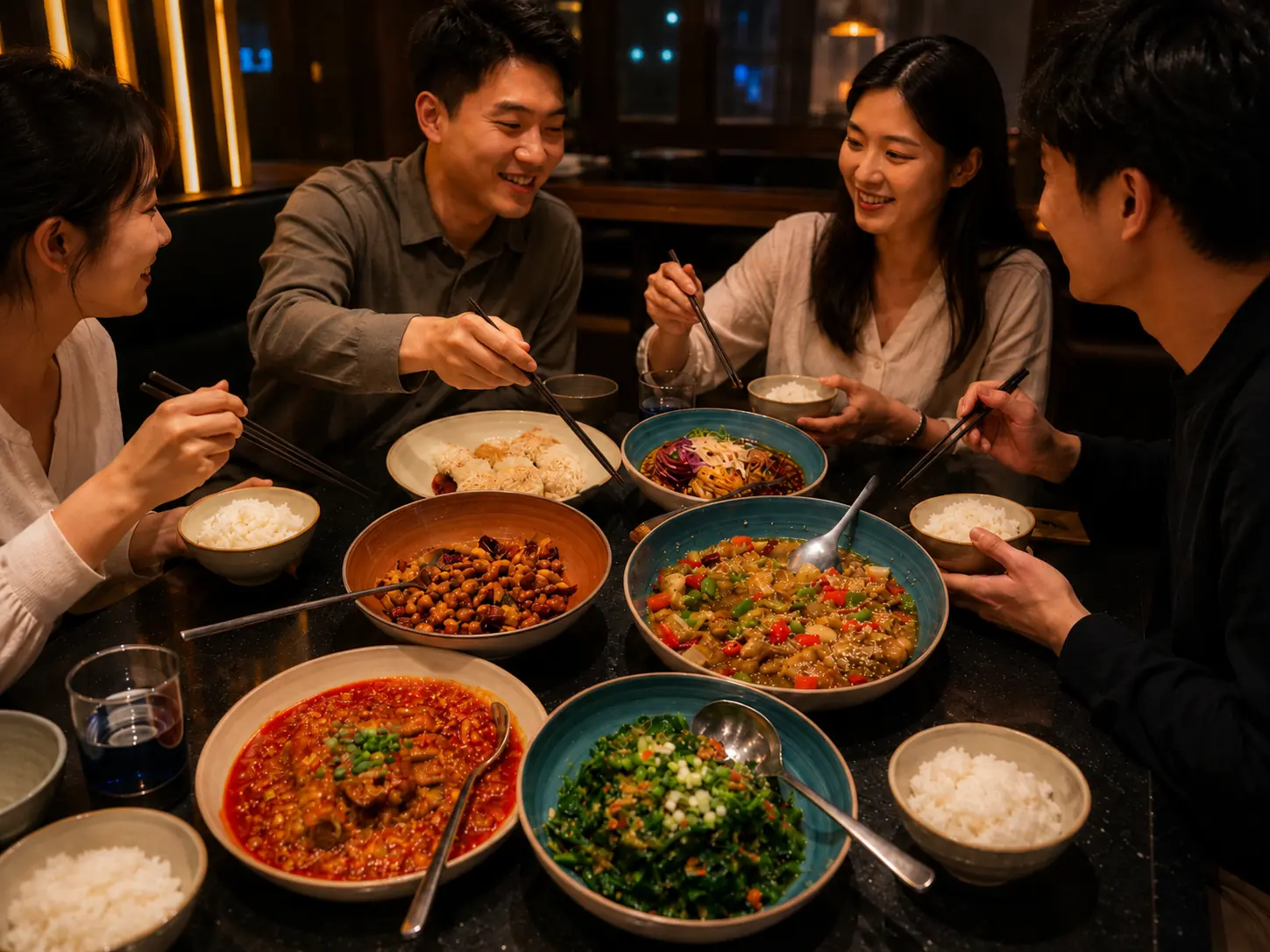
The table matters as much as the plate. Kung Pao Chicken is friendly for first-timers, but it shines best with rice, vegetables, soup, and a meal that gives your palate space.
Treating Every Version as the Same
American takeout, Guizhou-style stories, Shandong-linked versions, and Chengdu Sichuan cooking overlap, but the Chengdu target is dried chili aroma, peanuts, small chicken cubes, peppercorn, and sweet-sour brightness.
Asking to Remove the Peanuts
This is the highest-risk mistake. For serious allergies, skip Kung Pao Chicken instead of trying to modify it.
Expecting a Spice Challenge
This is about wok fragrance and balance. Too sweet, too thick, too oily, or burnt is a bigger problem than "not hot enough."
Ordering Only Heavy Chili Dishes
Pair it with rice, greens, soup, cucumber salad, or another calmer plate so the sweet-sour and peanut texture stay clear.
Kung Pao Chicken Questions for Travelers
The history is complicated and linked to Ding Baozhen's Guizhou, Shandong, and Sichuan life. The version most travelers mean today is a classic Sichuan restaurant dish, especially in Chengdu-style cooking.
Beyond This Guide
Kung Pao Chicken is one door into Sichuan cooking, but a practical Chengdu food day still depends on spice tolerance, peanut allergies, neighborhood, and how much time you want to spend learning versus eating. Do not force restaurants, markets, cooking classes, and teahouses into the same day.
Explore more Sichuan food planning:
- Chengdu Food Guide
- Sichuan Cooking Class in Chengdu
- Sichuan Cuisine Museum Chengdu Guide
- Essential Chinese Phrases for Travelers
© gochinafreely.com — Original guide by Go China Freely.