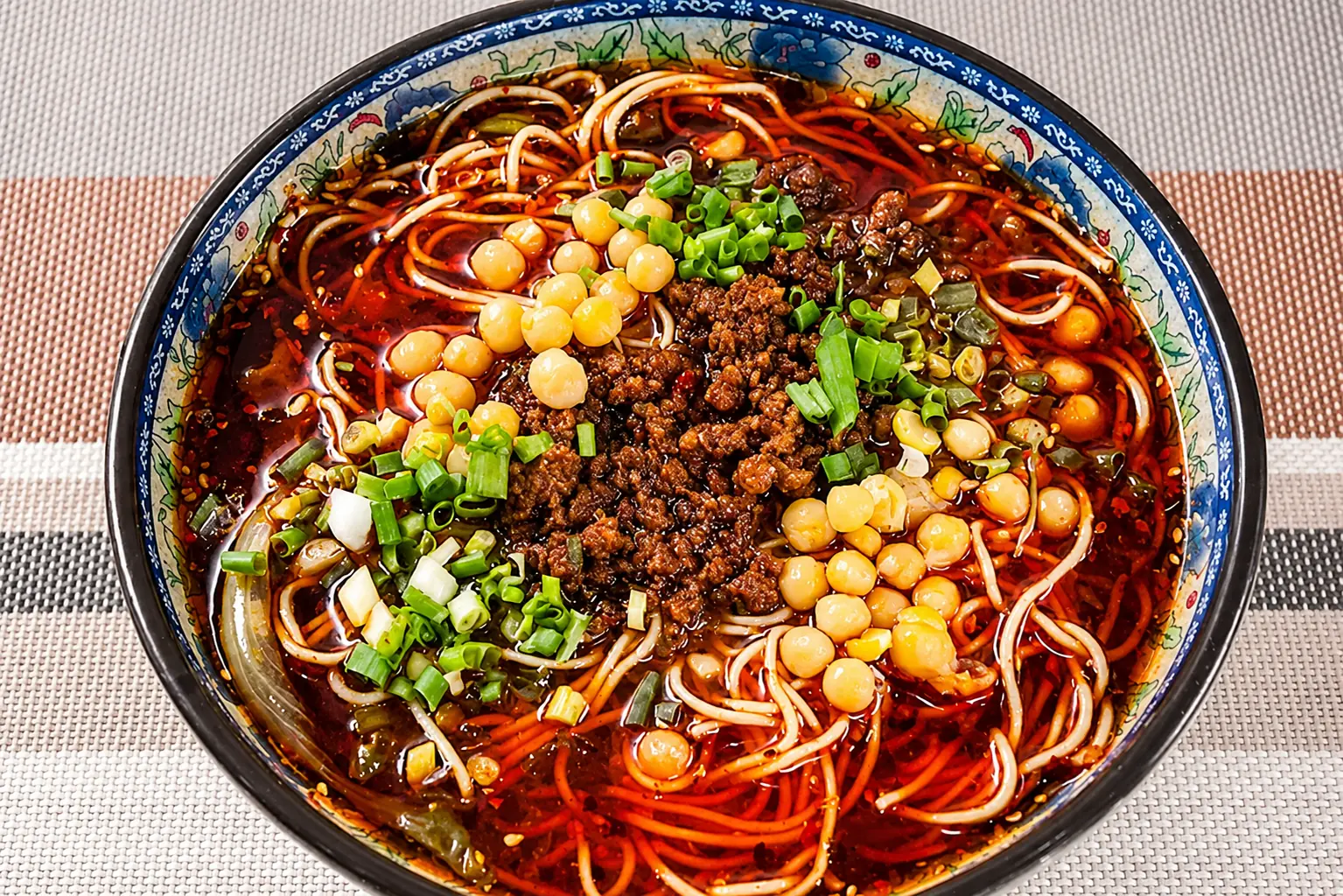
Dan Dan Noodles (担担面) are one of those Sichuan dishes many travelers meet overseas before they understand the Chengdu version. In Sichuan, the classic bowl is usually small, mostly dry, and intensely seasoned from the bottom up: chili oil, Sichuan pepper, preserved vegetable, minced pork, sesame, garlic, vinegar, and soy all pulled through thin noodles. This guide explains what the dish is, how to mix it, where it fits into a Chengdu food day, and why you should not expect a giant peanut-heavy soup bowl.
Executive Summary
What this guide covers
Dan dan noodle origins, dry-bowl structure, classic Sichuan flavor, overseas differences, ordering phrases, Chengdu eating context, and allergy risks.
Best first order
Order one small bowl, mix from the bottom until the sauce coats every strand, then add a calmer snack if the heat builds.
Best first context
Try it as part of a Chengdu snack meal, not as a giant noodle-soup lunch.
1841
Traditional origin story
Dry bowl
Local serving style
Small portion
Snack, not soup meal
Mix first
Bottom sauce rule
Sichuan Carrying-Pole Noodles and Street Origins
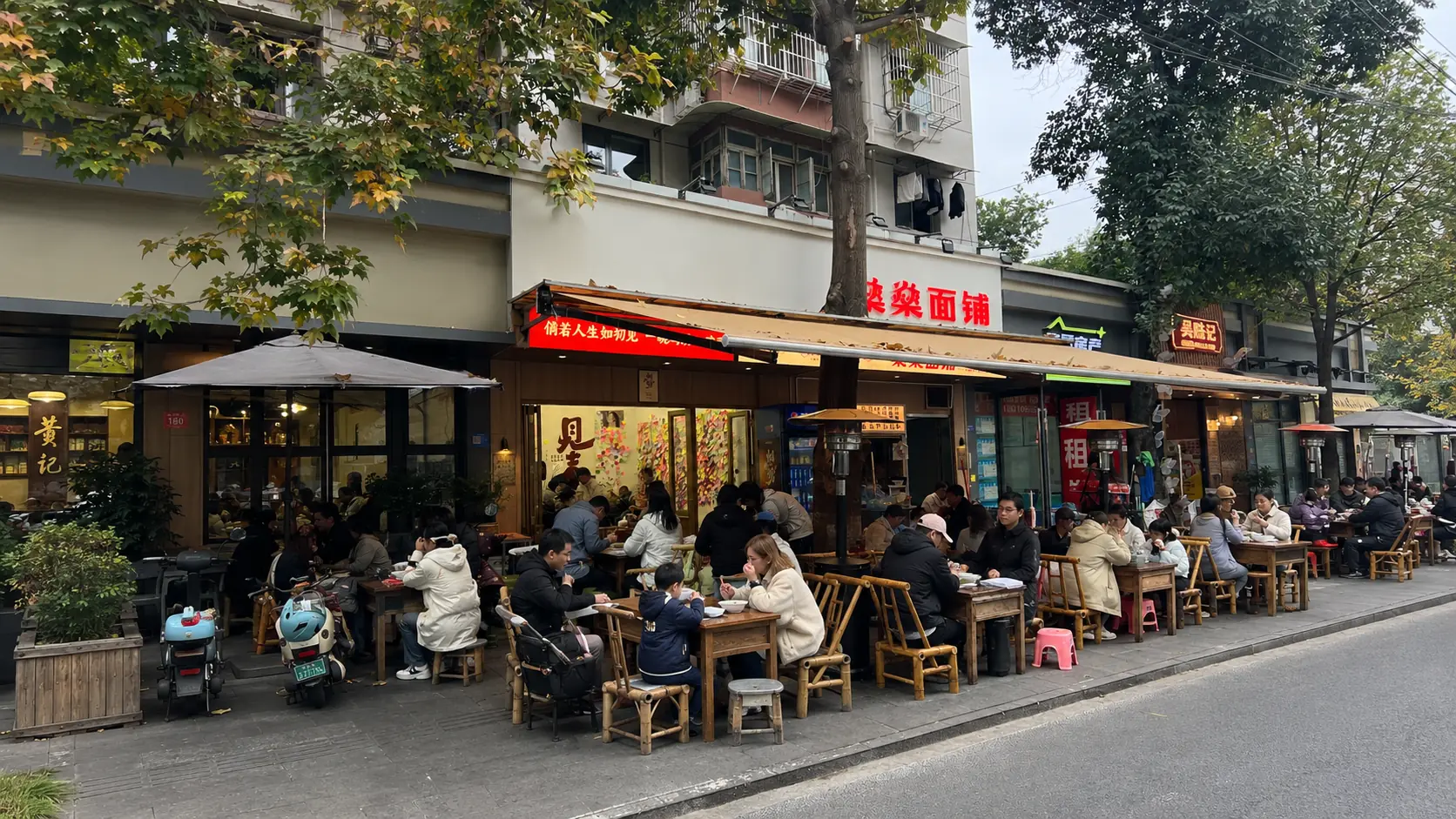
The name dan dan comes from the shoulder pole once used by street vendors to carry noodles, seasonings, stove, bowls, and chopsticks through Sichuan alleys. A Sichuan provincial government page gives the traditional story: the dish is said to have been created by Chen Baobao (陈包包) in Zigong (自贡) in 1841, then became one of Chengdu's famous snacks. Treat the date and inventor as local food lore, but the shoulder-pole logic is the point.
Dan dan noodles began as fast, cheap, high-impact street food. A good bowl should not behave like a slow noodle soup. It should give you a few concentrated bites of noodle, chili oil, Sichuan pepper, preserved vegetable, garlic, vinegar, sesame aroma, and crisp minced-pork topping.
Chengdu's food culture is deep enough that UNESCO calls it a Creative City of Gastronomy. Dan dan noodles are one of the easiest ways into that system: no full hotpot dinner, no banquet, just one small bowl that teaches you how Sichuan flavor stacks heat, numbness, salt, aroma, and texture.
Dry Bowl, Sauce at the Bottom
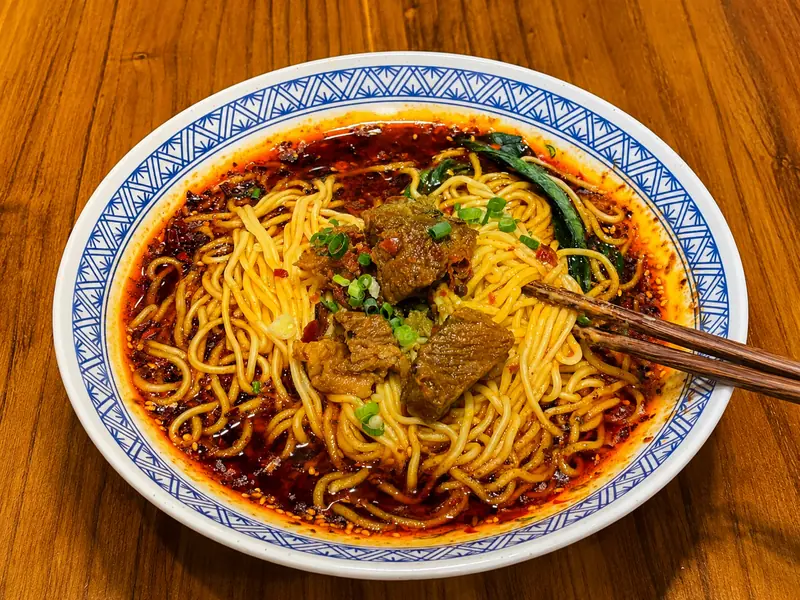
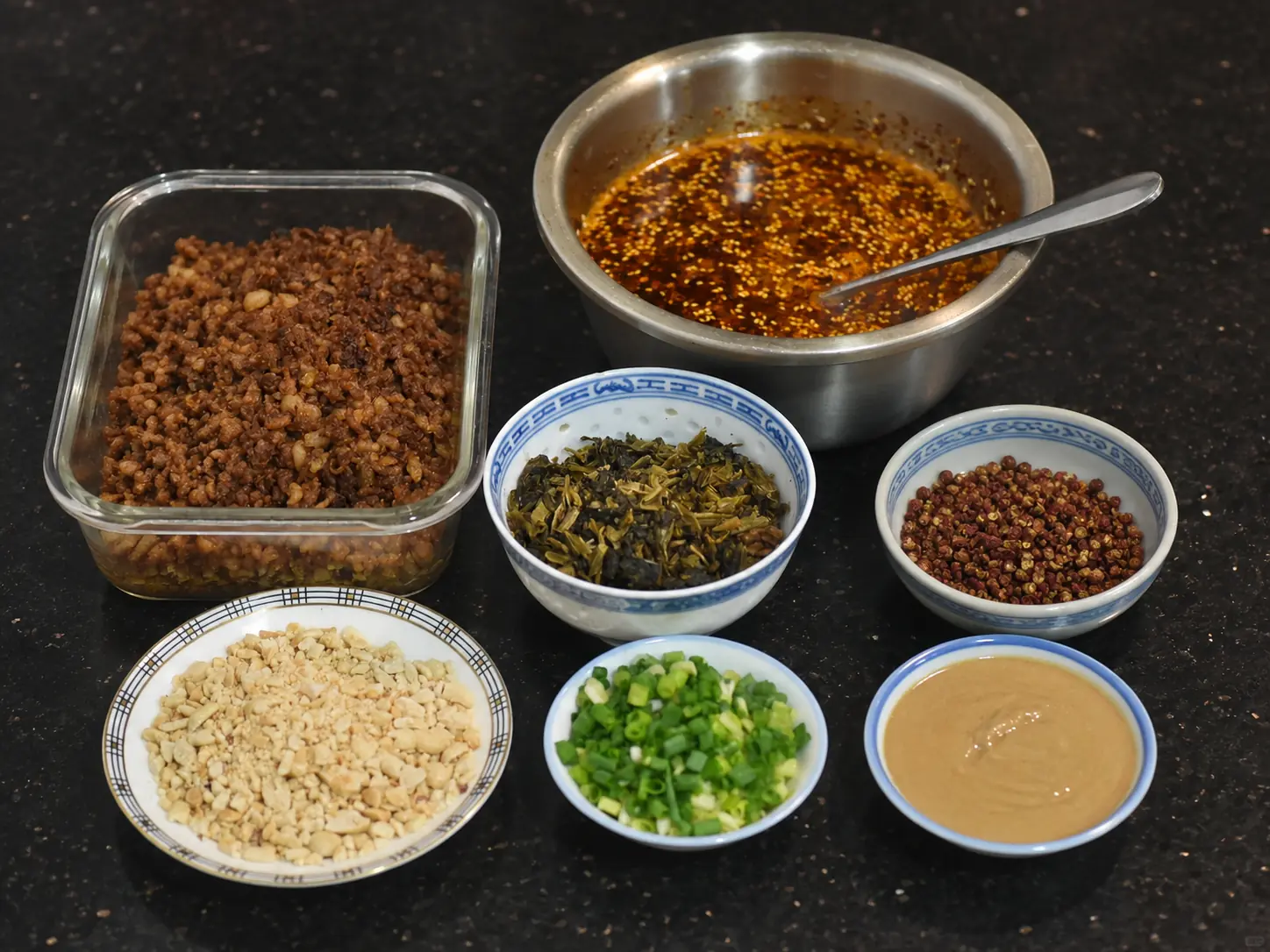
The Sichuan government description is useful for travelers because it says the bowl is thin noodles with little or no soup, crisp minced pork, and a salty-savory, mildly spicy profile. The seasonings sit in the bowl first; the cooked noodles and greens go on top; the minced-pork topping lands last. You have to mix from the bottom before eating.
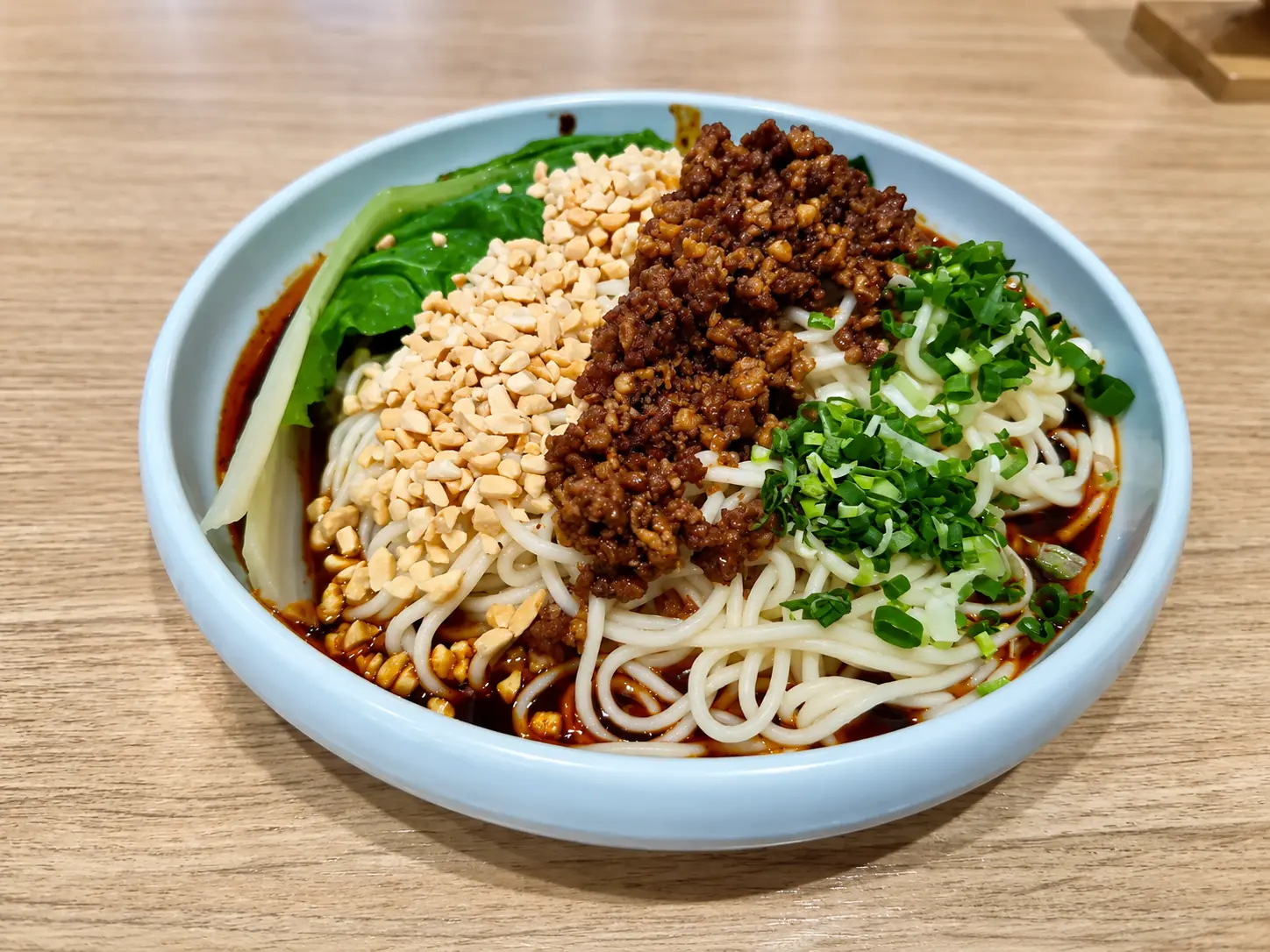

If you grab the top noodles first, the bowl will taste unfinished. Pull from the bottom until chili oil, sesame paste or sesame oil, garlic, soy, vinegar, preserved vegetable, peppercorn, and pork bits coat the strands. The final texture should be glossy and loose, not soupy and not pasted into a thick peanut sauce.
The noodle itself matters. It should be thin and cooked with enough bite to hold the sauce. The official cooking note says the water should be wide and the heat strong, and the noodles should not be cooked too soft. At the table, your test is simpler: the noodles should cling to the sauce but still spring back when you chew.
Mix before judging the flavor
The first bite should come after the bottom sauce has coated the noodles. Otherwise you may taste plain noodles first and a salty oil slick at the end.
What Real Dan Dan Flavor Tastes Like
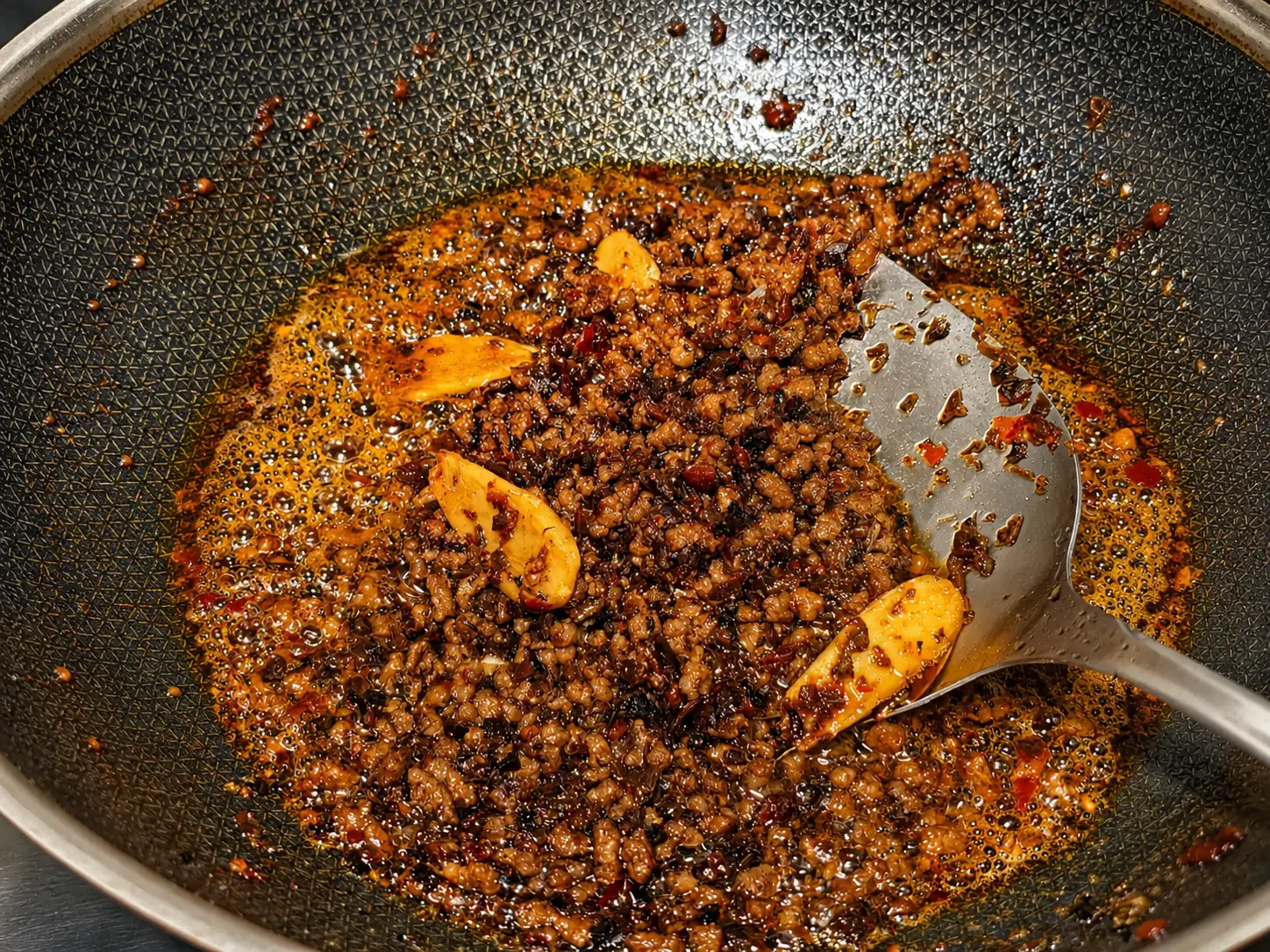
Dan dan noodles are not just "spicy noodles." The Sichuan government ingredient list includes seasoned soy sauce, lard, sesame oil, sesame paste, garlic, red chili oil, Sichuan pepper powder, vinegar, preserved vegetable (芽菜), MSG, and crisp minced-pork topping. Shops vary, but that list shows why the dish tastes layered rather than simply hot.
Chili oil gives color and fragrance. Sichuan pepper gives the numbing tingle. Preserved vegetable gives salty, fermented depth. Garlic and vinegar sharpen the bowl. Sesame paste or sesame oil rounds the edges. The minced pork adds crisp, savory bite. Overseas versions often magnify the sesame or peanut side until the bowl becomes creamy; in Chengdu, the point is balance after mixing.
Taste the first two bites before adding extra chili or vinegar. If the bowl is built well, the flavor should move in stages: salty and savory first, then chili aroma, then a peppercorn tingle, then a lingering sesame-garlic finish.
| Element | What It Adds | Traveler Note |
|---|---|---|
| Red chili oil (红油辣椒) | Color, chili aroma, heat | Ask for mild if spice-sensitive |
| Sichuan pepper (花椒粉) | Numbing tingle | Can be reduced separately from chili |
| Preserved vegetable (芽菜) | Salty fermented depth | Often the hidden flavor anchor |
| Crisp pork topping (猪肉酥臊子) | Savory fried-meat fragrance | Not vegetarian by default |
| Sesame paste or oil (芝麻酱 / 麻油) | Nutty body | Sesame allergy risk |
Chengdu Dry Bowl vs Overseas Sauce Versions
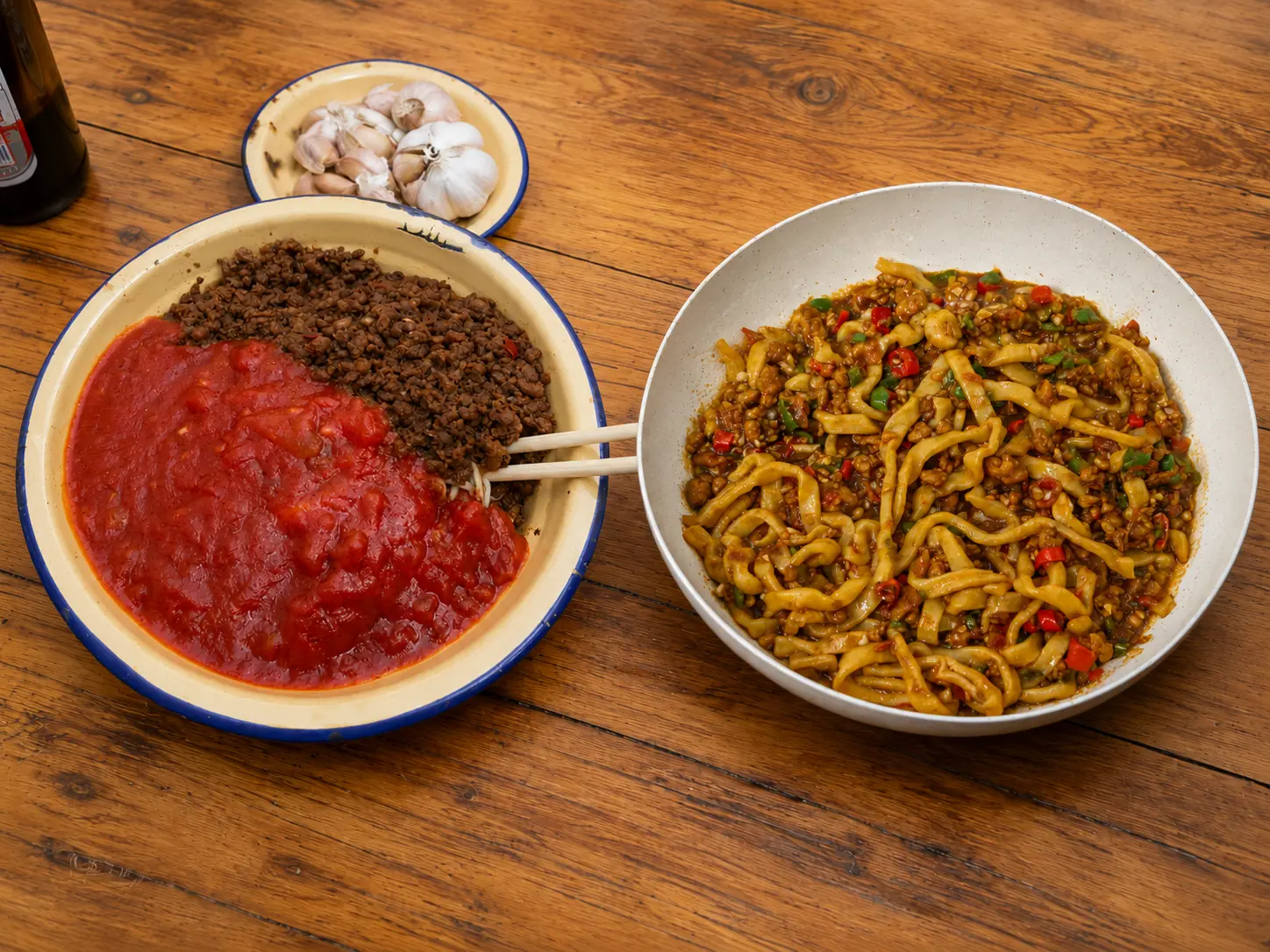
Many overseas Dan Dan Noodles arrive as a large bowl of peanut-heavy sauce, broth, ground meat, greens, and sometimes a boiled egg. Those versions can taste good, but they are not the baseline you should expect in Chengdu.
The Chengdu snack version is usually smaller, drier, sharper, and more concentrated. It works as breakfast, a quick lunch, or one stop in a snack crawl with Zhong dumplings (钟水饺), red-oil wontons (红油抄手), sweet water noodles (甜水面), or bean jelly (凉粉). You are not meant to make one giant bowl do the work of a full meal.
If an English menu gives you a huge soup bowl labeled Dan Dan Noodles, treat it as an adaptation. The useful question is not whether it is "wrong," but whether you know what has changed: more broth, more sesame or peanut, less preserved vegetable, less Sichuan pepper, and often a softer, sweeter profile.
Order, Mix, and Rescue the Heat
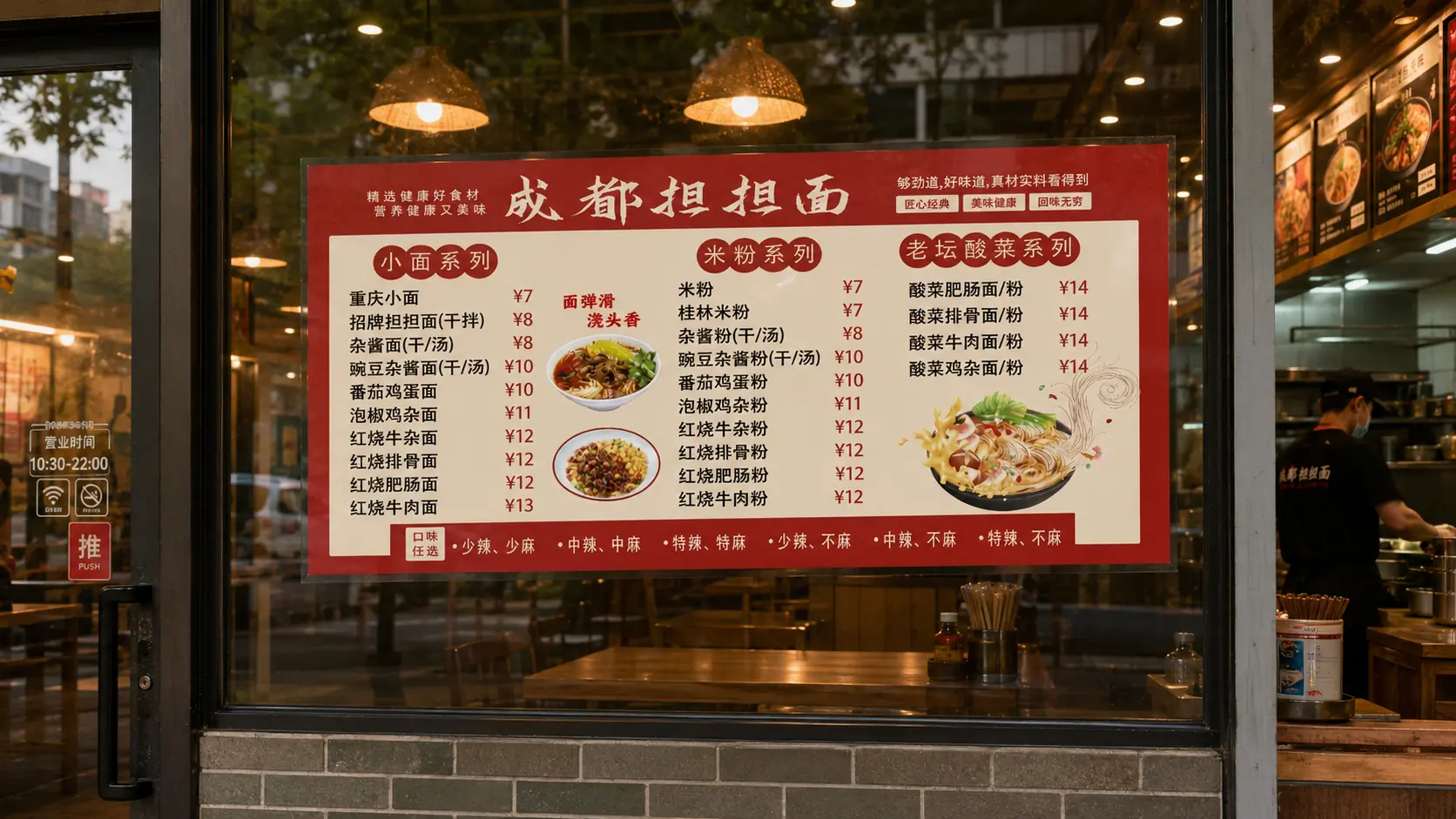
In Chengdu, the characters 担担面 are enough. For a first bowl, order one small serving and keep the rest of the meal flexible. If you are cautious, ask for mild spice and less Sichuan peppercorn. If you do not eat pork, know that removing the minced-pork topping does not automatically make the bowl vegetarian-safe.
When the bowl arrives, mix before taking beauty shots. Lift from the bottom for at least 10-15 seconds until every strand turns glossy. If the heat builds, pair the bowl with sweet water noodles, ice jelly (冰粉), tofu pudding (豆花), clear-broth wontons, or a non-spicy snack; plain ice water is rarely the best rescue plan.
- Point to 担担面- The characters are often enough for a simple first order.
- Set spice and peppercorn- Ask for mild spice and less Sichuan pepper if you are cautious.
- Mix for 10-15 seconds- Lift from the bottom until every strand turns glossy.
- Add a calmer backup- Ice jelly, clear-broth wontons, tofu pudding, or a non-spicy snack can balance the heat.
| English | Chinese | Pinyin | Say It Like… |
|---|---|---|---|
| I want one bowl of dan dan noodles. | 我要一碗担担面。 | Wǒ yào yì wǎn dàn dàn miàn. | Waw yaow ee wahn dan-dan myen |
| Mild spice, less Sichuan peppercorn. | 微辣,少花椒。 | Wēi là, shǎo huājiāo. | Way lah, shaow hwah-jyow |
| No minced pork topping. | 不要肉臊子。 | Bú yào ròu sàozi. | Boo yaow roe saow-zuh |
| Does this contain peanuts? | 这个里面有花生吗? | Zhège lǐmiàn yǒu huāshēng ma? | Juh-guh lee-myen yo hwah-shung mah |
| I am allergic to sesame. | 我对芝麻过敏。 | Wǒ duì zhīma guòmǐn. | Waw dway jir-mah gwaw-min |
Where to Try Dan Dan Noodles in Chengdu
Dan dan noodles are not a one-restaurant pilgrimage dish. They are a Chengdu snack skill: many snack houses, noodle shops, and tourist-area food courts sell them, and quality depends on sauce balance, noodle texture, and turnover. Choose by route first, then by hunger.
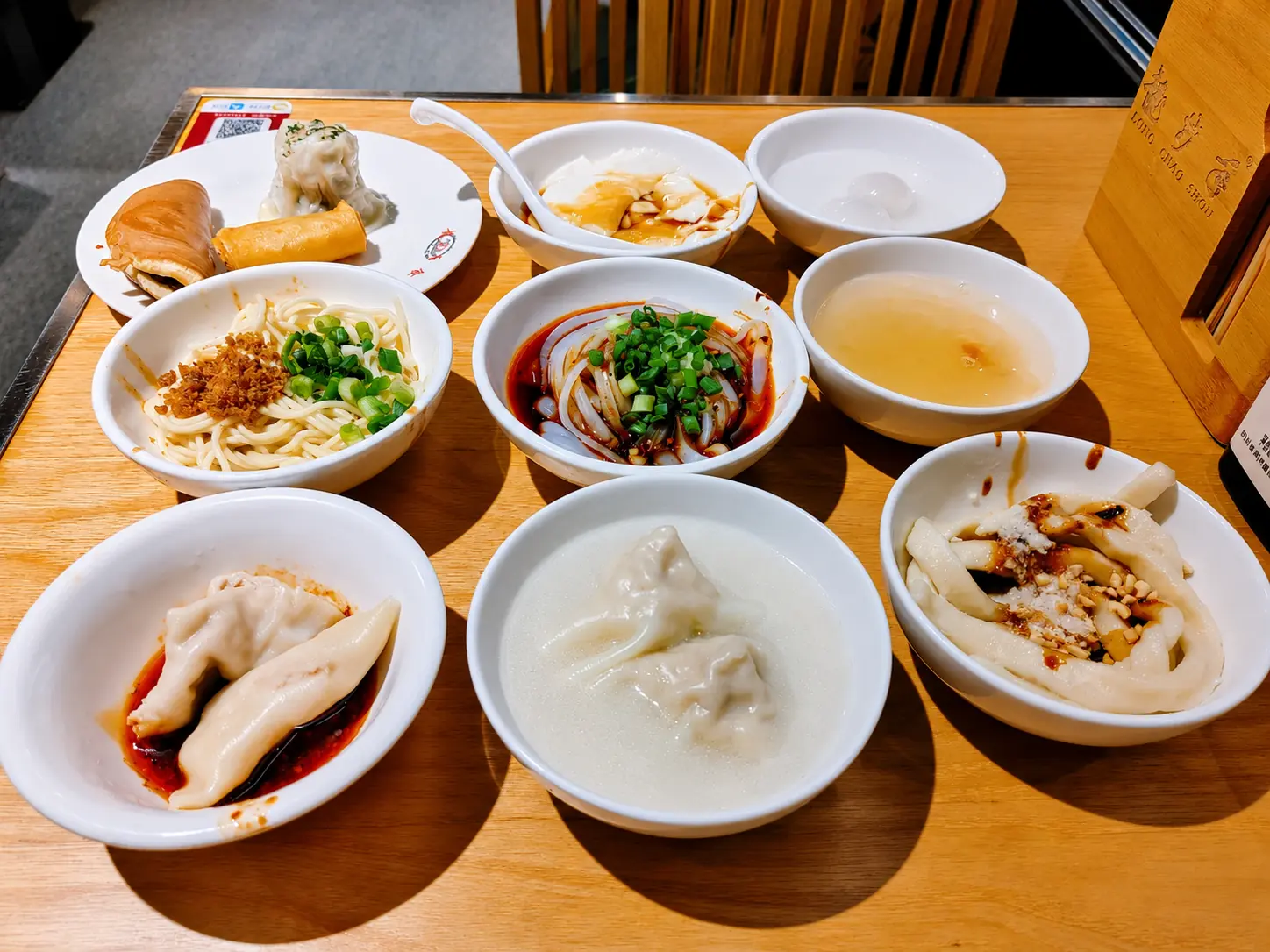
Useful if you want several Chengdu snacks under one roof. A Sichuan provincial government page describes Long Chaoshou as a famous Chengdu snack dating to 1941.
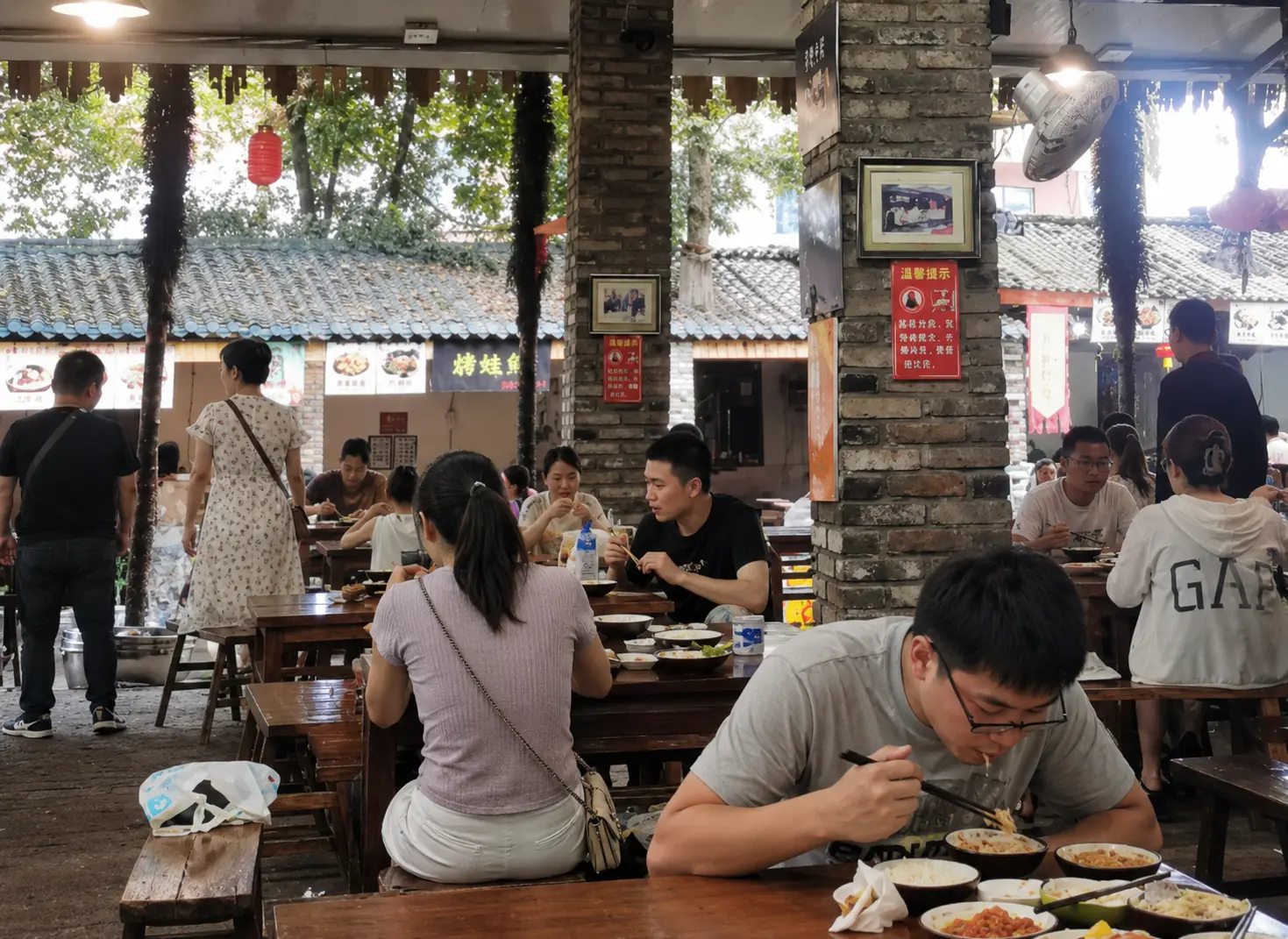
Better for understanding than for a quick city-center lunch. If you are already going to Pidu District, it links the bowl to chili oil, Sichuan peppercorn, preserved vegetables, fermented pastes, and Chengdu food history.
Neighborhood Noodle Shops
small busy shops / route-first choice
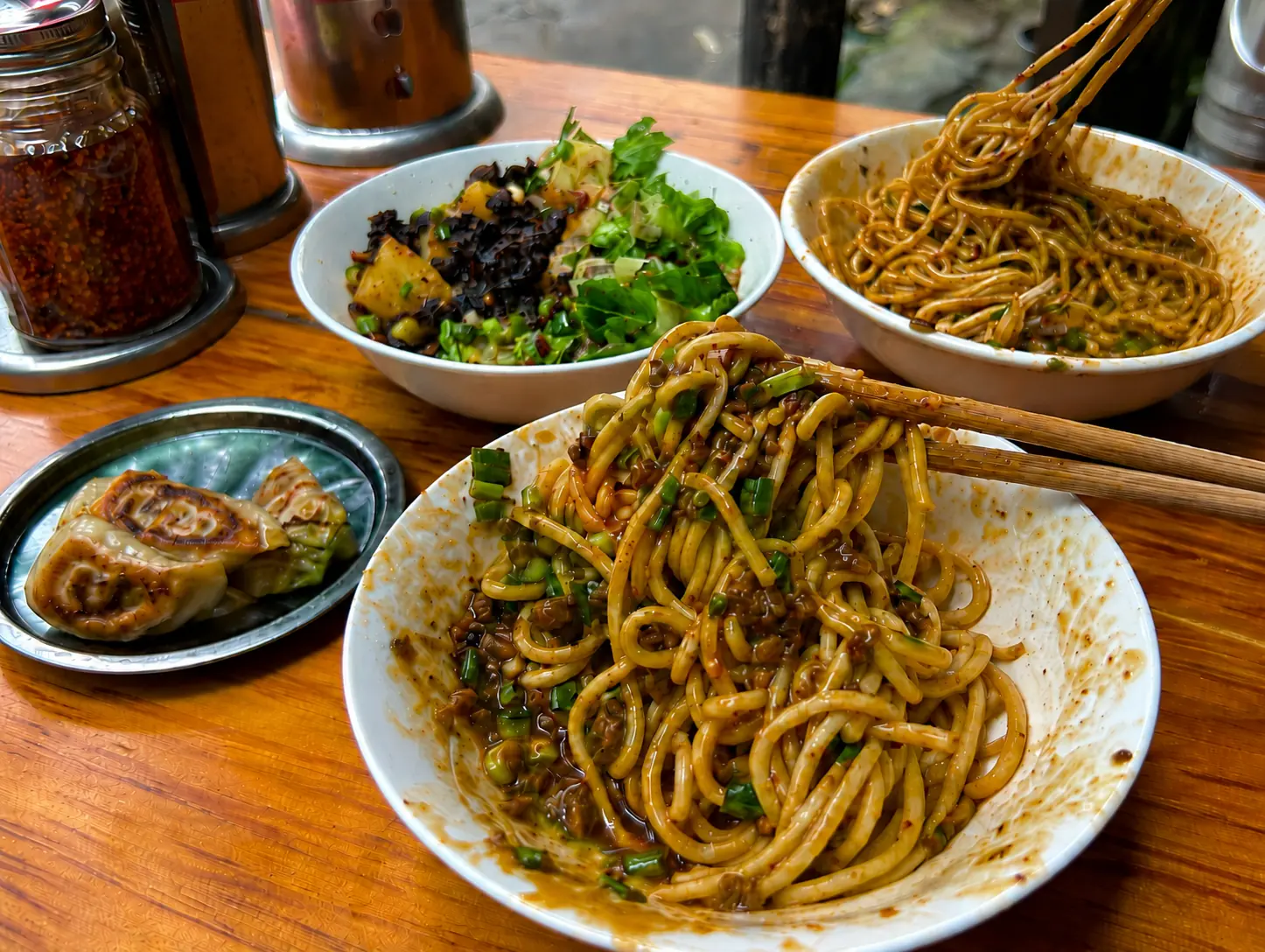
If you are near Kuanzhai Alley, Wenshu Monastery, People's Park, or Chunxi Road, a busy small noodle shop can be enough. Local turnover and a sauce mixed to order matter more than a viral storefront.
For the wider food plan, use the Chengdu food guide and the Chengdu one-day itinerary to avoid spending your whole day chasing one small bowl.
Spice, Pork, Sesame, and Allergy Risks
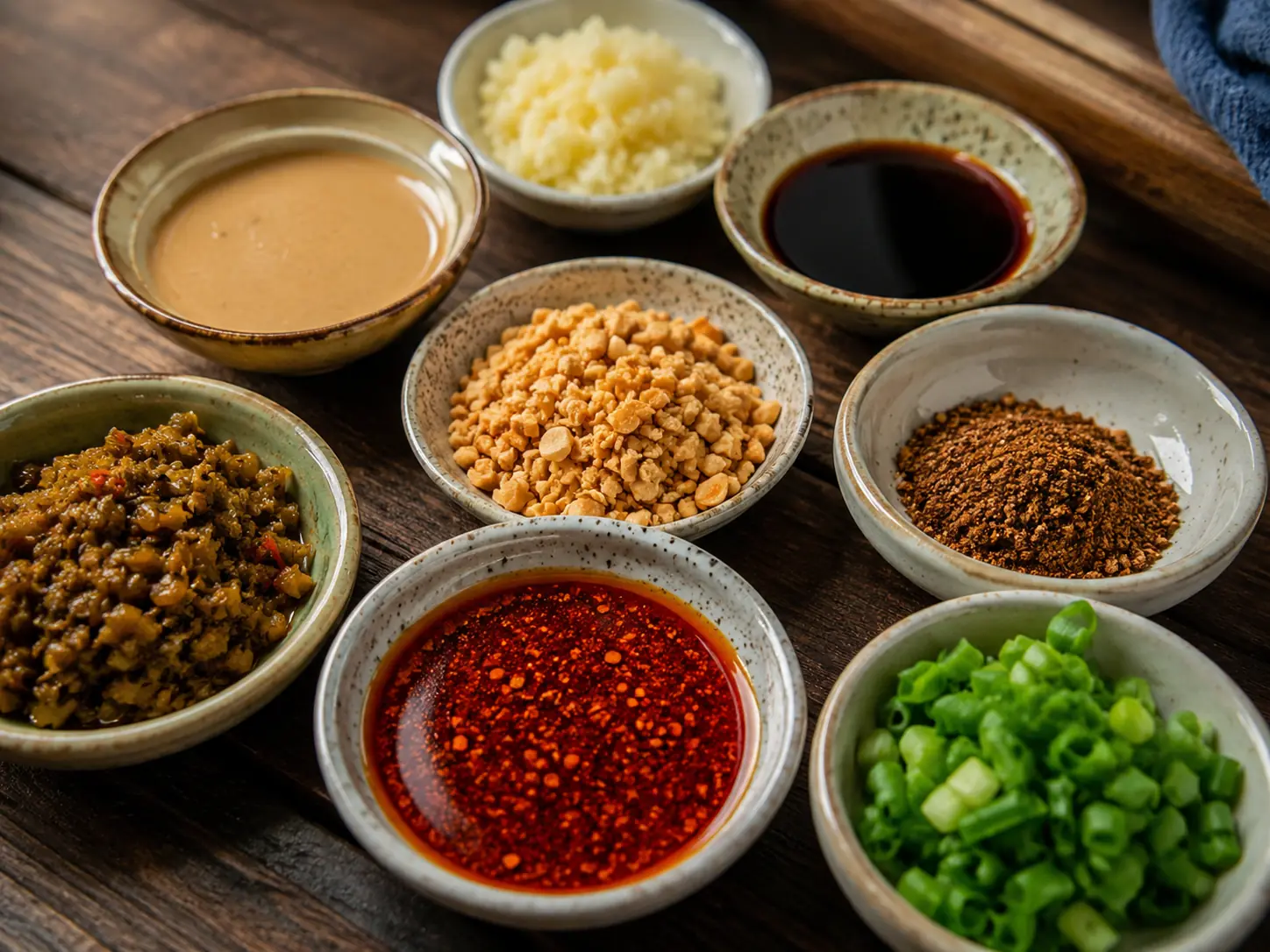
Dan dan noodles are tricky for dietary restrictions. The noodles are wheat-based. Classic Chengdu-style bowls may use minced pork topping, lard, sesame oil or sesame paste, soy sauce, vinegar, garlic, chili oil, Sichuan pepper powder, preserved vegetable, and MSG. Some versions also include peanuts or crushed peanuts.
Vegetarian travelers should not just ask for "no meat." A bowl without pork topping may still contain lard, meat stock, or shared seasonings. Travelers with sesame, peanut, gluten, soy, or severe chili sensitivity should ask directly. For serious allergies, ordinary snack shops are risky because sauces and utensils are shared.
Children can taste a mild bowl, but dan dan noodles are usually not the safest child-friendly main. Order clear-broth wontons, tomato egg noodles, rice with a non-spicy dish, or ice jelly alongside it so the table has a calmer backup.
Serious allergies need written Chinese notes
Ordinary noodle shops may share sauces, spoons, oils, cutting boards, and condiment jars. If sesame, peanut, gluten, soy, pork, or chili cross-contact would be dangerous, treat casual dan dan noodle shops as high-risk unless staff can clearly confirm the ingredients.
- Pork and lard: no minced pork topping does not always mean vegetarian-safe.
- Sesame and peanuts: shops may use sesame paste, sesame oil, peanut garnish, or shared condiment jars.
- Wheat and soy: the noodles are wheat-based, and soy sauce is common in the seasoning base.
- Chili and Sichuan pepper: heat and numbing pepper can be reduced separately if you ask clearly.
- Children: order a calm backup dish instead of expecting dan dan noodles to work as the main meal.
Frequently Asked Questions
Not in the classic Chengdu snack style. The Sichuan government description emphasizes thin noodles with little or no soup, mixed with seasonings at the bottom of the bowl.
Beyond This Guide
Dan dan noodles are one small bowl, not the whole Sichuan story. Pair them with mapo tofu, Sichuan and Chongqing hotpot, or a hands-on visit to the Sichuan Cuisine Museum when you want the flavors to connect across a full Chengdu day.
Useful next reads:
- Chengdu Food Guide
- Mapo Tofu Sichuan Guide
- Sichuan and Chongqing Hotpot Guide
- Sichuan Cuisine Museum Chengdu Guide
© gochinafreely.com — Original guide by Go China Freely.