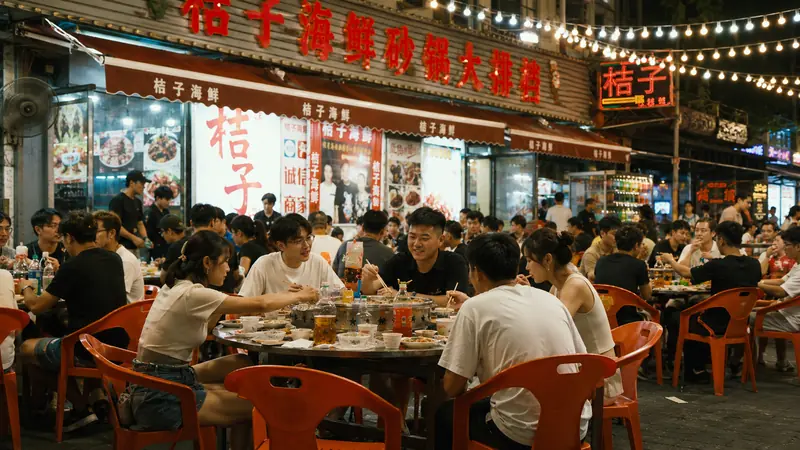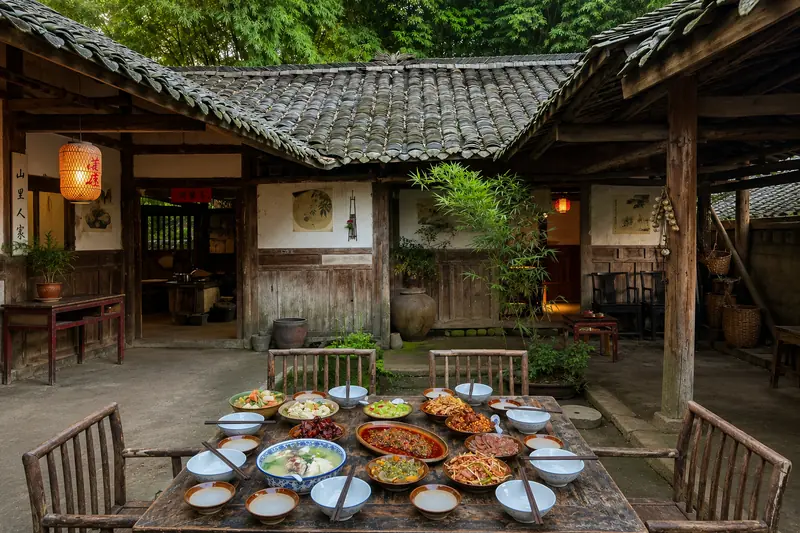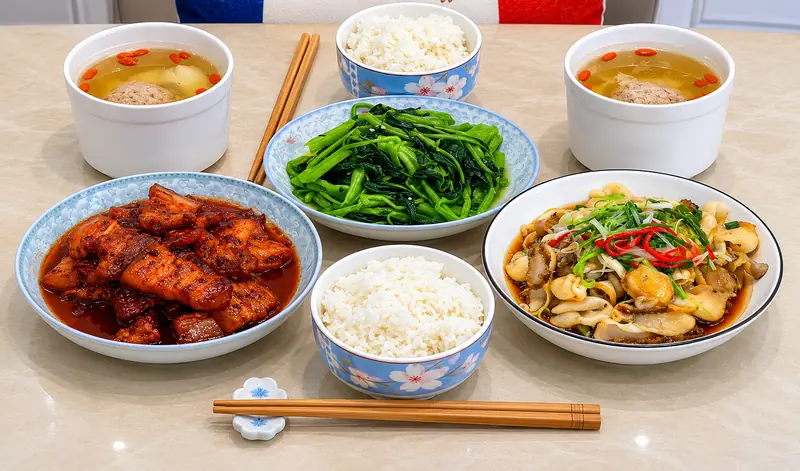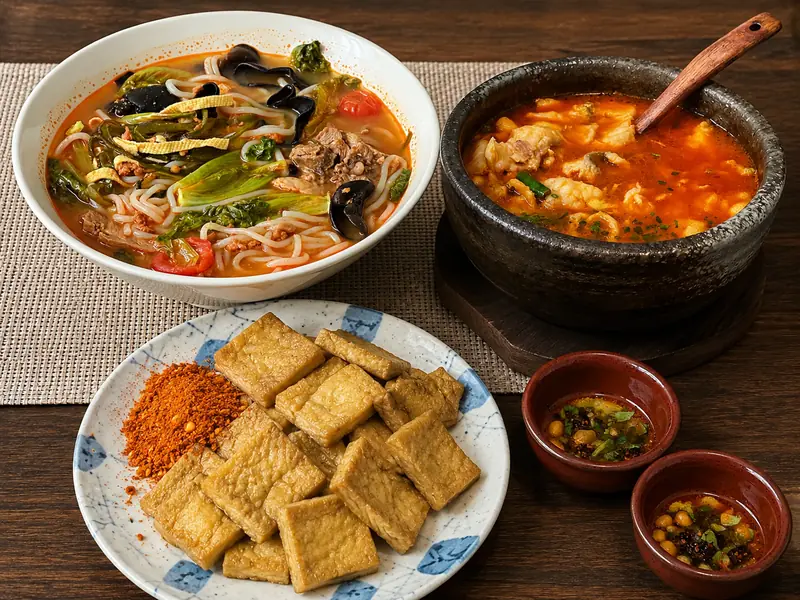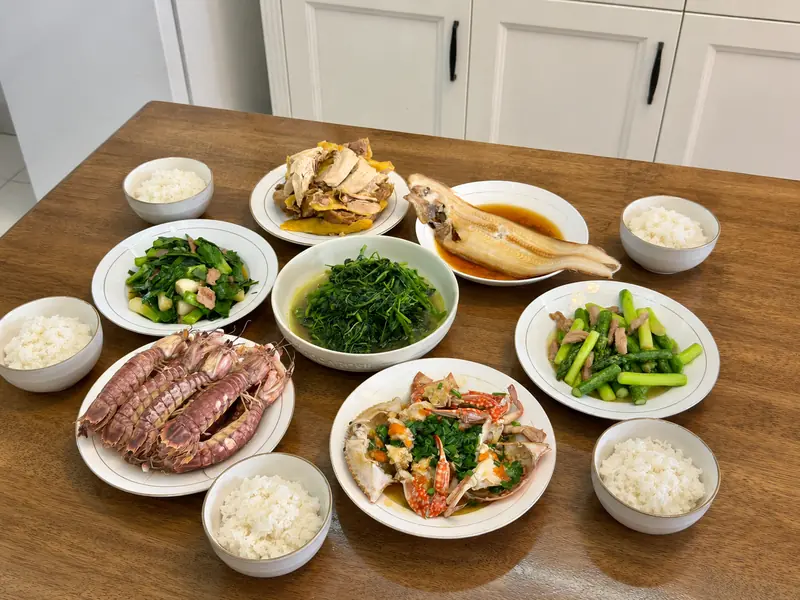
Shandong cuisine (鲁菜), often called Lu cuisine, is sometimes described as the mother of northern Chinese cooking. That phrase is useful if you treat it as a metaphor, not a map. It does not mean every Beijing, Tianjin, Northeast, or Northwest dish is Shandong food. It means Lu cuisine has long supplied northern China with a deep technical language: broths, quick wok heat, braising, scallion aroma, vinegar, soy sauce, seafood, wheat staples, and formal banquet habits.
This guide is not another Qingdao Food Guide. Qingdao's beer, spicy clams, mackerel dumplings, markets, and seafood-ordering tactics already have their own page. Here the scale is provincial: Jinan (济南) soups and old-school dishes, Jiaodong Peninsula (胶东半岛) seafood beyond Qingdao, Confucius Family Cuisine (孔府菜) in Qufu, Boshan/Zibo banquet traditions, Dezhou braised chicken, and the wheat-heavy table that makes Shandong feel unmistakably northern.
Executive Summary
What this guide covers
Shandong cuisine as a province-level food tradition: broths, fire control, scallion aroma, Jiaodong seafood, Jinan classics, Confucius Family Cuisine, Boshan/Zibo dishes, Dezhou chicken, and wheat staples.
Best first table
Build contrast: one soup or tofu dish, one seafood or scallion-braised dish, one sweet-sour or wok-fired dish, one vegetable, and one wheat staple.
Main traveler challenge
Lu cuisine is usually not spicy, but it can hide seafood, pork, offal, wheat, soy sauce, vinegar, sugar, meat stock, high-priced sea cucumber, and shellfish.
8 cuisines
Lu cuisine status
Broth first
Jinan core clue
Sea + wheat
Shandong table
Ask first
Seafood and offal risks
Start With Broth, Heat, Sea, Scallion
The most useful first shortcut is not a dish list. It is four signals: broth, heat, sea, and scallion. A China Daily government portal page describes Shandong cuisine as one of China's Eight Culinary Traditions, connected to rich regional food resources, fresh ingredients, salt, soup stock, and four schools: Jiaodong, Jinan, Kongfu, and herbal cuisine.
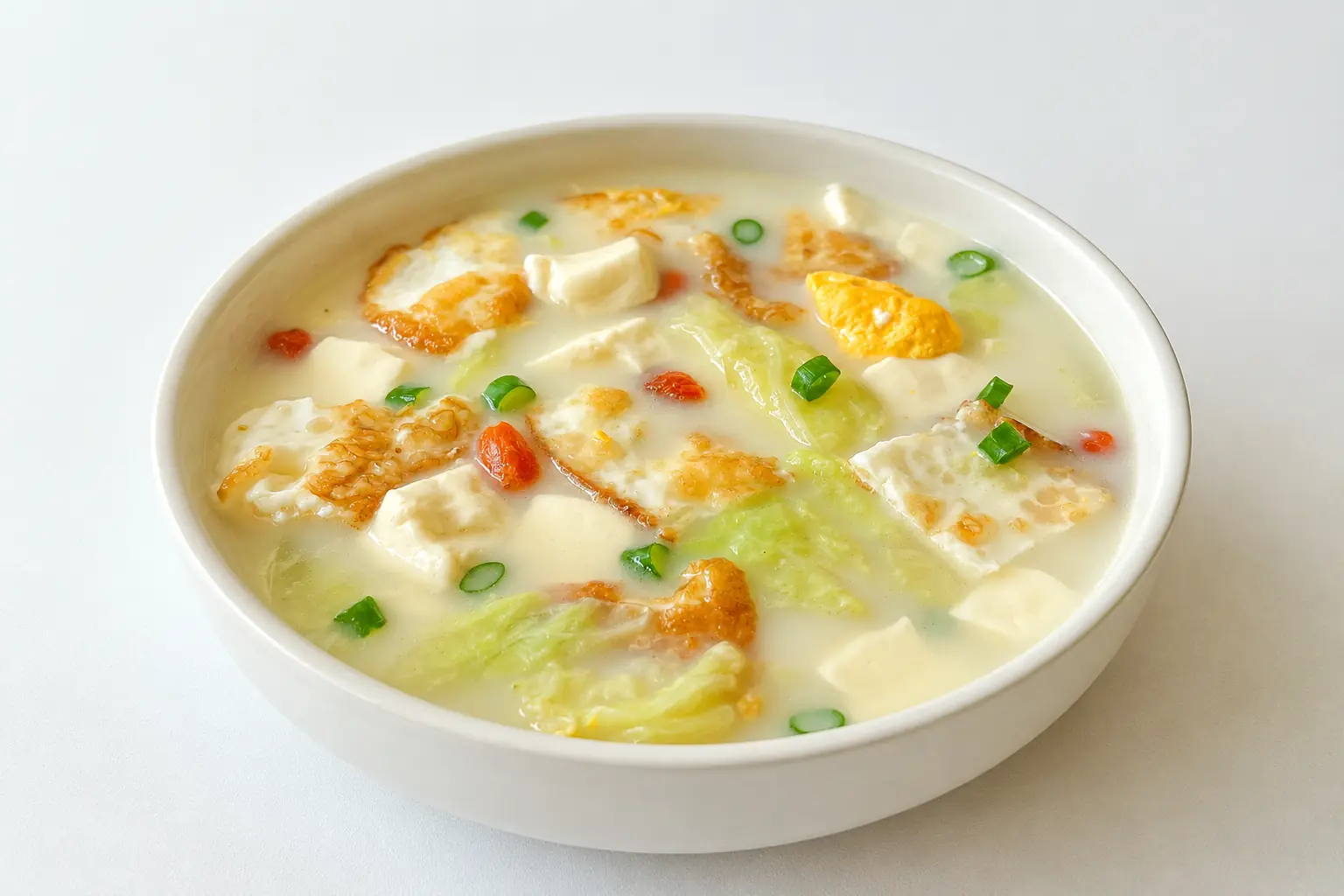
Broth is the quiet foundation. Shandong chefs care about clear broths, rich stocks, and sometimes milky-looking soups. A soup may look plain, but the work is in the chicken, pork bones, seafood, ham, aromatics, heat control, and filtering. In many Lu dishes, stock is not background. It is the structure.
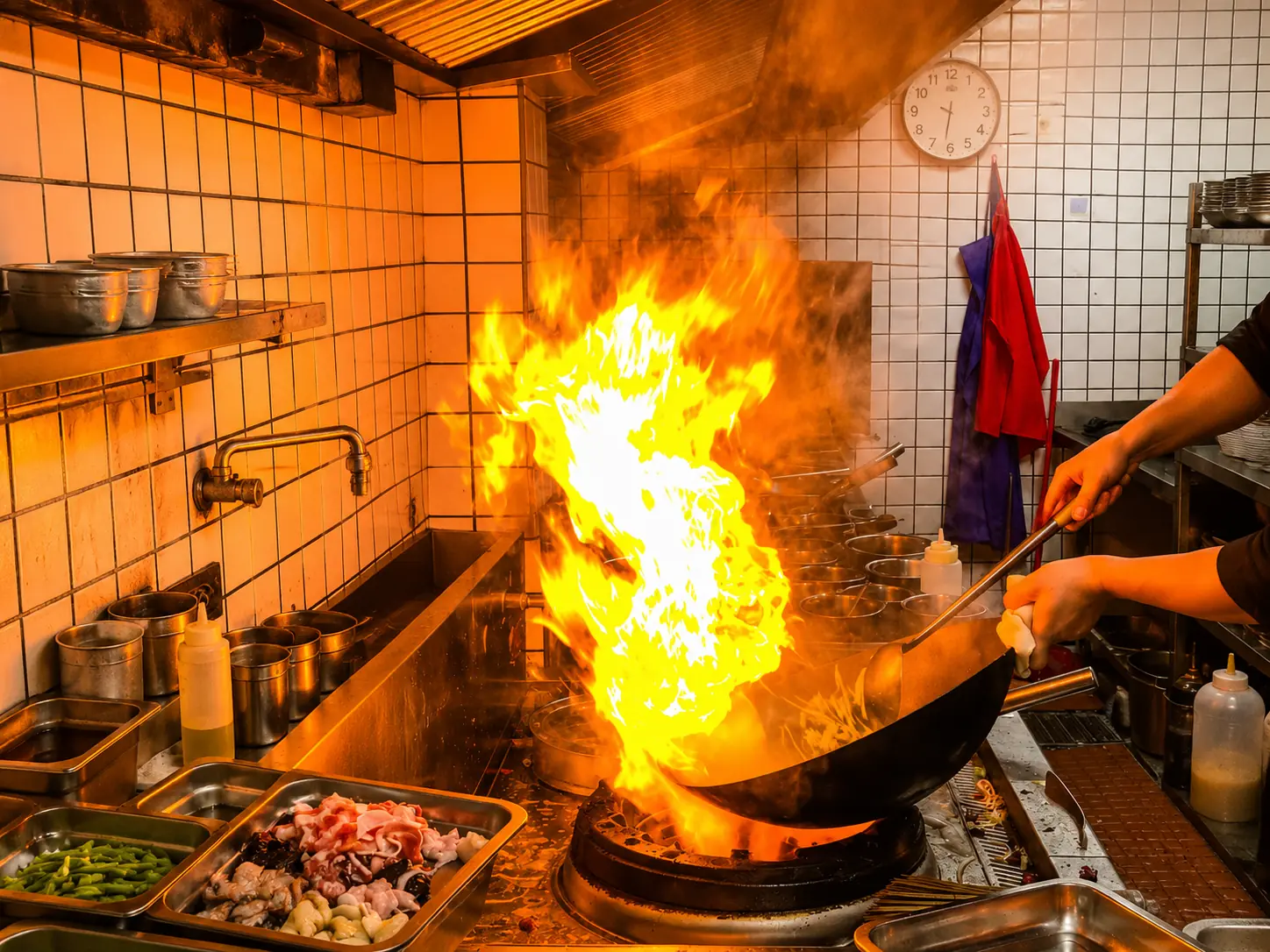
Heat means technique. Lu cuisine values quick-frying, stir-frying, deep-frying, braising, roasting, boiling, stewing, and careful sauce reduction. A dish can be mild on chili but demanding in timing: crisp outside, tender inside, glossy sauce, clean aroma, no muddiness.
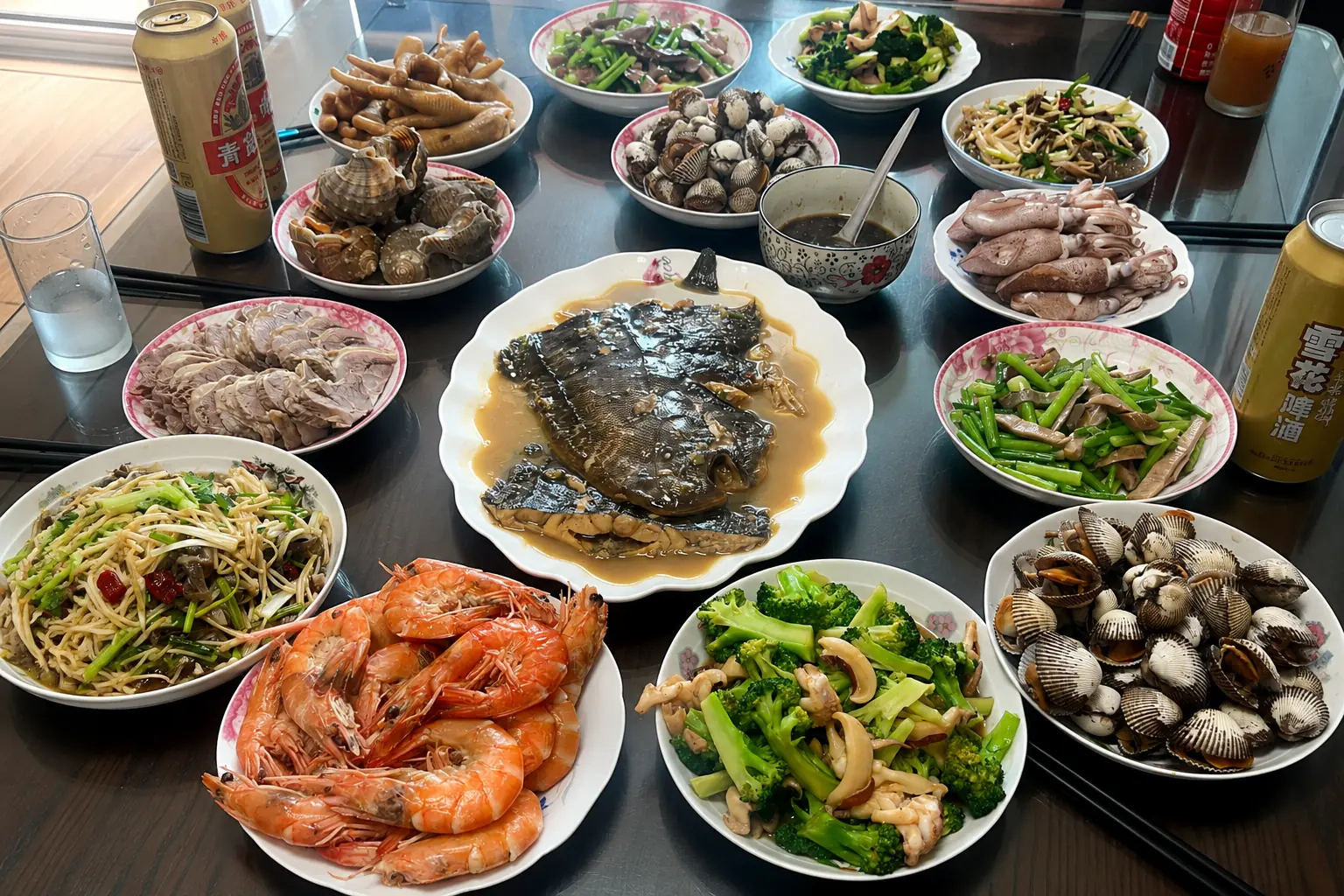
Sea comes from the Shandong Peninsula. Qingdao (青岛), Yantai (烟台), Weihai (威海), and nearby coastal areas bring sea cucumber, abalone, prawns, clams, sea whelk, mackerel, yellow croaker, scallops, and fish into the Lu cuisine map.
Scallion is the visible aroma. Zhangqiu scallions (章丘大葱), scallion oil, scallion-braised sea cucumber, ginger, garlic, soy sauce, vinegar, and wheat staples give Shandong cooking its direct northern warmth. Do not reduce the cuisine to "big scallions," though. The scallion is the doorway; broth, seafood, and fire control are the room.
Mild Does Not Mean Simple
Lu cuisine is usually low on chili heat, but the flavor can be deep: stock, seafood, soy sauce, vinegar, sugar, scallion, ginger, garlic, and carefully reduced sauces.
Seafood Is Northern Too
Many travelers associate Chinese seafood with Cantonese or coastal southern food. Shandong's Jiaodong branch is a major northern seafood tradition.
Why Lu Cuisine Influenced the North
Calling Shandong cuisine "the mother of northern Chinese cooking" works only when you understand the limits. Lu cuisine strongly influenced northern banquet cooking, imperial tables, Beijing restaurants, and the way many northern dishes use stock, scallions, soy sauce, vinegar, and wheat. But Beijing food is not just Shandong food, Northeast cuisine is not Lu cuisine, and Tianjin breakfast has its own identity.
This matters for avoiding repetition on this site. Our Beijing Food Guide covers roast duck, zhajiang noodles, lamb hotpot, hutong snacks, and the city's Shandong-rooted layer. Our Northeast Chinese Cuisine Guide covers big shared plates, sauerkraut stews, dumplings, and barbecue. This Shandong guide sits underneath those pages: it explains the older technical base, not every modern northern meal.
For travelers, the practical lesson is simple. If a northern menu is not spicy but still tastes savory, layered, and satisfying, the flavor may be coming from the Lu-style toolbox: stock, scallion, soy sauce, vinegar, ginger, garlic, wheat, seafood, and patient sauce work.
Use the mother phrase carefully
In this guide, "mother of northern cooking" means influence, not ownership. It helps explain why old Beijing restaurants and northern banquet dishes can feel Shandong-rooted without becoming identical to Shandong cuisine.
Jinan Shows Soup and Fire Control

Jinan cuisine is the best inland starting point for Lu cuisine. The government portal page describes Jinan cuisine, centered on Jinan, Tai'an, and Dezhou, as the main part of Shandong cuisine, with soups as its most representative dishes. This is where the cuisine's old-school technical personality becomes easiest to see.
Sweet-and-sour Yellow River carp (糖醋黄河鲤鱼) is the famous first image: whole fish, dramatic knife cuts, crisp frying, and a glossy sweet-sour sauce. A Jinan government food page lists sweet-and-sour carp and braised intestines among local delicacies. For travelers, the warning is simple: it is an impressive whole-fish dish with bones, not a boneless Western fish fillet.
Nine-turn large intestine (九转大肠) is the more challenging classic. It is pork intestine, cleaned, cooked, seasoned, and reduced into a glossy, aromatic dish that can be sweet, sour, salty, savory, and fragrant at once. If you do not eat offal, skip it without guilt. Understanding the dish matters more than forcing yourself through it.
Quick-fried kidney (爆炒腰花), oil-blasted crisp textures, pot-collapsed tofu (锅塌豆腐), milky soup dishes, and old-style braises all belong to the same logic: knife work, heat, broth, and sauce. They are less globally famous than roast duck or dumplings, but they teach Lu cuisine better than a random plate of wheat snacks.
- Good Jinan first move: one soup or tofu dish, one fish or sweet-sour dish, one vegetable, and one wheat staple.
- For adventurous eaters: nine-turn large intestine or quick-fried kidney, only if offal is part of the experience you want.
- Do not over-order: one whole fish plus one offal dish plus several wheat staples can become heavy fast.
Jiaodong Seafood Is Bigger Than Qingdao
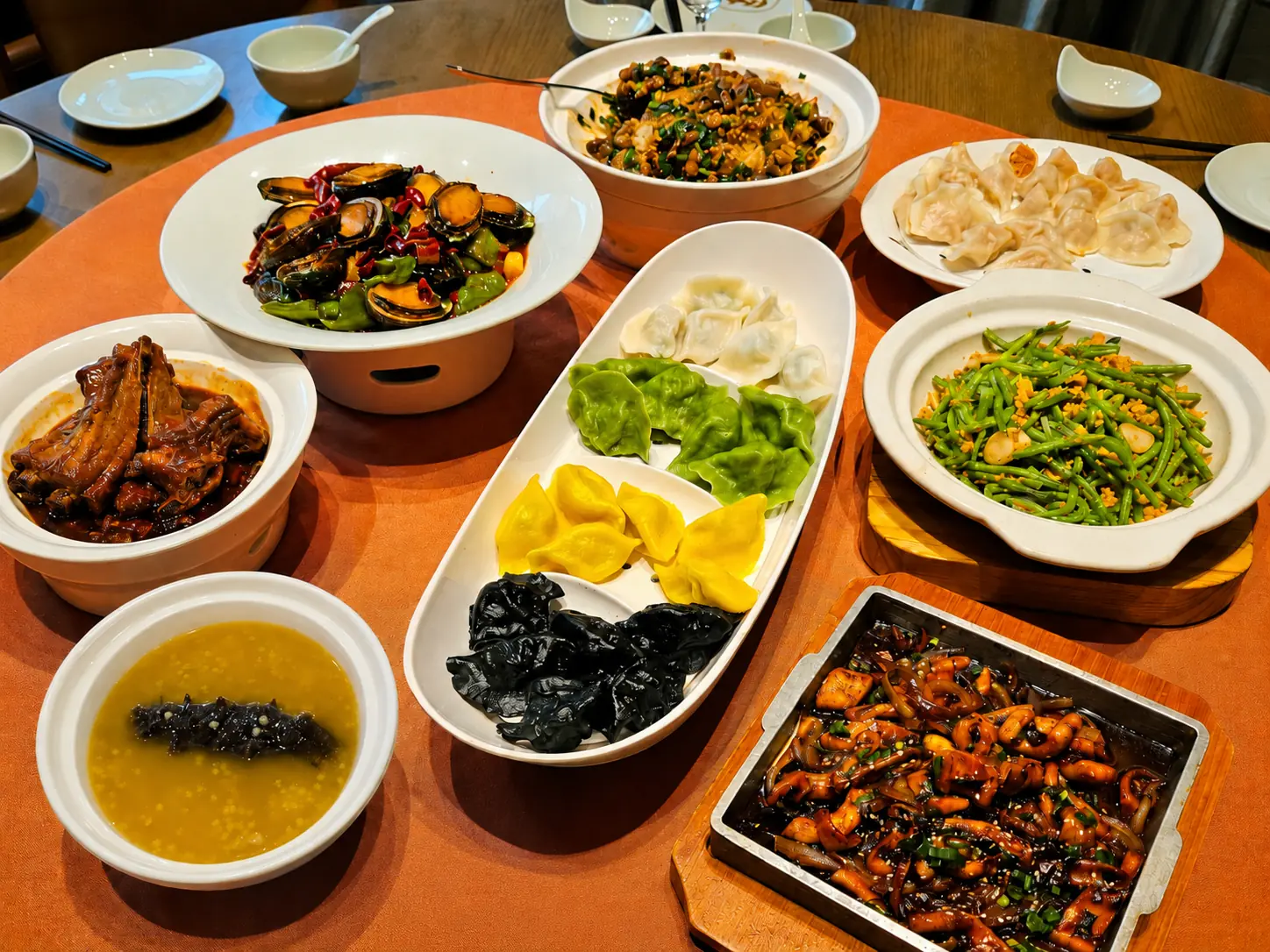
Jiaodong cuisine is the seafood-facing branch of Shandong cuisine. The China Daily government portal describes Jiaodong cuisine as originating from Yantai and Qingdao, known for seafood dishes, delicate aromas, and light flavors. Qingdao is the most visible city for many foreign travelers, but it is only one stop on the peninsula.
Yantai gives the map another angle. A Shandong provincial tourism page on Penglai Xiaomian notes that this Yantai noodle tradition uses fresh fish from the sea and old hens' eggs to make a rich, thick gravy. That is a very Shandong combination: sea flavor carried through wheat and soup.
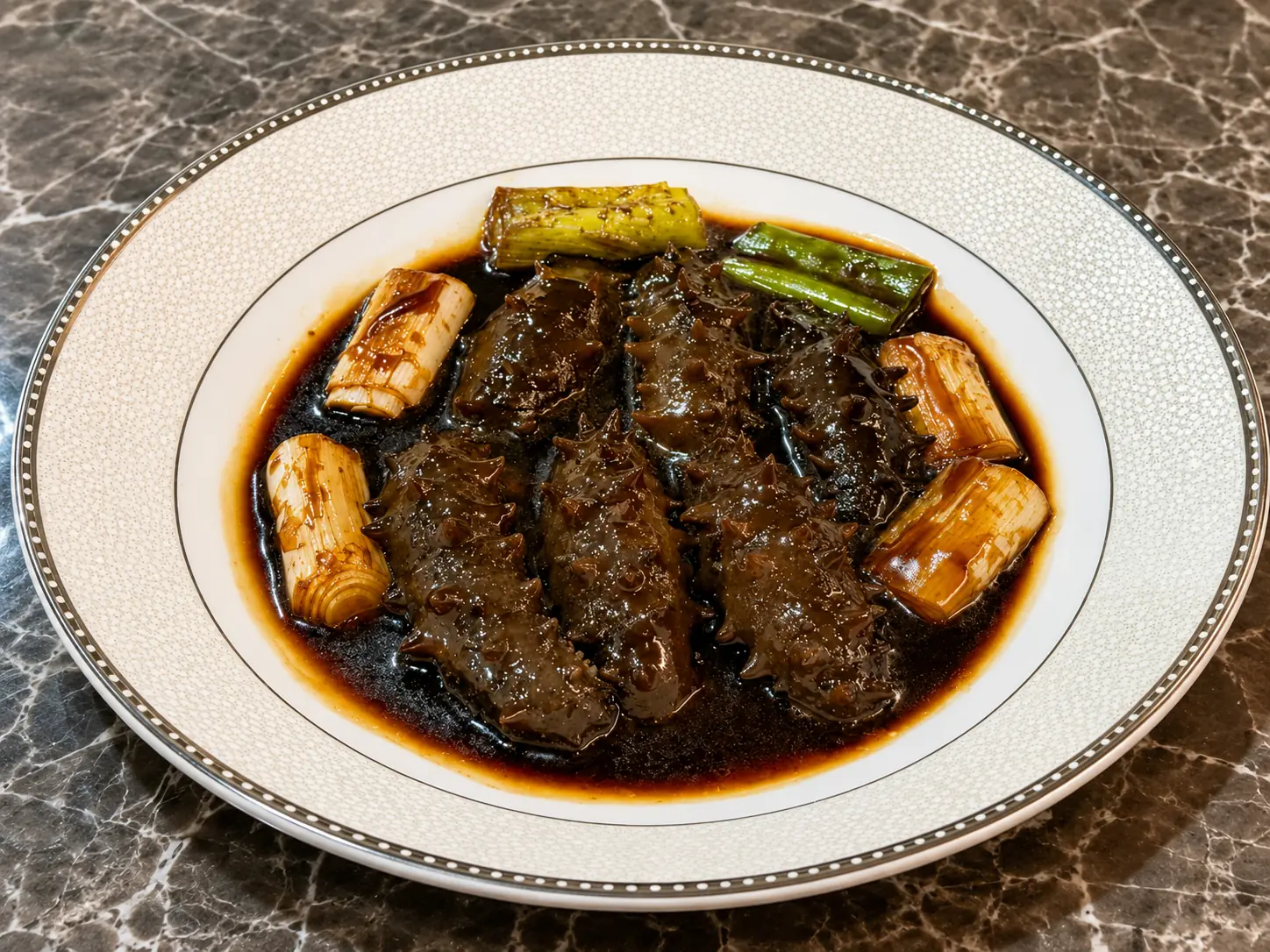
Braised sea cucumber with scallions (葱烧海参) is the luxury Lu cuisine dish to know. Sea cucumber itself is mild and gelatinous; the attraction is texture, scallion fragrance, stock, and reduced sauce. The Michelin Guide notes that Shandong and the Liaodong Peninsula are known for prized spiny sea cucumbers, and that sea cucumber is one of the prestigious dried seafoods in Chinese cuisine.
For a first-time traveler, though, sea cucumber may not be the best first seafood order. Start with prawns, clams, steamed fish, mackerel dumplings, fish-stock noodles, sea whelk, or simple shellfish. Save sea cucumber, abalone, sea urchin, and premium live seafood for a restaurant where you can clearly understand price, portion, and preparation.
If your route includes Qingdao, use this article for Lu cuisine context and the Qingdao Food Guide for the actual beer-and-seafood evening, market choices, and price questions.
Confucius Family Cuisine Is a Formal Banquet
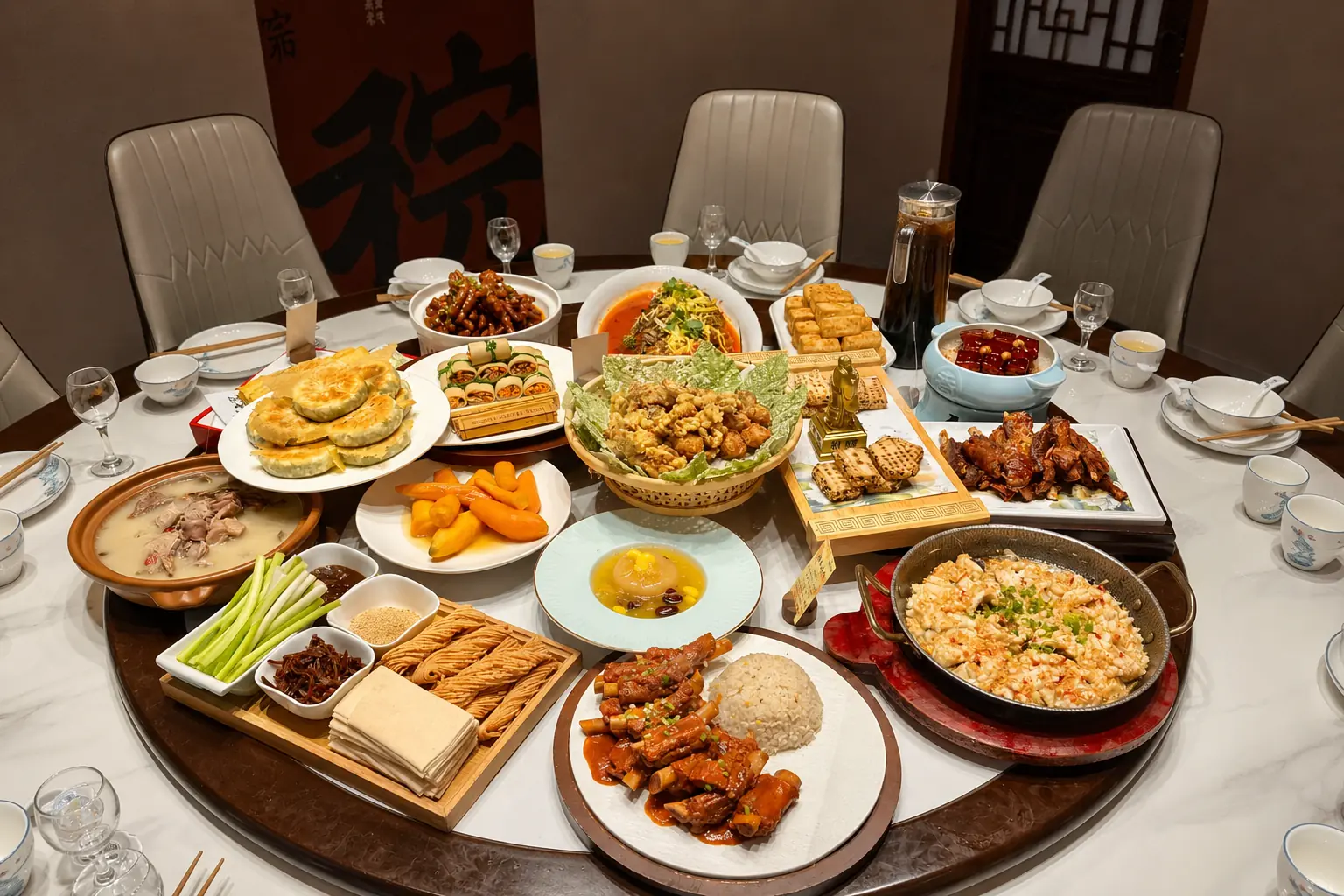
Confucius Family Cuisine, also called Kongfu cuisine (孔府菜), is not an everyday Shandong snack style. It is a formal banquet tradition associated with the Confucius lineage in Qufu (曲阜). The China Daily government portal describes Kongfu cuisine as connected to the descendants of Confucius, with high standards for dish quality, cutting skills, and beautiful design, and notes that these dishes were historically used for official occasions such as birthdays, weddings, and funerals.
That distinction matters. If you visit Qufu for the Confucius Temple, the Kong Family Mansion, and the Confucius Cemetery, a Confucius Family Cuisine meal can help you understand ritual, naming, presentation, hierarchy, and cultural memory. If you only have one night in Qingdao, do not chase a formal Qufu-style banquet just to prove you ate "real Shandong food."
Expect a different value system from street food. The point is not speed or bargain hunting. The point is ceremony, story, and how food is arranged around rank, occasion, and restraint.
Boshan and Dezhou Add Local Depth
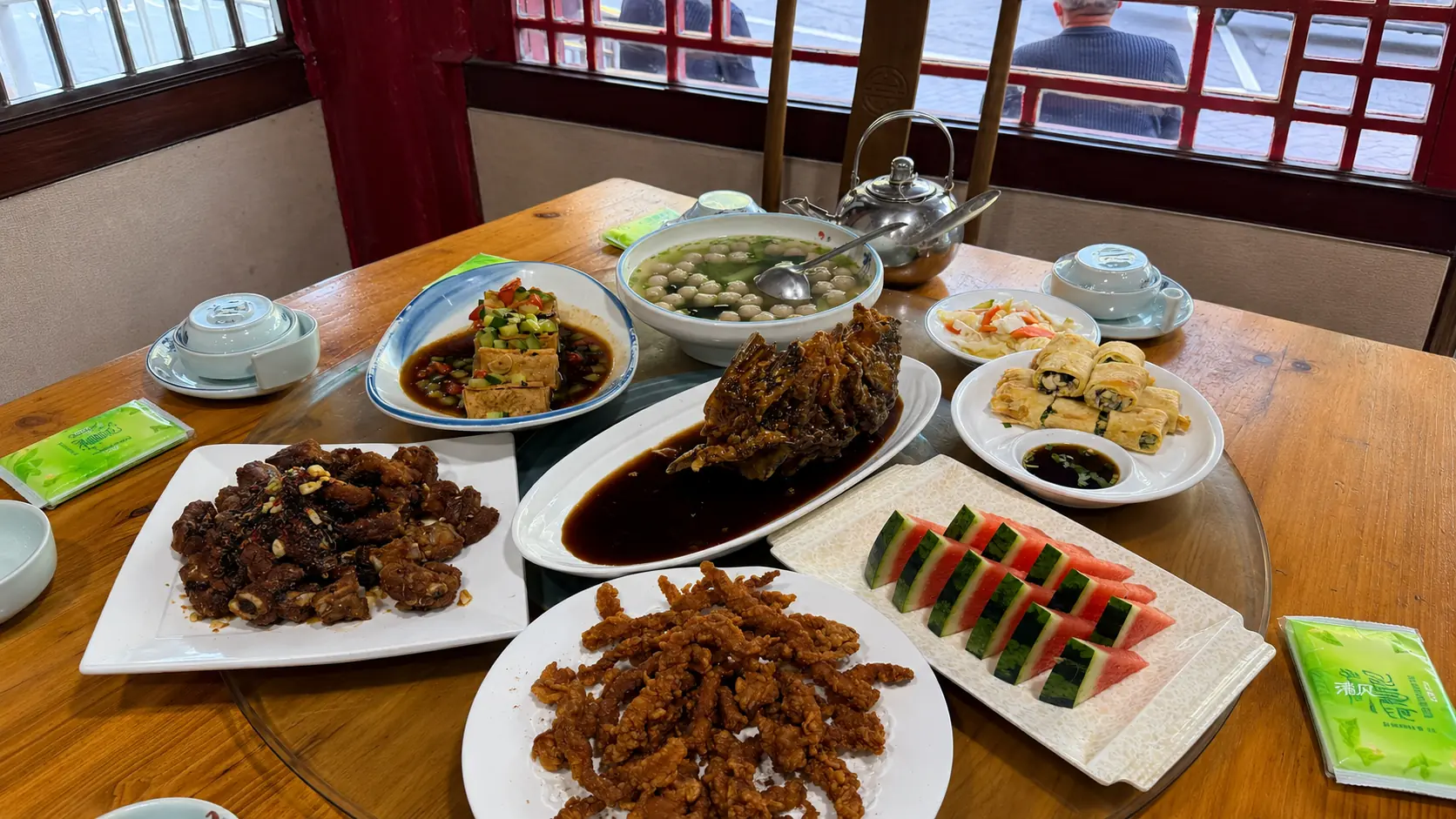
Shandong is not only Jinan and the coast. Boshan, now part of Zibo (淄博), gives the cuisine a strong inland banquet and homestyle layer. A Zibo government page on Boshan tofu box describes the dish as a Lu cuisine specialty with more than 300 years of history, made from tofu and topped with a stock-thickened sauce.
Boshan's four-four banquet (博山四四席) is a more local tradition, but it is real and useful for understanding old Shandong hospitality. A Zibo municipal page on Boshan four-four banquet describes it as a traditional Boshan food custom built around a sixteen-dish, eight-person table, with careful use of clear, rich, milky, and vegetarian broths.
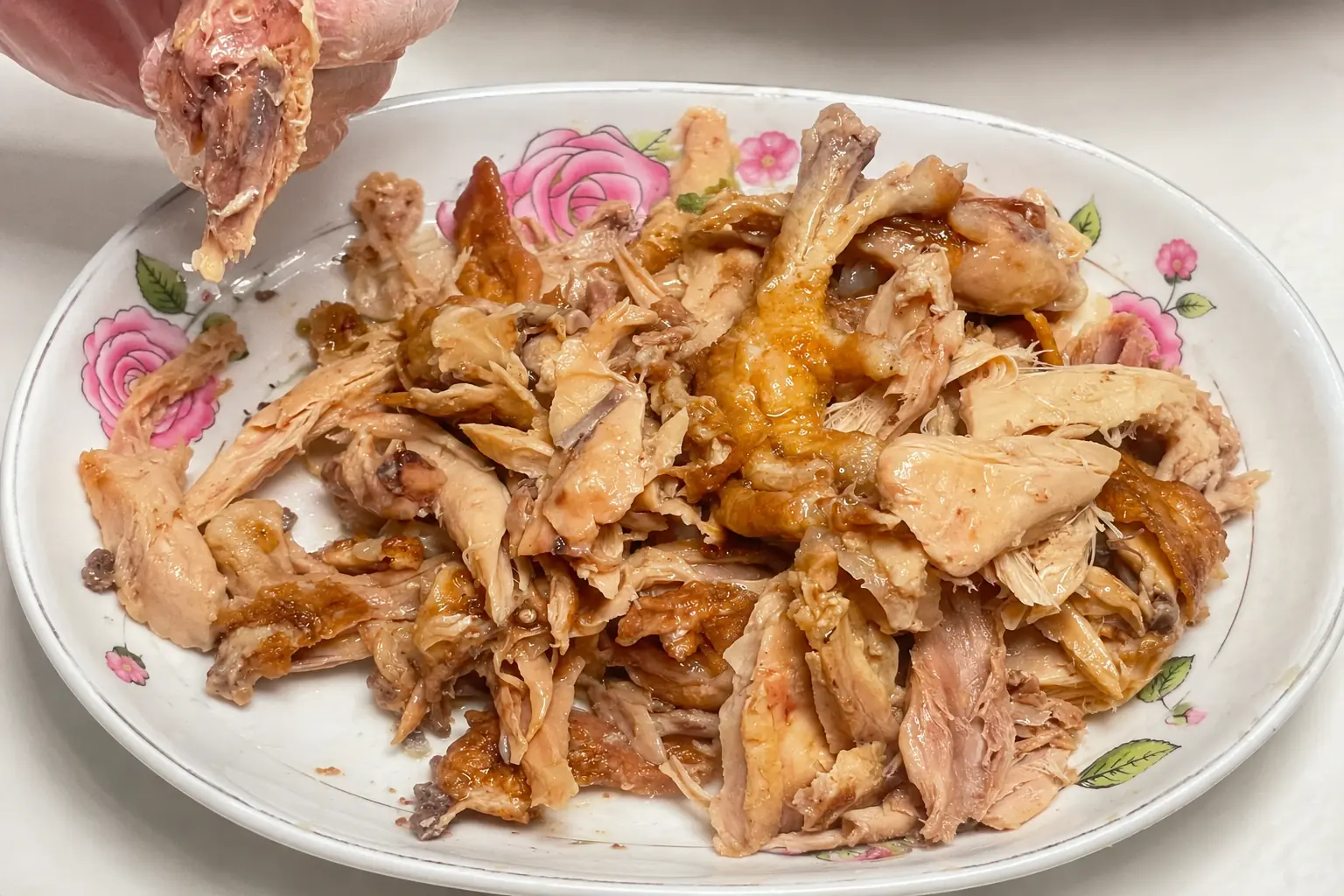
Dezhou braised chicken (德州扒鸡) is easier for visitors to recognize. A Shandong provincial tourism page describes the chicken as a regional signature connected to a Qing-dynasty origin story, honey and malt-sugar coating, frying, long simmering in seasoned soup, and fall-off-the-bone tenderness.
Zibo barbecue can be mentioned, but it should not take over a Lu cuisine article. It is a modern travel phenomenon and city food experience, not the core explanation for why Shandong cuisine shaped northern Chinese cooking. If a future Zibo food guide appears, that is where barbecue should get its own room.
Wheat Staples Hold the Table Together
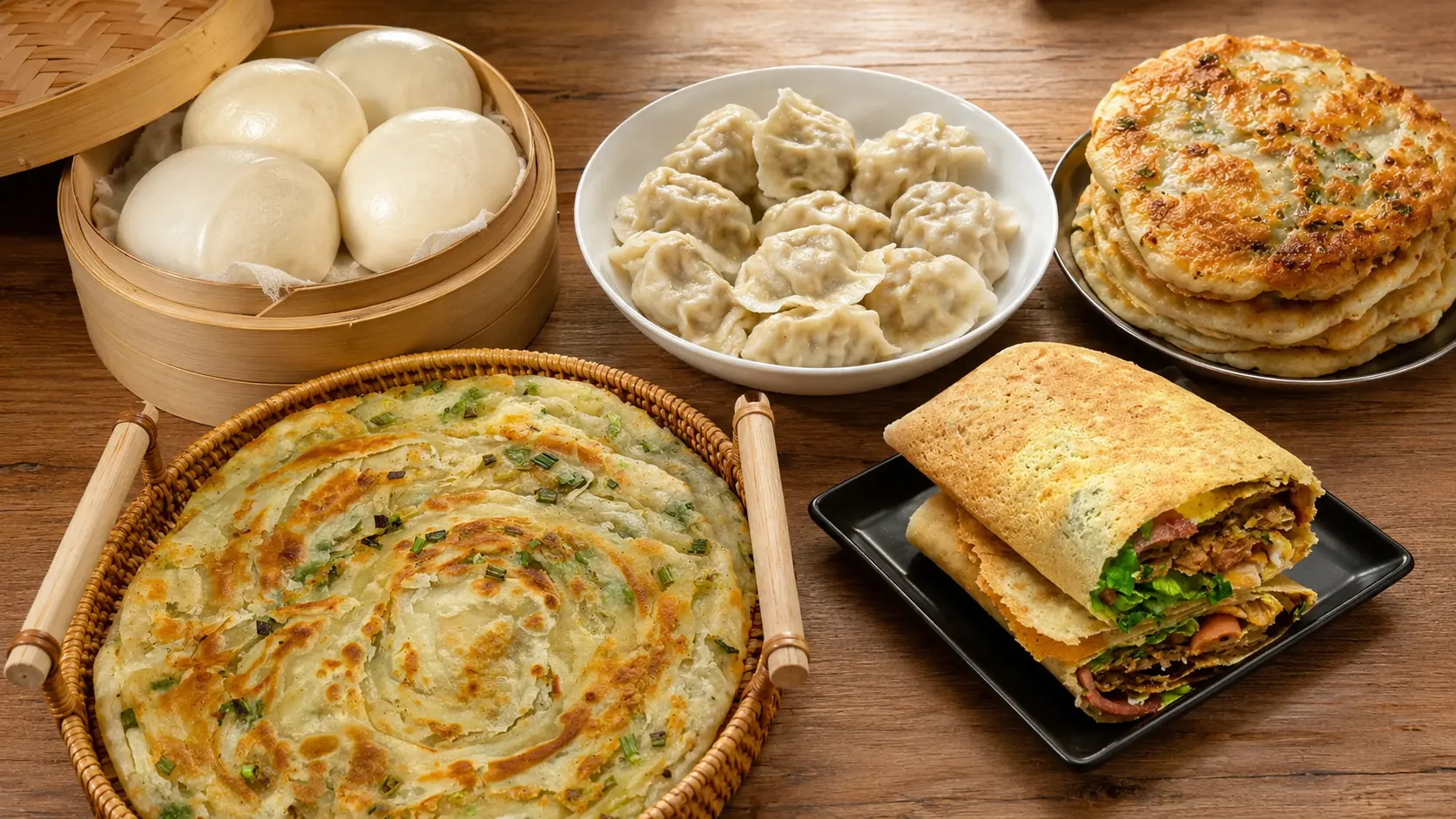
Shandong is a northern wheat province. Steamed buns, big mantou, dumplings, pancakes, wheat noodles, single-sheet wraps, fire-baked breads, pot cakes, and scallion-scented flatbreads are not side details. They are how the table holds together.
This guide will not repeat our national Jiaozi guide, Baozi guide, or scallion pancake coverage. The Shandong-specific point is different: wheat is not just a snack category. It is the base that lets salty braises, seafood sauces, scallion dishes, and rich stocks become a meal.
Mackerel dumplings show the logic clearly: seafood filling inside wheat wrappers. Shandong pancakes and wraps make scallions, bean paste, meat, and vegetables portable. Mantou and breads soak up sauces and broth. If you skip every wheat staple, the meal may feel less Shandong than the dish list suggests.
Gluten-free travelers need extra care
Ordinary dumplings, steamed buns, noodles, pancakes, bread, fried batters, soy sauce, and flour-thickened sauces can all involve wheat. Potato or mung-bean starch exists in some dishes, but a Lu cuisine restaurant is rarely easy for strict gluten-free eating.
Classic Shandong Dishes by Table Role
Instead of memorizing a top-ten list, order by job. A balanced Shandong table should show stock, seafood or scallion aroma, one bright sweet-sour or wok-fired dish, something gentle, and a wheat staple.
| Table Role | Good Examples | What It Teaches | Traveler Note |
|---|---|---|---|
| Broth and stock | Clear soup, milky soup, soup-based tofu, Jinan soup dishes | Lu cuisine depth without chili | Vegetable-looking soups may still use chicken, pork, or seafood stock. |
| Scallion seafood | Braised sea cucumber with scallions, prawns, sea whelk, clams, steamed fish | Jiaodong seafood and scallion-sauce reduction | Sea cucumber and abalone can be expensive; confirm price first. |
| Sweet-sour drama | Sweet-and-sour Yellow River carp, sweet-sour fried dishes | Knife work, frying, sauce gloss, vinegar-sugar balance | Whole fish has bones; flavors can be sweeter than expected. |
| Offal skill | Nine-turn large intestine, quick-fried kidney | Cleaning, heat control, aroma management, sauce balance | Skip if you do not eat pork offal. |
| Formal culture | Confucius Family Cuisine, Boshan four-four banquet | Ritual, naming, sequence, hospitality | Better for cultural meals than quick casual eating. |
| Travel memory | Dezhou braised chicken, Yantai fish-stock noodles, mackerel dumplings | Local identity beyond restaurant banquets | Useful on multi-city routes and train days. |
How to Order a First Table
For two people, do not begin with sea cucumber, abalone, whole fish, pork intestine, and three wheat staples. Start smaller: one soup or tofu dish, one ordinary seafood dish, one scallion or sweet-sour dish, one vegetable, and one staple.

Two-Person First Table
balanced and realistic
Order one soup or tofu dish, one cooked seafood or fish dish, one sweet-sour or scallion-braised dish, one vegetable, and one wheat staple such as dumplings, pancakes, mantou, or noodles. Save luxury seafood for a clear-price restaurant.
Four-Person First Table
more room for contrast
Add one regional signature: sweet-and-sour carp in Jinan, sea cucumber or prawns on the coast, a Boshan dish in Zibo, or Dezhou braised chicken if it fits the route. Keep offal optional.
If you are in Jinan, choose one of sweet-and-sour carp, nine-turn large intestine, or a soup-focused dish, then add tofu, vegetables, and wheat. If you are in Qingdao, Yantai, or Weihai, make seafood central but avoid stacking multiple high-priced items. If you are in Qufu, treat Confucius Family Cuisine as a cultural meal. If you are in Zibo or Boshan, look for tofu box, su guo-style dishes, and structured old-style meals. If you are in Dezhou, braised chicken works as a local signature and travel-food memory, not a full definition of Lu cuisine.
Dietary Risks Hide in Mild Dishes
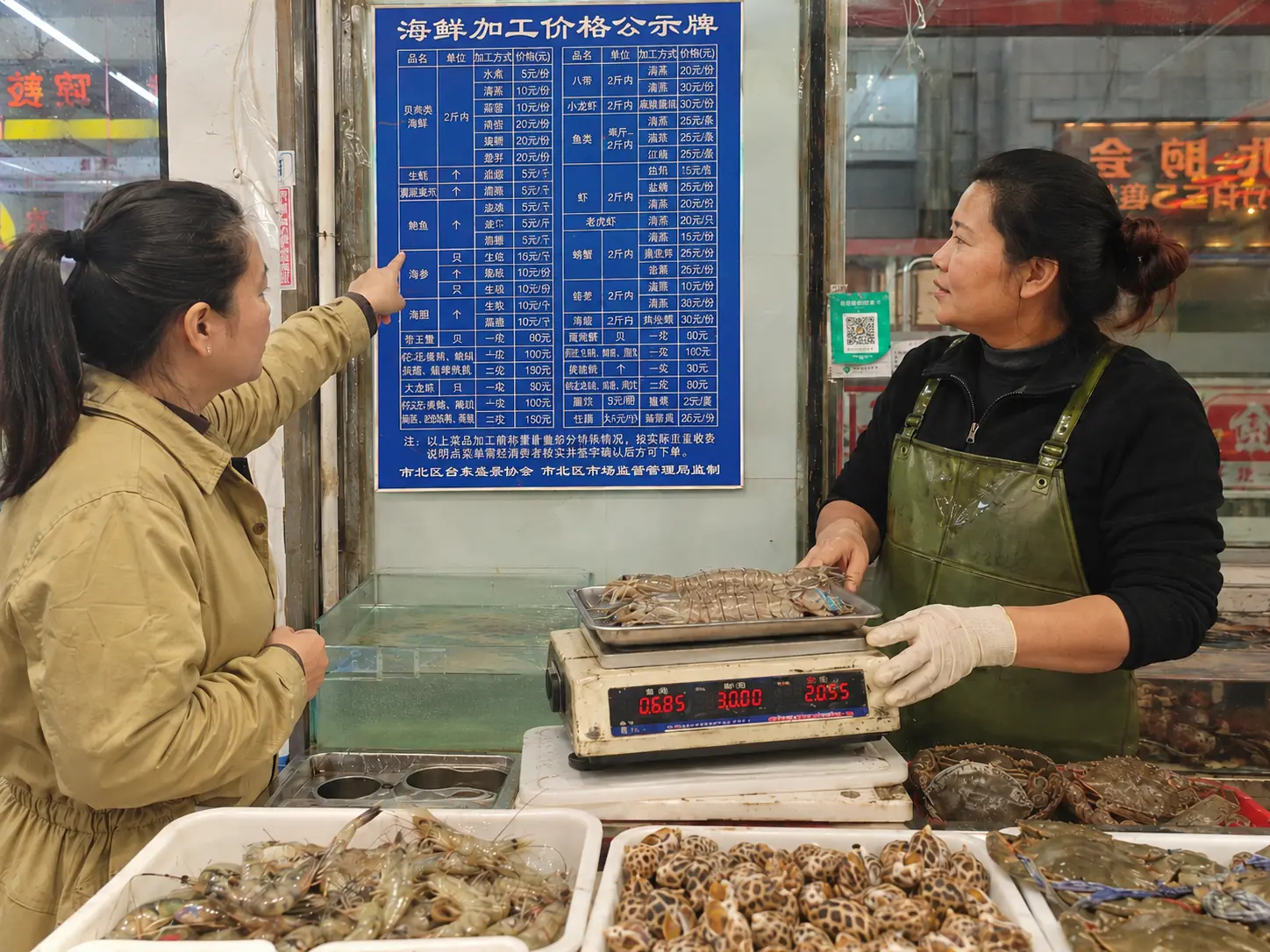
Shandong cuisine is usually not chili-hot, but it is not automatically simple for diets. Seafood, shellfish, pork, lard, pork offal, wheat, soy sauce, vinegar, sugar, meat stock, chicken stock, seafood stock, alcohol, scallions, garlic, ginger, and shared woks can all matter.
Vegetarians should ask directly. A tofu dish may use meat stock. A vegetable dish may be finished with lard or seafood sauce. A clear soup may be built on chicken, pork bones, ham, or dried seafood. Pancakes and noodles may be cooked on shared surfaces.
Budget risk is concentrated in seafood and banquet dishes. Sea cucumber, abalone, premium crab, live fish, whole fish, formal banquet menus, and market seafood can move the bill quickly. Confirm the unit before cooking: per jin, per piece, per plate, or per whole fish.
- Good question: How much is this seafood per jin?
- Good question: Does this soup use chicken, pork, or seafood stock?
- Good question: Does this dish contain pork intestine or other offal?
- Avoid assuming: mild, clear, tofu, or vegetable means vegetarian, gluten-free, or shellfish-safe.
Useful Shandong Ordering Phrases for Travelers
Use these when menus or translation apps do not answer the risk clearly.
| English | Chinese | Pinyin | Say It Like… |
|---|---|---|---|
| Does this contain seafood? | 这里面有海鲜吗? | zhè lǐ miàn yǒu hǎi xiān ma | juh lee myen yo hi shyen mah |
| Does this contain pork or lard? | 这里面有猪肉或猪油吗? | zhè lǐ miàn yǒu zhū ròu huò zhū yóu ma | juh lee myen yo joo roe hwoh joo yo mah |
| Is the soup chicken stock, pork-bone stock, or seafood stock? | 这个汤是鸡汤、猪骨汤还是海鲜汤? | zhè ge tāng shì jī tāng, zhū gǔ tāng hái shì hǎi xiān tāng | juh guh tahng shir jee tahng, joo goo tahng, hi shir hi shyen tahng |
| How much is this seafood per jin? | 这个海鲜多少钱一斤? | zhè ge hǎi xiān duō shǎo qián yì jīn | juh guh hi shyen dwor shaow chyen ee jin |
| We do not eat offal. | 我们不吃内脏。 | wǒ men bù chī nèi zàng | woh-men boo chir nay dzahng |
Frequently Asked Questions
Usually no. Lu cuisine is more about broth, seafood, scallions, ginger, garlic, soy sauce, vinegar, wheat staples, and fire control than chili heat. Some dishes use chili, but it is not the defining feature.
Beyond This Guide
Shandong food rewards travelers who look past one city or one dish. Let Jinan teach broth and fire, Jiaodong teach seafood, Qufu teach ceremony, Boshan teach regional banquet structure, Dezhou teach travel-food memory, and wheat staples hold the table together. Then Lu cuisine stops being a textbook label and starts feeling like the deep grammar behind much of northern Chinese eating.
© gochinafreely.com — Original guide by Go China Freely.