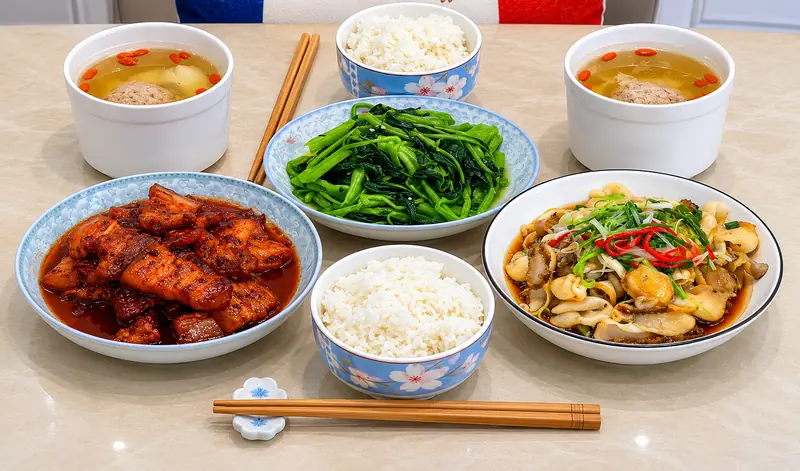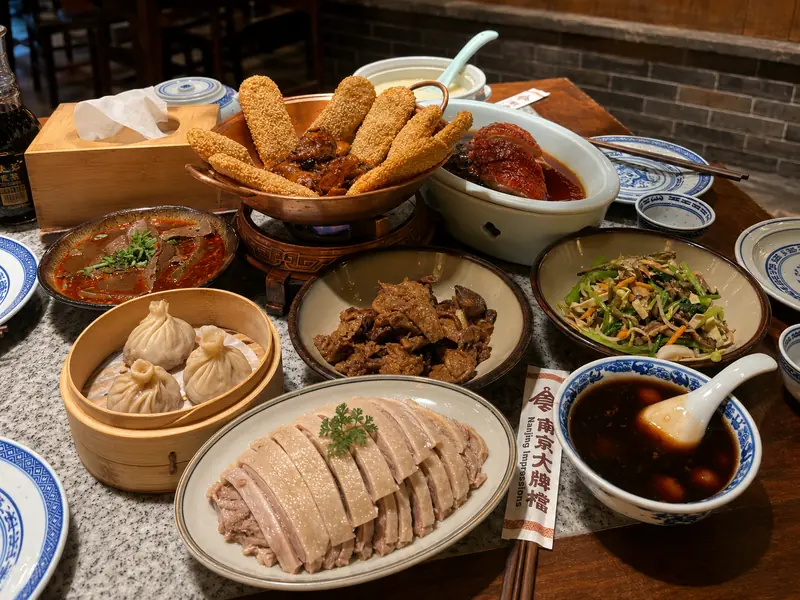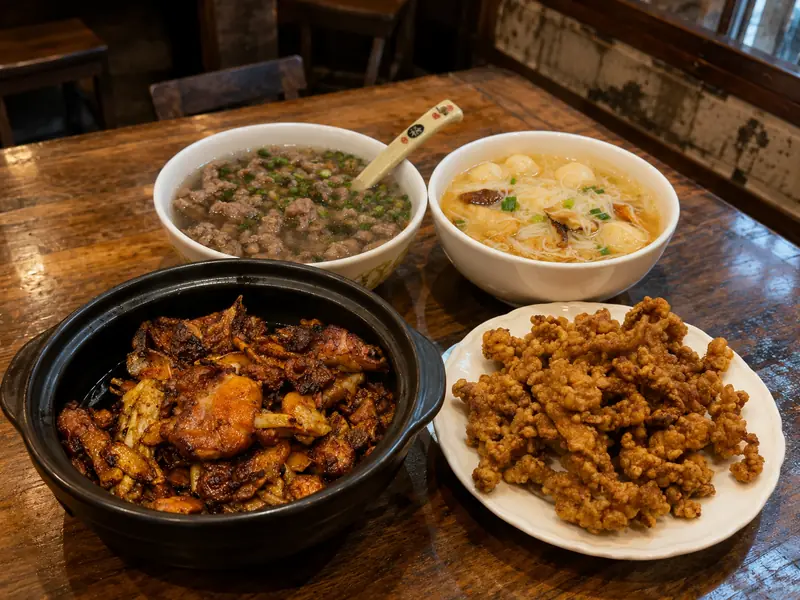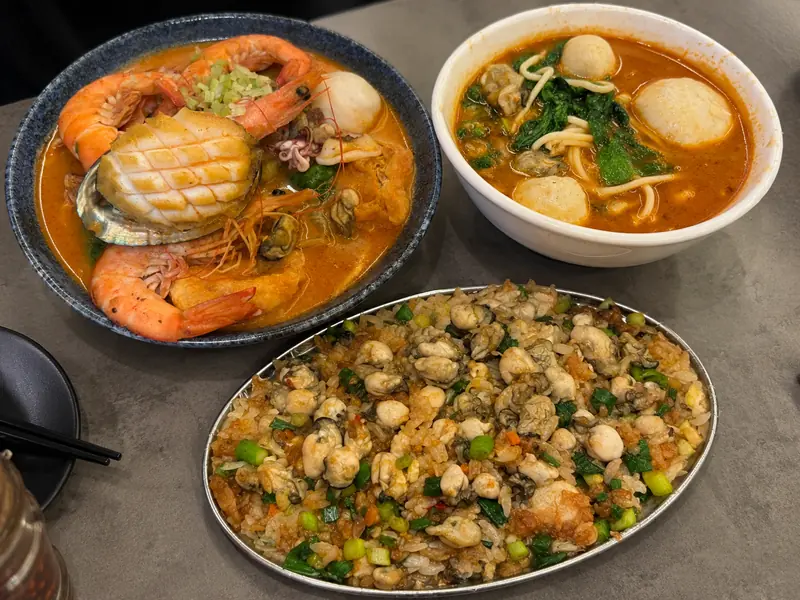
Xiamen (厦门) does not eat like a heavy seafood banquet city. Its best meals are smaller and more local: a peanut-rich bowl of satay noodles, oysters folded into a soft omelet, live seafood cooked simply, sweet peanut soup, and Gulangyu (鼓浪屿) snacks that are useful when the ferry day starts eating into lunch.
The hard part is not finding food. It is choosing the right area for the right meal: Bashi Market (八市) for real market texture, Zhongshan Road (中山路) for old-town snacks, Gulangyu for quick island bites, and Zeng Cuo An (曾厝垵) or Shapowei (沙坡尾) for a casual evening. This guide shows what to order first, how to read Xiamen seafood menus, and when a famous snack street is worth your stomach space.

Executive Summary
What to expect
Minnan coastal food with seafood, peanut-rich satay broth, oyster omelets, sweet soups, ginger duck, sea worm jelly, and softer flavors than Sichuan or Hunan cooking.
Best first meal
Start with satay noodles, then use Bashi Market or Zhongshan Road for snacks. Save a simple seafood dinner for the evening instead of trying to eat every famous item at once.
Main traveler challenge
Seafood pricing, peanut and shellfish allergies, Gulangyu tourist pricing, and too many snack stops. Confirm units before ordering live seafood and treat the island as a convenient lunch stop, not the whole food plan.
Minnan Seafood Meets Satay Broth
Xiamen food belongs to the Minnan (闽南) coastal world: seafood, light broths, soy-sauce cooking, sweet snacks, peanut fragrance, dried shrimp, ginger, sesame oil, and a long history of trade with Southeast Asia. It is not built around Sichuan-style numbing heat or northern wheat-heavy portions.
That Southeast Asian echo matters most in satay noodles. Xiamen's official English food pages describe shacha noodles (沙茶面) as a famous traditional snack, with shacha sauce shaped by Southeast Asian satay-style flavoring and local ingredients such as sesame, garlic, herbs, peanut oil, shrimp sauce, and chili. Xiamen Government gives the basic food background, and Invest Xiamen also lists satay noodles, sea worm jelly, ginger duck, oyster omelet, peanut soup, noodle paste, and other local dishes in its city food overview. Invest Xiamen
For foreign travelers, this makes Xiamen easy to remember. One bowl tastes nutty and lightly spicy. One market smells like prawns, dried squid, and hot oil. One island street tries to sell you fish balls, mochi, pork jerky, pastries, and coffee before you have even decided whether you are hungry.
What to Eat First in Xiamen
Start with the foods that explain Xiamen quickly. You do not need to finish this list in one day; in fact, you probably should not.
Satay noodles (沙茶面)
Peanut-rich, dried-shrimp savory, mildly spicy broth with flexible toppings. Best for a first meal, breakfast, or lunch.
Seafood (海鲜 / 酱油水海鲜)
Fresh, simple, steamed, blanched, or soy-braised. Best at Bashi or a clear-price seafood restaurant.
Oyster omelet (海蛎煎)
Soft, eggy, starchy, briny, and usually served with sweet chili sauce. Best as a shared snack.
Sea worm jelly (土笋冻)
Cold, clear jelly with garlic, vinegar, and mustard. Best for curious eaters who only want a small plate.
Ginger duck (姜母鸭)
Sesame oil, old ginger, and duck cooked into a warm sit-down dish. Best for dinner after a snack-heavy day.
Five-spice rolls (五香卷)
Fried tofu skin, pork, water chestnut, and crunch. Best as a market or old-town snack.
Peanut soup (花生汤)
Soft peanuts in a warm sweet soup. Best for breakfast, an afternoon rest, or a gentle break near Zhongshan Road.
Noodle paste (面线糊)
Thin noodles in a thick breakfast soup, often with seafood or offal additions. Best in the morning.
Fish ball soup (鱼丸汤)
Springy fish balls in a light broth. Best on Gulangyu or as an old-town snack when you need something filling.
Gulangyu pastries (鼓浪屿馅饼)
Flaky pies with mung bean, red bean, coconut, or other sweet fillings. Best as a snack or small souvenir.
Satay Noodles
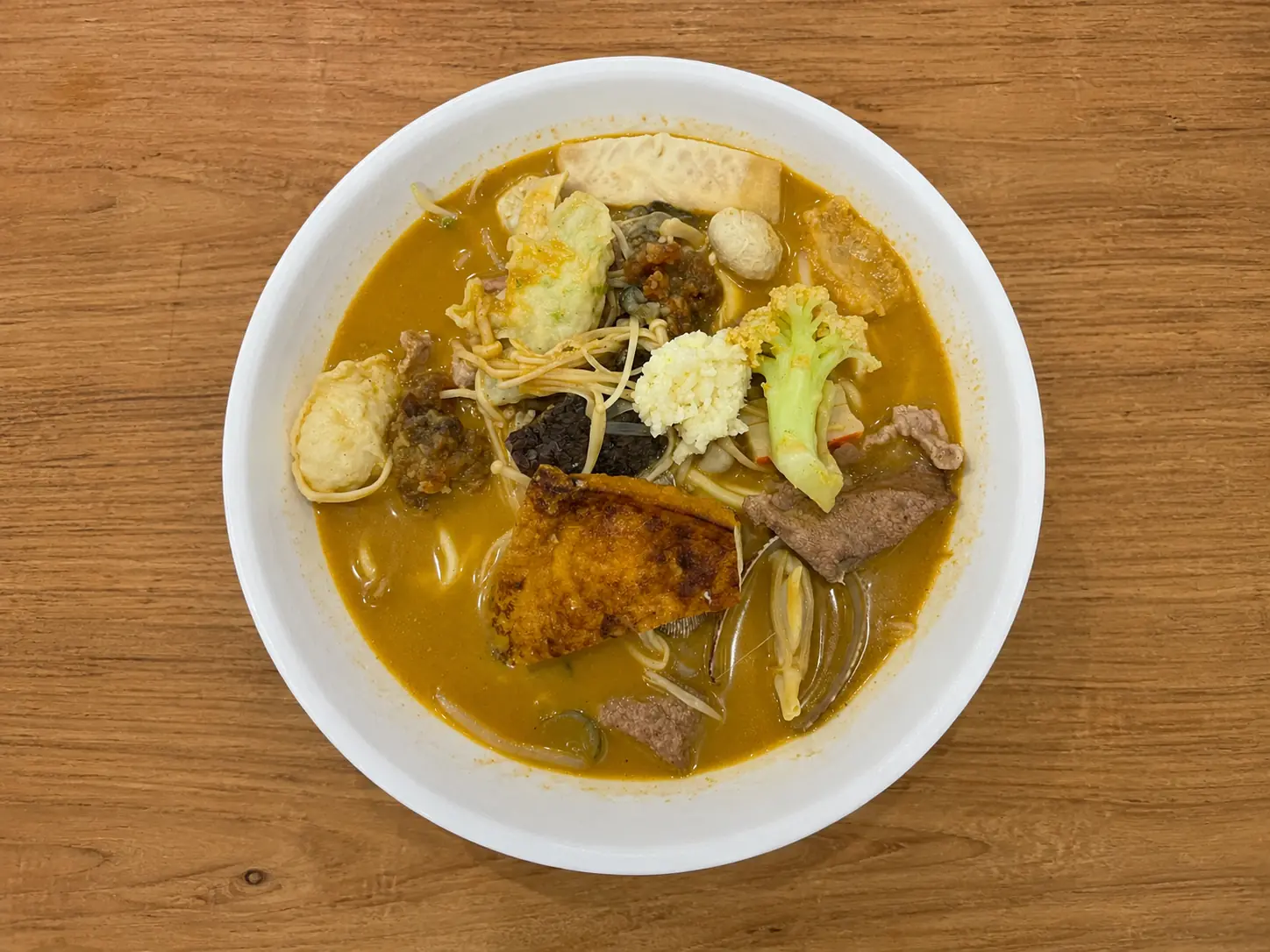
Satay noodles (沙茶面) are the safest first order in Xiamen. The broth is usually nutty, savory, a little sweet, and only gently spicy. The fun is in the toppings: tofu, lean pork, pork liver, squid, shrimp, fish balls, duck blood, greens, and whatever the shop has ready that morning.
Do not picture Southeast Asian skewers. Xiamen satay noodles are a local soup-noodle dish. The satay connection is in the sauce lineage and flavor profile, not in the serving style. If you are unsure what to choose, point to tofu, squid or shrimp, one vegetable, and one meat topping.
Wutang Satay Noodles (乌糖沙茶面) is one famous name, but this guide does not need you to chase one shop at all costs. A busy neighborhood shop near Bashi or Zhongshan Road can be a better travel meal than a long queue in the wrong part of your day.
Seafood and Soy-Sauce Cooking
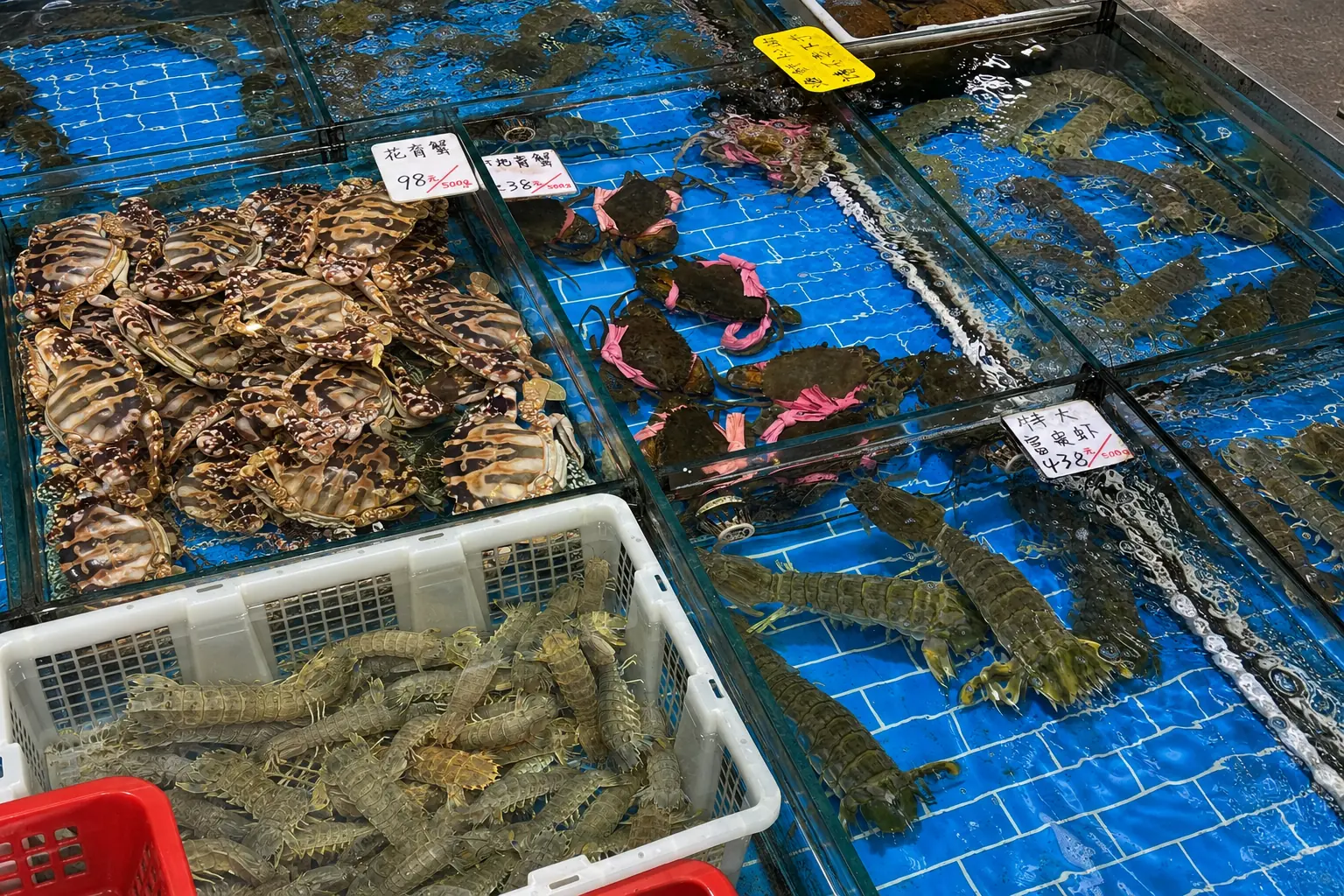
Xiamen seafood is best when you can still taste the seafood. Steaming, blanching, soy-sauce poaching, ginger-scallion frying, and garlic steaming are usually safer choices than burying everything under heavy chili sauce.
Bashi Market (八市) (Google | Amap) gives you the most direct look at the city's seafood life: live tanks, ice trays, dried goods, snack stalls, and cook-to-order restaurants nearby. There is already a full Bashi guide on this site, so use this article for the bigger food strategy: go there for texture, snacks, and seafood context, then decide whether you want the full market-to-kitchen experience.
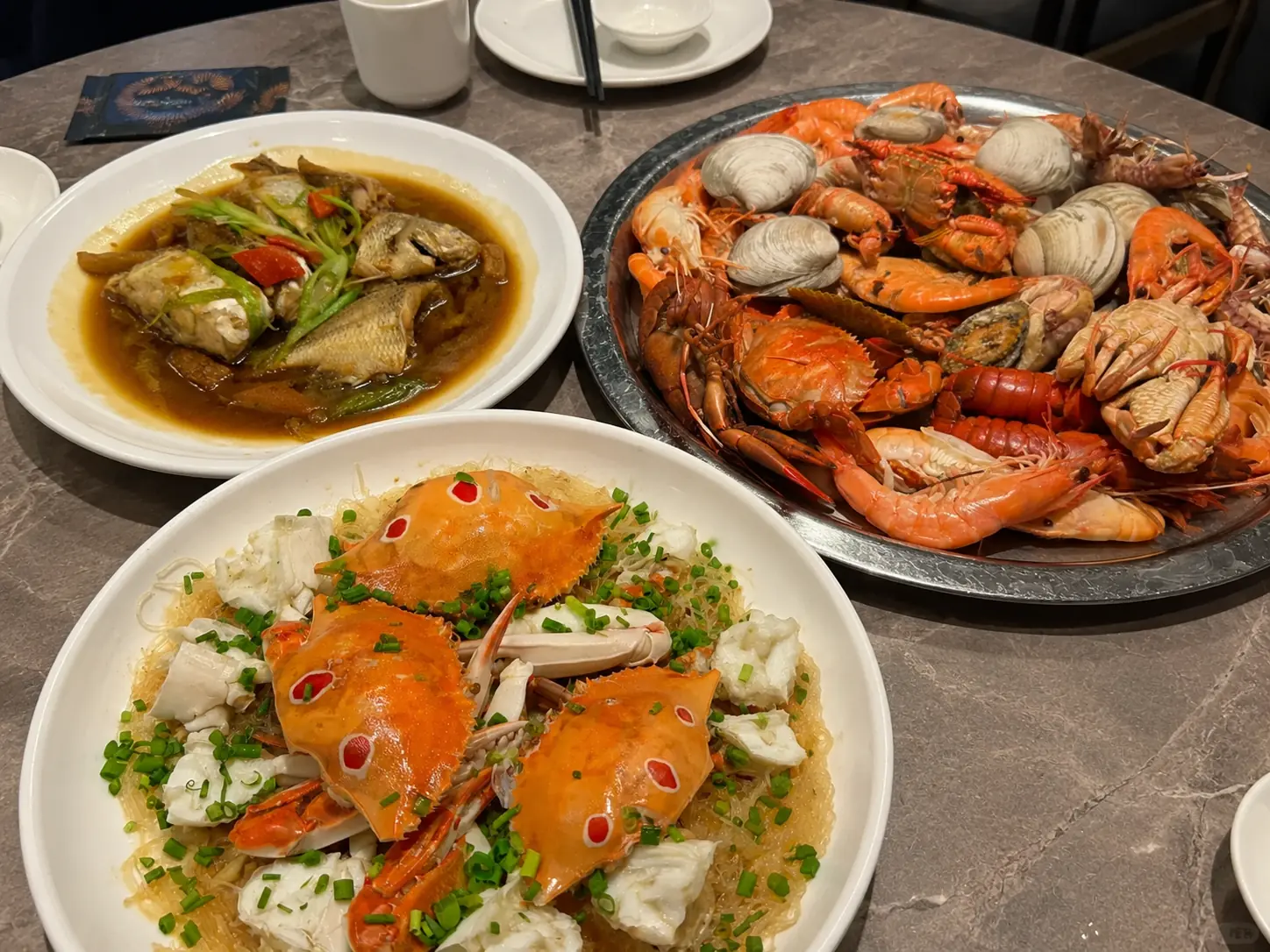
For a low-risk seafood dinner, order one shrimp or shellfish dish, one fish or squid dish, one green vegetable, and one starch. Save expensive crab, abalone, sea cucumber, and live premium fish for restaurants where you can clearly confirm the total price.
Oyster Omelet and Sea Worm Jelly
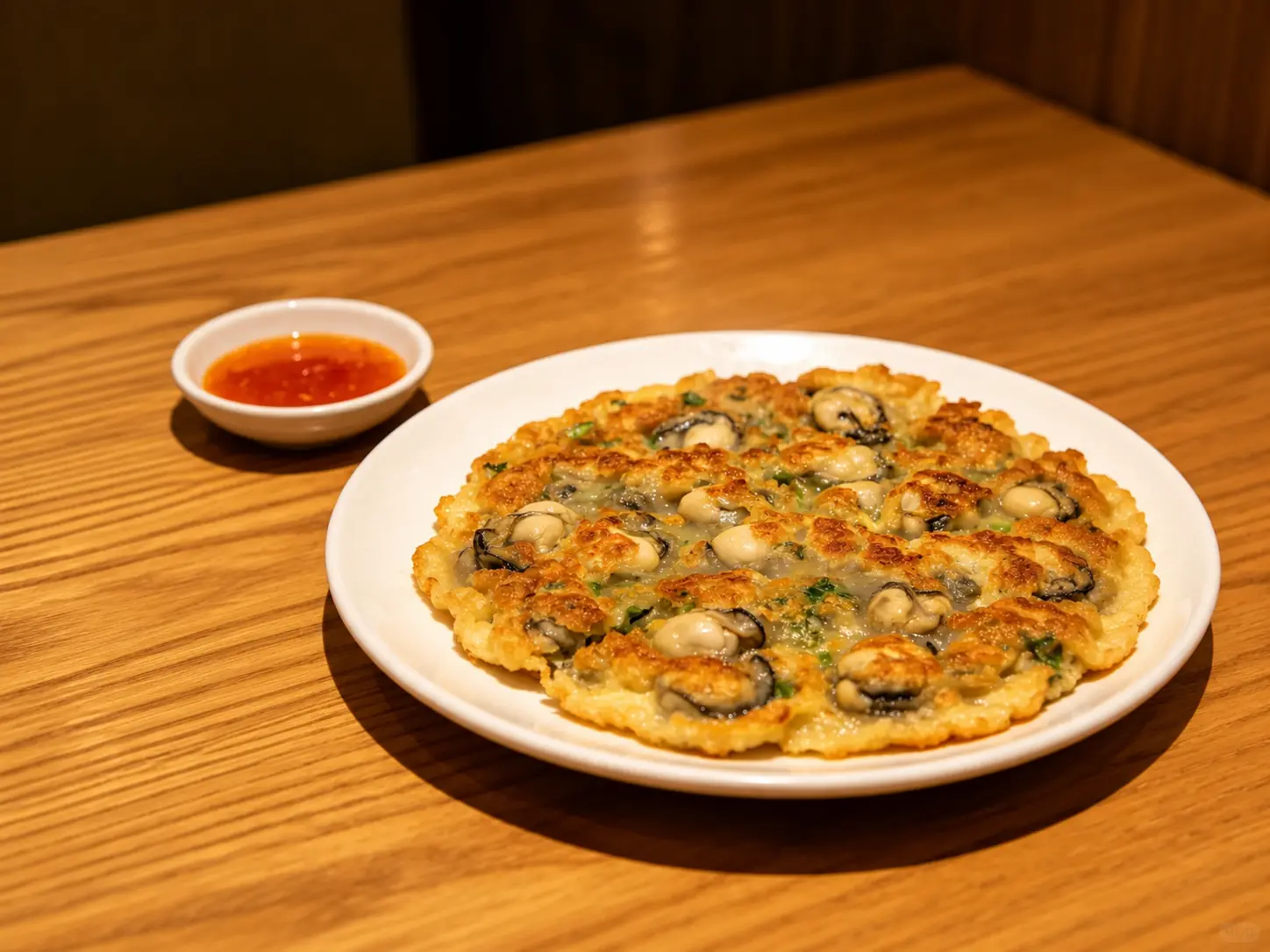
Oyster omelet (海蛎煎) is a Minnan classic that surprises some visitors because it is not a dry, crisp omelet. Sweet potato starch gives it a soft, chewy texture, while small oysters, egg, scallion, and sweet chili sauce carry the flavor.
Order one plate to share first. If your group likes soft, starchy textures, get another. If not, you have still tasted the local benchmark without committing a whole meal to it.
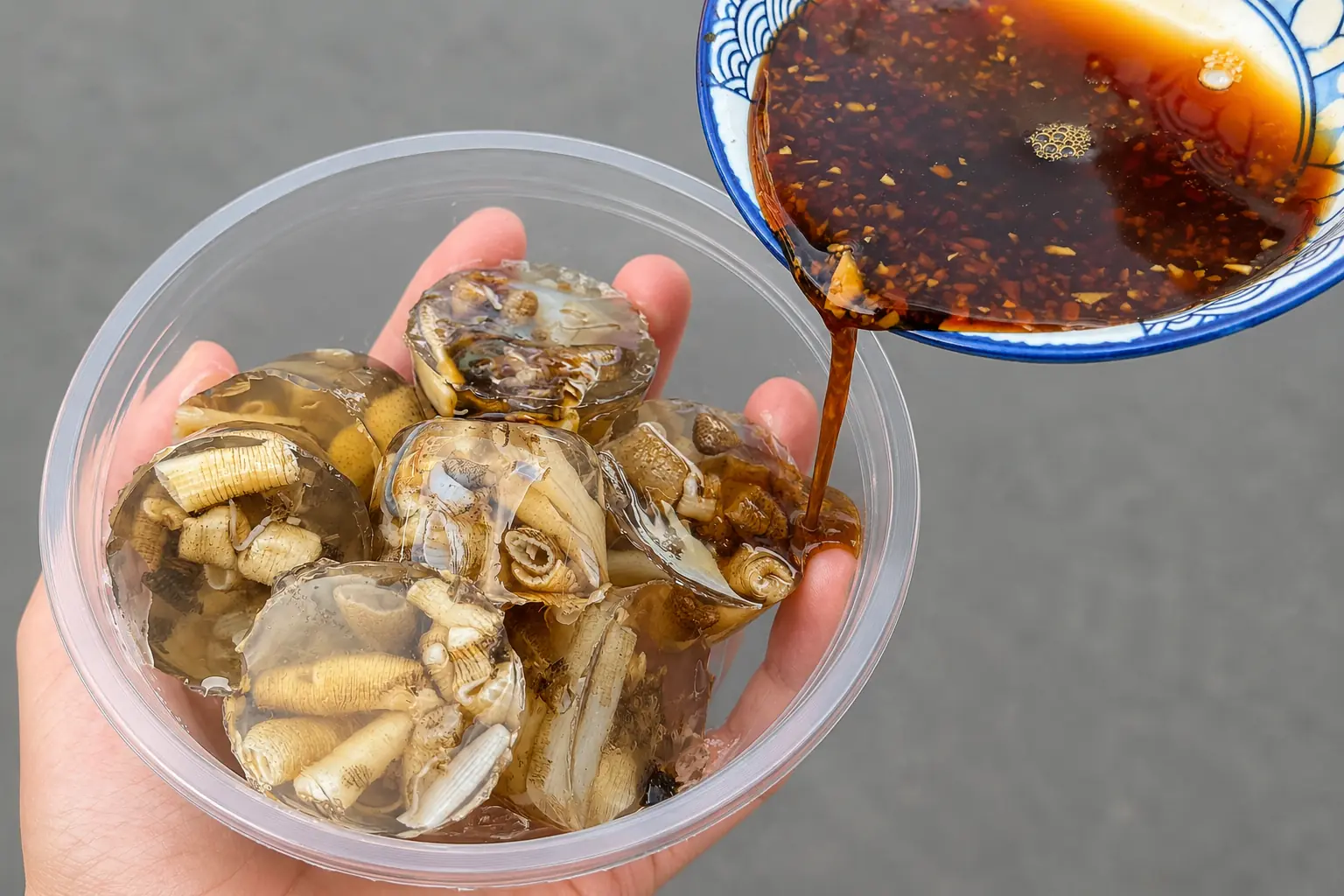
Sea worm jelly (土笋冻) needs honest framing. It is not bamboo shoot. It is a cold jelly made from a marine worm whose collagen sets into a clear, springy block, usually served with garlic, vinegar, mustard, or chili. China Daily's Xiamen coverage describes it with soy sauce, vinegar, chili, and garlic as common seasonings. China Daily
The flavor is cleaner than the name suggests, but the ingredient is not for everyone. Treat it as a shared curiosity, not a required full portion.
Ginger Duck and Minnan Hot Dishes
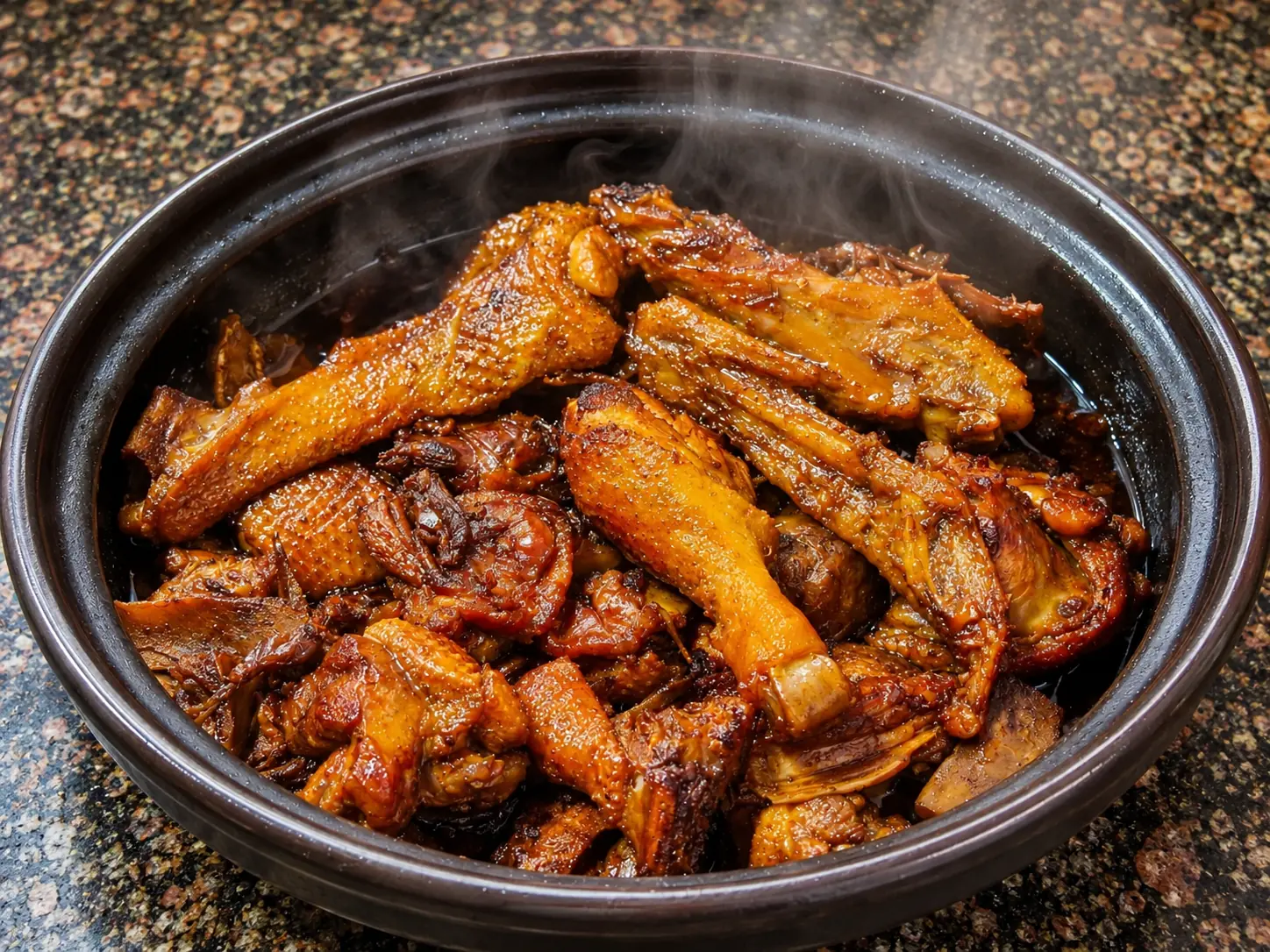
Ginger duck (姜母鸭) is a sit-down dish, not a walking snack. Duck is cooked with old ginger, sesame oil, and warming aromatics until the table smells like dinner before the lid even opens. It is especially good on rainy days, cooler evenings, or after a snack-heavy afternoon.
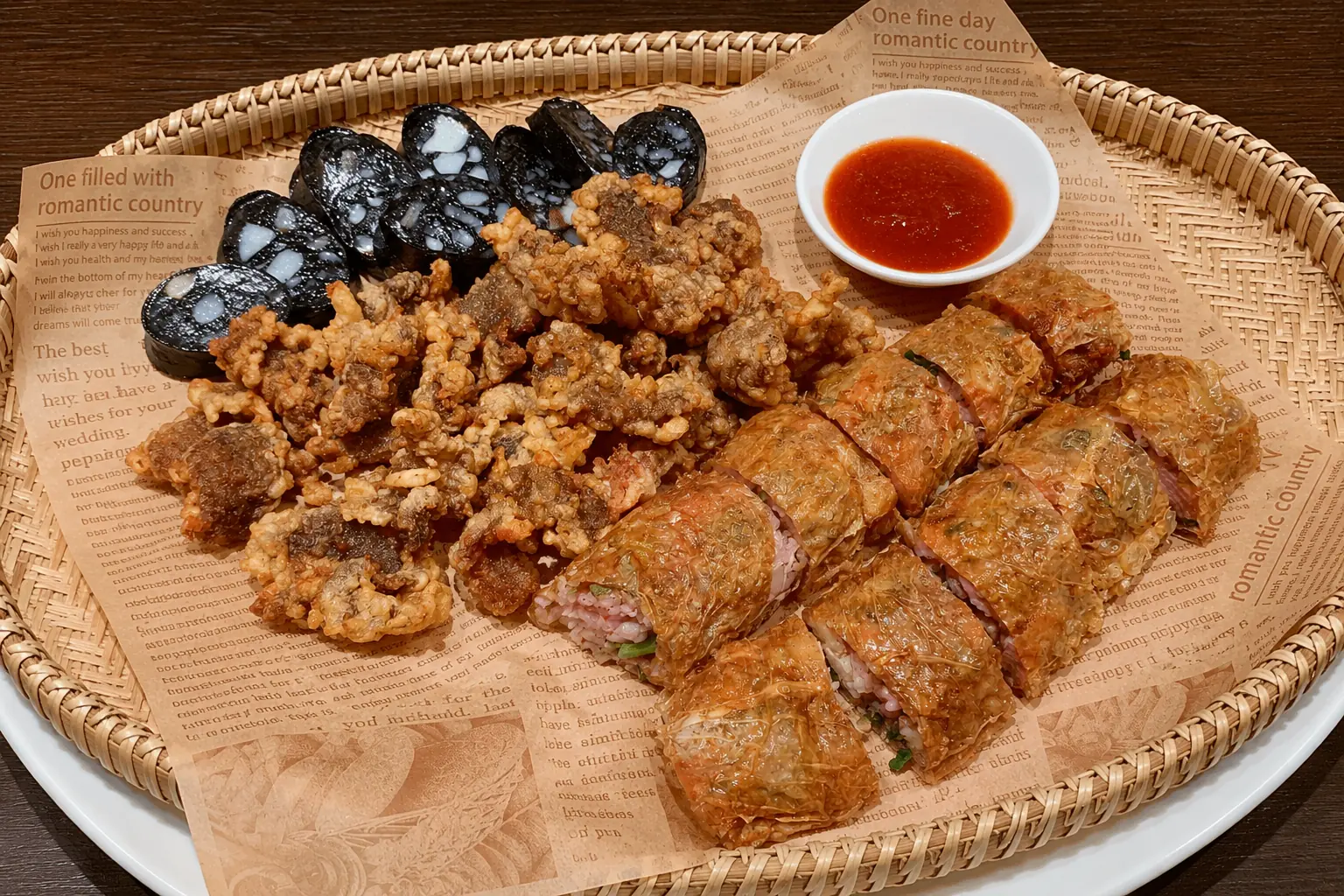
Other hot dishes such as five-spice rolls (五香卷), spring rolls (春卷), Tong'an braised pork (同安封肉), and noodle paste (面线糊) help round out the picture. They are less instantly famous to foreign visitors than satay noodles, but they are part of the Minnan comfort-food layer that keeps Xiamen from becoming only an island-snack city.
Peanut Soup and Sweet Breaks
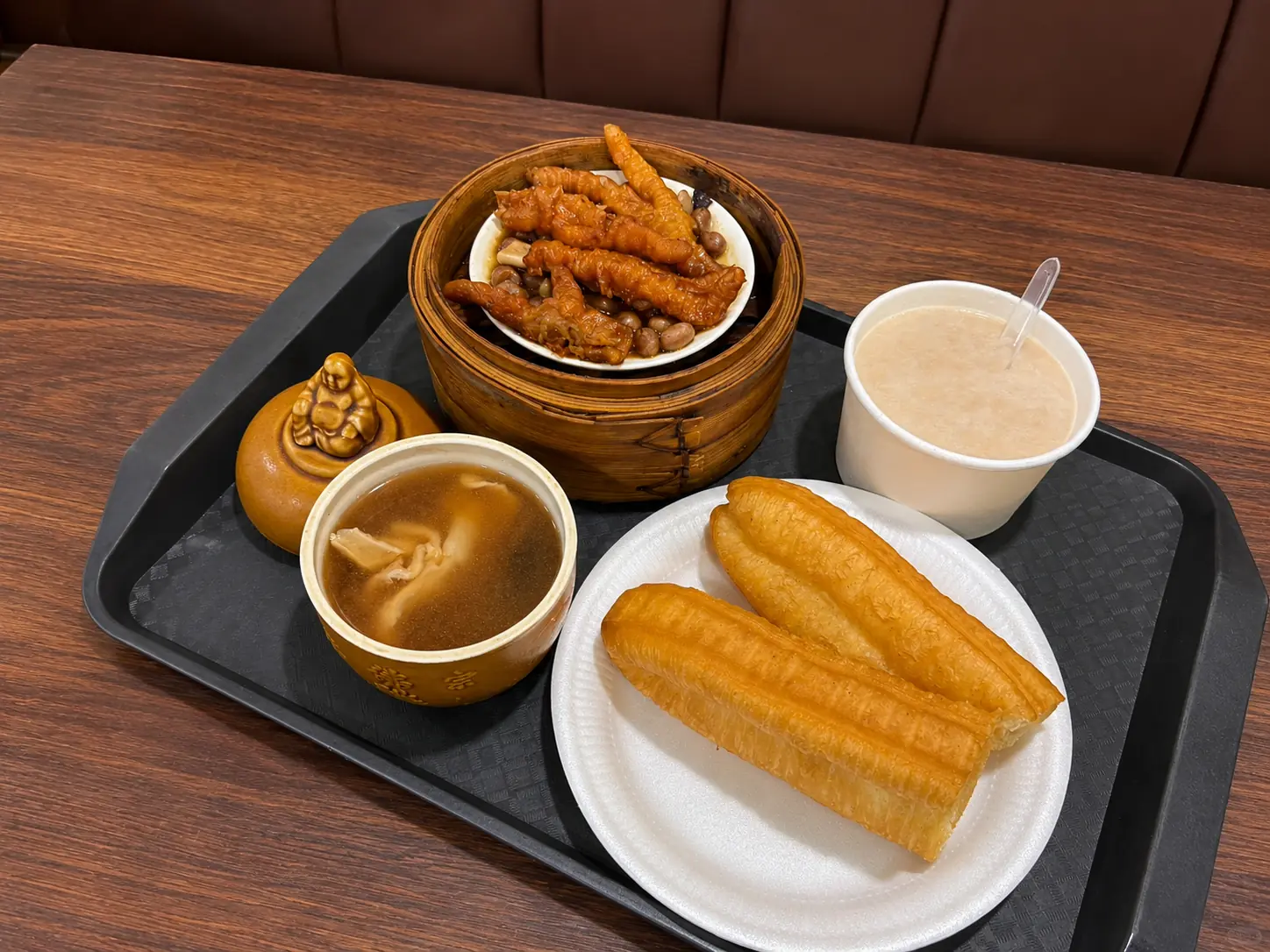
Peanut soup (花生汤) is the gentlest famous Xiamen bite: soft peanuts cooked into a warm sweet soup, often eaten with fried dough, pastries, or other breakfast snacks. Huang Zehe Peanut Soup (黄则和花生汤店) near Zhongshan Road is a well-known reference point, but again, do not turn one snack into a rigid pilgrimage.
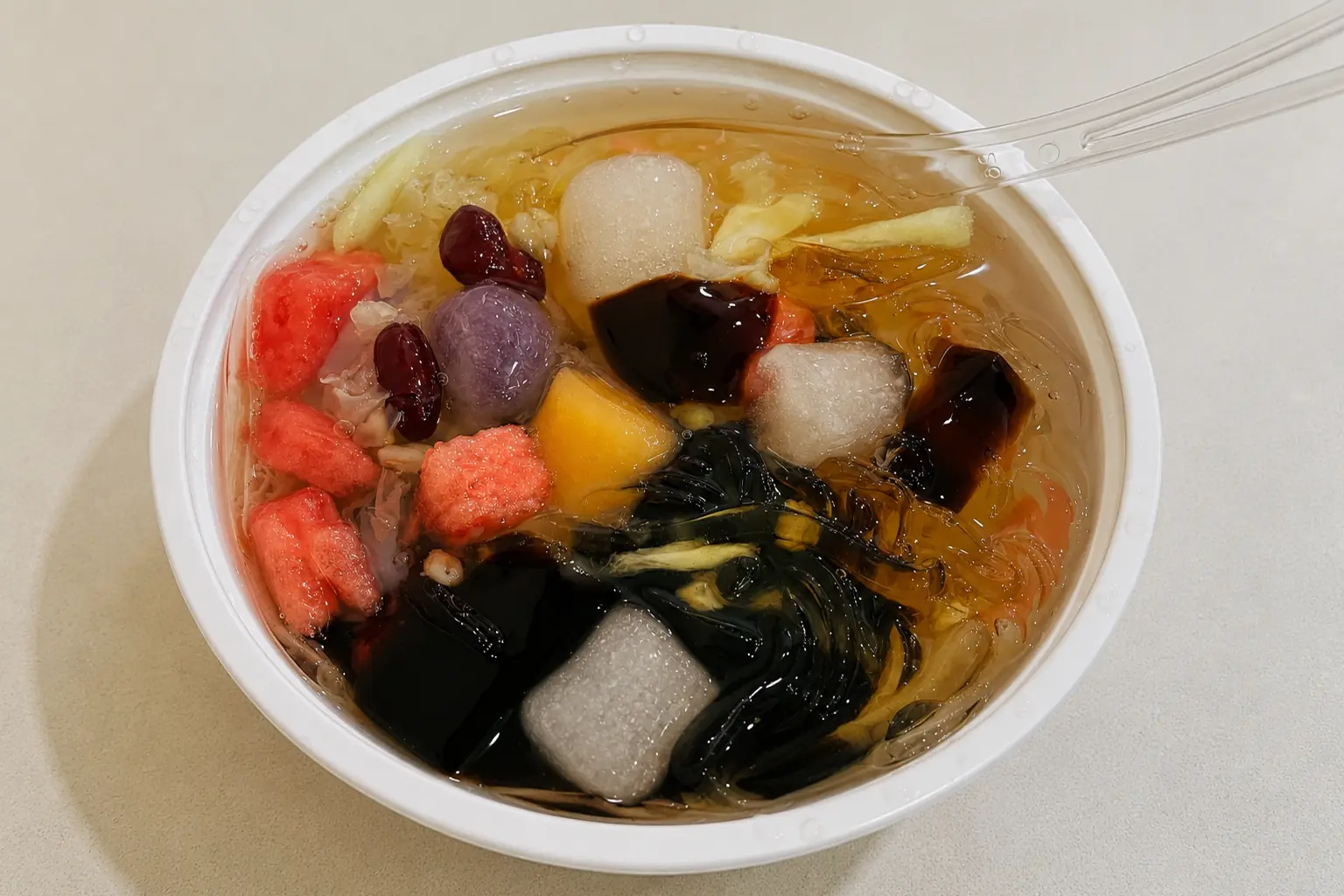
In hot weather, look for four-fruit soup, grass jelly, shaved ice, fruit bowls, and light sweet soups. Xiamen can be humid, and a cold dessert break may help more than another fried snack.
Where to Eat by Area
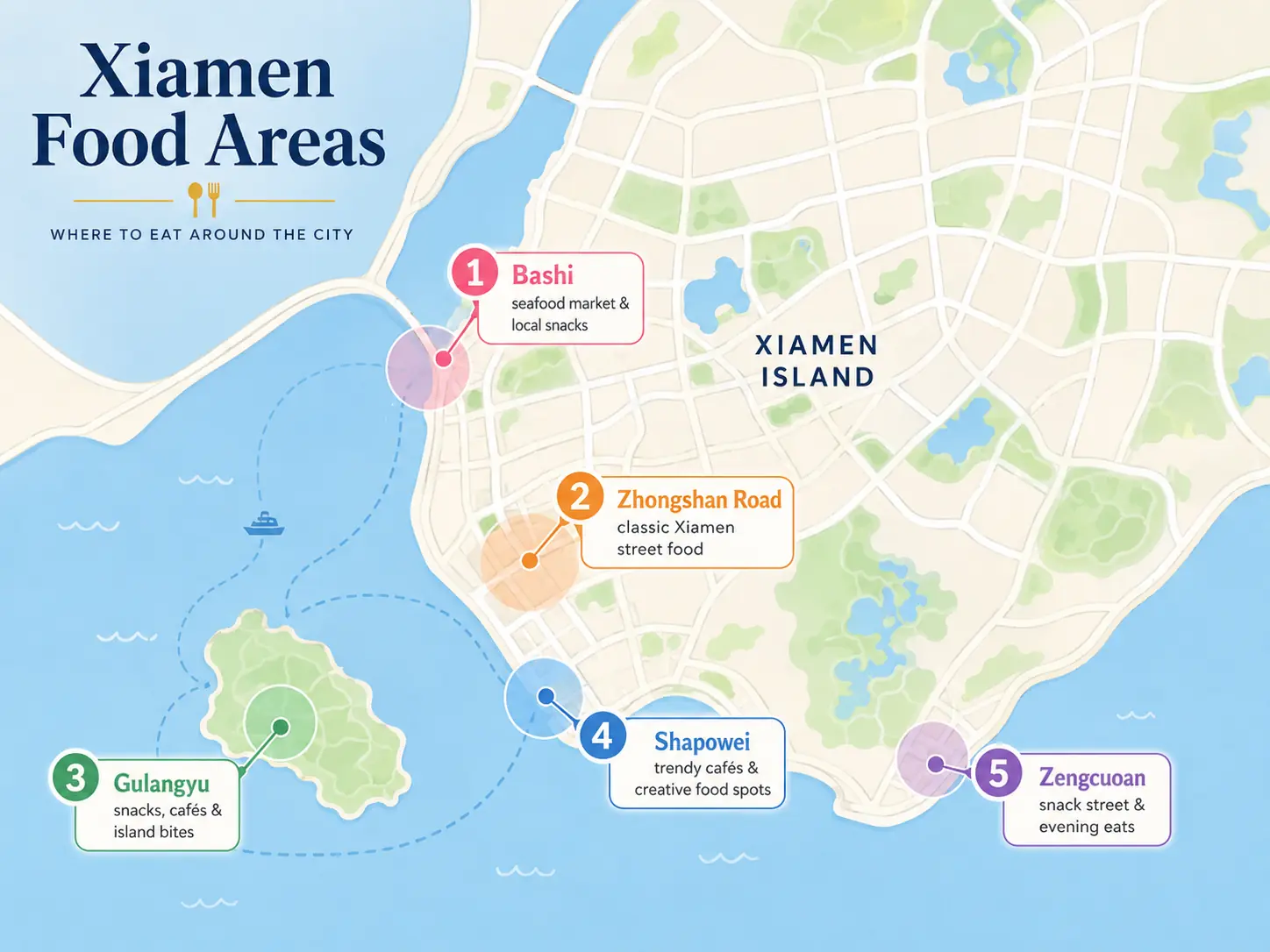
Plan Xiamen food by area, not by scattered shop rankings. Ferry timing, weather, walking distance, and your day's sightseeing route matter more than squeezing every old name into one map.
Bashi + Old City
Choose this when you want market texture, live seafood, dried goods, fried snacks, and the most direct look at Xiamen's everyday food life.
Zhongshan Road
Choose this when you want a cleaner, easier evening with peanut soup, old snack shops, arcade-street photos, and family-friendly walking.
Gulangyu Longtou Road
Choose this only as a controlled island lunch strip: one filling bowl, one sweet snack, and maybe one souvenir.
Zeng Cuo An, Shapowei, Nanputuo
Use these as mood-based additions: seaside snacks and cafes, younger harbor restaurants, or a vegetarian reset near the temple.
Bashi and the Old City
Bashi is best in the morning for market life or late afternoon for snacks and seafood dinner planning. Expect wet floors, narrow lanes, live seafood, dried squid, fried snacks, and a very different feel from polished Zhongshan Road.
Wear shoes that can handle water. Ask before photographing stallholders. If you plan to buy seafood for cooking, confirm the unit and cooking fee before anything goes into a bag.
Zhongshan Road Pedestrian Street (中山路步行街) (Google | Amap) is easier, cleaner, and more family-friendly. It is good for peanut soup, old snack shops, souvenir browsing, arcade-street photos, and an evening walk when you do not want the full market mess.

Gulangyu Longtou Road
Gulangyu is not where I would send you for the city's best-value meal. It is where many visitors will be anyway, and that makes its snacks useful. UNESCO inscribed Kulangsu, a Historic International Settlement, in 2017; the official listing describes the island as facing Xiamen across the 600-meter Lujiang Strait and preserving 931 historic buildings. UNESCO
For food, use Longtou Road as a controlled lunch strip. Fish ball soup, mochi, pastries, pork jerky, peanut roll ice cream, and coffee can keep the ferry day moving. Choose one filling bowl, one sweet snack, and one souvenir if you want it. Then get back to the island lanes or return to Xiamen for dinner.
Zeng Cuo An and Shapowei
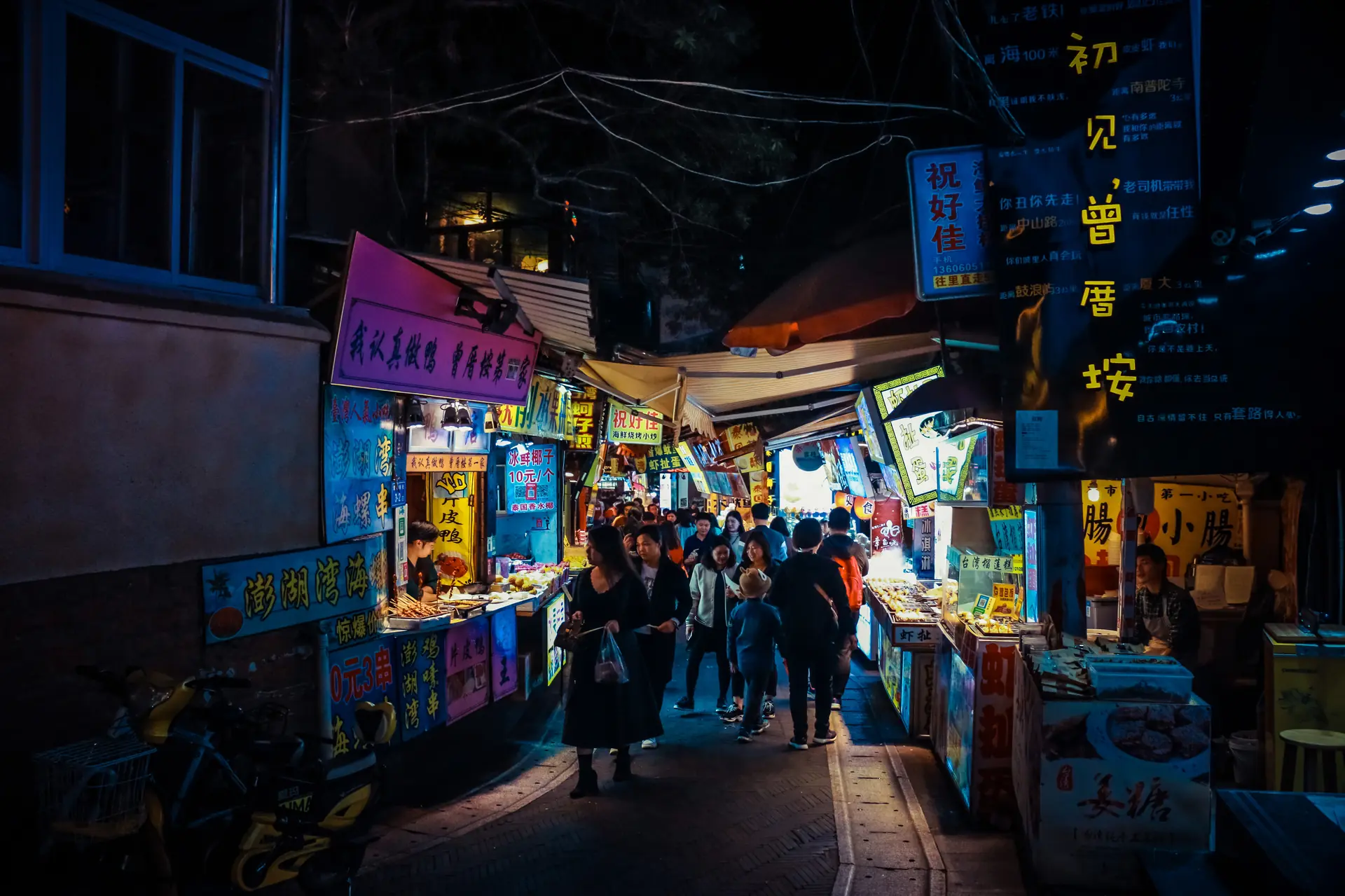
Zeng Cuo An (曾厝垵) works best as a casual evening area after the coast, Xiamen University, or Huandao Road. It is a former fishing village turned food-and-cafe zone, so expect crowds, signs, snacks, drinks, small shops, and a looser seaside mood rather than a deeply traditional market.
Shapowei (沙坡尾) is a better fit if you want younger restaurants, coffee, bars, and a city-renewal feeling near the old harbor. It is not essential for a first food day, but it can be a good alternative when another snack street sounds tiring.
Nanputuo Vegetarian Food
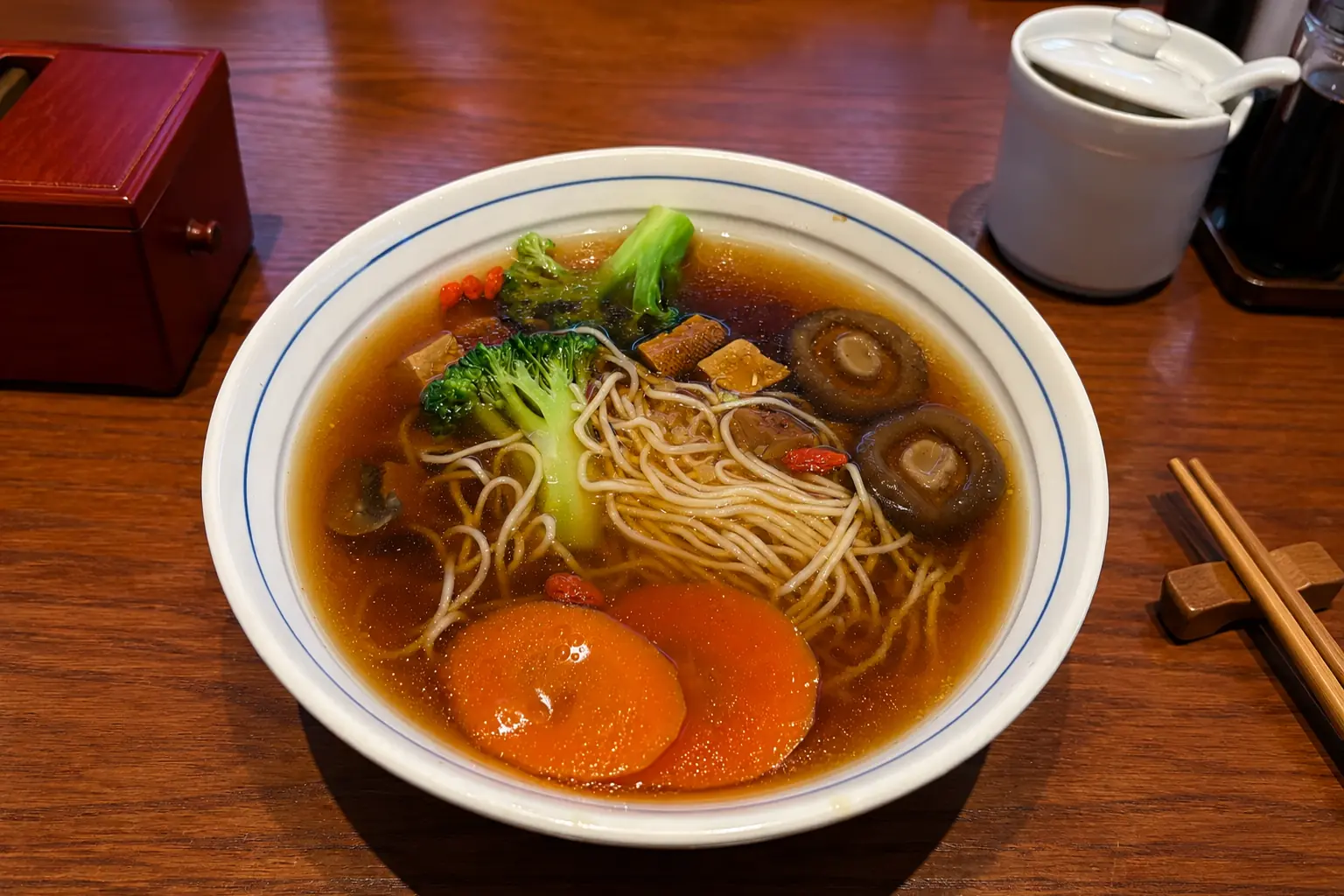
Nanputuo Temple (南普陀寺) food is useful as a reset, especially if your Xiamen day has become fried, sweet, and seafood-heavy. Vegetarian noodles or temple-style dishes can make sense after a hot morning near Xiamen University and the coast.
Think of this as a recovery meal, not the center of the food guide. Xiamen's main food story is still satay noodles, seafood, old-town snacks, and Minnan sweets.
Seafood Ordering Without Surprises
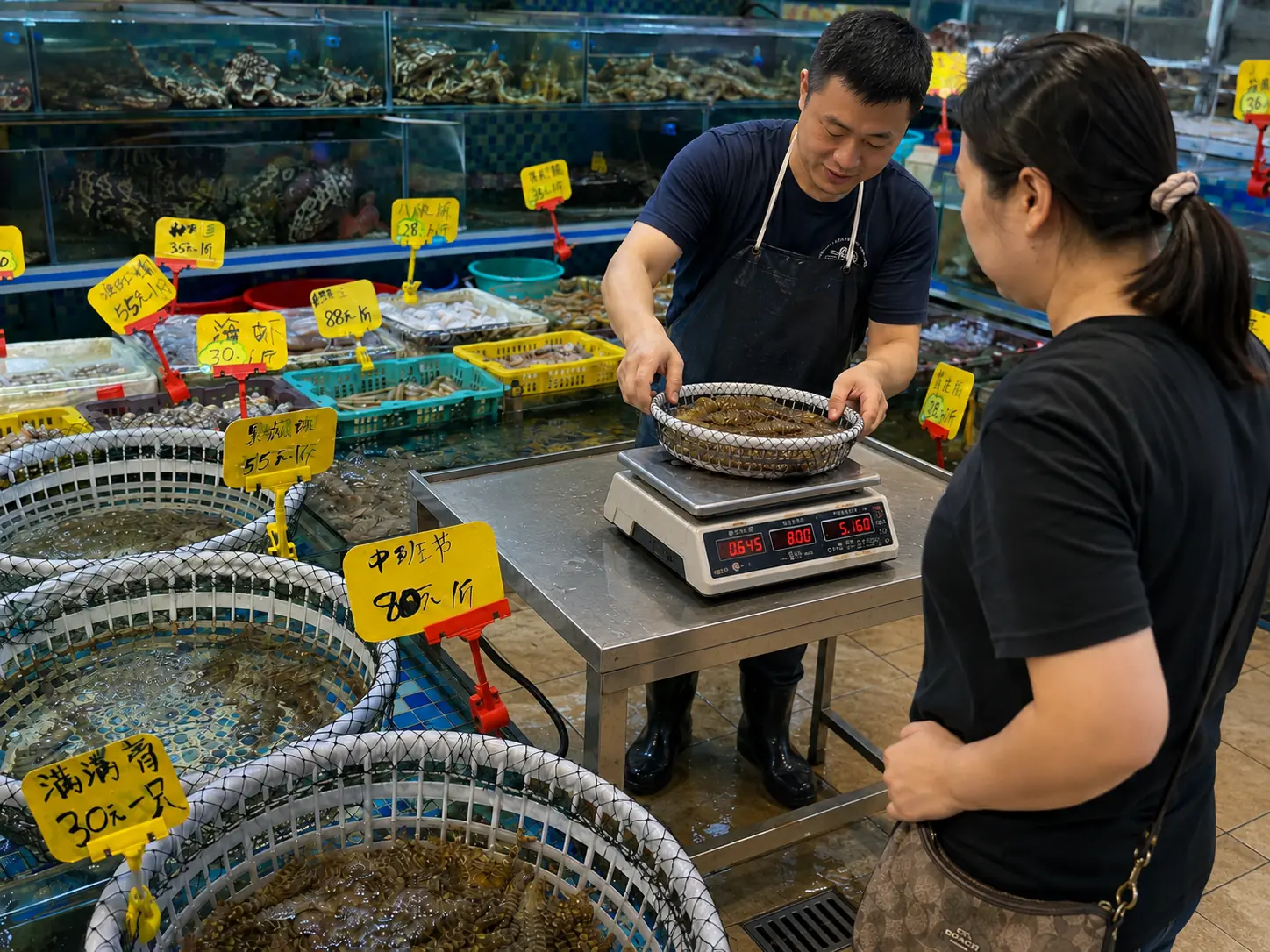
When ordering seafood in Xiamen, ask three questions before the dish goes to the kitchen: What is the unit? What is the approximate total? How will it be cooked?
The unit can be per jin (500 grams), per piece, per plate, or per whole fish. The cooking style can be steamed, blanched, soy-sauce poached, ginger-scallion fried, or garlic steamed. The cooking fee may be separate if you bought seafood from a market and took it to a nearby kitchen.
For a simple order, use this pattern:
Two people
Order one noodle or rice dish, one shrimp or shellfish dish, one fish or squid dish, and one green vegetable.
Three or four people
Add oyster omelet, ginger duck, or one extra hot dish so the meal feels local without becoming a seafood gamble.
Risk control
Avoid expensive live crab, lobster, abalone, sea cucumber, or premium fish unless you understand the price clearly.
| English | Chinese | Pinyin | Say It Like… |
|---|---|---|---|
| How much is this per jin? | 这个多少钱一斤? | zhe ge duo shao qian yi jin | Juh-guh dwaw shaow chyen ee jin |
| About how much total? | 总共大概多少钱? | zong gong da gai duo shao qian | Dzong gong dah-gai dwaw shaow chyen |
| Can this be steamed? | 可以清蒸吗? | ke yi qing zheng ma | Kuh-ee ching-jung mah |
| Use less chili | 少放辣 | shao fang la | Shaow fahng lah |
| I am allergic to seafood | 我对海鲜过敏 | wo dui hai xian guo min | Woh dway high-shyen gwaw meen |
| No peanuts | 不要花生 | bu yao hua sheng | Boo yow hwa-shung |
How to Pace One Xiamen Food Day
If you only have one food-focused day, do not overfill it. This is not a fixed route; it is a way to keep ferry logistics, humidity, walking, and snack queues from overwhelming your appetite.
Classic first-time pace
Start with satay noodles, use Bashi for one or two snacks, keep Gulangyu lunch simple if you are on the island, take a cold dessert break, then return to Xiamen Island for seafood, ginger duck, or Zhongshan Road snacks.
Slower stomach pace
Begin with noodle paste or peanut soup, save satay noodles for lunch, limit Gulangyu to one snack, then choose either Bashi or Zhongshan Road for dinner instead of trying to include every district.
Family-friendly pace
Skip the wettest Bashi lanes at peak time, use Zhongshan Road or mall restaurants when strollers matter, order simple seafood and greens first, and let adults test sea worm jelly, offal, or spicy broth before children try them.
Budget, Allergies, and Mistakes
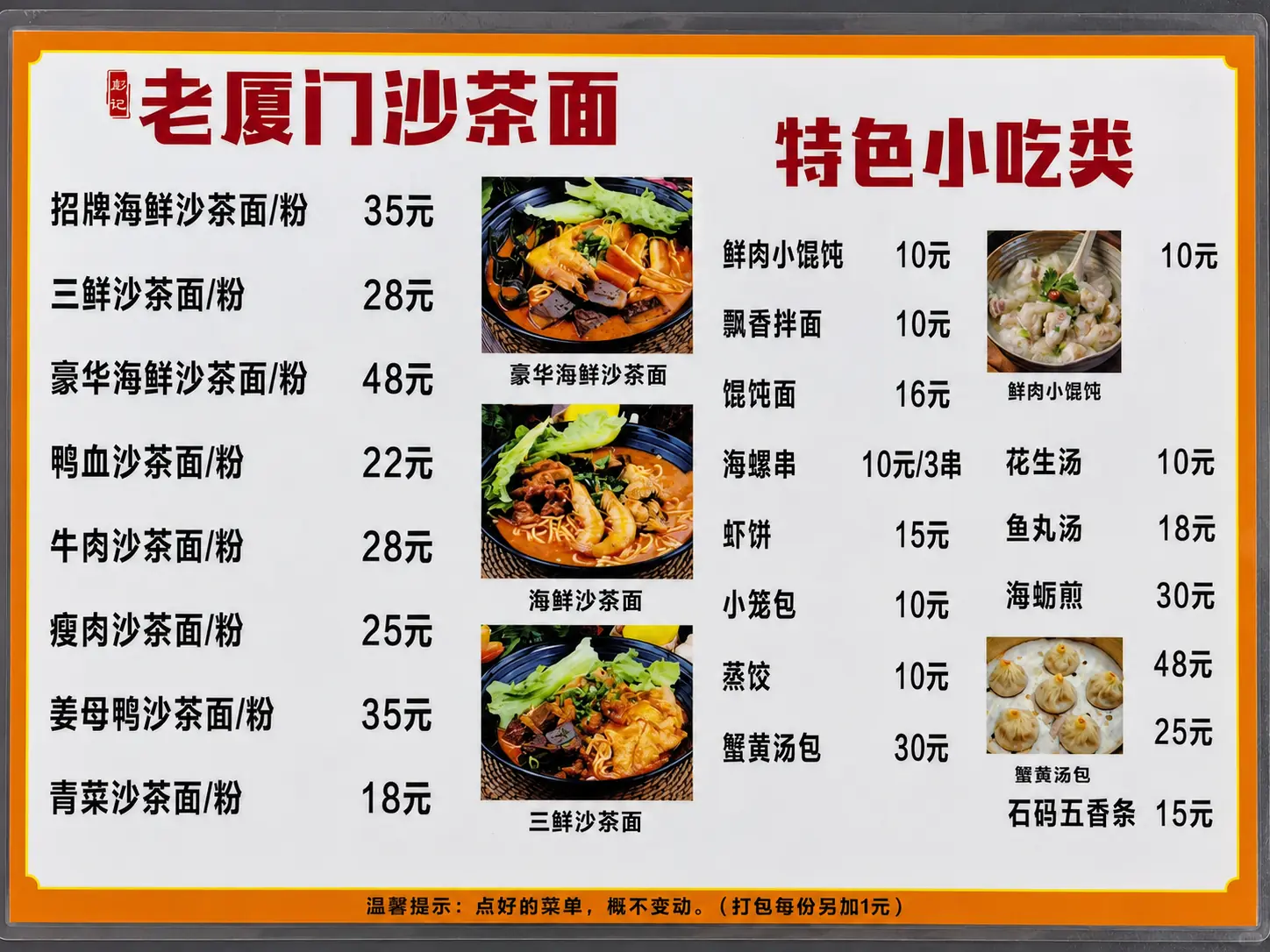
Xiamen can be cheap or expensive depending on how much live seafood you order. Noodles and snacks are usually the friendliest category; market grazing and Zhongshan Road snacking cost more if you keep saying yes; seafood dinners swing widely by species, season, and location.
For planning, think in ranges rather than fixed prices: a simple noodle or snack meal, a bigger market graze, and a proper seafood dinner. Do not treat any online price as guaranteed when a live tank, market-price board, or seasonal catch is involved.
Peanut and seafood allergy note
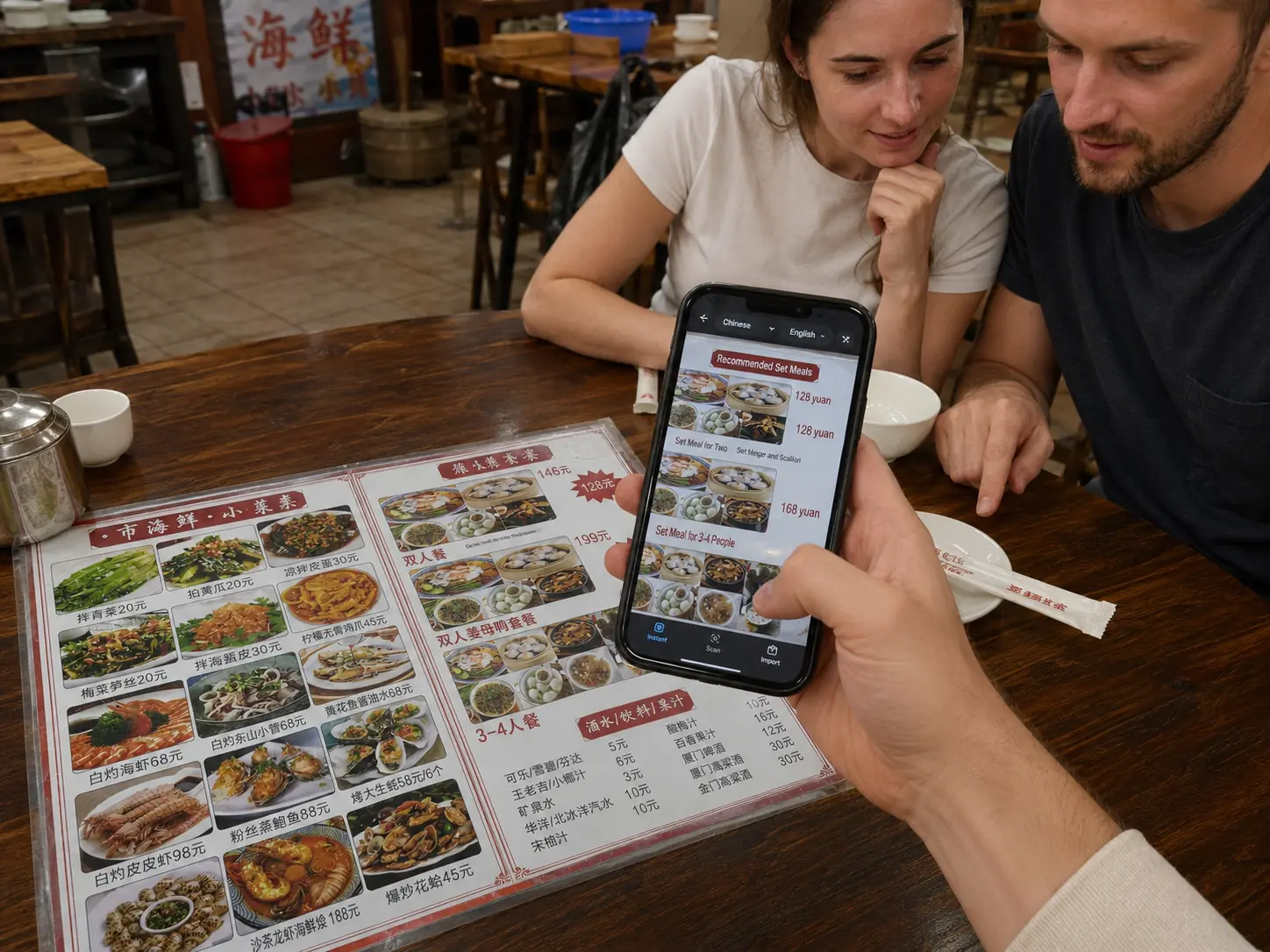
Satay noodles and sweets may contain peanuts, sesame, dried shrimp, or seafood. Seafood kitchens can have cross-contact even when you order vegetables or noodles. If you have a serious peanut, shellfish, or fish allergy, show the Chinese phrase and avoid relying only on an English menu.
Avoid these common mistakes:
Making Gulangyu the whole plan
The island is convenient on a ferry day, but it is not Xiamen's best-value food district.
Asking only what is good
At a seafood tank, ask the unit, total price, and cooking style before anything goes to the kitchen.
Eating every fried snack early
Five-spice rolls, oyster omelet, spring rolls, and pastries add up faster than they look.
Assuming satay noodles are peanut-free
Peanut is part of the point in many versions, and dried seafood may also be in the sauce or broth.
Wearing white shoes to Bashi
The market floor can be wet, crowded, and very real; choose shoes that can handle it.
Skipping a sweet break
In hot, humid weather, grass jelly, four-fruit soup, tea, or coffee can help more than another fried snack.
Frequently Asked Questions
Start with satay noodles, seafood, oyster omelet, sea worm jelly, ginger duck, five-spice rolls, peanut soup, noodle paste, fish ball soup, and Gulangyu pastries. Satay noodles are the easiest first meal.
Sources checked for this guide
- China Daily government portal checked for Xiamen signature Minnan coastal dishes including oyster omelet and local snacks: China Daily: Top delicacies to eat in Xiamen
Beyond This Guide
Xiamen food works best when it is built into the route: satay noodles in the morning, Bashi or Gulangyu during the day, a sweet break in humid weather, then seafood or Zhongshan Road at night. If your Fujian trip also includes Quanzhou, tulou villages, or Wuyishan, let each stop do what it does best: Xiamen for coastal snacks and seafood, Quanzhou for old-city Minnan food, tulou country for Hakka meals, and Wuyishan for tea.
More Fujian ideas: Xiamen's Eighth Market Guide / Xiamen 1-Day Itinerary: Gulangyu Island & Coastal Vibes / Gulangyu Island Guide / Nanjing Tulou Fujian Guide
© gochinafreely.com — Original guide by Go China Freely.