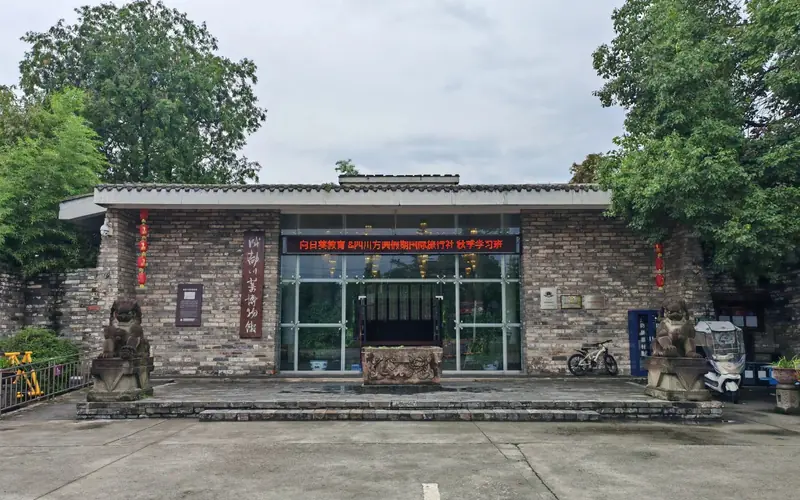
Hours & tickets
The full experience includes the cooking class, doubanjiang activities, unlimited snacks, exhibitions, and a certificate. Confirm the current package directly before paying. Compare ticket inclusions
Good to know
There's only one museum in the world where you can eat the exhibits. Forty kilometers northwest of downtown Chengdu, in Pidu District — the birthplace of doubanjiang — a 27,000-square-meter Sichuan-style garden lets you cook kung pao chicken with a professional chef and stir century-old fermentation jars by hand.
Then you sit under bamboo trees eating unlimited dumplings until you can't move. This isn't a traditional museum. This is a place where you can eat your ticket price back.
The Only Museum You Can Eat

The world's only interactive cuisine museum — 27,000 sqm of Sichuan-style gardens, cooking stations, and fermentation yards.
A 3.5-hour edible museum experience
You cook, stir, grind, and eat instead of only looking
IdentityThe world's only interactive museum dedicated to a cuisine system.
PlaceGucheng Town, Pidu District (郫都区), birthplace of Pixian doubanjiang (郫县豆瓣酱).
ExperienceCook, stir, grind, and eat across approximately 27,000 square meters.
What the commonly listed ¥360 experience covers
Cook: three classic Sichuan dishes yourself.
Ferment: stir doubanjiang jars and pour soy sauce.
Taste: unlimited traditional Sichuan snacks.
Explore: exhibition halls and Sichuan-style gardens.
Providers commonly list a roughly 3.5-hour experience, with morning 9:00–12:40 and afternoon 14:00–17:40 sessions. The official museum website does not publish this package timetable or price, so confirm both directly before traveling out.
Cooking Class: Three Dishes, Three Hours
This is the heart of the museum experience — you put on a chef's uniform, stand at your own station in a fully equipped kitchen, and cook three classic Sichuan dishes under the guidance of a professional chef.
What you'll cook
What You'll Cook
Kung Pao Chicken (宫保鸡丁): peanuts, dried chilies, Sichuan peppercorns, and the “lychee-flavor” seasoning logic that makes the real version nothing like takeout.
Mapo Tofu (麻婆豆腐): made with fresh Sichuan peppercorns and Pixian doubanjiang (郫县豆瓣酱), worlds apart from what you've had abroad.
Panda Steamed Dumplings: panda-shaped Sichuan steamed dumplings, as photogenic as they are edible.
The menu may vary by season or group, but the core is always classic Sichuan.
How it works
How It Works
- 1Change into a white chef's jacket and hat, included and useful for photos.
- 2Take an individual wok station while the chef demonstrates up front.
- 3Follow the arranged guidance; some providers list a +¥200 per-group English supplement, but language format and price need written confirmation.
- 4Taste what you cook — this becomes your lunch or afternoon meal.
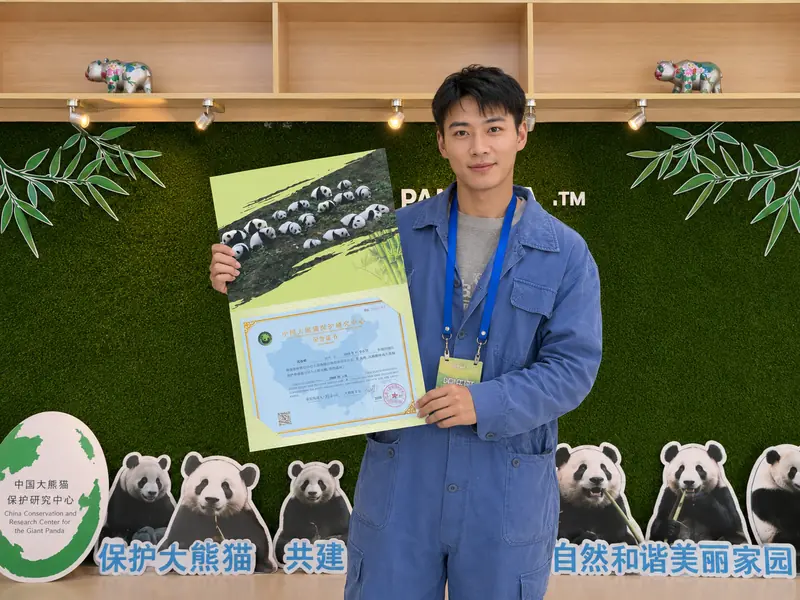
- 5Receive a cooking certificate at the end.
What to actually expect: This is not a serious culinary program — it's a fun, interactive experience. The chef walks you through every step, and even if you've never held a wok, you'll be fine. If you genuinely mess up (many people do), the chef will quietly fix it. The vibe is relaxed and photo-friendly.
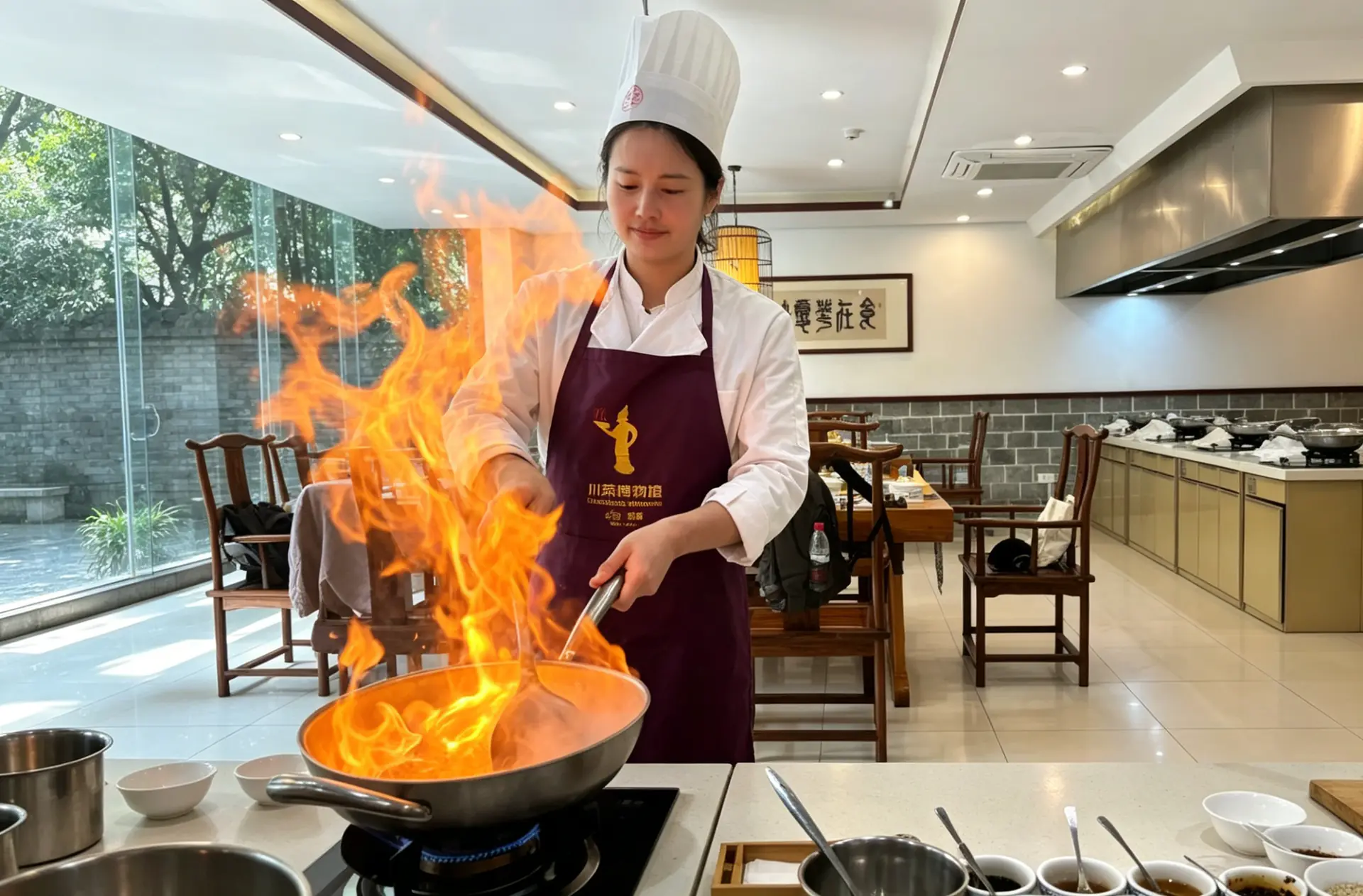
Chef's jacket, wok, flame — the chef demos up front, you follow at your own station.
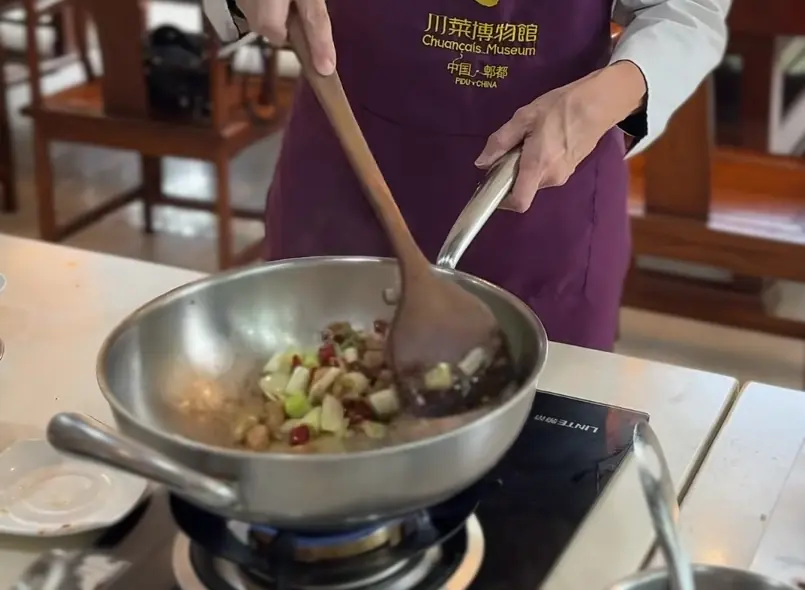
Kung Pao Chicken in progress — peanuts, dried chilies, Sichuan peppercorns, nothing like takeout.
Hands-On Doubanjiang and Soy Sauce
Pixian doubanjiang (郫县豆瓣酱) is the soul seasoning of Sichuan cuisine — it's in virtually every Sichuan dish you've ever eaten.
The museum sits in its birthplace, with an open-air fermentation yard filled with hundreds of traditional clay jars.
What you'll do outdoors
What You'll Do
Stir the doubanjiang jars
Pick up a wooden paddle and turn the fermenting paste. The guide explains raw broad beans through finished paste: standard Pixian doubanjiang needs at least 12–18 months; premium aged versions can go 3–5 years.
Pour soy sauce
Experience the traditional soy-sauce filling process.
Grind tofu pudding
Push a stone mill by hand, grinding soybeans into soy milk, then making fresh tofu pudding (豆花).
This section takes place outdoors, and the entire yard carries the smell of fermentation — some people find it intoxicating, others find it indescribable. Either way, it's an experience you won't get anywhere else.
Pro Tip
The doubanjiang stirring takes place in the open air — it gets hot in summer. Wear a hat and sunscreen. But this is also the most photogenic part of the visit: hundreds of clay jars arranged in neat rows under the sun are genuinely spectacular.
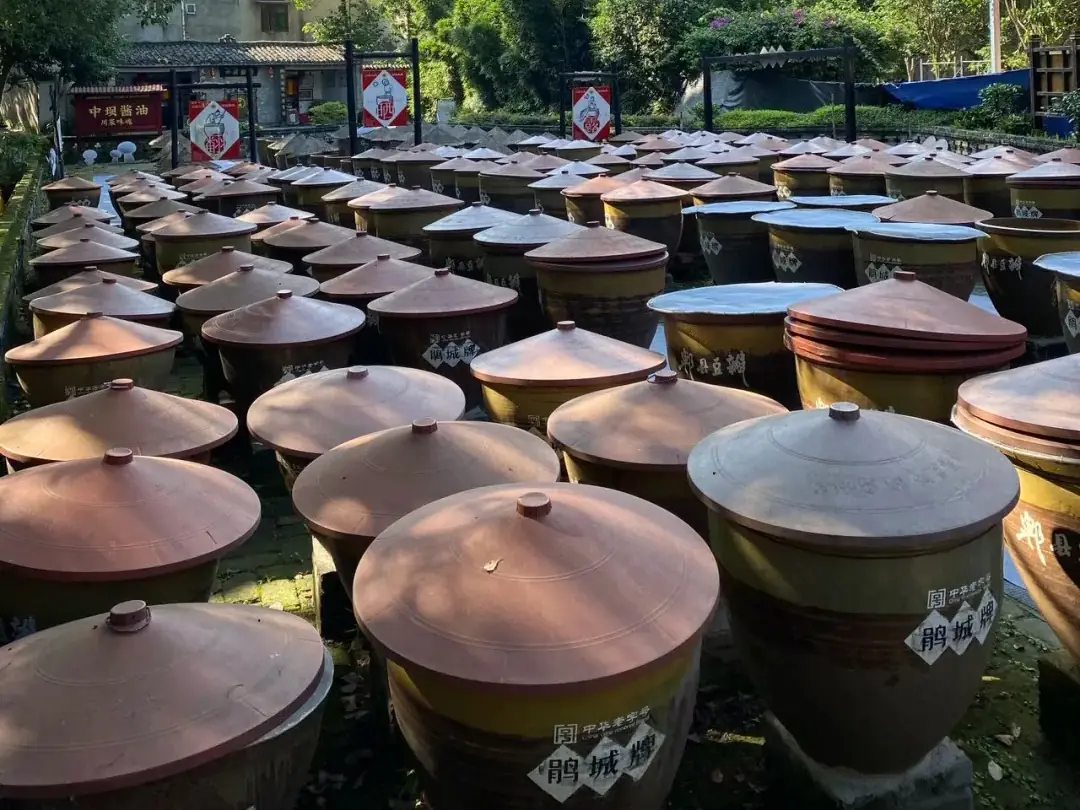
Hundreds of clay jars fermenting in the sun — pick up a wooden paddle and stir the paste yourself.
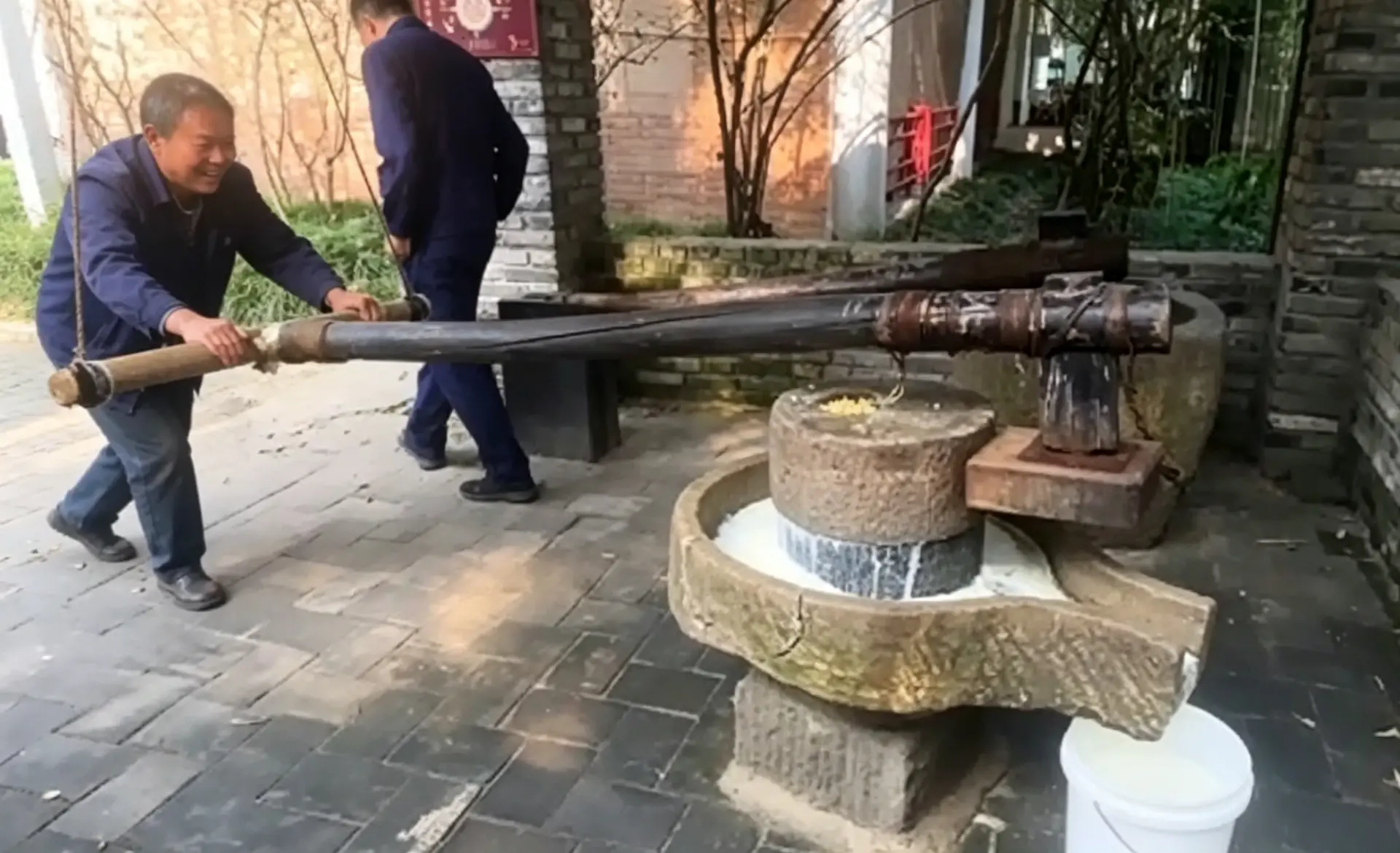
Stone-mill grinding — push the handle, watch soybeans turn into fresh soy milk and tofu pudding.
Inside the Exhibition Halls
The museum has multiple halls tracing Sichuan cuisine from pre-Qin times to the present.
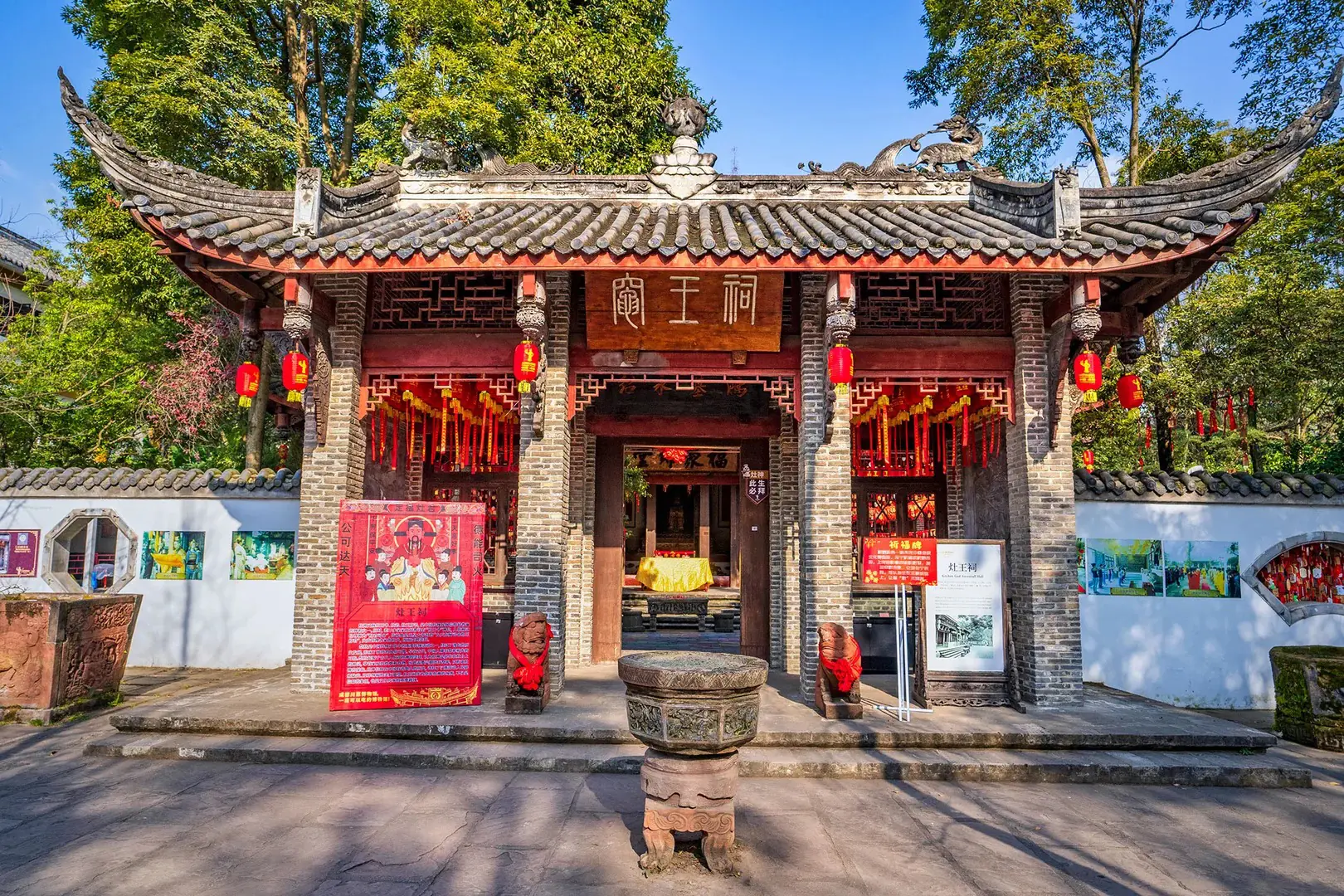
The Kitchen God shrine — free Hanfu robes for photos and paying respects.
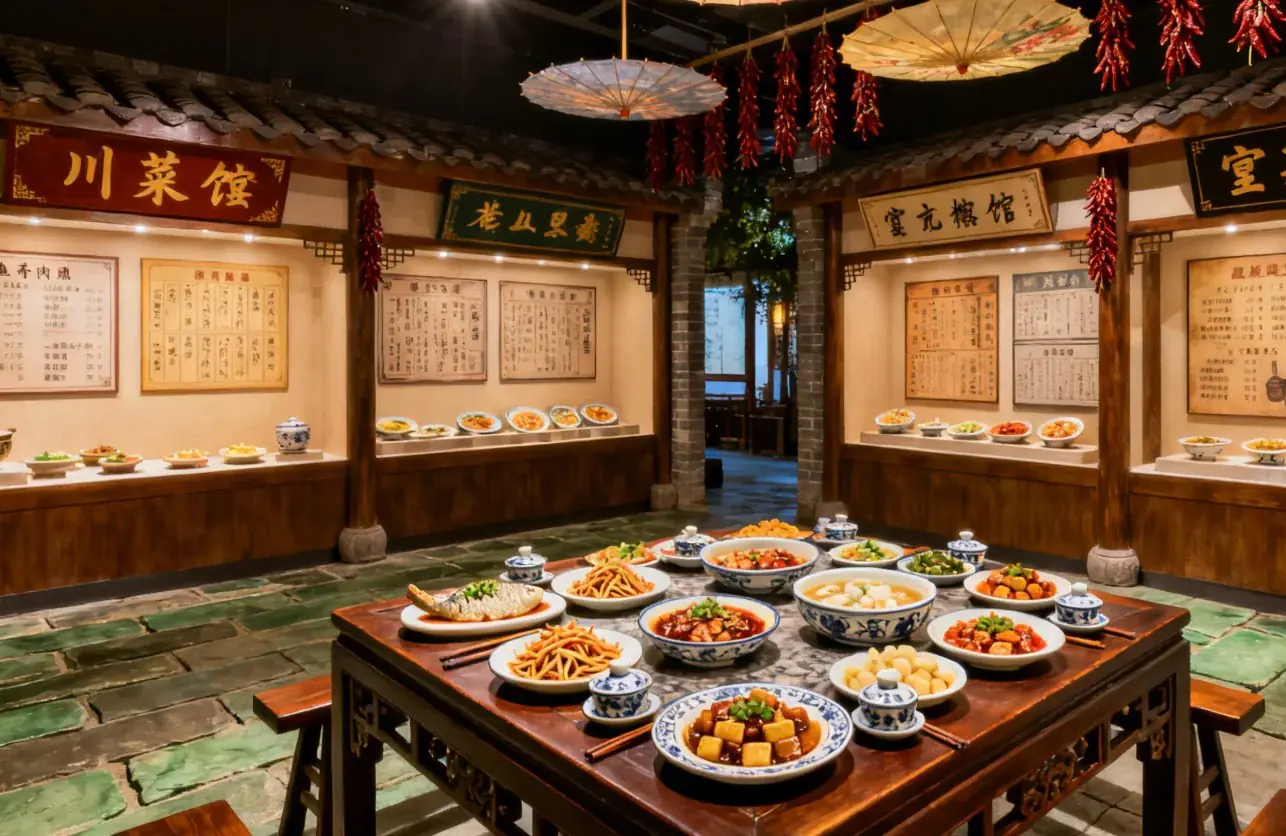
Old Sichuan food street — like stepping into a Republican-era Chengdu alley.
Classical Collection Hall
Core collection · allow the most time
The core exhibition space houses over 6,000 artifacts related to Sichuan cooking — ancient stoves, knives, pottery, recipe manuscripts, and cooking vessels.
The anchor: a pickle jar valued at approximately ¥4 million.
Raw Materials Area
Ingredients and the organic garden
Displays the essential ingredients of Sichuan cuisine — varieties of chili peppers, Sichuan peppercorns, doubanjiang components, and brewing materials.
Continue outside: the garden next door grows vegetables and herbs used in Sichuan cooking.
Kitchen God Ancestral Hall
Free Hanfu experience
A shrine dedicated to the Kitchen God (灶神), reflecting traditional Chinese kitchen culture.
Do here: put on a Hanfu robe and pay respects — a free experience most foreign visitors don't know about.
Old Sichuan Restaurant Street
A recreated historic food alley
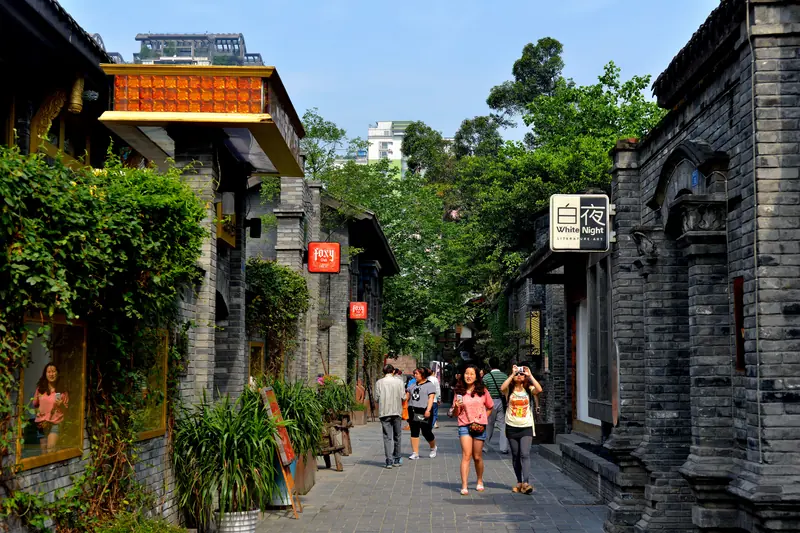
A recreated traditional Sichuan food street with old-fashioned snack stalls, teahouses, and vintage dining scenes.
The effect: it feels like stepping into a Republican-era Chengdu food alley.
Viewing tip: If time is short, the Classical Collection Hall and Raw Materials Area are worth a thorough look; the rest can be browsed quickly. Exhibition labels are primarily in Chinese with limited English — having a guide makes a significant difference.
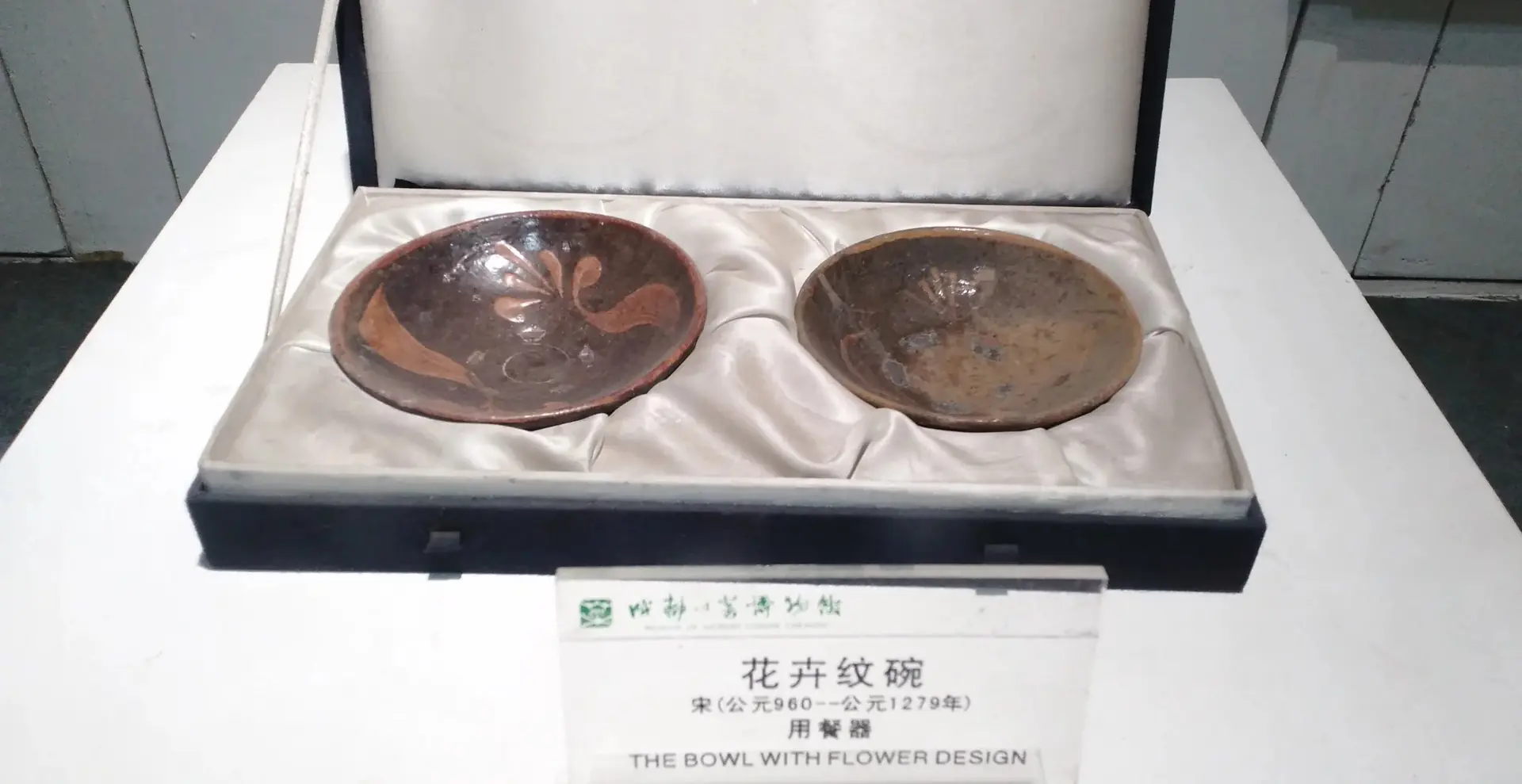
Over 6,000 artifacts — ancient stoves, knives, recipe manuscripts, and a pickle jar worth ¥4 million.
The Classical Collection Hall houses the core exhibition. If time is short, this and the Raw Materials Area are worth a thorough look; the rest can be browsed quickly.
Unlimited Sichuan Snacks, All Afternoon
Common package inclusion · service window varies
Graze after class, but choose morning if snacks matter most
How it worksSnack stations are scattered around the grounds, so you can graze as you explore after cooking.
What to expectYou may already be half-full after making three dishes, but the traditional range keeps the tasting worthwhile.
Zhong Dumplings (钟水饺)
Chili-oil dumplings with a slightly sweet, slightly spicy sauce.
Dan Dan Noodles (担担面)
Crushed peanuts, preserved mustard greens, and chili oil — Sichuan's iconic street noodle.
Lai Tangyuan (赖汤圆)
Glutinous rice balls filled with black sesame paste.
Long Chaoshou (龙抄手)
Sichuan-style wontons in chili oil or clear broth.
Other seasonal snacks
The selection changes, which is part of the reason to confirm the current package before paying.
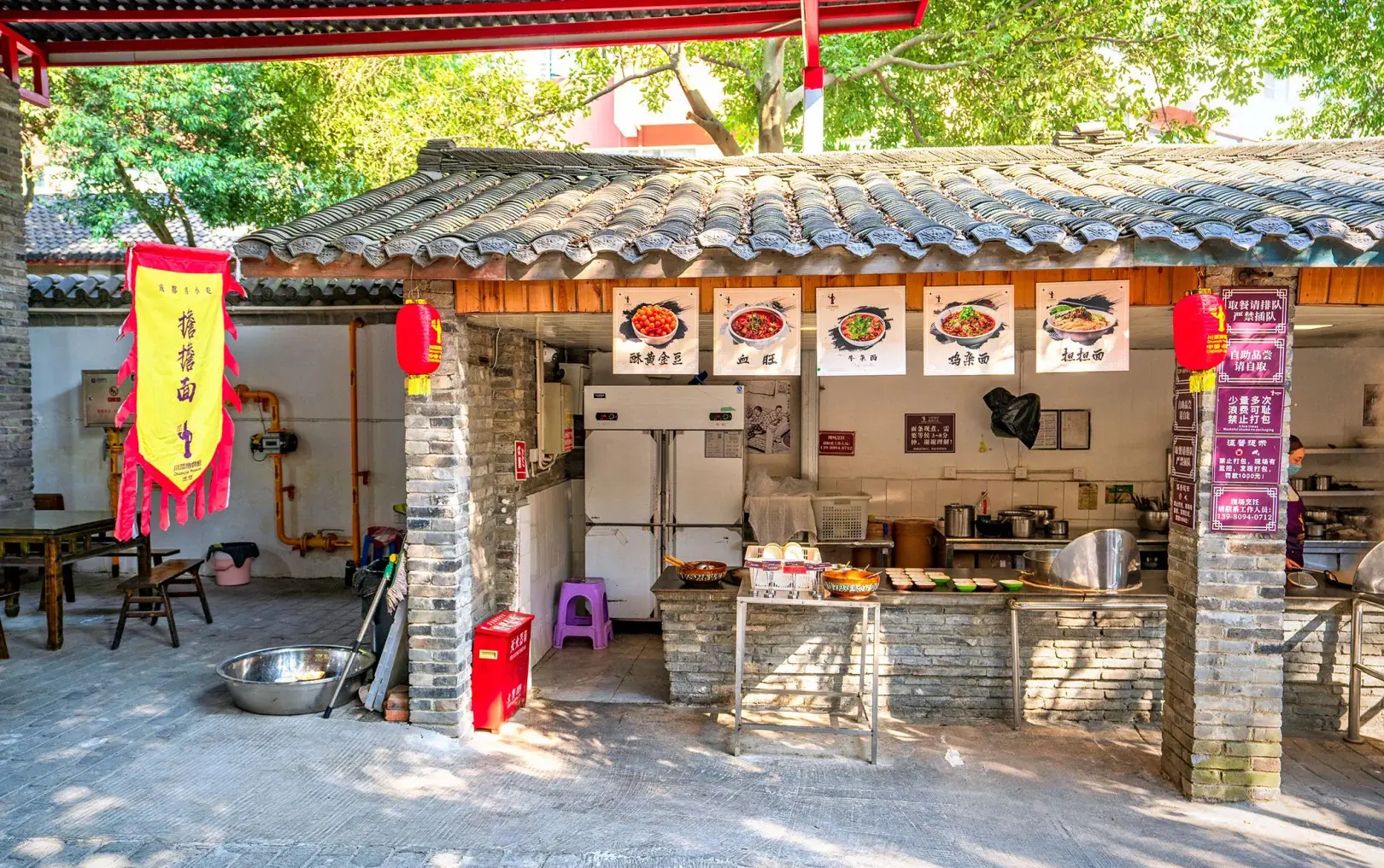
Dan Dan Noodles — crushed peanuts, preserved mustard greens, chili oil. Eat as many bowls as you like.
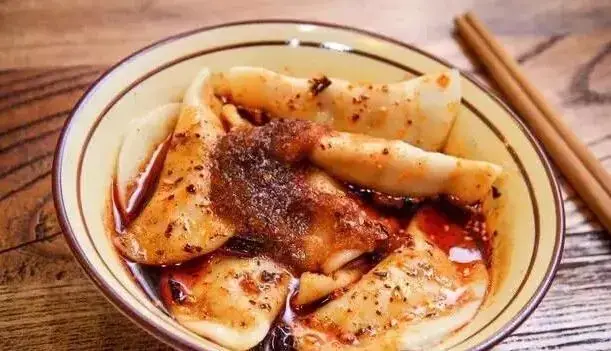
Zhong dumplings in red oil — the layered chili-oil sheen hits as hard as the flavour.
Timing note: Providers commonly describe snack service as ending around 17:00, but the museum does not publish a standing service window. Confirm the day's inclusion and cutoff; if snacks are your priority, an available morning session remains the safer choice.
What Most Visitors Miss
The organic garden is worth 5 minutes
Next to the Raw Materials Area, a small plot grows vegetables and herbs used in Sichuan cooking. It is not essential, but it is interesting if you care about ingredients.
Hanfu at the Kitchen God shrine is free
The shrine provides free Hanfu robes for photos and paying respects to the Kitchen God — most foreign visitors have no idea.
Pick the morning session
You get fewer people, a fuller snack selection, and the best light for photographing the doubanjiang jars.
Do not underestimate the distance
The museum is in Gucheng Town, Pidu District, about 40 km or one hour from the city center. This is not a casual drop-in; budget a dedicated half-day.
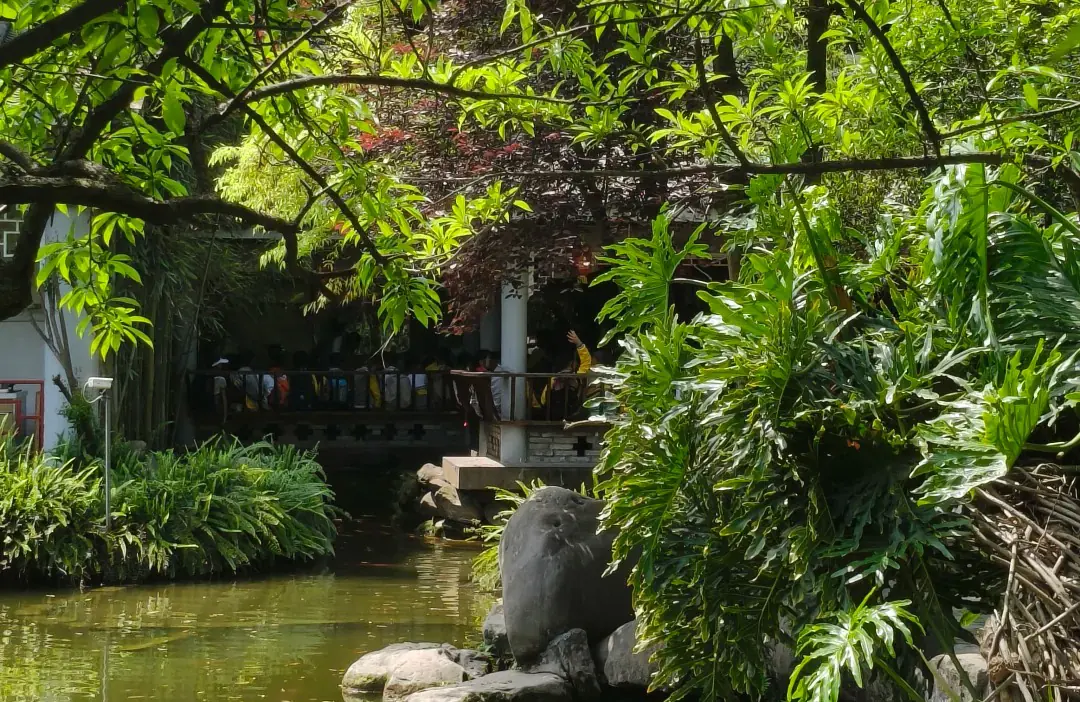
The bamboo gardens — more photogenic than the exhibits. Don't rush past.
Slow down between activities
The grounds deserve their own short wander
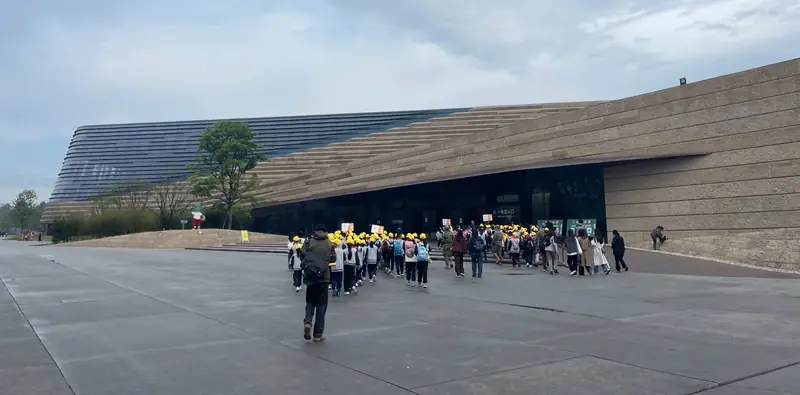
The museum's architecture and grounds are worth a slow wander — Sichuan-style folk buildings, bamboo-lined paths, ponds, and traditional courtyards. Many visitors rush to the cooking class and miss the most peaceful corners.
Photography Guide
The Sichuan Cuisine Museum is surprisingly photogenic — rustic Sichuan architecture, neatly arranged fermentation jars, and the visual of cooking in a chef's uniform all make for strong social-media material.
Doubanjiang Jar Array
Best in morning light
Chef Uniform Shots
Capture the wok-toss moment
Bamboo and Courtyards
Quiet portraits and landscapes
Snack Close-Ups
Use the chili-oil sheen
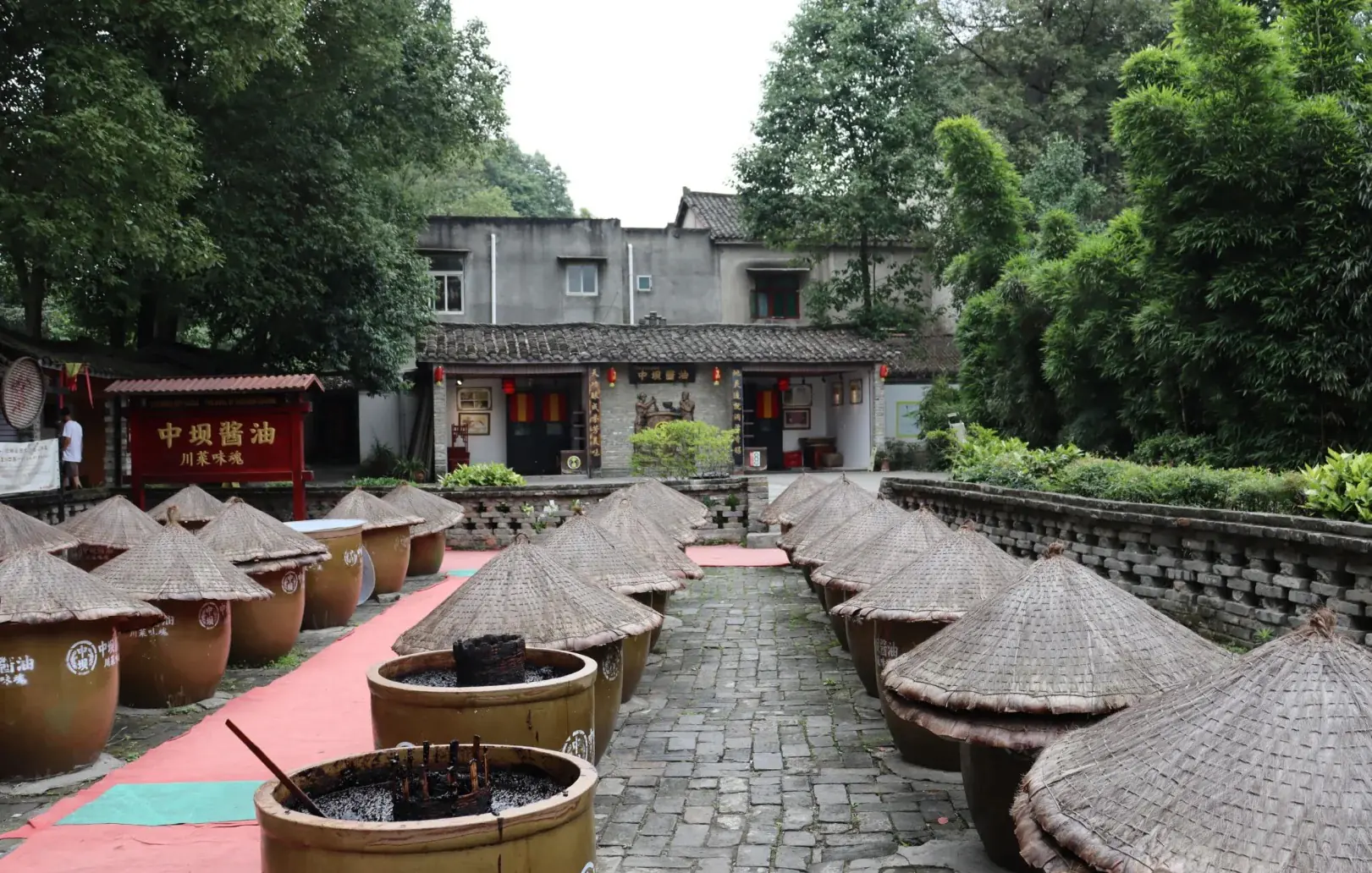
Hundreds of jars in the sun — shoot from above for the repeating pattern, or up close for the texture of fermenting paste.
Tickets and Booking
First decision · choose the package
The grounds-only ticket excludes the experiences that justify the trip
Grounds-only ticket
commonly ~¥60
Usually described as exhibition halls, gardens, and tea without cooking or snacks. Confirm the current price and inclusion directly.
Full experience
commonly ~¥360
Often listed with a three-dish cooking class, doubanjiang activities, snacks, exhibitions, and a certificate; request the current inclusion list.
English guide
sometimes +¥200
A per-group add-on appears in provider listings but is not an official standing tariff. Pre-book and confirm it in writing.
How to book
- 1. Start with the museum's official channels or a clearly written Trip.com/provider page.
- 2. Confirm pickup, language, menu, and refund terms before paying.
- 3. Book at least 1-2 days ahead, and earlier in peak season.
You can also book directly through the museum's official channels and check its website for contact details.
Important: Do not assume a grounds-only ticket includes cooking or snack tasting. Ask for a written package list and current total before paying; the commonly listed full experience is around ¥360, not an official standing price.
Getting There
Arrival decision
Use a taxi unless this is part of a western-outskirts driving day
Address: No. 8 Ronghua North Alley, Gucheng Town, Pidu District, Chengdu (成都市郫都区古城镇荣华北巷 8 号). It is about 40 km from Tianfu Square, roughly one hour by car.
Taxi · most convenient
Expect about ¥80-120 one way from downtown and 1-1.5 hours. Some guided packages include hotel pickup and drop-off, but confirm this in writing before paying.
Public transport · possible but cumbersome
Take a bus from Jinsha Bus Station (金沙车站) to Pidu District, about 50 minutes, then transfer to a local bus for Gucheng Town. It is not recommended if you have other options.
Day-trip combo: If exploring Chengdu's western outskirts by car or private driver, pair the museum with Dujiangyan (都江堰) or Mount Qingcheng (青城山). They are in the same direction, about 40-50 minutes farther.
Show this screen to your driver · 出示给司机看
去川菜博物馆,郫都区古城镇荣华北巷8号。
Sichuan Cuisine Museum, No. 8 Ronghua North Alley, Gucheng Town, Pidu District, please.
About 40 km / 1 hour from downtown Chengdu. ¥80–120 by taxi one way.
Practical Tips
Best operating choice
Choose an early confirmed session and protect a half-day
Time budgetA provider-listed full experience takes about 3.5 hours; with transit, protect a half-day.
Best sessionIf 9:00 is offered, it usually leaves more time for snacks and the grounds. Confirm the actual session and inclusions before departure.
What to wear
You'll get an apron or chef's jacket, but oil splashes happen. Wear clothes you do not mind staining, comfortable shoes, and sunscreen in summer because the fermentation yard is outdoors.
English support
Exhibition labels are primarily Chinese with limited English. The cooking class has bilingual support, but an English guide must be pre-booked and confirmed in writing.
Panda Base pairing
Theoretically possible — Panda Base morning, Cuisine Museum afternoon — but they are in opposite directions with roughly two hours of transit. It will be rushed; splitting them is better.
Better day-trip pairing
Combine the museum with Dujiangyan or Mount Qingcheng in the same direction; see “Getting There” above for details.
Frequently Asked Questions
Do not assume so. Provider listings commonly separate a grounds-only option at about ¥60 from a full experience at about ¥360, but these are not official standing prices. Confirm the current package, cooking session, and snack inclusion in writing before paying.
Sources checked for this guide
- Official museum homepage checked for the current 9:00-18:00 opening window, visitor identity note, telephone and street address: Sichuan Cuisine Museum official website
- Official museum profile checked for the Pidu District setting, 40-mu Sichuan-style garden, museum classification and cuisine-culture experience positioning: Official museum profile
- Official contact and transport page checked for the Ronghua North Alley address, public-transport directions and contact information: Official contact and transport information
Beyond This Guide
Chengdu's food scene runs deeper than hot pot and mapo tofu. From night markets and fly restaurants to tea culture and Sichuan peppercorn farms, the city can fill a week of eating alone.
Pair the Cuisine Museum with pandas, Dujiangyan, and the old town for the full Chengdu picture.
© gochinafreely.com — Original guide by Go China Freely.