Workshop basics
Confirm before paying
Indigo Craft in a Bai Village
The village before the souvenir
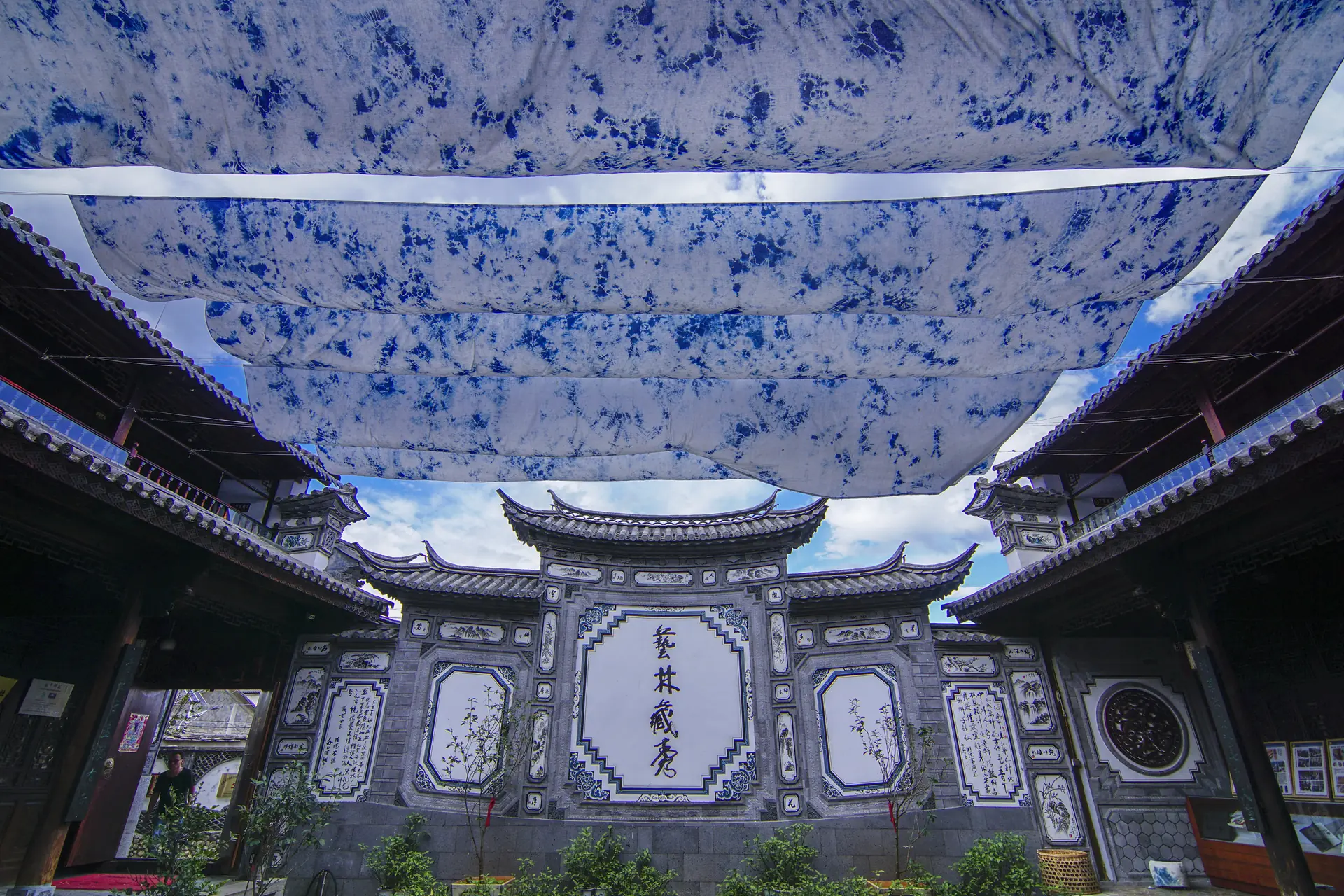
Zhoucheng Village (周城村) is where Dali's Bai tie-dye stops being a museum label and becomes something you can fold, bind, dye, and carry home. The Bai tie-dyeing technique was listed among China's first national intangible cultural heritage items in 2006, but the best reason to go is simpler: blue-and-white cloth still dries in real village courtyards here, not only in souvenir displays.
This guide helps you decide whether a Dali tie-dye workshop is worth your time, where to do it, how to book responsibly, and how to pair Zhoucheng with Xizhou Old Town (喜洲古镇) and the Erhai Lake (洱海) west shore.
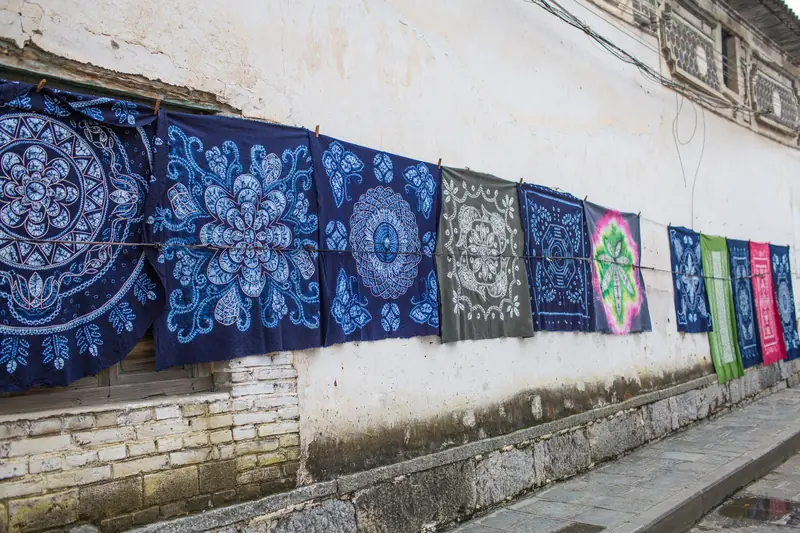
Dali tie-dye is not the rainbow tie-dye many Western travelers associate with festival shirts. The Bai (白族) tradition around Zhoucheng is usually a restrained blue-and-white craft: cloth is folded, stitched, tied, or clamped so that parts of the fabric resist the dye, then dipped into indigo-toned dye until the hidden pattern appears.

That restraint is part of its charm. The patterns often echo butterflies, flowers, fish, water ripples, geometric folds, or lucky motifs from Bai village life.
A finished scarf or square cloth may look simple from a distance, but up close you can read the tiny decisions: how tight the thread was, where the fold shifted, where the dye bled softly into white.
Zhoucheng sits about 23 km north of Dali Old Town (大理古城) (Google | Amap), under Cangshan (苍山) and near Xizhou. It is not a purpose-built craft park. It is a real Bai village with workshops, family courtyards, drying racks, shops, and ordinary village life happening around the visitor activity.
For source context, the China Intangible Cultural Heritage Digital Museum identifies Bai tie-dyeing as a national heritage craft connected with Dali and Zhoucheng, while Yunnan's tourism portal describes the process and Zhoucheng's role in the craft through its Bai tie-dyeing introduction.
Should You Take This Tie-Dye Workshop?
Decision shortcut
Is this workshop a good fit?
Good fit
Choose it if you like hands-on crafts, village culture, textiles, photography, and slower travel days around Xizhou or Erhai.
Think twice
Skip it if you only have a few hours in Dali, dislike waiting for wet fabric, need a perfectly polished result, or worry about dye stains.
Yes, if you want a slow, tactile cultural activity rather than another scenic viewpoint. A good Dali tie-dye workshop gives you three things at once: a basic understanding of Bai textile craft, a low-pressure hands-on project, and a keepsake that is more personal than a mass-made scarf.
It is especially good for families, solo travelers, couples, art lovers, and anyone spending more than one rushed day in Dali. Children can usually handle simple folding and tying projects, while adults get enough cultural context to make the class feel more meaningful than a generic DIY session.
The workshop is not the first thing every Dali visitor should book. If you have not seen Erhai, Cangshan, Xizhou, or Three Pagodas yet, those may come first. But if your Dali route already includes Bai villages, this is one of the easiest ways to turn sightseeing into participation.
How Bai Tie-Dye Works Step by Step
A simplified visitor-class sequence
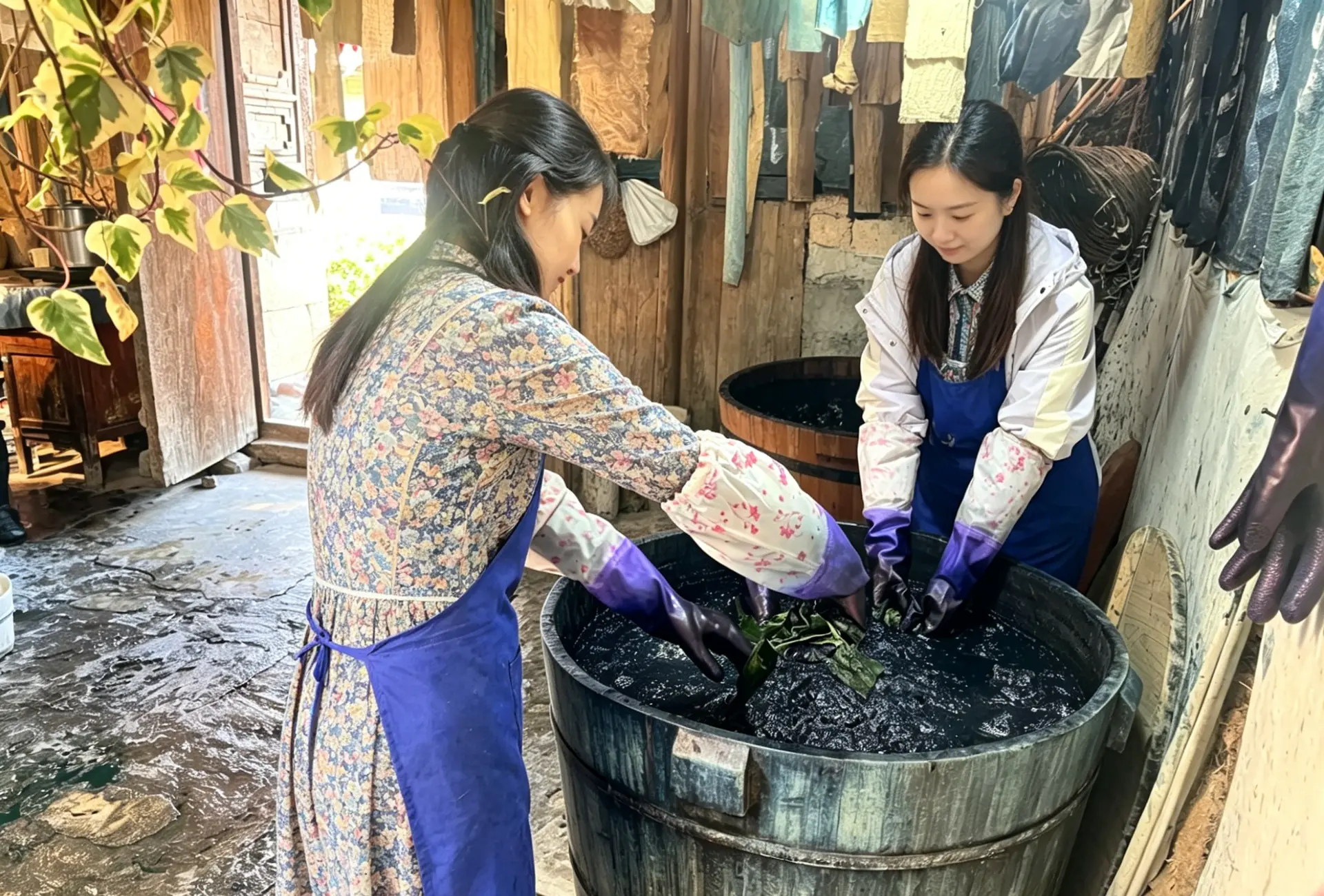
Visitor workshops compress a much longer craft tradition into a manageable class, often around 1-3 hours depending on the item and complexity. The principle is resist dyeing: the parts protected by thread, folds, knots, clips, or stitching take less dye, creating white shapes after the cloth is opened.
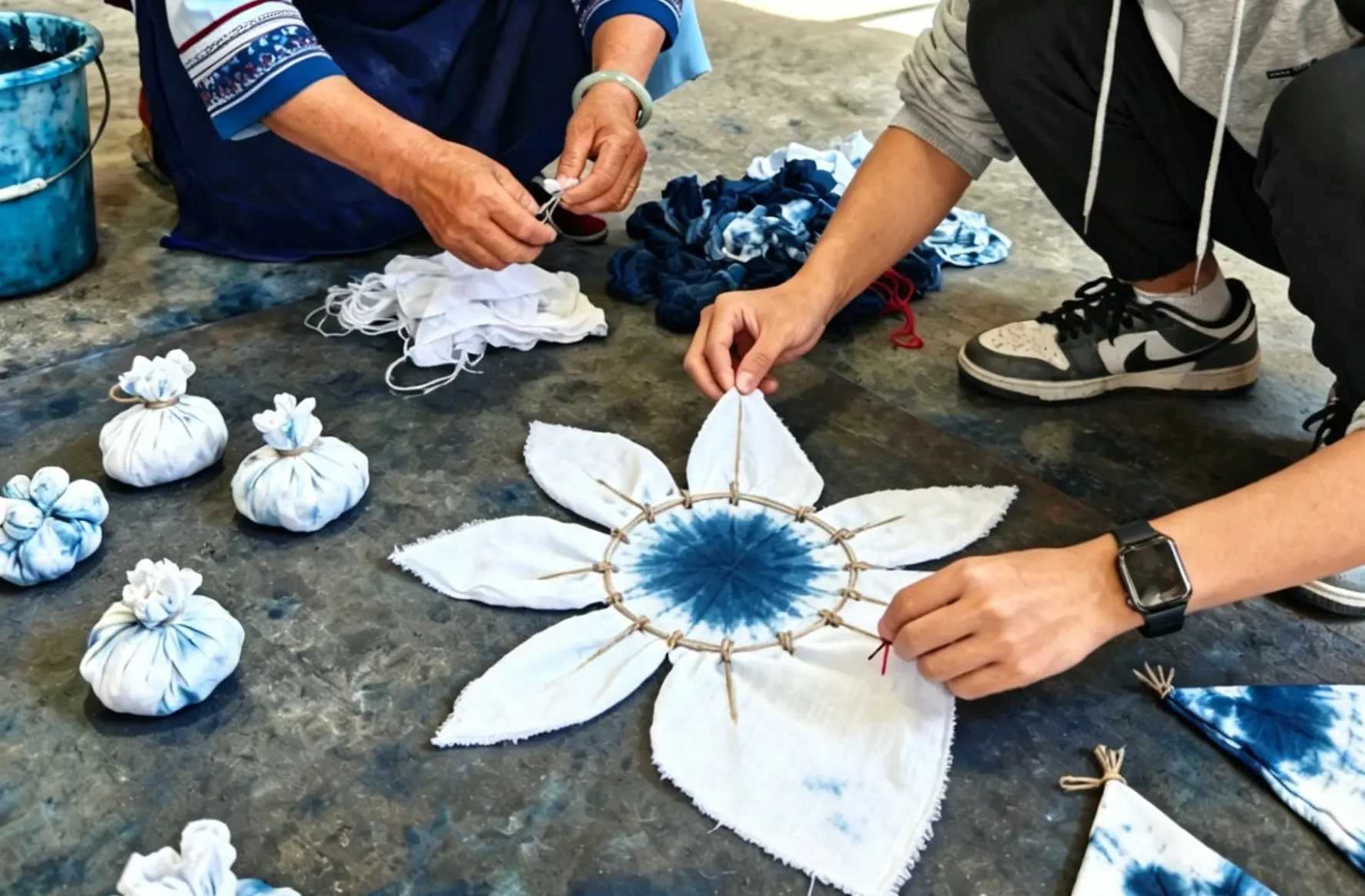
- Choose the Cloth- Pick a square cloth, scarf, canvas bag, hat, T-shirt, or larger item. Small pieces are easiest for travelers.
- Plan the Pattern- The teacher shows simple folds, clips, knots, or stitched motifs. Complex traditional patterns take more time.
- Bind or Stitch- Tight thread and clean folds decide how sharp the white pattern will be.
- Dye in Indigo- The tied fabric goes into the dye vat. Some workshops repeat the dip for deeper blue.
- Oxidize and Rinse- Color changes as the cloth meets air, then the fabric is rinsed and opened.
- Dry and Take Home- Small items can usually leave with you the same day, but they may still be damp.
Do not expect the teacher to make a flawless product for you. The best moment is the reveal: threads come off, the cloth opens, and the pattern is slightly more alive than your plan. One edge may bleed, one fold may surprise you, and no two pieces look exactly the same.
Traditional explanations often mention plant-based indigo and the Isatis plant. In a visitor class, you usually do not make the dye from scratch; the vat is ready before you arrive. Ask if the workshop explains the dye source, but do not assume every tourist session includes the full traditional preparation process.
Choose a small first project
If this is your first tie-dye class, start with a square cloth, scarf, hat, or canvas bag. Tablecloths and large garments can be beautiful, but they take longer, cost more, and may need advance reservation.
Dali Tie-Dye Booking Options That Work
Choose the booking path before the shop
For foreign travelers, booking method matters almost as much as the workshop itself. The craft is real, but the visitor market ranges from polished platform products to informal family workshops where the teacher may speak little English.
← swipe to compare all options →
Trip.com workshop
Simplest approved pre-booking path
- ✓Useful for travelers who want an English booking interface and written cancellation terms
- ✓Check the live page for the exact workshop location, item choices, and pickup notes
- —Confirm whether the class itself has English teaching or only translated page text
Good for basic DIY and clear shop options
Guided combo tour
Craft plus route planning
- ✓Best if you want tie-dye, Erhai, Xizhou, or dinner combined into one afternoon
- —Costs more than a simple workshop because guide time and transfers are included
- —Read the exact itinerary so the craft time is not too short
Often includes transport or a guide
Walk-in village workshop
Flexible but less predictable
- ✓Can feel more local and may be cheaper for simple items
- —Language, wait time, item choice, and price need on-site confirmation
- —Ask your guesthouse, driver, or planner to help confirm details in Chinese before you go
Best with Chinese help
Prices, shop locations, language support, and package names change. Confirm current details on the platform or with the provider before paying.
Live listing, then real confirmation
A useful starting point is Trip.com's Bai Family Traditional Tie-Dye Workshop page(affiliate link · may earn commission, no extra cost) for a named Zhoucheng-area workshop. For a more guided route, ask your hotel, driver, or planner to help you compare private activities, then check whether the craft portion gets enough time.
Before paying, confirm five details
- Exact location: Zhoucheng, Xizhou, or Dali Old Town are different experiences.
- Teaching language: English-speaking guide, English-speaking teacher, or translation app only.
- Finished item: scarf, bag, hat, T-shirt, tablecloth, or other option.
- Drying policy: whether you can take it immediately or need to return later.
- Extra costs: larger fabric, complex patterns, photo services, pickup, or guide time.
Zhoucheng, Xizhou, or Dali Old Town?
Three settings, three different trade-offs
Choose Zhoucheng Village (周城村) if the craft itself is your priority. This is the strongest setting for village atmosphere, drying cloth, family workshops, and Bai textile context. The trade-off is that it takes more transport planning, and English support may be uneven outside platform or guided bookings.
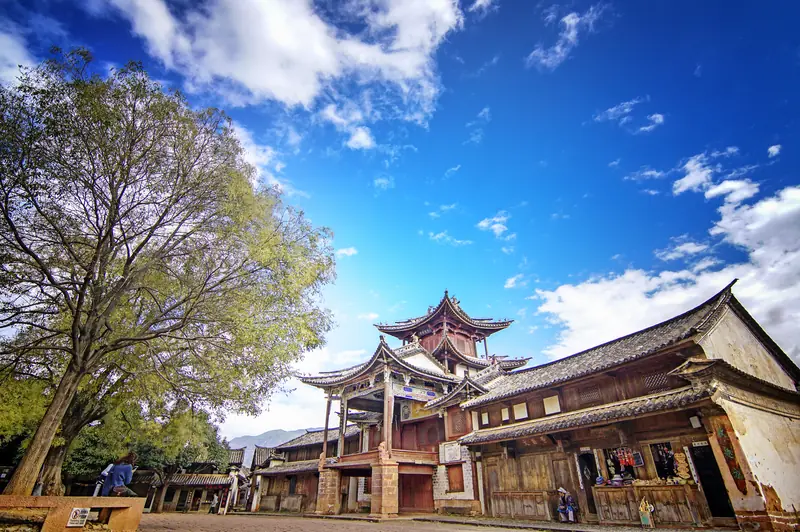
Choose Xizhou Old Town (喜洲古镇) if you want an easier half-day pairing. Xizhou gives you Bai architecture, cafes, local snacks, old courtyards, and a smoother tourist setup. Some nearby workshops are still meaningful, though the experience may feel a little more curated than a village workshop in Zhoucheng.
Choose Dali Old Town if convenience matters most. An old-town class can be a good light introduction when you have limited time or poor weather, but it is the weakest choice if your goal is to see the living craft environment around Zhoucheng.
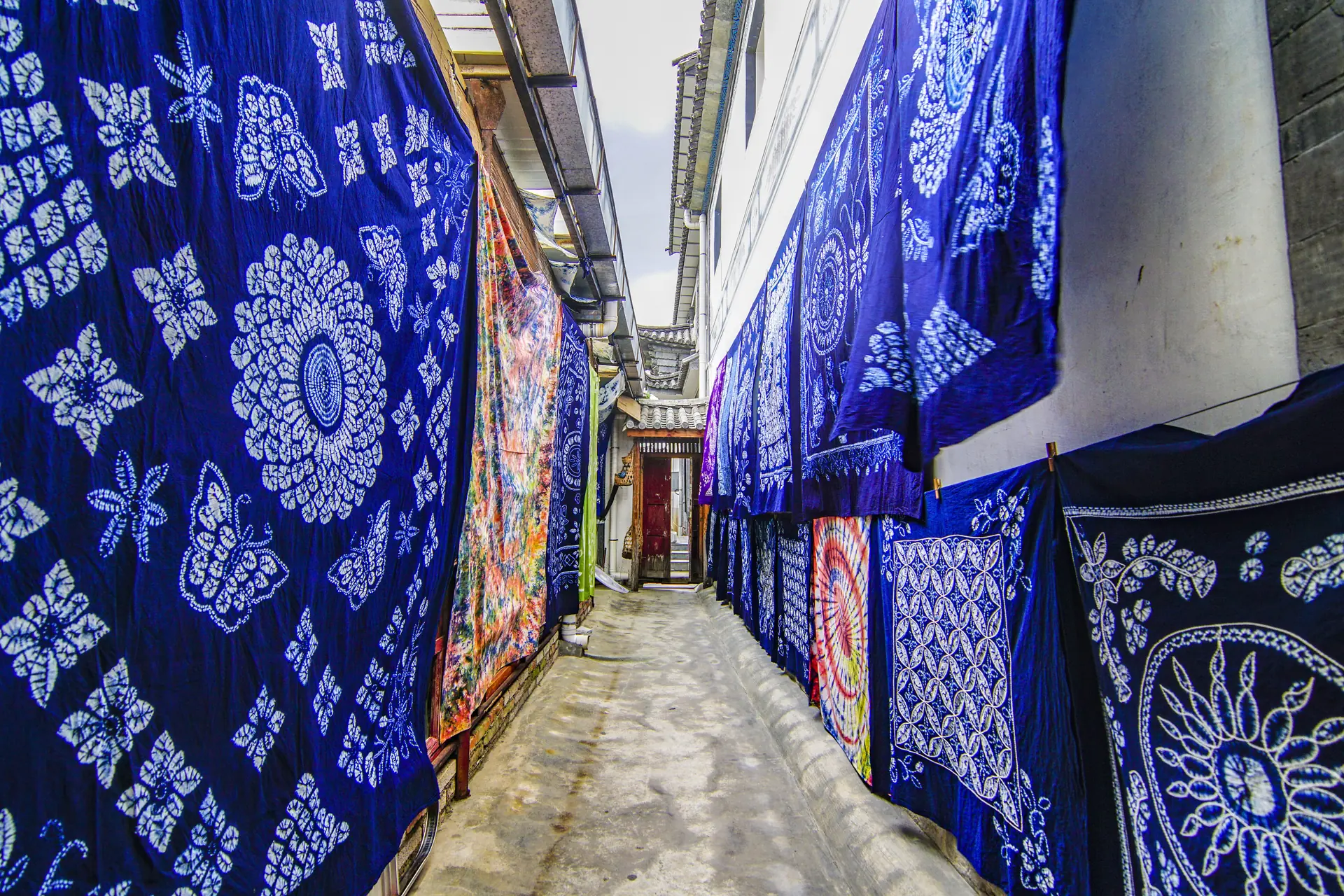
The practical rule is simple: Dali Old Town is convenient, Xizhou is balanced, Zhoucheng is the cultural anchor. If your trip has room for only one craft stop, choose the place that matches your actual priority rather than the one that only sounds most famous.
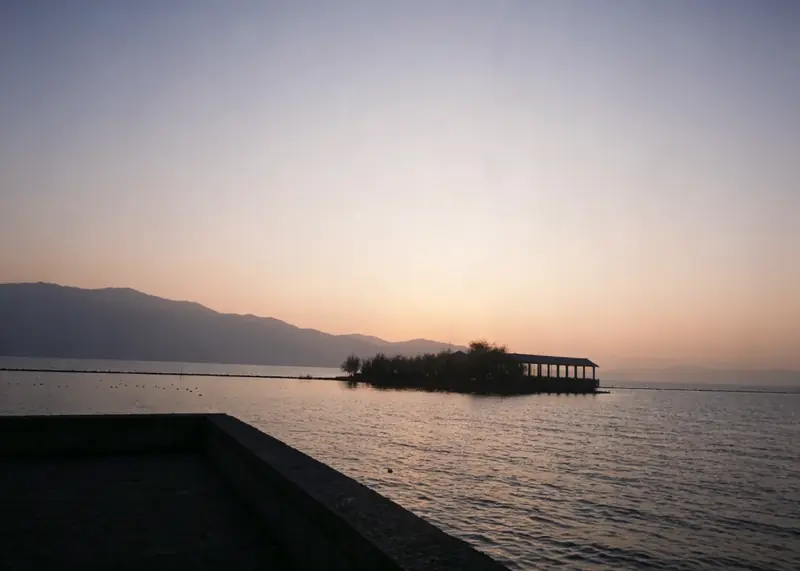
After choosing a workshop location, use the Erhai Lake guide to place Zhoucheng, Xizhou, lakeside time, and transport in a workable order.
How to Fit It Into a Dali Day
An editorial west-shore day, not a fixed tour
The best Dali tie-dye day does not treat the workshop as a standalone errand. Build it around the west side of Erhai, where Xizhou, Zhoucheng, Bai villages, cafes, and cycling routes naturally sit together.
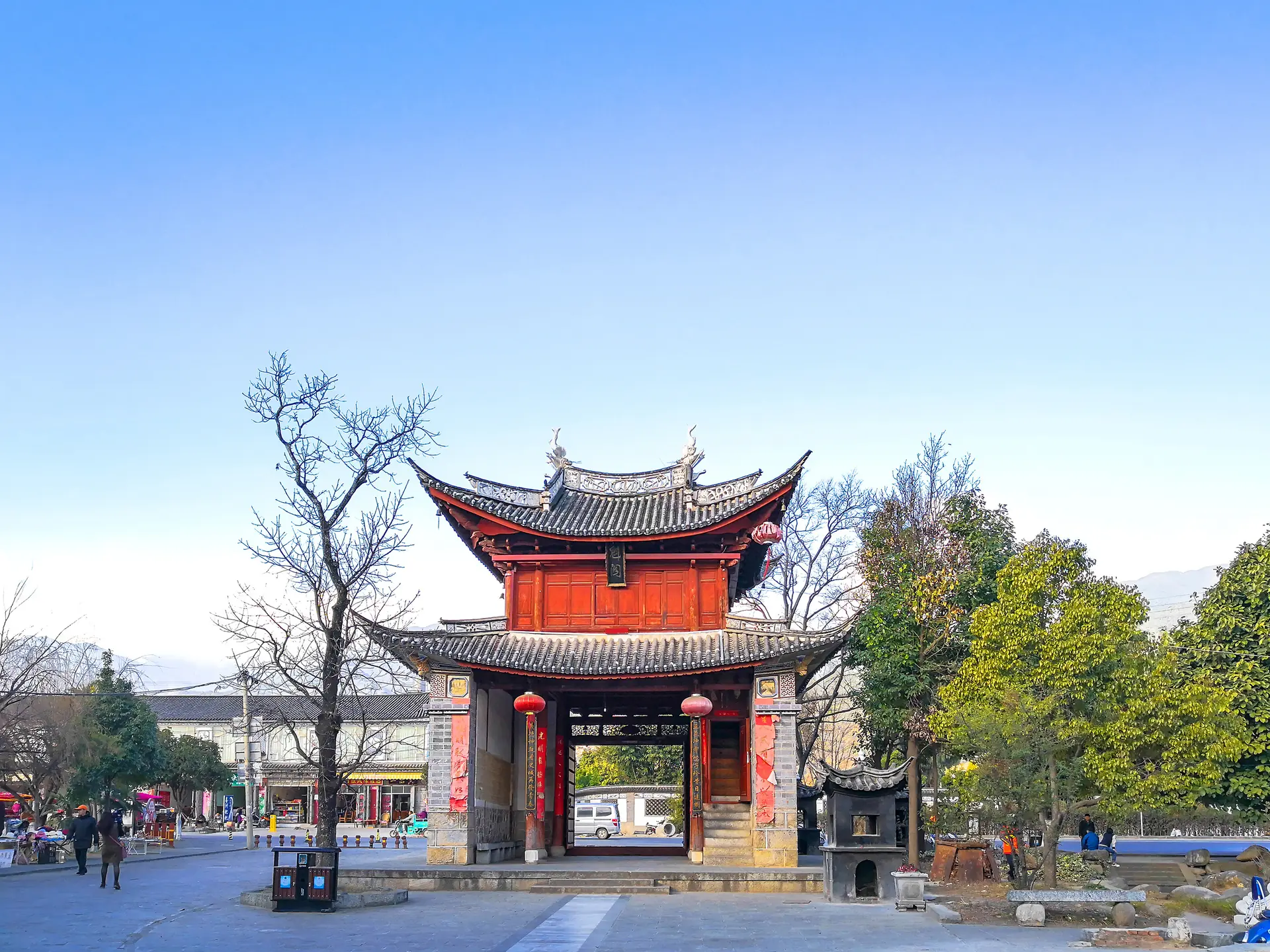

- Start in Dali Old Town- Leave after breakfast, or earlier if you want the Xizhou morning market atmosphere.
- Explore Xizhou- Walk the old lanes, see Bai courtyard architecture, and have a simple lunch or snack.
- Move to Zhoucheng- Take a taxi or short ride north for a 1-3 hour tie-dye workshop.
- Dry and Pack the Cloth- Ask the shop to separate damp fabric from light-colored bags or clothes.
- Return via Erhai West Shore- If the weather is clear, add sunset light, a short bike ride, or a lakeside cafe.
A tighter version is possible: taxi from Dali Old Town directly to Zhoucheng, finish a small item, then stop in Xizhou on the way back. What does not work well is squeezing tie-dye between a packed morning at Three Pagodas, a long Erhai bike ride, and an evening old-town plan. The class needs time to fold, dye, open, rinse, and pack the cloth; rushing it removes half the pleasure.
Getting to Zhoucheng from Dali Old Town
Distance and drive range
Zhoucheng is roughly 23 km north of Dali Old Town. A taxi or ride-hailing car is the easiest option for most foreign visitors, usually around 35-60 minutes depending on your exact start point, traffic, and whether you stop in Xizhou first.
Public transport needs a same-day check
Local buses and minibuses toward Xizhou or Eryuan can also work, and some travelers use stops around the old-town west side or the Dali-Lijiang road. The problem is not whether public transport exists; it is whether the current stop, payment method, and return timing are obvious enough for a visitor who cannot read Chinese. Ask your guesthouse or check a Chinese map app on the day before relying on it.
← swipe to compare all options →
Taxi or ride-hailing
Easiest for most visitors
- ✓Door-to-door and simple if you have a clear shop address
- ✓Easy to combine Dali Old Town, Xizhou, and Zhoucheng
- —Return rides can be slower to find at peak times or in heavy rain
Best for families and short schedules
Local bus or minibus
Cheaper, more local
- ✓Possible via Xizhou or Eryuan-bound routes
- —Stops and schedules need same-day confirmation
- —Less ideal if you are carrying wet cloth, children, or luggage
Best with Chinese app support
Private guided route
Smoothest full afternoon
- ✓Useful if you want craft context, transport, and Erhai/Xizhou timing in one route
- —Costs more than booking the workshop alone
- —Confirm that you pay activity providers or platforms directly for paid items
Best for English explanation
Transport details in Dali change by season, road works, and local operations. Treat this as a decision guide, not a fixed timetable.
What to Wear and Bring to Class
Dress for wet cloth, village lanes, and sun
Tie-dye is beginner-friendly, but it is still wet fabric and dye. Wear dark or washable clothes, choose comfortable shoes for village lanes, and keep pale jackets, leather bags, silk scarves, and light-colored luggage away from the dye area.
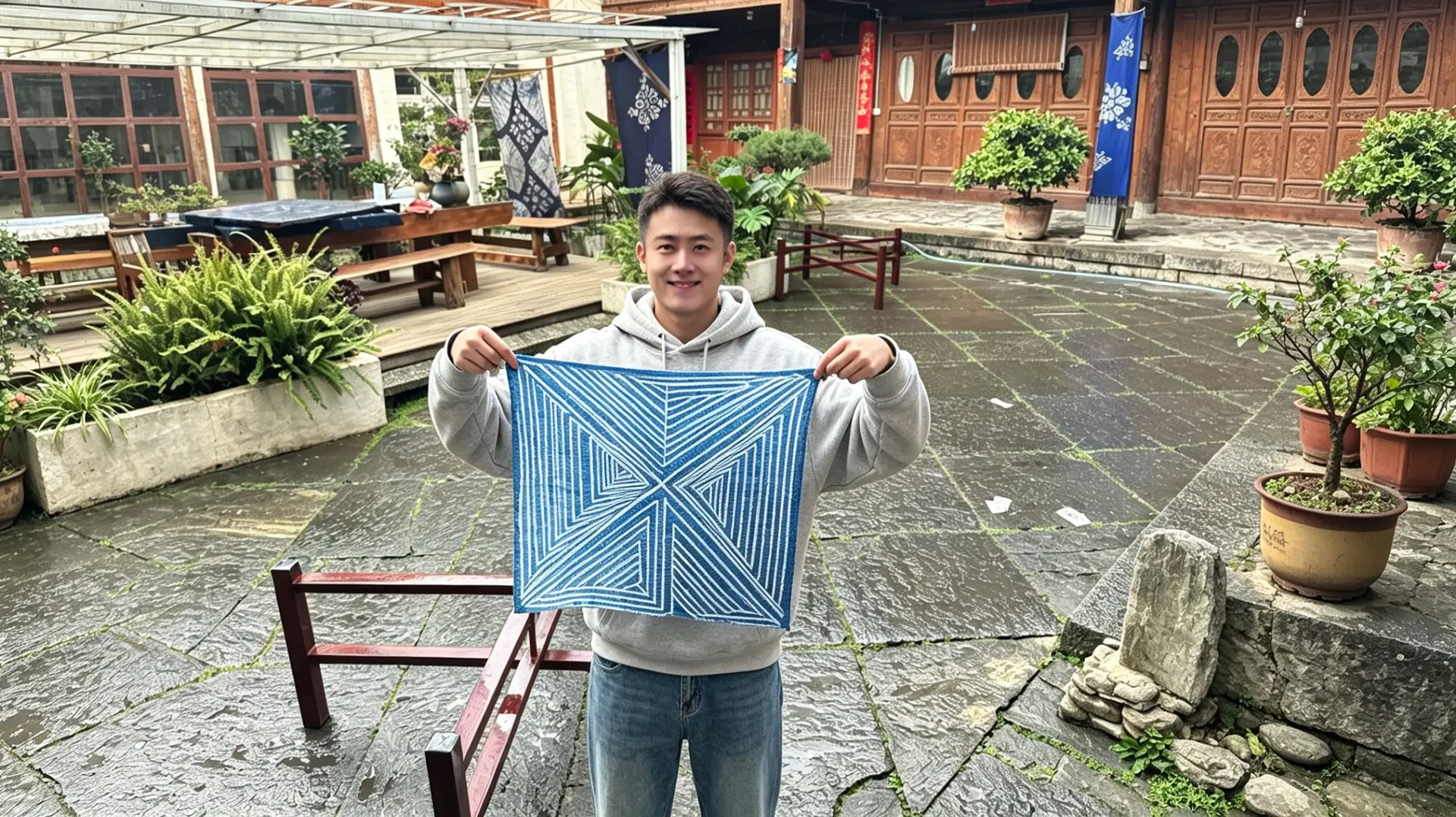
Bring a small bag for damp fabric, sunscreen, a hat, and a translation app. Dali's highland sun can be strong even when the air feels mild. If you are traveling with children, ask in advance whether the shop has aprons, simple projects, and a dye station low enough for them to join safely.
Also bring patience. Some parts of the class are waiting: waiting for dye to take, waiting for color to change in air, waiting for the cloth to rinse or dry. That slower rhythm is the point.
Protect your luggage
If the cloth is still damp, ask the workshop to wrap it separately. Do not place fresh indigo fabric against white shirts, hotel towels, pale backpacks, or paper documents.
Workshop Etiquette and Responsible Shopping Tips
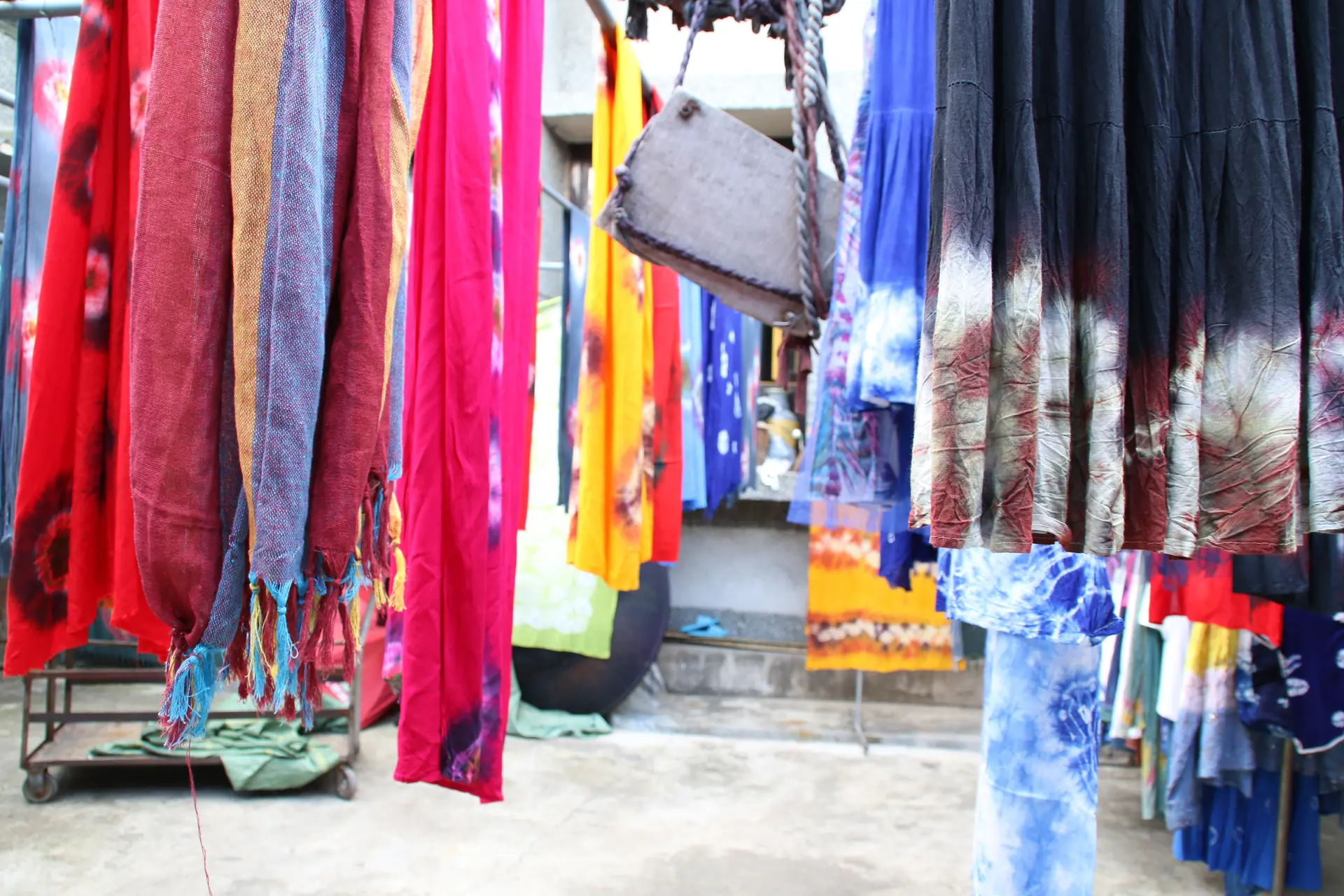
Zhoucheng tie-dye should not be treated as a blue-and-white photo backdrop only. Ask before taking close-up photos of teachers, elderly artisans, children, private rooms, or dye vats. A few respectful words and a slower camera make the visit feel much less extractive.
When buying finished pieces, do not judge only by the lowest price. Hand stitching, natural dyeing, large cloth size, and complex patterns take time. Very cheap products may be printed, machine-made, or sourced elsewhere. It is fair to ask whether an item is handmade, where it was dyed, whether natural dyes were used, and how to wash it.
For washing, keep new indigo items separate from pale clothing at first. Cold water, gentle washing, and no bleach are the safe starting points. Slight color release in the first washes is not unusual, but a good shop should be willing to explain care instructions before you buy.
Frequently Asked Questions
Yes, if you like hands-on craft, Bai culture, photography, or slow travel around Xizhou and Zhoucheng. It is not Dali's first essential sight, but it is one of the easiest ways to turn a village visit into a personal memory.
Sources checked for this guide
- Verified the national intangible-cultural-heritage project, first-batch 2006 listing, project number, Dali declaration, and Zhoucheng context: China Intangible Cultural Heritage Digital Museum — Bai tie-dyeing
- Checked the traditional dye preparation and production sequence and the distinction between the full craft and a visitor workshop: Visit Colorful Yunnan — Bai tie-dyeing
- Verified Zhoucheng’s current official tourism positioning, approximate 23 km distance from Dali Old Town, and visitor workshop availability: Visit Colorful Yunnan — Zhoucheng Village
- Checked that the named Zhoucheng-area workshop page remains live; prices, hours, item choices, and language support still require live confirmation: Trip.com — Bai Family Traditional Tie-Dye Workshop
Beyond This Guide
Continue through Bai country
Tie-dye is only one doorway into Bai culture around Dali.
The harder part is sequencing Zhoucheng, Xizhou, Erhai, Cangshan, Shaxi, or Lijiang without wasting half your day in backtracking.
© gochinafreely.com — Original guide by Go China Freely.