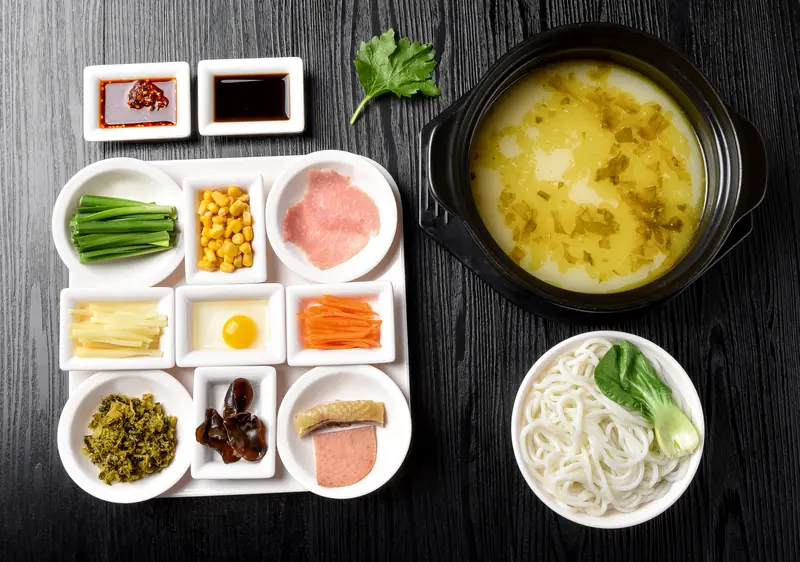
Crossing-the-Bridge Noodles (过桥米线) are not just Yunnan's famous rice-noodle soup. They are a small table ritual: a very hot bowl of broth, rice noodles in a separate bowl, tiny plates of raw and cooked toppings, and an order of assembly that turns lunch into a story you can eat.
Executive Summary
What to expect
A very hot broth, rice noodles, and separate toppings that may include raw meat, quail egg, tofu skin, ham, herbs, and vegetables. You assemble the bowl at the table.
Best first bowl
Kunming is the easiest city for most travelers to try it first. Mengzi is the origin-focused stop if your Yunnan route goes south toward Honghe or Yuanyang.
Main traveler challenge
Do not sip the soup too early. The oil-sealed broth can be scalding, and traditional versions may rely on the hot soup to cook raw meat or egg.
2014
National heritage listing
Mengzi
Origin story center
Very hot
Broth temperature
Rice-based
Noodle base
Yunnan Noodle Ritual, Not Just Soup
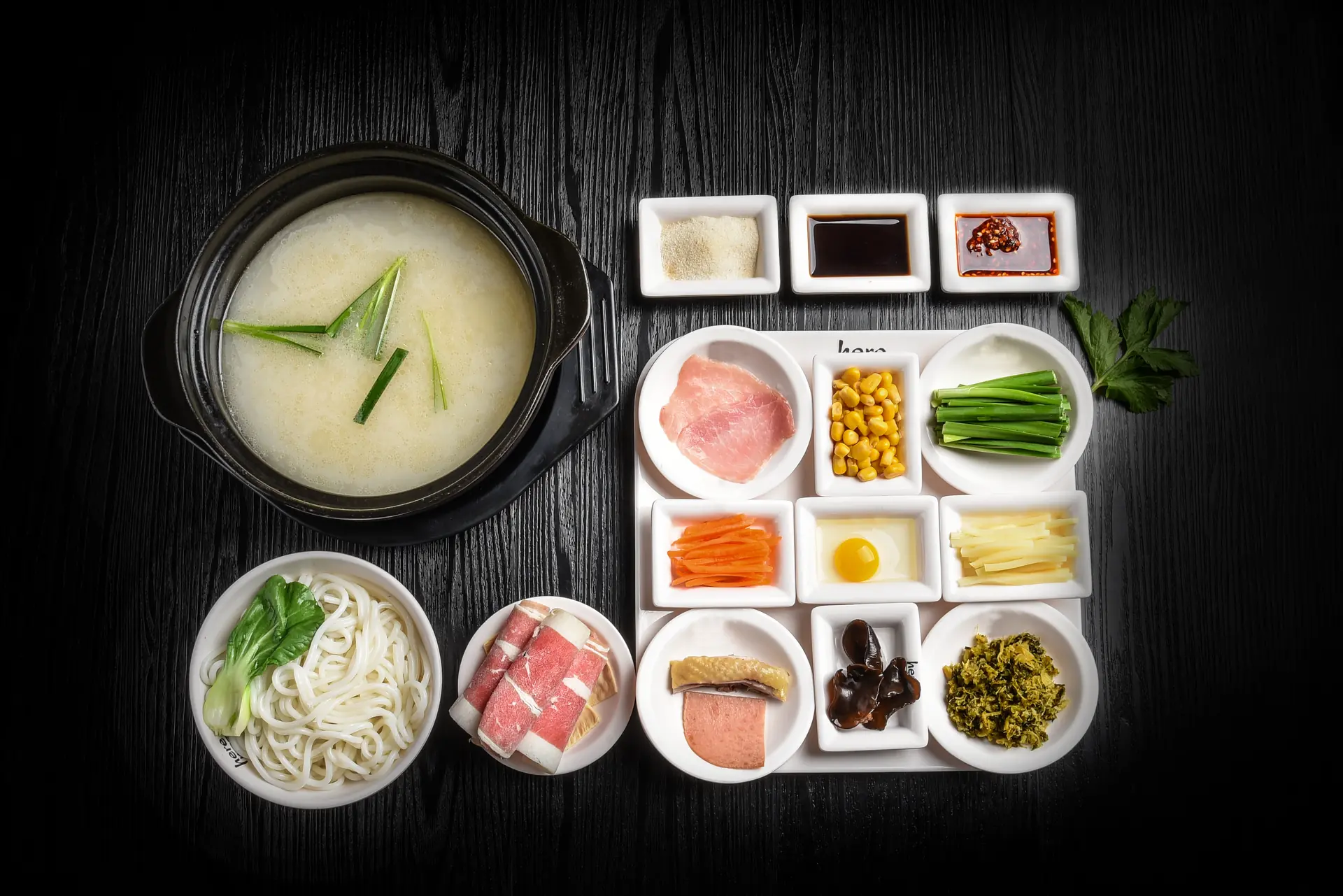
Yunnan eats rice noodles with a seriousness that surprises first-time visitors. Small-pot rice noodles are everyday breakfast; cold rice noodles suit warm afternoons; tofu-pudding rice noodles are market comfort. Crossing-the-Bridge Noodles sit above that daily world because the dish is not only a bowl. It is broth, noodles, toppings, timing, and a legend all working together.
The official China Intangible Cultural Heritage digital museum lists Mengzi Crossing-the-Bridge Rice Noodle Making Technique (蒙自过桥米线制作技艺) as a national representative intangible cultural heritage project announced in 2014. The listing describes the Mengzi version as built from three parts: rice noodles, fresh broth, and side ingredients. China Intangible Cultural Heritage
That three-part structure is what makes the dish travel-friendly. Even if you do not understand the full menu, you can recognize the format: a hot broth bowl arrives, the toppings arrive separately, and the rice noodles wait until the end.
Do not judge it like normal noodle soup
If everything arrives already mixed together, it may still be tasty, but you are not seeing the full crossing-the-bridge format. The separate broth, toppings, and rice noodles are the point.
The Mengzi Legend Behind Crossing-the-Bridge Noodles
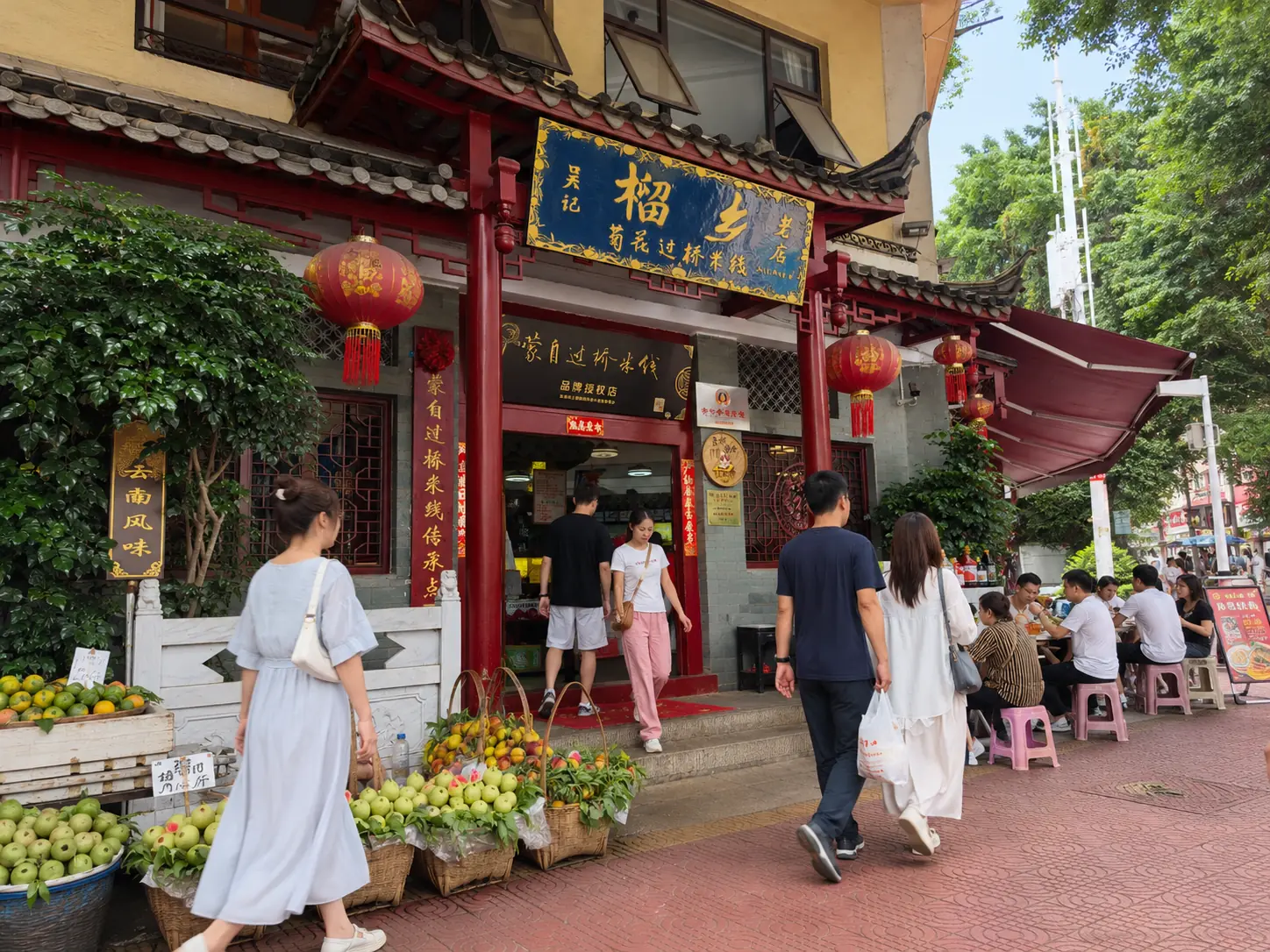
According to local legend, the story begins in Mengzi (蒙自), near South Lake (南湖). A scholar studied on an island while preparing for the imperial examinations. His wife brought him meals every day, crossing a bridge to reach him. By the time ordinary noodles arrived, the food was cold and the noodles had softened.
The clever solution was separation. She carried a pot of hot chicken broth, protected by a layer of oil on top, with the rice noodles and toppings kept apart. When she reached the scholar, the broth was still hot enough to cook the thin meat slices and warm the noodles. The daily bridge crossing gave the dish its name.
The heritage listing records a similar Mengzi story, but the safest way to write it is still as legend, not as a precisely proven origin date. What matters for travelers is that the story explains the dish's design: hot broth, separate ingredients, noodles added last.
How to Assemble the Bridge Noodle Bowl
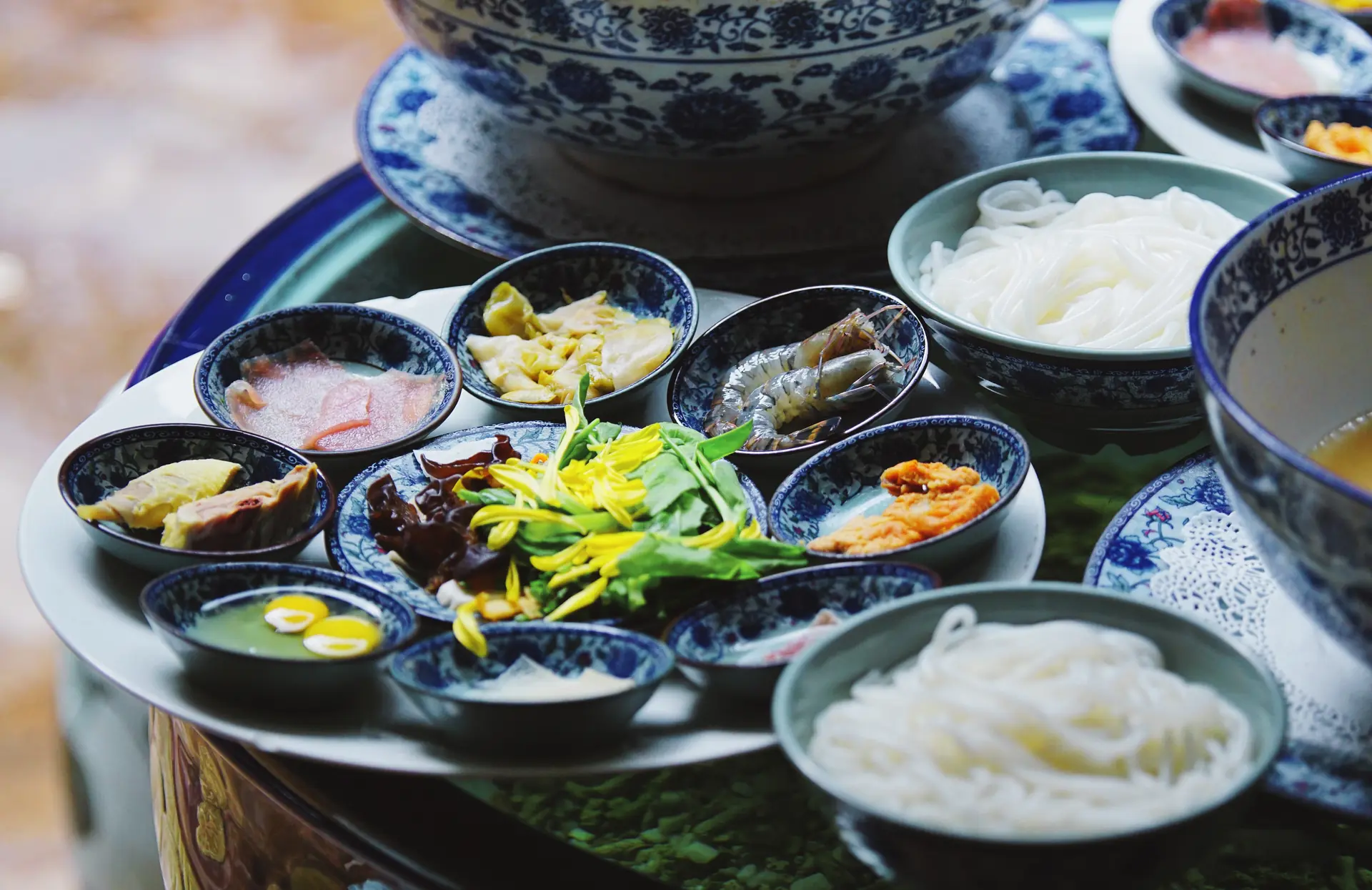
A proper serving has a theatrical calm. The broth may look still because a thin layer of oil traps heat and reduces visible steam. China Daily's Yunnan cultural page warns that first-timers can scald themselves because the soup looks quieter than it is. China Daily
The ingredients vary by restaurant tier, city, and price level, but the basic groups are recognizable.
| Part | What You See | What It Does |
|---|---|---|
| Hot broth | Chicken, pork bone, or ham-rich stock in a large bowl | Cooks delicate toppings and carries the whole dish. |
| Raw toppings | Thin meat, fish, or quail egg in some versions | Go in first so the heat can cook them. |
| Cooked toppings | Ham, chicken, tofu skin, sprouts, greens, herbs, or chrysanthemum | Add texture, aroma, and Yunnan identity. |
| Rice noodles | A separate bowl of slippery rice noodles | Enter last so they stay smooth instead of turning soggy. |

The Right Order to Add Ingredients
Different shops may guide you slightly differently, but the easiest first-timer order is simple: add the most heat-sensitive raw items first, then the cooked toppings and vegetables, then the rice noodles. This follows the logic recorded in the official heritage listing: raw before cooked, using the hot soup to finish the ingredients.
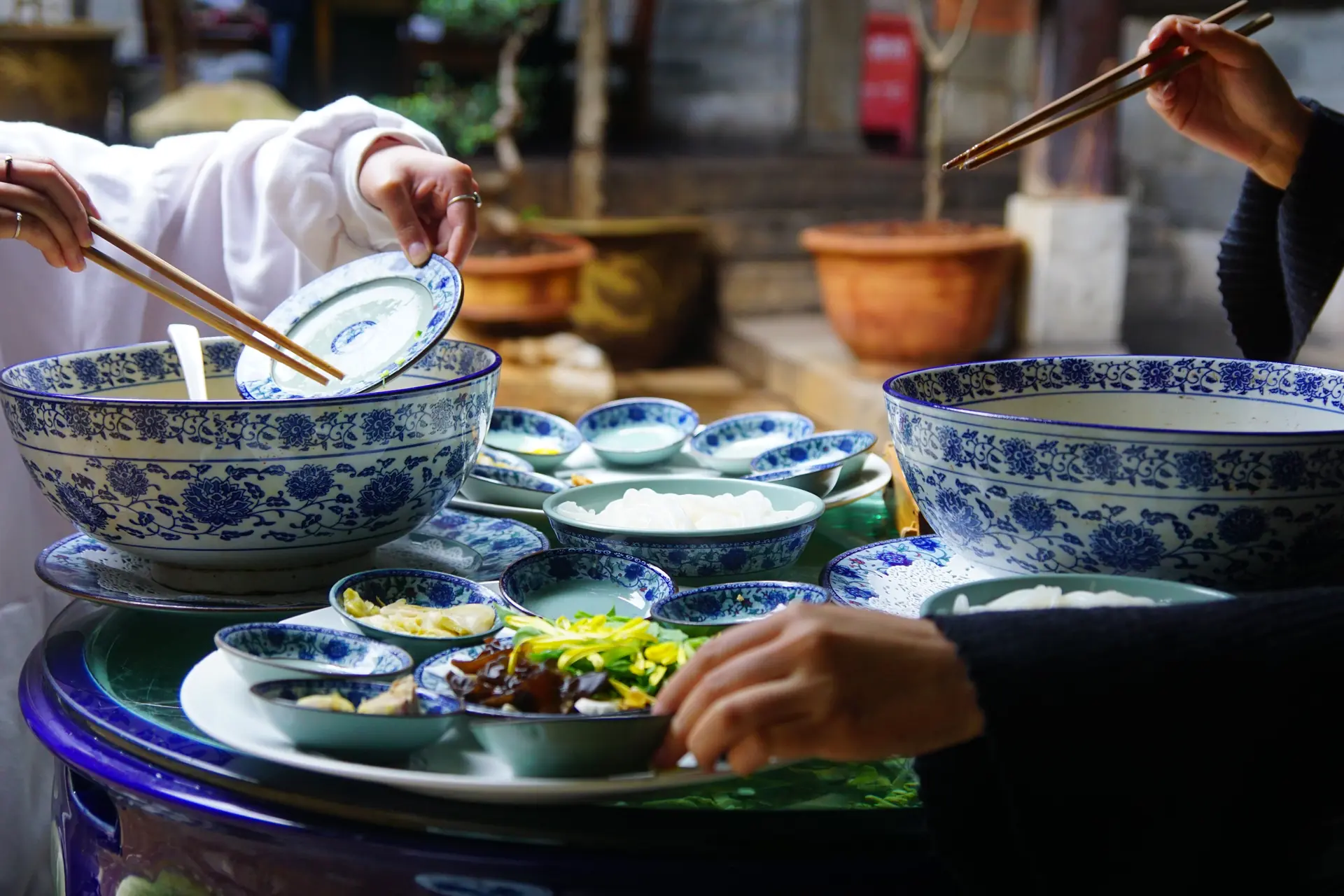
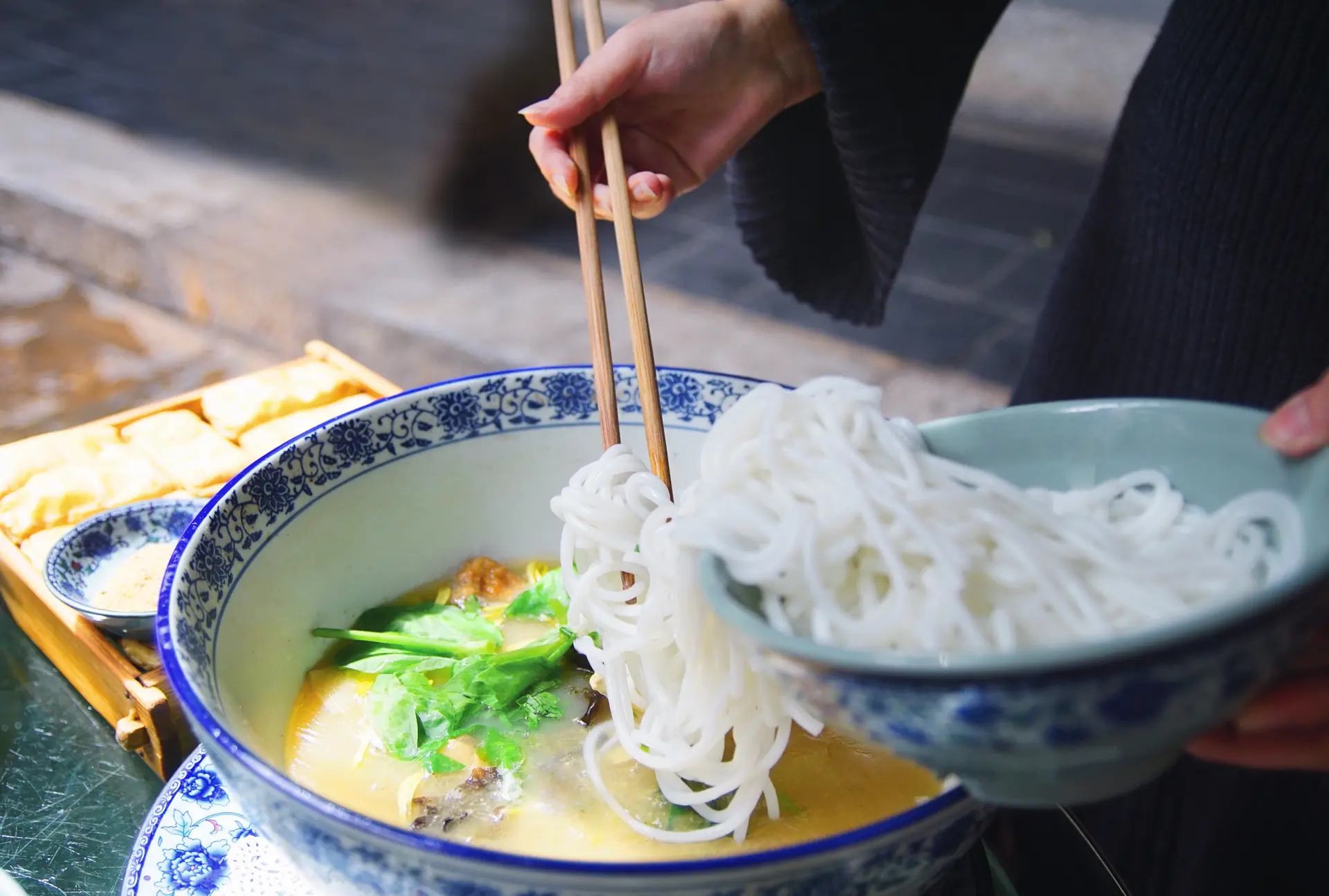
- Do not sip yet- The broth may look calm, but the oil layer can hide serious heat.
- Add raw toppings- Thin meat slices, fish, or quail egg need the highest heat if your set includes them.
- Add cooked toppings- Ham, cooked chicken, tofu skin, herbs, sprouts, and greens can follow.
- Add rice noodles last- Slide in a modest amount first so the bowl stays balanced.
- Wait, stir, then eat- Give the bowl a moment, mix gently, and start slowly.
Order a middle-tier set on your first try. The most expensive banquet-style versions can be fun, but they are not necessary for understanding the dish. A clear broth, clean rice noodles, a few fresh toppings, and proper heat teach more than a table crowded with luxury add-ons.
Kunming or Mengzi for Your First Bowl
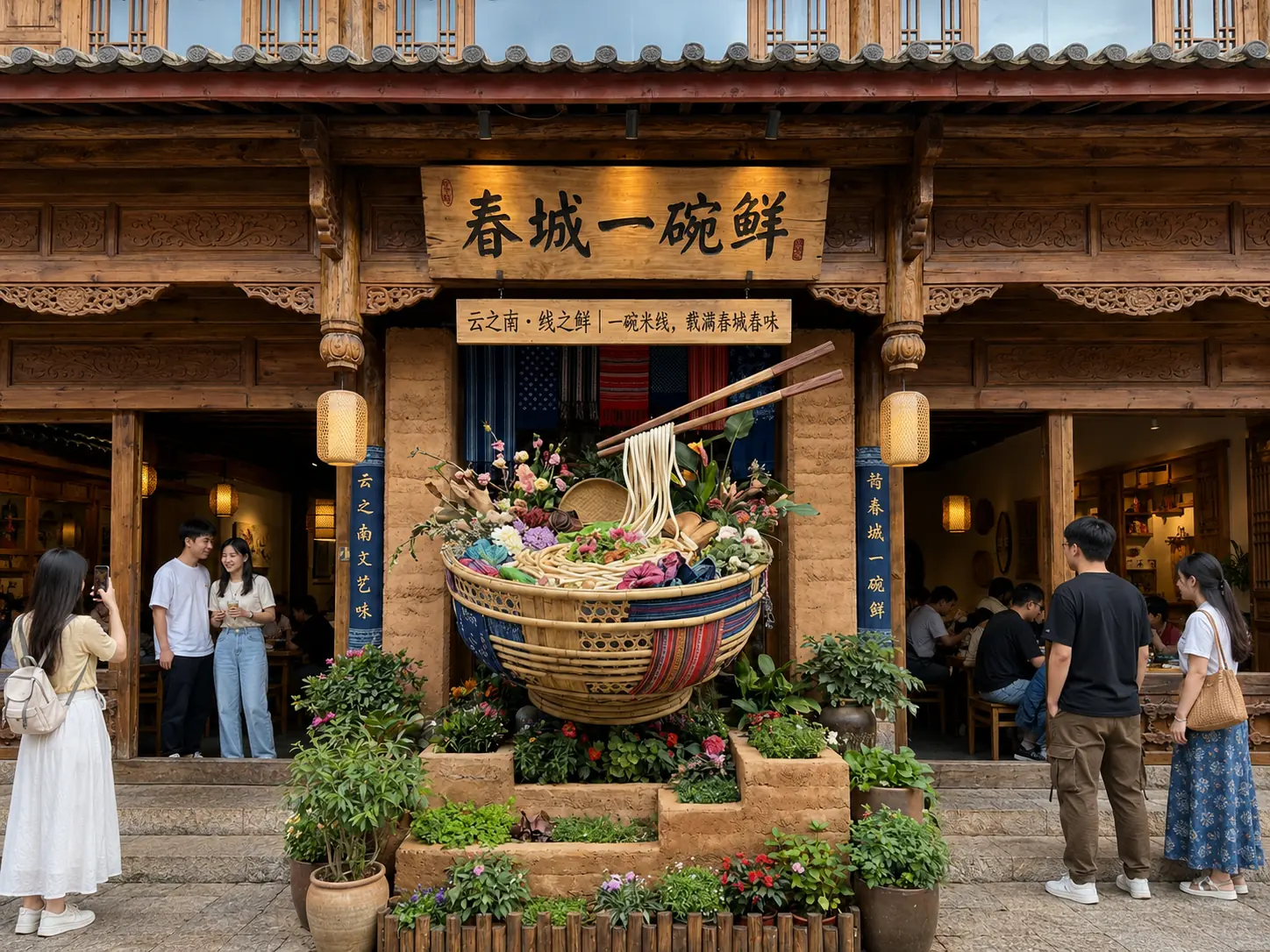
Kunming is the practical first bowl for most English-speaking travelers. It has the airport, high-speed rail, food streets, and restaurants that make a soft landing easier. The Kunming government-linked China Daily page calls crossing-the-bridge noodles a must-try snack in Kunming and names Qiaoxiangyuan (桥香园) and Jianxinyuan (建新园) as common chain-restaurant choices. Kunming / China Daily
Mengzi is the source-story choice. Go there if your route already heads south through Honghe, Jianshui, Yuanyang Rice Terraces, or the Vietnam border corridor. It is not necessary for every first-time Yunnan traveler, but it gives the dish a stronger sense of place.
Kunming First
昆明 / easiest access
Best for most travelers. You can try the ritual without adding a special south-Yunnan detour to the route.
Mengzi Origin
蒙自 / source-story stop
Best if you care about the legend, the heritage listing, and eating the dish in its strongest origin context.
Everyday Mixian
米线 / daily noodle contrast
After the ceremonial bowl, eat small-pot rice noodles or market rice noodles to understand how Yunnan eats on normal days.
How It Compares with Everyday Mixian
Crossing-the-Bridge Noodles are the ceremonial version of a much larger Yunnan rice-noodle world. If you only eat this one bowl, you may leave thinking Yunnan noodles are always elegant and mild. They are not. Many everyday bowls are stronger, cheaper, quicker, spicier, or more sour.
| Noodle Style | Chinese | How It Arrives | Best For |
|---|---|---|---|
| Crossing-the-Bridge | 过桥米线 | Broth, rice noodles, and toppings arrive separately. | Your first ceremonial Yunnan noodle meal. |
| Small-Pot Rice Noodles | 小锅米线 | Cooked together in a small pot and served ready to eat. | Everyday Kunming breakfast or lunch. |
| Tofu-Pudding Rice Noodles | 豆花米线 | Soft tofu, rice noodles, chili oil, peanuts, and toppings. | Market eating and texture lovers. |
| Cold Rice Noodles | 凉米线 | Mixed with sour-spicy dressing, herbs, and toppings. | Warm afternoons and lighter snack meals. |
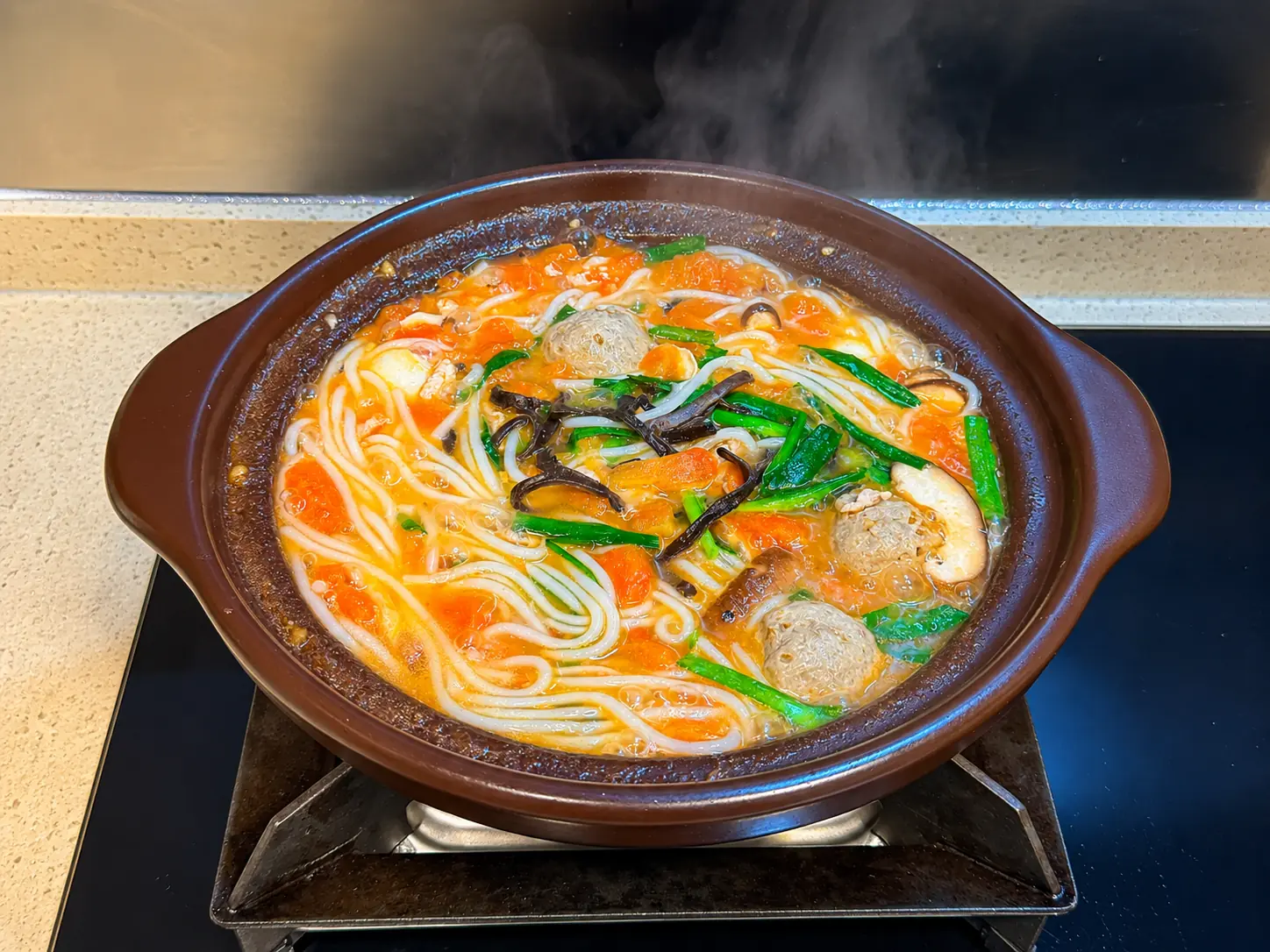
Use the Kunming Food Guide for the wider noodle map, and Zhuanxin Farmers Market if you want to see market-style Yunnan snacks beyond the bridge bowl.
Managing Heat, Raw Toppings, and Allergies
The biggest practical warning is heat. Do not lean over the bowl, do not let children reach across it, and do not drink the broth before the ingredients have gone in and the bowl has cooled slightly. The oil layer is part of the traditional heat-retention trick, but it can also make the soup look less dangerous than it is.
Ask for cooked toppings if you need them
Traditional versions may include raw meat slices or a raw quail egg that cook in the hot broth. Pregnant travelers, immunocompromised travelers, older travelers, young children, or anyone uncomfortable with at-table cooking should ask whether the meat and egg can be fully cooked before serving.
The standard broth is not vegetarian by default. It may involve chicken, pork bones, pork slices, Yunnan ham, goose, duck, or other meats depending on the shop. A beef or mushroom topping does not guarantee a beef-only or vegetarian broth.
- Scalding broth: wait before drinking and guide children carefully.
- Raw meat or egg: ask for fully cooked toppings if that matters to you.
- Pork and chicken broth: not automatically vegetarian, halal, kosher, or pork-free.
- Soy and wheat: tofu skin, soy sauce, marinades, and shared seasonings can matter even when noodles are rice-based.
- Peanut, sesame, chili: condiment bars and chili oils can create allergy and cross-contact risks.
| English | Chinese | Pinyin | Say It Like… |
|---|---|---|---|
| Crossing-the-Bridge Noodles | 过桥米线 | guòqiáo mǐxiàn | gwor-chyow mee-shyen |
| No chili heat | 不要辣 | bù yào là | boo yow lah |
| Use less chili | 少放辣 | shǎo fàng là | shaow fahng lah |
| Please cook the meat fully | 请把肉煮熟 | qǐng bǎ ròu zhǔ shú | ching bah roh joo shoo |
| No raw egg | 不要生鸡蛋 | bù yào shēng jīdàn | boo yow shung jee-dan |
| Does the broth contain pork? | 汤里有猪肉吗? | tāng lǐ yǒu zhūròu ma? | tahng lee yo joo-roh mah |
| I am allergic to peanuts | 我对花生过敏 | wǒ duì huāshēng guòmǐn | woh dway hwa-shung gwaw-min |
| I am allergic to sesame | 我对芝麻过敏 | wǒ duì zhīma guòmǐn | woh dway jir-mah gwaw-min |
Frequently Asked Questions
The dish is traditionally linked to Mengzi in Honghe Prefecture, southern Yunnan. The official national heritage listing is for Mengzi Crossing-the-Bridge Rice Noodle Making Technique, but the origin story is still best treated as local legend rather than a precise documented event.
Beyond This Guide
One bowl of Crossing-the-Bridge Noodles explains Yunnan's love of rice noodles, but it does not explain the whole province. After the ritual bowl, use Kunming for market snacks and wild mushrooms, then let Dali, Lijiang, Xishuangbanna, or Honghe show you how regional Yunnan food changes by landscape and ethnicity.
Useful next reads:
- Kunming Food Guide
- Zhuanxin Farmers Market in Kunming
- Dali and Lijiang Food Guide
- Luosifen: Liuzhou Snail Noodles Guide
- Lanzhou Beef Noodles Guide
© gochinafreely.com — Original guide by Go China Freely.