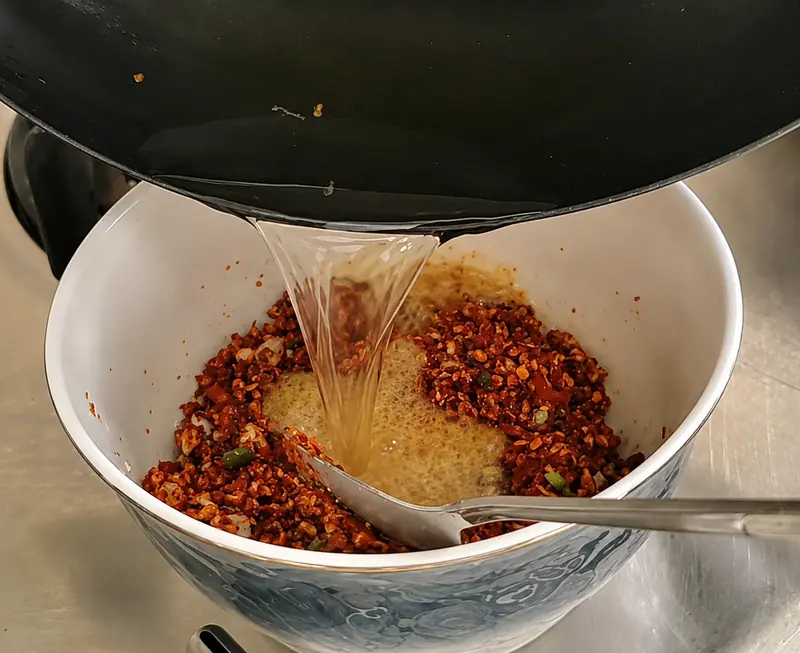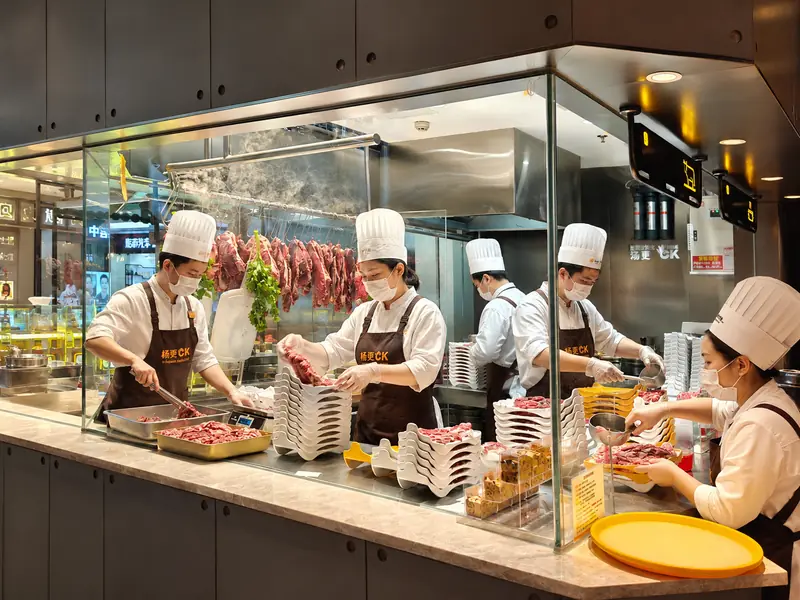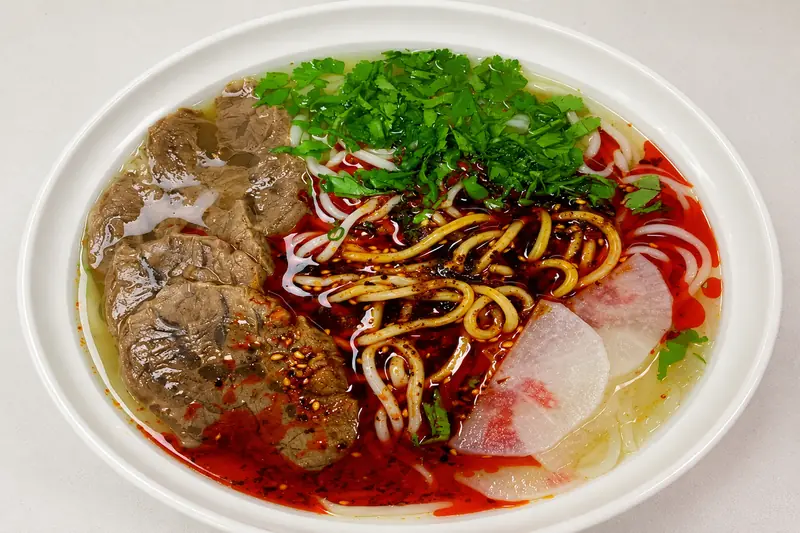
Lanzhou Beef Noodles (兰州牛肉面) are not the generic "Lanzhou hand-pulled noodles" you may know from overseas menus. In Lanzhou, this is halal-rooted fast food: clear broth, fragrant red chili oil, hand-pulled noodles, and a bowl that moves from order window to table in minutes. If you eat one street-fast meal in northwest China, start here.
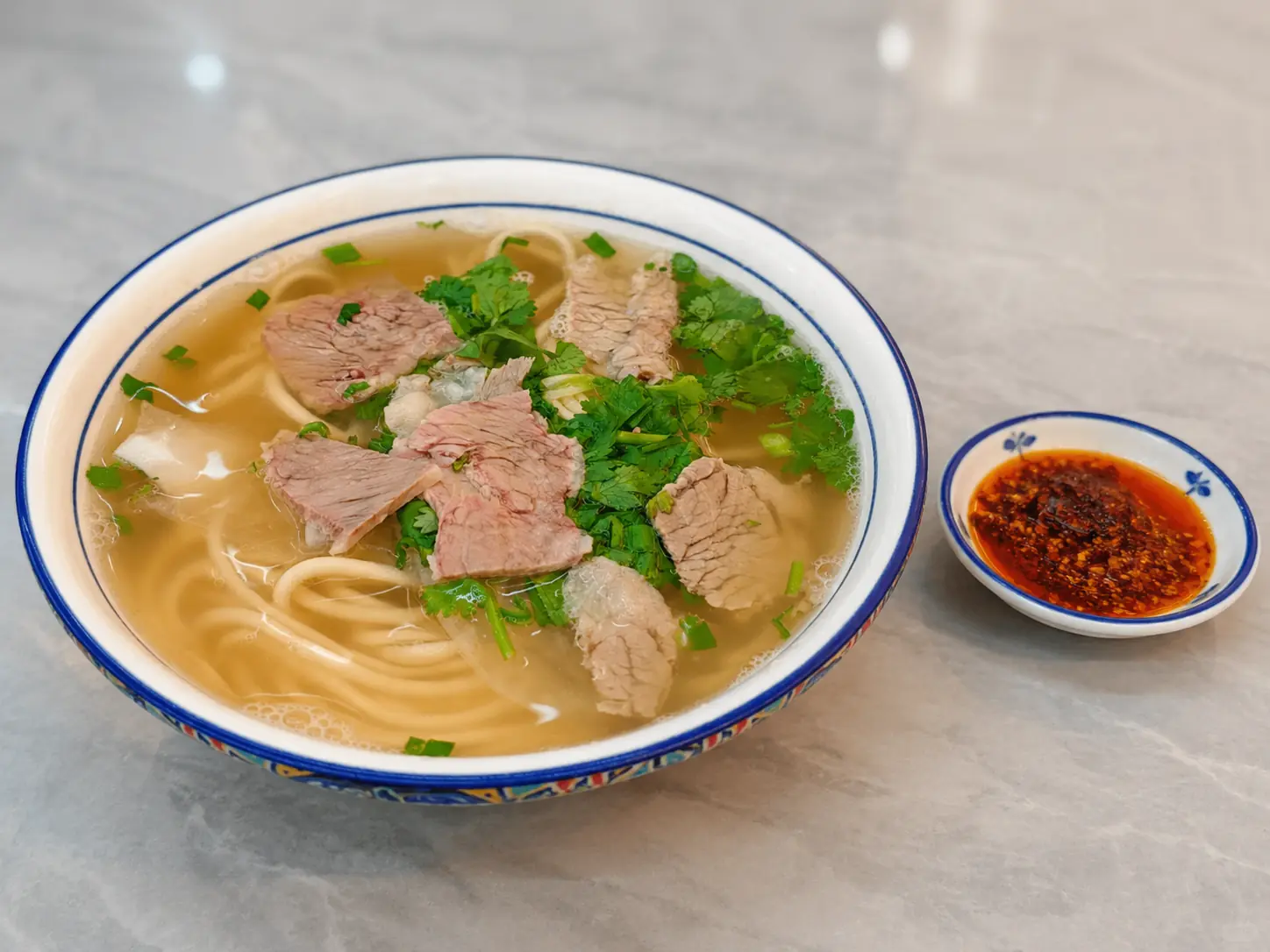
Lanzhou Beef Noodles: Fast Food With Rules
Lanzhou Beef Noodles are not about a huge pile of beef. The city cares more about speed, order, and balance: one worker pulls noodles, another cooks them, another ladles soup, radish, chili oil, cilantro, and garlic sprouts. The result feels like a breakfast rush turned into choreography.
1Fast Food Rhythm
A good shop feels choreographed: pull, boil, ladle, finish, serve. The speed is part of the local experience, not a shortcut.
2Local Naming
Outside Lanzhou, people often focus on hand-pulled noodles. In Lanzhou, locals usually say beef noodles (牛肉面) or simply big beef (牛大).
3Halal Food Context
The dish is deeply tied to Hui Muslim cooking. Many shops display 清真, making the food culture easier for travelers to read.
Strict halal travelers should still confirm before sitting down, especially outside Lanzhou, but the local food system is far more legible than a random general Chinese restaurant.
The Five-Color Rule for Lanzhou Beef Noodles

The classic standard is "one clear, two white, three red, four green, five yellow" (一清二白三红四绿五黄). China Daily summarizes it as clear broth, white radish, red chili oil, green cilantro and scallions, and yellow, shiny noodles.
That phrase is practical for travelers. Clear broth does not mean weak broth; it should be bright, aromatic, and clean rather than cloudy or greasy.
- White radish: tender enough to eat easily, not mushy or watery.
- Red chili oil: fragrant and bright, not bitter or burnt.
- Green herbs: cilantro, scallions, or garlic sprouts should cut through the heat.
- Yellow noodles: elastic, glossy, and still lively after a few minutes.
- Warning signs: gray soup, bitter oil, or noodles that collapse quickly.
Good shops can look plain; the bowl should not.
Choosing Your First Lanzhou Beef Noodle Shape
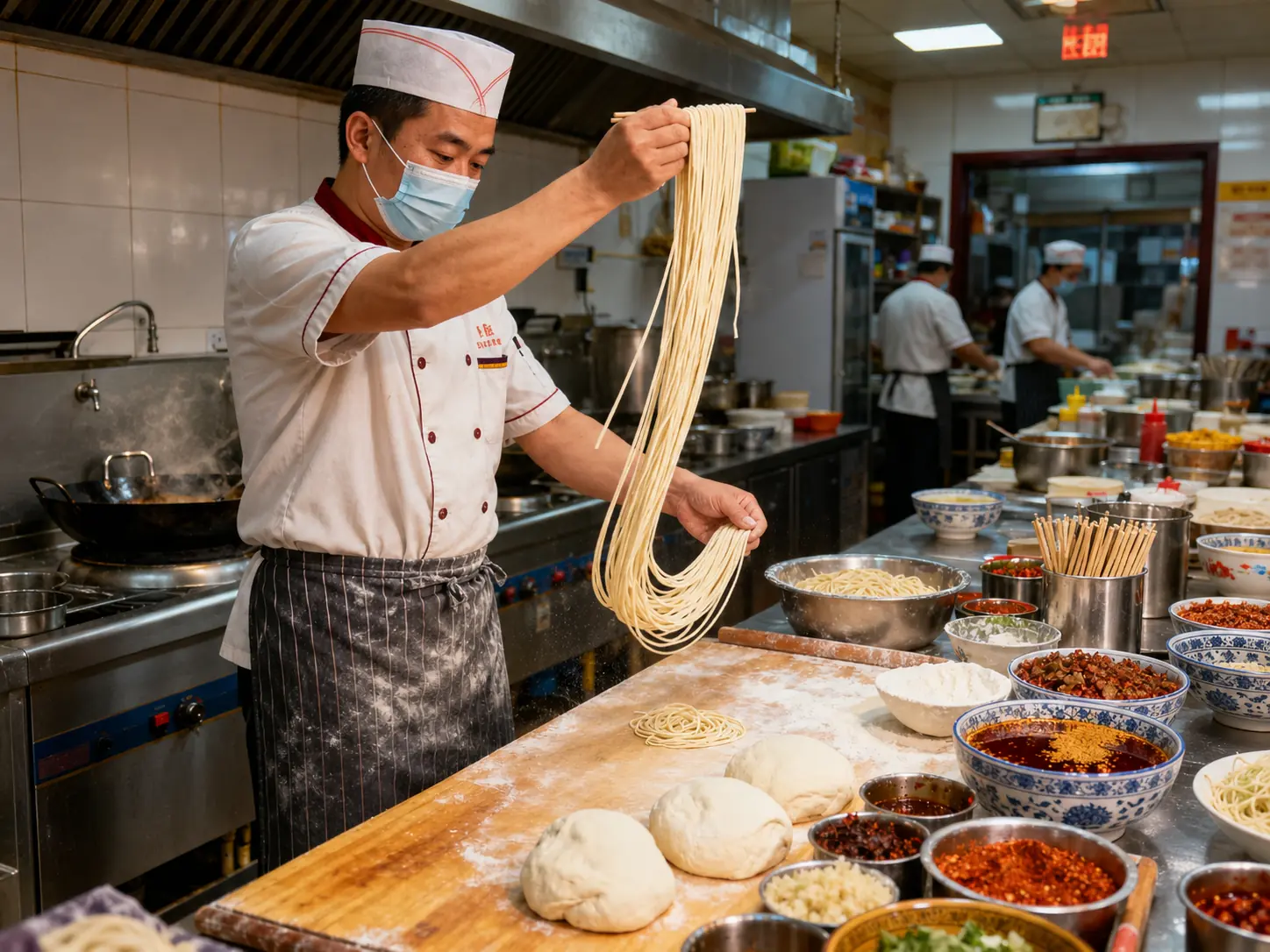
Part of the fun is choosing noodle thickness. Common options include hair-thin (毛细), thin (细), three-thin (三细), two-thin (二细), leek-leaf (韭叶), wide (宽), two-wide (二宽), and big-wide (大宽). Each changes the chew and how much broth the noodles carry.
Very thin noodles move fast and soften fast. If you want to photograph the bowl, do that quickly; the noodles are designed for eating, not lingering.
← swipe to compare all options →
First Bowl
二细 / 三细
- ✓Balanced chew and the safest first choice.
- ✓Lets you taste soup and noodles together.
- —Best before experimenting with wider shapes.
Softer and Flatter
韭叶
- ✓Ribbon-like shape with more surface area.
- —Carries broth and chili oil more visibly.
- —Good if you prefer a softer bite.
Big Chew
宽 / 大宽
- ✓Dramatic texture for noodle lovers.
- —Better as a second bowl once you know the baseline.
- ✗Can dominate the clear soup.
How to Order Like a Local
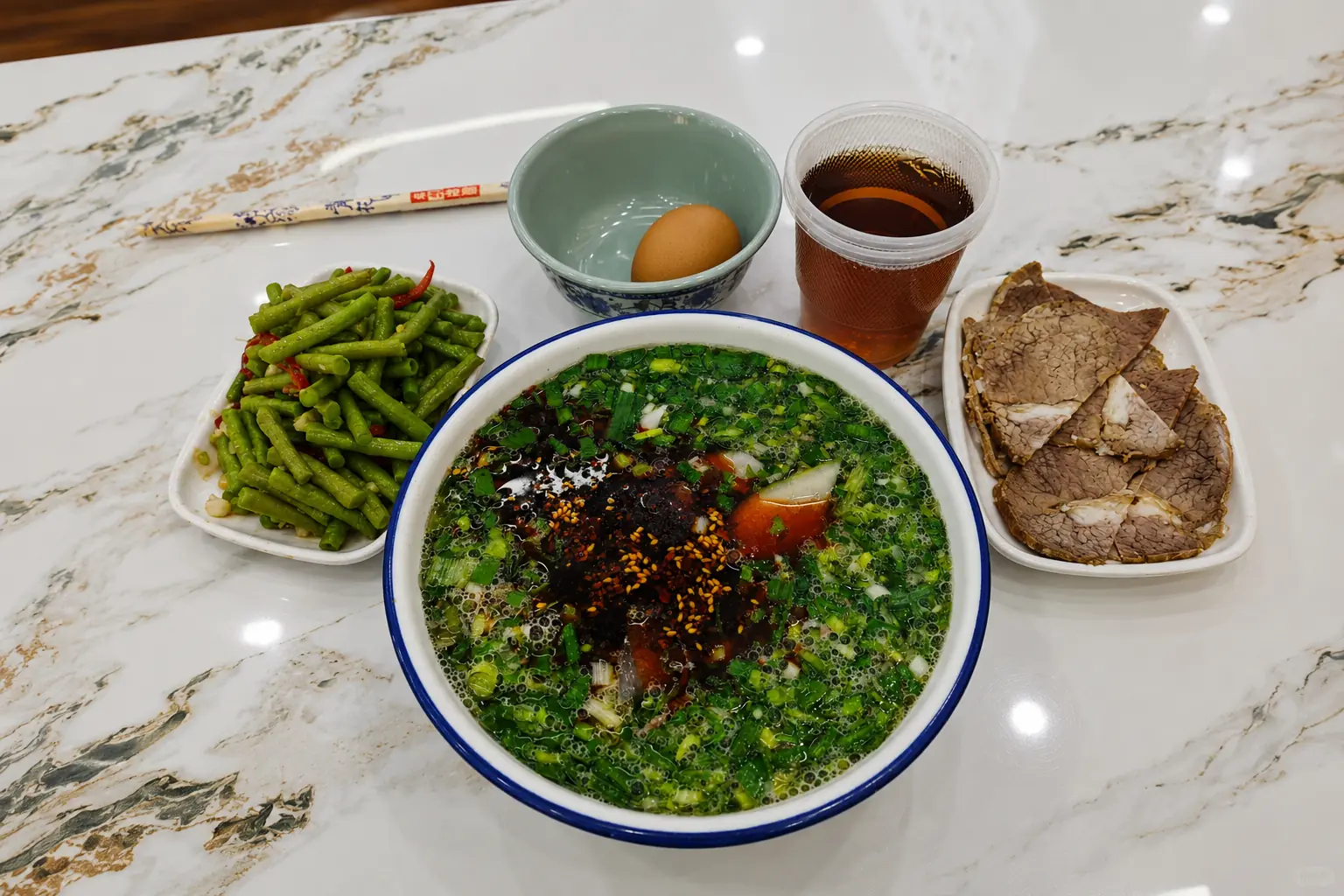
A basic bowl usually includes broth, noodles, radish, chili oil, cilantro, and garlic sprouts, but not much sliced beef. If you want a more satisfying meal, add beef, a tea egg, or a small cold dish. The classic local upgrade is simple: noodles, extra meat, egg.
If you cannot eat chili, ask for no chili or less chili. Chili oil is usually added at the final station, so it is easy to adjust. Cilantro and garlic sprouts can also be skipped.
Use these phrases if the counter is busy and the menu is only in Chinese:
| English | Chinese | Pinyin | Say It Like… |
|---|---|---|---|
| Beef noodles | 牛肉面 | niú ròu miàn | nyoh-roh myen |
| Two-thin noodles; safest first choice | 二细 | èr xì | arr shee |
| Three-thin noodles; slightly thinner | 三细 | sān xì | sahn shee |
| Add extra beef | 加肉 | jiā ròu | jyah roh |
| Less chili oil | 少辣 | shǎo là | shaow lah |
| No chili oil | 不要辣 | bù yào là | boo yow lah |
| No cilantro | 不要香菜 | bù yào xiāngcài | boo yow shyang-tsai |
| Is this restaurant halal? | 这里是清真的吗? | zhè lǐ shì qīngzhēn de ma? | juh lee shir ching-juhn duh mah |
Order fast, then move
The line moves quickly for a reason. Decide your noodle shape and chili level before reaching the window, then step aside after paying so the next bowl can move.
Where to Eat Beef Noodles in Lanzhou
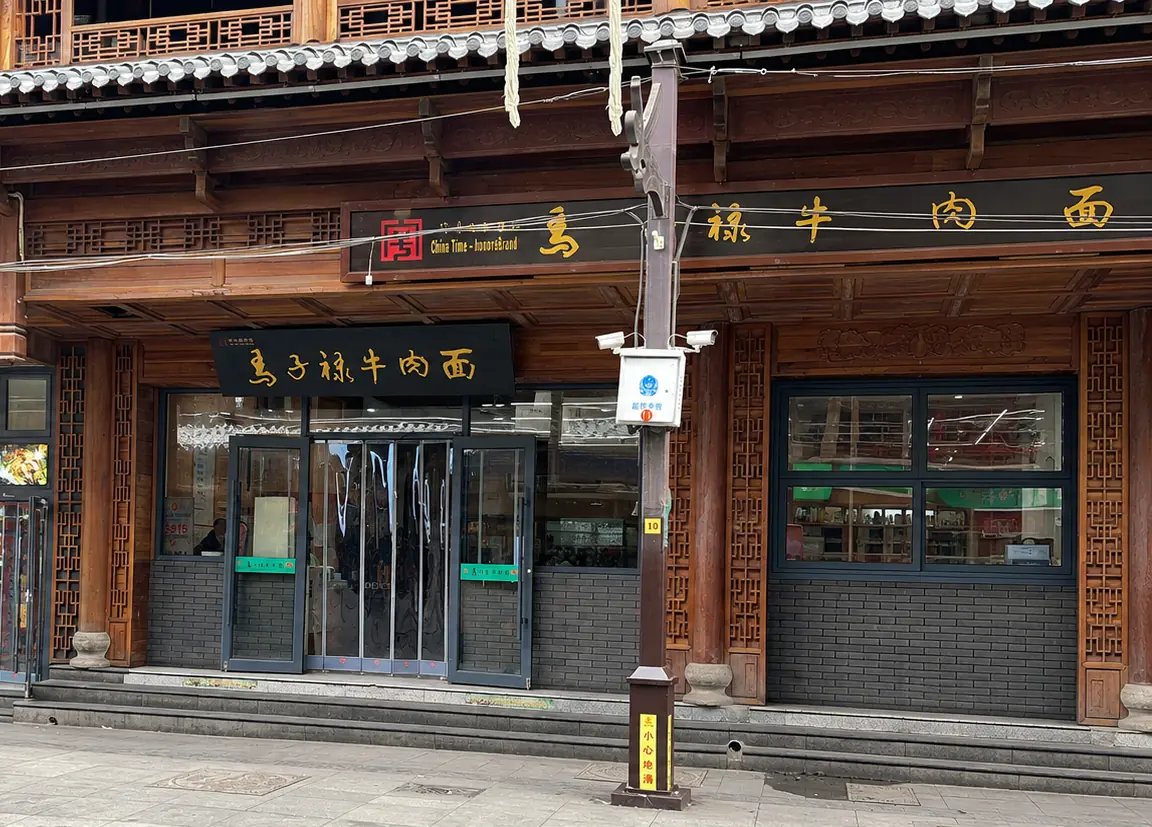
Ma Zi Lu is one of the easiest names for travelers to remember. Lanzhou's modern beef noodle story is commonly connected with Hui cook Ma Baozi popularizing the dish around 1915, and China Daily notes that the noodle-making craft entered China's national intangible cultural heritage list in 2021. Use the Dazhong Alley branch as a stable introduction, not as proof that only one shop is authentic.
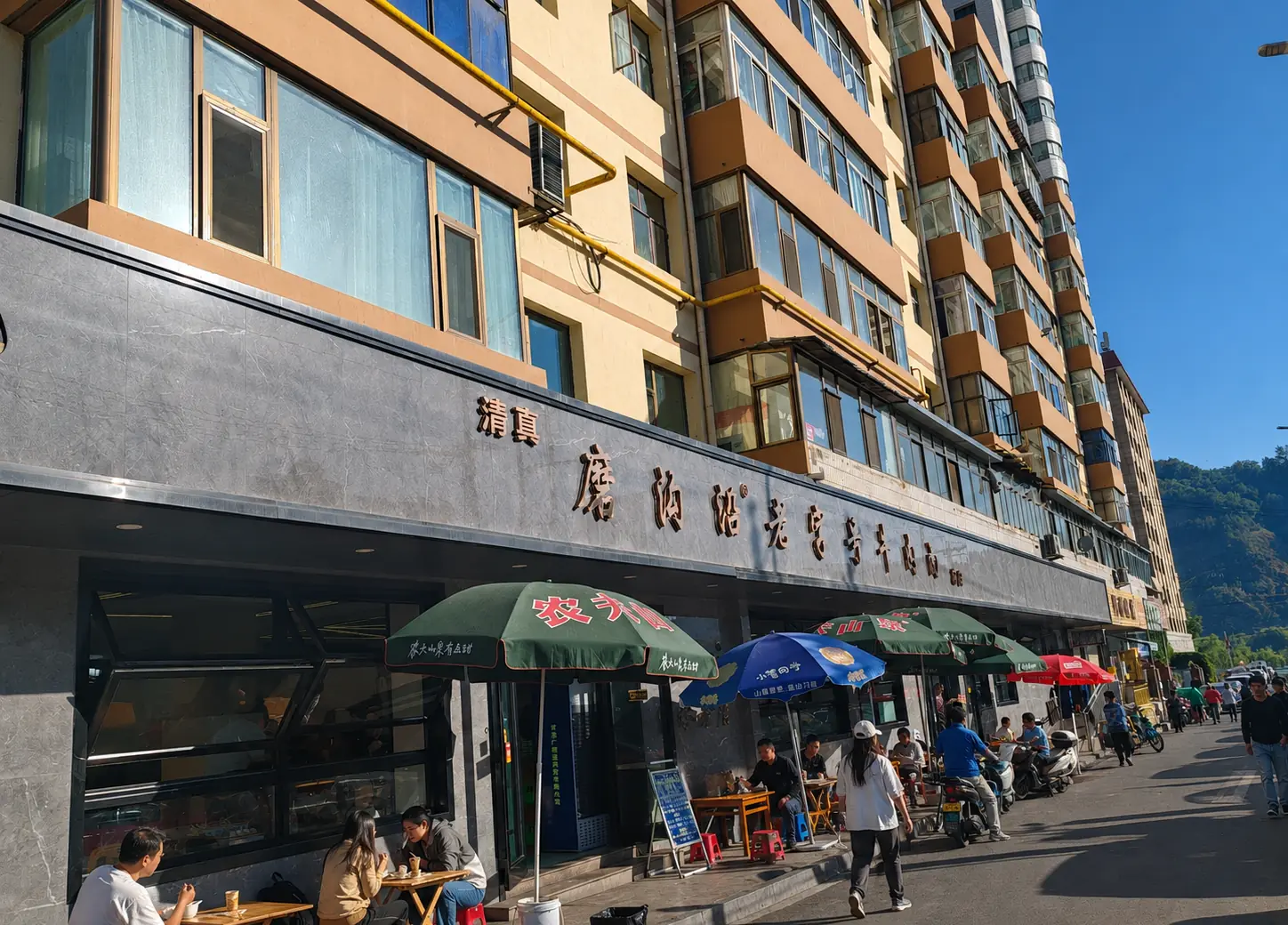
Mogouyan is another useful local name with multiple branches. Trip.com currently lists its Jingangcheng branch as a halal Mogouyan location with a morning opening time around 06:00, which matches the city's breakfast-and-lunch noodle rhythm. Try it after Ma Zi Lu and compare broth clarity, chili oil aroma, radish thickness, and noodle chew.
Lanzhou beef noodles become more interesting once you stop looking for one winner and start noticing the small differences.
Breakfast Timing and Fast-Food Etiquette in Lanzhou
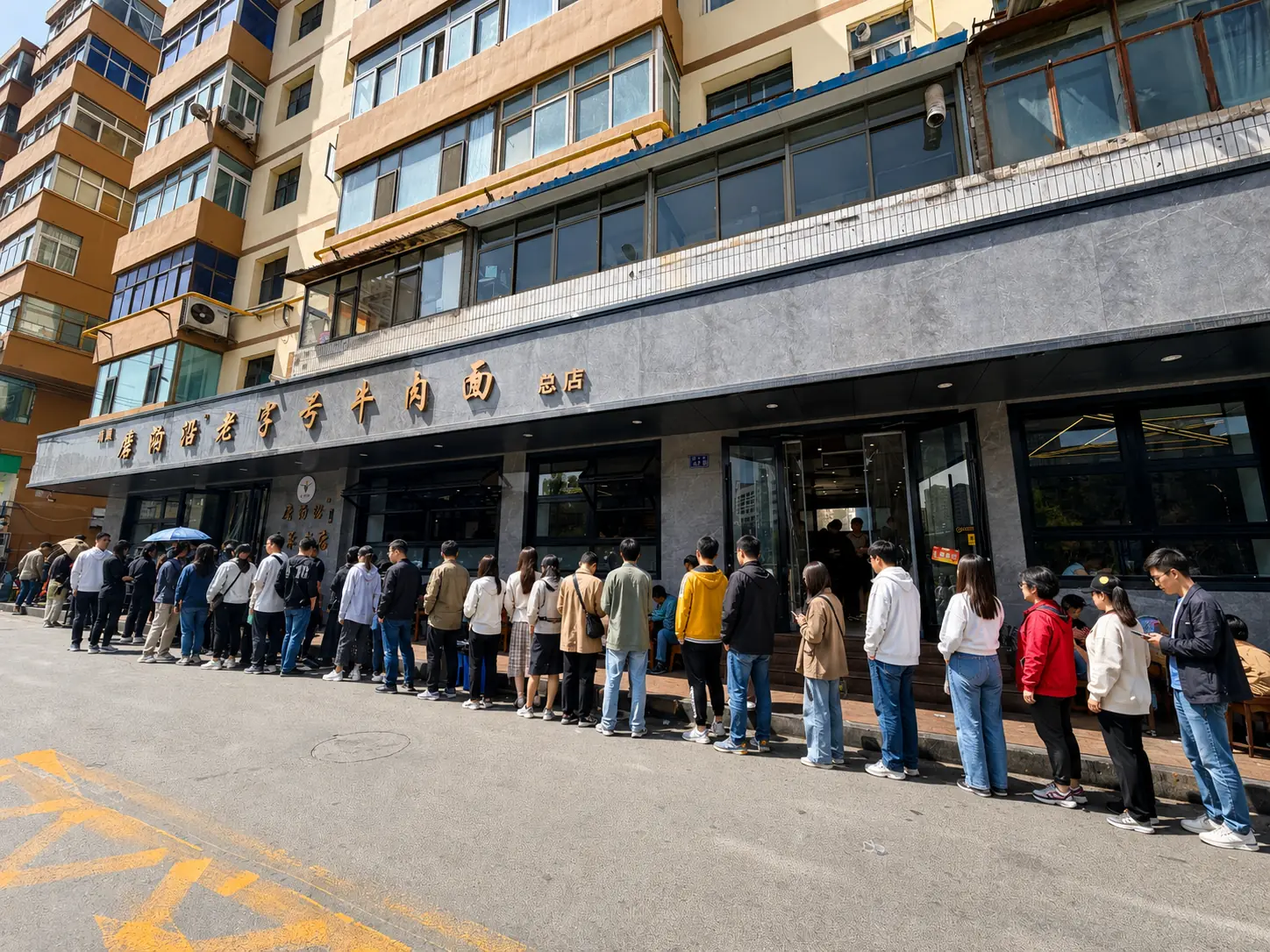
Lanzhou Beef Noodles work best in the morning or at lunch. Many shops open early, and some traditional shops wind down by afternoon. Hours vary, so check the exact branch before you go, especially if you are planning around a train.
The best travel rhythm is simple: eat beef noodles in the morning, then continue to the Yellow River scenic belt, Gansu Provincial Museum, White Pagoda Hill, or your onward train.
- Eat while it is hot: this is fast, filling city food, not a slow tasting menu.
- Move after finishing: local noodle shops rely on quick turnover.
- Keep counters clear: photos are fine, but do not block the pulling station, pickup counter, or entrance.
Halal Notes and Dietary Limits for Travelers
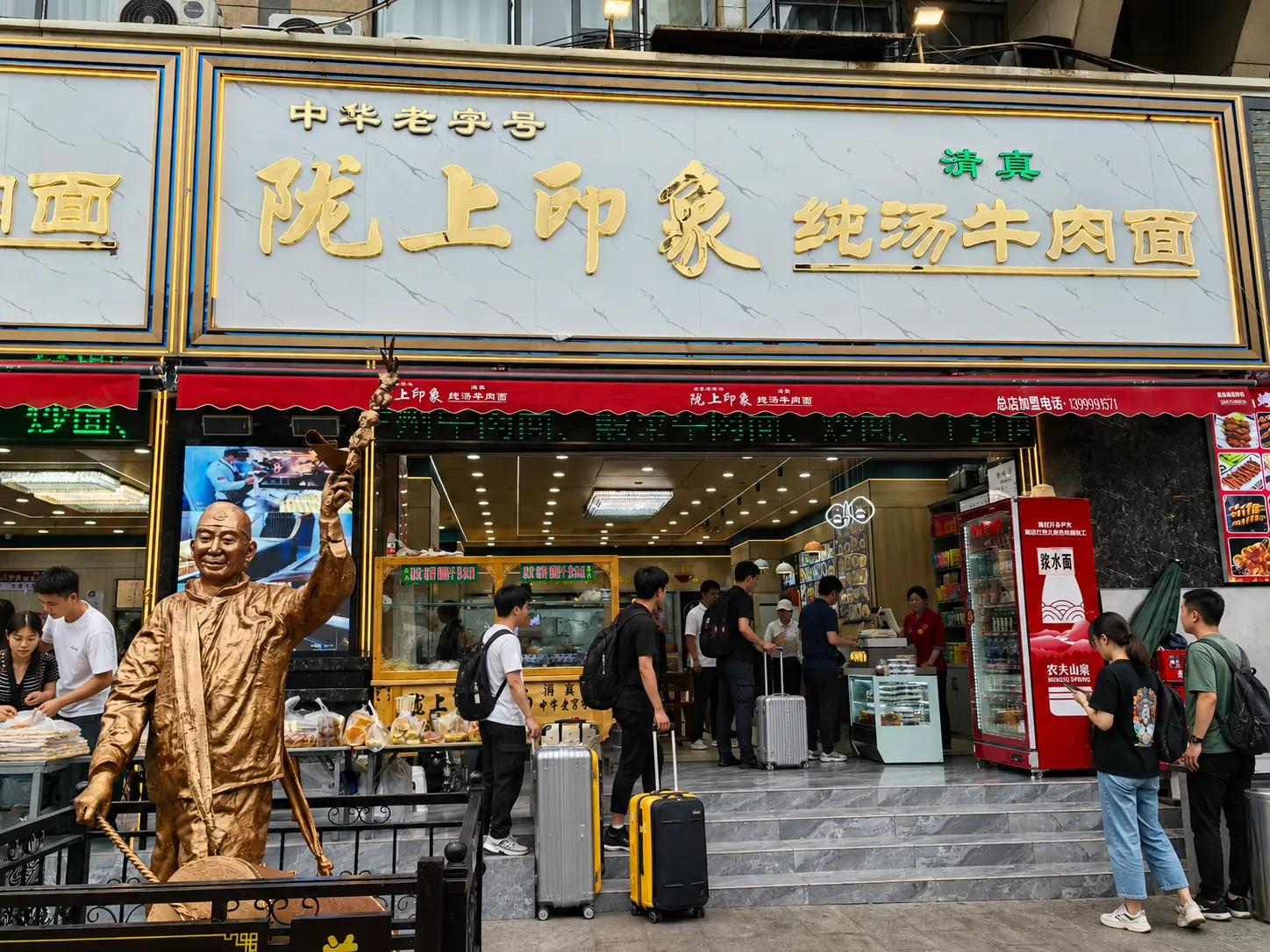
Lanzhou Beef Noodles are one of the easiest ways to understand Chinese halal fast food, but "Lanzhou-style" does not automatically guarantee strict halal everywhere. In Lanzhou, look for 清真 signage; outside Lanzhou, ask directly.
Vegetarian travelers should not treat this as a safe shortcut. Even if you skip beef slices, the broth is usually beef or beef-bone based.
HHalal Check
Look for 清真 signage and ask directly if strict halal practice matters to you, especially outside Lanzhou.
VVegetarian Limits
The broth is usually beef or beef-bone based, so skipping sliced beef does not make the bowl vegetarian.
WWheat and Salt
The noodles are wheat, and the broth cannot usually be made gluten-free or low-sodium on request.
Respect halal restaurant boundaries
Do not bring pork products or alcohol into a halal beef noodle shop. Avoid jokes about forbidden ingredients. This is not just a tourist-food rule; it is a real dining boundary for many local customers.
Mistakes to Avoid With Lanzhou Beef Noodles
Judging by Beef Amount
The base bowl usually has only a little sliced beef; the stars are broth and noodles. If you want more meat, order extra beef.
Looking for Dinner First
Good beef noodles are a breakfast and lunch habit. Evening noodles exist, but the classic Lanzhou rhythm is early.
Trusting Every Lanzhou Sign
Shops across China and overseas use the Lanzhou name, but the local soup color, noodle choices, halal context, and speed are more specific.
Treating Shops Like Photo Sets
Ask before close-up photos of staff or diners, keep moving at the counter, and respect the restaurant's food boundaries.
Frequently Asked Questions About Lanzhou Beef Noodles
Not exactly. Hand-pulling is the noodle technique, but a full Lanzhou bowl also includes clear broth, white radish, red chili oil, green herbs, yellow noodles, and halal food context. Outside Lanzhou, the name is often used more loosely.
Beyond This Lanzhou Beef Noodles Guide
Lanzhou Beef Noodles are the city's fastest food lesson, but they fit best inside a wider Gansu route: Yellow River walks, the Gansu Provincial Museum, and onward trains toward Zhangye, Dunhuang, Xining, or Xiahe. Pair this guide with China High-Speed Rail Guide, Labrang Monastery Xiahe Guide, and Jiayuguan Pass Great Wall Guide.
© gochinafreely.com — Original guide by Go China Freely.