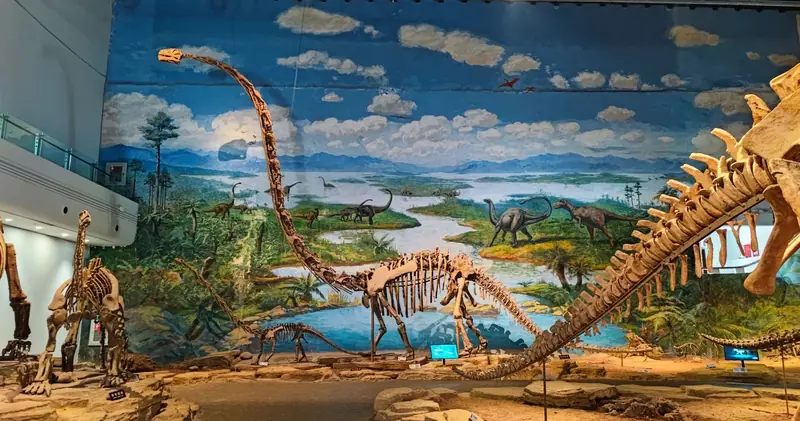
Limited Trial Hours & Entry
Trial entry is free but reservation-only; normal ticket prices and hours have not been announced. Before renovation, students paid ¥20, while children under 1.2 m and seniors 70+ entered free. Check the trial notice
Plan Around the Trial
Walking Over 160 Million Years of Bones
On the outskirts of Zigong, Sichuan, a museum sits directly on top of a 160-million-year-old dinosaur graveyard — with unexcavated Jurassic fossils still embedded in the rock beneath your feet.
Why it matters now
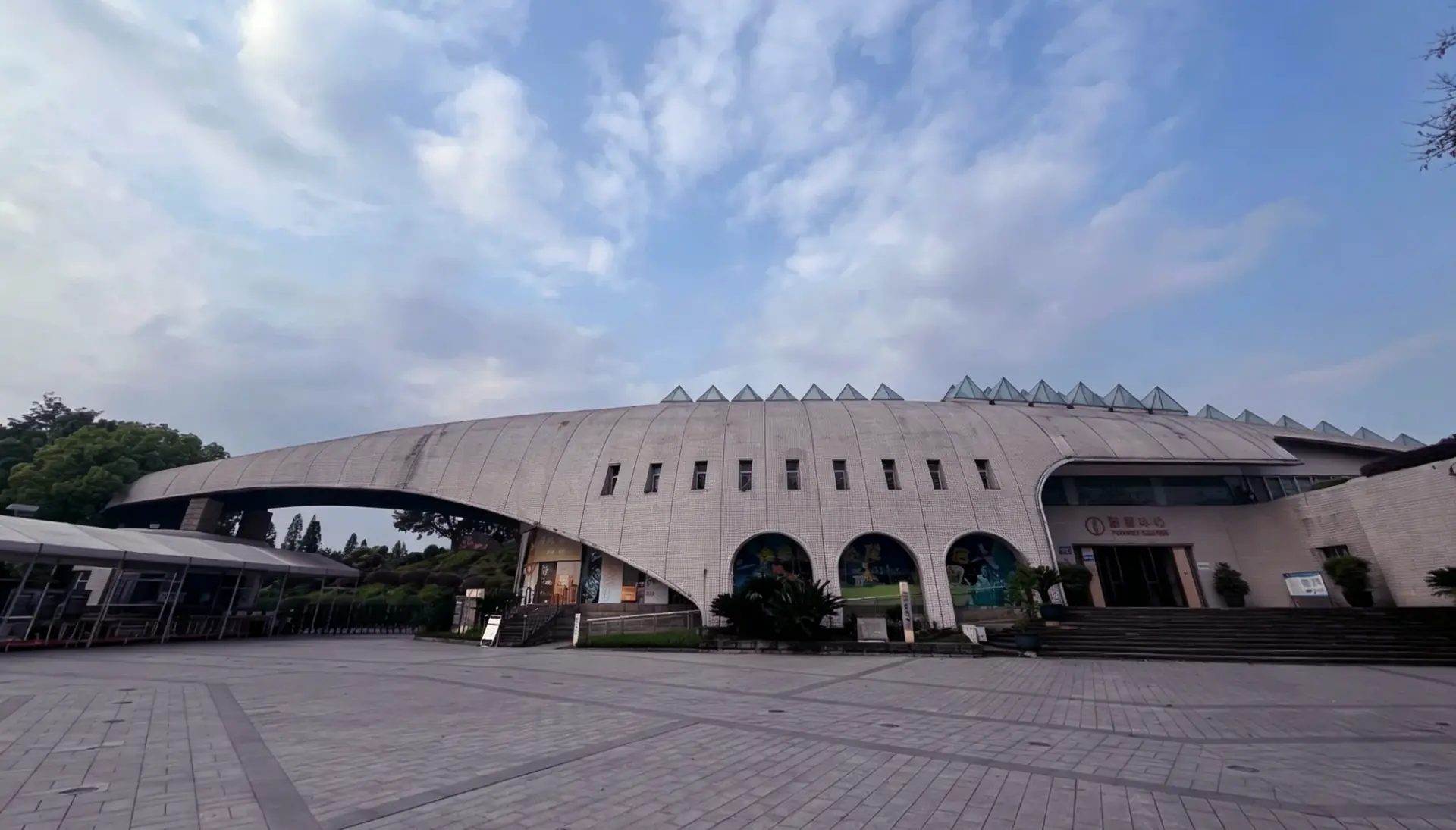
The Zigong Dinosaur Museum (自贡恐龙博物馆) ranks among the world's top three dinosaur museums, alongside the Dinosaur National Monument in Utah and the Royal Tyrrell Museum in Canada. A limited free public trial is now operating by reservation; before renovation, adult admission was ¥40.
The site is the museum
Most dinosaur museums ship fossils from dig sites to city exhibition halls — the Zigong Dinosaur Museum does the opposite: it was built right on top of the Dashanpu (大山铺) fossil burial site. In 1972, a geological survey team stumbled upon dinosaur tail vertebrae about 11 km northeast of Zigong's city center. Large-scale excavations began in 1979, confirming this as the world's most concentrated Middle Jurassic fossil site: within roughly 2,800 square meters, over 200 individuals were unearthed (including more than 100 dinosaurs), spanning 26 genera and 31 species.
A museum built over the find
In 1987, Asia's first dedicated dinosaur museum opened here, covering about 66,000 square meters. It's less a traditional museum and more a science hall suspended over a fossil graveyard — every step you take might be above Jurassic bones still waiting to be uncovered.
1972
First discovery
1979
Major digs begin
2,800 m²
Excavated area
1987
Museum opens
The Dashanpu Burial Pit — Real Bones in the Ground
The irreplaceable view
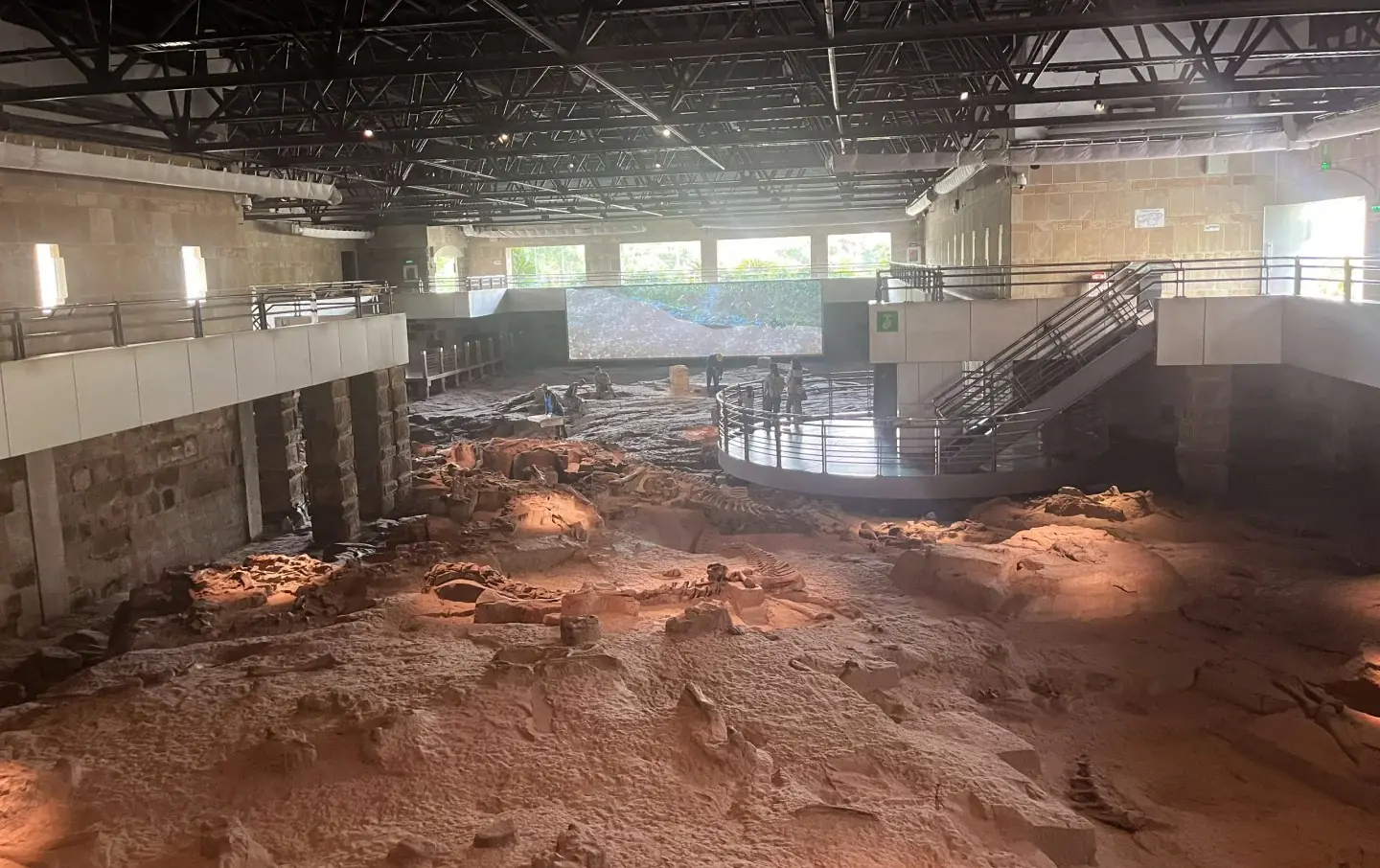
This is the most jaw-dropping space in the entire museum, and the feature that sets it apart from every other dinosaur museum on earth: a real, partially unexcavated Jurassic fossil pit exposed right in front of you.
Inside the exposed cross-section
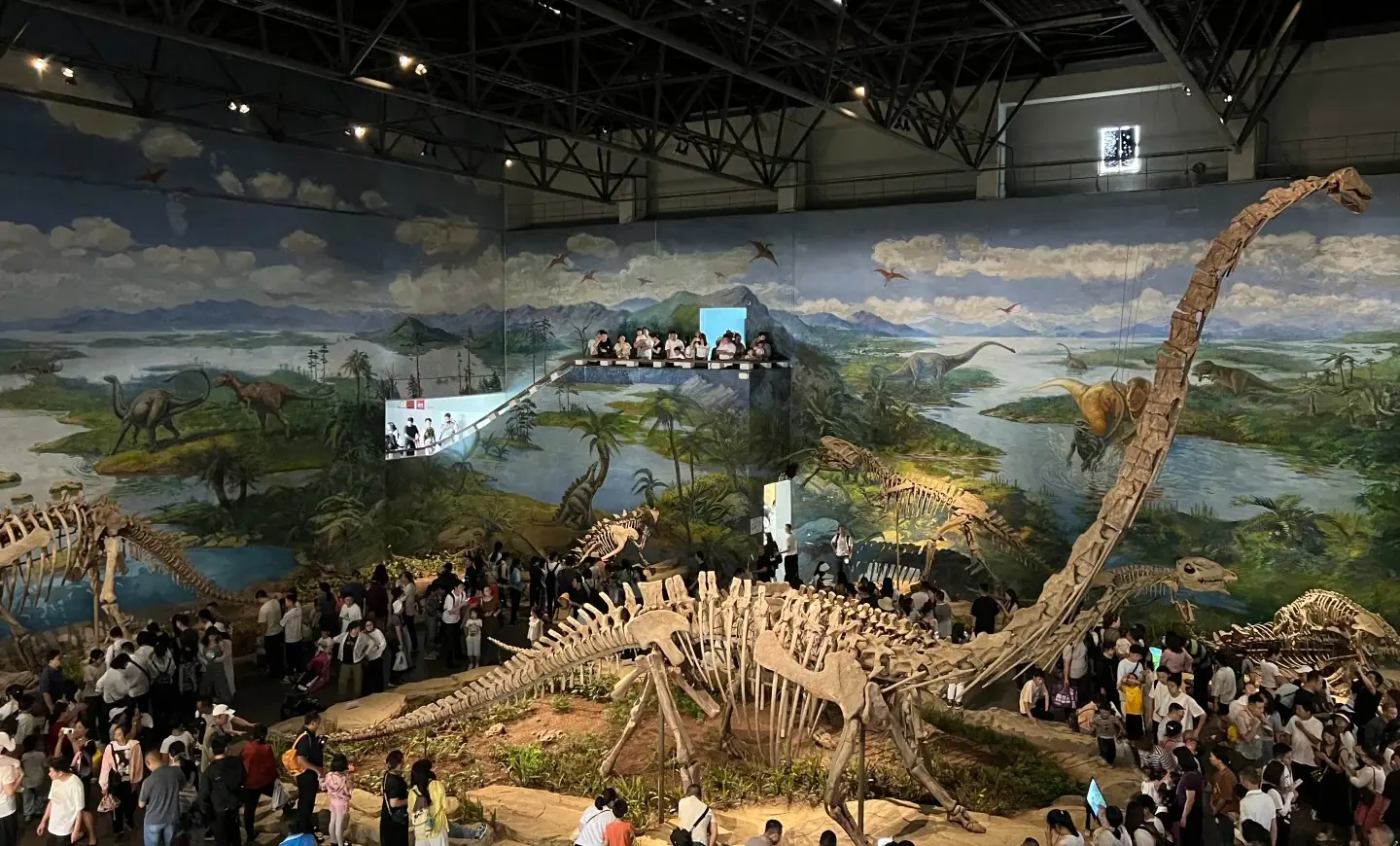
The exhibition floor opens into a massive cross-section revealing a 3-to-5-meter-thick sandstone layer packed with 160-million-year-old skeletal fossils. Some are complete enough to make out rib cages and spinal columns; others show only cross-sections of bone. These aren't replicas or casts — they're genuine ancient remains, frozen in the positions they were buried in by river sediment.
How the layer formed
Staff explain the geological story on site: during the Middle Jurassic, this area was a lowland where lakes and rivers converged. Dinosaurs came here to drink and hunt. When they died, flash floods buried their remains in fine-grained sand before scavengers could scatter them — which is why so many skeletons survived intact.
Why the visit feels different
Other dinosaur museums show you "fossils brought from somewhere else." Zigong shows you "fossils exactly where they fell." That in-situ experience is something no replica exhibition can match.
Star Specimens You Shouldn't Miss
Four fossils, four evolutionary clues
The museum's skeleton hall displays over 18 complete skeletons spanning herbivorous sauropods, carnivorous theropods, and stegosaurs. Here are the headliners.
Omeisaurus tianfuensis — A 20-Meter Giant
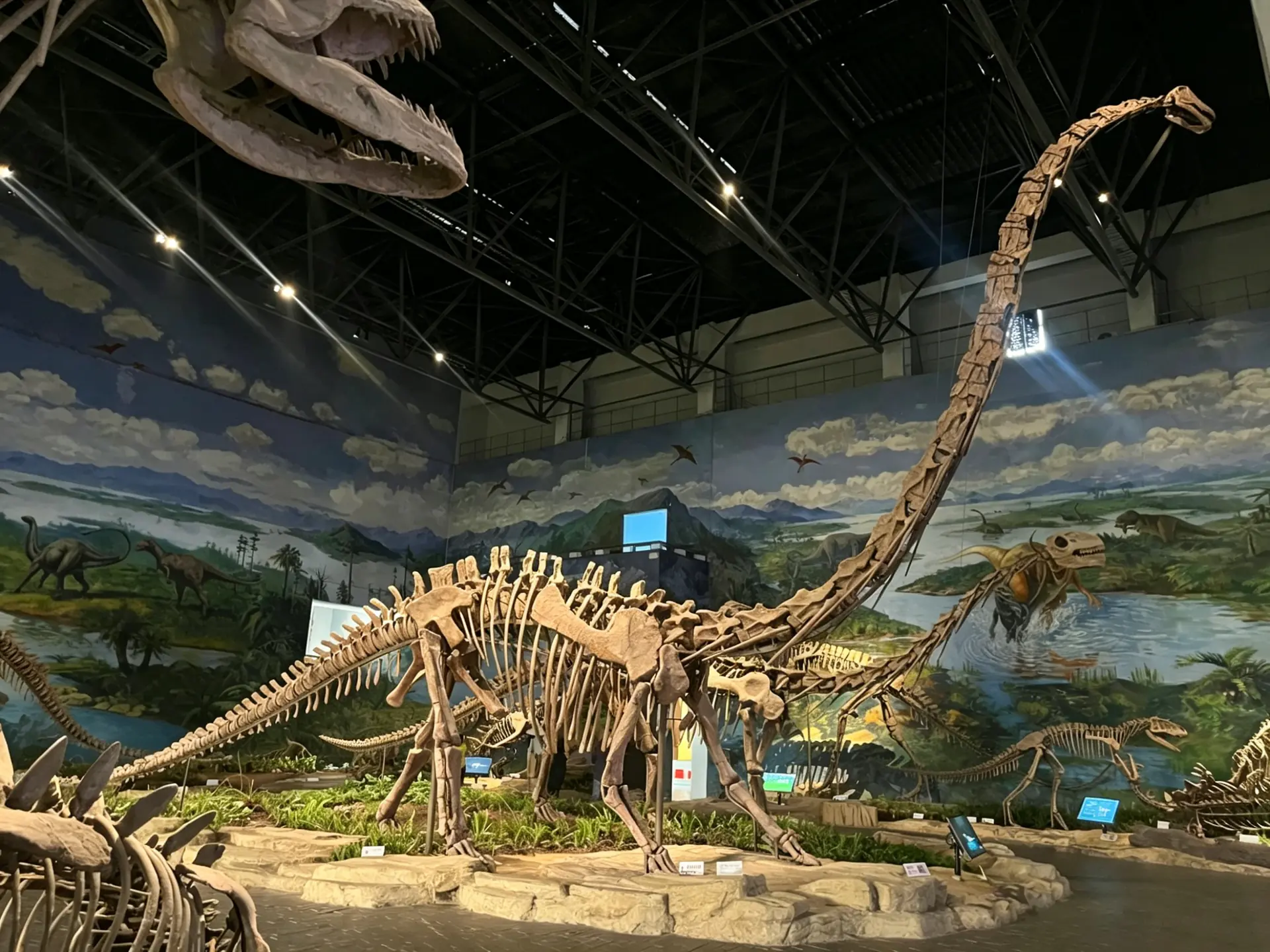
Omeisaurus tianfuensis (天府峨眉龙) is the museum's largest exhibit, stretching about 20 meters with a neck nearly half its total body length. This sauropod was one of the dominant creatures in the Sichuan Basin during the Middle Jurassic. Standing beneath its skeleton is when "how big were dinosaurs?" stops being an abstract question.
Shunosaurus — The Tail-Club Sauropod
Why it stands out
Shunosaurus (蜀龙) is one of Zigong's most important scientific discoveries. This mid-sized sauropod (about 10 meters long) has one extraordinary feature: a bony club at the end of its tail — an extremely rare trait among sauropods.
Why scientists value it
Scientists believe it served as a defensive weapon against predators. The museum holds multiple specimens with exceptional preservation; one skeleton has a 94% bone identification rate, making it one of the most anatomically understood sauropods in the world.
Huayangosaurus — Among the Oldest Stegosaurs
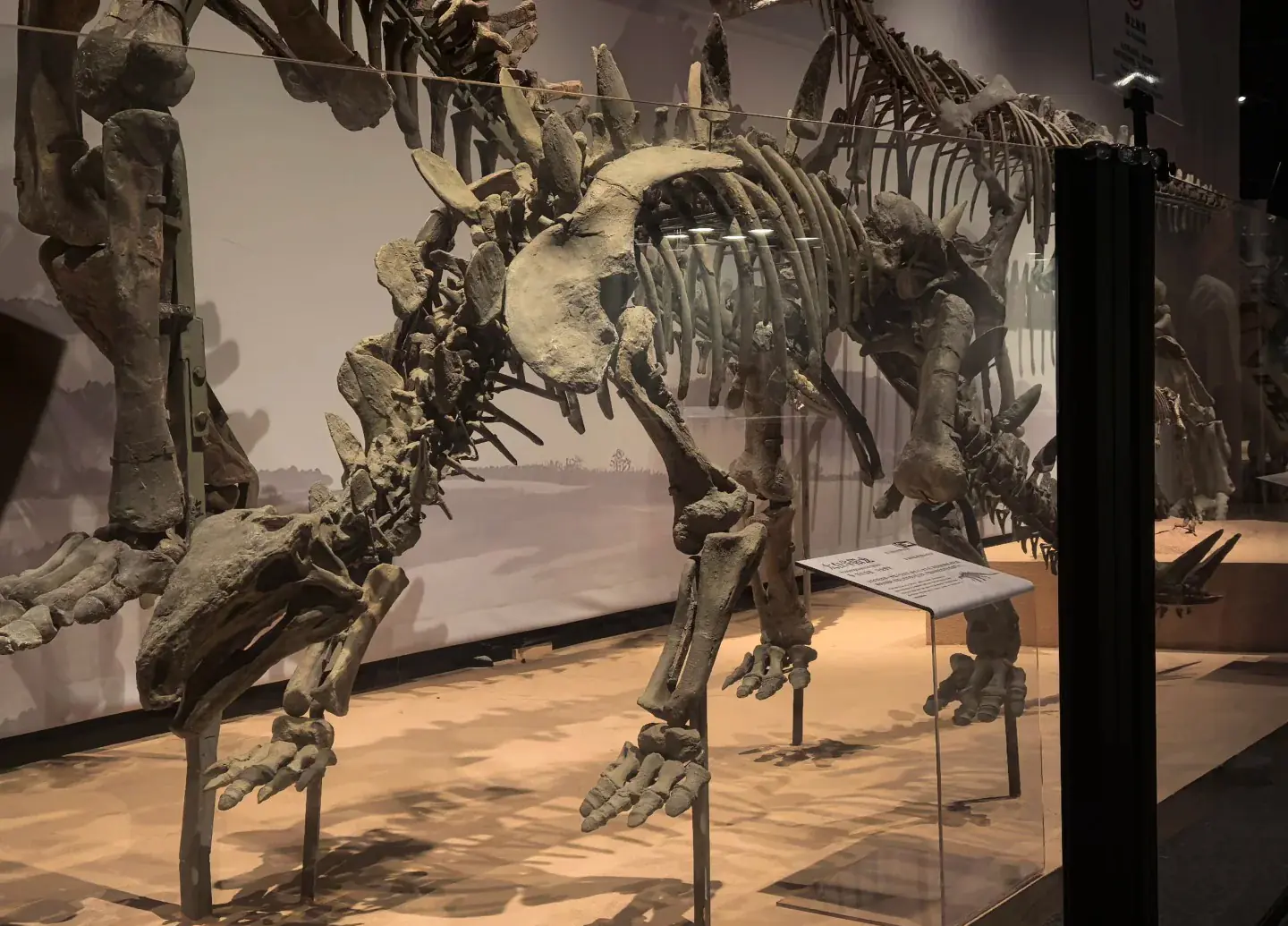
Early armour
Huayangosaurus (华阳龙) lived roughly 165 million years ago during the Middle Jurassic, making it one of the oldest known stegosaurs on earth. It carried two rows of bony plates along its back and four spikes on its tail — the signature armor of the stegosaur family.
Evolutionary clue
Compared to the more famous Late Jurassic Stegosaurus from North America, Huayangosaurus was smaller and more primitive, which makes it uniquely valuable for understanding how stegosaurs evolved.
Gasosaurus and Other Predators
Gasosaurus (气龙) is a mid-sized carnivore unearthed at Dashanpu, named for the natural gas exploration that was underway when it was found ("气" means gas in Chinese). The museum also displays skeletons of Yangchuanosaurus (杨氏龙) and other large theropods — the apex predators of the Sichuan Basin's Jurassic food chain.

The skeleton hall houses over 18 complete specimens — sauropods, theropods, and stegosaurs side by side.
Evolution Galleries and 4D Experience
The galleries and cinema below describe the pre-renovation visitor experience. The limited trial notice confirms access to the Dinosaur Site Hall and Exploration Hall, but not these specific spaces, so check the official museum WeChat before assigning them time.
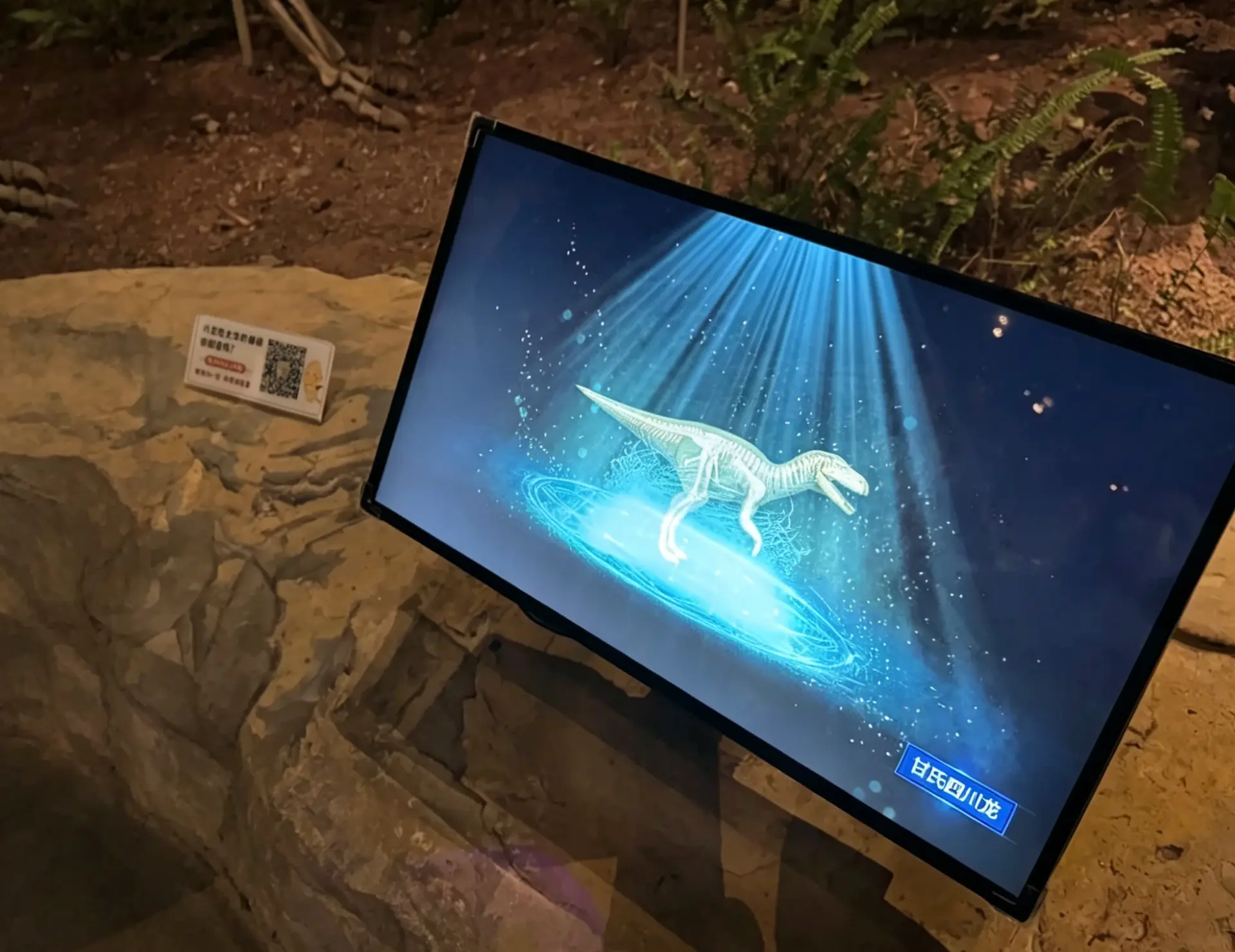
Evolution galleries
Beyond the fossil specimens, the museum's second floor houses evolution and ecology galleries that use lighting effects, sound, and multimedia to recreate Jurassic environments: dense fern and ginkgo forests, volcanic eruptions, and animated scenes of dinosaur herds. These galleries do an excellent job helping visitors without a paleontology background — especially children — quickly grasp what the dinosaur era actually looked and felt like.
4D cinema
There's also a 4D cinema showing immersive dinosaur shorts. The seats rumble and spray water in sync with the action — for kids, this is usually the highlight of the entire visit.
Hands-On Fun for Families
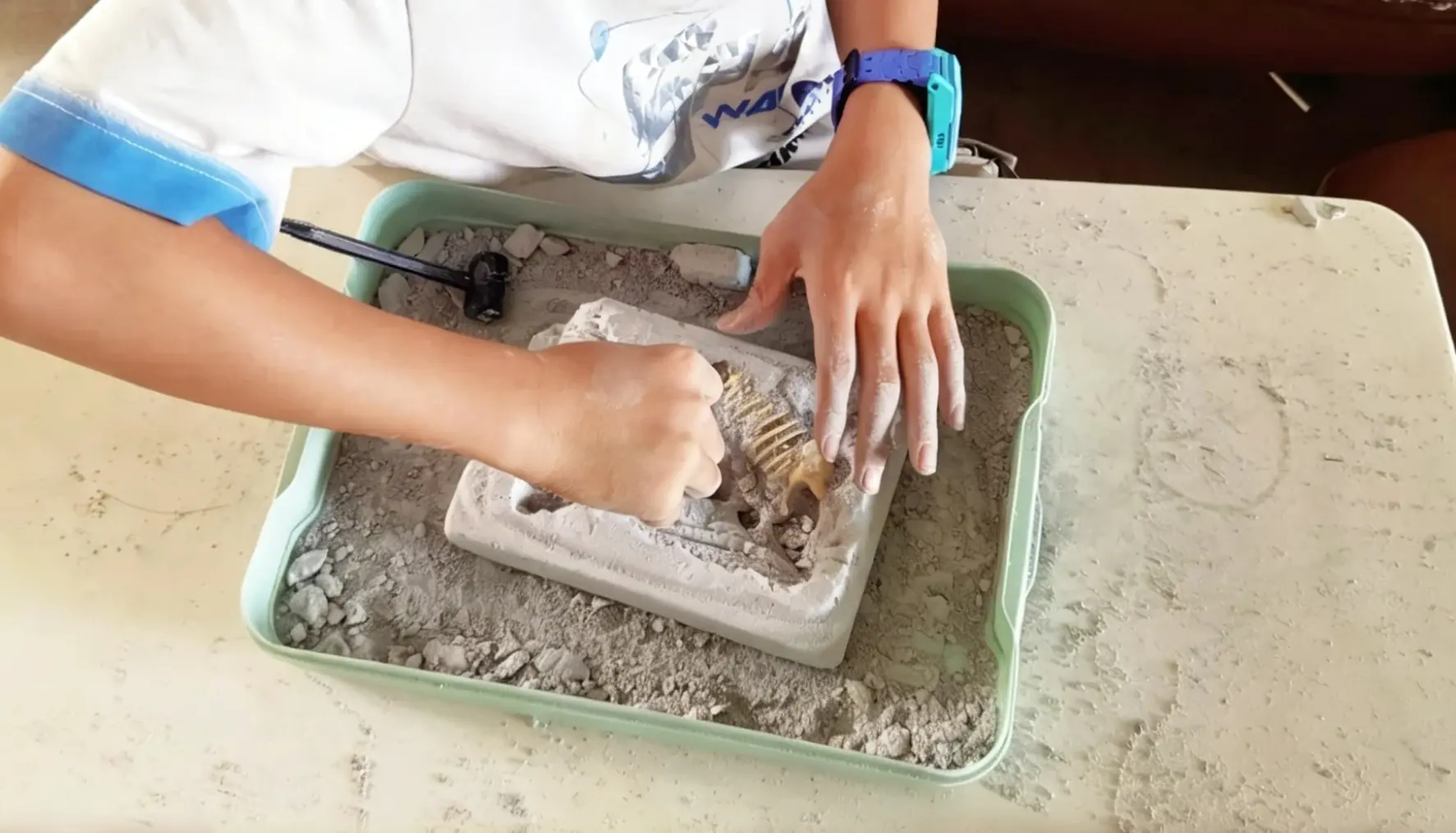
Family programmes to verify
The Zigong Dinosaur Museum is one of the best family-friendly museums in China. Beyond looking at fossils, its pre-renovation experience included several hands-on activities. The limited-trial notice does not confirm which programmes have returned, so check the official museum WeChat before promising these to children.
Simulated fossil excavation
Children use tools to dig "fossils" out of a sandbox, mimicking the workflow of a real paleontologist.
"Dinosaur Detective" self-guided program
Designed for ages 7–12, this program gives kids clue cards and activity kits to complete a science investigation throughout the museum. Over 6,000 participants have completed it, and it won Sichuan Province's "Top 10 Museum Education Program" award.
"Jurassic Night" overnight program
The museum's most distinctive family offering includes dinosaur lantern DIY, a nighttime museum exploration, fossil restoration, and even a "dinosaur extinction debate." It's split into two age tracks: "Dragon Palace Warriors" (ages 6–10) and "Dino Expedition Team" (10+). Before renovation, advance booking was required and spots filled quickly.
AR experiences and fossil rubbings
Interactive AR stations "bring dinosaurs to life," and kids can make their own fossil rubbings to take home as souvenirs.
Before renovation, kids could get hands-on with simulated fossil excavation — one of several interactive programs that made this museum a standout for families. "Jurassic Night" was the most popular overnight program; if it returns, expect advance booking.
Tickets, Hours, and Renovation Alert
Limited free public trial is open
Access: Since July 5, 2026, the Dinosaur Site Hall and Exploration Hall have accepted up to 600 reserved visitors per day in morning and afternoon sessions.
Hours: 09:00–17:00, with last entry at 16:00.
Reservation: Future two-day inventory is released at 19:30 through the museum's official WeChat account (自贡恐龙博物馆). There are no walk-up places.
Still unavailable: Hall 3 remains closed for construction. The full museum had been closed since May 10, 2025, for a comprehensive electrical upgrade and main exhibition hall renovation. Formal reopening is expected in late July, but the exact date, normal prices, normal hours, and post-renovation programme schedule have not been announced. Check the official WeChat or zdm.cn before travelling.
The tables below preserve the museum's pre-renovation admission and opening information for reference. They are not the operating policy for the limited trial and may change at formal reopening.
Admission (Pre-Renovation Reference)
- Price
- ¥40
- Price
- ¥20 (half price)
- Price
- Free
- Price
- Free (with valid ID)
Opening Hours (Pre-Renovation Reference)
- Hours
- 8:30 – 17:30
- Note
- Last entry at 17:00
- Hours
- 9:20 – 16:30
- Note
- Chinese only
Getting to Zigong and the Museum
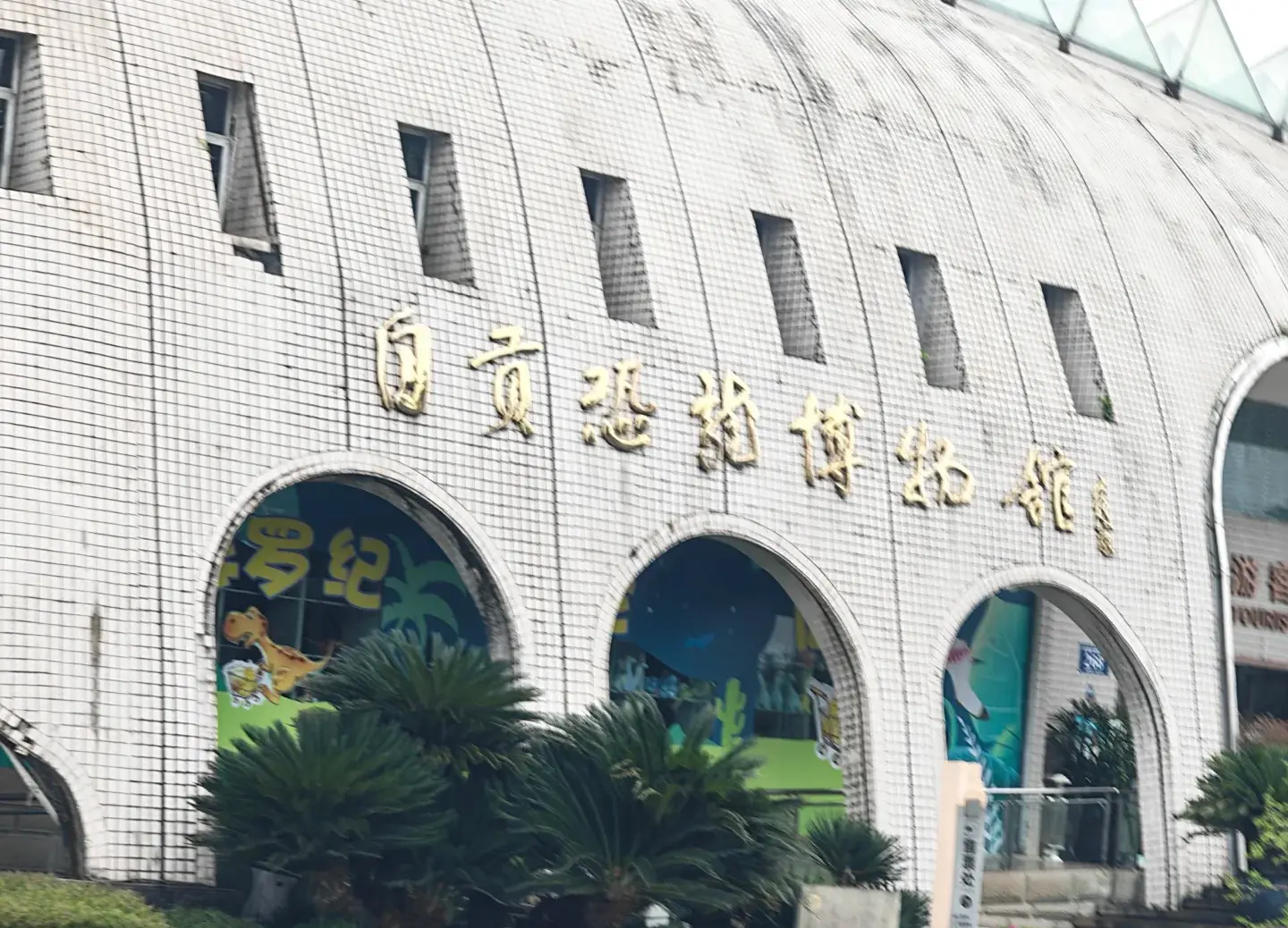
Aim for the Dashanpu entrance
The museum entrance at Dashanpu — look for the distinctive dinosaur sculptures flanking the main gate.
From Chengdu
High-speed rail (recommended): Take a train from Chengdu East or Chengdu South to Zigong Station. The fastest services take about 50 minutes to 1 hour; check the official 12306 app or website for current schedules and fares. From Zigong Station, a taxi to the museum takes about 20–30 minutes.
Bus from Chengdu
Coaches to Zigong remain an alternative, but departure stations and fares can change. Do not rely on older directions naming Zhaojuesi: all of its routes were relocated in September 2025. Confirm the current Chengdu departure point through the relevant station's official channel before travel.
From Chongqing
High-speed rail: Chongqing West to Zigong Station typically takes about 1.5 hours; check the official 12306 app or website for the current timetable and fare.
Show this screen to your driver · 出示给司机看
请送我到自贡恐龙博物馆(大山铺)
Please take me to the Zigong Dinosaur Museum (Dashanpu).
Planning Your Visit — Practical Tips
Plan the open halls first
During the limited trial, build your visit around the Dinosaur Site Hall and Exploration Hall. The full-museum route and facility notes below describe pre-renovation operations; confirm what has returned before relying on the upstairs galleries, 4D cinema, snack shop, or normal photography conditions.
Recommended duration
The museum itself takes 2–3 hours. If you add Fantawild Dino Kingdom (方特恐龙王国) next door, plan for a full day.
Best visiting order after full reopening
Start with the ground-floor burial pit (the most impactful exhibit), then move to the skeleton hall for complete specimens, and finish upstairs with the evolution galleries and 4D cinema.
Temperature
Most galleries are air-conditioned, but the Dashanpu burial pit area is semi-open and can feel hot in summer or cold in winter. Dress in layers.
Food
The museum has a basic snack shop with limited options. Eat in town before or after — Zigong is the birthplace of salt-flavored Sichuan cuisine, and the food alone is worth the trip.
Photography
Allowed in most galleries (no flash). The burial pit and the Omeisaurus skeleton are the two most photogenic spots.
What Else to Do in Zigong
Zigong isn't just about dinosaurs. This 2,000-year-old "Millennium Salt Capital" has plenty more to see.

A full-scale dinosaur-themed amusement park with roller coasters, water rides, and themed shows. Perfect for families extending the dinosaur experience. Official standard adult admission is ¥280; promotions vary, so confirm through the Fangte Travel app or official WeChat before visiting.

The world's first well drilled deeper than 1,000 meters (started in 1823, completed in 1835, depth 1,001.42 meters). It still extracts brine and natural gas using traditional methods. You can watch the entire ancient salt-boiling process on site.
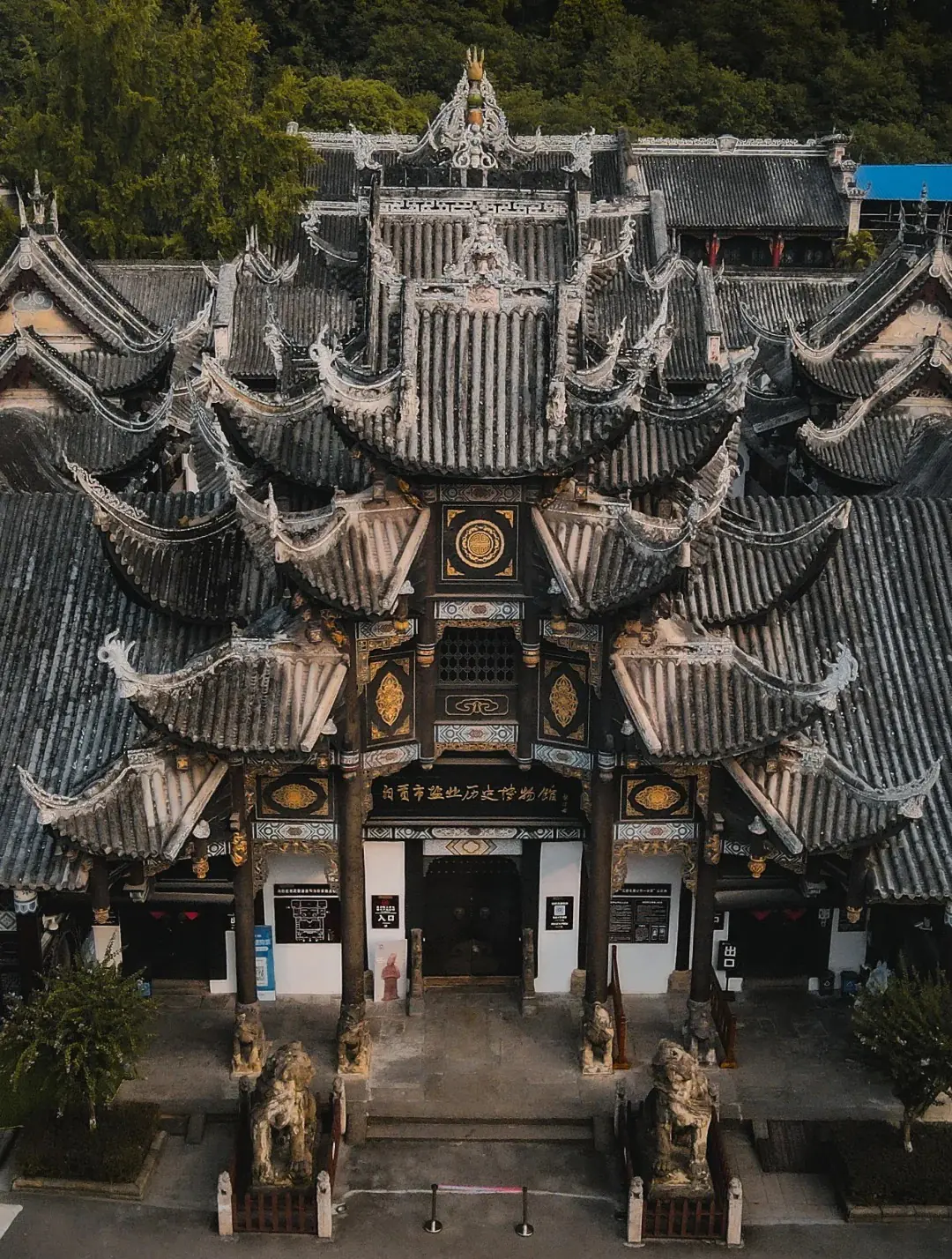
Housed inside the Xiqin Guild Hall (西秦会馆), a Qing-dynasty merchants' guildhall and architectural gem. Traces Zigong's 2,000-year history of well-salt extraction, including the world's earliest deep-drilling technology. Adult admission is ¥35; confirm current concessions through the museum's official channels.
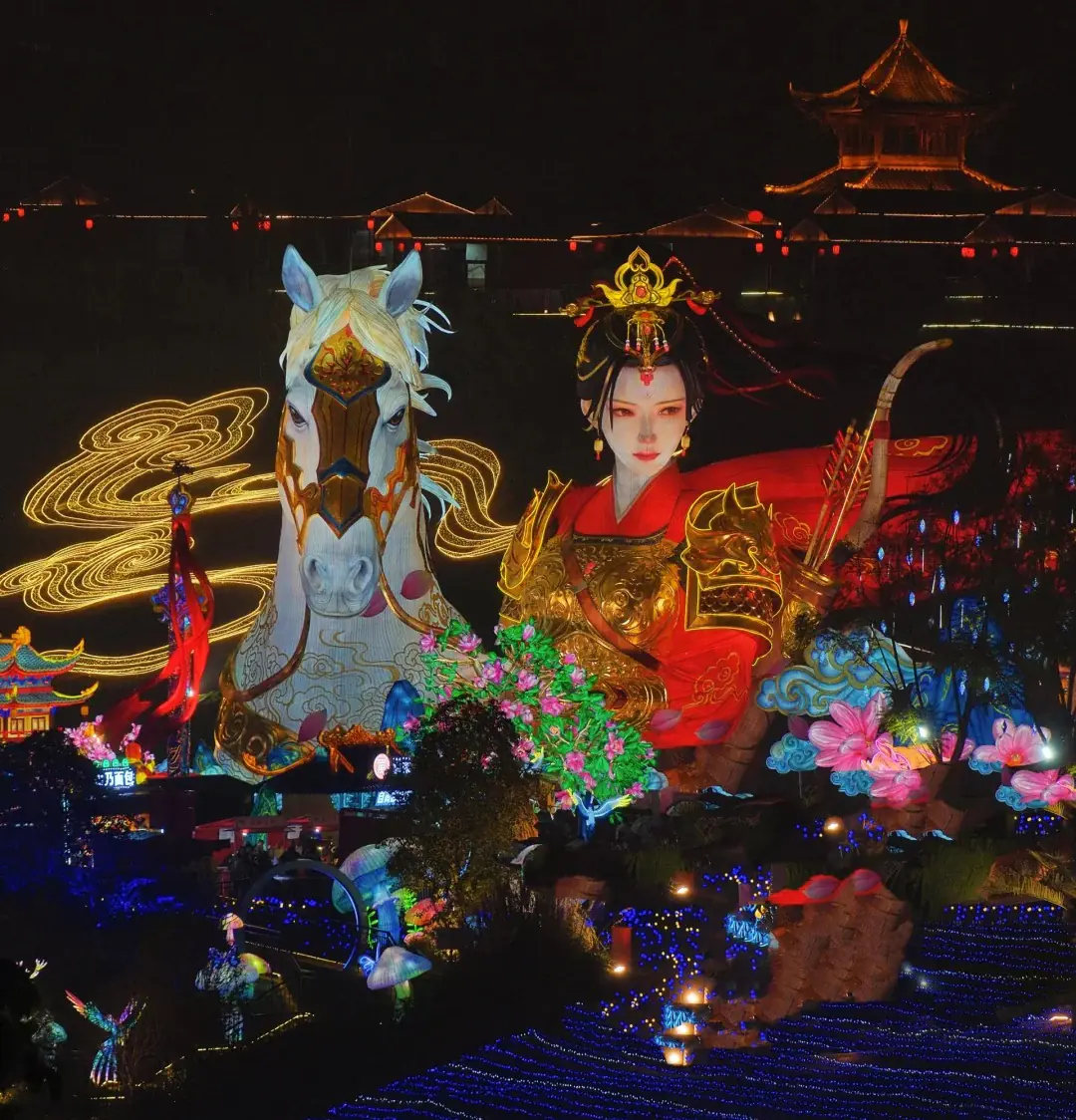
Zigong is famous across China for its lantern festivals, but this purpose-built venue operates seasonally rather than year-round. The 32nd Zigong International Dinosaur Lantern Festival ended and the park closed after service on June 10, 2026. Check official announcements before planning a night visit; Spring Festival is the main lantern season.
Salt cuisine (盐帮菜): Zigong is the birthplace of one of Sichuan's four major culinary traditions — salt-flavored cuisine, known for bold, spicy, intensely savory flavors. Must-tries: rabbit heads (兔头), cold rabbit (冷吃兔), boiled beef in chili oil (水煮牛肉), fire-edge beef jerky (火边子牛肉), and Fushun tofu pudding (富顺豆花). Zigong locals take their spice so seriously that even people from Chengdu admit defeat.
Frequently Asked Questions
A limited free public trial has operated since July 5, 2026, for the Dinosaur Site Hall and Exploration Hall. Entry is reservation-only through the official museum WeChat, with 600 places per day; Hall 3 remains closed. Formal reopening is expected in late July, but the exact date and normal operating policy have not been announced.
Sources checked for this guide
- Checked for July 2026 limited-trial access, visitor cap, reservation channel and venue scope: Zigong Dinosaur Museum public trial notice (July 2026)
- Checked for the Dinosaur Site Hall reopening timeline and renovation status: Xinhua: Dinosaur Site Hall reopening update (July 2026)
- Checked for current train schedules and variable execution fares: China Railway 12306 current timetable and fare search
- Checked for the September 2025 relocation of all Zhaojuesi coach routes: Chengdu Release: Zhaojuesi coach routes relocated (September 2025)
- Checked for the park concept, location and standard adult admission: Fantawild official Zigong park and standard-ticket notice
- Checked for the May 2026 Salt History Museum adult admission and visitor policy: Zigong Salt History Museum visitor notice (May 2026)
- Checked for China Lantern World seasonal operation and the June 2026 closure: China Lantern World official operating notice
Beyond This Guide
Zigong is just one piece of Sichuan's remarkably diverse travel puzzle — from Chengdu's giant pandas and Sanxingdui's bronze mysteries to Leshan's cliff-carved Buddha and the spice trails of the Sichuan Basin.
© gochinafreely.com — Original guide by Go China Freely.