Hours & Admission
Closed Mondays except national holidays. Standard last entry is 16:00; peak-season last entry is 16:30.
Essential Rules
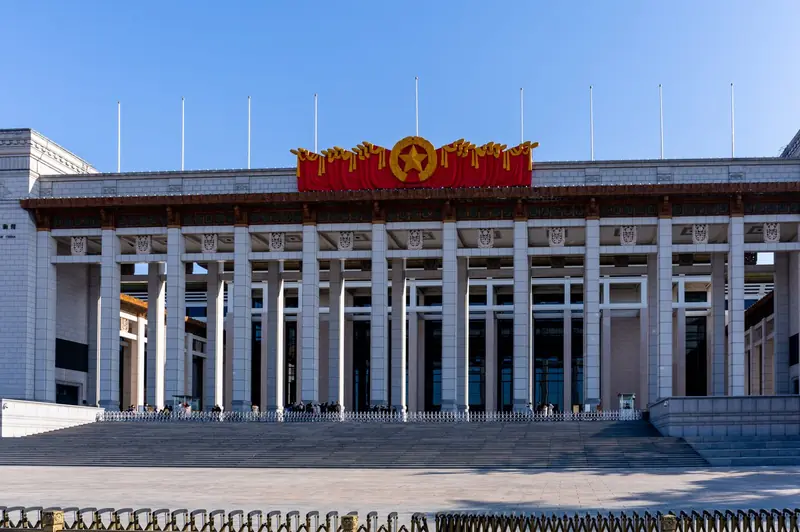
The National Museum of China (中国国家博物馆) holds more than 1.4 million objects on the east side of Tiananmen Square, facing the Forbidden City across the plaza. Most first-time visitors spend their Beijing museum energy at the palace opposite, not realizing this free museum houses the 832.84 kg Houmuwu Ding and one of the clearest object-by-object timelines of Chinese civilization. This guide helps you reserve correctly, choose a realistic route, and focus on the pieces genuinely worth your time.
National Museum of China: 5,000 Years Inside

The National Museum of China is not a small side stop beside Tiananmen Square (天安门广场). Its current institution was formed in 2003 by merging the former Museum of Chinese History (中国历史博物馆) and Museum of the Chinese Revolution (中国革命博物馆), then expanded and reopened in March 2011 with 48 galleries and nearly 200,000 square meters of floor space.
Its permanent exhibitions tell two different stories. Ancient China follows the material history of Chinese civilization from the Neolithic through the late Qing Dynasty. The Road to Rejuvenation follows the political story of modern China from the Opium War to the present.
For foreign visitors, the useful comparison is simple: the Forbidden City is strongest for architecture, palace ritual, and Ming-Qing court space. The National Museum is strongest for artifacts: bronzes, jade, pottery, porcelain, Buddhist sculpture, revolutionary objects, and the long arc of Chinese material culture.
Must-See Artifacts in Ancient China
Ancient China is the museum's anchor exhibition and the best use of limited time. It runs through the B1 galleries in a broad chronological path, with prehistoric pottery and jade giving way to Shang-Zhou bronzes, Qin-Han objects, Tang-Song material culture, and Ming-Qing court pieces.
Houmuwu Ding
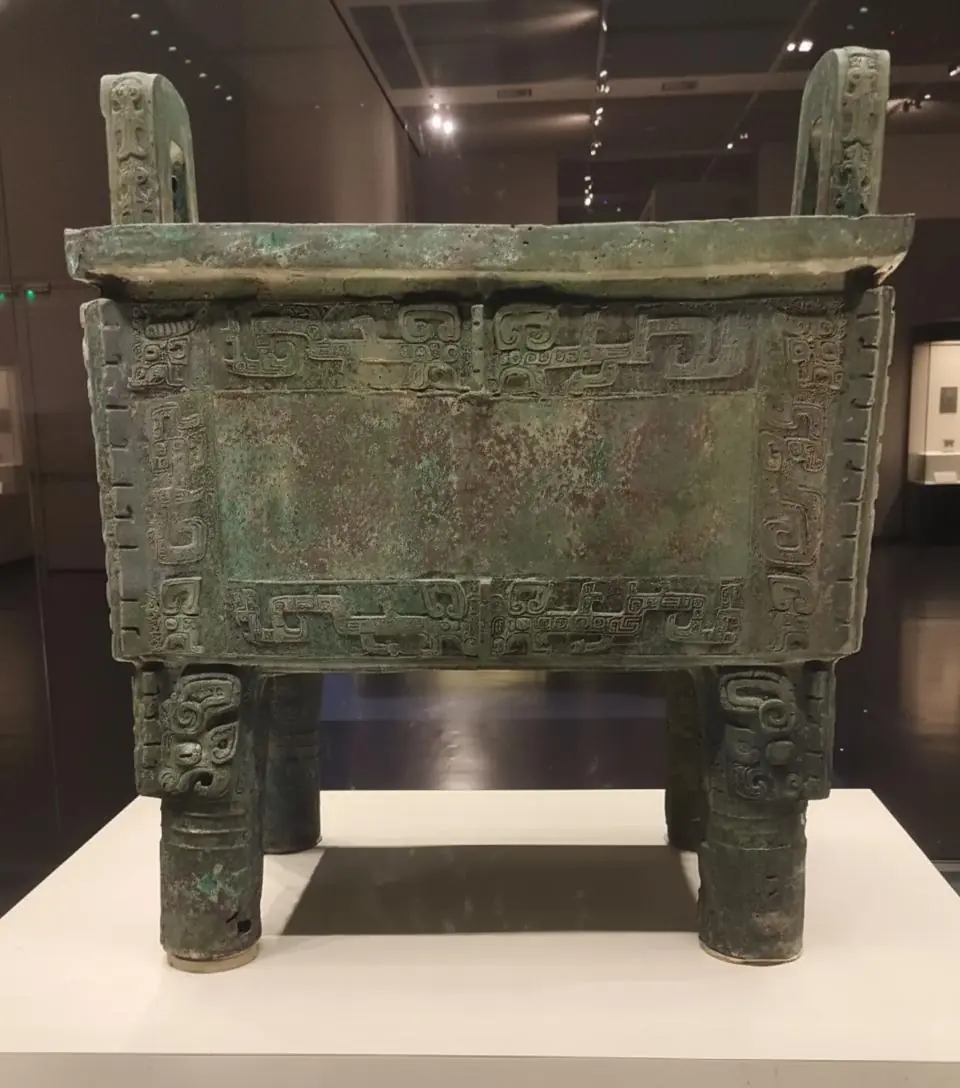
The museum's single most important object is the Houmuwu Ding (后母戊鼎), a late Shang ritual bronze standing 133 cm high and weighing 832.84 kg. It is currently known as the heaviest ancient Chinese bronze vessel. The point is not just size: casting it required organized labor, technical control, and more than 1,000 kg of metal raw materials more than 3,000 years ago.
Four-Goat Square Zun
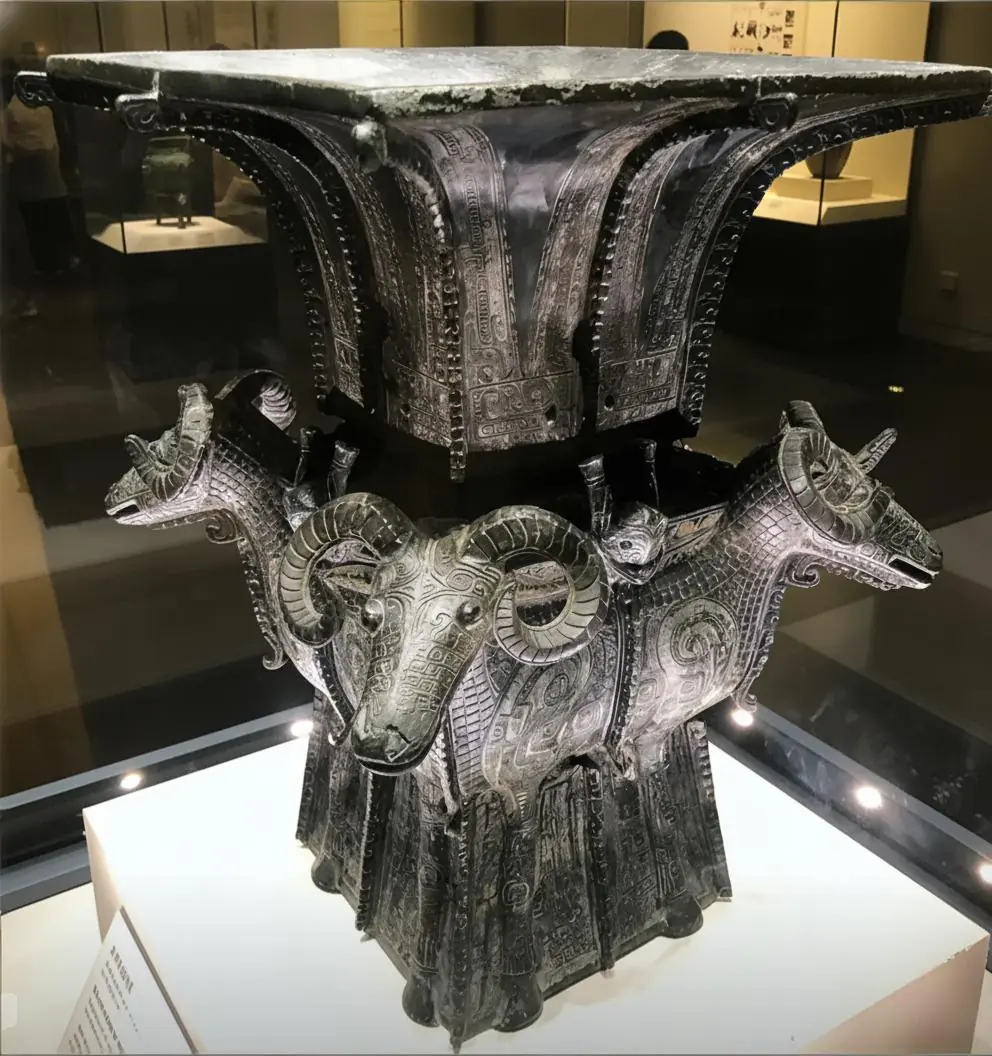
The Four-Goat Square Zun (四羊方尊) is a late Shang bronze wine vessel, 58.3 cm high, with ram heads curling out from the four corners. It is far smaller than the Houmuwu Ding, but the detail is more intricate: animal form, ritual function, and technical casting all meet in one compact object.
Sanxingdui and Prehistoric Icons
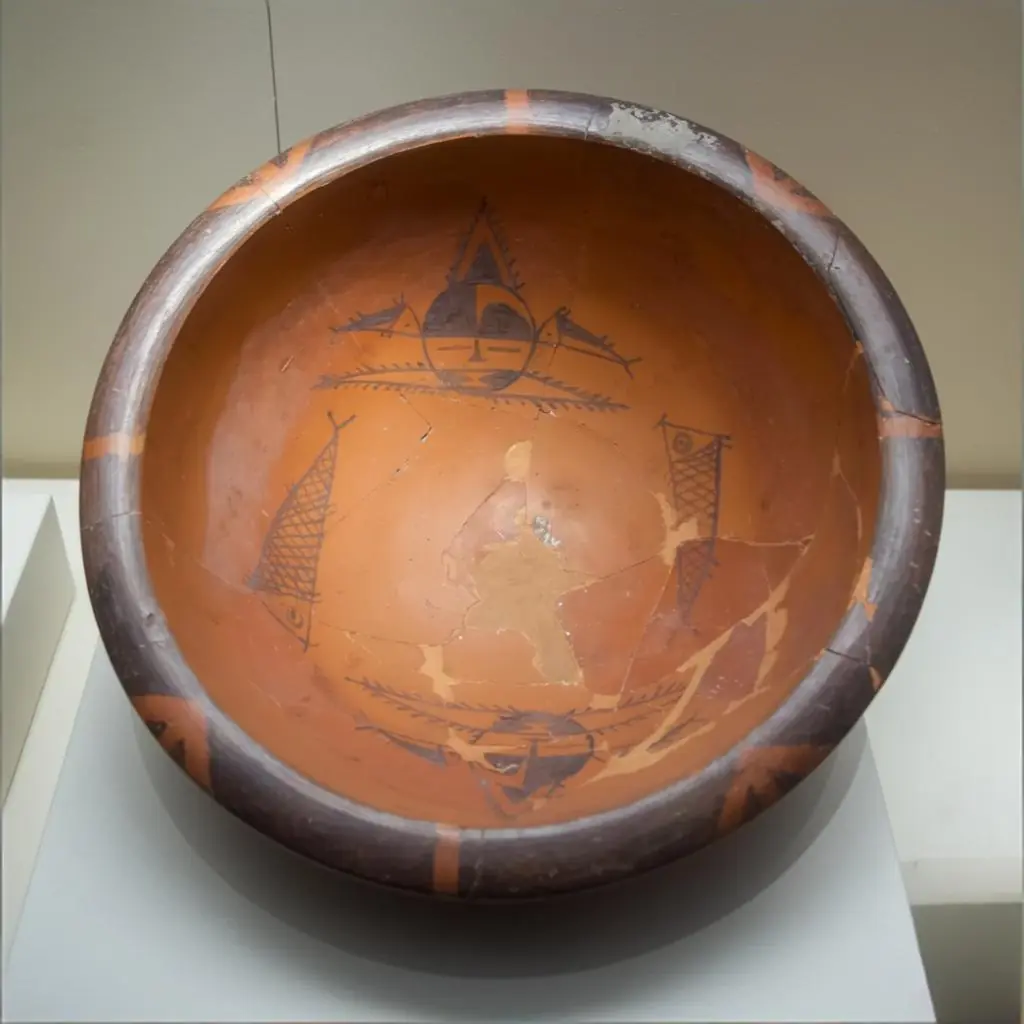
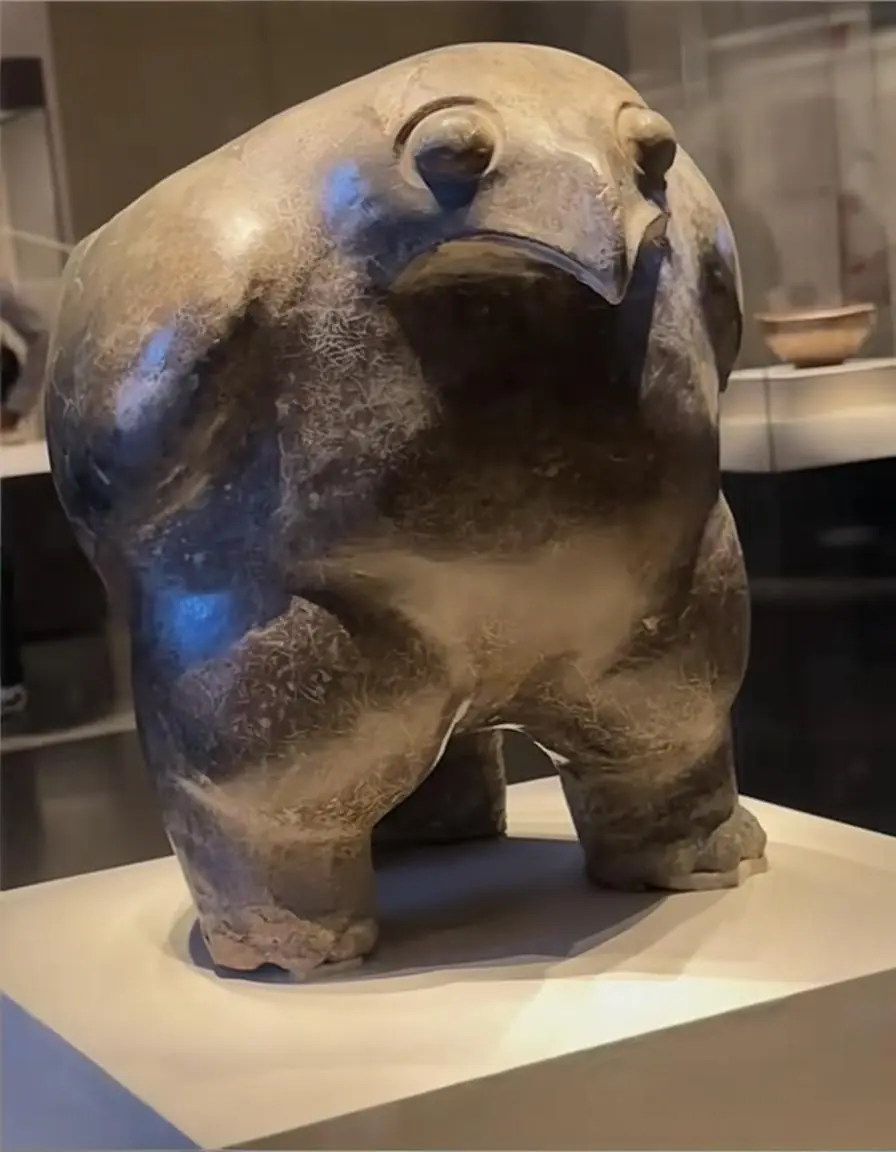
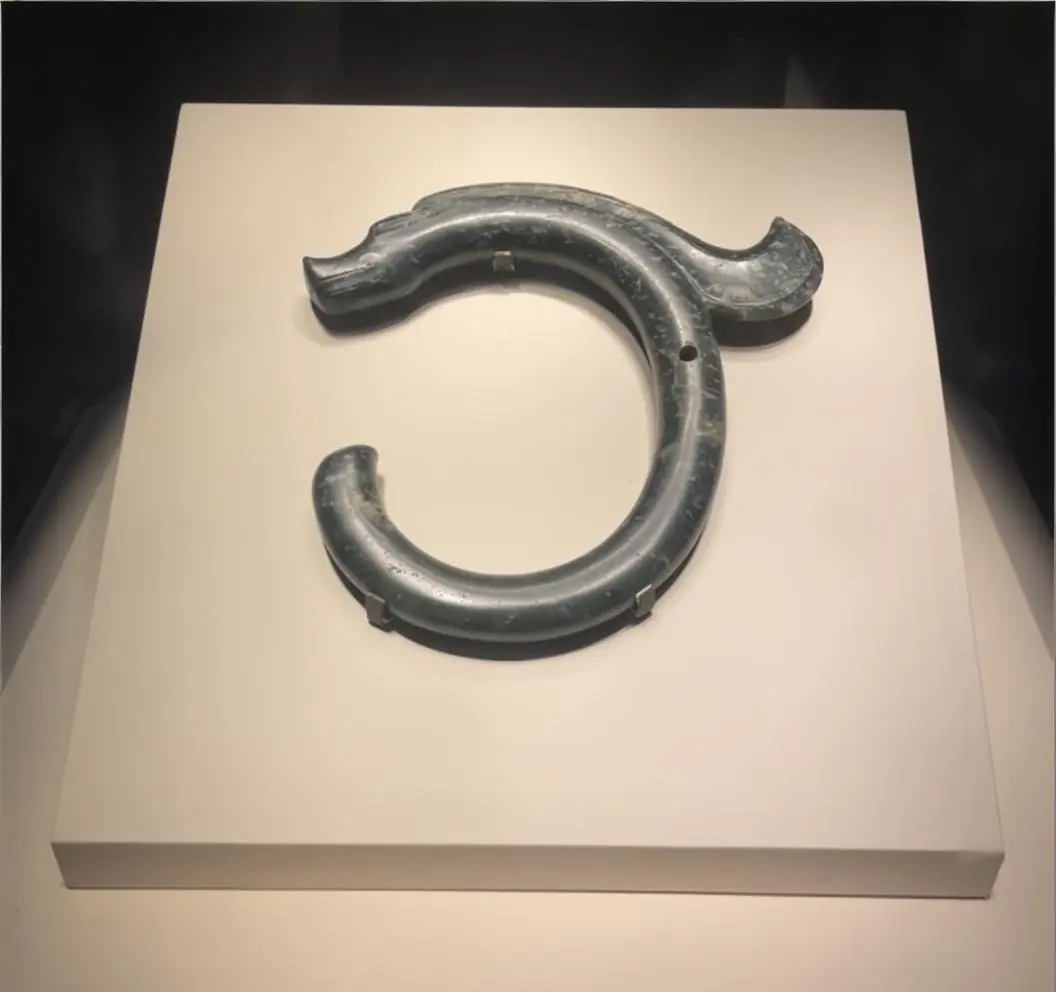
The museum also gives you a quick encounter with worlds that feel far from Beijing: Sanxingdui (三星堆) bronze faces from Sichuan, Yangshao (仰韶) painted pottery, and early jade objects from cultures that predate imperial China by thousands of years.
More Treasures Not to Miss
Storyteller Figurine
击鼓说唱俑 · Eastern Han
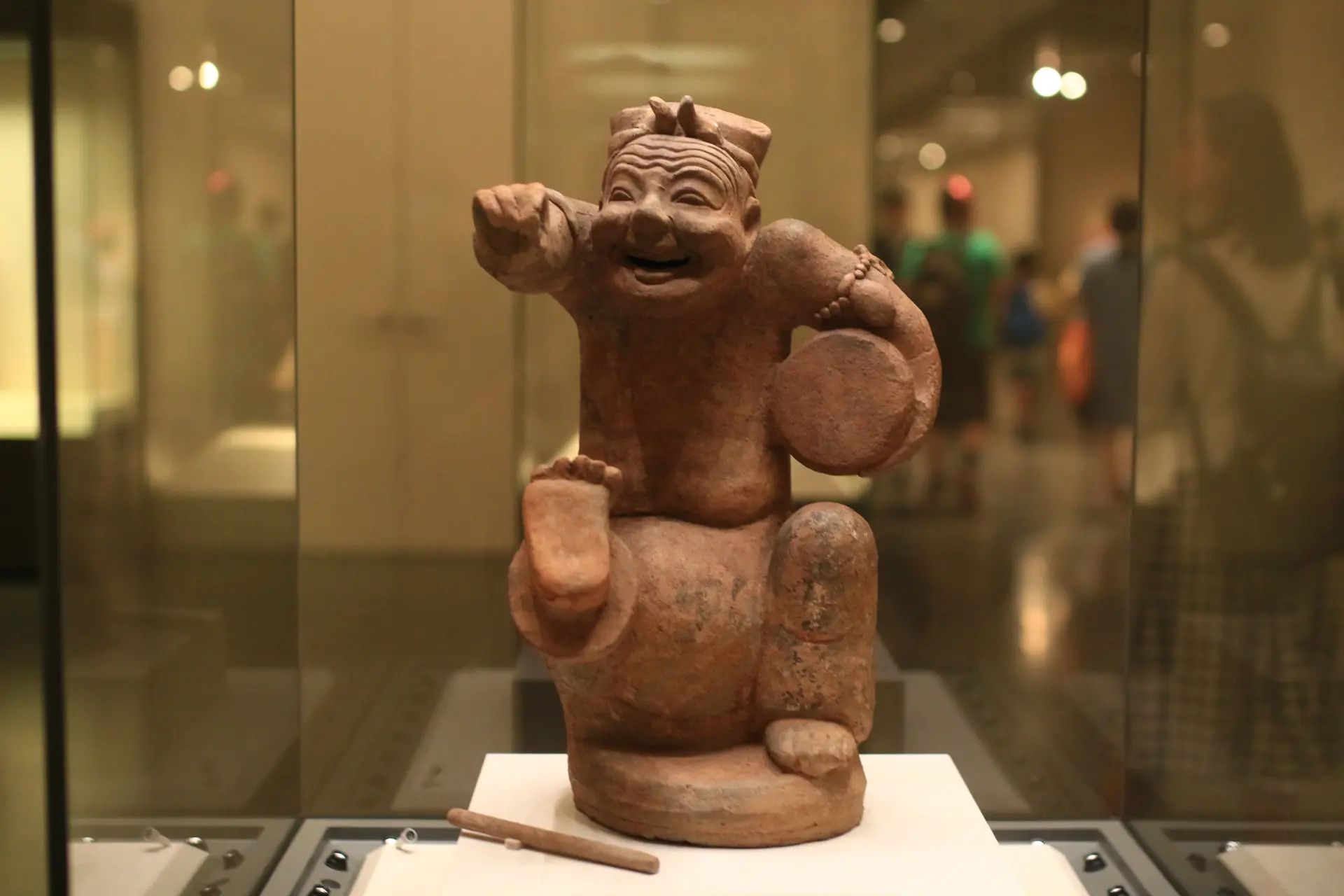
A grinning ceramic performer mid-laugh with a drum. The face is so expressive that the piece often lands with visitors who usually find ancient artifacts remote.
Jade Burial Suit
金缕玉衣 · Western Han
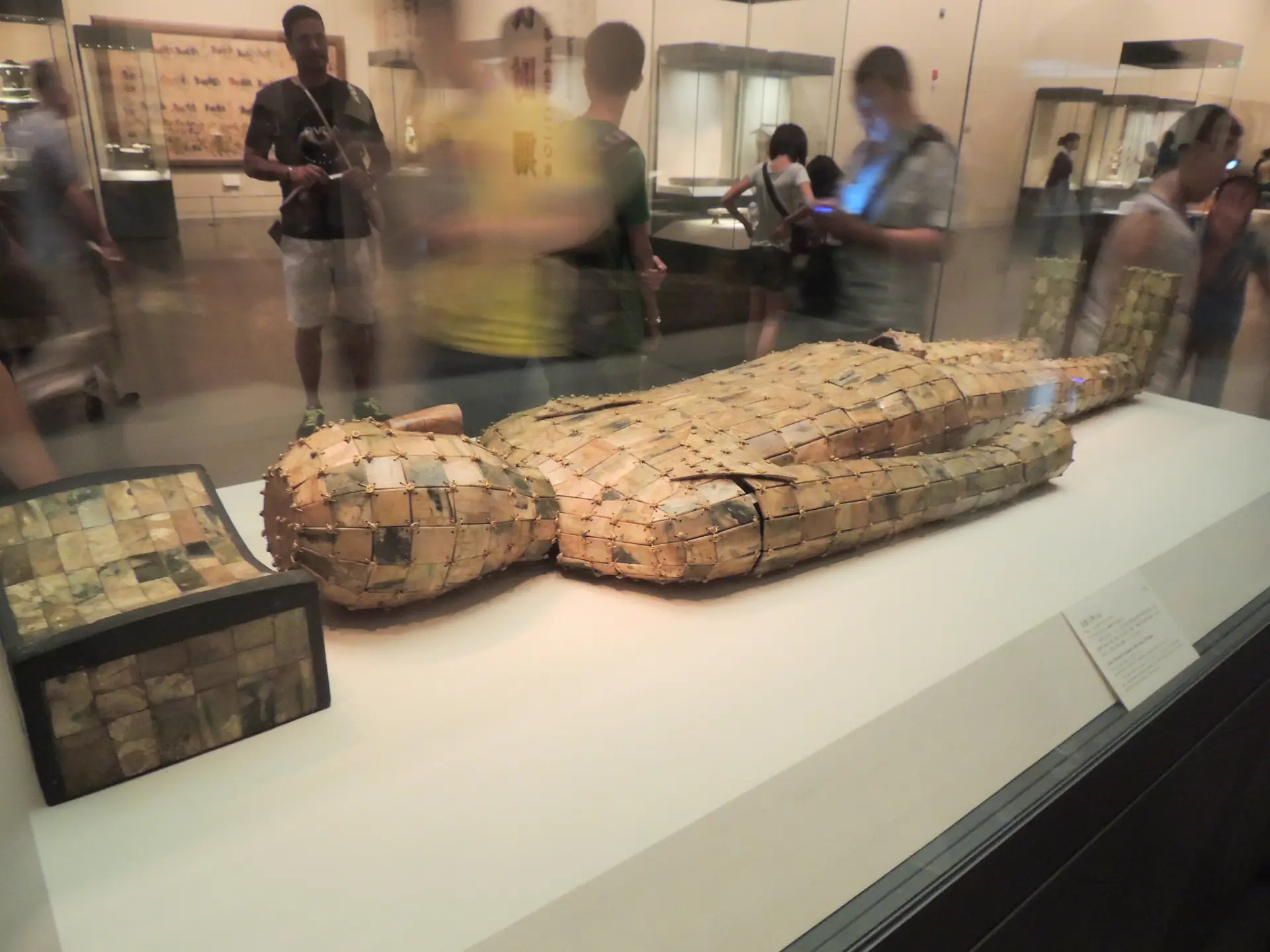
Jade tiles stitched together with gold wire, made for a Han Dynasty noble's afterlife. Look closely at the labor hidden behind the smooth outline.
Da Yu Ding
大盂鼎 · Western Zhou
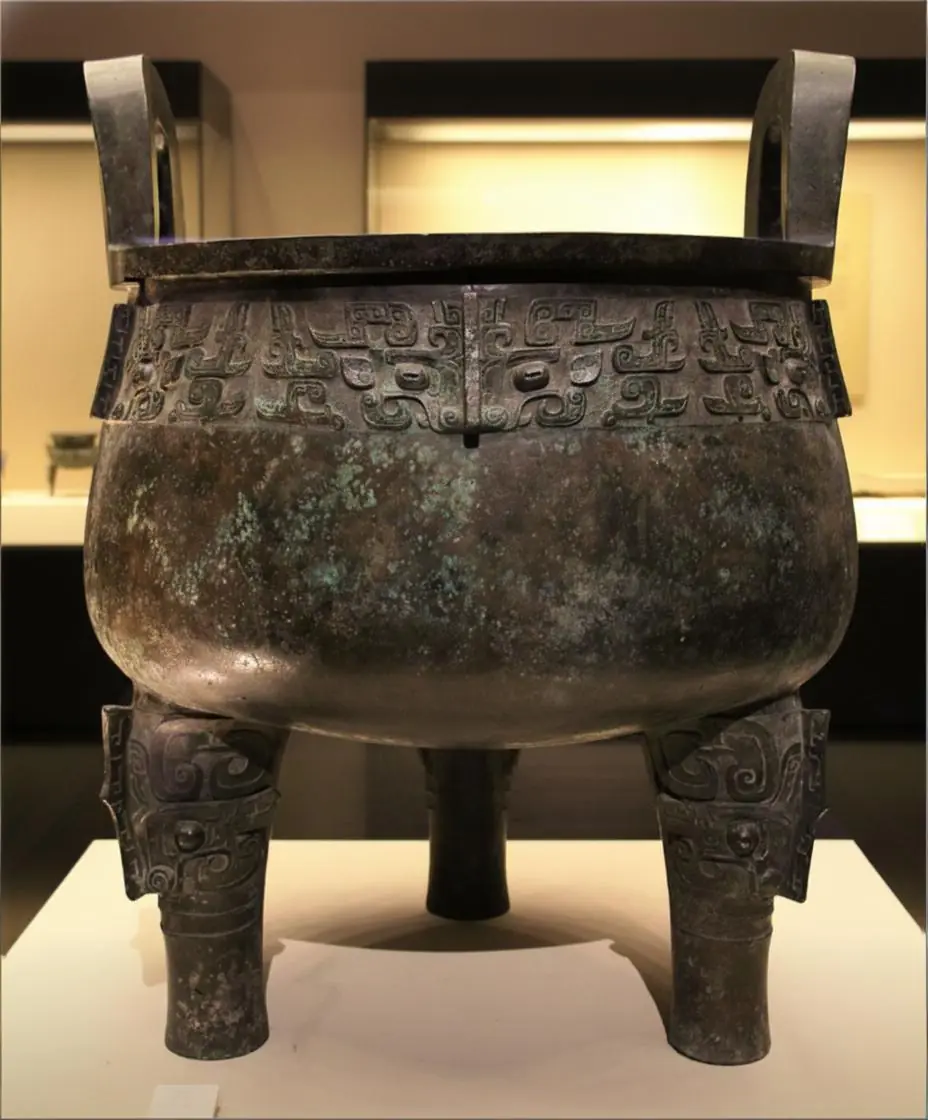
A major Western Zhou bronze cauldron with a 291-character inscription, important for understanding early Zhou politics and ritual memory.
Nine-Dragon Nine-Phoenix Crown
九龙九凤冠 · Ming Dynasty
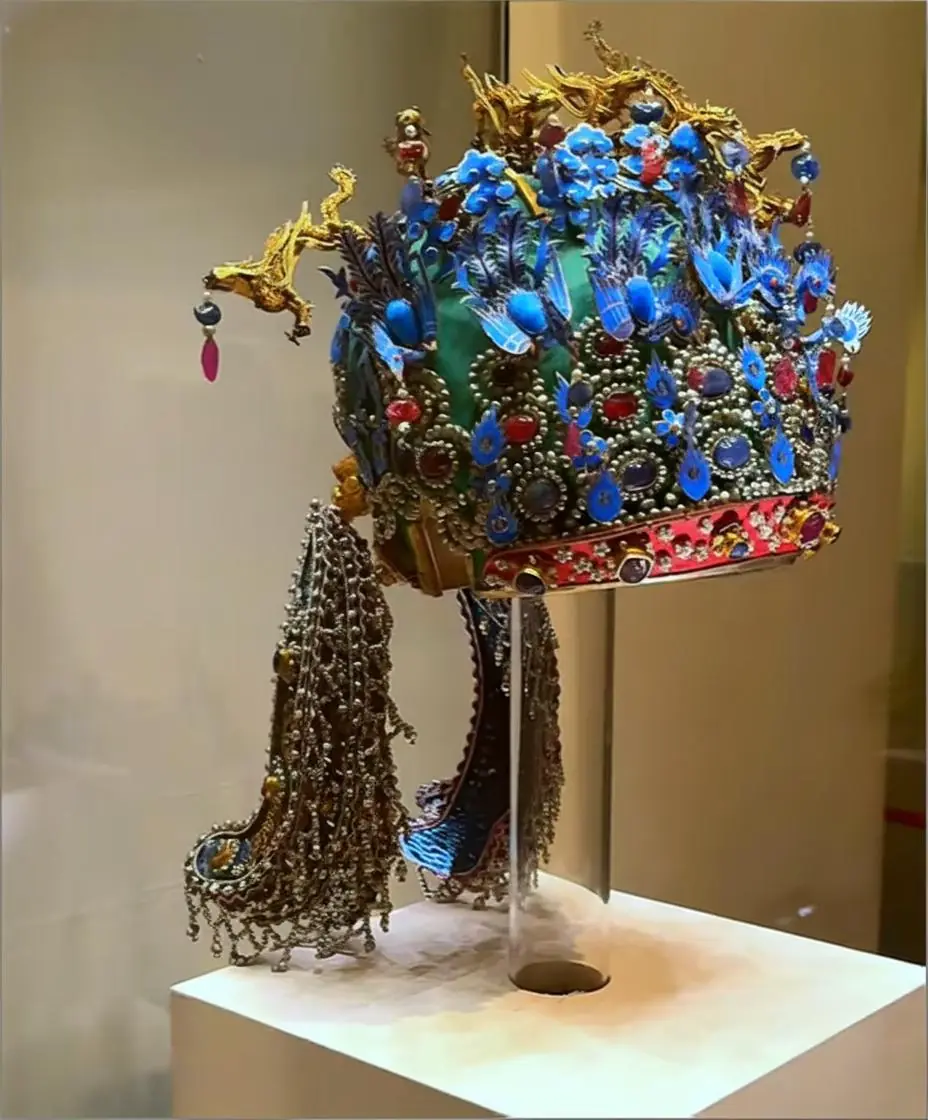
Empress Xiaoduan's ceremonial crown shows Ming court metalwork at a very different scale from the bronzes downstairs. Nearby court pieces make this a good 3F add-on.
Modern China and Thematic Galleries
The Road to Rejuvenation
The Road to Rejuvenation (复兴之路) covers modern Chinese history from 1840 through the present. It carries an unmistakable official political narrative, but for a visitor trying to understand contemporary China, that is exactly why it matters: it shows how the state frames humiliation, revolution, development, and national revival.
Key periods include the Opium Wars and late Qing collapse, the Communist Party's founding and wartime resistance, the founding of the People's Republic of China, and later reform-era development. Notable objects include the first Five-Star Red Flag used at the 1949 founding ceremony and research materials connected with China's nuclear weapons program.
Short on modern history interest?
A 30-minute skim is enough if your main goal is ancient artifacts. But if you have ever wondered what Chinese people mean by the "Century of Humiliation" (百年屈辱), this exhibition is the most direct museum answer in Beijing.
Jade, Porcelain, Buddhist Art, and Temporary Shows
The museum's thematic galleries are easy to miss because many visitors leave after B1. The strongest add-ons are usually ancient jade, ancient porcelain, Buddhist sculpture, ancient currency, and current temporary exhibitions.
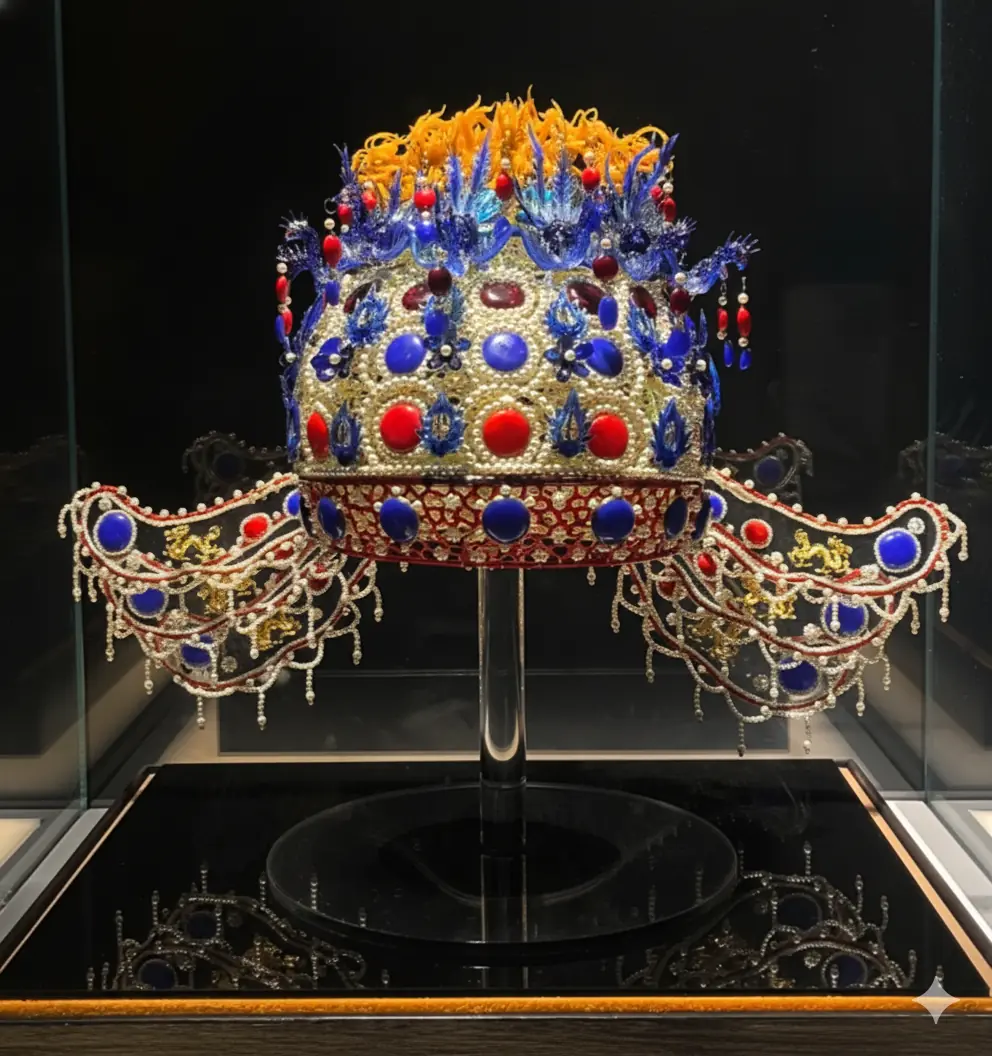
Court craftsmanship: Ming Dynasty crowns, accessories, and ceremonial objects offer a brighter, more delicate counterpoint to the heavy bronze galleries downstairs.
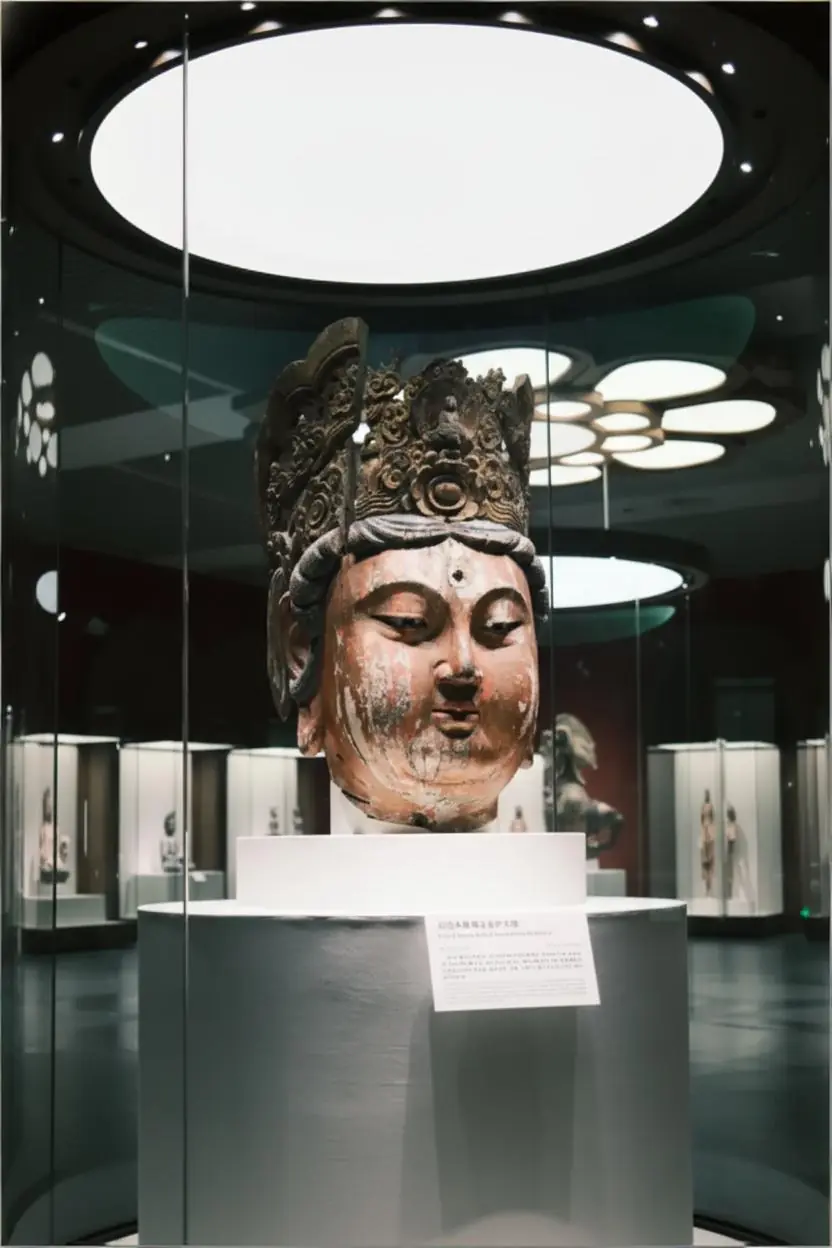
Buddhist sculpture: If you are visiting temples later in Beijing, the Buddhist art displays help you recognize posture, halo, robe, and facial-style differences across dynasties.
The temporary exhibition program changes often. Check the official exhibition page or the "国家博物馆" WeChat channels before you go; special exhibitions can have different ticket rules.
Choose Your Museum Route
The building is massive, with north and south wings and galleries from basement level to the upper floors. Choose your route before you arrive so the museum does not turn into a slow indoor maze.
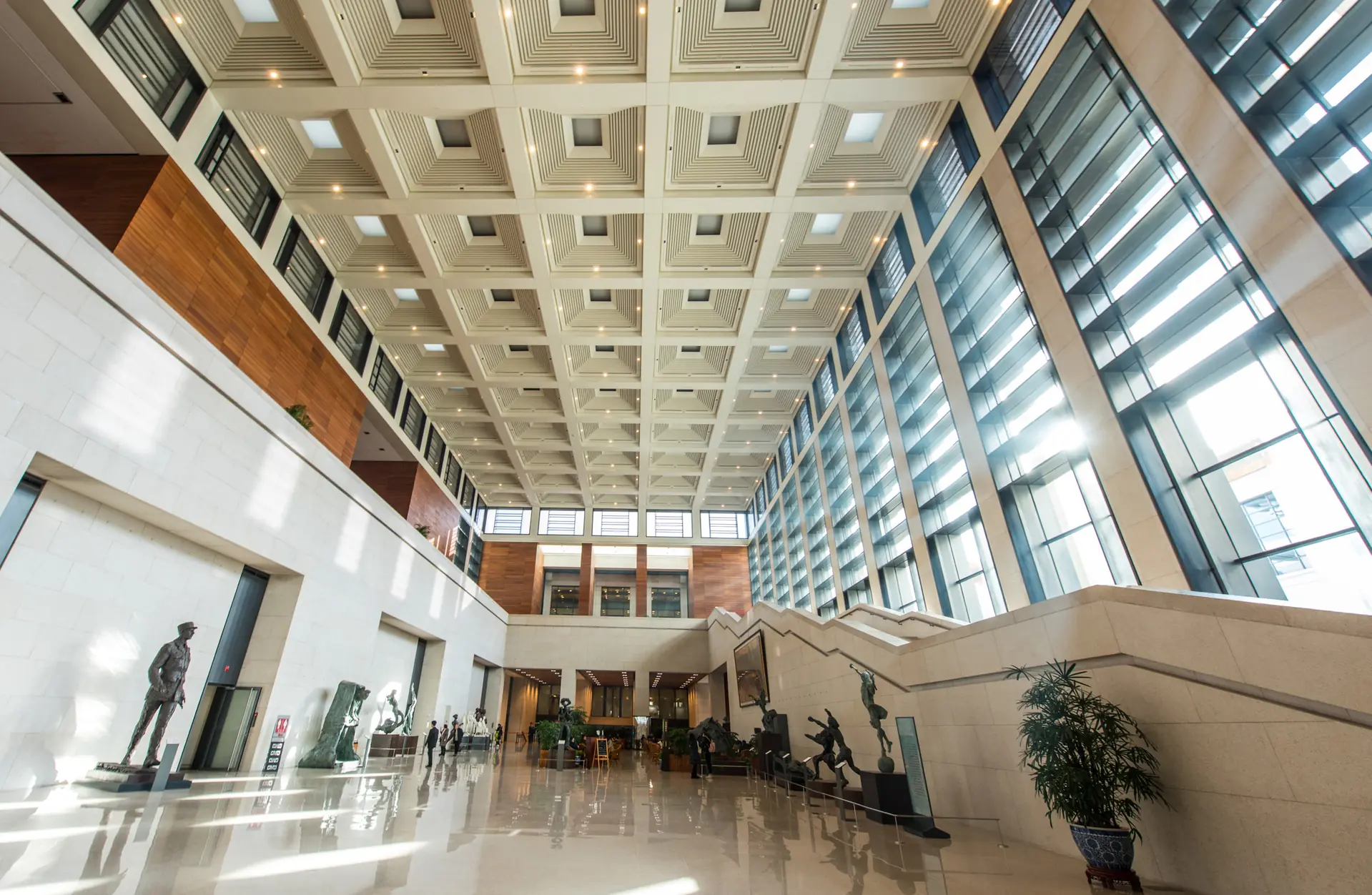
Use the central hall as your reset point. If you lose the thread, return to the main staircase or service desk, then restart from B1 for Ancient China or head upward for thematic galleries and temporary exhibitions.
90-Minute Ancient China Route
If time is tight, spend nearly all of it on B1's Ancient China. This route is best for first-timers, families, and anyone pairing the museum with Tiananmen or Qianmen on the same day.
- Enter and orient from the central hall- Use the map or service desk before going downstairs
- Go straight to B1 Ancient China- Follow the chronological route from prehistoric halls onward
- Prioritize prehistoric pottery and jade- Painted Pottery Basin, Eagle-Shaped Pottery Vessel, Hongshan Jade Dragon
- Slow down in Shang-Zhou bronzes- Houmuwu Ding and Four-Goat Square Zun are the core stops
- Skim Qin-Han to Ming-Qing sections- Keep moving unless a case genuinely catches you
- Exit via the central hall- Leave time for restroom, shop, or cafe
Where to linger
The Shang-Zhou bronze galleries are the museum's single best section. Budget at least 30 minutes here, even if you know little about bronze ritual vessels.
3-4 Hour Half-Day Route
For a fuller visit, build outward from Ancient China instead of trying to "complete" the whole building.
- Ancient China complete walkthrough- 90 min, with extra time for bronzes and prehistoric objects
- Jade or porcelain thematic gallery- Choose one based on your interest rather than rushing both
- The Road to Rejuvenation- 30-45 min for modern historical context
- Current temporary exhibition- Add only if the official listing looks relevant that week
- Cafe and museum shop- Best before the late-afternoon rush
🏺Best Artifact Route
Ancient China plus jade, porcelain, and Buddhist sculpture gives you the richest object-based visit.
📜Best China Context Route
Ancient China plus The Road to Rejuvenation gives you the clearest long arc from early civilization to modern national narrative.
🧒Best Family Route
Keep it short: bronzes, the most visual prehistoric pieces, one fun shop stop, then leave before museum fatigue wins.
🖼️Best Repeat-Visitor Route
Check current temporary exhibitions first, then use B1 only as a short anchor instead of repeating the whole timeline.
Tickets, Hours, and Entry Rules
Permanent exhibitions are free, but advance reservation is mandatory. Walk-ins without a valid reservation and matching document are not a reliable option.
Booking Window and Release Time
Reserve through the official website, the official reservation mini-program, WeChat mini-program, or official WeChat account. Current official rules allow booking within 7 days, with reservation slots released daily at 17:00 Beijing time.
The museum divides entry into timed windows: 9:00-11:00, 11:00-13:30, and 13:30-16:00. From June 1 to October 31, the final window extends to 16:30.
Passport and reservation names must match
Foreign visitors should reserve with the same passport they will physically carry on the visit day. The official rule is document-based verification, so do not use a temporary name spelling or a different ID just to get through the booking screen.
Opening Hours
- Hours
- 9:00-17:00
- Last entry
- 16:00
- Hours
- 9:00-17:30
- Last entry
- 16:30
The museum closes on Mondays except national holidays. Temporary exhibitions and special events can change practical crowd levels, so check the official site or WeChat account close to your visit.
North Gate Entry Process
- Clear the Tiananmen Square area security check if your approach route requires it.
- Go to the museum's north visitor entrance.
- Present your original passport or reservation ID plus reservation confirmation.
- Pass the museum security check.
- Use the service desk, lockers, restrooms, or guide services before starting the galleries.
WeChat trouble?
The reservation flow can be hard if you cannot read Chinese. Try the desktop website, ask your hotel front desk for help, or build this into your Beijing planning before ticket pressure starts.
Getting There and Nearby Pairings
Subway, Bus, and Taxi
Subway: Line 1 to Tiananmen East Station (天安门东站), exits C or D. The museum is on the east side of Tiananmen Square.
Bus: Routes 1, 2, 52, 82, and 120 stop at Tiananmen Square East.
Taxi or ride-hailing: Ask for the National Museum of China (中国国家博物馆) (Google | Amap) on the east side of Tiananmen Square. Traffic control can change drop-off points around major dates, so expect a short walk.
Expect two layers of security around Tiananmen
The Tiananmen Square area and the museum both operate security controls. Travel light, avoid large luggage, and leave buffer time during summer holidays, May Day, National Day Golden Week, and major political dates.
Forbidden City, Tiananmen, and Qianmen Combos
The museum sits beside Tiananmen Square (天安门广场) (Google | Amap), but pairing it with the Forbidden City requires route discipline.
- Museum + Qianmen: Easiest combo. Visit the museum first, then walk south to Qianmen Street (前门大街) and Dashilar (大栅栏) for food, shopping, and old-Beijing texture.
- Tiananmen flag ceremony + museum: Works if you are already awake early. You still need a valid museum reservation window.
- Forbidden City + museum: Possible, but not effortless. The Forbidden City generally runs south to north, ending far from the museum. If you combine them, treat the museum as a separate timed visit and use subway, taxi, or a long walk with buffer time.
Taxi Phrase
Show this screen to your driver · 出示给司机看
请带我去中国国家博物馆,天安门广场东侧
Please take me to the National Museum of China, east side of Tiananmen Square.
Traffic controls around Tiananmen can change the exact drop-off point.
Practical Tips Inside the Museum
Best Time to Visit
- Best normal slot: weekday morning, especially the first entry window.
- Hardest dates: May Day, National Day Golden Week, summer holidays, and major exhibition openings.
- Best route choice: 90 minutes if you mainly want Ancient China; 3-4 hours if you want thematic galleries and modern history too.
Audio Guide
The museum offers guide services and app-based guidance, but English interpretation can be less detailed than Chinese labels and commentary. If you love artifacts, an audio guide or extra reading helps; if you are a casual visitor, focus on the star objects and do not over-rent tools you will not use.
Storage, Facilities, and Photography
- North-gate storage and indoor smart lockers are available, but current official service wording describes paid or time-based storage rather than free storage.
- Restrooms, cafes, water points, shops, and service desks are distributed through the building.
- Wheelchair and stroller services are available with a valid document and deposit.
- Non-flash photography is generally allowed unless a gallery or object has a no-photo sign.
- Flash, selfie sticks, tripods, stands, and commercial shooting behavior are restricted.
- Do not use power banks inside exhibition galleries.
🛍️Museum Shop Timing
Go early or during lunch if you care about souvenirs. The shop gets crowded after visitors finish the main galleries.
☕Mid-Visit Break
Use the cafe or seating areas before you feel fully tired. This museum rewards a reset more than a forced march.
Frequently Asked Questions
Yes. The National Museum of China requires advance reservation, even though permanent exhibitions are free. Current official rules allow reservations within 7 days, with slots released daily at 17:00 Beijing time.
Sources checked for this guide
- National Museum of China official visit and service rules: official service page
- National Museum of China reservation notice effective August 1, 2025: official reservation notice
- National Museum of China institutional background, galleries, floor space, and collection size: Beijing municipal English page
- Houmuwu Ding measurements and weight: NMC collection highlight
- Four-Goat Square Zun measurements and object background: NMC object feature
Beyond This Guide
Use the museum as one anchor in a Beijing plan, not as an isolated indoor stop:
- 1 day in Beijing: Forbidden City, Jingshan & hutongs — understand why the palace and museum rarely fit neatly into one relaxed day
- Forbidden City visitor guide — plan the palace side of Tiananmen Square separately
- Beijing food guide — choose where to eat after a long museum day
- China navigation apps guide — handle traffic controls, subway exits, and route changes around Tiananmen
Beijing's museum-and-history district rewards careful sequencing: reservations, security buffers, meal timing, walking distance, and fatigue all matter.
© gochinafreely.com — Original guide by Go China Freely.