Checked Aug 2, 2026
Plan around the legal routes
A Sacred Valley Beneath Kawagebo Peak
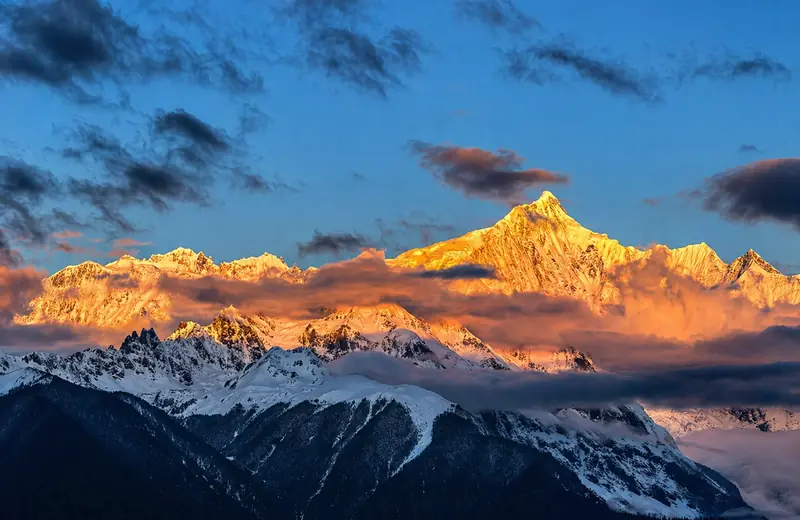
Yubeng Village (雨崩村) is the place in northwest Yunnan where a trip stops feeling like sightseeing and starts feeling earned. Hidden inside the Meili Snow Mountain (梅里雪山) valley, it sits below Kawagebo (卡瓦格博), a 6,740-meter sacred peak that remains unclimbed and is protected from climbing for cultural reasons. The reward is not one viewpoint, but several days of walking: prayer flags, fir forest, glacial streams, Tibetan guesthouses, and the quiet shock of seeing snow peaks appear above the village roofs.
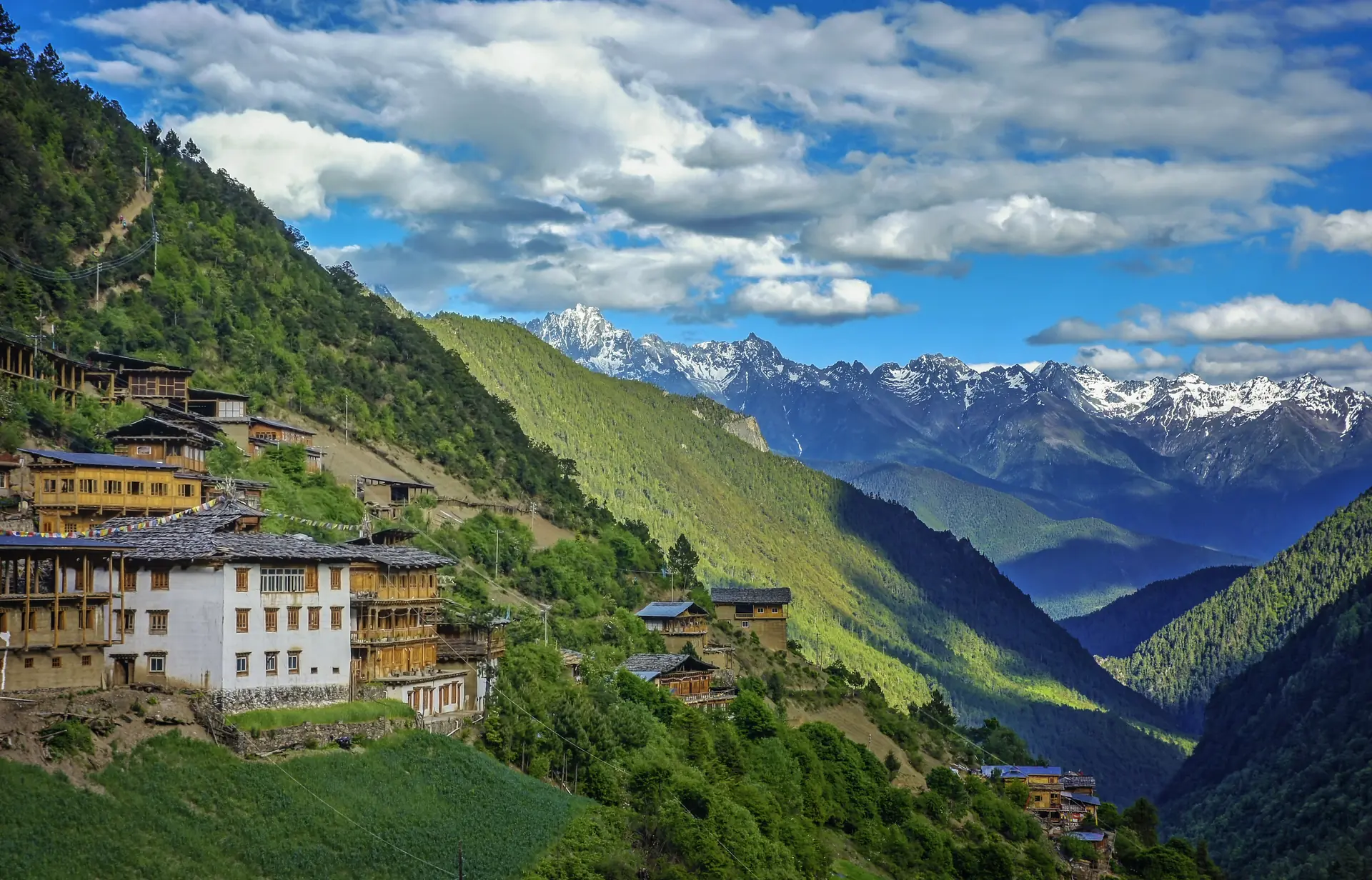
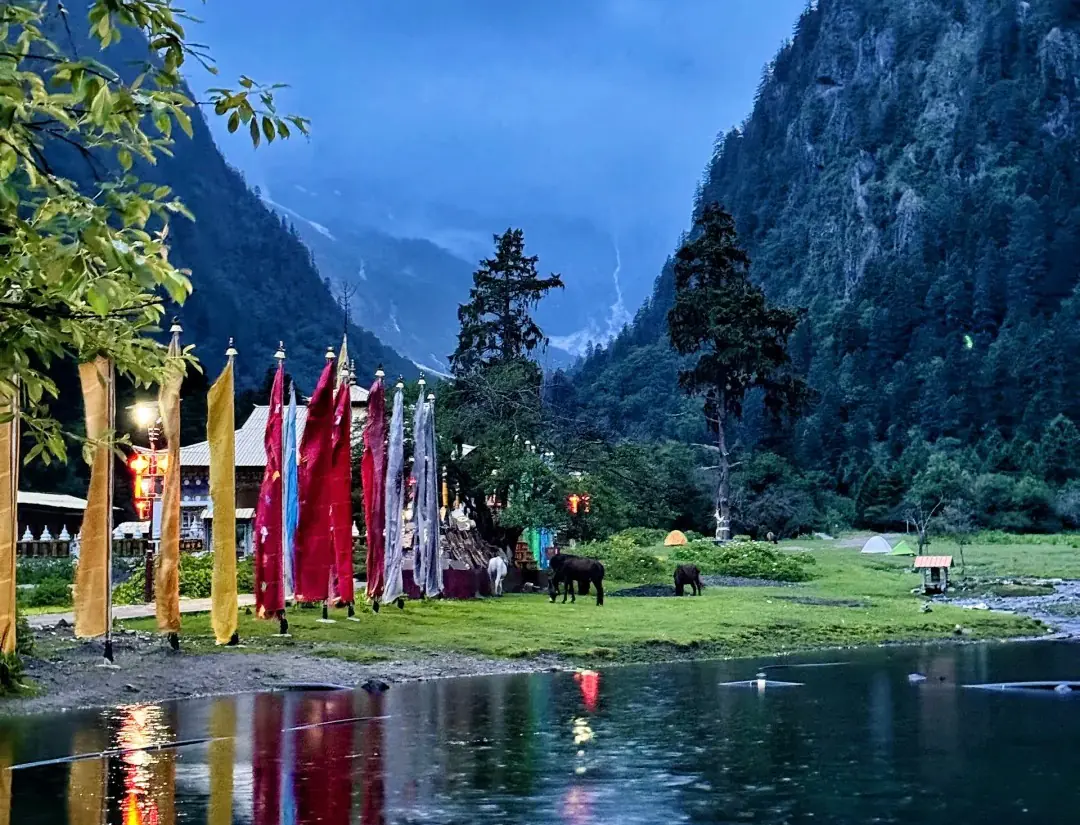
Yubeng is in Yunling Township, Deqin County, within the wider Meili Snow Mountain landscape and the Three Parallel Rivers of Yunnan Protected Areas. The World Heritage property includes the Baima–Meili Snow Mountains component, within a region shaped by deep gorges, glaciated peaks, and the parallel Jinsha, Lancang, and Nu rivers.
For local Tibetans, Kawagebo is not simply a scenic backdrop but a sacred presence. Walking here is connected to pilgrimage traditions, which is why the best version of a Yubeng trip is slower and quieter than many online itineraries suggest.
Upper Yubeng · 上雨崩
Historically used for the Ice Lake and Xiaonong Base Camp direction. Ice Lake is now explicitly listed as an undeveloped restricted area, so choose this base for village atmosphere and legal open routes only.
Lower Yubeng · 下雨崩
Closer to the Sacred Waterfall trail. The two village clusters are often described as about 30 minutes apart on foot, and every extra uphill leg feels longer at altitude.
Do not treat Yubeng as a one-night stop. A better first visit is 4 days / 3 nights minimum, or 5 days / 4 nights if you want a weather buffer.
Choose Your Yubeng Access Route Safely
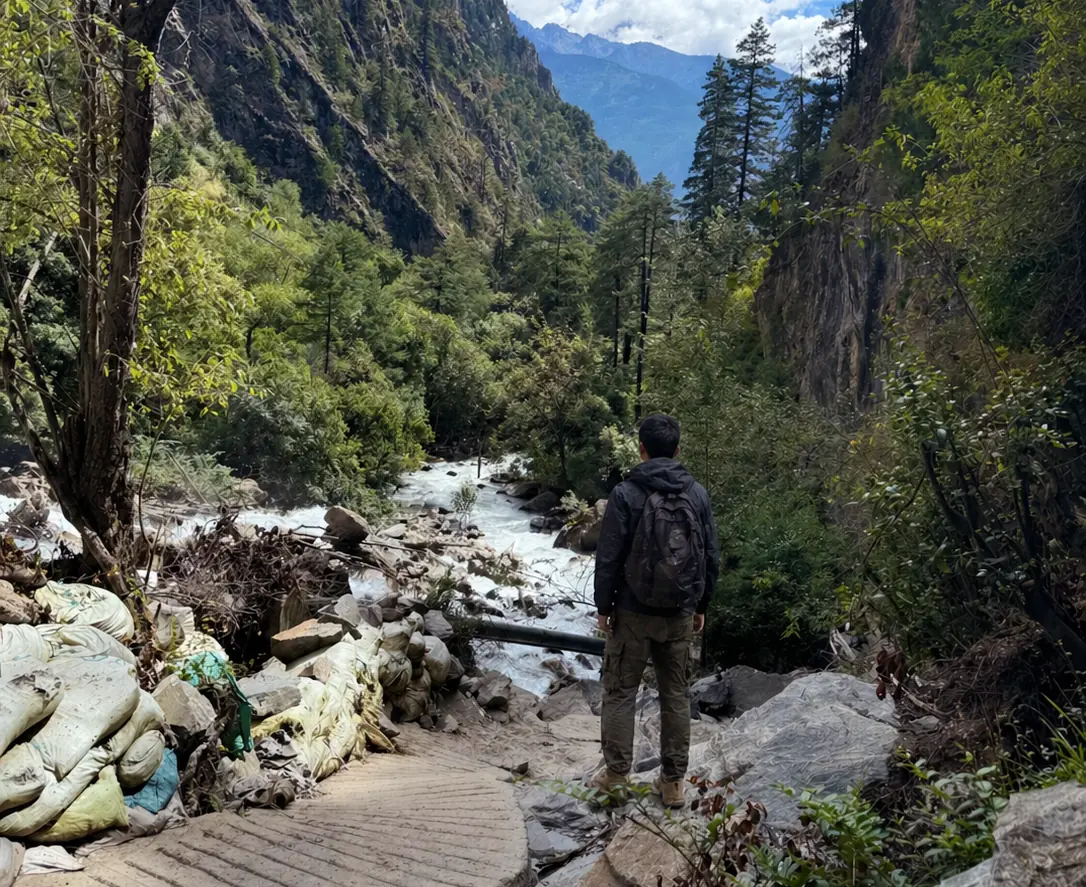
The classic old plan was Xidang in, Ninong out: drive from Feilai Temple to Xidang Hot Springs Trailhead (西当温泉徒步起点), climb toward Nazong Pass, drop into Upper Yubeng, then exit through Ninong Canyon. In reality, access changes with roadworks, storms, landslides, vehicle policy, and scenic-area notices.
In May 2025, heavy rain caused Yubeng and Mingyong to close temporarily; China News reported that Yubeng resumed sightseeing on June 17, 2025 after hazard checks and road clearance. That historic reopening does not make every old approach permanently available. A July 2026 government project disclosure also confirms that Xidang road reinforcement remains an active planning factor.
Use this rule: confirm the route 24 hours before you go with your guesthouse, driver, or the Meili Snow Mountain scenic-area channel. If heavy rain is forecast, do not push the plan.
Choose by the current notice, not the old map
Xidang and Ninong are route identities, not guarantees. Confirm which one is being used and whether you are walking or taking an authorized transfer before leaving Feilai Temple.
Old role: long climb over the pass before dropping into Upper Yubeng.
Variable: roadworks and vehicle policy can change how the trailhead is reached.
Use only when: current notices and your host confirm the operating route is safe.
Canyon approach or exit
Ninong Route · 尼农峡谷
Useful when: Xidang access is restricted or the managed route uses Ninong.
Main risk: exposed canyon sections and stronger landslide concerns after rain.
If used uphill: expect a serious sustained hiking day.
Same-day supplement
Local transfer
An authorized vehicle, shuttle, motorbike, or mule service can save energy when it is officially operating, but price, hours, route, and safety vary. Treat it as help on the day, never as the foundation of the whole trip.
Build your plan around walking
Vehicle access has changed repeatedly in recent years. Treat any car, shuttle, motorbike, or mule option as a same-day bonus, not the foundation of the trip.
A Sensible 4-Day Yubeng Trek Plan
For most independent travelers, the cleanest Yubeng structure is: one night at Feilai Temple for the sunrise, one entry day, one legal major-hike day, and one exit or village-buffer day. If you can add a fifth day, the trip becomes much less fragile.
4 days
Minimum Plan
3 nights
Baseline Stay
1 hike
Legal Main Route
+1 day
Ideal Buffer
- Shangri-La / Deqin to Feilai Temple(飞来寺观景台)- Sleep near the viewpoint and confirm tomorrow route
- Enter Yubeng(雨崩村)- Use Xidang or Ninong according to the current managed access
- Sacred Waterfall hike(神瀑)- Use the developed pilgrimage route in stable weather
- Exit or village buffer(出村 / 雨崩村)- Ice Lake is restricted; keep this day for exit, weather, or village time

Day 2: enter, check in, walk between Upper and Lower Yubeng, buy trail snacks, and do not add a major hike unless you are already acclimatized.
Day 3: use Sacred Waterfall as the main legal hiking day when weather and the developed route are stable.
Day 4: exit or keep a village/weather buffer. Do not substitute the restricted Ice Lake route.
Do not overpack the schedule
The rushed version — enter, do Sacred Waterfall, attempt a second hard hike, and leave in back-to-back days — works on paper but breaks easily in rain. Keep the fourth day legal and flexible.
Sacred Waterfall or Ice Lake? The 2026 Answer
These two famous names no longer describe two equal itinerary choices. Sacred Waterfall is the developed pilgrimage line. Ice Lake is an undeveloped restricted area: a Deqin government page published April 10, 2026 reproduces a notice signed October 14, 2025 that explicitly names Yubeng Ice Lake and Sacred Lake among places where tourism and exploration are prohibited. Earlier 2026 reporting had already described Ice Lake as an undeveloped high-risk area and a temporarily controlled area. The broader Diqing rule against self-organized travel in undeveloped areas without safety facilities points the same way.
The legal classic choice
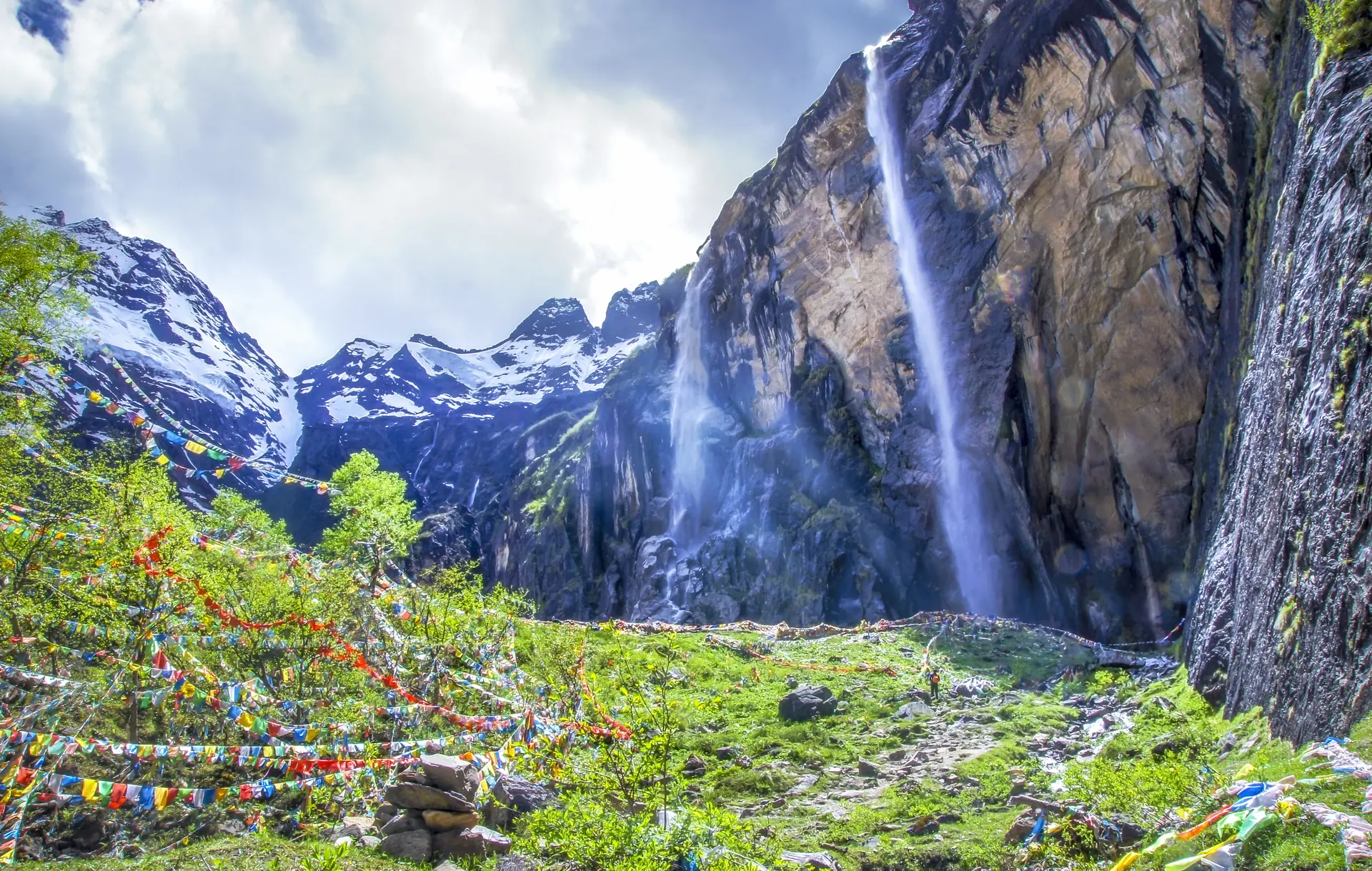
Sacred Waterfall · 神瀑
Starting from Lower Yubeng, the round trip often takes about 4–6 hours, though altitude, mud, and the final steps can slow the pace. The route passes forest, prayer flags, mani stones, and pilgrim traces before reaching the waterfall beneath the snow peaks.
- Best for
- Cultural atmosphere and first high-altitude pacing
- Commitment
- Often 4–6 hours, easier to turn around
- Still tiring
- Altitude, mud, and final steps matter
Pilgrimage etiquette: walking clockwise around the waterfall is part of Tibetan ritual practice. Keep voices low, do not step on prayer flags, and ask before photographing people.
Restricted undeveloped area · do not enter
Ice Lake · 冰湖
Older guides describe a demanding 7–9 hour out-and-back from Upper Yubeng through forest, pasture, glacial streams, Xiaonong Base Camp, and rough high-altitude terrain. They also emphasize the bigger alpine scenery, early start, and strong fitness once associated with the route. Those details explain the images and the old reputation; they are not a current itinerary.
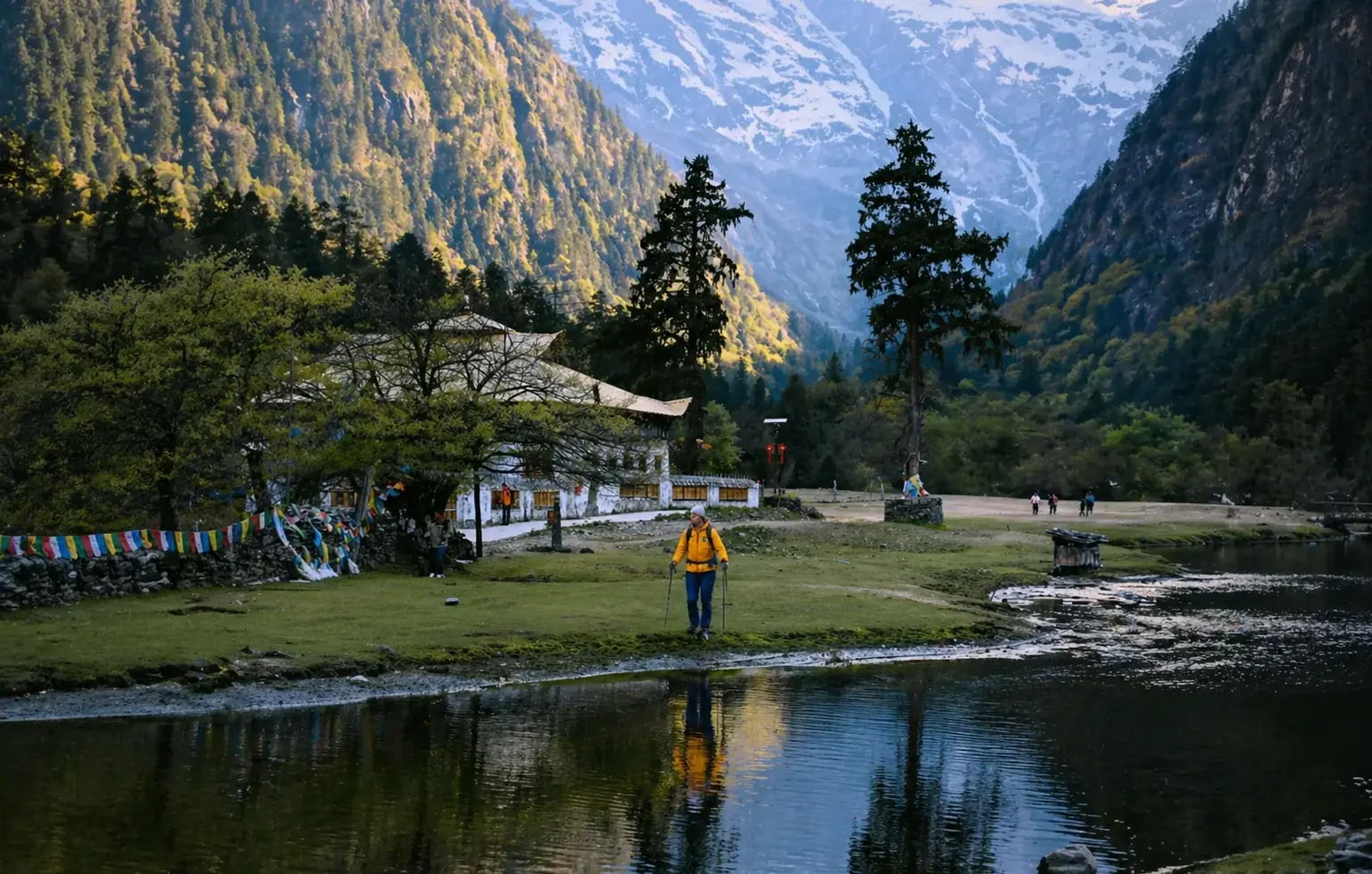
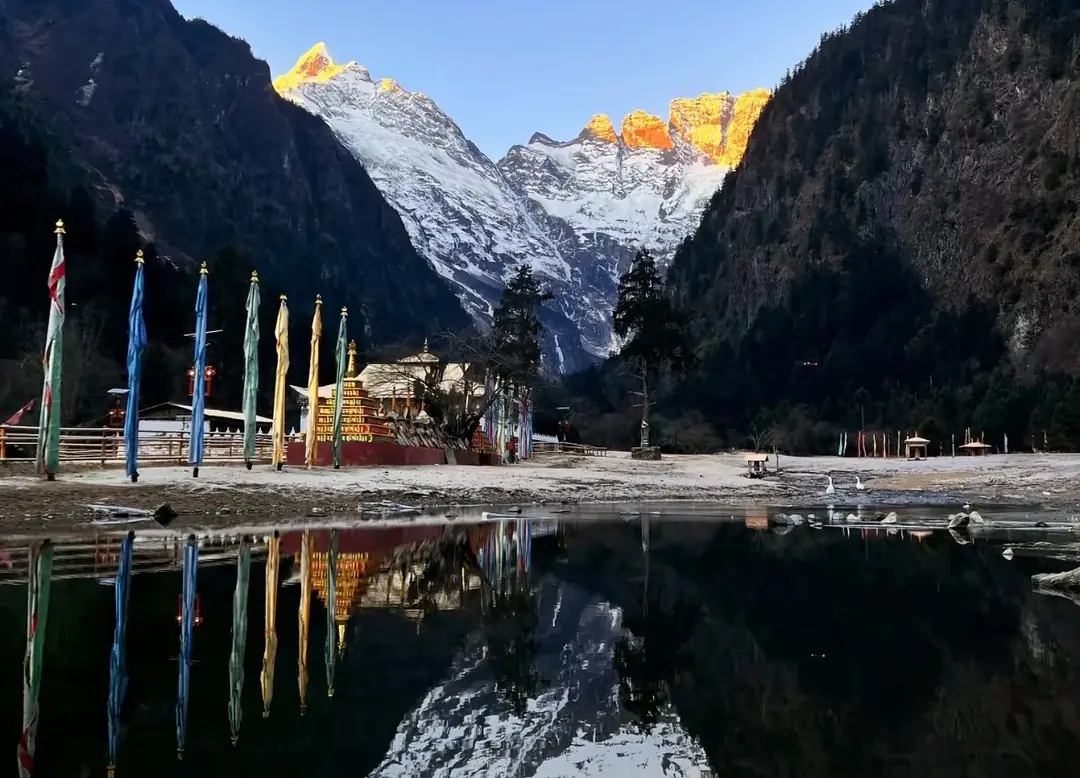
Current action: do not enter Ice Lake, Sacred Lake, or another named undeveloped route.
Bad conditions compound risk: wet, icy, foggy, or avalanche-prone terrain makes the old line even less forgiving.
Use the day instead: hike Sacred Waterfall, explore the two villages, rest, or protect the exit buffer.
Best Seasons and Weather Windows for Yubeng
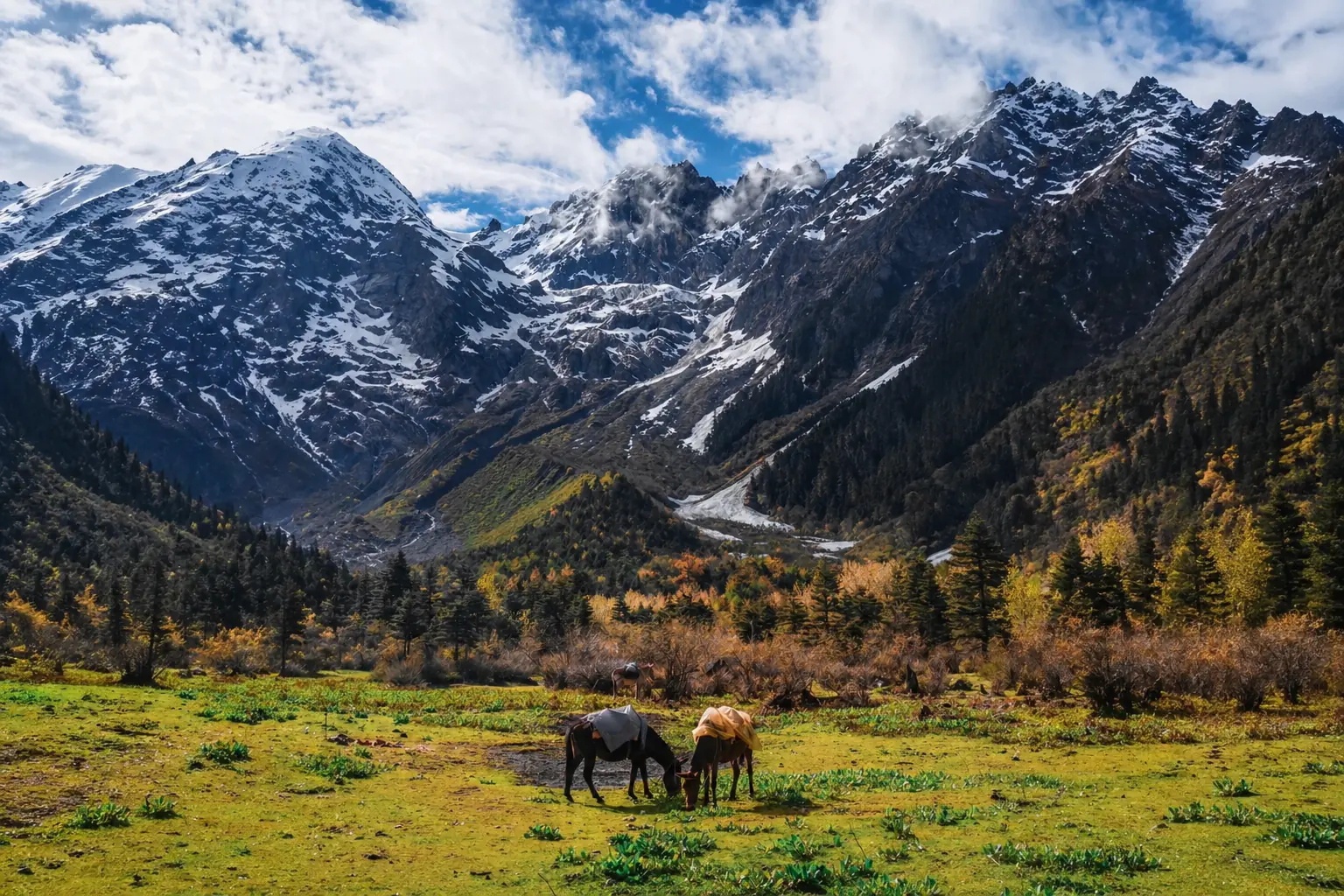
Spring and autumn are the best seasons for Yubeng. April to May brings flowers, forest color, and relatively comfortable daytime temperatures. October to November is often the most stable window for clear skies, autumn color, and Meili Snow Mountain views.
Winter can be visually excellent, but it is harder: icy trails, colder guesthouse rooms, and higher gear requirements. Summer is green and dramatic, with stronger waterfalls, but June to August is also the rainy season.
In Yubeng, rain is not just a photography problem. It can mean mud, landslides, route closures, and delayed exits.
Spring · April to May
Flowers, forest color, and relatively comfortable daytime temperatures make spring a strong first-visit window.
Most stable · October to November
Often the clearest window for autumn color and Meili Snow Mountain views.
Winter
Views can be excellent, but icy trails, cold rooms, and higher gear requirements make the trip less forgiving.
Monsoon risk · June to August
Green valleys and stronger waterfalls come with mud, landslides, temporary closures, delayed exits, and lower visibility.
Before departure, check three things:
- Deqin / Yubeng weather — multi-day rain is the biggest warning sign.
- Feilai sunrise forecast — clear dawn often signals a good mountain-view window.
- Guesthouse route update — local operators usually know road and trail status first.
If the forecast shows continuous heavy rain, choose another Yunnan hike or wait. A flexible Yubeng plan is a good plan.
Costs, Tickets, and Village Logistics in Yubeng
Yubeng entry is commonly listed around ¥55, but the larger cost is access: transport from Shangri-La or Deqin, local transfers to the current trailhead, possible scenic-area vehicles if operating, guesthouses, food, and luggage storage. Because road and vehicle policies change, avoid relying on a single old price chart.
~¥55
Scenic Entry
Variable
Village Access
Basic+
Guesthouses
Higher
Valley Food
| Cost item | Practical range | Decision note |
|---|---|---|
| Scenic entry | Commonly listed around ¥55 | Confirm the current ticket before travel |
| Shangri-La to Deqin / Feilai | Bus, shared car, or charter | Bus is cheapest; a charter can add viewpoint stops |
| Trailhead / village transfer | Variable | Depends on the current Xidang or Ninong access and vehicle policy |
| Guesthouse | Basic to boutique | Lower Yubeng reduces the approach to Sacred Waterfall; Upper Yubeng changes village walking, not Ice Lake legality |
| Food | Higher than town prices | Supplies are brought into the valley |
Scenic entry
Commonly listed around ¥55
Confirm the current ticket before travel.
Shangri-La to Deqin / Feilai
Bus, shared car, or charter
Bus is cheapest; a charter can add viewpoint stops.
Trailhead / village transfer
Variable
Depends on the current Xidang or Ninong access and vehicle policy.
Guesthouse
Basic to boutique
Lower Yubeng reduces the approach to Sacred Waterfall; Upper Yubeng changes village walking, not Ice Lake legality.
Food
Higher than town prices
Supplies are brought into the valley.
Choose the bed for recovery, not an illegal trail
Guesthouse conditions have improved a lot, but Yubeng is still not a city hotel market. Ask whether the room has heating or electric blankets, whether hot water is reliable, when dinner is served, and whether staff can confirm the next day's route. After an 8-hour hike, these details matter more than decoration.
Where to sleep: choose Lower Yubeng if Sacred Waterfall is the focus or you want to reduce the uphill walk after that hike. Choose Upper Yubeng for its own village setting and accommodation, not as a reason to approach restricted Ice Lake.
Getting There from Shangri-La to Yubeng
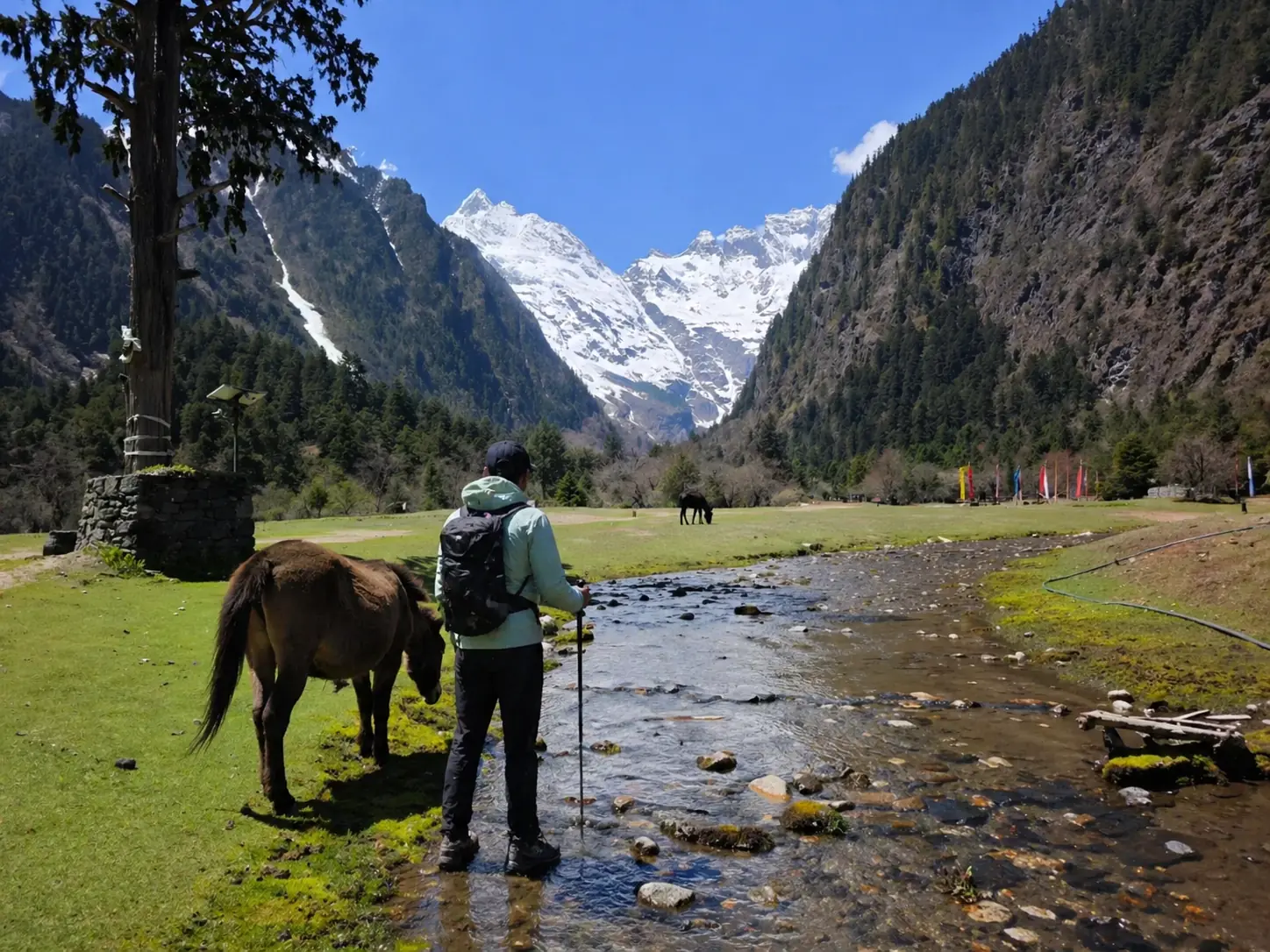
Most travelers reach Yubeng via Shangri-La, Deqin, and Feilai Temple. Lijiang is also possible, but it usually turns the first travel day into a long mountain-road transfer. A smoother sequence is Lijiang to Shangri-La, Shangri-La to Feilai Temple, then Feilai Temple to the Yubeng access route the next morning.
Public buses are cheaper, while charter cars are better if you want stops at Baima Snow Mountain, Wunongding, or the Jinsha River bend.
Either way, leave large luggage in Feilai Temple or Deqin. A 25–35L daypack is enough for most hikers if your guesthouse provides bedding and meals.
1 · Position first
Lijiang to Shangri-La first is smoother than turning the whole first day into a direct mountain-road push.
2 · Reach Feilai
Continue through Deqin to Feilai Temple. Public buses cost less; a charter can add Baima Snow Mountain, Wunongding, or Jinsha River bend stops.
3 · Confirm access
Use the next morning for the current managed Xidang or Ninong approach. Leave large luggage behind and carry a 25–35L daypack if bedding and meals are provided.
Show this screen to your driver · 出示给司机看
我要去飞来寺观景台,明天去雨崩村,请帮我确认今天西当/尼农哪条路能走。
I want to go to Feilai Temple Viewpoint and to Yubeng Village tomorrow. Please help me confirm whether Xidang or Ninong is open today.
Show this to a driver or hotel desk, then verify the answer against the current managed route before setting out.
Sayable phrase
Pinyin: Wǒ yào qù Fēiláisì guānjǐngtái, míngtiān qù Yǔbēng Cūn, qǐng bāng wǒ quèrèn jīntiān Xīdāng/Nínóng nǎ tiáo lù néng zǒu.
Approximate pronunciation: Woh yaow choo Fay-lye-suh gwan-jing-tie, ming-tyen choo Yoo-bung tswen, ching bahng woh chwer-ren Shee-dahng / Nee-nong naa tyow loo nung dzoh.
What to Pack and What to Respect
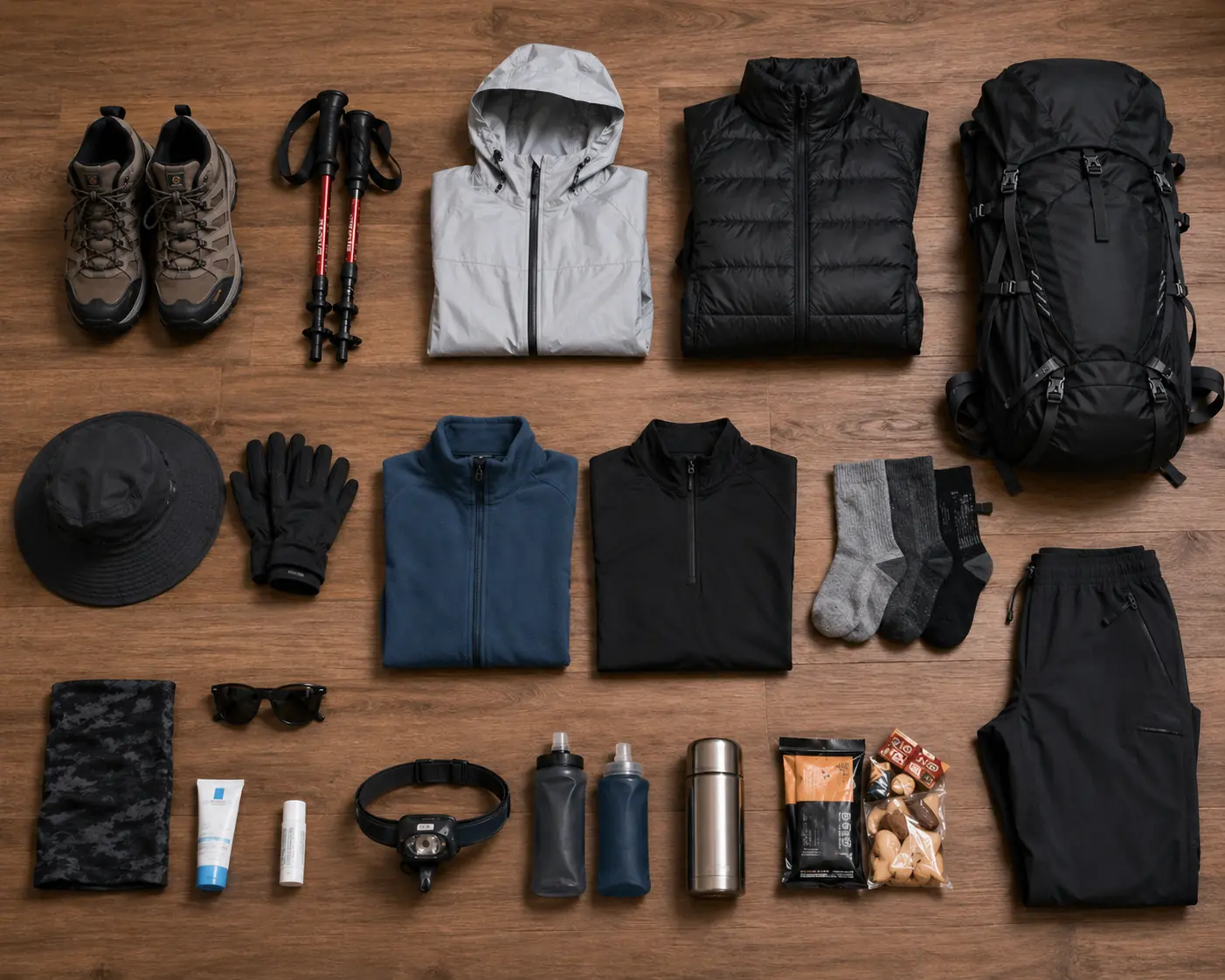
Yubeng does not require technical mountaineering gear, but it does punish weak shoes and heavy bags. Bring waterproof hiking shoes that are already broken in, trekking poles, a rain shell, warm layers, sun protection, a headlamp, a small first-aid kit, and enough snacks for a full day on the trail.
In winter, early spring, or after snowfall, ask locally whether microspikes are needed. In rainy season, prioritize grip and waterproofing. A big 60L backpack will make the entry day miserable; use luggage storage and walk in light.
- Break in waterproof hiking shoes before the trip; weak shoes are the fastest way to ruin Yubeng.
- Carry poles, rain shell, warm layers, sun protection, headlamp, first aid, and trail snacks for full-day hikes.
- Ask locally about microspikes in winter, early spring, or after snowfall.
- Do not carry a 60L pack into the village; it makes every climb harder and slows recovery.
Descend if altitude symptoms worsen
The village sits around 3,000 meters, and day hikes climb higher. Do not drink heavily, sprint around the village on arrival, or ignore headache, nausea, and unusual fatigue. If symptoms worsen, descend rather than forcing another hike.
Respect pilgrimage space
Finally, remember where you are. Sacred Waterfall, prayer flags, mani stones, and kora routes are part of living Tibetan practice. Do not move ritual objects for photos, do not play loud music, and ask before photographing elders, pilgrims, or private courtyards.
Frequently Asked Questions
Yes, if you already have hiking experience and can handle uncertainty. It is not ideal for travelers who want smooth transport, fixed schedules, and easy hotel standards. Learn basic China payment and transport tools before attempting Yubeng independently.
Sources checked for this guide
- Official notice page published April 10, 2026, reproducing the October 14, 2025 multi-agency prohibition and explicitly naming Yubeng Ice Lake and Sacred Lake among undeveloped areas closed to tourism and exploration: Deqin government undeveloped-area prohibition
- Current enforcement context checked for Yubeng visitor-center, core-area and trail-entrance patrols, guesthouse safety acknowledgements, and undeveloped-route warnings: Deqin police Yubeng safety update, May 27, 2026
- Official project filing checked for a 7.508 km Xidang tourism-road reinforcement project scheduled later in 2026, supporting the need to reconfirm access: Deqin transport bureau Xidang road project
- Current operating context checked through the county review of strong 2026 Spring Festival visitation at Meili Snow Mountain and Yubeng, alongside continued controls on undeveloped areas: Deqin 2026 tourism-market review
- World Heritage context and the Baima–Meili Snow Mountains component checked against the official property description: UNESCO Three Parallel Rivers of Yunnan Protected Areas
- Historic June 17, 2025 reopening after rain-related hazard checks retained only as the dated recovery event, not proof of permanent 2026 access: China News Yubeng reopening report
Beyond This Guide
Yubeng works best when it is part of a slower northwest Yunnan route, not a rushed detour. Pair it with Shangri-La, Feilai Temple, and a recovery night before moving toward Lijiang or Tiger Leaping Gorge.
- Meili Snow Mountain guide — plan the wider sacred-mountain landscape around Feilai Temple
- Tiger Leaping Gorge guide — compare the current legal gorge visit and trail status before moving south
- Shangri-La destination guide — build the lower-risk cultural and landscape days around the trek
© gochinafreely.com — Original guide by Go China Freely.