Hours & Base Ticket
Essential Rules
Getu Karst Arches for Serious Climbers
This guide is for independent travelers who already climb outdoors, or who are traveling with climbers and need to understand what kind of trip Getu actually is.
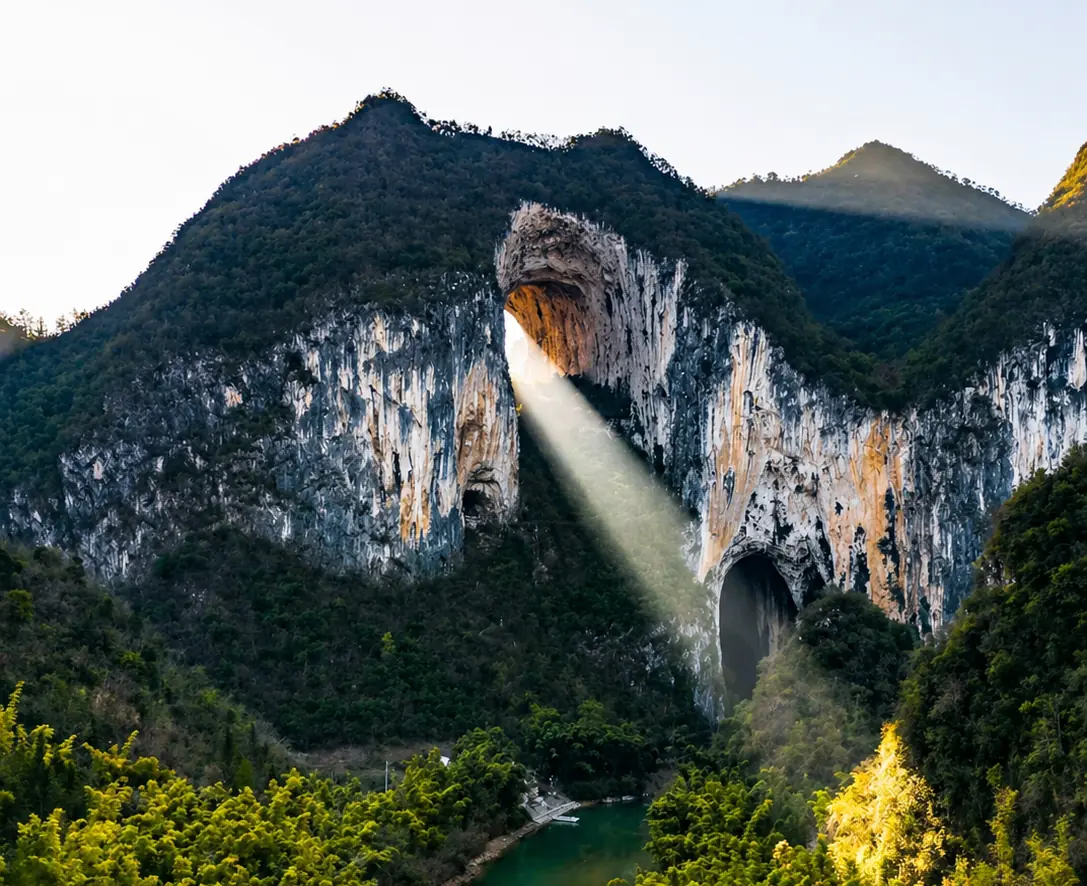
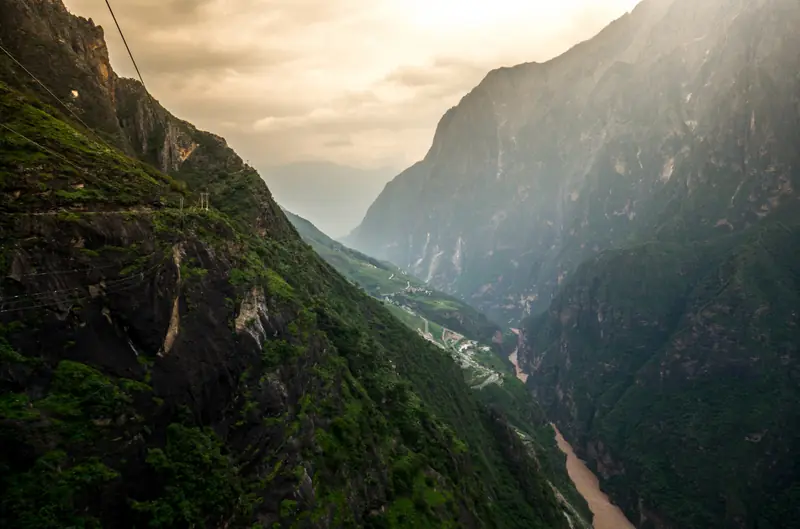
Getu's scale comes from river gorges, pierced caves, giant roofs, and village approaches—not one single cliff.
~160 km
By Road from Guiyang
278
Routes Reported
5a-9a+
Grade Range
Spring/Autumn
Best Seasons
An expedition base, not a walk-up climbing attraction
Getu Valley, inside the Getu River Scenic Area (紫云格凸河风景名胜区), is not a casual "try climbing in China" stop. Current Guizhou coverage reports 278 developed routes across steep caves, giant arches, sport climbs, and multi-pitch lines, with grades listed from 5a to 9a+. It is a real limestone destination with humid-weather judgment and a local climbing culture that long predates the international films.

Getu is worth separating from a normal Guizhou scenic-area visit. The landscape is not one cliff with a few bolts; it is a karst valley of pierced caves, river gorges, limestone walls, skylights, overhanging roofs, and village paths. A non-climber sees the boat ride, caves, and spiderman performance. A climber sees something else: shelter from rain in some sectors, three-dimensional limestone movement, multi-pitch exposure, and one of China's most unusual climbing settings.
Why climbers know Getu
Getu became visible to the wider climbing world after the 2011 Petzl RocTrip, when more than 600 climbers traveled to Ziyun (紫云) and the valley's route development appeared in international climbing media. Older RocTrip material described a broad mix of sport climbing: slabs, caves, overhangs, single-pitch crags, and long routes. More recent coverage from China's sports authorities shows climbing events still returning to the Getu River area, so the RocTrip story should be treated as history, not a sign that the valley went quiet.
Who should plan a climbing trip
That does not mean Getu should be sold as an easy adventure stop. If you already lead outdoors, read topos, clean anchors, manage falls, and understand route access, Getu can be a memorable China climbing trip. If your experience is mostly indoor top-rope or bouldering, go with a competent local guide or experienced partner. If you do not climb, treat Getu as a scenic-area and climbing-culture visit, not as a place to improvise on natural rock.
The right promise
Getu is not about telling every traveler to "conquer" a limestone arch. The useful promise is sharper: help climbers decide whether Getu fits their level, how to verify current access, and how to plan a safe trip around a remote Guizhou valley.
Choose the Right Getu Climbing Objective
Before looking at route names, decide what kind of day you are planning. Getu can work for very different travelers, but those travelers should not follow the same plan.
Choose the responsibility level first
Visitor, outdoor sport climber, or hard multi-pitch team
← swipe to compare all options →
Scenic Visitor
Watch, photograph, understand
- ✓Visit caves, boat routes, scenery, and possible events
- ✓Good option for non-climbing companions
- ✗Do not step onto natural rock without instruction and permission
Best if you do not climb outdoors
Sport Climber
Best match for this guide
- ✓Use current topos and choose realistic single-pitch or easier multi-pitch objectives
- —Expect basic lodging, local-language logistics, and variable route condition
- ✗Do not rely on old forum posts as live access confirmation
Lead skills and outdoor judgment required
Hard Multi-Pitch Team
Great Arch and roof ambitions
- ✓Research Great Arch history, long roof routes, and descent systems carefully
- —Access, events, boats, water levels, and scenic management can change the plan
- ✗Do not treat a travel article as a substitute for a technical route briefing
Strong partners and current local information
What the first day should accomplish
Non-climbing companions still have a real day here: boat routes, cave scenery, spiderman performances, and event watching if something is scheduled. Frame that side of Getu as scenic travel and climbing-culture observation, not self-guided natural-rock climbing.
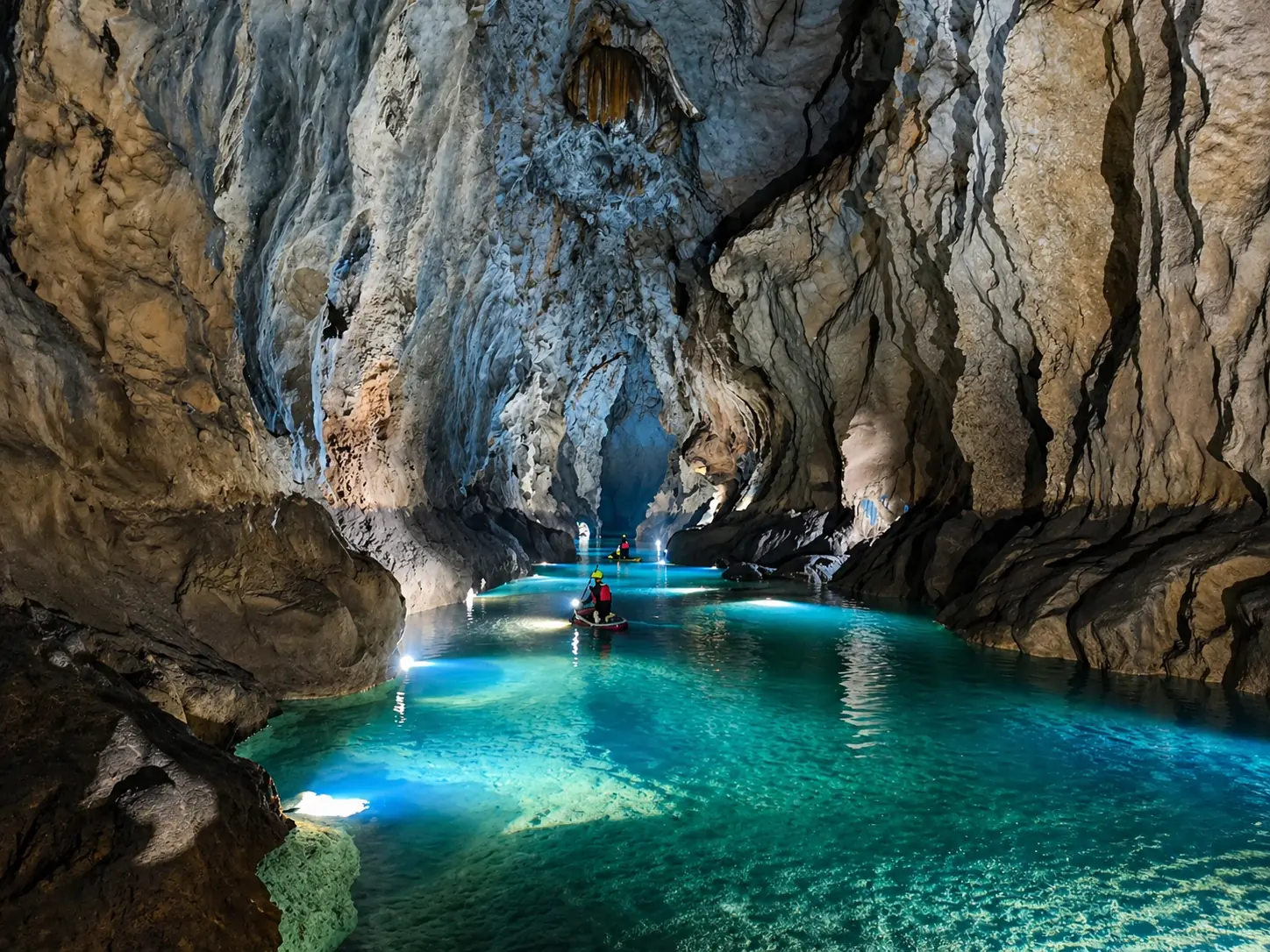
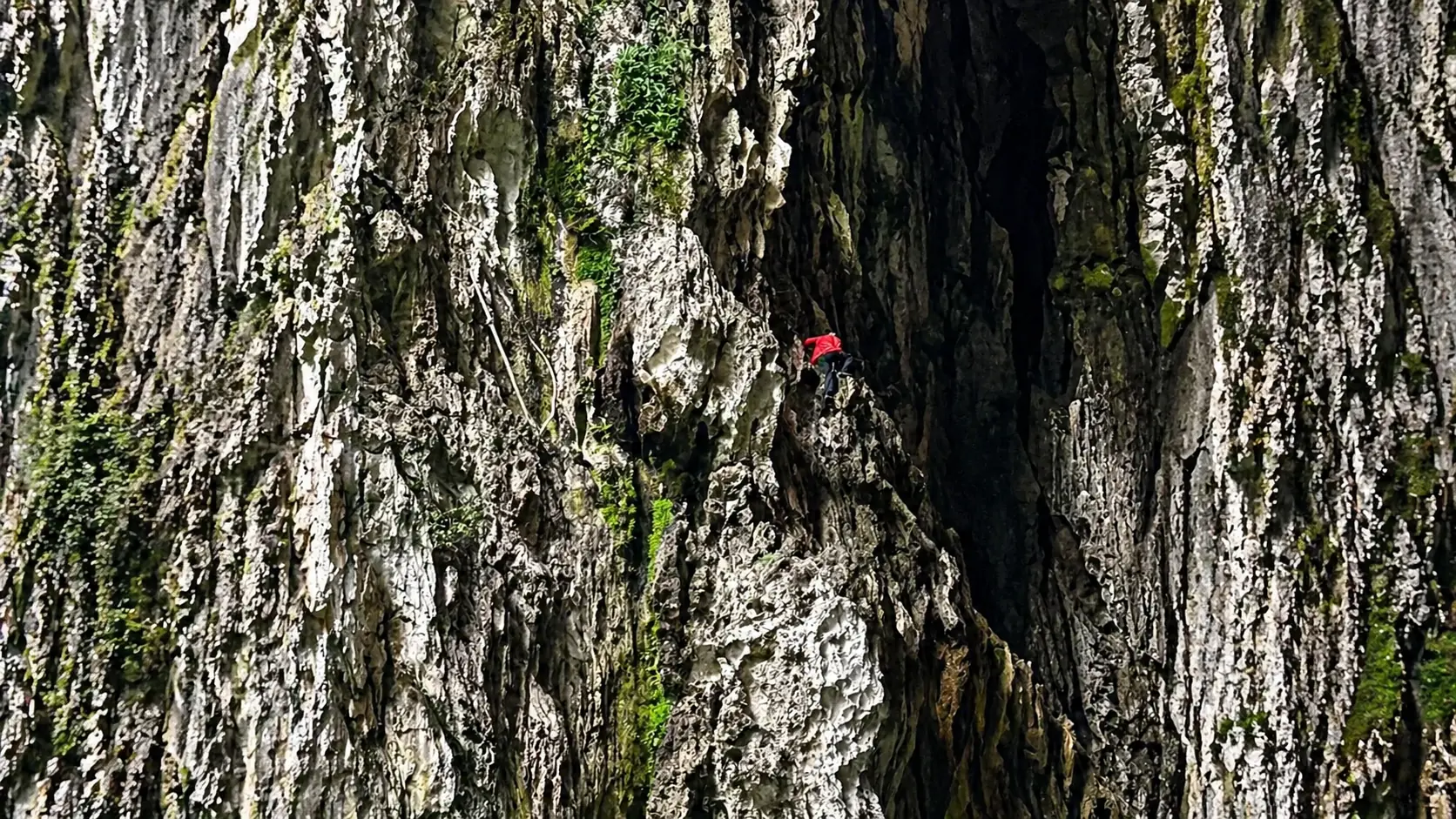
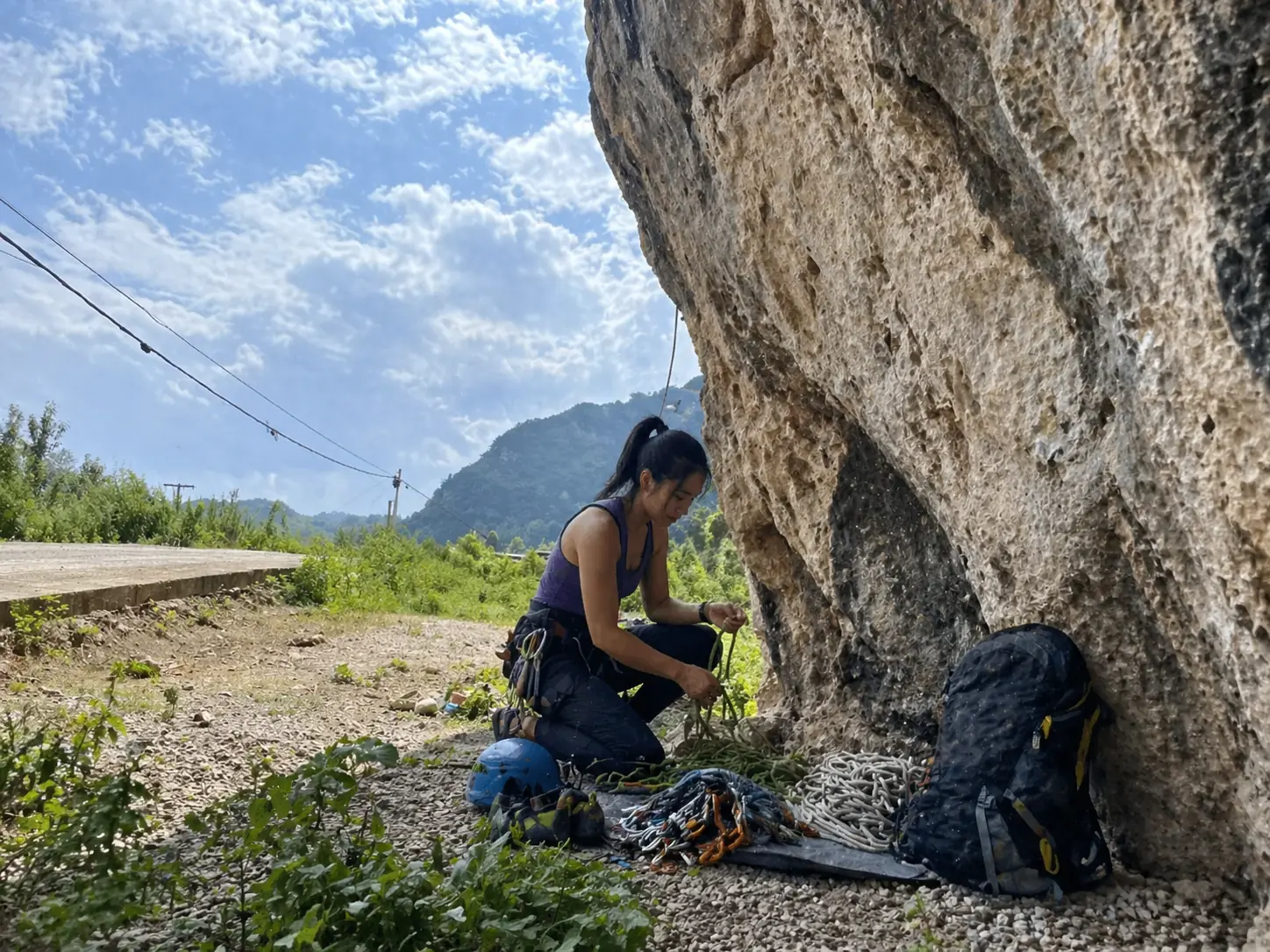
Use the first day to learn the rock, humidity, grading feel, and local access rhythm. A good first objective is not the most famous roof; it is a sector where approach, anchors, descent, and return transport are easy to understand. Save hard caves or multi-pitch routes for after you have current information from climbers on the ground.
Great Arch and Getu Climbing Sectors
The icon — and why it is not a first-day default
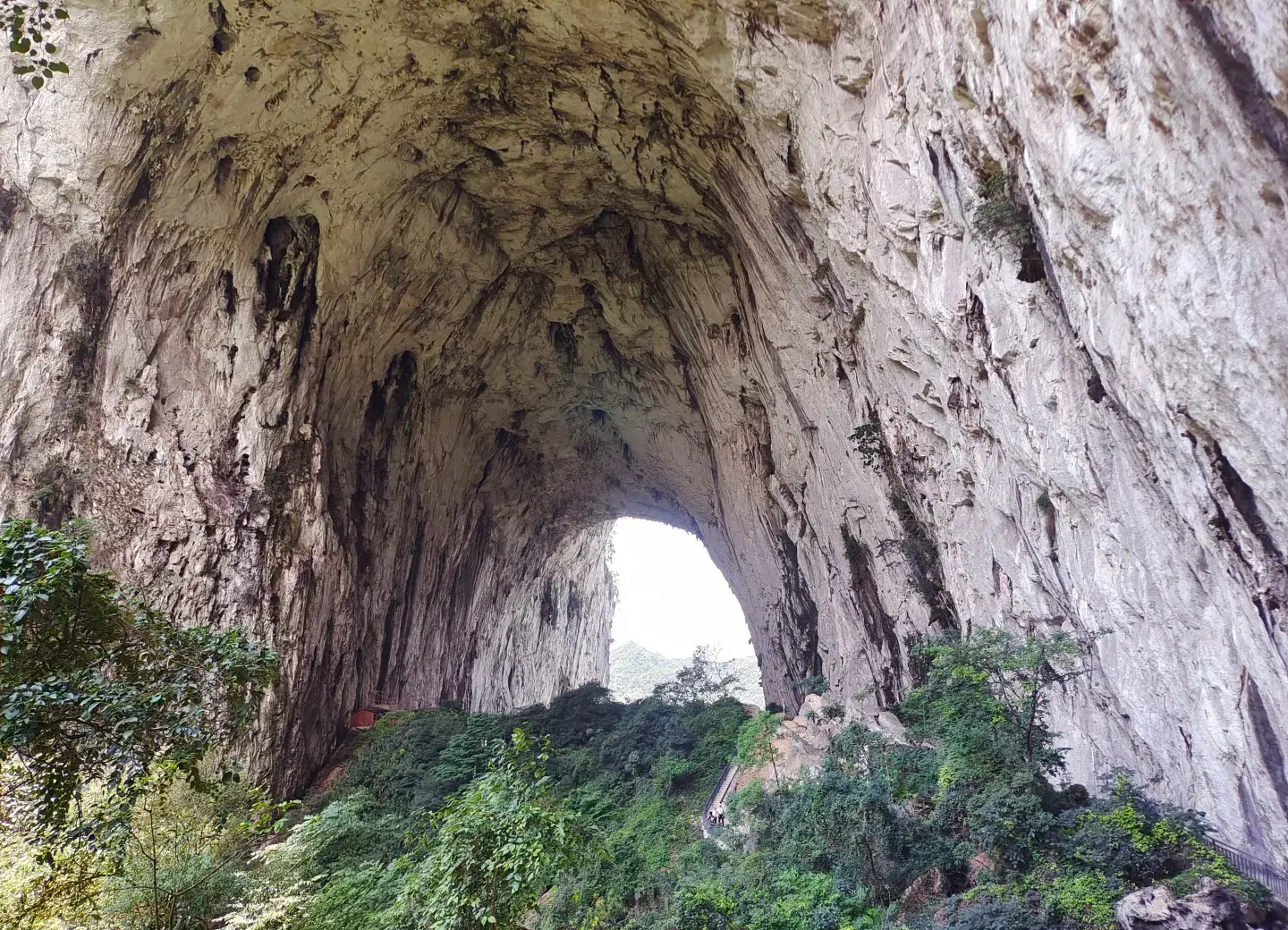
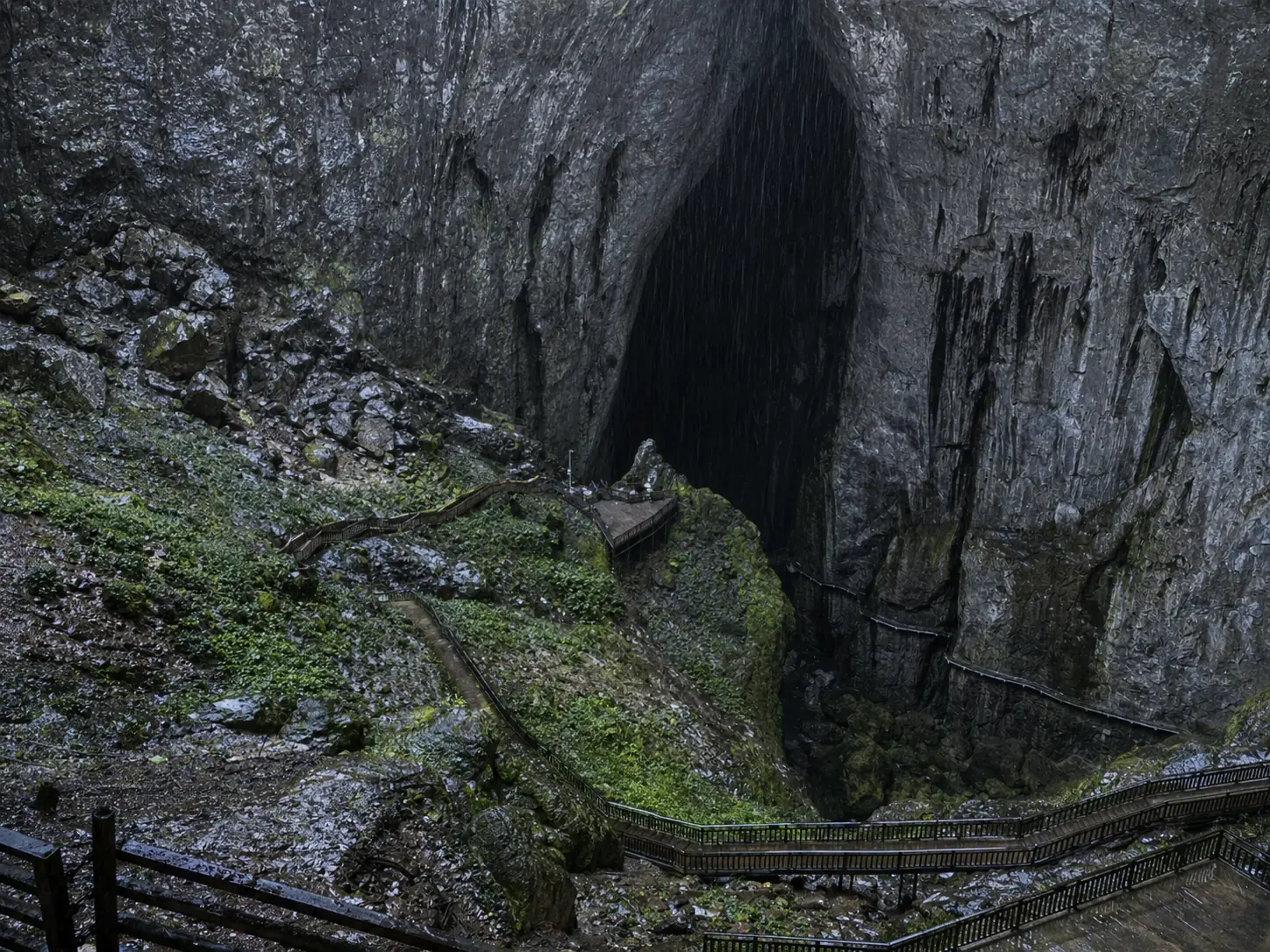
The signature Getu image is the Great Arch, often associated with Chuangshang Cave (穿上洞). The American Alpine Club's account of Valhalla describes the Great Arch as one of the world's most impressive natural rock arches, with a narrowest span of about 70 meters and a minimum distance of roughly 120 meters from the floor to the roof. That three-dimensional roof is why Getu became a name outside China.
Why the icon is not the default objective
But the Great Arch is a symbol before it is a practical first-day plan. Historic lines such as Corazon de Ensueno and Valhalla sit in a different category from ordinary vacation sport climbing. They require hard climbing, advanced rope systems, and precise access information. Older reports also show that construction, water levels, ferry access, and scenic-area controls have affected access at different times. Before building a trip around the arch, check current route databases, Chinese climbing communities, local guides, and the scenic-area or climbing-base situation.
For planning, think in sectors rather than legends:
Sector orientation
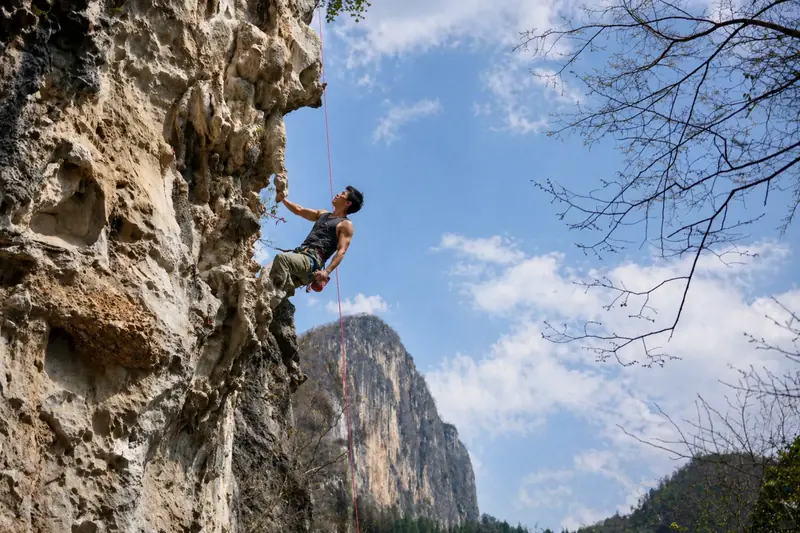
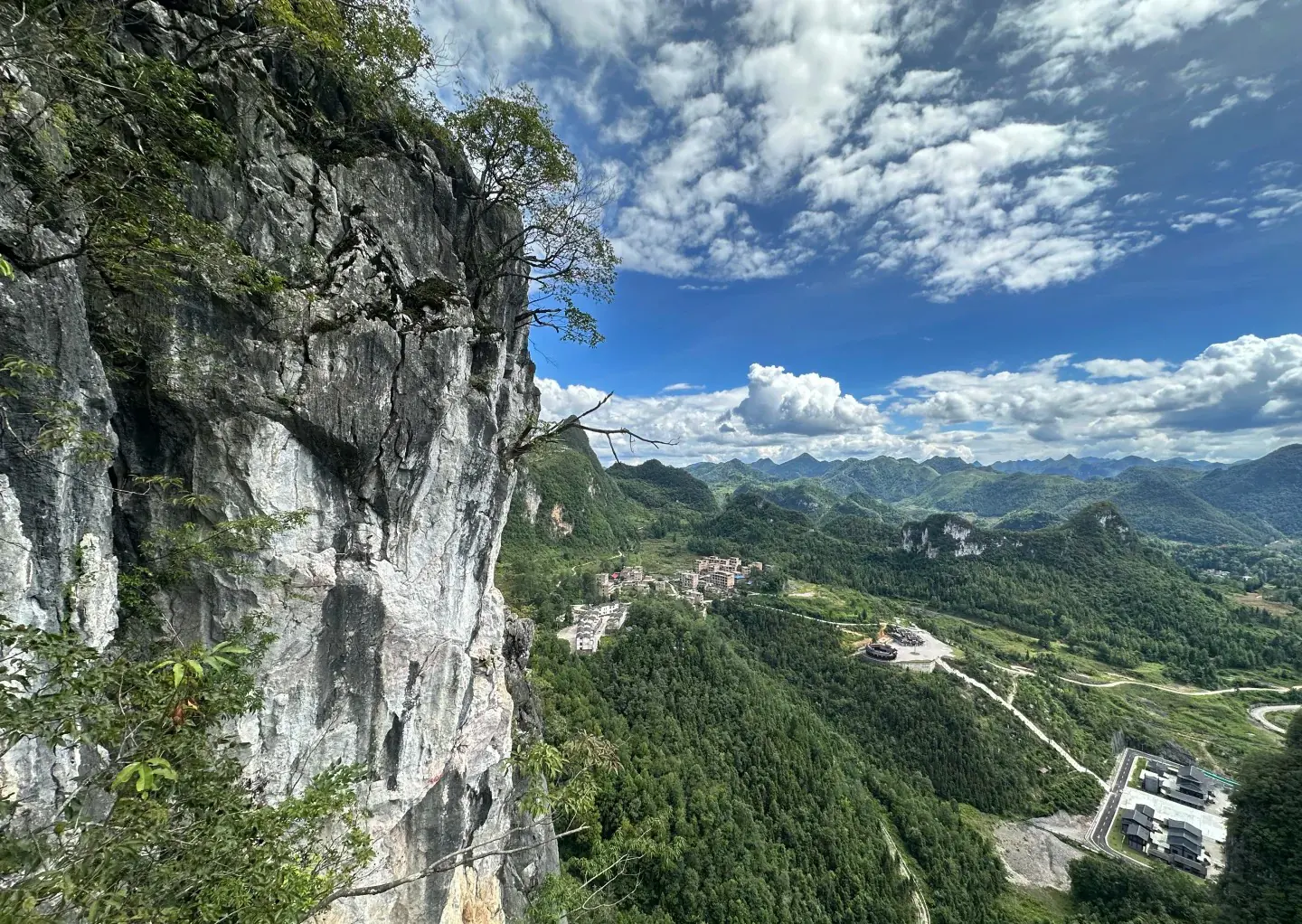
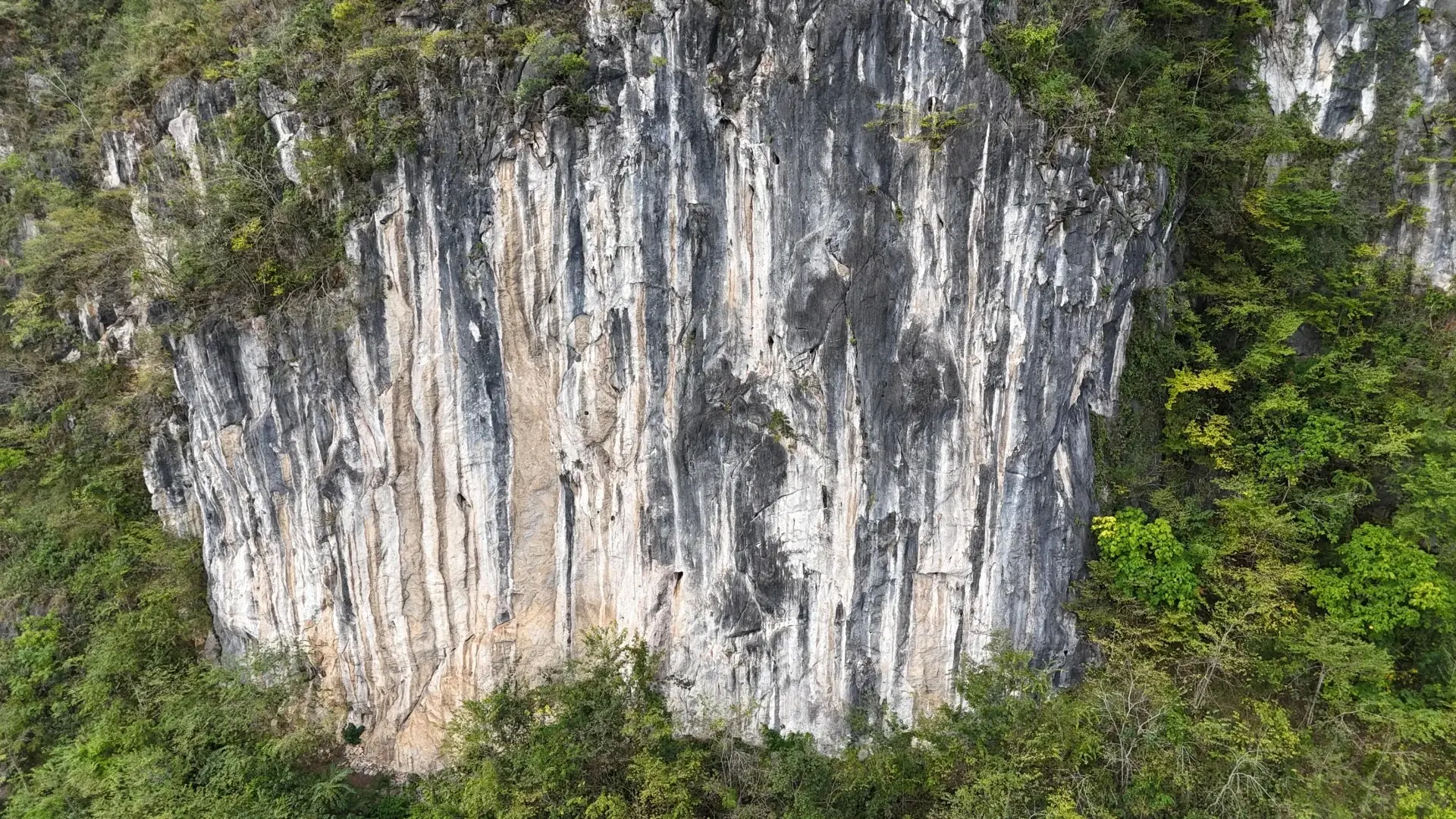
The cards name planning contexts; the two photographs below support CMDI and Oliver's rather than adding new sectors.
CMDI Wall and White Crag
Moderate to long-route context
Historically important zones with moderate to long-route context; useful for climbers who want Getu character without starting on the hardest cave lines.
Oliver's Crag
Road-access single pitch
A road-access single-pitch option in current climbing databases; it can be hot in sun but may stay climbable in showers.
Pussa Yan / Bodhisattva Rock
菩萨岩
Longer routes and more complex descents; go only with appropriate multi-pitch judgment.
Great Arch Cave Routes
Iconic, photogenic, serious
Treat these as expert objectives unless a local guide confirms a suitable route for your team.
Use Current Sources Together
Useful reference points include theCrag's Getu area page, the historic Petzl RocTrip Getu topo PDF, and recent Chinese climbing-event coverage. Use them together. Route databases can show routes and grades; event reports show that climbing culture is active; local contacts tell you what is actually possible this week.
Safety, Access and Local Climbing Etiquette
Getu's risk is not altitude. It is information, moisture, limestone condition, descent judgment, local access, and the fact that a scenic area is not the same as an open public climbing gym.
Before anyone leaves the ground
- Confirm access: a route in a database does not mean the gate, trail, boat, river approach, or scenic-area rule allows climbing today.
- Inspect protection: bolts, anchors, vegetation, seepage, and loose rock deserve attention in humid limestone.
- Wear a helmet: use one at the base, confirm rope length, tie knots at rope ends, and discuss descent before leaving the ground.
- Do not improvise access: do not climb fences, bypass staff, or argue that an old topo grants permission.
- Respect village life: stay on paths, avoid cultivated fields, keep noise down, and pack out all trash.
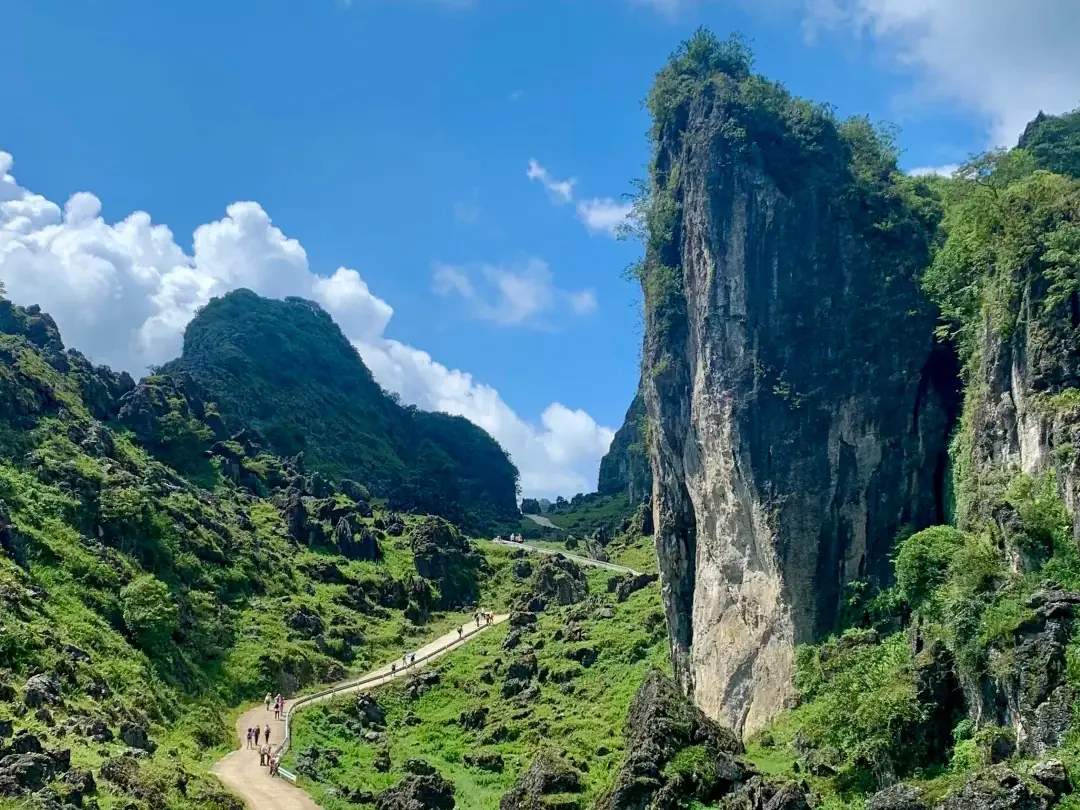
Respect local life. The RocTrip guide's ethic notes are still a good baseline: stay on paths, do not cross cultivated fields, and pack out all trash. In practical terms, do not park across village entrances, do not block farm tracks, keep noise down near homes, and avoid brushing tick marks where they will remain visible to non-climbing visitors.
Do not develop routes casually
New-route development in a scenic and village landscape is not a visitor impulse project. It needs permission, local relationships, hardware judgment, and environmental care. Visiting climbers should focus on existing, confirmed routes unless they are working with local organizers.
Gear, Seasons and Weather Windows in Getu
First decision — rock and approach conditions
Spring and autumn are the easiest seasons to recommend because temperatures and humidity are more manageable. Summer is green and dramatic, but heat, thunderstorms, insects, wet approaches, and seepage can shape every day. Winter is quieter and can be climbable, but cold damp rock and shaded sectors may feel less comfortable than the forecast suggests.
Do not simplify the weather rule to caves are dry. Some cave routes are sheltered from rain, but approaches, ledges, tufas, anchors, and descents can still be wet. After heavy rain, check for seepage, loose rock, slippery trails, and changes to boat or scenic-area operations.
| Season | Best Use | Watch For |
|---|---|---|
| Spring | One of the easier planning windows | Rain, seepage, and slippery approaches |
| Summer | Sheltered sectors with conservative timing | Heat, storms, insects, and wet descents |
| Autumn | One of the easier planning windows | Humidity changes and event-related access |
| Winter | Possible on suitable dry sectors | Cold damp rock and shaded walls |
Second decision — the gear your objective requires
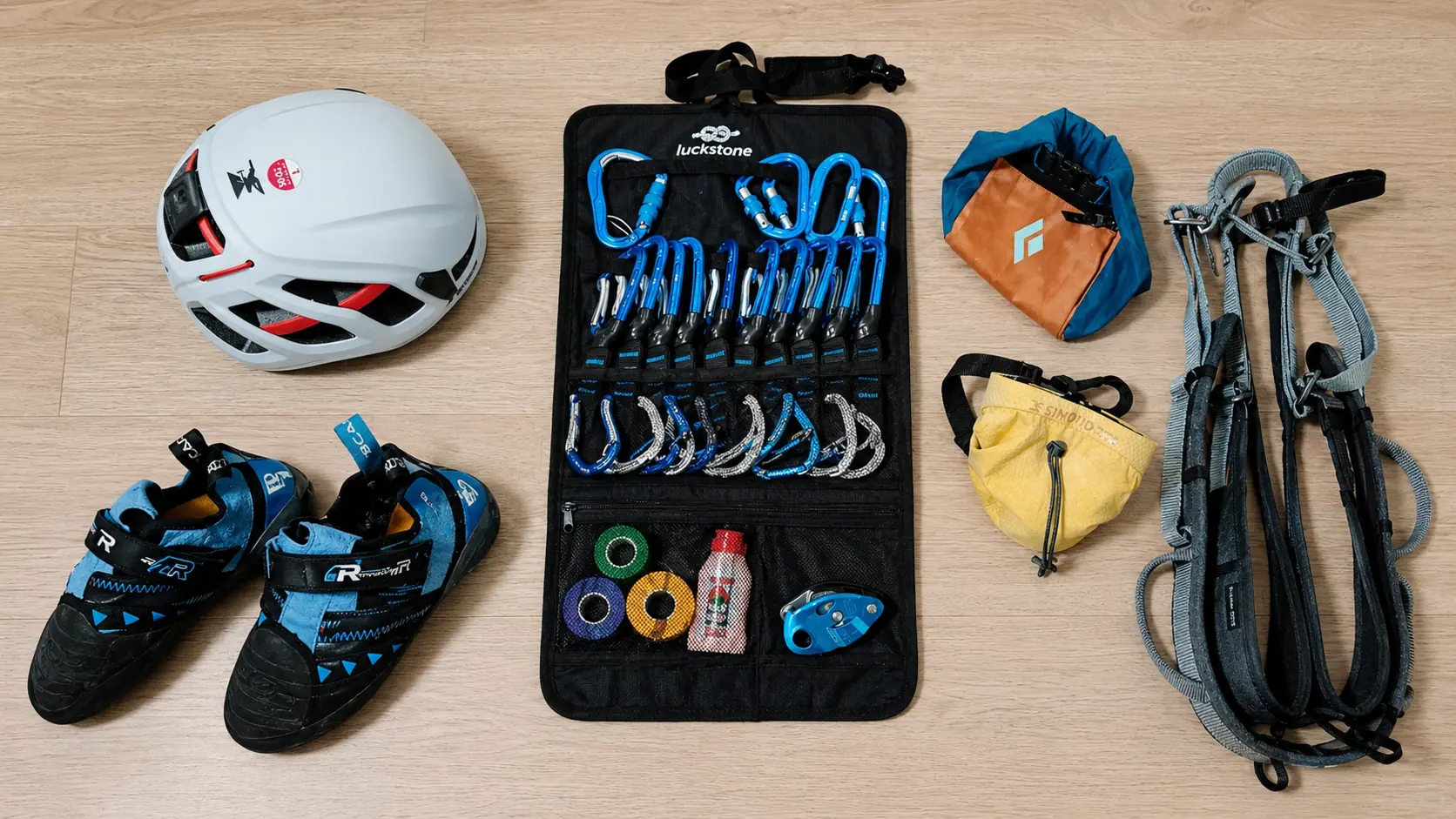
For a standard sport-climbing visit, bring your own safety-critical gear: rope length suitable for your objectives, enough quickdraws, helmet, belay device, personal anchor or equivalent system, headlamp, tape, chalk, rain shell, approach shoes, and a small first-aid kit. For multi-pitch, add the rack and redundancy your route demands: lockers, slings, belay station tools, rappel backup, communication plan, and descent notes.
If you are flying into China, do not assume you can buy your preferred rope, helmet size, shoes, or hardware in Ziyun. Bring critical equipment with you. Check airline restrictions for liquid chalk, knives, fuel canisters, and sharp tools before packing.
Plan for the descent
Many climbers underestimate Getu because the photos look like sport climbing. Long routes, steep roofs, vegetation, water, and unfamiliar descent paths can turn the end of the day into the crux. Before starting, know how you get down and how you get back to town.
Tickets, Transport and Where to Stay
Solve this section in order: confirm what scenic entry and transport your day needs, then settle the last road leg and overnight base around the sectors that are actually available.
Getu River Scenic Area Tickets
Ordinary scenic entry and transport
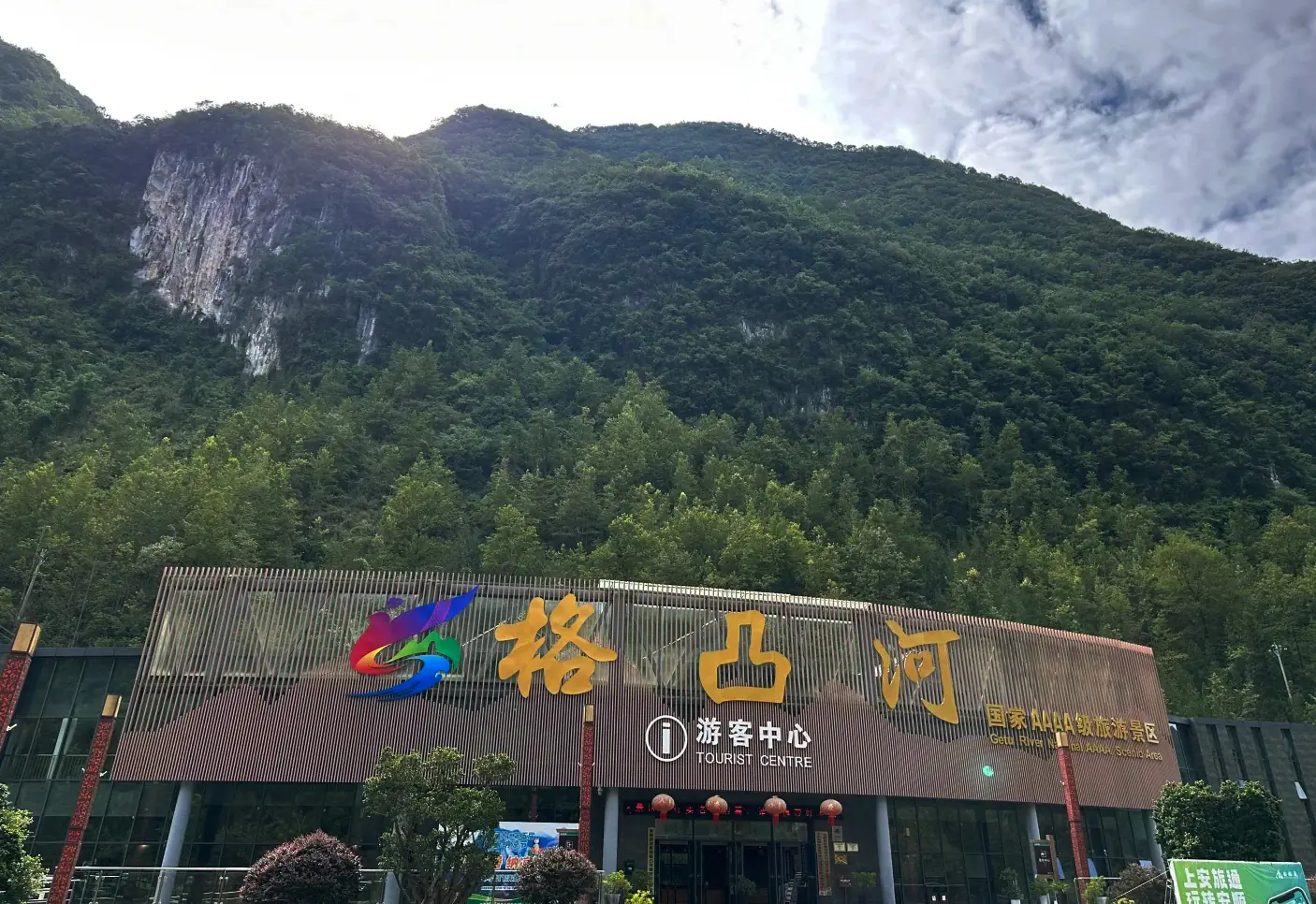
Getu is both a scenic area and a climbing destination. For ordinary scenic-area entry, ticket rules apply. The Guizhou government price list currently lists Getu River Scenic Area admission at ¥50, internal transport at ¥10, and boat transport at ¥45. Online platforms may bundle admission, shuttle, boat, the spiderman performance, or seasonal offers differently, so treat any package price as a current booking detail rather than a permanent rule.
Getting to Getu
Guiyang, Anshun, and Ziyun connections
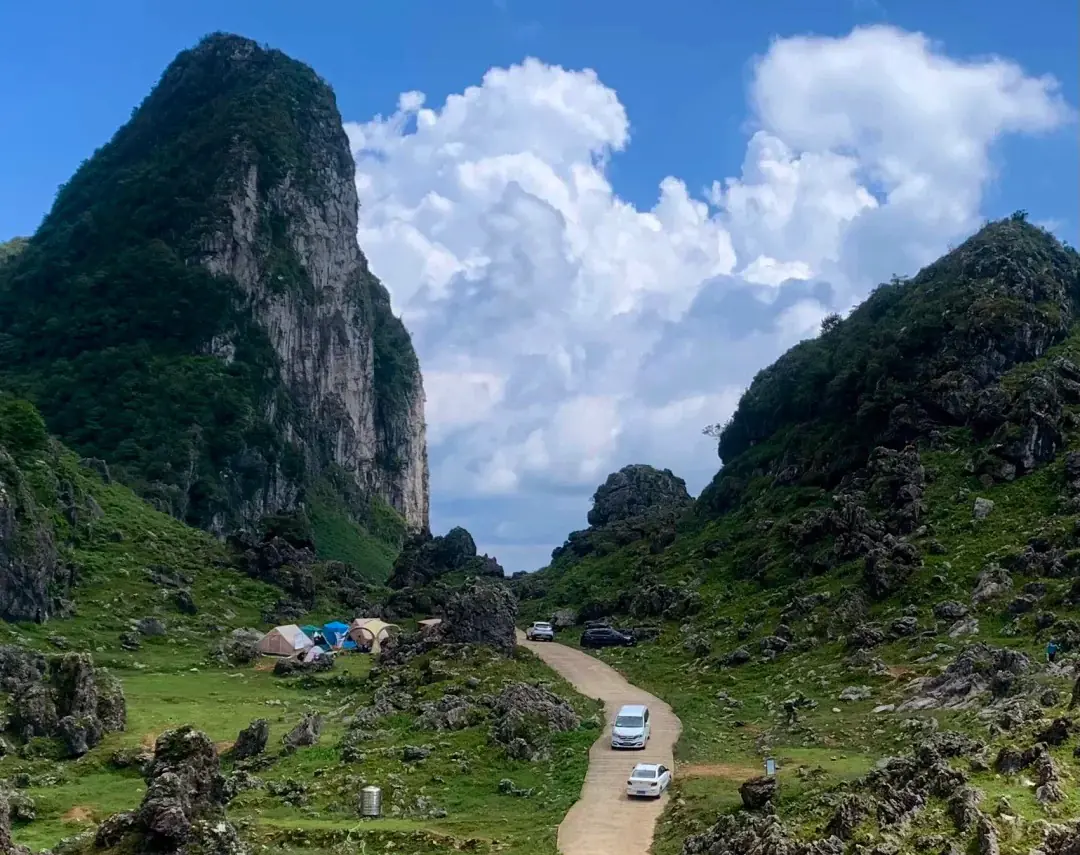
For climbers, transport is the harder part. Getu is in Ziyun County (紫云县), Anshun (安顺), Guizhou (贵州), about 160 km by road southwest of Guiyang (贵阳). Public transport usually means getting to Anshun or Ziyun first, then arranging local transport to the scenic area or climbing base. Current Guizhou tourism guidance lists Guiyang North to Anshun West by high-speed rail and Ziyun Bus 3 as planning options, but confirm the current timetable and final stop locally. If you carry climbing gear, want an early start, or need to return after a long climbing day, a car and known driver are much easier.
Choose the Base After You Confirm the Sectors
Official Guizhou tourism coverage identifies a climbing-themed guesthouse in Getu town, so local specialist lodging does exist. Availability and standards still need a current check. Ziyun County remains a practical fallback, while a locally recommended guesthouse can reduce the daily transfer. For a first visit or a longer stay, ask current climbers or guides which base fits the sectors that are actually open and how you plan to move each day.
A Conservative Two-Day Getu Climbing Plan
Getu is much better as a short climbing stay than as a rushed day trip from Guiyang. A conservative two-day rhythm gives you time to confirm access and avoid turning your first route into a logistics test.
- Arrive in Ziyun(紫云)- Check lodging, food, and next-day driver
- Confirm Access- Ask current climbers, guide, base, or scenic-area staff
- Short Warm-Up Session- Choose easy approach and simple descent
- Topo and Gear Check- Rope length, quickdraws, descent, weather
- Main Climbing Day- Pick a sector that fits the team, not the photo
- Scenic Backup- Boat, caves, or spiderman performance for rest or non-climbers
- Return Buffer- Leave margin for transport delays
Day 1 — learn the valley
On Day 1, arrive, locate food and water, check the next day's transport, and climb only if time and access are simple. Use the first short session to feel the limestone, grading, humidity, and approach trails. Do not start your Getu trip with a serious multi-pitch line unless you already have a confirmed plan.
Day 2 — choose honestly
On Day 2, start early and choose the sector that matches your team. Ordinary sport climbers should prioritize clean approach, clear anchors, and easy retreat. Experienced multi-pitch teams can go bigger, but only with current information. Non-climbing companions can use the same day for caves, boat routes, scenic viewpoints, performances, or watching an event if one is scheduled.
If you only have one day from Guiyang
If you only have one day from Guiyang, keep expectations modest. A scenic-area visit and climbing-culture stop can work. A meaningful outdoor climbing day with gear, access checks, and safe return is better with at least one night nearby.
Frequently Asked Questions
It is suitable for climbers with outdoor sport-climbing basics, especially if they go with experienced partners or a local guide. It is not suitable for complete beginners to attempt natural rock independently.
Sources checked for this guide
- 278 developed routes, grade range, and current destination recognition: Guizhou 2026 outdoor-destination coverage
- Current climbing-event activity in the Getu area: 2025 Rock Travel Guizhou event coverage
- Current transport orientation and climbing-themed lodging context: Guizhou tourism Getu travel guidance
- Valhalla history and Great Arch dimensions: American Alpine Club Great Arch account
- Current route, grade, and sector orientation: theCrag Getu area database
- Historic route and access context, not a live permit: Petzl RocTrip Getu topo
- 2026 scenic admission and internal-transport prices: Guizhou government price list
Beyond This Guide
Getu deserves a practical outdoor-sports guide, not just a dramatic headline about limestone arches. Its magic comes from scale, culture, and execution difficulty at the same time. Get the access right, choose routes honestly, and build in transport and weather buffers, and it can become one of the most distinctive climbing stops in China.
© gochinafreely.com — Original guide by Go China Freely.