Hours & Access
Plan Before You Go
Bauhaus Bones, Spray-Paint Soul
The district in one idea
Industrial discipline outside; experimental art inside.
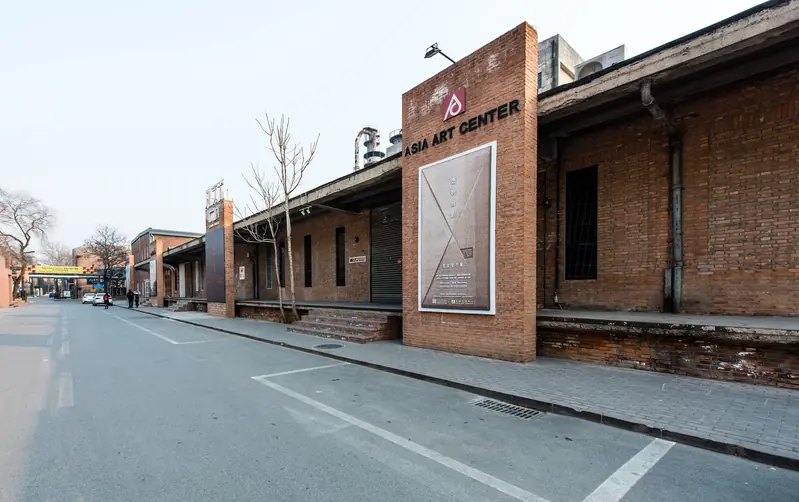
In Beijing, the Forbidden City tells you what happened over centuries; 798 Art District (798艺术区) shows one strand of the city’s creative present. The former state electronics complex keeps its sawtooth roofs, exposed pipes, concrete bays, and red-brick chimneys while galleries, museums, studios, cafés, and design businesses occupy the old factory fabric.
The campus is free to enter around the clock. Treat every indoor institution as a separate visit, with its own hours, admission, reservation, photography, and accessibility rules.
Factory-to-art timeline
- 1
A six-factory electronics base
1950sThe East German-assisted 718 Joint Factory included six numbered factories. Bauhaus-influenced sawtooth roofs brought even daylight to large production floors.
- 2
Artists and BTAP move in
Early 2000sLow rents, high ceilings, and proximity to the Central Academy of Fine Arts attracted artists. Huang Rui helped Tokyo Gallery+BTAP find space, and Feng Boyi curated its 2002 opening exhibition.
- 3
Institutions reshape the district
2007-2019UCCA opened in 2007, transitioned to new stewardship in 2017, and reopened its regenerated factory chambers after OMA’s 2019 renovation.
- 4
A wider creative district
2026 contextThe operator now describes the wider 798·751 area as more than 500,000 m² with 600+ institutions, including about 100 artist studios.
Look up
Sawtooth roofs and factory-scale bays
Look around
UCCA, Galleria Continua, studios, shops, and street art
Why it matters
The industrial shell is part of the artwork—not background decoration
Three Current Art Stops, Two 798 Landmarks
Use this section as a status-aware shortlist, not a promise that every famous 798 name still runs a public gallery. Start with the three institutions currently publishing visitor information, then read the two landmark cards so you do not walk across the district expecting a public exhibition that has ended.
Start here · UCCA
Read the factory conversion outside, then test the scale inside.
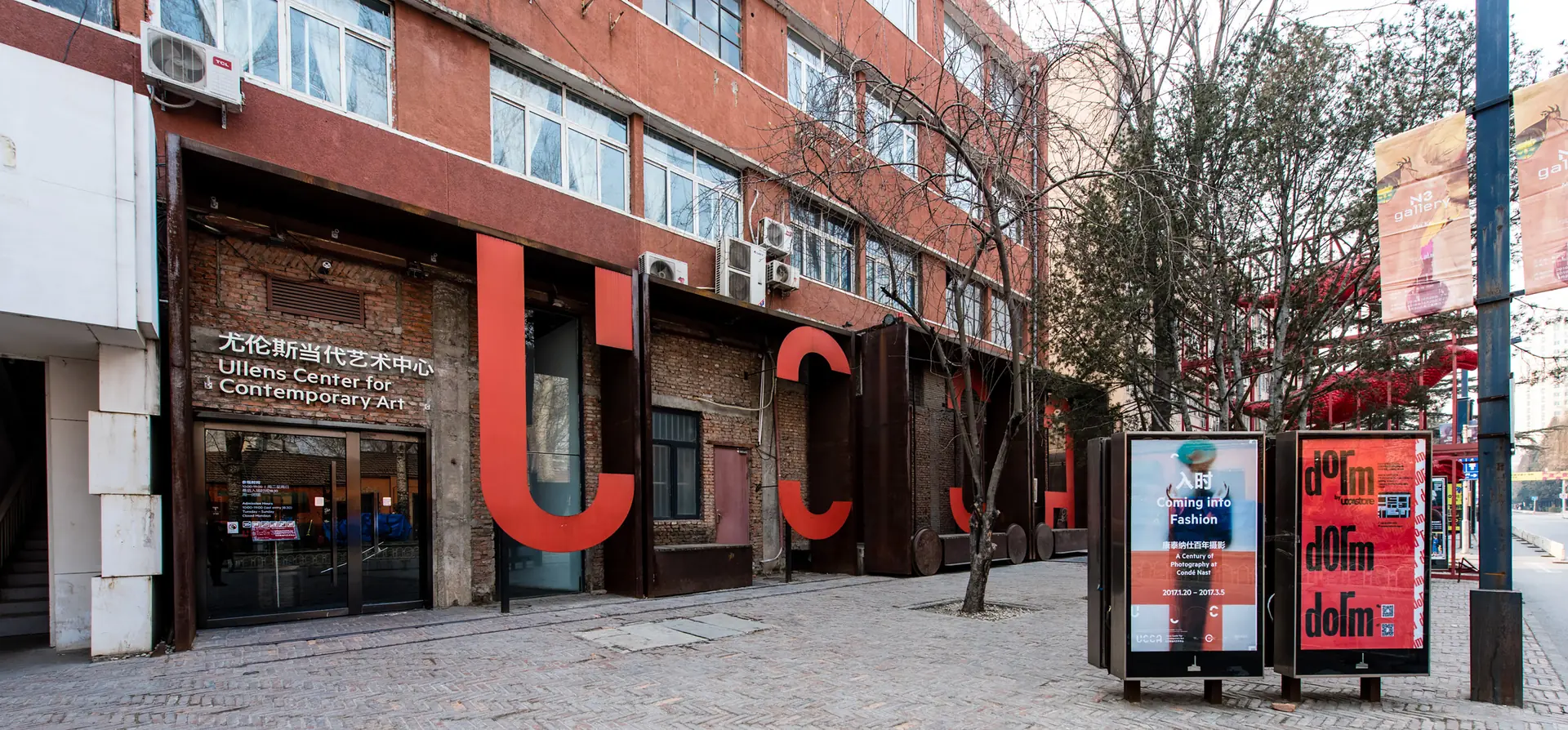
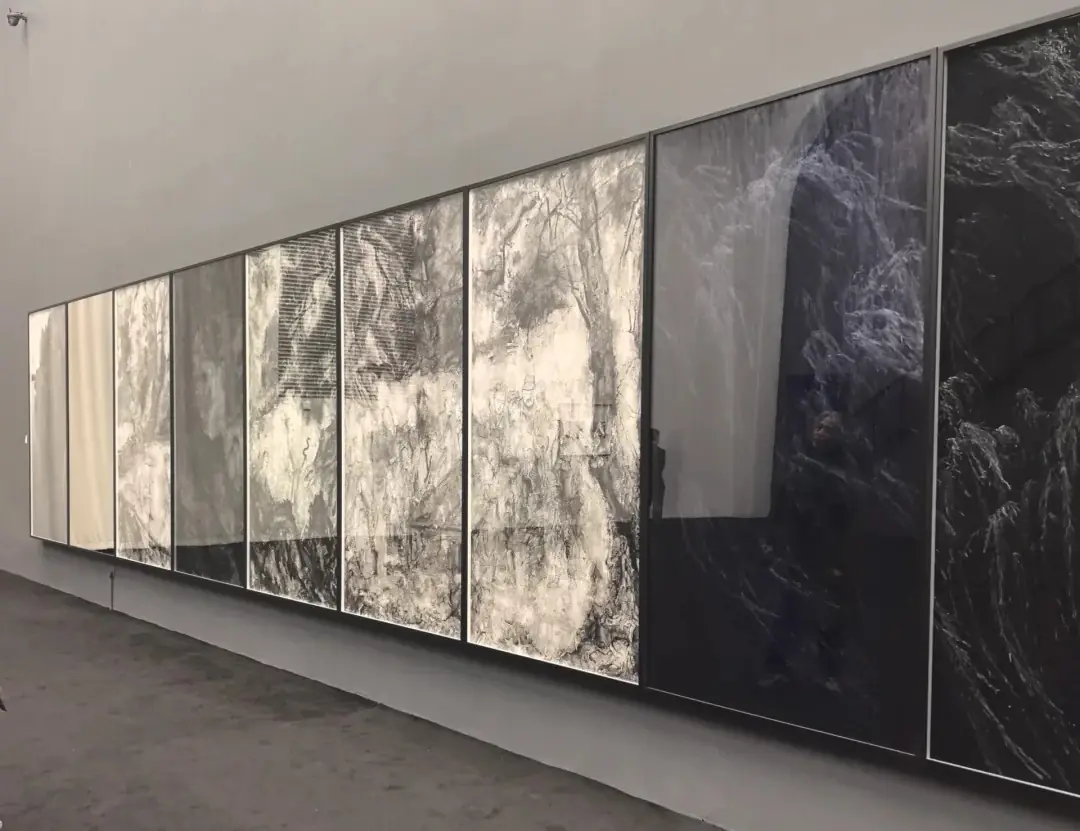
The façade shows how a major institution sits inside the industrial campus; the exhibition hall shows what those large factory chambers make possible. Together they explain why UCCA is the clearest first stop for a new visitor.
UCCA Center for Contemporary Art
Current · Tue-Sun 10:00-19:00 · last entry 18:30
Why go: UCCA opened in 2007 and remains the district’s flagship contemporary-art institution. Its exhibition history includes Ai Weiwei (艾未未), David Hockney, and Matthew Barney; OMA’s 2019 regeneration makes the former factory chambers part of the visit. Plan: admission varies by exhibition. Check the official exhibition page for the current ticket, reservation, language, photography, and access details.
M WOODS 798
Current · Tue-Sun 11:00-19:00 · last entry 18:00
Founded in 2014, M WOODS reports a collection of more than 1,000 objects and an internationally oriented program; past shows have included Bruce Nauman and Man Ray. Check the current exhibition and ticket information before visiting, and do not build the stop around rooftop access because the official visitor page does not promise it.
Inter Art Center / Inter Gallery
映艺术中心 / 映画廊 · Current · 10:00-18:00
Founded in 2006, this 1,000+ m² photography institution covers documentary, fine-art, and experimental work. Its official listing also identifies Pixel Magazine, a photography bookstore, and a café, making it the most focused stop here for readers interested in Chinese photography.
Two names to recognize, not route stops to promise
Both institutions matter to 798’s international-gallery era. Their public status has changed, so the cards below retain the history while preventing a wasted detour.
Faurschou Beijing
Historic 798 venue · public program ended April 2026
The Danish foundation opened its Beijing space in a converted Bauhaus factory in 2007. Its expansive rooms were known for quiet, large-scale international installations, but Faurschou’s April 2026 notice says the public exhibition program has ended. Keep the architecture in mind; do not plan this as an open gallery.
Pace Beijing
Historic 798 gallery · current Beijing office
Pace opened its 798 gallery in 2008, bringing double-height industrial space into the district’s blue-chip era. Its broader program has included teamLab and Yoshitomo Nara, but Pace now lists Beijing as an office rather than a public gallery. Check the official locations list before making any detour.
Choice rule: if time is tight, choose one major exhibition at UCCA or M WOODS, then add Inter Art Center only if photography is a priority. Leave unstructured time for smaller spaces whose schedules change faster.
The Open-Air Museum You Don't Pay For
The streets are the district’s free exhibition layer. Use these four motifs as a visual checklist between indoor visits; each card keeps its image, title, and explanation together so you can recognize the subject at a glance.
Large-Scale Sculpture
Plazas and major intersections
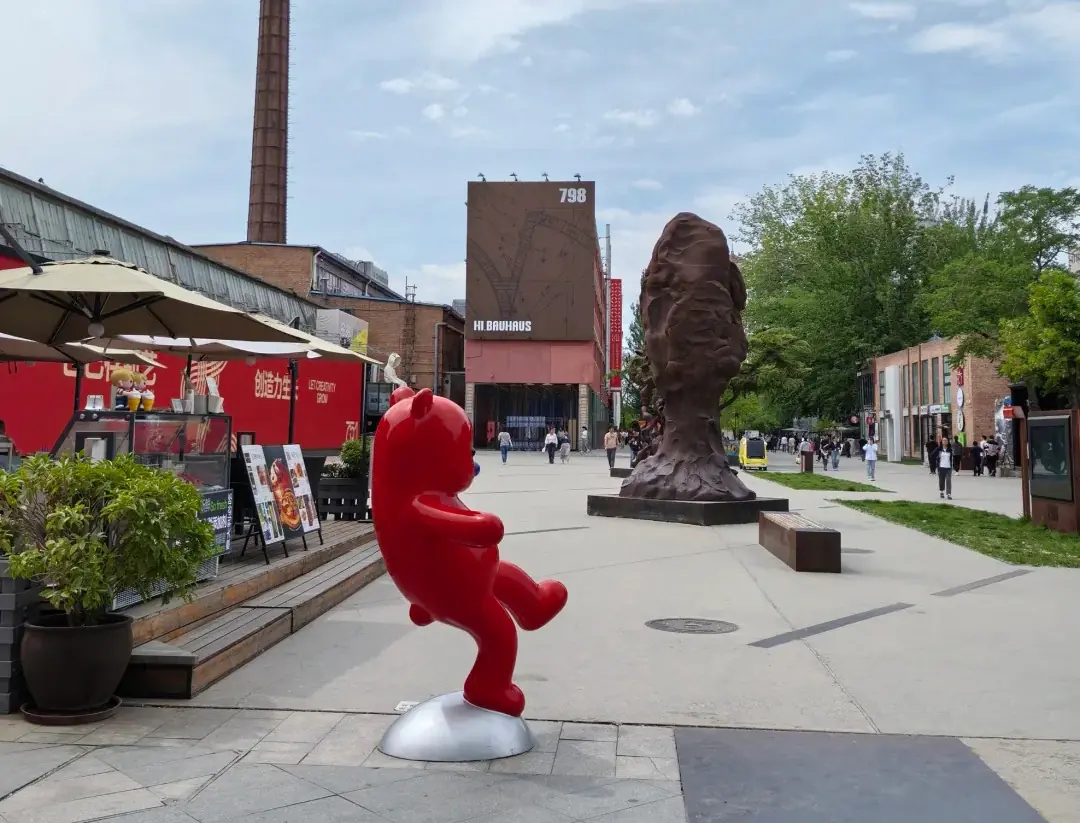
Look for large metal works and other installations that anchor junctions near the main approaches. Some pieces feel permanent while others change with programs, so use the image as a subject cue rather than a promise of one exact work.
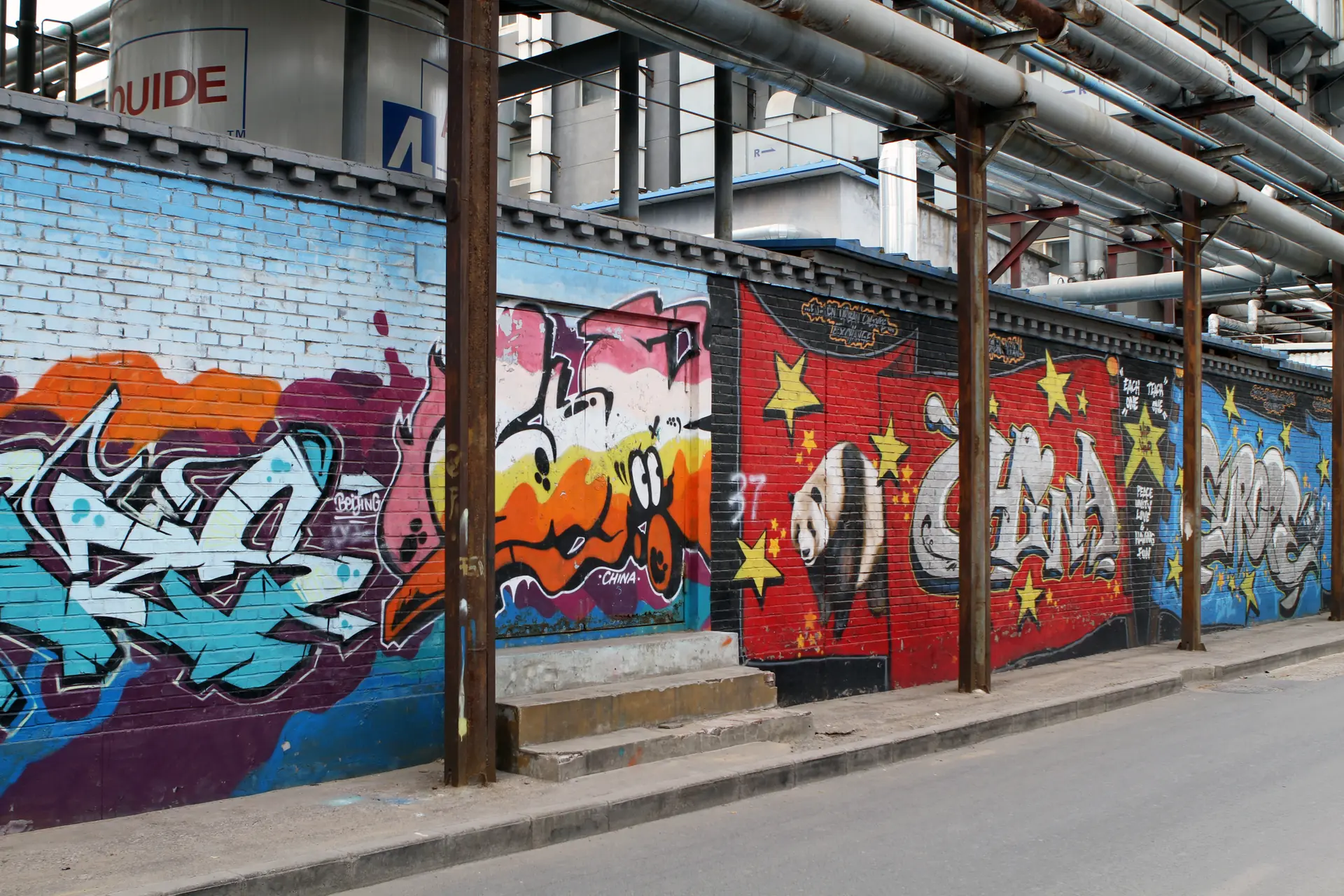
Pipe Graffiti and Wall Murals
Factory walls, pipelines, and chimneys
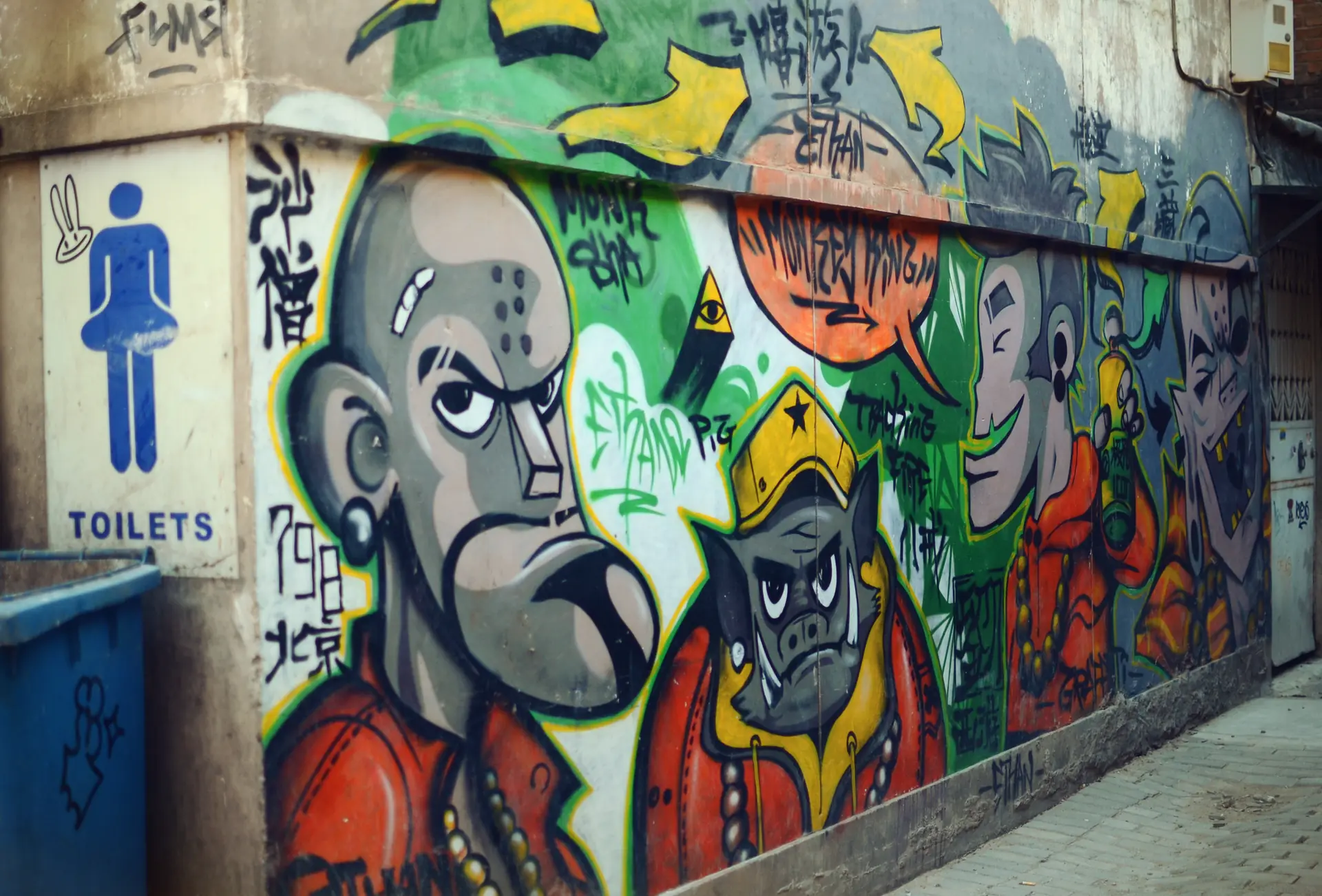
Styles move from political pop to abstraction and hyper-realism. Murals rotate, so the useful habit is to scan side lanes and pipe runs—not to search for a single piece seen online months earlier.
Factory Rail Track Zone
A popular portrait and street-photography backdrop
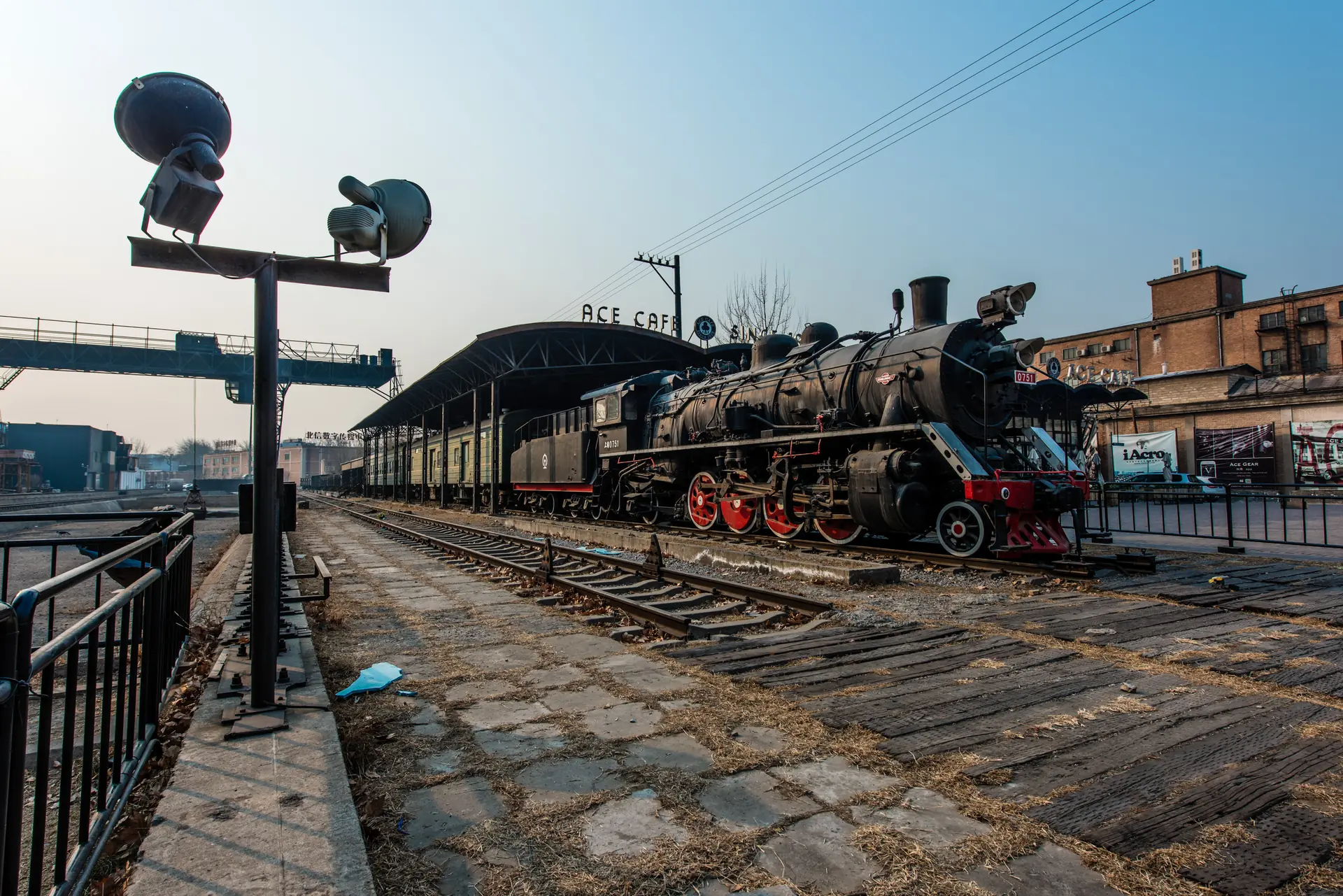
Factory-era rails cut through graffiti walls and café terraces, producing one of the district’s most recognizable compositions. Pause for portraits without blocking the path or treating the track area as a private set.
Sawtooth Roof Light
Best read as architecture first, photo effect second
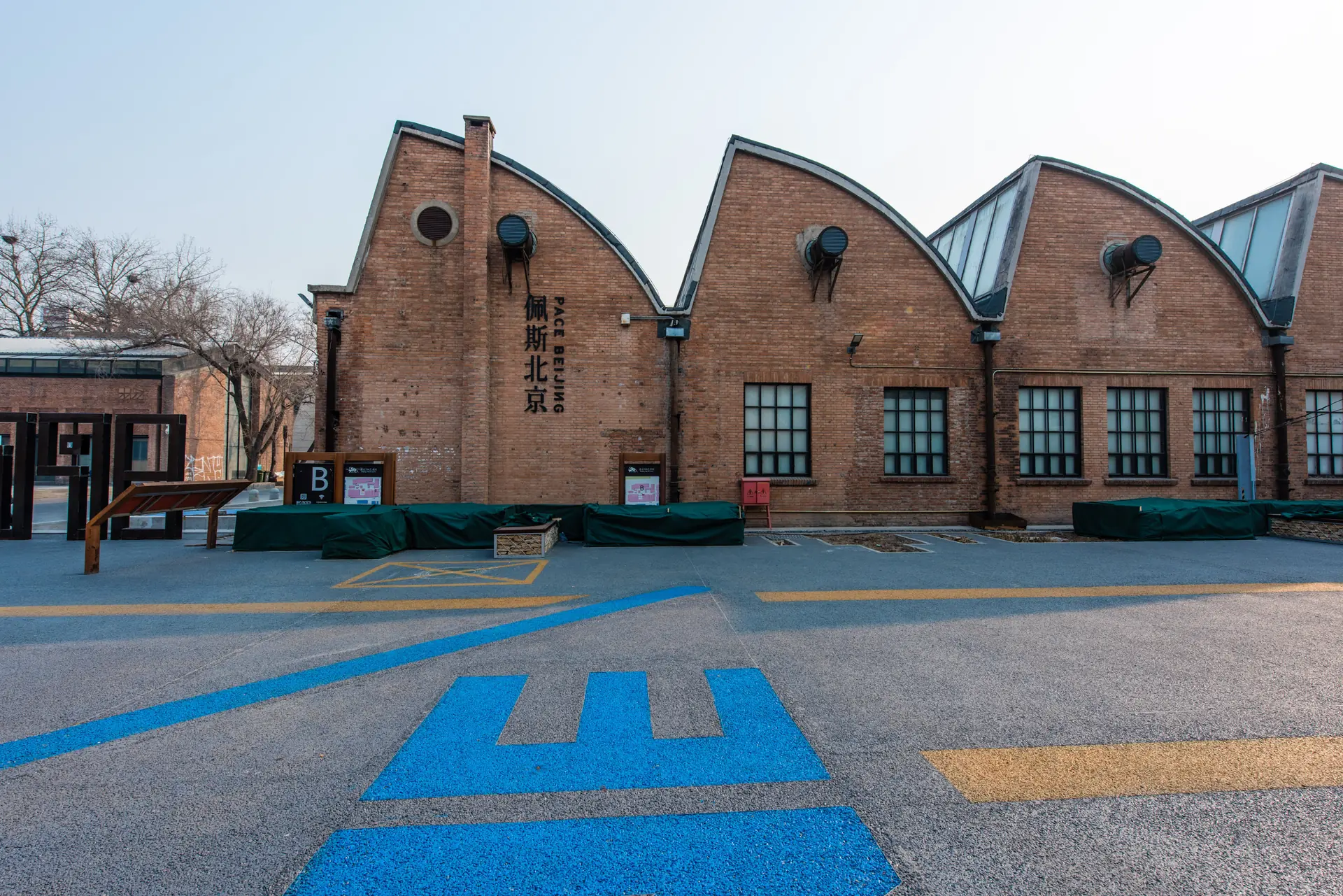
Glass sawtooth roofs create shifting light-and-shadow geometry around the old factory bays. View from public paths or spaces clearly open to visitors; do not assume an apparently unused workshop permits entry.
Photo-light rhythm, not a guarantee
Late afternoon—roughly 15:00-17:00—often gives lower-angle light through roofs and pipes, but season and weather matter. After dusk, neon signs create a different mood; indoor access and photography rules still remain venue-specific.
Walking Route: 3 Hours, Minimal Backtracking

798 is walkable, but its side lanes encourage detours. Use the sequence below as a three-hour target pace that limits backtracking: one major museum, one photography stop, the outdoor-art spine, and a second major museum. Exhibition queues and spontaneous gallery visits can easily turn it into a half day.
- South approach → UCCA- Enter from the Jiuxianqiao Road side and use your freshest hour for the exhibition you most want to see.
- UCCA → Inter Art Center / Inter Gallery- Shift from a large museum to a focused photography stop, checking the day’s program before committing time.
- Inter Art Center → rail track zone- Use the connecting lanes for murals, pipes, sculpture, and factory façades rather than rushing between doors.
- Rail track zone → M WOODS 798- Make M WOODS the second major indoor stop if its current exhibition fits your interests.
- M WOODS → small-gallery wander- Leave one flexible loop for Galleria Continua, studios, shops, or any clearly open space that catches your attention.
- Choose your nearest practical exit- Finish toward the north side or loop south according to your next metro, taxi pickup, or café stop.
Protect the flexible hour: do not try to enter every door. Preselect one or two ticketed exhibitions, use the outdoor-art zone as the route spine, and let smaller galleries happen by chance. Former Faurschou and Pace gallery locations are historical context, not promised public stops.
Where to Eat and Drink
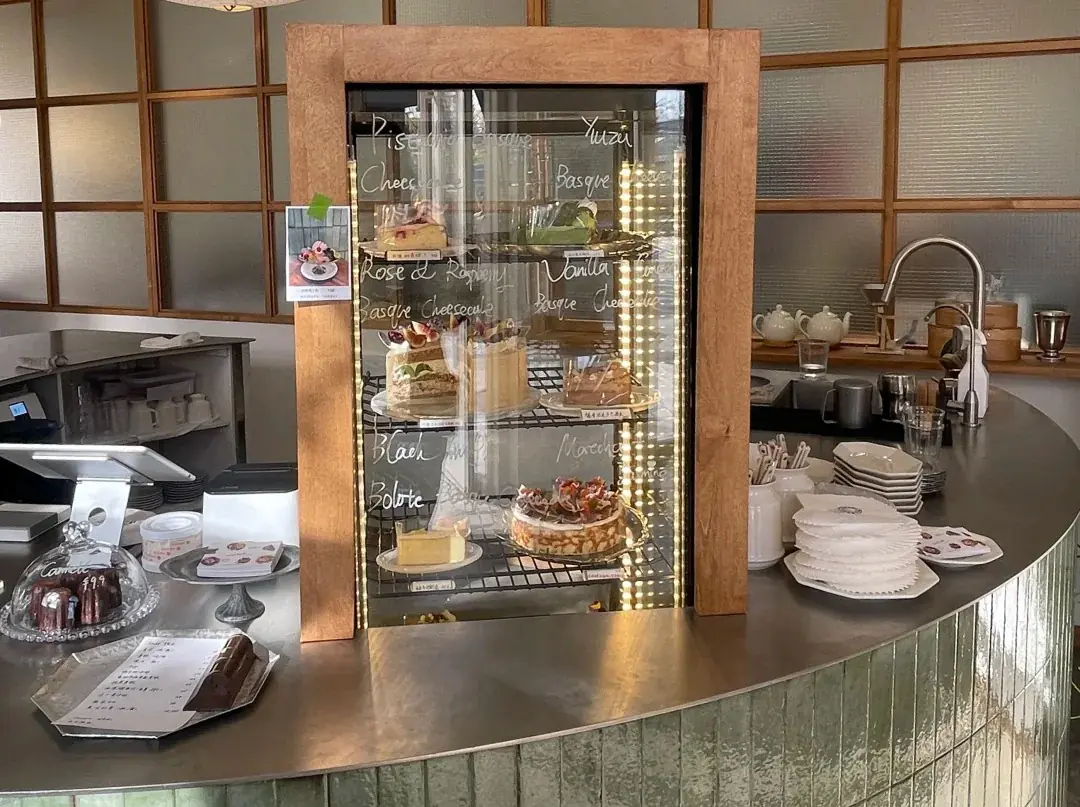
Choose the pause you need
The setting is part of the value; the menu still needs a reality check.
798 has veteran cafés, museum-adjacent counters, indie specialty roasters, and Chinese or Western sit-down restaurants. Menus change too quickly to assume a fixed 20-30% district premium, and a ¥38-48 UCCA Café latte range should be treated as a past budgeting reference rather than a current menu.
Coffee + a view
Loose coffee range · ¥30-50
At Café, founded in 2003, is the veteran choice with outdoor seating; its official directory listing publishes a ¥50 average spend. UCCA Café and other indie specialty counters can work as convenient pauses. Use ¥30-50 only as a loose coffee buffer—current directory examples cluster around ¥35-50—and check the day’s opening and menu.
Quick meal
Budget guide · ¥40-70
Use this as a planning buffer for a simple meal, not a published district tariff. Check the current menu before ordering and keep the stop short if a timed exhibition is next.
Sit-down meal
Budget guide · ¥100-200/person
Choose a longer Chinese or Western meal only after the main exhibition. This baseline range protects the schedule, but current menus—not the article—set the real price.
Rest without leaving the atmosphere
If coffee is mainly a recovery stop, choose outdoor seating. Watching murals, installations, and people move through the old factory lanes is part of the 798 experience.
When to Come
Make three decisions
Choose the season, then the day, then the arrival time.
1 · Season
Outdoor comfort first
Spring / autumn
April-May and September-October usually give the easiest conditions for long outdoor wandering.
Summer
Hot outside, but large indoor institutions provide air-conditioned breaks between street-art sections.
Winter
Cold and windy, with a starker industrial mood and often fewer casual visitors.
2 · Day
Exhibition depth or atmosphere
Tuesday-Friday
Usually calmer for focused gallery viewing, though school groups and exhibition openings can change the rhythm.
Weekend
Livelier for people-watching; performances, markets, and pop-ups are program-dependent rather than guaranteed.
3 · Time
Open doors before photo light
Arrive around 10:30-11:00
Many institutions open at 10:00 or 11:00, so a 09:00 arrival is mainly for empty streets. Put indoor exhibitions first and let late-afternoon light finish the outdoor route.
Monday changes the visit
The district itself remains accessible, but UCCA, M WOODS, and many other institutions close. Come on Monday only if outdoor art, architecture, cafés, and shops are enough for you.
Events are date-specific: the 2026 Beijing Art Season ran May 21-June 15, with Gallery Weekend Beijing from May 22-31. Check the official 798 calendar instead of assuming the former autumn 798 Art Festival schedule repeats every year.
Commercialization is part of the present-day district: selfie sets, souvenir shops, postcards, and fridge magnets sit beside serious art. Around UCCA and M WOODS, keep following exhibition signs; if a retail-heavy lane is not what you came for, continue rather than treating it as the whole of 798.
Getting There
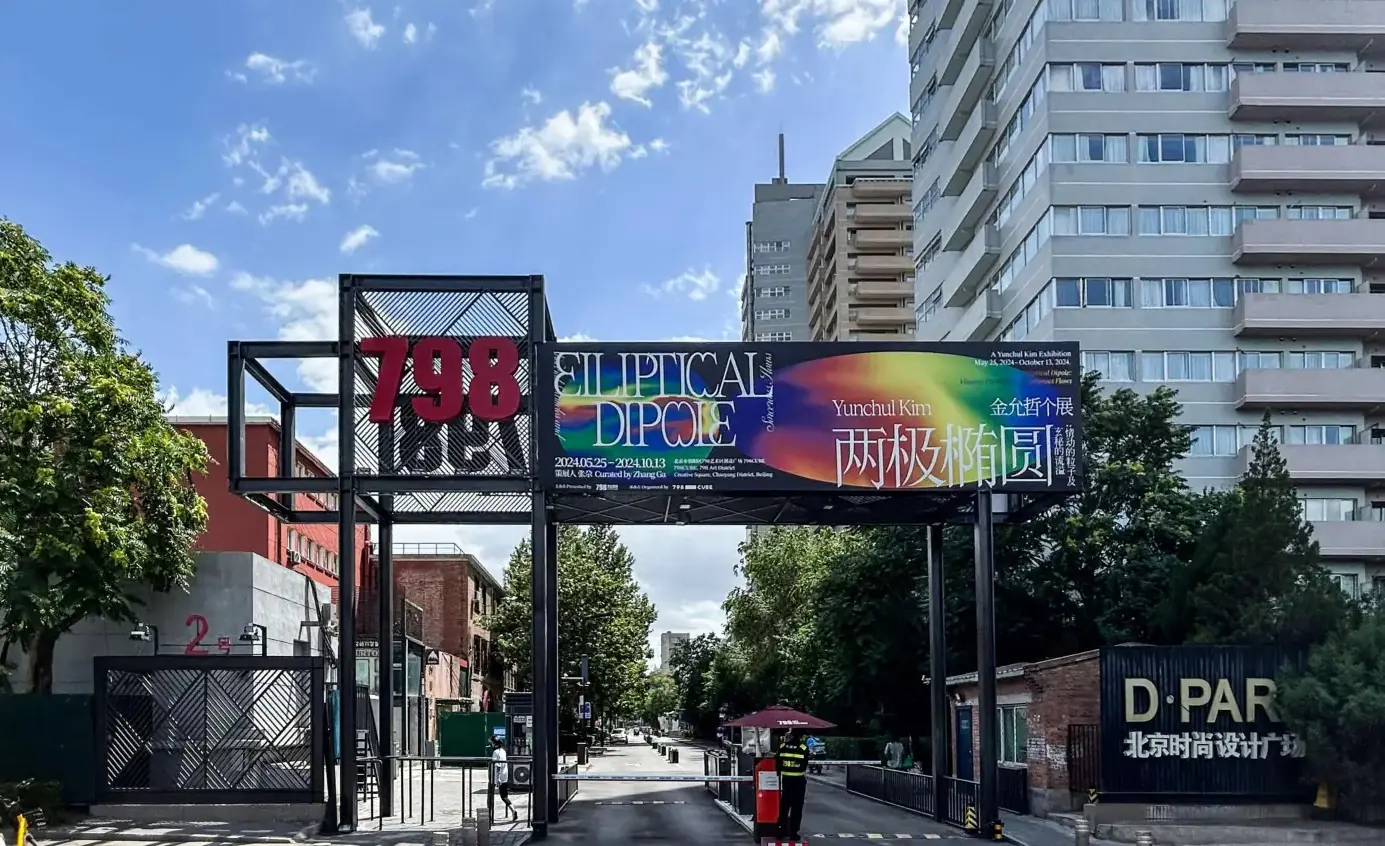
Arrival landmark
Aim for No. 2 Jiuxianqiao Road in northeast Beijing.
798 sits in Jiuxianqiao (酒仙桥), Chaoyang District (朝阳区). The entrance image helps you recognize the district signage; the transport choice below determines how much walking you add before the art route begins.
Best default
Line 12
Gaojiayuan (高家园), Exit B: this is the current official 798 approach, and UCCA estimates roughly 5-10 minutes on foot. Use it as the default instead of adding another short taxi leg.
Line 14
Two alternatives
Wangjing South (望京南), Exit B1, or Jiangtai (将台), Exit A. Allow roughly 15 minutes to reach the UCCA side of the district, then follow venue signs.
Taxi / ride-hailing
Door-to-district
Use the live app quote and traffic estimate. In light traffic, allow roughly 15 minutes / ¥20-30 from Sanlitun or 30-45 minutes / ¥40-60 from Tian’anmen as loose planning bands, not peak-hour promises. Set the drop-off as 798·751 Art District, No. 2 Jiuxianqiao Road.
Show this screen to your driver · 出示给司机看
去798艺术区,酒仙桥路2号。
798 Art District, No. 2 Jiuxianqiao Road, please.
Preferred metro: Line 12, Gaojiayuan Station (高家园站), Exit B — roughly 5-10 minutes on foot to the UCCA side.
Practical Tips
Before you leave for 798
Six checks that protect the visit
- District accessFree and open 24 hours; indoor institutions keep separate operating rules.
- TicketsSome exhibitions are free, while others are paid or reservation-based. Check UCCA, M WOODS, and any priority venue directly instead of budgeting a blanket ¥60-100.
- TimeAllow 3-4 hours for two major indoor stops, outdoor art, and coffee; a deep exhibition can turn this into half a day.
- LanguageBilingual information is common at major international institutions, but it is not guaranteed for every work, guide, or smaller studio. Keep translation ready.
- Step-free accessPaths, old thresholds, lifts, and accessible entrances vary across converted factory buildings. Contact the specific venue if a step-free route is essential.
- ChildrenThere is no universal age rule or guaranteed interactive zone. Older children interested in graffiti, sculpture, photography, or large spaces may engage more; check exhibition-specific content first.
Frequently Asked Questions
The district itself is free to enter and open 24 hours. Indoor institutions set their own schedules: an exhibition may be free, paid, or reservation-based, so there is no reliable blanket ¥60-100 ticket for UCCA, M WOODS, or other major venues.
Sources checked for this guide
- District access, venue-hour pattern, tickets and reservations, address, metro exits, and wider-district scale: 798·751 official visitor guide
- 718 Joint Factory history, East German assistance, early artist settlement, and the 2002 BTAP milestone: 798 official district history and 798 official origins interview
- UCCA founding, stewardship, 2019 OMA regeneration, current hours, admission pattern, and visitor channels: UCCA About and UCCA Visit
- M WOODS 798 location, founding, collection context, current hours, last admission, and Monday closure: M WOODS About and M WOODS Visit
- Current institution name, photography focus, location, facilities, and hours: 798 official Inter Art Center / Inter Gallery listing
- April 2026 end of the Faurschou public exhibition program: Faurschou closing remarks
- Pace’s 798 opening history and current Beijing office status: Pace About
- Dated 2026 Beijing Art Season and Gallery Weekend window: 798 official 2026 Beijing Art Season notice
- At Café founding, hours, terrace, and published average spend: 798 official At Café listing
Beyond This Guide
798 is one side of Beijing: contemporary art and industrial reuse. The imperial city, Great Wall, hutong lanes, food, and Sanlitun nightlife create very different route demands, so use the next guides to decide what belongs on the same day.
- The Forbidden City — compare a timed imperial-site day with 798’s flexible wandering rhythm
- Great Wall — keep the long outer-Beijing transfer out of an already full art day
- Bell & Drum Towers — connect hutong history and a compact central-city walk
- Beijing Food Guide — turn the evening into a deliberate food plan rather than a random stop
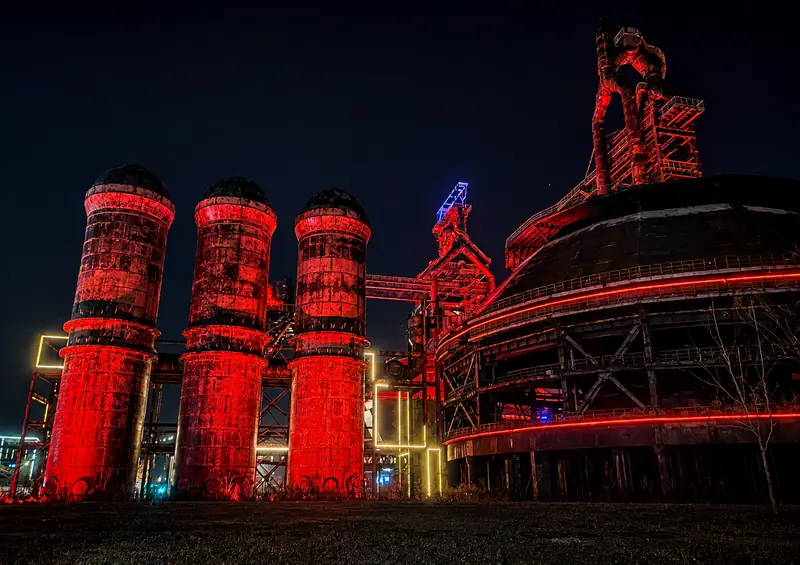
- Shougang Park Walk — contrast 798's Bauhaus galleries with west Beijing's giant blast-furnace Olympic park
© gochinafreely.com — Original guide by Go China Freely.