Hours & Base Ticket
Essential Rules
The Fishbone Layout Behind Nanluoguxiang's Crowds
Beijing's hutongs are not best understood as a checklist of "old streets." They work more like a living map. Nanluoguxiang (南锣鼓巷) is the easiest entry point: central, photogenic, directly served by subway, and famous enough that every taxi driver knows it. But the real walk begins when you stop treating Nanluoguxiang as the destination and start using it as the spine for the smaller lanes around it.
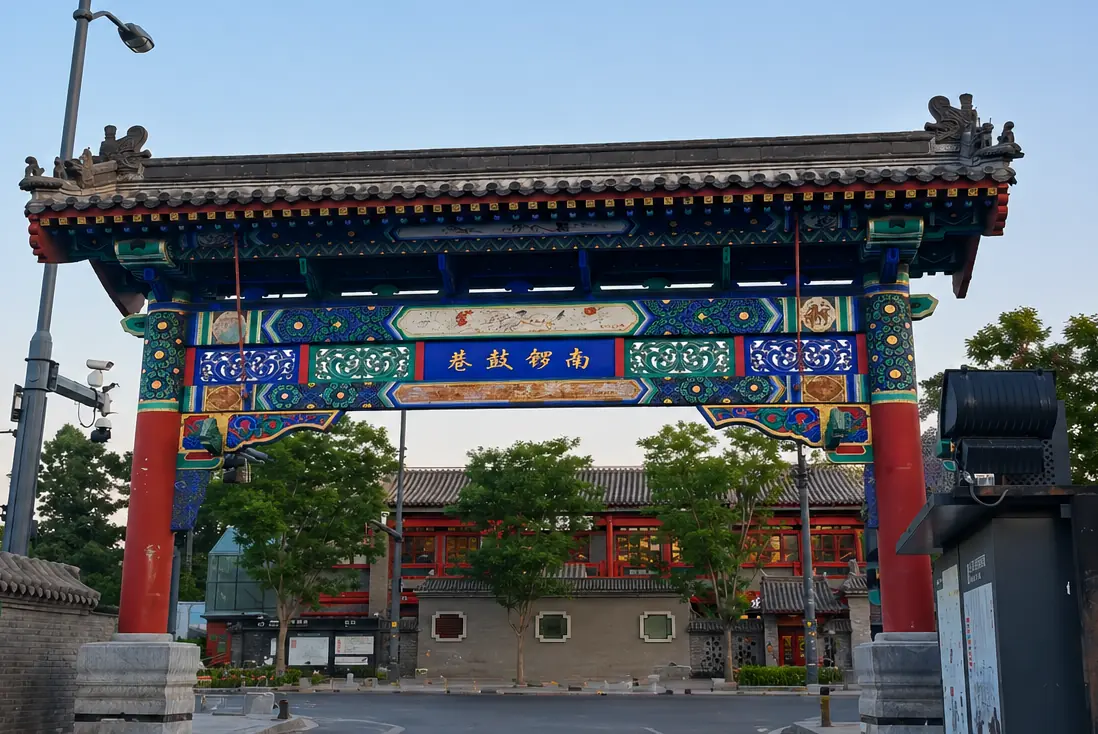
A commercial spine with a residential network
This route runs from Nanluoguxiang into Ju'er Hutong (菊儿胡同), Mao'er Hutong (帽儿胡同), Yandai Xiejie (烟袋斜街), Yinding Bridge (银锭桥), Houhai (后海), and the Drum Tower (鼓楼) area. Done well, it shows both sides of old Beijing: the lively commercial face that first-time visitors expect and the quieter residential fabric where courtyard walls, old doorways, bicycles, lake light, and everyday routines still matter.
2.5-4h
Route Time
3.5-4.5 km
Walking
Free
Street Access
Lines 6/8
Best Metro
Nanluoguxiang runs north-south for about 786 meters and is about 8 meters wide. It dates back to the Yuan capital period and sits inside one of Beijing's best-preserved chessboard-style hutong districts. The main lane has eight east-west hutongs branching from each side, creating a fishbone pattern that older local descriptions compare to a centipede.
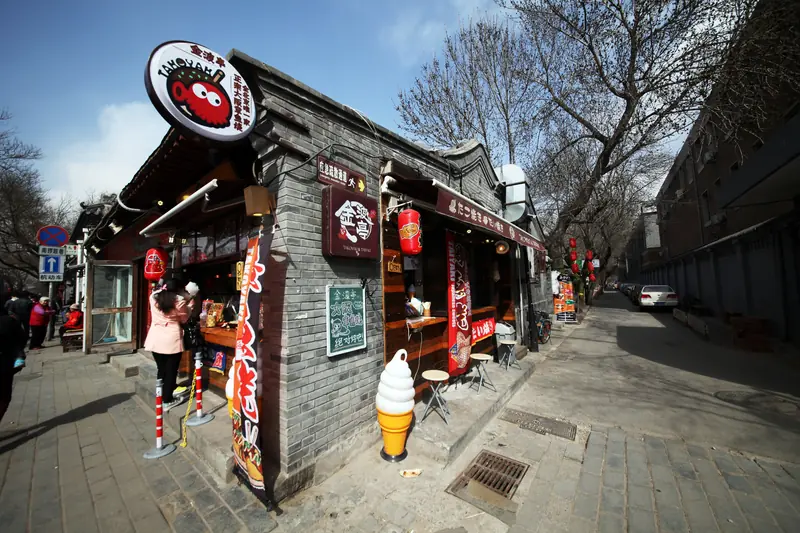
That layout is the reason the area is worth your time. The central lane is convenient and atmospheric in short doses, but it is also heavily commercial. On a weekend afternoon, it can feel less like "old Beijing" and more like a souvenir street with grey-brick packaging. The quieter hutong feeling usually starts 30 meters away from the main flow.
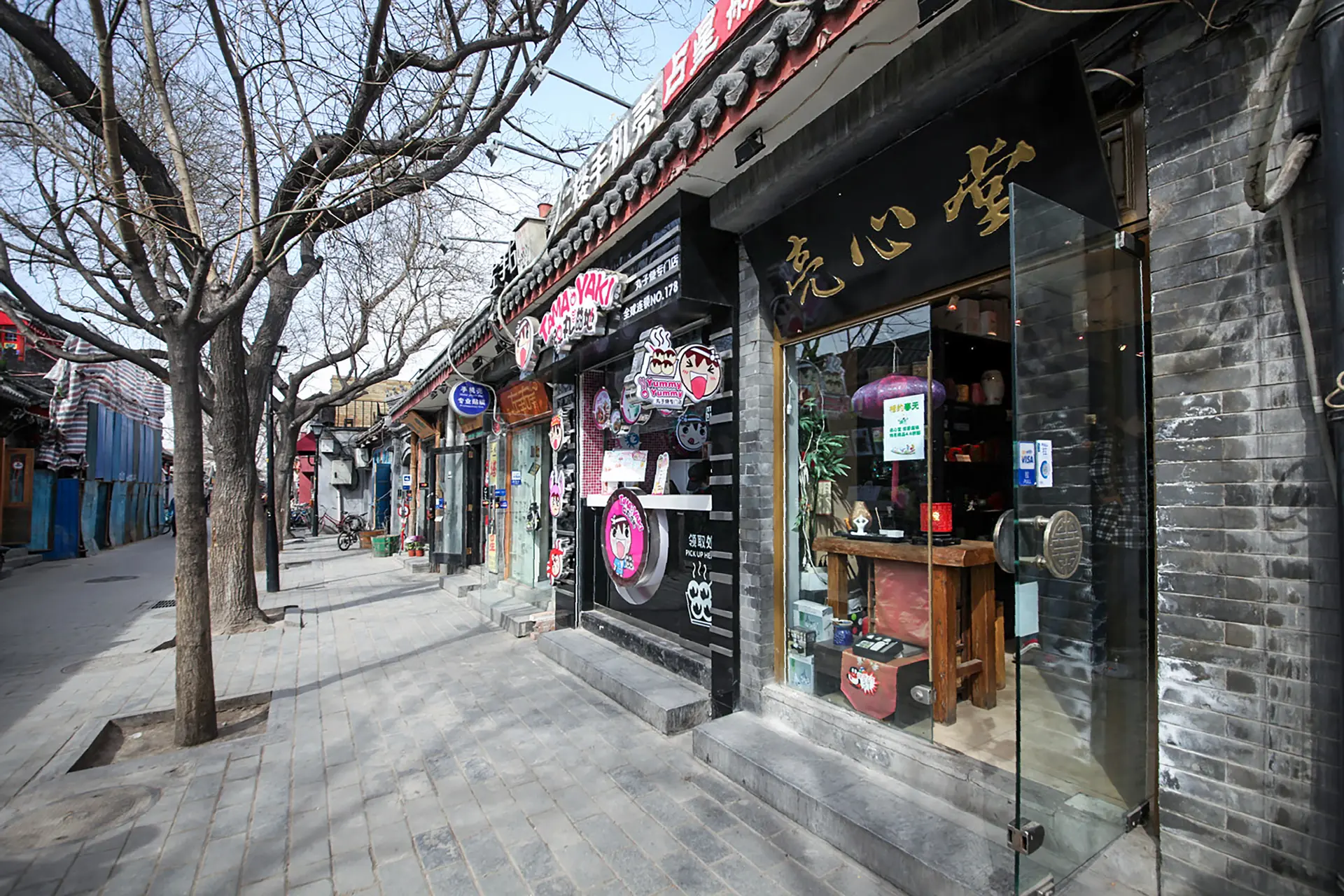
The best expectation is simple: Nanluoguxiang is the entry gate, not the whole experience. Walk enough of the main lane to understand the axis, then step into the side streets where the rhythm changes.
You will notice door stones, old walls, small trees, delivery bikes, residents carrying groceries, and lanes that narrow just enough to make cars feel out of place.
1Main Lane
Use it for orientation, photos, snacks, and the first impression. Keep moving if it is crowded.
2Side Hutongs
This is where the courtyard scale, residential texture, and quieter Beijing atmosphere appear.
3Lake Finish
Yandai Xiejie and Shichahai open the route into water, bridges, skyline, and the Drum Tower view.
Read the route in that order: orient on the main lane, slow down in the side hutongs, then let the street grid open into Shichahai. The next section turns that pattern into a walk you can shorten without losing its logic.
A Practical Nanluoguxiang Hutong Walking Route
For a first visit, follow this route:
- Nanluoguxiang Station(南锣鼓巷站)- Lines 6 and 8; start at the south entrance
- Nanluoguxiang Main Lane(南锣鼓巷)- Walk the 786 m spine, then leave it often
- Ju’er Hutong(菊儿胡同)- Old-city renewal and courtyard-scale housing
- Mao’er Hutong(帽儿胡同)- Doorways, courtyard walls, and former residence traces
- Yandai Xiejie(烟袋斜街)- Short diagonal lane toward Shichahai
- Yinding Bridge(银锭桥)- Classic transition from hutong lanes to lake views
- Houhai and Drum Tower(后海 / 鼓楼)- Best sunset or evening finish
Full route
The full version is roughly 3.5 to 4.5 km, depending on how much you wander into side lanes and around the lake. The ground is mostly flat. Give Ju'er Hutong more time if architecture and urban planning are the priority, and treat the lake as a relaxed finish rather than a goal to rush toward.
Short route
With older parents, young children, or anyone who dislikes crowds, use Nanluoguxiang -> Mao'er Hutong -> Yandai Xiejie -> Yinding Bridge -> a short Houhai stroll.
Access check: the street itself is free, but holiday crowd-control rules can change; check current official notices if Nanluoguxiang is a fixed stop on a peak travel date. You only need tickets if you add paid attractions such as the Drum Tower, Bell Tower when open, Prince Gong's Mansion, or museum-style stops.
Start at the Nanluoguxiang South Entrance
Nanluoguxiang (南锣鼓巷) is easiest from Nanluoguxiang Station on Lines 6 and 8 (Google | Amap). Follow the signs for Nanluoguxiang and begin near the south end of the lane. Before you buy a drink or snack, pause and look north. The point is to understand the structure: one north-south main alley with side hutongs branching east and west.

On the main lane, look for scale rather than must-eat shops: the narrow street width, grey paving, shopfronts inserted into old building lines, roof edges, small lane mouths, and the way crowds compress inside an old residential grid.
Nanluoguxiang has changed a lot, but its basic street width and direction still tell you how old Beijing organizes movement. Spend 10 to 20 minutes on the main lane, then step out.
The common mistake is walking from south to north, buying a few snacks, then declaring the area too commercial. That is like judging a house from the hallway.
The 30-Meter Rule
When Nanluoguxiang feels too crowded, turn into a side hutong and walk 30 meters. The noise usually drops, the shop signs thin out, and the city suddenly feels more residential.
Ju'er Hutong and Beijing Old-City Renewal
Ju'er Hutong (菊儿胡同) sits off the northern part of Nanluoguxiang and makes the best first side-lane detour if you want to understand old-city renewal rather than just old-city nostalgia.
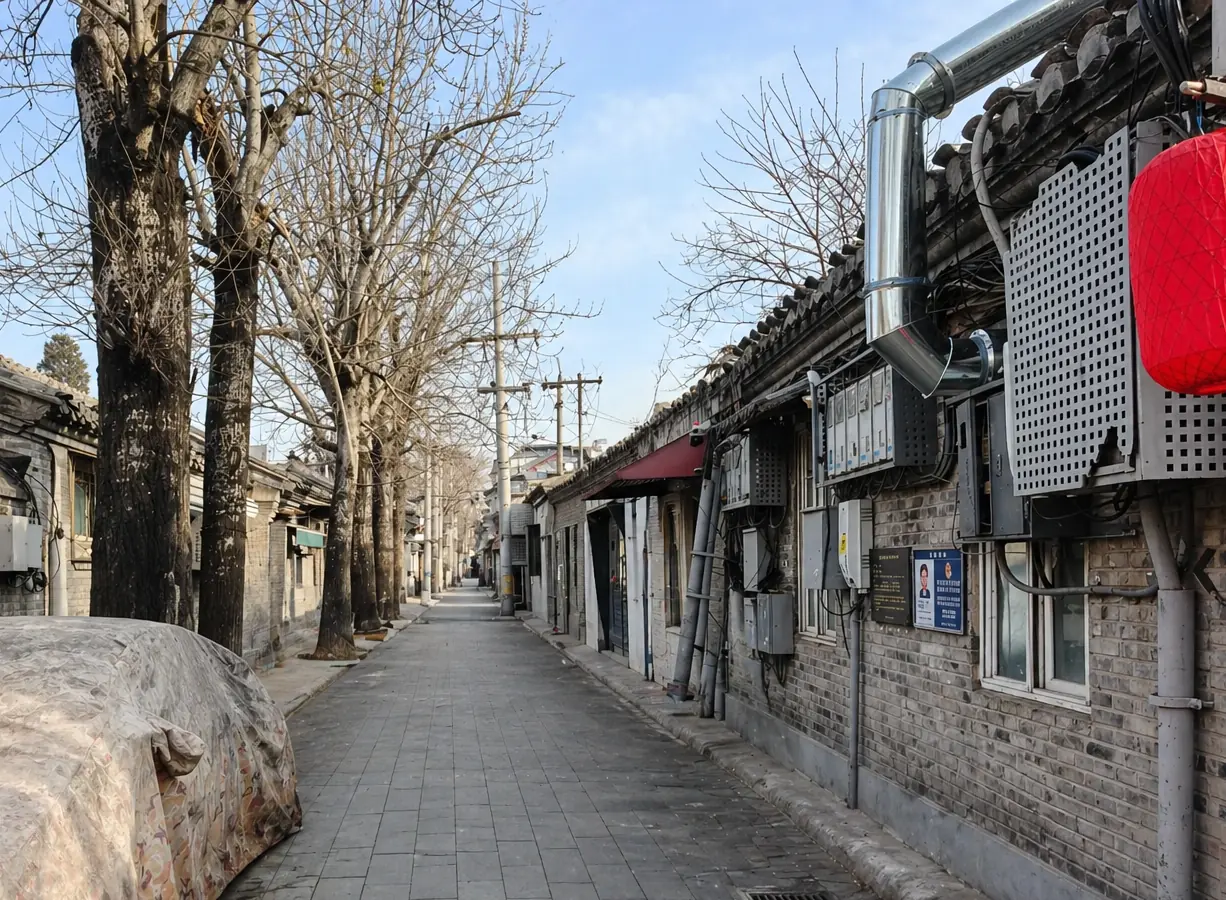
In 1990, the architect and planner Wu Liangyong (吴良镛) led a renewal project here that tried to improve aging courtyard housing without replacing the hutong pattern with high-rise blocks.
The project kept a low-rise, courtyard-like scale while adding better modern living conditions. It became one of Beijing's most cited examples of organic renewal in a historic neighborhood.
Do not treat Ju'er Hutong as an open-air attraction with doors to enter. Many courtyards and residential compounds are private; walk slowly and notice how new and old elements sit together.
What the renewal helps you read
This is also where the article's "beyond Nanluoguxiang" idea becomes clearest. The question is not whether the area is purely old or newly polished. It is how Beijing negotiates the messy middle: preservation, tourism, daily housing needs, drainage, privacy, density, and the desire to keep the old city's street pattern legible.
Mao'er Hutong Doorways and Courtyard Boundaries
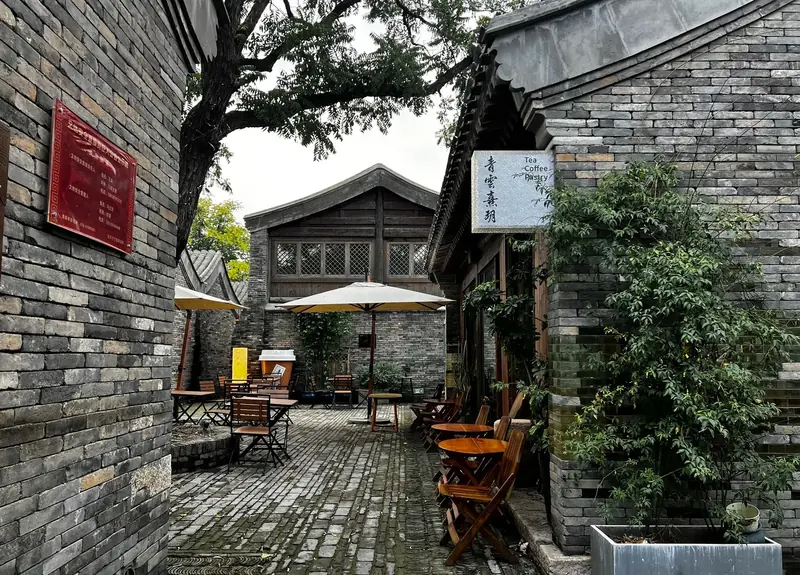
Mao'er Hutong (帽儿胡同) is the more natural side lane if your route is moving west toward Shichahai. It has old residence traces, deeper courtyard walls, and a calmer rhythm than the main commercial lane.
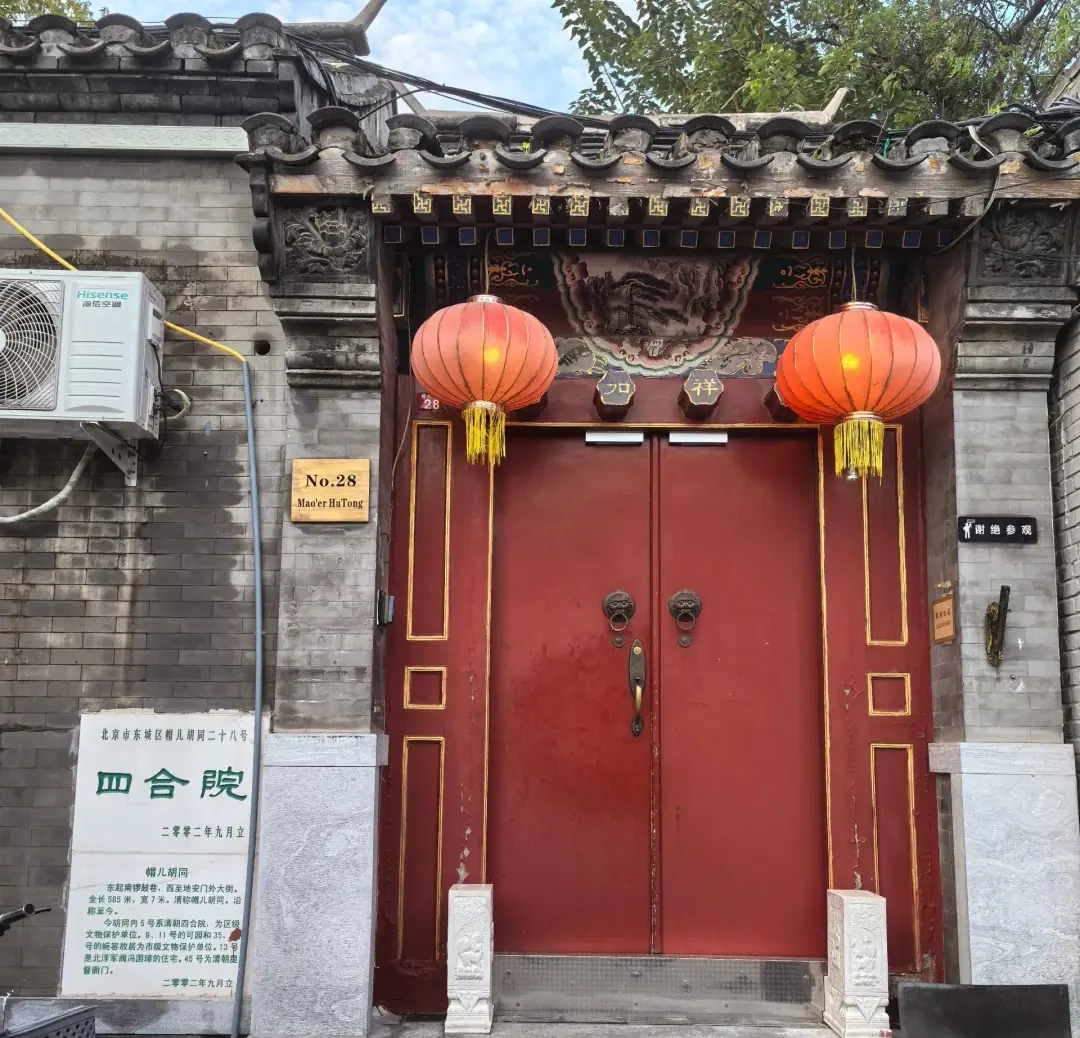
One of the better-known historical references here is the former residence associated with Wanrong (婉容), the last empress of China, around No. 35 and No. 37 Mao'er Hutong.
Most visitors should think of these as historical markers in a living neighborhood, not open attractions. Do not knock, enter, or aim your camera into a private courtyard.
Mao'er Hutong is where many travelers finally understand that hutong walking is less about "seeing a site" and more about reading a neighborhood. There may be no single dramatic facade. The reward is the texture between buildings.
What to look for instead:
ADoor Stones
Stone blocks, gate width, and entrance height often hint at the status of an older courtyard compound.
BWall Lines
The beauty is cumulative: grey walls, roof edges, tree shadows, bicycles, wires, and narrow lane proportions.
CBoundaries
The hutongs are still residential. Photograph street scenes, not private interiors or residents at close range.
Yandai Xiejie to Yinding Bridge Transition
From Mao'er Hutong, drift west toward Di'anmen Outer Street, then angle into the connector street that opens the route toward Shichahai.
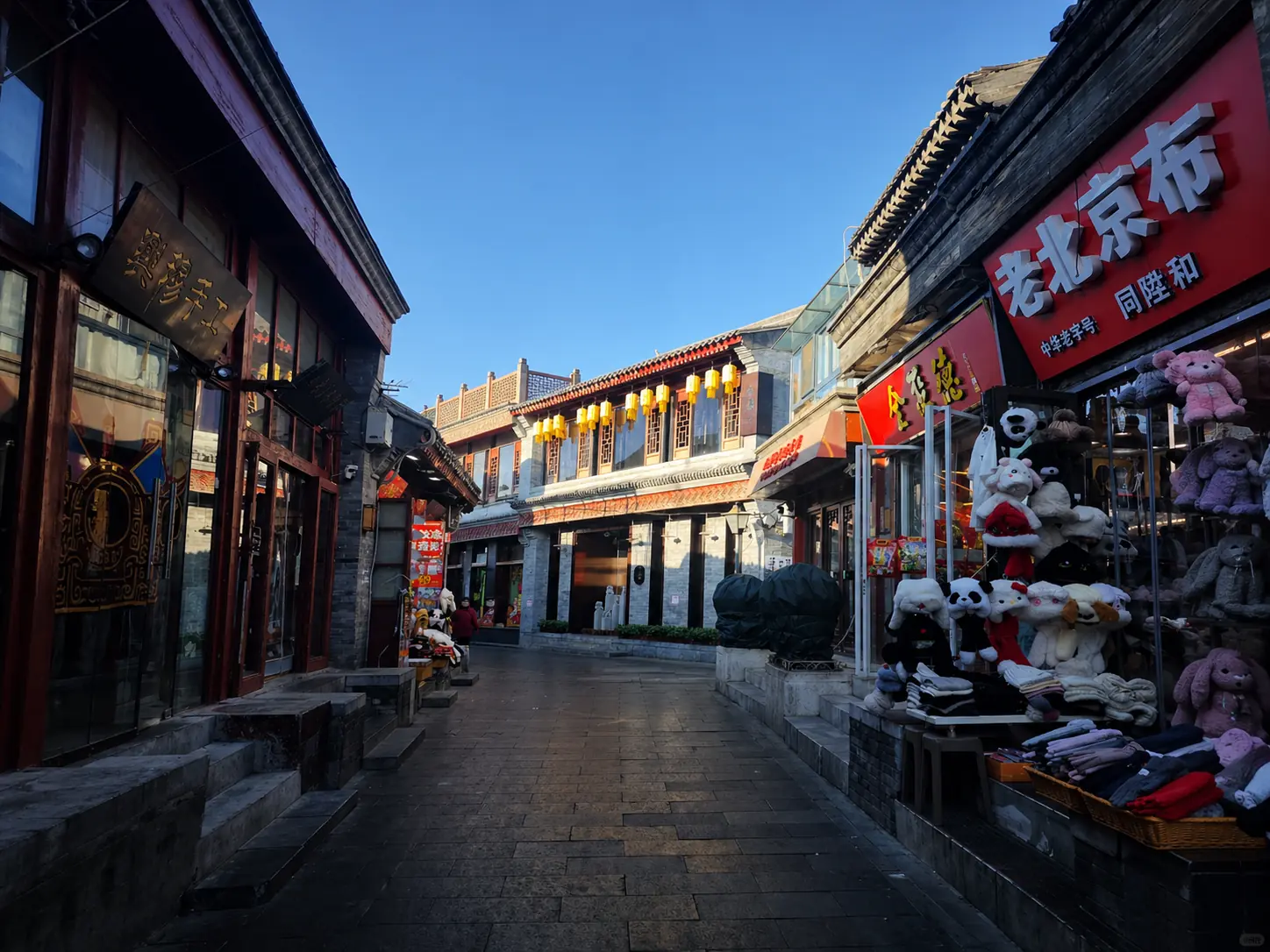
Route node 5 · enclosed lane
Yandai Xiejie Connector
Yandai Xiejie (烟袋斜街) is only about 232 meters long, but it has a clear identity. In the late Qing and early Republican periods, the street was associated with tobacco-pouch shops, water pipes, antiques, calligraphy mounting, stationery, snacks, and service businesses. Its curved street shape is said to resemble a tobacco pipe.
Today, Yandai Xiejie is touristy, but it works well as a connector. It takes you from hutong lanes into Shichahai (什刹海), changing the whole route from enclosed alleys to open water.
If Yandai Xiejie is too crowded, do not force a shopping stop. Keep walking toward the bridge and lake edge.
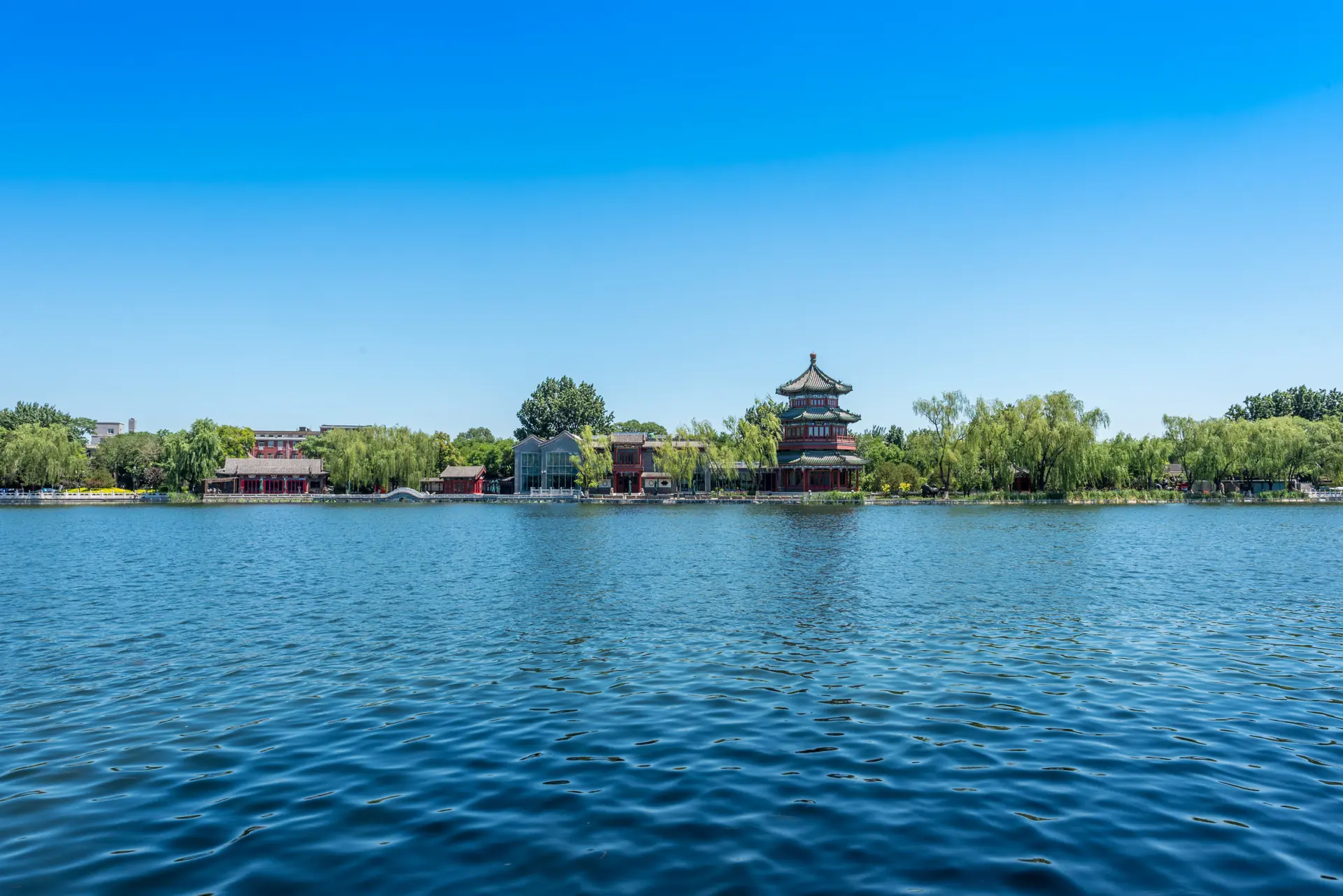
Route node 6 · open water
Yinding Bridge Transition
At the western end, continue to Yinding Bridge (银锭桥). Historically, "viewing the western mountains from Yinding Bridge" was one of old Beijing's celebrated scenes. Air quality, weather, and modern city density mean you should not expect a guaranteed mountain view today.
The bridge remains one of the best transition points in central Beijing: behind you are the hutongs and small shops; ahead is lake light, willow trees, rickshaws, restaurants, and the wider Shichahai landscape.
The space opens up, the light improves, and the route starts to breathe again.
Choose a Houhai or Drum Tower Finish
After Yinding Bridge, choose your finish based on energy: Houhai (后海) (Google | Amap) for an easy lake exit, or the Drum Tower (鼓楼) (Google | Amap) for a stronger old-city endpoint.
Easy Finish
Houhai and Shichahai Station
- ✓Short north-bank lake photos
- ✓Best if you are tired or with family
- —Less of a dramatic endpoint
Full Finish
Drum Tower Square
- ✓Old-city skyline and rooftops
- ✓Stronger Central Axis context
- —Add tower entry only if time works
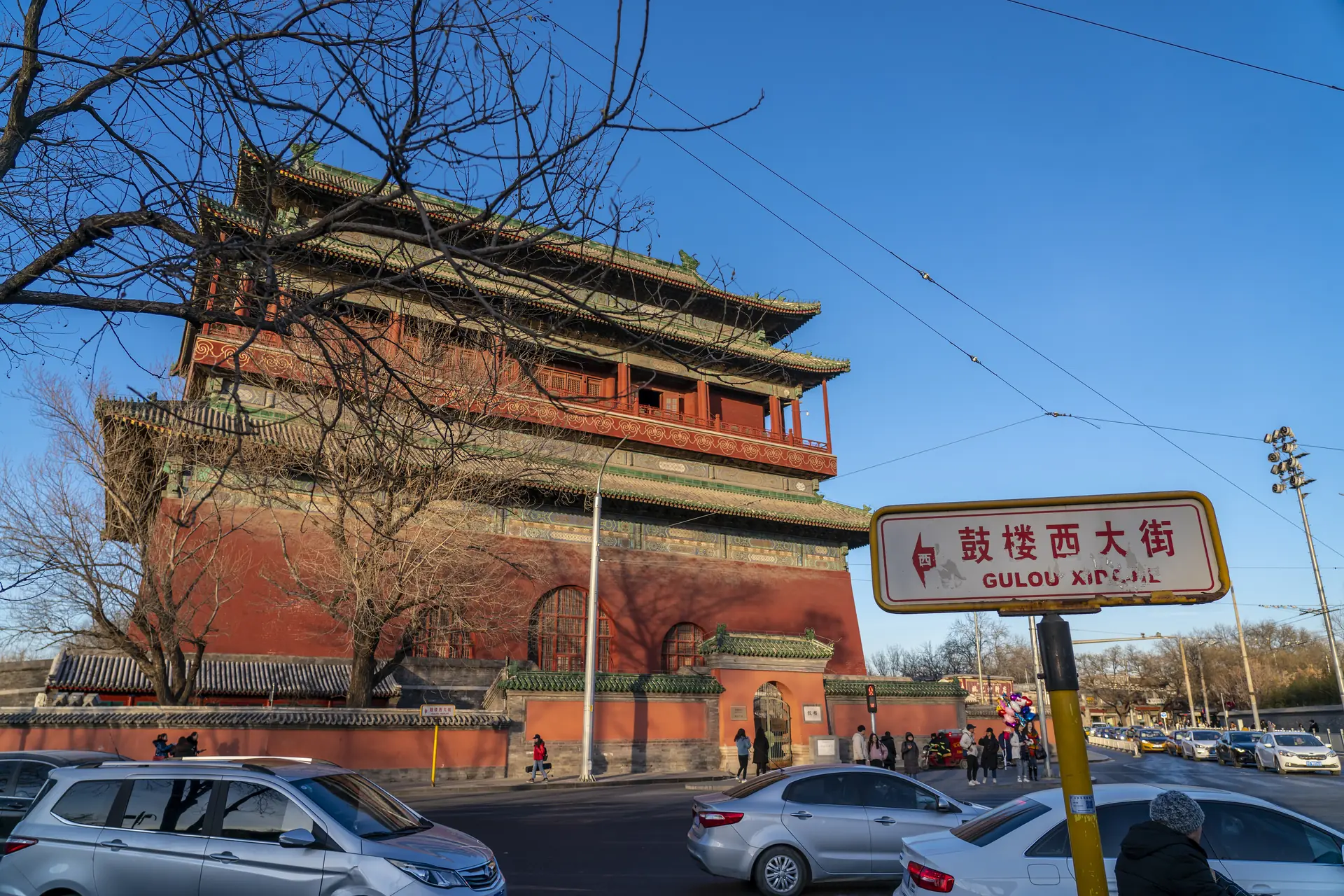
Primary finish · stronger city context
Drum Tower Square
The Drum Tower and Bell Tower are the northern anchor of Beijing's Central Axis (北京中轴线), which was inscribed on the UNESCO World Heritage List in 2024.
Ending your hutong walk here helps connect the route to the larger city plan: Nanluoguxiang is not an isolated tourist lane, but part of the old capital's north-central fabric.
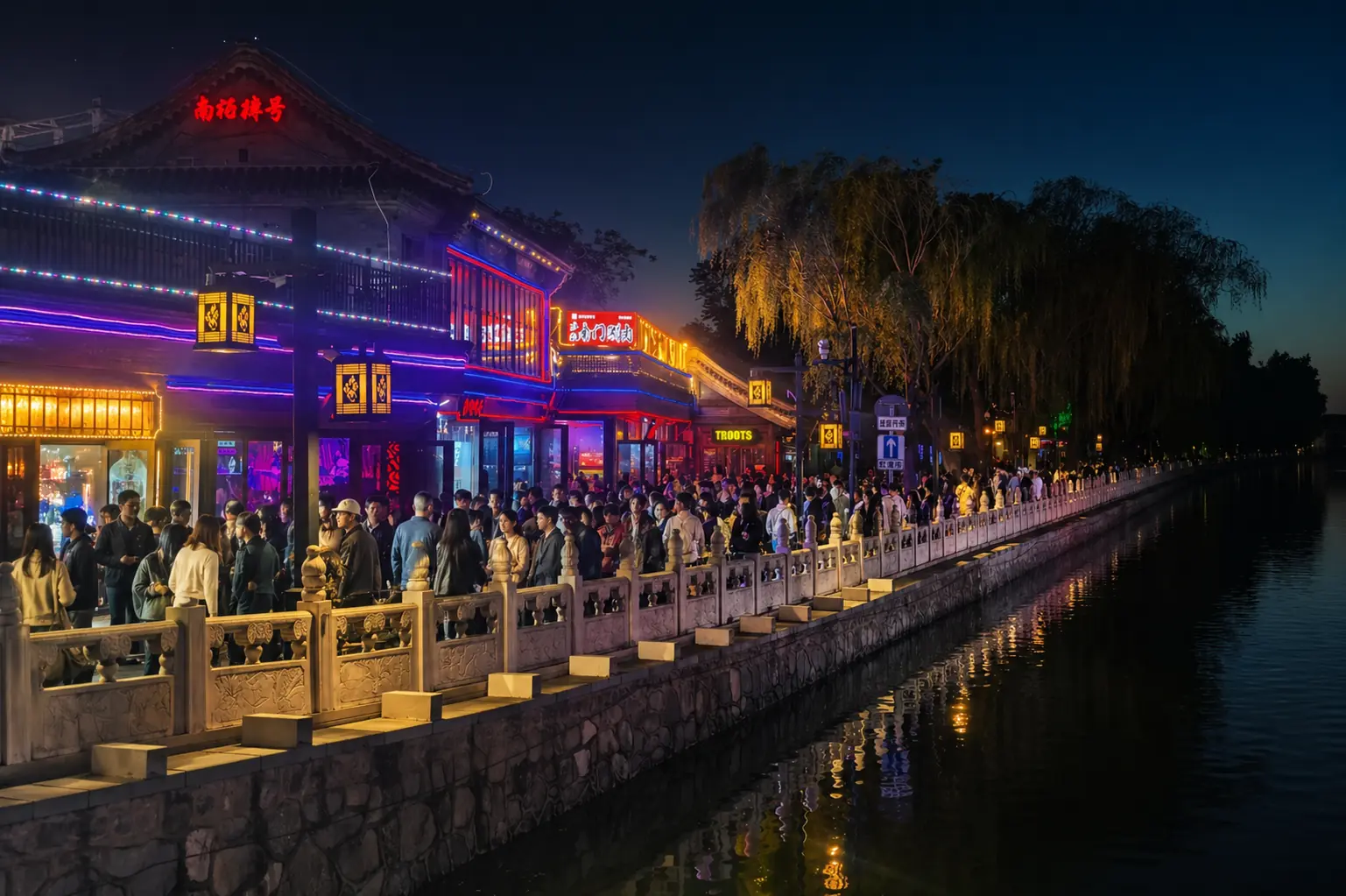
Evening alternative · easier lake exit
Houhai after dark
If you want an evening version, finish at Houhai for lake lights and dinner. It is lively and easy, though not necessarily the quietest old-Beijing experience.
If you want a calmer finish, leave before the bar lights take over and eat near Gulou, Di'anmen, or your hotel area instead.
Best Times and Hutong Walking Etiquette
These are suggested walking windows, not official opening hours. Individual shops keep their own schedules, while the street, side lanes, lake light, and crowd pressure change through the day.
Choose the window for the experience you want: quieter neighborhood detail in the morning, or warmer light and an easy dinner transition later in the day.
Weekday morning
About 08:30-10:30
The best morning window gives you quieter main-lane photos, residential details, and less crowd pressure.
Late afternoon
About 16:30-19:00
Late afternoon and early evening give better light at Yinding Bridge, Houhai, and the Drum Tower area.
Weekend fallback
Leave the bottlenecks
Avoid weekend afternoons if you can; they can make the area feel more commercial than it really is. If that is your only window, shift attention to Ju'er Hutong, Mao'er Hutong, and the lake edges rather than queuing at every snack window.
- Do not enter private courtyards. Many beautiful gates still lead to homes, work units, or non-public compounds. Admire from the street.
- Be careful with rickshaw offers. If you choose a pedicab ride, confirm route, duration, total price, and whether the price is per person before getting in.
- Keep food expectations realistic. Nanluoguxiang is good for snacks and breaks, not necessarily Beijing's best local meal. Plan serious meals around Gulou, Di'anmen, or other neighborhood restaurants.
- Stay quiet in side lanes. These lanes are not a theme park. Lower your voice, keep doorways clear, and avoid close-up photos of residents.
How to Combine Nearby Beijing Sights
This hutong walk works well as a half-day plan or as part of a broader Beijing day. The key is not to overload it. The old city looks compact on a map, but security checks, museum time, meals, heat, and crowds can drain energy quickly.
Visit Tiananmen, the Forbidden City, and Jingshan first, then drift north into Shichahai and Nanluoguxiang. Beautiful logic, but high step count.
Pair temple culture, quieter cafe lanes, and Nanluoguxiang. This version is more neighborhood-focused and less imperial.
Start with a park or hill view, then use Shichahai and the Drum Tower area as the natural old-city finish.
Pre-Dinner Hutong Walk
Easiest low-pressure version
Start around 16:30, walk Nanluoguxiang to Yinding Bridge, then eat near Houhai or Gulou. Good light, less heat, fewer hard decisions.
Frequently Asked Questions
Yes, if you treat it as the entry point to a wider hutong walk. The main lane is commercial and can be crowded, but the side hutongs, Yandai Xiejie, Yinding Bridge, Houhai, and the Drum Tower area make the visit much more rewarding.
Sources checked for this guide
- Nanluoguxiang length, width, fishbone layout, Yuan-era context and Mao’er Hutong residence references: Beijing Municipal Government hutong guide
- Wu Liangyong’s 1990 Ju’er Hutong organic-renewal project and courtyard-scale housing: Official Beijing tourism Ju’er Hutong guide
- Wanrong family residence at Nos. 35 and 37 Mao’er Hutong and exterior-only visitor context: Beijing Municipal Government Mao’er Hutong feature
- Yandai Xiejie’s 232 m length, historical trades and the Yinding Bridge western-mountain viewing tradition: Official Beijing tourism Yandai and Yinding history
- Current Nanluoguxiang station service and facilities on Beijing Subway Line 8: Beijing Subway official station page
- Beijing Central Axis inscription in 2024 and the Bell and Drum Towers at its northern end: UNESCO World Heritage Centre documents
Beyond This Guide
Nanluoguxiang works best when it is neither dismissed as a tourist trap nor over-romanticized as untouched old Beijing. Go with the right expectation: a commercial main lane, quieter residential side streets, a lake district, and a UNESCO-listed central-axis landmark all within a walkable old-city frame.
For a smoother Beijing plan, decide first whether this walk is your slow afternoon, your post-palace contrast, or your pre-dinner neighborhood stroll. The route should serve the day, not compete with every other sight on the map.
- Beijing Hutong Dumpling Class — fold dumplings inside a courtyard home after walking the hutong lanes
© gochinafreely.com — Original guide by Go China Freely.