Hours & Base Ticket
Essential Rules
Old Beijing Starts South of Qianmen
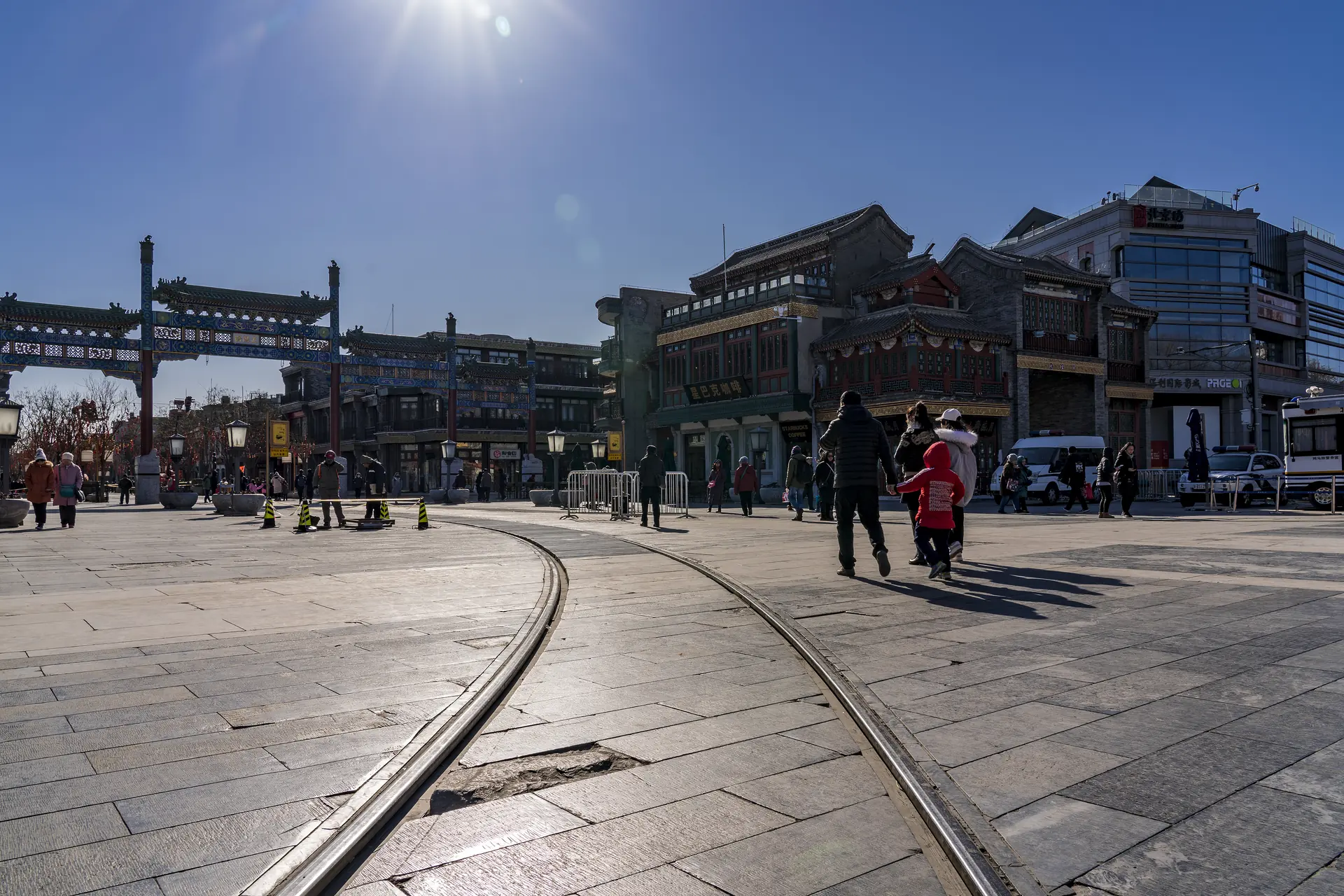
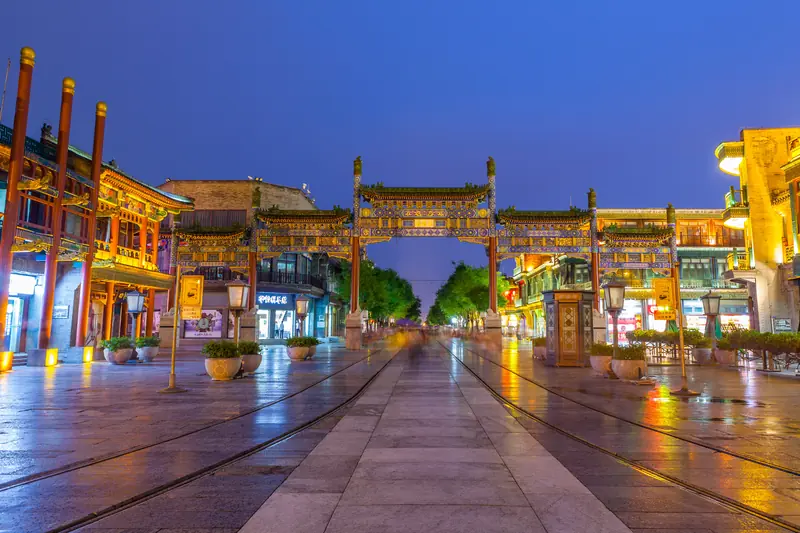
Qianmen gives the walk its formal north-south axis before the route turns into Dashilar.
Dashilar (大栅栏) and Bada Hutong (八大胡同) are often misread by first-time visitors. One gets treated as a souvenir street; the other as a slightly scandalous old story. The better walk is in between: Qianmen's formal axis, Dashilar's old commercial face, Yangmeizhu Xiejie's slower lane culture, Daguanlou's performance memory, and the Bada Hutong area's complicated social history.
This is a 2.5- to 4-hour south Beijing walk for travelers who want more than palace walls and postcard hutongs. Done well, it shows that old Beijing was not only imperial red walls. It was also pharmacies, silk shops, shoe stores, tea counters, theaters, inns, guild connections, narrow lanes, and ordinary courtyard boundaries just outside the city's ceremonial center.
2.5-4h
Best Pace
Free
Street Access
275 m
Dashilar Street
Lines 2/8
Qianmen Metro
Many visitors imagine "old Beijing" as palaces, red walls, and the hutongs north of the Forbidden City. The south city tells a different story. Outside Qianmen, old Beijing becomes commercial, theatrical, crowded, practical, and closer to ordinary urban life.
Official Beijing material describes Dashilar as a famous commercial street outside Qianmen and a vital part of the South Central Axis. The same source gives Dashilar Street as about 275 meters long from east to west, while noting that the name can also refer to a broader area including Dashilar Street, Langfang Toutiao Hutong, Liangshidian Street, and Meishi Street. Beijing's Central Axis commercial streets page is the useful official context.
1Commercial Beijing
Old brands, shopfronts, street food, and crowd flow are not distractions here. They are the historical layer.
2Performance Beijing
Theaters, tea houses, cinema history, opera memory, and popular entertainment shaped the district.
3Residential Beijing
Step west and south, and the main street gives way to lanes, private gates, small hotels, and lived-in courtyards.
That is the first adjustment: Dashilar is short on a map but deep as a neighborhood. It is not trying to be quiet. It became meaningful because people came here to buy medicine, tea, shoes, silk, pickles, hats, theater tickets, hotel rooms, meals, and stories.
Dashilar and Bada Hutong Walking Route
The cleanest route moves from formal Beijing into lived-in Beijing: Qianmen Street, Dashilar, Yangmeizhu Xiejie, Bada Hutong, and optionally Liulichang or a Qianmen evening finish.
- Qianmen Street(前门大街)- Start from Qianmen Station if you want the classic north entrance
- Dashilar Main Street(大栅栏)- Old brands, commercial energy, and the first crowd layer
- Yangmeizhu Xiejie(杨梅竹斜街)- Slower diagonal lane toward books, cafes, and old-building reuse
- Bada Hutong Area(八大胡同)- Read the social history carefully and respect private lanes
- Liulichang Optional Finish(琉璃厂)- Best if you want books, calligraphy, and cultural shops
- Qianmen Evening Return(前门夜景)- Good for lights, dinner, or Lao She Teahouse
Start at Qianmen if you want the route to make urban sense. Qianmen Street runs along Beijing's Central Axis and leads toward the commercial blocks outside the old gate. Beijing's official Qianmen page describes Qianmen Street as the former imperial road toward the Temple of Heaven and the main north-south street of the Outer City after 1550. Street access is free; individual venues set their own prices and hours.
Use Qianmen Station for the north end or Zhushikou Station for a south-end approach. Qianmen is best for a first-time scenic start; Zhushikou enters closer to Bada Hutong and avoids some north-end compression.
Turn west into Dashilar and accept the density. The main street is not a hidden lane; it is old commercial Beijing in a very visible form.
From Dashilar's west side, move into Yangmeizhu Xiejie. Beijing's tourism material places it north of Dashilar West Street, connecting toward Liulichang East Street, and gives its length as about 500 meters. This is where the route starts to breathe.
Use Bada Hutong as a quiet loop, not a spectacle. Walk slowly, keep your camera outside private thresholds, and do not chase every alley name as if the history were a checklist.
Choose one finish: continue west to Liulichang Optional Finish for books, calligraphy, and cultural shops, or return to Qianmen in the evening for lights, dinner, or Lao She Teahouse. These are alternatives, not two mandatory extra legs.
Dashilar: Time-Honored Shops and Street Theater
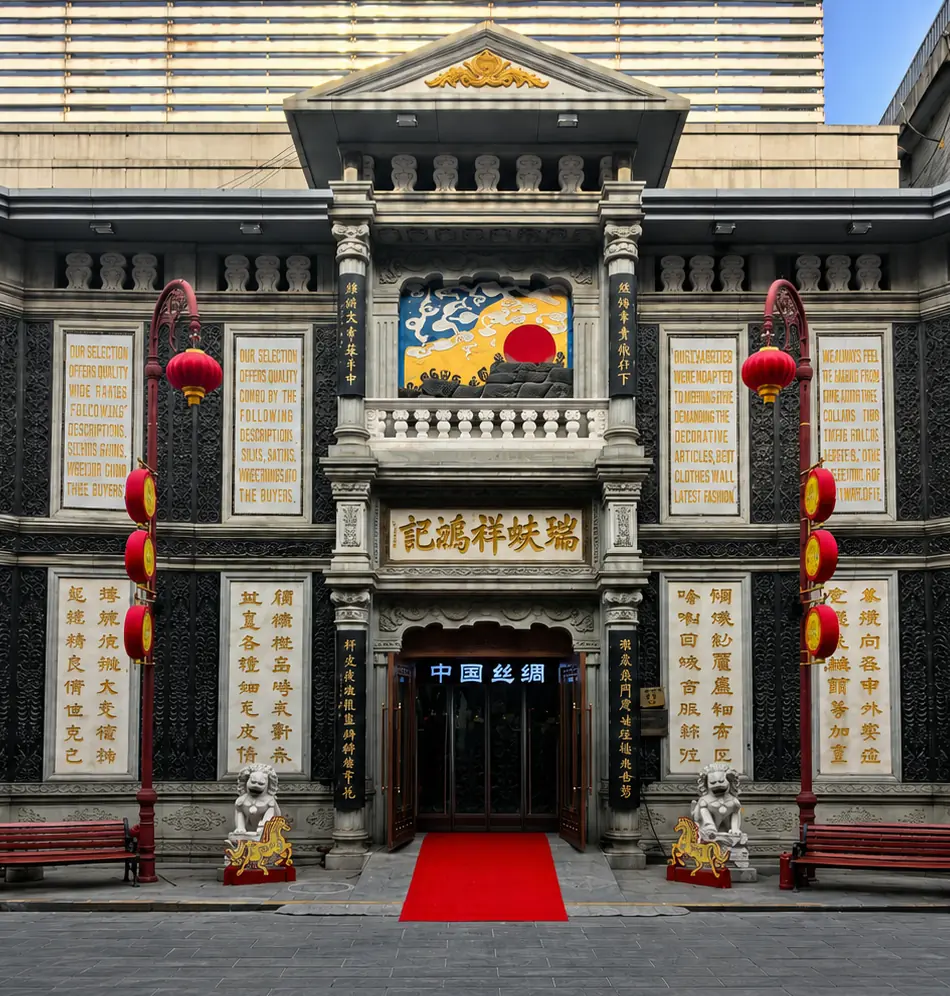
Dashilar's old-brand storefronts are part of the neighborhood's commercial history, not just shopping scenery.
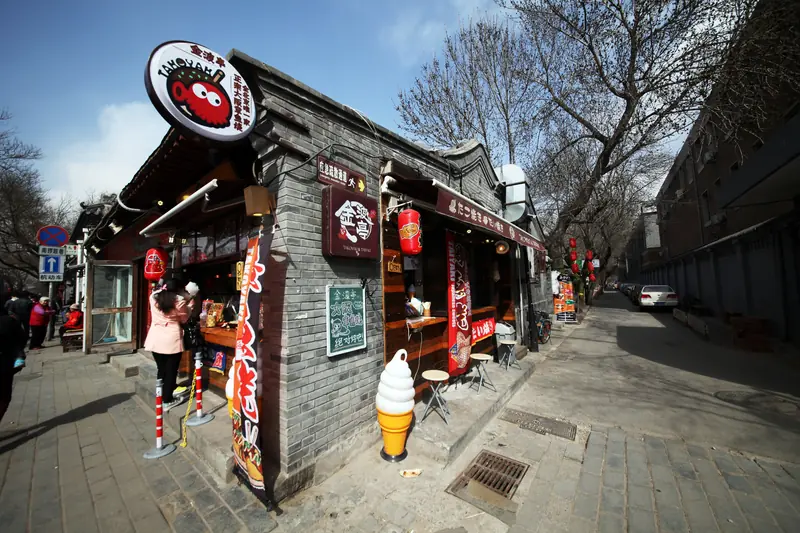
Dashilar's first impression is commercial overload: old shop signs, roast duck queues, medicine counters, shoe stores, tea, silk, snacks, souvenirs, and visitors packed into a short street. That is not a flaw. This district became famous because commerce was its public language.
Look at how the shopfronts hold memory. Old brands make the street readable even if you buy nothing. You are looking at Beijing's habit of turning specialized trades into landmarks.
The best way to walk Dashilar is not to judge it in the first five minutes. Use the east end for orientation, then keep moving west until the crowd loosens and the side streets start to matter.
Official Beijing material describes Dashilar as a historic commercial street outside Qianmen, with origins in the Ming period and prosperity from the Qing period. For a traveler, the practical point is simpler: this is where Beijing's shop culture, performance culture, and lane culture overlap.
Old-brand scan · read the signs as landmarks
Use the Westward Rule
If Dashilar feels too touristy, keep walking west across Meishi Street instead of giving up. The further you move from Qianmen's main flow, the more the district shifts from shopping strip to lane neighborhood.
Yangmeizhu's Slow Turn Toward Old Lanes
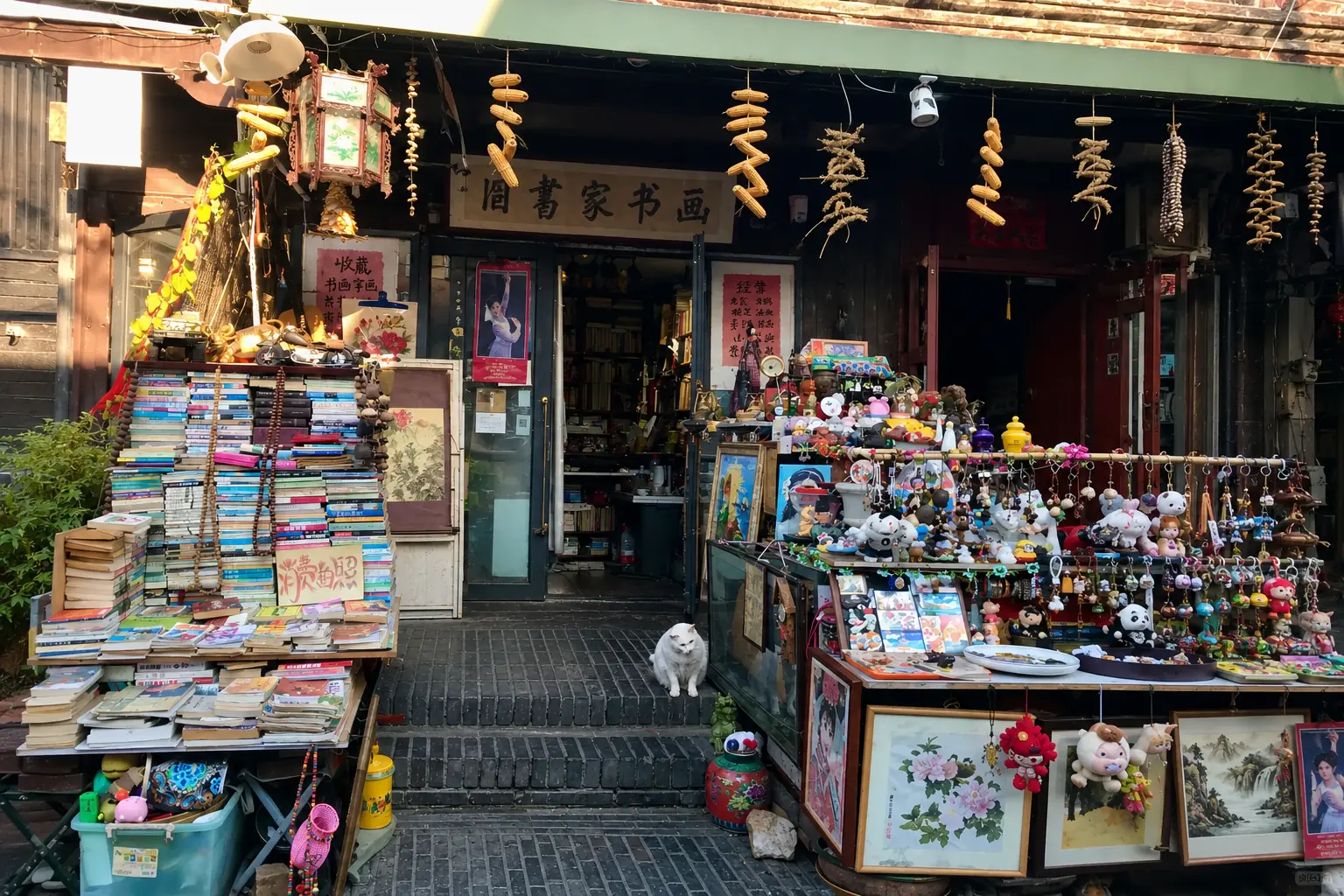
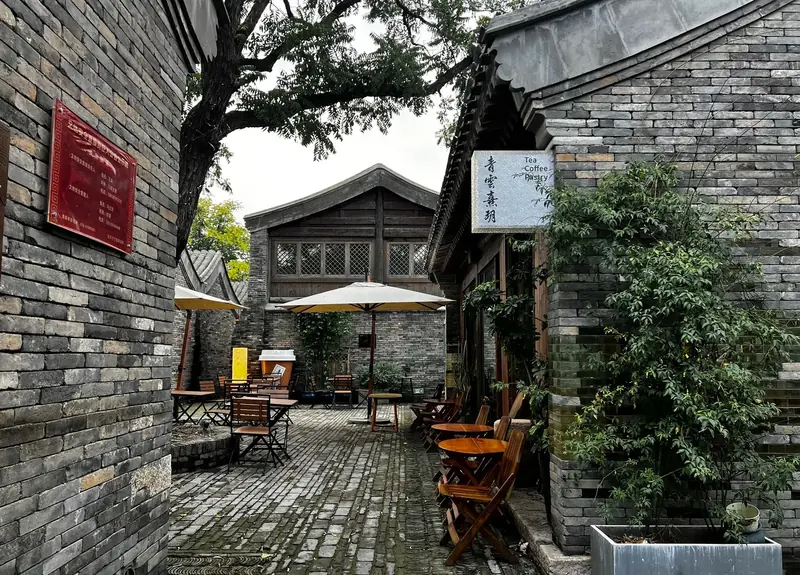
Yangmeizhu Xiejie slows the route down with books, cafes, and reused old buildings.
Yangmeizhu Xiejie (杨梅竹斜街) is the route's pressure release. It lies north of Dashilar West Street and angles toward Liulichang East Street, which is why it feels less formal than the north-south axis and the main shopping lanes.
Beijing's official leisure-zone note says the street is about 500 meters long, preserves an old Beijing hutong layout, and now mixes cultural consumption with old-building reuse. The traveler version of that sentence is: this is where you stop trying to "finish" a sight and start reading the street.
What to notice:
Street angle. The diagonal line changes how the old grid feels after the straight Qianmen and Dashilar approach.
Old-building reuse. Bookstores, cafes, printing experiences, and small cultural shops sit inside a hutong scale rather than a mall scale.
Private edges. A photogenic wall or doorway is not automatically public. Keep photos on the street side.
Do not force a must-see list here. If a bookstore, small exhibition, coffee shop, or printing experience is open and interesting, use it as a break. If not, keep the lane as a transition into the quieter south-western side.
Bada Hutong Beyond the Red-Light Myth
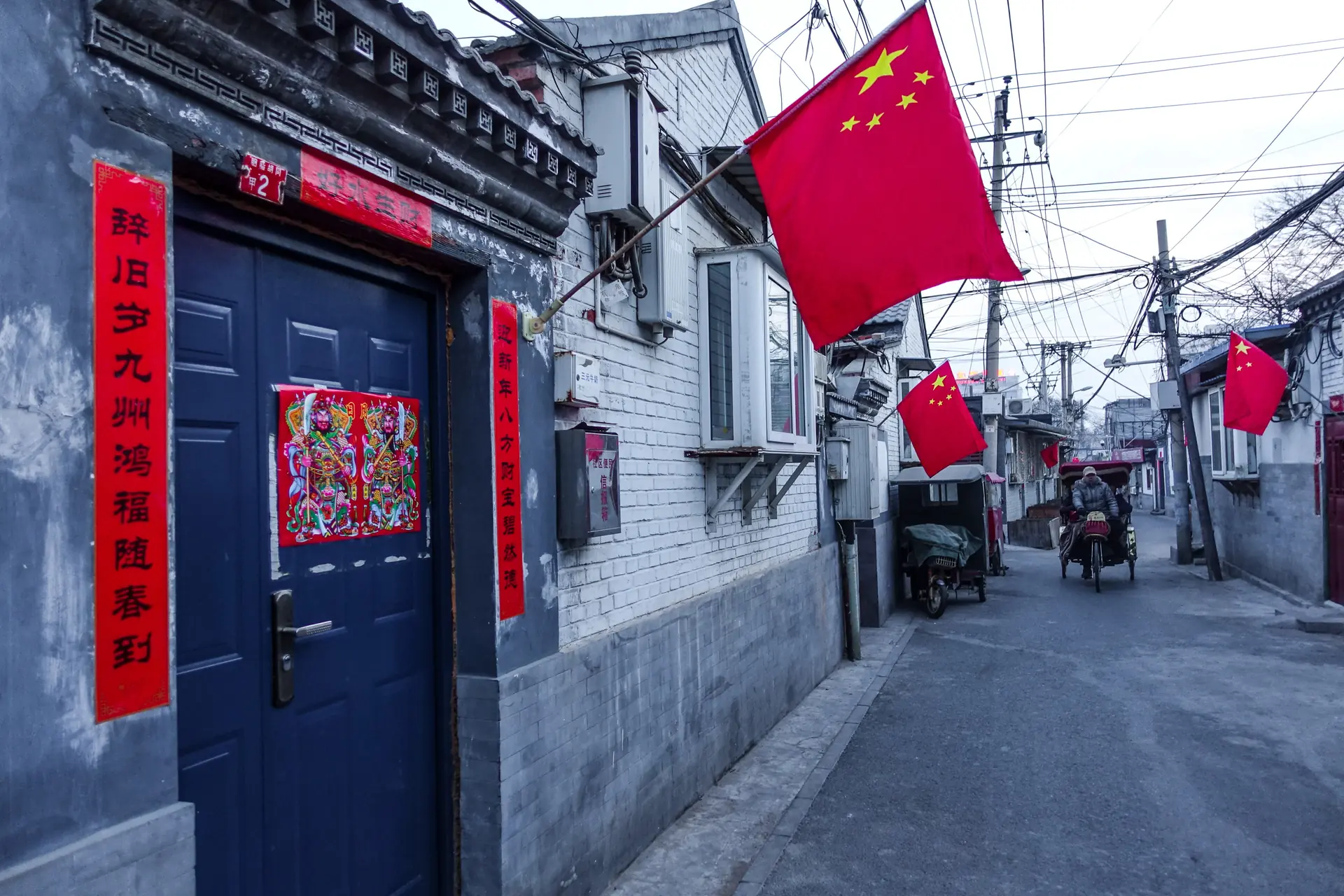
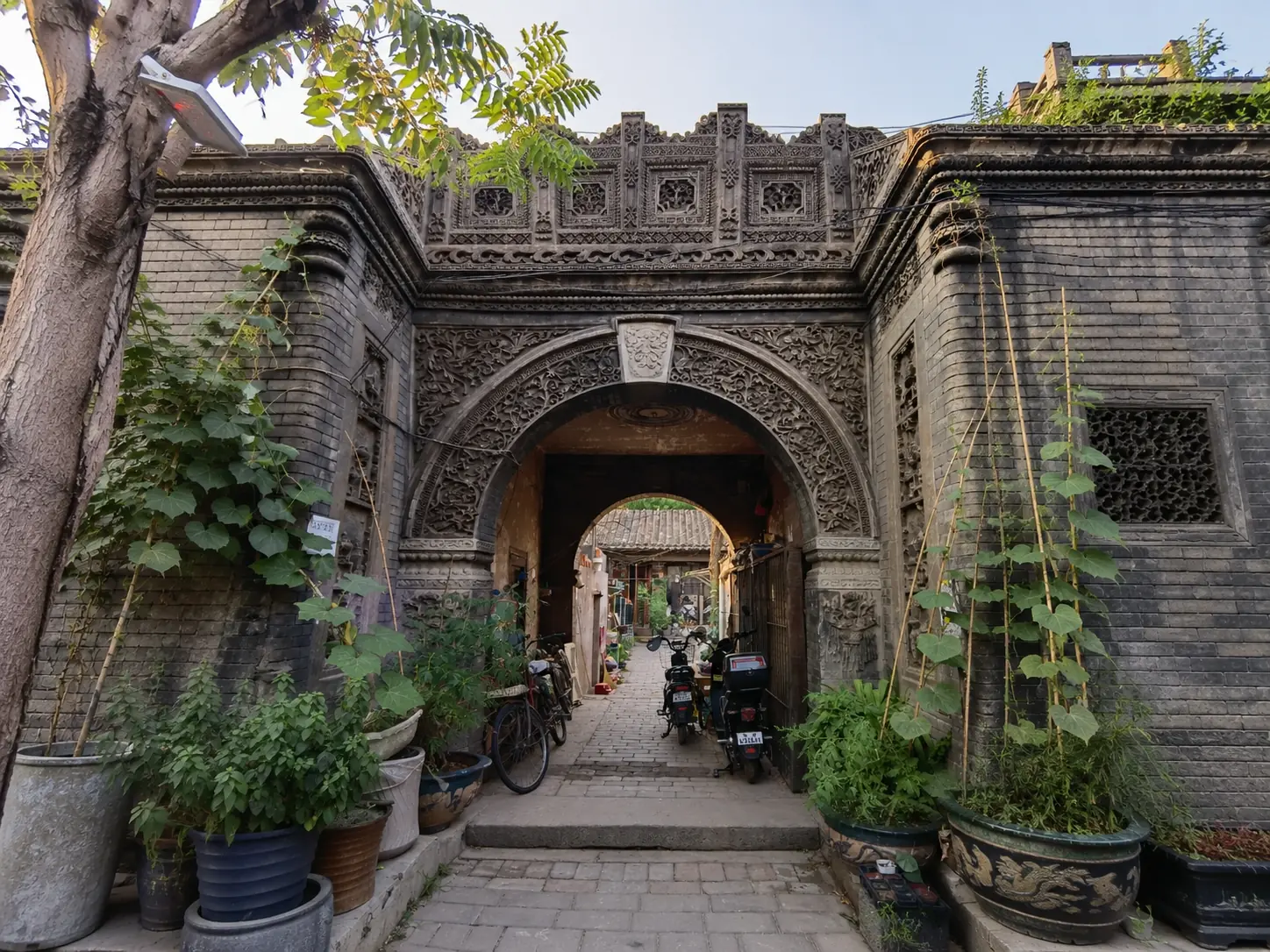
Bada Hutong is best read through lane scale, courtyard edges, and quiet residential details.
Bada Hutong is not one street. It is the common name for a cluster of lanes southwest of Dashilar. Official Visit Beijing material provides the traditional eight-name set; read it as a historical area rather than eight attraction pins.
The old reputation is real: in the late Qing and Republican periods, this area was associated with brothels, theaters, inns, social entertainment, and the wider night economy outside Qianmen. But a good travel guide should not turn that into lurid sightseeing. The more useful question is what the district reveals about old Beijing's south city: gendered labor, entertainment, elite and merchant social life, transient lodging, and the border between official culture and street culture.
The traditional eight-name set
Today, the experience is quiet and uneven. You may see ordinary residential gates, small hotels, renovated courtyards, local businesses, historical plaques, and very little that announces itself as an attraction. That is the point. Bada Hutong is a historical layer inside a living district, not a museum display.
ARead Scale
Notice lane width, gate size, side entrances, and how quickly the street shifts from commercial to residential.
BAvoid Voyeurism
Do not enter courtyards, photograph into rooms, or ask residents to perform old stories for you.
CConnect Context
Link the area back to Qianmen commerce, theaters, inns, and the south city's public life.
Daguanlou and South-City Performance Memory
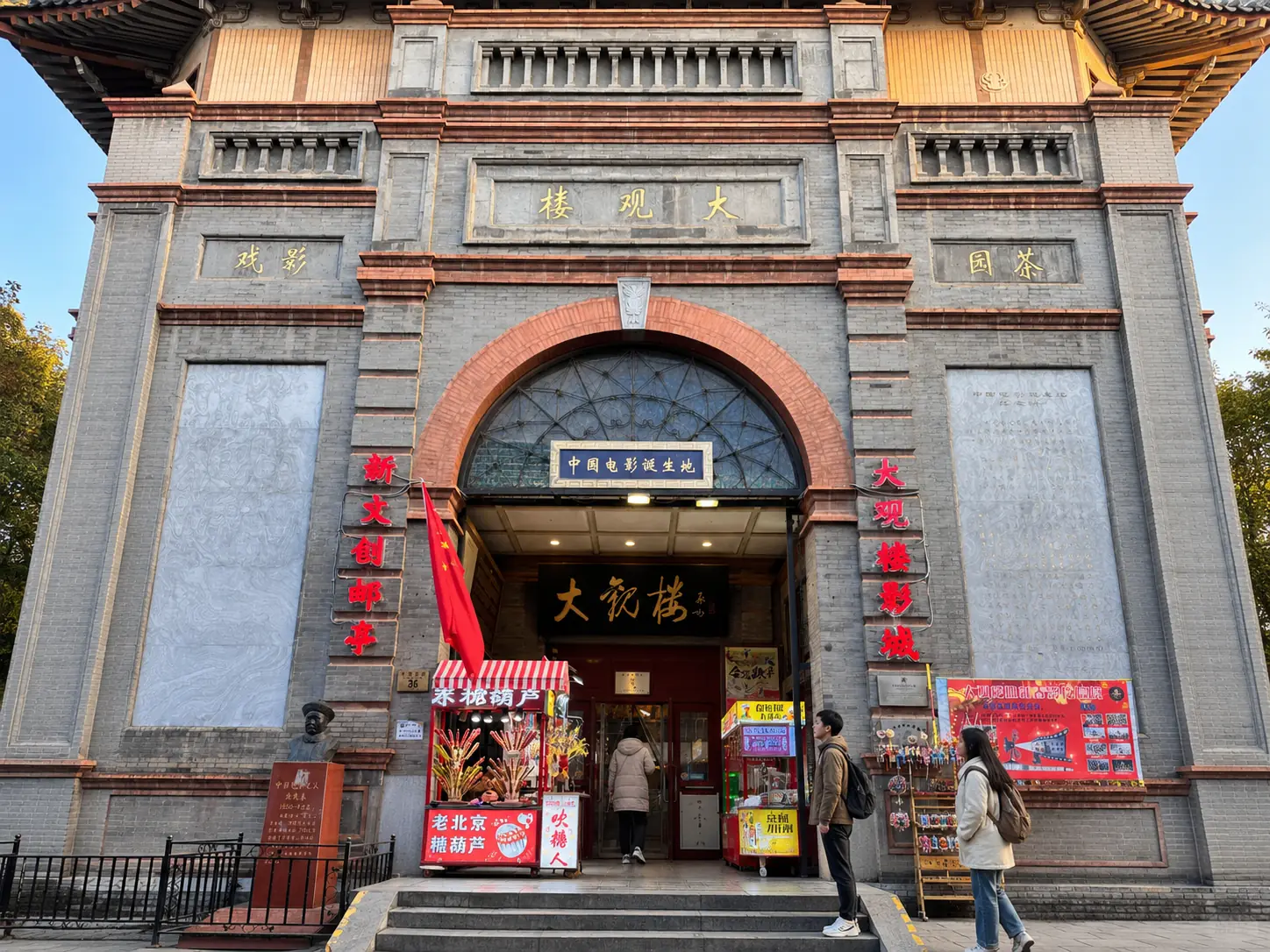
Daguanlou anchors Dashilar's performance memory and links the walk to early Chinese cinema history.
Dashilar was never just a shopping street. It was also part of Beijing's theater, tea-house, opera, cinema, and popular entertainment world. Daguanlou Cinema is the easiest landmark for that story.
Beijing's official 2025 citywalk note describes Daguanlou Cinema on Dashilar Commercial Street as a major origin point of Chinese cinema. It states that in 1905 Ren Qingtai (任庆泰) worked with Peking opera master Tan Xinpei (谭鑫培) to produce China's first dramatic film, Dingjunshan (定军山), which was screened at Daguanlou. Use the claim carefully: the important traveler takeaway is that Dashilar was tied to early cinema and performance culture, not only shopping.
That performance layer changes how the whole district feels. A street of old shops becomes a public-life zone: people came for medicine, shoes, tea, cloth, food, theater, cinema, gossip, lodging, and meetings. Bada Hutong then sits not as an isolated scandal, but as part of a wider south-city entertainment economy.
If you still have energy in the evening, pair this walk with Lao She Teahouse or a Peking Opera performance. Leave a real dinner break between the walk and the show.
Best Times and Hutong Etiquette
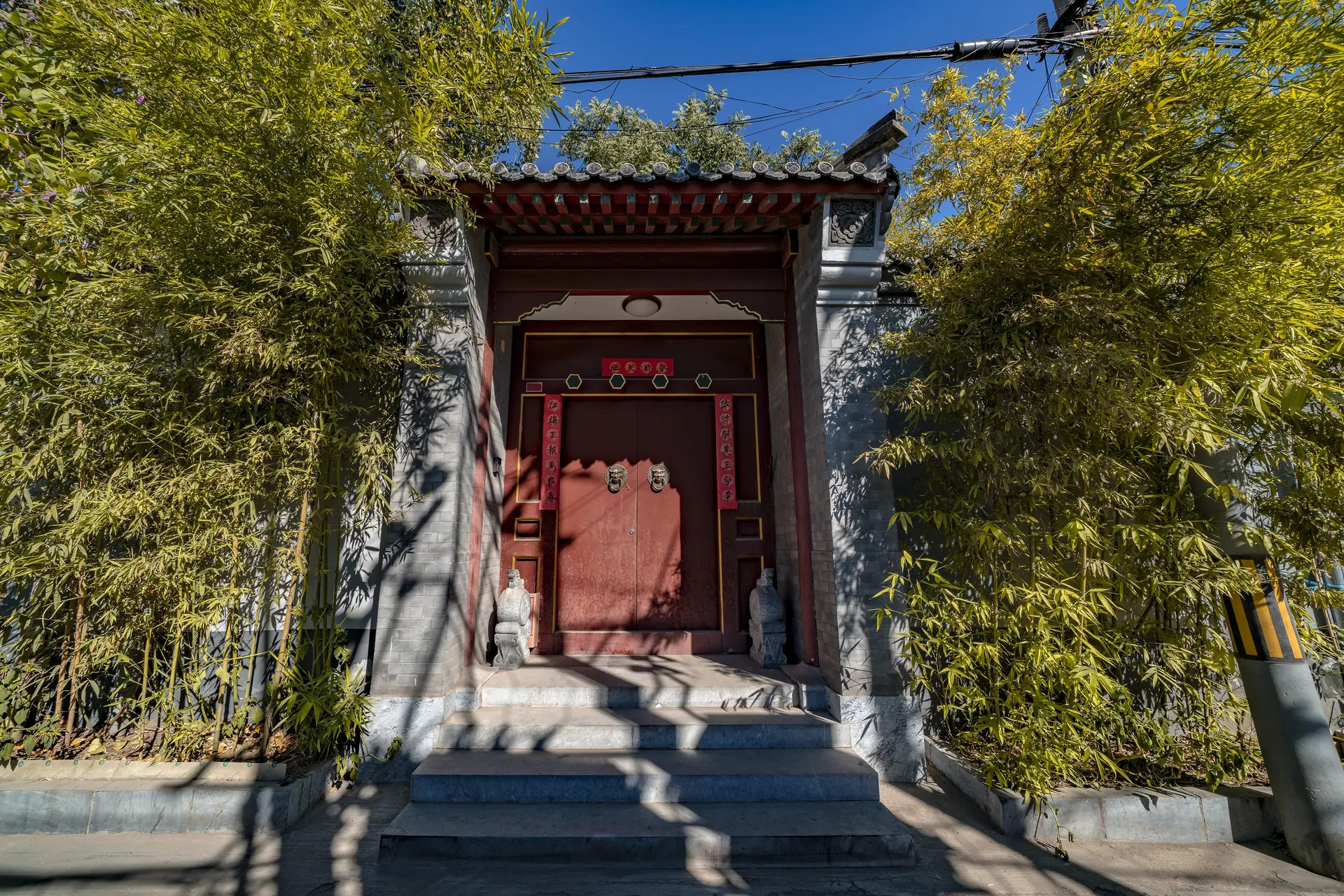
Many old-looking gates in the area still belong to homes or private compounds.
The best windows are weekday morning from about 09:30 to 11:30, or late afternoon from about 15:30 to 18:30. Morning gives you opening shopfronts and less crowd pressure. Late afternoon gives warmer light in Yangmeizhu and Bada Hutong, then an easy return to Qianmen or Dashilar for lights.
Avoid weekend afternoons and major public holidays if your goal is neighborhood texture. Qianmen and Dashilar can become a crowd funnel, while the narrower lanes around Yangmeizhu and Bada Hutong feel less comfortable when everyone is stopping for photos.
Do not enter private courtyards. Many attractive gates lead to homes, hotels, work units, or non-public compounds.
Use careful language around Bada Hutong. The history is complex; avoid treating the area as a red-light novelty stop.
Confirm pedicab terms first. If you take a tricycle ride, agree on total price, route, duration, and whether the quote is per person.
Watch for electric bikes. Hutong lanes are narrow, and riders may pass close behind you.
Pair This Walk With Beijing Sights
Dashilar and Bada Hutong work best as a half-day plan. They become thin if you squeeze them into the end of a palace marathon.
Visit the Forbidden City and Jingshan first, rest, then use Qianmen and Dashilar for a late-afternoon contrast. Beautiful logic, but high step count.
Start with the Temple of Heaven, then move toward Zhushikou, Qianmen, Dashilar, and Yangmeizhu. Keep museum-style stops light.
Use Dashilar, Xianyukou, Qianmen roast duck, and our Beijing food guide to shape a slower eating route.
Compare south-city Dashilar with Nanluoguxiang or Shichahai on another day.
Liulichang is the natural add-on if you want books, calligraphy, painting supplies, old-style cultural shops, or a calmer westward finish. Do not add it just to add another pin. Add it if the cultural-shopping layer interests you.
The wider Central Axis context also matters. UNESCO inscribed the Beijing Central Axis as a World Heritage property in 2024. Qianmen and the south-city streets are not the core monument the way the Forbidden City or Temple of Heaven are, but the axis helps explain why this whole area feels so spatially loaded: ceremonial order to the north, commercial and popular life just outside the gate.

Frequently Asked Questions
Yes, if you treat it as old commercial Beijing rather than a quiet ancient lane. The main street is crowded and touristy, but the old brands, side lanes, Yangmeizhu Xiejie, and Bada Hutong context make it more rewarding.
Sources checked for this guide
- Dashilar’s 275 m length, broader-area definition and South Central Axis context: Beijing Municipal Government Central Axis guide
- Current Qianmen-Dashilar commercial district and Qianmen metro approach: Beijing Municipal Government commercial district page
- Qianmen’s Central Axis and Outer City history: Official Beijing Qianmen guide
- Yangmeizhu Xiejie’s 500 m length, diagonal route and Liulichang connection: Beijing Municipal Bureau of Culture and Tourism leisure-zone note
- Traditional Bada Hutong eight-name set and historical area context: Official Visit Beijing Bada Hutong history
- Renamed Bada Hutong lane variants: Official Visit Beijing lane guide
- Daguanlou, Ren Qingtai, Tan Xinpei and the 1905 Dingjunshan screening: Beijing Municipal Government film-origin CityWalk
- Beijing Central Axis World Heritage inscription in 2024: UNESCO Decision 46 COM 8B.15
Beyond This Guide
Dashilar and Bada Hutong work best when they are neither dismissed as touristy nor romanticized as untouched old Beijing. Go with the right expectation: a commercial main street, slower side lanes, performance history, sensitive social history, and residents still using the area as part of everyday Beijing.
For broader planning, anchor this walk around your real day: palace contrast, Temple of Heaven connection, food route, or evening show. Then give the south city enough time to be read, not just passed through.
More Beijing: Beijing Travel Guide · Nanluoguxiang Hutong Walk · Shichahai Lakes Walk · Lao She Teahouse · Beijing Food Guide
© gochinafreely.com — Original guide by Go China Freely.