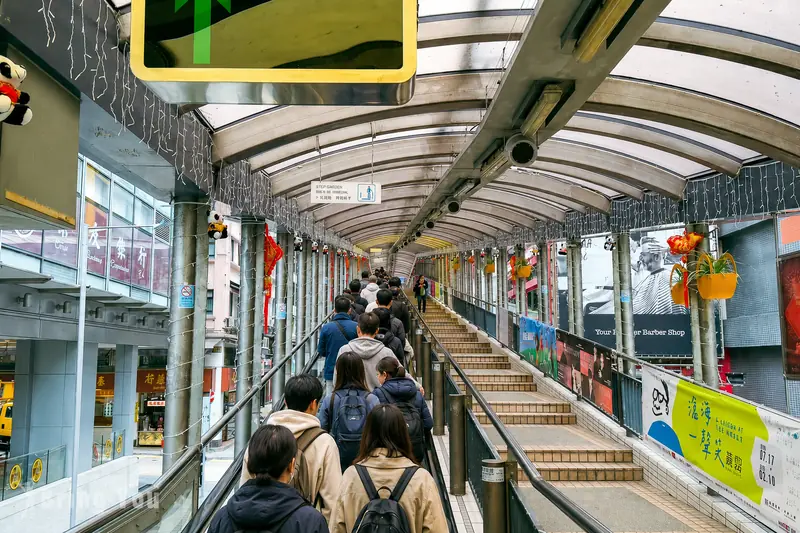
Walk & Access
Good to Know
Hillside Layers Between Central and Sheung Wan
A hillside neighborhood, not one attraction
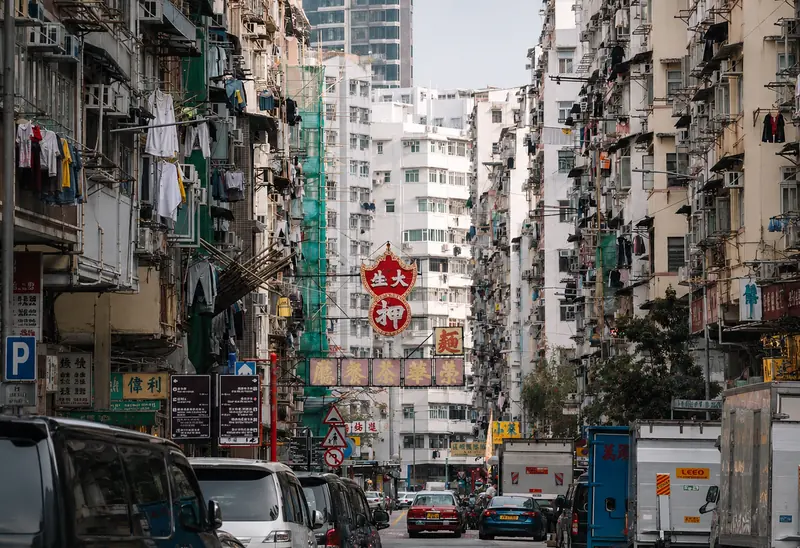
Old Town Central is not a ticketed sight with one gate and one correct route. It is a dense hillside layer between Central (中环) and Sheung Wan (上环), where Hollywood Road (荷李活道), Man Mo Temple (文武庙), PMQ (PMQ元创方), Tai Kwun (大馆), street murals, antique lanes, bars, and the Central-Mid-Levels Escalator all sit within a few steep blocks.
This guide gives you a practical 3-4 hour walk that uses the escalator smartly, keeps the best stops in a logical order, and leaves room for photos without turning the day into a wall-hunting exercise.
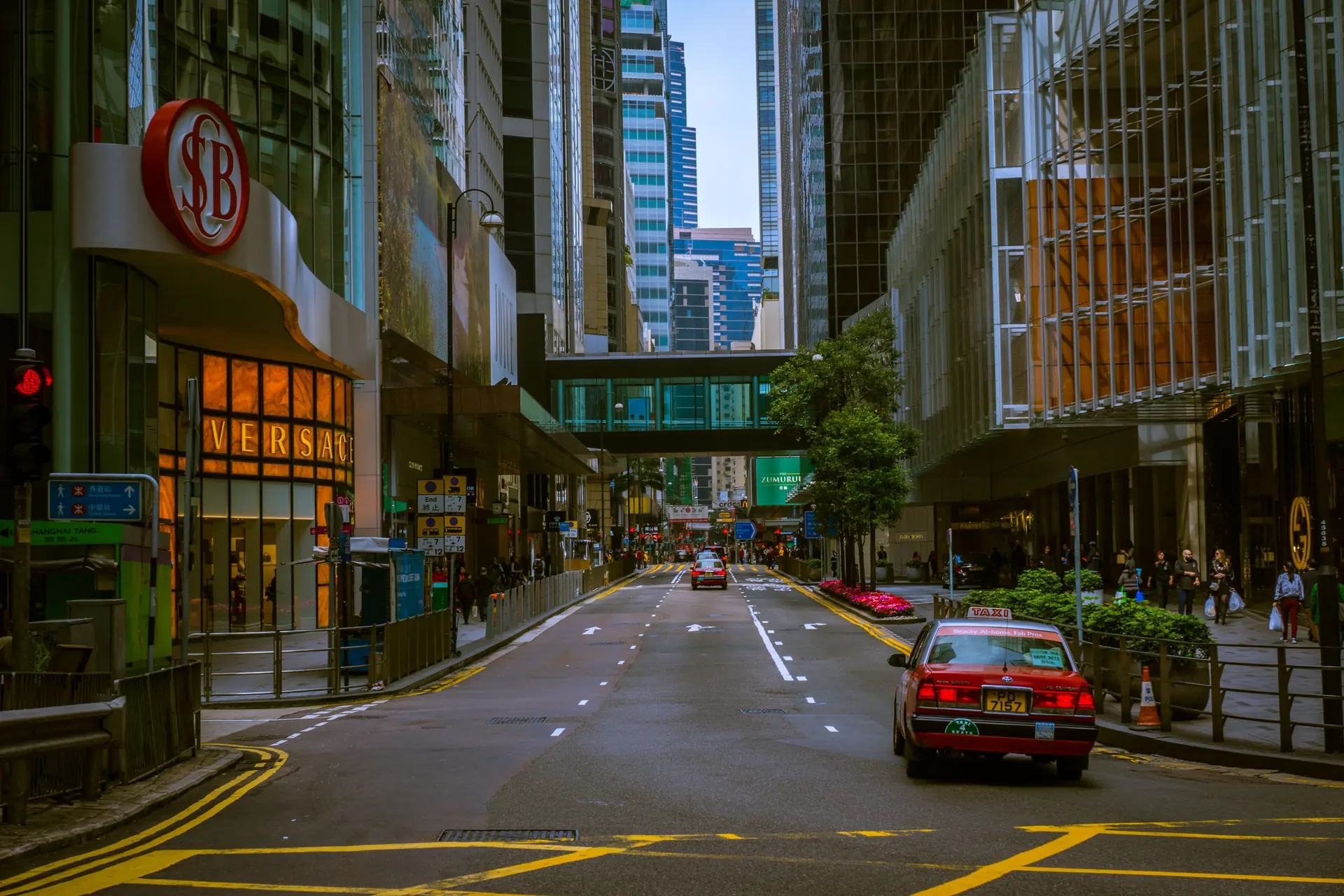
Old Town Central is a hillside neighborhood route, not a single attraction with one entrance.
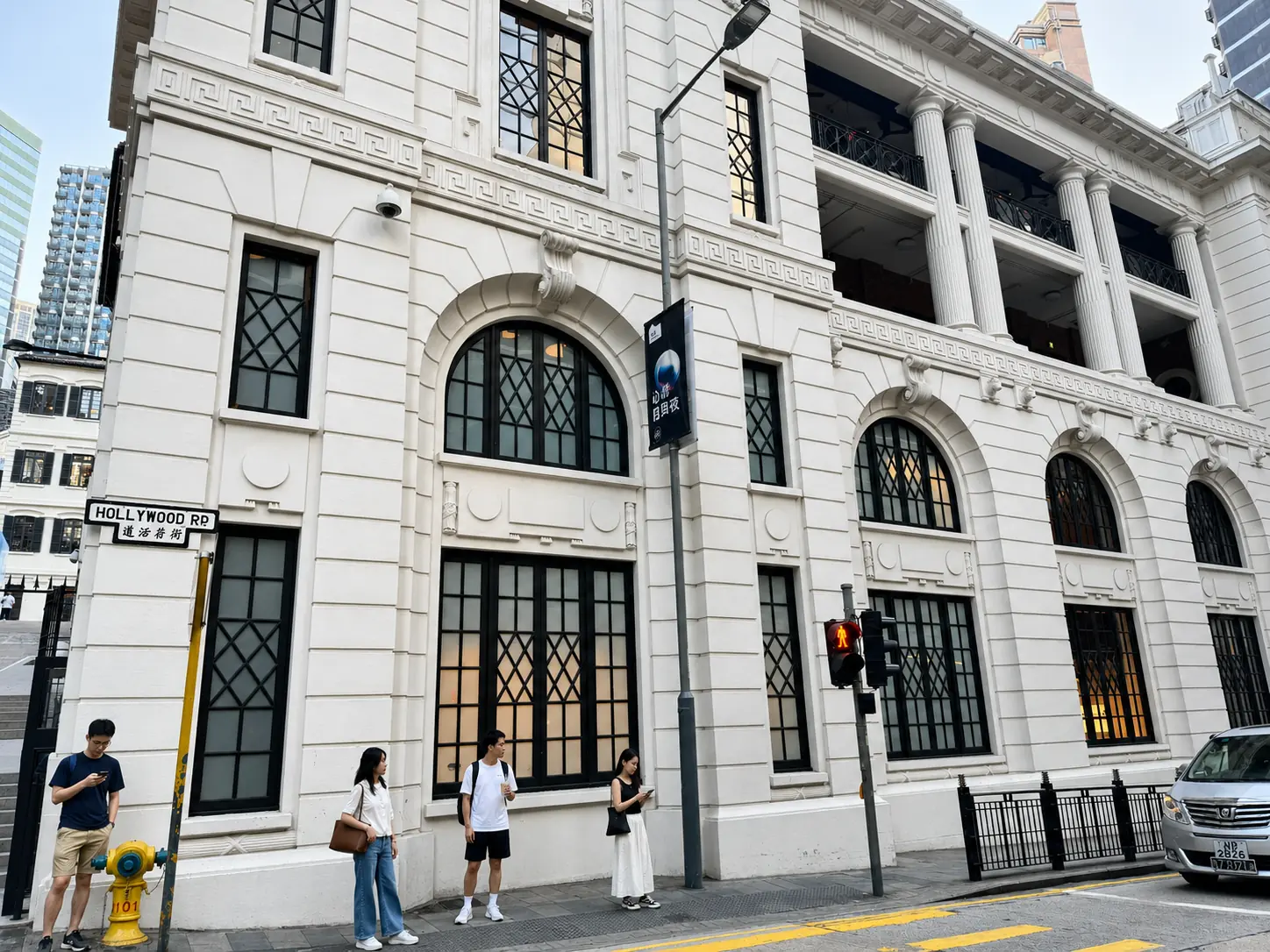
Hollywood Road shows the walk's core mix: older trade, gallery polish, side streets, and daily movement.
Density is the point
The reason to walk Old Town Central is density. In a few minutes, Hong Kong can shift from office towers to stone steps, incense smoke, design studios, coffee shops, wet-market edges, antique stalls, prison walls, and murals tucked beside busy roads. The Hong Kong Tourism Board describes the neighborhood as stretching across the sloped streets of Central and Sheung Wan, where historic temples, contemporary galleries, food, bars, and art sit close together.
That mix is also why a good route matters. If you only chase one mural, the area feels like a photo stop. If you only enter Tai Kwun, it feels like a heritage compound. If you only stand inside Man Mo Temple, you miss the way worship, trade, design, nightlife, and commute infrastructure share the same slope.
Read three connected layers
Street Art
Graham Street, Hollywood Road, Shelley Street, and Tai Ping Shan turn ordinary walls into route markers.
Temple and Trade
Man Mo Temple, Cat Street, and Sheung Wan lanes keep the walk grounded in older community life.
Urban Reuse
PMQ, Tai Kwun, and the escalator show how Hong Kong reworks heritage, slope, and daily movement.
The route works when murals pull you into the lanes, older community anchors slow you down, and reused buildings or commuter infrastructure explain how the hillside keeps changing.
The Best Old Town Central Route
For most visitors, start after 10:20 near Central Station (中环站) (Google | Amap) or the Central Market side. The official escalator direction changes from downhill to uphill at 10:00; the extra 20 minutes is simply a practical buffer for a first visit.
- Central Station(中环站)- Start from Central or the Central Market side
- Pottinger Street(砵典乍街石板街)- Short stone-step texture before the murals
- Graham Street Mural(嘉咸街壁画)- Classic colorful tong lau mural photo stop
- Mid-Levels Escalator(中环至半山自动扶梯系统)- Ride short sections, then step off for side streets
- PMQ(PMQ元创方)- Design studios and courtyard reuse
- Tai Kwun(大馆)- Heritage compound, prison walls, and contemporary culture
- Man Mo Temple(文武庙)- Incense, worship, and Hollywood Road history
- Upper Lascar Row(摩罗上街)- Antiques, curios, posters, and browsing
- Tai Ping Shan Street(太平山街)- Quieter steps, murals, cafes, and Sheung Wan finish
Route anchors
These six map surfaces match nodes 2, 4, 5, 6, 7 and 8 above. They are not a second route.
The complete line is still the nine-node sequence above. These map links simply make the stops that already have registered POIs easier to open without breaking the reading flow.
The full version is roughly 3-4 km before detours. With photos, PMQ, a short Tai Kwun look, Man Mo Temple, and a coffee break, allow 3-4 hours. If you plan to do a proper Tai Kwun exhibition visit or linger in design shops, make it 4-5 hours.
Use this as a route, not a rule. Street art changes, shops open and close, and the steep lanes reward short side turns. Keep the sequence, but let yourself step off the main line when a mural, staircase, gallery, or old shop catches your eye.
Start with Graham Street and Hollywood Road Murals
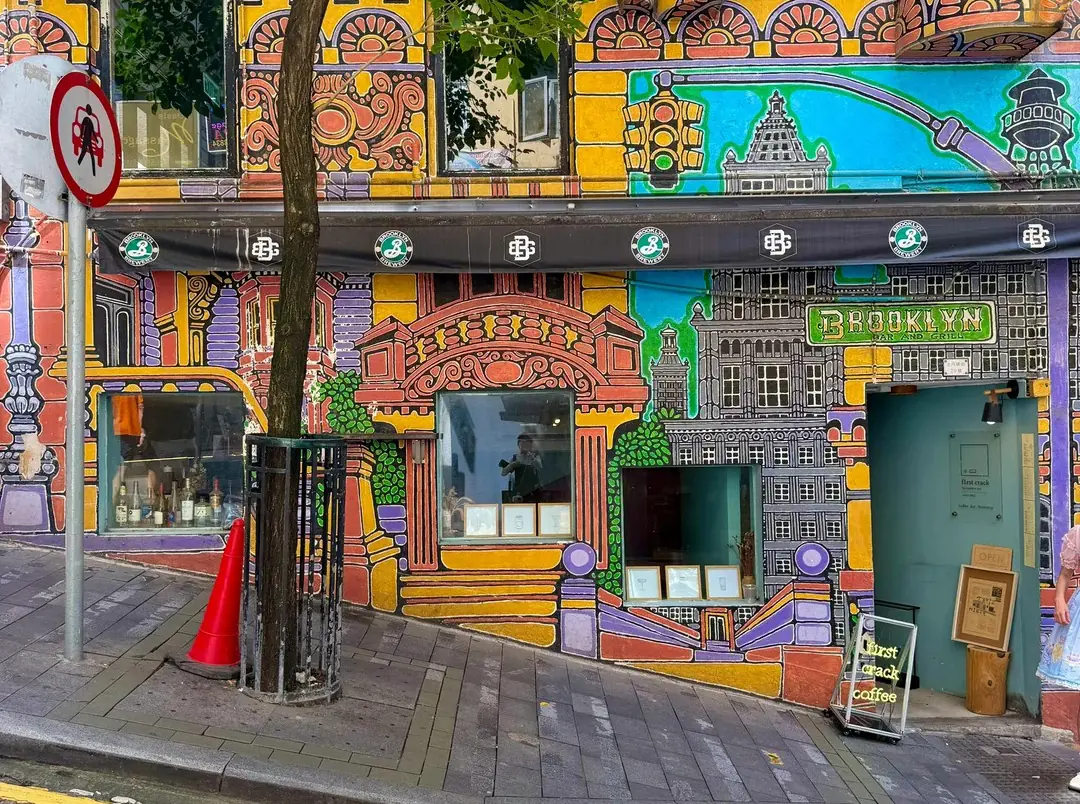
The Graham Street mural is a classic first photo stop, but the street is still a working slope.
Begin with one wall, then read the street
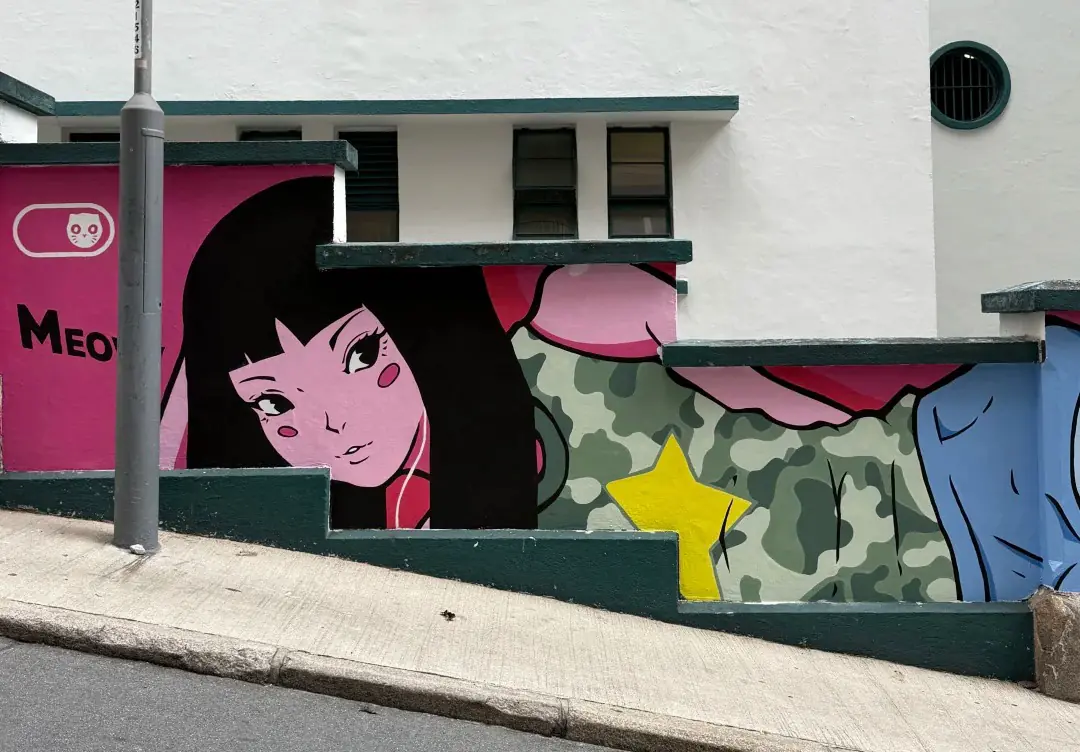
Graham Street (嘉咸街) and Hollywood Road are the easiest way to enter Old Town Central's street-art layer. The current HKTB listing still places Alex Croft's colorful tong lau mural at the Graham Street and Hollywood Road intersection. It works because it looks cheerful at first glance, but the blocky windows also echo Hong Kong's older tenement-building language.
Give the mural a few minutes, not half the morning. This is a working slope with market activity, delivery traffic, pedestrians, and storefronts. Step out of the road after the shot, keep shop entrances clear, and remember that murals are living street surfaces. Paint fades, businesses change, and construction can alter a scene faster than guidebooks can update.
Let the murals lead you onward
From Graham Street, drift toward Hollywood Road (荷李活道) and Shelley Street (些利街). Current HKTB street-art coverage still uses the Shelley Street and Hollywood Road area as an example, along with other works around Central and Sheung Wan. Treat them as route markers rather than fixed trophies: the fun is in noticing how art appears beside pipes, old walls, staircases, restaurant signs, and daily traffic.
Route anchor: Hollywood Road (荷李活道) (Google | Amap) links the Graham Street mural area with Shelley Street, PMQ, Man Mo Temple, and Cat Street.
Use Murals as Breadcrumbs
Do not force a strict mural checklist. Street art is the most changeable part of Old Town Central, so use current HKTB or HKwalls listings for updates, then let the walls guide you into side lanes.
Use the Central Mid-Levels Escalator Smartly

The escalator is the walk's energy saver, especially after it reverses uphill for the rest of the day.
The moving spine of the route
The Central-Mid-Levels Escalator (中环至半山自动扶梯系统) is the route's best shortcut. It is not a theme-park ride; it is real commuter infrastructure built for a steep city. The Hong Kong Transport Department describes the system as starting at Queen's Road Central, passing through narrow streets, and ending at Conduit Road.
Ride short sections, then step off. A good Old Town Central walk uses the escalator like a moving spine: take it uphill, exit near Hollywood Road or Shelley Street for murals, rejoin if the slope feels annoying, then cut across toward PMQ or Tai Kwun.
06:00-10:00 · Downhill
The official morning direction carries commuters toward Central.
10:00-midnight · Uphill
Use this direction to save energy from Central toward Hollywood Road and the Mid-Levels.
First-visit buffer: the official reversal is 10:00. Starting around 10:20 simply gives you time to reach the system and settle into the route; it is not another published operating time.
This is especially useful in humid weather. Most of the escalator system is covered, so it helps in light rain, but the side streets are still wet, sloped, and sometimes slick. Keep shoes practical and save your energy for the lanes, not for proving you can climb every block.
PMQ and Tai Kwun Show Reuse
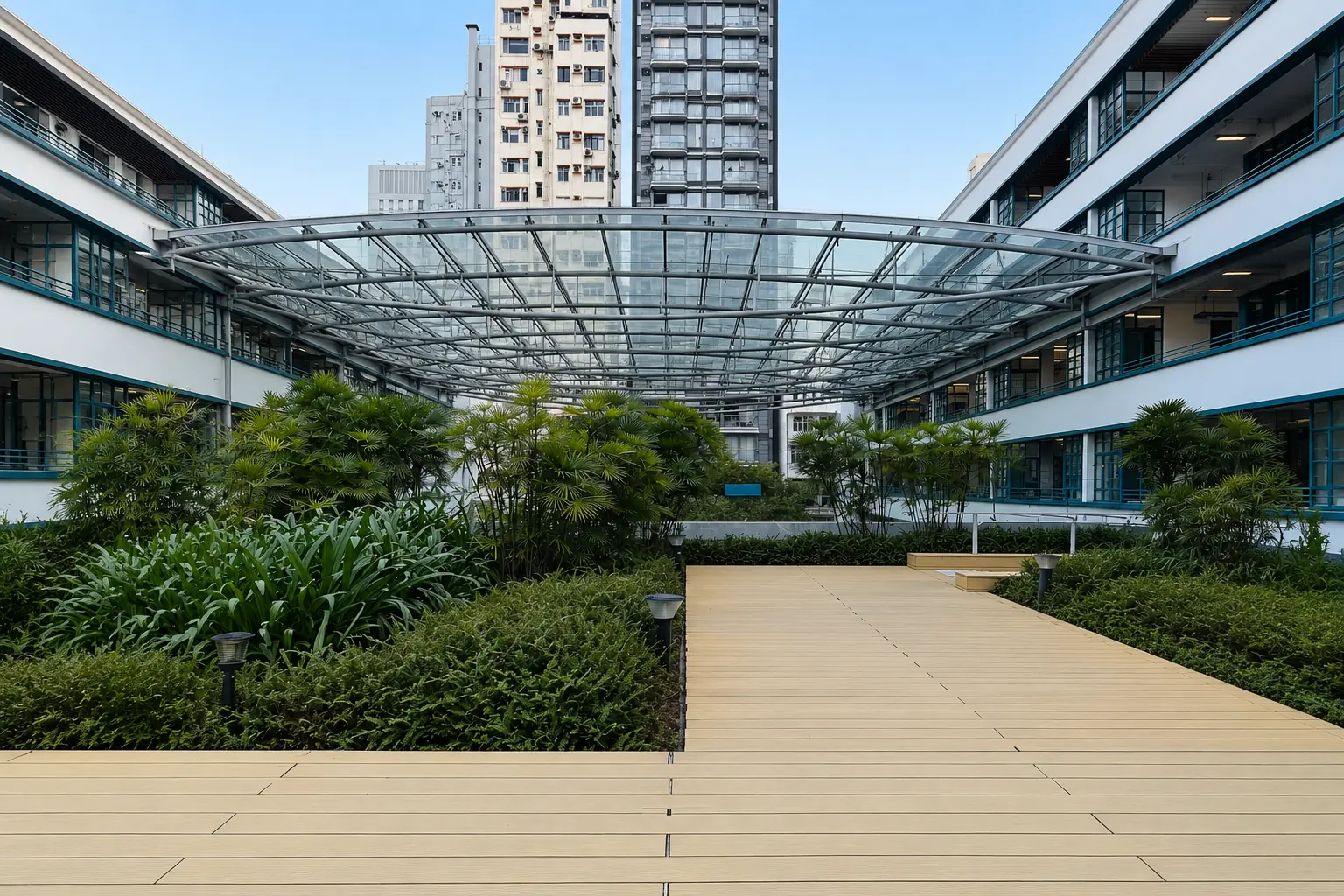
Identity: a former Central School site and Police Married Quarters, reworked as a creative-design hub around two blocks, courtyards, stairs and small studios.
Time and cost: PMQ's current visitor page lists studios and shops generally from 12:00 to 19:00, and cafes or restaurants generally from 9:00 to 23:00. Individual businesses vary, so late morning or afternoon is more reliable than early morning.
Choose it for: corridor geometry, courtyard edges, small studio doors and the feeling of a residential compound turned into a design platform—not only for shopping.
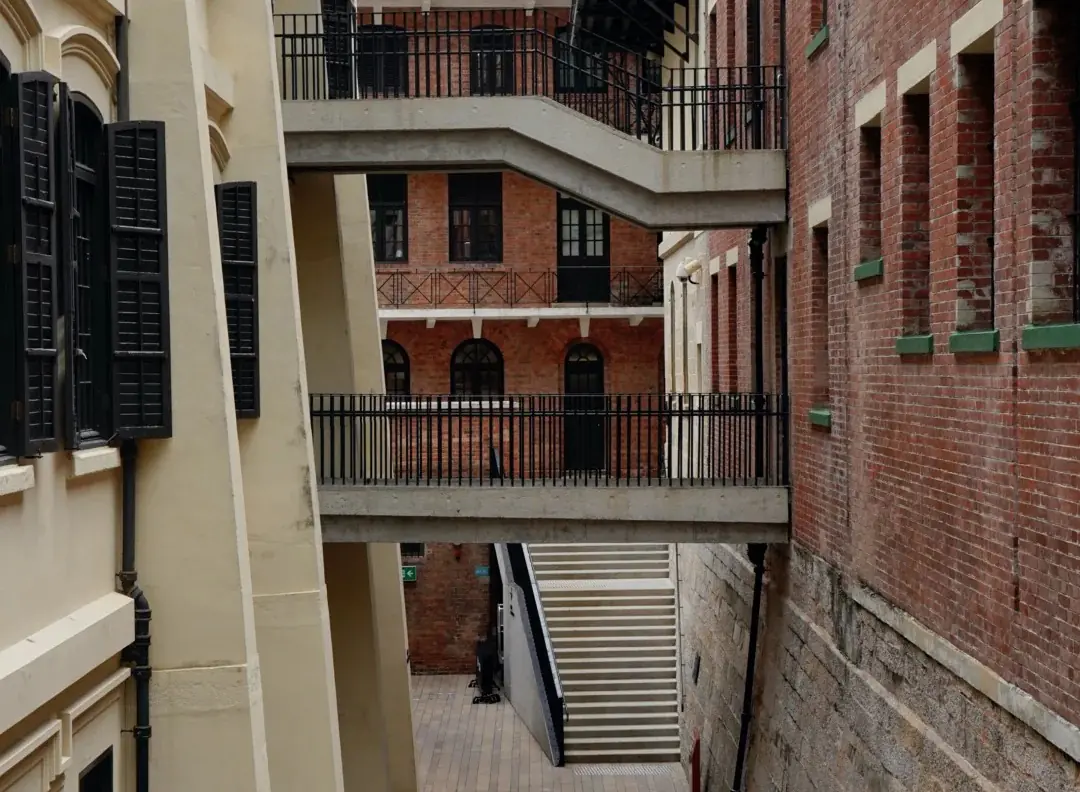
Identity: the former Central Police Station, Central Magistracy and Victoria Prison compound, now used for heritage interpretation, contemporary art, performances, dining and public courtyards.
Time and cost: Tai Kwun's current visitor information lists the entire site from 8:00 to 23:00. General site entry is free, while specific exhibitions or programmes may charge and venue hours vary.
Choose it for: a quick Parade Ground and red-brick heritage look on this route, or a dedicated return when a current exhibition deserves more time.
Both are genuine stops, but neither needs to consume the whole walk. Pick the one whose spatial story interests you most, then protect enough time for Man Mo Temple and the quieter Sheung Wan finish.
Man Mo Temple and Cat Street
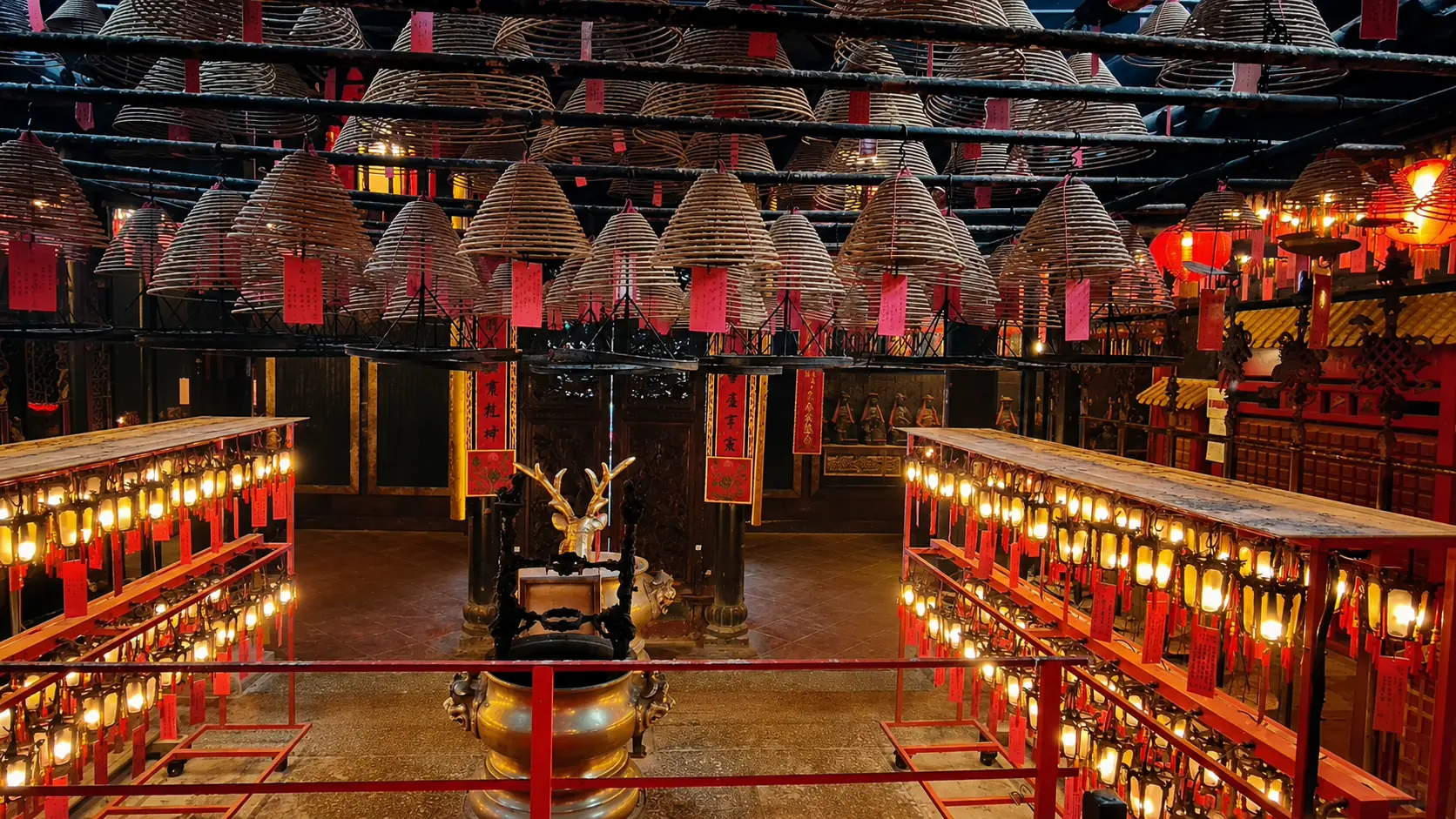
Purpose: Man Mo Temple at 124-126 Hollywood Road is the walk's active worship and heritage stop. The Antiquities and Monuments Office dates the compound to 1847-1862 and records its 2010 monument declaration.
Practical expectation: Tung Wah's current page lists regular hours of 8:00-18:00, with earlier 7:00 openings on lunar-month first and fifteenth days and four named festivals.
How to behave: keep your phone quiet, stay out of worshippers' way, avoid close shots of people praying and follow staff instructions. If a ceremony is happening, stand back.
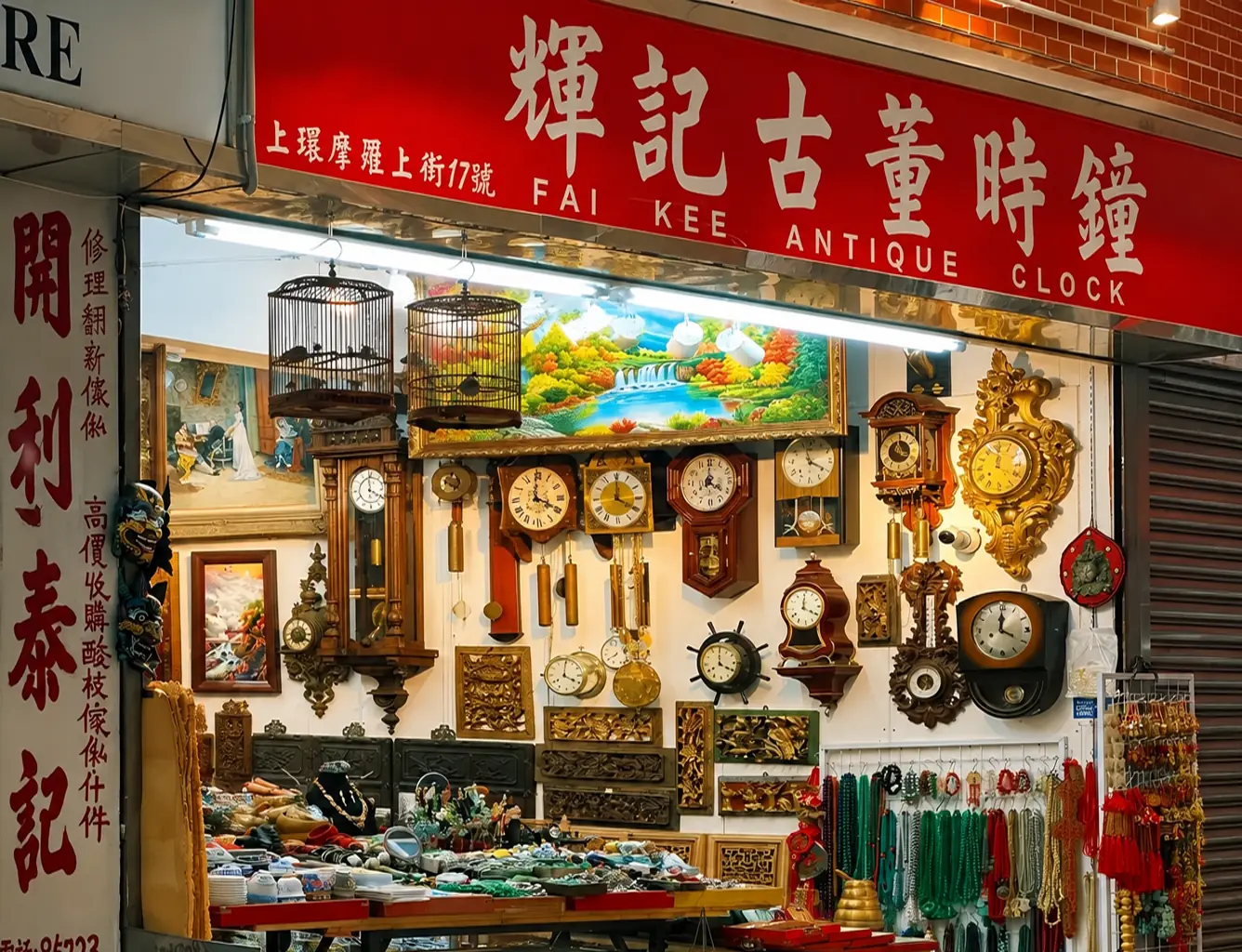
Purpose: just west of the temple, Upper Lascar Row is better known as Cat Street, a browsing lane of old objects, posters, jade-like souvenirs, ceramics, small collectibles and Hong Kong memory.
Practical expectation: stalls and shops do not share one dependable attraction-style schedule. Treat what is open as part of the street, not as a guaranteed antique treasure hunt.
How to behave: if you do not know antiques, do not shop as if you do. Compare lightly, keep the lane moving and buy only small things you genuinely like.
Tai Ping Shan Street and Sheung Wan Finish
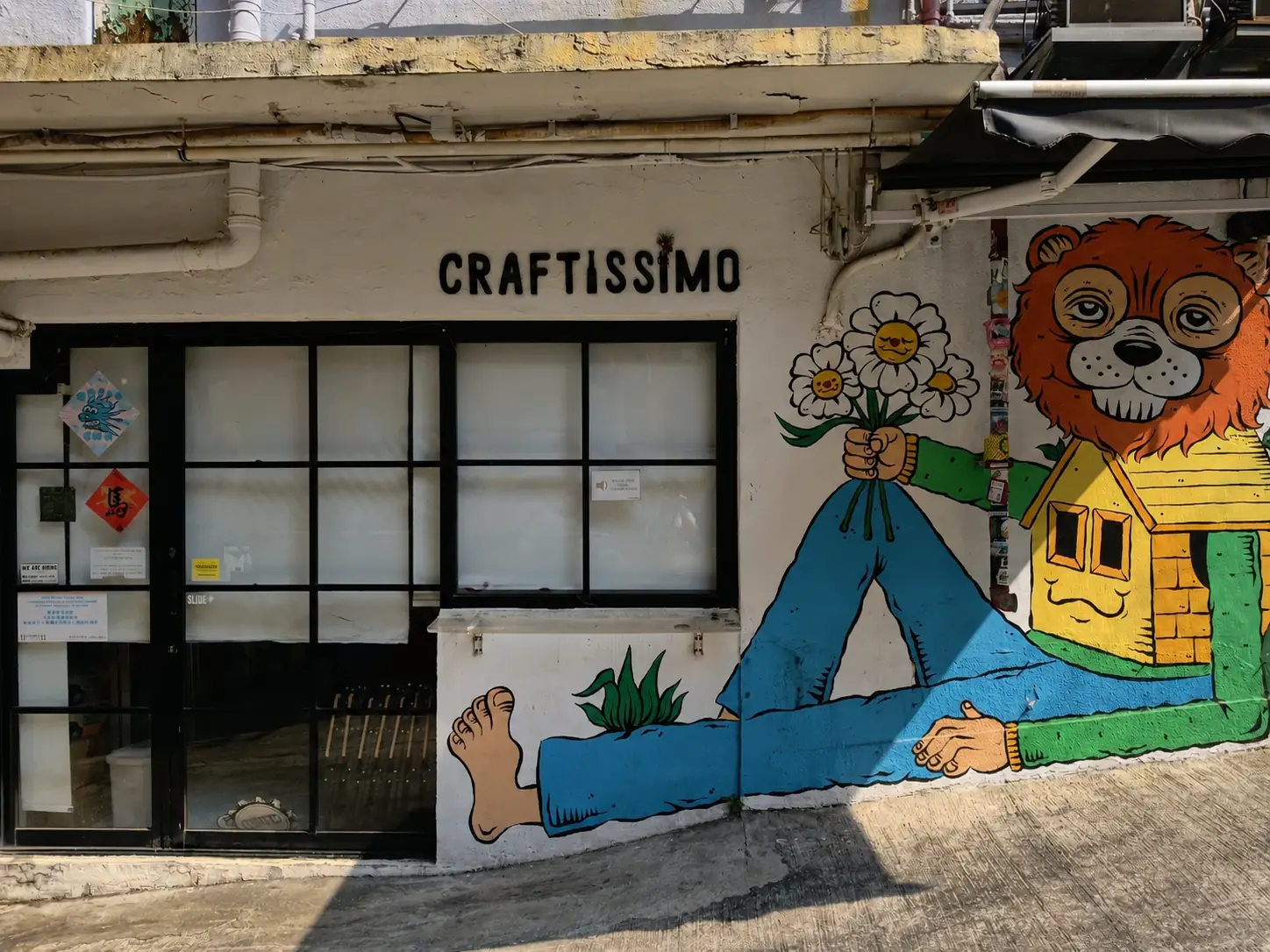
Tai Ping Shan Street slows the route down with steps, cafes, wall plants, murals, and residential texture.
Let the route exhale
Tai Ping Shan Street (太平山街) gives the route a calmer finish. After the attention around Graham Street, PMQ, Tai Kwun, and Man Mo Temple, this area feels more residential and slower: stairs, small cafes, wall plants, murals, old facades, and lanes that reward looking at corners rather than chasing one landmark.
If you still have energy, detour toward Pak Tsz Lane Park (百子里公园) for a small historical pause, then continue toward Sheung Wan Station or circle back toward SoHo and Central for dinner. If the group is tired, end here. Hong Kong slopes are honest: the map may say "five more minutes," but your legs may read it differently.
For a quieter end, continue toward Sheung Wan and eat nearby. For a livelier evening, return toward SoHo, Lan Kwai Fong (兰桂坊) (Google | Amap), or Central.
For a classic first-timer day, combine this walk with the harbour half of our one-day Hong Kong itinerary on another day rather than forcing everything together.
Best Time, Shoes, Weather, and Etiquette
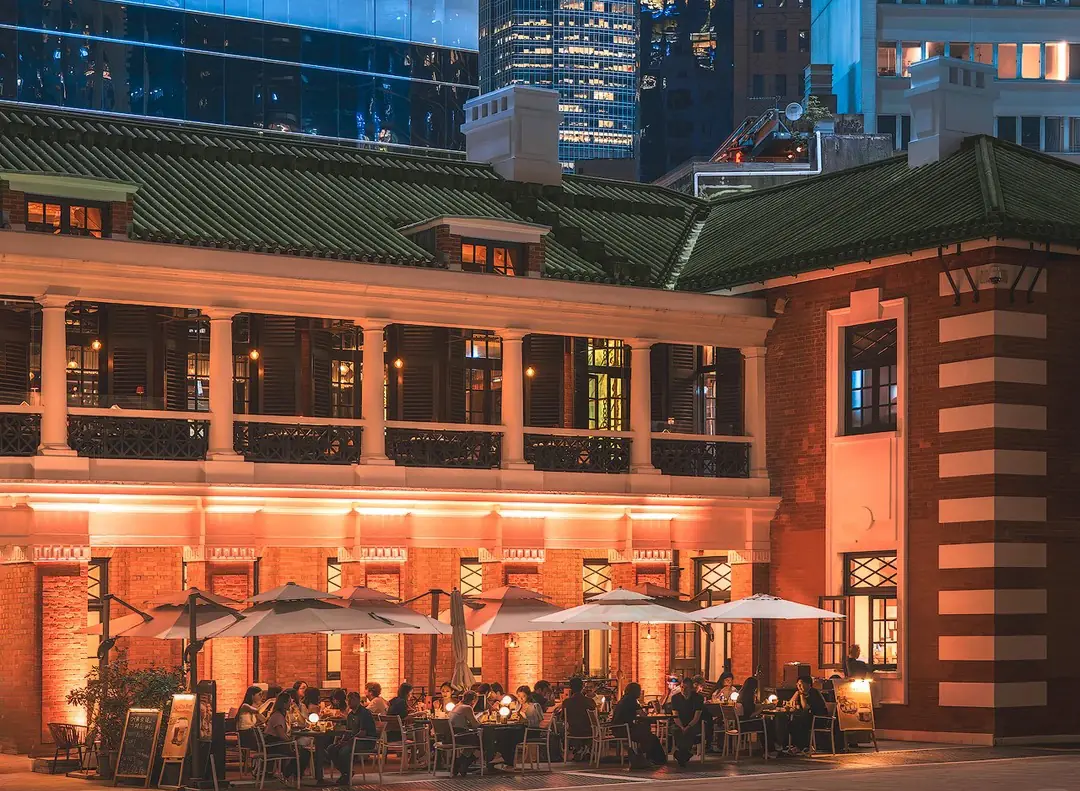
Old Town Central can turn naturally into a SoHo or Central food-and-bar evening.
Choose the day by heat and route logic
The best windows are weekday late morning after the escalator reverses uphill, or late afternoon into early evening. Late morning is easier for route logic: mural photos, escalator uphill, PMQ after shops begin opening, Man Mo Temple before the day feels too hot. Late afternoon is better if you want Tai Kwun, SoHo, and dinner to flow into one evening.
Avoid summer midday if you can. Shade exists, but humidity, slopes, narrow pavements, and street crossings make the walk feel heavier. Rain does not ruin the route, but it changes the pace: use the escalator, PMQ, and Tai Kwun as shelter points, and be careful on stone steps.
- Wear shoes that can handle slopes, steps, old paving, tight sidewalks, and photo stops where you stand around longer than expected.
- Leave rolling luggage elsewhere. The escalator helps with vertical movement, but it cannot make every side lane luggage-friendly.
- In rain, use the escalator, PMQ, and Tai Kwun as shelter points, then slow down on genuinely slippery stone steps and side lanes.
- Respect worshippers in Man Mo Temple, avoid private residential doorways, and do not block traffic, shops, or pedestrians for mural photos.
What Most Old Town Central Walks Get Wrong
Three mistakes flatten this neighborhood into something it is not. Keep the route logic, cultural range and physical effort visible at the same time:
1Not One Sight
There is no single gate or correct completion point. A strong sequence matters more than the number of pins you collect, and side streets can add texture without becoming obligations.
2Not Just Murals
Graham Street is worth seeing, but waiting only for wall photos misses the temple, antique lane, reuse projects, slope infrastructure and ordinary street life.
3Not Flat
Even 500 metres can include slopes, stairs, crossings, crowds and heat. Use the escalator in your direction and stop before fatigue turns the last hour into a march.
The best version is complete when you have understood the hillside—not when every possible stop has been checked off.
Where to Stay Near Old Town Central
Sleeping on Hong Kong Island lets you walk Hollywood Road early before midday humidity builds, then return easily for SoHo dining or evening drinks around Tai Kwun.
Affiliate disclosure: the Trip.com hotel links below are affiliate links; we may earn a commission at no extra cost to you. Check exact room sizes, hillside walking elevation, and cancellation terms before booking.
Stay in Central & Sheung Wan
Best for walking & Airport Express
Steps from the Mid-Levels Escalator, PMQ, Man Mo Temple, the Peak Tram, and the Star Ferry, with fast Airport Express connections via Hong Kong Station.
Booking tip: Hotels closer to Queen's Road Central or Sheung Wan MTR stay on flatter streets, which matters when rolling suitcases in warm weather.
Stay in Wan Chai & Causeway Bay
Best Hong Kong Island value
Two to three MTR stops east of Central on the Island Line (Wan Chai is two stops; Causeway Bay is three), with a larger selection of mid-range business and boutique hotels, easy double-decker tram rides along Hennessy Road, and late-night local eateries.
Booking tip: Stay near Wan Chai or Causeway Bay Island Line exits so you can reach Central Station in under 10 minutes.
Comparing Hong Kong Island against Kowloon bases? See our Hong Kong travel guide.
Frequently Asked Questions About Old Town Central
Yes, especially if you want more than skyline photos and shopping. It gives you street art, temples, heritage reuse, food-and-bar streets, and hillside city texture in one compact walk.
Sources checked for this guide
- Neighborhood scope, heritage, food, art and hillside-route context: Hong Kong Tourism Board Old Town Central
- Original operating-direction reference retained from the article: Hong Kong Transport Department legacy escalator URL
- Original PMQ facilities reference retained from the article: PMQ feature and facilities
- Original Tai Kwun visitor reference retained from the article: Tai Kwun visit landing page
- 1847-1862 construction and 2010 monument declaration: Antiquities and Monuments Office Man Mo Temple Compound
- Current escalator system and daily downhill/uphill operating pattern: Hong Kong Transport Department Hillside Escalator
- Current general studio, shop, cafe and restaurant hours plus MTR access examples: PMQ Explore
- Current site hours, venue hours, access gates and free baseline admission: Tai Kwun visiting information
- Current regular hours and festival-day opening exceptions: Tung Wah Man Mo Temple opening and address
- Current listing and location of the Alex Croft Graham Street mural: Hong Kong Tourism Board Graham Street mural
Beyond This Old Town Central Walking Guide
Use Old Town Central as Hong Kong's hillside half-day. Pair it with Tai Kwun if you want a deeper heritage-and-art visit, Victoria Peak for the skyline, or the one-day Hong Kong route if you need a first-timer plan that connects Central, the harbour, and Kowloon without overloading one walk.
© gochinafreely.com — Original guide by Go China Freely.