Hours & Admission
General admission to Tai Kwun is free, but specific exhibitions, performances, workshops, or tours may have their own price or reservation rule. Check official visiting information
Plan Before You Go
From Law-and-Order Compound to Cultural Space
Tai Kwun (大馆) occupies a 13,600 m² site at 10 Hollywood Road. Its 16 heritage buildings carry three connected institutions: the former Central Police Station, the Central Magistracy (中央裁判司署), and Victoria Prison (域多利监狱). Together they show how policing, courts, and imprisonment developed in Hong Kong from the 1840s onward.
More than 180 years in one compound
Read these dates as changes in one working site, not as three separate museum stories.
From colonial institutions to public cultural centre
- 1
First magistracy and prison
1841The first magistracy and prison were built as Hong Kong’s new colonial government established its law-and-order institutions.
- 2
Barrack Block completed
1864The three-storey Barrack Block anchored the police-station side of the compound and still dominates the Parade Ground.
- 3
Third Central Magistracy
1914-1915The current Magistracy building was constructed in 1914 and held its first hearing in April 1915.
- 4
Declared monuments
1995The former Central Police Station, Central Magistracy, and Victoria Prison were formally listed as declared monuments.
- 5
Public cultural centre
2006-2018After the compound was fully decommissioned in 2006, a decade-long conservation project led to a phased public opening in 2018.

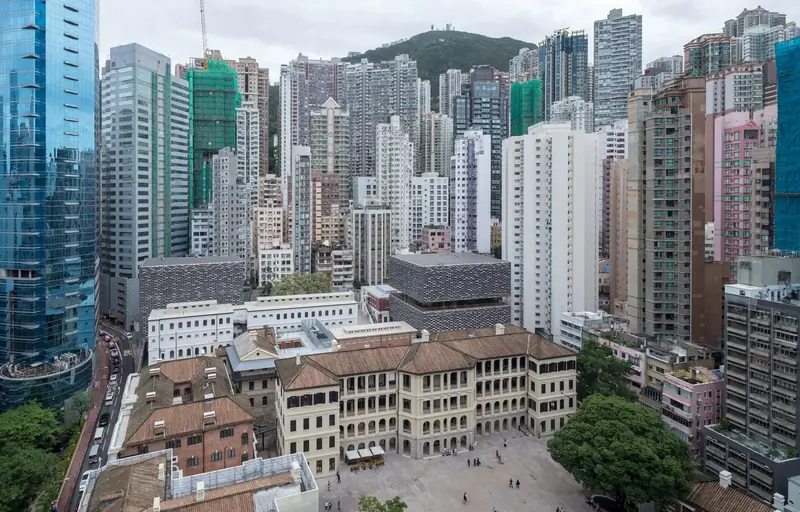
The Parade Ground places the restored police buildings against the dense skyline of Central Hong Kong.
General admission is free. Treat that as entry to the site, not a promise that every exhibition or programme is free or open on your date.
Reading the Architecture: 180+ Years + Contemporary Design
Tai Kwun works because the restoration did not flatten every building into one period. Brick arcades, granite steps, barred openings, and formal police façades retain the compound's institutional character, while two new Herzog & de Meuron buildings make the 2018 intervention easy to identify.
13,600 m²
site area
16
heritage buildings
2
new cultural buildings
2019
UNESCO conservation award
New insertions: JC Contemporary and JC Cube
Herzog & de Meuron · completed in 2018
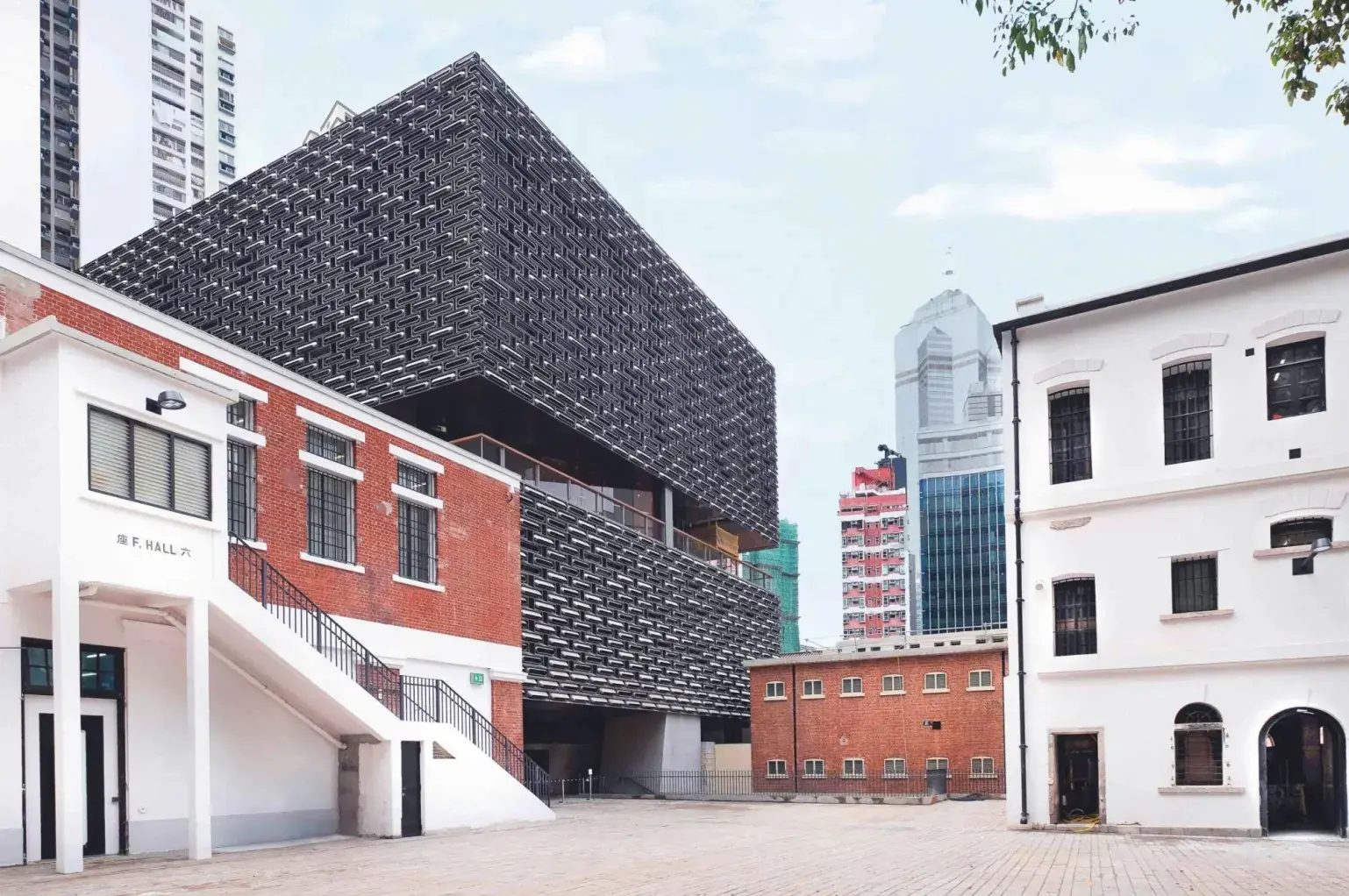
JC Contemporary contains more than 1,500 m² of museum-standard gallery space over three storeys; JC Cube is the performance and auditorium counterpart. Their cast-aluminium façade units are made from recycled aluminium and echo the scale of the granite blocks around the compound while providing shade and rain protection.
Historic fabric: readable, not frozen
Police, court, and prison buildings from different phases
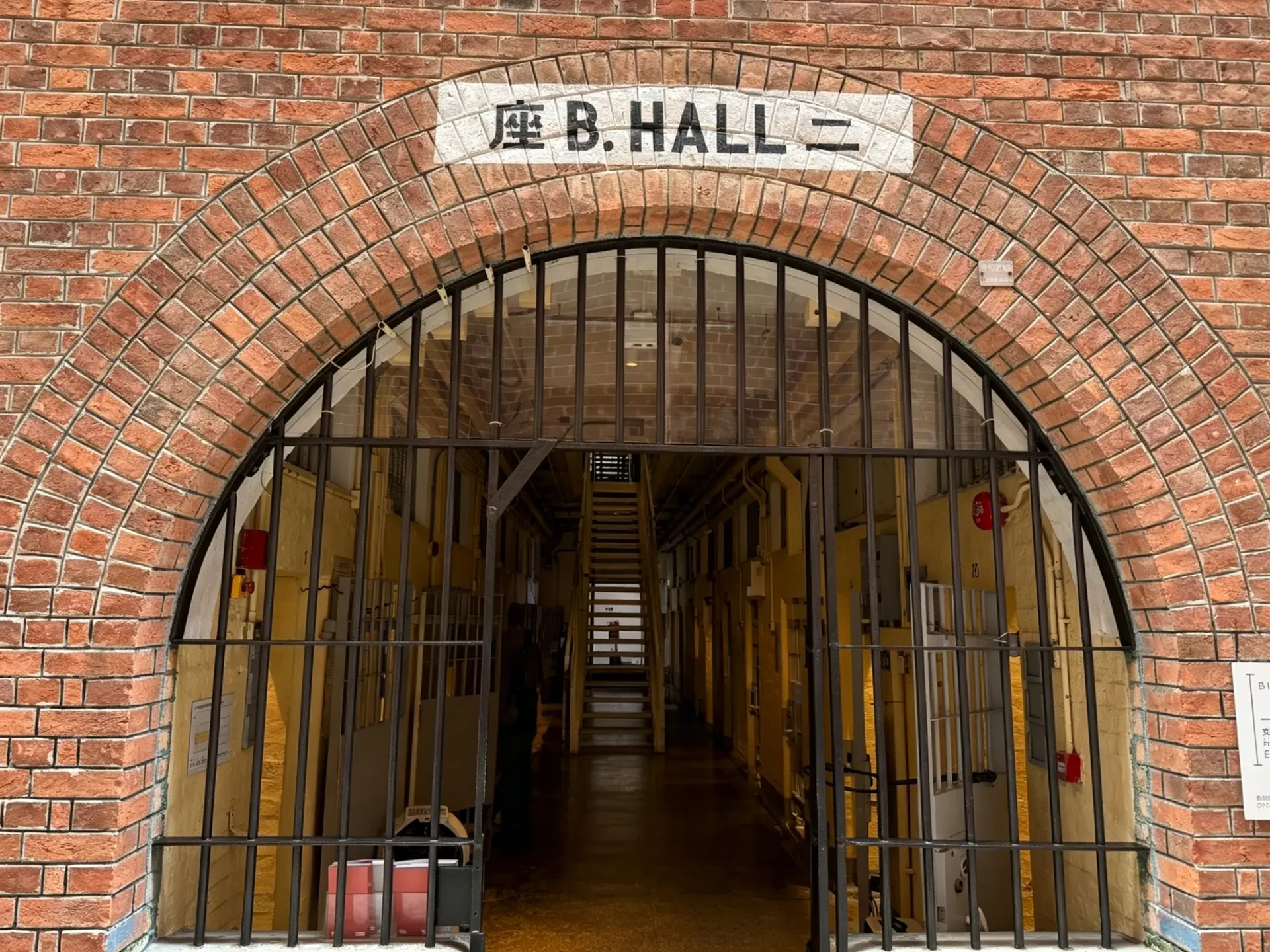
The heritage side is not one uniform Victorian set. Construction changed with the compound's needs, leaving brick corridors, granite retaining walls, tiled roofs, formal police blocks, and later prison wings. Follow building labels and current routes rather than assuming every doorway is public.
The useful contrast is deliberate: the new buildings are clearly contemporary, but their scale, lifted volumes, and textured aluminium respond to the walls and courtyards already on the site.
Contemporary Art: JC Contemporary
JC Contemporary (赛马会艺方) is the main contemporary-art building, with more than 1,500 m² of museum-standard galleries across three storeys. Exhibitions and events change, so the live programme matters more than any fixed list of past highlights.
Start with the exhibition title
Subject and format change by season
Read the current exhibition page before deciding how much time to reserve. Installations, moving-image work, archives, performance, and group shows create very different visit lengths.
Confirm price and reservation
General site entry does not settle every programme
The compound is generally free to enter, but an individual exhibition, screening, workshop, or talk may have its own price, capacity, or booking rule.
Check the actual venue
JC Contemporary, F Hall, and other spaces can differ
Tai Kwun Contemporary uses both the new gallery building and heritage spaces. Note the named block and floor so you do not mistake one entrance for the whole programme.
Treat language and photography as show-specific
Follow the page and gallery signs
English interpretation, tours, photography, and recording permissions can vary. Keep a translation tool ready and follow the restrictions posted for the exhibition you enter.
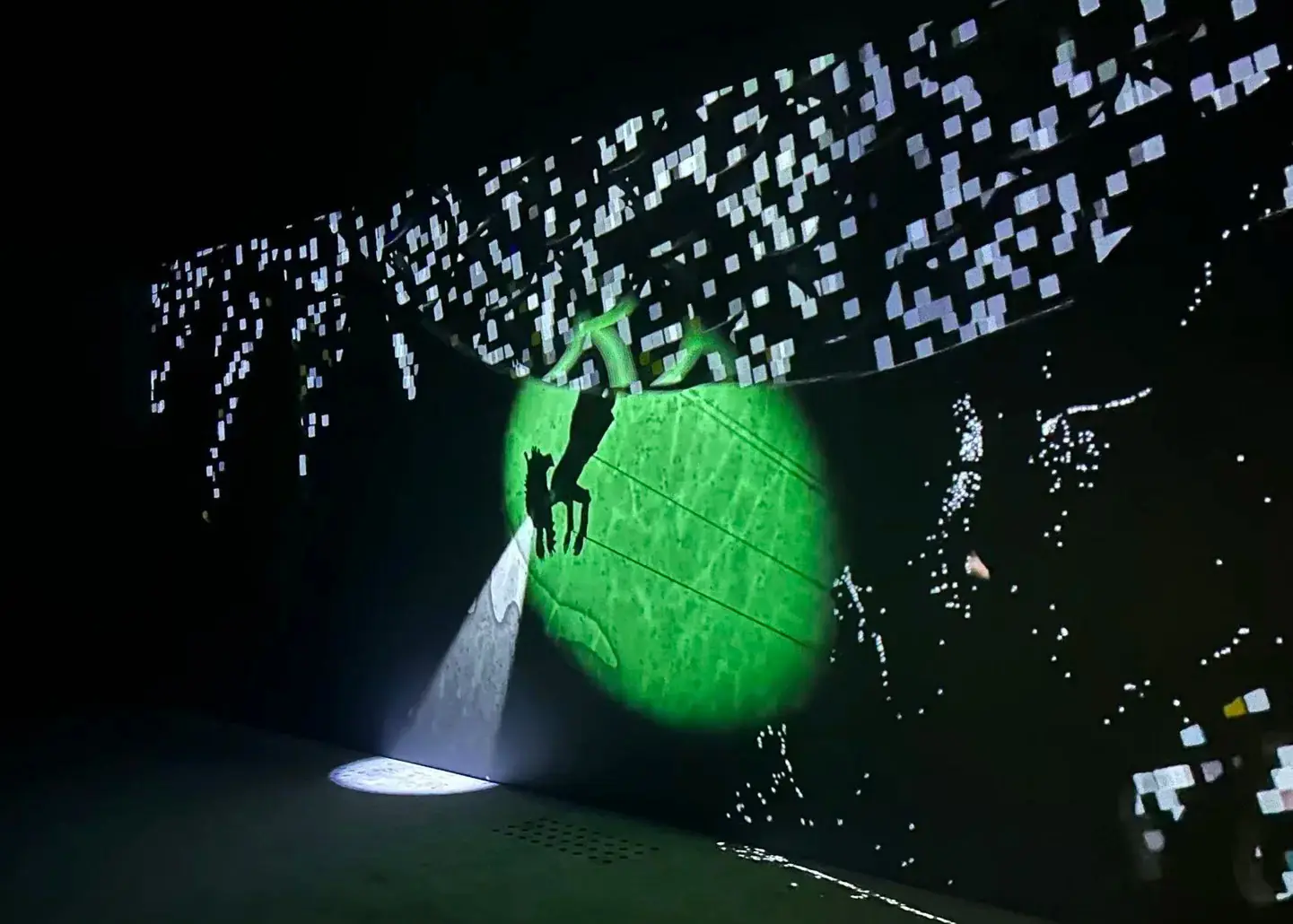
JC Contemporary's galleries change with each programme; confirm the current exhibition, floor, and entry rule before travel.
The circular stair and tall white galleries are part of the architectural experience, but the art remains programme-led. Give the show a real time budget only after you know what is open.
Use Tai Kwun's live programme index as the final check for your date.
Heritage Spaces: Prison, Police, and Court Stories
Heritage access is real, but it is organised through named exhibitions and current visitor routes. Use the live map and signs to find the open rooms; do not assume every former cell, courtroom, or staff area is public.
Victoria Prison halls
B Hall, D Hall, and F Hall
Current heritage exhibitions use former prison buildings to examine daily prison life, punishment, healing, migration, and belonging. Displays include adapted cells, images, oral testimony, and multimedia; the exact route and open rooms can change.
Central Magistracy
Ground and lower-ground exhibitions
The current exhibition follows the people who passed through the Magistracy and the inequalities of Hong Kong's criminal-justice history. Visit for the institution and building together, not for a promise that every historic courtroom fixture is freely accessible.
Sitewide interpretation
Police history, objects, plaques, and outdoor traces
The Main Heritage Gallery, Operation Central, building plaques, Parade Ground, Prison Yard, and map markers connect the three institutions. This layer is useful when you want context without entering every exhibition.
Pro Tip
The Heritage Walk is approximately 45 minutes, while the Architectural Legacy tour is approximately 60 minutes. Public tours can be free, but dates, capacity, language, and route vary; choose the exact session on the official page and reserve it rather than assuming an English departure.
Read the prison through a current exhibition
Former cells and corridors · access varies
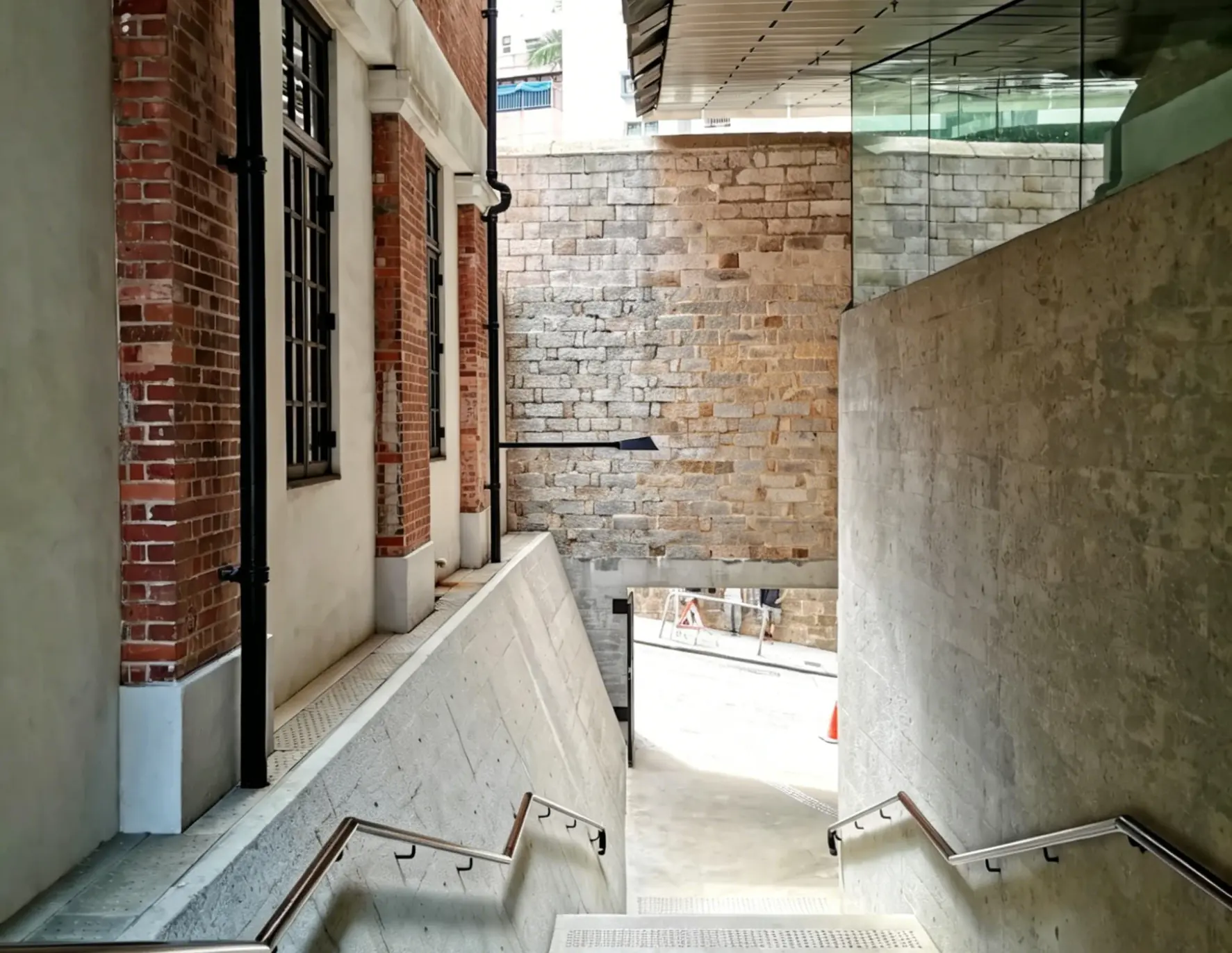
Stone walls, barred doors, small windows, and adapted cell interiors make the prison architecture tangible. The valuable step is to connect those details to the interpretation on display rather than treating the room as a photo set.
Read the court through people's cases
Central Magistracy · current exhibition route
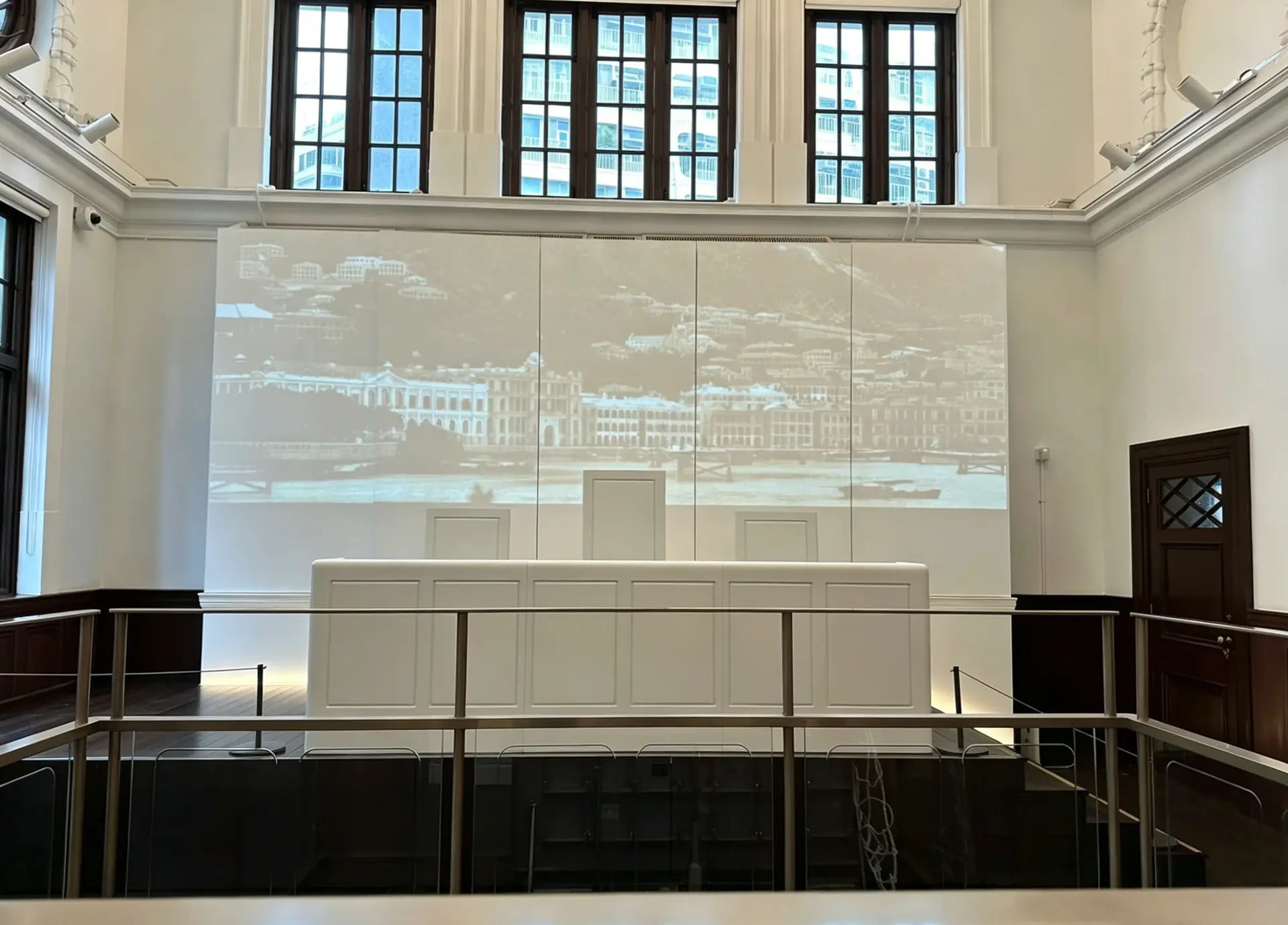
The Magistracy exhibition uses research, models, graphics, and individual cases to explain law, jurisdiction, and punishment. Follow the current route through the building and respect any closed or programme-only areas.
Before entering a heritage block, check the building name, floor, closing time, and accessibility route on the official map.
Photography Guide
Tai Kwun gives you three strong visual layers: repeating heritage geometry, outdoor gathering spaces, and a visible old/new junction. Choose one subject at a time instead of trying to fit the entire compound into every frame.
Brick arches and long corridors
Best for rhythm and depth
Move a little off-centre and use the repeating columns or arches as leading lines. Side light can strengthen the pattern, but the useful conditions depend on weather, season, and which corridor is open.
Laundry Steps and the yards
Best for people, scale, and layered seating
Frame the steps with the prison wall or JC Cube, and leave room for the public life of the space. Events and screenings are calendar-specific, so never build the shot around a promised weekend programme.
Old/new contrast and interiors
Best for material changes
Pair aluminium with brick or granite from the Parade Ground and Prison Yard. Inside heritage rooms, use doors, bars, and window light only where photography is allowed and without blocking the route.
Use the arches as a sequence
Light is a variable, not a timetable
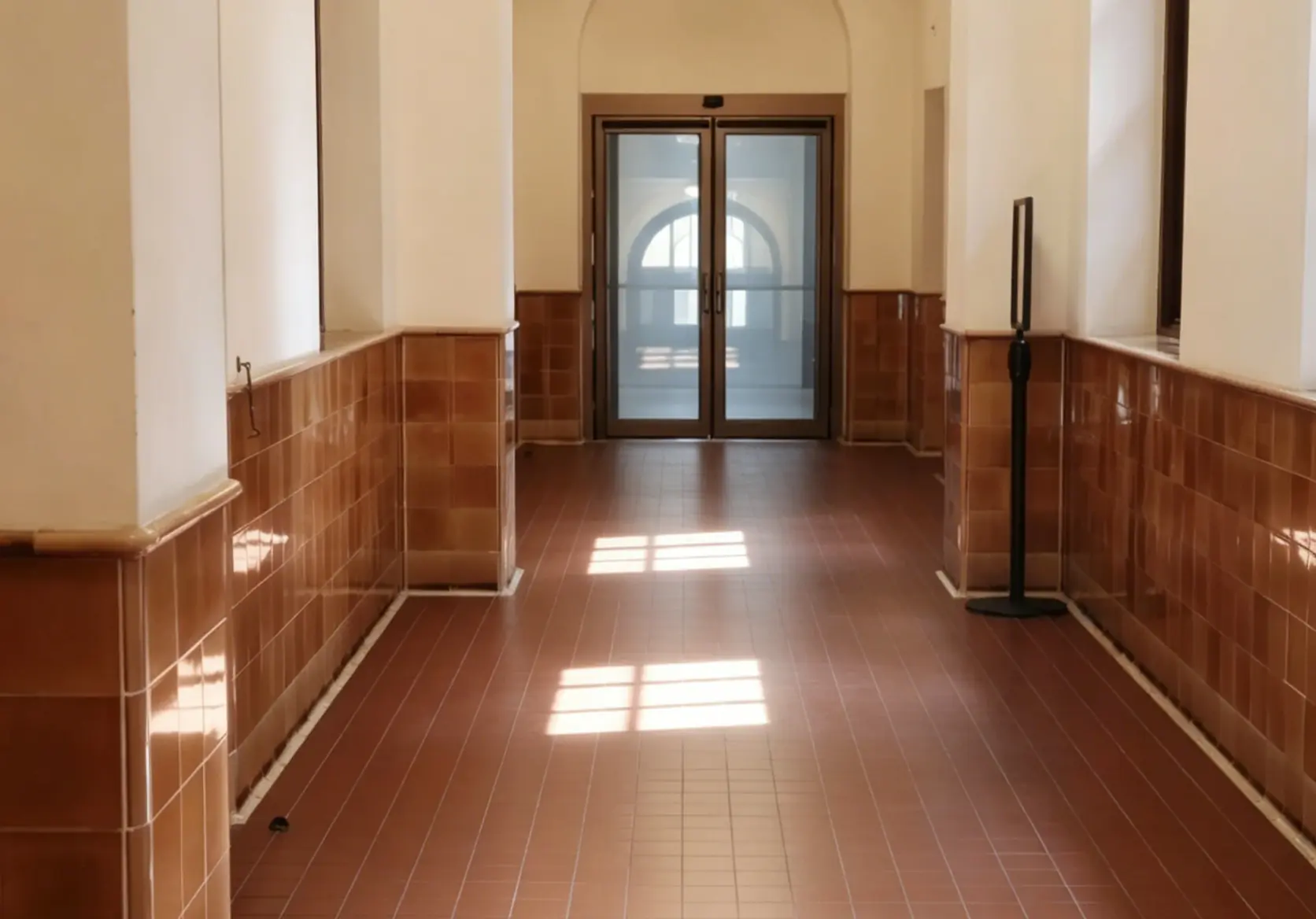
Expose for the brighter opening, then let the brick and shadows carry the depth. Late morning may work on some dates, but cloud, orientation, and access matter more than a fixed clock time.
Treat Laundry Steps as public space
Seating first, photograph second
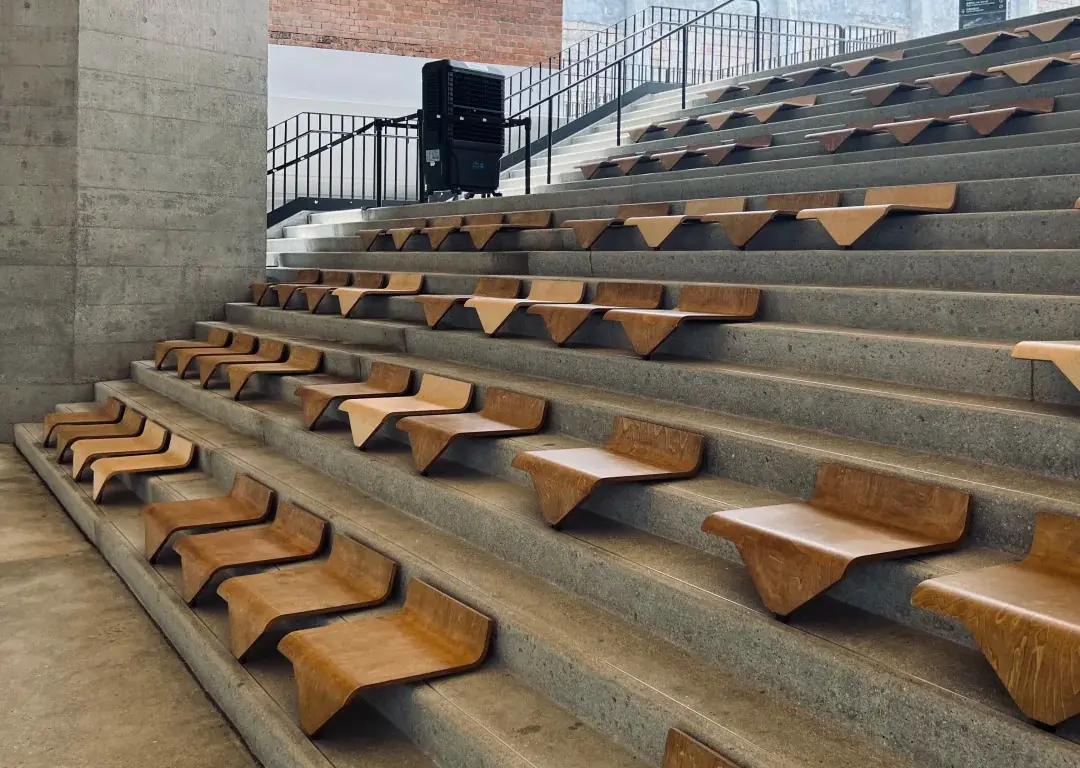
A wide frame explains the steps, prison wall, and contemporary building together. During a scheduled programme, follow staff instructions and keep aisles and seats clear.
Photography boundary: obey every posted no-photo, no-recording, and no-bright-light sign. Commercial photography requires prior consent, and an exhibition may set stricter rules than the open courtyards.
What Most Visitors Miss
The easiest details to miss are not secret rooms. They are small differences in opening time, tour format, and programme access that can change how you order the visit.
Two heritage galleries start earlier
Main Heritage Gallery + Operation Central
These two named galleries currently open at 10:00, while most listed heritage exhibitions start at 11:00. Use the official visitor page to confirm the live pattern rather than treating 10:00 as a universal heritage opening.
Tour language belongs to the slot
Check date, language, duration, and capacity together
English, Cantonese, and Putonghua may appear in the public-tour calendar, but not every language runs at every departure. The Heritage Walk and Architectural Legacy tour also have different lengths and route demands.
Laundry Steps events are scheduled
Movie Steps and live programmes are date-specific
The steps can host screenings, talks, and performances, but an attractive past event photo does not prove there is a programme tonight. Check the current listing before planning a seat or arrival time.
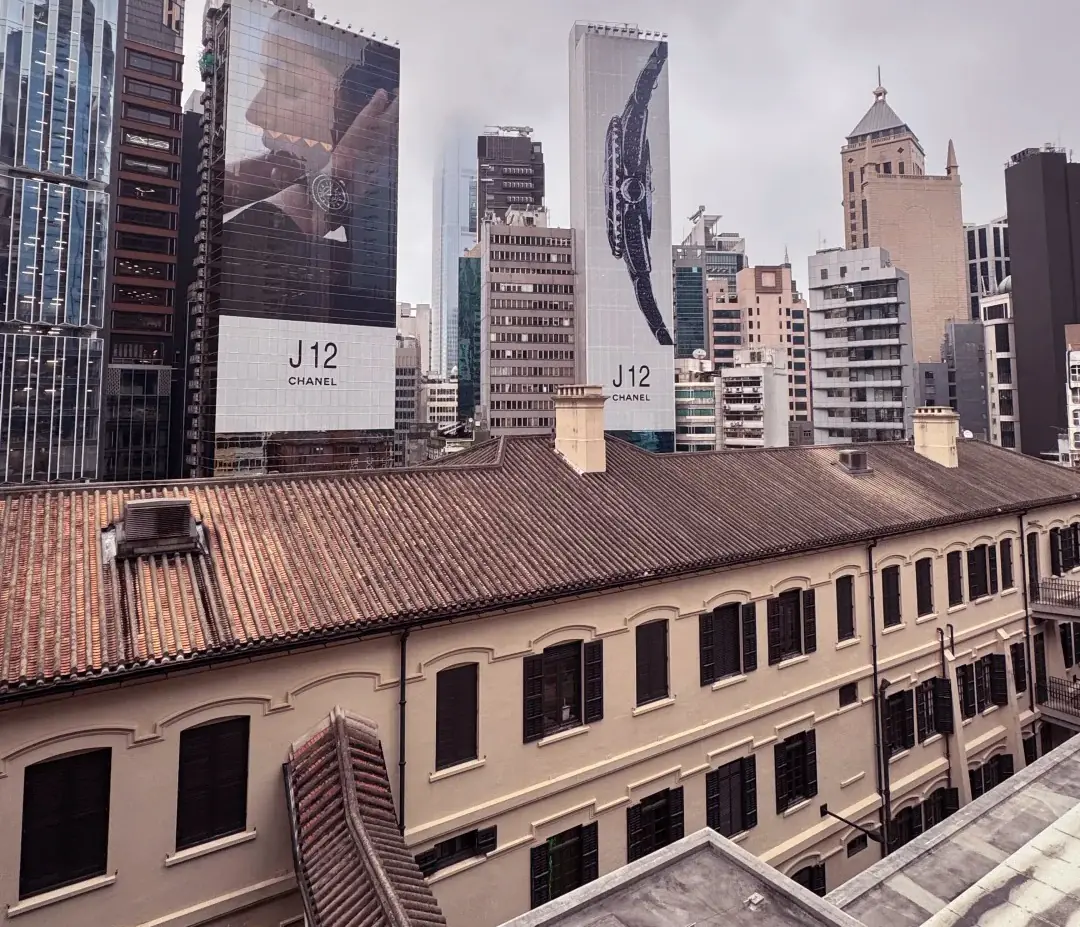
Elevated views can show the compound's roofs against Central, but public terrace access should be confirmed on the day.
Do not route the visit around a hidden terrace. The current visitor information does not promise routine public access to the elevated viewpoint shown here. Treat any open upper-level or terrace view as a bonus; the Parade Ground and Prison Yard remain the dependable architectural viewpoints.
The compound remains open until 23:00, but JC Contemporary and most heritage exhibitions close earlier. An evening visit therefore works best for courtyards, lighting, dining, or a programme you have confirmed—not as a substitute for daytime gallery access.
Tickets and Hours
Use this as a starting checklist, then verify the specific exhibition or event you intend to attend.
Current public boundaries
Checked against Tai Kwun's official visitor information on 14 July 2026.
Tai Kwun overall
08:00-23:00; general admission to the site is free.
Visitor Centre
10:00-20:00.
JC Contemporary
Tuesday-Sunday, 11:00-19:00. Check the individual exhibition page for any programme-specific entry condition.
Heritage exhibitions
Most listed exhibitions run 11:00-19:00; Main Heritage Gallery and Operation Central currently open at 10:00.
Specific programmes
An exhibition, performance, workshop, screening, or tour may have its own ticket, reservation, age, or capacity rule.
Recheck Tai Kwun's official visitor information and the programme page shortly before travel.
Getting There
Address: 10 Hollywood Road, Central, Hong Kong.
From Central Station
Tai Kwun recommends Exit D1, the 100QRC route, and the Central-Mid-Levels Escalator to the covered Footbridge Gate. Check the live pedestrian route because Central's grade and works can change the most comfortable approach.
From Hong Kong Station
Use Exit E and the elevated walkway toward Central Market, then connect to the Mid-Levels Escalator route. Follow current signs for Tai Kwun rather than relying on a fixed walk time.
Bus or taxi
The official visitor page lists buses 12, 12M, 13, 26, and H1. For a taxi or ride-hail, enter the Hollywood Road address and use the live estimate; one-way streets make fixed fares and times unreliable.
Parking and access
There is no public parking inside Tai Kwun. Pottinger Gate and Bauhinia House Gate are the named barrier-free approaches; lifts, accessible toilets, induction loops, and free wheelchairs are available, with alternatives for constrained heritage areas.
Food and Nearby
Tai Kwun can be the anchor of a Central half-day, but the surrounding streets are steep and the best extension depends on whether you want design, street texture, or dinner.
Eat or pause inside Tai Kwun
Current tenant directory · easiest no-transfer choice
The compound has cafés, restaurants, and bars in adapted heritage spaces. Tenants and hours change, so use the live directory and choose independently; a reservation or purchase is yours to make directly with the venue.
Hollywood Road and PMQ (元创方)
Antiques, galleries, and another adaptive-reuse project
Follow Hollywood Road toward PMQ when you want a second heritage-and-design stop. PMQ is a separate institution in the former Police Married Quarters, so check its own programme and shop hours.
Pottinger Street (砵典乍街)
Steep stone lane · surface and grade matter
The granite-paved lane adds old-Central texture and connects toward the lower business district. It is not step-free; wet weather and crowds make the surface more demanding.
SoHo and Lan Kwai Fong (兰桂坊)
Broad dinner choice · liveliest later
Choose SoHo for restaurants around the escalator corridor or Lan Kwai Fong for a denser nightlife area. Opening hours and atmosphere vary by business and day, so use a live map rather than a fixed five-minute promise.
For a culture-to-dinner sequence, use these markers as orientation rather than turn-by-turn navigation. Check the live pedestrian map and the escalator's operating direction before leaving Tai Kwun.
- Exit Tai Kwun toward Hollywood Road(荷李活道)- Choose the gate that suits your mobility needs and confirm the live pedestrian route before starting.
- Continue toward PMQ(元创方)- Add PMQ only if its current programme, shops, or design focus match your interests.
- Use the Mid-Levels Escalator corridor when helpful- Its operating direction changes by time; nearby streets and stairs remain alternatives.
- Add Pottinger Street if the steep surface suits you(砵典乍街)- This optional stone-lane segment is not step-free and can be slippery in rain.
- Finish with your chosen Central dinner area(兰桂坊 / SoHo)- Use a live map to choose Lan Kwai Fong, SoHo, or another restaurant cluster. Any reservation or payment remains directly between you and the business.
This extension is not step-free by default. For an accessible route, start from Tai Kwun's barrier-free gate information and map each nearby stop separately.
兰桂坊 Lan Kwai Fong (Google | Amap) PMQ 元创方 (Google | Amap) 砵典乍街 Pottinger Street (Google | Amap)Practical Tips
Budget 2-3 hours for heritage plus one art stop.
Add time for a tour, a major exhibition, dining, or slow photography. A quick courtyard-only pass is possible, but it does not deliver the main heritage interpretation.
Let the programme decide the best day.
Weekdays may feel calmer, while weekends can have more activity, but a specific exhibition, tour, screening, or public holiday matters more than a blanket crowd rule.
Plan accessibility from the gate onward.
Use the Pottinger or Bauhinia House barrier-free gate, ask about wheelchairs or tactile-audio tools, and follow the alternative route offered when a heritage space has physical constraints.
Sequence indoor and outdoor time around the weather.
In hot, humid, or wet conditions, begin with a timed indoor exhibition and cross the yards in shorter stages. Carry water and a compact umbrella without treating the covered passages as fully climate-controlled.
Run one final live check.
Confirm the current exhibition, building, start time, ticket or reservation, language, photo rule, and accessible route together. That single check prevents most wasted detours.
Frequently Asked Questions
General admission to the site is free. Specific exhibitions, performances, workshops, screenings, or tours can have their own price, reservation, or capacity rule, so check the programme you intend to attend.
Sources checked for this guide
- Tai Kwun visiting information: address, overall and venue hours, general admission, transport, parking, barrier-free gates, and accessibility services
- Tai Kwun restoration and historical timelines: 16 heritage buildings, two new buildings, 2018 phased opening, decommissioning, revitalisation, and 2019 UNESCO award
- Tai Kwun historical timeline: 1841 origins, 1864 Barrack Block, 1914 Magistracy, and 1995 monument status
- Heritage exhibitions: current named heritage venues, free-entry status, multimedia interpretation, and the two 10:00 exceptions
- Tai Kwun Contemporary: 1,500-plus m² of galleries over three storeys, current venue context, and JC Contemporary architecture
- Public tours: Heritage Walk and Architectural Legacy duration, languages, booking, and route conditions
- Tai Kwun bye-laws: posted photography and recording restrictions plus commercial-photography consent
- Herzog & de Meuron Tai Kwun opening note: JC Contemporary and JC Cube design, recycled cast-aluminium façade, open-space strategy, and Laundry Steps
Beyond This Guide
Use Tai Kwun as one deliberate anchor, then choose the next guide according to the trip problem you still need to solve.
Build the citywide shortlist
First trip priorities beyond Central
Start with the best things to do in Hong Kong to balance heritage, skyline, neighbourhoods, and major museums.
Stay in the neighbourhood
A fuller Central walking context
Continue with the Old Town Central walking guide when you want streets, markets, temples, and adaptive reuse in one area.
Choose dinner with context
Dishes and ordering strategy
Use the Hong Kong food guide to decide what to eat before choosing a restaurant or making any reservation yourself.
Test a one-day sequence
Peak, ferry, street food, and timing
Compare your plan with this Hong Kong one-day itinerary and remove stops before the route becomes unrealistic.
© gochinafreely.com — Original guide by Go China Freely.