Workshop basics
Confirm before paying
Silver as Miao Identity, Not Decoration
Read the craft before the souvenir
This guide helps you decide whether a Miao silversmithing workshop is worth adding to your Guizhou route, where to look around Xijiang and Kaili, and what to verify before you pay for anything labeled "silver culture."
In Xijiang Thousand Miao Village (西江千户苗寨), silver is not just a shiny souvenir. Miao silver jewelry forging (苗族银饰锻制技艺) was included in China's first national intangible cultural heritage list in 2006, and a traditional piece can involve about 30 manual procedures.
Miao silver first catches the eye because it moves and sounds alive. A festival headdress, collar, breast ornament, bracelet, or hairpin flashes in the light, but it also clicks softly as the wearer walks through wooden houses and stone lanes.

That is why this workshop needs cultural context. In Miao communities, silver has long been tied to festivals, weddings, family wealth, protection, blessing, and beauty. Common motifs include butterflies, birds, flowers, fish, horns, spirals, geometric lines, and other symbols connected with Miao stories and village life.
The China Intangible Cultural Heritage Digital Museum identifies Miao silver jewelry forging as a national heritage craft associated with Guizhou's Leishan, Huangping, Jianhe, and Taijiang counties, as well as Fenghuang in Hunan. Its process is described as fully handmade, with about 30 procedures from design through casting, hammering, braiding, welding, washing, and other specialist steps. China IP News also notes that Miao silver crafting has been part of local tradition for more than 400 years.
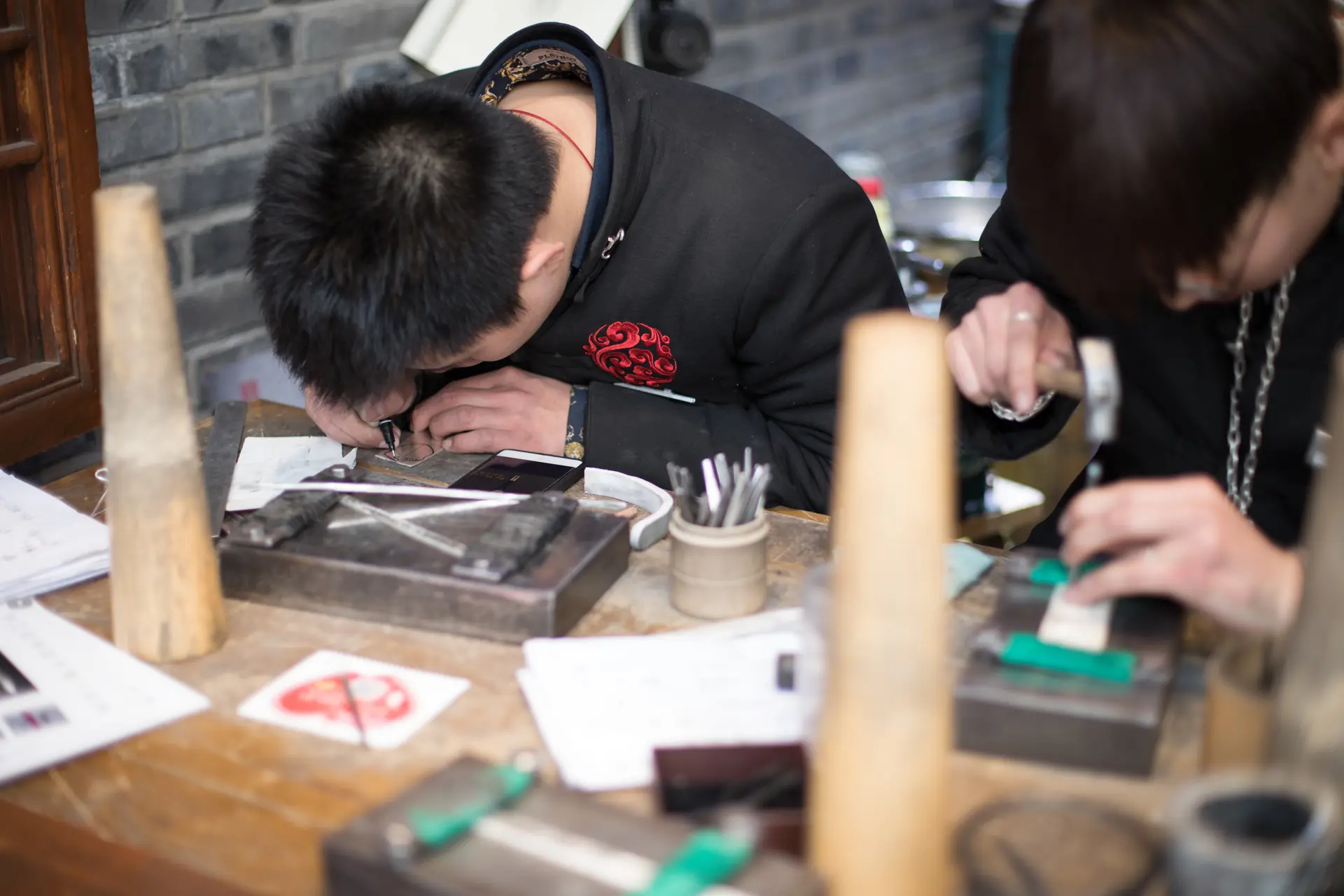
For a visitor, that does not mean you will make a ceremonial crown from scratch. The realistic version is smaller and safer: watch a silversmith work, then hammer, stamp, polish, or shape a small ring, pendant, or charm. You begin to understand why one tiny leaf pattern takes time, why a hammer mark matters, and why a cheap souvenir may not be the same thing as a hand-forged piece.
Is This Workshop Worth Your Guizhou Time?
Decision shortcut
Should you book a Miao silver workshop?
Good fit
Choose it if you like handmade jewelry, minority culture, slow travel, craft photography, and learning from artisans rather than only shopping.
Think twice
Skip it if you have only a few hours in Xijiang, dislike tool noise, need perfect English teaching, or expect to finish a complex ceremonial ornament yourself.
Yes, if you already plan to visit Xijiang, Kaili, or southeastern Guizhou and want a quiet hands-on layer beyond village views and performances. It is one of the better ways to slow down in Xijiang: instead of only photographing silver ornaments, you watch how a small piece is shaped under repeated taps.
It is not worth flying to Guizhou for this alone unless you are seriously interested in metalwork, ethnic minority crafts, or jewelry. First-time Guizhou travelers usually prioritize Xijiang's village scale, the night panorama, Miao performances, Zhaoxing Dong Village (肇兴侗寨), Libo, or Huangguoshu Waterfall before a niche craft class.
The realistic time commitment
The sweet spot is a half day inside Xijiang: museum context first, a silversmith studio in Gagegu Alley next, then the viewing platform and evening lights later. That sequence makes the workshop feel connected to the village instead of like a random shopping stop.
What You May Actually Make by Hand
Small, safe and specific
The safest tourist projects are small: a ring, pendant, charm, stamped silver plate, simple bracelet blank, or polished piece prepared by the workshop. Some studios let you hammer texture, press a motif, shape a ring, or polish the final surface. Others are mainly demonstrations where the artisan does the dangerous and delicate steps.
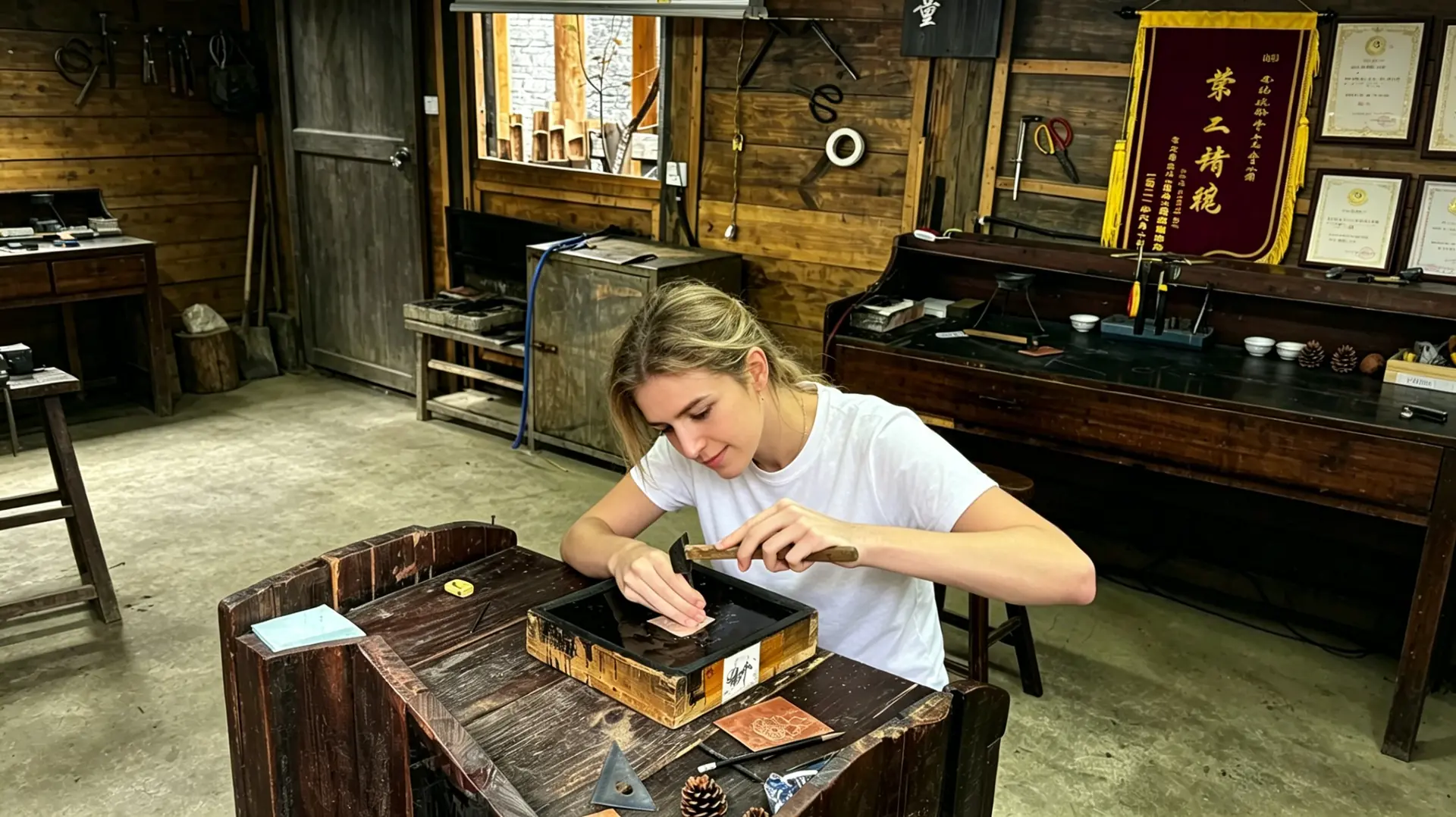
A listing that says "Miao silver culture," "silver craftsmanship," or "learn about silver ornaments" does not automatically mean hands-on jewelry making. It may mean a museum visit, a shop explanation, or a silversmith demonstration.
Before booking, ask one exact question: Will each guest make and take home a piece of silver jewelry, or will we only watch the artisan work?
Five checks that define the real activity
- Ask the finished item. Ring, pendant, small plate, bracelet, or observation only.
- Ask the material. S925, fine silver, silver-plated, silver over copper, or alloy.
- Ask the artisan role. The teacher should handle heat, soldering, cutting, and complex assembly.
- Ask about children. Older children may enjoy stamping or polishing; small children should not work near heat or sharp metal.
- Ask about sales pressure. A good class should not turn into a forced silver-shopping session.
Do not overread the words Miao silver
In travel shops, "Miao silver" can mean Miao-style silver jewelry, but the actual material varies. If you want real silver rather than a decorative souvenir, ask for the silver content and do not rely on appearance alone.
The Xijiang Miao Village guide helps you sequence entry, museum context, village food, viewpoints, and evening lights around a confirmed studio session.
How Miao Silver Forging Actually Works
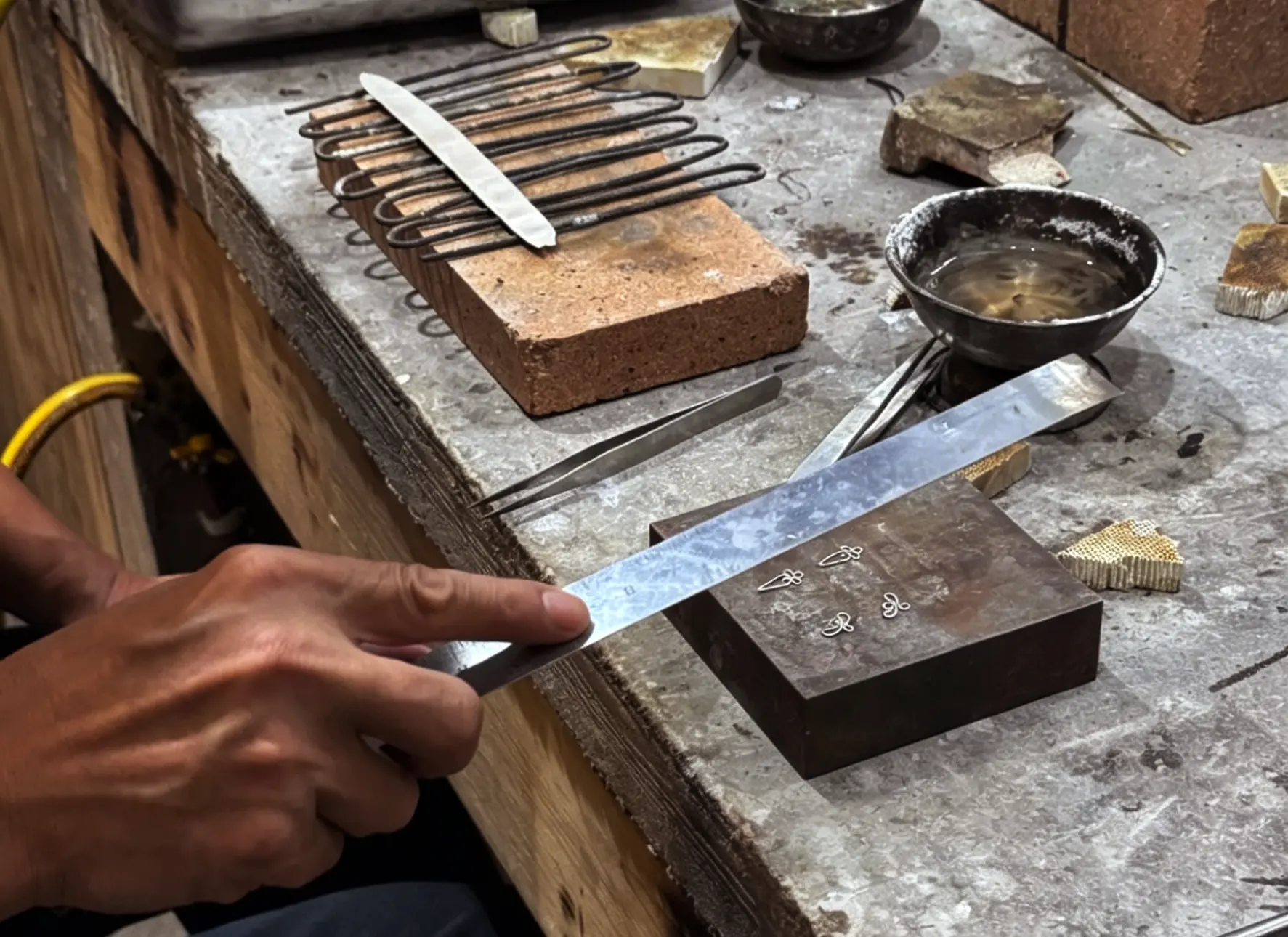
Traditional craft, simplified visitor flow
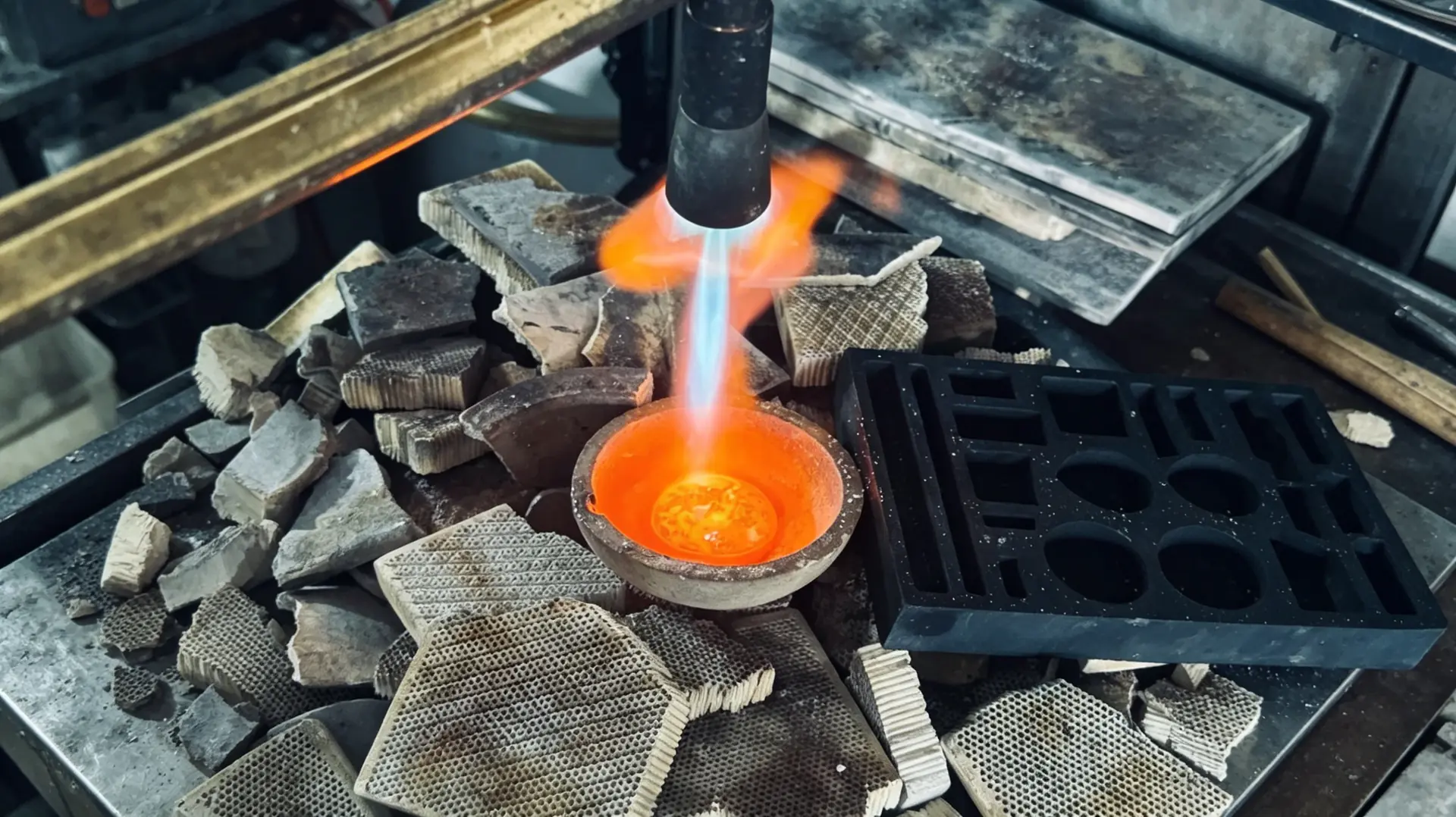
Traditional Miao silver forging is a specialized craft system, not a one-hour DIY hobby. Sources describe dozens of manual procedures, including smelting or casting, hammering, making sheet or wire, twisting and braiding, patterning, soldering, washing, polishing, and assembling small parts into a larger ornament.
Visitor workshops compress that world into a safe sequence. The six steps below are a realistic visitor-class flow, not the official full traditional process.
- See the tools- Hammer, anvil, small molds, metal sheet, wire, torch or heating area, polishing tools, and sample ornaments.
- Watch the artisan- The teacher demonstrates hammering, patterning, or shaping so you know what your small task represents.
- Practice the safe step- You may stamp, hammer texture, shape a ring blank, or polish a prepared piece.
- Artisan finishes key work- Heating, soldering, sharp cutting, and delicate joining should stay with the professional.
- Clean and polish- The piece is cleaned, polished, and checked before it is wrapped for travel.
- Ask care instructions- Silver tarnishes and soft metal scratches; ask how to clean and store it.
A good teacher will not pretend you have mastered the craft. The value is more modest and more honest: after holding the hammer, you understand why a tiny repeated pattern takes patience, and why hand-forged silver costs more than a stamped souvenir.
Best Places to Try It in Qiandongnan
Choose the setting before the studio
For foreign visitors, the easiest place to start is Xijiang Thousand Miao Village, especially Gagegu Alley (嘎歌古巷) inside the scenic area. It is already set up for travelers, has food and guesthouses nearby, and gives you several Miao cultural elements within a short walk.
Trip.com describes Gage Ancient Alley as a cultural lane near Xijiang's Miao museum and Bridge No. 1, with live cultural displays including ancient songs, love-song duets, silver jewelry making, and rice wine brewing.
Use the museum before the workshop if you can. It gives context for Miao clothing, festivals, household objects, and silver ornaments, so the studio visit does not feel like a standalone shopping activity.
Kaili and Miaomei Museum
Exhibition option
Kaili is the transport base for much of Qiandongnan. Trip.com lists the Miaomei Non-legacy Museum as a free-entry intangible-heritage museum in Xiasi Town.
Deeper silversmith villages
For serious craft travelers
Leishan and the wider Qiandongnan region have deeper silversmithing roots beyond Xijiang's tourist streets. They can be more meaningful, but transport, Chinese communication, advance appointments, and local hosting matter.
What the two easiest stops look like
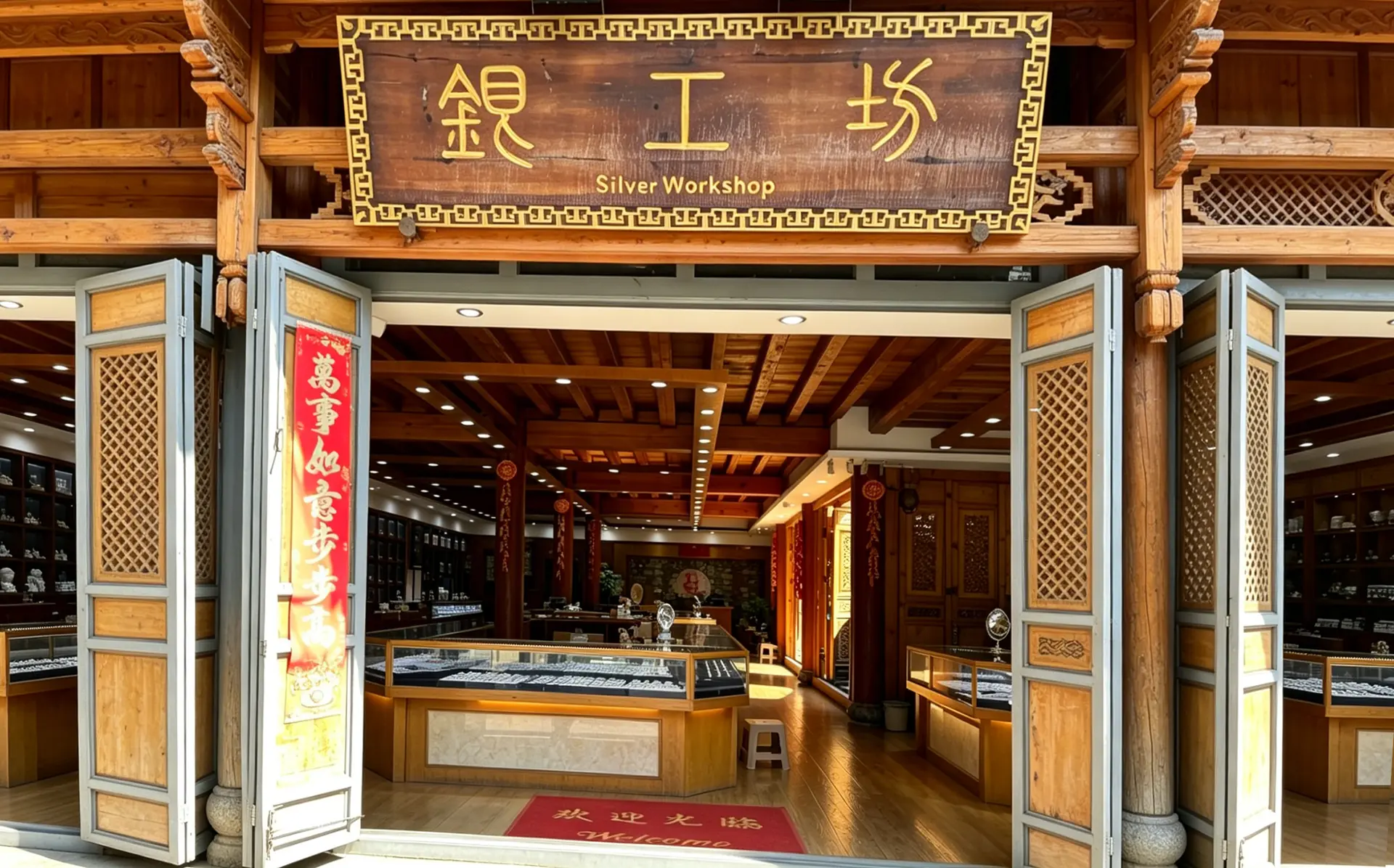
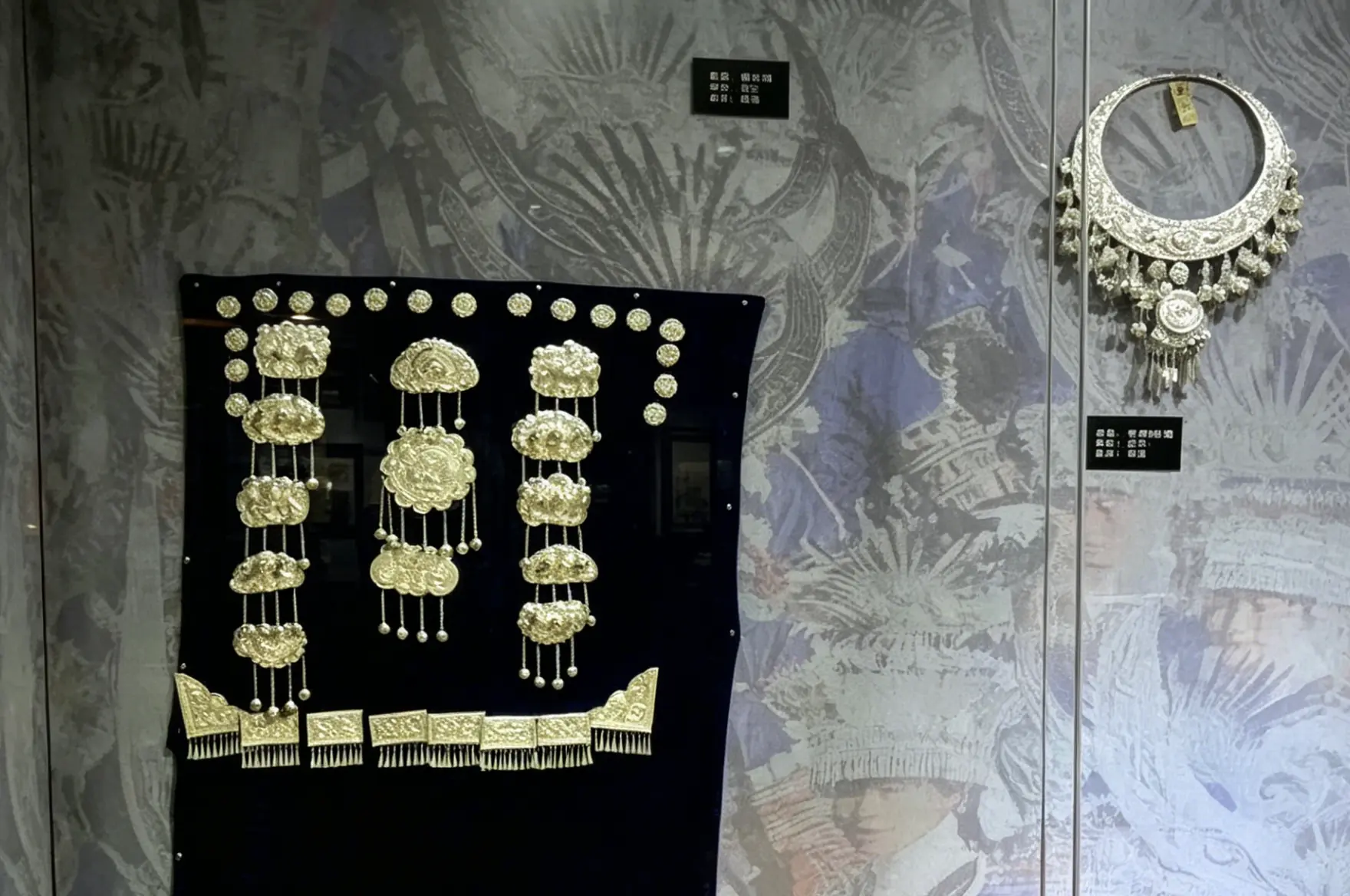
The choice rule: treat Kaili and Miaomei as culture and exhibition options, not automatic hands-on workshops, unless the current provider confirms the activity. If you do not have a guide or local contact for deeper silversmith villages, Xijiang is the cleaner choice.
Booking Channels and What to Verify
Choose the channel, then verify the activity
Use major platforms for visibility, but read the product carefully. A Guizhou cultural tour is not the same thing as a jewelry workshop.
← swipe to compare all options →
Trip.com attraction pages
Best for locations and tickets
- ✓Good for map context, scenic-area tickets, and attraction descriptions
- —May describe silver making without selling a dedicated workshop
- —Use it to locate the craft area, then verify the class separately
Xijiang, Gagegu Alley, Miaomei Museum
Structured Xijiang tours
Useful for logistics
- ✓Good if you need transport, scenic tickets, and a structured village day
- —Some products mention silver ornament culture or the museum
- —Do not assume hands-on jewelry making unless the package says so
Village day tours and cultural routes
English-guided tours
Useful for context
- ✓Some listings include English guides and Xijiang cultural explanation
- —May include Miao lunch, ciba, museum, or village walk rather than silver making
- —Not a substitute for a confirmed silversmithing class
Private or small Xijiang experiences
Booking pages change. Use the linked platforms for current availability, then confirm the hands-on silver element before paying.
Live page, then direct confirmation
Useful starting points include Trip.com's Xijiang Qianhu Miao Village page(affiliate link · may earn commission, no extra cost) for ticket, location, and silver-craft context, plus direct provider or local planner notes for workshop details. Read the inclusions carefully: many Xijiang routes introduce Miao silver craftsmanship without giving you a jewelry-making workshop.
Avoid linking or trusting small reseller pages unless they lead to a verifiable product on a major platform and the provider can confirm the real workshop details.
Pair It with a Xijiang Village Day
A suggested village day, not an official timetable
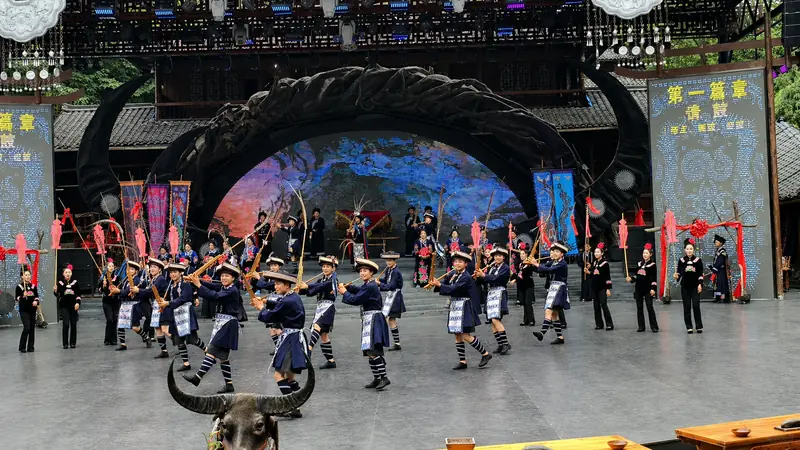
Do not treat the workshop as an isolated errand. It works best as one layer in a wider Xijiang day: village lanes, museum context, Gagegu Alley, a silversmith studio, the viewing platform, and evening lights.
- Arrive at Xijiang North Gate- Enter light if staying overnight; village paths include many steps.
- Walk the main street- Get oriented, then move past the busiest souvenir strip.
- Visit the Miao museum- See silver, clothing, festival, and household context before the studio.
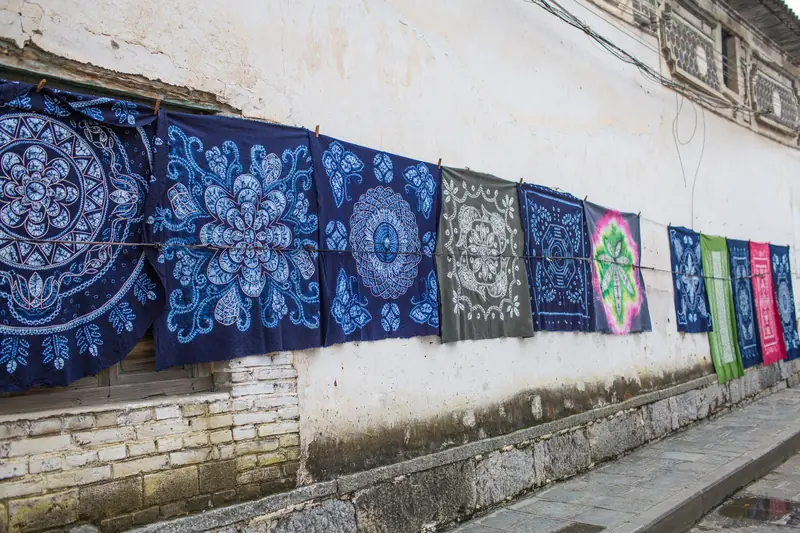
- Explore Gagegu Alley- Look for live craft displays, including silver, batik, embroidery, and rice wine.
- Join the silver session- Reserve 1-3 hours if you expect hands-on work and polishing.
- End at the viewing platform- Save the village panorama and night lights for late afternoon or evening.

If your schedule is tight, skip the hands-on piece and watch a demonstration instead. Trying to squeeze a metal workshop between lunch, the museum, the viewing platform, and a return bus often turns the class into a rushed photo stop.
For the full village context, continue with our Xijiang Miao Village visitor's guide and Xijiang Miao performances guide.
Getting to Xijiang for a Workshop
Think in two transport legs
The simplest foreigner-friendly route is usually high-speed rail to Kaili South Railway Station (凯里南站) (Google | Amap), then road transport to Xijiang Thousand Miao Village (西江千户苗寨) (Google | Amap).
Guiyang North → Kaili South
35–45 minutes
Usually by high-speed train; check the live train for your travel date.
Kaili South → Xijiang
1–1.5 hours
Usually by tourist shuttle, taxi, ride-hailing car, or private transfer, depending on traffic and your arrival point.
← swipe to compare all options →
Stay in Xijiang
Best for a relaxed craft day
- ✓No rush after the workshop
- ✓Easy to pair with museum, food, and performances
- —Carry a backpack; village stairs are hard with rolling luggage
Recommended if you want night views
Day trip from Kaili
Most practical quick option
- ✓Shorter road time than starting from Guiyang
- —Works only if the workshop time is confirmed
- —You may miss the best night view if returning early
Good if based near Kaili South
Day trip from Guiyang
Possible but long
- —High-speed rail helps, but transfers add up
- —Doable for a cultural tour, less ideal for a slow craft session
- —Risky if you have not confirmed the hands-on workshop
Best with a guided route
Train, shuttle, and ticket details change by date. Confirm current schedules on Trip.com, 12306, your hotel, or the local station before travel.
Safety, Etiquette, and Silver Shopping Advice
The one real high-risk layer
Silversmithing uses heat, hammers, sharp edges, chemicals, polish, and small tools. Do not touch anything unless the artisan invites you. If children join, confirm age limits and make sure their role is limited to safe stamping, texture, or polishing.
Keep heat and sharp work with the artisan
Visitors should not handle the torch or heating area, soldering, sharp cutting, chemical cleaning, or delicate joining. If children join, keep their role to safe stamping, texture, or polishing under the artisan's direction.
Ask before photographing artisans, especially faces, family workrooms, private tools, or unfinished custom pieces. Hand close-ups are often more respectful and more useful for the article than full-face portraits.
Shopping needs the same care. A low price may mean machine-stamped work, plated metal, alloy, or silver over copper. That is not automatically bad if you just want a souvenir, but it should not be confused with a hand-forged silver piece.
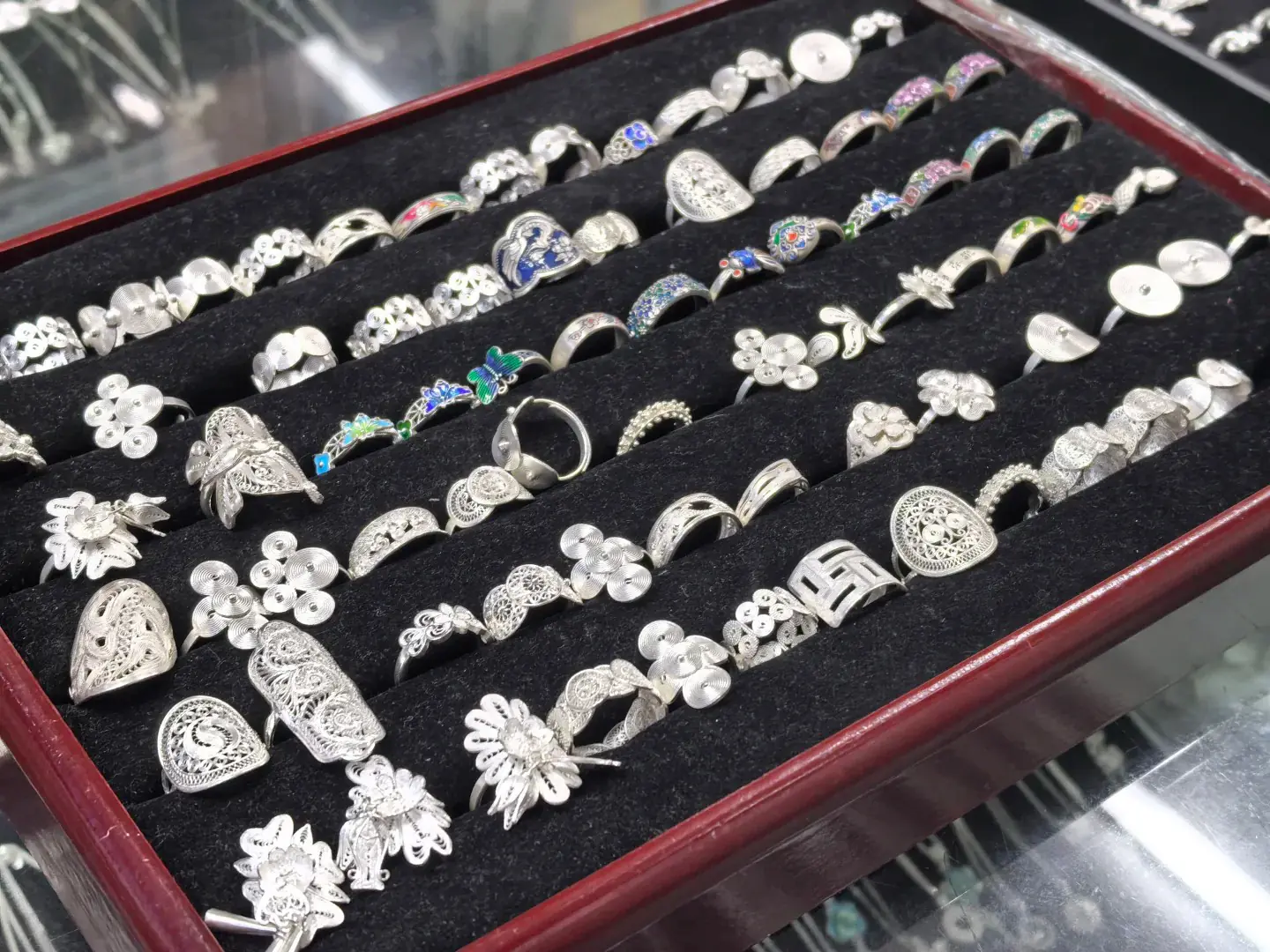
Finished rings, bracelets, and pendants are easier to carry than large ceremonial ornaments, but appearance alone does not prove material or handwork. Treat small purchases as souvenirs unless the workshop can explain exactly what you are buying.
Before buying, ask five questions
- What is the silver content?
- Is it handmade, machine-stamped, or partly handmade?
- Was it made locally in Guizhou?
- How should I clean and store it?
- Is the price for the workshop, the material, or both?
Separate the class from the purchase
Pay for the workshop because you want to learn. Buy jewelry only if you genuinely like the piece and understand the material. A good experience should not depend on buying extra silver afterward.
Frequently Asked Questions
Yes, if you are already visiting Xijiang, Kaili, or Qiandongnan and enjoy craft, jewelry, or minority culture. It is not a stand-alone reason to visit Guizhou, but it can make a Xijiang day feel much more personal.
Sources checked for this guide
- Verified the national heritage regions, handmade process, approximately 30 procedures, and specialist casting, hammering, braiding, welding, and washing steps: China Intangible Cultural Heritage Digital Museum — Miao silver jewelry forging
- Checked the attributed 400-plus-year custom of homemade Miao silver ornaments: China National Intellectual Property Administration — Miao silver crafting
- Verified Xijiang’s current official positioning as a living cultural setting for silver forging, dress, museum context, and other Miao traditions: Guizhou Provincial Government — Xijiang cultural and ecological context
- Checked current ticket/location context for Xijiang and current descriptions of Gagegu Alley’s live silver-making displays; hands-on workshop details still require provider confirmation: Trip.com — Xijiang Qianhu Miao Village and Gage Ancient Alley
Beyond This Guizhou Workshop
Continue through Qiandongnan
Miao silver is one doorway into a much wider cultural route.
The wider route can include Xijiang's performances, Langde's village ceremonies, Zhaoxing's Dong Grand Song, batik, embroidery, and mountain food.
More Guizhou guides
- Xijiang Miao Village Visitor's Guide
- Xijiang Miao Performances Guide
- Dong Grand Song in Zhaoxing
- Zhaoxing Dong Village Guide
© gochinafreely.com — Original guide by Go China Freely.