
At a glance
Confirm before paying
Mahjong Belongs to Chengdu Teahouse Life
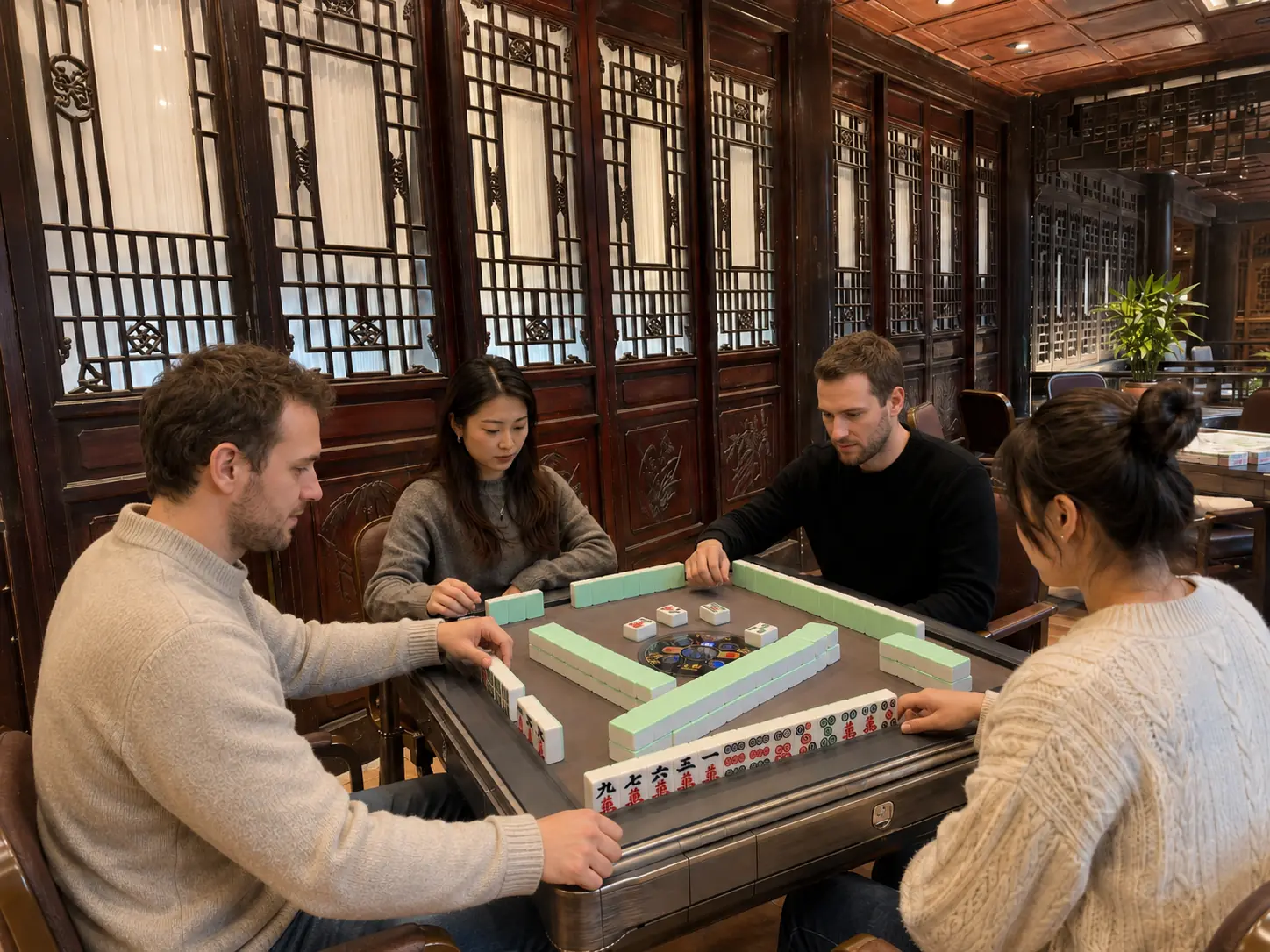
A lesson inside the city's slow rhythm
Learn the table, then understand why people stay
Most foreign travelers meet mahjong (麻将) as a mysterious wall of tiles; in Chengdu, a 2–4 hour class can make the table finally make sense. The best versions sit inside or near a teahouse, where lidded-bowl tea (盖碗茶), bamboo chairs, automatic tables, and Sichuan rules explain the city's slow-life rhythm better than another checklist sight.
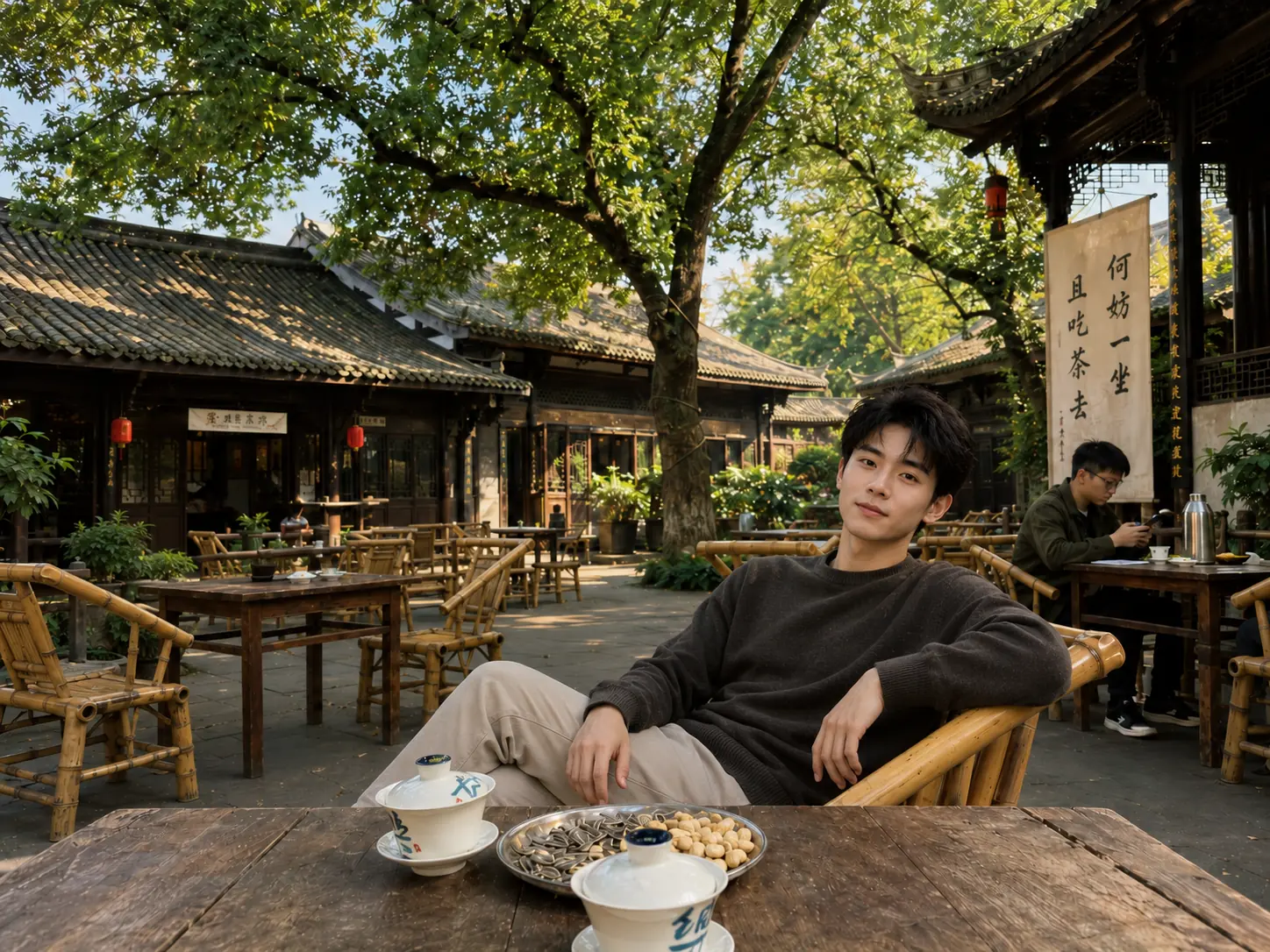
Mahjong is not a novelty invented for visitors. It belongs to the same social world as afternoon gossip, ear cleaning, and long conversations that are in no hurry. A good teacher explains the tiles and why people gather around them: relaxation, strategy, luck, chatter, and the pleasure of having time.
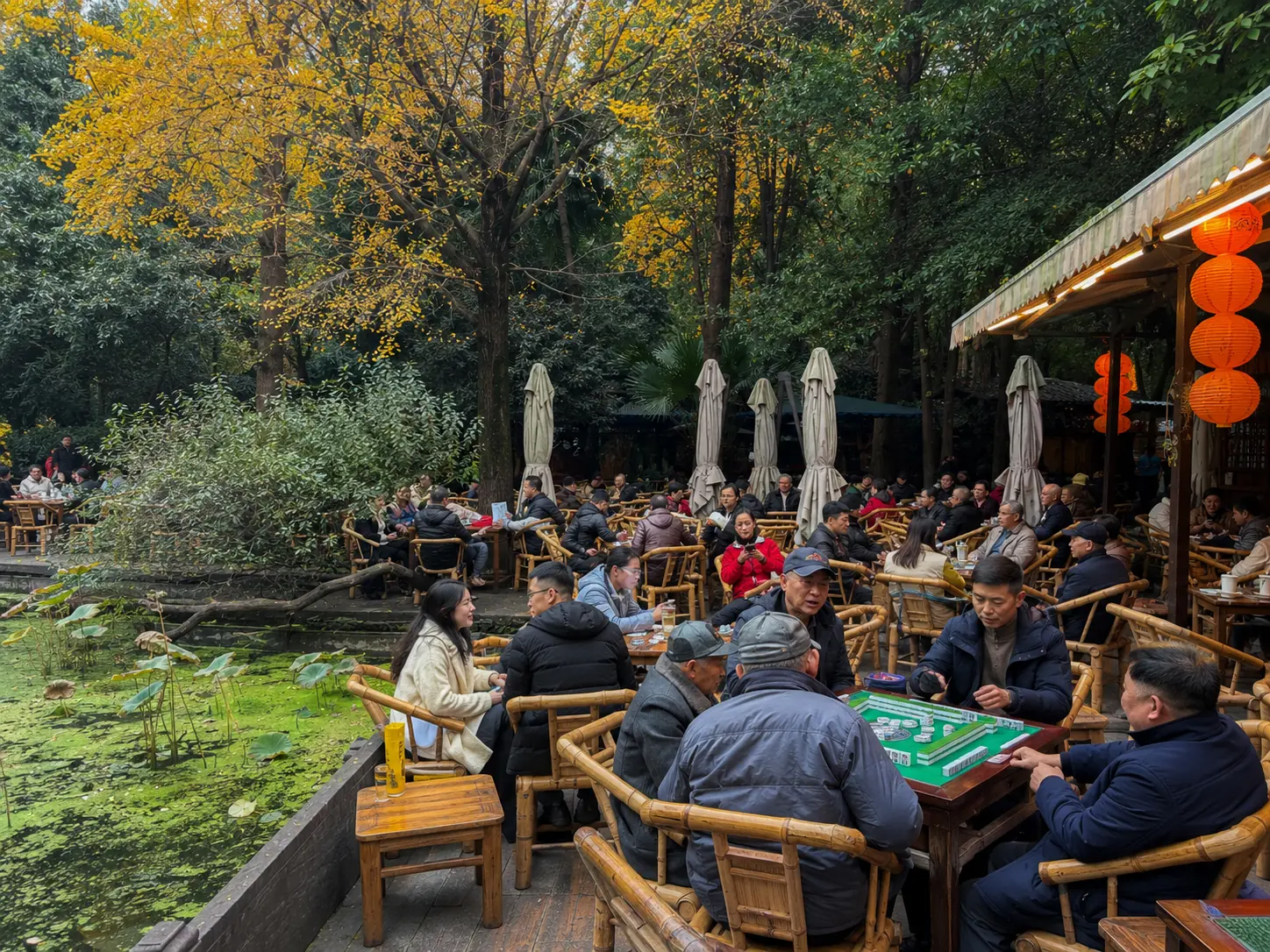
Heming Tea House is the cultural reference
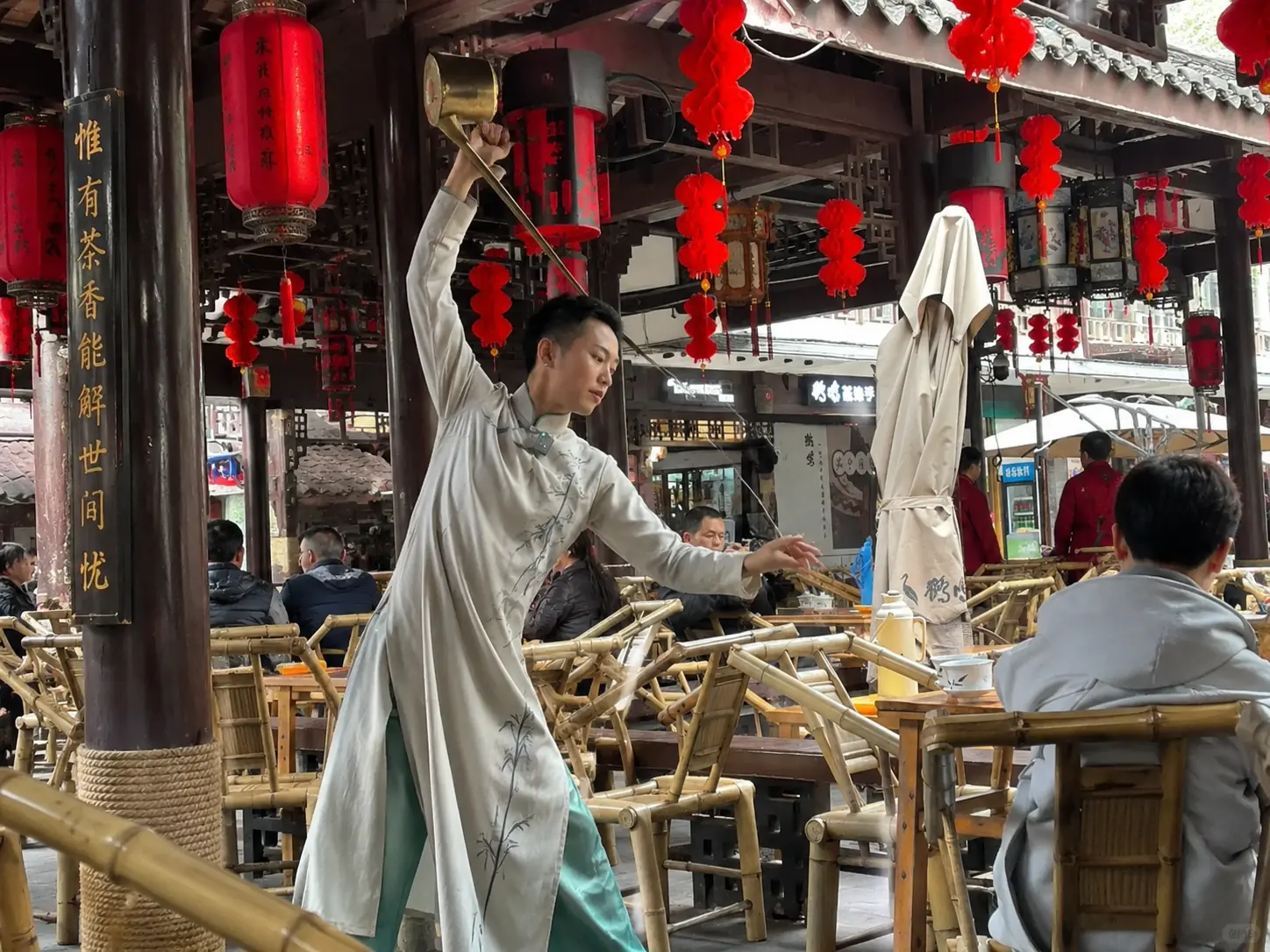
Walk through People's Park (人民公园), especially around Heming Tea House (鹤鸣茶社), and the sound of tiles is part of the background. A class works best as guided entry into that local life, not only as a board-game tutorial.
Continue with the People's Park Chengdu guide for the setting, or the Chengdu food guide for the wider food-and-tea rhythm.
Best When Chengdu Is Already in Your Trip
A Chengdu add-on, not a city-maker
Protect one relaxed social afternoon
Book a mahjong class when Chengdu is already on your route and you want one relaxed cultural experience. It suits travelers who like strategy games, food-and-tea culture, small-group learning, or a slower afternoon after pandas, temples, and hotpot.
Good fit
Choose it if you are already visiting Chengdu, like hands-on cultural experiences, and want to understand local teahouse life.
Think twice
Skip it if your Chengdu time is very short, you dislike noisy rooms, or you expect to master every rule in one lesson.
Families with older children
A beginner table works when the session is private or small-group, the teacher keeps the rule load light, and the class does not outrun attention spans.
Solo travelers
A guided table creates a natural social setting without interrupting local players or decoding a public teahouse alone.
If you only have one rushed day: start with the Chengdu Research Base of Giant Panda Breeding (成都大熊猫繁育研究基地), a real meal, and one teahouse stop. A formal lesson is better when you can protect a 2–4 hour block; it is not a must-do for every China trip.
What Happens in a Beginner Mahjong Class
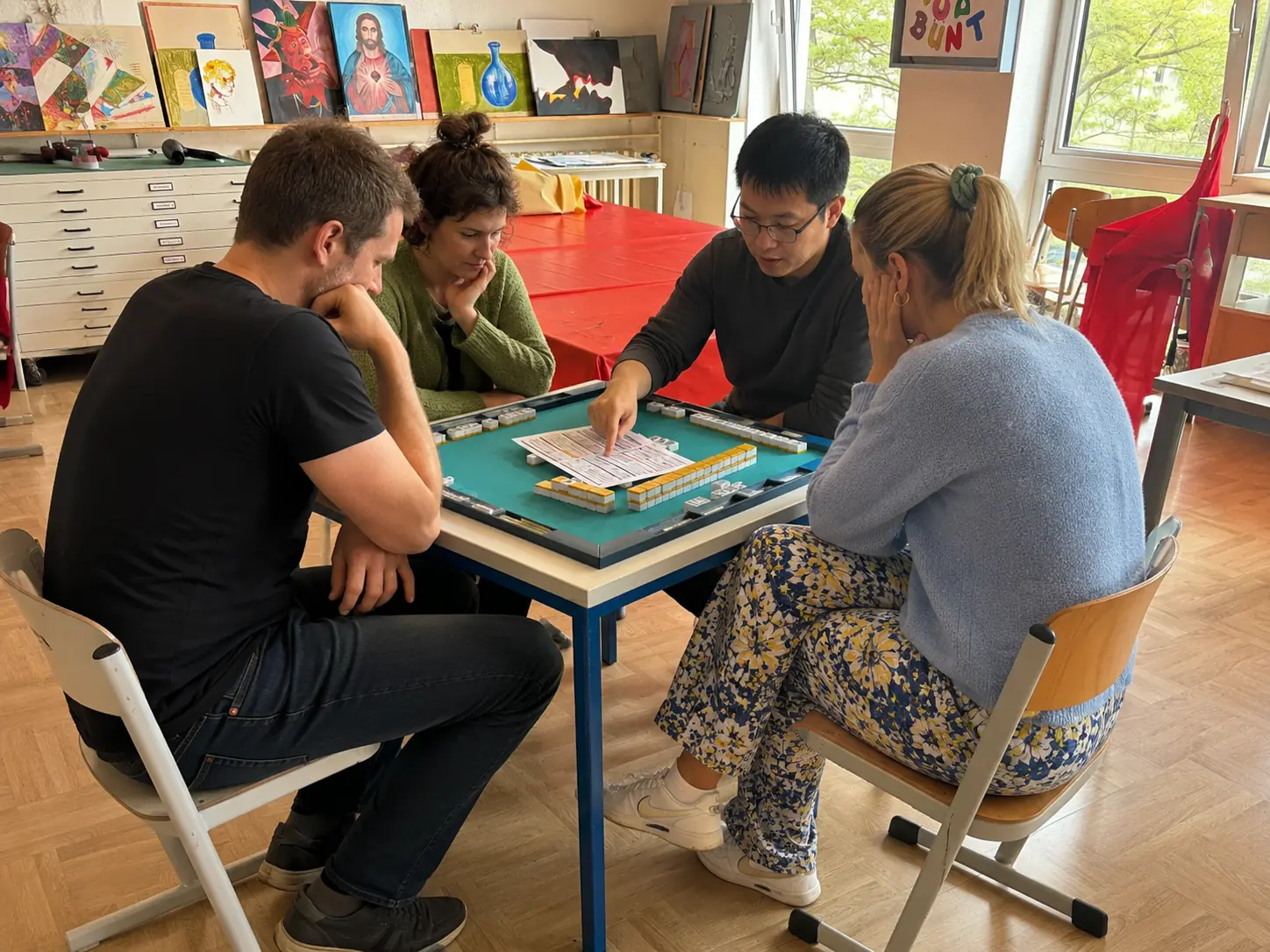
Most beginner classes follow a simple arc: learn the tiles, learn the goal, watch the table, then play slowly with help. The best teacher does not drown you in scoring combinations. They get you to the point where you can follow a round, make a basic decision, and understand why the table reacts when someone wins.
- Meet the guide or teacher- Confirm the language, location, and whether the session is in a teahouse, private room, or studio.
- Learn the tile suits- Beginners focus on Characters, Bamboo, and Circles before worrying about regional scoring.
- Understand the winning shape- The teacher explains sets, pairs, drawing, discarding, and the idea of completing a hand.
- Play a guided round- Expect pauses, translated explanations, and plenty of help with discards.
- Try the automatic table- Many classes show how modern tables shuffle and lift the tiles.
- Finish with questions- Ask what rule version you learned and how it differs from Shanghai, Hong Kong, or family rules.

Sichuan Mahjong Rules You Actually Need
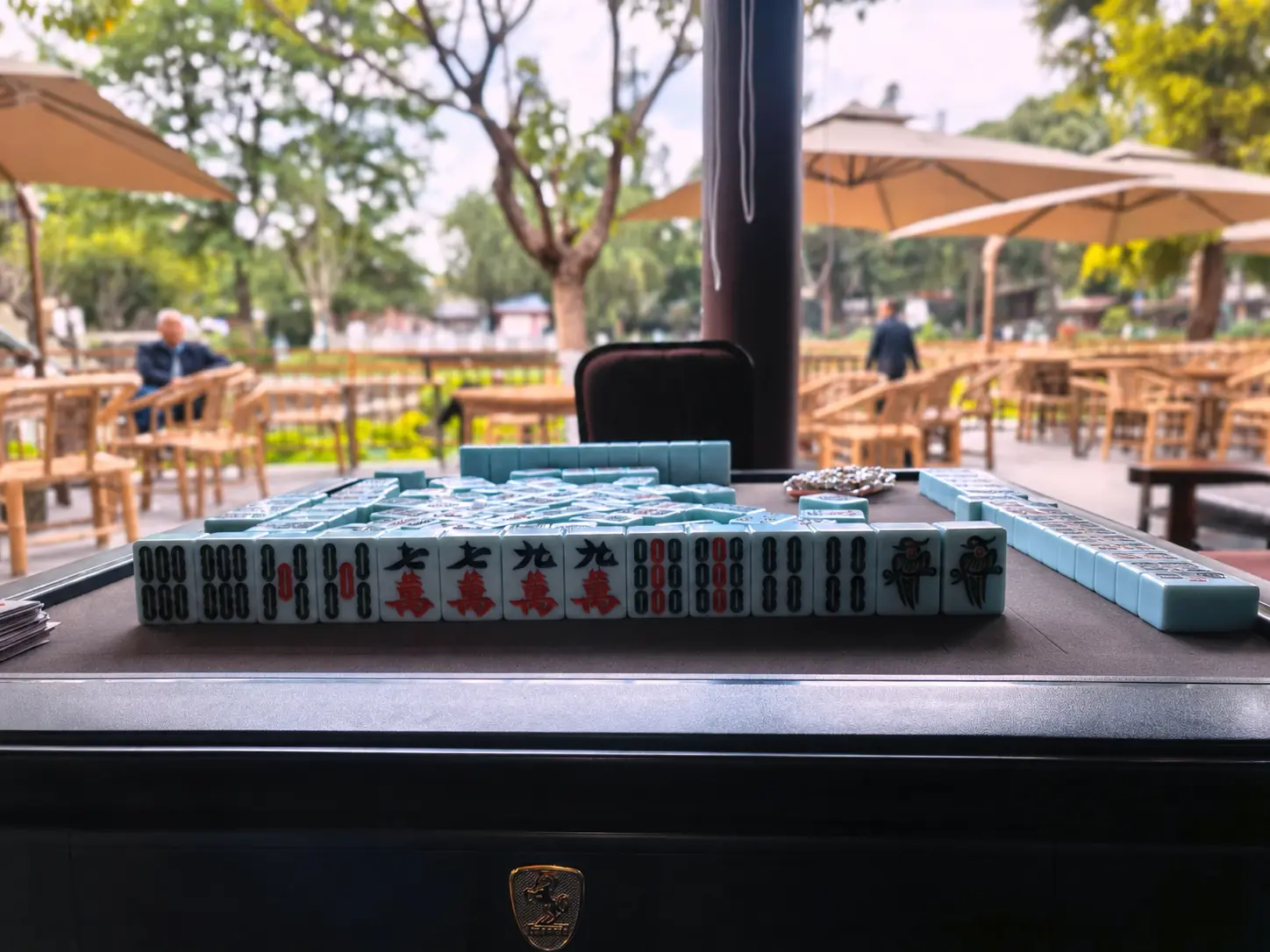
Sichuan Mahjong (四川麻将) has many local table habits, so a tourist class should simplify. You only need the big ideas first; detailed scoring can wait.
Do not panic if the teacher's version differs slightly from a rule sheet you read online. Mahjong is regional and table-specific. Your goal in Chengdu is to understand the local style well enough to enjoy the session, not to become a tournament judge.
Common Sichuan blood-battle play removes winds, dragons, flowers, and other extra tiles, leaving Characters (万子), Bamboo (条子), and Circles (筒子).
Each player must get rid of one chosen suit; a winning hand cannot contain that suit. This is the rule beginners feel first.
The round does not stop after the first win. Remaining players keep playing until more players win or the wall runs out.
Because the tile set is leaner and the goal is clear, decisions can move quickly once everyone understands the basics.
A visitor class should demonstrate wins and losses without real betting. Treat chips as counters for learning, not money.
Keep It No-Stakes
If anyone suggests real-money play, decline. A travel-friendly mahjong class should be cultural, social, and instructional.
Booking Channels Worth Checking
The experience is real, but the booking market is uneven. Use major platforms for current details, and skip small, unverifiable resellers.
Swipe to compare booking examples
Trip.com
Four-hour format
- ✓Check the longer Chengdu class(affiliate link · may earn commission, no extra cost); when reviewed on August 1, 2026, the selected English option showed a four-hour duration, booking confirmation, reviews, and a date-specific cancellation field.
- —Still confirm the live teaching language, meeting point, and what is included on your exact date.
Trip.com
Two-to-three-hour format
- ✓Compare the shorter Chengdu class(affiliate link · may earn commission, no extra cost); when reviewed on August 1, 2026, it showed English service, a two-to-three-hour duration, instant confirmation, and its own cancellation field.
- —Do not repeat inflated marketing claims unless the listing gives clear, current details.
Context, not a booking channel: Heming Tea House helps you understand lidded-bowl tea, bamboo-chair social life, and public mahjong tables. It is not a confirmed provider for either linked lesson, so do not treat the POI as a class meeting point.
Prices, reviews, language options, inclusions, and cancellation windows change. Let the platforms carry those live fields; use this guide to judge whether the selected product actually fits your trip. Shanghai alternatives are compared separately below because they answer a different city decision.
Booking Checks Before You Pay Anything

Before you pay
Practical questions matter more than a poetic title
Use the short details at the top as a starting point. The real decision is whether the exact listing matches your date, group, and tolerance for a lively room.
- Confirm the live teaching language, not just the webpage language.
- Ask whether the class teaches Sichuan Mahjong (四川麻将) or a generic beginner version.
- Check whether the meeting point is a teahouse, a private room, a studio, or a park area.
- Ask whether tea, snacks, translator, and transportation are included.
- Avoid listings that promise mastery in one short session.
- Do not join any activity that pushes real betting or unclear extra fees.
Etiquette at a Mahjong Table
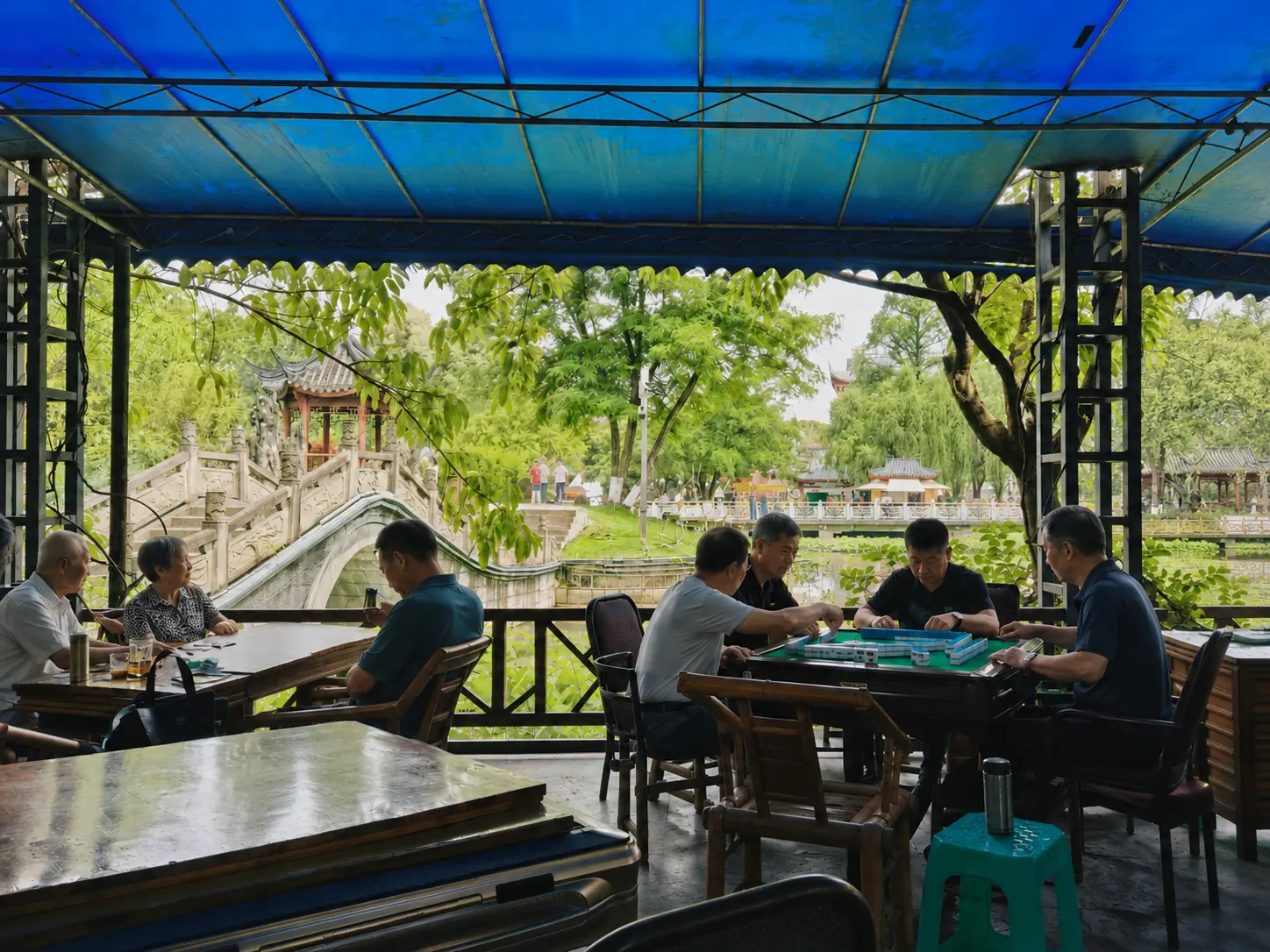
The main rule is simple: local players are people enjoying their own afternoon, not props or an unplanned tourist lesson.
- Let your guide manage the table, explain the rules, and handle conversations with local staff.
- Ask before photographing people. Hands, tiles, tea cups, and the automatic table are safer subjects than stranger portraits.
- Expect conversation, clattering tiles, water refills, occasional smoke, and moving kettles. Choose a private studio if you want a quiet room.
What If You Are in Shanghai?
Shanghai is a valid place to learn mahjong if your itinerary is already Shanghai-focused. The key is expectation-setting: it can be easier to book an English-friendly lesson there, but it does not replace the Chengdu teahouse angle.
Swipe to compare Chengdu and Shanghai
Chengdu
Teahouse life
- ✓Best if you want Sichuan rules, People's Park tea culture, and mahjong as a window into daily city life.
- —A little noisier and less classroom-like, especially if the session leans into public teahouse atmosphere.
Shanghai
Structured lesson
- ✓Useful if your trip is already Shanghai-focused and an English-friendly structured rules lesson is easier to arrange.
- —Convenient for learning the rules, but not evidence for Chengdu's teahouse culture.
Choose Shanghai for rules-first convenience on a Shanghai itinerary; choose Chengdu when teahouse life is part of the reason for learning.
Fit It Into a Chengdu Day

The easiest Chengdu day is not packed wall to wall. Leave room for slow time, because that is the whole point of choosing a teahouse-based class.
First-time route
Pandas + Mahjong
Use the Chengdu Panda Base guide for the early start, then slow down after lunch. Add hotpot in the evening only if your group still has energy.
Central low-transfer day
People's Park + Kuanzhai
Best if the class meets near People's Park (人民公园) or Qingyang District. Keep Kuanzhai Alley as a short wander, not the main event.
Culture and slow pace
Wenshu + Teahouse
Pair with the Wenshu Monastery guide for temple, vegetarian food, and tea culture. It is a calm choice for travelers who do not want a packed transfer day.
Short Chengdu stay
Observe Only
If you do not have 2–4 spare hours, drink tea at Heming Tea House and watch from a respectful distance. Keep the full class out of a day that already contains long out-of-town plans.
Frequently Asked Questions
Yes, if the listing is designed for foreign visitors or first-time players. A good beginner class focuses on the tile suits, basic winning shape, Sichuan rule differences, and a guided practice round rather than advanced scoring.
Sources checked for this guide
- Checked the live English option, four-hour duration, booking confirmation, current inclusions field, and date-specific cancellation field; prices and terms remain live: Trip.com — Play Mahjong in Chengdu
- Checked the live English option, two-to-three-hour duration, instant confirmation, current inclusions field, and separate cancellation cutoff: Trip.com — Chengdu Mahjong Experience
- Used the 2024 rules brief for the 108 suited tiles, voided-suit requirement, and play-continuing-after-a-win summary: International Mahjong League — Brief Introduction to Bloody Mahjong
- Checked Heming Tea House as a major garden teahouse in People's Park and for current Western Sichuan teahouse context; it is not treated as a class provider: Sichuan Provincial Government — Heming Tea House and Chengdu teahouse culture
- Used the March 2026 account to confirm the century-old Heming Tea House remains a Chengdu tea-culture landmark in People's Park: Ya'an Municipal Government — Chengdu People's Park cultural event
- Checked the official English address listing for Heming Tea House in People's Park: GoChengdu — Tea House listing
Beyond This Chengdu Mahjong Class Guide
Use this guide to decide whether the lesson belongs in your Chengdu route, then keep the booking decision tied to the exact language, setting, rule set, and live terms you have confirmed.
© gochinafreely.com — Original guide by Go China Freely.