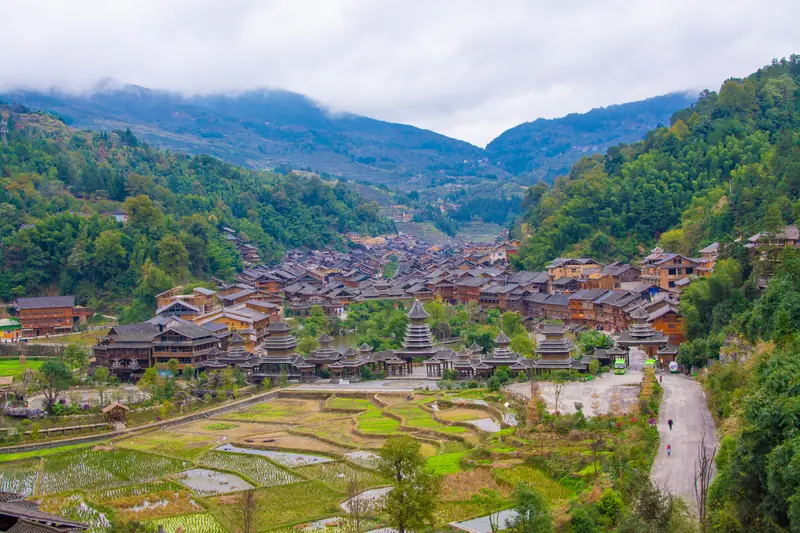
Current visit picture
The ¥80 entry and ¥10 one-way sightseeing-car prices come from Guizhou's official list current through December 2025 and published in January 2026. Temporary promotions do not make the car permanently free. See arrival logic
Plan with live details
A Choir That Made UNESCO Listen
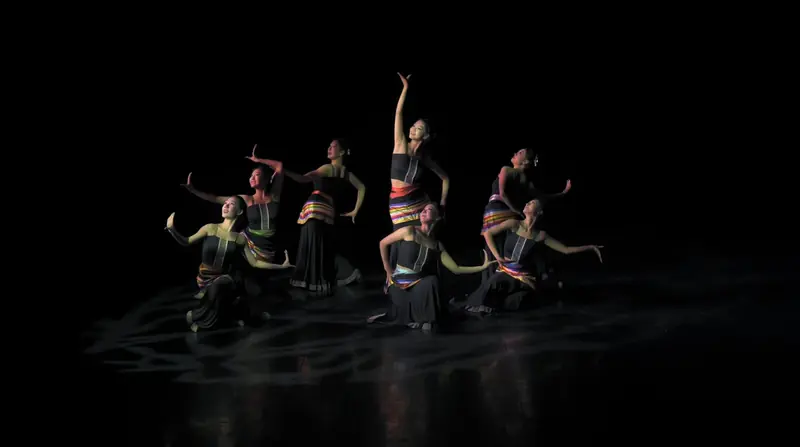
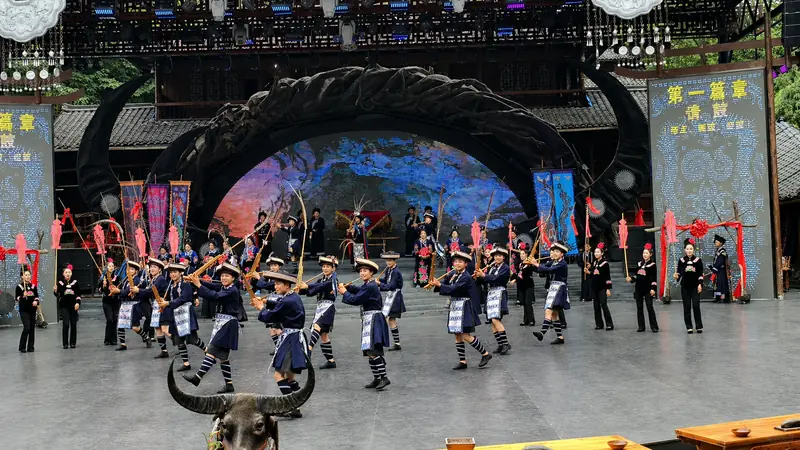
Dong Grand Song (侗族大歌) is not a festival novelty imported for visitors. In Zhaoxing, its layered voices still belong to village memory, teaching and communal life beneath five wooden drum towers.
2009
UNESCO inscription
No leader
collective singing
No instruments
voice-led harmony
Oral
master to disciple
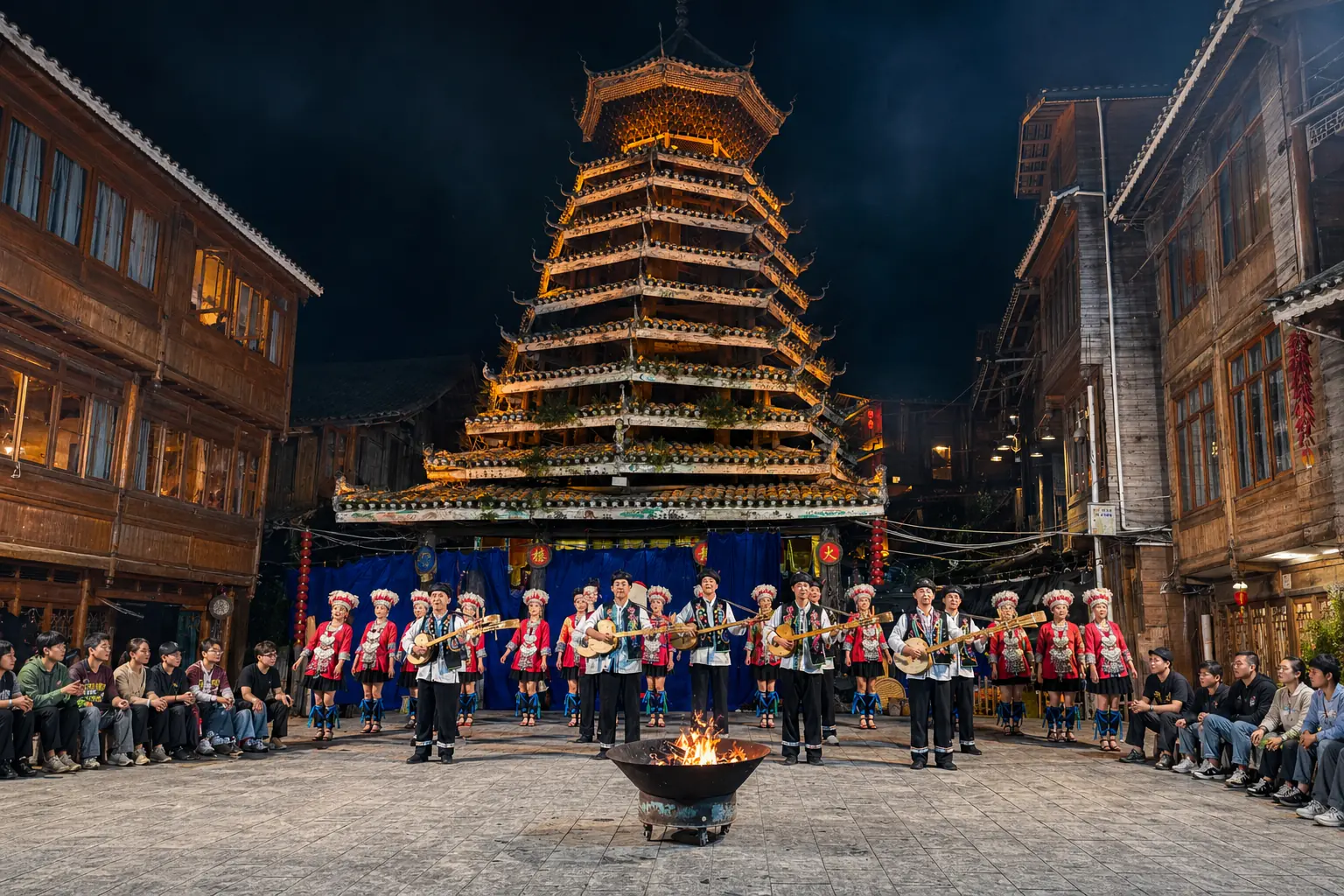
Groups build interlocking parts without instrumental accompaniment or a conductor. Skilled singers pass the repertoire from masters to younger performers, so listening is also witnessing an oral transmission system.
UNESCO inscribed the Grand Song of the Dong Ethnic Group on the Representative List in 2009. Dong Grand Song performers and vocal techniques later contributed to the score of Ne Zha 2 (哪吒之魔童闹海), giving the tradition a new pop-culture audience in 2025.
Imitative songs
Listen for nature
Voices can evoke cicadas, birds and flowing water. The point is not solo virtuosity but a group texture built by ear.
Ballads and narratives
Hear village memory
Story songs carry migration, love and local history through repeated communal performance.
Moral and social songs
Learn the values
Lyrics can encode etiquette, relationships and guidance for younger generations.
Children's songs
Join the transmission
Shorter pieces introduce children to nature, work and the discipline of singing as one group.
The useful listening question is not “who is the star?” but “how does the group hold together?” The answer comes from years of shared practice rather than a fixed instrumental pitch.
What You'll Hear in Zhaoxing
Think in four viewing contexts, not one permanent timetable. The village can adjust sessions, venues and charges by season, event and visitor volume.
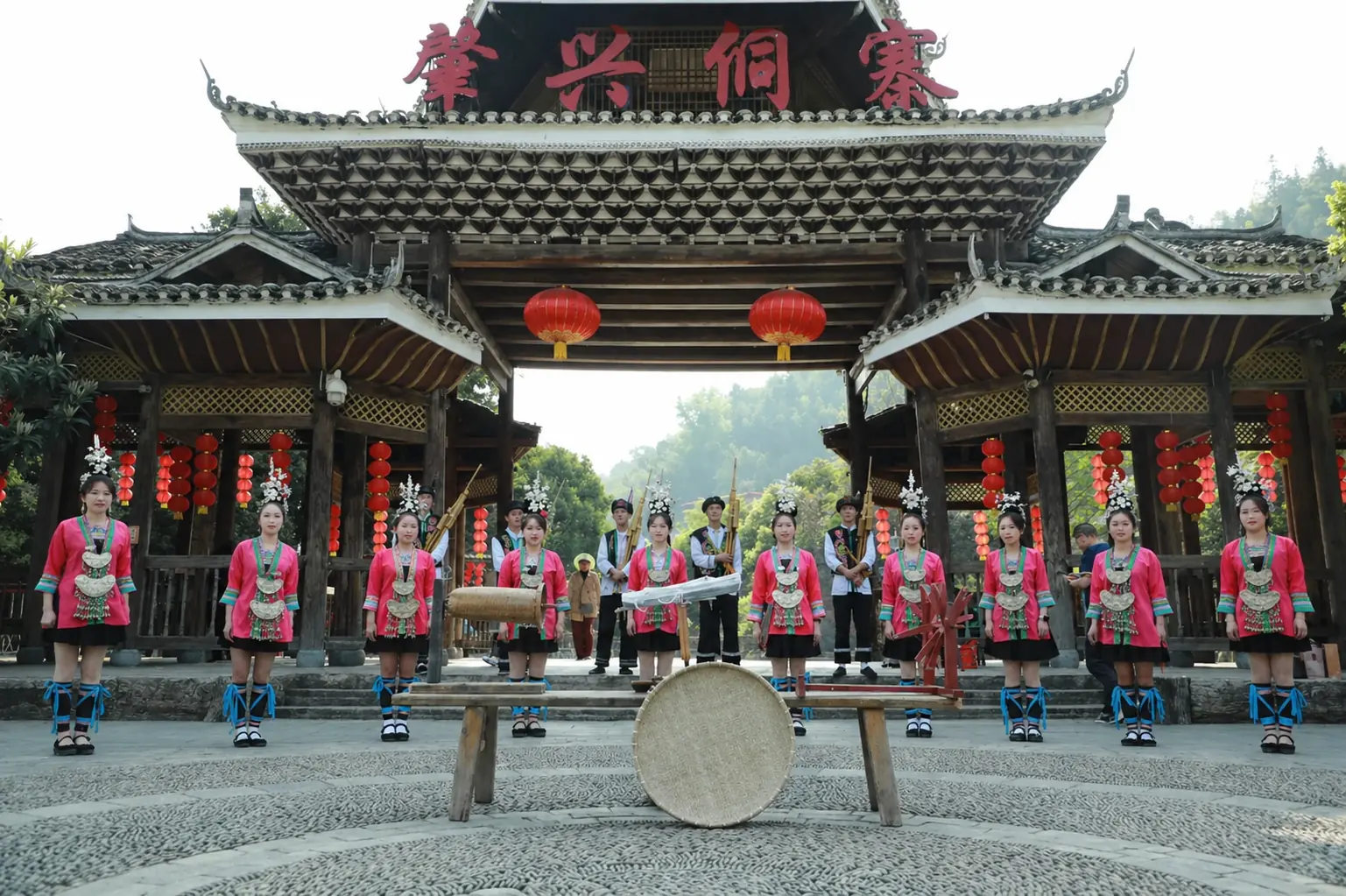
Xin Drum Tower (信团鼓楼), the tallest of Zhaoxing's five towers at 24.37 meters, is a useful anchor for formal Grand Song programming. The village gate and other towers can also host welcome singing or peak-day sessions.
The most memorable sound may be less polished: a rehearsal beneath a tower while residents talk, rest and move through ordinary village life.
Village-gate welcome
Ceremonial first contact
Government visitor guidance currently places gate and Grand Song activity within a broad 09:00-11:00 morning window. Peak days may add sessions; the exact order and inclusion can move.
Drum-tower program
Best formal listening
A staged tower session makes the group texture easiest to hear. Arrive early, keep aisles clear and let the singers—not the camera—hold your attention.
Evening production
A broader paid show
Recent official reporting has placed the Spring Cuckoo (布谷催春) program around 20:30, mixing Dong song with a larger stage production. Treat that as a recent anchor, not a guaranteed daily time or price.
Community rehearsal
Quiet and unscripted
You may encounter elders or younger singers practicing beneath a tower. Watch from the edge, avoid flash and do not assume a private gathering is a public performance.
Check one board, once
On arrival, photograph the current village performance board or ask the visitor center which sessions are running, where they take place and whether they carry a separate charge. If Dong Village Covenant (侗寨款约) is listed, treat it as an optional production rather than the core Grand Song encounter.
Five Drum Towers — Stage and Soul
Zhaoxing's five drum towers are not five unrelated monuments. Together they reveal how the village's Ren, Yi, Li, Zhi and Xin groups organize communal space.
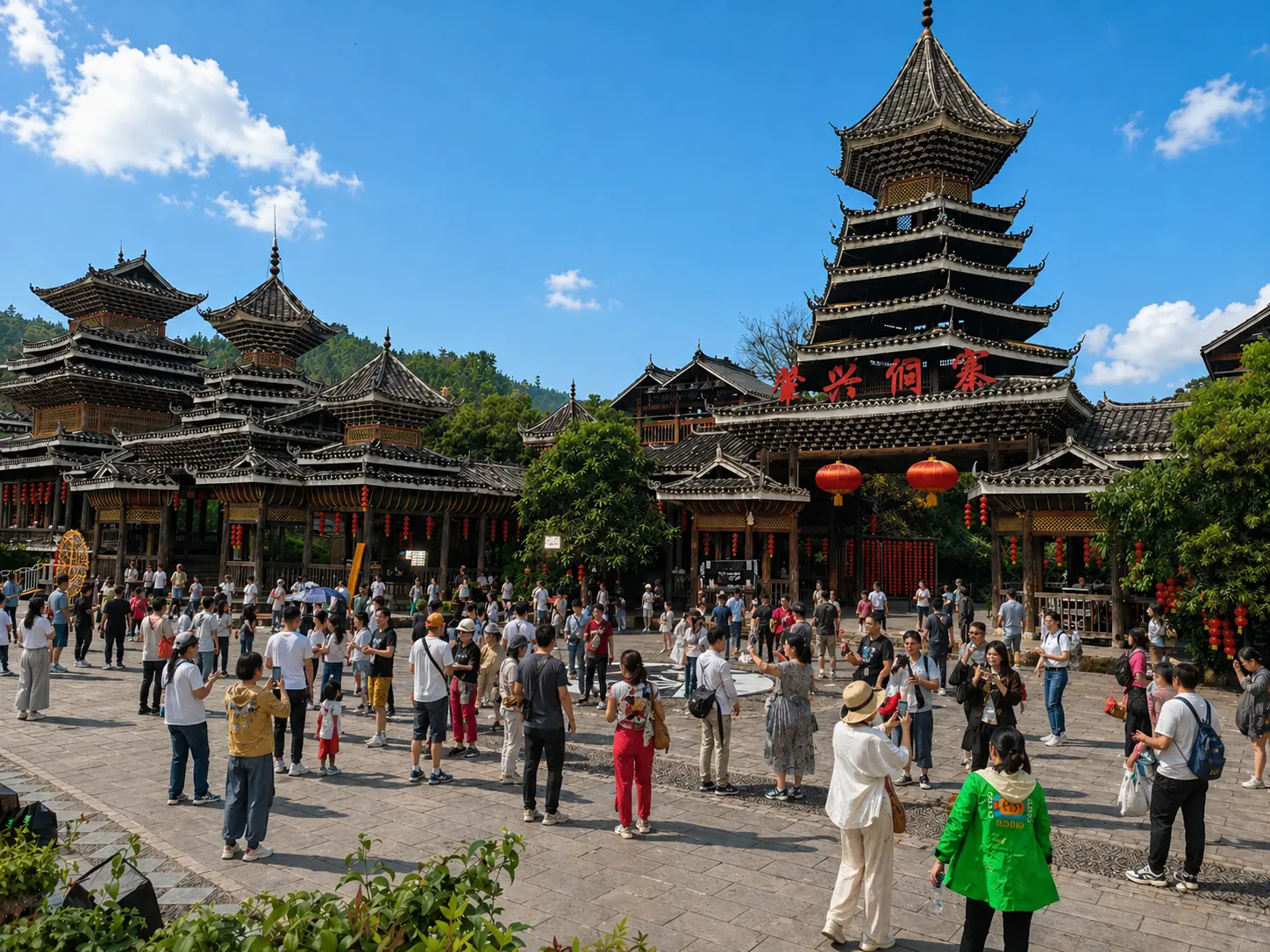
The towers rise above dense timber houses as both landmarks and meeting spaces. Official architectural accounts describe traditional mortise-and-tenon construction, a system that locks timber members together rather than relying on a simple nailed frame.
Their importance is social as much as architectural: the tower groups support gatherings, community discussion, rest and performance, including the acoustic home of Grand Song.
Ren Tower (仁)
Benevolence
Start by reading the layered eaves and the open ground-floor gathering space rather than treating the tower as a closed monument.
Yi Tower (义)
Righteousness
Use this stop to look closely at painted and carved timber details, then step back to see how the tower anchors its surrounding houses.
Li Tower (礼)
Propriety
Its waterside setting helps connect the tower sequence with Zhaoxing's stream and wind-and-rain bridges.
Zhi Tower (智)
Wisdom
Slow down in the surrounding lanes; the useful view is the relationship among tower, houses and daily foot traffic.
Xin Tower (信)
Integrity · 24.37 m
Official sources describe it as an 11-storey, 24.37-meter tower. It is also a recurring venue for formal Grand Song programming, subject to the current board.
Complete the sequence once in daylight, then make a shorter river walk after dinner when the illuminated rooflines become the navigation anchors. The second pass feels different without requiring another activity block.
Beyond the Stage — Village Life Up Close
The best counterweight to a formal performance is ordinary village time: sit on a bridge, watch craft work at human scale, and leave room for encounters that are not scheduled.
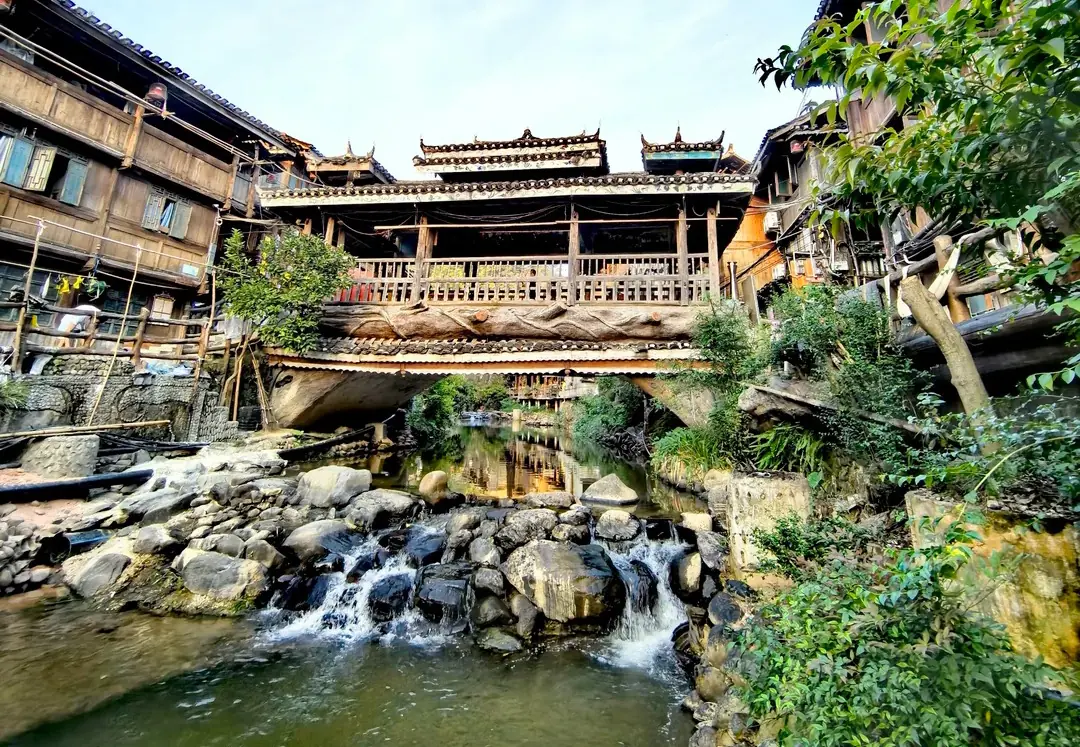
Zhaoxing's wind-and-rain bridges (风雨桥) combine covered crossings with built-in seating. They shelter residents from sun and rain, connect neighborhoods and work as everyday social rooms above the stream.
Choose one bridge for a deliberate pause. The value is not another photo stop but seeing how timber architecture still supports daily movement and conversation.
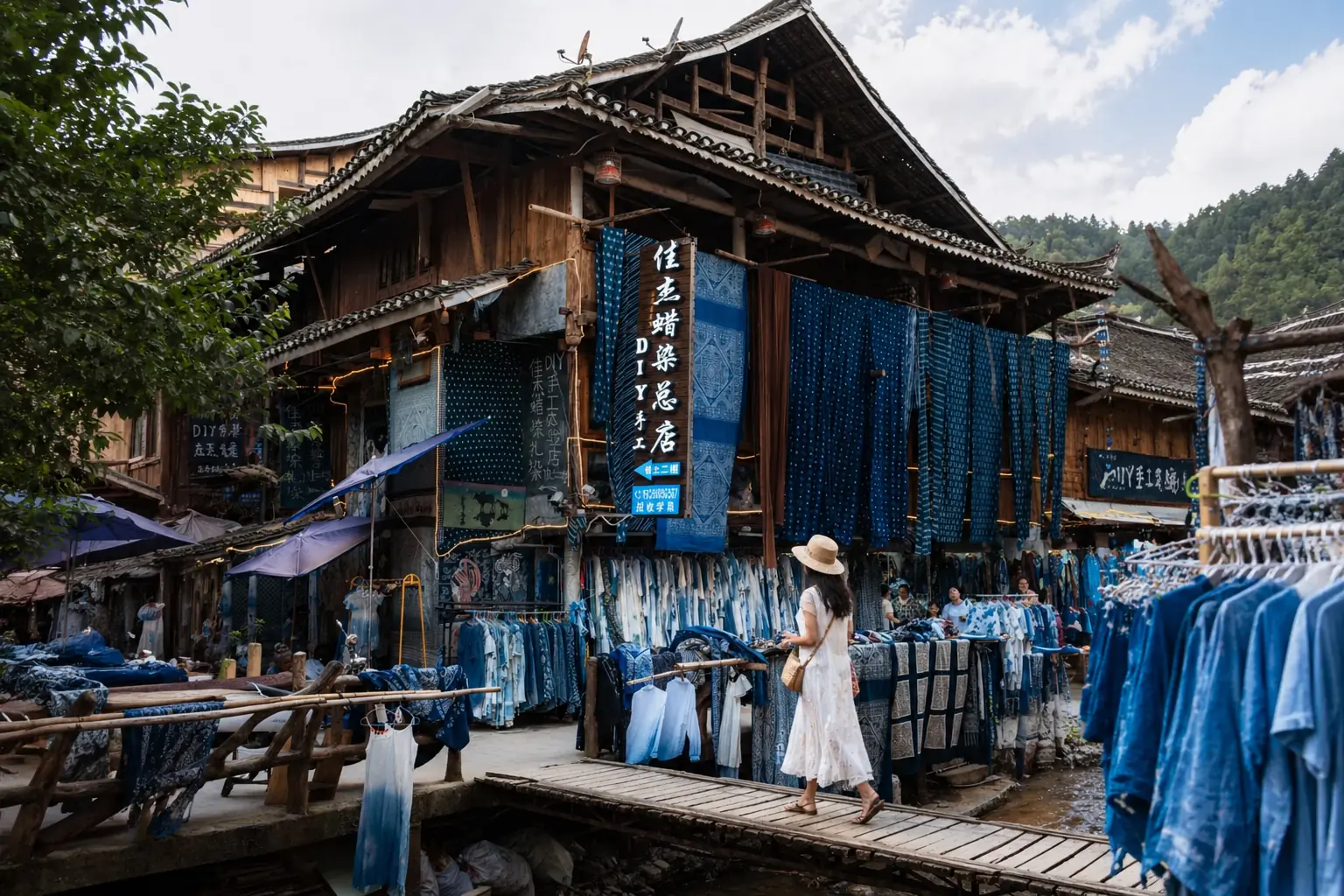
Several village workshops introduce indigo dyeing and batik: draw or apply a wax pattern, dye the cloth, then remove the wax to reveal the design.
Earlier visitor-facing samples commonly described 1-2 hour sessions around ¥30-80 per person, but this is not an official village tariff. Ask the chosen workshop what the current price, duration, design size and child supervision include before starting.
Pounding Sticky Rice (糍粑)
Steamed glutinous rice is pounded in a stone mortar with a wooden mallet. Join only when invited, then ask what topping or portion is included.
Dong Cloth Weaving
Loom work may be visible in shops or homes, but it is not automatically a visitor activity. Watch from a respectful distance and ask before entering or photographing.
These small experiences work best as optional pauses between the towers, not as a checklist that turns every working space into an attraction.
Hiking to Tang'an Village
Tang'an Dong Village (堂安侗寨) is the strongest half-day extension for travelers who want terraces and a second village context. Treat the walk as a live local route, not a fixed scenic-area timetable.
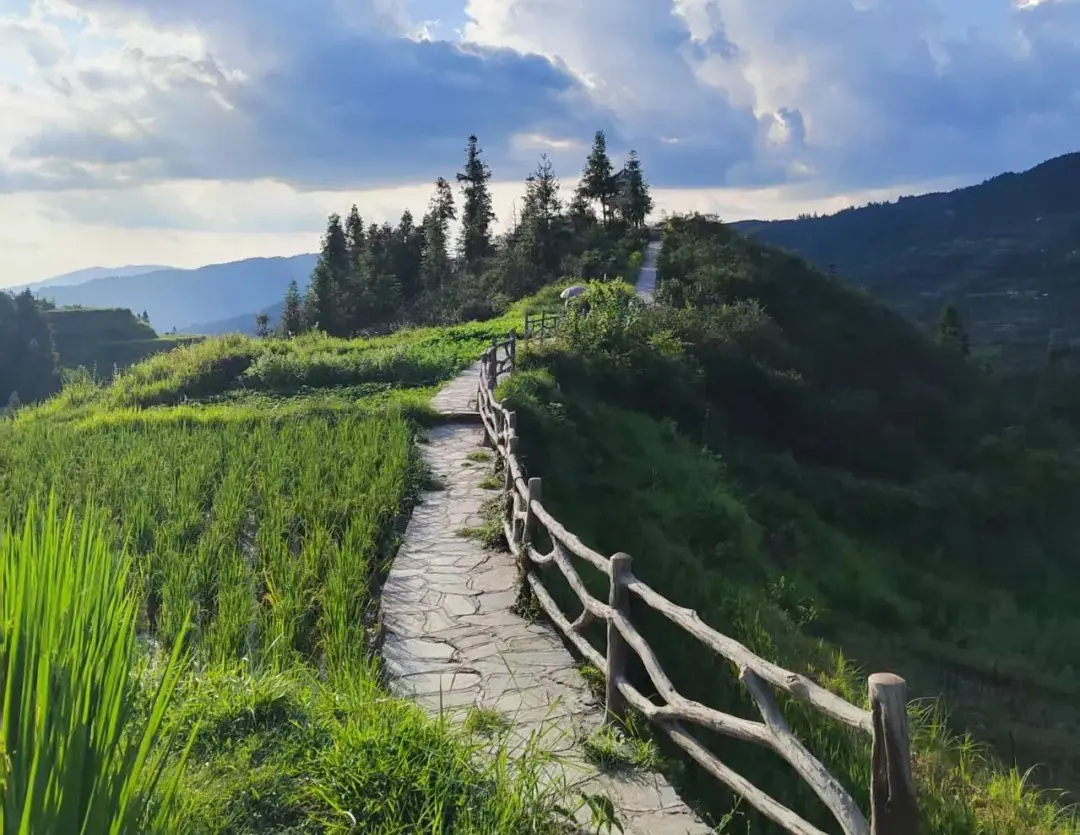
Depending on the current access point and route choice, plan on roughly 4-7 km and about 1.5-3 hours of walking. Those are planning bands, not route-certified figures.
The path links Zhaoxing with Xiage Village (厦格村), terraces and Tang'an's Dong ecological-museum landscape. Confirm the trail entry, surface conditions and return options locally, especially after rain.
- Confirm the Zhaoxing trail access- The working start point can vary; ask for the current upper-village entry before walking
- Follow the terrace path via Xiage Village (厦格村)- Use the active local path and recheck the surface after rain
- Tang'an Dong Village- Pause at the terraces, drum tower, bridge and Dong ecological-museum landscape
- Choose the live return option- Walk back or use a local vehicle only if it is currently operating
🌾April-May
Terraces may be flooded for spring cultivation, creating reflective surfaces. Field timing changes with weather and farm work.
🍂September-October
Rice can turn gold before harvest, but the precise color window shifts each year. Ask locally before making it the trip's only objective.
- Carry water and sun protection. Shops and shade are limited on parts of the route.
- Use shoes with grip. Stone and terrace paths can be slippery after rain.
- Save the Chinese place name. Keep 堂安侗寨 available for directions and any local vehicle discussion.
- Do not assume a downhill transfer. A ride to Tang'an can reduce climbing only when a local vehicle is actually running and the road is open.
What to Eat in Zhaoxing
Dong food is the section to scan by comfort level. Start with sour soup and sticky rice; move toward preserved fish or cattle herbal-broth hot pot (牛瘪) only if their fermentation and bitterness genuinely appeal to you.
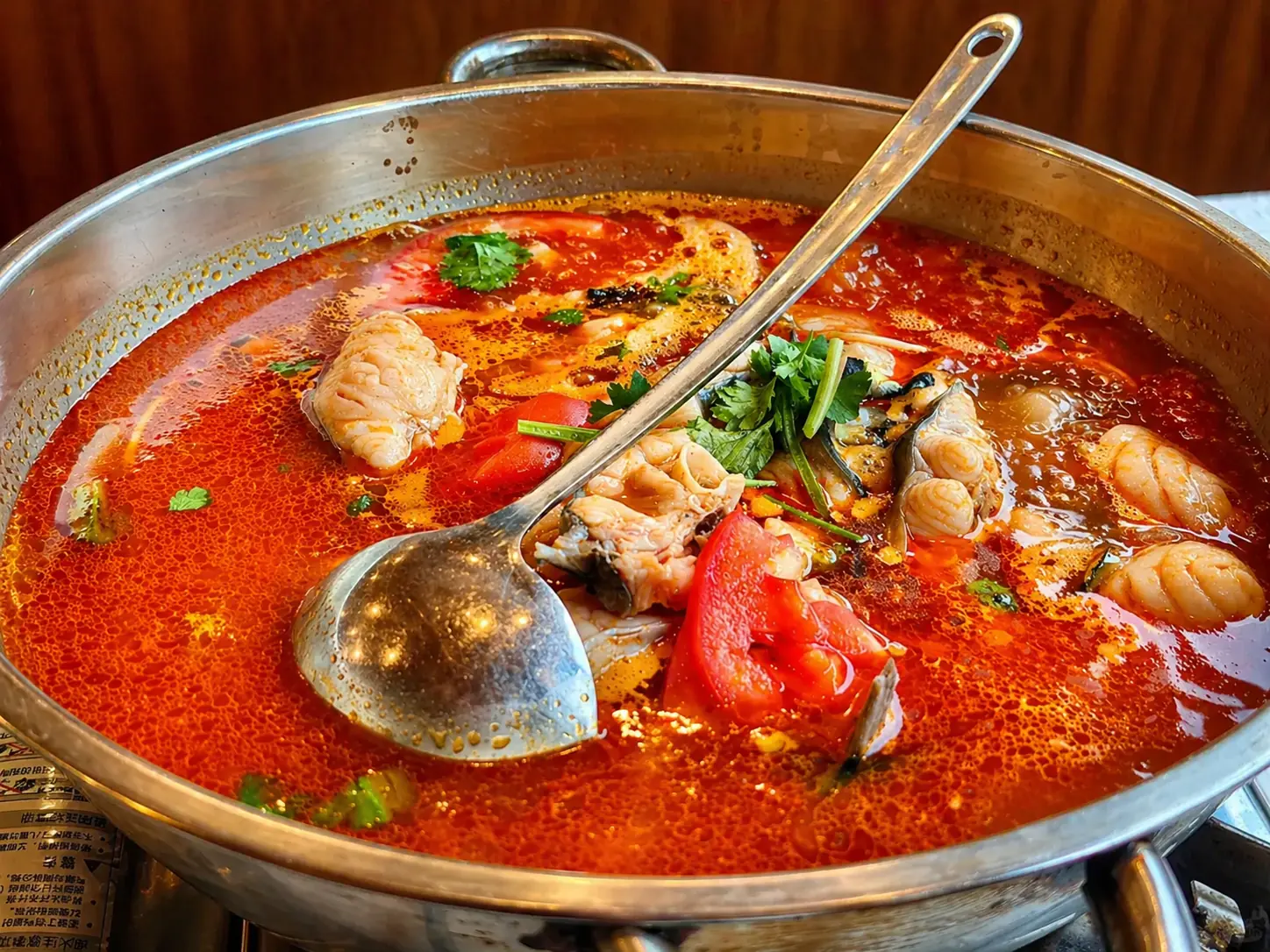
Official culture-and-tourism route guidance highlights sour-soup fish and cattle herbal-broth hot pot (牛瘪) among the regional foods. Across village menus, expect sour, fermented, smoky, sticky and sometimes bitter flavors.
Menu prices vary by restaurant, fish weight, portion and festival period. The older visitor-facing ranges below are planning samples, not current fixed tariffs.
Sour Soup Fish (酸汤鱼)
Best first order
Fish cooks in a sour broth commonly built from fermented tomato and chili flavors. An earlier sample range was about ¥40-80 per pot for 2-3 people; ask whether today's price is per pot or by weight.
Dong Oil Tea (侗家油茶)
Savory morning drink
Thick, salty, and nutty, made from tea leaves, puffed rice, peanuts, and sesame. The first sip may confuse you; the third bowl often wins people over.
Glutinous Rice (糯米饭)
Dong staple
During festivals, rice may be dyed into five colors using plant juices. It is simple, filling, and more important locally than noodles.
Roast Suckling Pig (烤香猪)
Barbecue favorite
Small local pigs are roasted for crisp skin and tender meat. Earlier stall samples placed a portion around ¥30-50; check the displayed portion and live price.
Pickled Fish (腌鱼)
Sour, spicy, preserved
Fresh fish is cured with glutinous rice flour and chili. Think deeply savory, fermented, and more intense than a first-time snack.
Cattle / Goat Herbal-Broth Hot Pot (牛瘪/羊瘪火锅)
For adventurous eaters only
The broth uses partially digested grass from a cow or sheep stomach. It is bitter, herbal, and culturally meaningful, but many foreign visitors find the smell difficult.
Long-Table Feast
Festival programs may include long-table feasts (长桌宴) with shared dishes and repeated toasts. Zhaoxing's 2026 Grain Rain program was held on April 18, but future festival and Dong New Year dates follow annual or lunar scheduling. Confirm the year's official program; outside festival periods, ask a restaurant what a smaller commercial version includes and costs.
Getting to Zhaoxing
Congjiang Station (从江站) makes Zhaoxing unusually rail-accessible for a mountain village. The decision is simple: search the train live, then budget separately for station-to-gate movement.
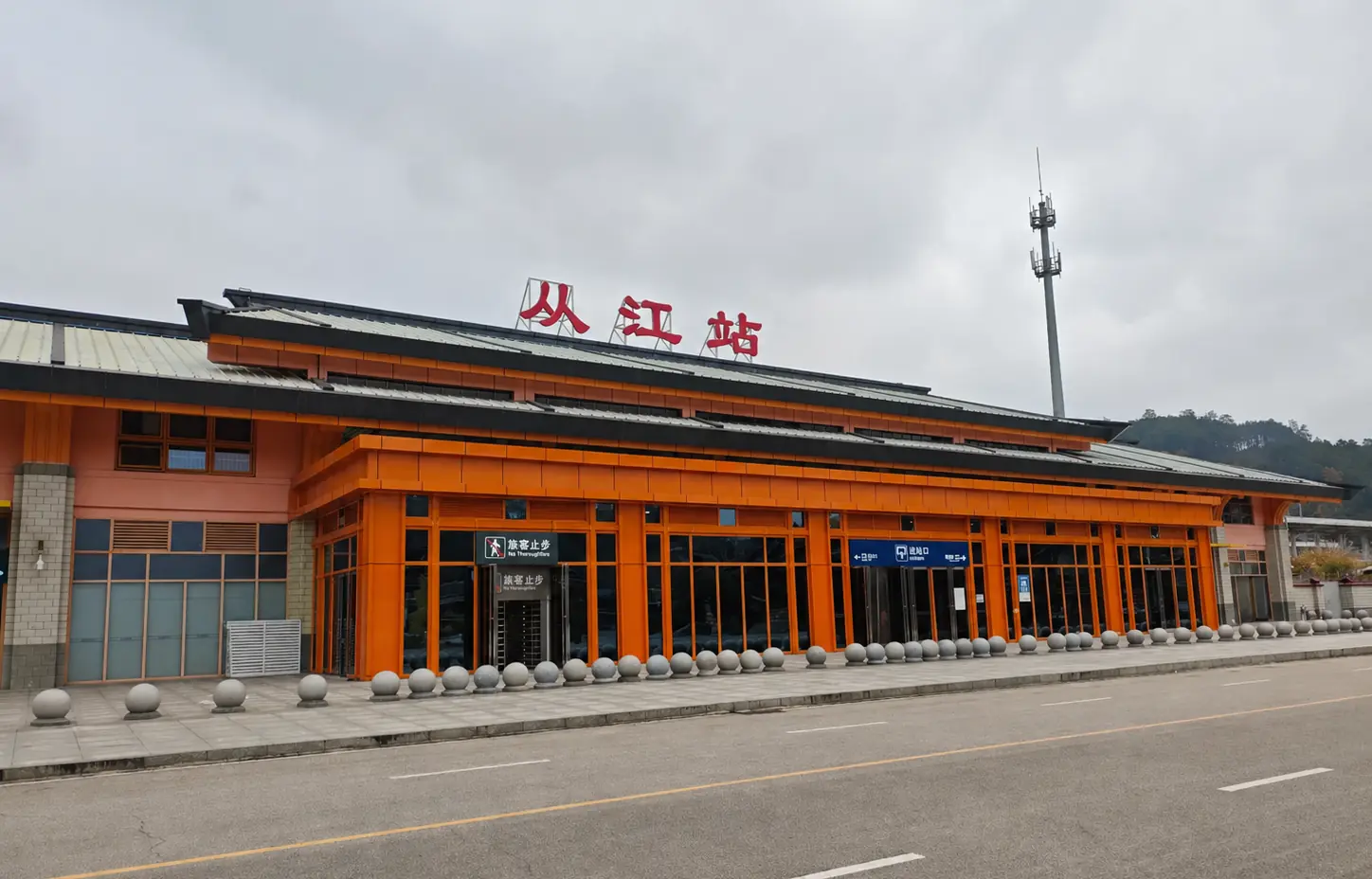
Congjiang is on the Guiyang-Guangzhou high-speed rail corridor. Official rural-tourism guidance places Zhaoxing about 7.5 km from the station, with roughly 17 minutes as a road-transfer reference.
For planning, allow about 15-20 minutes in the vehicle plus waiting and ticket-gate time. A taxi or currently operating local transfer takes you to the scenic entrance; it does not replace the village's separate entry and sightseeing-car rules.
7.5 km
station to village
15-20 min
road planning band
¥80
official entry
¥10
car, one way
- What to search in China Railway 12306
- Guilin-area station → Congjiang on your date
- Planning logic after arrival
- Compare the live direct options and the actual departure station before choosing a Guilin hotel checkout time.
- What to search in China Railway 12306
- Guiyang-area station → Congjiang on your date
- Planning logic after arrival
- Search the specific station shown in 12306; city transfer time sits outside the rail journey.
- What to search in China Railway 12306
- Guangzhou South → Congjiang on your date
- Planning logic after arrival
- Use the live train, fare and seat inventory rather than a saved timetable or old price range.
Entry and local movement are separate
Guizhou's January 2026 official price list gives Zhaoxing entry as ¥80 and the sightseeing car as ¥10 one way. Temporary free-car promotions have existed, but they are not a permanent entitlement. Recheck the current gate notice before paying or walking away from an available transfer.
Show this screen to your driver · 出示给司机看
你好,请带我去肇兴侗寨,谢谢。
Hello, please take me to Zhaoxing Dong Village, thank you.
Show this at Congjiang Station taxi stand.
How Long to Stay and When to Visit
Stay length decides whether Zhaoxing feels like an evening stop or a living village. One night protects the essentials; two nights make room for Tang'an, craft and unscripted tower time.

Morning fog, residents crossing the bridges and the towers changing from daylight to illumination are part of the experience. A one-hour photo stop misses that rhythm.
Choose the number of nights first, then layer in the live performance board and weather. This keeps a changed show or wet trail from collapsing the whole visit.
1 night
Minimum useful stay
Cover the five towers, one performance context and an evening walk, then keep a morning village window before departure. Tang'an can make this rail-to-rail plan tight.
2 nights
More resilient stay
Protect a half-day for Tang'an, compare more than one singing context, and leave room for dyeing, quieter lanes or a Huanggang side trip.
Do not promise both Tang'an and every village activity inside one short rail-to-rail window; use the live weather and performance board to choose.
Once the stay length is fixed, use season to choose the landscape—not to promise a precise terrace color or festival program.
💧April-May
Spring cultivation can bring flooded terraces and rapeseed color. Grain Rain Festival (谷雨节) programming varies by year; confirm the announced date and access plan.
🌾September-October
Golden rice, cool air, and strong terrace color make autumn the easiest all-round choice.
🧧Winter and Dong New Year
Dong New Year follows community and lunar scheduling rather than a fixed Gregorian date. Confirm that year's program before planning around singing or feast events.
☔Summer
Zhaoxing is cooler than many Chinese cities, but Guizhou's rainy season can make the Tang'an trail slippery.
For accommodation, choose near a drum tower if short walking access matters, or by the river if a quieter outlook matters more. Earlier visitor-facing planning samples commonly placed guesthouses around ¥180-400 per night, but this is not a live market range. Check the actual room, noise exposure, stairs, cancellation terms and current price for your dates, especially around May Day, National Day and confirmed festival periods.
Real Village or Tourist Attraction?
Zhaoxing is both a working Dong community and a mature 4A scenic area. Reading those two layers together is more accurate—and more useful—than trying to label the village “authentic” or “commercial.”

Zhaoxing is widely described as one of China's largest Dong villages and as Guizhou's largest. A local-government historical profile recorded more than 1,100 households and 6,000 residents; treat those figures as dated context, not a live census.
The main visitor street carries tickets, sightseeing transport, guesthouses and retail. Nearby lanes still connect homes, schools, towers and the stream. Neither layer cancels the other.
🎟️The Scenic-Area Layer
Paid entry, sightseeing cars, shops and programmed performances make access easier. Expect visitor infrastructure rather than untouched isolation.
🏠The Living-Village Layer
The towers remain community spaces and Grand Song transmission still depends on local teachers and younger singers. Slow down without treating homes or rehearsals as open exhibits.
Tourism supports transmission—and adds pressure
Performance income, training programs and wider visibility can give singers reasons and resources to continue the tradition. Commercial repetition and young residents leaving for work can also weaken the community context. A responsible visit supports authorized performances and local businesses while respecting private space and accepting that living culture changes.
Zhaoxing (肇兴侗寨)
Choose for Grand Song and Tang'an
UNESCO-listed Dong Grand Song and five towers sit within one walkable village. The nightscape is lower-key than Xijiang's broad illuminated panorama.
Xijiang Miao Village (西江千户苗寨)
Choose for scale and night views
A broad hillside settlement, extensive visitor services and a strongly illuminated viewpoint define the choice. This is a Miao-culture trip rather than a Dong Grand Song base.
This is a preference filter, not a ranking. If time allows, the two villages answer different travel questions.
Frequently Asked Questions
No. The layered group harmony and imitative sounds are audible without translation. You will miss some narrative and social meaning, so use the four song categories in this guide as a listening frame rather than expecting a word-for-word explanation.
Sources checked for this guide
- UNESCO Intangible Cultural Heritage: 2009 inscription, group singing without instrumental accompaniment or leader, oral transmission, genres and community role
- Guizhou Development and Reform Commission: official scenic-area price list current through December 2025: ¥80 entry and ¥10 one-way sightseeing car
- Yuping County Government 2026 Zhaoxing visitor report: current 09:00-11:00 gate and Grand Song visitor window, peak-day session context and transmission income
- Guizhou Development and Reform Commission: current Spring Cuckoo (布谷催春) program context and the temporary nature of a past free sightseeing-car promotion
- Guizhou government cultural report: recent Spring Cuckoo (布谷催春) evening program starting around 20:30
- Guizhou Provincial People's Congress architecture profiles: five towers, Xin height and mortise-and-tenon construction and Ren, Yi, Li, Zhi and Xin group/community roles
- Ministry of Culture and Tourism rural route: Tang'an ecological-museum and terrace context, Congjiang transfer reference and regional food
- National Railway Administration: Congjiang on the Guiyang-Guangzhou high-speed rail corridor
- Xinhua: Dong Grand Song performers and techniques in the Ne Zha 2 score
- Guizhou CPPCC: April 18, 2026 Grain Rain program and long-table feast context
Beyond This Guide
Best next match: connect Zhaoxing with one or two complementary places—Xijiang Miao Village, Huanggang Dong Village, the Jia Bang rice terraces or Zhenyuan—rather than forcing every Southeast Guizhou stop into one rushed loop.
© gochinafreely.com — Original guide by Go China Freely.