Current performance picture
Schedules, prices, language support, child rules, and inclusions can change by performance and seller. Use the dated snapshot below, then reconfirm before paying. Check current ticket facts
Choose with confidence
Two Centuries of Singing, Fighting, and Painted Faces

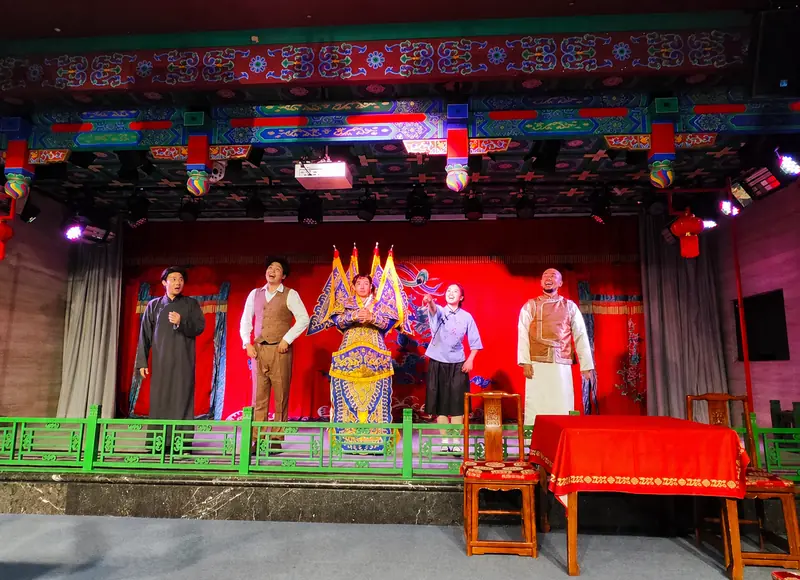
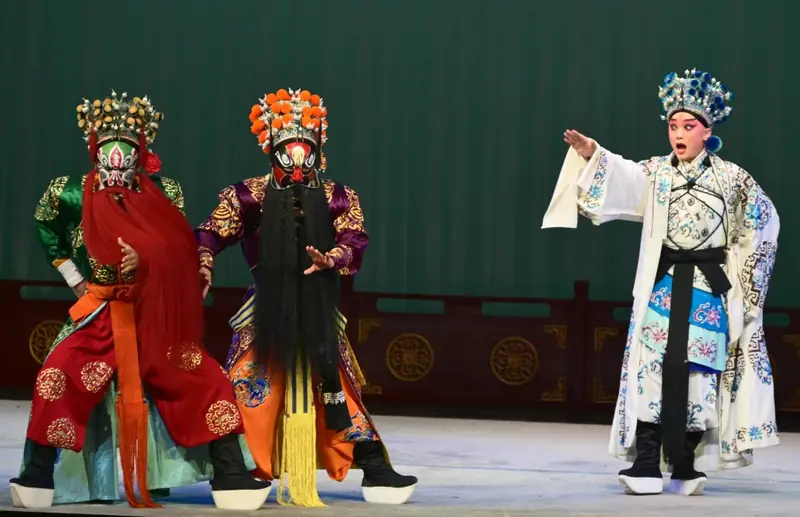
Painted faces, embroidered costumes, voice, and codified movement make character readable before the plot is explained.
Peking Opera (京剧) is a composite theatre language. Voice, speech, movement, mime, costume, percussion, and combat work together, so a first-time viewer can read much of the stage physically even without following every sung line.
Its formation was gradual. An Anhui troupe called Sanqing entered Beijing in 1790 for celebrations marking the Qianlong Emperor’s 80th birthday; other Anhui troupes followed, and their styles interacted with forms already heard in the capital.
A form shaped in Beijing
- 1
Anhui theatre enters the capital
1790The Sanqing troupe reached Beijing for the Qianlong Emperor’s 80th-birthday celebrations; other Anhui troupes followed.
- 2
A distinct Beijing form develops
19th centuryAnhui and Hubei musical traditions interacted with established theatre in the capital and gradually formed the style now known as Peking Opera.
- 3
Mei Lanfang carries it overseas
1930Mei Lanfang toured six US cities, making Peking Opera part of a landmark period of international theatre exchange.
- 4
International heritage recognition
2010UNESCO inscribed Peking Opera on the Representative List of the Intangible Cultural Heritage of Humanity.
The practical key is the four-part performance vocabulary known as 唱念做打: singing, speech, acting or movement, and combat or acrobatics.
唱 · Singing
Melody and vocal color carry emotion and identity.
念 · Speech
Stylized spoken delivery advances plot and character.
做 · Acting
Hands, eyes, steps, sleeves, and posture make meaning visible.
打 · Combat
Codified fighting and acrobatics create physical drama.
That framework is the most useful first-viewing lens: when the lyrics become hard to follow, shift attention to how these four skills trade places from one scene to the next.
What Happens on Stage — A Crash Course
Peking Opera gives the audience several visual systems at once. Role type, costume, face-paint pattern, gesture, and percussion all help identify who has entered and how the scene is changing. They do not replace a plot synopsis, but they make the stage easier to read.
The Four Role Types
生Sheng — Male Roles
The broad male-role family includes Laosheng (older men), Xiaosheng (younger men), and Wusheng (martial roles). Costume, beard, voice, and movement change with the subtype.
旦Dan — Female Roles
The female-role family includes Qingyi, Huadan, Wudan, and Laodan. Male specialists shaped important Dan traditions historically; women now perform these roles as well.
净Jing — Painted-Face Roles
Bold painted patterns and forceful movement signal larger-than-life characters such as generals, heroes, and powerful antagonists. Vocal style is often strong and resonant.
丑Chou — Clown Roles
A small white patch around the nose commonly identifies Chou roles. Wenchou emphasizes speech and comic timing; Wuchou adds brisk physical and martial technique.
The Color Code of Face Paint
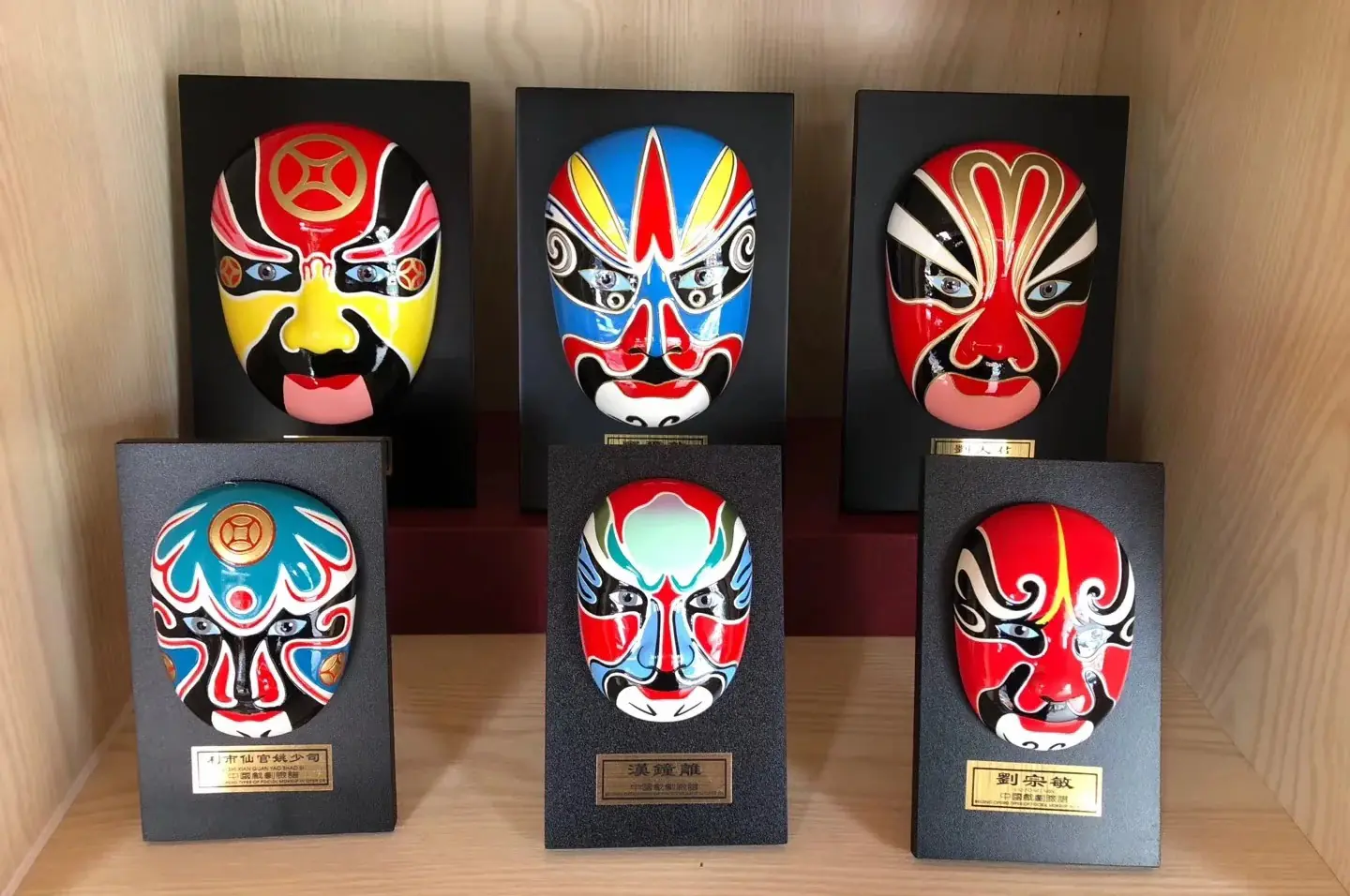
Color is one layer of a face-paint design; the complete pattern and the specific character matter too.
Colors carry familiar associations, but they are not a universal moral dictionary. Read the color together with the full design and the named character.
Red
Often associated with loyalty, courage, or righteousness; Guan Yu (关羽) is the familiar example.
Black
Often suggests uprightness, directness, or force; Bao Zheng (包拯) and Zhang Fei (张飞) use distinct black-based patterns.
White
Can suggest calculation, suspicion, or treachery in painted-face conventions; Cao Cao (曹操) is a standard reference.
Blue or green
Often marks strong, unruly, or unconventional figures, including outlaws and rebel heroes.
Gold or silver
Commonly points to gods, spirits, demons, or other supernatural figures; the Monkey King (孙悟空) may use metallic elements within a more complex design.
The "Suggestive" Stage
Peking Opera often represents a large world with a small number of props. A table and chairs can change function from scene to scene, while movement asks the audience to complete the setting imaginatively.
- Horseback travel: a riding crop, turns, and measured steps can establish the mount and the distance covered.
- A door or threshold: hand positions and a deliberate crossing mark architecture that may not be physically built.
- Stairs or difficult ground: repeated footwork changes the implied level, slope, or resistance.
- Night: cautious, searching movement can establish darkness even while the stage remains visible.
- A larger force: flags, entrances, exits, and acrobatic movement can suggest an army with only a small cast on stage.
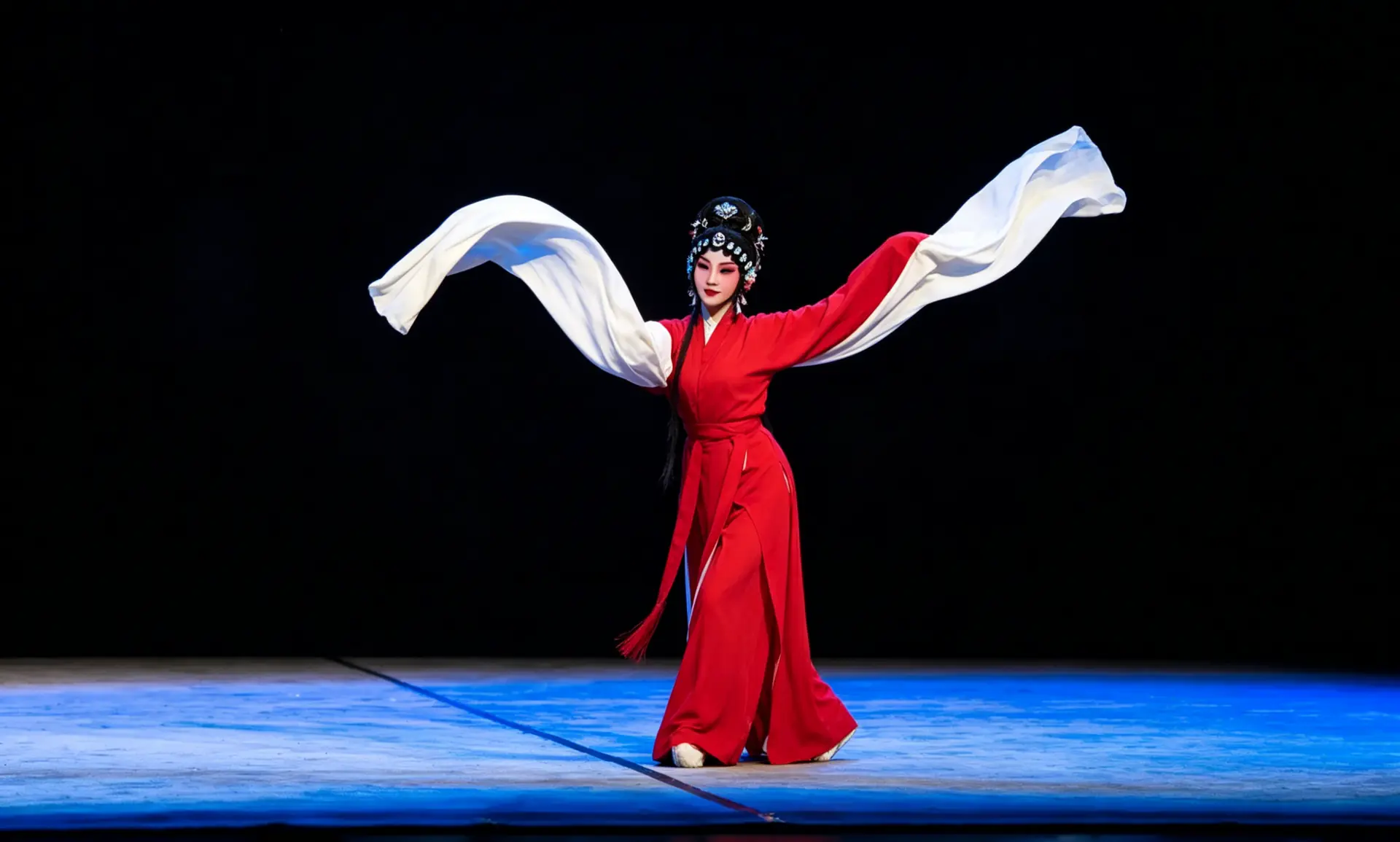
Water sleeves (水袖) extend the line of the hand, making emotion and rhythm visible across the stage.
Your First Show — What to Watch
Choose by stage language, not by fame alone. Martial plays (武戏) and movement-led excerpts give first-time viewers more physical information, while a vocal play (唱功戏) is easier to follow when you have a synopsis or confirmed subtitles.
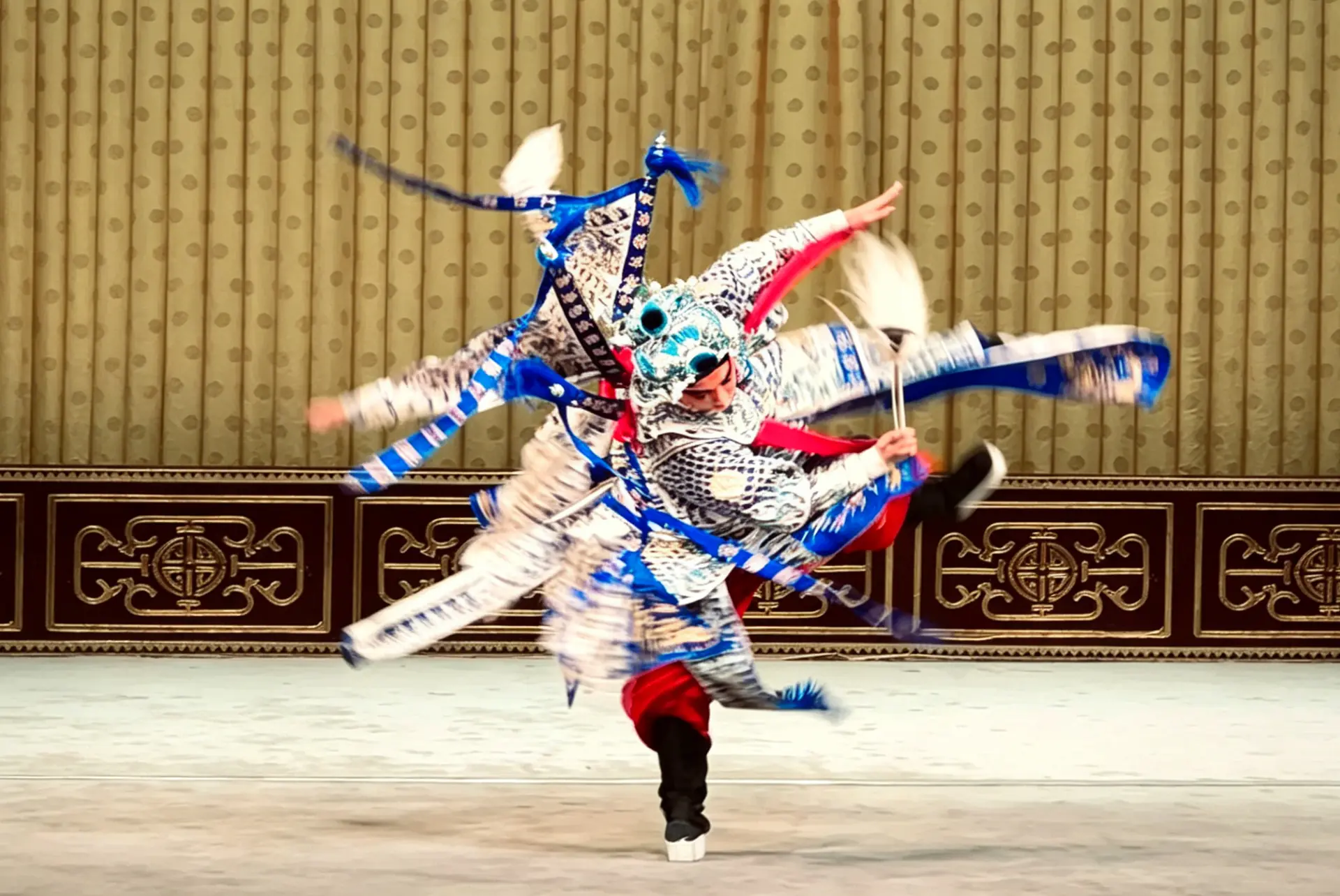
Martial excerpts make character, conflict, and rising difficulty legible through movement.
Sanchakou (三岔口)
The Crossroads
Two figures search and fight in an inn imagined as pitch-dark although the stage remains lit. It is a strong example of mime, timing, physical comedy, and combat. Look for it in an excerpt programme rather than assuming it is scheduled every night.
Havoc in Heaven (闹天宫)
The Monkey King
The Monkey King challenges the heavenly court through staff work, acrobatics, combat formations, and vivid costume. Its movement-first storytelling can suit visually engaged families, but check the exact excerpt length, sound level, and child policy.
Farewell My Concubine (霸王别姬)
Classic Drama
As the warlord Xiang Yu faces defeat, Yu Ji’s sword dance concentrates the drama into controlled gesture and movement. Read a short synopsis first so the historical stakes support, rather than distract from, the choreography.
The Drunken Concubine (贵妃醉酒)
Mei Lanfang Repertoire
Concubine Yang drinks while waiting for an imperial visit that does not come. Sleeve work, footwork, and carefully graded movement make it a useful choice for viewers interested in Dan-role technique and the Mei school.
Choose the format before the title
An excerpt programme (折子戏) can reveal several performance styles in one sitting, but the number and order of excerpts change. On the live calendar, look for a martial or movement-led piece first; then check whether a synopsis, subtitles, or programme note is included for any vocal-heavy selection.
Where to See Peking Opera in Beijing
These venues are not interchangeable. Start with the kind of evening you want—visitor-oriented, heritage setting, national-company repertoire, or a large performing-arts calendar—then verify the exact title and date.
Best fit: repertoire-first theatre. Founded in 1937, Chang’an is a long-established Beijing stage associated with classic plays and major Peking Opera performers. Use its current event calendar rather than assuming a daily matinee or evening show.
Best fit: heritage atmosphere. Built in 1807 and reopened after renovation in 2024, the historic complex now mixes traditional-opera programming, exhibitions, and other cultural experiences. Mei Lanfang and Tan Xinpei are among the artists associated with its stage; show format, museum access, tea, and language support must be checked for the selected visit.
Best fit: compact visitor show. Liyuan has a long association with international audiences and a tea-theatre format. A current English seller snapshot lists a 19:30 performance of about 60 minutes; exact seating, tea or snack inclusions, child rules, and translation support depend on the product chosen.
Best fit: national-company productions. This modern theatre is associated with the National Peking Opera Company and hosts date-specific repertoire. Current 2026 performances confirm active use, not a standing nightly schedule.
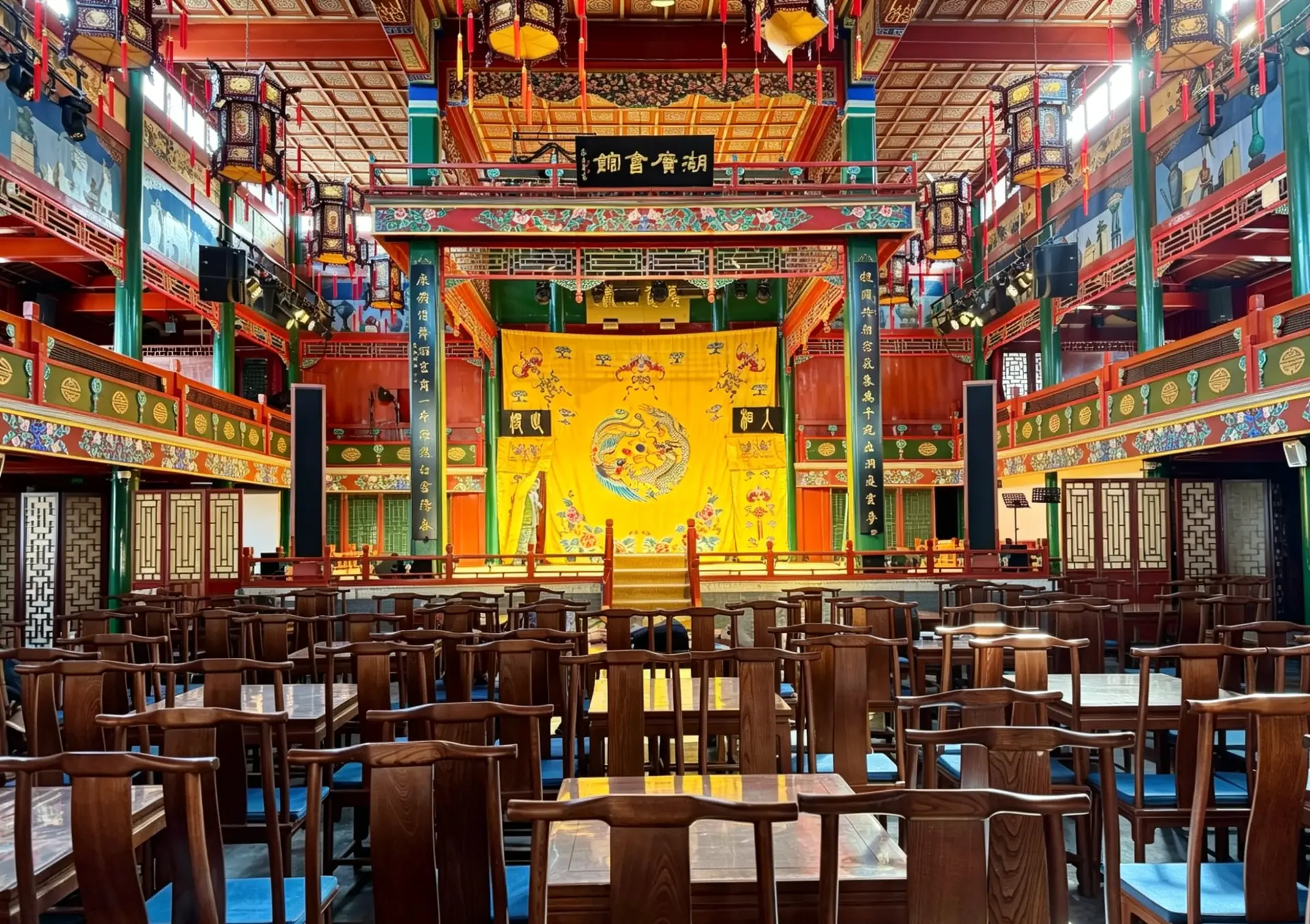
Huguang Guild Hall gives the venue decision a heritage-setting option.
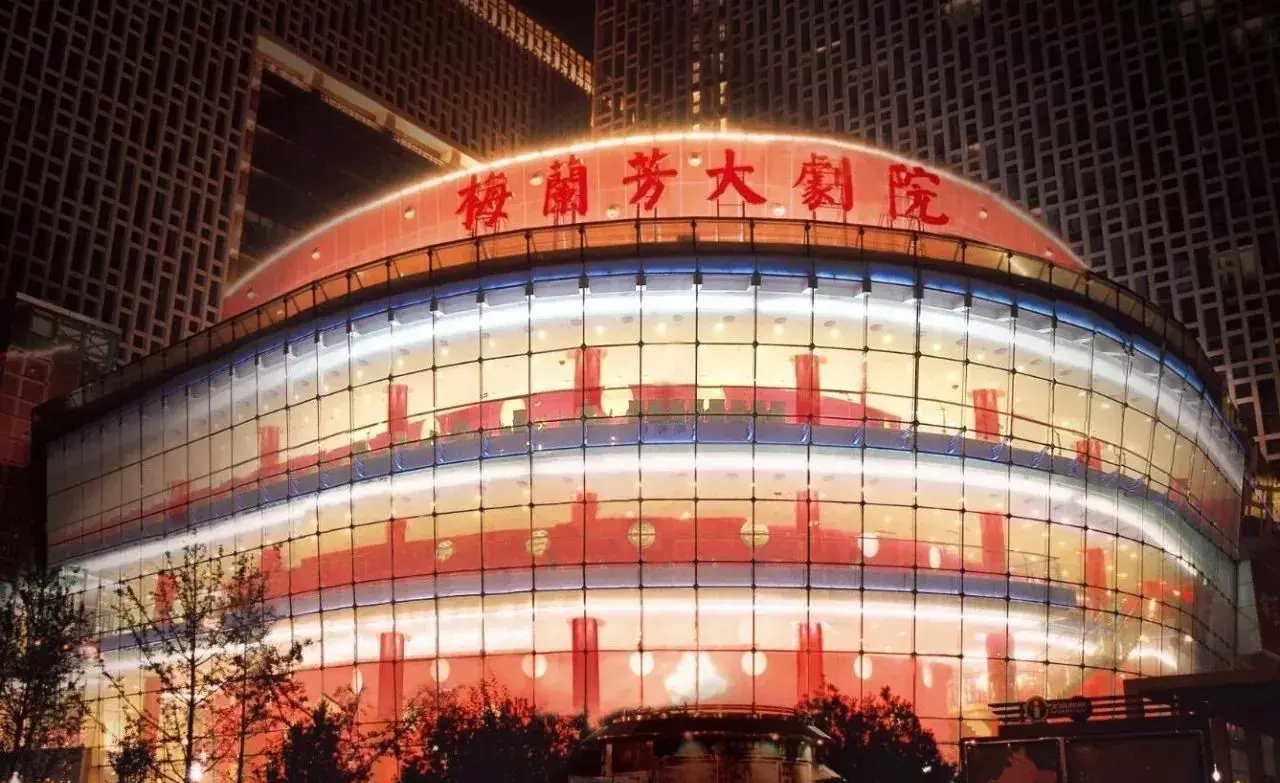
Mei Lanfang Grand Theatre represents the modern national-company route.
NCPA hosts Peking Opera on selected dates within a much broader performing-arts calendar. Its current 2026 calendar includes productions by the National Peking Opera Company, so check the opera category and the exact event page rather than planning around a holiday assumption.
Tickets, Prices, and Booking
Ticket snapshot checked July 19, 2026. Treat every row as a route to the live event page, not a permanent box-office rule.
Venue
Chang’an Grand Theatre
Current picture
The official Beijing profile confirms a classic-repertoire venue but no standing time or price grid. Treat the selected event page and seat map as the price source.
Confirm
Selected event, seat map, duration, subtitles, child admission, ID or QR-code rules, and refund terms.
Venue
Huguang Guild Hall
Current picture
The reopened complex is active, but the checked official material does not establish a fixed nightly Peking Opera product or a standing price.
Confirm
Performance type, museum access, tea or snacks, language support, duration, and whether your ticket covers every advertised activity.
Venue
Liyuan Theatre
Current picture
One current English product lists 19:30, about 60 minutes, and ¥280–580 options depending on seat and tea or snack inclusion. Recheck the live amount for your date.
Confirm
Seat category, child-ticket policy, tea or snack inclusion, subtitle support, pickup method, and cancellation terms.
Venue
Mei Lanfang Grand Theatre
Current picture
Current 2026 activity confirms date-based National Peking Opera Company performances, not a daily visitor show. Price and start time belong to each event.
Confirm
Exact auditorium, repertoire, running time, language assistance, seat zone, child admission, and final-sale conditions.
Venue
NCPA
Current picture
The current official calendar includes selected Peking Opera dates among many art forms. Every production has its own time, duration, and price bands.
Confirm
Exact auditorium, event date, synopsis or subtitles, identity requirements, late-entry policy, and refund or exchange conditions.
A clean buying sequence:
- Open the venue or company calendar and choose the exact production and date.
- Compare seat zones and inclusions. A tea-table product, theatre-only ticket, and guided bundle are not equivalent.
- Use Trip.com as an English-language comparison path when useful, then verify the named seller, venue, session, delivery method, and cancellation rule.
- Keep the confirmation and carry the same ID used for any real-name purchase.
Choose the seat for the stage picture
A mid-center seat usually gives the clearest view of formations, sleeve arcs, and combat paths. Move closer if facial detail matters more than the full composition; do not assume the most expensive or nearest seat is automatically best.
Recheck language and admission rules for the selected date
Subtitle or synopsis support is production-specific. Child tickets, tea or snack inclusions, photography, late entry, and refunds can also change, so confirm each item on the current event or seller page before paying.
Making the Most of Your Two Hours
Use “two hours” as an evening-planning allowance, not a promised running time. Liyuan’s current visitor product is about 60 minutes; full repertoire events and entry procedures vary.
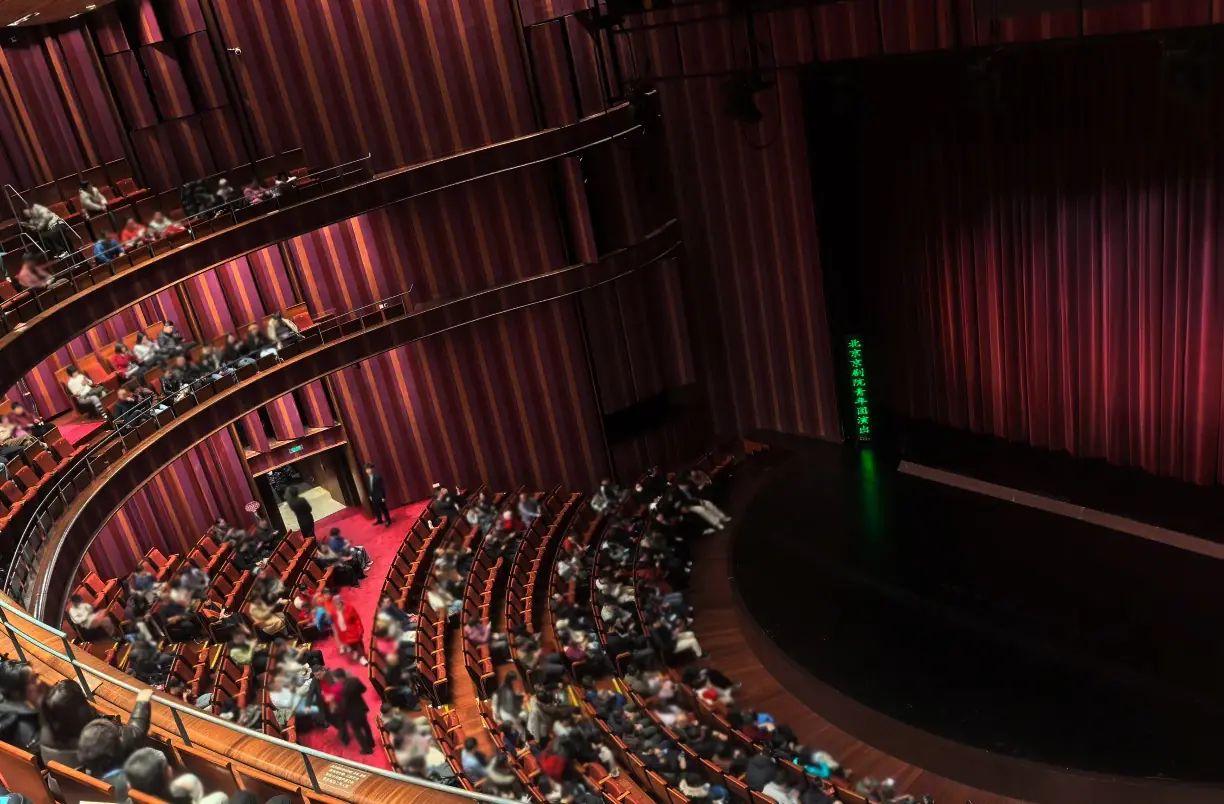
Arrive with enough time to read the room, confirm the programme, and settle before the first entrance.
Before the performance: look for a current programme board, synopsis, cast list, or digital event page. Bilingual material is useful when available but should not be assumed at every venue.
Once the stage begins: follow hands, eyes, steps, sleeves, and percussion. A shift in drum pace or movement pattern often tells you that tension or physical difficulty is rising.
- Arrive: allow time for ID, ticket pickup, security, and finding the auditorium; use the event’s stated cutoff because late-entry rules vary.
- Orient: identify the play or excerpt order and read a short synopsis before a vocal-heavy work.
- Watch: let voice, percussion, role type, gesture, and footwork work together instead of trying to translate every lyric.
- Respond: applause commonly follows a demanding vocal passage, sleeve movement, spear catch, or combat climax. A shouted “好!” (hǎo, “bravo”) is part of experienced audience response; follow the room if unsure.
- Photograph: keep flash off and record only when the event or venue explicitly permits it.
- Leave: remain through the announced end when possible. If you must leave, use an interval or the space between excerpts and follow staff direction.
- Dress: smart casual is a safe default; any production-specific or ceremonial instruction takes priority.
Beyond the Stage — Peking Opera Experiences
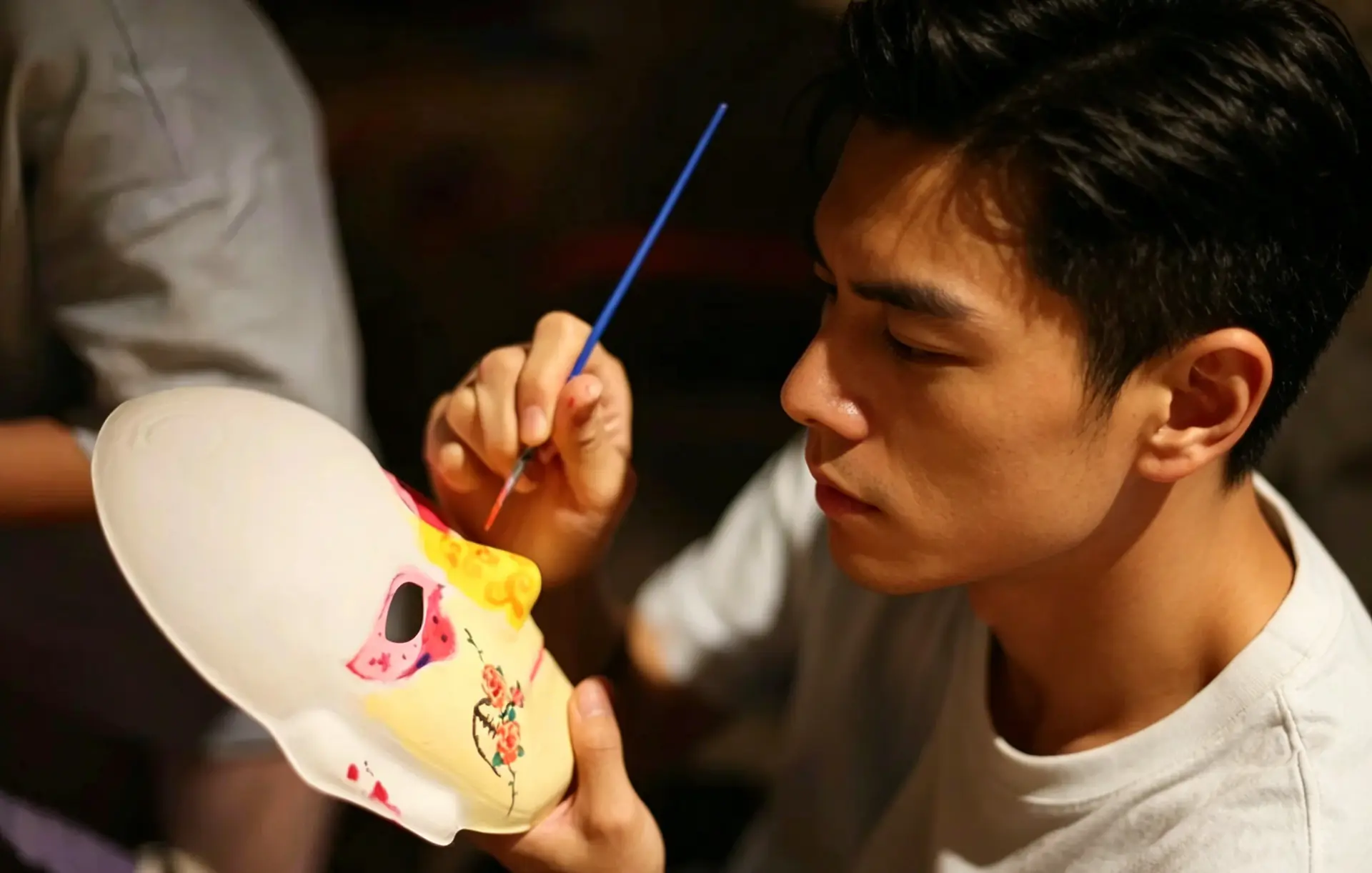
A workshop can slow the visual code down enough to study one pattern, prop, or costume detail at a time.
Go deeper only when the product is clearly described. A costume session, mask-painting class, museum visit, or pre-show observation can add context, but these are not standard inclusions with every theatre ticket.
Availability, language support, age limits, photography, and price change by date and provider. Treat the four options below as formats to search for, not standing venue promises.
Costume and makeup
Some studios or dated cultural products may include costume, makeup, and photographs. Confirm who applies the makeup, the costume level, image delivery, and total duration.
Mask-painting workshop
A hands-on class may use a blank mask to introduce a lianpu (脸谱) pattern. Check materials, teaching language, age guidance, and whether the finished piece can be taken away.
Opera museum or exhibition
The Beijing Traditional Opera Museum is associated with Huguang Guild Hall. Verify the current opening arrangement, admission, exhibition access, and whether it aligns with your show time.
Pre-show viewing or backstage access
Some current products may advertise makeup observation or a defined behind-the-scenes element. Do not assume backstage entry from a standard or “VIP” ticket unless it is explicitly listed.
Check the experience as a separate product
The former fixed workshop and costume-price ranges are not treated as current standing offers. Confirm the provider, location, inclusions, language, cancellation terms, and final amount for your date.
Frequently Asked Questions
You can follow role type, costume, gesture, combat, and percussion without translating every line, especially in a martial or movement-led excerpt. A synopsis or confirmed subtitles makes vocal-heavy drama easier to understand. Language support is production-specific, so check the exact date.
Sources checked for this guide
- Checked the four performance skills, symbolic stage language, 1790 Sanqing-troupe milestone, 2006 national-heritage status, and 2010 UNESCO inscription: China Intangible Cultural Heritage — Peking Opera
- Confirmed the 2010 Representative List decision: UNESCO — Peking Opera inscription decision
- Cross-checked Mei Lanfang’s dates, Dan-role legacy, and overseas influence: ChinaCulture — Mei Lanfang
- Checked Chang’an Grand Theatre’s 1937 founding and classic-repertoire positioning: Beijing Municipal Government — Chang’an Grand Theatre
- Checked Huguang Guild Hall’s 1807 origin, 2024 reopening, historic performers, and mixed cultural-programme positioning: Beijing Municipal Government — Huguang Guild Hall
- Checked Liyuan Theatre’s visitor-oriented tea-theatre context and related cultural-experience framing: Beijing Municipal Government — Liyuan visitor route
- Checked the currently displayed 19:30 start, approximately 60-minute duration, and ¥280–580 seat or tea/snack options on July 19, 2026: Trip.com — current Liyuan Theatre product
- Checked current 2026 Peking Opera dates and the event-specific calendar model: National Centre for the Performing Arts — current calendar
- Confirmed current 2026 National Peking Opera Company performances at Mei Lanfang Grand Theatre: Bank of China — 2026 National Peking Opera Company programme notice
Beyond This Guide
Pair the performance with the Forbidden City, a hutong walk, or a second live-theatre option in the Beijing and Shanghai acrobatics guide. The Beijing city guide helps place each choice geographically.
© gochinafreely.com — Original guide by Go China Freely.