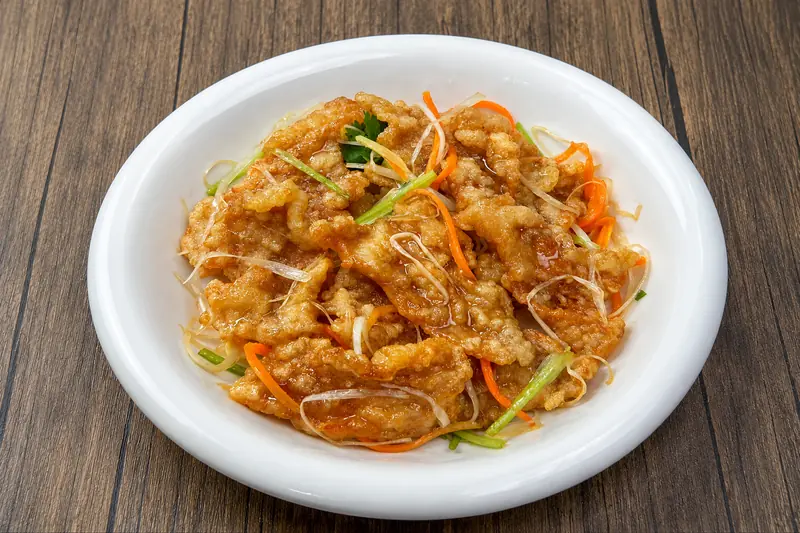
Guo Bao Rou (锅包肉) is Northeast China's crisp answer to sweet-and-sour pork: wide pork slices fried until the batter shatters, then flashed in a vinegar-sugar glaze. Many food stories trace it to early-1900s Harbin, where chef Zheng Xingwen (郑兴文) adapted a pork dish for foreign guests at the late-Qing Daotai offices. This guide helps you order the Harbin style, understand Jilin and Liaoning variations, and avoid the soggy, ketchup-heavy versions that disappoint first-timers.
Harbin Origins of Guo Bao Rou
Guo Bao Rou is one of the dishes that makes Northeast China (东北) feel different from the China many first-time travelers expect. It is sweet and sour, yes, but not delicate dim sum sweetness or American takeout gloss. It is a cold-region sharing dish: hot, crisp, acidic, porky, and built for a table that will probably order too much.
1Zheng Xingwen Story
The most common Harbin account links the dish to chef Zheng Xingwen (郑兴文), who is said to have adjusted a fried-pork dish for foreign guests in the early twentieth century.
2Daotai Table
The story is tied to the Binjiang Daotai offices, often called Daotai Mansion (道台府), where official banquets, foreign visitors, and border-city taste met.
3Traveler Meaning
For visitors, the practical point is simple: this is a Harbin signature, not just another generic sweet-and-sour pork dish.
A Heilongjiang culture and tourism article says Zheng adjusted an older savory fried-pork dish into a sweet-sour version for foreign guests, then named it after the cooking method. The same account explains the shift from Guo Bao Rou written as "wok-seared pork" (锅爆肉) to today's "wok-wrapped pork" (锅包肉) through foreign pronunciation of the sound "bao."
Treat that as a widely told local food history, not a courtroom document. A China Daily feature also frames Guo Bao Rou as a signature Northeast dish and retells the Zheng Xingwen story for English readers.
What Good Guo Bao Rou Tastes Like

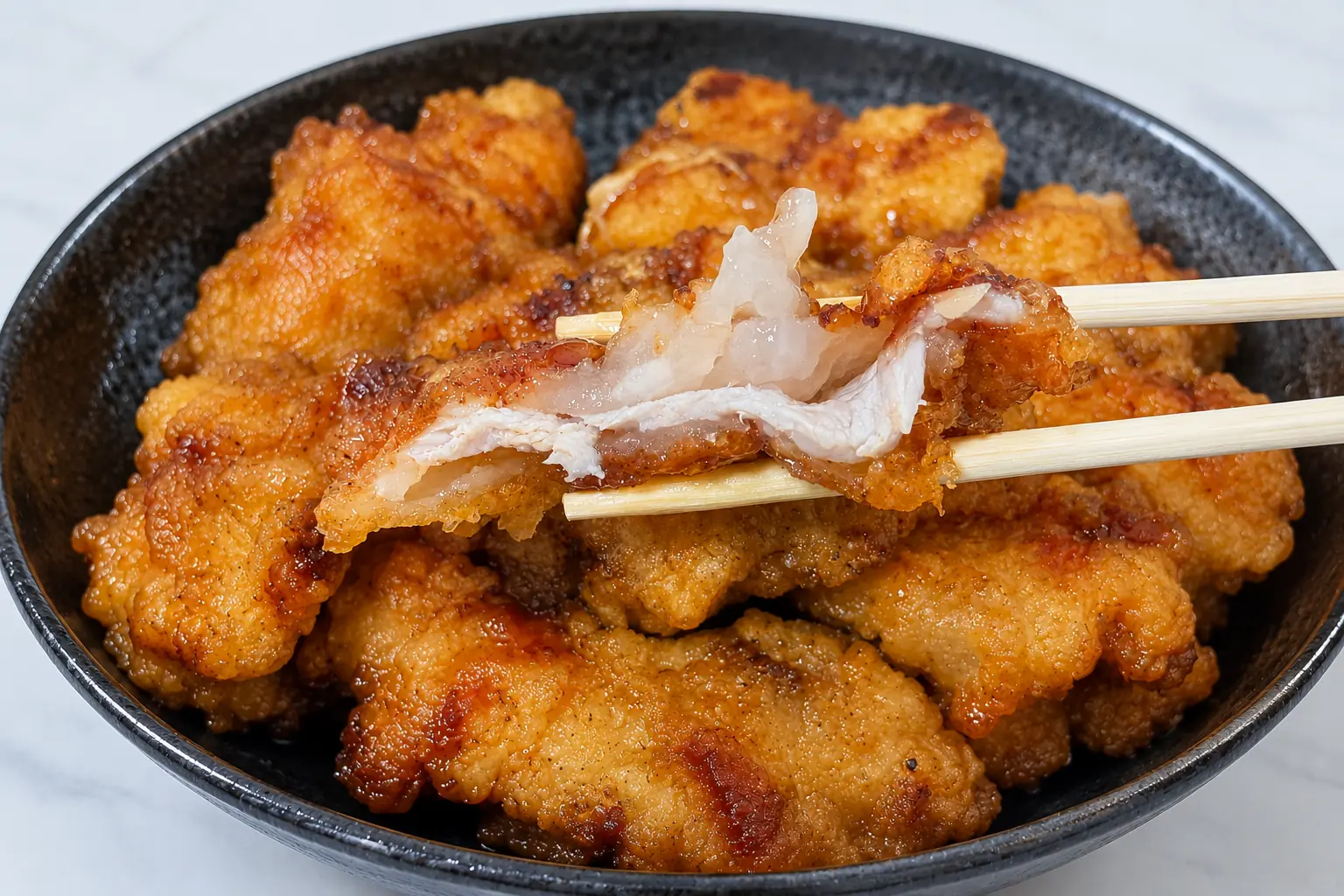
Good Guo Bao Rou should crackle before it turns soft. The pork is usually loin or tenderloin, sliced wide and thin, then quickly tossed with a light sweet-sour glaze. The sauce should cling. It should not drown the pork.
The classic Harbin profile leans golden or pale amber rather than neon red. You should smell vinegar, fried starch, ginger, and hot oil.
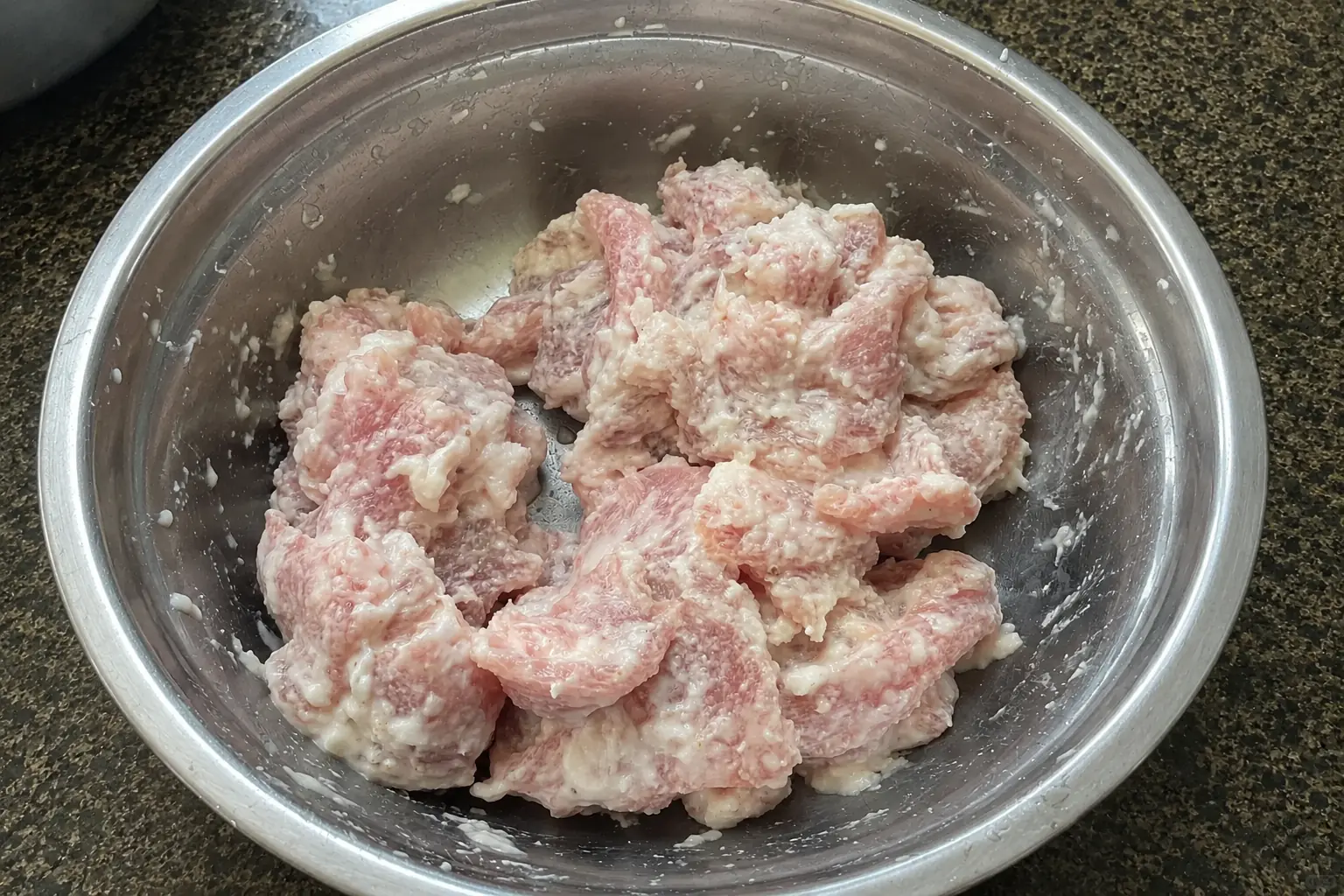
The coating is usually starch-heavy, often potato starch, which helps the shell stay brittle for the few minutes that matter. The first bite should be crisp at the edge, tender inside, and bright enough that you want another piece instead of reaching for water.
Texture is the better test than color. Thin, crisp, hot, and fragrant beats any color theory.
- Crisp shell: the coating still has snap when it reaches the table.
- Thin glaze: sweet-sour sauce coats the pork; it does not pool like syrup.
- Vinegar lift: the sour note should feel clean and aromatic, not harsh.
- Tender pork: the slice bends slightly but does not taste dry or chewy.
- Eat immediately: waiting, delivery, and takeaway destroy the best texture.
Color is a clue, not a verdict
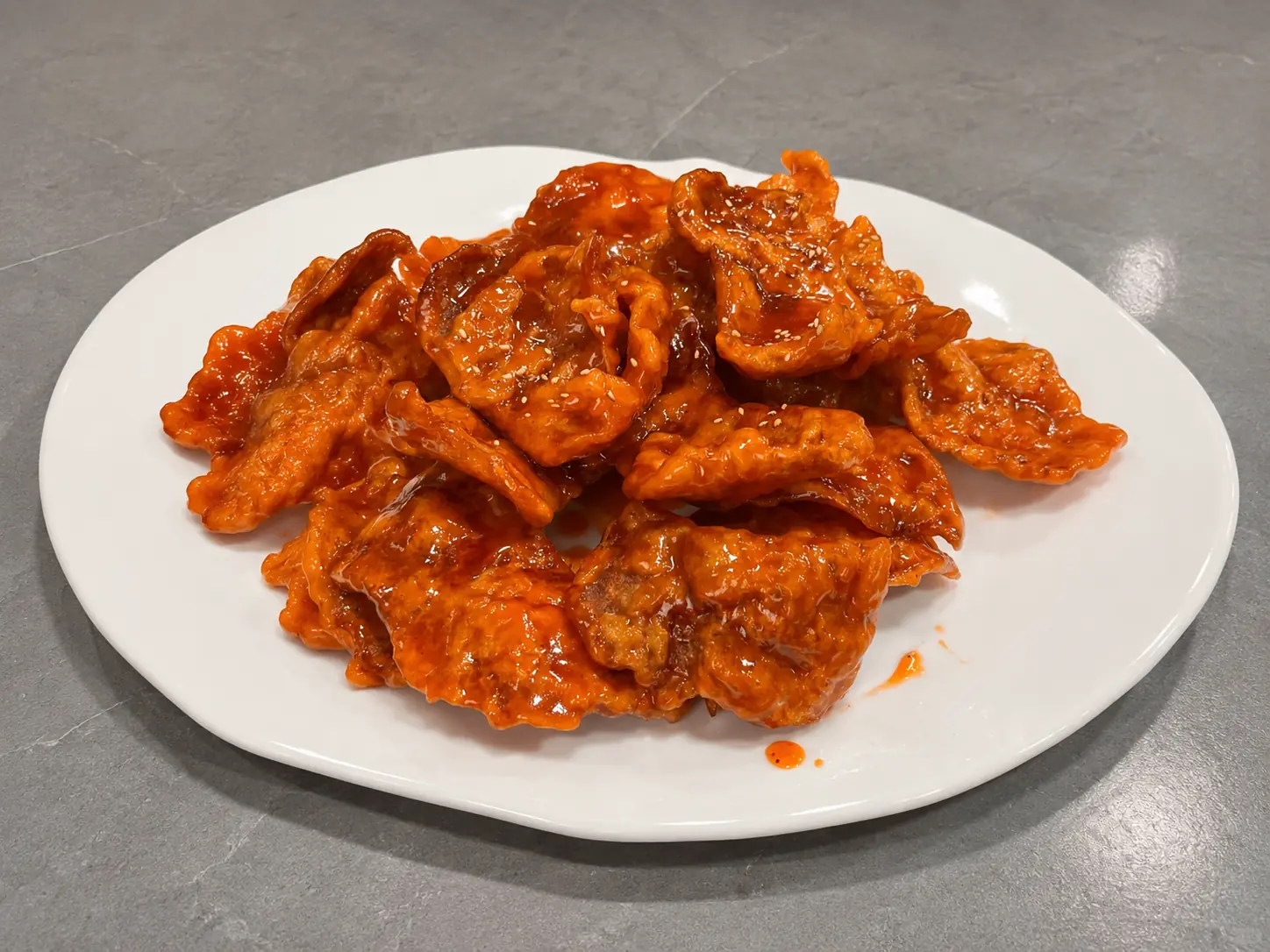
A very red plate often means a tomato-leaning or ketchup-leaning version, but restaurants vary. Use sauce thickness and texture as the better test.
Harbin, Jilin, and Liaoning Guo Bao Rou Styles
Guo Bao Rou travels across the three Northeast provinces, and the name does not guarantee one identical plate. Start with Harbin as the old-style reference: crisp pork, thin glaze, obvious vinegar aroma, and a sauce that is usually lighter in color.
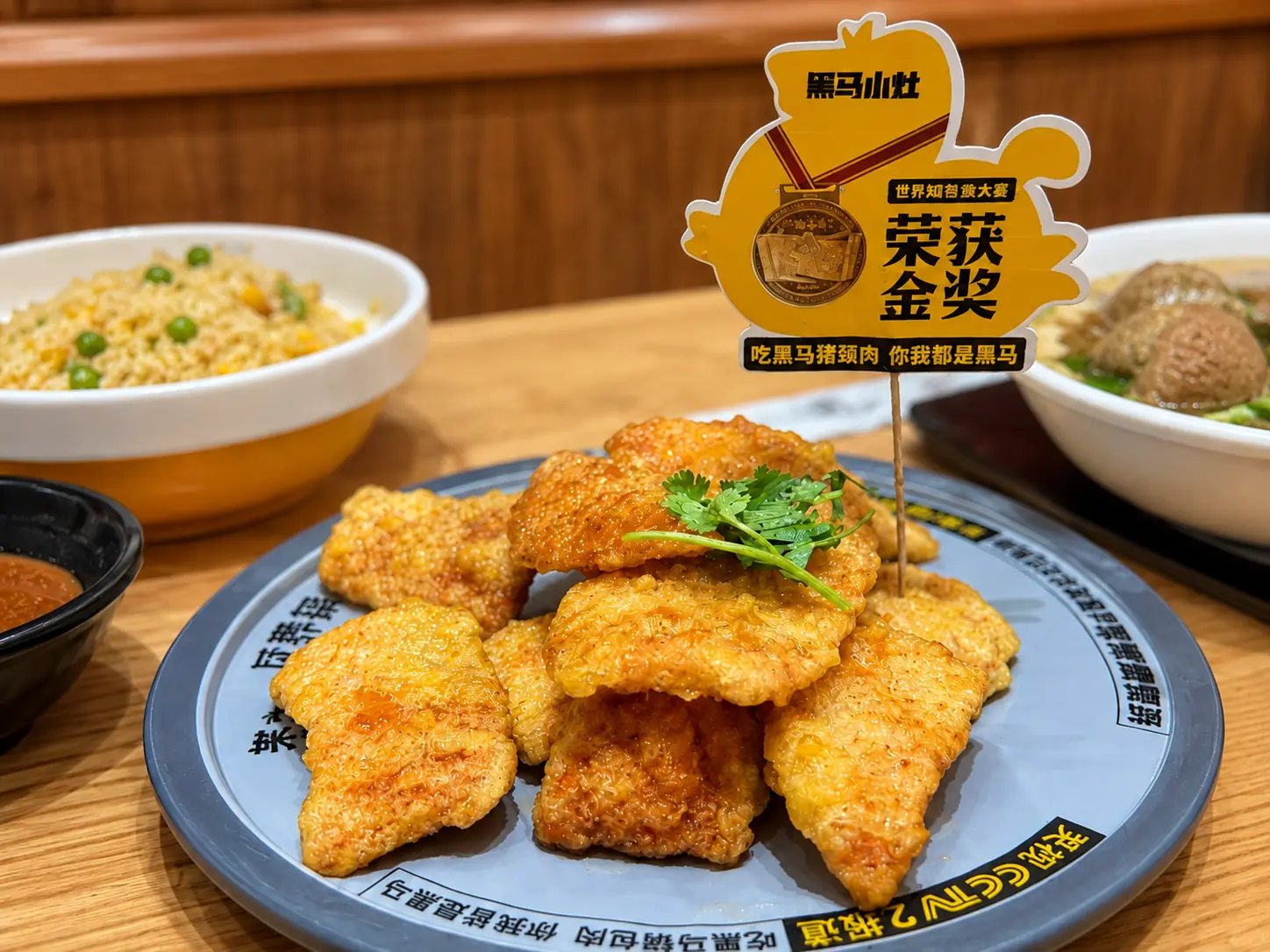
Jilin City has turned the dish into a modern food-tourism marker. The Jilin municipal government reported that the World Guobaorou Contest ran from June 29 to 30, 2024, with 286 participants from 11 provincial-level regions and overseas contestants, covering both traditional and creative versions. A China Daily/Jilin English report describes judges looking for sweet, sour, salty, fragrant flavor, proper yellow-red color, crisp exterior, tender interior, and even slicing.
In Liaoning, Shenyang, and many out-of-province Dongbei restaurants, you may meet versions that are redder, sweeter, and more tomato-leaning. That does not automatically make them bad. It just means you should know what you are chasing before you order.
| Style | What to Expect | Traveler Read |
|---|---|---|
| Harbin old-style | Golden, crisp, thin glaze, vinegar-forward | Best first reference for the dish |
| Jilin contest style | Traditional base plus active city branding and creative versions | Interesting if you are already in Jilin City |
| Liaoning / tomato-leaning | Often redder, sweeter, sometimes ketchup or tomato sauce style | Good to know, but different from Harbin expectations |
How to Order Guo Bao Rou
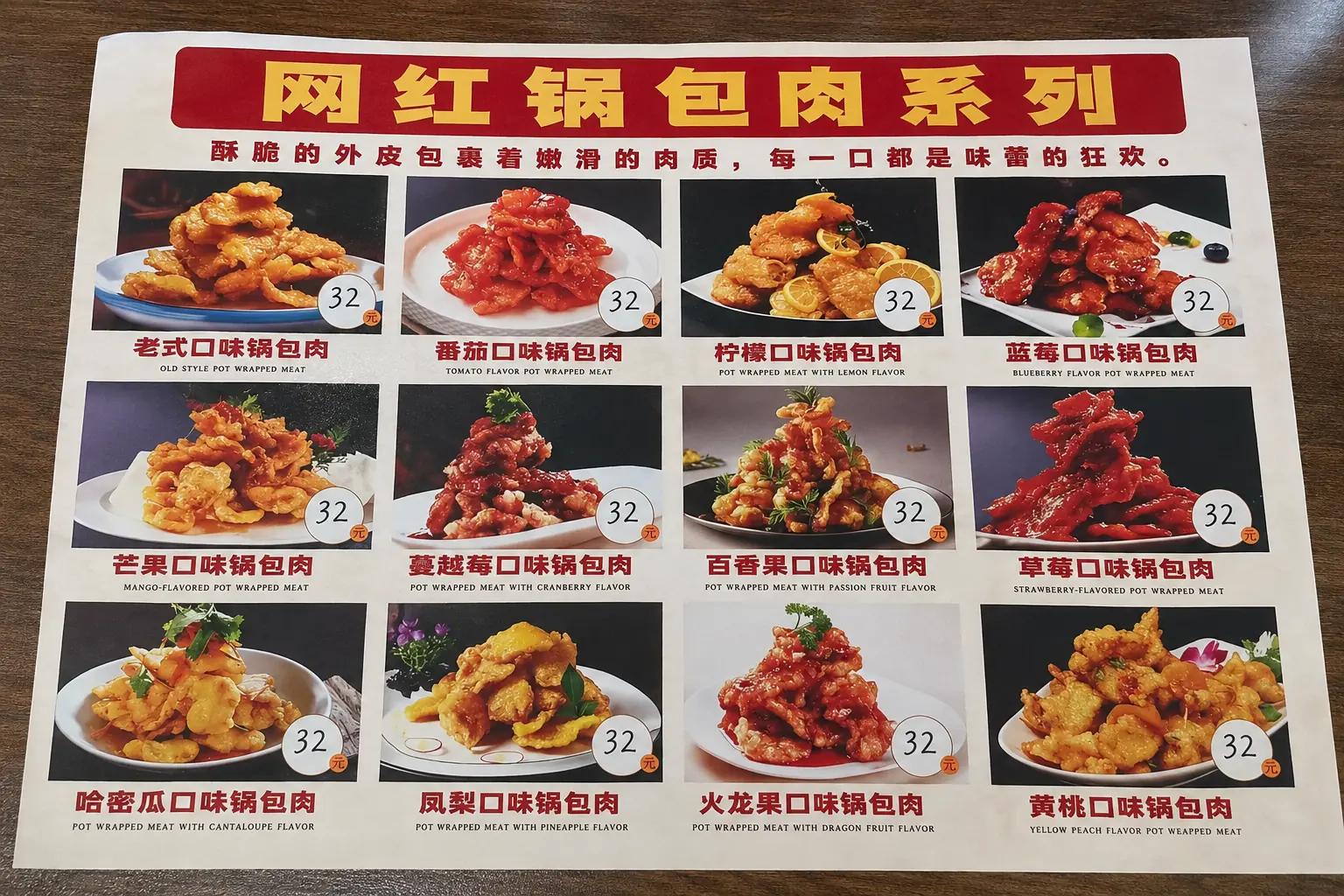
On a Chinese menu, look for 锅包肉. English menus may call it Guo Bao Rou, crispy sweet-and-sour pork, Dongbei sweet-and-sour pork, or fried pork in sweet-sour sauce. Do not rely only on the English phrase "sweet and sour pork," because that can also point to Cantonese-style sweet-and-sour pork or a generic adapted dish.
If you want the classic Harbin feel, ask whether it is old-style Guo Bao Rou. Busy kitchens may not customize much, but these phrases at least tell the server what you mean.
| English | Chinese | Pinyin | Say It Like… |
|---|---|---|---|
| Guo Bao Rou / crispy sweet-sour pork | 锅包肉 | guō bāo ròu | gwoh baow roh |
| One order of Guo Bao Rou, please. | 来一份锅包肉。 | lái yí fèn guō bāo ròu | lye ee fun gwoh baow roh |
| Is this old-style Guo Bao Rou? | 这是老式锅包肉吗? | zhè shì lǎo shì guō bāo ròu ma? | juh shir laow shir gwoh baow roh mah |
| Please use less sugar. | 少放点糖。 | shǎo fàng diǎn táng | shaow fahng dyen tahng |
| A little more sour, please. | 酸一点。 | suān yì diǎn | swan ee dyen |
| Can you make it without ketchup? | 不要番茄酱可以吗? | bù yào fān qié jiàng kě yǐ ma? | boo yaow fan-chyeh jyahng kuh-yee mah |
Takeaway is the enemy
Guo Bao Rou is one of the worst famous dishes to judge from delivery or a hotel room. The steam softens the crust, the glaze thickens, and the whole point of the dish disappears.
Where to Eat Guo Bao Rou
Lao Chu Jia, Harbin (Google | Amap)
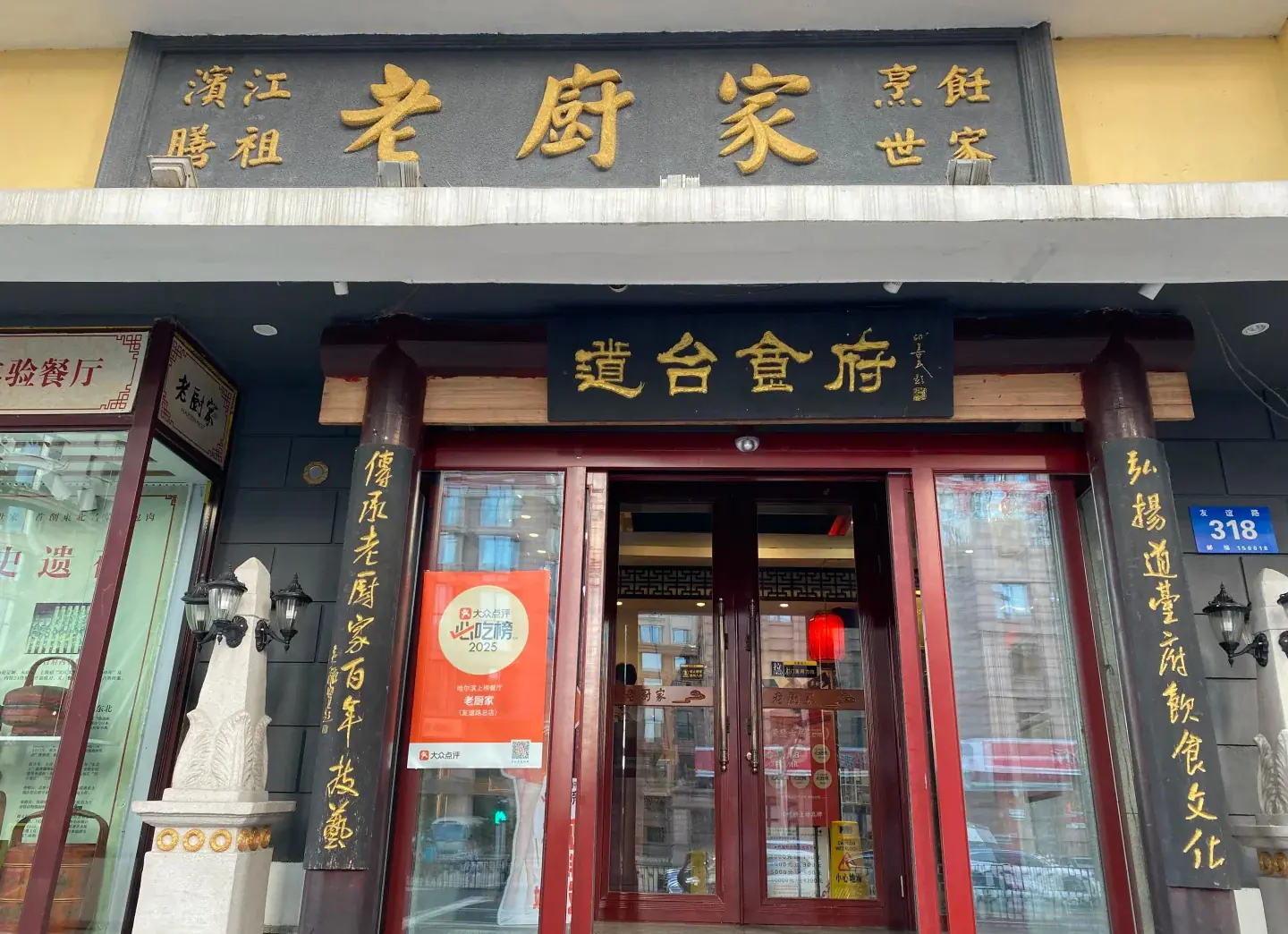
For a first Harbin plate, Lao Chu Jia (老厨家) is the easiest recommendation to understand. The brand is tied to the local origin story, and the Youyi Road head office is practical for travelers staying around Central Street and the Songhua River area.
If you arrive at a peak meal time in winter tourist season, expect a wait; the dish is still best eaten in the restaurant, not carried back to the hotel.
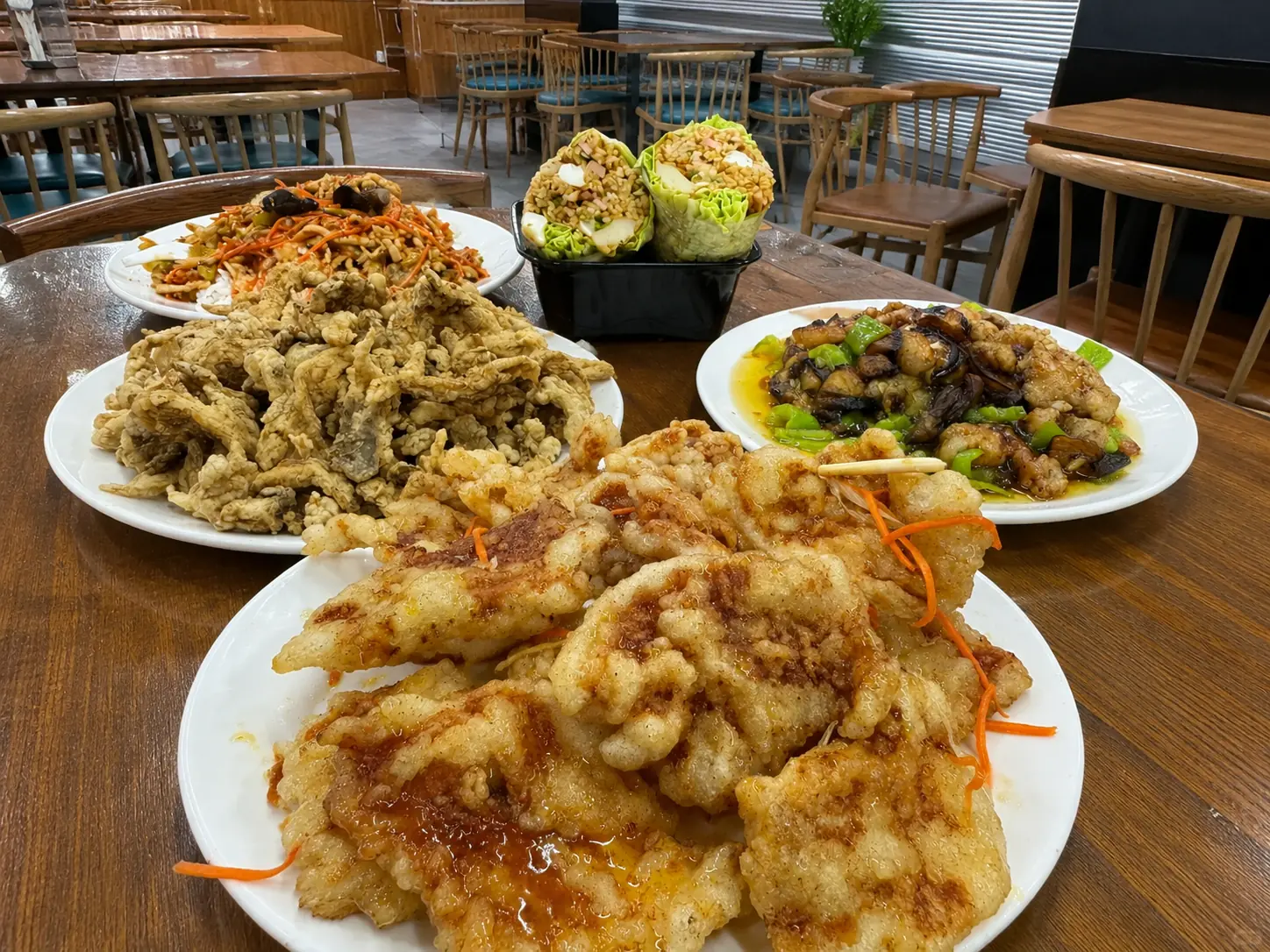
Order one Guo Bao Rou for the table, not one per person. Add rice, a vegetable, and one calmer Dongbei dish such as dumplings, three treasures of the earth (地三鲜), or a soup.
Lao Chu Jia is not the only valid answer. In Harbin, any focused Northeast restaurant with fast turnover and a kitchen that fries to order can beat a famous name on a rushed day.
Outside Harbin, look for restaurants that clearly specialize in Dongbei cuisine, Ji cuisine, or Liaoning-style home cooking rather than a menu that covers every region of China.
What to Pair With Guo Bao Rou
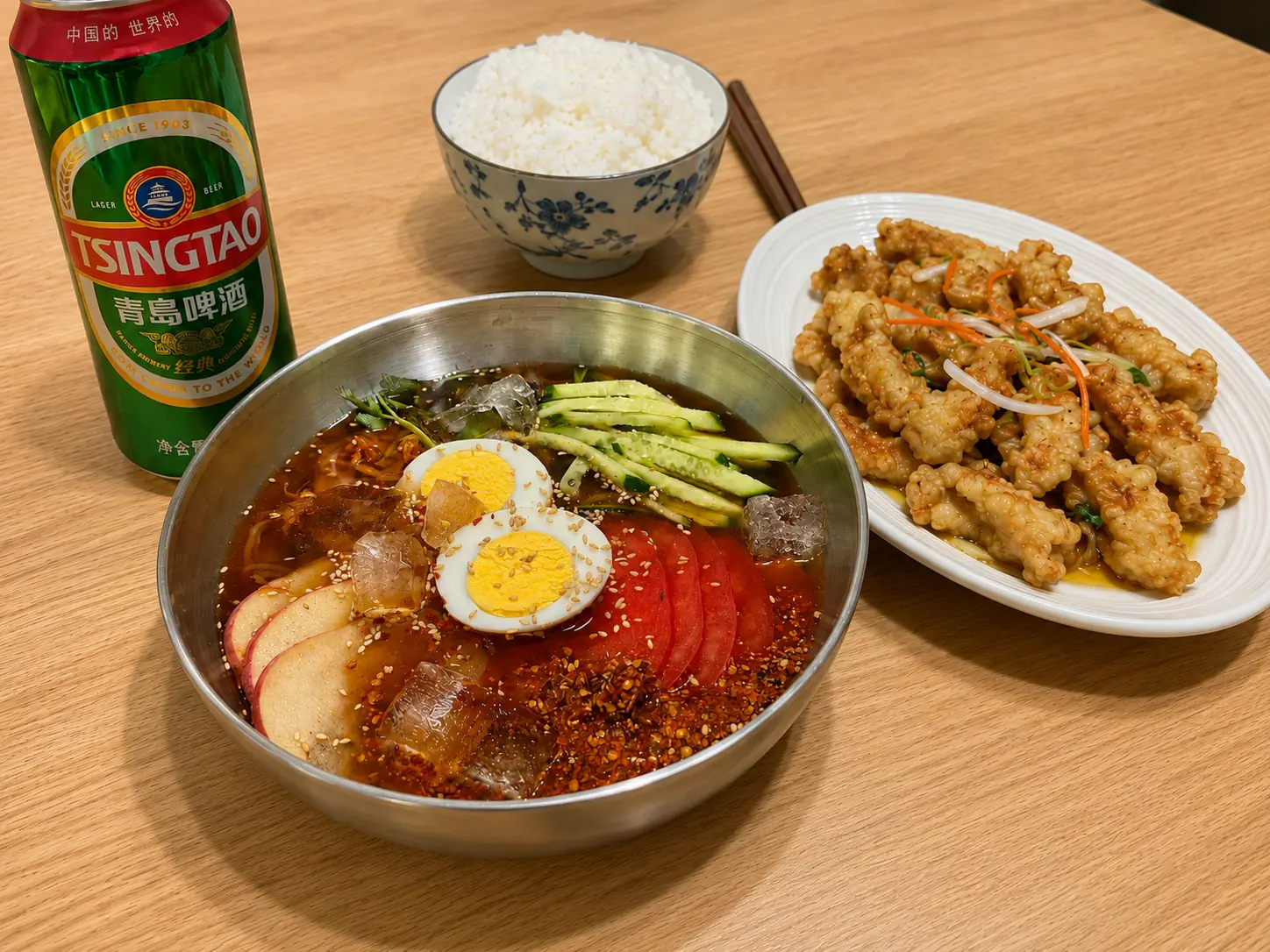
Guo Bao Rou is a shared main dish, not a snack. Northeast restaurant portions are large, and fried pork plus three heavy meat dishes can turn a fun dinner into a table you cannot finish.
Good pairings include plain rice, pork-cabbage dumplings, cold noodles (冷面), three treasures of the earth (地三鲜), cucumber salad, sauerkraut pork stew, or Harbin beer.
2Two People
Start with one Guo Bao Rou, rice or dumplings, and one vegetable. Add soup only if you know you are hungry.
4Four People
Add a stew, cold dish, or noodles, then stop. Dongbei portions are generous, especially in winter tourist areas.
WWinter Timing
Place Guo Bao Rou inside a full warm meal before or after cold sightseeing. It is too fragile to treat as a packed snack for Harbin Ice and Snow World.
In Jilin City, local promotion often links Guo Bao Rou with rice, cold noodles, and beer; use that as inspiration, not a rulebook.
Pork, Gluten, and Restaurant Allergy Risks
PPork Dish
Guo Bao Rou is not suitable for vegetarians, vegans, halal diners, kosher diners, or travelers avoiding pork for any reason. Swapping the meat would make it a different dish.
GGluten Risk
The batter is usually starch-based, often potato starch, but some kitchens add wheat flour, and soy sauce may contain wheat.
FFryer Contact
Egg may or may not appear in the batter or marinade, and shared fryers can create cross-contact with seafood, nuts, or other allergens.
Other common ingredients or risks include vinegar, sugar, soy sauce, ginger, garlic, scallion, shared frying oil, and possible cross-contact in the same kitchen. If the allergy is severe, choose a simpler steamed, boiled, or separately cooked dish instead of asking a busy fryer station to improvise.
Do not assume starch batter means gluten-free
Many Chinese restaurants use starch, flour, soy sauce, and shared frying oil in the same prep area. Celiac travelers should treat Guo Bao Rou as unsafe unless the kitchen can clearly confirm every ingredient and process.
Guo Bao Rou Mistakes Travelers Avoid
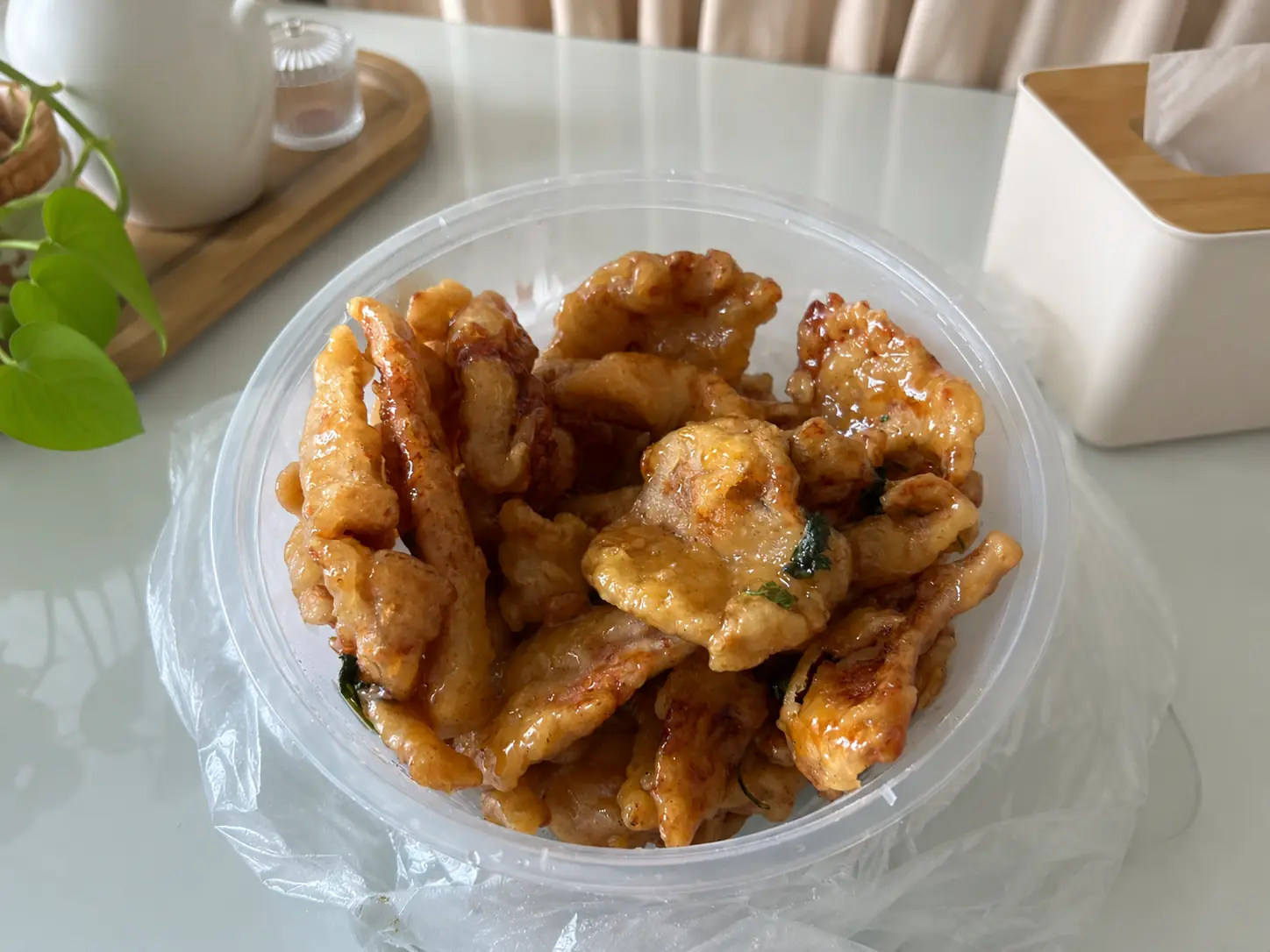
The biggest mistakes are small but costly: ordering the wrong dish, judging only by color, over-ordering, or waiting too long after the plate arrives. Guo Bao Rou has a short best-life window. If it arrives hot and crisp, eat it before the photos become the main event.
Ordering by English Alone
"Sweet and sour pork" can mean several dishes in China. Show 锅包肉 if you want the Dongbei version.
Chasing Only Red Color
A bright red, glossy plate may be tasty, but it is often closer to a tomato-leaning version than Harbin old-style.
Ordering Too Much
One plate is already fried pork in sweet-sour sauce. Add balance with rice, dumplings, vegetables, cold noodles, soup, or one stew.
Waiting Too Long
The crust softens quickly after glazing, especially in takeaway boxes. Dine-in is the best first test.
Guo Bao Rou Questions for Travelers
No. Both can be translated as sweet-and-sour pork, but Guo Bao Rou is a Northeast China dish usually made with wide pork slices, a crisp starch coating, and a thin vinegar-sugar glaze. Cantonese-style sweet-and-sour pork often uses smaller pieces and a different sauce profile.
Beyond This Guide
Guo Bao Rou is a good first doorway into Northeast food, but a satisfying Dongbei meal depends on season, group size, and how cold your sightseeing day will be. Place it inside a Harbin, Shenyang, Changchun, or Jilin City day where a shared hot meal feels like part of the trip, not a detour.
Explore more Northeast planning:
- Harbin Food Guide
- Harbin Ice and Snow World Shows Guide
- Zhongyang Street and Daowai Baroque Walk
- Essential Chinese Phrases for Travelers
© gochinafreely.com — Original guide by Go China Freely.