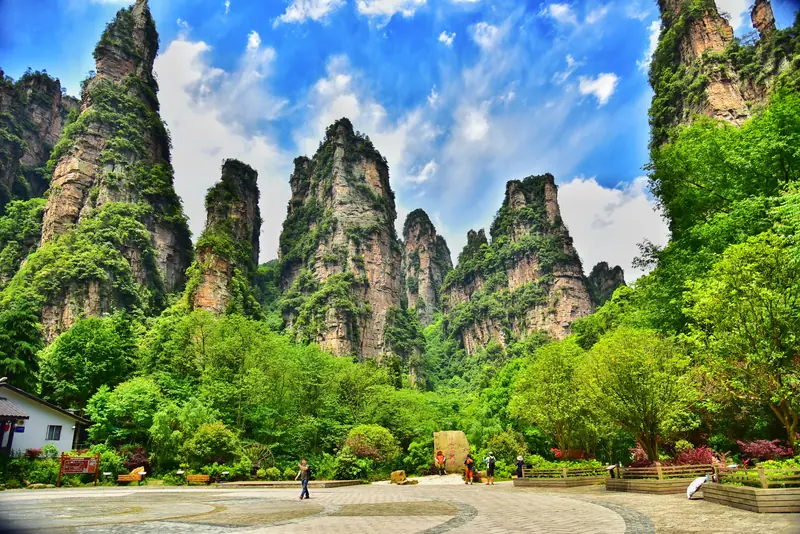
Hours & Tickets
2026 channel prices can vary · full ticket table below
Essential Rules
Zhangjiajie National Forest Park: Pillar Labyrinth
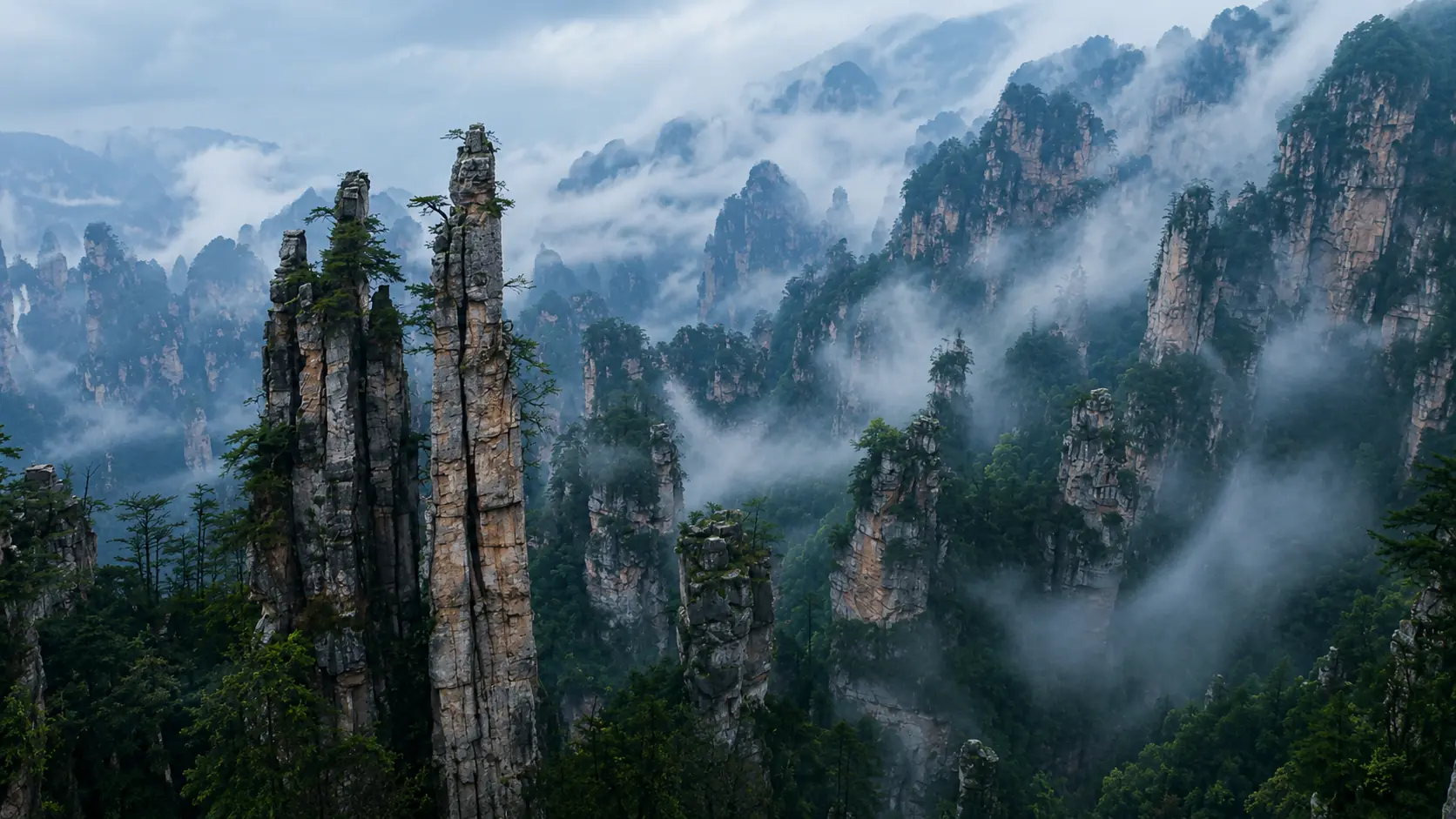
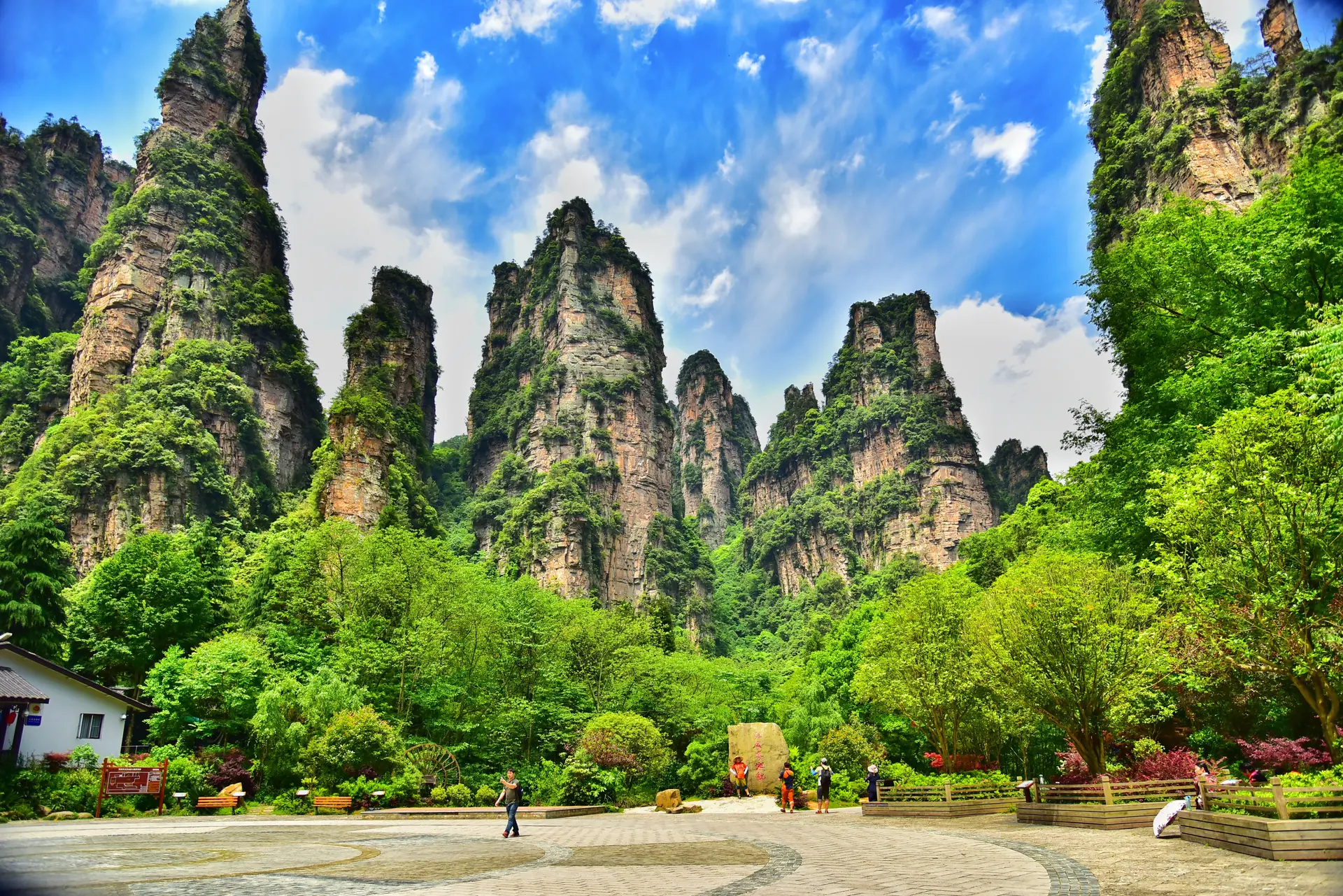
Zhangjiajie National Forest Park holds over 3,000 quartz-sandstone pillars, some topping 200 meters — James Cameron lifted them straight onto Pandora for Avatar.
For most foreign visitors, this is China at its least recognizable: no ancient temples, no Great Wall, just a labyrinth of stone columns erupting from subtropical jungle. This guide gets you through the four scenic zones in 2–3 days, no tour group required.
China's First National Forest Park
Zhangjiajie National Forest Park sits in northwestern Hunan Province. In 1982 it became China's first national forest park; in 1992, as part of the larger Wulingyuan (武陵源) Scenic Area, it earned UNESCO World Natural Heritage status.
The Zhangjiajie Landform
Geologists classify the terrain as quartz-sandstone peak-forest landform — informally called "Zhangjiajie Landform." Hundreds of millions of years of tectonic uplift and water erosion carved ancient seabed sediment into over 3,000 freestanding pillars. Narrow, tall, and capped with greenery, they look nothing like Guilin's karst or Huangshan's granite — this is the largest and densest formation of its kind on the planet.
The Avatar Landmark
After Avatar premiered in 2009, the visual inspiration for the film's floating Hallelujah Mountains was traced to a single freestanding pillar in the park's Yuanjiajie zone — originally called Southern Sky Column (南天一柱), rising roughly 200 meters from its base. Local tourism authorities gave it the promotional nickname "Avatar Hallelujah Mountain," and it remains the park's most recognizable landmark.
Four Connected Scenic Zones
The full Wulingyuan area comprises four connected zones: Zhangjiajie National Forest Park proper, Tianzi Mountain (天子山), Suoxi Valley (索溪峪), and Yangjiajie (杨家界) — all linked by a free eco-bus system. Forest coverage is exceptionally high. Annual visitor numbers run into the tens of millions, though foreign tourists still make up a tiny fraction — on most trails you'll share the path with Chinese families and tour groups.
Getting There and Getting In
By Air
Zhangjiajie Hehua International Airport (张家界荷花国际机场) (Google | Amap) is roughly 6 km from downtown, with flights to and from Beijing, Shanghai, Guangzhou, Chengdu, and Changsha.
A free shuttle bus runs to the city center (20–30 minutes), or grab a taxi (around ¥25–50). From the airport to Wulingyuan, taxis cost roughly ¥120–150, or transfer via the city bus station.
By High-Speed Rail
Zhangjiajie West Station (张家界西站) (Google | Amap) is the main HSR hub, with services from Changsha (roughly 2–4 hours depending on the train), Wuhan, and Guiyang.
Changsha is the most common transfer point for international travelers. The older Zhangjiajie Station still handles some conventional trains. Check Trip.com or 12306 for specific schedules.
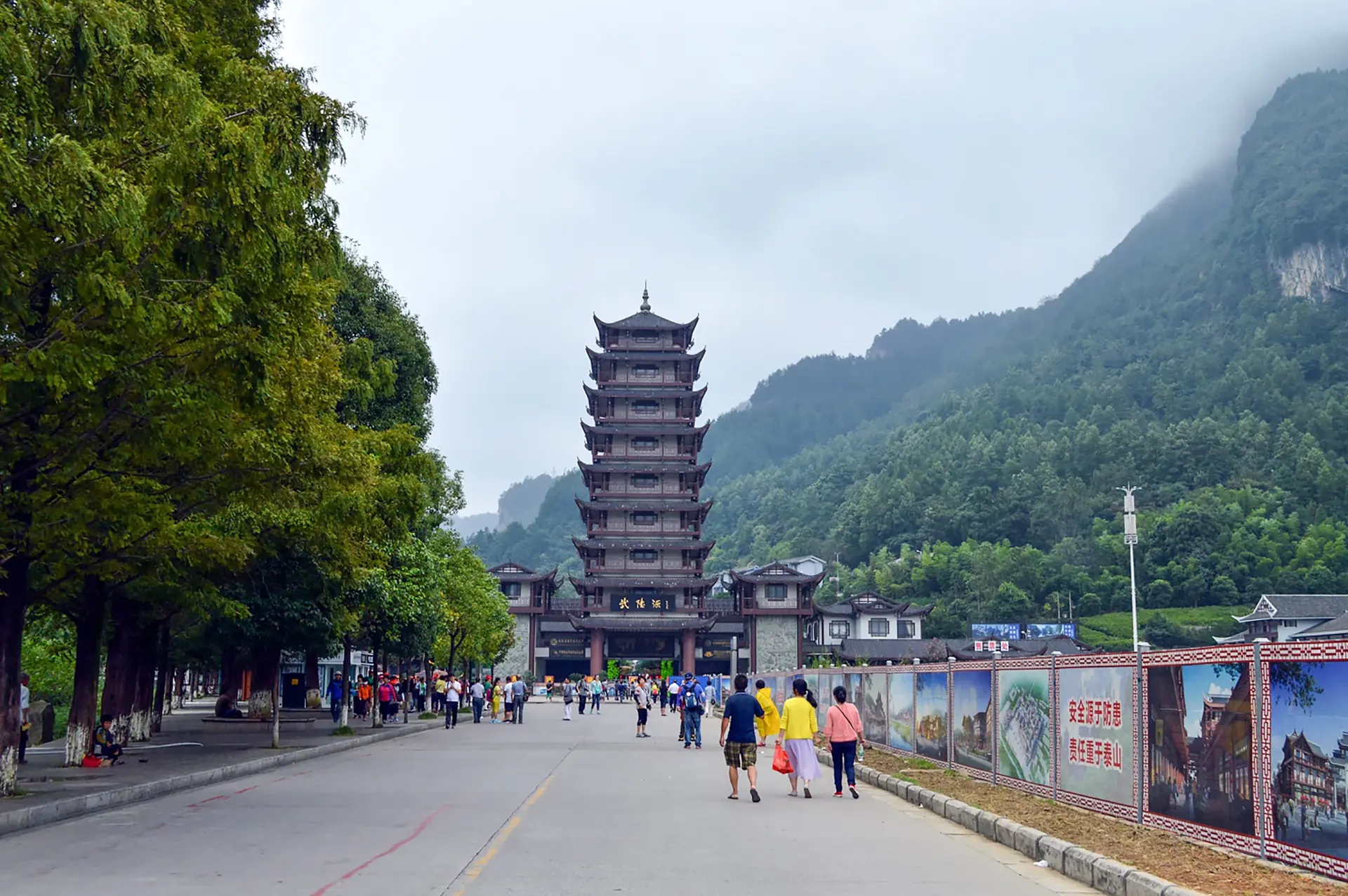
City-to-park transfer
From Zhangjiajie City to the Park
Buses run from Zhangjiajie city bus station to Wulingyuan Town, taking about 1 hour for around ¥12. A taxi costs roughly ¥100.
From Wulingyuan Town it's a short walk to the Wulingyuan Landmark Gate (武陵源标志门) — the east entrance. If you're staying near the Forest Park Gate (森林公园大门), enter directly through the south entrance.
Bus
~1 hr · ¥12
Taxi
~¥100 city ride
Best gate
Wulingyuan east
Tickets and passes
2026 planning prices
Standard pass
¥236–239
4 consecutive days · entry to all four zones + eco-bus + insurance.
Pass + 2 rides
¥376
4 days · adds Bailong Elevator + Tianzi Cable Car, one ride each.
Pass + 4 rides
¥477
4 days · adds all four cable cars / elevators, one ride each.
Transport multi-ride bundle
¥298
4 days · unlimited major cable car / elevator rides; entry ticket still required.
Recent channels list the standard pass at roughly ¥236–239, with the eco-bus and insurance included. Prices and discount handling can vary slightly between channels (official WeChat mini-program, Trip.com, etc.), so confirm the exact ticket before payment.
Discounted tickets: ages 14–17 and seniors 60–64 pay about ¥122; ages 65+ pay about ¥39.
In-park transport extras
Major paid rides
Bailong Elevator (百龙天梯) · ¥65 one-way
World's tallest outdoor elevator — ascent to Yuanjiajie.
Tianzi Mountain Cable Car (天子山索道) · ¥72 one-way
Up/down Tianzi Mountain.
Yangjiajie Cable Car (杨家界索道) · ¥76 one-way
Up/down Yangjiajie.
Ten-Mile Gallery Mini Train (十里画廊小火车) · ¥40 one-way
Scenic ride through Suoxi Valley.
Booking and entry
- Book 1–3 days ahead on the official WeChat mini-program or Trip.com; peak-season walk-ups may be turned away due to daily limits.
- Foreign visitors register with passport, then pass a biometric or ID scan at the gate.
- Select an entry time window such as 8:00–12:00, then arrive within that window on your first day to activate the pass, or it may be voided.
- The 4-day pass is valid for four consecutive days from first entry, with unlimited re-entry.
- Peak-season capacity controls and timed reservations can tighten quickly; arrive before the 7:00 AM opening for the shortest queues.
Fenghuang Connection
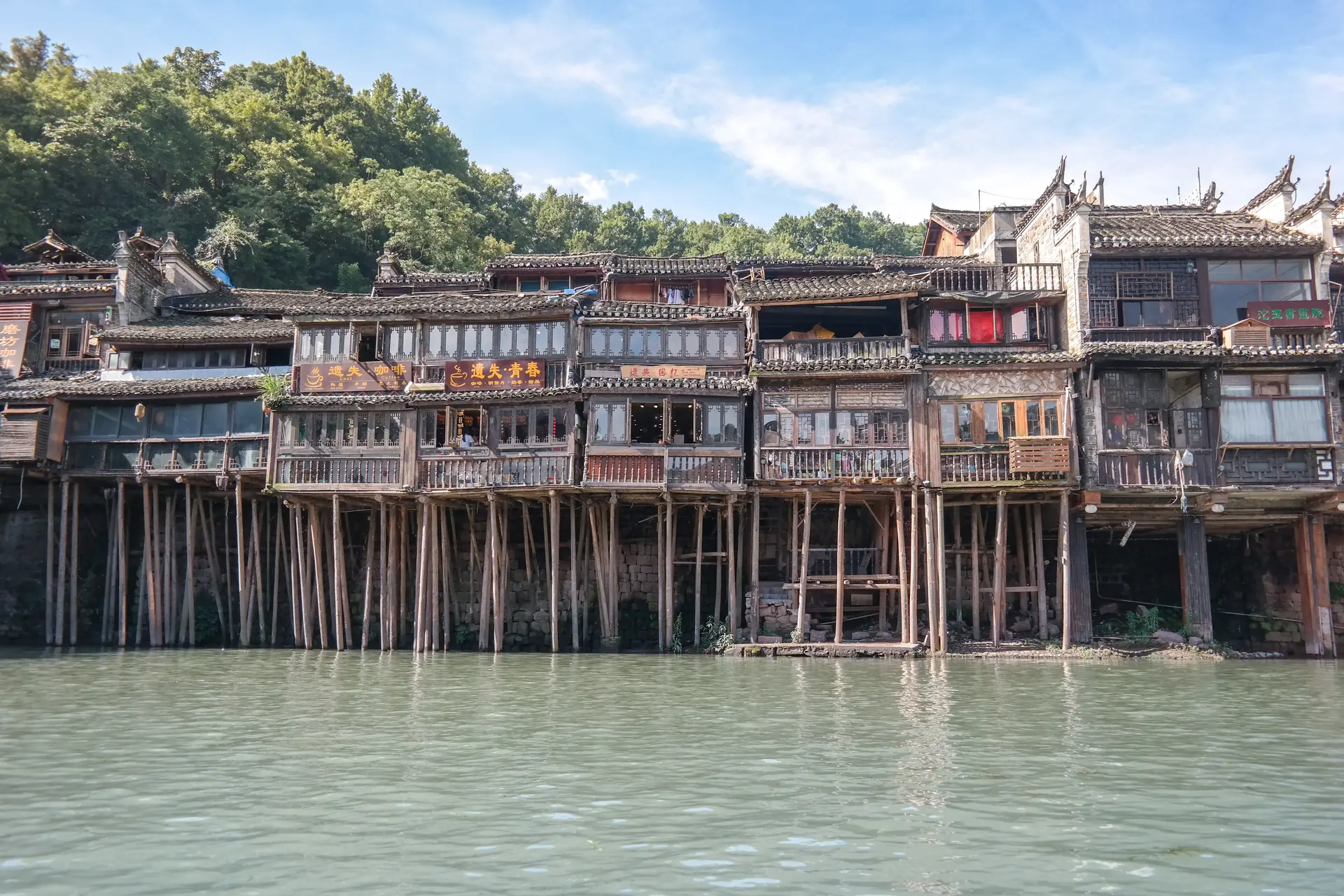
Coming from Fenghuang Ancient Town (凤凰古城)? Direct buses and high-speed trains (about 1 hour) connect to Zhangjiajie — a classic western Hunan combination if you have the time.
No Single-Day Ticket
The 4-day pass is more than enough for a 2–3 day visit. Even if you only plan one day (not recommended but doable), you still buy the 4-day pass — the park doesn't sell single-day tickets.
The Park Zones at a Glance
The Wulingyuan ticket area uses several overlapping names, which is what confuses first-time visitors. Treat these as the five names that matter when you are reading signs, choosing gates, or planning eco-bus transfers.
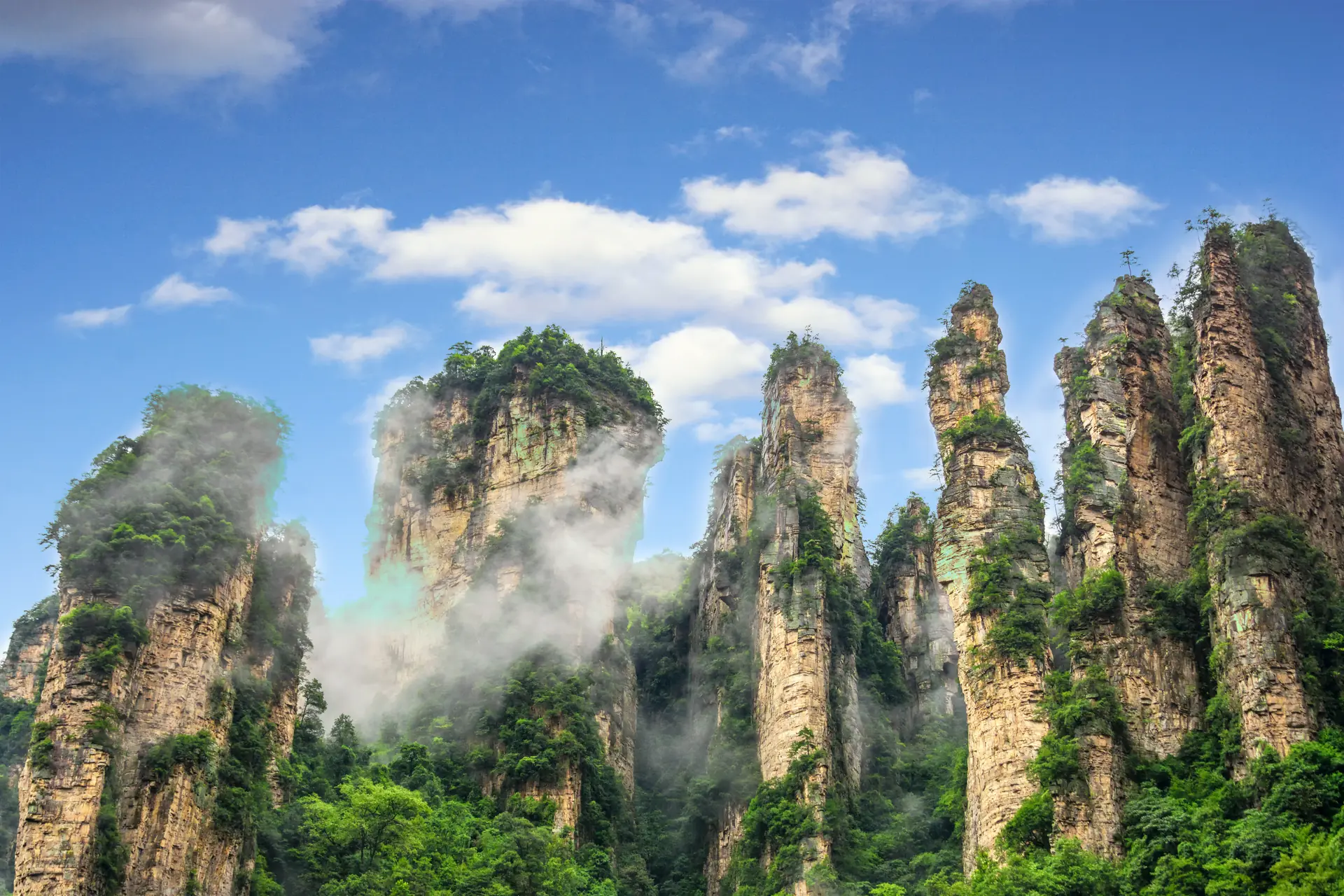
Zhangjiajie National Forest Park
张家界国家森林公园 can mean the whole park in casual speech, but on signs it often points to the south-gate area. Use this gate for Golden Whip Stream and Huangshizhai (黄石寨), or for a quieter lower-valley start when you want a walking day rather than lift-to-viewpoint hopping.
Yuanjiajie
袁家界 is the Avatar-pillars core, with Hallelujah Mountain, First Bridge Under Heaven, and the busiest viewpoint loop. Most travelers reach it by Bailong Elevator (百龙天梯), then continue by eco-bus toward Tianzi Mountain. Go early, before tour groups fill the main railings.
Tianzi Mountain
天子山 is the high sunrise and cloud-sea zone, best for wide views across the pillar forest. It connects to Yuanjiajie by summit eco-bus and to the lower valley by Tianzi Mountain Cable Car (天子山索道). Save it for clearer weather if your schedule is flexible.
Yangjiajie
杨家界 is the quieter cliff-and-ladder zone, with fewer tour groups and more rugged paths. Go by Yangjiajie Cable Car (杨家界索道) or walk across from Yuanjiajie if you have a third day and steady knees. Skip the steepest parts in heavy rain.
Suoxi Valley
索溪峪 is the lower Wulingyuan-side valley, home to Ten-Mile Gallery, the mini train, and the Wulingyuan Landmark Gate (武陵源标志门). It is easier underfoot than the summit zones and useful for lighter final-day pacing, rainy spells, or mixed-energy groups.
Eco-Bus System
Free eco-buses run between gates, lifts, summit viewpoints, and major junctions — included in your pass. Private cars and taxis do not roam inside the scenic area, so these buses are the backbone of every route. Waits are usually under 15 minutes, though peak-season queues can stretch to 30+ minutes.
Yuanjiajie — Where the Avatar Pillars Stand
Yuanjiajie is the park's centerpiece — most visitors see their first jaw-dropping pillar views here.
Avatar Hallelujah Mountain
哈利路亚山
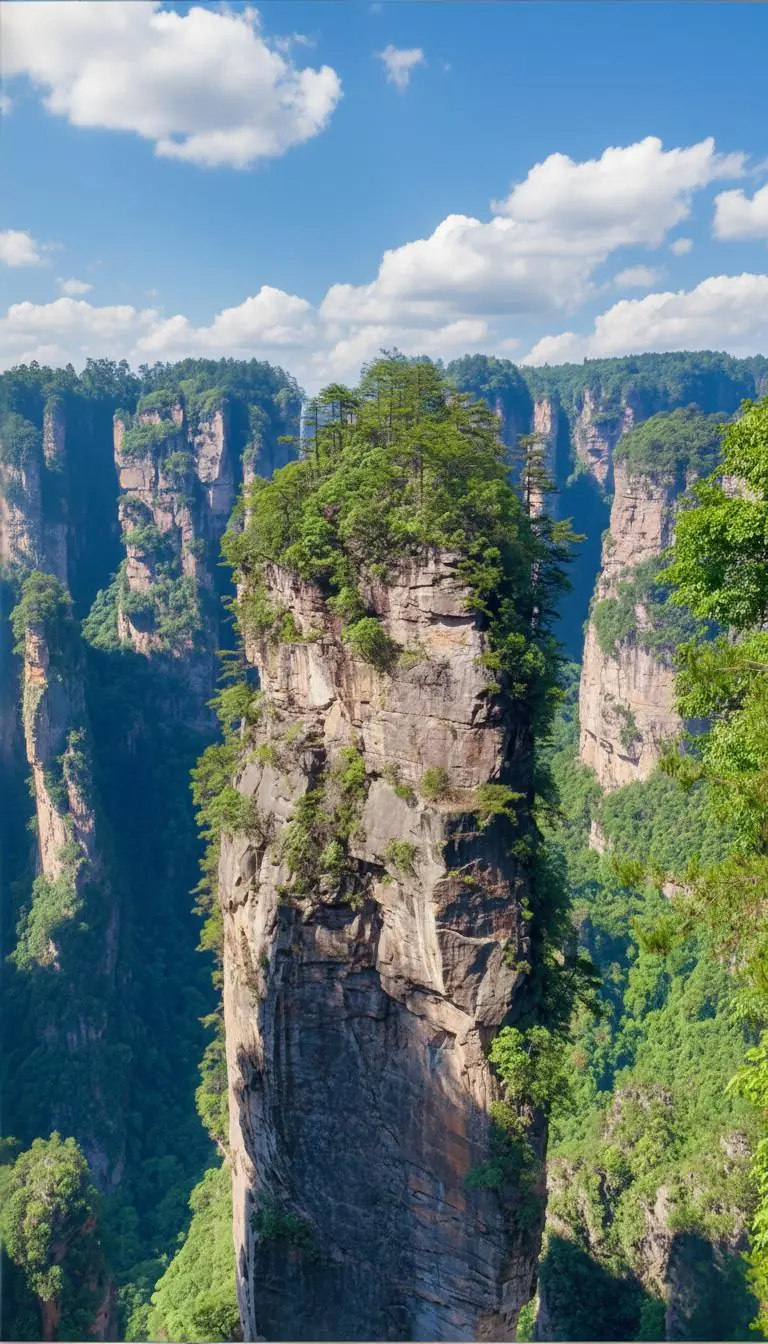
A roughly 200-meter freestanding pillar and the visual source for Avatar's floating mountains. Three sides hang in mid-air, and in morning mist the green-capped top can look suspended above the valley.
First Bridge Under Heaven
天下第一桥
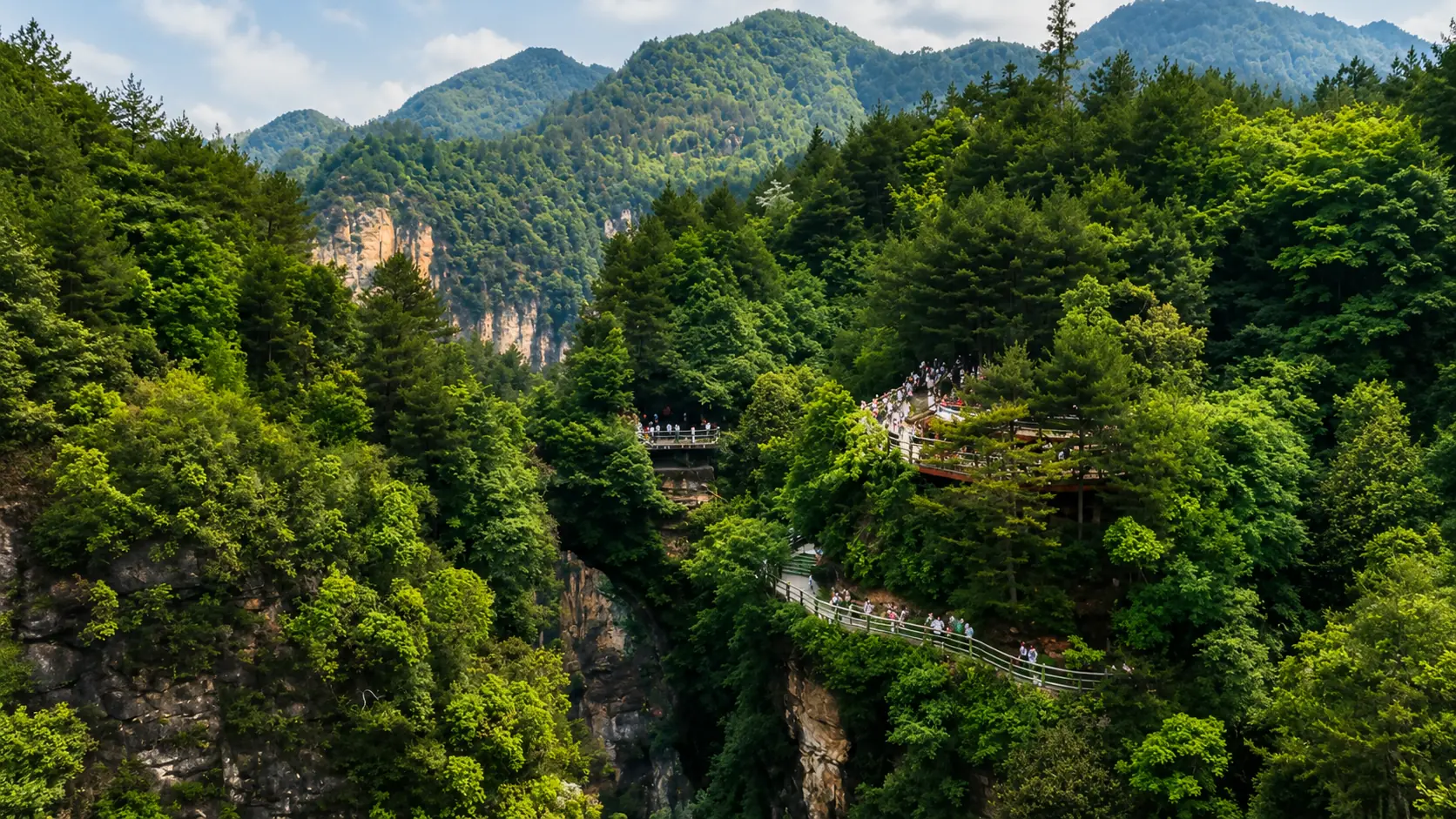
A natural stone bridge spanning about 50 meters between two pillars, roughly 400 meters above the valley floor. It is Yuanjiajie's most popular photo spot; expect 20–30 minute queues in peak season.
Enchanted Terrace
迷魂台
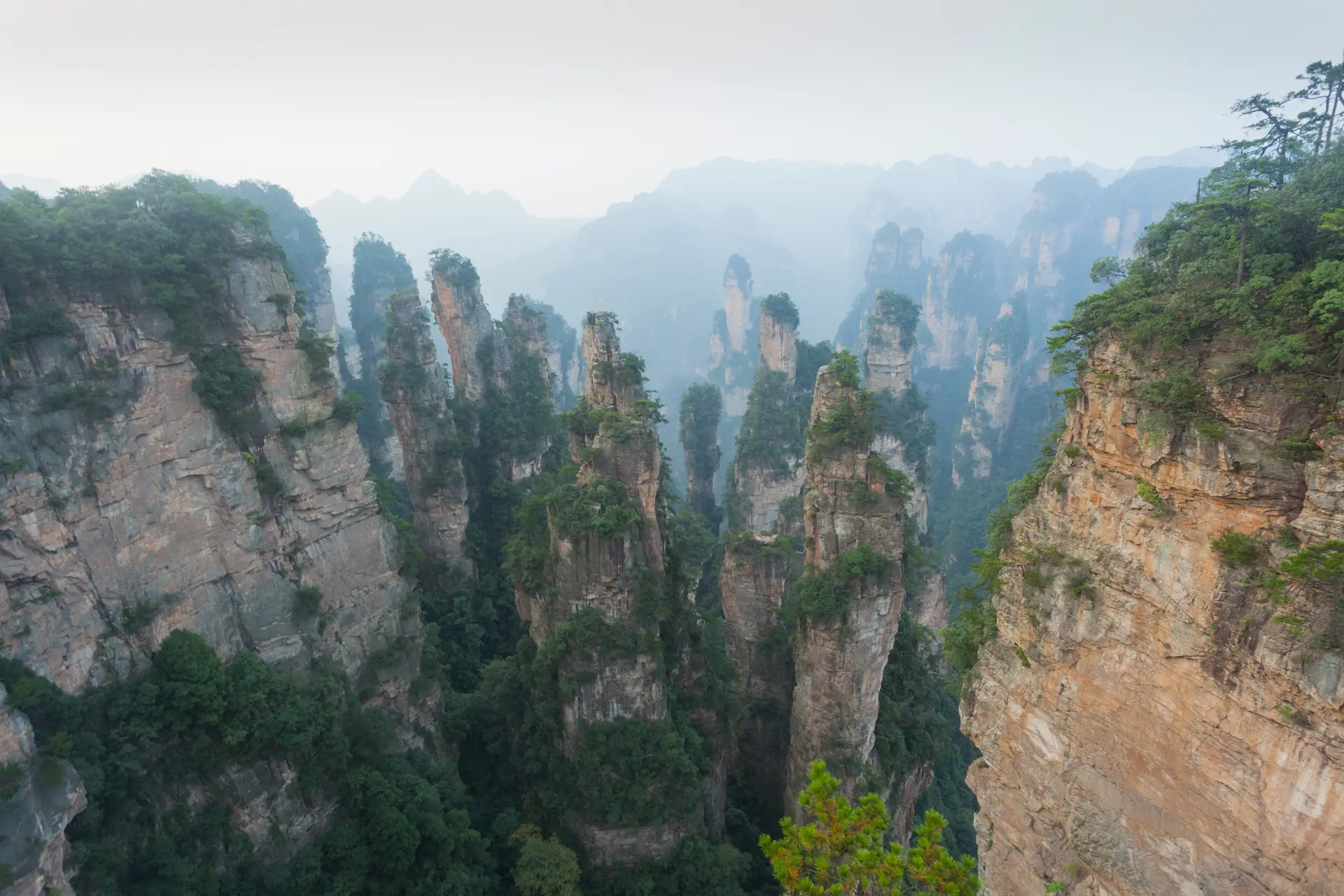
A cliffside viewing platform surrounded on three sides by pillar clusters. On a clear day, dozens of columns fill the frame; sunrise and sunset bring the strongest depth and color.
Back Garden
后花园
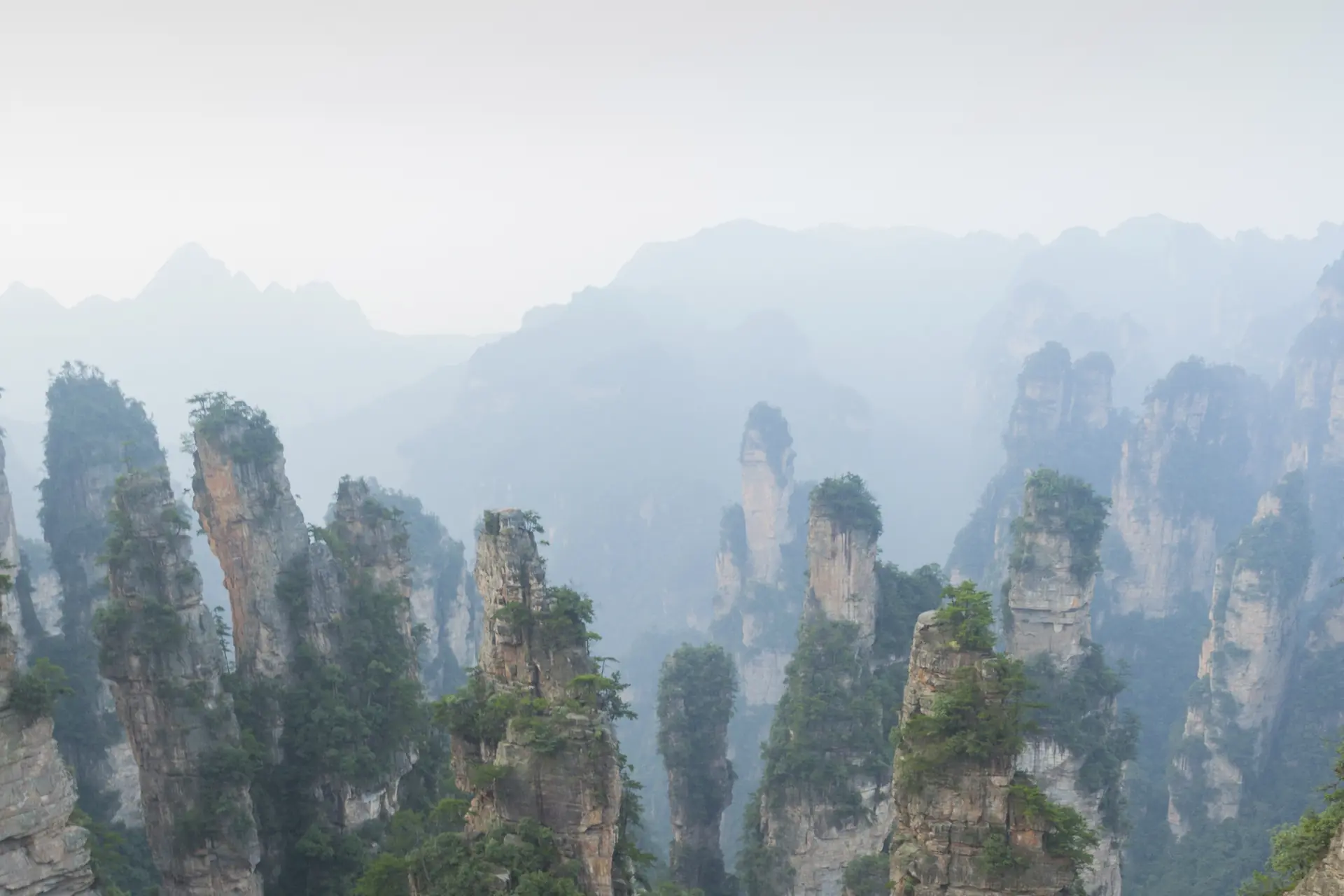
A sunken valley at the far end of the Yuanjiajie walkway. From above, the pillars form a natural stone-and-greenery garden ringed by cliff walls, with fewer crowds than the headline viewpoints.
Getting up to Yuanjiajie
Elevator speed or stair-route quiet
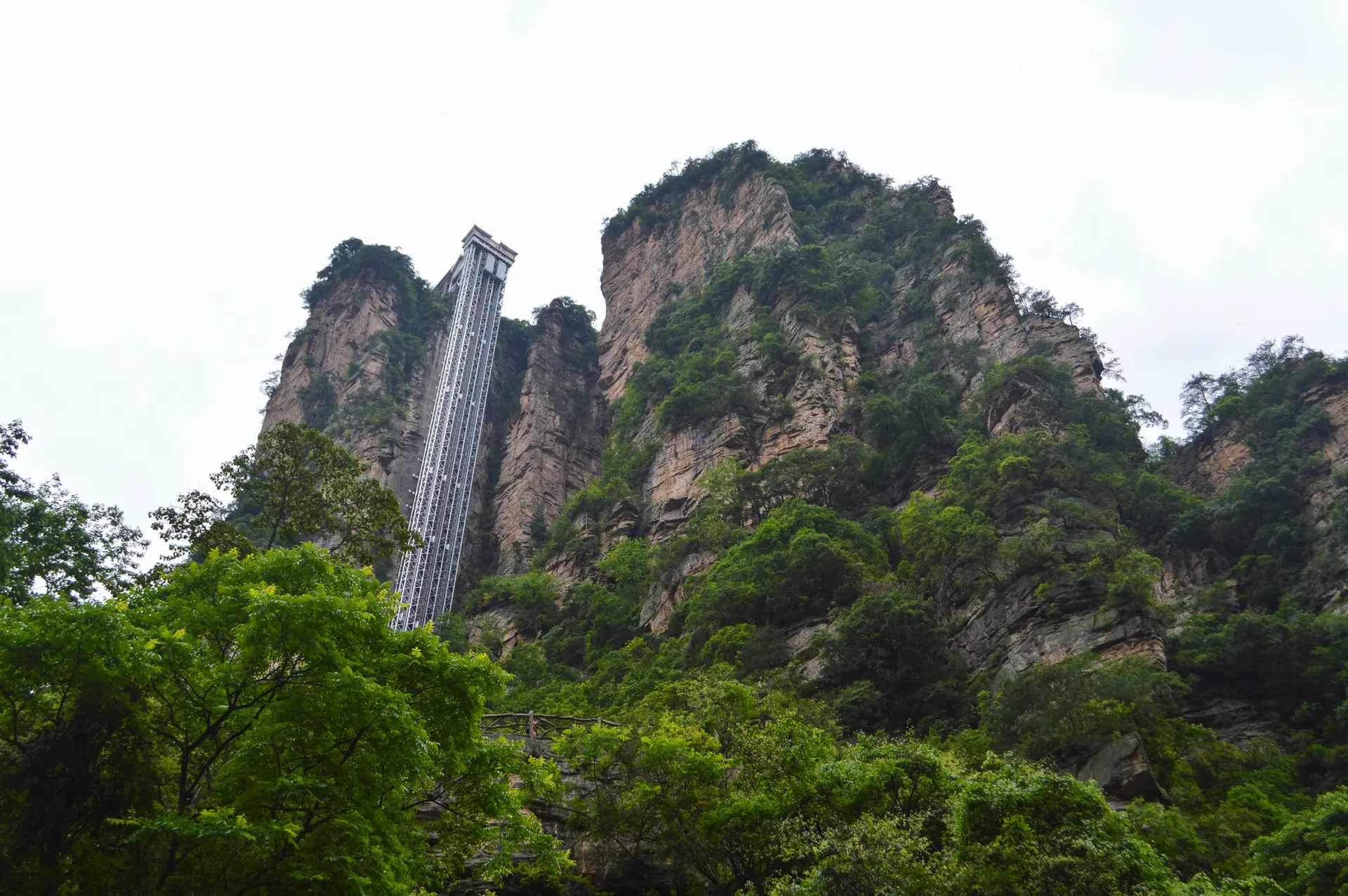
The Bailong Elevator is an engineering marvel in its own right — a glass-fronted lift embedded in the cliff face, carrying visitors 326 meters in under two minutes. The main downside is the queue: one-hour waits are normal during peak season. Arriving at 7:30–8:00 AM beats the worst of it.
Bailong Elevator
¥65 · 2 min
326 m rise. Best for saving time and energy. Peak queues can run 1 hour+; go before 8:00 AM.
Hike up
Free · 2–3 hr
All stairs. Best for a second-day, lower-crowd ascent; physically demanding in heat or rain.
Elevator vs Hiking Strategy
Short on time? Take the Bailong Elevator up (saves energy), then eco-bus to Tianzi Mountain or Yangjiajie after exploring Yuanjiajie. Have a second day? Walk up via Golden Whip Stream for a completely different experience — and zero queue.
Tianzi Mountain and the Sea of Peaks
Tianzi Mountain is the park's highest zone and the top choice for sunrise and sea-of-clouds views.
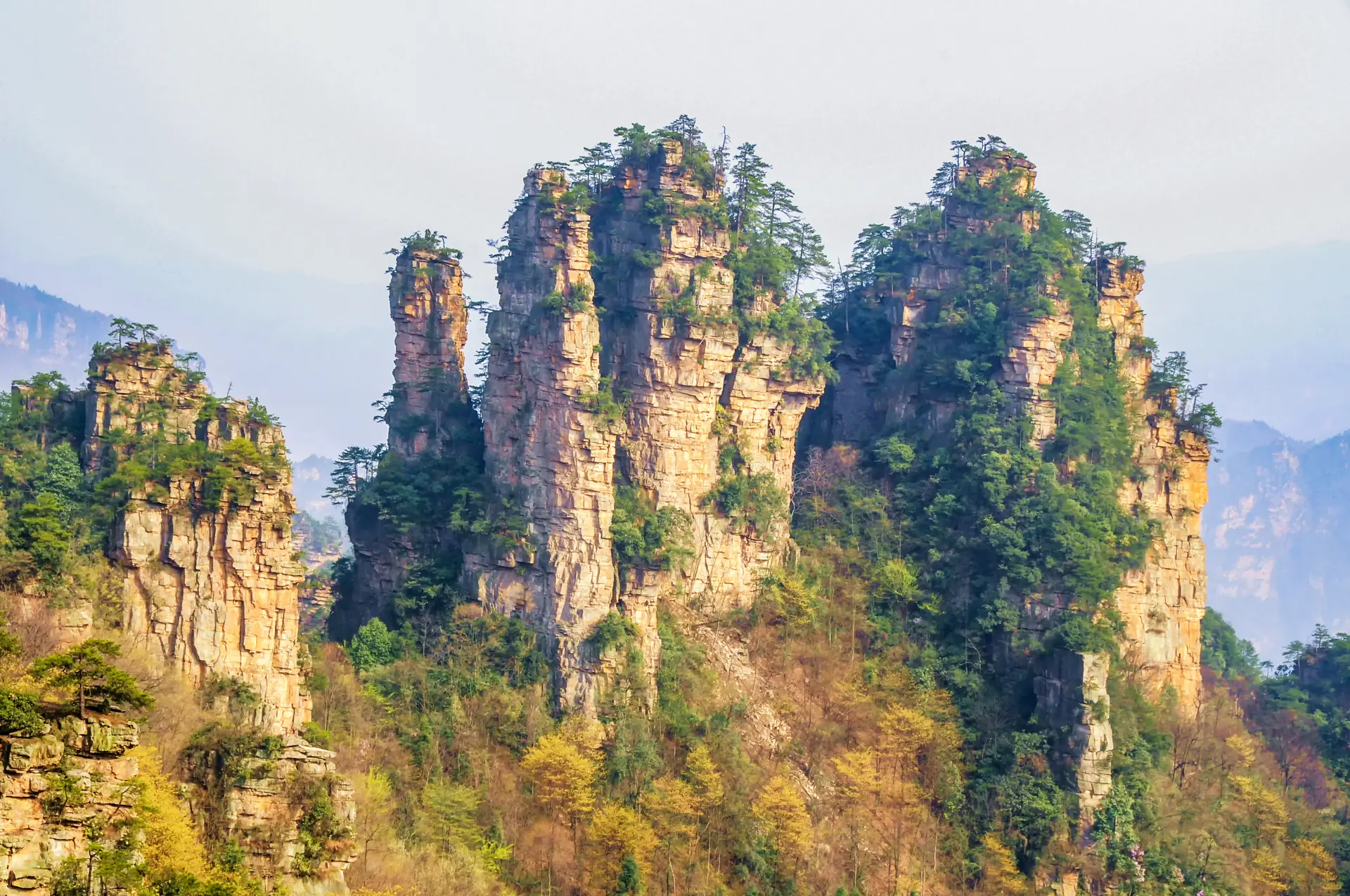
Imperial Writing Brush Peak
御笔峰
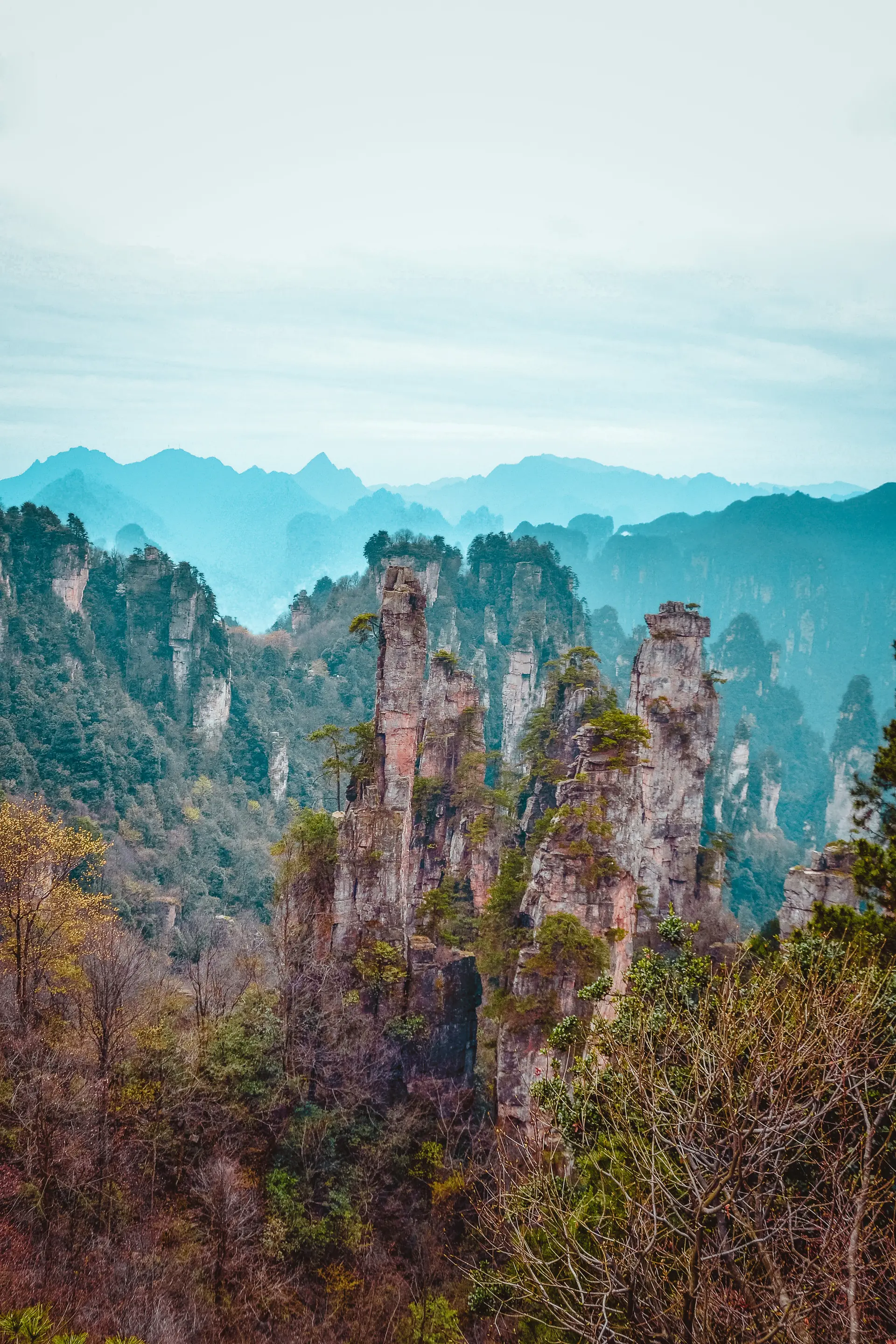
A cluster of slender pillars arranged like calligraphy brushes on a brush rack. This is Tianzi Mountain's most iconic angle and the image on many Zhangjiajie postcards.
Fairy Scattering Flowers
仙女散花
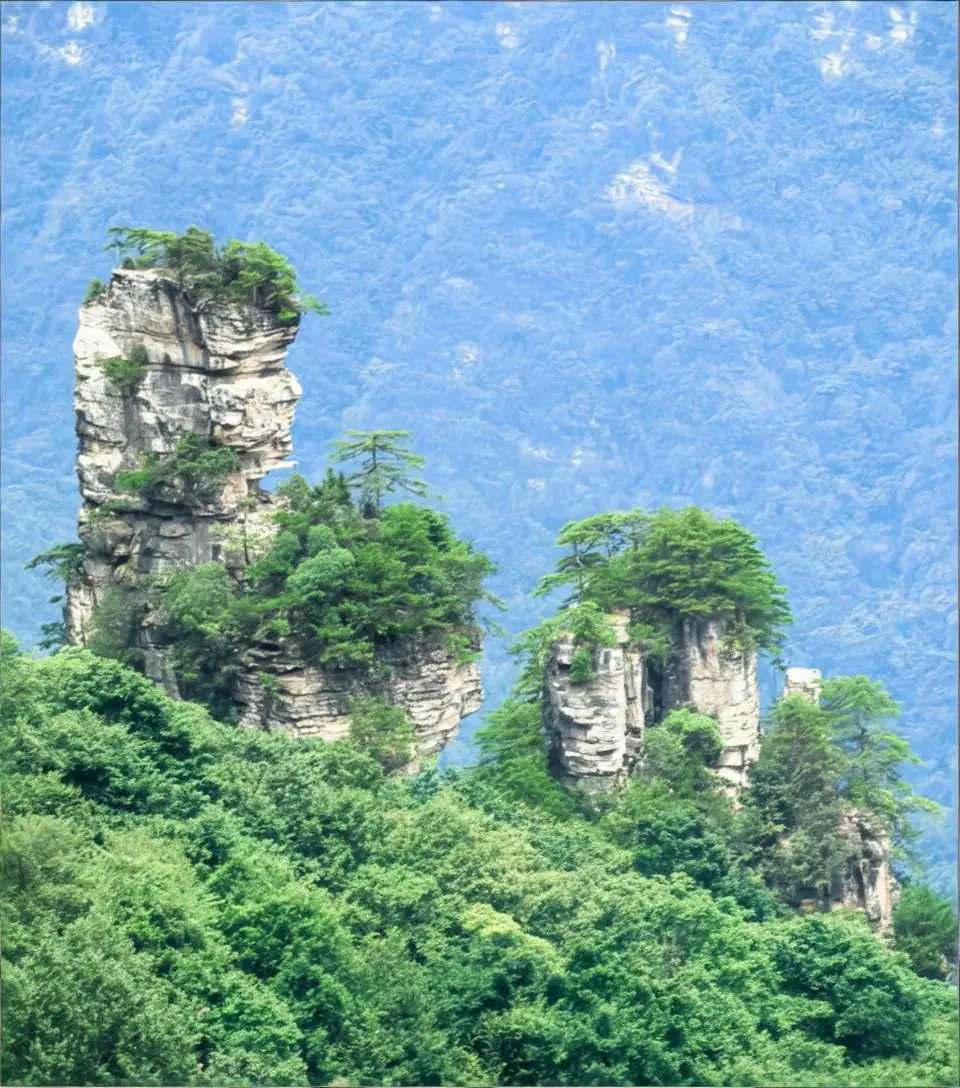
A slender peak shaped like a celestial maiden scattering blossoms. It sits in the same Tianzi Mountain viewing circuit as Imperial Writing Brush Peak.
West Sea Stone Forest
西海石林
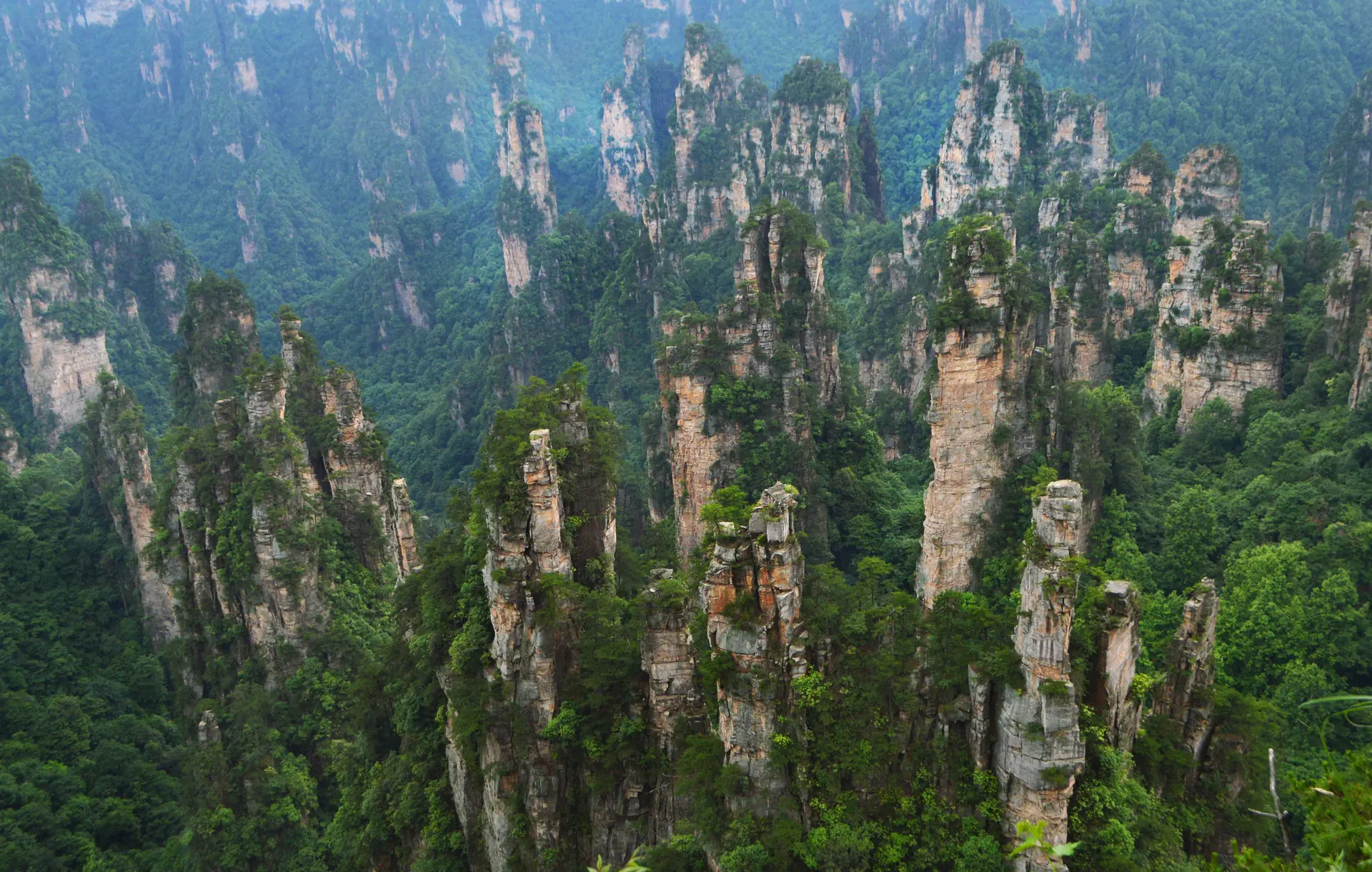
Hundreds of densely packed pillars fill a deep valley below the viewing platform. When clouds roll through, the effect is extraordinary.
Helong Park
贺龙公园
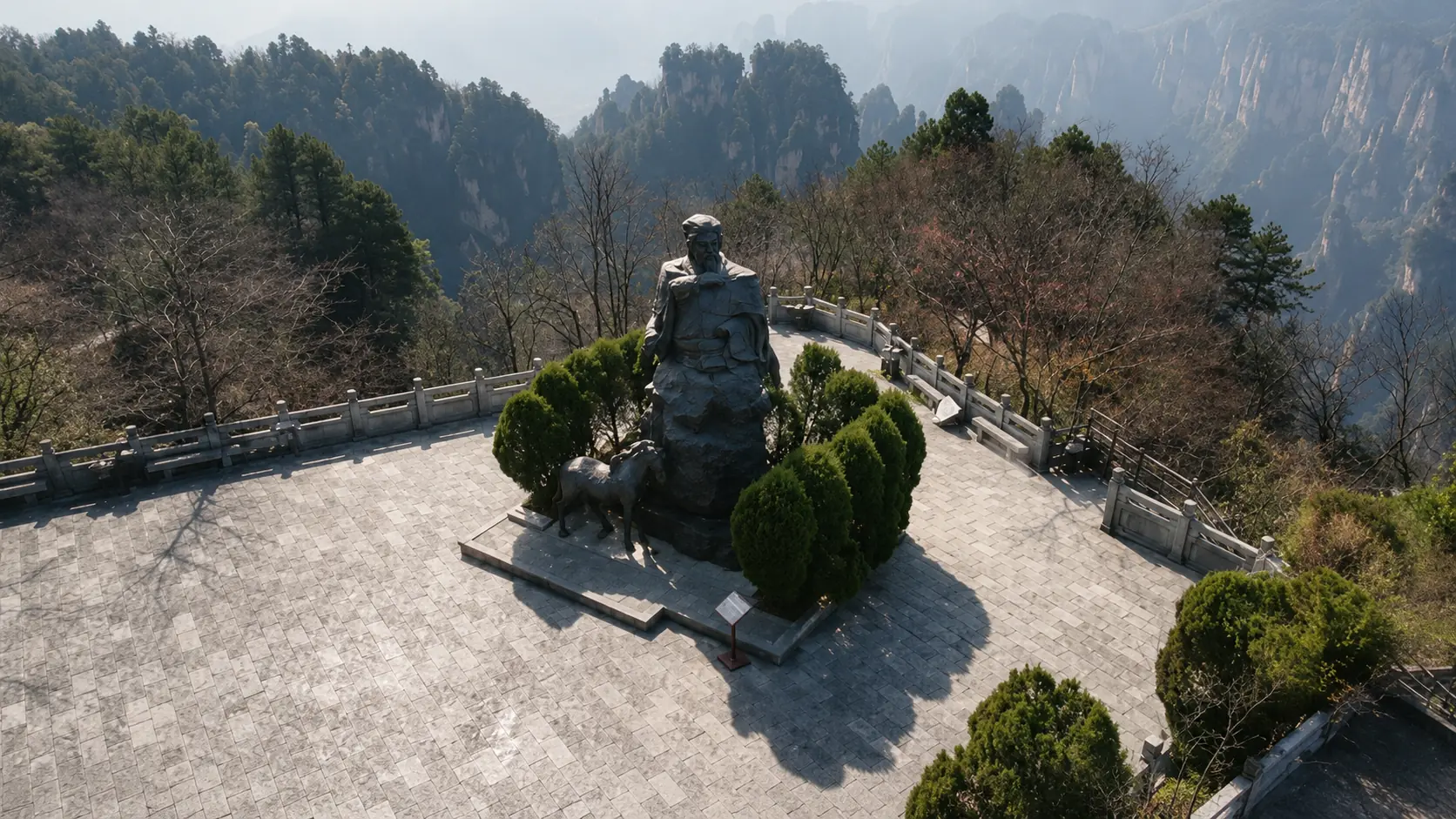
The main public area at the Tianzi Mountain summit, with a bronze statue of Marshal He Long, several viewpoints, and an important eco-bus transfer point.
Sunrise and summit logistics
Sea of clouds, if you earn the early start
Catching sunrise at Tianzi Mountain means either staying overnight at the summit (basic guesthouses in Tianzishan Town) or leaving extremely early (before 5:00 AM). The best chances for a sea of clouds come on clear mornings after rain in spring and autumn.
Stand near Grand Viewing Terrace (大观台) or Fairy Bridge (仙人桥) and watch the pillars emerge from a white ocean — the park's single most stunning moment.
Tianzi Mountain Cable Car (天子山索道) · ¥72 one-way
About 10 min. Use it when entering or exiting via the Tianzi side; queues are usually shorter than Bailong Elevator.
Eco-bus from Yuanjiajie · included
About 20 min. Use it when you have already reached Yuanjiajie and want to continue across the summit without paying another lift.
Hike down to Ten-Mile Gallery · free
About 2 hr. Use it when you want a stair descent and your knees are fresh enough for sustained downhill walking.
Yangjiajie — Quieter Cliffs and Iron Ladders
Yangjiajie sees the fewest visitors of all four zones — and that's exactly why it deserves a dedicated visit. Most tour groups skip it entirely, which means you get the cliff walkways largely to yourself.
Natural Great Wall
天然长城
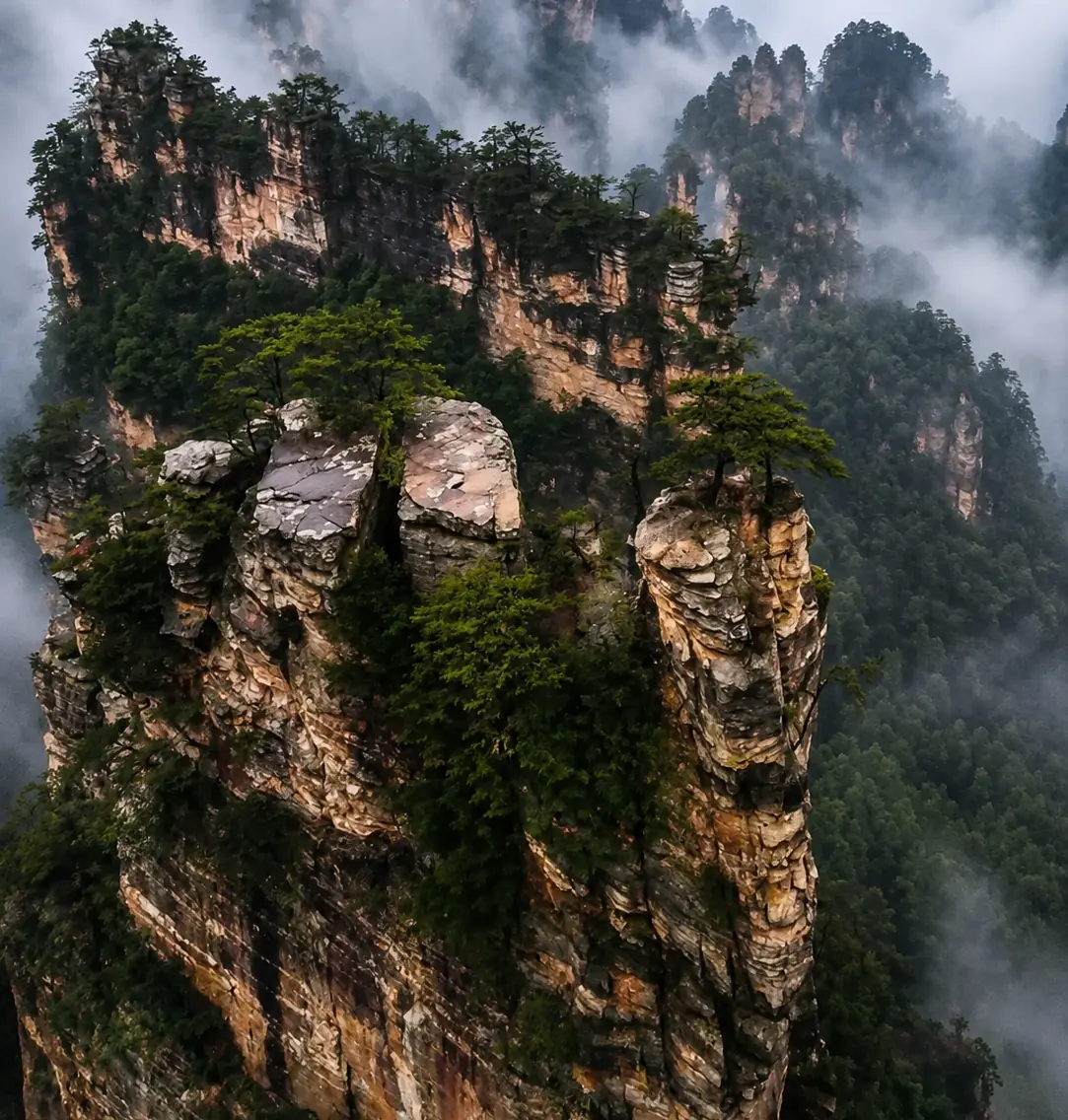
A line of pillars running along a cliff edge, looking uncannily like a winding fortress wall. The silhouettes are sharpest in morning light or late-afternoon side light.
Wulong Village
乌龙寨
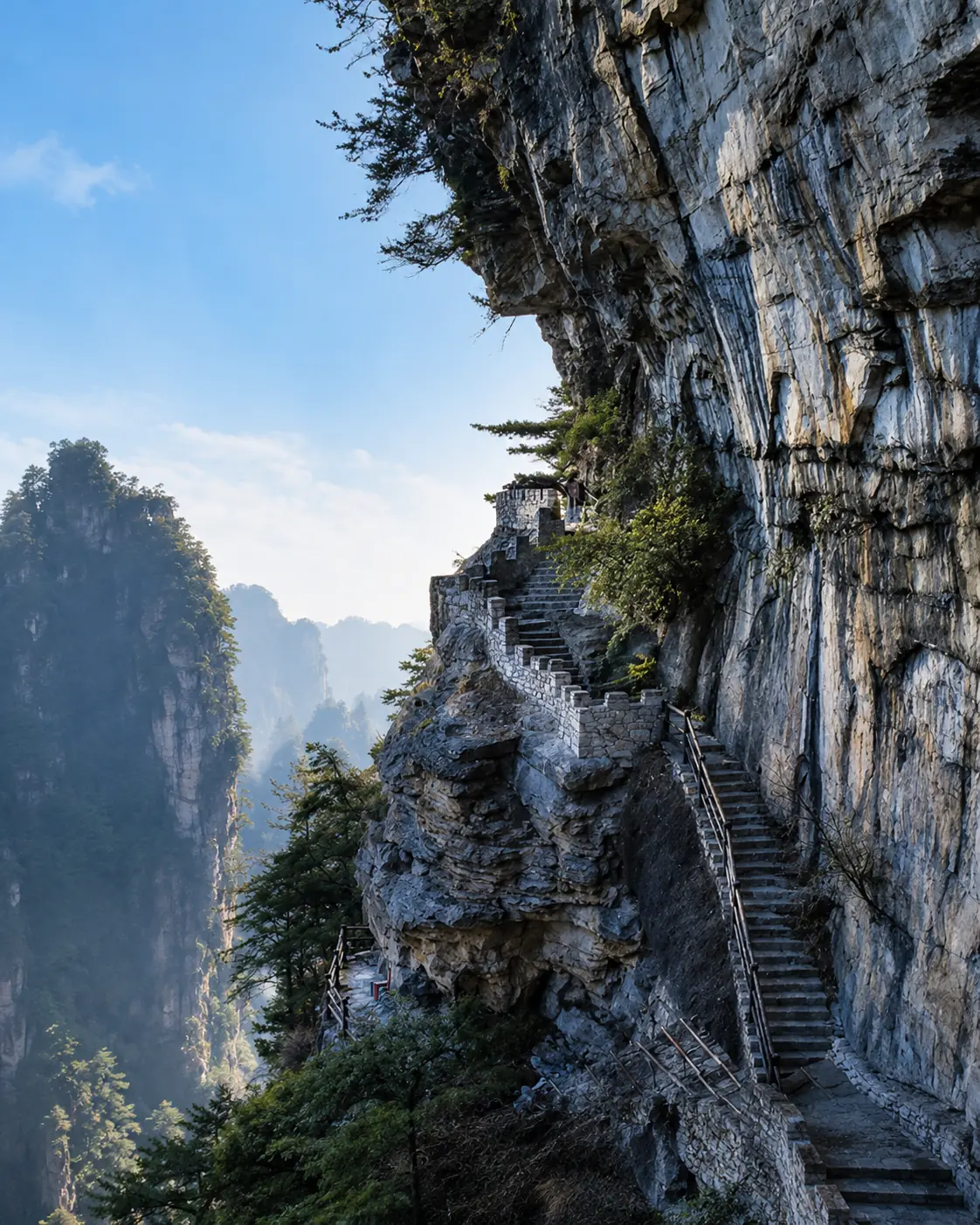
The ruins of an old clifftop stronghold wedged into narrow rock crevices. Getting in means squeezing through gaps barely wide enough for one person before climbing toward Tianbo Mansion (天波府).
Three Ghost Gates Iron Ladders
三道鬼门铁梯
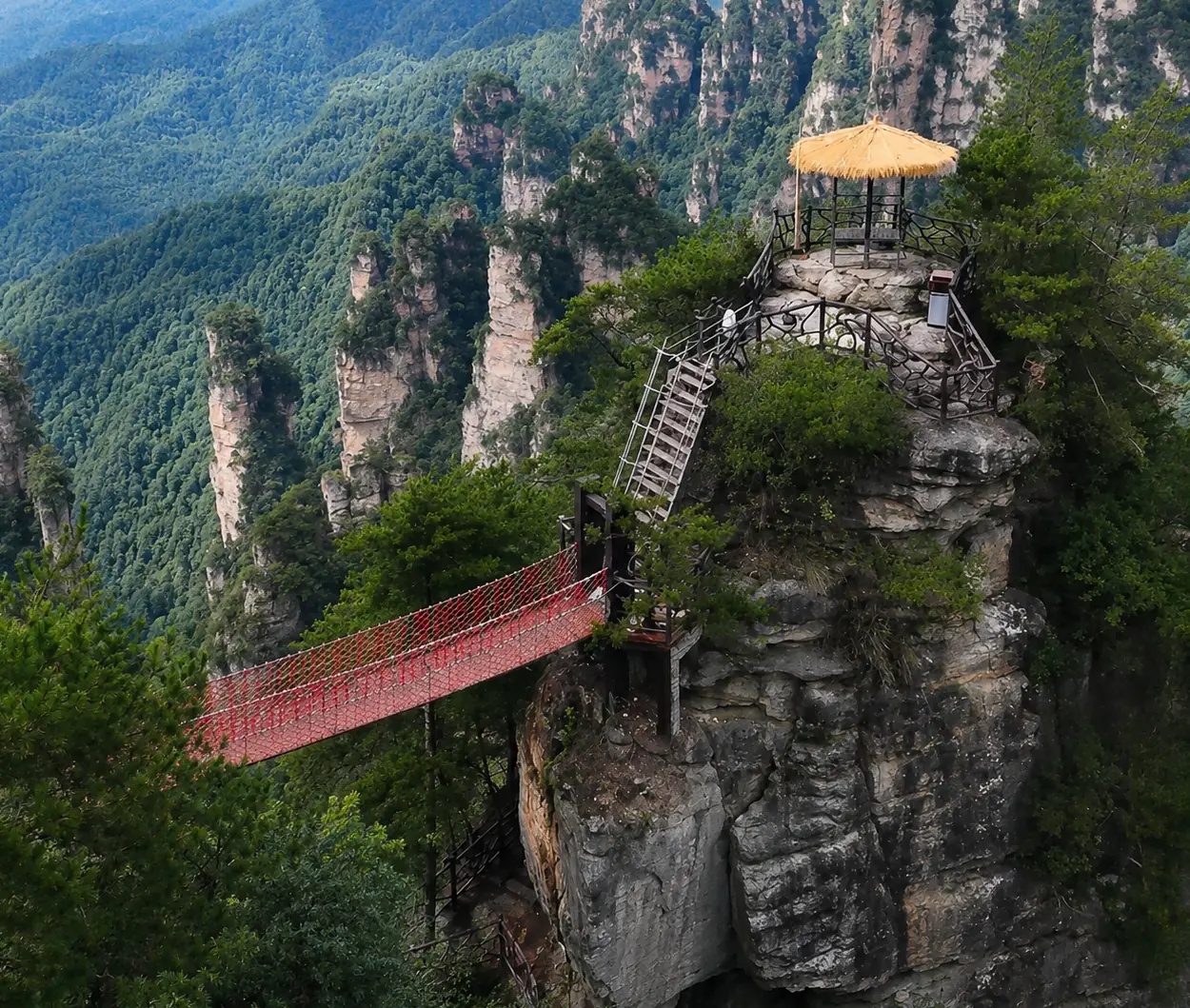
Three near-vertical iron ladders sit between Wulong Village and Tianbo Mansion, with the steepest close to 90°. They are maintained with handrails, but anyone with a serious fear of heights should prepare before committing.
Sky-Reaching Ladder
一步登天
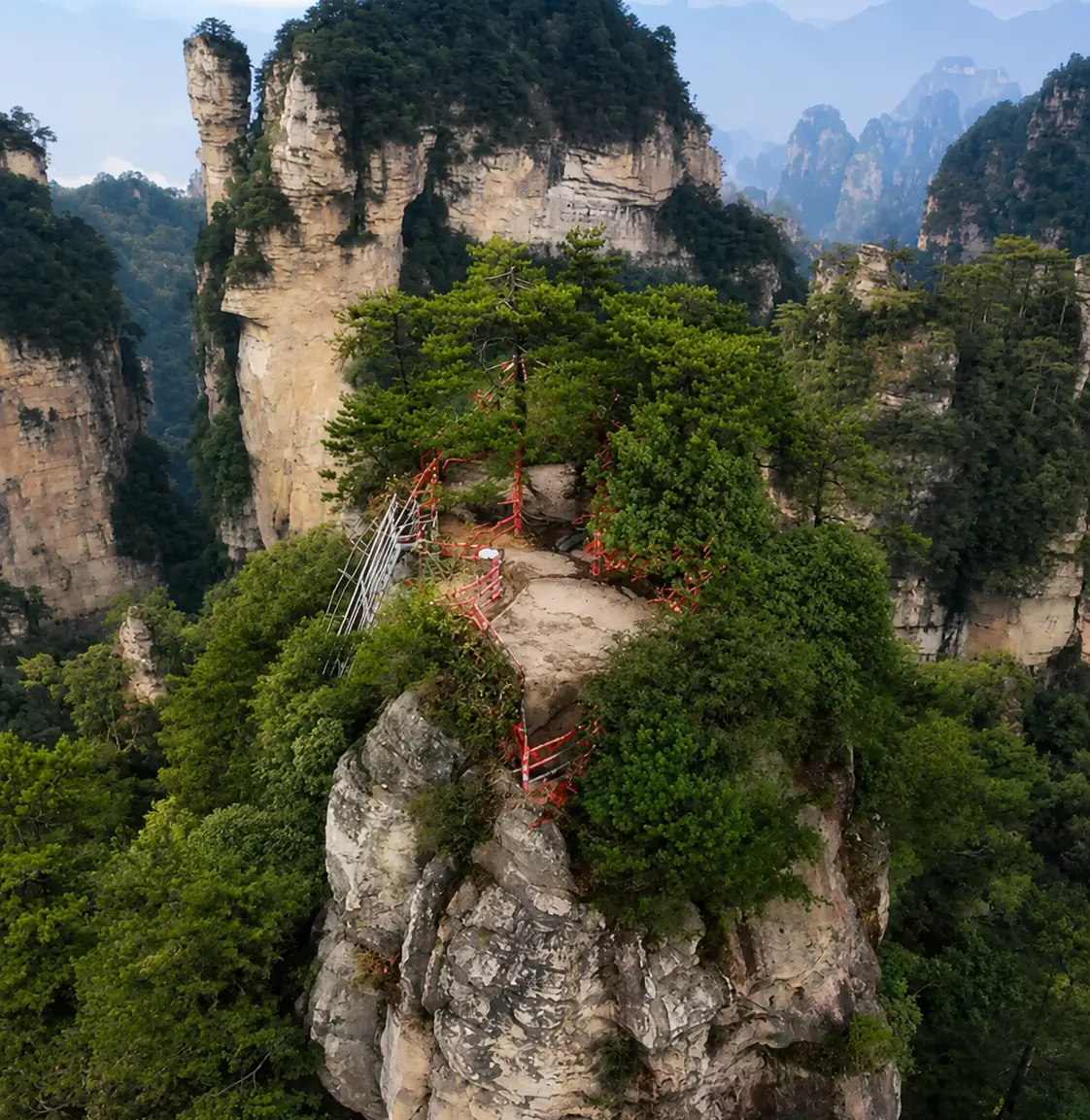
Yangjiajie's highest viewpoint, accessed via a final iron-ladder climb to a summit platform. On a clear day, the entire Yangjiajie zone spreads out below.
Why Yangjiajie deserves the third day
The park's quieter adventure zone
Most visitors spend all their time at Yuanjiajie and Tianzi Mountain — and they're right that those are the core attractions. But Yangjiajie offers something fundamentally different: wilder terrain, far fewer people, and trails with genuine adventure. If you have a third day, Yangjiajie should be your first choice.
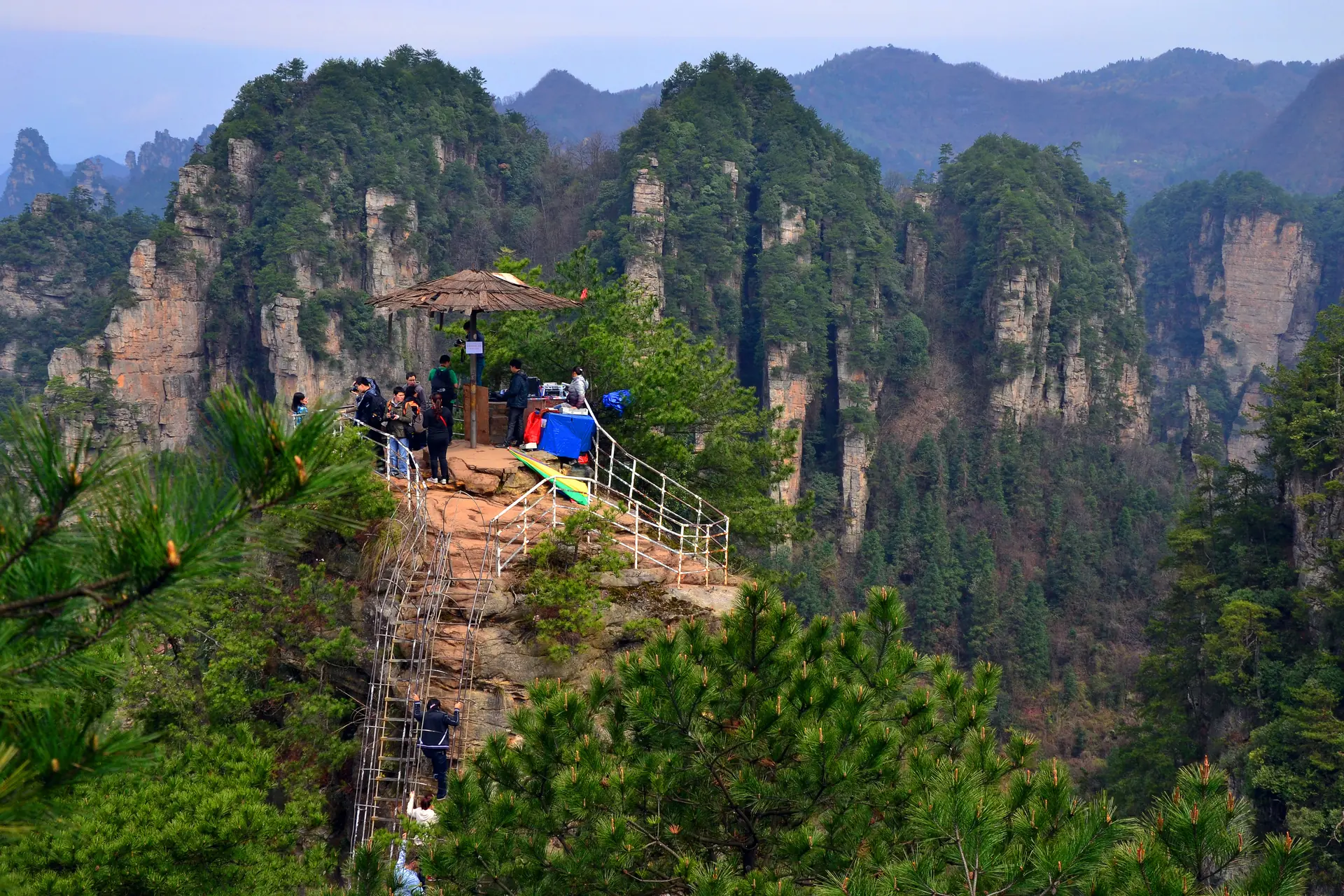
Yangjiajie Cable Car (杨家界索道)
¥76 one-way, riding straight to the Yangjiajie summit — the easiest approach. You can also walk over from Yuanjiajie in about 1.5 hours.
Ten-Mile Gallery — Three Sisters and Herb-Picking Old Man
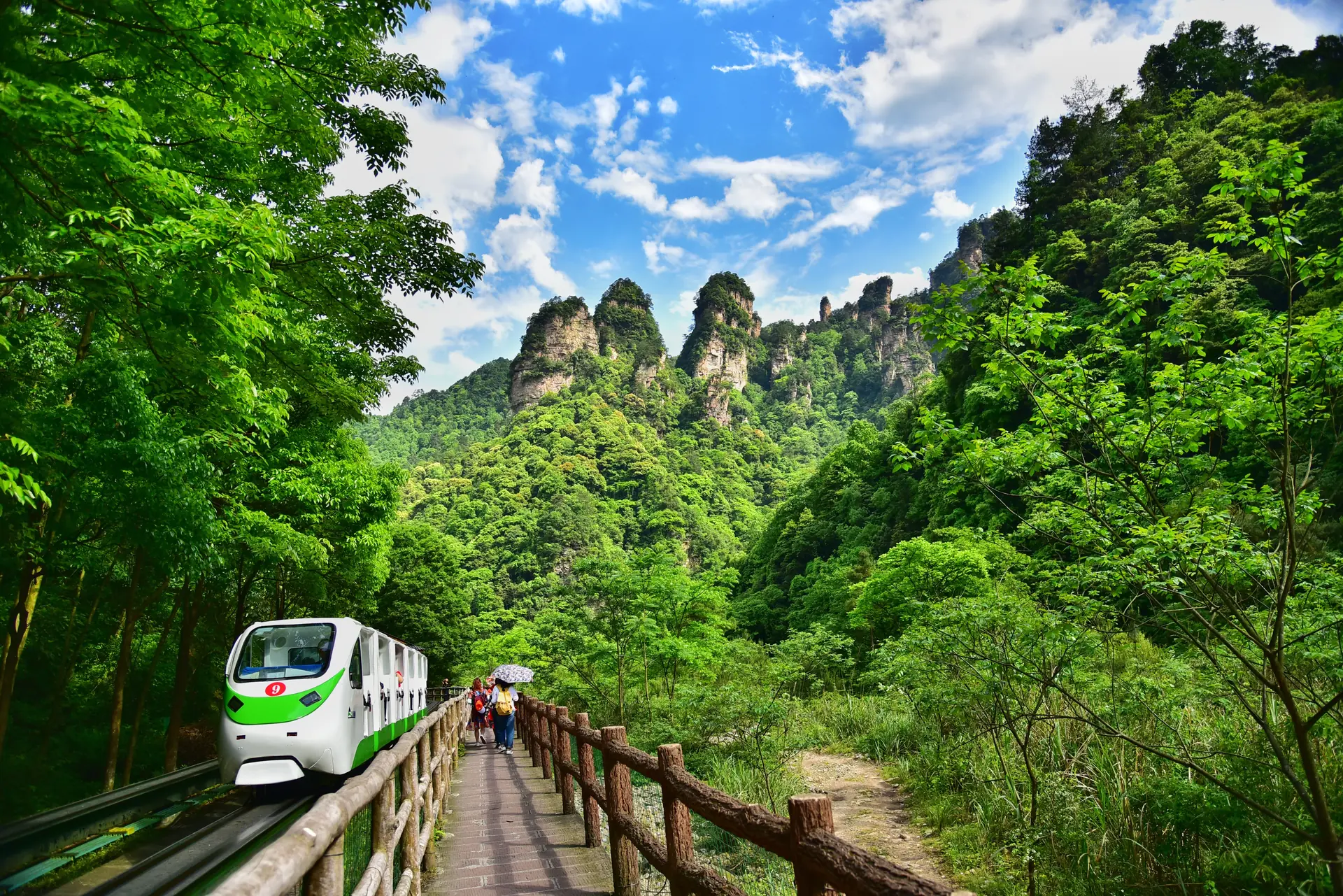
Ten-Mile Gallery (十里画廊) sits in Suoxi Valley, near the Wulingyuan side of the park. It is an easy valley-floor route where the peaks on both sides resemble a long landscape painting.
You can walk the flat path in about 30-40 minutes one way, or take the mini train if you want a relaxed ride. This is where the named formations Three Sisters Peaks (三姐妹峰) and Herb-Picking Old Man (采药老人) belong.
Three Sisters Peaks
三姐妹峰
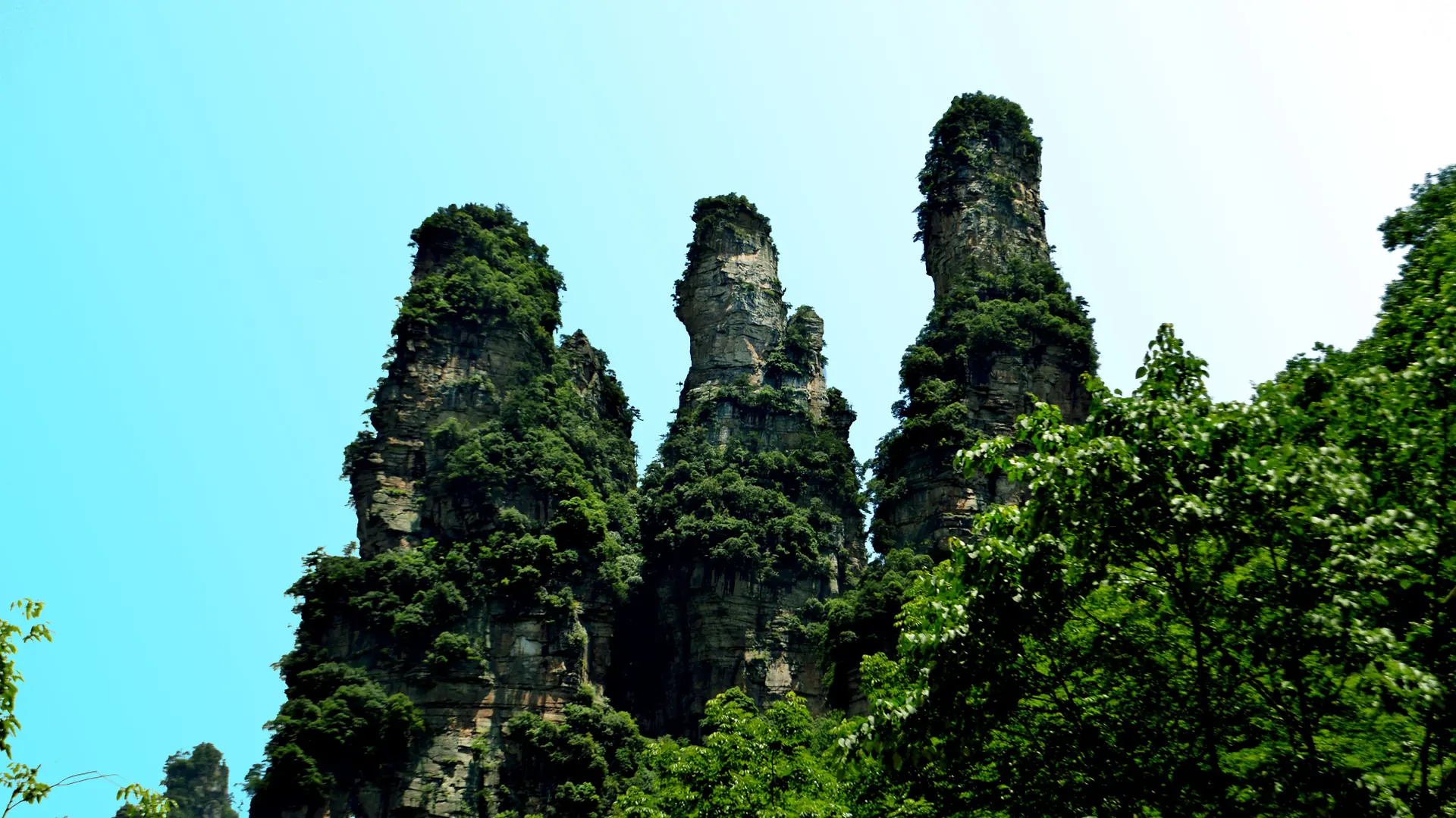
Three slim pillars rise together above the green valley, giving the formation its family-like nickname. The best view is from the walking path, where the three shapes line up clearly against the sky.
Herb-Picking Old Man
采药老人
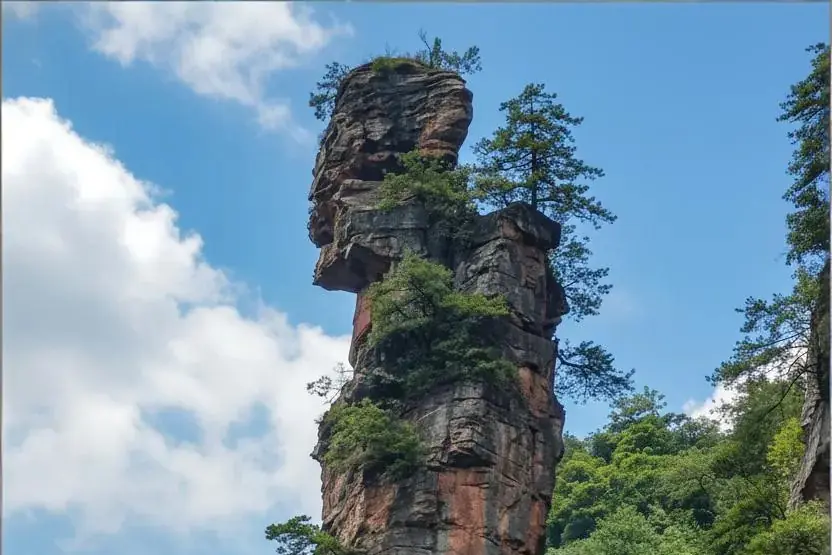
This tall pillar is named for its profile, which locals compare to an old man carrying herbs from the mountains. Look for the upper outline first; the shape is easier to recognize when you step back from the base.
Golden Whip Stream — The Valley Floor Trail
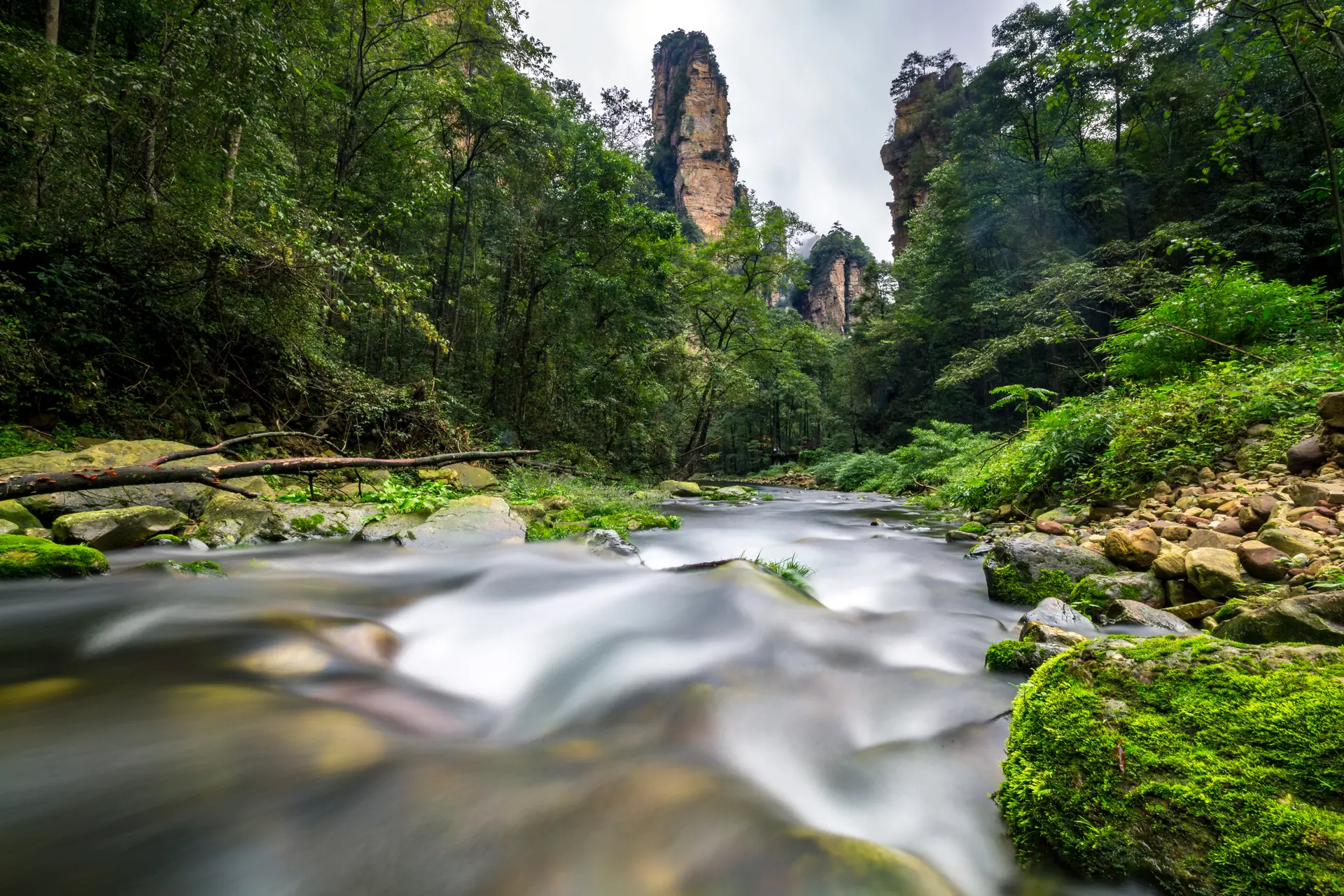
Golden Whip Stream (金鞭溪) is a 7.5-km trail along the valley floor, running from the Forest Park Gate (south entrance) all the way to the Bailong Elevator base at Shuiraosimen.
The entire trail is flat with no stairs (a handful of gentle slopes), suitable for all fitness levels. Allow 2–3 hours for the full walk.
Why walk Golden Whip Stream
At Yuanjiajie and Tianzi Mountain, you look down at the pillars. At Golden Whip Stream, you look up — and the same formations feel immensely larger and more surreal from below. The valley is laced with clear water, dense subtropical vegetation, and humid air that stays cooler than the summit even in summer.
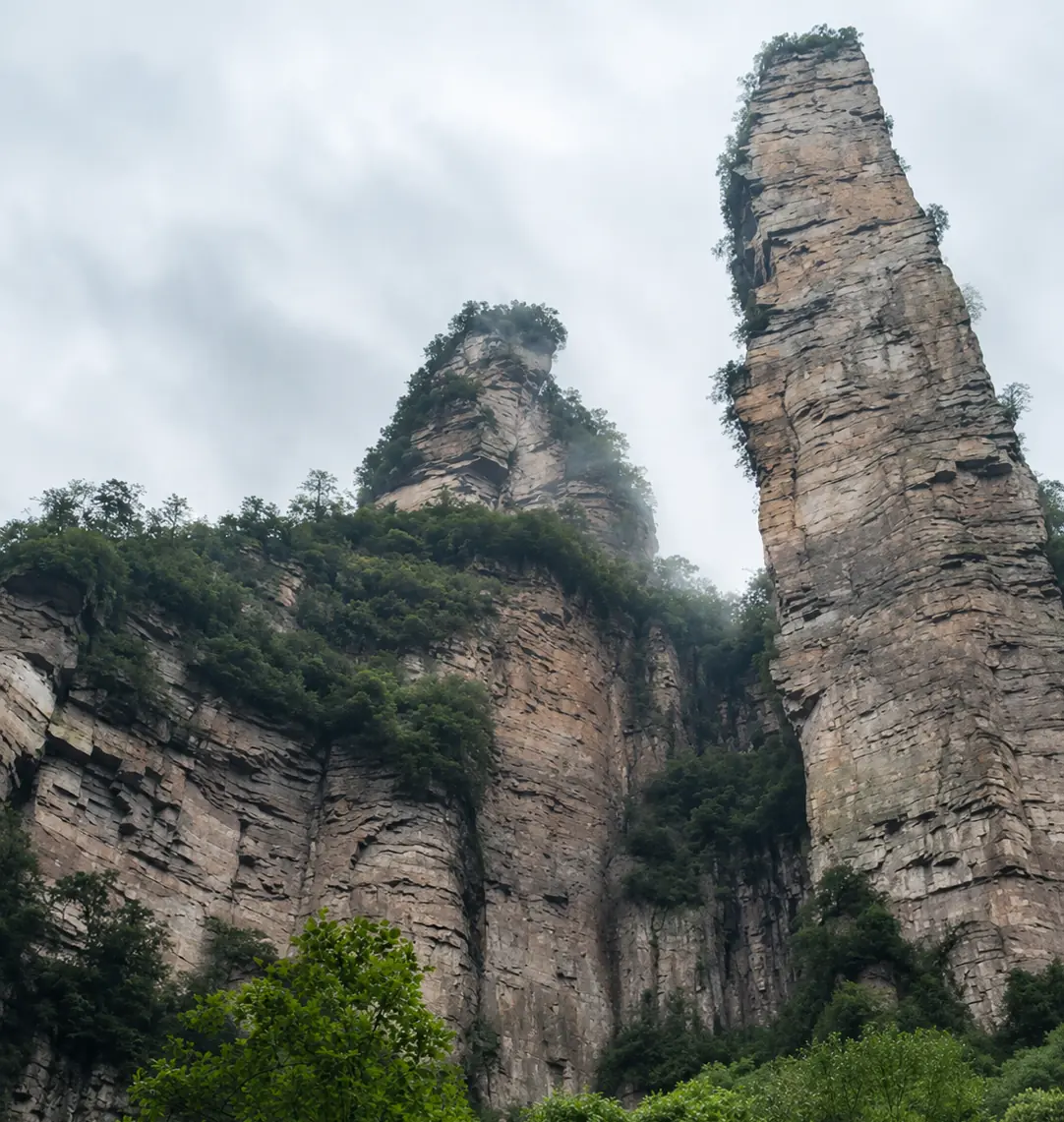
Golden Whip Rock
金鞭岩 is a roughly 400-meter standalone pillar beside the stream, and the trail's signature landmark.
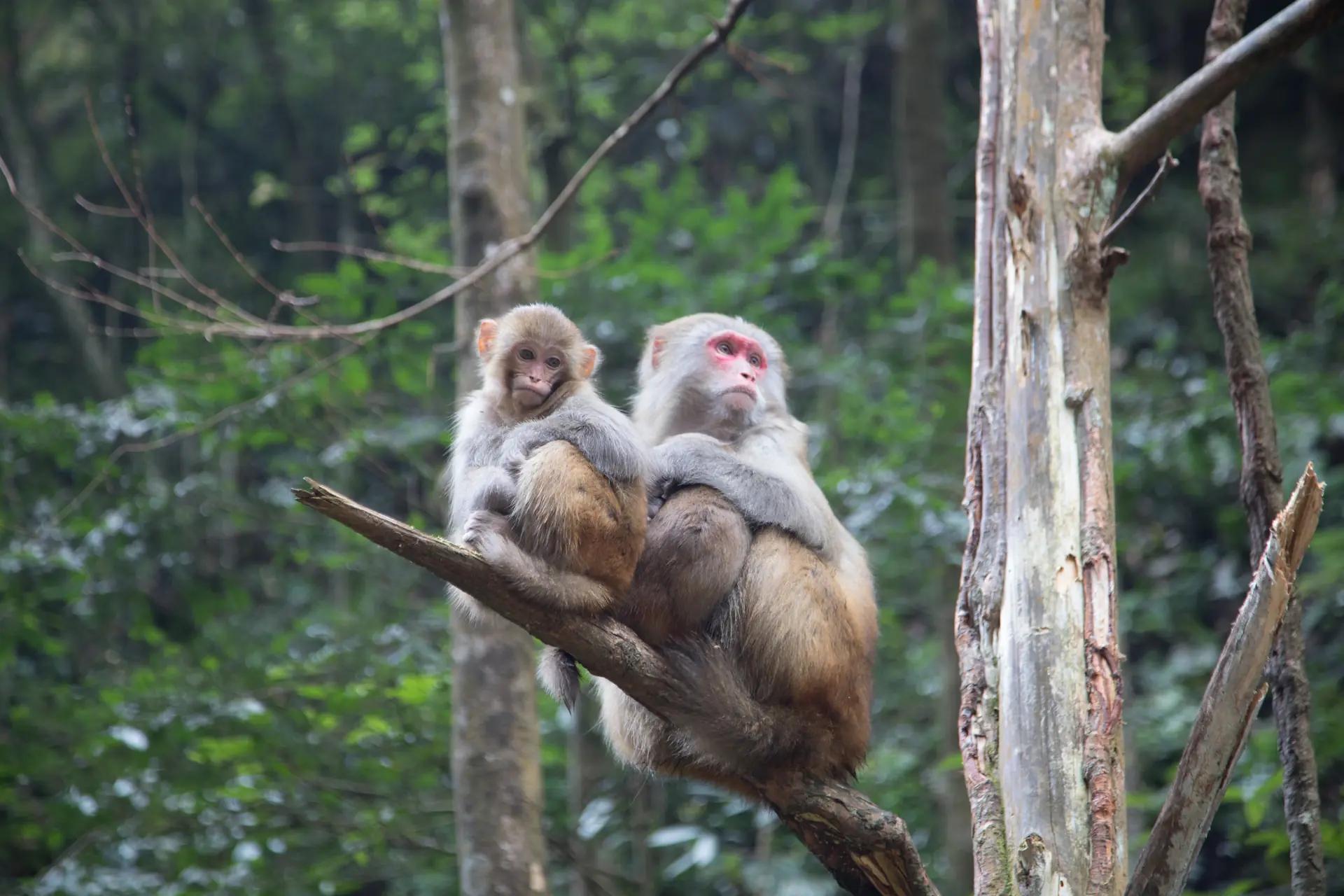
Wild Macaques
Wild macaques are common along the stream. They are not afraid of humans and can be aggressive, so do not feed them, flash food or plastic bags, or hold your phone loosely.
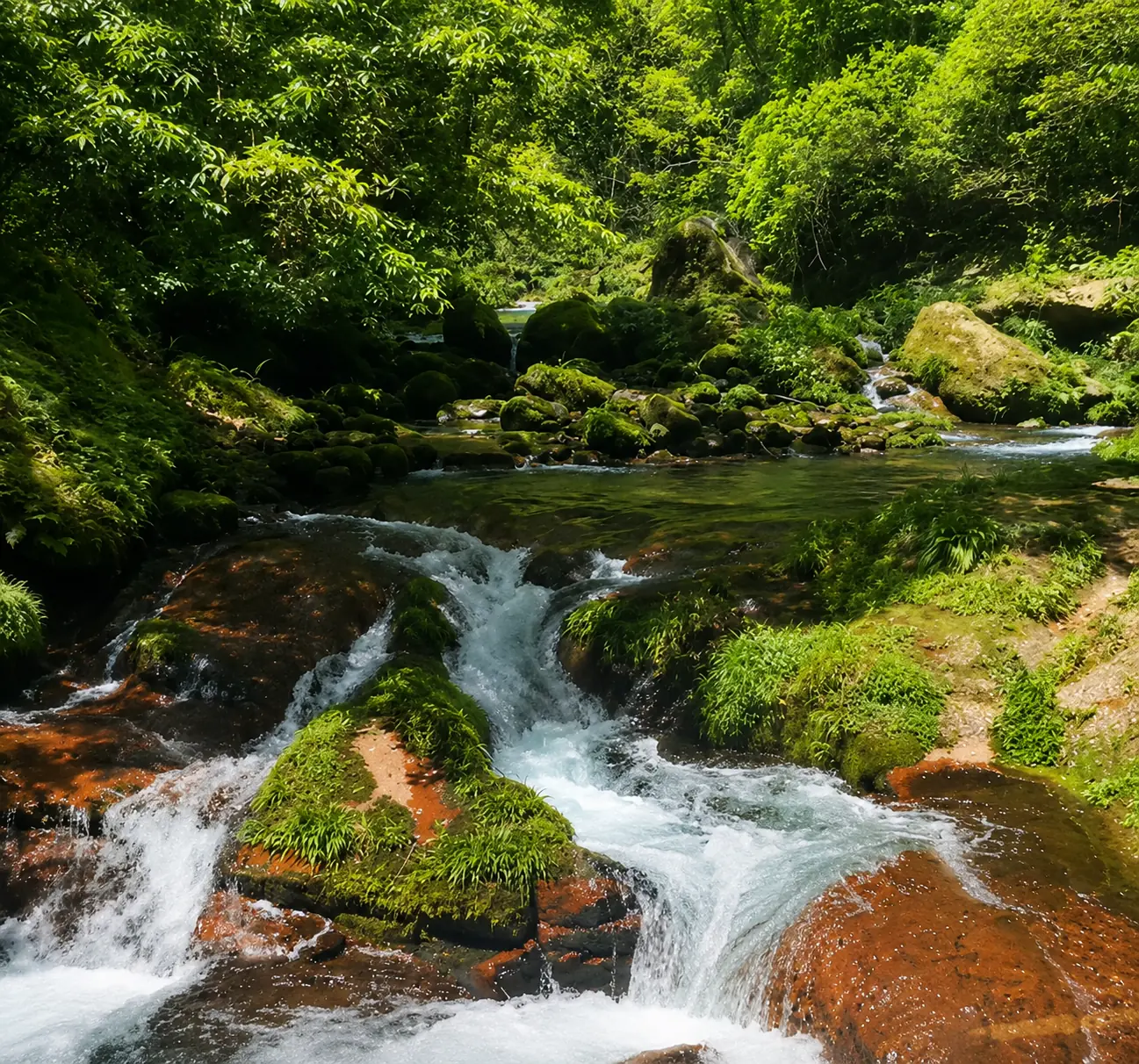
Purple Grass Pond
紫草潭 is a deep, emerald-green pool where cliff walls reflect in the still water.
Best Time to Walk
7:00–9:00 AM or after 3:00 PM, when the light is soft and crowds are thinner. Midday sun barely reaches the valley floor but brings heat and humidity. Rainy days give Golden Whip Stream a completely different character — the water runs fuller, mist wraps the pillars, and the photos are arguably better. Just watch your footing.
Golden Whip Stream Routing
Golden Whip Stream works perfectly as your first or last segment. Start from the south gate, walk the stream to Shuiraosimen, then take the Bailong Elevator up to Yuanjiajie. Or reverse it on your final day — descend from Yuanjiajie and walk out through the south gate.
Recommended 2-Day and 3-Day Routes
Essential 2-Day Route
Two days is the minimum recommended time — enough to cover Yuanjiajie and Tianzi Mountain, the two core zones.
- Enter Wulingyuan Landmark Gate- Eco-bus to Bailong Elevator base
- Bailong Elevator to Yuanjiajie- ¥65, ~2 min; then Back Garden → Enchanted Terrace → Hallelujah Mountain → First Bridge Under Heaven, ~2-3 hr
- Eco-bus to Tianzi Mountain- ~20 min; Helong Park → Imperial Writing Brush Peak → West Sea Stone Forest viewpoint, ~2 hr
- Leave by cable car or eco-bus- Tianzi Mountain Cable Car down ¥72, or eco-bus out via Tianzi Gate
- Forest Park Gate to Golden Whip Stream- Walk the valley trail to Shuiraosimen, ~2-3 hr
- Lunch, Ten-Mile Gallery, Wulingyuan exit- Snack stalls and simple restaurants at Shuiraosimen; walk or mini train ¥40 one-way; exit via Landmark Gate
- Enter through Tianzi Mountain Gate- Cable car up ¥72
- Explore Tianzi Mountain first- Reverse direction, fewer crowds; then eco-bus to Yuanjiajie
- Full Yuanjiajie circuit- Avatar Hallelujah Mountain, First Bridge Under Heaven, Enchanted Terrace, Back Garden
- Bailong Elevator down or hike to the valley- Pick elevator if tired; hike if you want a quieter descent
- Golden Whip Stream + Ten-Mile Gallery- Same as Route A Day 2
In-Depth 3-Day Route
The third day adds Yangjiajie — the highlights most visitors miss.
- Yuanjiajie + Tianzi Mountain- Same as 2-day Route A Day 1
- Yangjiajie Cable Car or walk from Yuanjiajie- Cable car up ¥76, or walk from Yuanjiajie if you want more trail time
- Natural Great Wall → Wulong Village → Tianbo Mansion- Includes Three Ghost Gates iron ladders and Sky-Reaching Ladder
- Full Yangjiajie day- ~5-6 hr; bring lunch or eat at basic summit stalls
- Golden Whip Stream + Ten-Mile Gallery- Same as 2-day Route A Day 2
Base Yourself in Wulingyuan
Whichever route you choose, stay in Wulingyuan Town — a 10-minute walk from the east gate (Landmark Gate), with plenty of restaurants and better prices than inside the park. Zhangjiajie city has more hotel options but adds 40+ minutes of travel each way.
Optional route add-on
Huangshizhai (黄石寨), if your third day has room
Huangshizhai is scenic, but it competes directly with Yuanjiajie and Tianzi Mountain for time. Treat it as a bonus viewpoint area, not a must-see replacement for the main pillar routes.
Best fit
Clear weather, spare half-day, strong knees.
Skip if
You still need Yuanjiajie, Tianzi, or Yangjiajie.
Role
A scenic extra, not a route anchor.
Planning Your Visit
Where to base yourself
Wulingyuan Town (武陵源镇) (Google | Amap) — top pick
Wulingyuan Town is the go-to base for independent travelers. Hotels and guesthouses range from ¥100–500/night, with abundant restaurant options, convenience stores, and pharmacies. A 10-minute walk to the east gate (Landmark Gate). Xibu Street (溪布街) night market makes for a pleasant evening stroll.
Zhangjiajie City
About one hour by bus from the park. More hotel chains and larger properties. Reasonable if you are arriving late by plane or train — spend the first night here and head to the park the next morning.
Tianzishan Town (天子山镇)
A small summit village with limited guesthouses. The sole advantage: sunrise without the pre-dawn commute. Dining and accommodation options are basic — best suited to photography enthusiasts chasing the sea-of-clouds experience.
Best season to visit
September-October
Best overall: crisp air, sharp pillar visibility, fewer crowds than summer. Avoid National Day Golden Week, October 1-7.
April-May
Lush spring greenery and azalea season. Rain is common, but mist can make the pillars more dramatic.
June-August
Hot, rainy, and humid; mist-wrapped pillars can be beautiful. Expect summer holiday crowds and slippery paths.
December-February
Occasional snow scenes and cheaper tickets. Trails may ice over and some transport may shut down.
Chinese New Year
Atmospheric but crowded. Avoid if your priority is quiet trail time.
Gear and preparation
- Shoes: non-slip hiking shoes or trail runners are essential; the park is full of stone steps and flagstone paths that get dangerously slippery in rain.
- Rain gear: bring a disposable poncho (¥5–10 inside the park); umbrellas are awkward on narrow trails.
- Power bank: no charging spots inside the park; your phone handles navigation, tickets, and payments.
- Food and water: snack stalls and basic restaurants exist at transfer points, but prices are 2–3× outside rates; bring your own snacks and a water bottle.
- Sun and bugs: strong UV at altitude in summer; mosquitoes in the valley.
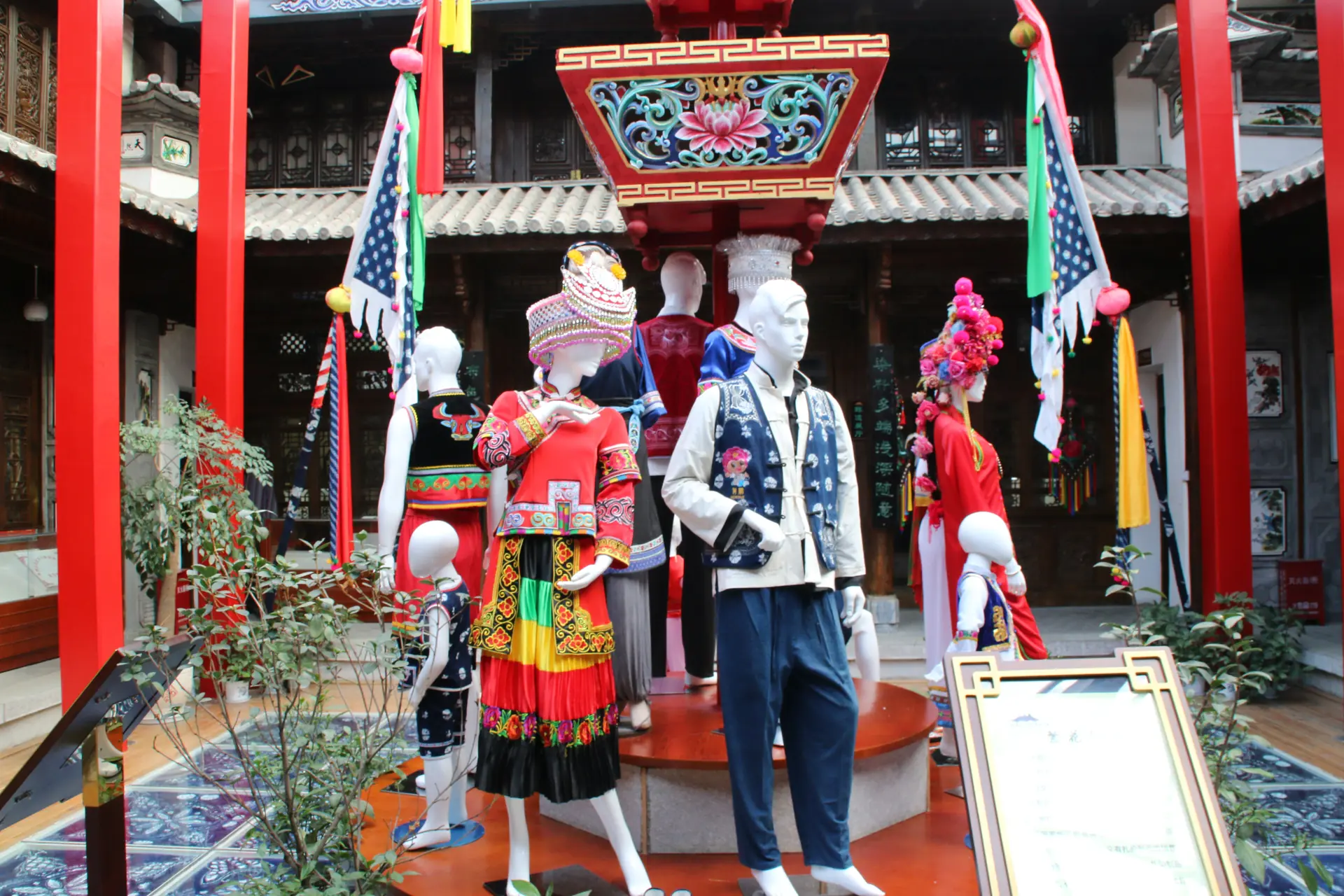
Eating and local culture
Eat in Wulingyuan, not deep inside the park
Simple meals (boxed rice, ¥20–40) are available near eco-bus stations inside the park — functional but unremarkable. Wulingyuan Town has far better options.
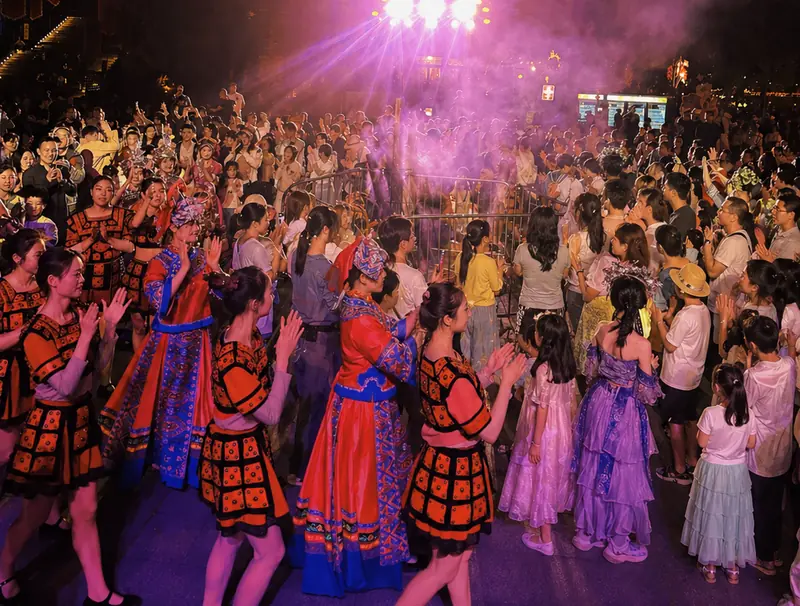
The area is home to the Tujia (土家族) ethnic minority, whose food and culture give Zhangjiajie flavors you won't find elsewhere in China. Dinner in town runs ¥40–80 per person.
Three-Pot Stew
三下锅

Zhangjiajie's signature Tujia-style dry pot of mixed meats and vegetables. It is filling, spicy, and best ordered in Wulingyuan Town after a long trail day.
Rock Fungus Stewed Chicken
岩耳炖鸡
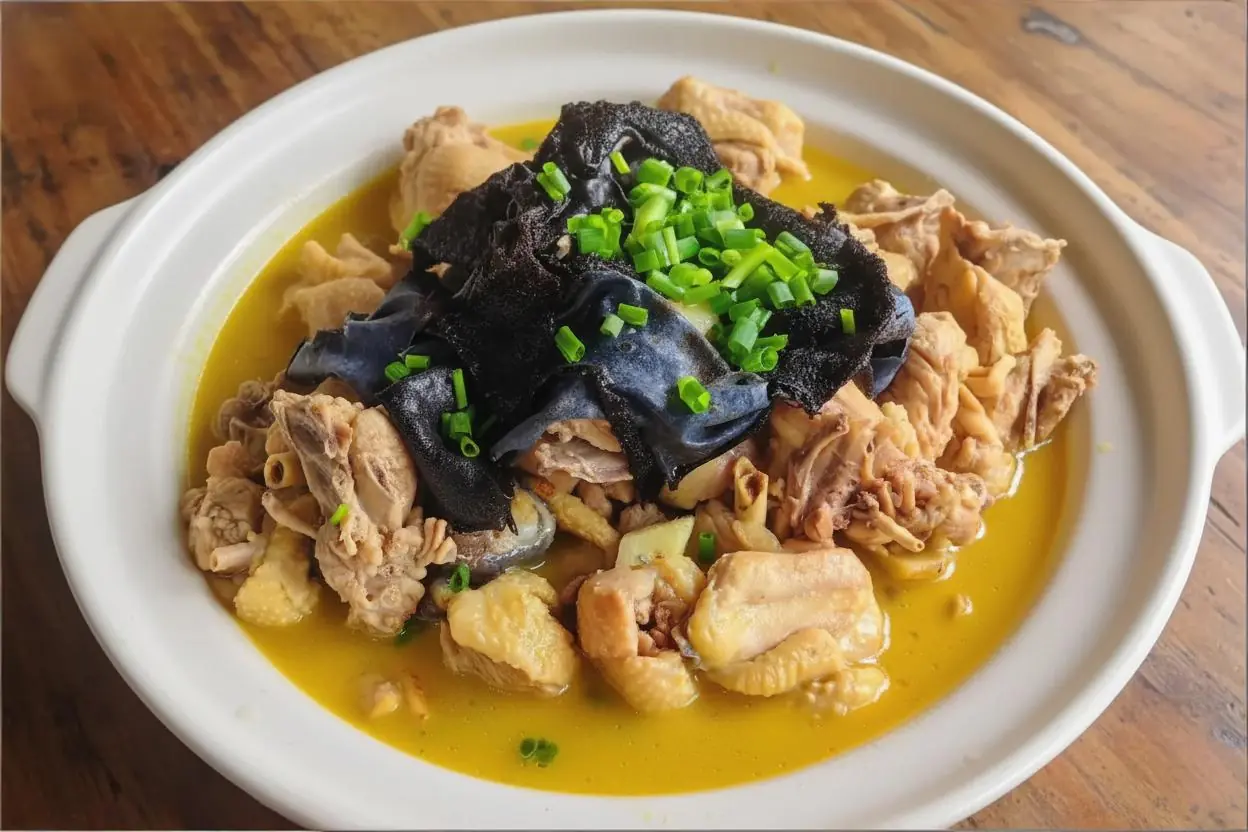
A local mountain dish built around rock fungus and chicken broth. It is milder than the dry pot, useful if you want something warm and less oily.
Other Local Orders
Local specialties also include kudzu starch noodles (葛根粉) and smoked Tujia bacon. Dinner in town usually runs ¥40–80 per person.
Payments and connectivity
Eco-buses and ticket offices accept mobile payment (WeChat Pay / Alipay); most stalls inside the park do too. 4G signal is solid on main trails and viewing platforms, but drops in parts of the Golden Whip Stream valley floor.
Language
Signage throughout the park is bilingual (Chinese/English). Staff English is limited — a translation app (Baidu Translate or Google Translate) helps with ticket questions and directions. Follow the eco-bus route signs and you will not get lost.
Taxi cards
When taking a taxi from Wulingyuan Town or Zhangjiajie city, show the relevant card to your driver.
Show this screen to your driver · 出示给司机看
请带我去武陵源标志门,谢谢。
Please take me to Wulingyuan Landmark Gate.
Best for the east entrance and most Wulingyuan-town hotels.
Show this screen to your driver · 出示给司机看
请带我去森林公园大门,谢谢。
Please take me to the Forest Park Gate.
Best for the south entrance and Golden Whip Stream start.
Beyond the Forest Park
The Zhangjiajie area has more than just the National Forest Park. If you have an extra day or two, these are worth considering:
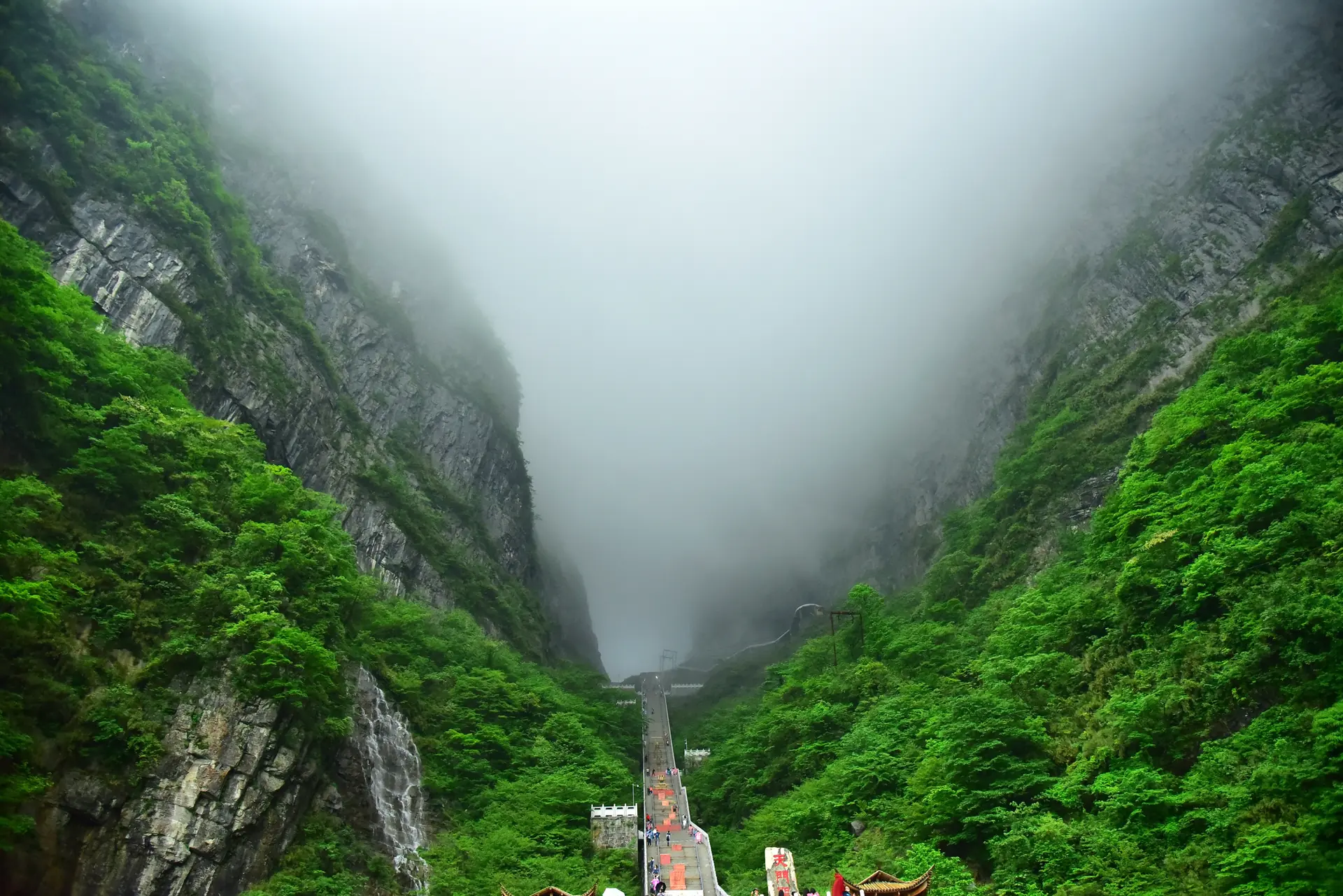
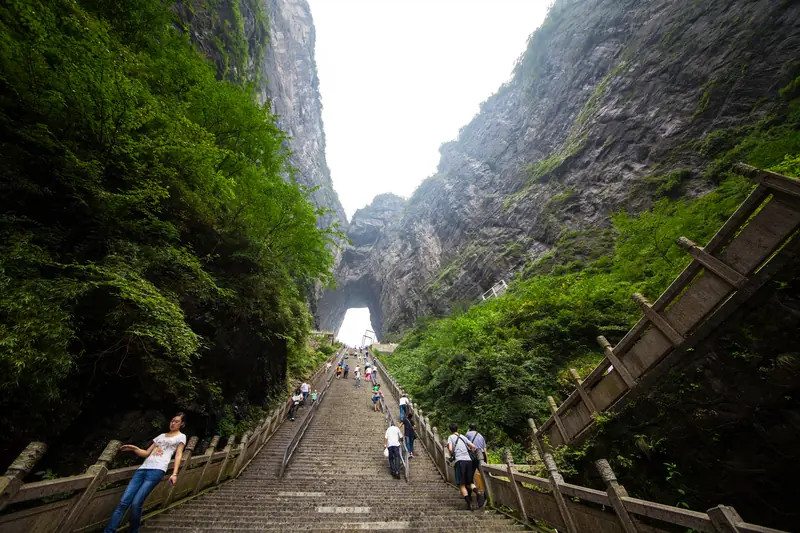
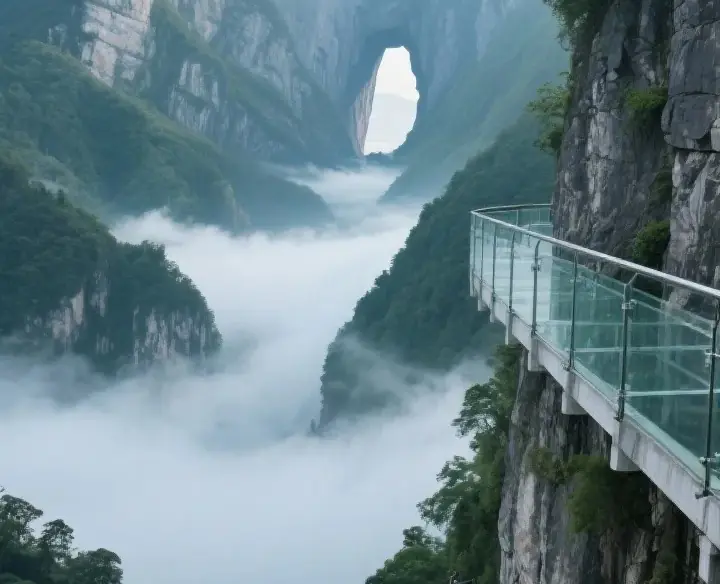
World's longest cable car (7,455 m), a natural arch via 999 steps, and glass skywalk at 1,400 m. Tickets ¥278–308. One full day.
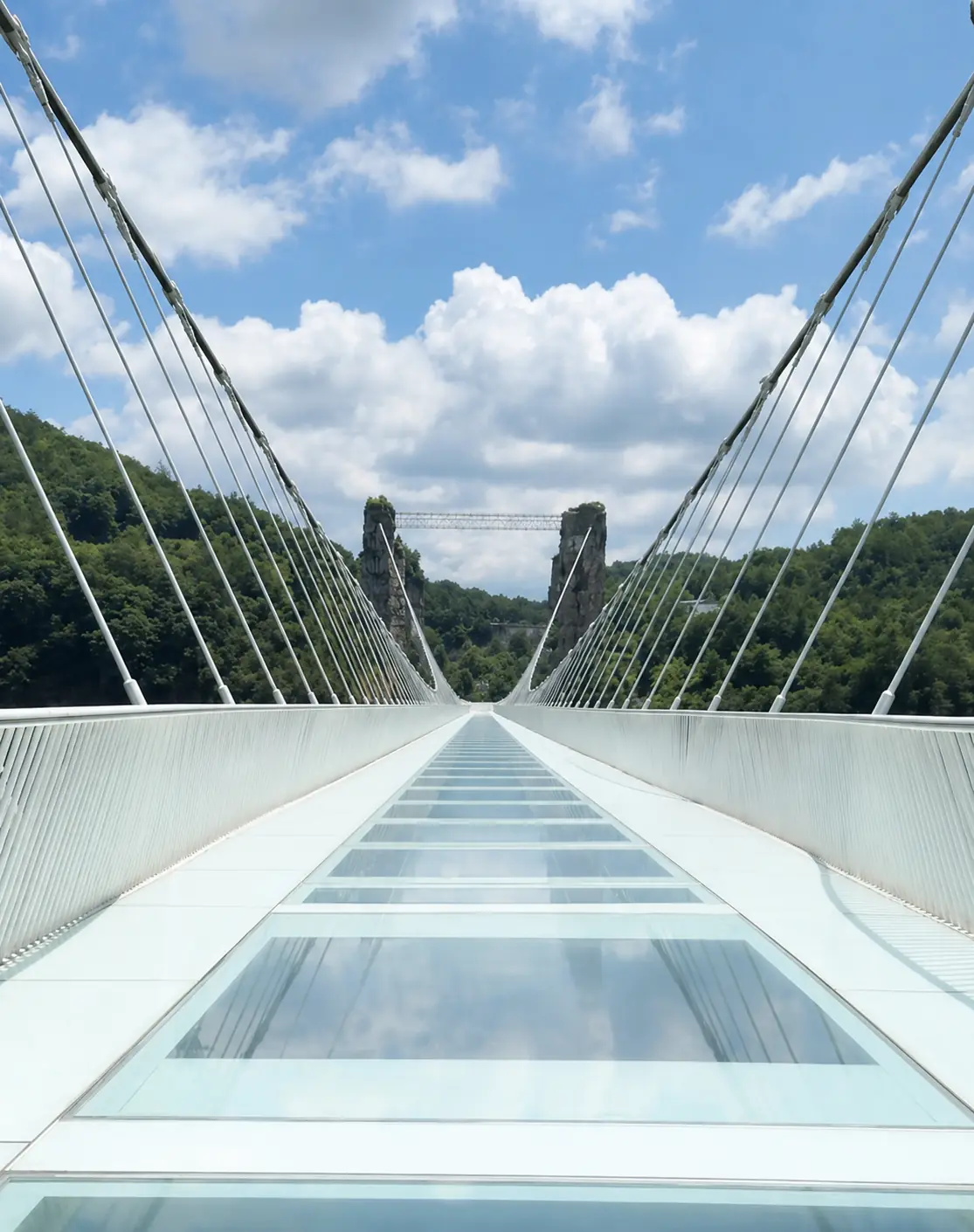
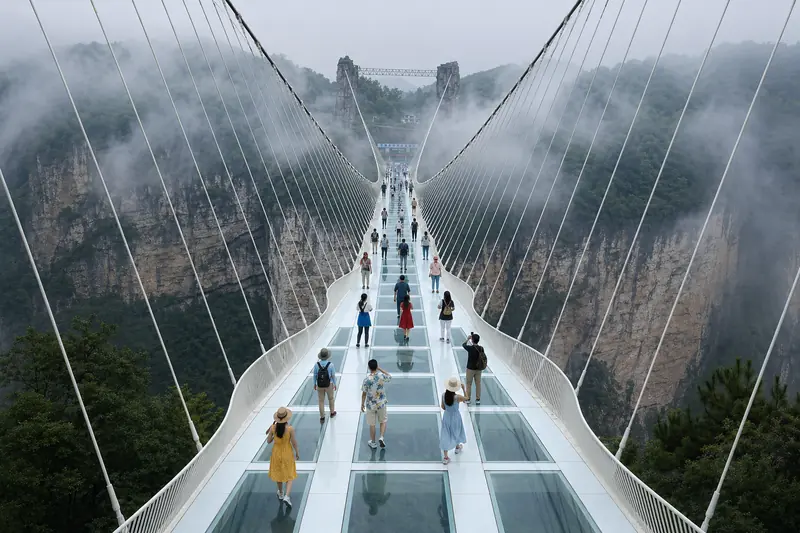
430 m glass bridge, 300 m above the canyon. Pair with Tianmen Mountain for an adrenaline double-header. Tickets ¥128–218.
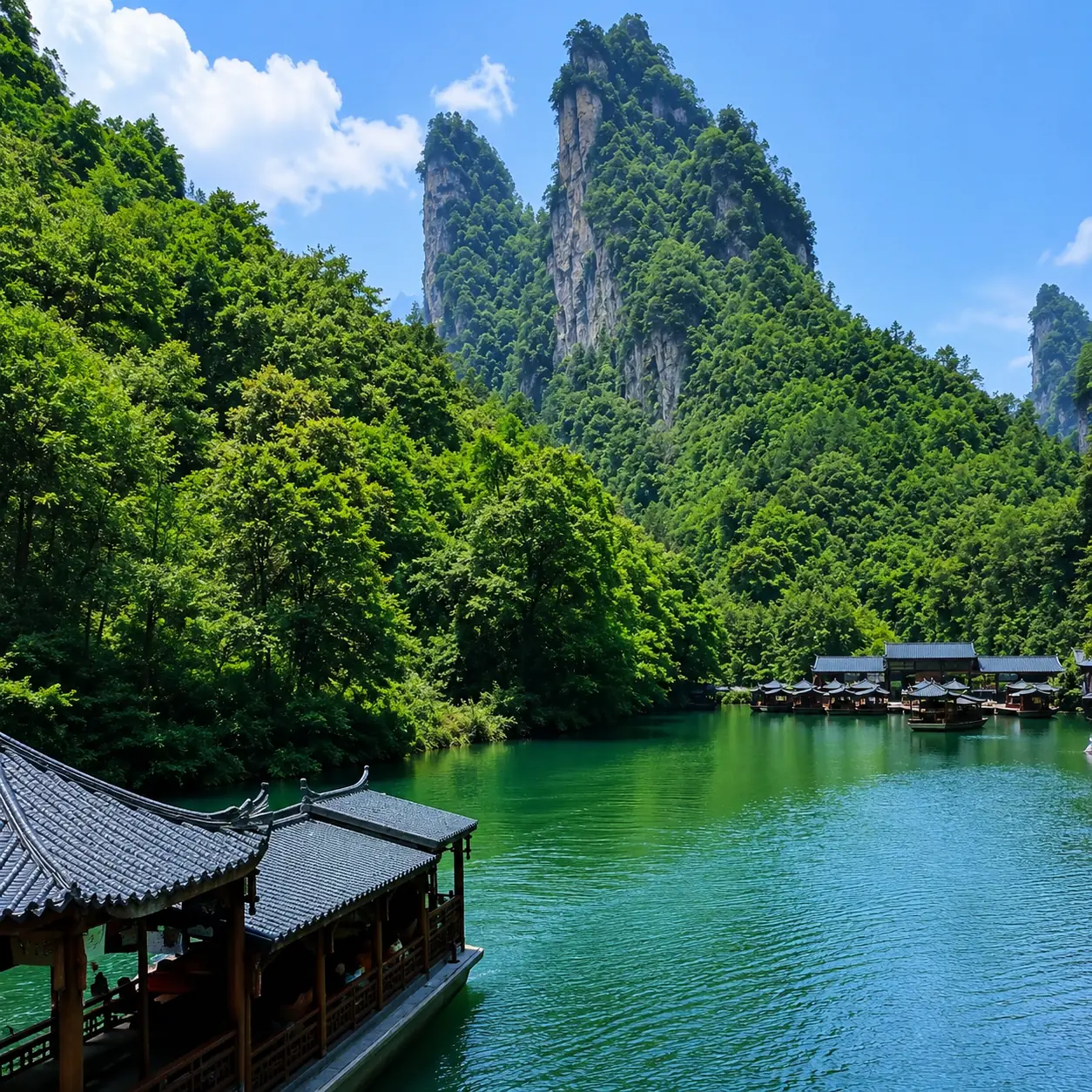
Mountain lake boat ride between cliff walls — ink-painting scenery in morning mist. 1.5–2 hours. Tickets ~¥96.
If you combine these with the Forest Park, give each major attraction its own day where possible. The mistake is trying to force Tianmen Mountain, the Glass Bridge, and Wulingyuan into the same dawn-to-dark marathon.
Frequently Asked Questions
Two days minimum to cover Yuanjiajie and Tianzi Mountain. Three days lets you add Yangjiajie and the full Golden Whip Stream walk. One day is technically possible but extremely rushed — not recommended.
Sources checked for this guide
- UNESCO World Heritage Centre: Wulingyuan listing
- Hunan Provincial Government notice on the Wulingyuan one-ticket system: official ticket policy notice
- Hunan Government English news on Zhangjiajie tourist bus lines: tourist bus routes
- ZhangjiajieGuide live ticket page: ticket and transport cross-check
Beyond This Guide
Before you lock the Hunan leg:
- Tianmen Mountain: cable car, glass skywalk & 999 steps — plan the separate downtown mountain day
- Zhangjiajie Food Guide — pick easy dinners after long trail days
- Fenghuang Ancient Town Guide — add the classic western Hunan overnight side trip
- China high-speed rail guide — connect Zhangjiajie with Changsha, Fenghuang, or a longer China route
- China mobile payments: Alipay & WeChat Pay — set up QR payments before tickets, taxis, meals, and mini-programs become urgent
Zhangjiajie rewards those who plan ahead — from choosing the right entry gate to timing your Bailong Elevator ascent before the tour buses arrive. If you are combining it with Tianmen Mountain, Fenghuang Ancient Town, or a wider Hunan itinerary, our planning specialists can help you compare route choices and improve your customer-owned day-by-day plan around your dates, pace, and weather backup options.
© gochinafreely.com — Original guide by Go China Freely.