Visit basics
Boat, sightseeing-vehicle and wall prices are separate from the free park; check the latest notice before relying on a paid option. See transport choices
Plan the visit
A 1,500-Year-Old Royal Lake, Free to Walk Into
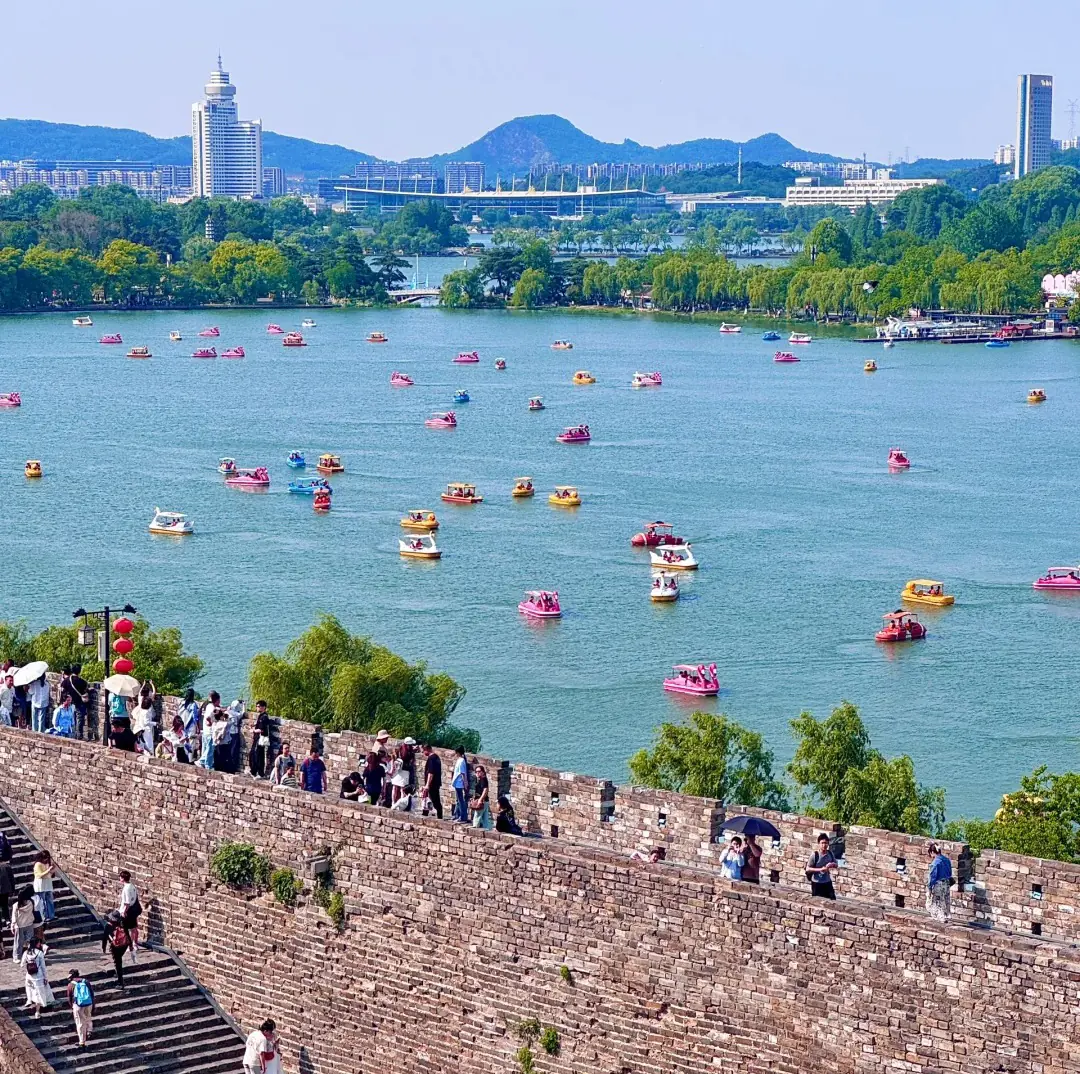
Five islets, the Ming city wall and Purple Mountain form Xuanwu Lake's defining cityscape.
Royal lake, everyday park
A historic lake that still works as Nanjing's living room
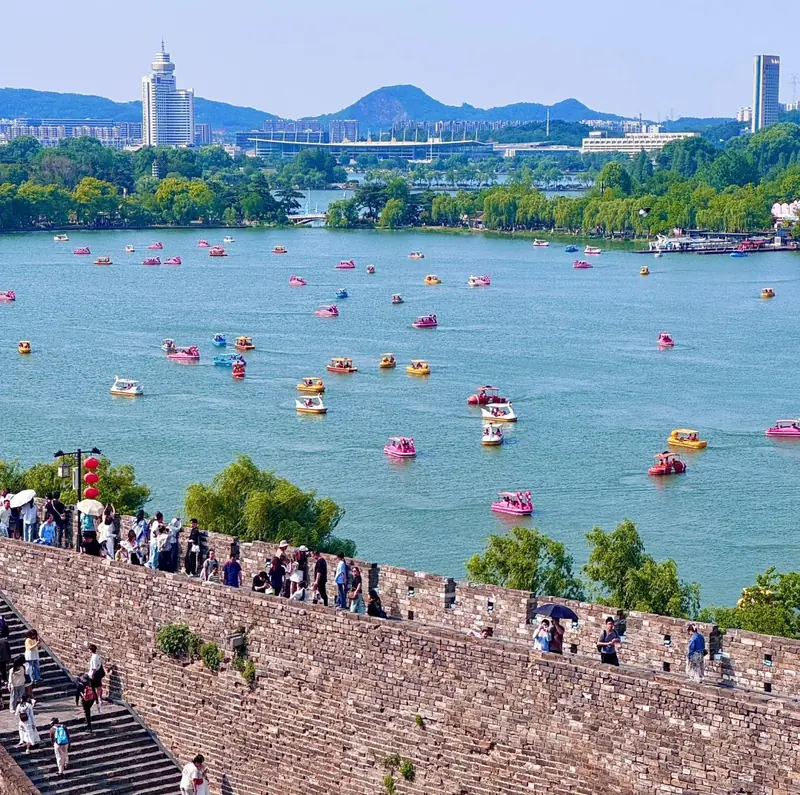
Xuanwu Lake (玄武湖) sits beside Nanjing Railway Station, framed by the Ming city wall and Purple Mountain. Five connected islets, seasonal gardens and a 24-hour ring road make it both a short layover walk and a half-day Nanjing route.
The West Lake comparison is natural, but the experience is less ceremonial: dawn tai chi, runners, kite-flying families, wedding photos and quiet benches all share the shoreline.
The documented timeline
Six Dynasties
Official park history records Xuanwu Lake as a royal lake and garden across the Six Dynasties period.
Ming dynasty
The lake became the national archive for the Ming yellow household registers, a restricted state function.
1909–1928
Xuanwu Gate was completed in 1909; official history dates the formal public park opening to 1928.
Since 2010
The scenic area has operated with free public admission, while boats, vehicles and the city wall remain separate choices.
Older guide copy described a naval training ground, a Ming Xiaoling “front pool,” nearly 300 years of complete exclusion and an early-royal-lake superlative. Current official material does not verify those exact claims, so the documented park and archive milestones above are the safer planning context.

The five islets are linked by bridges inside the larger 9.8-kilometre ring road.
Read the lake in layers
Huanzhou (环洲), Yingzhou (樱洲), Liangzhou (梁洲), Lingzhou (菱洲) and Cuizhou (翠洲) connect by bridges inside the ring road. From the Taicheng (台城) wall section, the lake, islets and Purple Mountain line up in one view.
Use the islands for gardens and short walks; use the outer ring road for the full lakeside circuit.
Getting There and Getting Around
Choose the gate that matches the next task
Xuanwu Lake Park (玄武湖公园) (Google | Amap) has several gates; there is no reason to cross town for the “main” one if another entrance fits your route.
Entrances
Xuanwu Gate (玄武门)
Downtown and Metro Line 1
Use Xuanwumen Station Exit 3, then follow signs to the south entrance. This is the clearest start for Huanzhou and the island sequence.
Jiefangmen / Taicheng
Jiming Temple and city-wall route
Approach from Jiming Temple (鸡鸣寺), walk the Taicheng wall section if it suits the day, then descend into the lake's southwest corner.
Nanjing Station side
Short visit before or after a train
The north-side lakeshore is a short walk from Nanjing Railway Station. Use it for a layover visit without doubling back through downtown.
Getting Around Inside
Walking is the dependable default. Paid boats and sightseeing vehicles are useful choices, but their routes, weather limits and selected-date notices matter.
Walking
The official outer ring road is about 9.8 km. A highlights walk through selected islets is much shorter; allow roughly 1.5–2 hours as an editorial pace, not an official loop time.
Cycling
Do not rely on dockless shared bikes being available or permitted inside. Follow the signs at your entrance and use walking or an official sightseeing vehicle if access is restricted.
Boats and ferry
Current official boat prices run from ¥130 to ¥200 per boat-hour by craft; the one-way ferry is ¥20. Standard service is 8:30–17:00 and changes with weather and notices.
Sightseeing vehicles
The published full-ring mini-train is ¥50, one stop ¥10, and the one-stop tour ¥30. Products and operating times vary by route, so confirm the board before paying.
Taxi fallback
Show this screen to your driver · 出示给司机看
你好,请带我去玄武湖公园玄武门,谢谢。
Hello, please take me to Xuanwu Lake Park, Xuanwu Gate, thank you.
Address: Xuanwu Lane 1, Xuanwu District (玄武区玄武巷1号). Use live traffic time rather than the older fixed ten-minute estimate.
The Five Islands, Ranked
Choose by garden and season
If time is tight, start with Liangzhou and Yingzhou, then add Huanzhou. Lingzhou and Cuizhou are quieter extensions rather than mandatory completions.
#1 Liangzhou (梁洲)
Bonsai, azaleas and seasonal exhibitions
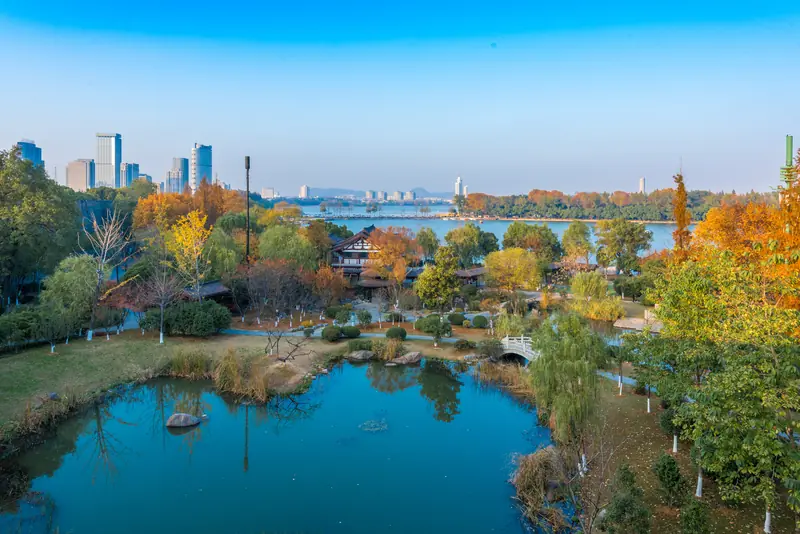
The Jinling Bonsai Garden holds nearly 1,000 bonsai across more than 30 species. Lansheng Tower remains a visual landmark, but do not plan around climbing it unless current access is posted. Azaleas are a spring target; the chrysanthemum program depends on that year's notice.
#2 Yingzhou (樱洲)
Cherry blossom and lotus priority
About 4,300 cherry trees make this the core spring stop, with bloom timing varying by weather. In summer, lotus ponds replace the pink canopy as the island's main visual reason to visit.
#3 Huanzhou (环洲)
Willows, rockery and the south-gate entry
“Misty Willows of Huanzhou” (环洲烟柳) gives the island its classic spring identity. The rockery-waterfall area and Guo Pu's Mound (郭璞墩), traditionally associated with the Eastern Jin scholar, add compact stops close to Xuanwu Gate.
#4 Lingzhou (菱洲)
Open water and Purple Mountain angles
“Mountain Mist of Lingzhou” (菱洲山岚) describes the southeast view toward Purple Mountain. It is a good photography branch when reflections and a slower shoreline matter more than gardens or buildings.
#5 Cuizhou (翠洲)
The quiet, planted finish
Pine, cypress, bamboo and willow create the least attraction-led island. Choose it for sitting, reading or extending the walk rather than for a landmark checklist.
Four views, one lower-weight gallery
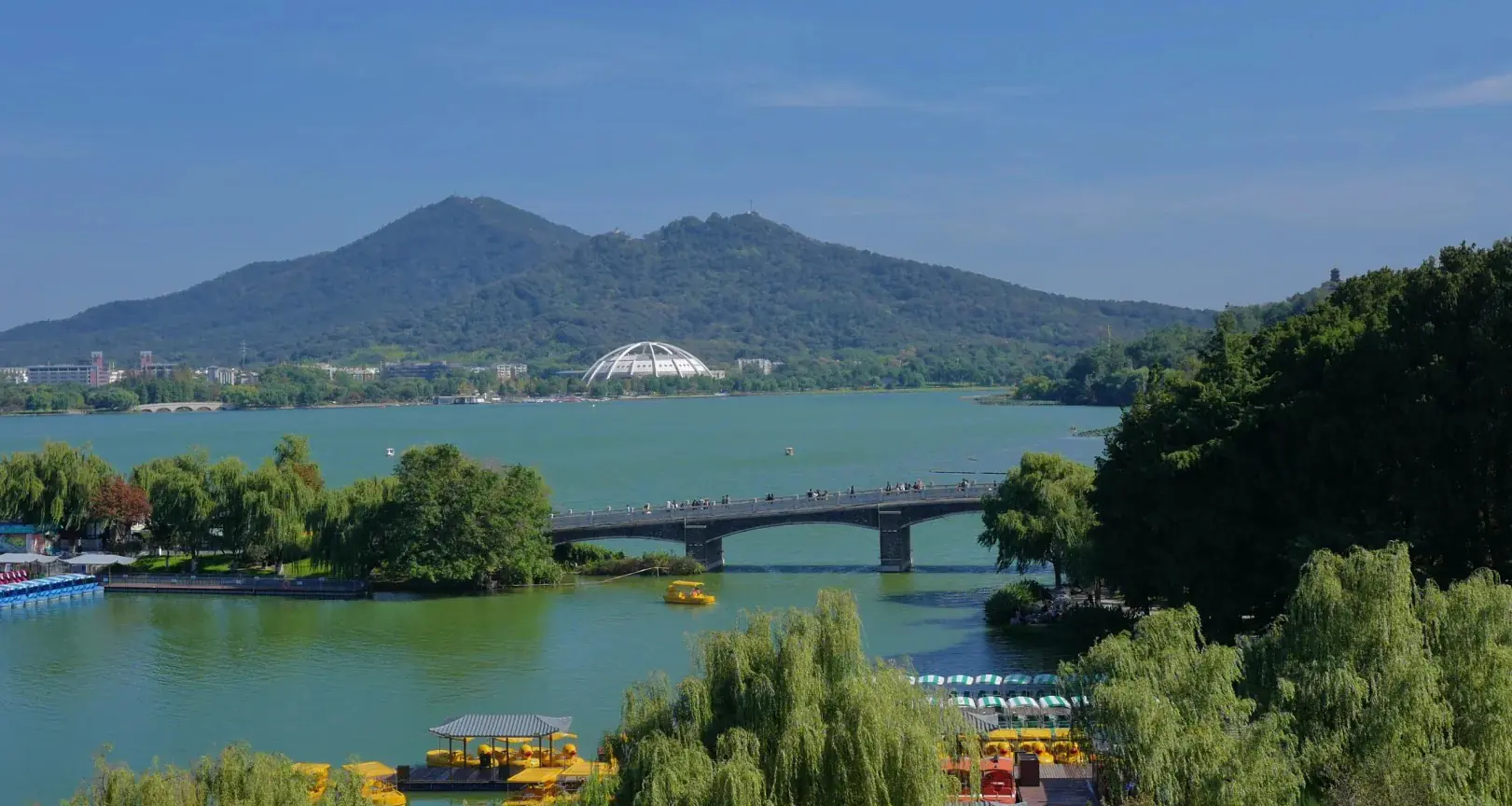
Liangzhou. Frames lake water, garden buildings and Purple Mountain; tower access can change.
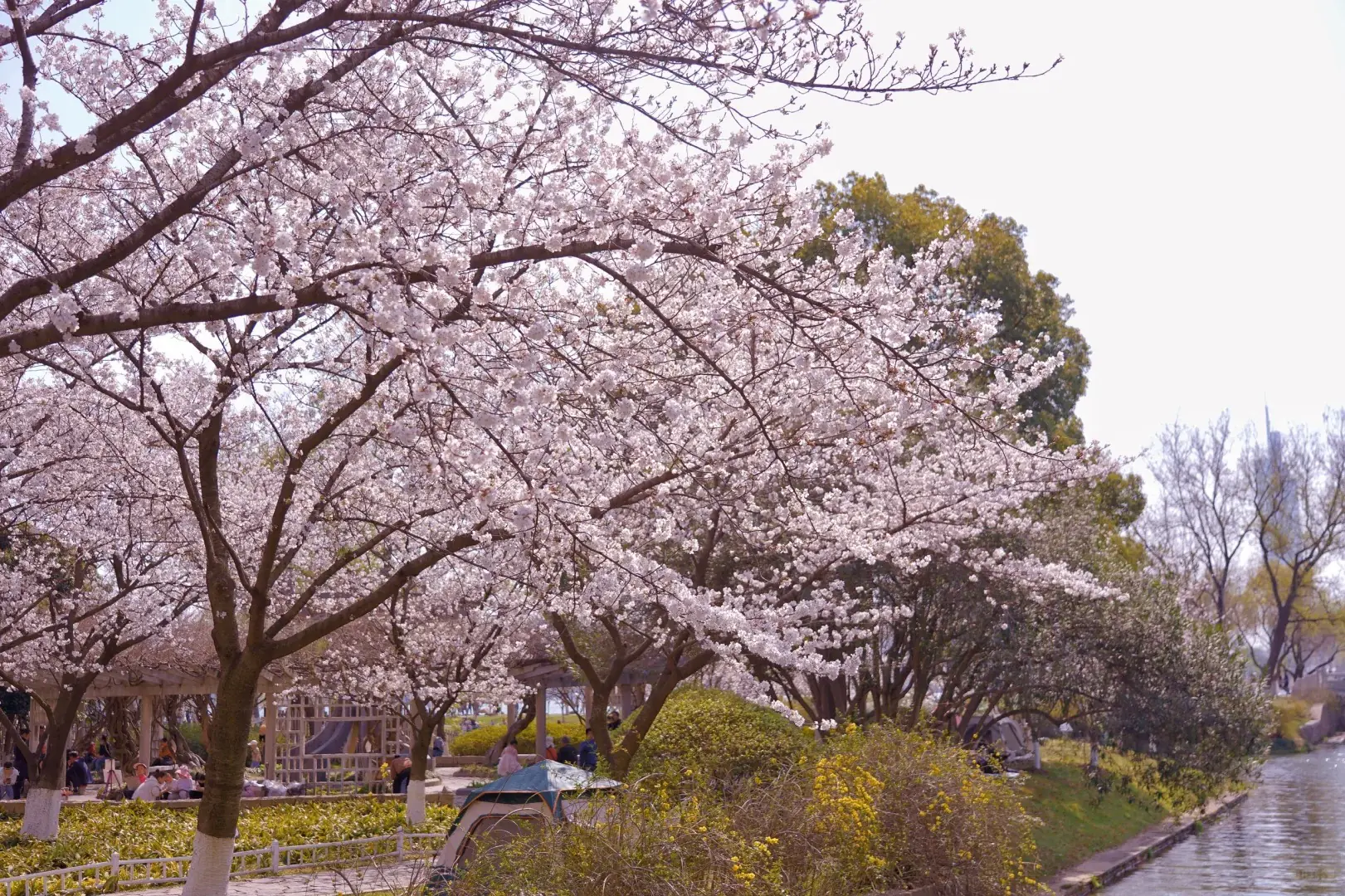
Yingzhou. Prioritise this island when its nearly 4,300 cherry trees are in bloom.
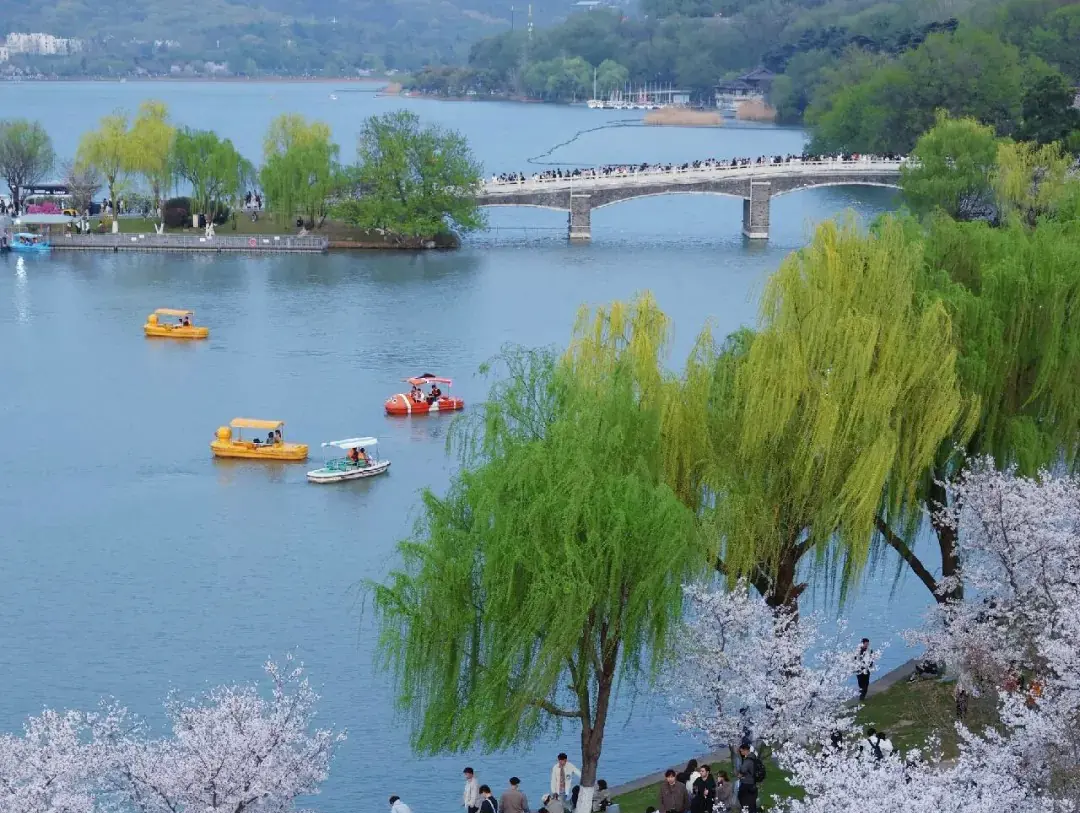
Huanzhou. Its willow-lined embankment gives the south-gate side its characteristic spring scene.

Lingzhou. The quieter branch for open-water reflections and Purple Mountain views.
Only two hours?
Prioritise Liangzhou, Yingzhou and Huanzhou. Treat Lingzhou and Cuizhou as optional extensions so the route stays a park visit, not a five-card completion exercise.
When to Go: Season by Season
Best overall choice
Choose spring for flowers, autumn for easier walking
Bloom and exhibition dates move with weather and annual programming. Use these seasons to choose the experience, then check the current park notice and forecast.
Spring (March–May)
Cherry, azalea and misty-willow season
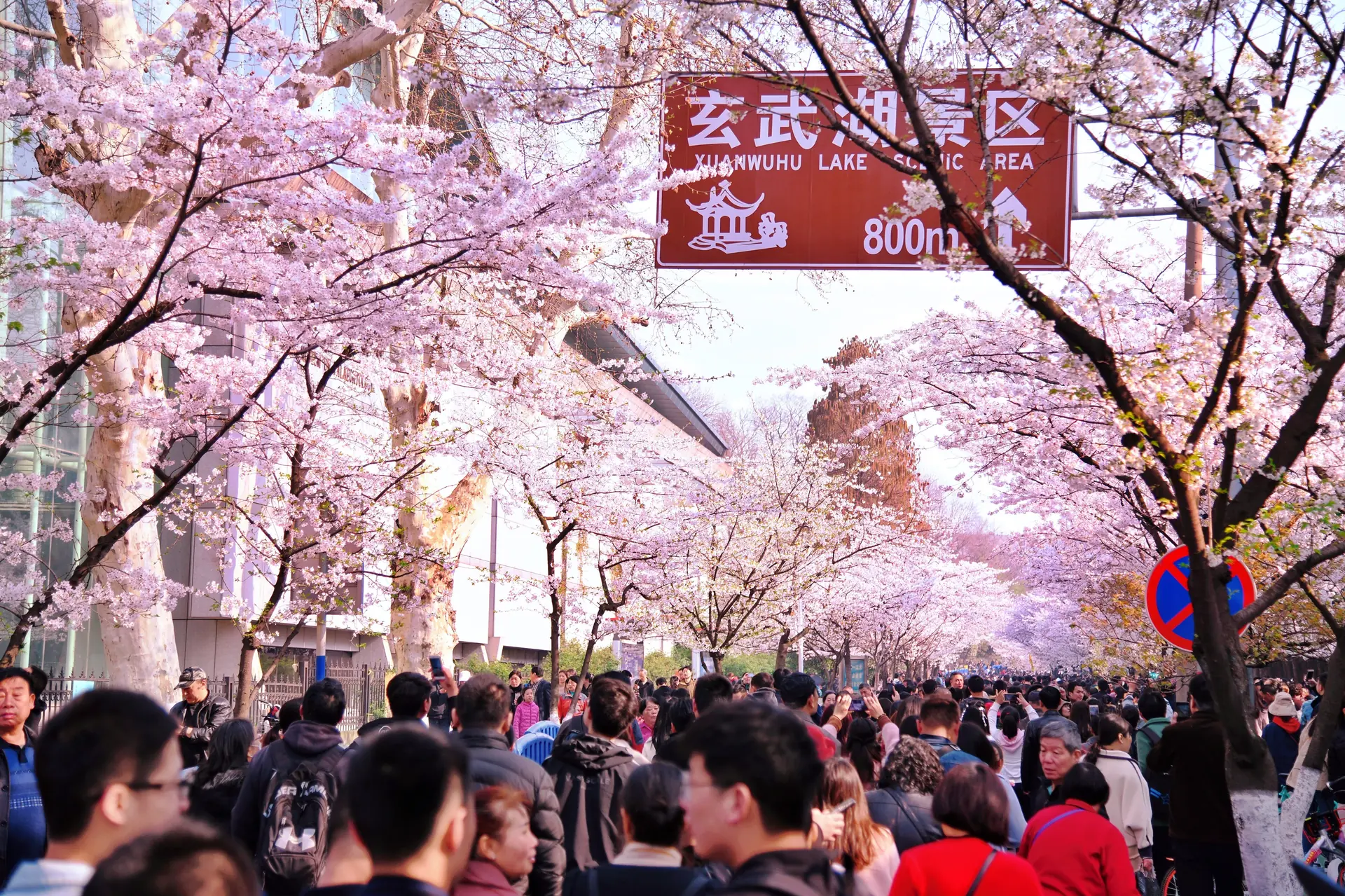
Yingzhou's cherries are typically the first target, followed by Liangzhou azaleas and Huanzhou willows. Jiming Temple's cherry avenue can fit the same walking line, but exact bloom overlap is never guaranteed. The earlier 15–25°C daytime range is useful only as broad planning context; use the live forecast.
Summer (June–August)
Lotus and late-day lakeside walks
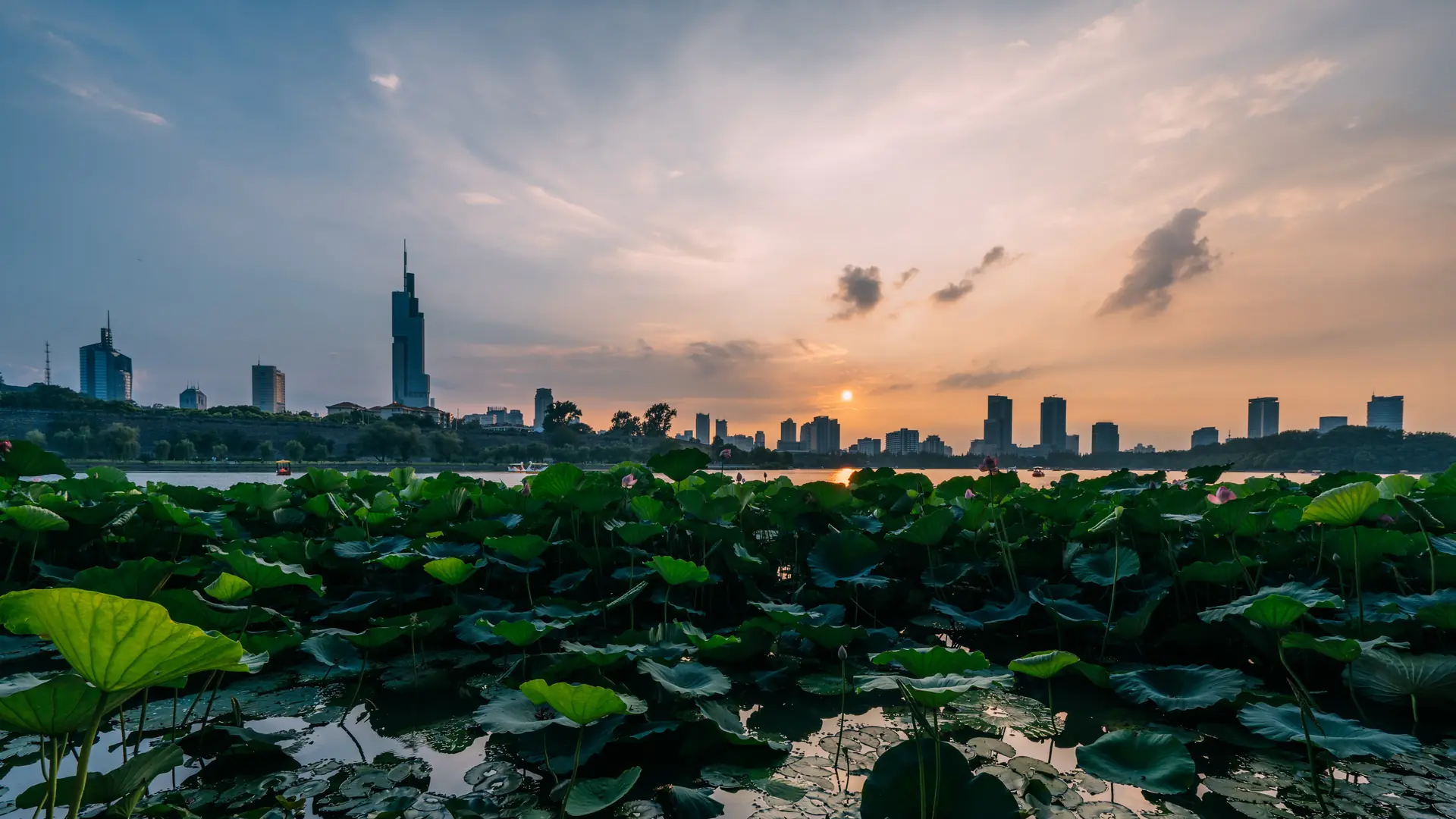
Yingzhou's lotus ponds are the visual reason to come. The ring road remains a useful evening route, while the five-islet gates follow their posted schedule and weather notices.
Summer heat changes the route
Nanjing can exceed 35°C in July and August. Start near the 6:00 islet opening or shift the walk later, carry water and stop if heat symptoms appear; check official heat alerts instead of relying on the older fixed 35–40°C wording.
Autumn (September–November)
Chrysanthemums, foliage and low light

Liangzhou is the seasonal anchor when a chrysanthemum exhibition is announced; Purple Mountain foliage and low-angle light strengthen the wider views. Do not assume the old “tens of thousands” display count or fixed October–November dates without that year's notice. The earlier 15–25°C range is only a rough planning guide.
Winter (December–February)
Wintersweet, bare views and possible snow
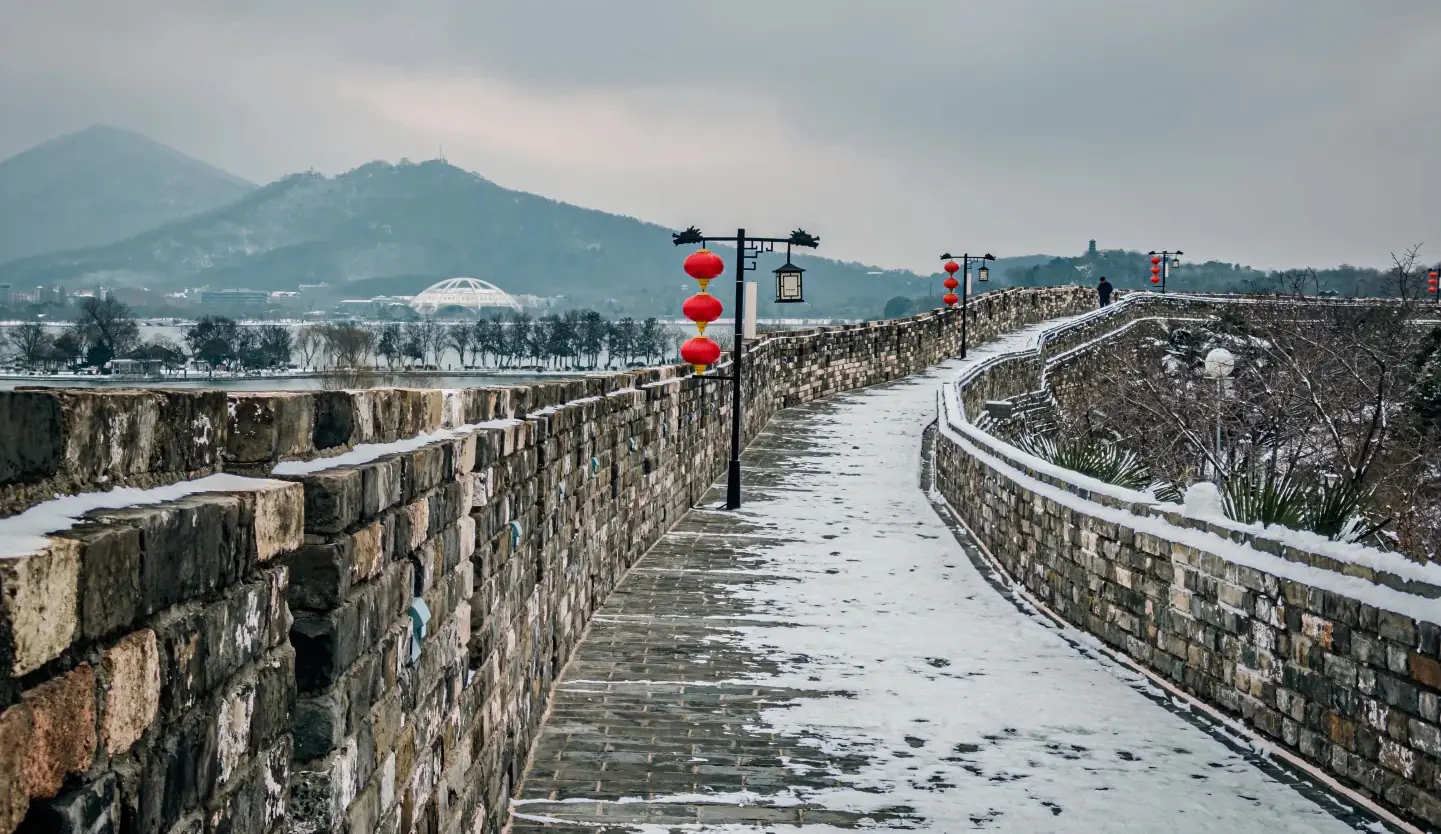
Wintersweet (腊梅) on Huanzhou and Liangzhou adds yellow colour against bare branches. Snow can transform the lake-wall-mountain view, but it is not dependable; the older five-to-ten-day and “most-shared image” claims are not verified. Expect damp cold and check the live forecast rather than treating 0–8°C as a promise.
Walk the Ming Wall Above the Lake

The Taicheng wall frames the lake islets and Purple Mountain; check the selected-date entry notice before building the day around it.
The wall is a separate admission decision
Taicheng turns the lake into one layered city view
Taicheng (台城) (Google | Amap) gives a higher line over the islets, Purple Mountain and old-city roofs. Treat it as an add-on to the free park, not part of the same admission.
Published section price
¥30
Shence Gate–Taiping Gate section; credential-based concessions follow the current official rules.
General hours
8:30–17:00
Selected-date notices, maintenance and weather can override the general listing.
How to Get There
From Jiming Temple's north side, follow Jiefangmen Road to the Taicheng scenic-area entrance. The old five-minute estimate is a useful orientation only; follow the live map and entry signs.
The previous guide listed ¥15 student/senior admission and free entry for under-18s and over-70s. Eligibility and documents can change, so use the current official concession page instead of those old categories.
What You'll See
Below: the five green islets and their bridge connections.
Across the lake: Purple Mountain's ridgeline.
Behind: Nanjing's old-city roofs and Jiming Temple.
Late light can be rewarding, but the old fixed 5–6 PM “best sunset” claim ignores seasonal sunset time and closing rules. Check both before choosing an evening slot.
The Classic Half-Day Route
Jiming Temple → Taicheng → Xuanwu Lake is an editorial half-day sequence. Plan about three hours at the earlier guide's comfortable pace, then adjust for the current temple and wall notices.
- Jiming Temple (鸡鸣寺)- The original route allowed about 40 minutes and used a ¥10 planning figure; check the current temple notice, especially in blossom season.
- Taicheng City Wall- Follow Jiefangmen Road to the entrance, then use the selected-date wall hours and access rules rather than a fixed walking-time promise.
- Xuanwu Lake via Jiefangmen- Descend into the southwest corner and choose Huanzhou and Liangzhou first; the earlier guide allowed roughly 1–1.5 hours.
Practical Tips
Prepare for distance, weather and changing access
The park is free, but a three-islet walk plus the wall can still become a long outdoor day. Pack for the route you actually choose.
- Wear comfortable shoes — three islets plus the city wall can push the day toward the old guide's 10,000-step planning mark, though your total depends on entrances and detours.
- Carry water and a snack — shops and simple food options exist, but selection, opening and prices vary; do not depend on a specific Liangzhou restaurant.
- Use sun and heat protection — bridges and open embankments have exposed stretches, even though the old “zero shade” wording was too absolute.
- Locate restrooms on the current map — facilities are available across the scenic area, but the older guarantee of one on every islet and at every entrance is not verified.
- Choose the time by season — weekday mornings are usually calmer; evenings can be cooler, but live sunset time and islet closing hours control the usable window.
- Expect event-period crowds — cherry and chrysanthemum periods can become busy. Arrive early when the current notice predicts high demand rather than relying on the old 8:00/10:00 crowd cutoffs.
- Check cycling at the gate — shared-bike supply and permission inside are not guaranteed, including at Xuanwu Gate; follow posted access rules or choose walking and official vehicles.
Accessibility and service scope
Official material supports specific accessible garden/path facilities, not a guarantee that every bridge, islet or wall segment is step-free. Ask the service centre about the route you need and use on-site signs for closures and vehicle access.
Fit It Into Your Nanjing Day
Choose the time budget before the entrance
Two hours covers a focused lake sample; half a day adds the strongest city-wall sequence; a full day connects Xuanwu Lake with Purple Mountain.
← swipe to compare all options →
2-Hour Express
Train-station layover
- ✓Use the Nanjing Station side for the shortest arrival
- ✓Choose Huanzhou and Liangzhou gardens; view Lansheng Tower without relying on rooftop access
- ✗Skip the city wall and longer Yingzhou branch
- —The old ~3 km estimate is route-dependent; leave a train-time buffer
Half-Day Classic
Best first-time balance
- ✓Jiming Temple + Taicheng wall + Xuanwu Lake
- ✓Prioritise Huanzhou + Liangzhou + Yingzhou
- ✓Use the wall view when selected-date hours allow
- —Plan around three hours, then adjust for queues and blossom-season crowds
Full-Day Route
Lake + Purple Mountain
- ✓Walk all five islets if the group still has energy
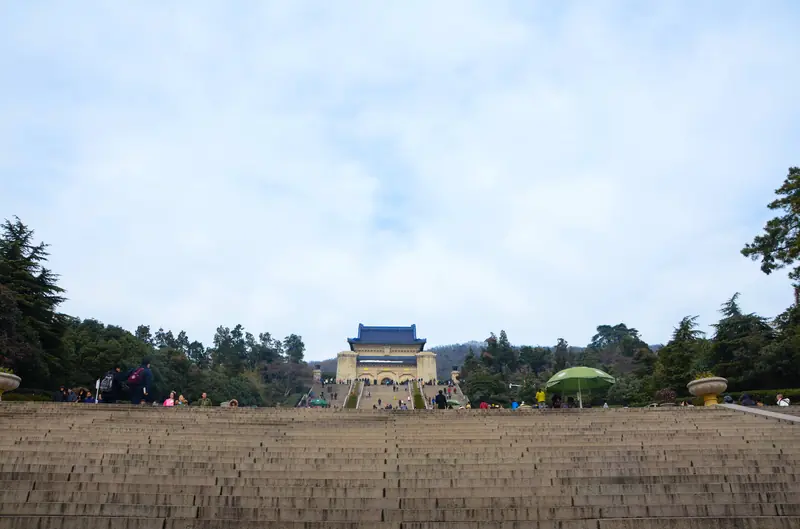
- ✓Continue to Sun Yat-sen Mausoleum on Purple Mountain
- ✓Use Metro Lines 1 and 2 with live transfer timing
- —Keep the Purple Mountain guide open for the afternoon branch
Frequently Asked Questions
The park is free to enter and the ring road is open 24 hours. The five-islet area normally opens 6:00–22:00 from April through October and 6:00–21:00 from November through March, with weather and selected-date notices taking priority. Paid extras are separate: current self-drive boats are ¥130–200 per boat-hour, the ferry is ¥20 one way, sightseeing-vehicle products vary from ¥10 to ¥50, and the Taicheng wall section is ¥30.
Sources checked for this guide
- Free admission, five-islet identity and the current scenic-area overview: Xuanwu Lake official English website
- April–October and November–March islet hours, 24-hour ring-road boundary and notice caveats: Xuanwu Lake visitor services
- Official 9.8-kilometre ring road and Xuanwu Gate context: Xuanwu Lake ring-road guide
- Current boat and ferry products, per-boat-hour prices and standard weather-dependent service hours: Xuanwu Lake boat services
- Current full-ring, one-stop and single-stop sightseeing-vehicle products and prices: Xuanwu Lake sightseeing vehicles
- Official chronology for the royal lake, Ming archive, gate and public-park milestones: Xuanwu Lake history
- Nearly 4,300 cherry trees and the weather-dependent spring bloom window: Xuanwu Lake cherry-blossom report
- Current Jinling Bonsai Garden collection scale and plant diversity: Xuanwu Lake Bonsai Garden
- General wall hours, ¥30 section ticket and current concession framework: Nanjing City Wall official ticket page
Beyond This Guide
Xuanwu Lake pairs naturally with Purple Mountain and the Ming city wall for a full Nanjing day, or with the Confucius Temple quarter, Nanjing Museum and the city's duck restaurants across a longer stay.
More to explore in Nanjing:
- Sun Yat-sen Mausoleum: Nanjing's Purple Mountain Guide — 392 steps to the memorial, plus Music Stage, Meiling Palace, and a full Purple Mountain day plan
- Nanjing Food Guide — duck specialties, noodles and practical restaurant choices after the lake
© gochinafreely.com — Original guide by Go China Freely.