Visit basics
Holiday and summer extensions can change the standard schedule. Open official reservation
Before you go
Nanjing Museum: National Legacy, Six-Hall Campus
Nanjing Museum (南京博物院) combines a national-museum origin story with a modern six-hall visit. Its range is the real attraction: Jiangsu archaeology, painting and decorative arts, rotating exhibitions, digital interpretation, living craft, and an immersive Republic-era street can all fit into one campus. A selective visit takes about two hours; a broad first visit is closer to half a day.
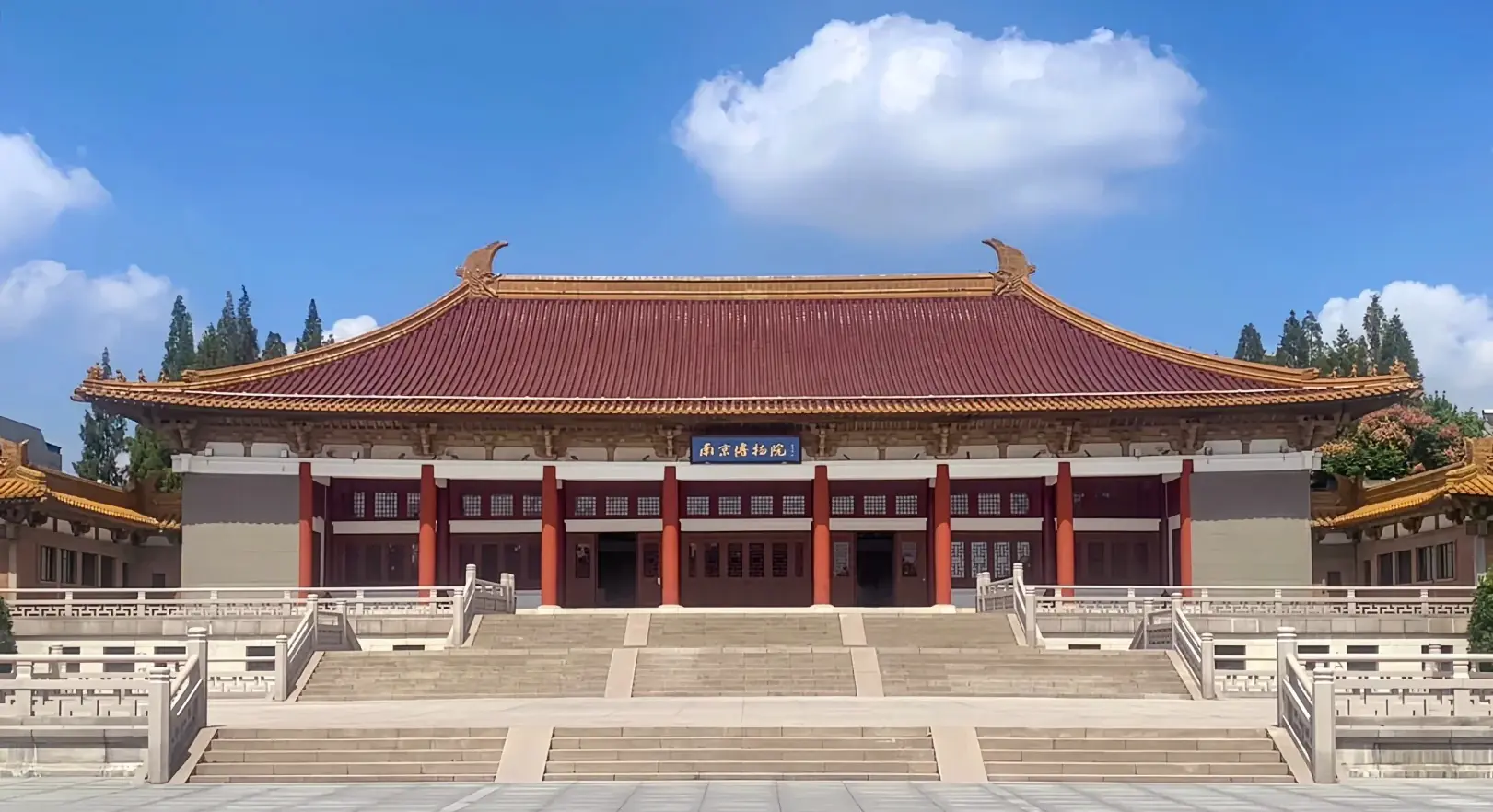
The historic main hall was designed by Xu Jingzhi, with Liang Sicheng and Liu Dunzhen serving as design advisers.
The Preparatory Office of the National Central Museum (国立中央博物院筹备处) was established in Nanjing in 1933, with educator Cai Yuanpei (蔡元培) among its leading advocates. Construction of the present historic hall began in 1936. Architect Xu Jingzhi (徐敬直) designed the reinforced-concrete building in a Liao-inspired monumental style, while Liang Sicheng (梁思成) and Liu Dunzhen (刘敦桢) served as advisers.
From national museum project to six-hall campus
- 1
Preparatory office established
1933The National Central Museum project begins in Nanjing with research, public education, and exhibition ambitions.
- 2
Historic hall construction
1936–early 1950sWar interrupts the original three-wing plan; the surviving main hall is completed after 1949.
- 3
Collections move through wartime
1937–1947Staff evacuate collections to southwest China and later return them to Nanjing after the war.
- 4
Selected objects move to Taiwan
1948–1949Important objects from the Palace Museum and National Central Museum collections are shipped to Taiwan and later become part of the National Palace Museum holdings.
- 5
One campus, six halls
2009–2013A roughly ¥700 million expansion and renovation creates the present six-hall visitor model.
The result is more varied than a conventional gallery visit. You can move from archaeology to painting, then into reconstructed urban space or live cultural programming—but current displays and performances still need to be checked against the museum calendar.
Six Halls: What to See
The official “One Campus, Six Halls” model gives each hall a different job. The time ranges below are editorial planning estimates, not timed-entry limits.
- Focus
- Jiangsu chronology
- What to see
- Archaeology from early cultures through the imperial era
- Suggested time
- 45–60 min
- Focus
- Changing exhibitions
- What to see
- Current loans, themed shows, and focused collection displays
- Suggested time
- 20–45 min
- Focus
- Digital interpretation
- What to see
- Interactive and screen-based ways to explore objects and history
- Suggested time
- 15–30 min
- Focus
- Immersive urban history
- What to see
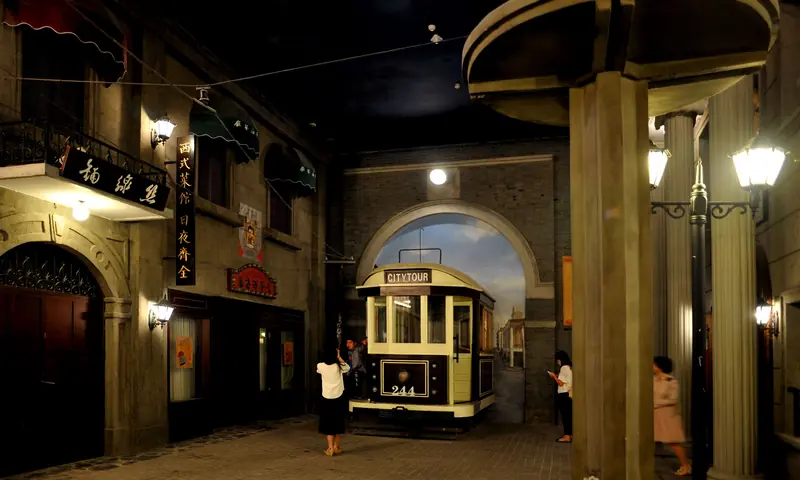
- A reconstructed underground street inspired by Republican-era Nanjing
- Suggested time
- 30–45 min
- Focus
- Painting and decorative arts
- What to see
- Calligraphy, painting, ceramics, sculpture, and changing collection displays
- Suggested time
- 30–45 min
- Focus
- Living culture
- What to see
- Jiangsu craft, music, theatre, demonstrations, and scheduled activities
- Suggested time
- 20–40 min
If you have only two hours, choose three priorities rather than rushing all six. A broad visit usually needs three to four hours, especially when a temporary exhibition is strong.
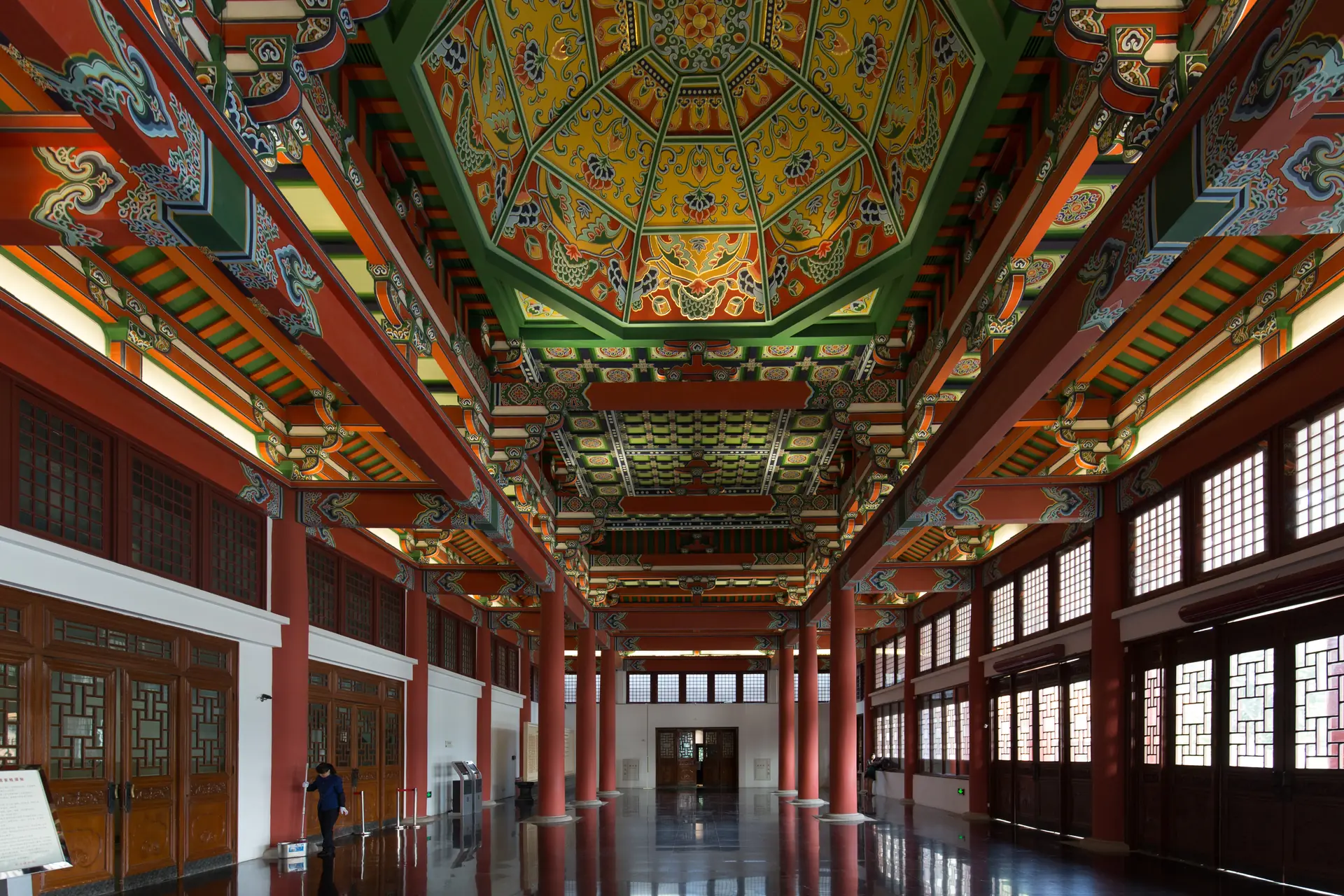
Use the current floor map and on-site signs when moving between halls; not every transfer follows one underground corridor.
Treat the hall list as a menu, not a mandatory circuit. Start with the History Hall if you want chronology, or go first to a temporary exhibition with a limited run. Some transfers are sheltered, but the current floor map—not an old route description—should decide your exact corridor and exit.
Collection Highlights
The museum collection is much larger than any one day’s display. The four objects below explain why the collection matters, but only the Golden Beast currently has a clearly listed permanent exhibition. Check the official exhibition page for the others before treating them as guaranteed stops.
The Golden Beast
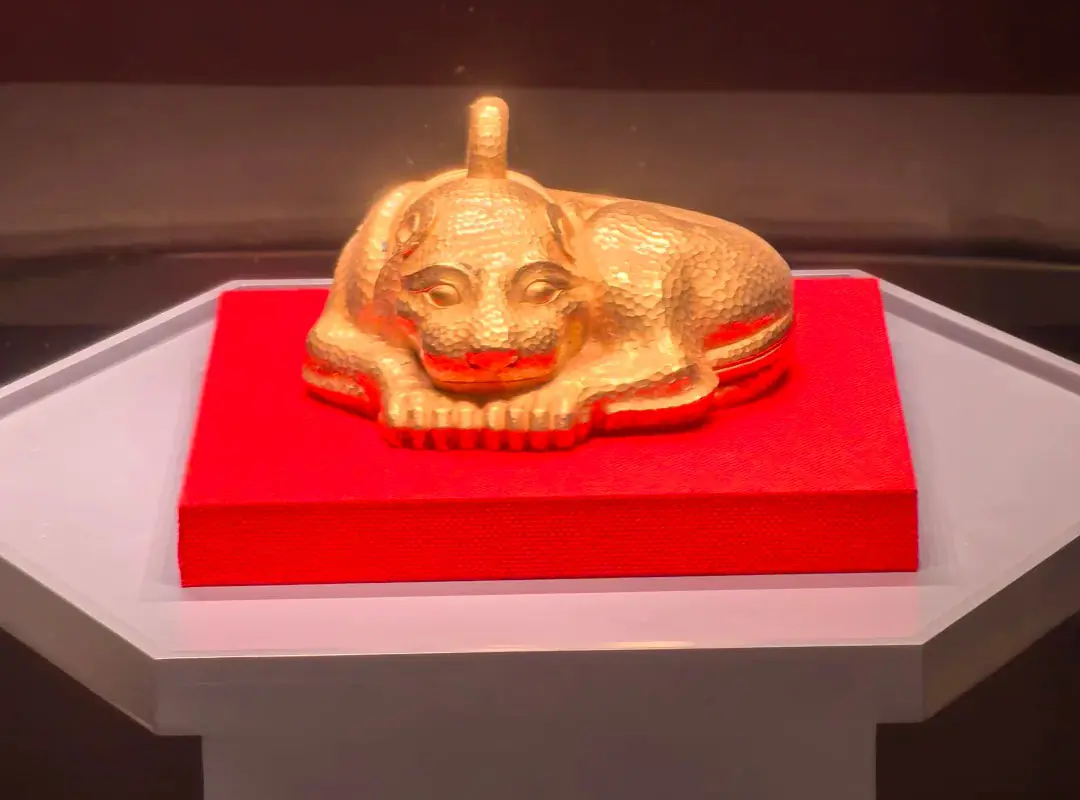
The Golden Beast weighs 9,100 grams; the museum currently lists a permanent exhibition devoted to it.
The Golden Beast (金兽), dated from the Warring States to Western Han period, weighs 9,100 grams and is described in authoritative museum coverage as the heaviest ancient gold object recovered by archaeology in China. It was found in 1982 at Nanyaozhuang in Xuyi County (盱眙县), Jiangsu, inside a hoard that also contained gold cakes and horseshoe-shaped ingots.
Silver-Thread Jade Suit
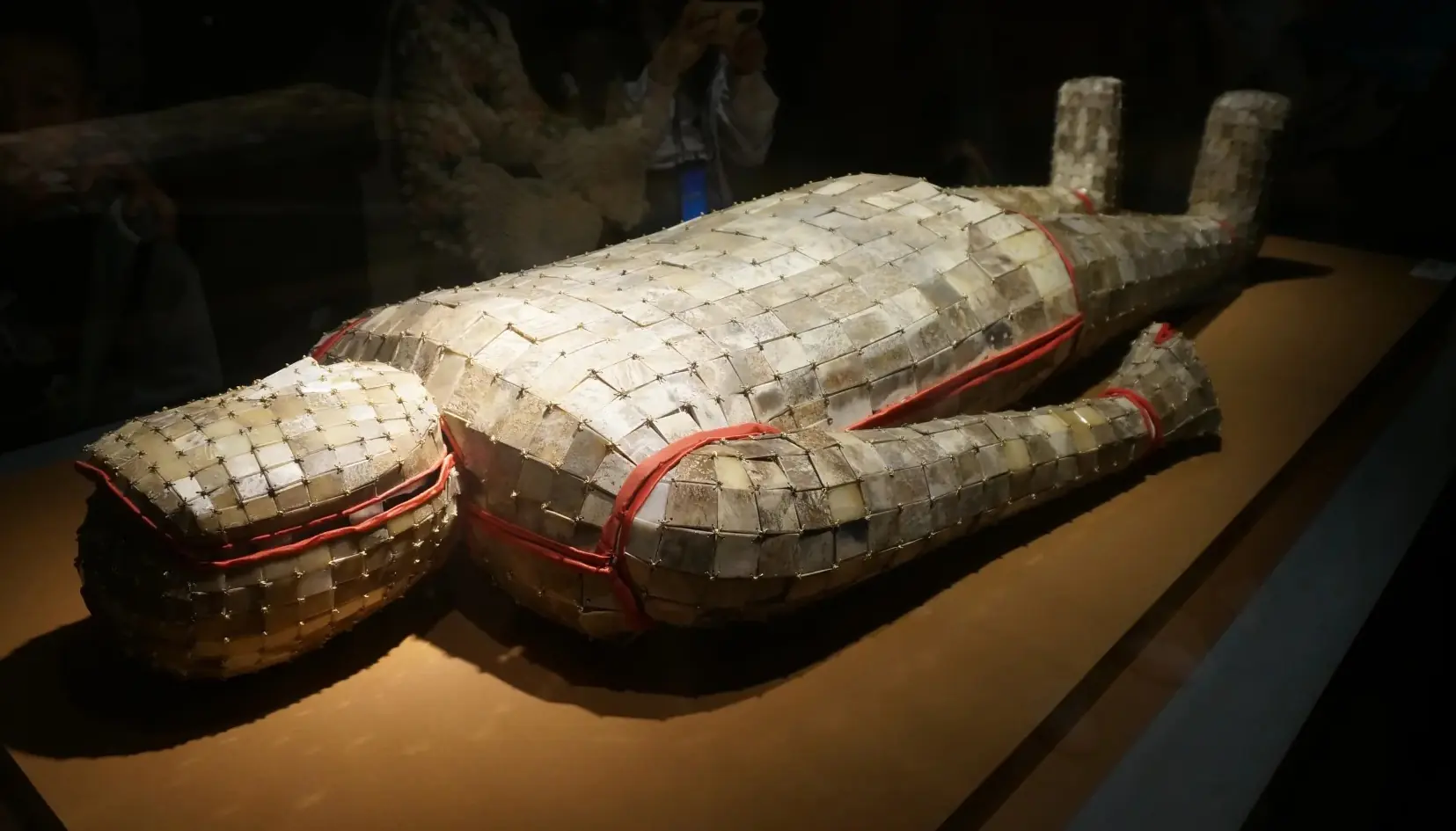
The Eastern Han silver-thread jade suit uses more than 2,600 jade plaques; current display location should be checked before visiting.
Excavated from Tomb No. 1 at Tushan in Xuzhou, this Eastern Han burial suit uses more than 2,600 jade plaques joined with silver wire. Its importance comes from the excavated context and scientific reconstruction—not from comparing it with a different gold-thread suit. Treat it as a collection highlight unless the current exhibition list confirms that it is on view.
Imperial Ming and Qing Porcelain
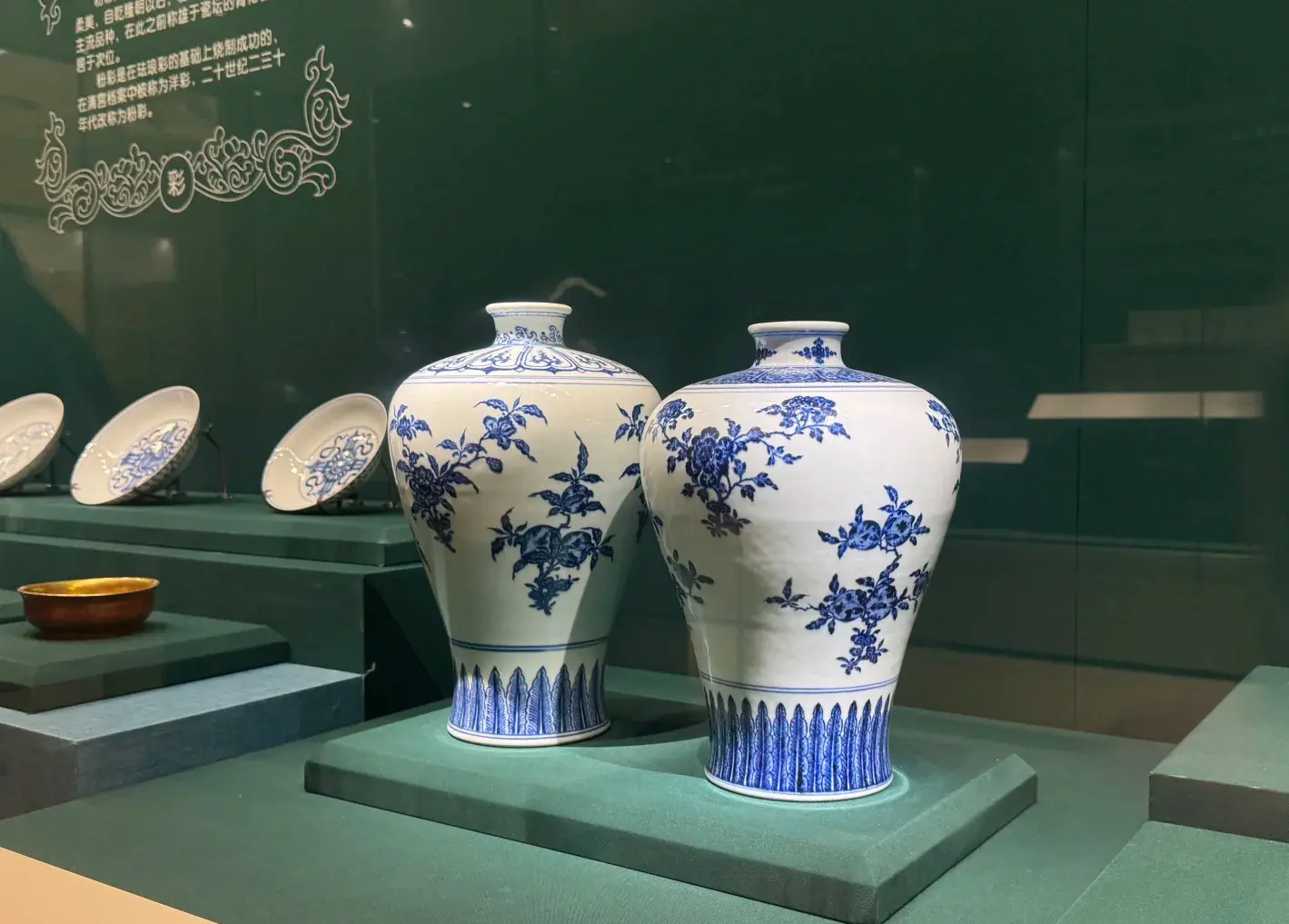
The Art Hall draws on a large ceramics collection, but the number and selection on view can change.
The collection includes blue-and-white porcelain, doucai, famille rose, and monochrome glazes from the Ming and Qing periods. Nanjing’s role as the early Ming capital gives this material useful historical context, but the Art Hall selection rotates; do not expect a fixed count or one permanent cabinet arrangement.
Seven Sages Brick Mural
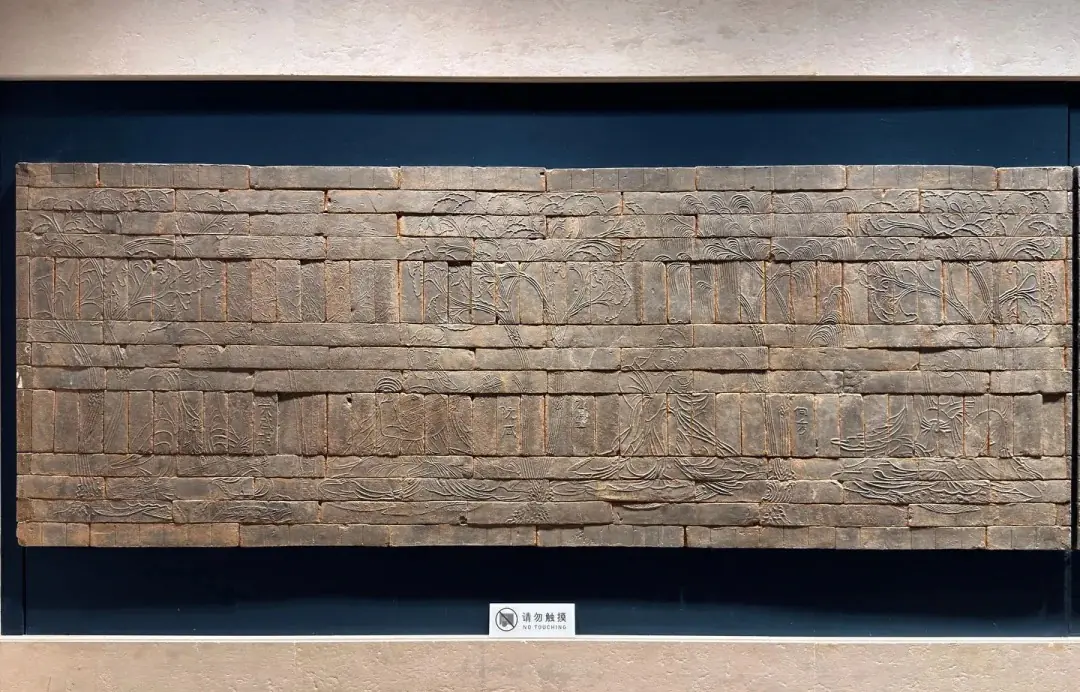
The Southern Dynasties mural is assembled from 648 bricks and belongs to the first national list of cultural relics prohibited from overseas exhibition.
The Seven Sages of the Bamboo Grove and Rong Qiqi Brick Mural (竹林七贤与荣启期砖画) was excavated in 1960 at Xishanqiao (西善桥), Nanjing. Its 648 bricks form two facing compositions of eight seated figures separated by trees. The work is on China’s first list of cultural relics prohibited from overseas exhibition; that designation confirms its importance, not its day-to-day display location.
Republic Street, Crafts, and Photo Stops
Republic of China Hall
The Republic of China Hall sits underground and recreates a street from Nanjing’s years as the national capital during the Republic of China era. Blue-brick paving, arcades, wooden signs, period shopfronts, and a parked rickshaw make it feel closer to a film set than a conventional gallery.

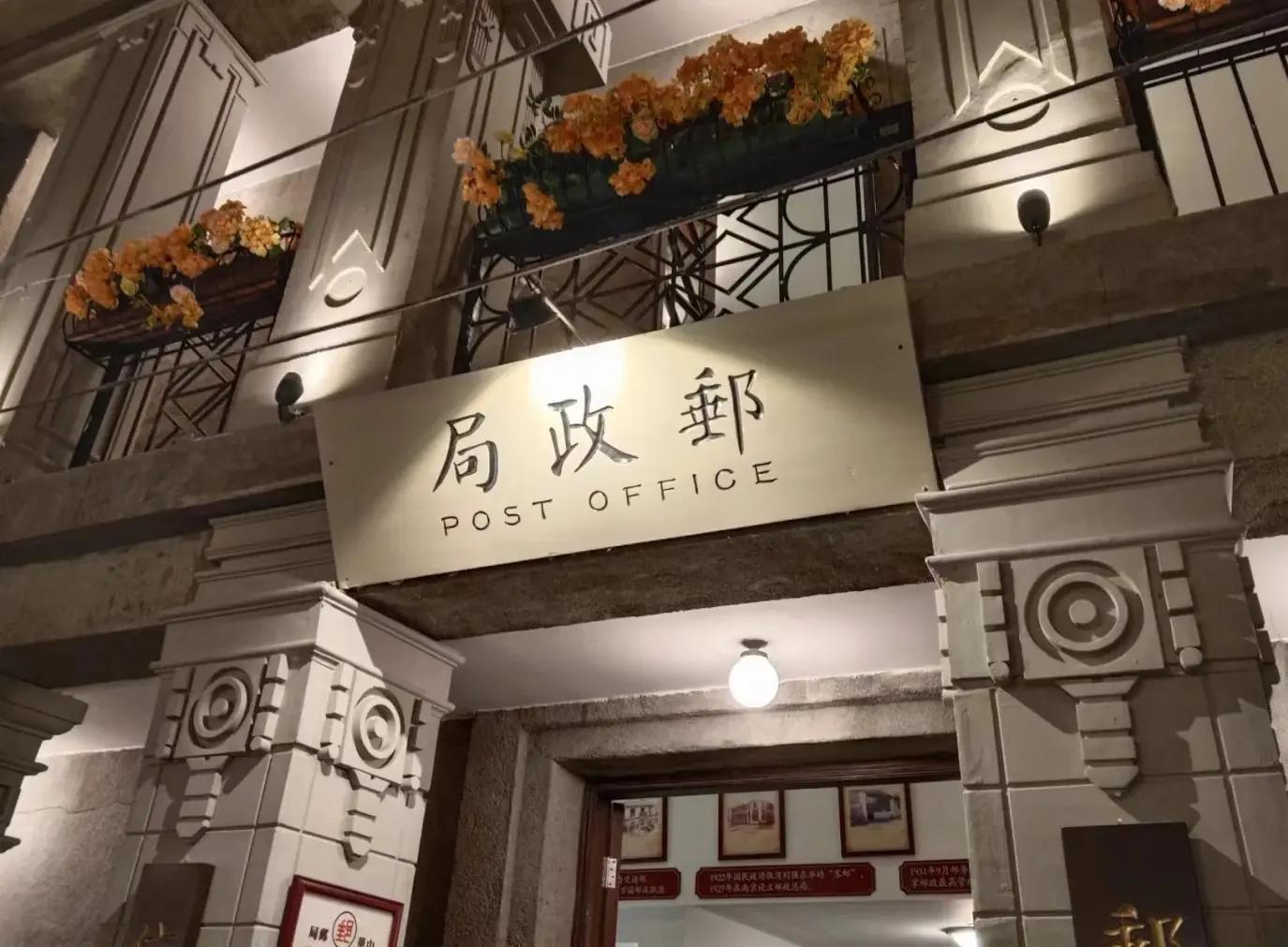
Some commercial spaces may operate, including tea or souvenir counters, but vendors, postmark services, and prices are not dependable evergreen facts. Check what is open on the day. For photographs, the street level gives close storefront frames while an upper viewpoint, when accessible, gives a wider scene.
Best Photography Spots
The History Hall’s red exterior corridor works for high-contrast silhouettes when direct light reaches the wall. The Digital Hall’s light corridor offers a more graphic background, while the Republic of China Hall gives the strongest architectural storytelling.
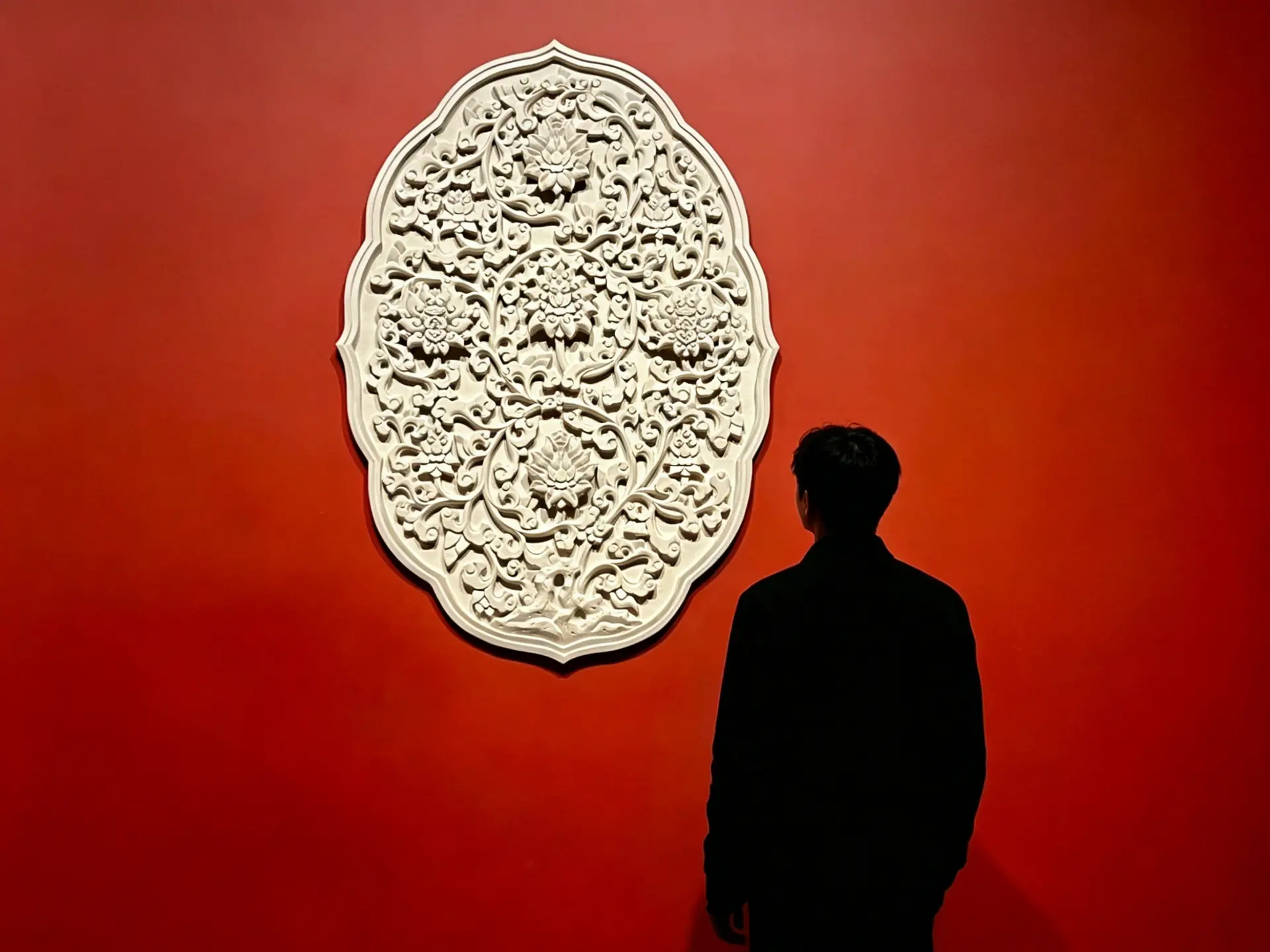
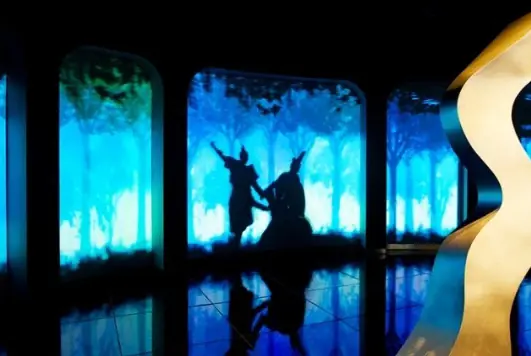
Photo strategy
For fewer people in the frame, opening hour on a weekday is the best editorial bet—not a guarantee. Light, installations, and camera rules vary, so follow the sign at each gallery entrance.
Cloud Brocade, Special Exhibitions, VR, and Shop
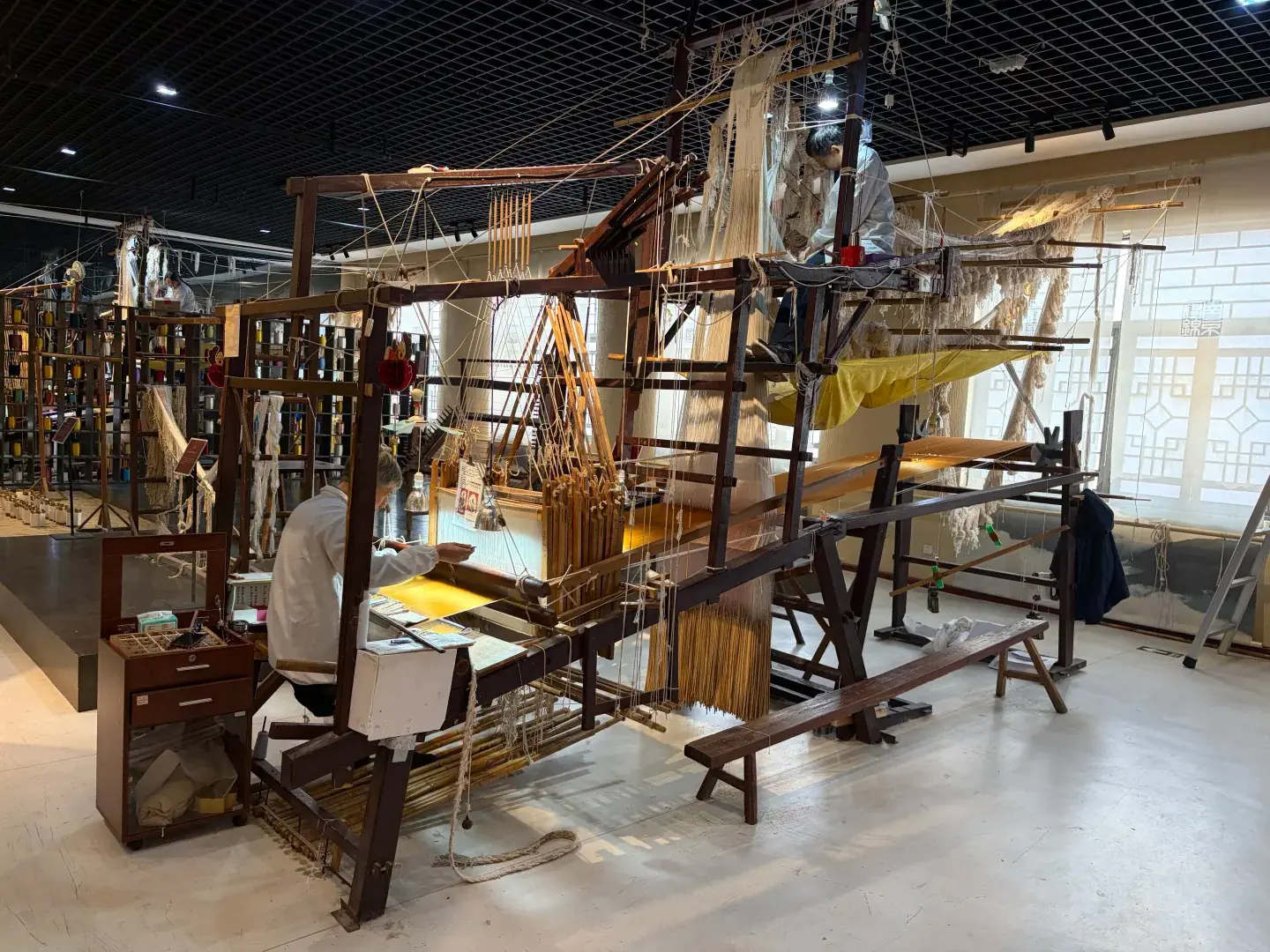
The UNESCO listing covers the craftsmanship of Nanjing Yunjin brocade; museum demonstration times vary by program.
Cloud Brocade in the Intangible Heritage Hall. The craftsmanship of Nanjing Yunjin brocade (南京云锦) entered UNESCO’s Representative List in 2009. Two craftspeople operate the upper and lower parts of the traditional loom. Live demonstrations and performances are scheduled activities, not a guaranteed twice-daily show, so check the museum program.
Special exhibitions: Smaller objects such as enamelled ceramics or carved jade can be more rewarding than another large room. Use the current exhibition list rather than assuming a fixed three-to-six-month rotation.
Digital and VR experiences: These are program-dependent. Older fixed prices and claims that a VR ticket replaces the museum reservation should not be used for planning unless the current official booking screen repeats them.
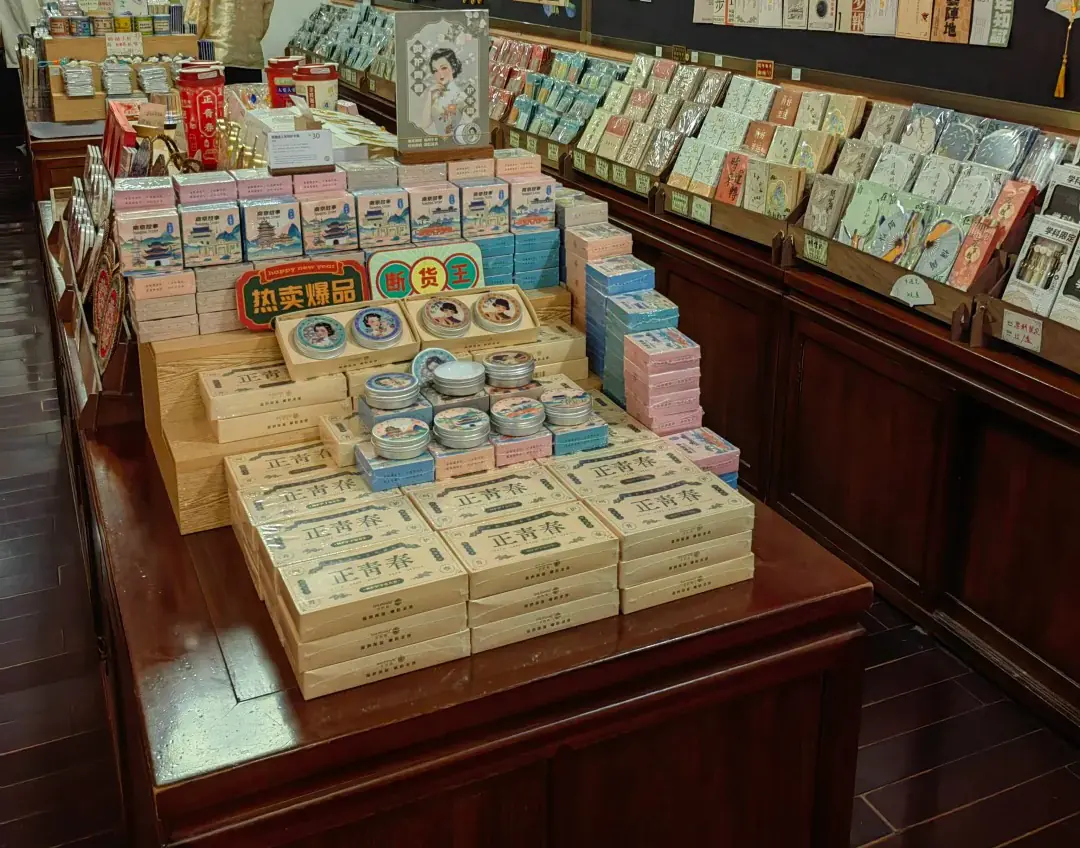
The museum store develops products around the Golden Beast, Republic-era culture, and Jiangsu craft.
The gift shop: Expect collection-inspired stationery, magnets, textiles, books, and accessories. Stock and prices change; choose by design and usefulness rather than an old price list.
Choose Your Museum Route
Use these as editorial sequences, then adjust for current exhibitions, closures, and the on-site floor map.
Full Route (3–4 Hours)
- History Hall(历史馆)- Build the Jiangsu chronology first and confirm which collection highlights are on view.
- Special Exhibition Hall(特展馆)- Prioritize a limited-run show that matches your interests.
- Digital Hall(数字馆)- Use current interactive displays as a change of pace.
- Republic of China Hall(民国馆)- Allow time for the reconstructed street and photographs.
- Art Hall(艺术馆)- Choose painting, calligraphy, ceramics, or sculpture rather than trying to scan every room.
- Intangible Heritage Hall(非遗馆)- Finish with scheduled craft or performance activity when available.
Express Route (2 Hours)
- History Hall(历史馆)- Spend about 45–60 minutes on the main chronology.
- Republic of China Hall(民国馆)- Use 30–40 minutes for the immersive street.
- Special Exhibition or Art Hall- Choose one final hall from the current program rather than rushing both.
Tickets, Hours, and Entry
General admission is free, but most visitors should expect to reserve before arrival. The museum’s official 2024 report says that, from October 8, 2024, tickets were released in one batch at 18:00 seven days ahead and cancelled tickets did not return to the pool. Because release rules and holiday extensions can change, the current official booking screen is the final authority.
- Use the official website, official account, or museum mini-program—not a third-party seller charging for free general admission.
- Enter the same passport details throughout the reservation flow and carry the original document used for the booking.
- The regular schedule is Tuesday–Sunday, 9:00–17:00, with last entry normally at 16:00; verify Monday exceptions and holiday or summer extensions.
- Expect a document check and security screening before entering the exhibition area.
- Treat VR and other paid experiences as separate, time-limited products. Check the live listing for price, duration, age rules, and whether a separate reservation is required.
Confirm before you lock the day
Take a screenshot of the completed reservation, but follow the booking screen if it tells you to enter with the passport itself. Do not rely on an old QR-code workflow or an old VR price.
Getting There and On-Site Services
Nanjing Museum (南京博物院) (Google | Amap) is at 321 Zhongshan East Road. Ming Palace Station (明故宫站) is the simplest independent-traveler approach.
Metro, Bus, and Taxi
Metro · recommended
Take Line 2 to Ming Palace Station (明故宫站), Exit 1, then walk east along Zhongshan East Road for roughly 400–500 meters.
Bus
Routes change more often than the metro. Use a live map for stops on Zhongshan East Road or near Zhongshan Men (中山门).
Taxi or ride-hailing
Travel time and fare vary sharply with traffic. Use the Chinese destination below instead of planning around an old fixed estimate.
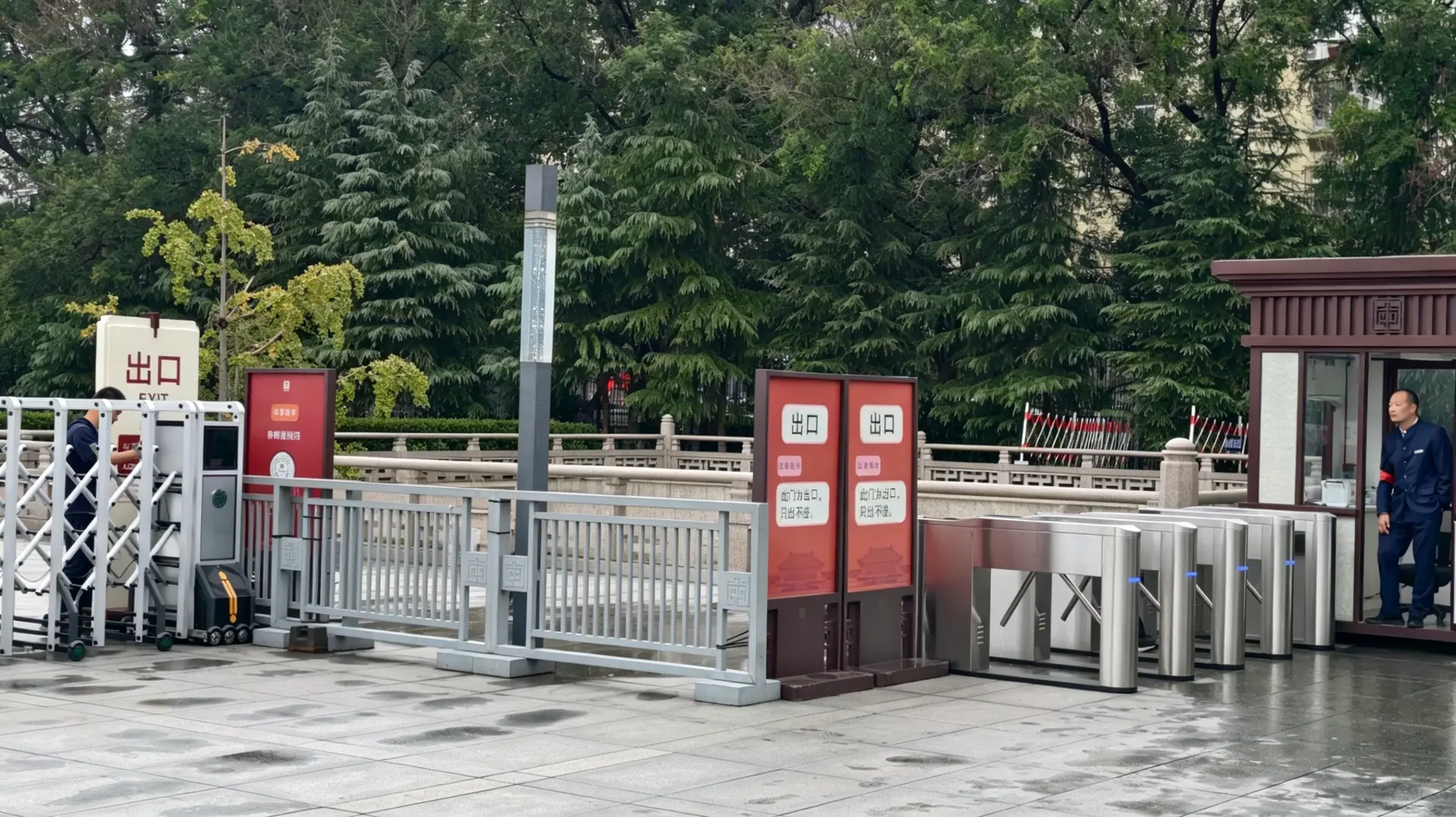
Show this screen to your driver · 出示给司机看
请带我去南京博物院,中山东路321号。
Please take me to Nanjing Museum, 321 Zhongshan East Road.
This is 南京博物院—not 南京市博物馆 at Chaotian Palace (朝天宫).
Audio, Luggage, and Camera Rules
🎧Guides and accessibility
The museum’s 2024 report confirms refreshed smart guide devices and a sign-language video guide in the History Hall. Language options, deposits, and fees should be checked at the service desk.
🧳Luggage and mobility
The same report records luggage storage, wheelchairs, and strollers as active visitor services. Capacity and oversized-suitcase acceptance can still vary on the day.
📷Photography
Follow the sign at each gallery entrance. Temporary exhibitions and individual objects can have stricter rules than the general museum areas.
👟Walking load
Wear comfortable shoes and keep the route selective. Six halls plus transfers add up even when every stop is indoors.
Crowds and Timing
For the calmest practical start, choose a weekday and arrive near opening. This is an editorial recommendation, not an official crowd guarantee. Golden Week, Chinese New Year, school holidays, and popular temporary exhibitions create the greatest pressure; on those dates, reservation availability matters more than a precise arrival-minute strategy.
Food and Nearby Add-Ons
The Republic of China Hall may have tea or snack service, and the museum’s current program sometimes uses the old teahouse for performances. Operating counters change, so do not make an in-museum café your only meal plan.
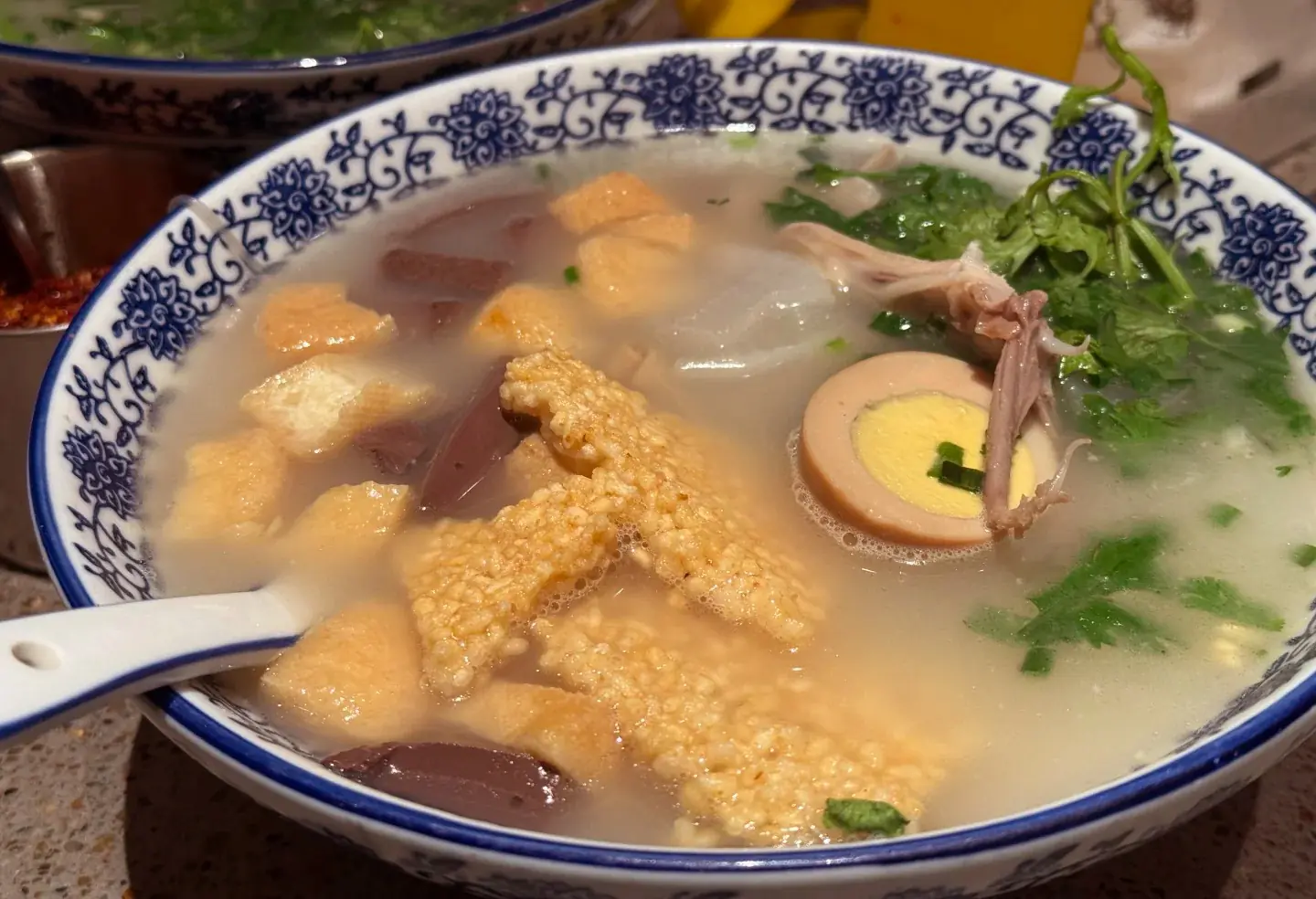
Duck blood and vermicelli soup is one of Nanjing’s signature quick meals.
Walk toward Mingugong Road (明故宫路) for local restaurants. Three useful Nanjing orders are duck blood and vermicelli soup (鸭血粉丝汤), soup dumplings (小笼包), and salted duck (盐水鸭). Choose by a busy local dining room and a clear menu rather than an old price range.
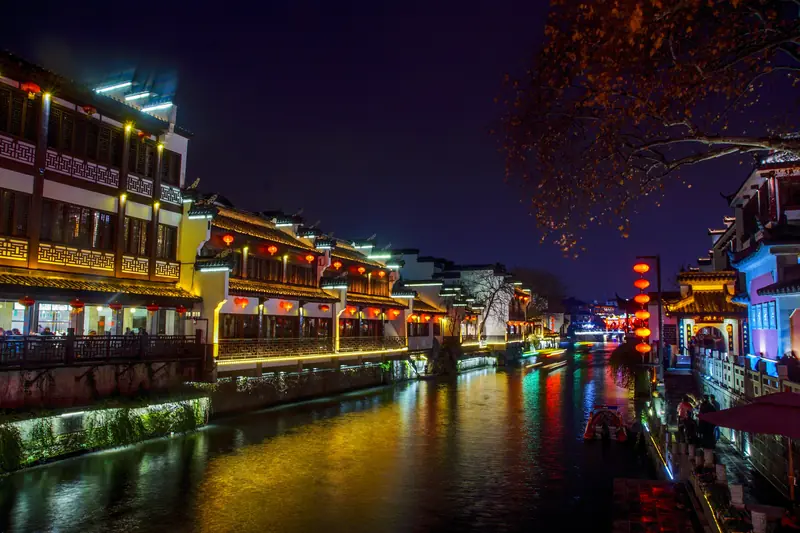
For a wider evening food choice, continue to Confucius Temple (夫子庙) (Google | Amap) or Laomendong (老门东) (Google | Amap). Both work better as a separate after-museum stop than a quick lunch detour.
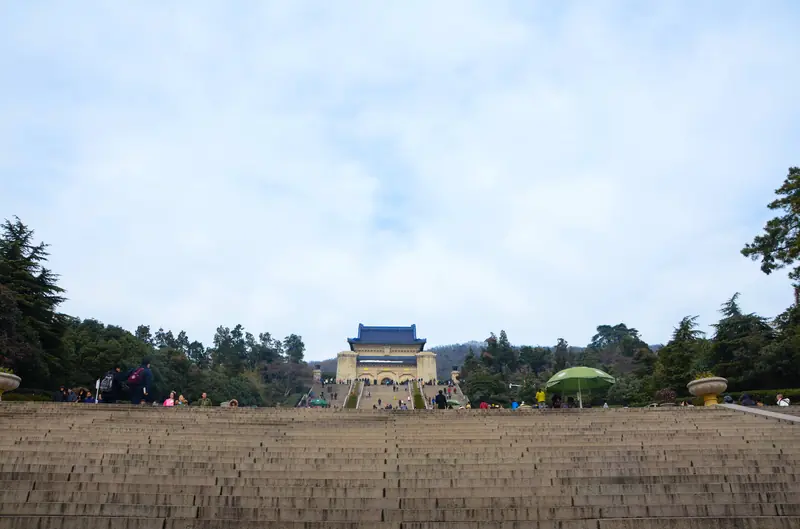
For a nearby historical add-on, Ming Palace Ruins Park (明故宫遗址公园) (Google | Amap) is the easiest short extension. Sun Yat-sen Mausoleum (中山陵) (Google | Amap) on Purple Mountain can share the day only if you keep the museum route selective.
Frequently Asked Questions
Most visitors should expect to reserve even though general admission is free. Use the official reservation portal and check the live rules for foreign passports, release time, and any exempt visitor categories.
Sources checked for this guide
- Current visitor information and reservation channel: Nanjing Museum visitor page and Official reservation portal
- Reservation release policy, guide devices, luggage storage, mobility services, and 2024 visitor operations: Nanjing Museum annual report 2024
- Historic main hall construction, architect, advisers, and Liao-inspired design: Nanjing municipal heritage record
- One Campus, Six Halls expansion and hall functions: Ministry of Culture and Tourism report
- National Central Museum objects transferred to Taiwan in 1948–1949: National Palace Museum history
- Golden Beast permanent exhibition and current museum program: Golden Beast exhibition and Nanjing Museum current exhibitions
- Official heritage scope for Nanjing Yunjin brocade: UNESCO decision 4.COM 13.11
- Seven Sages mural brick count and prohibited-overseas-exhibition designation: Baoji Cultural Heritage Bureau record
Beyond This Guide
Build the rest of the day around one clear direction rather than collecting nearby pins:
- Pair the museum with Ming Xiaoling Mausoleum for a Purple Mountain history day.
- Use the Nanjing City Wall guide for a second major historical layer without another museum interior.
- Save Laomendong and the Qinhuai River for an evening walk.
- Plan the meal with the Nanjing food guide.
© gochinafreely.com — Original guide by Go China Freely.