Hours & Base Ticket
Essential Rules
Old-South Lanes Before Qinhuai River Lights
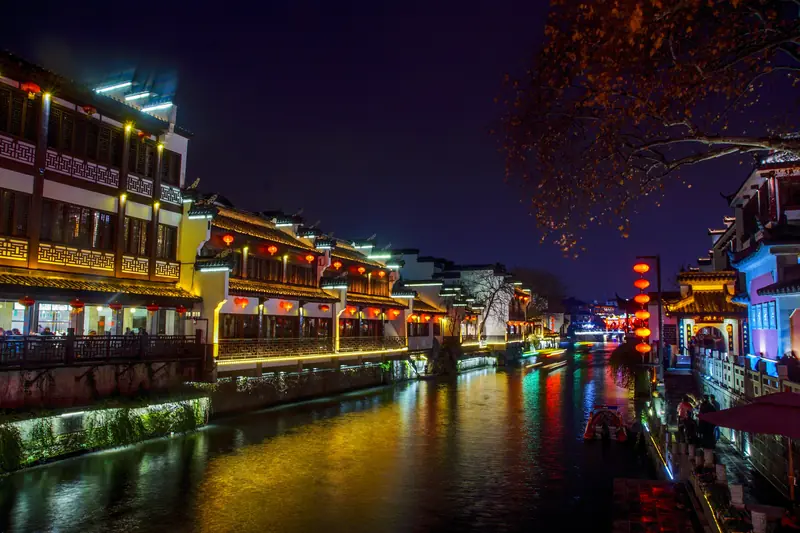
The strongest Nanjing night builds from blue-brick lanes to river lanterns.
Laomendong (老门东) and the Qinhuai River (秦淮河) belong in the same evening, but the order matters. Begin with old-south lanes, food and softer street lighting, then enter the brighter Fuzimiao–Qinhuai Scenic Belt (夫子庙秦淮风光带) once the river lights are on.
This guide gives you a practical walk from the Zhonghua Gate area to Laomendong, Fuzimiao, Panchi Wharf and the river, with a live boat decision near the end.
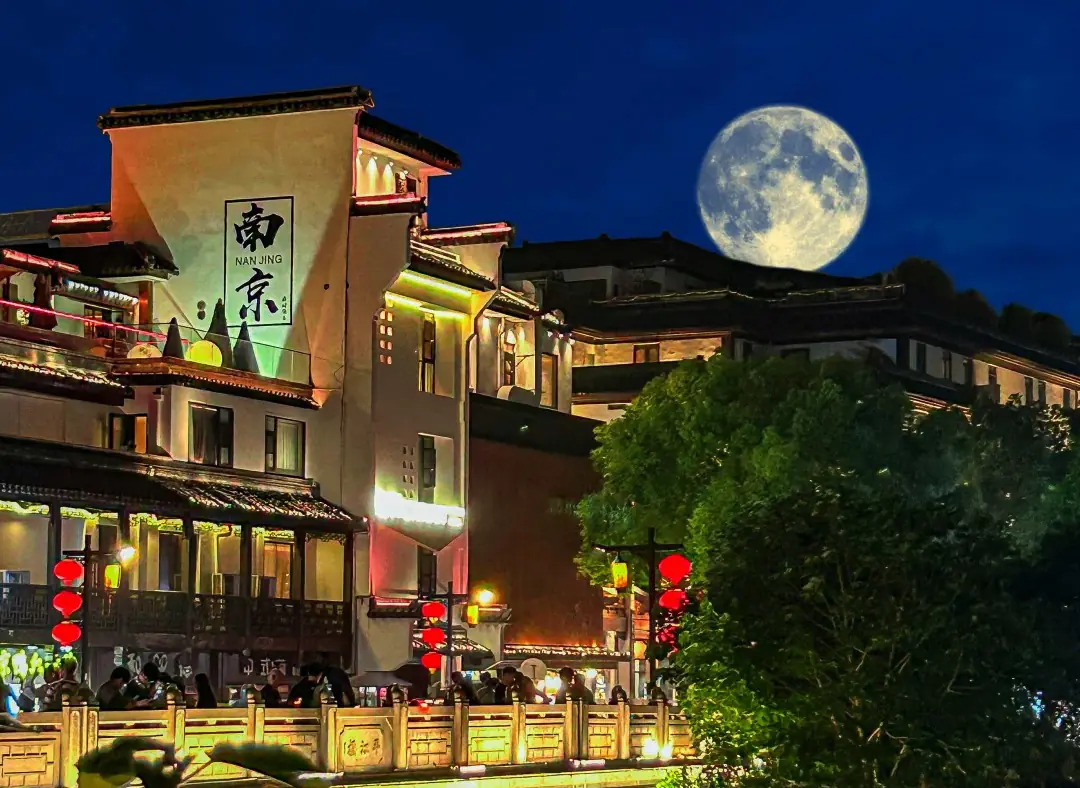
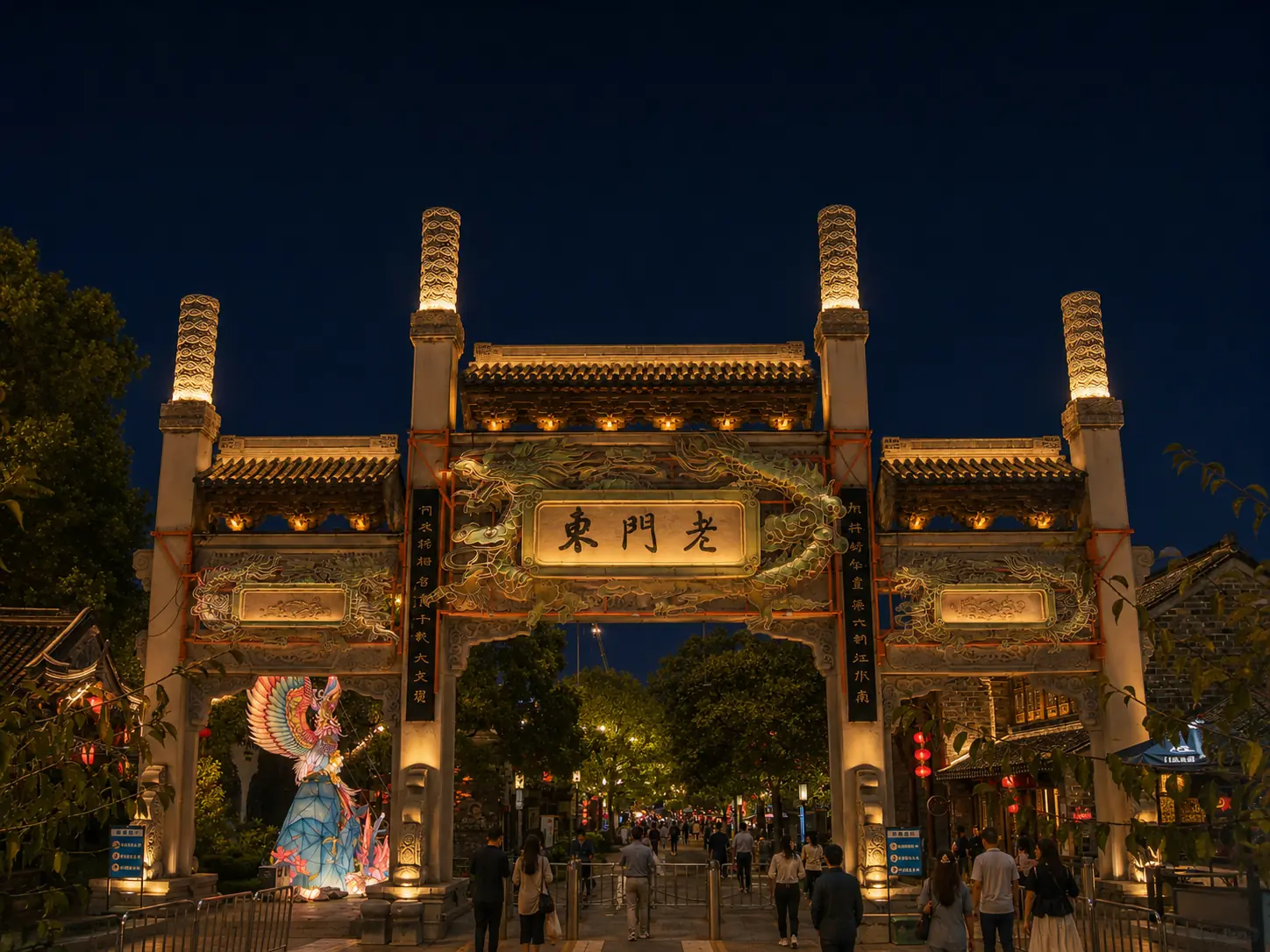
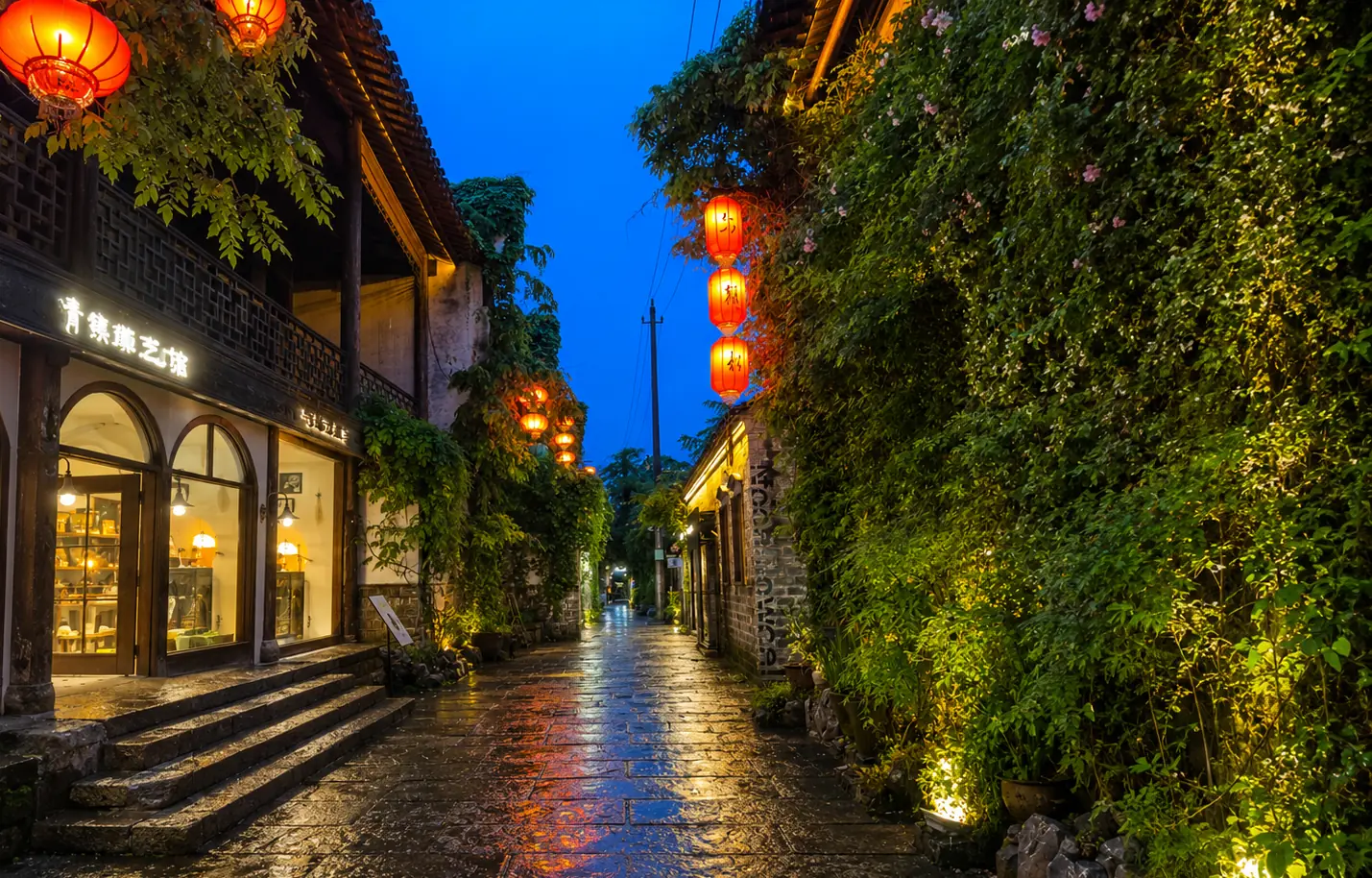
Old-south opening. Rooflines, walls, lanterns and side lanes establish Nanjing at pedestrian scale.
Food and transition. Eat before the river, then let the streets gradually become brighter and busier.
River core. Temple gates, bridges, painted boats and reflections become the final dramatic layer.
The two districts are close on the map but different in mood. Laomendong is textured and slower; Fuzimiao is louder, brighter and more tourist-facing. The route works because it uses both without asking either to feel like the other.
Laomendong to Qinhuai River Walking Route
For a first visit, walk south to north. The numbered route is the evening spine; food, boat and museum choices are branches rather than extra obligations.
- Zhonghua Gate edge(中华门一带)- Use the city wall as your old-south starting frame
- Laomendong Gate(老门东牌坊)- Enter before dinner crowds peak
- Santiaoying and Gutong Lane(三条营 / 箍桶巷)- Food, side lanes, and old-south texture
- Fuzimiao Core(夫子庙核心区)- Shift from alleys to bright riverfront crowds
- Panchi Wharf(泮池码头)- Decide boat or shore after a live status and queue check
- Qinhuai River Shore(秦淮河岸)- Photograph bridges, boats, reflections, and lights
- Fuzimiao Station(夫子庙站)- Use Lines 3 or 5 when the night is done
Free street walk and one food stop.
Add dinner, one venue or the live boat decision.
Finish near the easiest metro exit.
Start at Zhonghua Gate and Laomendong
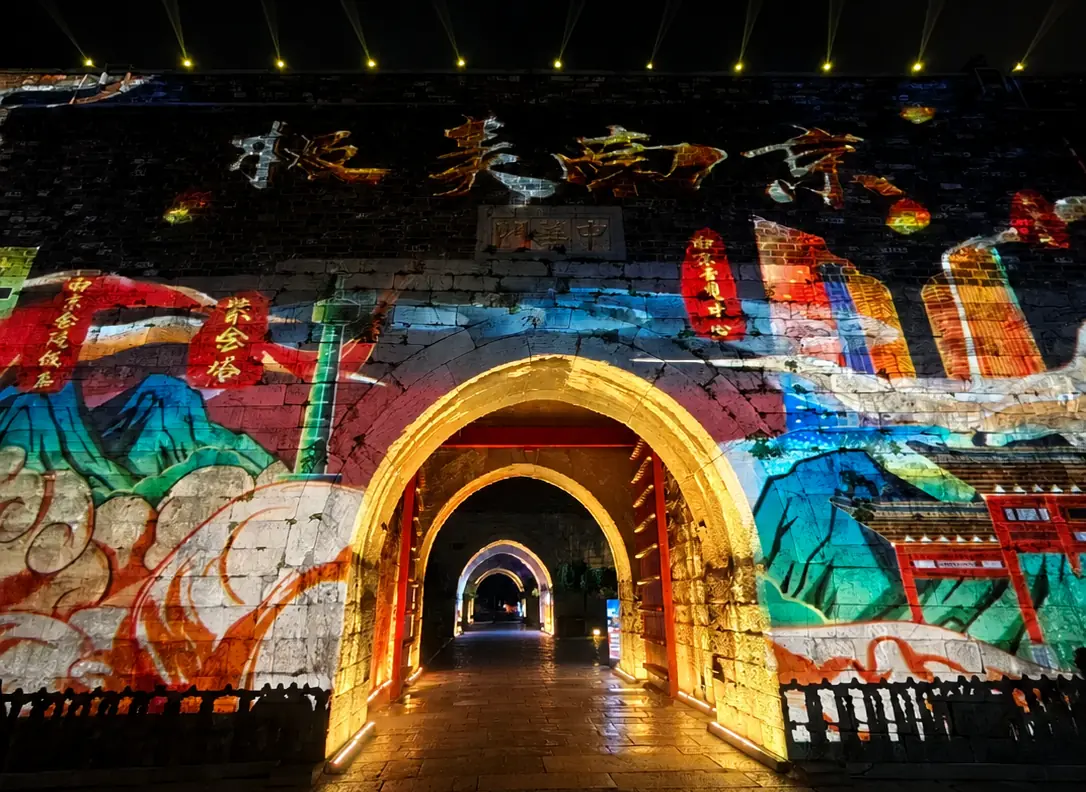
Zhonghua Gate edge
Zhonghua Gate (中华门瓮城) is the best frame even if you do not enter the paid city-wall section at night. Laomendong sits east of the gate, which explains the name: old gate east.
Drift into the district slowly. Look first for low rooflines, gray brick, lanterns, courtyards and the changing scale of the street.
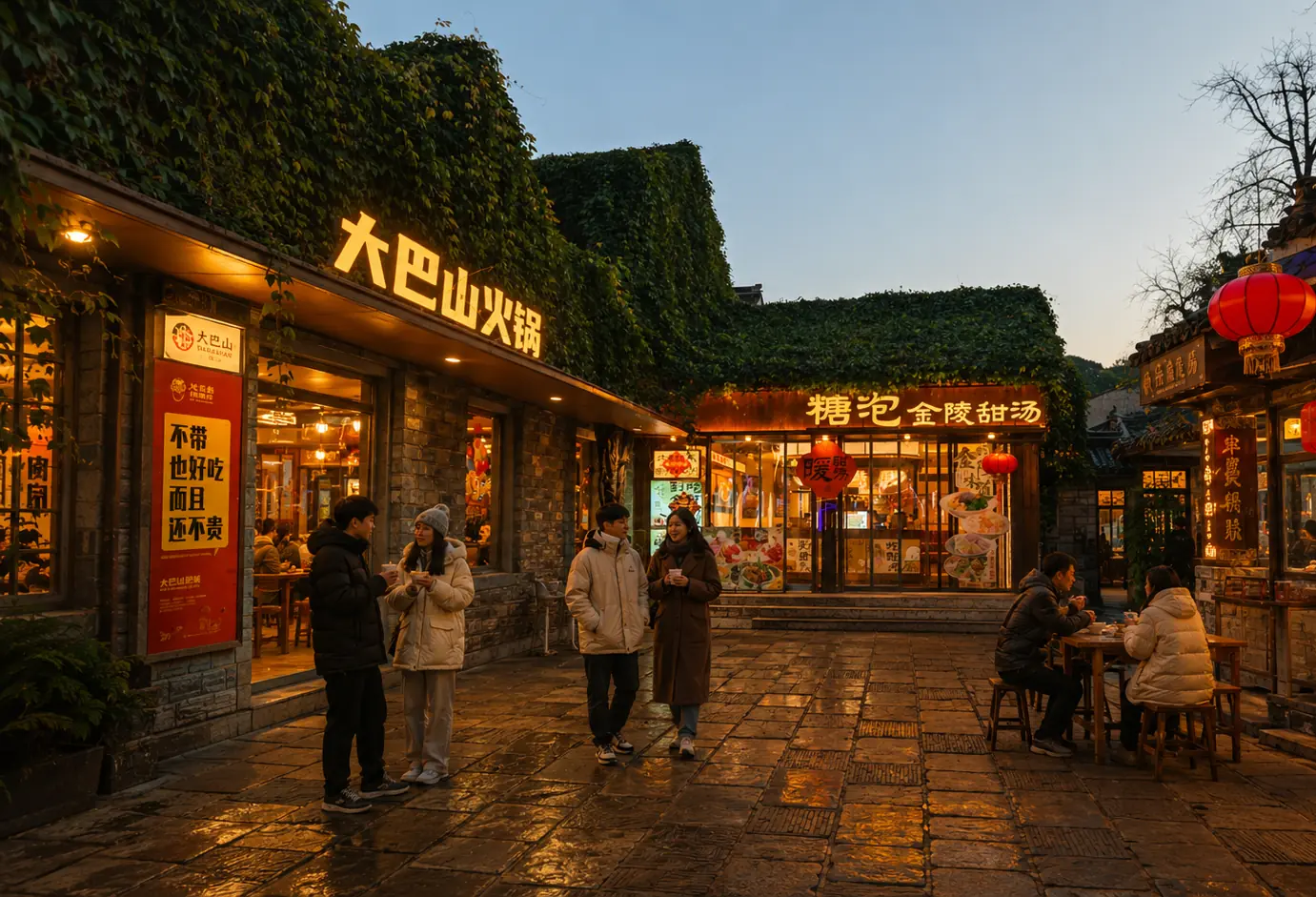
Santiaoying + Gutong Lane
The practical spine is the entrance gate, Santiaoying (三条营), Gutong Lane (箍桶巷), small inner squares, then the northward walk toward Fuzimiao.
If a shop line is long, keep moving. Laomendong rewards browsing, and the quieter side-lane photographs are often stronger than the main entrance sign.
Use Laomendong as the warm-up
Give yourself at least 45-60 minutes here before crossing toward Fuzimiao. This is where the route feels most like Nanjing's old south rather than a generic night market.
Food Stops Before the Qinhuai River
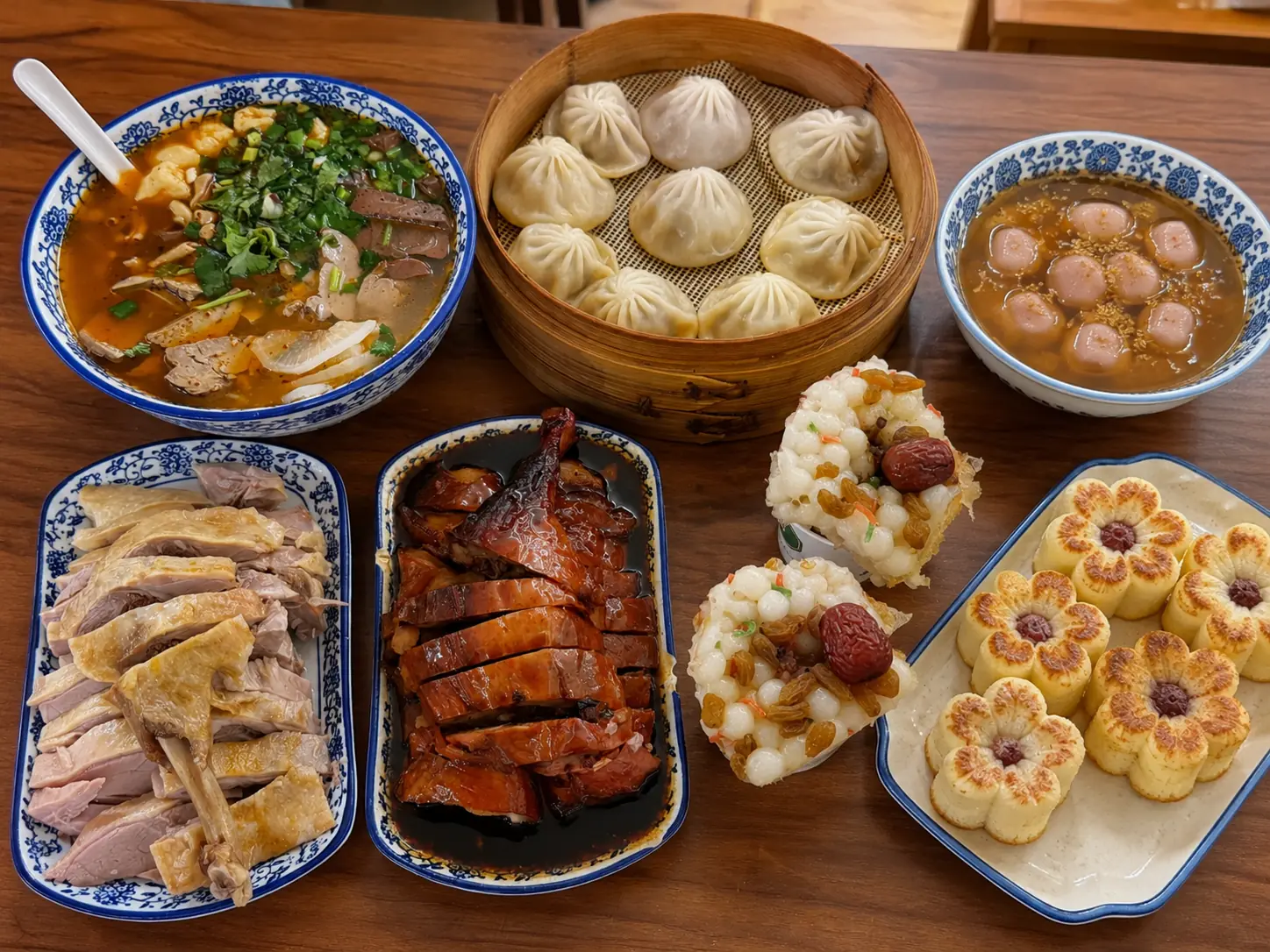
Use food to pace the night, not to turn it into a checklist.
Laomendong gives you a better chance of a calmer snack break or sit-down meal before the riverfront squeeze. Fuzimiao has plenty of food, but peak evening hours are brighter, louder and more crowded.
For a full weekend dinner, earlier than 17:30 or later than 20:00 is usually the easier target.
Salted duck (盐水鸭), plum blossom cake (梅花糕), small buns or another easy shared bite.
Duck blood vermicelli soup (鸭血粉丝汤), sweet osmanthus taro soup (桂花糖芋苗), or red-bean glutinous rice balls (赤豆元宵).
A lighter meal keeps your shore-walk and live boat decision flexible.
Confucius Temple and Qinhuai River Lights

Low lanes give way quickly to signs, temple gates, souvenir streets, bridge crowds and water reflections.
That abrupt change is part of the experience: old-south Nanjing and high-volume tourist Nanjing sit almost on top of each other.
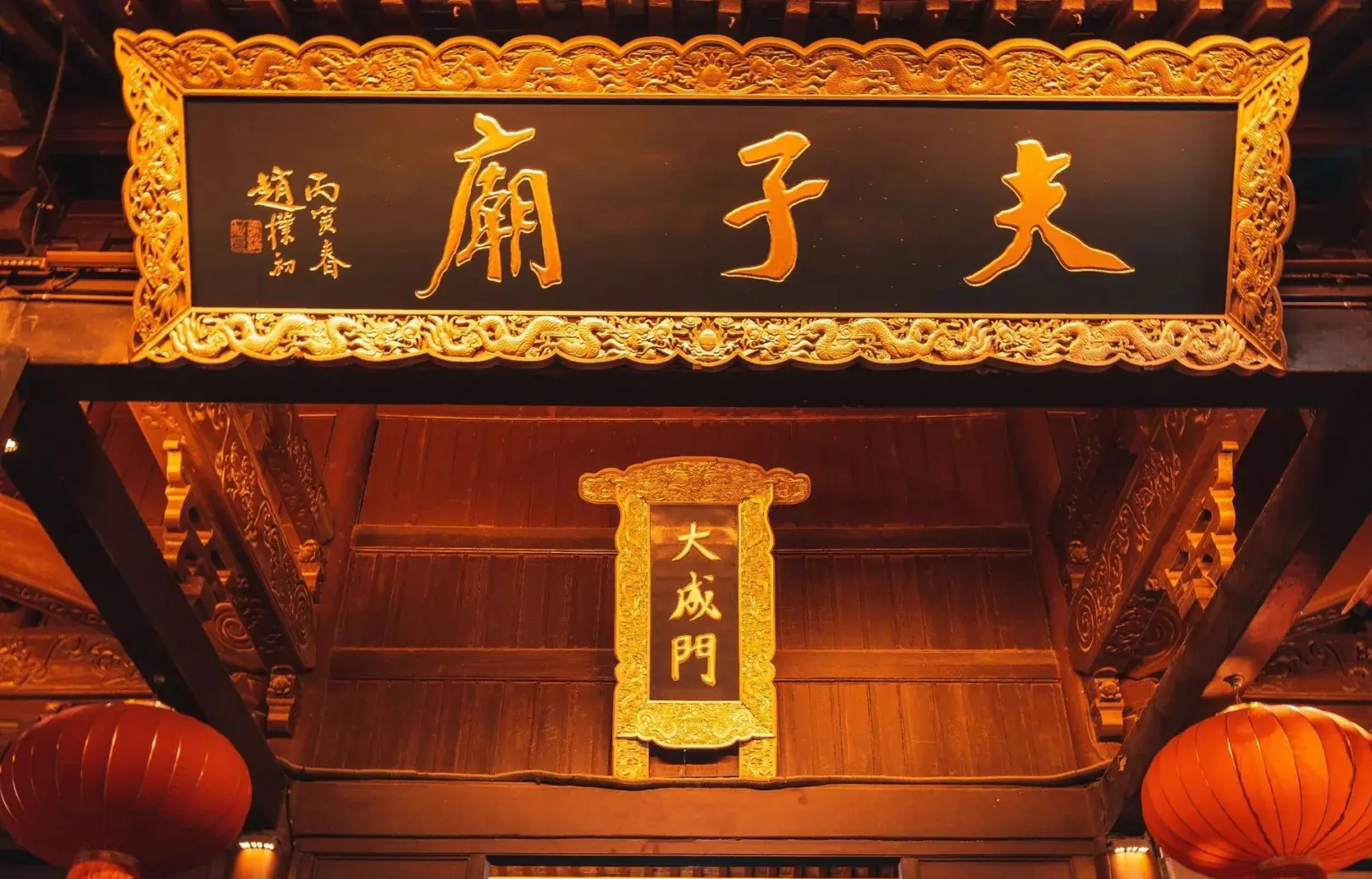
Fuzimiao
Fuzimiao (夫子庙) is the cultural center of the Qinhuai night scene. Do not stop at the archway: continue until lights, water, boats and rooflines share the frame.
The official 2026 rule places the Fuzimiao core under free reservation entry from July 20 to August 20, 14:00–22:00. Reserve through the official Nanjing Fuzimiao entry in Alipay. This is a dated measure, not a permanent year-round rule.
Move after the bridge photo
Wende Bridge and Panchi Wharf are usually the busiest points. Take the photo, then move. If you want a softer river view, walk farther toward Bailuzhou or the water-street sections.
Should You Take the Qinhuai River Boat?
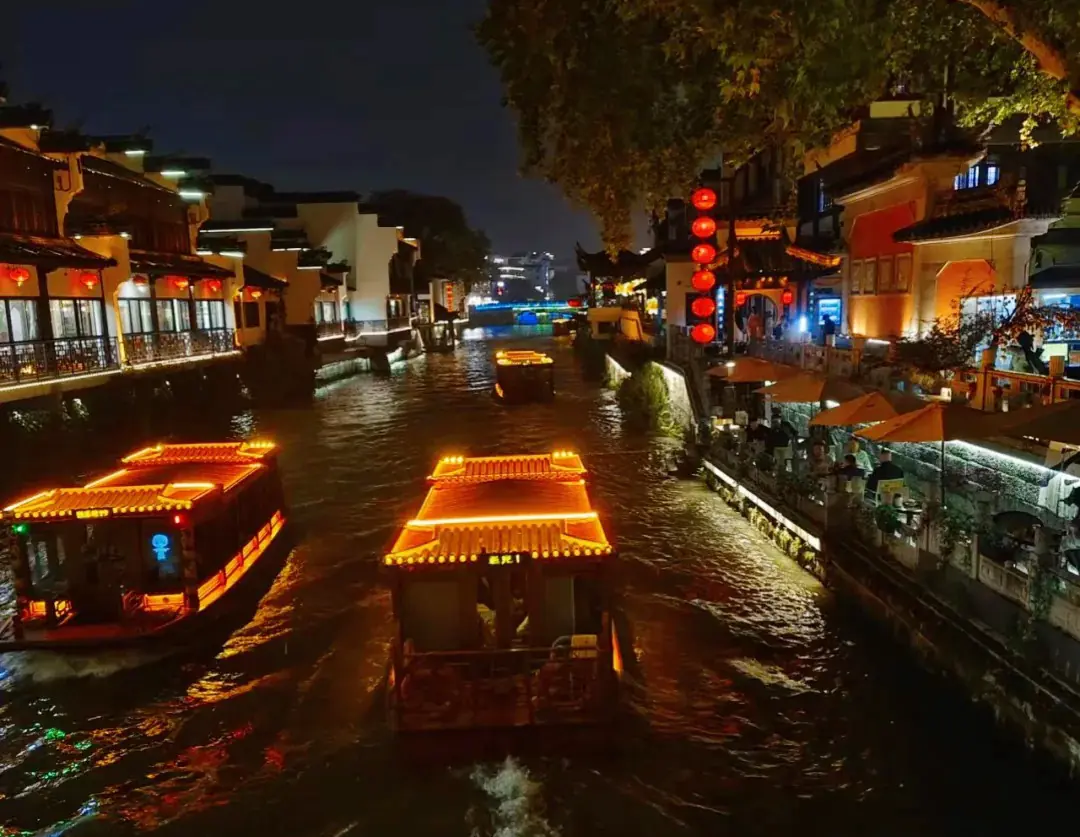
Take the boat for the moving water-level view, not because the shore walk is incomplete.
The painted boat is the most ceremonial version of the night. Its value is the moving angle on bridges, lanterns and reflected rooflines. If the queue, weather or live operation looks wrong, walking the shore is still a complete answer.
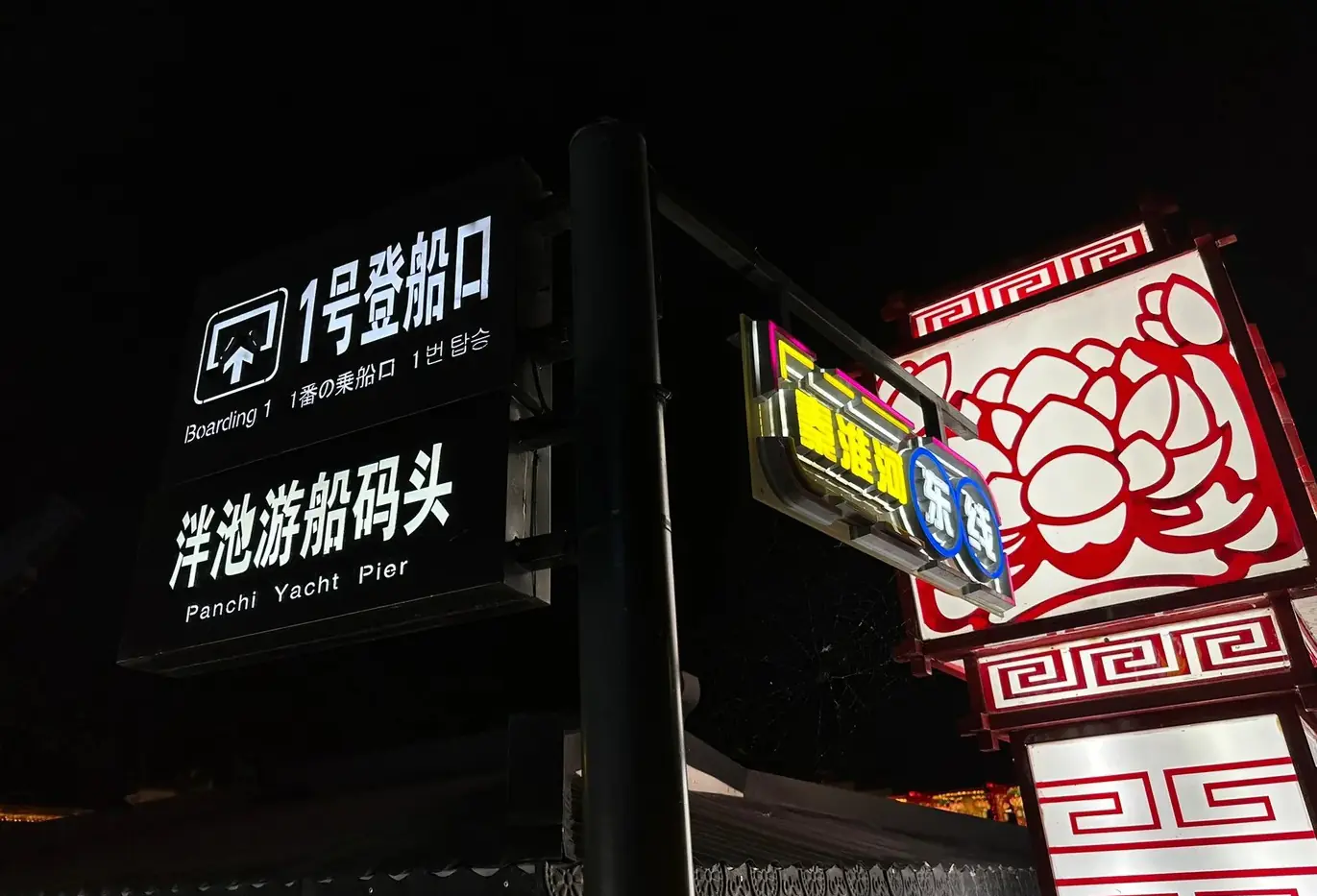
Execution evidence: check the Panchi Wharf queue and operating board before buying.
Walk the shore
Best when queues are long, weather is uncertain or the metro clock matters.
Bridges, lights, boats and river reflections remain visible from land.
Families and tired travelers can shorten or leave at any point.
Trade-off: you miss the moving water-level view.
Take the boat
Best when live operation, the queue and weather all align.
The strongest moving view of the inner Qinhuai lights.
Worth considering for a first visit when you are not rushing.
Trade-off: fixed boarding and less control over the exit.
Routes, fares and operations can change. Use the execution panel above as the fact baseline, then confirm the live product before paying.
Bailuzhou, Water Street and Jiangnan Gongyuan
If you skip the boat, or still have energy after it, continue toward Bailuzhou Park, the water-street area, or the Jiangnan Imperial Examination Museum (南京中国科举博物馆). These side options are useful because they pull you away from the densest Fuzimiao bridge crowd without leaving the Qinhuai atmosphere.
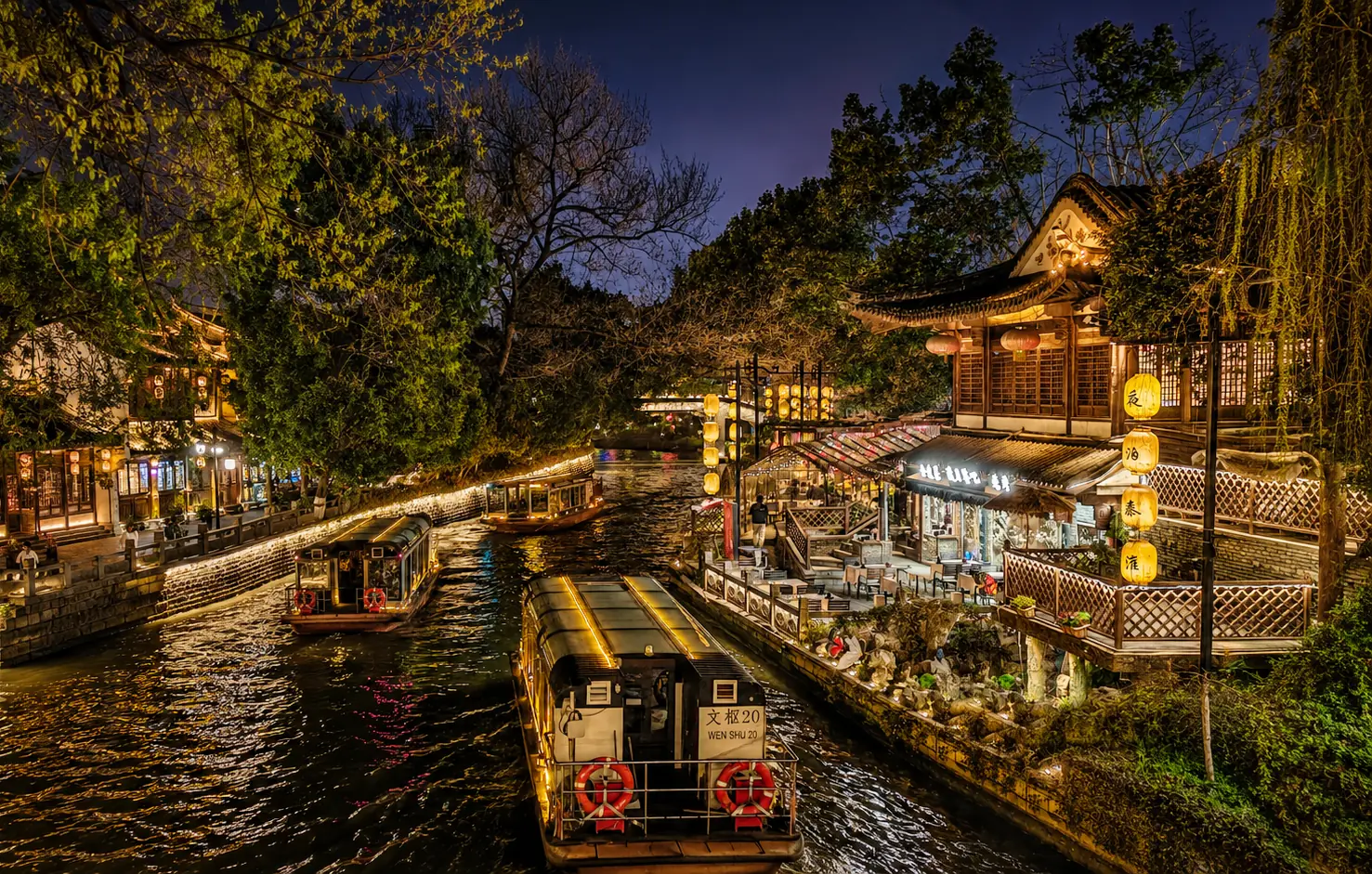
Qinhuai Water Street
Useful when the main bridge area feels too tight. You still get lanterns, water, small bridges and quieter reflection shots.
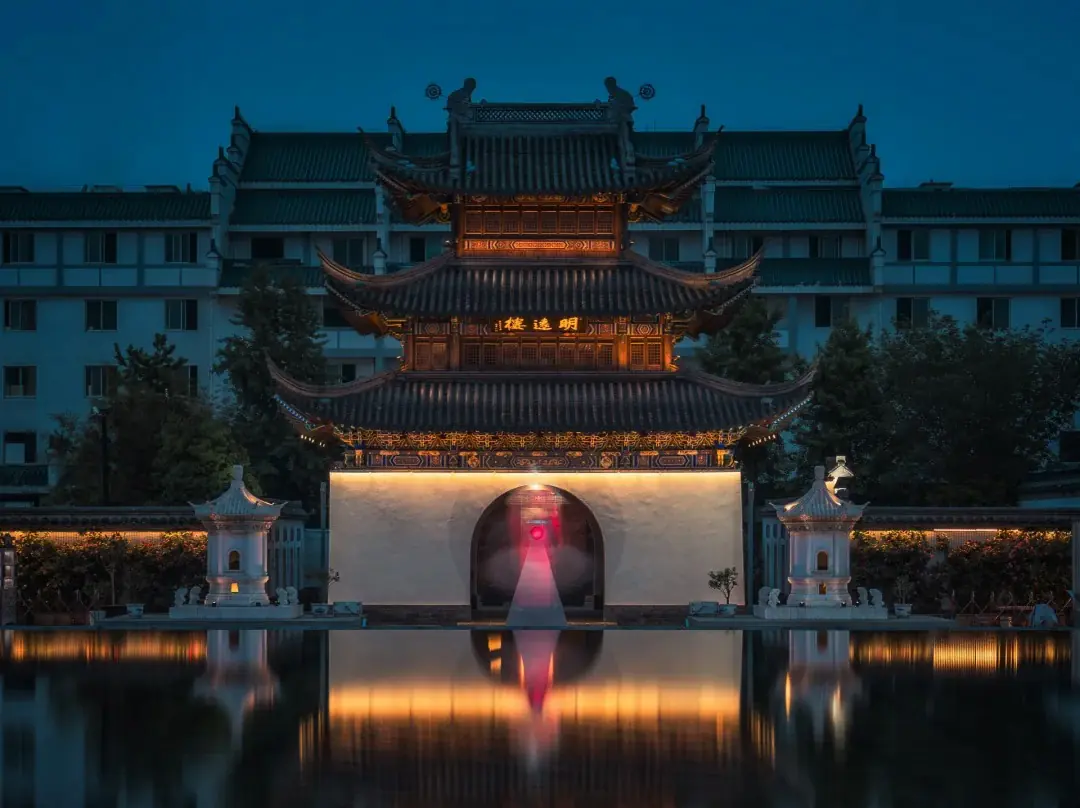
Jiangnan Imperial Examination Museum
The official site currently lists Monday–Sunday opening hours as 9:00–22:00. The historical complex is often described with the Qing-era peak figure of 20,644 examination rooms.
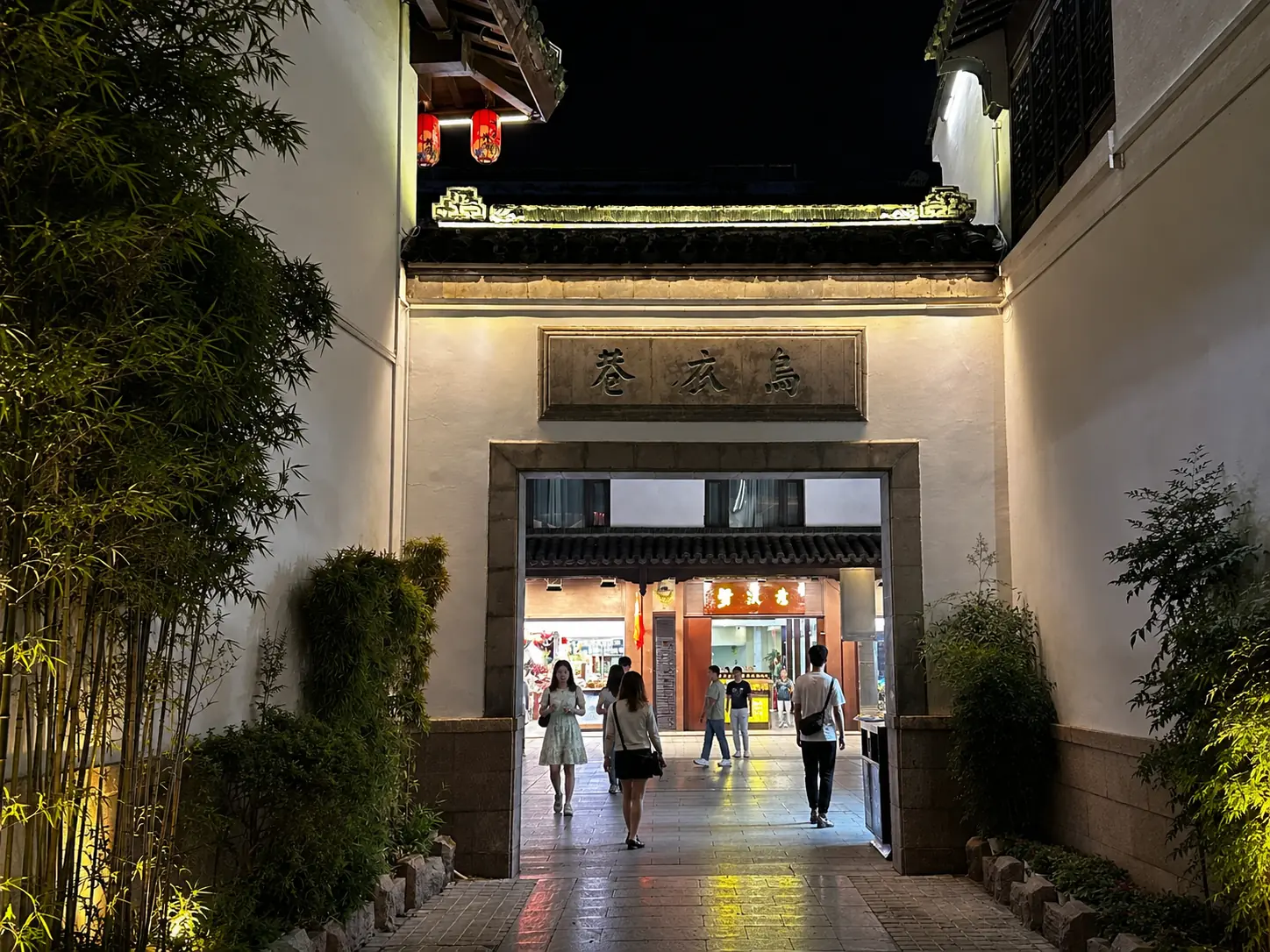
Wuyi Lane
Tied to the old Wang and Xie family stories. Treat it as a short symbolic detour when nearby, not as a major attraction.
Use Bailuzhou, Water Street or one of these short cultural detours as a pressure-release valve, not a requirement to collect every stop. The best choice is the one that preserves the evening rhythm after the Fuzimiao core.
Best Time, Crowds and Night Safety
Eat around dusk, reach the river in full light, and leave before fatigue meets the last crowd wave.
A practical flow is dinner around 18:00 and the river between 19:00 and 21:00. Summer can run later; winter usually feels better with an earlier start because the river wind bites after dark.
Weeknights are easier than Saturdays. Public holidays and lantern-festival season bring stronger atmosphere and much harder crowd management.
Best for the romantic version of the route and cleaner bridge movement.
Families, older travelers and anyone who dislikes dense crowds should avoid the obvious peak evening slots.
Light rain improves reflections; heavy rain, thunder or strong wind should shorten the night.
Grip and footing. Old stone can be slick; never step backward on a bridge for a photo.
ID and energy. Keep ID secure for paid venues and leave before fatigue weakens crowd judgment.
Short weather plan. Heavy rain, thunder or strong wind should reduce the evening to dinner plus a short river look; water operations can change independently.
Getting There and Leaving the Area Smoothly
Start at the old-south edge; finish where the crowd can release into rail or a wider road.
Usually the closest metro approach for Laomendong.
Best when the city-wall edge is your opening frame.
Useful for a west-side approach toward the old-south area.
The cleanest rail exit after the river core.
Show this screen to your driver · 出示给司机看
你好,请带我去南京老门东,谢谢。
Hello, please take me to Nanjing Laomendong, thank you.
Use this if you want to start the walk in Laomendong.
Show this screen to your driver · 出示给司机看
你好,请带我去夫子庙秦淮风光带,谢谢。
Hello, please take me to the Fuzimiao-Qinhuai Scenic Belt, thank you.
Use this if you want to go straight to the river and temple area.
Frequently Asked Questions
Start with Laomendong, then walk to Fuzimiao and the Qinhuai River. Laomendong works better for food and a slower warm-up; Fuzimiao and the river are better once the lights are fully on.
Sources checked for this guide
- Laomendong identity, free street access and published shop/restaurant hours: Official Nanjing destination page
- Fuzimiao–Qinhuai scenic-belt identity and inner-river night-view context: Official Nanjing tourism overview
- Official inner-Qinhuai scenic-route background and approximate east-route duration: Official Nanjing boat-trip background
- Current district scenic page with day, night-east and night-west boat fares: Qinhuai District Government
- West-route immersive cruise context and approximately one-hour return trip: Nanjing municipal state-assets report
- Latest verifiable July 2026 city notice on post-typhoon boat reopening status: Nanjing Municipal Government
- Dated 2026 peak-period reservation boundary, times and official Alipay route: Qinhuai District Government access notice
- Current Lines 3 and 5 access for Fuzimiao plus Line 3 Wudingmen guidance: Nanjing Transport Bureau
- Current daily opening hours for Nanjing Imperial Examination Museum: Museum official opening-hours page
- Existing third-party Qinhuai ticket reference retained for day-of product comparison only: Ticketing reference · verify against official live channel
Beyond This Guide
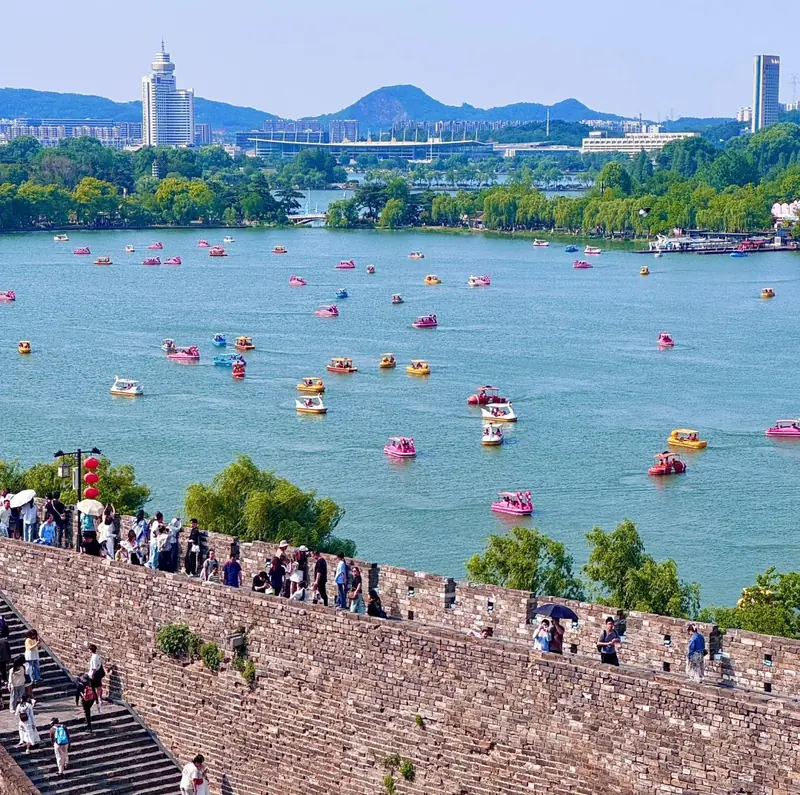
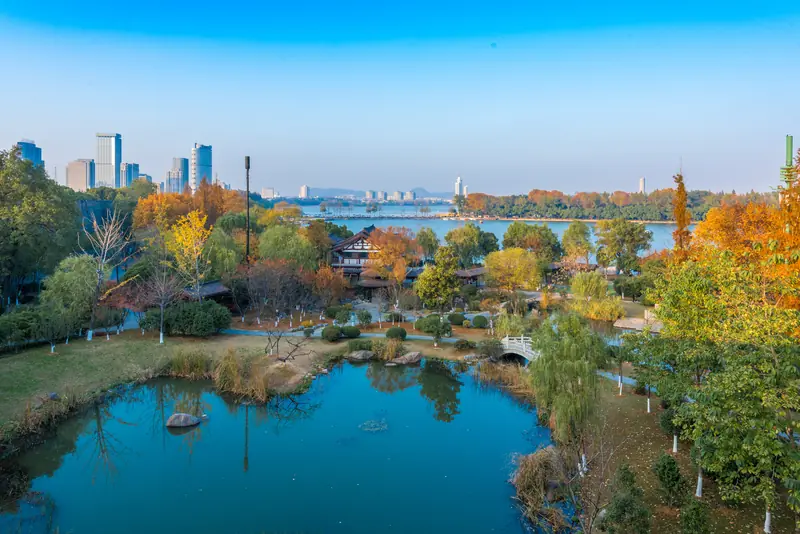
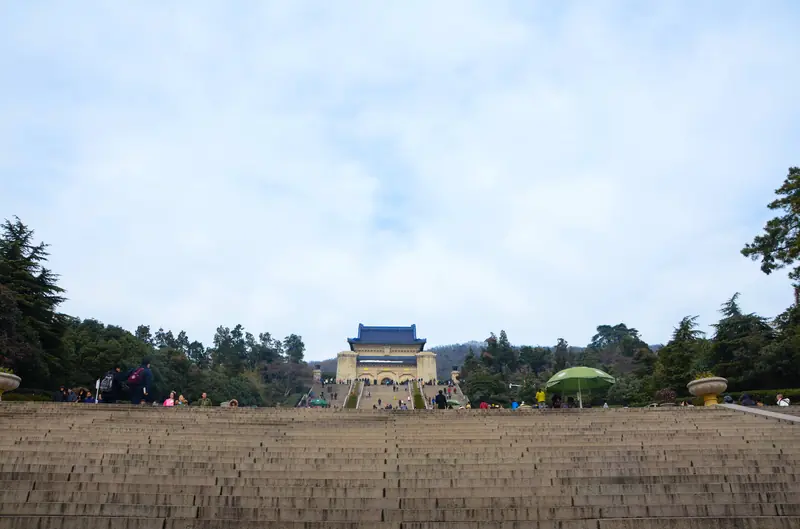
If this night walk is part of a bigger Nanjing trip, link it carefully with daytime sights. Ming Xiaoling, Nanjing Museum, Zhonghua Gate, and Xuanwu Lake all work better before dark; Laomendong and the Qinhuai River are the pieces to save for evening.
More from Nanjing:
- Nanjing City Wall Guide
- Ming Xiaoling Mausoleum Nanjing Guide
- Nanjing Museum Guide
- Xuanwu Lake Nanjing Guide
© gochinafreely.com — Original guide by Go China Freely.